Can you feel the buzz? Super Bowl halftime shows are heating up again, and there’s a new frontrunner in the mix. Continue reading…Country Music News – Taste of Country









Can you feel the buzz? Super Bowl halftime shows are heating up again, and there’s a new frontrunner in the mix. Continue reading…Country Music News – Taste of Country

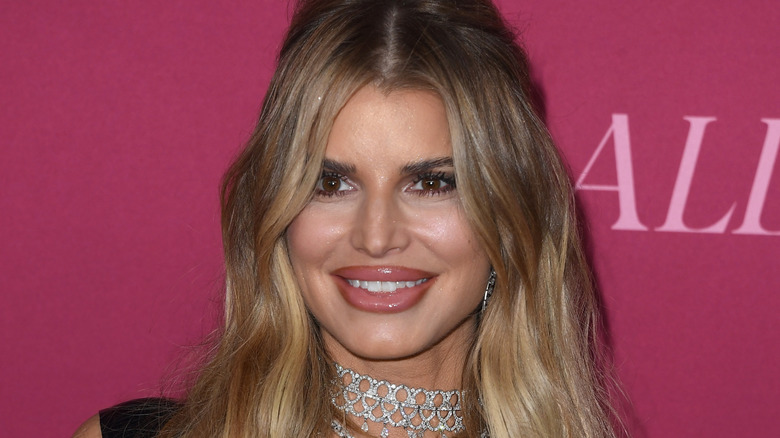
Jessica Simpson’s confessions about her less-than-healthy dental hygiene has left many cringing, including dentists, who had a word of advice for the singer.
Health Digest – Health News, Wellness, Expert Insights

From quick morning bites to indulgent late-night treats, Trader Joe’s frozen aisle is famous for providing high-quality, delicious options for less than $8.

Food Republic – Restaurants, Reviews, Recipes, Cooking Tips
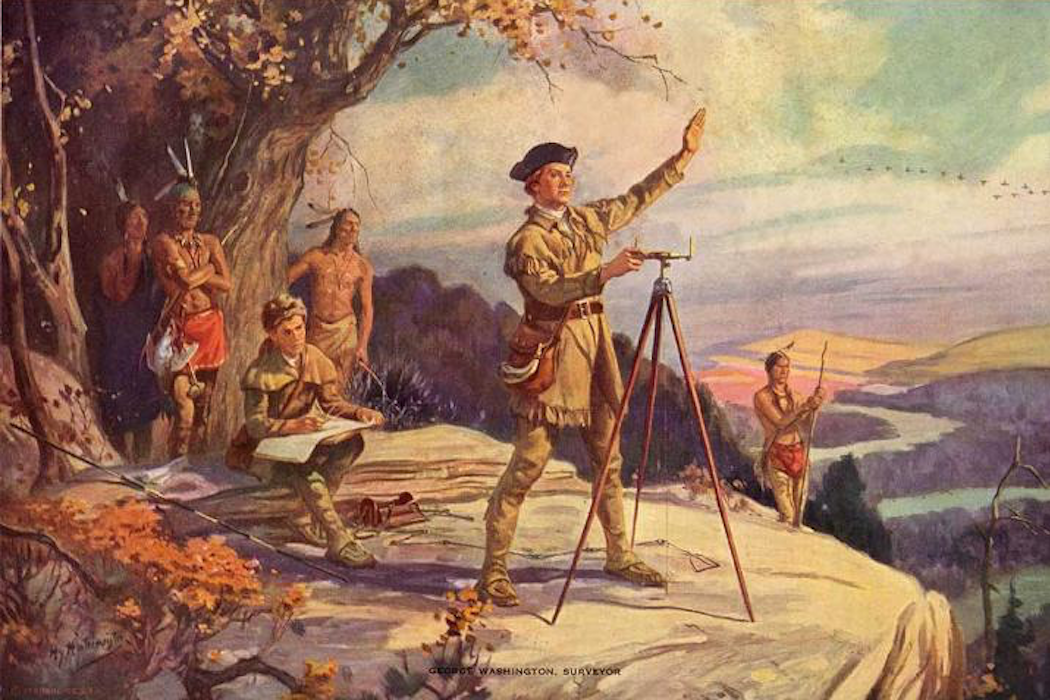
This Presidents Day, I’ve been thinking about George Washington − not at his finest hour, but possibly at his worst.
In 1754, a 22-year-old Washington marched into the wilderness surrounding Pittsburgh with more ambition than sense. He volunteered to travel to the Ohio Valley on a mission to deliver a letter from Robert Dinwiddie, governor of Virginia, to the commander of French troops in the Ohio territory. This military mission sparked an international war, cost him his first command and taught him lessons that would shape the American Revolution.
As a professor of early American history who has written two books on the American Revolution, I’ve learned that Washington’s time spent in the Fort Duquesne area taught him valuable lessons about frontier warfare, international diplomacy and personal resilience.
In 1753, Dinwiddie decided to expel French fur trappers and military forces from the strategic confluence of three mighty waterways that crisscrossed the interior of the continent: the Allegheny, Monongahela and Ohio rivers. This confluence is where downtown Pittsburgh now stands, but at the time it was wilderness.
King George II authorized Dinwiddie to use force, if necessary, to secure lands that Virginia was claiming as its own.
As a major in the Virginia provincial militia, Washington wanted the assignment to deliver Dinwiddie’s demand that the French retreat. He believe the assignment would secure him a British army commission.
Washington received his marching orders on Oct. 31, 1753. He traveled to Fort Le Boeuf in northwestern Pennsylvania and returned a month later with a polite but firm “no” from the French.

Dinwiddie promoted Washington from major to lieutenant colonel and ordered him to return to the Ohio River Valley in April 1754 with 160 men. Washington quickly learned that French forces of about 500 men had already constructed the formidable Fort Duquesne at the forks of the Ohio. It was at this point that he faced his first major test as a military leader. Instead of falling back to gather more substantial reinforcements, he pushed forward. This decision reflected an aggressive, perhaps naive, brand of leadership characterized by a desire for action over caution.
Washington’s initial confidence was high. He famously wrote to his brother that there was “something charming” in the sound of whistling bullets.
Perhaps the most controversial moment of Washington’s early leadership occurred on May 28, 1754, about 40 miles south of Fort Duquesne. Guided by the Seneca leader Tanacharison – known as the “Half King” – and 12 Seneca warriors, Washington and his detachment of 40 militiamen ambushed a party of 35 French Canadian militiamen led by Ensign Joseph Coulon de Jumonville. The Jumonville affair lasted only 15 minutes, but its repercussions were global.

Ten of the French, including Jumonville, were killed. Washington’s inability to control his Native American allies – the Seneca warriors executed Jumonville – exposed a critical gap in his early leadership. He lacked the ability to manage the volatile intercultural alliances necessary for frontier warfare.
Washington also allowed one enemy soldier to escape to warn Fort Duquesne. This skirmish effectively ignited the French and Indian War, and Washington found himself at the center of a burgeoning international crisis.
Washington then made the fateful decision to dig in and call for reinforcements instead of retreating in the face of inevitable French retaliation. Reinforcements arrived: 200 Virginia militiamen and 100 British regulars. They brought news from Dinwiddie: congratulations on Washington’s victory and his promotion to colonel.
His inexperience showed in his design of Fort Necessity. He positioned the small, circular palisade in a meadow depression, where surrounding wooded high ground allowed enemy marksmen to fire down with impunity. Worse still, Tanacharison, disillusioned with Washington’s leadership and the British failure to follow through with promised support, had already departed with his warriors weeks earlier. When the French and their Native American allies finally attacked on July 3, heavy rains flooded the shallow trenches, soaking gunpowder and leaving Washington’s men vulnerable inside their poorly designed fortification.

The battle of Fort Necessity was a grueling, daylong engagement in the mud and rain. Approximately 700 French and Native American allies surrounded the combined force of 460 Virginian militiamen and British regulars. Despite being outnumbered and outmaneuvered, Washington maintained order among his demoralized troops. When French commander Louis Coulon de Villiers – Jumonville’s brother – offered a truce, Washington faced the most humbling moment of his young life: the necessity of surrender. His decision to capitulate was a pragmatic act of leadership that prioritized the survival of his men over personal honor.
The surrender also included a stinging lesson in the nuances of diplomacy. Because Washington could not read French, he signed a document that used the word “l’assassinat,” which translates to “assassination,” to describe Jumonville’s death. This inadvertent admission that he had ordered the assassination of a French diplomat became propaganda for the French, teaching Washington the vital importance of optics in international relations.

The 1754 campaign ended in a full retreat to Virginia, and Washington resigned his commission shortly thereafter. Yet, this period was essential in transforming Washington from a man seeking personal glory into one who understood the weight of responsibility.
He learned that leadership required more than courage – it demanded understanding of terrain, cultural awareness of allies and enemies, and political acumen. The strategic importance of the Ohio River Valley, a gateway to the continental interior and vast fur-trading networks, made these lessons all the more significant.
Ultimately, the hard lessons Washington learned at the threshold of Fort Duquesne in 1754 provided the foundational experience for his later role as commander in chief of the Continental Army. The decisions he made in Pennsylvania and the Ohio wilderness, including the impulsive attack, the poor choice of defensive ground and the diplomatic oversight, were the very errors he would spend the rest of his military career correcting.
Though he did not capture Fort Duquesne in 1754, the young George Washington left the woods of Pennsylvania with a far more valuable prize: the tempered, resilient spirit of a leader who had learned from his mistakes.

Christopher Magra does not work for, consult, own shares in or receive funding from any company or organization that would benefit from this article, and has disclosed no relevant affiliations beyond their academic appointment.
Politics + Society – The Conversation
When it comes to national politics, Americans are fiercely divided across a range of issues, including gun control, election security and vaccines. It’s not new for Republicans and Democrats to be at odds over issues, but things have reached a point where even the idea of compromising appears to be anathema, making it more difficult to solve thorny problems.
But things are much less heated at the local level. A survey of more than 1,400 local officials by the Carnegie Corporation and CivicPulse found that local governments are “largely insulated from the harshest effects of polarization.” Communities with fewer than 50,000 residents proved especially resilient to partisan dysfunction.
Why this difference? As a political scientist, I believe that lessons from the local level not only open a window onto how polarization works but also the dynamics and tools that can help reduce it.
Local governments deal with concrete issues – sometimes literally, when it comes to paving roads and fixing potholes. In general, cities and counties handle day-to-day functions, such as garbage pickup, running schools and enforcing zoning rules. Addressing tangible needs keeps local leaders’ attention fixed on specific problems that call out for specific solutions, not lengthy ideological debates.
By contrast, a lot of national political conflict in the U.S. involves symbolic issues, such as debates about identity and values on topics such as race, abortion and transgender rights. These battles are often divisive, even more so than purely ideological disagreements, because they can activate tribal differences and prove more resistant to compromise.
Such arguments at the national level, or on social media, can lead to wildly inaccurate stereotypes about people with opposing views. Today’s partisans often perceive their opponents as far more extreme than they actually are, or they may stereotype them – imagining that all Republicans are wealthy, evangelical culture warriors, for instance, or conversely being convinced that all Democrats are radical urban activists. In terms of ideology, the median members of both parties, in fact, look similar.
These kinds of misperceptions can fuel hostility.
Local officials, however, live among the human beings they represent, whose complexity defies caricature. Living and interacting in the same communities leads to greater recognition of shared interests and values, according to the Carnegie/CivicPulse survey.
Meaningful interaction with others, including partisans of the opposing party, reduces prejudice about them. Local government provides a natural space where identities overlap.
In national U.S. politics today, large groups of individuals are divided not only by party but a variety of other factors, including race, religion, geography and social networks. When these differences align with ideology, political disagreement can feel like an existential threat.
Such differences are not always as pronounced at the local level. A neighbor who disagrees about property taxes could be the coach of your child’s soccer team. Your fellow school board member might share your concerns about curriculum but vote differently in presidential elections.
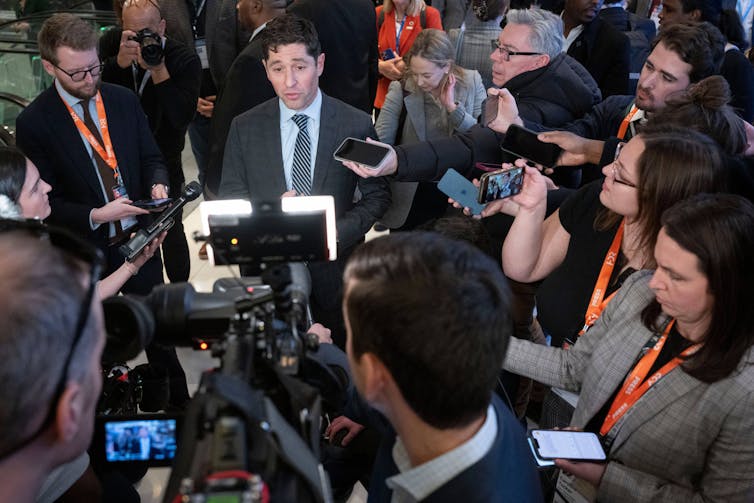
These cross-cutting connections remind us that political opponents are not a monolithic enemy but complex individuals. When people discover they have commonalities outside of politics with others holding opposing views, polarization can decrease significantly.
Finally, most local elections are technically nonpartisan. Keeping party labels off ballots allows voters to judge candidates as individuals and not merely as Republicans or Democrats.
None of this means local politics are utopian.
Like water, polarization tends to run downhill, from the national level to local contests, particularly in major cities where candidates for mayor and other office are more likely to run as partisans. Local governments also see culture war debates, notably in the area of public school instruction.
Nevertheless, the relative partisan calm of local governance suggests that polarization is not inevitable. It emerges from specific conditions that can be altered.
Polarization might be reduced by creating more opportunities for cross-partisan collaboration around concrete problems. Philanthropists and even states might invest in local journalism that covers pragmatic governance rather than partisan conflict. More cities and counties could adopt changes in election law that would de-emphasize party labels where they add little information for voters.
Aside from structural changes, individual Americans can strive to recognize that their neighbors are not the cardboard cutouts they might imagine when thinking about “the other side.” Instead, Americans can recognize that even political opponents are navigating similar landscapes of community, personal challenges and time constraints, with often similar desires to see their roads paved and their children well educated.
The conditions shaping our interactions matter enormously. If conditions change, perhaps less partisan rancor will be the result.

Lauren Hall is a Distinguished Fellow for the Study of Liberalism and a Free Society with the Institute for Humane Studies. She was previously a Pluralism Fellow with the Mercatus Center.
Politics + Society – The Conversation

Top state Republicans in Georgia have quietly opened the door for the Republican National Committee to support Lt. Gov. Burt Jones in the state’s hotly contested primary for governor.
The RNC normally maintains strict neutrality in party primaries to let voters — not party leaders — choose its nominee. Any move to intervene in Georgia, however, could dramatically reshape a crowded race for an open governor’s seat in a premiere battleground state. It could give Jones, President Donald Trump’s handpicked choice, a boost in a field that includes Secretary of State Brad Raffensperger, a target of Trump’s ire ever since he refused to echo the president’s falsehoods about the 2020 election in his state.
Georgia’s three RNC members signed letters late last year and early this year waiving the party rule that bars the RNC from intervening in contested primaries, according to three people familiar with the agreement. That move allows the national party to provide financial or operating support to Jones and coordinate with him ahead of the May primary.
It’s unclear whether the RNC will move to support Jones in the crowded primary now that it’s been cleared to do so. But it was the RNC that first reached out to the Georgia party leaders about waiving the rule, according to a person familiar with the process — a sign the national party has at least considered getting off the sidelines. The RNC did not provide a comment.
Josh McKoon, the chair of the Georgia Republican Party, said he signed the letter waiving the RNC’s neutrality rule because Jones has Trump’s endorsement.
“It was a no-brainer for me to sign the letter,” McKoon told POLITICO.
“From my perspective, I was going to remove any barriers to working with the RNC from a candidate that the president has clearly signaled as the candidate he wants to be the next governor,” he said.
Jones has long been a vocal supporter of Trump. He endorsed him for president in 2015, and as a state senator, was among the 16 Republicans who attempted to serve as electors in 2020 and falsely certify Trump’s loss in Georgia as a win. Jones received Trump’s official endorsement in August, and released a video with Jones last week calling him a “friend” who’s “going to make a great, great governor.”
Limited early public polling shows Jones leading the field, and he maintains a sizable war chest, but the race remains fluid, and a prolonged and expensive primary could complicate Republicans’ general election prospects. RNC support could help Jones fend off rivals and potentially avoid a prolonged primary fight, especially if he can avoid a run-off.
Last week, health care business owner Rick Jackson injected new uncertainty into the race by launching a surprise gubernatorial bid, pledging to spend $50 million of his own money to support his campaign. He has presented himself as a Trump-aligned political outsider, a message that could cut into Jones’ base.
A Cygnal poll released Monday, after Jackson’s surprise campaign launch, found Jones leading with 22 percent support among likely primary voters. Jackson followed at 16 percent, with Raffensperger at 10 percent and Attorney General Chris Carr at 7 percent.
To avoid a June run-off, a candidate must secure an outright majority of the vote in the May 19 primary — a high bar in an increasingly crowded field.
“I can see a path to victory for all four of them right now.” said Jason Shepherd, a former Cobb County GOP chair who is backing Carr. “But Burt Jones’ path to victory just got a lot harder” with Jackson’s entrance.
Under RNC rules, the national party is barred from backing candidates in primaries unless the filing deadline has passed and a candidate is running unopposed. That requirement, known as Rule 11, can be waived if all three of a state’s RNC members sign off. Such Rule 11 agreements have been used sparingly in recent cycles.
State party leaders in North Carolina have green-lit early support for former RNC chair Michael Whatley, another Trump-backed candidate running for the state’s open Senate seat.
Both Georgia and North Carolina are top priorities for the Republican Party in November. In Georgia, Republicans are looking to retain control of the governor’s mansion in a state that Trump flipped in 2024. The steps taken in both states raise questions about whether the RNC could face pressure to take similar moves in other states’ primaries where Trump decides to take sides, such as in Louisiana, where he endorsed Rep. Julia Letlowin her primary challenge against Sen. Bill Cassidy.
“We all look very carefully at when [Trump] decides to weigh in a race, because he doesn’t always do that,” McKoon said. “I certainly didn’t want to be serving as an obstacle to the RNC being able to coordinate with his campaign and provide support.”
Alec Hernández contributed to this report.
Politics

He’s been doing it for over 12 years. Continue reading…The Boot – Country Music News, Music Videos and Songs
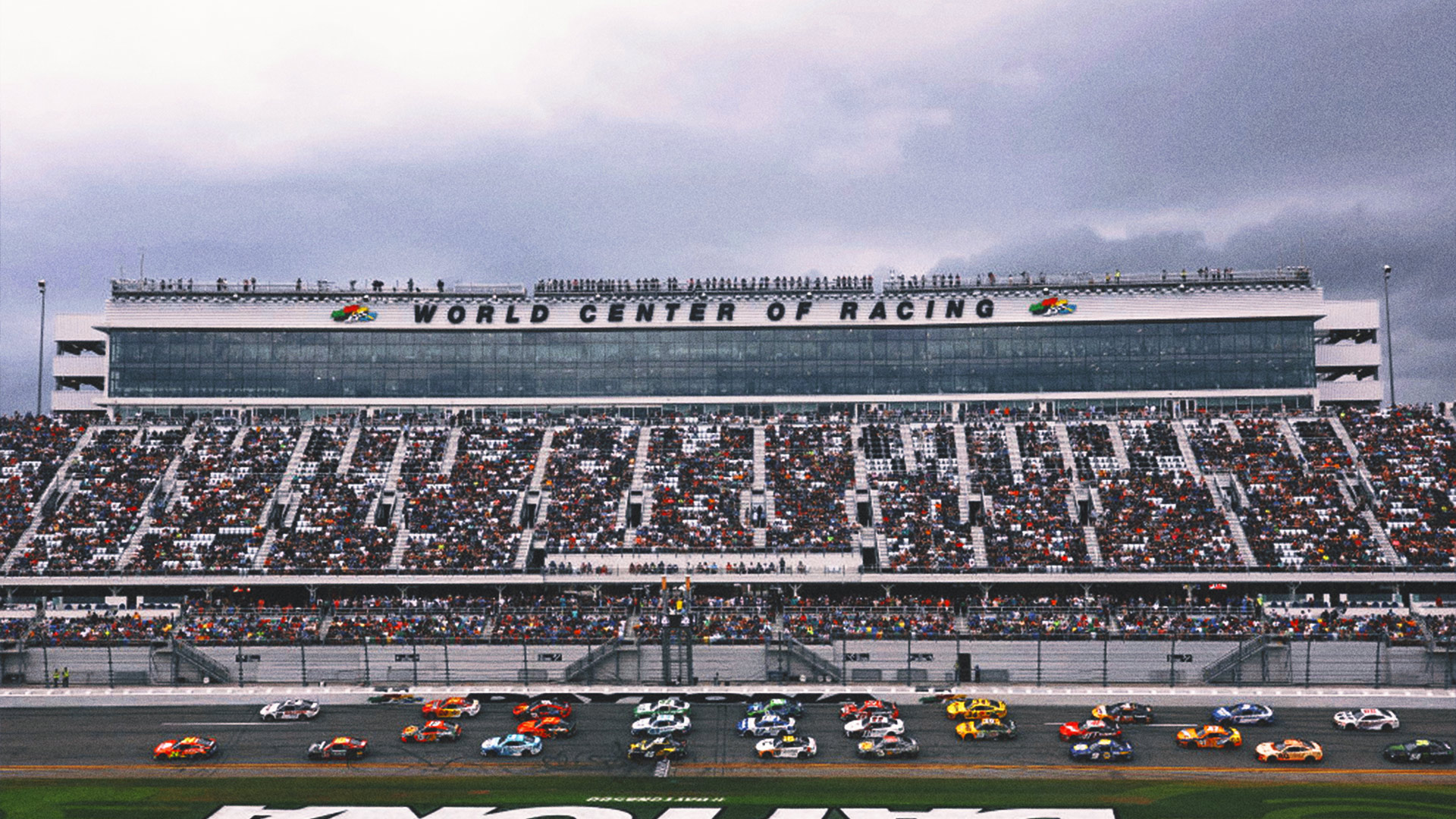
The NASCAR season opens Sunday with the 68th edition of the Daytona 500 at Daytona International Speedway. The broadcast starts at 12:30 p.m. ET and the green flag is at 2:30 p.m. ET (FOX and the FOX Sports app). What does the weather look like? Sunday’s low is 59 degrees and the high is 78, according to FOX Weather as of Monday evening. As of Tuesday afternoon, there’s a 64% chance of rain, slated to pour between 1 p.m. ET and 4 p.m. ET on Sunday, so it could potentially disrupt the race. There are also winds heading south at 16 miles per hour. The sun will set at 6:14 p.m. ET. [DAYTONA 500: Bob Pockrass’ Everything To Know About Daytona 500] Last season’s Daytona 500 was affected by rain. There were two delays that totaled more than three hours and 30 minutes, but after it finally resumed, William Byron ultimately won the race. Rain has also already been a story for the 2026 season of NASCAR. The Clash at Bowman Gray, the exhibition race last Wednesday in North Carolina, took three and a half hours to complete, and included 17 caution flags and dicey racing on a wet track. [NASCAR: 4 Takeaways From NASCAR’s Clash] Mother Nature often affects the event known as “The Great American Race.” There’s a heavy chance it impacts Sunday’s result. But the likelihood is that skies should be clear for the remainder of the race week and weekend, from Wednesday through Saturday. There’s a 4% chance of rain Wednesday, 10% on Thursday, 16% on Friday, and 7% on Saturday. That includes Practice 1 on Wednesday, Feb. 11 at 10 a.m. ET and qualifying on Wednesday at 8:15 p.m. ET. Then on Thursday the cars are split into two duels — Duel 1 is at 7 p.m. ET and Duel 2 starts at 8:45 p.m. ET. Practice 2 will be held Friday at 5:35 p.m. ET. Then the weekend starts with Practice 3 on Saturday at 3 p.m. ET. Each of those events should proceed with few obstacles, according to FOX weather. Sunday’s race could be a different story.Latest Sports News from FOX Sports
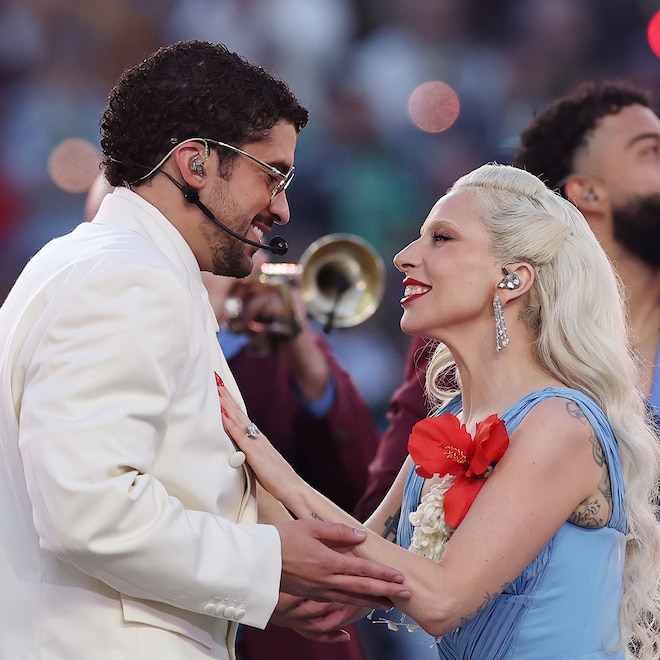
Lady Gaga has nothing but gratitude for Bad Bunny.
Hours after the “Abracadabra” singer made a surprise appearance in his 2026 Super Bowl Halftime Show on Feb. 8, she expressed her appreciation…
E! Online (US) – Top Stories

The name of this pie might make it seem as if it’s made from a sandy by-product of woodwork. But rest assured, it’s a sweet, nutty, and entirely edible pie.

Mashed – Fast Food, Celebrity Chefs, Grocery, Reviews
