Kid Rock has made strives to stop scalpers and keep ticket prices down, but front-row seats to his spring tour will still set you back a pretty hefty chunk of change. Continue reading…The Boot – Country Music News, Music Videos and Songs
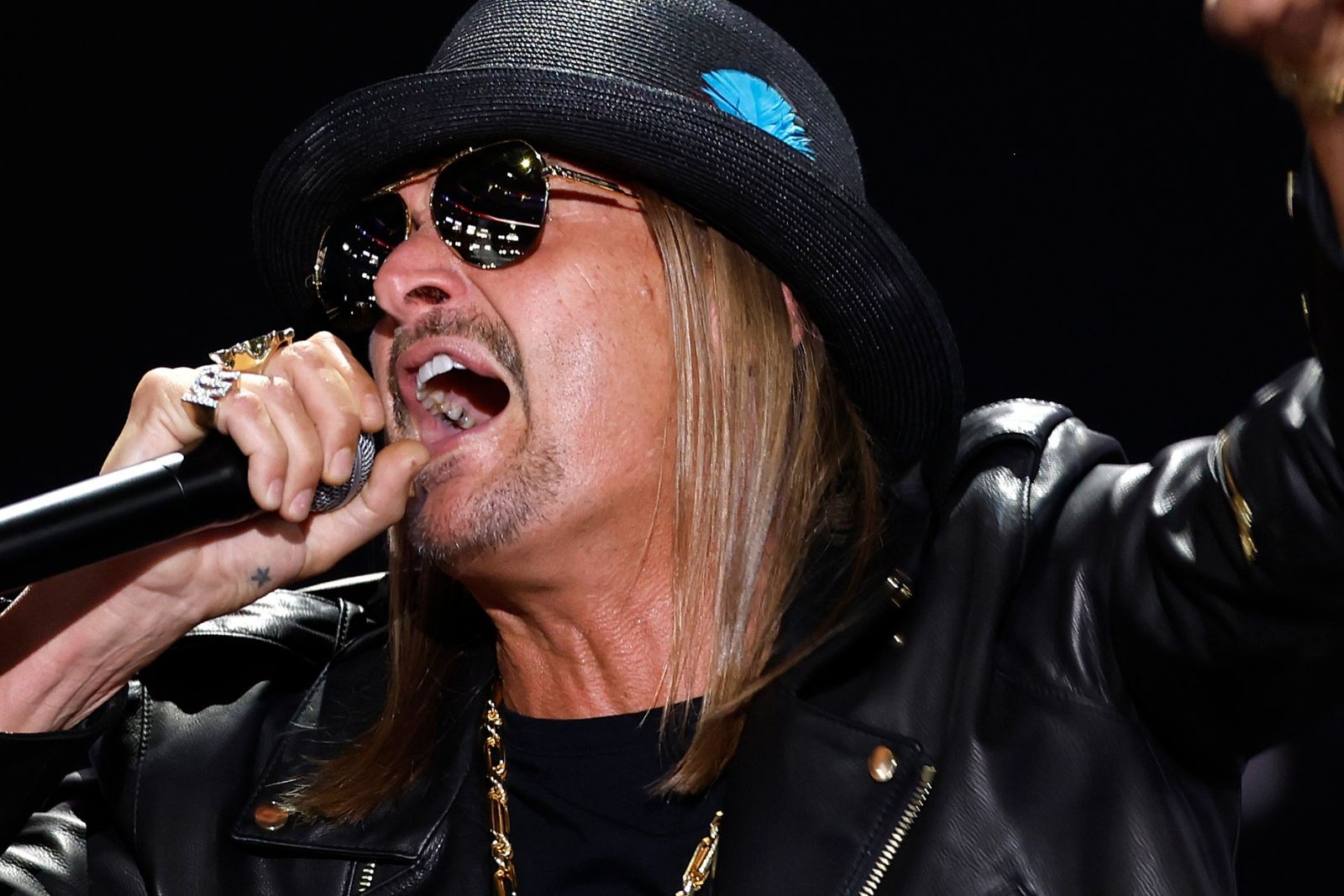








Kid Rock has made strives to stop scalpers and keep ticket prices down, but front-row seats to his spring tour will still set you back a pretty hefty chunk of change. Continue reading…The Boot – Country Music News, Music Videos and Songs
Kid Rock has made strives to stop scalpers and keep ticket prices down, but front-row seats to his spring tour will still set you back a pretty hefty chunk of change. Continue reading…Country Music News – Taste of Country

If you can’t live without salt and pepper, you may want to avoid this popular burger chain. When it comes to beef, this restaurant is strictly sans seasoning!

Mashed – Fast Food, Celebrity Chefs, Grocery, Reviews

Megan Moroney’s latest album almost had a very different vibe than the ethereal, ‘Cloud 9’ vibes we’re getting now. Continue reading…The Boot – Country Music News, Music Videos and Songs
Megan Moroney’s latest album almost had a very different vibe than the ethereal, ‘Cloud 9’ vibes we’re getting now. Continue reading…Country Music News – Taste of Country
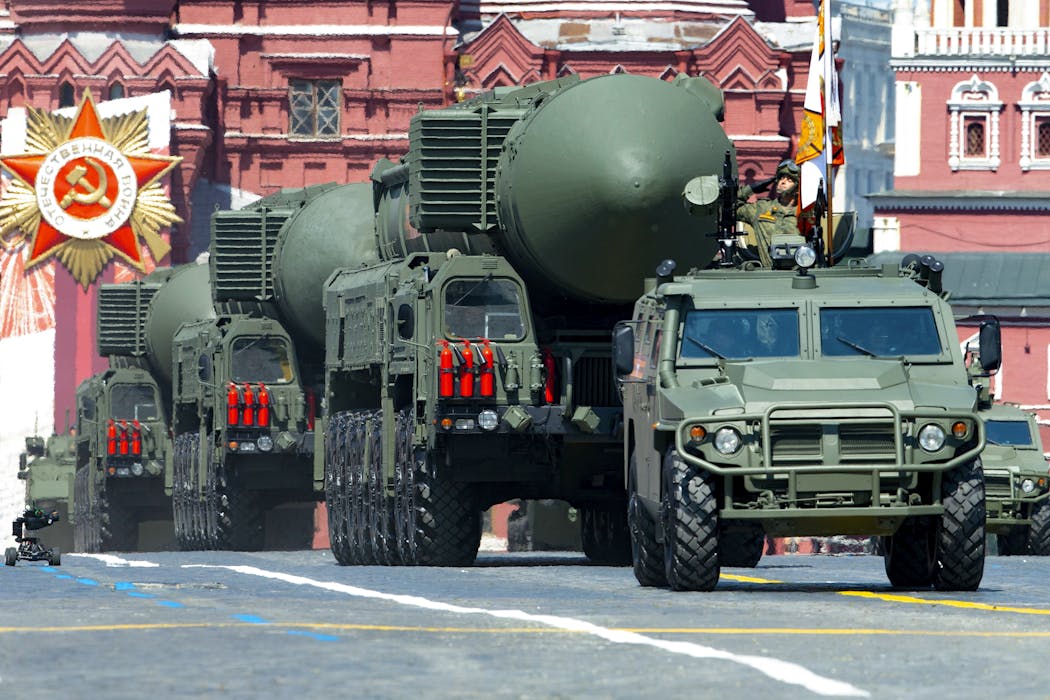
For the first time in more than half a century, there are no binding restraints on the buildup of the largest nuclear forces on Earth. The New START treaty expired on Feb. 5, 2026, ending the last agreed limits on U.S. and Russian nuclear forces.
New START limited the number of strategic nuclear weapons the United States and Russia could deploy to 1,550 each. It also limited the missiles and bombers those warheads were loaded on, required on-site inspections and data exchanges, barred interference with satellite monitoring, and established a joint commission to discuss disputes. It did not limit the number of nuclear weapons each side could hold in reserve.
With China rapidly building up its nuclear forces, intense rivalry between the United States, China and Russia, and evolving technologies – from precision conventional weapons to artificial intelligence complicating nuclear balances – there is a real potential of an unpredictable three-way nuclear arms competition.
Such a competition could increase the danger of nuclear conflict, which I believe is higher than it has been in decades.
While the particular numbers of warheads and delivery vehicles an accord specifies may not make an immense difference, nuclear agreements offer important advantages in four key areas:
Predictability, limiting the pressures to build up nuclear arsenals that come from worst-case analysis of what adversaries might build and the destabilization that unexpected new weapons can bring.
Transparency, elements such as data exchanges, on-site inspections and limits on interfering with satellite monitoring, giving each side a better ability to understand what is going on with the others’ nuclear forces.
Reduced first-strike incentives, from banning or limiting particularly dangerous types of weapons.
Improved relations, through the mere fact that the other side is willing to limit the nuclear forces arrayed against you, which undermines the belief that they are implacably bent on your utter destruction. This reduces the intensity of hostility that can drive crises and escalation.
After 1962’s Cuban missile crisis, President John F. Kennedy realized that relying on nuclear deterrence without any agreed nuclear restraints or risk-reduction measures is just too dangerous. He moved quickly to negotiate the Limited Test Ban Treaty in 1963 and put in place a U.S.-Soviet hotline for crisis communication.
He also launched a series of initiatives that led to reductions in defense spending on both sides, cuts in production of nuclear materials for weapons, and even troop pullbacks in Europe. Every subsequent U.S. president has pursued nuclear arms control accords.
Moreover, the countries that have promised not to get nuclear weapons under the Nuclear Nonproliferation Treaty want to see the nuclear-armed nations living up to their treaty obligation to negotiate in good faith toward nuclear disarmament. As pressure builds for countries to get their own nuclear weapons, maintaining the nonproliferation regime and getting the non-nuclear countries’ votes for stronger nuclear safeguards or export controls is likely to require the nuclear-armed nations to accept at least some constraints of their own.
Critics of arms control point out that Russia has violated many past accords – and the Trump administration has accused both Russia and China of carrying out illicit nuclear tests, though his administration has not offered solid evidence in public so far. But despite these very real issues, key elements of these agreements were implemented, and they “left the United States safer,” as Secretary of State Marco Rubio has noted. More than four-fifths of the nuclear weapons that used to exist in the world have been dismantled.

So, what’s next? President Donald Trump ignored Russian President Vladimir Putin’s proposal that both sides stay within the limits of New START while they explored options for new steps. But Trump said he wants to negotiate a “better” deal on fewer nuclear weapons – a deal that would not only limit U.S. and Russian strategic forces but also China’s much smaller but rapidly growing nuclear forces and Russia’s large force of nonstrategic nuclear weapons – that is, ones for battlefield or regional use.
So far, though, no negotiations on follow-on accords are underway, and the administration has not offered to negotiate about any of the U.S. weapons systems that worry Russia and China.
Moreover, there is strong pressure in Washington to build up U.S. nuclear forces rather than reduce them, to deter both Russia and China – while also dealing with the smaller but still dangerous North Korean nuclear force. The United States has many hundreds of nuclear weapons in storage that could be brought out and put on existing missiles, along with empty missile tubes on submarines that could again be filled with missiles. And the U.S. is developing new weapons, such as a nuclear-armed, sea-launched cruise missile.
In my view, the more than 1,500 strategic nuclear weapons the United States already has deployed – with a major modernization underway – provide a sufficient deterrent to aggression. And if the United States begins to build up, Russia will respond in kind, and China may go even further. Once a multisided buildup is underway, its momentum will be more difficult to reverse.
Fortunately, the United States, Russia and China all have strong national interests in avoiding an unrestrained nuclear race, which would leave all of them poorer and no more secure. While the United States has quite a few nuclear weapons in storage, its nuclear modernization is struggling with enormous delays and cost overruns, and its industrial base is simply not prepared for a major nuclear expansion.
Putin is building a war economy that can churn out a lot of weapons – but he knows his economy is a 10th the size of the U.S.’s, and he wants to focus on rebuilding the conventional forces being chewed up in his war on Ukraine, making nuclear competition a bad idea. China has an economy to match the U.S.’s and an unrivaled manufacturing capacity, but it, too, would be worse off if its buildup provokes a U.S. buildup in response and a collapse of nuclear restraints.
Despite these common interests, finding a path to new accords among at least three parties, rather than two, will not be easy. Coalitions in each capital will have to win arguments that an accord is in their nation’s interest at the same time. The parties will have to address in some way the non-nuclear technologies that affect nuclear balances, and technologies such as cyber weapons and artificial intelligence would be hard to count or verify.
U.S. political polarization might make it very difficult to get a two-thirds vote in the Senate to ratify a treaty – though there are many other possible approaches, from reciprocal political commitments to executive agreements.
Famously unpredictable, Trump might still reverse course and agree to some version of Putin’s proposal for a “strategic pause” in which neither the United States nor Russia would build up its nuclear capabilities for the time being, while talks on next steps were underway. That would have the advantage of offering time to explore the options before new nuclear buildups got locked in.
And that would give him more chance of reaching his oft-stated goal of being the one to bring home a deal to reduce nuclear weapons and the dangers they pose.

Matthew Bunn is a member of the Board of Directors of the Arms Control Association; is a member of the Committee on International Security and Arms Control of the National Academy of Sciences; has consulted for several U.S. national laboratories; and has served on the Academic Alliance of U.S. Strategic Command.
Politics + Society – The Conversation
The president announces an aggressive, controversial policy. Large groups of protesters take to the streets. Government agents open fire and kill protesters.
All of these events, familiar from Minneapolis in 2026, also played out at Ohio’s Kent State University in 1970. In my academic writing about the First Amendment, I have described Kent State as a key moment when the government silenced free speech.
In Minneapolis, free speech has weathered the crisis better, as seen in the protests themselves, the public’s responses – and even the protest songs the two events inspired.
In 1970, President Richard Nixon announced he had expanded the Vietnam War by bombing Cambodia. Student anti-war protests, already fervent, intensified.
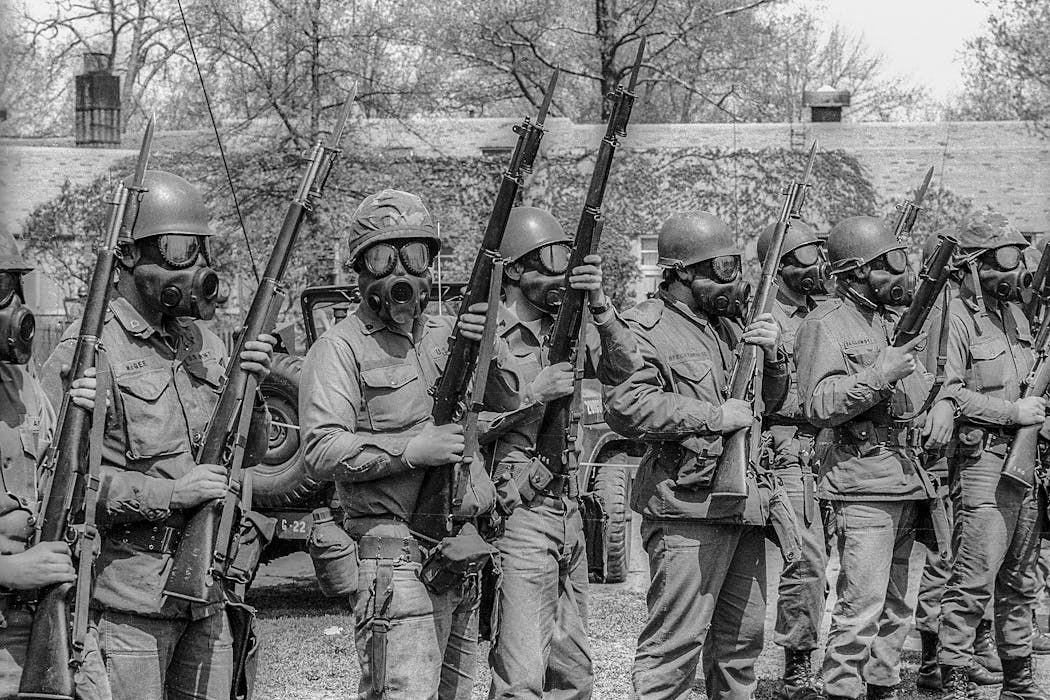
In Ohio, Gov. James Rhodes deployed the National Guard to quell protests at Kent State University. Monday, May 4, saw a large midday protest on the main campus commons. Students exercised their First Amendment rights by chanting and shouting at the Guard troops, who dispersed protesters with tear gas before regrouping on a nearby hill.
With the nearest remaining protesters 20 yards from the Guard troops and most more than 60 yards away, 28 guardsmen inexplicably fired on students, killing four students and wounding nine others.
After the killings, the government sought to shift blame to the slain students. Nixon stated: “When dissent turns to violence, it invites tragedy.”
Minneapolis in 2026 presents vivid parallels.
As part of a sweeping campaign to deport undocumented immigrants, President Donald Trump in early January 2026 deployed armed U.S. Immigration and Customs Enforcement and Customs and Border Protection agents to Minneapolis.
Many residents protested, exercising their First Amendment rights by using smartphones and whistles to record and call out what they saw as ICE and CBP abuses. On Jan. 7, 2026, an ICE agent shot and killed activist Renee Good in her car. On Jan. 24, two CBP agents shot and killed protester Alex Pretti on the street.
The government sought to blame Good and Pretti for their own killings.
After Kent State, amid bitter conservative opposition to student protesters, most Americans blamed the fallen students for their deaths. When students in New York City protested the Kent State shootings, construction workers attacked and beat the students in what became known as the “hard hat riot.” Afterward, Nixon hosted construction union leaders at the White House, where they gave him an honorary hard hat.

In contrast, most Americans believe the Trump administration has used excessive force in Minneapolis. Majorities both oppose the federal agents’ actions against protesters and approve of protesting and recording the agents.
The public response to Minneapolis has made a difference. The Trump administration has announced an end to its immigration crackdown in the Twin Cities. Trump has backed off attacks on Good and Pretti. Congressional opposition to ICE funding has grown. Overall public support for Trump and his policies has fallen.
What has caused people to view the killings in Minneapolis so differently from Kent State? One big factor, I believe, is how free speech has shaped the public response.
The Minneapolis protests themselves have sent the public a more focused message than what emerged from the student protests against the Vietnam War.
Anti-war protests in 1970 targeted military action on the other side of the world. Organizers had to plan and coordinate through in-person meetings and word of mouth. Student protesters needed the institutional news media to convey their views to the public.
In contrast, the anti-ICE protests in Minneapolis target government action at the protesters’ doorsteps. Organizers can use local networks and social media to plan, coordinate and communicate directly with the public. The protests have succeeded in deepening public opposition to ICE.
In addition, the American people have witnessed the Minneapolis shootings.
Kent State produced a famous photograph of a surviving student’s anguish but only hazy, chaotic video of the shootings.
In contrast, widely circulated video evidence showed the Minneapolis killings in horrifying detail. Within days of each shooting, news organizations had compiled detailed visual timelines, often based on recordings by protesters and observers, that sharply contradicted government accounts of what happened to Good and Pretti.
Finally, consider two popular protest songs that emerged from Kent State and Minneapolis: Crosby, Stills, Nash & Young’s “Ohio” and Bruce Springsteen’s “Streets of Minneapolis.”
Crosby, Stills, Nash & Young recorded, pressed and released “Ohio” with remarkable speed for 1970. The vinyl single reached record stores and radio stations on June 4, a month after the Kent State shootings. The song peaked at No. 14 on the Billboard chart two months later.
Neil Young’s lyrics described the Kent State events in mythic terms, warning of “tin soldiers” and telling young Americans: “We’re finally on our own.” Young did not describe the shootings in detail. The song does not name Kent State, the National Guard or the fallen students. Instead, it presents the events as symbolic of a broader generational conflict over the Vietnam War.
Springsteen released “Streets of Minneapolis” on Jan. 28, 2026 – just four days after CBP agents killed Pretti. Two days later, the song topped streaming charts worldwide.
The internet and social media let Springsteen document Minneapolis, almost in real time, for a mass audience. Springsteen’s lyrics balance symbolism with specificity, naming not just “King Trump” but also victims Pretti and Good, key Trump officials Stephen Miller and Kristi Noem, main Minneapolis artery Nicollet Avenue, and the protesters’ “whistles and phones,” before fading on a chant of “ICE out!”
Critics offer compelling arguments that 21st-century mass communication degrades social relationships, elections and culture. In Minneapolis, disinformation has muddied crucial facts about the protests and killings.
At the same time, Minneapolis has shown how networked communication can promote free speech. Through focused protests, recordings of government action, and viral popular culture, today’s public can get fuller, clearer information to help critically assess government actions.

Gregory P. Magarian does not work for, consult, own shares in or receive funding from any company or organization that would benefit from this article, and has disclosed no relevant affiliations beyond their academic appointment.
Politics + Society – The Conversation
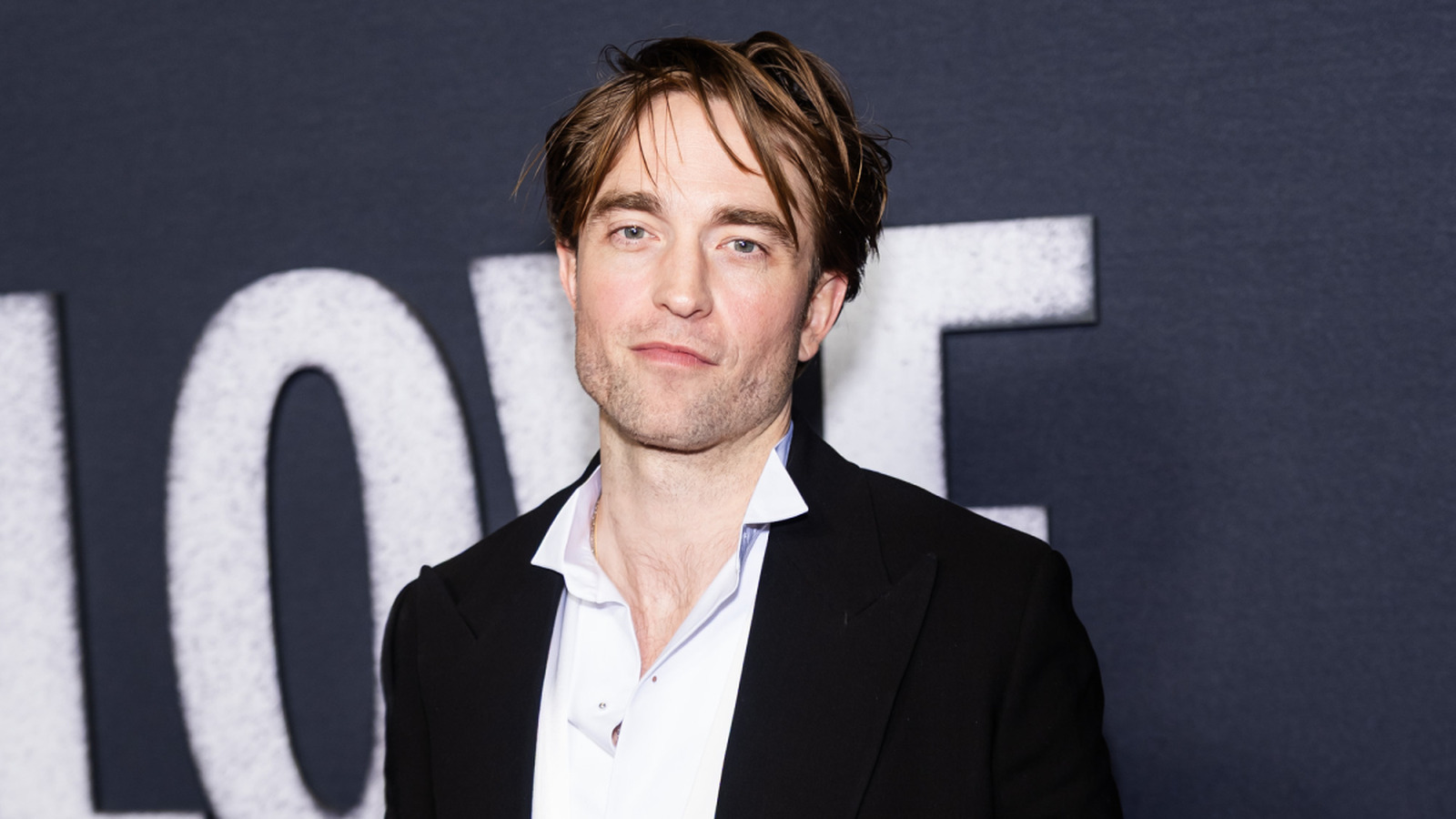
As the vampire Edward Cullen, Robert Pattinson performed many stunts. However, his time on set was not without incident, including an injury to his butt cheek.

Health Digest – Health News, Wellness, Expert Insights
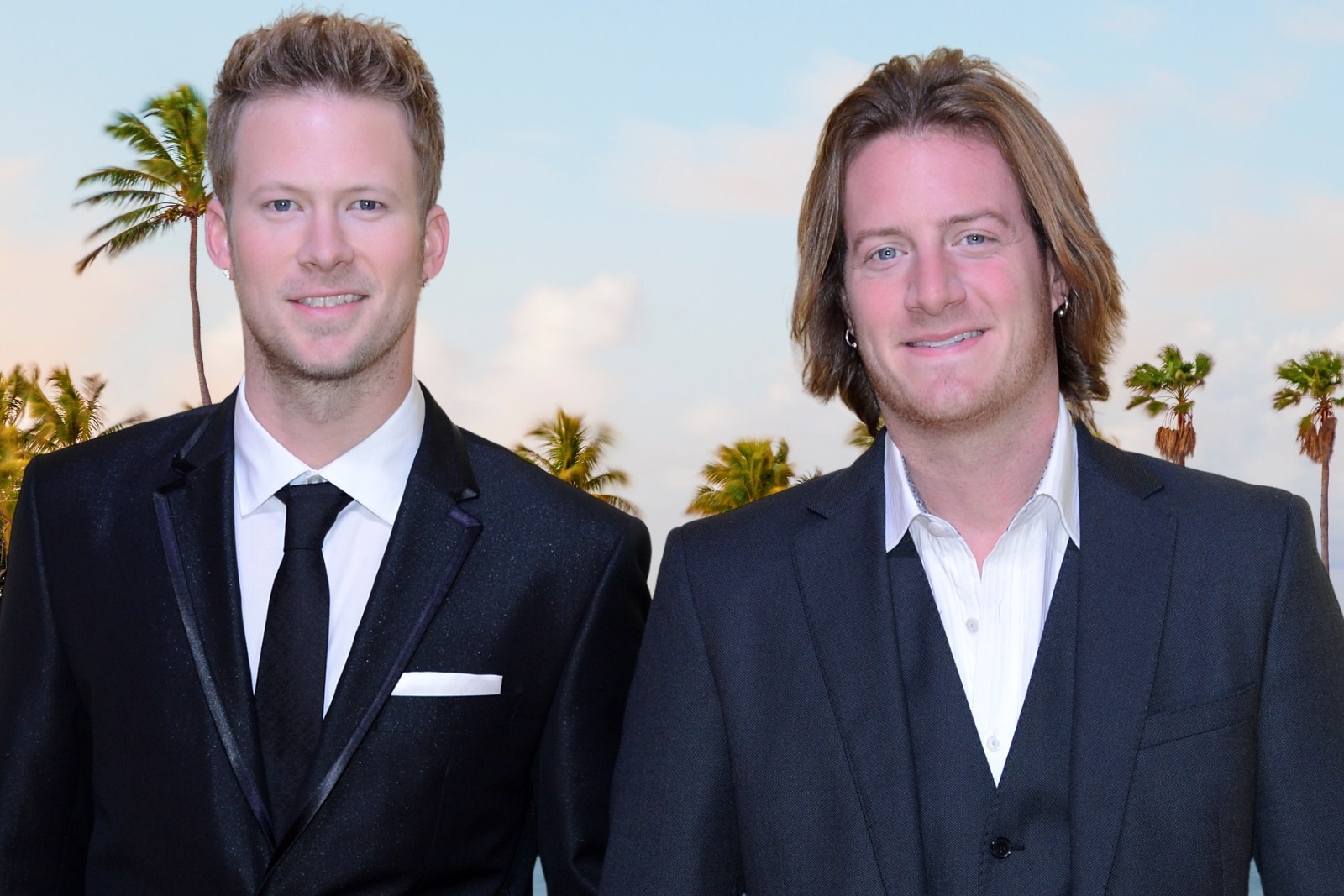
Could we see the return of one of country music’s favorite duos? Brian Kelley says he’s excited about the idea, but probably not just yet. Continue reading…Country Music News – Taste of Country

All-you-can-eat buffets were hit hard by the COVID-19 pandemic. However, one favorite is back from the brink and in the midst of a major comeback.

Mashed – Fast Food, Celebrity Chefs, Grocery, Reviews