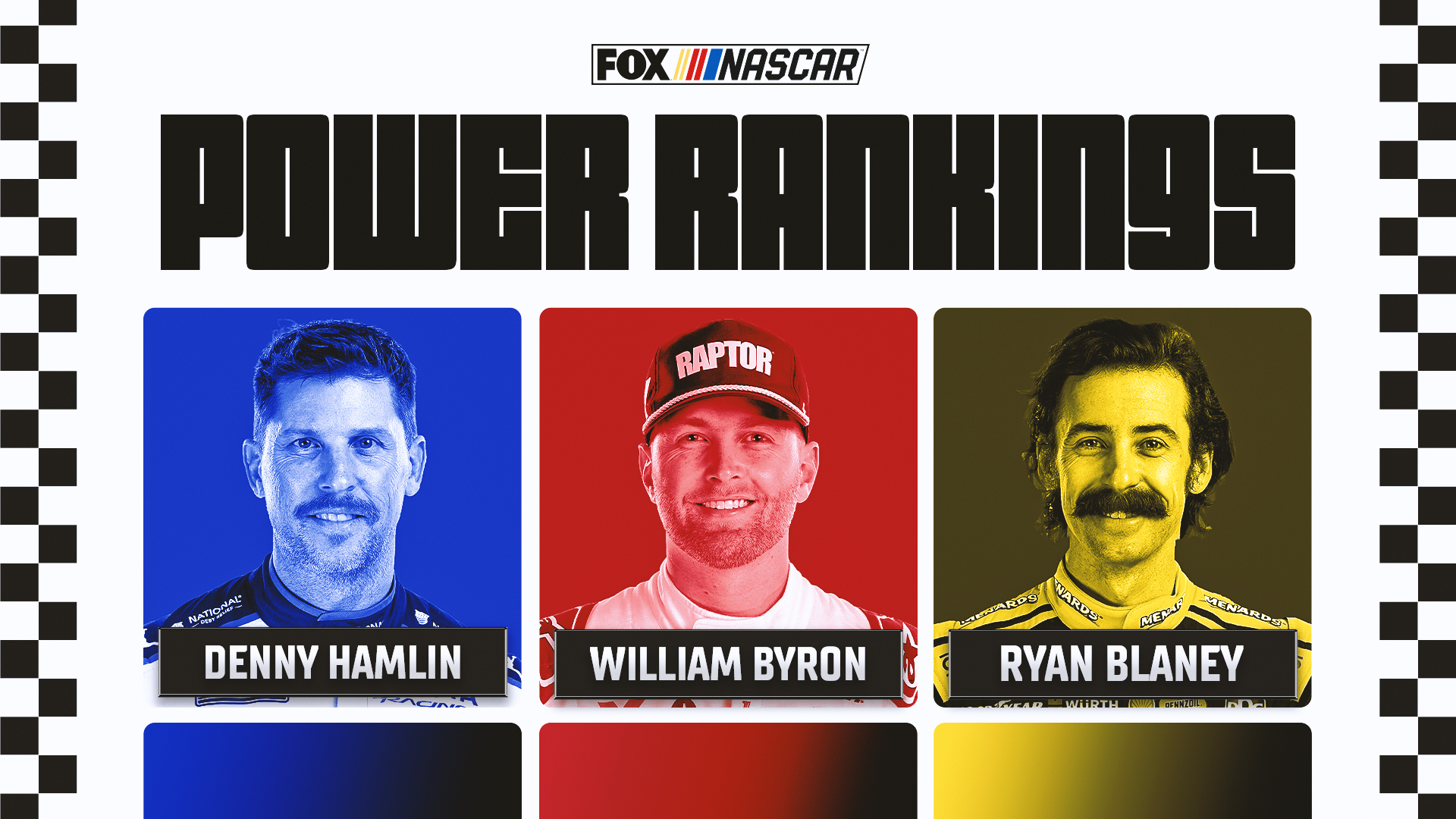
The Clash — NASCAR’s preseason exhibition race — isn’t a great predictor of how drivers will perform this year. But it does give a little bit of a sense of the attitude and confidence a team has going into the season. After Ryan Preece won the Clash last Wednesday at Bowman Gray Stadium, he definitely joins the top 10, as does his RFK Racing teammate Chris Buescher. Here’s a look at the drivers and a look at their Daytona 500 history going into the biggest race of the season (2:30 p.m. ET Sunday, FOX): Dropped out: Tyler Reddick (Last Week: 8), Alex Bowman (Last Week: 10) On the verge: Alex Bowman, Kyle Busch, Ross Chastain, Ty Gibbs, Tyler Reddick, Bubba Wallace 10. Chris Buescher (Last Week: Not Ranked) Buescher finished eighth in the Clash and now seeks his first Daytona 500 victory. He has three top-five finishes in the Daytona 500, with a best finish of third in 2020. The RFK Racing driver also has been eliminated in accidents in four of his 10 Daytona 500 starts. 9. Joey Logano (Last Week: 9) Logano finished 11th in the Clash and probably is looking forward to the Daytona 500, where he has one win (2015) in 17 starts. The Team Penske driver was second in 2023 but has wrecked out of the last two Daytona 500s. 8. Ryan Preece (Last Week: Not Ranked) Preece, who does not have a Cup points-race win, was emotional in winning the Clash. Now he heads to Daytona, where he has flipped twice in his career, including the 500 a year ago. The RFK Racing driver has six Daytona 500 starts with two top 10s. 7. Christopher Bell (Last Week: 3) Bell was 13th at the Clash, a little bit of a disappointing result. The Joe Gibbs Racing driver had back-to-back third-place finishes in the Daytona 500 in 2023 and 2024. He was eliminated by a wreck last year and finished 31st. 6. Chase Elliott (Last Week: 2) Elliott, who finished 17th in the Clash, has one top five in 10 starts in the Daytona 500. He was second in the 2021 race. The Hendrick driver also has sat on the pole twice back in his first two Daytona 500 races in 2016 and 2017. 5. Kyle Larson (Last Week: 4) Larson, who sat on the pole but was 16th in the Clash, seeks his first Daytona 500 win in his 13th Daytona 500 start. The Hendrick driver is not known for prowess on the drafting tracks. He has four top 10s but no top fives in the Daytona 500. 4. Chase Briscoe (Last Week: 6) Briscoe finished sixth in the Clash. Briscoe has six career Daytona 500 starts, including starting from the pole and finishing fourth last year in his first race with Joe Gibbs Racing. He was third in the 2022 Daytona 500. 3. Denny Hamlin (Last Week: 7)Hamlin had a couple of spins but wound up fifth in the Clash. The Joe Gibbs Racing driver has three Daytona 500 victories (2016, 2019 and 2020) in 20 starts. But he hasn’t finished top 10 in any of the last four Daytona 500s. Maybe not coincidentally, those are the four Daytona 500s with the Next Gen car. 2. William Byron (Last Week: 5) Byron was second in the Clash. The Hendrick driver has eight starts in the Daytona 500 and never had a top-20 finish until his back-to-back victories in 2024 and 2025. He led just a combined 14 laps in those two victories. 1. Ryan Blaney (Last Week: 1) Blaney was third in the Clash. The Team Penske driver has 11 career Daytona 500 starts, and he could almost taste the victory as he was second in 2017 and 2020. He has six top-10 finishes and has led 208 laps in the Daytona 500 during his career.Latest Sports News from FOX Sports
Not all Americans’ votes are equal. And some have a way bigger impact than others.
Every four years, a small handful of swing states are bombarded with advertising, candidate visits and more when the country picks the next president, while a majority of other voters are mostly ignored. But even in the key swing states, some House contests, governor’s races and even legislative districts are far more competitive than others.
That’s why the nonpartisan nonprofit Power Moves is rolling out a new Voter Impact Index — the details of which were shared first with POLITICO — to help people take into account their voting power.
“We all learned in elementary school and middle school that every vote counts, and a vote is a vote,” said Heather Weston, one of the group’s co-founders. “But we kind of intuit that that’s not true. So what we really wanted people to understand is how geography really is connected to the impact of your vote.”
The project utilizes all of America’s 41,000-plus zip codes to measure how much of an impact a voter can have, something the organization’s co-founders say is unique to their product.
To get the “Voter Impact” score, which ranges from 0-100, Power Moves has a complex methodology. But in short, it weighs the competitiveness of recent elections in the zip code for six public offices, ranging from the presidency to legislative races — and the higher the score, the more competitive elections an American has the opportunity to vote in.
It weights some of those offices as more important than others. For example, the competitiveness of the presidential election, Senate seat and House district in a given zip code each get 25 percent of the score, while governor’s races get 15 percent and state House and Senate seats only get five percent each.
No individual zip code got either a zero or a 100, based on their methodology. But voters in the Eau Claire, Wisconsin, zip code of 54703 came out on top with a score of 85. And most of Wyoming ties for the lowest score at 14. (Perhaps not coincidentally: The state with the highest statewide average is Wisconsin, and Wyoming is the lowest.)
With more than 40 million Americans moving each year — and some millions of college students moving to new states — the tool is aimed at helping people really understand where their vote can go the furthest.
People move for a variety of factors, and Power Moves emphasized that the tool is not supposed to be the only factor people weigh when deciding their new home. But as home-buying and renting tools like Zillow already factor things like walkability and school systems into their own algorithms, they hope voting can crack that list of priorities. Plus, because of the wonky ways district lines are drawn, apartments and houses that are just minutes apart can garner completely different voting scores.
“We really don’t care what your political stripes are,” said Charles Simon, another co-founder. “We just want to help everybody to understand their vote impact score and give them the opportunity to maximize that score.”
A version of this article first appeared in POLITICO Pro’s Morning Score. Want to receive the newsletter every weekday? Subscribe to POLITICO Pro. You’ll also receive daily policy news and other intelligence you need to act on the day’s biggest stories.
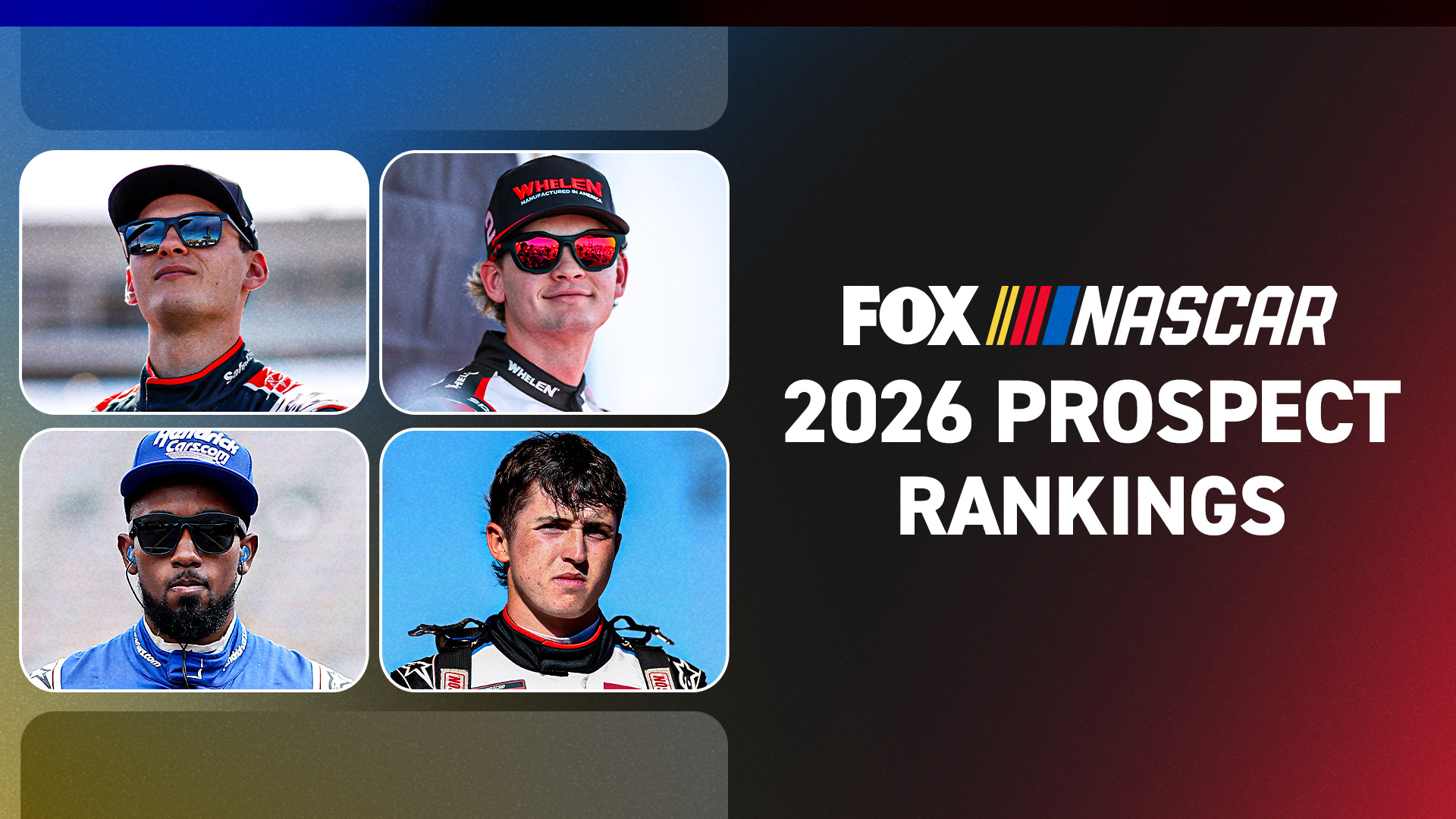
Two years ago, Kyle Larson said that Jade Avedisian had a long runway in her transition to asphalt racing. Avedisian is learning that things on the runway don’t always run smoothly. Now 19, Avedisian enters her third year of asphalt racing (and just her second on ovals) since making her name with a national midget title and a Chili Bowl main event appearance in 2023. Like many prospects, Avedisian is trying to learn — and win. She became the first woman to win a CARS Tour pro late model race when she won last year at Coastal Plains (N.C.) Raceway. That was a big victory, as was the one she earned Saturday night at New Smyrna Speedway when she captured the super late model feature win in a stout short-track field. The victory followed a dustup with Spencer Davis the previous night. “It was a perfect time for me to win the race,” Avedisian told me. “From the incident the night before, I felt like that was a great way just to go out there and clear my mind and ultimately win the race.” The style of racing is so much different, as Avedisian has gone from the hammer-down-for-30-laps features in sprint cars to the beating and banging of longer races in stock cars. Dirt tracks can also change nightly as far as where is the best line to run, while asphalt tracks typically have one or two best racing lines that rarely change. “The nights I excelled in the dirt world was because I always felt like, no matter what race it was, you have 30 laps and whoever can drive the hardest and be the smartest throughout the 20 minutes of the race is usually going to win the race,” Avedisian said. “Now … the style of racing is definitely a lot different.” Avedisian is driving a higher-horsepower late model this year at New Smyrna, where she also raced last year during the February speedweeks. She likes the additional horsepower and said the experience of racing the track a year ago is helping her now. Experience is what she feels she lacks. As a Toyota Racing Development driver, she knows there is a plan and she has at least some time to learn. They put her with the strong Wilson Motorsports team in late models and Nitro Motorsports in ARCA. “I obviously hope that, or wish that I could have won 10 races last year, right?” Avedisian said. “But it sometimes just doesn’t work like that. And I learned a lot last year, so I think that’s also the reason I kind of got up to speed a little bit quicker this year. … I was pretty confident walking into it. “I knew if I just kind of did my job, throughout this kind of long week, we’d have opportunities to win.” With all this in mind, Avedisian is a driver who remains on my list of top-20 Cup prospects based on performance and potential. While marketing, sponsorship opportunities and funding are not primary factors, they do factor into this list because they can impact if these drivers will make it to Cup. Some parameters: No driver who has had a season in Cup — or is about to have a full season in Cup (i.e. Connor Zilisch) — is on this list and a driver must be younger than 28 years old to get a nod here (sorry Butterbean Queen): 1. Corey Heim Age: 23Previous ranking: 2 The winner of 12 truck races last year and the series title, Heim should have a full-time Cup ride this year. But all 23XI Racing seats were already filled with driver-sponsorship pairings for 2026, so Heim will do 12 Cup races in a fourth car for the team, as well as be its reserve and test driver. Expect Heim, who also could do some truck races this year, to be full time in Cup in 2027. 2. Jesse Love Age: 21Previous ranking: 4 Love won the season opener and the season finale to capture the Xfinity Series title last season (now known as O’Reilly). The Richard Childress Racing driver is back to defend his crown this year and will look to finish more consistently in the top five (he had nine top-five finishes last year). 3. Brent CrewsAge: 17Previous ranking: 3 Crews won four ARCA national races and a couple more ARCA regional series events last year. He made 10 truck starts with two top-five finishes. The 2023 TA2 champion in TransAm, Crews will vie for the O’Reilly Series title this year. But the Joe Gibbs Racing driver will miss four races early in the season, as he doesn’t turn 18 until March 30 and can’t race early-season events at Daytona, Atlanta, Las Vegas and Darlington. 4. Corey DayAge: 20Previous ranking: 7 Day is a driver that Hendrick Motorsports is hoping will follow the Kyle Larson path to stardom, coming from sprint-car racing on dirt tracks to NASCAR. Day won on both the High Limit and World of Outlaws circuits last year. He had one top five and two top 10s in 11 Xfinity starts last season. He will run full time in the O’Reilly Series this year for Hendrick. 5. Layne Riggs Age 23Previous ranking: 8 Riggs ranked second in the truck series with three victories last year and finished fifth in the overall standings. He is back for a third season at Front Row Motorsports, and if he can have a season with several wins, his stock will continue to rise. 6. Kaden Honeycutt Age: 22Previous ranking: 10 Honeycutt finished third in the truck standings, as he raced in the playoffs for Halmar Friesen Racing as the replacement for the injured Stewart Friesen. That move from Niece was precipitated by what he planned on for 2026. He’s replacing Heim at Tricon. Honeycutt’s success isn’t a huge surprise — he is the 2024 CARS Tour pro late model champion. 7. Carson Kvapil Age: 22Previous ranking: 9 Kvapil enters his second year of racing for JR Motorsports, after a rookie season where he finished third in the standings after he posted seven top fives and 14 top 10s. Being paired with veteran crew chief Rodney Childers for much of this season (he’ll run a couple of different cars during the year) could be the recipe for a breakout year. 8. Taylor GrayAge: 20Previous ranking: 11 Gray hopes he had his breakthrough win with a victory in the Xfinity Series race at Martinsville late in the year. He finished seventh in the standings and is back for another season at JGR in 2026. 9. Sam MayerAge: 22Previous ranking: 6 Mayer had a disappointing finish to 2025, as he didn’t compete in the final race as he served a one-race suspension for wrecking Jeb Burton on the cool-down lap at Martinsville. But he did have a respectable Xfinity season with one win and 13 top fives for Haas. He has eight wins in the series and this will be a pivotal year, if he can show more maturity and the ability to win regularly, proving he belongs in Cup. 10. Rajah Caruth Age: 23Previous ranking: 13 Caruth won a truck race at Nashville to make the playoffs at Spire. He’ll move to JR Motorsports and an O’Reilly ride this season for 23 races and then do the other 10 for Jordan Anderson Racing. Caruth is going to need to run well; he’s stepping into the car that Connor Zilisch ran well in last year. He’s moving up this ranking because he has a great opportunity if he can take advantage of it. 11. Christian EckesAge: 25Previous ranking: 14 Eckes returns to the trucks after a frustrating year at Kaulig, which didn’t have a good Xfinity year, as Eckes finished 13th in the standings with six top fives and 15 top 10s. He has nine career truck wins and will be expected to vie for the title driving for McAnally-Hilgemann Racing. 12. Keelan HarvickAge: 13Previous ranking: 17 Harvick has continued to shine in the late models as he won four times and had six top fives in 10 CARS pro late model starts last year. He most recently became the youngest winner of the Icebreaker late model stock race at Florence (S.C.) Speedway. Harvick, the son of former Cup champion and current FOX analyst Kevin Harvick, has a mix of CARS Tour and ASA events, as well as some TransAm races on his schedule this year. 13. Chandler SmithAge: 23Previous ranking: 12 Smith won two races and finished eighth in the truck standings but expected more than just five top fives driving for Front Row Motorsports — even for a program put together just before the start of the season. Smith will need to contend for the title this year if he wants a shot at Cup. He will attempt to make the Daytona 500 in a fourth FRM car. 14. Tristan McKeeAge: 15Previous ranking: 15 McKee is one of the top talents in the Chevrolet development program. At 12 years old, he became the youngest winner in the CARS Tour pro late model division in 2023 and then became the second-youngest ARCA winner by winning his debut at Watkins Glen last year. He has had his share of ruffling feathers, but he’s young. He’s signed by Spire Motorsports to a developmental contract and will run a variety of ARCA and ASA races this year. 15. Gio Ruggiero Age: 19Previous ranking: 20 Ruggiero won in his rookie truck season, as he captured the victory at Talladega and finished 11th in the truck standings — the top spot for drivers who did not make the playoffs. He should be a threat this year, as he returns racing for Tricon. The Toyota Racing Development driver will also do some O’Reilly races for Joe Gibbs Racing. 16. Jade Avedisian Age: 19Previous ranking: 18 Avedisian became the first woman to win a CARS Pro Late Model race, as she captured a win last year at Costal Plains. Avedisian won a super late model race this week at New Smyrna Speedway, where many of the best short-track asphalt racers compete during Speedweeks. She has a mix of late model and ARCA races on her schedule this year, as she continues under the Toyota development banner. 17. Nick SanchezAge: 24Previous ranking: 5 Sanchez would be higher on this list but he didn’t solidify a full-time ride for 2026 until this week after his plans fell through to return to Big Machine Racing. He had one win and seven top-five finishes in the O’Reilly Series last year for the organization. He will continue in the series this year for AM Racing, which had a sale of the team fall through in the last month. 18. Lanie Buice Age: 19Previous ranking: Not Ranked Buice is part of the Chevrolet development program and she had two top 10s in four ARCA starts last year. She had two top fives in CARS Tour late model stock events. Buice has a robust schedule in 2026 of a mix of ARCA and late model races. 19. William Sawalich Age: 19Previous ranking: Not Ranked Sawalich dropped off my list last summer but then had two Xfinity runner-up finishes and seven finishes of 12th or better in the final eight events. After earning stage points in just five stages of the first 19 races, he earned stage points 13 times in the final 14 races. This year will be pivotal for Sawalich in another season at Joe Gibbs Racing. 20. Isabella Robusto Age: 21Previous ranking: 16 Robusto averaged an 11th-place finish last year, running the full ARCA season, as she finished fourth in the standings. She had nine top-five finishes, which was certainly respectable. But there was a feeling that there was hope for a little bit more. Still, Toyota loves her potential and her work ethic. 25 others to watch: Tyler Ankrum Luke Baldwin, Austin Beers, Carson Brown, Mike Christopher, Daniel Dye, Luke Fenhaus, Jake Finch, Jake Garcia, Tanner Gray, Conner Jones, Isaac Kitzmiller, Caden Kvapil, Treyten Lapcevich, Landen Lewis, Ben Maier, Helio Meza, Andres Perez de Lara, George Phillips, Tyler Reif, Taylor Reimer, Lavar Scott, Sammy Smith. Dawson Sutton, Mini Tyrrell.Latest Sports News from FOX Sports
Can you feel the buzz? Super Bowl halftime shows are heating up again, and there’s a new frontrunner in the mix. Continue reading…The Boot – Country Music News, Music Videos and Songs
Can you feel the buzz? Super Bowl halftime shows are heating up again, and there’s a new frontrunner in the mix. Continue reading…Country Music News – Taste of Country
Jessica Simpson’s confessions about her less-than-healthy dental hygiene has left many cringing, including dentists, who had a word of advice for the singer.
Health Digest – Health News, Wellness, Expert Insights
From quick morning bites to indulgent late-night treats, Trader Joe’s frozen aisle is famous for providing high-quality, delicious options for less than $8.
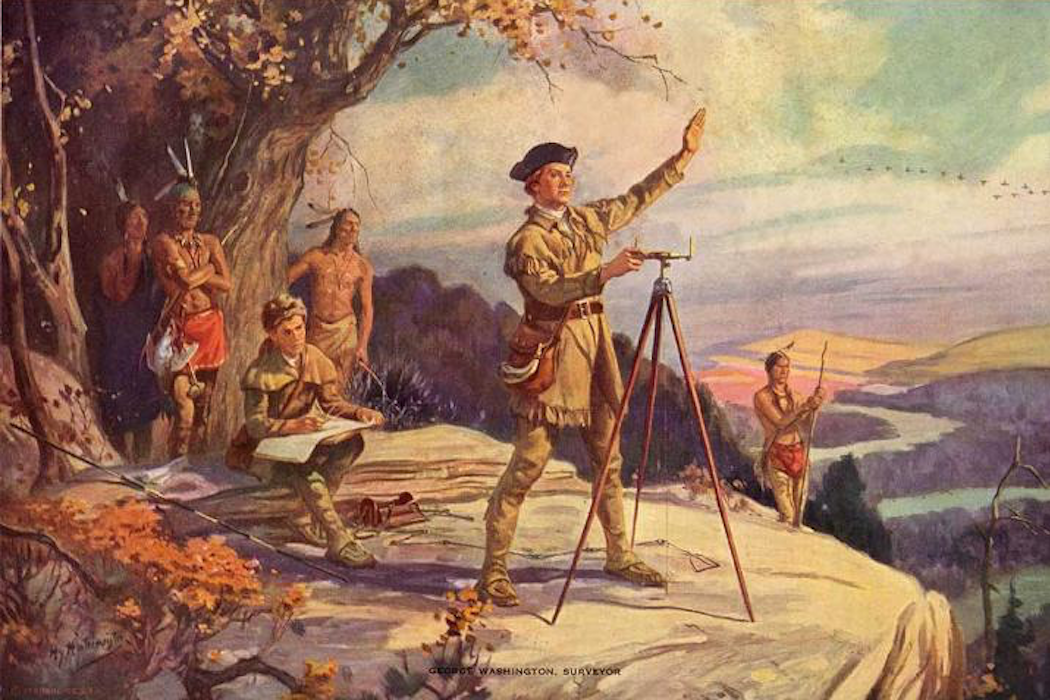
A young George Washington was thrust into the dense, contested wilderness of the Ohio River Valley as a land surveyor for real estate development companies in Virginia.Henry Hintermeister/Public domain via Wikimedia Commons
This Presidents Day, I’ve been thinking about George Washington − not at his finest hour, but possibly at his worst.
In 1754, a 22-year-old Washington marched into the wilderness surrounding Pittsburgh with more ambition than sense. He volunteered to travel to the Ohio Valley on a mission to deliver a letter from Robert Dinwiddie, governor of Virginia, to the commander of French troops in the Ohio territory. This military mission sparked an international war, cost him his first command and taught him lessons that would shape the American Revolution.
As a professor of early American history who has written two books on the American Revolution, I’ve learned that Washington’s time spent in the Fort Duquesne area taught him valuable lessons about frontier warfare, international diplomacy and personal resilience.
The mission to expel the French
In 1753, Dinwiddie decided to expel French fur trappers and military forces from the strategic confluence of three mighty waterways that crisscrossed the interior of the continent: the Allegheny, Monongahela and Ohio rivers. This confluence is where downtown Pittsburgh now stands, but at the time it was wilderness.
King George II authorized Dinwiddie to use force, if necessary, to secure lands that Virginia was claiming as its own.
As a major in the Virginia provincial militia, Washington wanted the assignment to deliver Dinwiddie’s demand that the French retreat. He believe the assignment would secure him a British army commission.
Washington received his marching orders on Oct. 31, 1753. He traveled to Fort Le Boeuf in northwestern Pennsylvania and returned a month later with a polite but firm “no” from the French.
Dinwiddie promoted Washington from major to lieutenant colonel and ordered him to return to the Ohio River Valley in April 1754 with 160 men. Washington quickly learned that French forces of about 500 men had already constructed the formidable Fort Duquesne at the forks of the Ohio. It was at this point that he faced his first major test as a military leader. Instead of falling back to gather more substantial reinforcements, he pushed forward. This decision reflected an aggressive, perhaps naive, brand of leadership characterized by a desire for action over caution.
Washington’s initial confidence was high. He famously wrote to his brother that there was “something charming” in the sound of whistling bullets.
The Jumonville affair and an international crisis
Perhaps the most controversial moment of Washington’s early leadership occurred on May 28, 1754, about 40 miles south of Fort Duquesne. Guided by the Seneca leader Tanacharison – known as the “Half King” – and 12 Seneca warriors, Washington and his detachment of 40 militiamen ambushed a party of 35 French Canadian militiamen led by Ensign Joseph Coulon de Jumonville. The Jumonville affair lasted only 15 minutes, but its repercussions were global.
Ten of the French, including Jumonville, were killed. Washington’s inability to control his Native American allies – the Seneca warriors executed Jumonville – exposed a critical gap in his early leadership. He lacked the ability to manage the volatile intercultural alliances necessary for frontier warfare.
Washington also allowed one enemy soldier to escape to warn Fort Duquesne. This skirmish effectively ignited the French and Indian War, and Washington found himself at the center of a burgeoning international crisis.
Defeat at Fort Necessity
Washington then made the fateful decision to dig in and call for reinforcements instead of retreating in the face of inevitable French retaliation. Reinforcements arrived: 200 Virginia militiamen and 100 British regulars. They brought news from Dinwiddie: congratulations on Washington’s victory and his promotion to colonel.
His inexperience showed in his design of Fort Necessity. He positioned the small, circular palisade in a meadow depression, where surrounding wooded high ground allowed enemy marksmen to fire down with impunity. Worse still, Tanacharison, disillusioned with Washington’s leadership and the British failure to follow through with promised support, had already departed with his warriors weeks earlier. When the French and their Native American allies finally attacked on July 3, heavy rains flooded the shallow trenches, soaking gunpowder and leaving Washington’s men vulnerable inside their poorly designed fortification.
The battle of Fort Necessity was a grueling, daylong engagement in the mud and rain. Approximately 700 French and Native American allies surrounded the combined force of 460 Virginian militiamen and British regulars. Despite being outnumbered and outmaneuvered, Washington maintained order among his demoralized troops. When French commander Louis Coulon de Villiers – Jumonville’s brother – offered a truce, Washington faced the most humbling moment of his young life: the necessity of surrender. His decision to capitulate was a pragmatic act of leadership that prioritized the survival of his men over personal honor.
The surrender also included a stinging lesson in the nuances of diplomacy. Because Washington could not read French, he signed a document that used the word “l’assassinat,” which translates to “assassination,” to describe Jumonville’s death. This inadvertent admission that he had ordered the assassination of a French diplomat became propaganda for the French, teaching Washington the vital importance of optics in international relations.
The 1754 campaign ended in a full retreat to Virginia, and Washington resigned his commission shortly thereafter. Yet, this period was essential in transforming Washington from a man seeking personal glory into one who understood the weight of responsibility.
He learned that leadership required more than courage – it demanded understanding of terrain, cultural awareness of allies and enemies, and political acumen. The strategic importance of the Ohio River Valley, a gateway to the continental interior and vast fur-trading networks, made these lessons all the more significant.
Ultimately, the hard lessons Washington learned at the threshold of Fort Duquesne in 1754 provided the foundational experience for his later role as commander in chief of the Continental Army. The decisions he made in Pennsylvania and the Ohio wilderness, including the impulsive attack, the poor choice of defensive ground and the diplomatic oversight, were the very errors he would spend the rest of his military career correcting.
Though he did not capture Fort Duquesne in 1754, the young George Washington left the woods of Pennsylvania with a far more valuable prize: the tempered, resilient spirit of a leader who had learned from his mistakes.
Christopher Magra does not work for, consult, own shares in or receive funding from any company or organization that would benefit from this article, and has disclosed no relevant affiliations beyond their academic appointment.
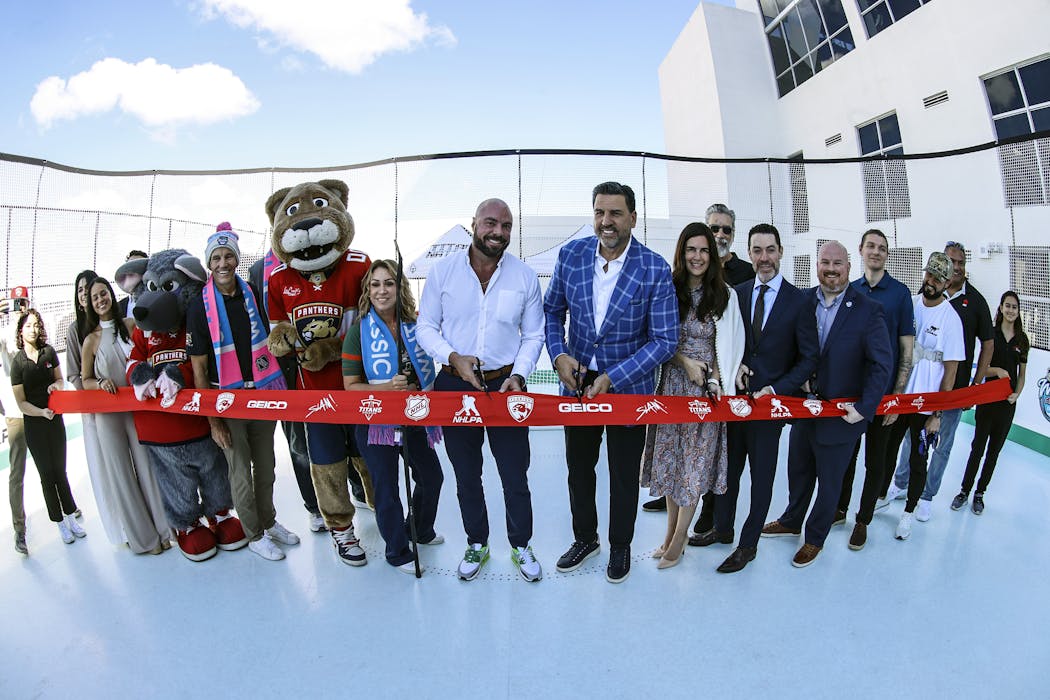
Local officials get to participate in events such as ribbon cuttings, celebrating projects they may have helped make happen.NHLI/Eliot J. Schechter via Getty Images
But things are much less heated at the local level. A survey of more than 1,400 local officials by the Carnegie Corporation and CivicPulse found that local governments are “largely insulated from the harshest effects of polarization.” Communities with fewer than 50,000 residents proved especially resilient to partisan dysfunction.
Why this difference? As a political scientist, I believe that lessons from the local level not only open a window onto how polarization works but also the dynamics and tools that can help reduce it.
Problems are more concrete
Local governments deal with concrete issues – sometimes literally, when it comes to paving roads and fixing potholes. In general, cities and counties handle day-to-day functions, such as garbage pickup, running schools and enforcing zoning rules. Addressing tangible needs keeps local leaders’ attention fixed on specific problems that call out for specific solutions, not lengthy ideological debates.
By contrast, a lot of national political conflict in the U.S. involves symbolic issues, such as debates about identity and values on topics such as race, abortion and transgender rights. These battles are often divisive, even more so than purely ideological disagreements, because they can activate tribal differences and prove more resistant to compromise.
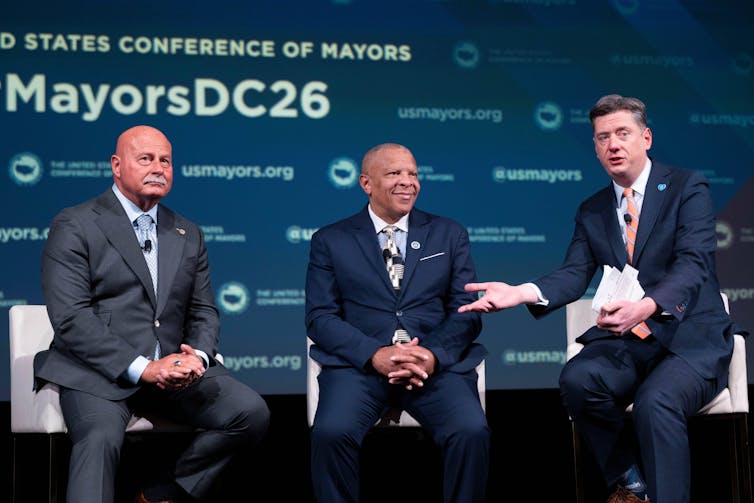
When mayors come together, they often find they face common problems in their cities. Gathered here, from left, are Jerry Dyer of Fresno, Calif., John Ewing Jr. of Omaha, Neb., and David Holt of Oklahoma City. AP Photo/Kevin Wolf
Such arguments at the national level, or on social media, can lead to wildly inaccurate stereotypes about people with opposing views. Today’s partisans often perceive their opponents as far more extreme than they actually are, or they may stereotype them – imagining that all Republicans are wealthy, evangelical culture warriors, for instance, or conversely being convinced that all Democrats are radical urban activists. In terms of ideology, the median members of both parties, in fact, look similar.
These kinds of misperceptions can fuel hostility.
Local officials, however, live among the human beings they represent, whose complexity defies caricature. Living and interacting in the same communities leads to greater recognition of shared interests and values, according to the Carnegie/CivicPulse survey.
Meaningful interaction with others, including partisans of the opposing party, reduces prejudice about them. Local government provides a natural space where identities overlap.
People are complicated
In national U.S. politics today, large groups of individuals are divided not only by party but a variety of other factors, including race, religion, geography and social networks. When these differences align with ideology, political disagreement can feel like an existential threat.
Such differences are not always as pronounced at the local level. A neighbor who disagrees about property taxes could be the coach of your child’s soccer team. Your fellow school board member might share your concerns about curriculum but vote differently in presidential elections.
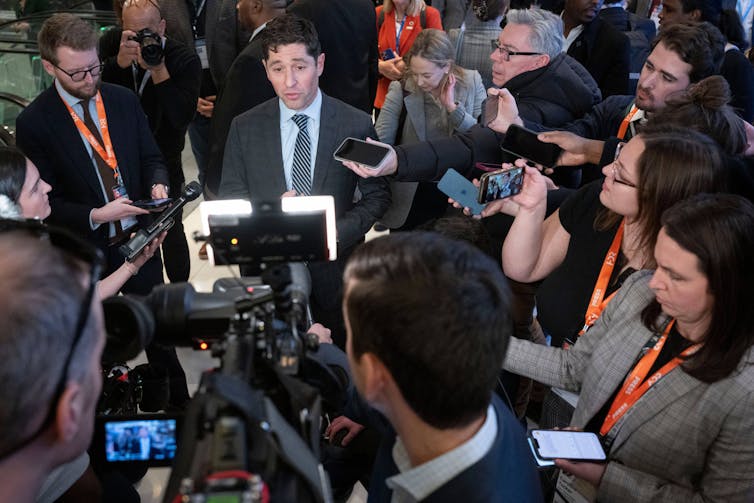
Mayors can find themselves caught up in national debates, as did Minneapolis Mayor Jacob Frey over the Trump administration’s immigration enforcement policies in his city. AP Photo/Kevin Wolf
These cross-cutting connections remind us that political opponents are not a monolithic enemy but complex individuals. When people discover they have commonalities outside of politics with others holding opposing views, polarization can decrease significantly.
Finally, most local elections are technically nonpartisan. Keeping party labels off ballots allows voters to judge candidates as individuals and not merely as Republicans or Democrats.
Nevertheless, the relative partisan calm of local governance suggests that polarization is not inevitable. It emerges from specific conditions that can be altered.
Polarization might be reduced by creating more opportunities for cross-partisan collaboration around concrete problems. Philanthropists and even states might invest in local journalism that covers pragmatic governance rather than partisan conflict. More cities and counties could adopt changes in election law that would de-emphasize party labels where they add little information for voters.
Aside from structural changes, individual Americans can strive to recognize that their neighbors are not the cardboard cutouts they might imagine when thinking about “the other side.” Instead, Americans can recognize that even political opponents are navigating similar landscapes of community, personal challenges and time constraints, with often similar desires to see their roads paved and their children well educated.
The conditions shaping our interactions matter enormously. If conditions change, perhaps less partisan rancor will be the result.
Lauren Hall is a Distinguished Fellow for the Study of Liberalism and a Free Society with the Institute for Humane Studies. She was previously a Pluralism Fellow with the Mercatus Center.
Top state Republicans in Georgia have quietly opened the door for the Republican National Committee to support Lt. Gov. Burt Jones in the state’s hotly contested primary for governor.
The RNC normally maintains strict neutrality in party primaries to let voters — not party leaders — choose its nominee. Any move to intervene in Georgia, however, could dramatically reshape a crowded race for an open governor’s seat in a premiere battleground state. It could give Jones, President Donald Trump’s handpicked choice, a boost in a field that includes Secretary of State Brad Raffensperger, a target of Trump’s ire ever since he refused to echo the president’s falsehoods about the 2020 election in his state.
Georgia’s three RNC members signed letters late last year and early this year waiving the party rule that bars the RNC from intervening in contested primaries, according to three people familiar with the agreement. That move allows the national party to provide financial or operating support to Jones and coordinate with him ahead of the May primary.
It’s unclear whether the RNC will move to support Jones in the crowded primary now that it’s been cleared to do so. But it was the RNC that first reached out to the Georgia party leaders about waiving the rule, according to a person familiar with the process — a sign the national party has at least considered getting off the sidelines. The RNC did not provide a comment.
Josh McKoon, the chair of the Georgia Republican Party, said he signed the letter waiving the RNC’s neutrality rule because Jones has Trump’s endorsement.
“It was a no-brainer for me to sign the letter,” McKoon told POLITICO.
“From my perspective, I was going to remove any barriers to working with the RNC from a candidate that the president has clearly signaled as the candidate he wants to be the next governor,” he said.
Jones has long been a vocal supporter of Trump. He endorsed him for president in 2015, and as a state senator, was among the 16 Republicans who attempted to serve as electors in 2020 and falsely certify Trump’s loss in Georgia as a win. Jones received Trump’s official endorsement in August, and released a video with Jones last week calling him a “friend” who’s “going to make a great, great governor.”
Limited early public polling shows Jones leading the field, and he maintains a sizable war chest, but the race remains fluid, and a prolonged and expensive primary could complicate Republicans’ general election prospects. RNC support could help Jones fend off rivals and potentially avoid a prolonged primary fight, especially if he can avoid a run-off.
Last week, health care business owner Rick Jackson injected new uncertainty into the race by launching a surprise gubernatorial bid, pledging to spend $50 million of his own money to support his campaign. He has presented himself as a Trump-aligned political outsider, a message that could cut into Jones’ base.
A Cygnal poll released Monday, after Jackson’s surprise campaign launch, found Jones leading with 22 percent support among likely primary voters. Jackson followed at 16 percent, with Raffensperger at 10 percent and Attorney General Chris Carr at 7 percent.
To avoid a June run-off, a candidate must secure an outright majority of the vote in the May 19 primary — a high bar in an increasingly crowded field.
“I can see a path to victory for all four of them right now.” said Jason Shepherd, a former Cobb County GOP chair who is backing Carr. “But Burt Jones’ path to victory just got a lot harder” with Jackson’s entrance.
Under RNC rules, the national party is barred from backing candidates in primaries unless the filing deadline has passed and a candidate is running unopposed. That requirement, known as Rule 11, can be waived if all three of a state’s RNC members sign off. Such Rule 11 agreements have been used sparingly in recent cycles.
State party leaders in North Carolina have green-lit early support for former RNC chair Michael Whatley, another Trump-backed candidate running for the state’s open Senate seat.
Both Georgia and North Carolina are top priorities for the Republican Party in November. In Georgia, Republicans are looking to retain control of the governor’s mansion in a state that Trump flipped in 2024. The steps taken in both states raise questions about whether the RNC could face pressure to take similar moves in other states’ primaries where Trump decides to take sides, such as in Louisiana, where he endorsed Rep. Julia Letlowin her primary challenge against Sen. Bill Cassidy.
“We all look very carefully at when [Trump] decides to weigh in a race, because he doesn’t always do that,” McKoon said. “I certainly didn’t want to be serving as an obstacle to the RNC being able to coordinate with his campaign and provide support.”