Councilmember Clay Capp says it was ‘really outrageous’ for the procedural drama to film on public streets amid a historic ice and snow storm. Continue reading…The Boot – Country Music News, Music Videos and Songs









Councilmember Clay Capp says it was ‘really outrageous’ for the procedural drama to film on public streets amid a historic ice and snow storm. Continue reading…The Boot – Country Music News, Music Videos and Songs
Councilmember Clay Capp says it was ‘really outrageous’ for the procedural drama to film on public streets amid a historic ice and snow storm. Continue reading…Country Music News – Taste of Country
Reading Time: 3 minutes
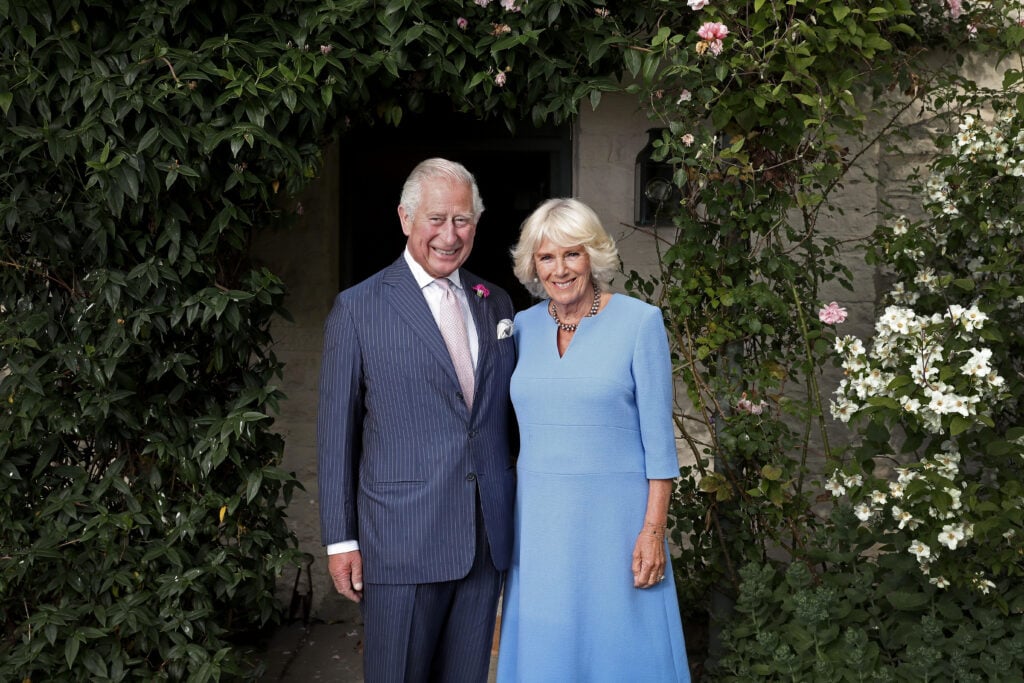
Compared to other royals, Camilla Parker Bowles doesn’t receive much attention from the American media.
But a new report about Queen Camilla’s drinking habits could change that.
According to an article published by UK tabloid The Globe, Camilla is having a hard time coping with the stresses of the throne and King Charles’ ongoing cancer treatments.
And she’s reportedly developed some unhealthy coping mechanisms.
“Her drinking has always been an issue, but lately she’s been taking it up a level. Camilla is hitting the bottle hard and is usually three sheets to the wind by evening,” one source tells the outlet.
“Often, she’ll be knocking it back during the daytime as well. That’s when she tends to be at her most aggressive — overexerting herself and acting like a power-crazed tyrant.”
Yes, apparently, it’s not only Camilla’s booze consumption that’s a problem. It’s also the fact that she’s drunk on the power of her position.
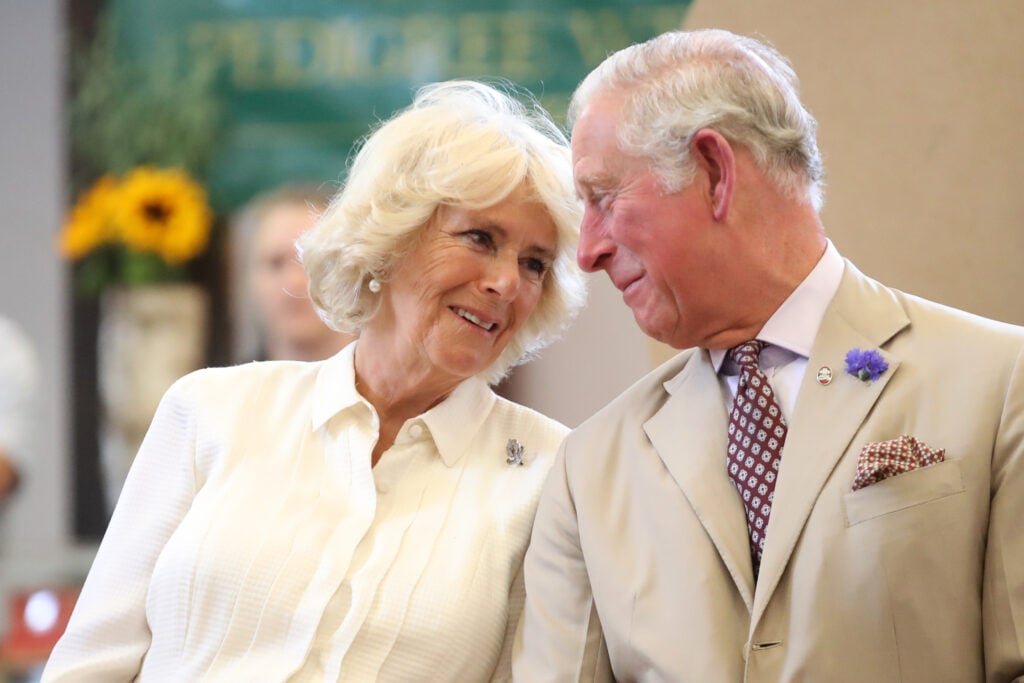
“She charges around barking orders, tearing into anyone who doesn’t fall into line and generally causing chaos throughout the palace,” says the insider.
Obviously, Camilla has tremendous power over those who are beneath her in rank (and since she’s the queen, that’s pretty much everyone).
But the source says she also holds all the cards in her relationship with Charles.
“Camilla is horrendously controlling of Charles. She often insists he stay in his room and raises merry hell if he tries to get up and assert his independence,” the insider claims.
“Of course, her official excuse for this is that he needs rest and she’s doing it for his own good. But everyone knows it’s her way to control him and give herself a platform to assert herself when he’s not there.”
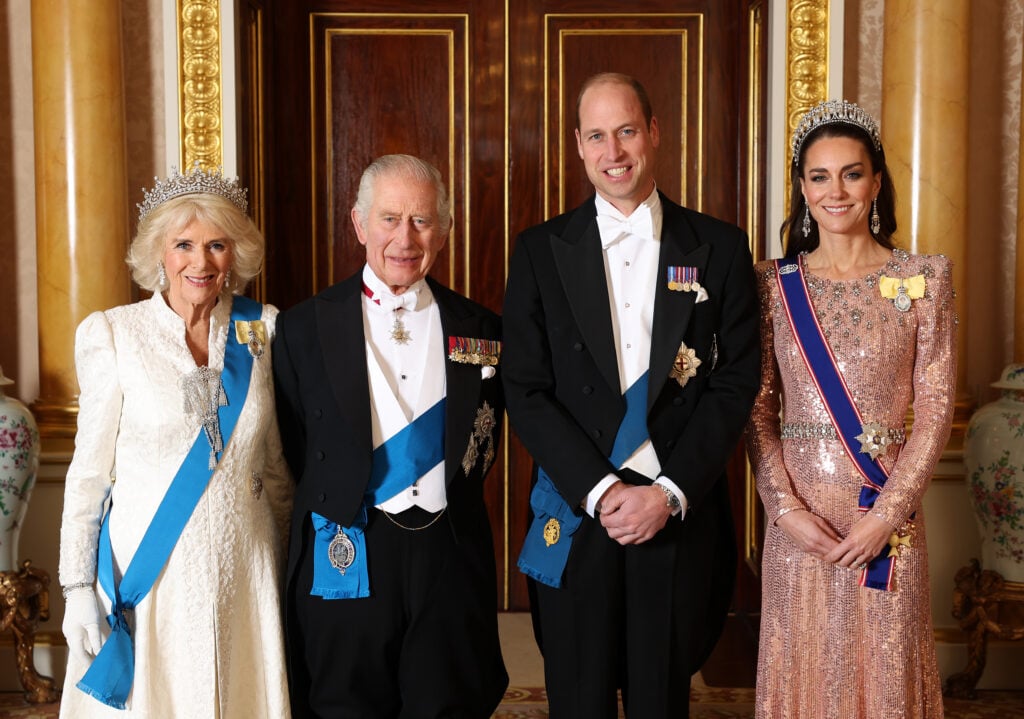
And the source claims that Camilla is just as controlling when it comes to Kate Middleton.
“Camilla isn’t afraid to put Kate in her place any chance she gets,” the insider notes.
“The way she talks to her can be pretty brutal — looking down her nose and effectively treating her like a second-class commoner or menial servant.”
As for Charles’ efforts to reunite with Prince Harry and Meghan Markle? As you may have guessed, Camilla (allegedly) is not a fan!
“She’s told Charles it’s a terrible idea and is chipping away to get him to rescind the invite,” the insider says.
“If they do turn up, she’s vowing to make life as difficult and uncomfortable as possible while they’re in England. But in an ideal world she’ll just put a stop to it altogether. She emphatically believes Meghan and Harry are treacherous, twisted rats who have no place in the royal household.”
It must be exhausting to be constantly clashing with everyone around you. No wonder she needs a drink!
Camilla Parker Bowles Is ‘Hitting the Bottle Hard’ Amid Charles’ … was originally published on The Hollywood Gossip.
The Hollywood Gossip

Reading Time: 3 minutes
Even her own fans love to give Joy-Anna Duggar a hard time.
Sometimes it’s valid backlash. Other times, she’s done nothing wrong.
Her latest video is also getting another reaction from followers.
Is Joy pregnant again?
At the start of this week (and month), Joy-Anna Duggar took to Instagram to share a “get ready with me” video.
“Sunday Morning GRWM,” her caption began.
“New week,” Joy penned on Sunday, February 1. “New month.”
She then quipped: “Same need for coffee.”
Though Joy offered to get coffee for followers who commented while tagging two friends in an apparent raffle, most eyes were on the video.
Most GRWM videos focus upon the person’s face while they do their makeup.
But then, most women Joy’s age (she was born in 1997) who are doing these videos aren’t mothers of three.
This video has an (unsurprising) focus upon what it’s like to get ready when you are a family of five.
Joy is getting ready in this footage. So is Austin. And so are their three children: Gideon, Evelyn, and Gunner.
By the time that Joy is applying makeup, the family is already in the car and driving to church.

Commenters were quick to poke at Joy for … almost every aspect of the video.
“You’re too young and pretty to wear ugly dresses like that. I get that you’re going for modest fashion but I feel like there are way better options,” one commenter opined.
Another simply wrote: “You’re too young to be wearing old lady dresses.”
(Joy wore a lengthy blue dress featuring a beige floral pattern. The internet tells us that this is normal to wear at some church gatherings, particularly in more conservative communities)
One commenter scolded Joy for featuring Gunner’s diaper change in the video. Another gave her at talking-to for drinking coffee. (The first one, we can understand, but not the second)

Some in Joy’s comments suggested that perhaps she has a special reason for wearing the allegedly “frumpy” dress.
Is she hiding a baby bump?
“Are you expecting? You’re always hidden behind things and in baggier clothes,” penned one suspicious commenter.
It is always possible that Joy and Austin, fundamentalist cultists who see procreation as virtuous and as a divine mandate, are expecting Baby #4.
But … by that same token, they’re cultists in a cult that believes that women and their bodies are inherently shameful and dangerous. Hiding their bodies behind unflattering clothing goes with the territory.

To be honest, it’s always possible that Joy is pregnant.
But, if so, she’d either tell fans pretty early on or wait until childbirth.
(Because of how the Duggars view miscarriage, they seldom fit the “standard” timeline of when to make an announcement)
At the moment, the only thing that we know with any certainty is that a lot of people are unhappy with their lives and are spewing unfiltered criticisms at Joy over a GRWM video because that’s their only outlet.
A lot of the feral online behavior in recent decades is just a manifestation of the person’s own misery. This is not a healthy way to express that.
Joy-Anna Duggar Gets Dragged for New Video (But Is She Pregnant?) was originally published on The Hollywood Gossip.
The Hollywood Gossip

The reality stars’ Music City residence is back under contract after a previous deal fell through. Continue reading…Country Music News – Taste of Country

Instead of feeling embarrassed about their stretch marks, these celebrities have proudly talked about (and flaunted) this very normal condition on social media.

Health Digest – Health News, Wellness, Expert Insights

In separate encounters, federal immigration agents in Minneapolis killed Renée Good and Alex Pretti in January 2026.
Shortly after Pretti’s killing, Homeland Security Secretary Kristi Noem said he committed an “act of domestic terrorism.” Noem made the same accusation against Good.
But the label “domestic terrorism” is not a generic synonym for the kind of politically charged violence Noem alleged both had committed. U.S. law describes the term as a specific idea: acts dangerous to human life that appear intended to intimidate civilians, pressure government policy or affect government conduct through extreme means. Intent is the hinge.
From my experience managing counterterrorism analysts at the CIA and the National Counterterrorism Center, I know the terrorism label – domestic or international – is a judgment applied only after intent and context are assessed. It’s not to be used before an investigation has even begun. Terrorism determinations require analytic discipline, not speed.
In the first news cycle, investigators may know the crude details of what happened: who fired, who died and roughly what happened. They usually do not know motive with enough confidence to declare that coercive intent – the element that separates terrorism from other serious crimes – is present.
The Congressional Research Service, which provides policy analysis to Congress, makes a related point: While the term “domestic terrorism” is defined in statute, it is not itself a standalone federal offense. That’s part of the reason why public use of the term can outpace legal and investigative reality.
This dynamic – the temptation to close on a narrative before the evidence warrants it – seen most recently in the Homeland Security secretary’s assertions, echoes long-standing insights in intelligence scholarship and formal analytic standards.

Intelligence studies make a simple observation: Analysts and institutions face inherent uncertainty because information is often incomplete, ambiguous and subject to deception.
In response, the U.S. intelligence community codified analytic standards in the aftermath of the Sept. 11, 2001, terrorist attacks. The standards emphasize objectivity, independence from political influence, and rigorous articulation of uncertainty. The goal was not to eliminate uncertainty but to bound it with disciplined methods and transparent assumptions.
The terrorism label becomes risky when leaders publicly call an incident “domestic terrorism” before they can explain what evidence supports that conclusion. By doing that, they invite two predictable problems.
The first problem is institutional. Once a senior official declares something with categorical certainty, the system can feel pressure – sometimes subtle, sometimes overt – to validate the headline.
In high-profile incidents, the opposite response, institutional caution, is easily seen as evasion – pressure that can drive premature public declarations. Instead of starting with questions – “What do we know?” “What evidence would change our minds?” – investigators, analysts and communicators can find themselves defending a superior’s storyline.

The second problem is public trust. Research has found that the “terrorist” label itself shapes how audiences perceive threat and evaluate responses, apart from the underlying facts. Once the public begins to see the term as a political messaging tool, it may discount future uses of the term – including in cases where the coercive intent truly exists.
Once officials and commentators commit publicly to a version ahead of any assessment of intent and context, confirmation bias – interpreting evidence as confirmation of one’s existing beliefs – and anchoring – heavy reliance on preexisting information – can shape both internal decision-making and public reaction.
This is not just a semantic fight among experts. Most people carry a mental file for “terrorism” shaped by mass violence and explicit ideological targeting.
When Americans hear the word “terrorism,” they likely think of 9/11, the 1995 Oklahoma City bombing or high-profile attacks abroad, such as the 2005 London bombings and December 2025 antisemitic attack in Sydney, where intent was clear.
By contrast, the more common U.S. experience of violence – shootings, assaults and chaotic confrontations with law enforcement – is typically treated by investigators, and understood by the public, as homicide or targeted violence until motive is established. That public habit reflects a commonsense sequence: First determine what happened, then decide why, then decide how to categorize it.
U.S. federal agencies have published standard definitions and tracking terminology for domestic terrorism, but senior officials’ public statements can outrun investigative reality.
The Minneapolis cases illustrate how fast the damage can occur: Early reporting and documentary material quickly diverged from official accounts. This fed accusations that the narrative was shaped and conclusions made before investigators had gathered the basic facts.
Even though Trump administration officials later distanced themselves from initial claims of domestic terrorism, corrections rarely travel as far as the original assertion. The label sticks, and the public is left to argue over politics rather than evidence.
None of this minimizes the seriousness of violence against officials or the possibility that an incident may ultimately meet a terrorism definition.
The point is discipline. If authorities have evidence of coercive intent – the element that makes “terrorism” distinct – then they would do well to say so and show what can responsibly be shown. If they do not, they could describe the event in ordinary investigative language and let the facts mature.
A “domestic terrorism” label that comes before the facts does not just risk being wrong in one case. It teaches the public, case by case, to treat the term as propaganda rather than diagnosis. When that happens, the category becomes less useful precisely when the country needs clarity most.

Brian O’Neill does not work for, consult, own shares in or receive funding from any company or organization that would benefit from this article, and has disclosed no relevant affiliations beyond their academic appointment.
Politics + Society – The Conversation
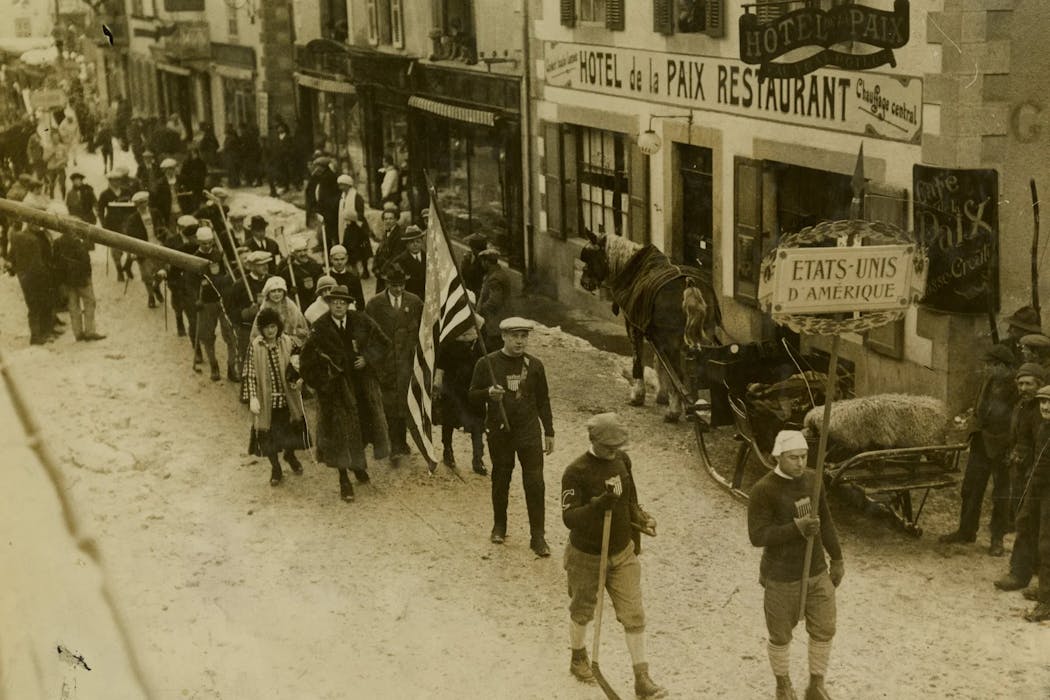
On Dec. 26, 1926, 16,000 hockey fans packed Madison Square Garden to witness the birth of a rivalry between the New York Americans and the brand-new New York Rangers. The game would later be remembered for establishing a foundation of popularity for the sport in New York City.
The only American playing for the Rangers that night also happened to be the largest player in the history of the NHL up to that point, defenseman Clarence “Taffy” Abel.
Standing over 6 feet tall and weighing 225 pounds, Abel was a brutal behemoth on the ice. Yet off the ice, he was a quiet, personable man who charmed sportswriters.
Despite being a foundational figure in American hockey – an Olympic silver medalist and a two-time Stanley Cup champion – Abel has been largely erased from the national memory. His story is not just one of athletic prowess, but of a secret identity maintained for survival and a career ended by a league that turned against him. As a scholar of Olympic media history, I recognize Abel’s story as an important but overlooked example of how race and labor issues can influence public memory.
Taffy Abel, who earned his lifelong nickname from his childhood love of candy, was half-Ojibwe, born in 1900 in Sault Ste. Marie, Michigan. One of Abel’s few surviving relatives, George Jones, a nephew by marriage, recalled that his mother, Charlotte, an Ojibwe woman, encouraged Taffy and his sister to “pass” as white to protect them from the era’s rampant racism and the threat of being sent to an Indian boarding school. Though his heritage remained an open secret in his hometown, Abel maintained his whiteness throughout his hockey career.
His mother died in 1939, and it was only after her death – and years after his retirement – that Abel began to speak openly and proudly of his Indigenous roots. This forced silence is a primary reason his legacy remained obscured; for decades, he was categorized simply as a white American athlete, masking his status as a racial trailblazer.
Abel’s hockey journey was historic. At the 1924 Chamonix Games – the first official Winter Olympics – he was chosen to carry the U.S. flag during the opening ceremony. He led the American team to a silver medal before being recruited by Conn Smythe for the inaugural New York Rangers roster.
Because of his size, and perhaps also because of his biracial identity, which was likely known to many players in the NHL, Abel was forced to fight often in his rookie year. He led the Rangers with 78 penalty minutes, and soon became famous around the league for his jarring and ferocious checking.
In Abel’s second season playing for the Rangers, the team won the Stanley Cup. He became the first American player to win a medal at the Olympic Games and the Stanley Cup, cementing his legacy as one of the finest hockey players in the world. In 1929, he was traded to the Chicago Black Hawks, where he anchored the defense on a team that won the Stanley Cup in 1934.

The end of Abel’s career was not dictated by age or injury, but by a stand for labor dignity. After the 1934 championship, he held out for a salary that reflected his value as a star attraction. Black Hawks management responded by insulting him in the press, portraying Abel as an ungrateful prima donna.
Around the league, executives mocked Abel’s weight, telling newspapers that Abel walked out because he wouldn’t respect a team-mandated diet. Abel believed a team would sign him for 1935, but it soon became clear he had become effectively banned from the league due to his advocacy for equitable pay.
He had been a star attraction for the Black Hawks, and despite leading the team to the Stanley Cup in his final game, Abel never played another game in the NHL. At age 34, he returned to Sault Ste. Marie, operated a café and coached youth hockey, quietly fading from the national spotlight.

Only recently has the NHL acknowledged Abel’s Native American heritage. However, his story presents a challenge to the league’s historical narrative. To celebrate Abel as a pioneering person of color requires the NHL to confront its own role in the systemic racism that forced him to hide his identity. Only recently has the league’s longtime, historical ban on nonwhite players – dating from its founding in 1917 – been an open and popular subject of public discussion.
Furthermore, the history is messy. Because Abel passed as white during his playing days, some modern observers find it difficult to reconcile his achievements with those of later pioneers who broke the color barrier more overtly.
Ultimately, Clarence “Taffy” Abel was a resilient path breaker who navigated artificial borders – between the U.S. and Canada, and between white and Indigenous identities. He was a charter member of the U.S. Hockey Hall of Fame in 1973, and his memory inspired future Indigenous stars like T.J. Oshie.
Yet his name remains largely unknown because, I believe, his life forces a reckoning with a society that dehumanized him. Even Abel’s U.S. Hockey Hall of Fame biography minimizes his heritage, noting “Thought by some to be the first Native American to play in the NHL.”
Abel fought for fair pay, against racism and through physical pain. He died in 1964, but the issues he grappled with – labor exploitation and racial identity – remain at the forefront of the American story today.

Michael J. Socolow does not work for, consult, own shares in or receive funding from any company or organization that would benefit from this article, and has disclosed no relevant affiliations beyond their academic appointment.
Politics + Society – The Conversation
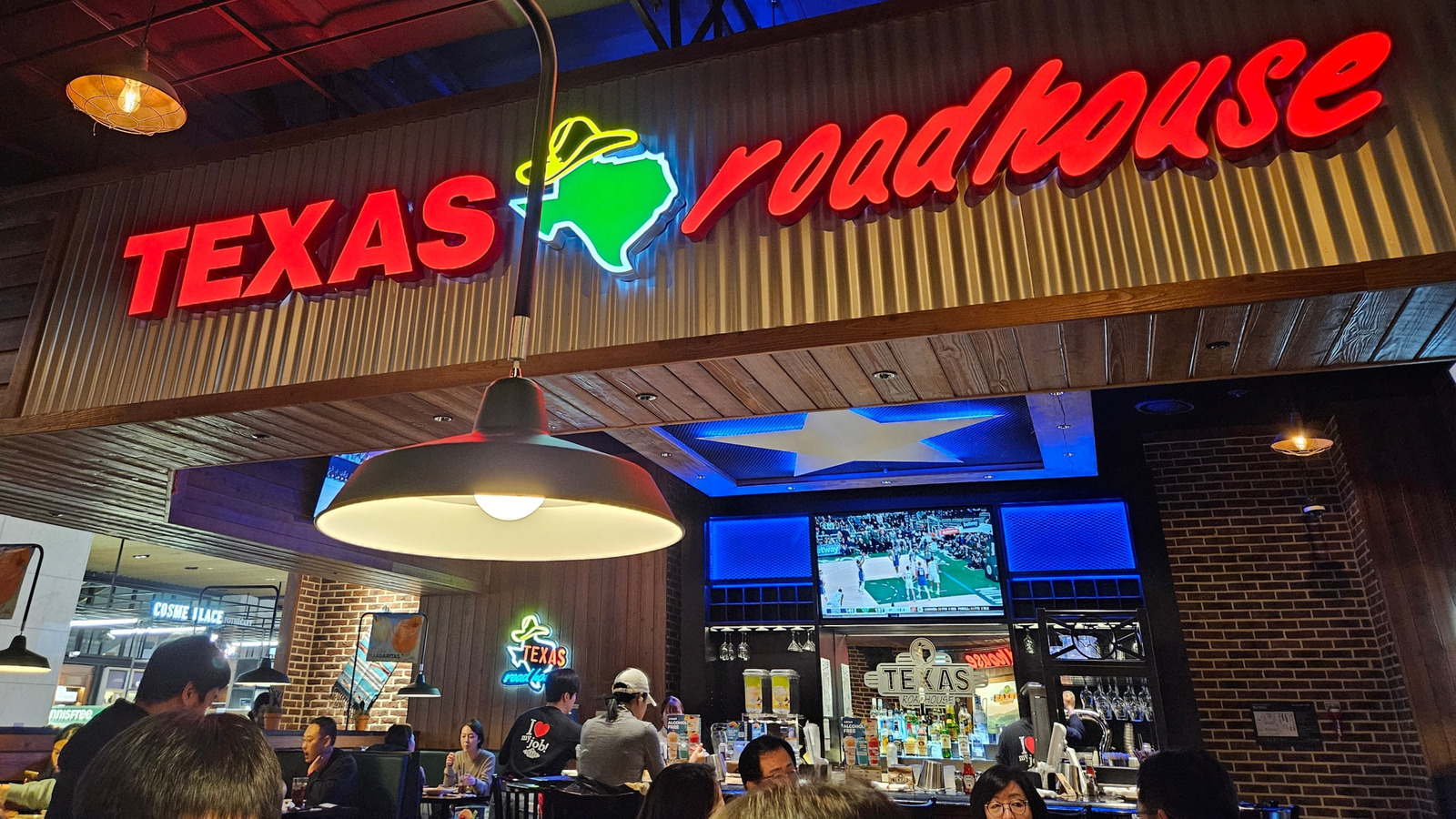
If you’re a fan of Texas Roadhouse, then stop! You need to know about these upcoming changes that are likely going to improve your experience.
Food Republic – Restaurants, Reviews, Recipes, Cooking Tips

Uncrustables are a convenient frozen peanut butter and jelly sandwich, but they’re pricey. Aldi has its own brand that is just as good and lower priced.

Mashed – Fast Food, Celebrity Chefs, Grocery, Reviews