It would have been her 80th birthday. Continue reading…The Boot – Country Music News, Music Videos and Songs









It would have been her 80th birthday. Continue reading…The Boot – Country Music News, Music Videos and Songs
It would have been her 80th birthday. Continue reading…Country Music News – Taste of Country

The phenomenon, a symptom of GLP-1 use, may not be a source of concern for most people. But for stars who are often in the spotlight, it’s a different story.

Health Digest – Health News, Wellness, Expert Insights

FOX Sports’ Michael Cohen examines a key Big East matchup: No. 3 UConn vs. No. 25 Seton Hall.FOX Sports Digital
Many chefs have favorite tools they always use in the kitchen, and Ina Garten is no exception. This appliance is one she certainly can’t live without.
Food Republic – Restaurants, Reviews, Recipes, Cooking Tips

Miranda Lambert’s gearing up for her 2026 tour and sharing some of her go-to health hacks for life on the road. Continue reading…The Boot – Country Music News, Music Videos and Songs
Miranda Lambert’s gearing up for her 2026 tour and sharing some of her go-to health hacks for life on the road. Continue reading…Country Music News – Taste of Country

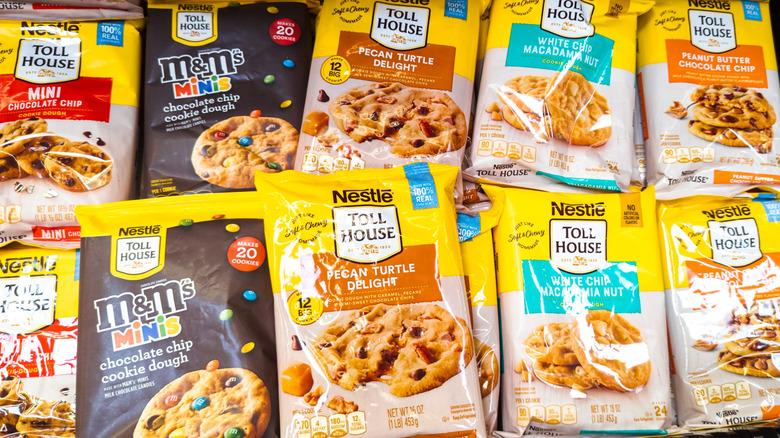
What could be better than a batch of fresh, hot, crisp french fries? Cookie fries, you say? Okay, we’re sold. Best of all, you can make them with premade dough.
Food Republic – Restaurants, Reviews, Recipes, Cooking Tips
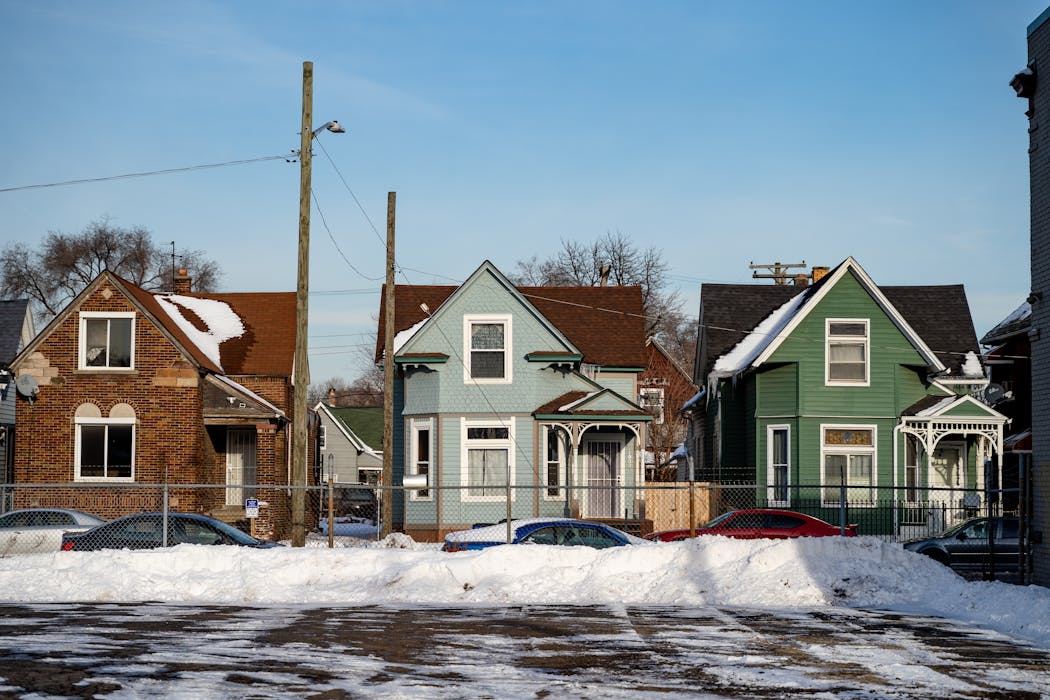
For Detroit homeowners over 65 who overwhelmingly live on fixed incomes, unexpected costs – increases in grocery prices, rising health care premiums or an emergency repair – heighten their risk of financial instability and can even lead to them falling into poverty.
I am a policy researcher at Poverty Solutions at the University of Michigan. Our initiative uses action-based research, an approach that seeks to understand real-world problems and inform policy changes that could make life work better for people with low incomes. The center recently examined data from the 2023 American Community Survey to explore how low-income seniors in Detroit are affected by declining housing values and high housing costs compared to seniors across Michigan.
Federal, state and local programs to help seniors with these costs are already strained. As the population of older adults in metro Detroit continues to grow, demand for support services, such as caregiving and healthy meal programs, will likely increase.
The poverty rate of senior-headed households in Detroit is nearly twice as high as the rate statewide.
Detroit seniors, both owners and renters, are more likely to be housing cost-burdened than Michigan seniors overall, with 45% paying more than 30% of their income on housing costs compared to 31% of seniors statewide. This is partially driven by lower median incomes in the city compared to the state.
Even when we focus on the seniors who would be considered the most financially stable, those who own their homes free and clear, the proportion burdened by housing costs is twice as high as the state: 32% versus 16%.
Lower incomes aren’t the only thing driving the higher housing cost burden. Detroit seniors pay more for all homeownership costs, including utilities – not only as a proportion of home values and income, but also in terms of real costs.
Detroiters face higher rates for auto insurance, and they pay more for utilities, compared to others in the state, adding to a situation where many residents, especially seniors on fixed incomes, struggle to make ends meet.
While the cost of living in urban areas is often higher compared to suburban and rural places, my analysis found that comparative costs for insurance, water, electricity and gas are lower in cities such as Milwaukee and Pittsburgh, which points to systemic issues that might be unique to Detroit.
Insurance and property taxes are also higher for seniors in Detroit compared to seniors across the state, especially relative to median home values. Detroit seniors pay the same or slightly more for these essentials despite living in homes that are worth less, based on the analysis.
The median house value for senior property owners in Detroit is $65,000, compared to $170,000 for seniors in Michigan.
Detroit lost over half a million residents between 1980 and 2020, causing an oversupply of single-family housing stock and a steady drop in home prices.
As residents left and businesses followed, the property tax base eroded. To generate the same revenue as cities with a richer tax base, Detroit levies property taxes at relatively high rates. Detroiters face a property tax rate close to 3%, significantly higher than the national average of 1.38%.
The housing market in Detroit has seen such large declines in property values that a disconnect has emerged. The replacement cost of a home, which is the actual expense required to reconstruct the dwelling, is often substantially higher than its current market value. This makes the cost of homeowner’s insurance disproportionately expensive relative to the market value of a home in Detroit.
A property’s condition and the condition of neighboring properties also raises the cost of homeowner’s insurance because insurance premiums are primarily influenced by the risk associated with insuring a property. Poor property and neighborhood conditions limit the availability of homeowner’s insurance, driving those who want homeowner’s insurance to purchase costly policies from insurers of last resort, or companies that provide coverage to people who cannot obtain it through other means due to high insurance risks.
The high cost drives many Detroit residents to forgo homeowner’s insurance. According to my analysis, almost 35% of Detroit seniors do not insure their homes, putting their main financial asset at risk.
Utility bills in Detroit are higher compared to those statewide for two reasons: higher use and higher rates. The housing stock in Detroit is significantly older, with 88% of Detroit seniors living in houses built before 1960, compared to 34% of seniors in the rest of the state. These older homes use more energy because they often lack modern insulation and have single-paned windows, outdated appliances, older plumbing fixtures and poor seals around windows and doors.
Detroiters and others in Michigan served by DTE Energy, a utility provider, pay gas and electricity rates that are higher than others in the state. Detroiters also pay more for utilities due to a 5% “utility users tax” added to their gas and electricity bills. This surcharge isn’t new. It stems from legislation originally passed in the 1970s, and the funds collected flow to the Public Lighting Authority, which is responsible for improving and maintaining street lights in the city, and to the Detroit Police Department.
In the wake of Detroit’s bankruptcy filing in 2013, the Detroit Water and Sewerage Department carried out widespread shut-offs. From 2014 to 2020, the shut-offs affected as many as 141,000 Detroit residents, mostly those with low incomes. The crisis garnered national and international attention.
The initial crisis has passed, yet the cost of water continues to increase across the entire state, with those in the metro Detroit area served by the Great Lakes Water Authority seeing substantially higher rate increases than the state overall to cover deferred maintenance and infrastructure costs.
Costs stemming from isolation and disability exacerbate the financial strain Detroit seniors already face.
Several factors contribute to older adults living alone, including increased life expectancy for women as well as children and family members moving farther away from each other. Older adults living alone are also more likely to be poorer than older adults who are a part of a larger household.
This issue is more pronounced in Detroit, where 54.7% of seniors live alone compared to the 43.2% statewide average. Living alone increases the risk of social isolation, which is linked to poorer health outcomes. Detroit seniors also have higher rates of disability than other seniors in the state of Michigan, which can lead to higher health care costs, decreased mobility and increased social isolation.
Historically the demand for support outstrips the available resources, with only a small proportion of eligible households receiving energy assistance. And now, programs that help vulnerable seniors with the costs of utilities are at risk of funding cuts.
Detroit Water and Sewerage Department’s Lifeline Plan, launched in 2022, ran out of state and federal money in October 2025.
Meanwhile, the entire staff that administers the federal Low Income Home Energy Assistance Program, known as LIHEAP, was cut in April 2025. While the program is funded in the continuing resolution passed on Nov. 12, 2025, it is zeroed out in the president’s fiscal year 2026 proposed budget.
Even before funding uncertainties emerged, Detroit seniors who own their homes faced institutional barriers accessing property tax relief, putting many at risk of tax foreclosure. Additionally, Detroiters struggle to keep up with home repair costs, heightened by the needs of older homes and because the home repair assistance system is fragmented and difficult to access.
Without these programs, Detroit seniors will be left without an essential lifeline.

Amanda Nothaft does not work for, consult, own shares in or receive funding from any company or organization that would benefit from this article, and has disclosed no relevant affiliations beyond their academic appointment.
Politics + Society – The Conversation
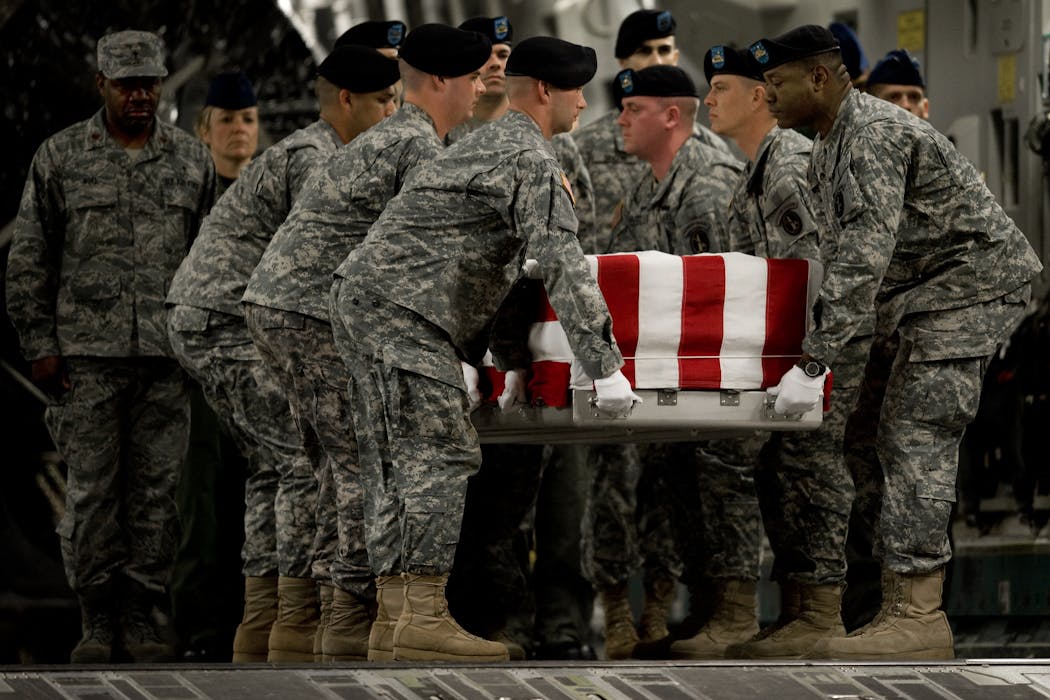
Despite public support in the U.S. for deposing Venezuelan leader Nicolás Maduro, President Donald Trump is unlikely to find that level of support for fighting an actual war in that country.
Even as Trump tries to work through Delcy Rodríguez, Maduro’s vice president and now the acting leader of the country, to manage Venezuela, there are echoes of President George W. Bush in Iraq with Trump saying that the United States will “run” Venezuela and “nurse it back to health” with Venezuelan oil wealth. None of that – which requires a lot of control by Washington and a major presence on the ground – can or will happen without a significant commitment of U.S. military forces, however, which Trump hasn’t ruled out.
“We’re not afraid of boots on the ground,” Trump said.
Yet U.S. citizens have been and remain deeply skeptical of military action in Venezuela. From Lyndon Johnson to George W. Bush, history shows that leaders often pay a high political price – and costs to their legacy, too – when wars they start or expand become unpopular.
As an expert on U.S. foreign policy and regime change wars, my research shows that every major U.S. war since 1900 – especially those that involved regime change – was buoyed at its outset by a big story with a grand purpose or objective. This helped galvanize national support to bear the costs of these wars.
During the Cold War, a story about the dangers of Soviet power to American democracy and the need to combat the spread of communism brought strong public support, at least initially, for wars in Korea and Vietnam, along with smaller operations in the Caribbean and Latin America.
In the 2000s and 2010s, the dominant narrative about preventing another Sept. 11 and quelling global terrorism generated strong initial public support for wars in Iraq – 70% in 2003 – and Afghanistan, 88% in 2001.
A big problem Trump now faces is that no similar story exists for Venezuela.
The administration’s justifications for war cover a hodgepodge of reasons, such as stopping drugs that flow almost exclusively to Europe, not the U.S.; seizing oil fields that benefit U.S. corporations but not the wider public; and somehow curtailing China’s efforts to build roads and bridges in Latin America.
All these are unrelated to any story-driven sense of collective mission or purpose. Unlike Korea or Afghanistan at the start, Americans don’t know what war in Venezuela will bring them and whether it is worth the costs.
This lack of a holistic story or broad rationale shows up in the polls. In November, only 15% of Americans saw Venezuela as a national emergency. A plurality, 45%, opposed an overthrow of Maduro. After Maduro was removed in early January 2026, Americans’ opposition to force in Venezuela grew to 52%. No rally around the flag here.
Americans also worry about where things are heading in Venezuela, with 72% saying Trump has not clearly explained plans going forward. Few want the mantle of regime change, either. Nine in 10 say Venezuelans, not the United States, should choose their next government. And more than 60% oppose additional force against Venezuela or other Latin American countries.
Only 43% of Republicans want the United States to dominate the Western Hemisphere, indicating Trump’s foreign policy vision isn’t even popular in his own party.
Overall, these numbers stand in sharp contrast to past U.S. wars bolstered by big stories, where there was generally a deep, bipartisan consensus behind using force.
For the moment, 89% of Republicans support removing Maduro. But 87% of Democrats and 58% of independents are opposed.
Reflecting the national skepticism – and in a rebuke of Trump – the U.S. Senate advanced a measure to final vote requiring Trump to get congressional approval before taking further military action in Venezuela. Five Senate Republicans joined all Democratic senators in voting for the measure.
All told, the U.S. political system is flashing red when it comes to war in Venezuela.
Research shows that U.S. regime change wars almost never go as planned. Yet, the hubris of U.S. leaders sometimes causes them to ignore this fact, which can result in deadly trouble. In Iraq, influential Vice President Dick Cheney told one interviewer, “We’ll be greeted as liberators.” We weren’t, and U.S. forces got bogged down in a bloody insurgency war.
Experts say the same trouble could come in Venezuela.

What might stop the United States from rolling into a deeper war that’s not in line with how the public views U.S. interests? My research shows that the answer lies with U.S. leaders taking steps to back away from owning what comes next in Venezuela.
This turns a lot on presidential rhetoric. When leaders make robust commitments to action, it often boxes them in politically later on to follow through, even if they don’t want to do so. Their words create what political scientists call “audience costs,” which are domestic political setbacks, or punishment, that leaders will face if they fail to follow through on what they promised to do.
Audience costs can even form in a case like Venezuela, because despite limited public support for force, the media along with proponents of war inside and outside government often pick up on a president’s words and produce a churning conversation. That conversation is visible now in the news cycle, with leading Republicans and other prominent voices calling for more robust action. It’s the “you broke it, you fix it” discussion.
This churn raises questions about the president’s credibility that sometimes makes leaders feel boxed in to act, even when public support is questionable.
As a presidential candidate in 2008, Barack Obama promised to devote greater attention and resources to the war in Afghanistan. When he got in office, Obama’s words came back to bite him. Political pressure generated by his campaign pledge made it almost impossible for Obama to avoid surging troops into Afghanistan at a much higher level than what he intended.
While presidents should always strive to keep the public informed of the direction policy is headed, research shows that leaders can avoid the trap of audience costs by remaining relatively vague and noncommittal, which the public now prefers, about future military actions.
On Venezuela, Trump has done some of this vague language work already by sidestepping specifics about when and if force will be used again, and by also downplaying talk of U.S.-led democracy promotion. If he stops talking about “running” Venezuela and adopts the more measured language used by advisers such as Secretary of State Marco Rubio, who says the goal is to “move (Venezuela) in a certain direction” but not run the country, Trump could take another step away from being boxed in to do more militarily.
Events on the ground in Venezuela might also factor into future U.S. policy. Obama would not have faced the political pressure for the surge that he did when coming to office if the Afghan war had been going in a more positive direction.
Venezuela is close to economic collapse, according to some experts, due to Caracas’ inability to reap the profits of selling oil abroad. If that happens, political chaos could follow and leave Trump, like Obama in Afghanistan, feeling lots of pressure to act militarily, especially if Trump is still saying he “runs” Venezuela.
Again, Americans don’t want that, which means taking steps, such as loosening the current oil embargo, to alleviate economic pain in Venezuela might make sense for Trump. Otherwise, if American troops are sent in by Trump and deaths mount, even a president deemed virtually untouchable by scandal and failure could find himself finally paying a political price for his decisions.

Charles Walldorf is affiliated with Defense Priorities.
Politics + Society – The Conversation