Here’s everything we know about the alternative halftime show. Continue reading…Country Music News – Taste of Country








Here’s everything we know about the alternative halftime show. Continue reading…Country Music News – Taste of Country

These days, brands rarely launch mascara with a singular shade. Colorful mascaras have been on the rise these past few years, as evidenced by the icy and blue mascara trend. And now, 2026 is all…
E! Online (US) – Top Stories

Angelina Jolie and Brad Pitt’ son Pax Jolie-Pitt is ready for his close-up. Well, kind of.
In a rare public appearance, the 22-year-old was happy to snap a photo with director Garrett Patten and…
E! Online (US) – Top Stories
Reading Time: 3 minutes
The timing couldn’t be worse.
The week that her husband’s approval ratings hit record lows happens to be the same week that Melania Trump is debuting her self-titled documentary.
And if the early reviews and box office forecasts are any indication, the film is about to endure one of the worst receptions in modern Hollywood history.
On the review site Letterboxd, users have been bombarding Melania with horrendous feedback.
“I really don’t care, do u? ½ star,” wrote one user, referencing a slogan written on a jacket that Melania once wore, seemingly in response to her critics.
“I heard all of her lines are taken from a Michelle Obama documentary,” another wrote.
“Nobody asked for this absolute piece of flaming garbage,” a third chimed in.
A fourth critic was even more to the point, writing, “ABOLISH ICE. RELEASE THE EPSTEIN FILES.”
Many of those reviews have since been deleted, a move that many believe was made at the behest of someone working for the Trump administration,
Of course, the bad reviews are to be expected, and the Trumps will likely just chalk them up to vitriol from the “haters and losers” (although by most accounts, the film, directed by disgraced Hollywood exile Brett Ratner, is genuinely bad by just about any metric).
But what Donald and Melania may not have anticipated is the fact that the film is also on track to be a historic box office bomb.
Social media users in multiple cities have reported that in the theaters closest to them, every single seat is still available, meaning not a single ticket has been sold.
Of course, documentaries generally don’t make much money, and documentaries fawning about historically unpopular regimes are only of interest years later, once the threat is extinguished.
It’s enough to make you wonder why Amazon Studios and MGM (which is owned by Amazon) would shell out a reported budget of $75 million for such a risky venture.
Many believe the answer to that question is that Jeff Bezos did not expect an immediate return on his investment.
“They paid Melania Trump $28 million to make a movie absolutely nobody wanted to see. That’s called a bribe, folks,” wrote one user on X (formerly Twitter).
“The question we need to be asking about the Melania movie is what does Jeff Bezos want so badly from the Trump admin he was willing to spend $40 million of his own money making this crapola?” another chimed in.
Like Mark Zuckerberg, Bezos was critical of Trump during his first term in office, but he’s fallen into line for Trump 2.0.
So it’s not hard to see why so many are side-eyeing this particular venture (which reportedly placed a cool $28 million directly in Melania’s pocket).
Maybe Melania will defy the odds and pull in big box office numbers on the strength of word of mouth — but something tells us Bezos is content to wait for a different sort of compensation.
Melania Trump Fights Back Against Hilariously Bad Reviews of Her New Documentary was originally published on The Hollywood Gossip.
The Hollywood Gossip
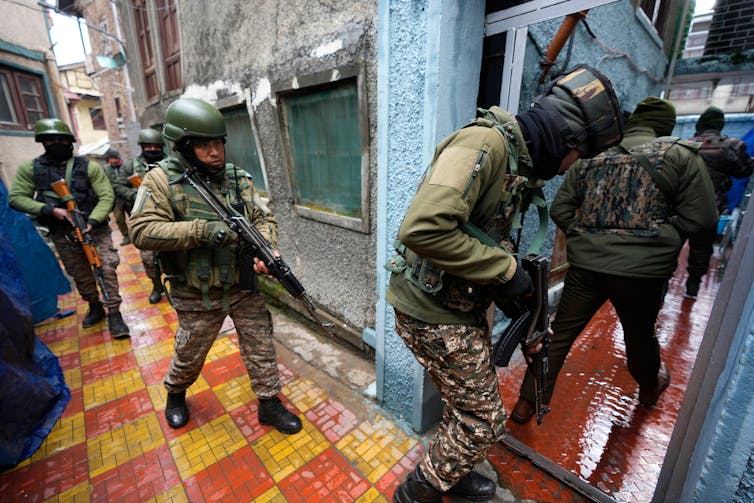
As the operations of Immigration and Customs Enforcement have intensified over the past year, politicians and journalists alike have begun referring to ICE as a “paramilitary force.”
Rep. John Mannion, a New York Democrat, called ICE “a personal paramilitary unit of the president.” Journalist Radley Balko, who wrote a book about how American police forces have been militarized, has argued that President Donald Trump was using the force “the way an authoritarian uses a paramilitary force, to carry out his own personal grudges, to inflict pain and violence, and discomfort on people that he sees as his political enemies.” And New York Times columnist Jamelle Bouie characterized ICE as a “virtual secret police” and “paramilitary enforcer of despotic rule.”
All this raises a couple of questions: What are paramilitaries? And is ICE one?
As a government professor who studies policing and state security forces, I believe it’s clear that ICE meets many but not all of the most salient definitions. It’s worth exploring what those are and how the administration’s use of ICE compares with the ways paramilitaries have been deployed in other countries.
The term paramilitary is commonly used in two ways. The first refers to highly militarized police forces, which are an official part of a nation’s security forces. They typically have access to military-grade weaponry and equipment, are highly centralized with a hierarchical command structure, and deploy in large formed units to carry out domestic policing.
These “paramilitary police,” such as the French Gendarmerie, India’s Central Reserve Police Force or Russia’s Internal Troops, are modeled on regular military forces.
The second definition denotes less formal and often more partisan armed groups that operate outside of the state’s regular security sector. Sometimes these groups, as with the United Self-Defense Forces of Colombia, emerge out of community self-defense efforts; in other cases, they are established by the government or receive government support, even though they lack official status. Political scientists also call these groups “pro-government militias” in order to convey both their political orientation in support of the government and less formal status as an irregular force.
They typically receive less training than regular state forces, if any. How well equipped they are can vary a great deal. Leaders may turn to these informal or unofficial paramilitaries because they are less expensive than regular forces, or because they can help them evade accountability for violent repression.
Many informal paramilitaries are engaged in regime maintenance, meaning they preserve the power of current rulers through repression of political opponents and the broader public. They may share partisan affiliations or ethnic ties with prominent political leaders or the incumbent political party and work in tandem to carry out political goals.
In Haiti, President François “Papa Doc” Duvalier’s Tonton Macouts provided a prime example of this second type of paramilitary. After Duvalier survived a coup attempt in 1970, he established the Tonton Macouts as a paramilitary counterweight to the regular military. Initially a ragtag, undisciplined but highly loyal force, it became the central instrument through which the Duvalier regime carried out political repression, surveilling, harassing, detaining, torturing and killing ordinary Haitians.
The recent references to ICE in the U.S. as a “paramilitary force” are using the term in both senses, viewing the agency as both a militarized police force and tool for repression.
There is no question that ICE fits the definition of a paramilitary police force. It is a police force under the control of the federal government, through the Department of Homeland Security, and it is heavily militarized, having adopted the weaponry, organization, operational patterns and cultural markers of the regular military. Some other federal forces, such as Customs and Border Patrol, or CBP, also fit this definition.
The data I have collected on state security forces show that approximately 30% of countries have paramilitary police forces at the federal or national level, while more than 80% have smaller militarized units akin to SWAT teams within otherwise civilian police.
The United States is nearly alone among established democracies in creating a new paramilitary police force in recent decades. Indeed, the creation of ICE in the U.S. following the terrorist attacks of Sept. 11, 2001, is one of just four instances I’ve found since 1960 where a democratic country created a new paramilitary police force, the others being Honduras, Brazil and Nigeria.
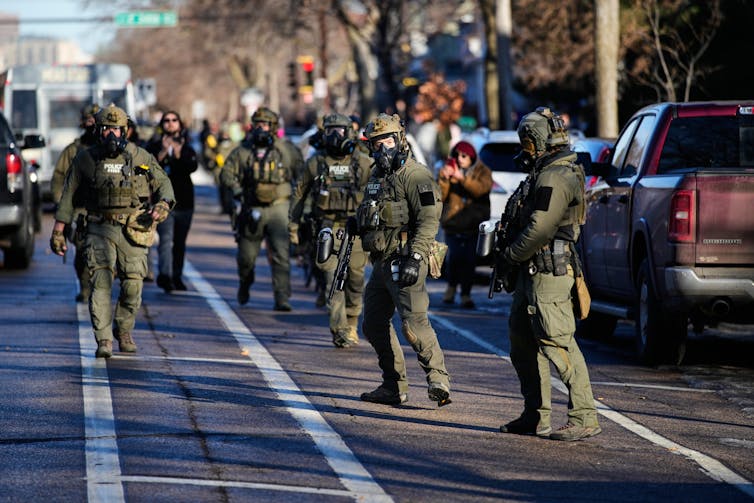
ICE and CBP also have some, though not all, of the characteristics of a paramilitary in the second sense of the term, referring to forces as repressive political agents. These forces are not informal; they are official agents of the state. However, their officers are less professional, receive less oversight and are operating in more overtly political ways than is typical of both regular military forces and local police in the United States.
The lack of professionalism predates the current administration. In 2014, for instance, CBP’s head of internal affairs described the lowering of standards for post-9/11 expansion as leading to the recruitment of thousands of officers “potentially unfit to carry a badge and gun.”
This problem has only been exacerbated by the rapid expansion undertaken by the Trump administration. ICE has added approximately 12,000 new recruits – more than doubling its size in less than a year – while substantially cutting the length of the training they receive.
ICE and CBP are not subject to the same constitutional restrictions that apply to other law enforcement agencies, such as the Fourth Amendment’s prohibition on unreasonable search and seizure; both have gained exemptions from oversight intended to hold officers accountable for excessive force. CBP regulations, for instance, allow it to search and seize people’s property without a warrant or the “probable cause” requirement imposed on other forces within 100 miles, or about 161 kilometers, of the border.
In terms of partisan affiliations, Trump has cultivated immigration security forces as political allies, an effort that appears to have been successful. In 2016, the union that represents ICE officers endorsed Trump’s campaign with support from more than 95% of its voting members. Today, ICE recruitment efforts increasingly rely on far-right messaging to appeal to political supporters.
Both ICE and CBP have been deployed against political opponents in nonimmigration contexts, including Black Lives Matter protests in Washington, D.C., and Portland, Oregon, in 2020. They have also gathered data, according to political scientist Elizabeth F. Cohen, to “surveil citizens’ political beliefs and activities – including protest actions they have taken on issues as far afield as gun control – in addition to immigrants’ rights.”
In these ways, ICE and CBP do bear some resemblance to the informal paramilitaries used in many countries to carry out political repression along partisan and ethnic lines, even though they are official agents of the state.
An extensive body of research shows that more militarized forms of policing are associated with higher rates of police violence and rights violations, without reducing crime or improving officer safety.
Studies have also found that more militarized police forces are harder to reform than less-militarized law enforcement agencies. The use of such forces can also create tensions with both the regular military and civilian police, as currently appears to be happening with ICE in Minneapolis.
The ways in which federal immigration forces in the United States resemble informal paramilitaries in other countries – operating with less effective oversight, less competent recruits and increasingly entrenched partisan identity – make all these issues more intractable. Which is why, I believe, many commentators have surfaced the term paramilitary and are using it as a warning.

Erica De Bruin does not work for, consult, own shares in or receive funding from any company or organization that would benefit from this article, and has disclosed no relevant affiliations beyond their academic appointment.
Politics + Society – The Conversation

We have the Super Bowl, Valentine’s Day, and more to look forward to in February, so here are the best new Aldi groceries to help celebrate.

Food Republic – Restaurants, Reviews, Recipes, Cooking Tips

Jokes aside, 2026 really is shaping up to look a lot like 2016 and the skinny jean revival is just further evidence of that.
The denim trend we swore would stay in the the 2010s is creeping back…
E! Online (US) – Top Stories
Reading Time: 2 minutes
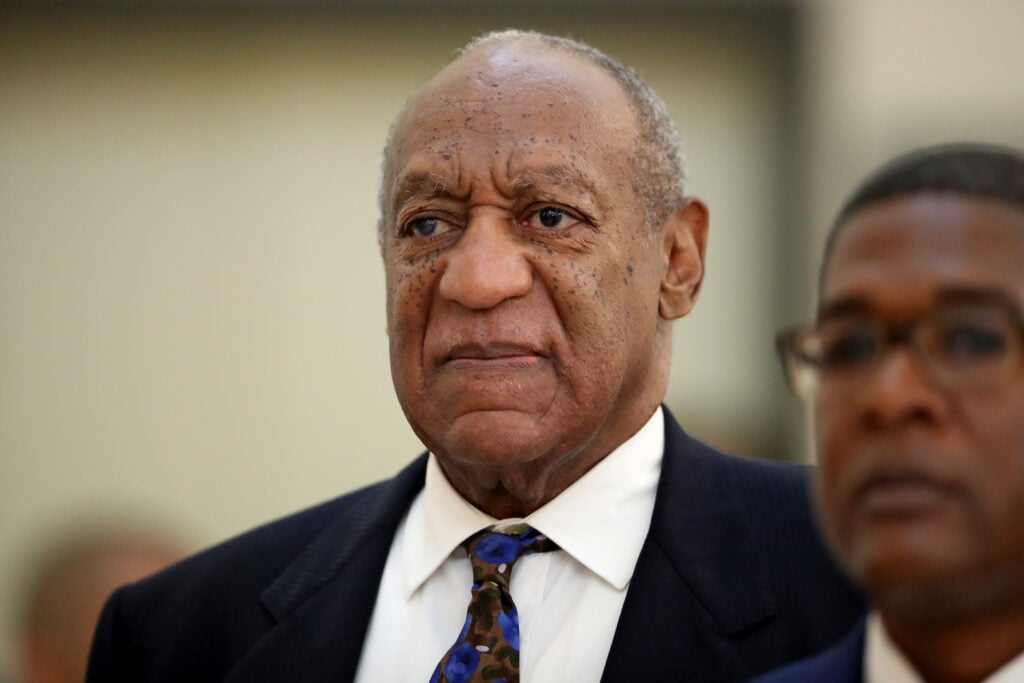
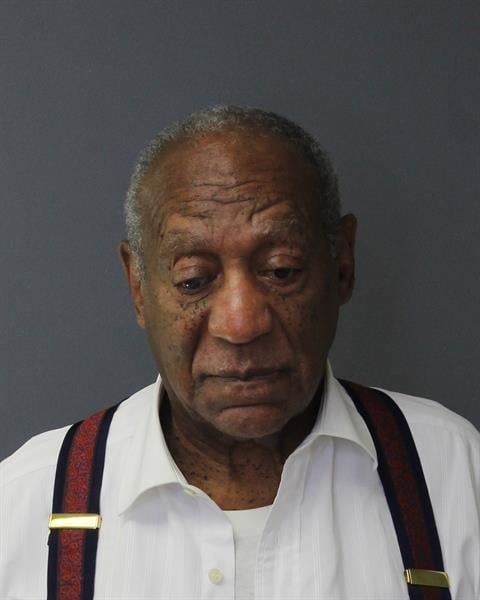
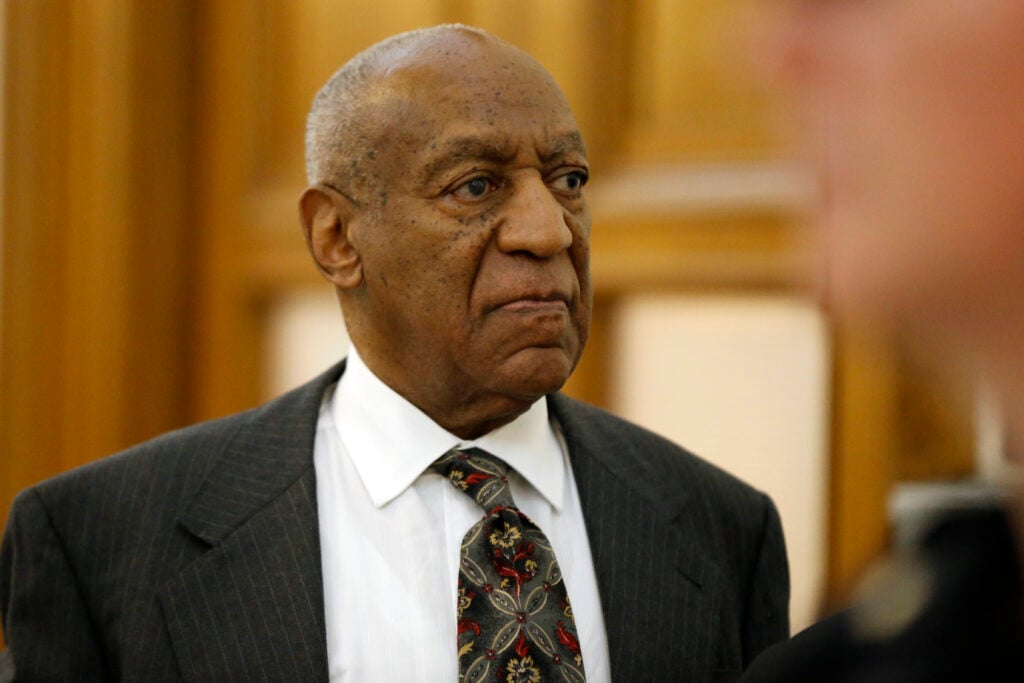
Though he was briefly imprisoned for drugging and raping women, Bill Cosby maintains that he’s innocent of those charges.
In a new deposition, however, Cosby admits that he obtained a prescription for Quaaludes with the intention of using the pills to drug women
He also admitted to refilling that prescription seven times.
Cosby maintains, however, that he never followed through with his plan to drug women.
He also says that he never took the drug himself.
This information came to light in a deposition Cosby gave in connection with a lawsuit filed by one of his accusers, a woman named Donna Motsinger.
In documents obtained by TMZ, Cosby states that he got the prescription from a doctor friend with whom he played poker in the 1970s.
The doctor is reportedly an OBGYN named Dr. Leroy Amar, who had his license revoked in 1979.
But in 1972, when he attended the poker game hosted by Cosby, he was still able to write prescriptions.
And apparently that’s exactly what he did.
Again, Cosby does not deny getting the prescription, but he insists he never drugged Motsinger or anyone else.
In her own testimony, Motsinger says that Cosby gave her a round white pill and told her it was Aspirin.
She says she began to slip in and out of consciousness and awoke the following morning to find that her clothes had been removed.
Court documents say that the pills obtained by Cosby were white and round, like the ones Motsinger describes.
The victim and plaintiff reportedly met when she was a server at the well-known Trident restaurant in Sausalito, California.
Cosby denies any wrongdoing and is trying to have the case thrown out of court.
We will have further updates on this developing story as new information becomes available.
Bill Cosby Admits to Obtaining 7 Quaalude Prescriptions With the Intention of Drugging … was originally published on The Hollywood Gossip.
The Hollywood Gossip
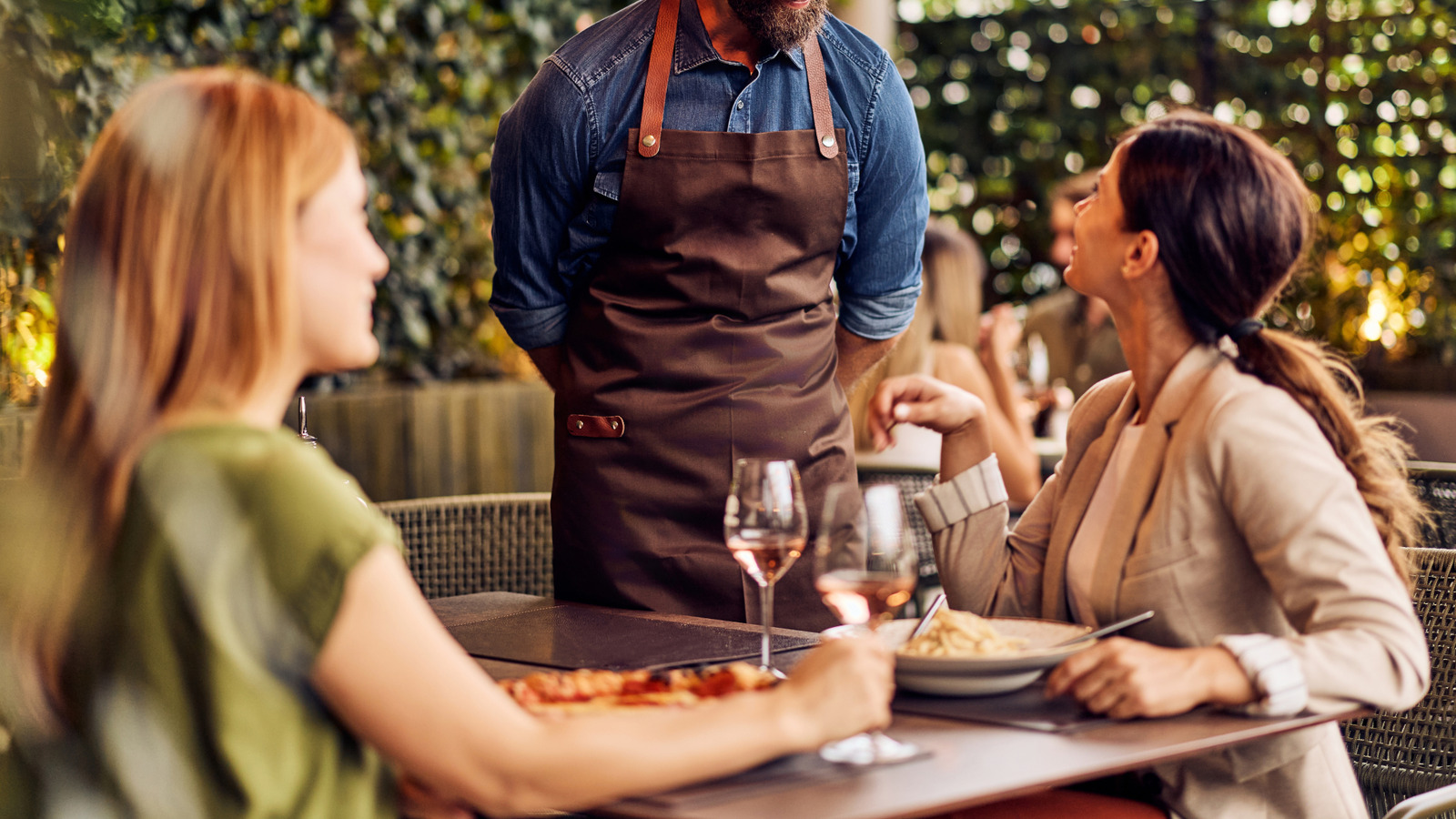
If you ever find yourself facing choice anxiety when ordering at a restaurant, there’s a simple question you can ask the server to make your decision easier.
Mashed – Fast Food, Celebrity Chefs, Grocery, Reviews

The new documentary promises to explore the ups and downs of Lainey Wilson’s life and career. Continue reading…The Boot – Country Music News, Music Videos and Songs