England have lost the third Test in an historic Ashes defeat against Australia, who claim victory after just 11 days of cricket.The Latest News from the UK and Around the World | Sky News










England have lost the third Test in an historic Ashes defeat against Australia, who claim victory after just 11 days of cricket.The Latest News from the UK and Around the World | Sky News

Nine people have died and at least 10 others are wounded after a shooting at a South African pub.The Latest News from the UK and Around the World | Sky News

Now the other hostages are home, the living and the dead, there is just one face whose image you will see across Israel, alongside the national flag and the ubiquitous yellow ribbon, symbol of solidarity with the hostages.The Latest News from the UK and Around the World | Sky News

Australia’s prime minister has announced a review of the country’s police and intelligence agencies a week after the deadly Bondi Beach gun attack.The Latest News from the UK and Around the World | Sky News

The parents of a woman who went missing nearly 20 years ago are hoping an AI enhanced picture of a suspect’s ear could crack the case.The Latest News from the UK and Around the World | Sky News

The US has been warned against risking a “humanitarian catastrophe” in Venezuela after it seized another tanker.The Latest News from the UK and Around the World | Sky News

Several victims of Jeffrey Epstein have told Sky News that the incomplete release of the files relating to the dead paedophile financier have left them feeling shocked, outraged and disappointed.The Latest News from the UK and Around the World | Sky News
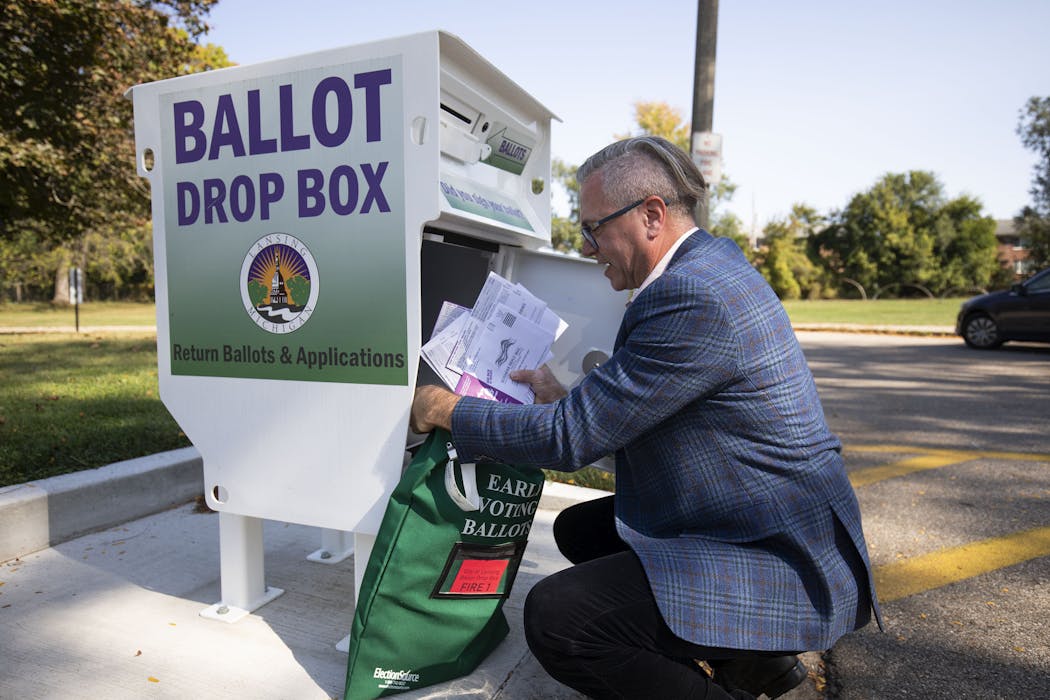
According to our recent survey of officials in Michigan communities, local democracy is humming along and city hall is taking care of business.
The federal government was shut down in October and November 2025, but cities and towns around the United States continued to fill potholes, purify drinking water, respond to emergency calls and issue construction permits, mostly with little fanfare.
But Michiganders should not take this local resilience for granted. Officials – especially in rural communities – are also raising some red flags about declining public engagement, deteriorating public discourse and harassment.
At the University of Michigan’s Center for Local, State and Urban Policy, we have been surveying local officials in Michigan’s 1,856 cities, villages, counties and townships since 2009. About 70% of local governments in the state complete our survey each year, which means that our results reflect the opinions of everyone from township clerks in the Upper Peninsula to mayors of larger cities in the Metro Detroit area.
This Michigan Public Policy Survey has covered a wide variety of local issues over the years. One topic we track closely is how democracy is functioning in local communities.
While many public opinion surveys ask how Americans feel about democracy, very few examine the viewpoints of local officials whose job it is to carry out the daily work of democratic governance. For example, instead of asking whether people trust their government, we flip the question around and ask local officials whether they trust their residents to be responsible participants in policymaking.
To get a high-level understanding of local democratic health, we ask Michigan local officials to rate the overall functioning of democracy in their communities on a scale of 1 to 10, from total breakdown to perfectly functioning.
Statewide, 82% reported a score of 7 or higher when we surveyed them in the spring of 2025. This percentage has remained remarkably steady since we first began tracking it in 2020.
At the other end of the scale, only 2% of communities this year rated democracy poorly – 4 or below – falling from a high of 7% in 2024.
While these high ratings are good news for local democracy in general, when we break down the results by whether communities consider themselves more urban or rural, we see some divergence. While 82% of communities overall reported relatively good democratic health this year, this reflects 92% of urban communities and 79% of rural communities.
We also see evidence of a growing urban/rural divide in resident engagement, an essential ingredient of democratic health. When we asked local officials how engaged their residents were with their local governments, 64% of urban communities said their residents were somewhat or very engaged, but only 41% of rural communities felt the same. In fact, 13% of rural communities said their residents are not engaged at all, compared with only 5% of urban communities.
Similarly, local officials in urban communities have higher levels of trust in their residents to be responsible participants in local policymaking – for example, by contributing ideas, volunteering or speaking with elected officials. In Michigan’s urban communities, 48% of local officials said they trust their residents nearly always or most of the time. However, only 38% of rural local officials had the same level of trust in their residents.
While rural communities currently appear to be struggling more than urban communities to engage with their residents, looking over time, democratic participation is getting worse everywhere. For example, 18% of Michigan communities statewide reported this year that civic discourse among residents was somewhat or very divisive, up from 11% in 2012.
Between 2012 and today, despite their efforts to expand engagement opportunities, particularly online, local officials’ satisfaction with their residents’ level of engagement has plummeted from 58% in 2012 to 38% in 2025. Among the most common frustrations are that their efforts attract the same people over and over and that a small vocal minority of residents is negatively affecting overall engagement.
Even more troubling, about half of local officials who responded to the 2022 version of our survey have experienced some kind of personal harassment, with 39% reporting in-person harassment such as hostile or aggressive comments, 31% reporting online harassment and 3% reporting violent actions like assault or destruction of property.
While only 17% of Americans currently trust the federal government to “do what is right” “just about always” or “most of the time,” according to a recent Pew survey, 65% of Americans still trust their local government. And as our survey results suggest, most local officials feel pretty confident that they’re being good stewards of local democracy, despite declining help and input from their residents.
To any Americans worried about the state of their democracy, may we suggest heading to the next meeting of the local planning commission? We hear there are sometimes even snacks.
Read more of our stories about Michigan.

Stephanie Leiser does not work for, consult, own shares in or receive funding from any company or organization that would benefit from this article, and has disclosed no relevant affiliations beyond their academic appointment.
Politics + Society – The Conversation
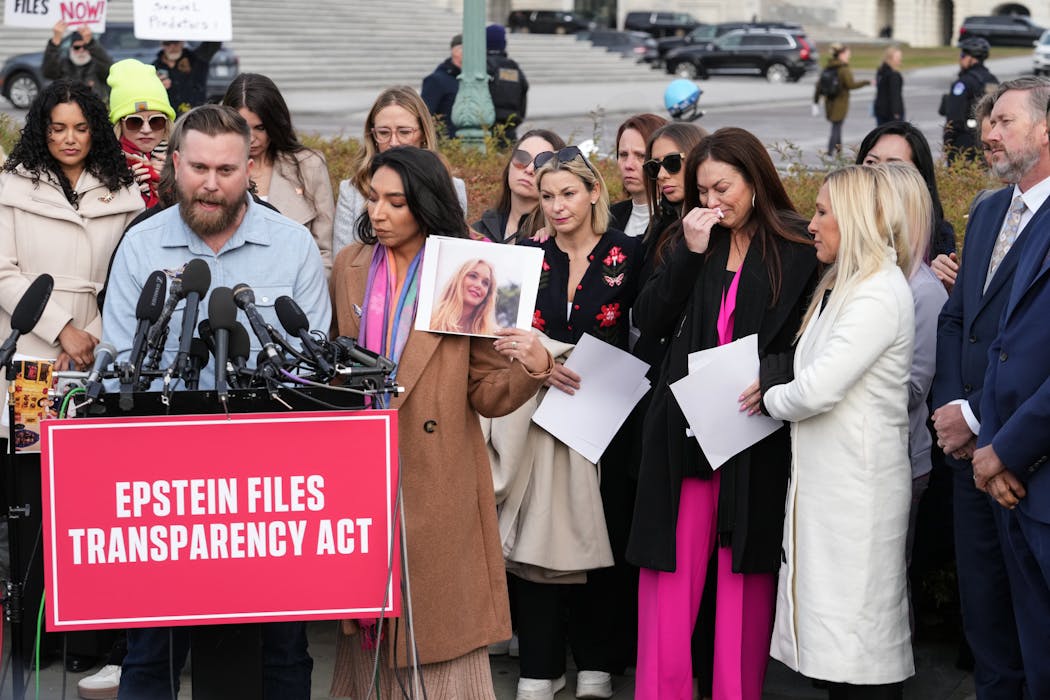
The U.S. Department of Justice has made a partial release of documents from what’s become known collectively as the “Jeffrey Epstein files,” with more to follow at an unspecified time. On a special part of its website that the department titled “Epstein Library,” it lists documents such as court records and records released in response to Freedom of Information Act requests to the government.
Their release was ordered by Congress in bipartisan legislation passed in November 2025. The deadline imposed by Congress was Dec. 19, 2025, and the Department of Justice met it with the partial release of documents in its possession with eight hours to spare.
Those files will be read, dissected and discussed by politicians and the public and reported on by the news media. It will be the latest eruption in a story that has slipped in and out of the headlines for years, but in a very particular way. Most news articles ask a specific question – which powerful men might be on “the list”? Journalists and the public are watching to see what those documents will reveal beyond names we already know, and whether a long-rumored client list will finally materialize.
Headlines in the past have focused on unidentified elites and who may be exposed or embarrassed, rather than on the people whose suffering made the case newsworthy in the first place: the girls and young women Epstein abused and trafficked.
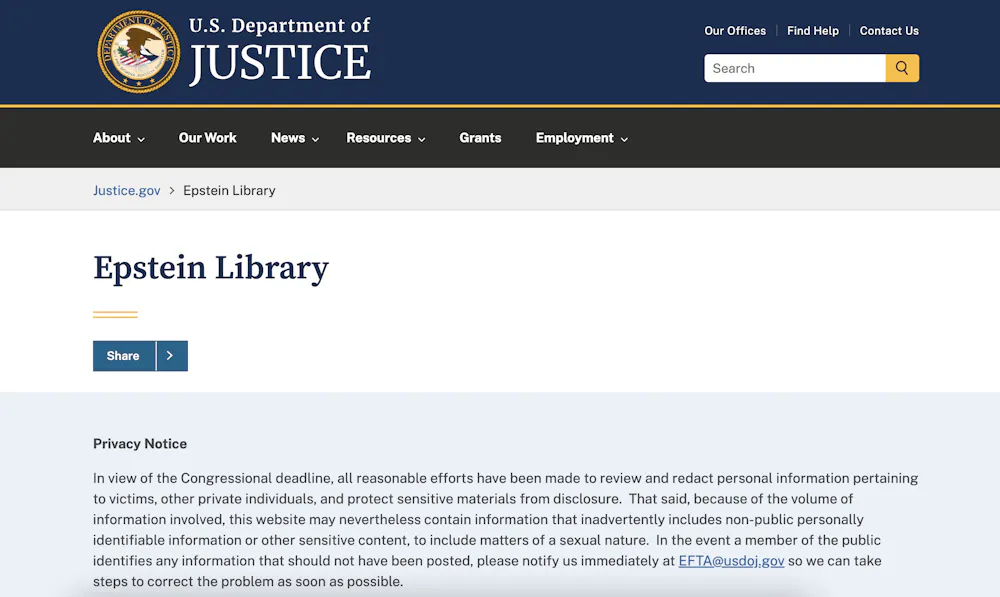
Alongside that, there has been a stream of survivor-centered reporting. Some outlets, including CNN, have regularly featured Epstein survivors and their attorneys reacting to new developments. Those segments are a reminder that another story is available, one that treats the women at the center of the case as sources of understanding, not just as evidence of someone else’s fall from grace.
These coexisting storylines reveal a deeper problem. After the #MeToo movement peaked, the public conversation about sexual violence and the news has clearly shifted. More survivors now speak publicly under their own names, and some outlets have adapted.
Yet long-standing conventions about what counts as news – conflict, scandal, elite people and dramatic turns in a case – still shape which aspects of sexual violence make it into headlines and which stay on the margins.
That tension raises a question: In a case where the law largely permits naming victims of sexual violence, and where some survivors are explicitly asking to be seen, why do journalistic practices so often withhold names or treat victims as secondary to the story?
The U.S. Supreme Court has repeatedly held that government generally may not punish news organizations for publishing truthful information drawn from public records, even when that information is a rape victim’s name.
When states tried in the 1970s and 1980s to penalize outlets that identified victims using names that had already appeared in court documents or police reports, the court said those punishments violated the First Amendment.
Newsrooms responded by tightening restraint, not loosening it. Under pressure from feminist activists, victim advocates and their own staff, many organizations adopted policies against identifying victims of sexual assault, especially without consent.
Journalism ethics codes now urge reporters to “minimize harm,” be cautious about naming victims of sex crimes, and consider the risk of retraumatization and stigma.
In other words, U.S. law permits what newsroom ethics codes discourage.

For much of the 20th century, rape victims were routinely named in U.S. news coverage – a reflection of unequal gender norms. Victims’ reputations were treated as public property, while men accused of sexual violence were portrayed sympathetically and in detail.
By the 1970s and 1980s, feminist movements drew attention to underreporting and intense stigma. Activists built rape crisis centers and hotlines, documented how rarely sexual assault cases led to prosecution, and argued that if a woman feared seeing her name in the paper, she might never report at all.
Lawmakers passed “rape shield laws” that limited the use of a victim’s sexual history in court. Some states went further by barring publication of victims’ names.
In response to these laws, as well as feminist pressure, most newsrooms by the 1980s moved toward a default rule of not naming victims.
More recently, the #MeToo movement added a turn. Survivors in workplaces, politics and entertainment chose to speak publicly, often under their own names, about serial abuse and institutional cover-ups. Their accounts forced newsrooms to revisit assumptions about whose voices should lead a story.
Yet #MeToo also unfolded within existing journalistic conventions. Investigations tended to focus on high-profile men, spectacular falls from power and moments of reckoning, leaving less space for the quieter, ongoing realities of recovery, legal limbo and community response.
There are good reasons for policies against naming victims.
Survivors may face harassment, employment discrimination or danger from abusers if they are identified. For minors, there are additional concerns about long-term digital evidence. In communities where sexual violence carries intense social stigma, anonymity can be a lifeline.
But research on media framing suggests that naming patterns matter. When coverage focuses on the alleged perpetrator as a complex individual – someone with a name, a career and a backstory – while referring to “a victim” or “accusers” in the singular, audiences are more likely to empathize with the suspect and scrutinize the victim’s behavior.
In high-profile cases like Epstein’s, that dynamic intensifies. The powerful men connected to him are named, dissected and speculated about. The survivors, unless they work hard to step forward, remain a blurred mass in the background. Anonymity meant to protect actually flattens their experience. Different stories of grooming, coercion and survival get reduced to a single faceless category.
That flattening is part of what makes the current moment in the Epstein story so revealing. The suspense is less about whether more victims will be heard and more about what being named will do to influential men. It becomes a story about whose names count as news.
Carefully anonymizing survivors while breathlessly chasing a client list of powerful men unintentionally sends a message about who matters most.
The Epstein scandal, in that framing, is not primarily about what was done to girls and young women over many years, but about who among the elite might be embarrassed, implicated or exposed.
A more survivor-centered journalistic approach would start from a different set of questions, including wondering which survivors have chosen to speak on the record and why, and how news outlets can protect anonymity, when it is asked for, but still convey a victim’s individuality.
Those questions are not only about ethics. They are about news judgment. They ask editors and reporters to consider whether the most important part of a story like Epstein’s is the next famous name to drop or the ongoing lives of the people whose abuse made that name newsworthy at all.
This is an update to a story originally published on Dec. 15, 2025, to reflect the release of documents by the U.S. Department of Justice on Dec. 19.

Stephanie A. (Sam) Martin does not work for, consult, own shares in or receive funding from any company or organization that would benefit from this article, and has disclosed no relevant affiliations beyond their academic appointment.
Politics + Society – The Conversation

Reading Time: 3 minutes
Jana Duggar is very pregnant and putting her baby bump on display.
The eldest Duggar daughter is pregnant with her first child.
Now, the countdown to the due date is truly underway.
Jana is sharing selfies — and, some speculate, may have just hinted at a more exact due date.
On Wednesday, December 17, Jana Duggar took to her Instagram to share multiple new looks at her pregnant belly.
She snapped and posted two mirror selfies wearing the same winter ensemble.
One photo shows Jana at an angle.
The other shows her pregnant profile in the mirror.
In both pics, Jana is emphasizing her prominent baby bump with her free hand while the other holds her phone.
In addition to the photos, Jana included a caption in her post.
“The anticipation is building in our home!” she announced excitedly.
Jana added: “Can’t wait to meet this little guy!”
She concluded that text with a blue heart emoji.
Obviously, the “little guy” in question is her future child. She and husband Stephen Wissmann are expecting a son.

Jana Duggar has just shy of 900,000 Instagram followers.
After the long-overdue fall of the Duggar family’s reality TV empire, some have used social media as a lifeline to keep longtime watchers updated on their lives.
For years, Jana’s updates were about her projects, from home improvement to gardening.
Now, followers are paying rapt attention as she keeps them up to speed on her pregnancy journey.
This post is far from the first to showcase her baby bump for fans. And it’s unlikely to be the last.
Back in September, Jana revealed that she was halfway through her pregnancy.
She also confirmed the due date — however broadly — in an August Instagram post announcing that she was expecting.
“We are so excited, January 2026 is going to come with a little bundle of joy joining our family!” she gushed at the time.
There are 31 days in January.
Has Jana dropped a hint about a more exact due date?

Some fans on social media are wondering if Jana Duggar sharing her anticipatory mirror selfies on December 17 was no mere coincidence.
(Given her religious beliefs and cultural background, we can safely say that she didn’t pick that date because it’s the start of Saturnalia)
Due dates are educated guesses — because no pregnancy is exactly the same.
But … could Jana’s due date be January 17? If so, she shared that post just one month before she expects to give birth.
It’s an intriguing theory, but probably a bit of a stretch. As we said, Jana has shared baby bump pics before — and likely will again.
Jana Duggar Displays HUGE Baby Bump as Due Date Looms was originally published on The Hollywood Gossip.
The Hollywood Gossip