NOTN- Santa Claus will come to Juneau this weekend aboard a Capital City Fire/Rescue engine.
According to Capital City Fire/Rescue the Santa Run will take place tonight from 5:30 to 7:45 pm and tomorrow from 4:00 to 7:55 pm.
There has been adjustments due to the weather, instead of walking the routes, CCFR is inviting residents to join Santa at one of the designated stops throughout Juneau.
On Saturday, Santa will stop at Gruening Park, the Tram parking lot and will conclude his visit at Gastineau Elementary schools.
Firefighters say Santa will be accompanied by the Grinch, and candy canes will be handed out to children throughout the evening.
Event details and stop information are available on the Capital City Fire and Rescue Facebook page.
A group of college students braved the frigid New England weather on Dec. 13, 2025, to attend a late afternoon review session at Brown University in Providence, Rhode Island. Eleven of those students were struck by gunfire when a shooter entered the lecture hall. Two didn’t survive.
Shortly after, a petition circulated calling for better security for Brown students, including ID-card entry to campus buildings and improved surveillance cameras. As often happens in the aftermath of tragedy, the conversation turned to lessons for the future, especially in terms of school security.
There has been rapid growth of the nation’s now US$4 billion school security industry. Schools have many options, from traditional metal detectors and cameras to gunshot detection systems and weaponized drones. There are also purveyors of artificial-intelligence-assisted surveillance systems that promise prevention: The gun will be detected before any shots are fired, and the shooting will never happen.
They appeal to institutions struggling to protect their communities, and are marketed aggressively as the future of school shooting prevention.
I’m a criminologist who studies mass shootings and school violence. In my research, I’ve found that there’s a lack of evidence to support the effectiveness of these technological interventions.
Grasping for a solution
Implementation has not lagged. A survey from Campus Safety Magazine found that about 24% of K-12 schools report video-assisted weapons detection systems, and 14% use gunshot detection systems, like ShotSpotter.
Gunshot detection uses acoustic sensors placed within an area to detect gunfire and alert police. Research has shown that gunshot detection may help police respond faster to gun crimes, but it has little to no role in preventing gun violence.
Still, schools may be warming to the idea of gunshot detection to address the threat of a campus shooter. In 2022, the school board in Manchester, New Hampshire, voted to implement ShotSpotter in the district’s schools after a series of active-shooter threats.
Other companies claim their technologies provide real-time visual weapons detection. Evolv is an AI screening system for detecting concealed weapons, which has been implemented in more than 400 school buildings since 2021. ZeroEyes and Omnilert are AI-assisted security camera systems that detect firearms and promise to notify authorities within seconds or minutes of a gun being detected.
These systems analyze surveillance video with AI programs trained to recognize a range of visual cues, including different types of guns and behavioral indicators of aggression. Upon recognizing a threat, the system notifies a human verification team, which can then activate a prescribed response plan.
But even these highly sophisticated systems can fail to detect a real threat, leading to questions about the utility of security technology. Antioch High School in Nashville, Tennessee, was equipped with Omnilert’s gun detection technology in January 2025 when a student walked inside the school building with a gun and shot several classmates, one fatally, before killing himself.
School security technology firm ZeroEyes uses this greenscreen lab to test and train artificial intelligence to spot visible guns. AP Photo/Matt Slocum
Lack of evidence
This demonstrates an enduring problem with the school security technology industry: Most of these technologies are untested, and their effect on safety is unproven. Even gunshot detection systems have not been studied in the context of school and mass shootings outside of simulation studies. School shooting research has very little to offer in terms of assessing the value of these tools, because there are no studies out there.
This lack is partly due to the low incidence of mass and school shootings. Even with a broad definition of school shootings – any gunfire on school grounds resulting in injury – the annual rate across America is approximately 24 incidents per year. That’s 24 more than anyone would want, but it’s a small sample size for research. And there are few, if any, ethically and empirically sound ways to test whether a campus fortified with ShotSpotter or the newest AI surveillance cameras is less likely to experience an active shooter incident because the probability of that school being victimized is already so low.
Existing research provides a useful overview of the school safety technology landscape, but it offers little evidence of how well this technology actually prevents violence. The National Institute of Justice last published its Comprehensive Report on School Safety Technology in 2016, but its finding that the adoption of biometrics, “smart” cameras and weapons detection systems was outpacing research on the efficacy of the technology is still true today. The Rand Corporation and the University of Michigan Institute for Firearm Injury Prevention have produced similar findings that demonstrate limited or no evidence that these new technologies improve school safety and reduce risks.
While researchers can study some aspects of how the environmentand security affect mass shooting outcomes, many of these technologies are too new to be included in studies, or too sparsely implemented to show any meaningful impact on outcomes.
My research on active and mass shootings has suggested that the security features with the most lifesaving potential are not part of highly technical systems: They are simple procedures like lockdowns during shootings.
The tech keeps coming
Nevertheless, technological innovations continue to drive the school safety industry. Campus Guardian Angel, launched out of Texas in 2023, promises a rapid drone response to an active school shooter. Founder Justin Marston compared the drone system to “having a SEAL team in the parking lot.” At $15,000 per box of six drones, and an additional monthly service charge per student, the drones are equipped with nonlethal weaponry, including flash-bangs and pepper spray guns.
In late 2025, three Florida school districts announced their participation in Campus Guardian Angel’s pilot programs.
Three school districts in Florida are part of a pilot program to test drones that respond to school shootings.
There is no shortage of proposed technologies. A presentation from the 2023 International Conference on Computer and Applications described a cutting-edge architectural design system that integrates artificial intelligence and biometrics to bolster school security. And yet, the language used to describe the outcomes of this system leaned away from prevention, instead offering to “mitigate the potential” for a mass shooting to be carried out effectively.
While the difference is subtle, prevention and mitigation reflect two different things. Prevention is stopping something avoidable. Mitigation is consequence management: reducing the harm of an unavoidable hazard.
Response versus prevention
This is another of the enduring limitations of most emerging technologies being advertised as mass shooting prevention: They don’t prevent shootings. They may streamline a response to a crisis and speed up the resolution of the incident. With most active shooter incidents lasting fewer than 10 minutes, time saved could have critical lifesaving implications.
But by the time ShotSpotter has detected gunshots on a college campus, or Campus Guardian Angel has been activated in the hallways of a high school, the window for preventing the shooting has long since passed.
Emily Greene-Colozzi receives funding from the National Institute of Justice.
Colorado was the first state to pass a law requiring warning labels on gas stoves.mapodile/GettyImages
Colorado passed first-in-the-nation legislation requiring warning labels on gas stoves in June 2025. These warnings are similar to what is required by cigarette labeling laws.
The law went into effect on Aug. 6. The Association of Home Appliance Manufacturers is now suing Colorado and is asking a federal court to temporarily block the law from being enforced while the case proceeds. The parties are awaiting a hearing on this request.
I’m a legal scholar with expertise in First Amendment law. I research and publish papers focusing on laws, such as the new Colorado statute, that compel businesses to disclose information to consumers.
In my opinion, in opposing warning labels, the gas industry and its trade association are weaponizing the First Amendment to undermine a commonsense regulation that aims to keep residents safe and informed.
Often taken for granted, these warning labels provide critical information to protect Americans’ health and safety. Perhaps the most recognizable warning labels can be found on cigarette packages, required in the U.S. since 1965, to inform customers about the health harms of smoking. Despite the fact that warning labels on cigarettes have saved millions of lives, the tobacco industry fought tooth and nail against them to keep consumers in the dark. Since that time, federal, state and local laws requiring businesses to make truthful factual disclosures about their products have become commonplace.
A 9News report on the lawsuit against Colorado’s new law.
In 2018, in National Institute of Family and Life Advocates v. Becerra, the U.S. Supreme Court greatly expanded this rule and opened the door for challenges to government efforts to require businesses to disclose truthful statements of fact. The court held that the government cannot compel businesses to disclose factual information if it is “controversial.”
Of course, it would be hard to find a manufacturer who does not think such disclosures are controversial, given that businesses are likely to disagree that their products are dangerous. If a subjective claim that a disclosure is controversial is all it takes to strike a law down, many such laws are vulnerable to legal attacks.
A 2023 expose by The New York Times, for example, revealed that the gas industry paid toxicologist Julie Goodman to downplay the health impacts of gas stoves. Just eight years earlier, Goodman provided testimony on behalf of tobacco companies. A judge described her testimony on tobacco as “contrary to consensus of the scientific community.”
Risk to consumers
If the Association of Home Appliance Manufacturers’ claim succeeds in court, it could, in my analysis, make it much easier for companies to fund biased research or bring in experts to argue that something is not well-established science.
For example, a drug manufacturer could hire an expert to dispute the side effects of a drug. Food producers might claim their experts disagree with the science underlying nutrition and calorie information required by government regulation. Even manufacturers of everyday items such as lawnmowers or toasters could hire experts and proclaim that their products pose no safety harms.
Everyday people would bear the brunt of harm from the invalidation of warning label laws. These people currently have the right to know critical health and safety information before buying any product. If we let corporate interests undermine regulations such as warning labels, I believe we will no longer be able to inform the public about commonsense steps they can take to protect their health.
Alan K. Chen does not work for, consult, own shares in or receive funding from any company or organization that would benefit from this article, and has disclosed no relevant affiliations beyond their academic appointment.
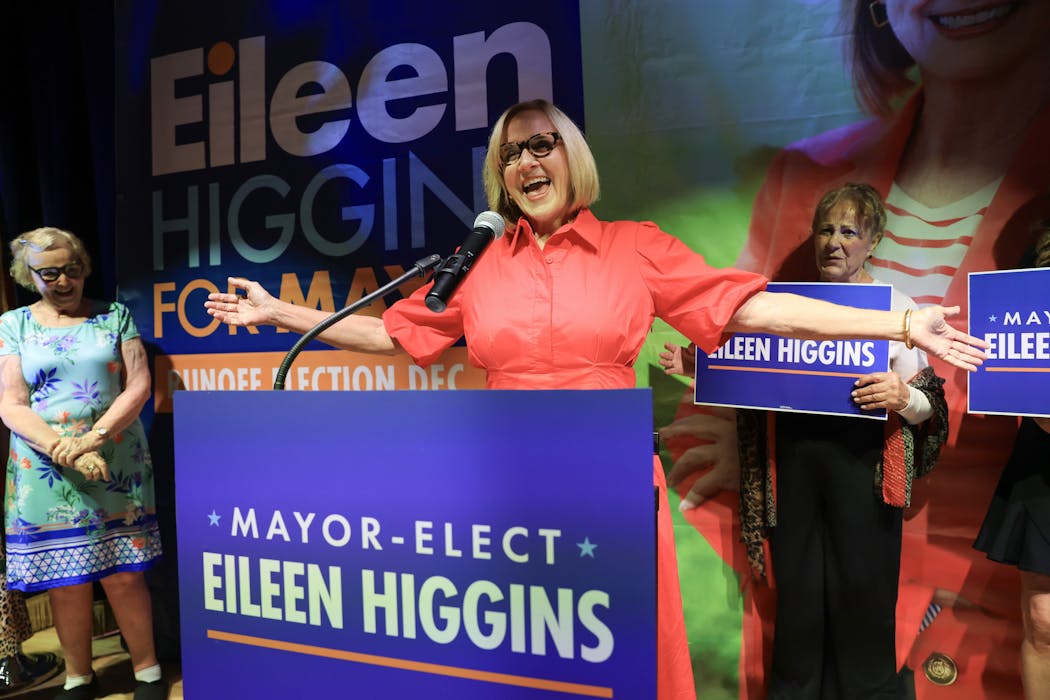
After its first competitive mayoral election in 20 years, the city of Miami has a new mayor: former Miami-Dade County commissioner Eileen Higgins.
During the heated campaign, both national political parties were active in organizing voters and providing resources. Many high-profile politicians weighed in with endorsements and visits. Notably, Republicans President Donald Trump and Gov. Ron DeSantis endorsed Higgins’ opponent, Emilio Gonzalez. Meanwhile, Democrats Ruben Gallego – a senator from Arizona – and former Transportation Secretary Pete Buttigieg supported Higgins.
Still, Miami’s mayoralty is officially a nonpartisan position. And as the saying goes, there are no Democratic or Republican potholes; they are all of local concern.
I’m a political scientist with a particular interest in local government, and I’ve lived in the Greater Miami area for 30 years.
So what are the “potholes” confronting Miami’s new mayor?
Higgins, a bilingual, soft-spoken policy wonk, has promised to set a new tone, leading with civility and compassion. The day after the election, she reiterated that promise: “The era of commissioners yelling at one another and threatening to punch one another is going to stop.”
For the second year in a row, the financial services firm UBS lists Miami as the city at highest risk for a housing bubble. Another study ranked the Miami metro area as the least affordable housing market nationally.
The good news: This rise in price appears to be fueled by a strong employment market. But the shortage of housing priced for middle- and working-class families is unsustainable.
While housing supply and prices are largely determined by market forces, government officials can set conditions to promote targeted investments. Higgins has suggested forming a city-run housing trust fund, similar to Miami-Dade County. She has also proposed dedicating city-owned land to affordable housing projects and reforming the city’s permit process.
Charter reform
Charter reform issues, including moving city elections from odd to even years to align with national elections, are on the agenda. Though a court deemed the City Commission’s attempt to move this year’s election invalid, Higgins said she supports moving the election date, pledging to cut her term short to facilitate. This change would require commissioners to hold a referendum and voters to support it.
There also is a debate about changing the size of the City Commission from five to seven or nine commissioners. Higgins supported this idea, noting that other Florida cities the size of Miami have larger commissions. This charter change would also require voter approval, but needs the commission to act or for citizens to initiate the process. The mayor’s role would be to advocate for the need for greater representation of neighborhoods and government responsiveness.
Immigration enforcement
In a city where nearly 60% of the population is foreign-born, immigration issues loom large.
In June 2025, after a contentious meeting, the commission voted 3-2 to approve a 287(g) agreement with Immigration and Customs Enforcement, or ICE, to aid Trump’s enforcement measures.
While Higgins cannot remove the city from the agreement, she plans to minimize Miami’s involvement with immigration enforcement. “There’s no reason in the city of Miami that our police department should be in the job of federal immigration enforcement,” she told the press.
Now, state leaders are proposing to eliminate property taxes in 2026, further straining local coffers. Public spending will need to be reduced, or revenues replaced. The mayor makes budget proposals, but it is commissioners who approve them. Higgins will need to lead through persuasion and clear explanations.
Sean Foreman does not work for, consult, own shares in or receive funding from any company or organization that would benefit from this article, and has disclosed no relevant affiliations beyond their academic appointment.
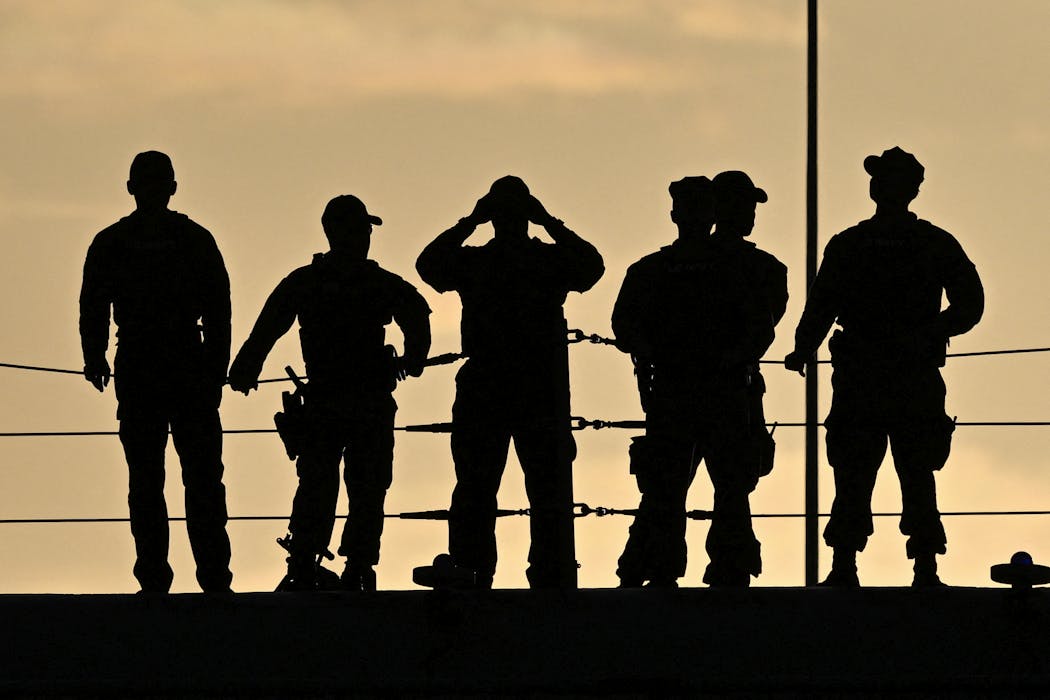
Military personnel on the amphibious assault ship USS Iwo Jima on Dec. 16, 2025, in Ponce, Puerto Rico, during a U.S. military campaign in the Caribbean and eastern Pacific. Miguel J. Rodriguez Carrillo/AFP via Getty Images
Are Americans about to be led again into a war based on misrepresentations and lies? It’s happened before, most recently with the wars in Iraq and Vietnam.
President Donald Trump and his administration have presented the country’s growing military operations against Venezuela as a war against drug trafficking and terrorism. Trump has designated the government of Venezuela President Nicolas Maduro as a foreign terrorist organization, the first country to ever receive that designation.
Trump’s administration has justified the bombing of these boats by declaring they are manned by combatants. U.S. Sen. Jack Reed, a Democrat from Rhode Island, told the Intercept news outlet that the administration “has offered no credible legal justification, evidence or intelligence for these strikes.”
There is no war. Yet.
On Dec. 12, 2025, Trump said, “It’s going to be starting on land pretty soon” and announced four days later a “total and complete blockade of all sanctioned oil tankers going into, and out of, Venezuela.”
As Trump increasingly sounds like he is preparing to go to war against Venezuela, it might be helpful to examine the run-ups to the wars in Iraq and Vietnam – two wars based on lies that led, together, to the deathsof 62,744 Americans.
As an investigative journalist who has written about the vast, secret operations of the FBI and the man who ran it for decades, I am well aware of the dangerous ability the government has to deceive the public. I also covered the opposition to the Vietnam war and the release of information years later that revealed that lies were at the heart of the start of both the Vietnam and Iraq wars.
Author Betty Medsger speaks about her story on Donald Trump’s targeting of his perceived enemies and its connection to her book on the FBI.
Fear used to gin up public support
Consider the run-up to the Iraq War.
Fear was the main tool used to convince the public that it was essential for the U.S. to go to war in Iraq. The manufacturing of fear was evident in a speech by Vice President Dick Cheney in August 2002 to a convention of the Veterans of Foreign Wars.
In 2003, Secretary of State Colin Powell addressed the U.N. Security Council on information and intelligence that he believed showed the possibility of weapons of mass destruction in Iraq.
“Leaving Saddam Hussein in possession of weapons of mass destruction for a few more months or years is not an option, not in a post-September 11th world,” Powell solemnly declared that day.
“I’m the one who presented it on behalf of the United States to the world,” Powell later said. By then, he said, the speech was “painful” for him personally and would forever be a “blot” on his reputation.
But as extensive official records of pre-war deliberations became available to journalists and others in response to Freedom of Information Act requests, a different explanation emerged.
John Prados, historian at the National Security Archives, discovered an explanation in hundreds of official records that meticulously document the run-up to the war.
They revealed that U.S. intelligence agencies had let themselves be used, he wrote, as “a tool of a political effort, vitiating the intelligence function … They all yielded intelligence predictions of exactly the kind the Bush administration wanted to hear … The intense focus on achieving the conditions for war instead of solving an international problem led to crucial faults in military planning and diplomatic action.”
The administration did not attempt to engage in diplomacy before deciding to go to war. There never was a serious effort, even within the administration, to consider alternatives to war.
George J. Tenet, director of the CIA at the time, later wrote that “based on conversations with colleagues, in none of the meetings can anyone remember a discussion of the central questions: Was it wise to go to war? Was it the right thing to do?”
Most journalists accepted PR at face value
A dearth of serious reporting contributed to the public being ill-informed.
Dan Kennedy, professor of journalism at Northeastern University, recently wrote that only one news organization, the Washington bureau of Knight Ridder – later known as McClatchy – exposed the Bush-Cheney “administration’s lies and falsehoods during the run-up to the disastrous war in Iraq.”
Other reporters relied on the public relations push for war being made to journalists by high-level political appointees in the military, foreign service and intelligence agencies. But Knight Ridder journalists relied on expert, longtime career officers in those agencies who were “deeply troubled by what they regarded as the administration’s deliberate misrepresentation of intelligence, ranging from overstating the case to outright fabrication.”
Lies to Congress and the public also were at the heart of the run-up to the war in Vietnam.
President Johnson reports to Congress and the American people on the Gulf of Tonkin incident, which he said happened off the coast of Vietnam but which was later disputed.
Few if any questions were asked when the House and Senate voted – with only two no votes – on the request for what would be known as the Gulf of Tonkin Resolution. The resolution was used by Johnson and his successor, President Richard Nixon, to keep expanding the war for nearly a decade. By mid-1969, there were 543,400 American troops in Vietnam.
Truth and transparency are crucial
It may seem obvious that the most important lesson to be learned from those wars is that the president and all who contribute to decisions to go to war should tell the truth. But, as shown by the presidents who led the U.S. into wars in Iraq and Vietnam and from Trump’s daily remarks, truth is a frequent casualty.
That increases the need for Congress, the public and the press to demand to be fully informed about these decisions that will be carried out in their name, with their money and with the blood of their sons and daughters. That’s necessary to prevent a president and Congress from making decisions that lead to consequences like these:
Betty Medsger does not work for, consult, own shares in or receive funding from any company or organization that would benefit from this article, and has disclosed no relevant affiliations beyond their academic appointment.
It was a year that started with Kate Middleton in hiding.
And it’s ending with the Princess rocking a huge smile for the entire world to see.
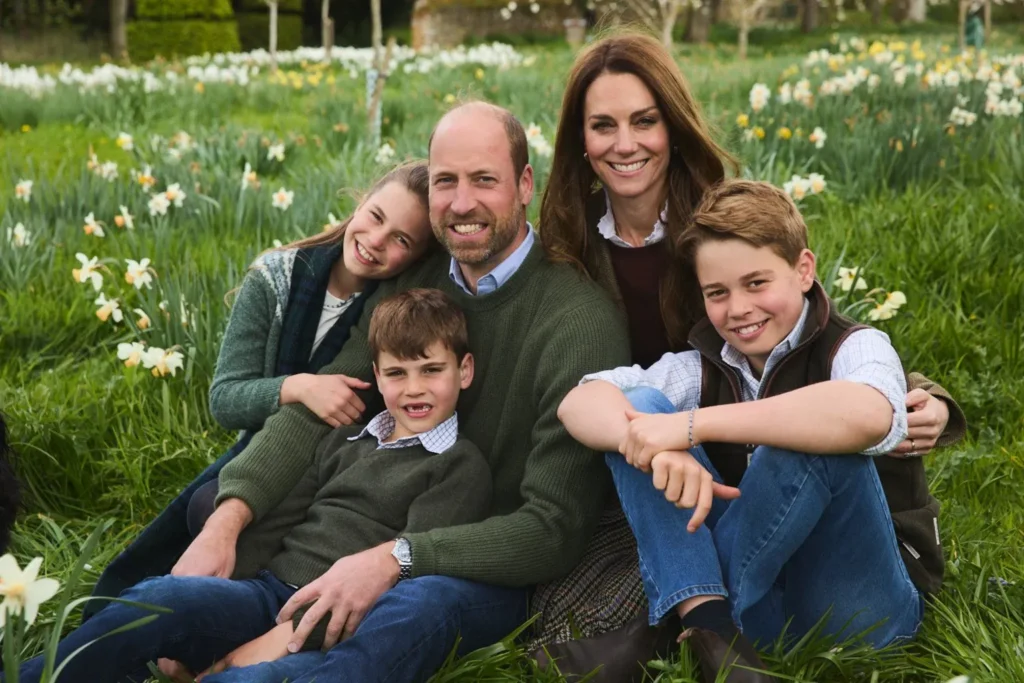
Late this week, Middleton, husband Prince William and the couple’s three kids (Prince George, 12, Princess Charlotte, 10, and Prince Louis, 7) got together for the family’s annual Christmas card.
You can take a look at it here:
(Kensington Palace)
The accompanying caption to this upload simply reads: “Wishing everyone a very Happy Christmas.”
As you can see, the adorable family is featured in a field filled with daffodils as they cozy up for the camera.
William and Louis match in dark green sweaters and blue jeans, while Charlotte, who rests her head on her father’s shoulder, also wears a green Fair Isle sweater and scarf.
The image was reportedly snapped back in April by photographer Josh Shinner.
Kate Middleton is simply a vision. (Photo by Aaron Chown – WPA Pool / Getty Images)
“You put on a sort of brave face, stoicism through treatment. Treatment’s done, then it’s like, ‘I can crack on, get back to normal,’ but actually, the phase afterwards is really, really difficult,” Middleton told reporters outside of Colchester Hospital in Essex this past July.
She hasn’t spoken a lot about her experience over the past year and a half or so.
And rarely has she admitted to this sort of (very understandable) struggle.
Middleton issued this message about two weeks after concerns grew over the star’s well-being over the summer.
In mid-June, Middleton suddenly canceled a planned appearance at the second day of the Royal Ascot thoroughbred races.
Back then, Kensington Palace did NOT give a reason behind this cancellation.
“One minute she was going, and the next she wasn’t. This is one of the biggest days of the year in the royal calendar; you don’t just miss Ascot on a whim, so there was a real sense of panic,” said an anonymous former courtier who retains good links with serving staff to The Daily Beast.
“The chaotic nature of the announcement was eerily reminiscent of the dark days of last year. People were bewildered and worried.”
Kate Middleton meets well wishers during a visit to the RHS Wellbeing Garden at Colchester Hospital in Essex, southeast England on July 2, 2025. (Photo by Stefan Rousseau / POOL / AFP) (Photo by STEFAN ROUSSEAU/POOL/AFP via Getty Images)
By accounts at this point, Middleton is feeling better than she has in a long time.
The Prince and Princess of Wales and their kids were last seen together at Kate’s fifth annual “Together at Christmas” carol service on Friday, December 5.
George, Charlotte and Louis attended with their parents, as they have in recent years, to support their mother’s holiday event.
They will likely step out again with the royal family on Christmas Day, keeping with their annual tradition of walking to church for the holiday mass.
Rapper Wiz Khalifa is facing months behind bars in an overseas prison.
Why?
A very small amount of alleged marijuana possession in 2024, apparently.
Just days ago, he was facing a fine. But authorities are pushing to make an example of him.
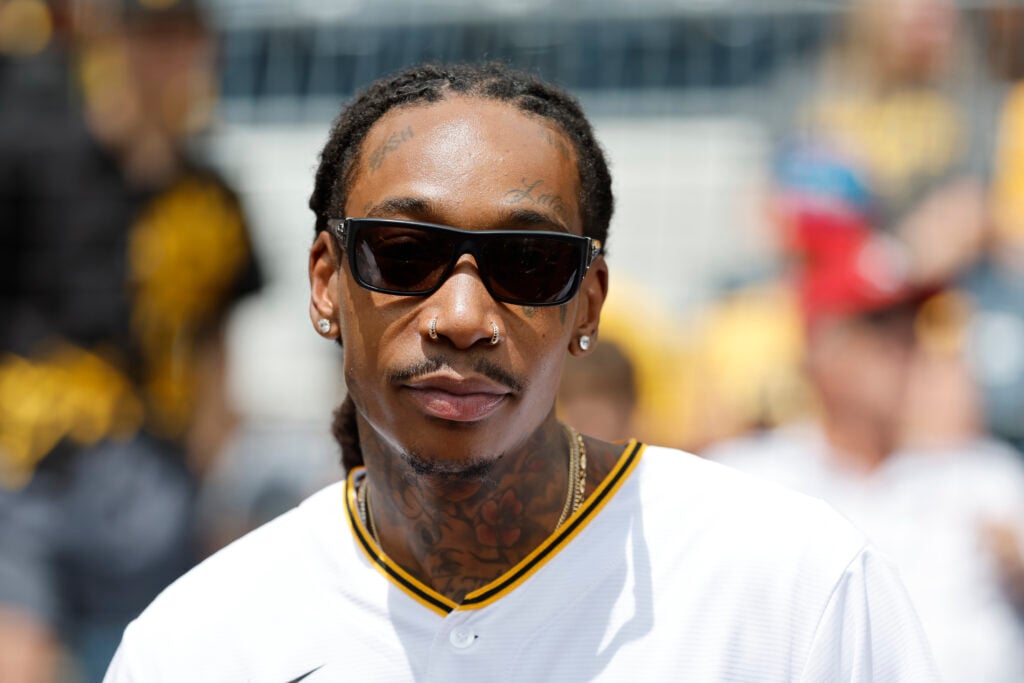
Rapper Wiz Khalifa is seen before the game between the Chicago White Sox and the Pittsburgh Pirates during inter-league play at PNC Park on July 20, 2025. (Photo Credit: Justin K. Aller/Getty Images)
Is Wiz Khalifa going to prison in Romania?
Rapper Wiz Khalifa is in a lot of trouble overseas.
Romanian news outlets such as Mediafax first reported that Wiz faces as much as 9 months behind bars.
He is facing these charges over having allegedly possessed and smoked weed while performing at a music festival.
On Thursday, December 18, Romania’s Constanța Court of Appeal upheld the government’s Directorate for Investigating Organized Crime and Terrorism’s appeal.
A prior sentence had simply demanded that Wiz pay a fine of 3,000 lei — about $700 USD.
Wiz Khalifa performs at the Palomino Stage during the 2024 Stagecoach Festival at Empire Polo Club on April 28, 2024. (Photo Credit: Frazer Harrison/Getty Images for Stagecoach)
We haven’t seen any public commentary on this new, dreadful 9-month sentence from Wiz himself.
However, TMZ reports that “his team is currently in the process” of filing an appeal.
One doesn’t have to be a fan of Wiz to hope that his legal team is successful.
In fact, even if you actively dislike the guy (which would be understandable), it’s hard to root for unjust laws abroad just as it’s hard to root for unjust laws here.
This isn’t just about the rapper. This serves as a warning for tourists (Romania has many gorgeous tourist destinations, not the least of which being Bran Castle). It also highlights injustice that the Romanian people face, without Wiz’s resources to appeal.
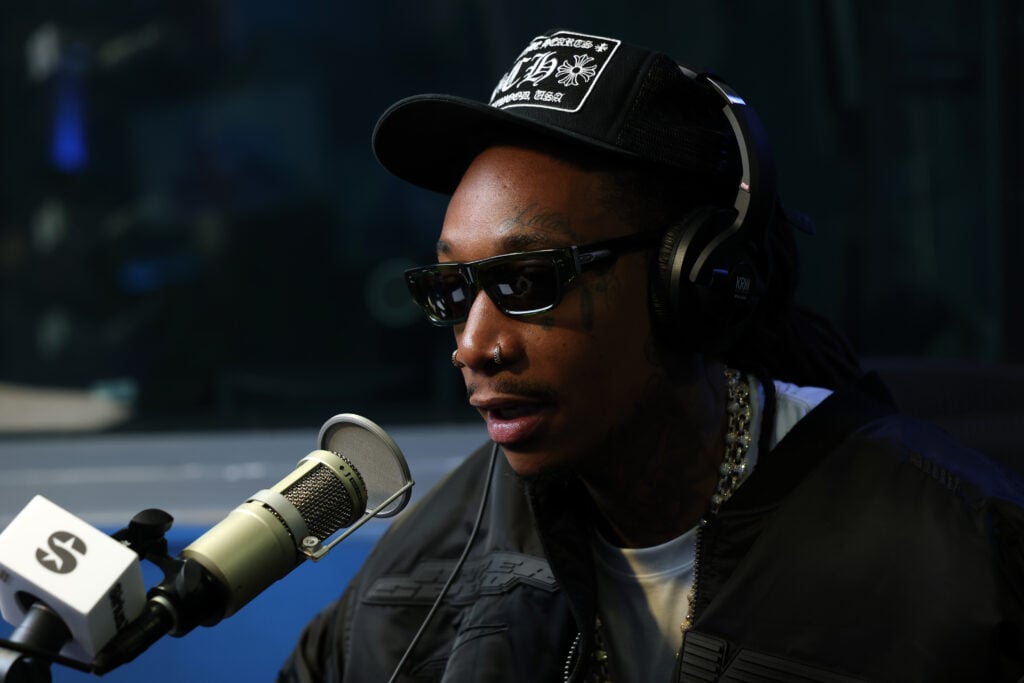
Wiz Khalifa appears on Hip-Hop Nation at SiriusXM Studios on April 16, 2025. (Photo Credit: Michael Loccisano/Getty Images)
How did Wiz Khalifa end up in this mess?
In July of 2024, Wiz Khalifa was performing at Costinești’s Beach Please! Festival in July 2024
After his own time on the stage, he allegedly lit up and smoked marijuana while dancing to Snoop Dogg and Dr. Dre’s music.
Authorities briefly arrested and detained Wiz in July 2024 after what we can’t really call an “incident” with a straight face.
Romania has strict laws regarding “unlawful possession of dangerous drugs for personal use.”
The US has absurd prohibition policies, too, but apparently Romania’s are even more pernicious.
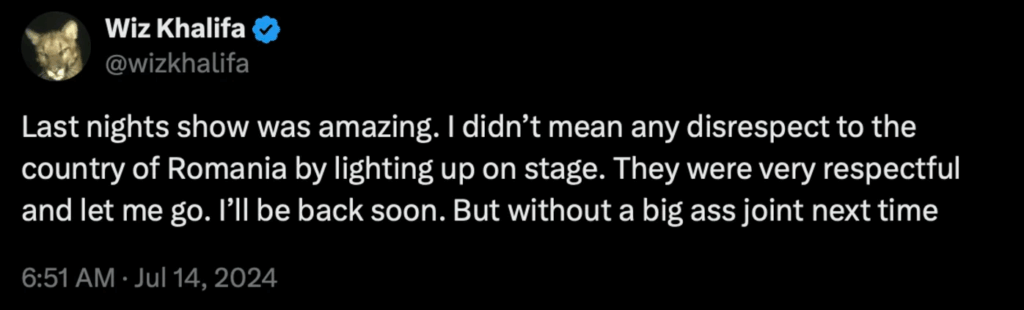
This tweeted apology from Wiz Khalifa was apparently not enough to satisfy Romanian authorities. (Image Credit: Twitter)
Then, in October, reports came out announcing that Wiz had been indicted.
The Romanian government claimed that the rapper had “unlawfully possessed, for his own consumption, the quantity of 18.53 grams of cannabis and a cigarette containing cannabis.”
That amounts to about a handful of paperclips worth of marijuana. (Yes, we Americans will use anything but the metric system)
Wiz had already apologized. But it looks like the wheels of injustice are looking to grind him into paste.
“Last night’s show was amazing,” Wiz tweeted in July 2024. “I didn’t mean any disrespect to the country of Romania by lighting up on stage. They were very respectful and let me go. I’ll be back soon. But without a big ass joint next time.”
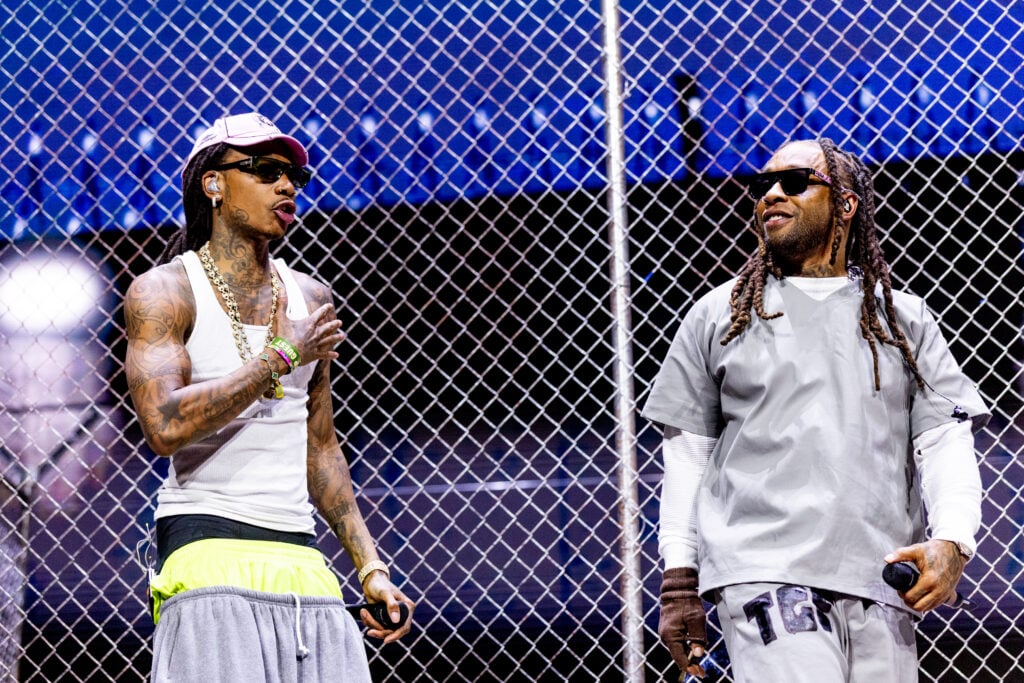
Wiz Khalifa and Ty Dolla $ign perform at the Sahara Tent at the 2025 Coachella Valley Music And Arts Festival on April 13, 2025. (Photo Credit: Matt Winkelmeyer/Getty Images for Coachella)
Why are they going after him like this?
It is unclear what has motivated the Directorate for Investigating Organized Crime and Terrorism to take such a sinister interest in this non-incident. But we can speculate.
Wiz Khalifa is an American celebrity. That could make him a target for prosecutors seeking political advancement.
Sometimes, prosecutorial organizations seek to make an example out of a famous person. Infamously, this happened to Martha Stewart in the US. The theory is that these public examples will deter non-celebrity offenders.
At the same time, Wiz is an American. Under Donald Trump’s regime, the US government has betrayed longtime allies — particularly in Europe. Even members of NATO can feel Putin breathing down their necks due to a lack of leadership from Washington.
Anti-American sentiment is at high levels across the globe. And not everyone is willing to differentiate between Trump’s enablers and his victims — as most of his primary victims are Americans, after all. Could this be to blame?
We doubt that the Directorate for Investigating Organized Crime and Terrorism is going to tell us.
But Jenelle seems pretty proud of the latest developments in her life, and with good reason.
The former Teen Mom star went under the knife recently, and she literally looks like a brand new woman.
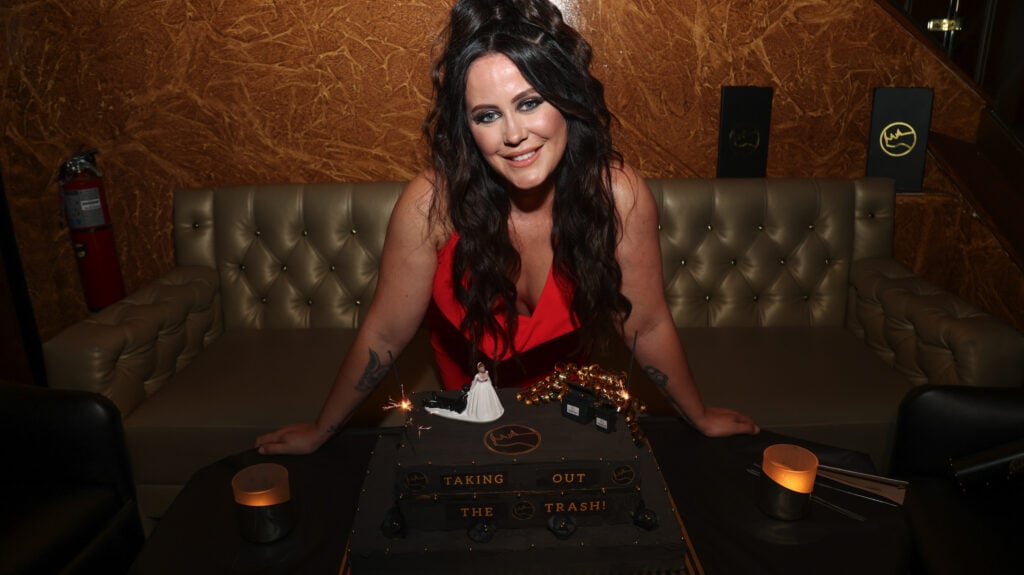
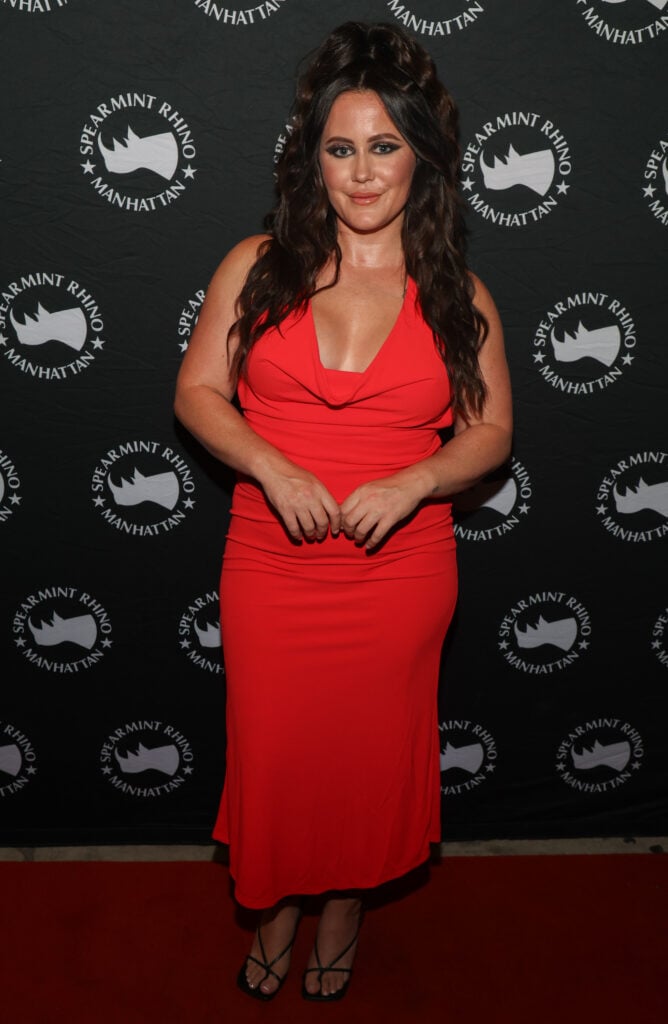
Reality TV Star, Jenelle Evans, Celebrates Divorce with a party at Spearmint Rhino on June 12, 2025 in New York City. (Photo by Manny Carabel/Getty Images for Spearmint Rhino New York City)
Jenelle Evans opens up about numerous cosmetic procedures
Yes, Jenelle shared some before-and-after photos with fans on Thursday, ahead of her 34th birthday tomorrow.
And her followers are shocked at the mother of three’s near-total transformation.
Evans posted the carousel of pics below and thanked the many medical professionals who helped to sculpt her new physique.
“I’ve been keeping a little secret. It feels so good to finally share this with you guys!” she captioned the post.
“After 3 pregnancies, work outs, and eating clean my body still needed some extra help especially with diastasis recti (a mom pouch) which a lot of us deal with after we have kids. No amount of exercise fixes this,” Jenelle continued, adding:
“I decided to do a mommy makeover with the one and only Dr. Rachel Mason at @lafemmeplasticsurgery in Las Vegas earlier this month.
“We replaced my old implants with 400cc silicone implants by @breastimplantsbymentor and repaired my abs with a tummy tuck,” Jenelle went on, concluding:
“I’ve had my body judged since I was a teenager, so choosing this was about feeling like myself again and not explaining it to anyone else.
Reality TV Star, Jenelle Evans, Celebrates Divorce with a party at Spearmint Rhino on June 12, 2025 in New York City. (Photo by Manny Carabel/Getty Images for Spearmint Rhino New York City)
“Still healing but I already feel so confident, happy and really excited about this new chapter! Tomorrow I celebrate my 34th birthday and I can honestly say I’m proud to welcome a new year loving the skin I’m in.”
Needless to say, she’s had quite a bit of work done. But to her credit, she’s been open about all of it.
If you’re wondering how Jenelle managed to pay for these procedures when she hasn’t appeared on TV since 2024 (and then only in a brief guest star role)…
Well, there’s a reason she shouted out all those doctors.
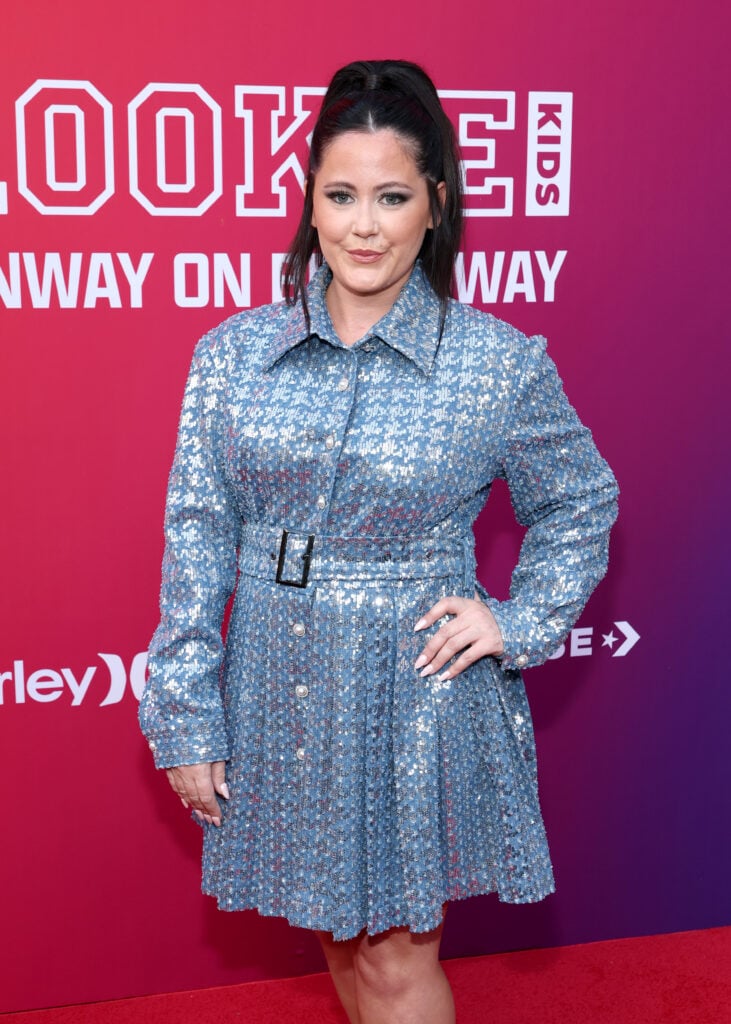
Jenelle Evans attends the Macy’s and Rookie In The City Fashion Show at Herald Square on September 18, 2025 in New York City. (Photo by Cindy Ord/Getty Images)
She also tagged her PR team in the post, as they’re probably the ones who arranged the deal wherein Jenelle would get a ton of work done for free in exchange for offering up some free publicity.
Yes, Jenelle has had quite a rocky year, and she’s not exactly a household name these days.
But she still has more than three million followers on Instagram alone. Therefore, she has a bigger reach than many TV shows that air during prime time.
Just remember that the next time you roast one of your friends for chasing clout on social media:
It can pay off big-time in the long run! (Although in most cases it’s just a vanity thing.)
Truly awful news this afternoon out of the professional sports world:
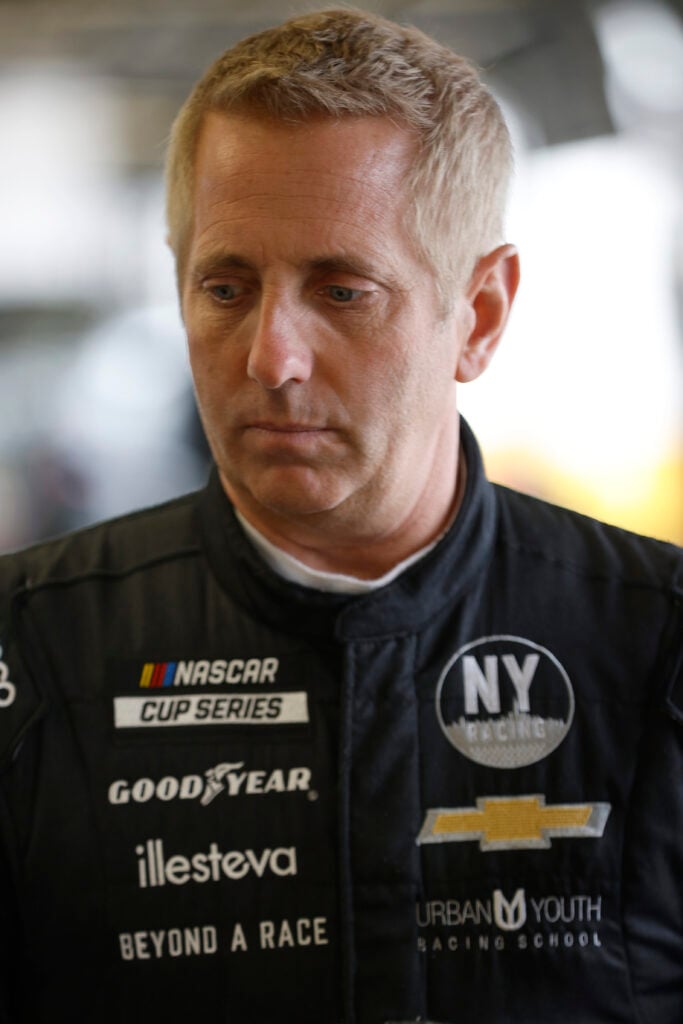
Greg Biffle, a retired NASCAR driver and legend, was among six people killed in a plane crash in North Carolina on Thursday.
Three of the other victims were Biffle’s wife, Cristina, and his two children, a five-year old boy named Ryder and a 14-year old girl named Emma.
Biffle was 55 years old.
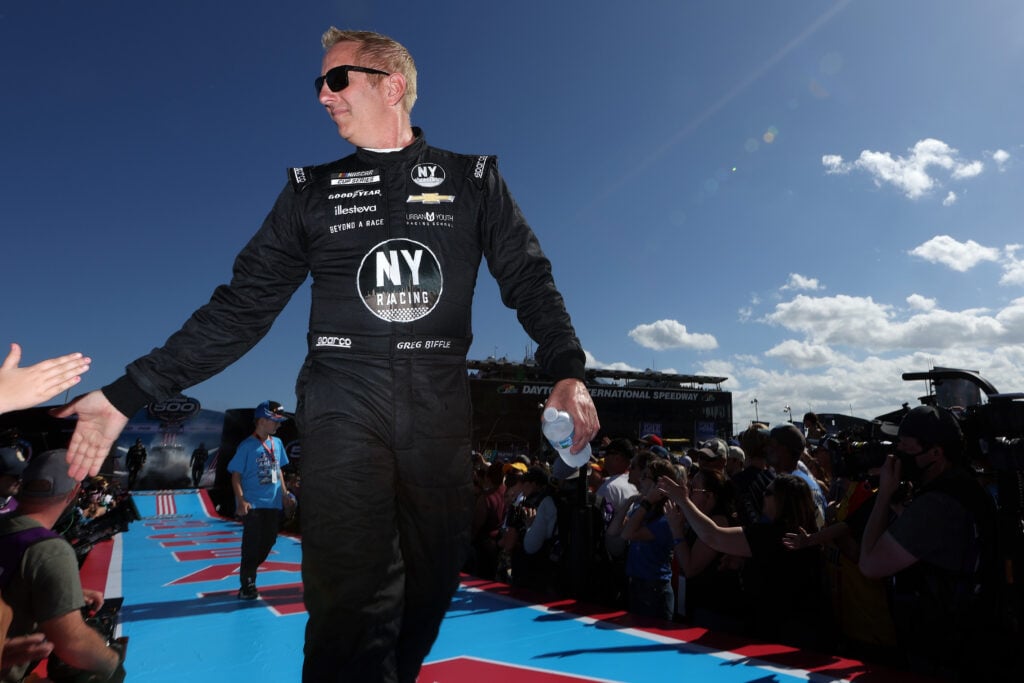
Greg Biffle, driver of the #44 Grambling State University Chevrolet, greets fans onstage during driver intros prior to the NASCAR Cup Series 64th Annual Daytona 500 at Daytona International Speedway on February 20, 2022 in Daytona Beach, Florida. (Photo by James Gilbert/Getty Images)
“I am devastated by the loss of Greg, Cristina, and their children, and my heart is with all who loved them,” family friend Richard Hudson wrote on X on December 18.
“They were friends who lived their lives focused on helping others. Greg was a great NASCAR champion who thrilled millions of fans. But he was an extraordinary person as well, and will be remembered for his service to others as much as for his fearlessness on the track.”
Congressman Hudson added in his message, referring to the Biffles’ humanitarian contributions:
“The last time I spoke with Cristina, just a couple of weeks ago, she reached out to ask how she could help with relief efforts in Jamaica. That’s who the Biffles were.”
(Photo by Chris Graythen/Getty Images)
The Federal Aviation Administration also confirmed the crash to local NBC outlet WCNC Charlotte, with the outlet reporting that the aircraft in question — a Cessno C550 — was owned by local company GB Aviation Leasing LLC and that the plane was under contract with Biffle.
The accident took place just 26 minutes after the plane took off this morning.
The plane was scheduled to travel to Florida, with YouTube personality Garrett Mitchell writing on social media that the Biffle family were meant to spend the day with him down there.
“Unfortunately, I can confirm Greg Biffle, his wife Cristina, daughter Emma, and son Ryder were on that plane… because they were on their way to spend the afternoon with us. We are devastated. I’m so sorry to share this,” Mitchell wrote a few hours ago.
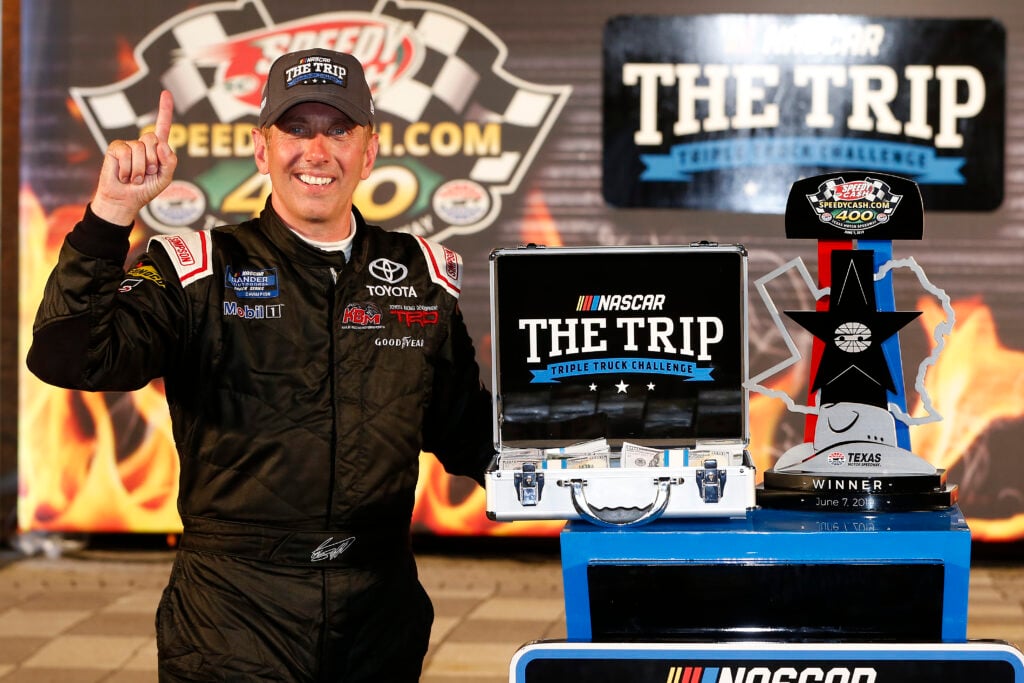
Greg Biffle, driver of the #51 Toyota Toyota, celebrates in victory lane after winning the NASCAR Gander Outdoors Truck Series SpeedyCash.com 400 at Texas Motor Speedway on June 7, 2019 in Fort Worth, Texas. (Photo by Brian Lawdermilk/Getty Images)
Biffle started his NASCAR career in 1995. In 1998, the athlete won the Craftsman Truck Series Rookie of the Year award, as well as a Series championship in 2000.
The Vancouver, Washington native was also named as one of NASCAR’s 75 Greatest Drivers in 2023.
Last year, he received the 2024 NMPA Myers Brothers Award for humanitarian aid.
In the wake of Hurricane Helene’s path of destruction across the southeastern United States in September 2024, Biffle became one of many helicopter pilots who began transporting both supplies and stranded individuals in and out of the disaster areas.
But this is 2025, a time when everything — even a horrific tragedy such as the Reiner murders one — must be politicized and exploited for personal gain by soulless social media grifters.
So even though Romy Reiner, 28, just discovered her parents’ bodies less than a week ago, she’s already being dragged into a discourse that she surely wants no part of.
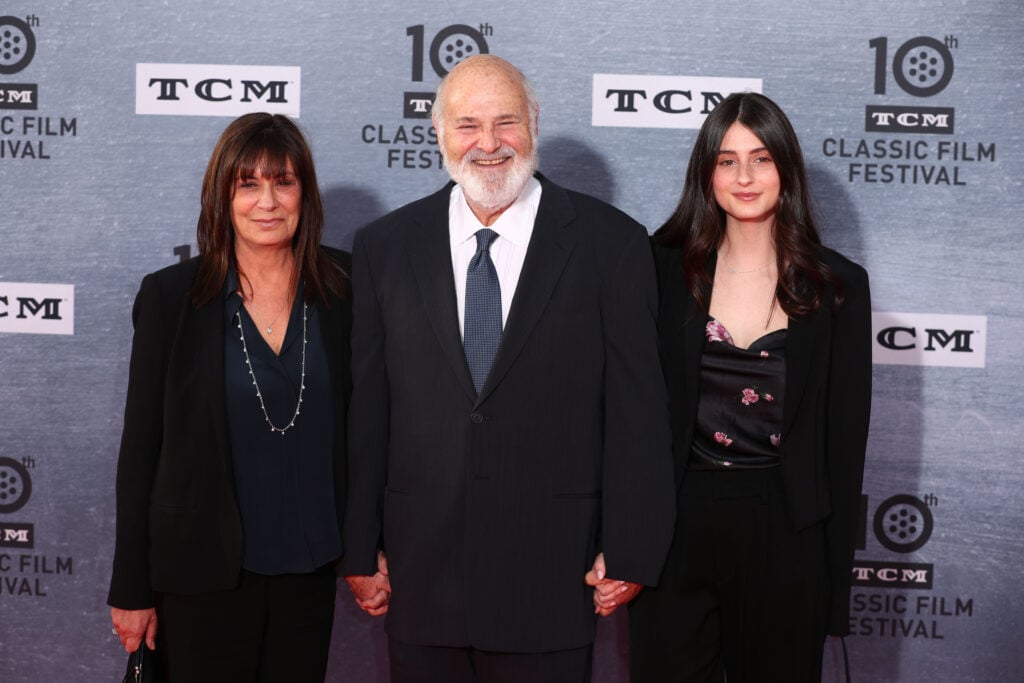
Rob Reiner, wife Michele Singer and daughter Romy Reiner attend the 2019 TCM Classic Film Festival Opening Night Gala And 30th Anniversary Screening Of “When Harry Met Sally” – Arrivals at TCL Chinese Theatre on April 11, 2019 in Hollywood, California. (Photo by Joe Scarnici/Getty Images)
Ghoulish social media clowns attempt to score political points off of Romy Reiner
Just weeks before tragedy tore the Reiners apart, the family took a beach vacation together at an undisclosed location.
At one point, Romy posted a mirror selfie, along with a caption reading:
“Thankful for family, health, and followers of any age. Not thankful for the president and the state of our country.”
That’s a sentiment that’s shared by tens of millions of Americans, and it’s pretty mild, as far as politiccal commentary goes.
But multiple blue-checkmarked demons have used to try and sic their followers on a grieving family.
Rob Reiner with his wife Michele Reiner (L) and daughter Romy Reiner (R) attend the ‘Shock and Awe’ premiere at the 13th Zurich Film Festival on September 30, 2017 in Zurich, Switzerland. (Photo by Andreas Rentz/Getty Images)
“Earlier this month the Reiners vacationed on a private island and this was the caption,” a user named Almost Jingo tweeted, alongside a screenshot of Romy’s post (he added an eyeroll emoji, in case his feelings about her content were unclear).
Horrifically, many of Jingo’s followers applauded him for pawing through the social media feed of a woman whose parents just got murdered in his search for ragebait chum to toss to his bloodthirsty followers.
Thankfully, there’s still an ounce or two of humanity left on social media, so many others — including a few who seemed to agree with Jingo’s general worldview.
“If you’re looking up someone who’s parents just got murdered by their brother on social media to try to score a cheap dunk over politics, you really should log off and touch some grass,” wrote one user, in a tweet that received thousands of likes.
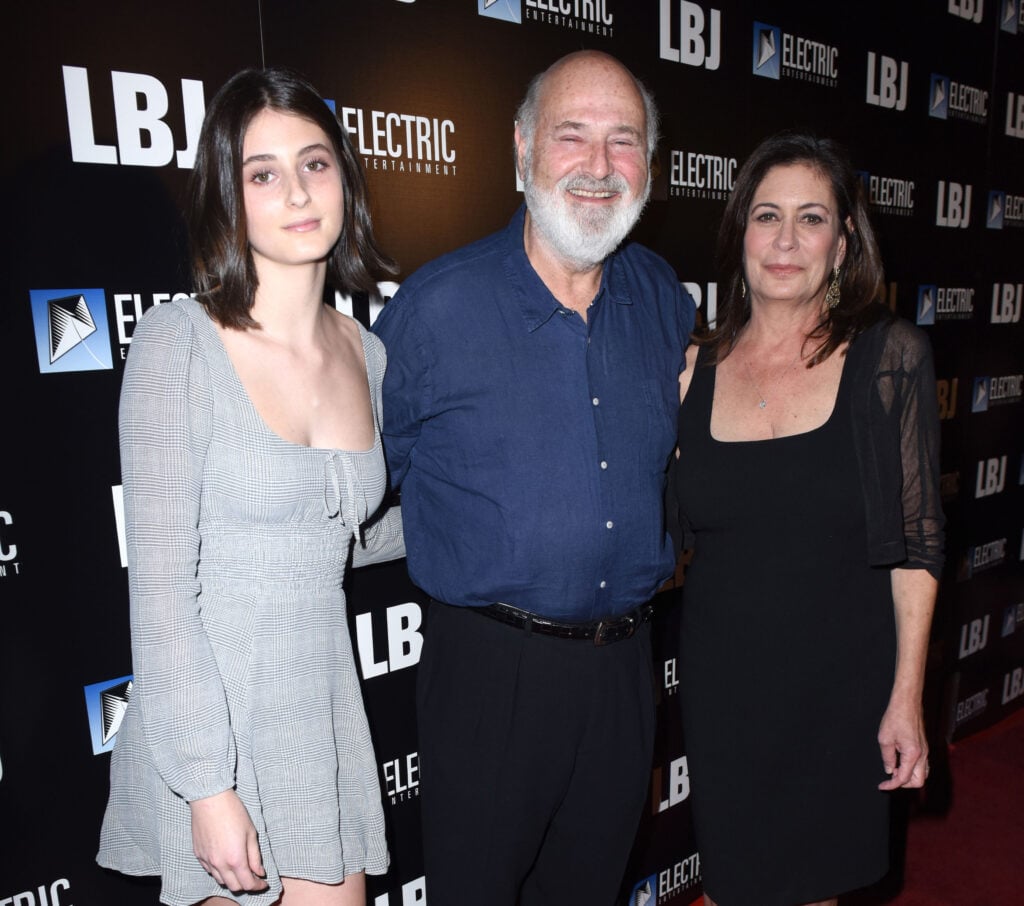
Romy Reiner, Rob Reiner and Michele Reiner attend the Los Angeles Premiere of LBJ at ArcLight Hollywood on October 24, 2017 in Hollywood, California. (Photo by Vivien Killilea/Getty Images for Electric Entertainment)
Reiner murders become unexpected political issue
Though obviously best-known for his work as one of Hollywood’s most beloved actors and directors, Rob Reiner was also a prominent political activist who never shied away from a spirited political debate.
And so, people who benefit from the deepening political divide in this country have been quick to focus on Reiner’s politics rather than his worth as an artist, father, husband, and human being.
Trump claimed that Reiner’s death stemmed from anger that he caused “through his massive, unyielding, and incurable affliction with a mind crippling disease.”
The president continued: “known as TRUMP DERANGEMENT SYNDROME, sometimes referred to as TDS.”
Thankfully, in both of these cases, many others were able to set aside politics and point out that celebrating a tragedy is shameful no matter what political party the victims belonged to in life.
Hopefully, it’s an attitude that more Americans will adopt in the years to come.