Hubbard Glacier, located near Yakutat, Alaska, is seen on Aug. 1, 2024. (AP Photo/Mark Thiessen)
AP- A powerful, magnitude-7.0 earthquake struck in a remote area near the border between Alaska and the Canadian territory of Yukon on Saturday. There was no tsunami warning, and officials said there were no immediate reports of damage or injury.
The U.S. Geological Survey said it struck about 230 miles (370 kilometers) northwest of Juneau, Alaska, and 155 miles (250 kilometers) west of Whitehorse, Yukon.
In Whitehorse, Royal Canadian Mounted Police Sgt. Calista MacLeod said the detachment received two 911 calls about the earthquake.
“It definitely was felt,” MacLeod said. “There are a lot of people on social media, people felt it.”
Alison Bird, a seismologist with Natural Resources Canada, said the part of Yukon most affected by the temblor is mountainous and has few people.
“Mostly people have reported things falling off shelves and walls,” Bird said. “It doesn’t seem like we’ve seen anything in terms of structural damage.”
The Canadian community nearest to the epicenter is Haines Junction, Bird said, about 80 miles (130 kilometers) away. The Yukon Bureau of Statistics lists its population count for 2022 as 1,018.
The quake was also about 56 miles (91 kilometers) from Yakutat, Alaska, which the USGS said has 662 residents.
It struck at a depth of about 6 miles (10 kilometers) and was followed by multiple smaller aftershocks.
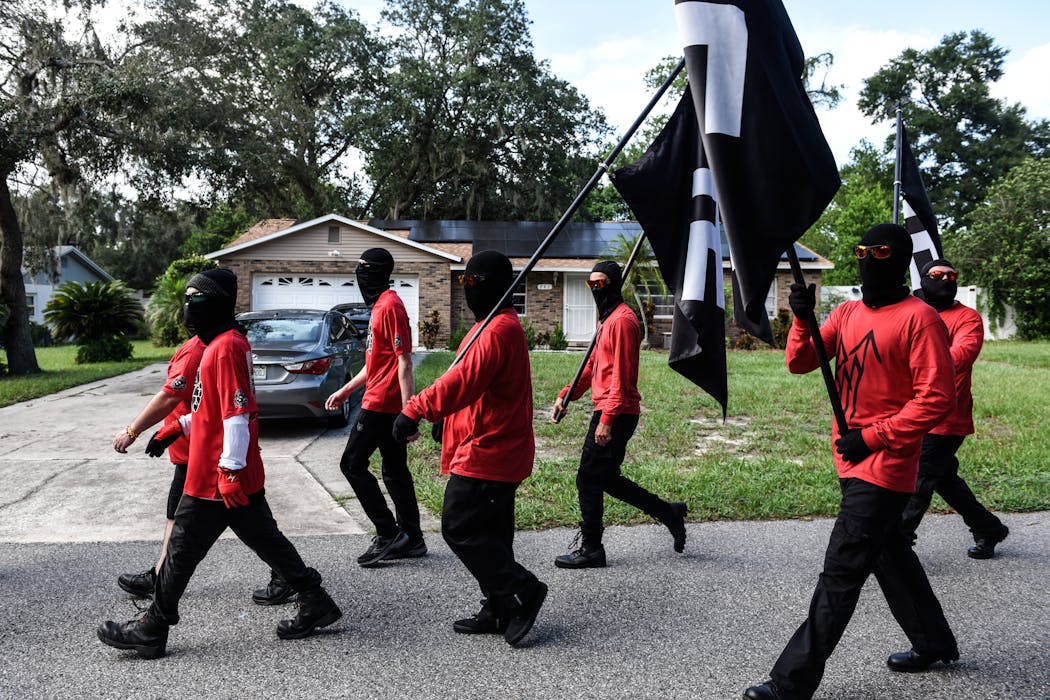
Neo-Nazis, like these in Orlando, Fla., organize on social media today but were early adopters of precursors to the internet in the 1980s.Stephanie Keith/Getty Images
How can society police the global spread of online far-right extremism while still protecting free speech? That’s a question policymakers and watchdog organizations confronted as early as the 1980s and ’90s – and it hasn’t gone away.
Decades before artificial intelligence, Telegram and white nationalist Nick Fuentes’ livestreams, far-right extremists embraced the early days of home computing and the internet. These new technologies offered them a bastion of free speech and a global platform. They could share propaganda, spew hatred, incite violence and gain international followers like never before.
Before the digital era, far-right extremists radicalized each other primarily using print propaganda. They wrote their own newsletters and reprinted far-right tracts such as Adolf Hitler’s “Mein Kampf” and American neo-Nazi William Pierce’s “The Turner Diaries,” a dystopian work of fiction describing a race war. Then, they mailed this propaganda to supporters at home and abroad.
I’m a historian who studies neo-Nazis and far-right extremism. As my research shows, most of the neo-Nazi propaganda confiscated in Germany from the 1970s through the 1990s came from the United States. American neo-Nazis exploited their free speech under the First Amendment to bypass German censorship laws. German neo-Nazis then picked up this print propaganda and distributed it throughout the country.
This strategy wasn’t foolproof, however. Print propaganda could get lost in the mail or be confiscated, especially when crossing into Germany. Producing and shipping it was also expensive and time-consuming, and far-right organizations were chronically understaffed and strapped for cash.
Going digital
Computers, which entered the mass market in 1977, promised to help resolve these problems. In 1981, Matt Koehl, head of the National Socialist White People’s Party in the United States, solicited donations to “Help the Party Enter The Computer Age.” The American neo-Nazi Harold Covington begged for a printer, scanner and “serious PC” that could run WordPerfect word processing software. “Our multifarious enemies already possess this technology,” he noted, referring to Jews and government officials.
Soon, far-right extremists figured out how to connect their computers to one another. They did so by using online bulletin board systems, or BBSes, a precursor to the internet. A BBS was hosted on a personal computer, and other computers could dial in to the BBS using a modem and a terminal software program, allowing users to exchange messages, documents and software.
After personal computers became commonplace but before the internet, people connected online via bulletin board systems. Blake Patterson/Flickr, CC BY
With BBSes, anyone interested in accessing far-right propaganda could simply turn on their computer and dial in to an organization’s advertised phone number. Once connected, they could read the organization’s public posts, exchange messages and upload and download files.
The first far-right bulletin board system, the Aryan Nations Liberty Net, was established in 1984 by Louis Beam, a high-ranking member of the Ku Klux Klan and Aryan Nations. Beam explained: “Imagine, if you can, a single computer to which all leaders and strategists of the patriotic movement are connected. Imagine further that any patriot in the country is able to tap into this computer at will in order to reap the benefit of all accumulative knowledge and wisdom of the leaders. ‘Someday,’ you may say? How about today?”
Then came violent neo-Nazi computer games. Neo-Nazis in the United States and elsewhere could upload and download these games via bulletin board systems, copy them onto disks and distribute them widely, especially to schoolchildren.
By the mid-1990s, with the introduction of the more user-friendly World Wide Web, bulletin boards fell out of favor. The first major racial hate website on the internet, Stormfront, was founded in 1995 by the American white supremacist Don Black. The civil rights organization Southern Poverty Law Center found that almost 100 murders were linked to Stormfront.
By 2000, the German government had discovered, and banned, over 300 German websites with right-wing content – a tenfold increase within just four years.
In response, American white supremacists again exploited their free speech rights to bypass German censorship bans. They gave international far-right extremists the opportunity to host their websites safely and anonymously on unregulated American servers – a strategy that continues today.
Up next: AI
The next frontier for far-right extremists is AI. They are usingAI tools to create targeted propaganda, manipulate images, audio and videos, and evade detection. The far-right social network Gab created a Hitler chatbot that users can talk to.
Combating online hate is a global imperative. It requires comprehensive international cooperation among governments, nongovernmental organizations, watchdog organizations, communities and tech corporations.
Far-right extremists have long pioneered innovative ways to exploit technological progress and free speech. Efforts to counter this radicalization are challenged to stay one step ahead of the far right’s technological advances.
Michelle Lynn Kahn has received funding from the National Humanities Center, United States Holocaust Memorial Museum, American Historical Association, and American Jewish Archives.
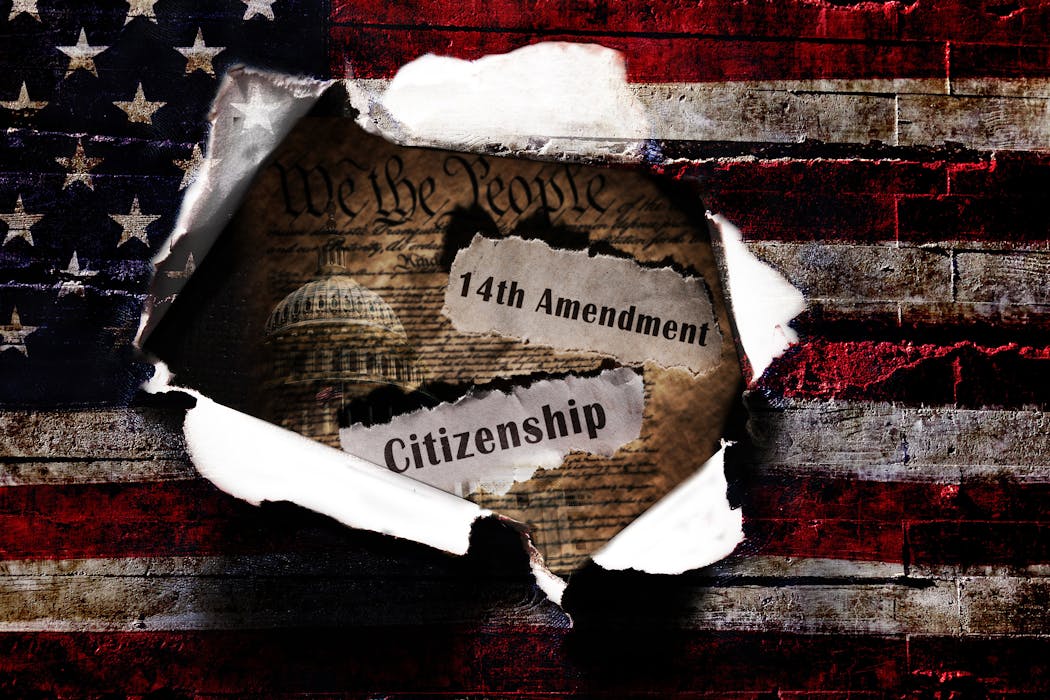
When the justices weigh the arguments, they will focus on the meaning of the first sentence of the 14th Amendment, known as the citizenship clause.zimmytws/Getty Images
The Supreme Court on Dec. 5, 2025, agreed to review the long-simmering controversy over birthright citizenship. It will likely hand down a ruling next summer.
In January 2025, President Donald Trump issued an executive order removing the recognition of citizenship for the U.S.-born children of both immigrants here illegally and visitors here only temporarily. The new rule is not retroactive. This change in long-standing U.S. policy sparked a wave of litigation culminating in Trump v. Washington, an appeal by Trump to remove the injunction put in place by federal courts.
When the justices weigh the arguments, they will focus on the meaning of the first sentence of the 14th Amendment, known as the citizenship clause: “All persons born or naturalized in the United States, and subject to the jurisdiction thereof, are citizens of the United States and of the State wherein they reside.”
Both sides agree that to be granted birthright citizenship under the Constitution, a child must be born inside U.S. borders and the parents must be “subject to the jurisdiction” of the United States. However, each side will give a very different interpretation of what the second requirement means. Who falls under “the jurisdiction” of the United States in this context?
As a close observer of the court, I anticipate a divided outcome grounded in strong arguments from each side.
Arguments for automatic citizenship
Simply put, the argument against the Trump administration is that the 14th Amendment’s expansion of citizenship after the eradication of slavery was meant to be broad rather than narrow, encompassing not only formerly enslaved Black people but all persons who arrived on U.S. soil under the protection of the Constitution.
The Civil War amendments – the 13th, 14th and 15th – established inherent equality as a constitutional value, which embraced all persons born in the nation without reference to race, ethnicity or origin.
One of the strongest arguments that automatic citizenship is the meaning of the Constitution is long-standing practice. Citizenship by birth regardless of parental status – with few exceptions – has been the effective rule since the time of America’s founding.
Advocates also point to precedent: the landmark case of United States v. Wong Kim Ark in 1898. When an American-born descendant of resident noncitizens sued after being refused re-entry to San Francisco under the Chinese Exclusion Act, the court recognized his natural-born citizenship.
If we read the Constitution in a living fashion – emphasizing the evolution of American beliefs and values over time – the constitutional commitment to broad citizenship grounded in equality, regardless of ethnicity or economic status, seems even more clear.
However, advocates must try to convince the court’s originalists – Clarence Thomas, Samuel Alito, Neil Gorsuch, Brett Kavanaugh and Amy Coney Barrett – who read the Constitution based on its meaning when it was adopted.
One exception to birthright citizenship covered by this line of rulings is the child of a foreign diplomat, whose parents represent the interests of another country. Another exception is the children of invading foreign armies. A third exception discussed explicitly by the framers of the 14th Amendment was Native Americans, who at the time were understood to be under the jurisdiction of their tribal government as a separate sovereign. That category of exclusion faded away after Congress recognized the citizenship of Native Americans in 1924.
The advocates of automatic birthright citizenship conclude that whether the 14th Amendment is interpreted in a living or in an original way, its small set of exceptions do not override its broad message of citizenship grounded in human equality.
Opposition to birthright citizenship
The opposing argument begins with a simple intuition: In a society defined by self-government, as America is, there is no such thing as citizenship without consent. In the same way that an American citizen cannot declare himself a French citizen and vote in French elections without consent from the French government, a foreign national cannot declare himself a U.S. citizen without consent.
This argument emphasizes that citizenship in a democracy means holding equal political power over our collective decisions. That is something only existing citizens hold the right to offer to others, something which must be decided through elections and the lawmaking process.
The court’s ruling in Elk v. Wilkins in 1884 – just 16 years after the ratification of the 14th Amendment – endorses “the principle that no one can become a citizen of a nation without its consent.” By making entry into the United States without approval a federal offense, Congress has effectively denied that consent.
Scholars who support this view argue that the 14th Amendment does not provide this consent. Instead it sets a limitation. To the authors of the 14th Amendment, “subject to the jurisdiction thereof” conveyed a limit to natural citizenship grounded in mutual allegiance. That means if people are free to deny their old national allegiance, and an independent nation is free to decide its own membership, the recognition of a new national identity must be mutual.
Immigrants living in the United States illegally have not accepted the sovereignty of the nation’s laws. On the other side of the coin, the government has not officially accepted them as residents under its protection.
President Donald Trump signs an executive order on birthright citizenship in the Oval Office on Jan. 20, 2025. AP Photo/Evan Vucci, File
If mutual recognition of allegiance is the meaning of the 14th Amendment, the Trump administration has not violated it.
The opponents of birthright citizenship argue that the Wong Kim Ark ruling has been misrepresented. In that case, the court only considered permanent legal residents like Wong Kim Ark’s parents, but not residents here illegally or temporarily. The focus on British common law in that ruling is simply misguided because the findings of Calvin’s Case or any other precedents dealing with British subjects were voided by the American Revolution.
In this view, the Declaration of Independence replaced subjects with citizens. The power to determine national membership was taken away from kings and placed in the hands of democratic majorities.
For opponents of birthright citizenship, the 14th Amendment does not take that power away from citizens but instead codifies the rule that mutual consent is the touchstone of admission. The requirement to be “subject to the jurisdiction” provides the mechanism of that consent.
Congress can determine who is accepted as a member of the national community under its jurisdiction. In this view, Congress – and the American people – have spoken: Current federal laws make entry into U.S. borders without permission a crime rather than a forced acceptance of political membership.
What might happen
The court will likely announce a ruling in summer 2026 before early July, just in time for the 250th anniversary of the Declaration of Independence. The court will ultimately decide whether the Constitution endorses the declaration’s invocation of essential equality or its creation of a sovereign people empowered to determine the boundaries of national membership.
The court’s three Democratic-appointed justices – Ketanji Brown Jackson, Elena Kagan and Sonia Sotomayor – will surely side against the Trump administration. The six Republican-appointed justices seem likely to divide, a symptom of disagreements within the originalist camp.
The liberal justices need at least two of the conservatives to join them to form a majority of five to uphold universal birthright citizenship. This will likely be some combination of Chief Justice John Roberts, Brett Kavanaugh and Amy Coney Barrett.
The Trump administration will prevail only if five out of the six conservatives reject the British common law foundations of the Wong Kim Ark ruling in favor of citizenship by consent alone.
America should know by July Fourth.
Morgan Marietta does not work for, consult, own shares in or receive funding from any company or organization that would benefit from this article, and has disclosed no relevant affiliations beyond their academic appointment.
But in these cooler months, it appears that things are heating up.
The new pic’s caption refers to Perry as Trudeau’s “partner.” And it comes from a very official source.
Singer Katy Perry attends the 11th Breakthrough Prize ceremony at Barker Hangar in Santa Monica, California, on April 5, 2025. (Photo Credit: MICHAEL TRAN/AFP via Getty Images)
Katy Perry and Justin Trudeau look like a classy couple in this photo
A December 4 post shared a photo of Katy Perry and Justin Trudeau.
The pop singer and the former prime minister of Canada were posing with another former world leader, former Japanese prime minister Fumio Kishida (and his wife, Yuko Kishida).
Kishida shared the photo on Instagram, and included a caption across multiple social media platforms that identified Perry as Trudeau’s “partner.”
He shared: “Former Canadian Prime Minister @JustinTrudeau visited Japan with his partner and joined my wife and me for lunch.”
As you can see in the photo, this looks like an ex-PM double date. Which it essentially was, by the sound of it.
“During his time as prime minister, we met multiple times as fellow leaders,” Kishida recalled.
“And when I visited Canada, we worked together to strengthen bilateral relations,” he wrote.
Kishida noted that this work was “including formulating the ‘Japan-Canada Action Plan,’ sweating it out side by side.”
He gushed: “I am delighted that we continue to maintain this friendship in this way.”
Trudeau’s visit included other spots in Japan. But why was he there in the first place?
Former Japanese Prime Minister Fumio Kishida shared this warm caption about former Canadian Prime Minister Justin Trudeau on December 4, 2025. (Image Credit: Twitter)
Does this count as going ‘Instagram official’ for the couple?
At the very least, this is bordering on looking like they could be churning out a holiday card.
Though this double date was through Justin Trudeau’s connection, it appears that he and Katy Perry were there for her.
Perry’s Lifetimes tour included a concert in Tokyo on Wednesday, December 3.
On Sunday, December 7, she has an Abu Dhabi show.
Perry has been on tour since April of this year. And, along the way, she picked up a world-famous groupie in Canada.
Former Prime Minister of Canada Justin Trudeau arrives ahead of an appearance by King Charles III and Queen Camilla at the Senate Chamber for the State Opening of Parliament during an official visit to Canada on May 27, 2025. (Photo Credit: Chris Jackson – Pool/Getty Images)
As we reported at the time, Perry and Trudeau went out to dinner in July. It appeared cozy, but no one was really sure if it was a true date.
Just two days later, Trudeau appeared at one of her concerts, cheering and singing along.
Despite this, the two tried to keep things low-key. For a time, it worked — leading people to wonder if nothing ever came of it, or if they’d dated briefly and parted ways.
Seemingly concluding that there was no sense in hiding any longer, they began making public appearances together that same month, holding hands at a cabaret show in Paris.
Katy Perry attends iHeartRadio z100’s Jingle Ball 2024 Presented By Capital One at Madison Square Garden on December 13, 2024. (Photo Credit: Arturo Holmes/Getty Images for iHeartRadio)
Maybe, next time, these two will speak for themselves
Using a friendly visit between two former prime ministers to essentially go Instagram Official is very funny.
This is, arguably, a flex.
We don’t really associate Katy Perry with “power moves” these days, unless it involves her real estate controversies.
However, it looks like they’re taking things slowly.
Perry and Trudeau both only recently emerged from serious, long-term relationships. They’re in no rush.
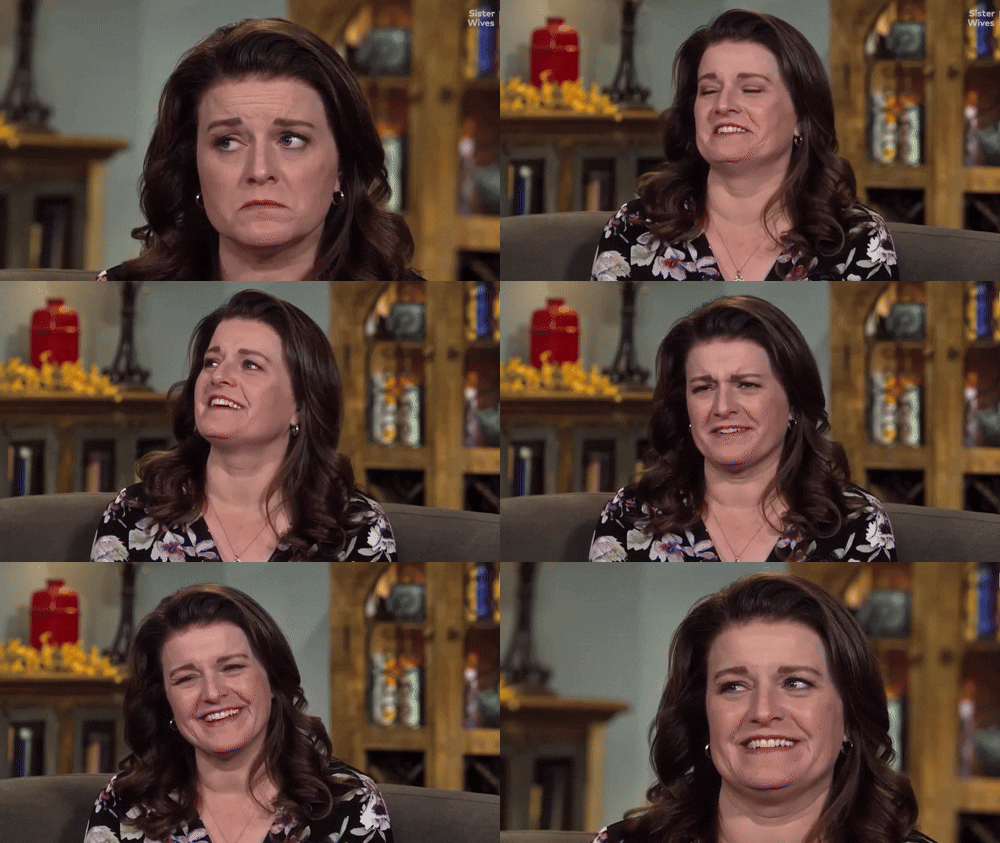
One producer’s question gets a response out of Robyn Brown that is so eye-catching that we simply had to GIF it.
(And we did — you can see it below)
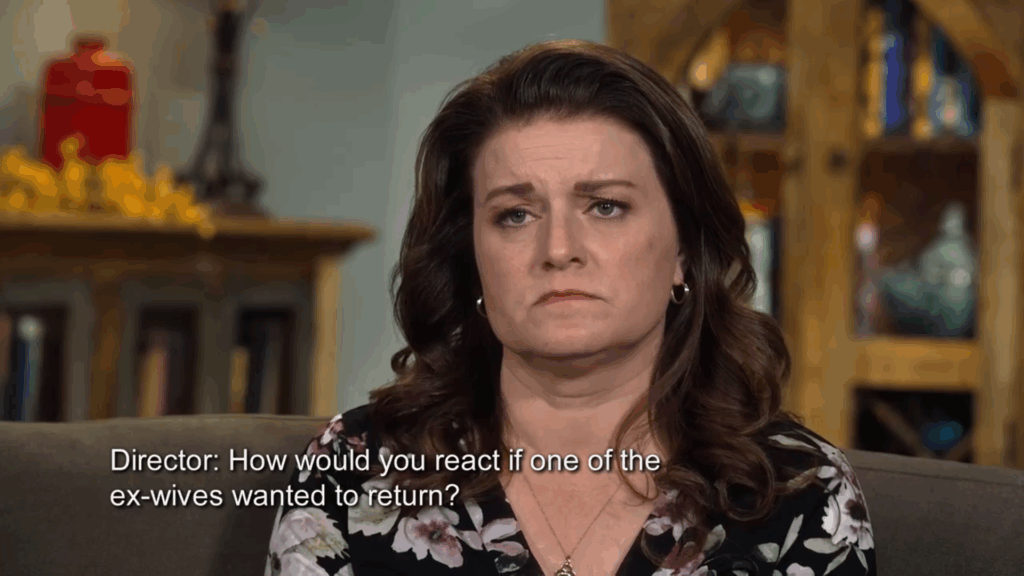
A producer asks Robyn: “How would you react if one of the ex-wives wanted to return?”
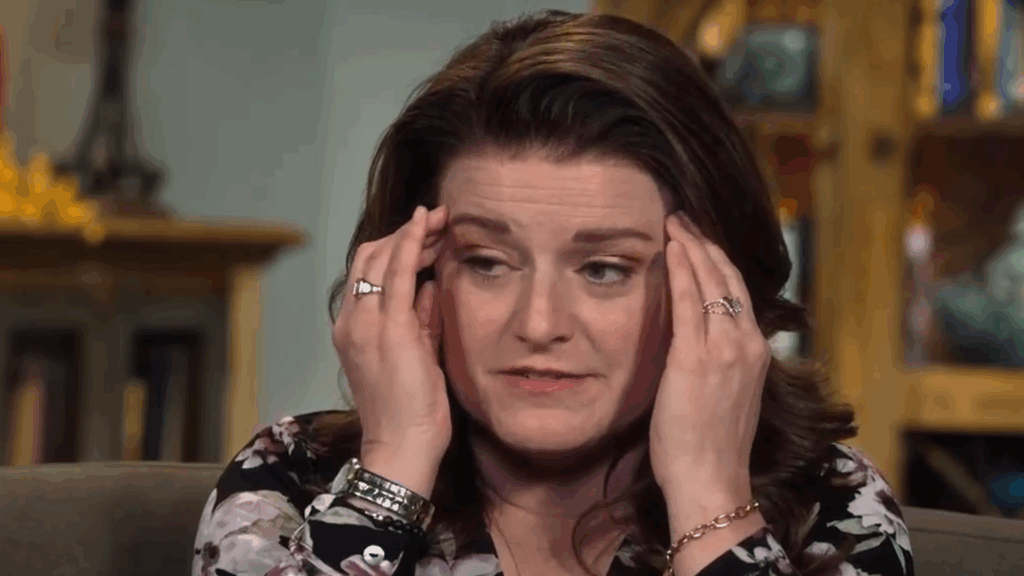
The prospect of a polygamist reconciliation sends Robyn on a singular face-journey.
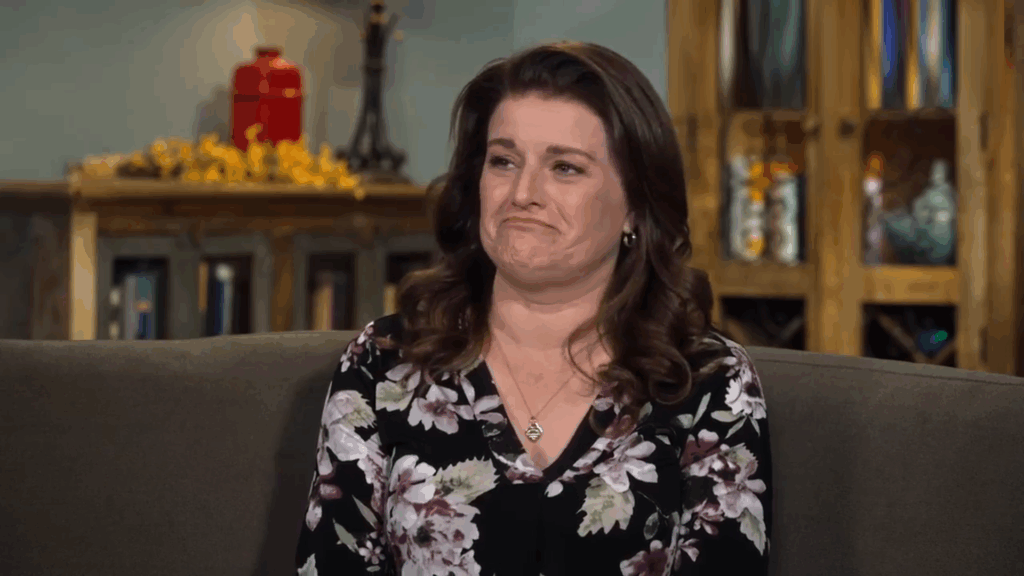
A ‘Sister Wives’ producer asks Robyn Brown about the possibility of family reunification. (Image Credit: TLC)
Most of Robyn’s answer plays out on her face as she makes almost every conceivable expression in rapid succession.
However, alongside her face journey, she also answers in words.
“I would be very surprised,” Robyn admits.
As emotions spike, she adds: “I don’t even want to answer this.”
Her reluctance to answer, it turns out, stems from how she has not even alllowed herself to consider the possibility.
‘Sister Wives’ has seen few face journeys like this one from Robyn Brown. (Image Credit: TLC)
Truly a face journey for the ages
During the Sister Wives sneak peek, Robyn Brown admits that considering the possibility is “making me sad right now.”
Before this, she had not even entertained the notion, she claims.
“ …. like, [that] just open[ed] this little portal of hope and I’m just, like, I didn’t even think of that,” Robyn tells the camera.
“And now I’m just, like, what if?” she describes.
“And I’m going down that road,” Robyn expresses. “I can’t, I can’t.”
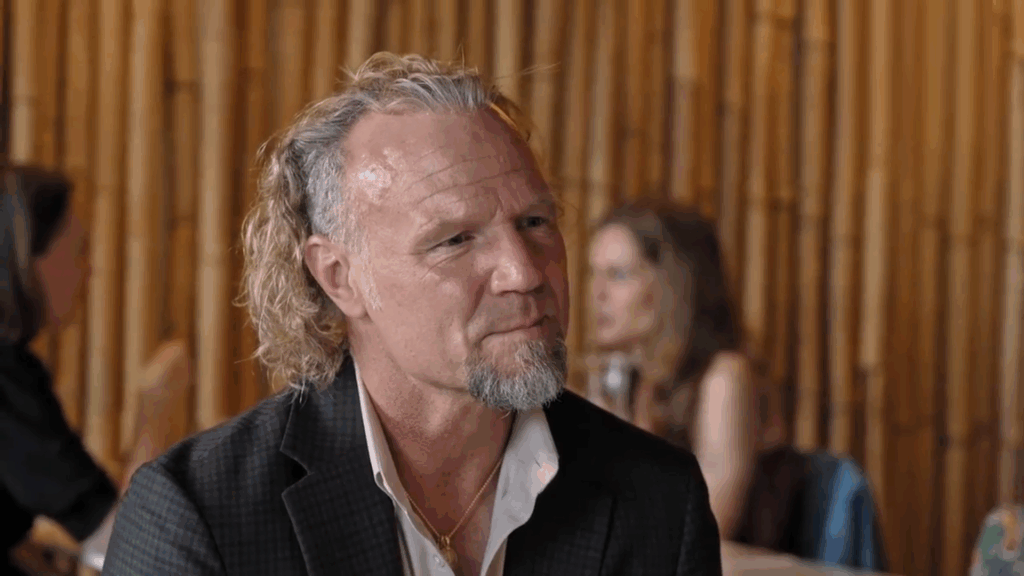
While is lone remaining wife serves up the face journey of a lifetime, Kody Brown meets with an ex. (Image Credit: TLC)
“I got to move away from that,” Robyn explains, “because I’ll fall apart and I can’t be on this set.”
She then goes on to tell the camera that, in her opinion, “hope is dangerous sometimes.”
Robyn tells viewers she believes that “hope is dangerous sometimes.”
What expression is this? Not even Robyn Brown seems to know. (Image Credit: TLC)
Would any of the exes want to get back with Kody Brown?
There was probably a time when Meri would have given anything to get back with Kody. He iced her out long before Christine and Janelle left.
But Christine has not only moved on, but she has remarried. And she’s actually with a man who loves her and who her kids like.
Janelle hasn’t moved on quite so thoroughly. But she has put Kody behind her in every sense, moving to Raleigh to live near multiple children and grandchildren.
So, no, we don’t think that Robyn Brown has any reason to “hope” that the polygamist family will be back together.
Kody is a failed polygamist. Sister Wives is a documentary about the slow, simultaneous death of three marriages.
Michelle Pfeiffer has been married and divorced during her legendary acting career.
Along the way, she had a few Dangerous Liaisons that didn’t involve tying the knot.
From John Malkovich to Kevin Costner, some of acting’s biggest names are notches on her bedpost.
Where do things stand today?
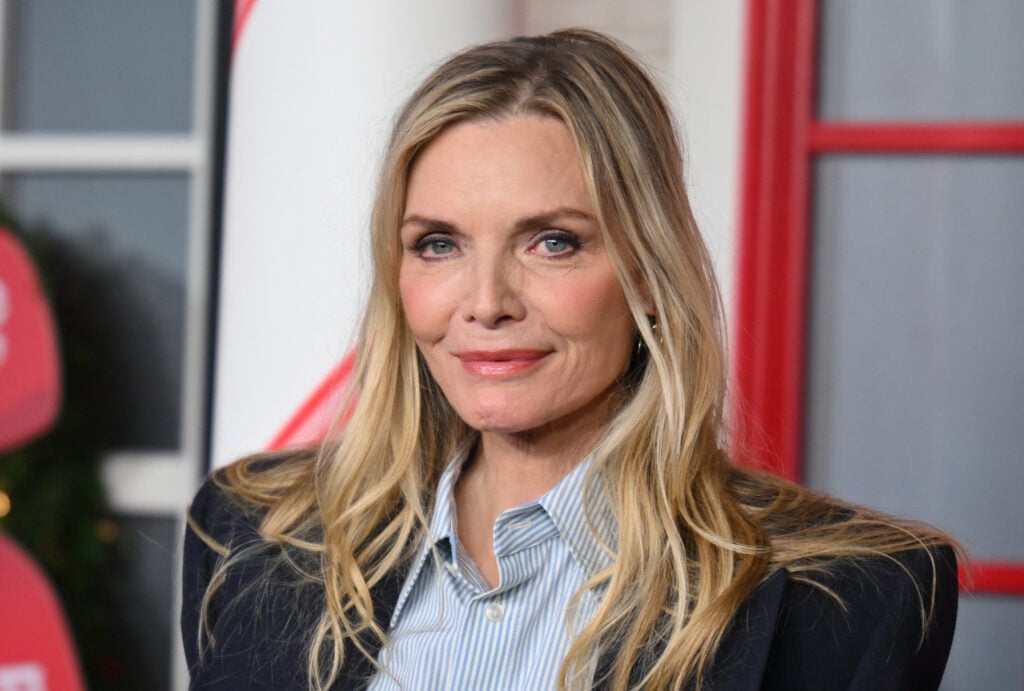
Actress Michelle Pfeiffer attends “Oh. What. Fun.” premiere at the Alice Tully Hall in New York on December 2, 2025. (Photo Credit: ANGELA WEISS / AFP via Getty Images)
Michelle Pfeiffer’s first husband was Peter Horton
Before rising to the household name status that she has enjoyed for decades, Michelle Pfeiffer attended an acting class that Milton Katselas taught.
There, she met another young actor, Peter Horton. The to began dating, and things became serious.
In 1981, Pfeiffer and Horton married in Santa Monica. This was right before she discovered that she’d landed the lead role in Grease 2. (Literally; she found out on their honeymoon)
She and Horton worked together. He directed her in One Too Many in 1985, where she played the high school girlfriend of Val Kilmer. In 1987, she and Horten played a couple in John Landis’ comedy compilation, Amazon Women on the Moon. (Fortunately, their skit did not involve any helicopters)
In 1988, they separated. Two years later, Michelle Pfeiffer and Peter Horton were divorced. Horton would later blame their careers for how their marriage fell apart.
In 1988, John Malkovich And Michelle Pfeiffer Star In The Movie “Dangerous Liaisons.” (Photo Credit: Getty Images)
John Malkovich
Pfeiffer co-starred in 1988’s Dangerous Liaisons adaptation. (If you’re unfamiliar, it’s just the original version of Cruel Intentions — with French aristocrats instead of mean New York youths)
As sometimes happens with people who work closely together at unusual hours, they developed an intense bond.
Awkwardly, Malkovich was still married to Glenne Headly, his first wife. And Pfeiffer and Peter Horner had not yet divorced, though clearly their marriage was winding to a close.
Affairs are complicated. So are on-again, off-again entanglements between actors.
Eventually, Pfeiffer and Malkovich parted ways — but reportedly remain cordial, at least.
Actress Michelle Pfeiffer acts in a scene from “Married to the Mob,” May 15, 1988. (Photo Credit: Liaison)
Fisher Stevens
In 1986, Michelle Pfeiffer (who was years away from being divorced) and actor-slash-producer Fisher Stevens worked together on The Boss’ Wife.
They had originally met when she starred as Olivia in Twelfth Night in the New York Shakespeare Festival production. Stevens had portrayed Sir Andrew Aguecheek.
Over time, sparks flew, and Pfeiffer and Stevens engaged in a three-year romance.
Of course, both were professional actors with busy careers.
They ended up splitting in 1989.
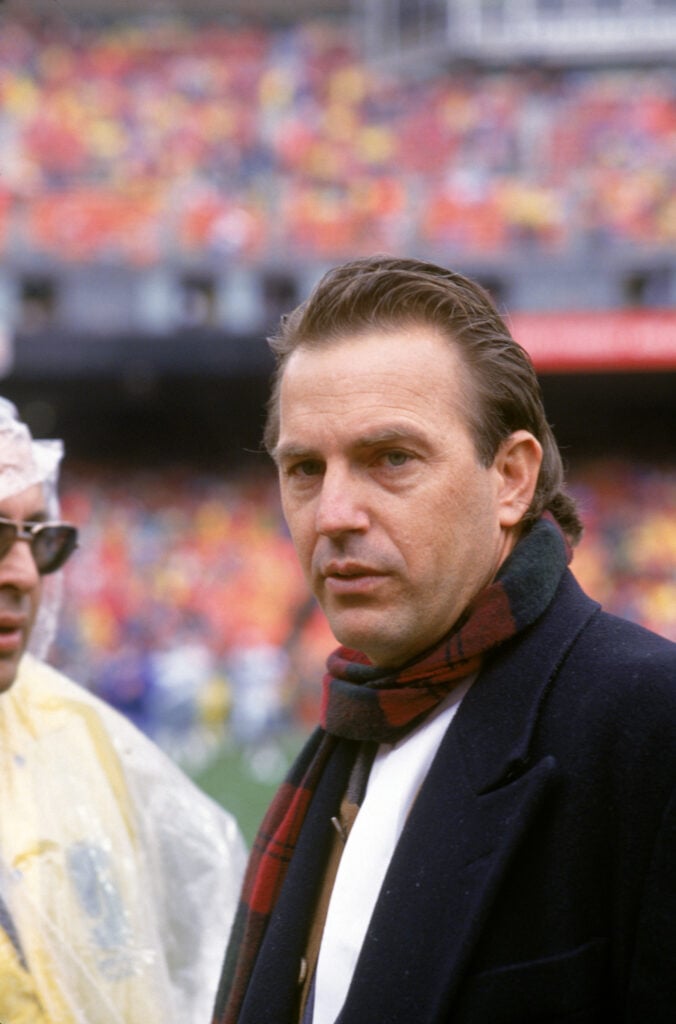
Actor Kevin Costner stands for a photo on the field at Candlestick Park on January 17, 1993. (Photo Credit: George Rose/Getty Images)
Kevin Costner
We could spend all day listing all of Pfeiffer’s big-name entanglements. Almost always, she remains the biggest name in the bunch.
One such memorable connection was Kevin Costner.
The two men when filming the 1992 movie, Love Field.
Unfortunately, there was once again a timing issue — Costner was still married to Cindy Silva. Whoops!
Though their steamy and short-lived romance was memorable, it couldn’t last.
Actress Michelle Pfeiffer and husband David E. Kelley attend Showtime’s FYC Event and Premiere for “The First Lady” on April 14, 2022. (Photo Credit: Jon Kopaloff/Getty Images)
David E. Kelley
In 1993, Michelle Pfeiffer married David E. Kelley. He, too, works in the entertainment industry, as a television writer and producer.
She actually made a small, uncredited cameo in his show, Picket Fences. Kelley wrote To Gillian on Her 37th Birthday, and Pfeiffer portrayed the titular character.
Pfeiffer had already begun the adoption process for newborn Claudia Rose when she met Kelley. In 1994, she gave birth to John Henry Kelley II.
In 2024, Pfeiffer became a grandmother. She only revealed this big news in September 2025.
Michelle Pfeiffer and David E. Kelley remain married and have not divorced. Sometimes you have to kiss a few frogs — or A-list actors — before you find your prince.
Very sad news this week our of the world of reality television:
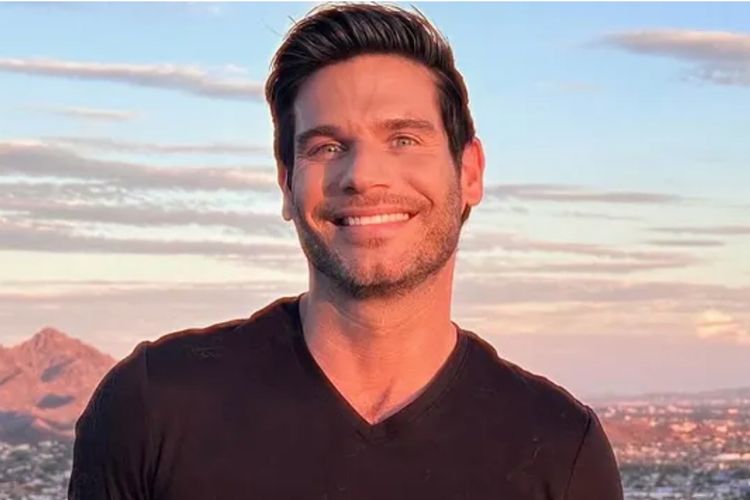
Chad Aaron Spodick, a contestant on the series Finding Prince Charming, has passed away. He was 42 years old.
(Instagram)
The death was confirmed via a GoFundMe page set up by a friend.
“Our hearts are shattered as we share the devastating news of the loss of our beautiful, kind, and generous son, brother and friend Chad,” a post on the fundraising page reads.
“His passing was sudden and heartbreaking, and we are still struggling to comprehend a world without his light.”
The GoFundMe’s creator Kate Werbowski went on as follows:
“Chad was the type of person who poured himself into others. He lifted up his friends, encouraged everyone around him to grow, to advocate for themselves, and to believe in their own worth.
“His love for animals was unmatched — he cared deeply for every creature, especially his four beloved dogs and his bird, Cosmo. The world was brighter with Chad in it, and those who were lucky enough to know him felt the warmth of his heart every day.”
(GoFundMe)
No details were given about the nature of Spodick’s death, but the GoFundMe reiterated that it was entirely “unexpected.”
Spodick was best known for starring in Finding Prince Charming, the 2016 Logo reality series hosted by Lance Bass on which a cast of 13 suitors lived in a house together while looking for love with the lead.
He chose to leave the show after six weeks… and later accused the program’s lead of trying to pursue him and other former contestants after filming wrapped up.
The GoFundMe, meanwhile, was created on Thursday, December 4, and is aiming to raise $20,000 for “funeral arrangements and ongoing living expenses.”
As of Friday, December 5, the page has reached just over $12,000.
According to his LinkedIn profile, Spodick has more than two decades of experience as a pilot with several airlines. He launched Goldsuite Jets, a luxury charter service, in 2020.
Spodick’s niece left a comment on one of his more recent Instagram posts.
“My beautiful uncle,” she wrote, urging commenters to donate via the GoFundMe page. “Fly high uncle chad love you forever.”
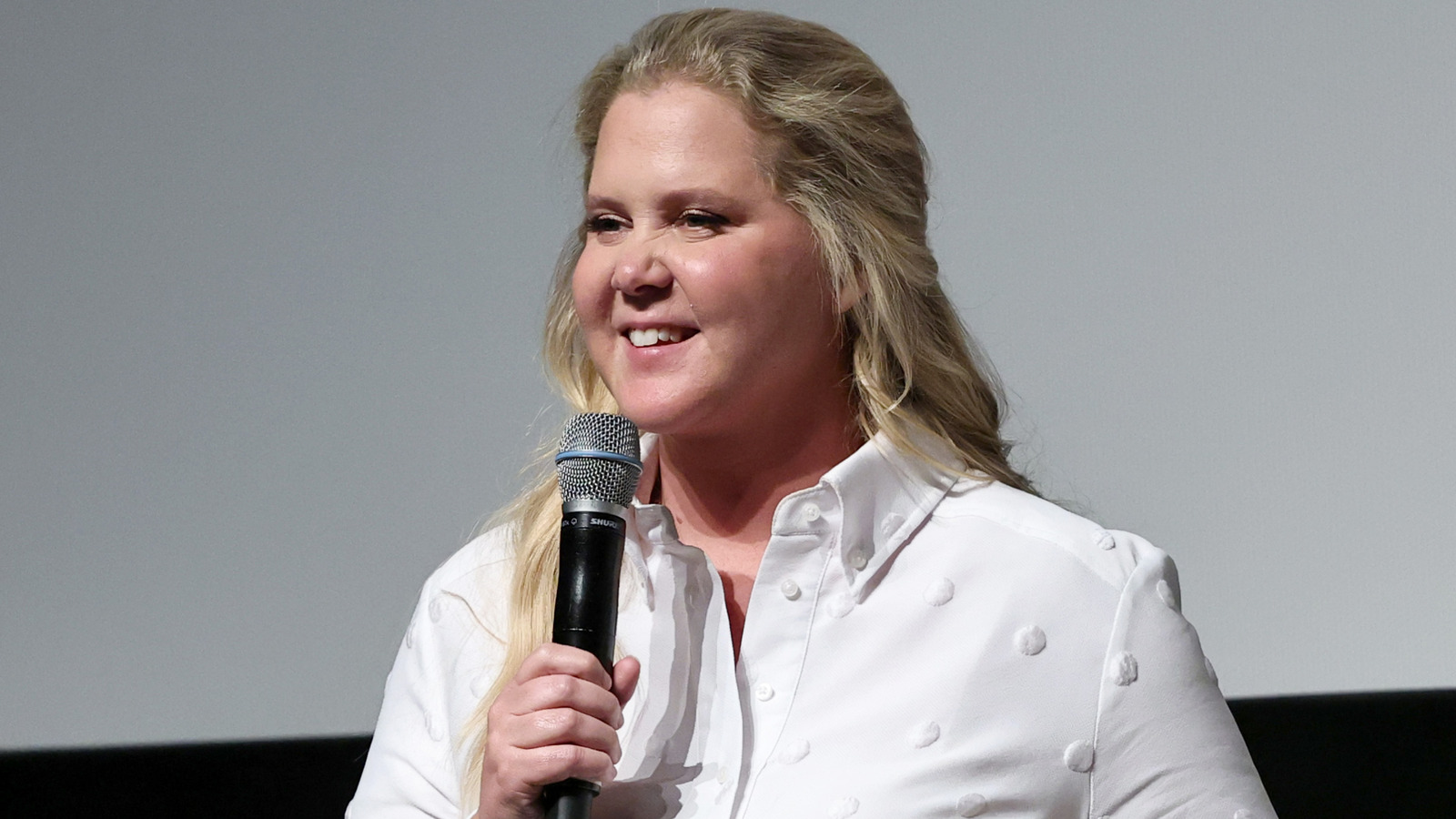
Amy Schumer has revealed that her 50-pound weight loss was not just about looking attractive. We explain the disease that prompted her to seek treatment.
Health Digest – Health News, Wellness, Expert Insights
No matter how far you are from the border, every state has a stellar Mexican restaurant. Decorated with local and national awards, these eateries hit the spot.
Mashed – Fast Food, Celebrity Chefs, Grocery, Reviews