Categories
Sports Fox

INDYCAR Drivers Stoked about Arlington Course as Qualifying Tweak Looms

Arlington, Texas — When a track runs for 2.73 miles, drivers will find something that they wish could change. Maybe a little bump here, a little different curbing there, not enough runoff in another spot. Those things are relatively minor, kind of like small issues with a warning track or pitching mound. For a 2.73-mile INDYCAR course that features four different racing surfaces — old asphalt, new asphalt, concrete and some painted concrete — drivers enjoyed their first day of practice on the new course that winds the streets around the Dallas Cowboys and Texas Rangers stadiums. They will compete for 70 laps Sunday in the inaugural Grand Prix of Arlington (12:30 p.m. ET, FOX). [Grand Prix of Arlington: Everything to Know] Cowboys owner Jerry Jones was among those who cut the ribbon to open the track on Thursday night. And then the drivers determined the next day that the track is bigger and better than many, if not all, of their other street circuits. “That is instantly my most favorite street circuit ever,” Scott McLaughlin said in a television interview after stepping out of his car. McLaughlin did have reason to be happy. He topped the speed charts after the first day of practice on the 14-turn course that includes a 0.9-mile straightaway for a historic weekend that will also include a tweak to the qualifying format (more on that later). “It’s so technical in spots, and then there’s spots where it’s really tough to brake into,” McLaughlin said in a post-practice news conference. “You’ve got to maximize high-speed corners, high-speed entries. “It’s a blast to drive.” Most of the drivers scouted the track Thursday and they gave feedback to INDYCAR. The curbing in one of the turns was reduced by about 12 feet after the apex. There was a concern that, if a car shortcut the course (possibly to avoid an accident), it would hit that curb and get airborne. Instead, INDYCAR will rule that area with timing lines and review if a car shortcuts the course without a legitimate reason, which could result in a penalty. Those types of changes are typical for a new circuit. Drivers do have some concerns about runoff area in a couple of the turns. The entry to pit road is after a turn, so drivers won’t see it until just before getting there. The cars were bottoming out, meaning the car floors were scraping the surface of the street because of bumps or raised areas of surfaces after a crack. But as McLaughlin noted, it was an easy fix to raise the height of the car. “Even the detail of how much work they put into grinding spots [to make them smooth] — we’ve never seen to that level before,” said six-time series champion Scott Dixon. “So it’s really, really nice to see.” Right behind McLaughlin on the speed chart was four-time series champion Alex Palou, who has won the last two points races on new circuits. “It’s insane,” Palou said in his post-practice news conference, using the term with a positive connotation. “It’s super fun to drive. It’s just a lot more fun than I thought just how the car feels. There’s so many different corners. “There’s corners that you can attack so much, and you feel like a superhero. There’s other corners where you need to back off because the grip is very different. [It’s] a lot more bumpy than I thought, which makes it super challenging, but super fun.” Palou said the different surfaces present a fun challenge. “It’s just tough on how we set up the car because you don’t want to set it up too aggressive one way or the other because it just keeps on changing so much,” Palou said. “You need different stuff in different sectors.” Drivers will face a new challenge in qualifying Saturday. The format for the final session of the fastest six drivers vying for the pole has changed. At most street and road courses, they get six minutes and can run as many laps as they want in a session where all six cars are on track. They will now be on the track one car at a time but get only one lap. The idea is to give those six fast cars more exposure. But it will also force some strategy, as the car that goes out first (the sixth-fastest among the finalists) could potentially go faster because the tires (if they use the same set) would have more grip when being hot and the car could go faster with fluids up to temperature. “It’ll be interesting,” Will Power, the series all-time leader in poles won (71) told me and other reporters. “I hope I get that chance to try that out. That looks cool. … On a long track like this, you could do it and get tire temp. When you get some of these shorter laps [at other tracks], that might be difficult.” It will make the final session easier to follow, albeit a final session that lasts an additional 15-20 minutes. “It’s going to be great for the fans,” Pato O’Ward told me and other reporters. “If I was a fan, that’s what I would want to watch.”​Latest Sports News from FOX Sports
Categories
Sports Fox

Big 12 Ditches Slippery Glass Tournament Floor After Christian Anderson Injury

The Big 12 Conference is ditching its slippery new glass floor for a hardwood court for the final two days of the tournament. “After consultation with the coaches of our four semifinal teams, I have decided that in order to provide our student-athletes with the greatest level of comfort on a huge stage this weekend, we will transition to a hardwood court for the remainder of the tournament,” Big 12 Commissioner Brett Yormark said in a statement Thursday night. “We look forward to a great semifinals and championship game.” Numerous players have slipped when trying to plant. On Thursday, Texas Tech guard Christian Anderson strained a muscle slipping in the No. 16 Red Raiders’ 75-63 loss to No. 7 Iowa State. “Obviously, the floor is a bit slippery,” Anderson said. “I think I just kind of misstepped or did a movement that caused me to slip,” The Big 12 announced last month that it would play the men’s and women’s tournaments on the ASB GlassFloor-made court that has been used at the NBA All-Star Game and in Europe but never before during an official U.S. competition. “I personally didn’t have any involvement (in the decision to go to hardwood),” Kansas coach Bill Self after the No. 14 Jayhawks beat TCU 78-73 on Thursday night in the last game played on the glass floor. “If the other coaches are doing it, (they) have juice and they got more than I got. Because I didn’t have any any involvement with that at all.” Then he added, “I think it’s the right thing to do.” The glass floor has an aluminum and steel spring-action design that is supposed to mimic the flexibility of hardwood. The LED panels, which display everything from data-driven graphics to advertising, have ceramic coating and little dots etched into the glass that are supposed to create grip that is consistent with traditional surfaces. The ball seems to bounce like usual, though with a different “thudding” sound. There are a whole lot more squeaks from sneakers than usual. But the biggest difference has been the traction. Reporting by The Associated Press.​Latest Sports News from FOX Sports
Categories
Sports Fox

5 Riskiest Deals of NFL Free Agency: Is Daniel Jones a Bad Bet?

There has been well over a billion dollars in contracts handed out in the first wave of NFL free agency. Not all of it was spent wisely.It’ll be months or even years, of course, before we know the full damage caused by some of the deals in this year’s free-agent frenzy. But at first glance, here are five that look like the riskiest bets so far. RELATED: The 5 Best Deals of NFL Free Agency Jaelan Phillips, Edge, Carolina Panthers Four years, $120 million ($80 million guaranteed) The Philadelphia Eagles loved the way he fit in their defense after they acquired him at the trading deadline last year, and they wanted to keep him. But not at $30 million per year. Pass-rushers always come at a premium price in free agency, and there’s still a gap between him and the top six, who get $35-45 million per season. But Phillips does have injury issues in his past (Achilles, knee) and he’s coming off a five-sack season. In fact, his sack numbers have been on a steady decline since the 8.5 he posted as a rookie in 2021. Phillips still young (he’ll be 27 in May), but this money shows an expectation of double-digit sacks and a player who will be one of the most dangerous edge rushers in the league. Phillips is good, but he’s never proven to be that good. Daniel Jones, QB, Indianapolis Colts Two years, $88 million ($50 million guaranteed) Jones was a revelation last season for the Colts and the way he played through the first 10 games in particular, he showed he’s worthy of a huge investment. But then, in Week 14, he tore his Achilles, and now he’s an enormous risk. He’ll be 29 in May and there’s no guarantee that he’ll be ready for the start of training camp or even the first week of the season. Even worse, when he tore his ACL with the Giants in 2023, he was terrible the next season — so bad the Giants eventually released him. That doesn’t bode well for his recovery this time. Thanks to his Achilles, knee and neck injuries, he hasn’t played a full season since 2022. The Colts first gave Jones the transition tag at $37.8 million, which was risky enough. Why did they then needlessly up the ante considering no one was going to offer a broken-down, mediocre QB more than that? Alec Pierce, WR, Indianapolis Colts Four years, $116 million ($80 million guaranteed) There is no doubt that Pierce is a talented, dangerous, stretch-the-field weapon who will make the Colts and their quarterback better next season. His average of 21.8 yards per catch the past two seasons proves that. But at $29 million per year, he better do more than that. He’s now the ninth-highest-paid receiver in the league, which puts him in the stratosphere of guys like A.J. Brown and Amon-Ra St. Brown. If you’re going to be paid like them, you need to perform like them, and Pierce never has. His best season was last season when he had 47 catches for 1,003 yards and six touchdowns. The Colts could have found that kind of production for a lot less money. To justify this deal, he needs to push 100 receptions and 1,300 yards. Clearly, the Colts believe Pierce is capable of that. They even traded away Michael Pittman Jr. to clear the field for him. The pressure is now on Pierce because there’s no pedigree to suggest he’s capable of doing it. It’s just hope. Odafe Oweh, Edge, Washington Commanders Four years, $100 million ($68 million guaranteed) Oweh has been a good pass-rusher for most of his career, but he earned this payday with a legendary contract year. Oweh had no sacks in his first five games last season before the Baltimore Ravens traded him to the Chargers. Then he had 7.5 over the final 12 games of the regular season before adding a three-sack game in the playoffs. That run (10.5 sacks in 13 games) was quite an anomaly, too, considering his career high was 10 sacks in 17 games in 2024, and he’s averaged only six sacks per season overall. That’s good, but now he’s the 13th-highest-paid edge rusher, and on a team desperate for pass-rushing help. The Commanders are clearly counting on double-digit sacks from him. He’s 27, and maybe he’s ascending, but it seems like the Commanders mostly bought into his recent film. Alijah Vera-Tucker, G, New England Patriots Three years, $42 million ($21 million guaranteed) The 26-year-old is a tremendous guard with the potential to be one of the NFL’s best — when he’s healthy. But that’s the problem. When is he healthy? He rarely has been during his NFL career. He missed 10 games with a torn triceps in 2022, 12 games with a torn Achilles in 2023, and all of last year with a torn triceps in his other arm. Vera-Tucker was terrific for the Jets as a rookie (2021) and again in 2024, showing all the potential the Pats are clearly banking on. But at this point, it’s more likely that he spends significant time on the sidelines for New England. The money isn’t crazy, but $14 million per year still puts him 17th among guards. It’s a good deal if he stays on the field, but history suggests there really isn’t a good chance of that happening.​Latest Sports News from FOX Sports
Categories
Sports Fox

World Baseball Classic Power Rankings: All 8 Quarterfinalists Ranked

It’s not surprising to see Japan and the Dominican Republic emerge from World Baseball Classic pool play undefeated. The third unbeaten squad, though? It’s not who anyone would’ve expected. The 20-team field is down to eight, and while pool play didn’t go the way Team USA would’ve envisioned, the dream team survived thanks to Italy’s extraordinary 4-0 run through Pool B. Now, the top four favorites from our initial World Baseball Classic power rankings still remain standing, but Italy looks capable of taking any team down. Before the quarterfinals begin Friday night in Houston and Miami, here are the countries still vying for a championship — ranked from eight to one — along with a player to watch and an X-factor for every team. – WBC Standings, Bracket, Schedule: How To Watch 8. Korea (2-2, Pool C Runners-Up) This is already a step forward for Korea, which failed to advance out of the first round of the last three tournaments. But this is also the only team in the tournament with multiple losses. Korea moved on over Australia and Chinese Taipei, who were also 2-2, due to tiebreaker rules. Every run mattered in a 7-2 Korea victory over Australia in a tense finish to the pool. A much tougher test awaits against the Dominican Republic in the quarterfinal. Considering Korea’s best attribute is its hitting — not a pitching staff that has a 4.50 ERA this WBC (and tallied a 7.55 ERA in the last one) — a tall task awaits against one of the scariest lineups in the tournament. Player to Watch: Do Yeong Kim Kim only has four hits in the tournament, but he has made them count. The 2024 KBO MVP hit a go-ahead two-run home run against Chinese Taipei (and later tied the game in the eighth with an RBI double in a game Korea ultimately lost in extra innings) and contributed an RBI single in the Australia win. There are MLB players on this roster, but both Kim — who became the youngest player in KBO history two years ago to join the 30-30 club as just 20 years old — and reigning KBO Rookie of the Year Hyun Min Ahn, whose sacrifice fly against Australia made the difference in advancing, also bring a lot of firepower to this lineup. X-factor: Bo Gyeong Moon The 25-year-old KBO slugger hit more than 20 home runs each of the last two seasons and has been the team’s top hitter this tournament. He knocked in four runs in the deciding game against Australia and leads all players in the WBC with 11 RBI. 7. Canada (3-1, Pool A Winners) Canada has advanced to the quarterfinals for the first time in the country’s history and has an argument to be one spot ahead here, especially considering its victory against Puerto Rico in Pool A. But a cruel reward awaits for its pool-play success with a date against Logan Webb and Team USA. Will Canada avenge its Winter Olympic gold-medal hockey losses on the diamond? It won’t be easy, but every player in the lineup has big-league experience and the pitching staff has allowed just six earned runs in the tournament. Player to Watch: Owen Caissie The Canada lineup features a 2024 All-Star in Josh Naylor among many MLB veterans, but one of the stars of the show is still making his name. Owen Caissie, Miami’s top position player prospect, is 7-for-14 with three doubles and a home run. He started and ended the scoring in the game against Cuba that sent Canada through to the quarterfinals by knocking in two runs. X-factor: Michael Soroka One former MLB All-Star already shut down the U.S. roster, when Team Italy’s Michael Lorenzen fired 4.2 scoreless innings in an upset win. Will Soroka make it a second? The 2019 All-Star allowed one run in three innings in a win against Colombia earlier in the tournament, and Canada will surely need Soroka to give the club length against USA’s lineup if it wants a chance of advancing. 6. Puerto Rico (3-1, Pool A Runners-Up) The home-field advantage is gone as the club travels from San Juan to Houston. Puerto Rico didn’t win its pool, but it did put on a show for its fans, particularly with a 10-inning walk-off victory against Panama that provided one of the most memorable highlights of the tournament. The insurance issues hit this country hard, particularly on the offensive side. The team is batting just .211 with one home run in the tournament, but Puerto Rico’s pitchers have the lowest ERA in the WBC (1.22). Player to Watch: Nolan Arenado He has made some fantastic plays in the field this tournament. He had a slow start to the tournament offensively, but perhaps his 3-for-4 day against Canada will get him going. X-factor: Darell Hernaiz With no Francisco Lindor or Carlos Correa, Puerto Rico needed another infielder to step up. Enter Hernaiz, who took advantage of the opportunity. It was Hernaiz’s walk-off homer that sent Hiram Bithorn Stadium into a frenzy. Does he have more magic in his bat? 5. Italy (4-0, Pool B Winners) This team is the story of the tournament. In a pool that included the best U.S. team ever assembled and a Mexico squad that nearly made it to the 2023 finals, it was Italy that emerged undefeated. The young squad, composed primarily of prospects and recent MLB call-ups, has the country believing. Player to Watch: Vinnie Pasquantino Pasquantino is the heart and soul of this squad. The captain played a vital role in recruiting the players on the roster, and while his value primarily came from his leadership and defense through the first three games of the tournament, the Royals slugger finally broke out against Mexico with the first three-homer game in WBC history (and his life). X-factor: Dante Nori On any night, any number of prospects on this team can carry the offense. But the best hitter of that group so far has been Nori, the Phillies’ 2024 first-round pick, who’s 6-for-12 with two homers and a double to start the tournament. That offensive production will be all the more important with standout catcher Kyle Teel out for the rest of the tournament with a hamstring injury. 4. Venezuela (3-1, Pool D Runners-Up) Venezuela already punched its ticket to the quarterfinals before its final pool-play game against the Dominican Republic, but that game still had major implications. Because Venezuela lost that game — despite a spirited ninth-inning charge — it finished as the runner-up of Pool D, which means a meeting against Japan and World Series MVP Yoshinobu Yamamoto awaits. Can Venezuela’s high-powered offense knock off the reigning champs? It certainly has a chance, even though the country has only advanced to the semifinals once before. Player to Watch: Luis Arraez On a team featuring Ronald Acuña Jr., William and Willson Contreras and 2025 All-Star Maikel Garcia, it’s hard to imagine another player rising to the top. But that’s what Arraez has done this tournament — not only with his bat-to-ball skills but also surprisingly with his power. He leads all players in the WBC with six extra-base hits after starting the tournament 7-for-14 with two home runs, four doubles and nine RBI. X-factor: Jackson Chourio After getting hit in the hand by a pitch during an exhibition, Chourio missed Venezuela’s first two games. He hasn’t gotten his bat going in the two games since returning, but the precocious Brewers outfielder — who just turned 22 on Wednesday — has been a 20-20 hitter each of his first two big-league seasons and could get going at any point. If he does, that could be the difference. 3. Japan (4-0, Pool C Winners) Japan went undefeated through pool play, as expected. But the three-time champs didn’t exactly bulldoze their way to this point, eking out an 8-6 win against Korea in the late innings and barely surviving a 4-3 victory against Australia. Still, Samurai Japan ranks in the top three in both OPS and ERA in this WBC — showcasing the talent both in the lineup and pitching staff — and remains the king of international competition until proven otherwise. Player to Watch: Shohei Ohtani There won’t be an Ohtani vs. Trout teammate-on-teammate matchup to end this WBC. Ohtani is only hitting during this competition, and boy, has he. The four-time MVP put on a show in the Tokyo Dome, starting the tournament 5-for-9 with two homers and a double, and he tends to rise to these sorts of occasions. X-factor: Masataka Yoshida On a team with Ohtani, Seiya Suzuki, Munetaka Murakami, Kazuma Okamoto and NPB Central League MVP Teruaki Sato, who leads the group so far in hits? That would be Yoshida, who’s 6-for-12 with two home runs. Yoshida was a below league-average hitter last year for the Red Sox, but he excelled in the 2023 WBC, and he’s doing so again — an encouraging sign for both Boston and Japan’s unrelenting lineup. 2. Dominican Republic (Pool D Winners, 4-0) There’s a strong argument to be made that Team D.R. should be the favorites. Three years ago, it was a massive disappointment when a loaded Dominican roster somehow failed to advance out of pool play, but this group looks more motivated and cohesive, and the 4-0 record so far is evidence. The Dominican players seem to be having a blast — quite literally. Eight different players in the lineup have already homered (often epically), and five have gone deep multiple times. The offense leads all teams in the WBC in runs, home runs and every slash-line category. When this lineup is clicking, there isn’t one better, and it’s hard to envision Korea’s pitchers holding it down. This group has a real shot to win the tournament for the first time since 2013. Player to Watch: Vladimir Guerrero Jr.? Juan Soto? Fernando Tatis? I mean, take your pick here. They’re all destroying the baseball. The trio of superstars have combined to hit .425 with six home runs. Against Venezuela in the Dominican Republic’s toughest test so far, Soto started the scoring with a homer in the first. Kete Marte and Guerrero followed with homers in the third. Tatis broke the game open with a three-run shot in the fourth. There’s nowhere for opposing pitchers to breathe. X-factor: Junior Caminero On a team full of Dominican luminaries, this feels like the official arrival of Caminero as one of the dudes. The 22-year-old’s earth-shattering home runs — and electric reactions — aren’t to be missed. The two he has launched this tournament both left his bat at more than 111 mph and traveled more than 400 feet. He seems built for this spotlight. 1. USA (3-1, Pool B Runners-Up) Considering the U.S. nearly didn’t even make it to the final round of eight, it’s fair to wonder if this dream team of All-Stars, MVPs and Cy Young Award winners is still worthy of the top spot. Even as it stormed its way through the first three games of the tournament, there were some surprising stretches of ineffectiveness for both the juggernaut offense and the electric arms on the most gifted baseball roster ever assembled. Still, this roster is just too talented to put anywhere else. If the U.S. can rebound from here and finish the job — as it was built to do — the stunning pool-play loss to Italy and the near exit that followed will just be a footnote in its WBC story. Player to Watch: Aaron Judge For all the boppers on this roster, the three-time MVP is the captain for a reason. Two of Judge’s four hits this tournament have left the yard, including a two-run shot that started the scoring in a crucial victory against Mexico, and his arm in right field has made a difference. He could have been the hero against Italy, too, but he struck out to end the game while representing the tying run. Now, how will he rally the troops and respond? X-factor: Brice Turang On a team filled with All-Stars and more decorated hitters, Turang has been a standout. The 2024 National League Platinum Glove Award winner is primarily on the roster for his defense, but he leads the team with four doubles and has an OPS over 1.000 in the tournament. Another name to watch is Twins starter Joe Ryan, who isn’t on the roster yet but is expected to join Team USA after the quarterfinal and would be lined up to make his WBC debut in the championship game.​Latest Sports News from FOX Sports
Categories
Sports Fox

The 26: Projecting the USA’s World Cup Roster With 3 Months To Go

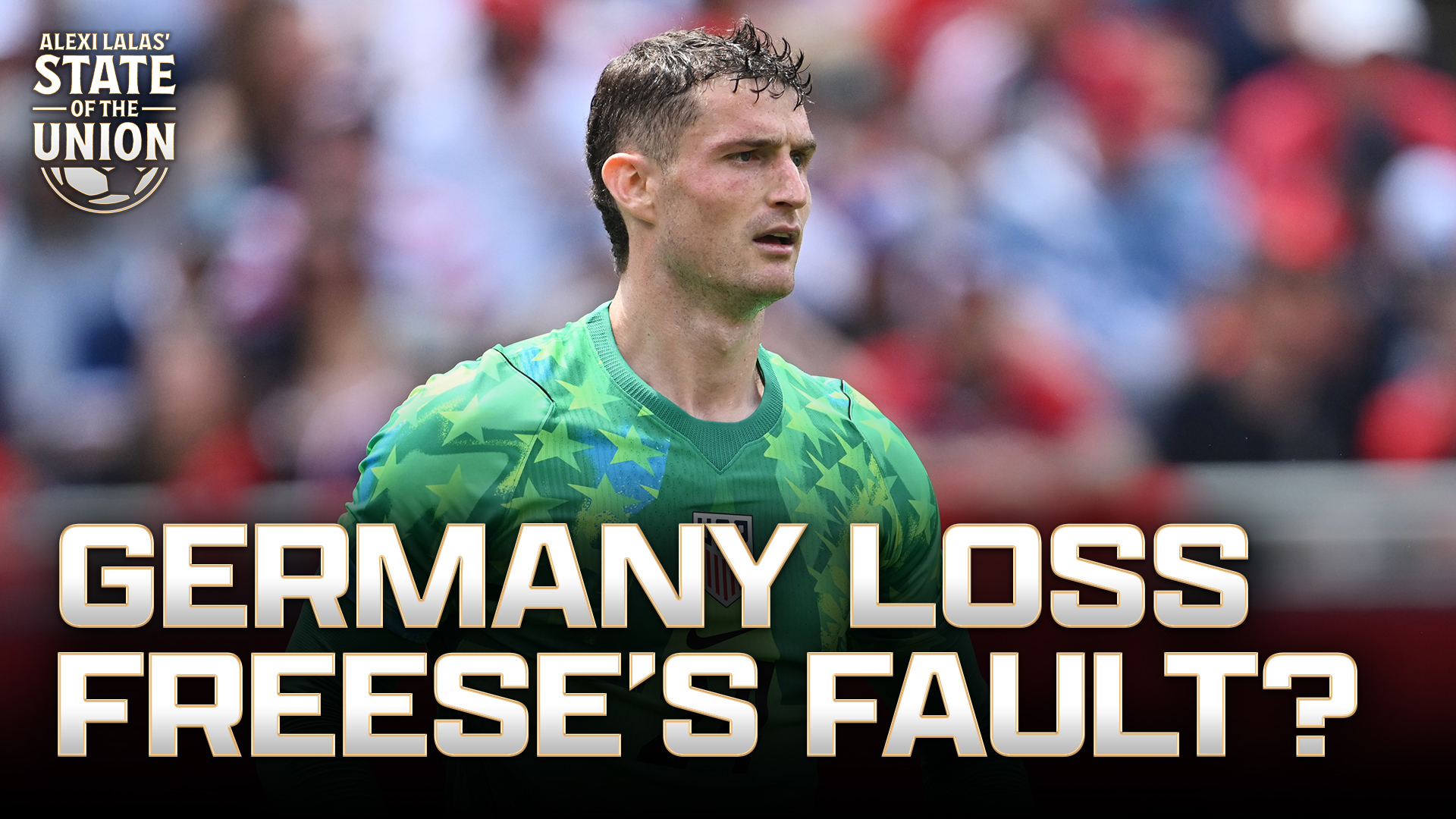
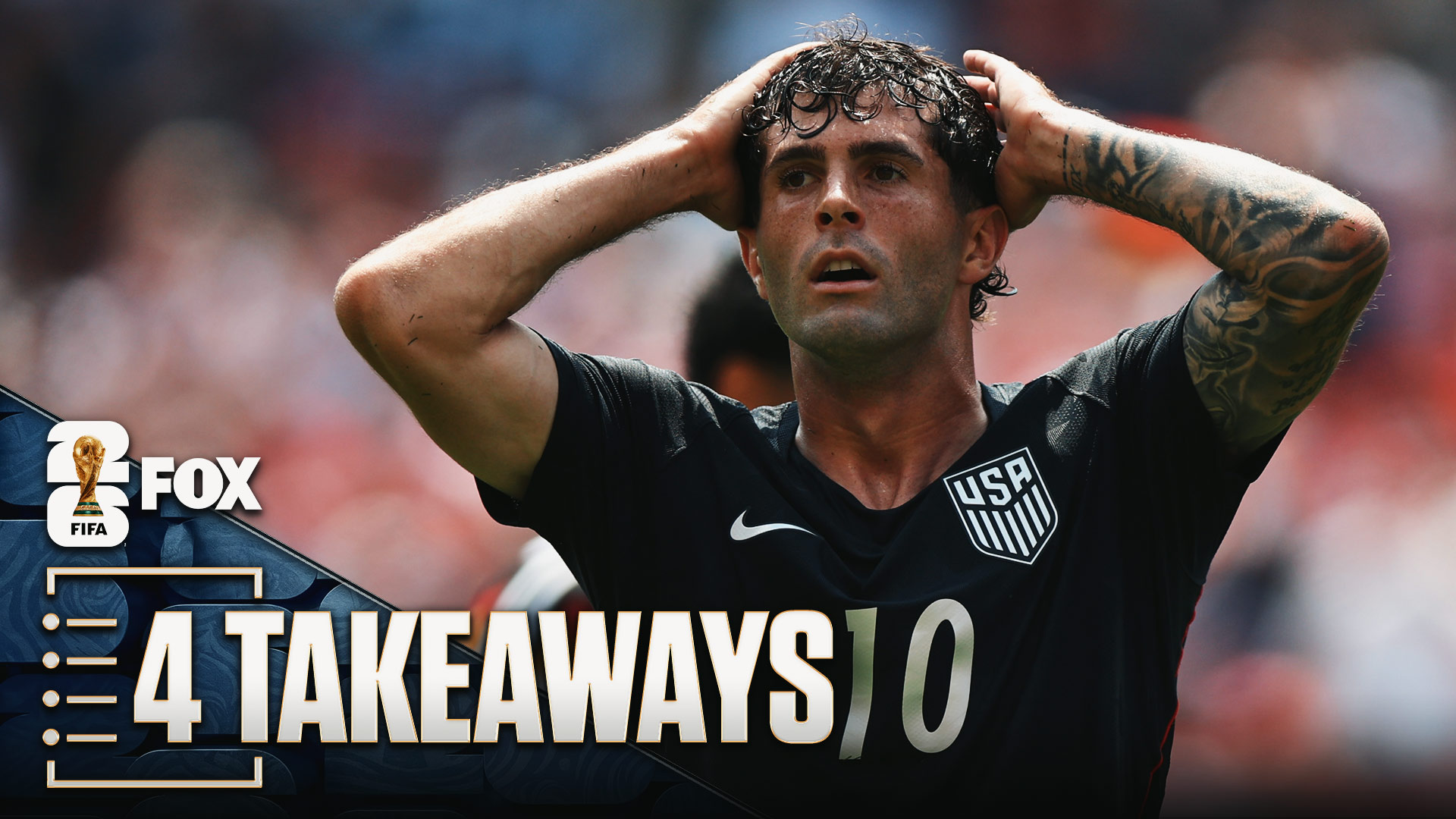
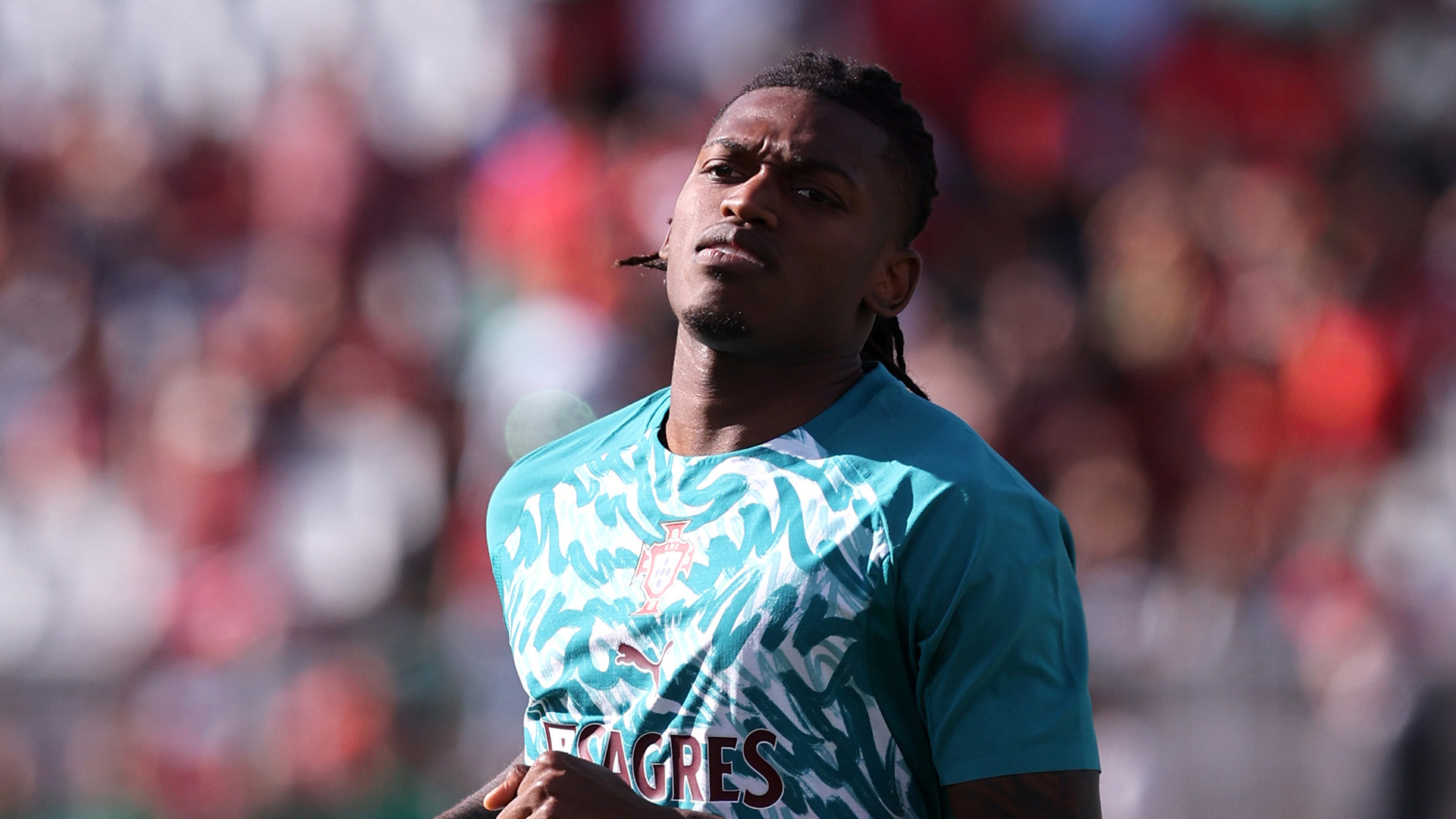
When Mauricio Pochettino names the U.S. men’s national team roster next Tuesday for two high-profile tuneups in Atlanta against European powerhouses Belgium and Portugal, the temptation will be to assume it will be identical to the coach’s eventual World Cup squad. By definition, they’re different. One will be announced in late March. The other one — the 26-man group that will compete in the planet’s biggest event on home soil this summer — is scheduled to drop with great fanfare on May 26. And while most of those who are included for the March 28 test versus the Belgians and Portuguese are well-positioned to stick around for the World Cup itself, there is likely to be a few who don’t make it. We’ll know a lot more about Pochettino’s player pool by April 1. For a team that hasn’t played together in four months, these upcoming contests will provide one final, crucial set of pre-tournament data points for the Argentine and his staff. We don’t have that luxury. Not yet, anyway. The Americans kick off their World Cup campaign exactly three months from today, when they face Paraguay on June 12 in Los Angeles. Who is most likely to be in Pochettino’s starting lineup that night? Here is my projection based on what we know today. STRIKERS Starter: Folarin BalogunBackups: Ricardo Pepi,  Haji Wright,  Patrick AgyemangJust missed out: Damion Downs, Brian White, Josh Sargent Even when his production was down during the middle part of Monaco’s season, Balogun was the odd-on choice to be the spear of the USA’s World Cup attack. Now Balogun is playing his best ball of the 2025-26 campaign, having scored five goals — three of them against Champions League titlists Paris Saint-Germain — in his last five games. Pepi, Wright and Agyemang are also all scoring regularly for their clubs. Were Pochettino picking his World Cup squad today, all four would be deserving of the honor. With 26 available places, there’s no reason the former Chelsea, PSG and Tottenham Hotspur boss can’t take them all so long as that remains the case. All four have different strengths, and the U.S. can never have too many goalscorers. Especially at the World Cup. ATTACKING MIDFIELDERS Starters: Christian Pulisic, Weston McKennieBackups: Brenden Aaronson, Diego Luna, Malik Tillman Just missed out: Gio Reyna, Alex Zendejas Pulisic has to be a lock despite not having a goal or assist for AC Milan in 2026. Same for McKennie, whose career season with Juventus is showing no signs of slowing down. The hard-running Aaronson keeps starting for Premier League Leeds United, and while Tillman has been slowed by an ankle injury lately and used mostly off the bench for Bayer Leverkusen, his body of work for club and country over the last year won’t be forgotten. Same goes for Luna, who hasn’t played for Real Salt Lake in 2026 because of injury, one that will probably cost him a call-up this month. Zendejas could replace Luna in Atlanta. Another goal, like the one he scored in September’s 2-0 win over Japan, would give the coaches something to think about. But the little lefty has been in just one camp under Poch over the last year and has also been dinged up; Zendejas hasn’t gone 90 minutes in any game this calendar year. He’s still playing way more than Reyna is, though. The 2022 World Cup veteran is coming up on two months without an appearance for Borussia Mönchengladbach. HOLDING MIDFIELDERS Starters: Tyler Adams, Tanner Tessmann Backups: Sebastian Berhalter, Johnny Cardoso, Cristian Roldan Just missed out:  Aidan Morris, Yunus Musah Adams is a no-brainer, obviously. But Tessmann’s performances for Lyon have been up and down lately — he came off the bench for the final five minutes of Thursday’s 1-1 Europa League tie with Spain’s Celta Vigo — could also be losing his gip on a starting spot for the U.S. The 24-year-old Cardoso has been in Atlético Madrid’s XI in six of the Spanish giants’ last eight La Liga outings. He’s also started Atleti’s last two Champions League matches, including 90 minutes in Tuesday’s 5-2 walloping of Tottenham in the round of 16 first leg that Pochettino watched in person. It’s true that Cardoso has never played well for the USMNT in his 22 appearances. But he figures to get one last long look during at least one of the two March games. If he performs well and Tessmann doesn’t, it could suddenly become Johhny’s spot to lose. By scoring his first two goals for Italian club Atalanta in early March, Musah is also making a late push. It could be too little, too late for a player who has now gone almost 12 full months without an international cap. The 2022 World Cup standout, who is still only 23, might not even be next man up. Morris featured in the final four USMNT games of 2025 and started two of those — including the year-ending 5-1 rout of Uruguay. Meantime, Berhalter and Roldan have picked up where they left off in the fall with their MLS teams. The former scored his first goal of the season for Vancouver last weekend, while Roldan has logged every minute through three games in Seattle. The pair face off on Thursday night, when the Whitecaps host the Sounders in the Concacaf Champions Cup (10 p.m. ET on FS2). WINGBACKS Starters: Sergiño Dest,  Antonee “Jedi” Robinson Backups: Max Arfsten, Alex Freeman Hurt playing for PSV last weekend, Dest will miss the March window but is expected to recover in time to start a second straight World Cup. It’s also possible that Jedi — another known quantity who has been sidelined recently — could remain this month with Fulham, for which he’s only played in twice in six games since mid-February. The news here is Freeman, who has struggled to get on the field for Villarreal since moving to La Liga in January. The former Orlando City standout came off the bench three times in February for the Yellow Submarine but has been an unused sub in three straight games. Freeman has played just 31 total minutes since scoring twice against Uruguay back on Nov. 18. CENTER BACKS Starters: Chris Richards, Tim Ream, Tim Weah Backups: Mark McKenzie, Miles Robinson Just missed out: Tristan Blackmon, Cameron Carter-Vickers, Auston Trusty,  Walker Zimmerman Per well-sourced German publication Kicker, Noahkai Banks – the 19-year-old Hawaii-born, Germany-rasied defender who’s having a breakout season for Bundesliga side Augsburg, will miss the March camp as he considers which country to represent. “I’m very torn, Banks said this week. “I’m in contact with both the U.S. and Germany, and both national team coaches…I don’t want to make my decision dependent on a World Cup.” Because Banks represented the U.S. at the 2023 FIFA U-17 World Cup, he’d have to petition FIFA for a one-time switch of national association to play for Die Mannschaft – something he hasn’t yet done, a source with knowledge of the situation told me on Wednesday. But it’s hard to see Poch handing a World Cup roster spot to him if he’s not ready to make a commitment. That’s true even though there are legitimate concerns that the 38-year-old Ream, Pochettino’s go-to captain, is finally showing his age with Charlotte FC early this MLS season. How he fares against two all-world attacks with the USA in Atlanta will reveal plenty about his current level ahead of the World Cup. With Freeman idling, Weah is a more than adequate replacement. No, he’s not a center back. Neither is Freeman. But he’s occupied a similar role often for Marseille since moving from Juventus last August, even if he’s more likely to be deployed at right wing this month with Dest unavailable. GOALKEEPERS Starter: Matt Freese Backups: Matt Turner, Patrick Schulte Just missed out: Chris Brady, Roman Celentano, Ethan Horvath, Jonathan Klinsmann, Diego Kochen, Zack Steffen Freese started the final 12 games of 2025 for Pochettino. Will he man the nets in both games this month? Or will Turner, the USMNT’s No. 1 in Qatar,  get one final chance to reclaim the top job? Either way, Freese is the clear incumbent as things stand today. Who ends up as the Americans’ third World Cup keeper is far murkier. The best American backstop through the first three weeks of the MLS season has been San Diego’s 19-year-old Duran Ferree, but there’s no reason to think that the U.S. U-20 national teamer is in the running. We still think Schulte has the inside track. The Ohio native is a proven winner who has spent more time with Pochettino than any of his direct rivals.  He also has valuable tournament experience, having helped the Olympic team reach the quarterfinals at the 2024 Summer Games in France.​Latest Sports News from FOX Sports
Categories
Sports Fox

The Blueprint: Why Decision-Making Has Become College Basketball’s Ultimate Skill

Now more than ever, an integral part of the recruiting process for college coaches involves piecing together the puzzle of an athlete’s inner circle. It still entails forging relationships with a player’s family and high school coach, but now there are typically a few more tentacles surrounding each potential future star: an agent, a marketing manager, a financial advisor, a strength coach. At times, the entourages seem endless. For Purdue head coach Matt Painter, the figures he’s far more curious about now than at any point during his highly successful career are the private instructors, sometimes known as the “workout guys.” These are the individuals responsible for sharpening a player’s skills beyond the confines of traditional practices or games. In an era when players are asked to think about the game at higher levels — processing more options in real time than ever before — Painter needs to know how that aspect of a recruit’s development is handled. “If they have somebody that is a valuable asset that’s really helping them become a better player,” Painter told me last month, “decision-making should be a part of the workout. Decision-making is so important. If your decision-making only grows during the winter, then you’re probably not going to be a very good decision maker. You’re not going to get to the level that you should get to because it should be a 12-month deal in terms of getting better at reading situations, reading defenses, knowing what’s going on.” An absorption of offensive concepts and schematic ideas from professional leagues across the world has rewritten the traditional responsibilities associated with each position. Primary ball handlers now come in all shapes and sizes. Power forwards and centers are spending more time on the perimeter. Playmaking skills are now expected from at least four, if not all five, players in a given lineup. Glaring statistical changes reflect that. So far this season, there are 44 players listed at 6-foot-5 or taller averaging at least 3.5 assists per game, up from 24 such players 10 years ago. In terms of perimeter shooting, there are currently 30 players listed at 6-foot-7 or taller averaging at least 2.1 made 3-pointers per game, up from 19 such players 10 years ago and only four such players 20 years ago. “One part of the game that I really enjoy as a fan is watching the Euro League,” Texas head coach Sean Miller told me. “I think that might actually translate to college a little bit more [than the NBA]. Their ball movement, their cutting, their concepts — so much of how they play the game today is a lot of what you see in college basketball.” Part 4 of our series analyzes the heightened importance of individual decision-making in college basketball, where on-court processing power is now worth its weight in gold. What used to be a game dominated by heady point guards and back-to-the-basket big men is now an exercise in team-wide basketball IQ. One of the reasons why there are 50 teams averaging at least 120 points per 100 possessions this season — the highest mark in at least 30 years — is because players are getting smarter with the ball in their hands. [Player Acquisition | Shot Selection | Offensive Rebounding] *** *** *** Todd Golden, Florida: That was not something teams really focused on 20 years ago when I was in college. Teams had a traditional point guard, you maybe had another guy out there that could be a secondary ball handler and decision maker, but everybody else kind of had specific roles. Your wings were trying to attack the rim or defend with size, and your frontcourt players were paint players and playing inside the 3-point line. Now, I think the best teams — regardless of whether you’re a team that shoots a lot of 3s or a team that really hunts to play out of the paint — if you can play with multiple decision-makers on the floor, you’re going to be a lot better. Miller: I think there always has to at least be four players on the court who can pass, dribble, shoot, decision-make. The best teams in college basketball certainly have that. And then when you can add that fifth player, even if he does it in a different way, it goes to [the idea] where you try to build your roster with players who can think about the game, who can have a fundamental skill level, but really understand how basketball works. The screen and rolls, the spacing, the importance of cutting, why you make one decision versus the other. T.J. Otzelberger, Iowa State: A lot of bigs now tend to step out more on the perimeter. There’s certainly the extreme example like [Nikola] Jokic in the NBA. Everyone kind of wants that. I just think you’re watching guys’ decision-making in real time, assist-to-turnover numbers. Certainly, the better you shoot the ball as a frontcourt player, the more it opens up playmaking space for you to do things. Ben McCollum, Iowa: Having good passing bigs is more important than having good shooting bigs. Obviously, you’d like to have both, but if you can have a good passing big, a high processor who works pretty fast through some of those things, that’s more difficult to defend than somebody who can just stretch the floor. And so you’re trying to find those processors. Painter: We get it a lot with our big guys, because if you’re not good enough to [draw] a double team and you can’t get position deep, then why should you have ever been a good passer? Zach Edey wasn’t a guy who ever got double-teamed … so we had to get to work on [his passing] right away. Are they covering down ball side? Are they coming big to big [from the] opposite [side]? Are they coming baseline-side on a double? Are they coming when you bounce it? Is there any difference when you’re above the block to whether you’re up the lane or outside a little bit? Now we’ve got to put drill work into effect on those five things and we’ve got to mix it up and not tell him when it’s coming. And then he’s got to make those reads. That’s what we did every day for 10 to 12 minutes. All of a sudden, he went from somebody that was not able to make those plays and passes to someone who was probably the best in the country at it. Golden: That’s an area that we’ve been fortunate over these last three years to have frontcourt players that really understand how to play basketball. They all haven’t necessarily been able to shoot the 3, but they know how to dribble, they know how to pass, they know how to make decisions and that opens up a lot for the rest of your team. McCollum: It’s not the great passes that make the difference. It’s how quickly does the ball come out. You always hear the Spurs talk about half-second decisions. A lot of that is the ball comes out of their hands quicker. … The timing and the rhythm and the flow increases field goal percentages [and] keeps the defense behind quite a bit more. Then you increase your 2-point field goal percentage and your 3-point field goal percentage because of how quickly each individual gets off the ball. I don’t think we ever get the perfect guys to do that, but those are some things that we try to identify. It’s not an objective measure, it’s just like, ‘That guy has a good feel. I don’t know why. He just makes sense to me.’ That’s probably more what we look for. Grant McCasland, Texas Tech: There’s so many variables in this that you obviously start with the basics, which is always assist-to-turnover [ratio]. Then you take into account usage and historical reference on what a coach’s tolerance level is for turnovers. Some coaches don’t necessarily demand [perfection] and some prefer more free-flowing [offense] and have more turnovers. … Usually the guys that have a better feel shoot a higher percentage because they don’t take as difficult of a shot. I think an ultimate separator, too, is how many of those guys have won. That’s an underrated part of all this, when you look at it, is just win percentage. That shows that a guy knows how to do all three: take care of the basketball, what do they shoot, and then have they won doing it. I know that’s probably a simplistic approach, but that says a lot about someone’s understanding of the game. Golden: I think it’s the hardest part with evaluating, whether it’s high school guys or even portal players, to understand how they see the game and how they make decisions. You’ve really gotta watch them. We analyze a lot of data in determining which guys we’re going to target, but an area that we’ve continued to spend more time on over the last two years is really trying to drill down in the film. After we might be intrigued by a guy from their analytical profile, we end up watching more film to make sure that profile is telling us the whole story. Jon Scheyer, Duke: When you’re watching a guy, watching the shots he shoots, how he plays, does he pass to his teammates, the way he processes the game, there’s an eye test component to that. But I think the most enjoyable part for me is that I ask a lot of questions with our recruits. When we show film to them, we also talk about the areas that they have to do better. I love seeing how they respond to that. I love seeing if they embrace that. And I love just asking them questions about the game. If you can find yourself just talking to them, the longer I’ve done this, the more I like to ask questions and get inside their mind of how they process and what they think. Brad Underwood, Illinois: Problem-solving is the game of basketball. We do a lot of disadvantage basketball or advantage basketball. We play 5-on-4, 4-on-3, we play 5-on-4½ from a disadvantage so guys have to learn to process and make decisions in all scenarios. I think it’s helped us and it helps guys improve. Golden: A lot of people spend time in the spring and summer working on individual player development, and we do our fair share of that. But at the same time, we expect our guys to play a lot of pickup — whether it’s 3-on-3, 5-on-5 — to put themselves in those situations outside of the season, to make sure they’re sharpening those parts of their game. From a coaching and player development standpoint, we grade every 5-on-5 possession that we play in practice. We film everything and we grade it. We give our guys feedback based on how they do in what we call our hustle stats. It’s a way to give tangible feedback along with film, where not only can you show them the numbers, but you can also have film to back up whether they’re doing things well or not well. Over the course of time, when you’re using playing time as the carrot being dangled, guys are going to work to do what you want them to do when you can show it to them in a few different ways. Miller: What I have found, the way the game is played today, is when a player doesn’t have that [heightened] understanding, it’s really hard for him. The game is harder for that type of player than it used to be. Painter: That’s a real important piece of somebody’s growth as a basketball player. In The Blueprint, our in-depth, long-form series takes you inside some of the most amazing stories in sports.​Latest Sports News from FOX Sports

Categories
Sports Fox

What’s Behind Italy’s WBC Success? Inside Vinnie Pasquantino’s Recruiting Push

DAIKIN PARK (Houston) – Months before he was distributing espresso shots and cheek-kisses to home-run hitters in the dugout and handing out bottles of wine to the players on the best team in Italy’s baseball history, Vinnie Pasquantino was bored on Thanksgiving. So, the country’s best baseball recruiter used the holiday to reach out to prospective players, as he had done for much of the year after committing to the team for the World Baseball Classic in early 2025. “It was kind of messed up thinking about it, but… I didn’t have a whole lot going on, and I was like, ‘Oh, this would be a good day to hit everybody’s Instagram DMs,’” Pasquantino told me ahead of Wednesday’s game against Mexico.  “So, there was a lot of DM’ing that day. That’s when the WhatsApp was created for the group. It’s been a lot of fun trying to help create this team.” The seeds were being planted for what would become the WBC’s improbable juggernaut, a group consisting primarily of prospects and novice MLB players who quickly blossomed into the tournament’s success story by stunning much more experienced and decorated rosters along the way with their own distinctive panache. The Italians left the best U.S. roster ever assembled dumbfounded in an upset victory on Tuesday. One night later, they bulldozed a Mexico squad that nearly made it to the WBC finals three years ago. That capped the Azzurri’s perfect 4-0 start to the competition to win Pool B and advance to the quarterfinals. “I’m, like, weirdly emotional tonight, to the point I’m thinking about crying,” Pasquantino said in his postgame press conference after his three-homer performance over Mexico helped send Italy through to the next round, “which is funny for a tournament in March.” Really, though, this represented so much more than normal March baseball for the team’s captain, who was so moved by his experience playing for Italy in 2023 — and his trip to the country before that WBC — that he spent the better part of the last year doing whatever he could to help the Italian Baseball Federation field the best roster imaginable for this tournament. The near-catharsis was the culmination of all the effort that led into Wednesday night. “I committed in what would have been spring of last year, right at the beginning of spring training, letting them know that I was in,” Pasquantino told me before the Mexico game. “From there, it was, ‘All right, who do we need to go get? Send me phone numbers. I’ll make cold calls, whatever I need to do.” After receiving a target list of players to call from Italy’s coaches and staff, the Royals’ gregarious first baseman hit the recruiting trail. “I think they know I have a bigger personality, so it was more from their end, ‘If we really need a guy, will you call him?'” Pasquantino said during our chat before Mexico’s game. “And I think from my end, it was like, ‘Why don’t I just call everybody?’” “I think he reached out to everyone,” Italy infielder Andrew Fischer confirmed. “He took this team by the reins, brought us together.” “You’ve got to find out who’s eligible and things like that,” Pasquantino added, “but once we were able to find out different things about guys, that’s when the phone calls really started.” Some pitches, like the one to Pasquantino’s Royals teammate Jac Caglianone, were easy. Some fell short, like the one to Red Sox standout Roman Anthony. Pasquantino had a conversation with the 21-year-old talent, but it never got far. Anthony told me he had no plans to participate for any team in the World Baseball Classic, and was set on staying in Boston’s camp, until USA manager Mark DeRosa called. His Red Sox manager, Alex Cora, thought that was an opportunity he wouldn’t want to miss. In other cases, Pasquantino’s perseverance paid off. He pestered veteran pitcher Michael Lorenzen about joining the squad for years. “When Vinnie asked me if I wanted to play, I did tell him I would only do it if I was a two-way player,” Lorenzen said. That hasn’t happened, at least yet. For now, Italy is just happy to see Lorenzen thriving on the mound, where the veteran MLB pitcher blanked USA’s star-studded lineup for 4.2 scoreless innings in the upset victory that Italy manager Francisco Cervelli described as one of the best days of his life. “Everybody in Italy should see this,” Cervelli said after the win over the USA. “We’re doing it for them, for the kids. It can happen. It’s possible.” Anthony was in the losing dugout of that Italy win, one that threatened to end USA’s run before it could ever really get going. Maybe that defeat wakes up Team USA, which is still fully capable of avenging its 2023 finals defeat and going all the way, thanks to Italy’s win against Mexico on Wednesday. To this point, though, it’s been Italy having most of the fun. “It’s unbelievable how close this group has gotten in such a quick timeframe,” said MLB veteran Jon Berti, who played for the Cubs last season. “Vinnie gets a huge credit for that. He set the tone early for us. He’s an awesome leader, very fun to be around and kind of drew everybody in and together.” Pasquantino was also responsible for the professional manner in which Italy handled the biggest baseball win in its country’s history. In the aftermath of avenging a 2023 loss to Mexico, Team USA stayed back hours after the win sharing stories and sipping drinks together in the clubhouse. “There’s some guys dragging today,” DeRosa said to reporters the following day, hours before suffering one of the most surprising defeats in WBC history against an unafraid, unyielding, undefeated Italy squad. Pasquantino knew that a 3-0 start wouldn’t mean much if Italy turned around and had a similar letdown the next day against Mexico. So after the win against Team USA, he told his group that once midnight hit, it was time to turn the page. “We had a good time in there,” Pasquantino told me, “but nobody’s dragging over here today.” The results of a 9-1 win against Mexico backed that up. ‘This Team Might Be Different’ Three years ago, Pasquantino was part of an Italy roster that advanced out of WBC pool play without hitting a single home run. This time — an example of the strides the country has taken since then — it has already launched 12. Italy’s offense ranks second in the tournament in both home runs and OPS, despite lacking the established MLB talent that other rosters possess. It does, however, have the best arms it has ever taken to the tournament in Lorenzen and Aaron Nola, a plethora of intriguing young MLB talents in Pasquantino, Caglianone, White Sox catcher Kyle Teel, Marlins outfielder Jakob Marsee and Mariners outfielder Dominic Canzone and promising prospects in Fischer, Aldegheri, Dante Nori and Sam Antonacci. Pasquantino knew for Italy to succeed, he had to foster the right environment for the youthful group to feel comfortable. Quickly, he noticed the unusual confidence the team’s recent draft picks already possessed. “The first day we had a workout, Andrew Fischer talked a bunch of crap about the music I was playing,” Pasquantino told me, “and I was like, ‘All right, you take it.’ I was just playing simple EDM music. But that’s when I kind of knew, all right, this team might be kind of different. “These guys just aren’t scared, and that’s the coolest part, and that’s where I feel like it’s my job to let them know, like, yeah you shouldn’t be scared, this is what you should be doing, having a good time, having a blast, playing with your chest out.” Their fearlessness has been evident throughout the tournament. Aldeghiri, a 24-year-old Angels prospect, threw 4.2 scoreless innings in his lone start. Nori, a 2024 first-round pick of the Phillies, is 6-for-12 with two homers. Antonacci, one of the top position player prospects for the White Sox, has two extra-base hits. And Fischer, a first-round pick of the Brewers last year and the Energizer bunny personified, is 3-for-8 with a home run. “My personality, sometimes, is not really easy to work with,” Fischer told me. “I’m an extrovert. I’m from Jersey. I don’t really care a lot of the time what some guys think of me…but I just come in with a very loud personality, and fortunately enough, they took me in with open arms. “Vinnie’s done a great job kind of taming me back but also letting me be myself,” Fischer continued. “There’s been times I wasn’t sure how he’d react, and I see he has my back, and I feel very good about it, and other times that I’m not sure how he would react and he puts me in my place, and I respect him because he’s been in the game a long time. So, he’s a great leader, great captain.” ‘I Wish My Grandfather Was Still Around’ Even when Pasquantino started the tournament 0-for-12, Antonacci described the captain as the team MVP because of the way he made his teammates feel so comfortable. The slow start offensively did bother Pasquantino, who told Cervelli he would understand if he got dropped from the clean-up spot in the order, but he also knew the value he was providing outside the batter’s box. “I’ve been dog s— at the plate,” he said Wednesday afternoon, before his breakout performance. “I’m not hiding from that. It doesn’t feel the best right now. But… what I see the captaincy being, it’s not about performance in my opinion, it’s about what you can bring to the team. I know these guys are looking to me for mostly offense, which I haven’t been able to provide, but showing them, like, ‘Look, guys, it’s not going well for me right now, that doesn’t mean it can’t go well for the team. That’s what this game’s all about. “I’m not going to have it every night, and I haven’t had it the first three games. It doesn’t mean I won’t have it tonight.” On Wednesday against Mexico, he found it. In his first at-bat, he snapped his skid with a solo homer to start the scoring. Then came another in the sixth, and another in the eighth, all pulled out to right field at Daikin Park. Three homers meant three espresso shots awaiting in the dugout. Finally, he was downing the coffee and not just handing it out. It was the first time at any level of baseball that Pasquantino could remember homering three times in a game. “The Hall of Fame reached out,” Pasquantino said. “It’s the first time they’ve ever reached out for something of mine. … They liked the bat. I said, ‘I need the bat for a few more days.’” One day, Pasquantino’s goal is for Italy’s roster to be composed of actual Italy natives. There are only three on the roster in pitchers Aldegheri, Gabriele Quattrini and Claudio Scotti. For now, though, the focus is on growing the game in the country and showing kids in Italy what is possible. And the best way to do that is by winning games with this group of primarily Italian-Americans. It seems to be working. “Someone sent me a clip. [Italy’s] prime minister gave us a little bit of a shout-out this morning,” said Berti, an eight-year MLB veteran who grew up in Michigan. “I wish my grandfather was still around. He would be loving this.”​Latest Sports News from FOX Sports

Categories
Sports Fox

Big Picture: Maxx Crosby Staying With Raiders Might Be Best After Failed Trade

It’s the same as it ever was for Maxx Crosby. After experiencing the embarrassment of the Baltimore Ravens rescinding their trade offer due to a failed physical by team doctors, the star edge rusher was back on the grind again just hours later. On Wednesday morning, Crosby was working out for the only team he’s known in his seven-year career: the Las Vegas Raiders. That same morning, Crosby took to social media to celebrate the sixth anniversary of his sobriety. “God Doesn’t Make Mistakes,” Crosby wrote in a post on X. Those words could also refer to Cosby returning to the familiar surroundings in Las Vegas and the fact that he might remain there long-term. Crosby playing for the Raiders in 2026 is a real possibility, believing it’s best for all parties involved, according to sources familiar with the thinking of the team. Crosby’s second post on X on Wednesday certainly gave that scenario credence. “Everything Happens For A Reason. Believe Nothing You Hear & Half Of What You See. Im A Raider. I’m Back. Run That Sh*t,” Crosby wrote. It’s a sharp turn from where Crosby was less than one week ago. The Ravens agreed to trade for Crosby’s services in a deal with the Raiders last Friday, giving up two first-round selections for the 28-year-old pass rusher. Crosby even said his goodbyes to Raider Nation in an emotional,13-minute video posted on social media. However, after Baltimore team doctors evaluated Crosby’s balky left knee two months out from a repaired torn meniscus, the Ravens had serious doubts about the long-term health of their new prospect and eventually backed out of the deal, according to the Raiders. [NFL Confidential: League Execs Not Happy with Ravens After Nixing Maxx Crosby Trade] But as Crosby seems to be embracing the Silver and Black again, it doesn’t seem like it’s a certainty that the five-time Pro Bowler is back with the Raiders in 2026. “For now, yes. But maybe this summer he gets moved,” a longtime NFL executive told me when asked if he envisions Crosby staying in Las Vegas. While the possibility of Crosby getting traded remains on the table, the Ravens pivoted to signing Cincinnati Bengals edge rusher Trey Hendrickson on Wednesday. They gave the four-time Pro Bowler a four-year, $112 million deal. But the previous Crosby trade didn’t preclude the Ravens from pursuing Hendrickson, if general manager Eric DeCosta is to be believed. DeCosta told reporters on Wednesday that the team explored ways to sign both Crosby and Hendrickson, but ultimately decided to move on from Crosby. “I’ve got a responsibility to the Ravens, to this community, to our fans and to [Ravens owner] Steve Bisciotti to do what we think is best for the club,” DeCosta said, when asked if the Ravens got cold feet. “And that’s what we always try to do. Every decision we make is based on this side of, ‘Is this what is best for the Ravens?’ “And that’s very, very challenging. I understand how people from afar would feel that way, but nobody’s more upset about this than me. Gutted by it, actually. A big regret for me. But we will move on as a football team.” DeCosta’s somber nature jives with an NFL source telling me that the Ravens desperately wanted Crosby and hated having to back out of the deal. Still, it’s a messy situation for Crosby and the Raiders. The elite pass rusher thought he was moving on from the constant losing with the Raiders to a team in the Ravens that’s regularly in the Super Bowl conversation. The Raiders thought they were getting significant draft compensation to help with the team’s rebuilding effort with new head coach Klint Kubiak and presumptive No. 1 overall pick Fernando Mendoza. Instead, the Raiders and Crosby are stuck with each other. And they must make the most of it. Because the Raiders had the most salary cap space available of any team in the league at the start of free agency, the Raiders have enough cap space to keep Crosby around, even after coming to an agreement with eight outside free agents. And Crosby returns to a team that’s more equipped to compete in the AFC West, including the addition of the top center on the market in former Baltimore offensive lineman Tyler Linderbaum, a fellow edge rusher Kwity Paye, receiver Jalen Nailor and linebackers Quay Walker and Nakobe Dean. Crosby could have impacted his trade value by showing toughness and playing through the painful knee injury at the end of the year. Raiders general manager John Spytek shutting Crosby down created a rift between the team and Crosby that ultimately led to him asking for a trade because of the appearance of Las Vegas tanking. But had Spytek shut Crosby down sooner, maybe his knee would have been at a better place to pass a physical? For now, Crosby is in the building at the Raiders’ facility working on his rehab and moving forward with the team. He is excited about the opportunity to continue playing for Rob Leonard, his former defensive line coach who was promoted to defensive coordinator for the Raiders by Kubiak. The Raiders should use this opportunity to mend fences with the team’s most dynamic and well-known player — the face of the franchise for the rest of the league. Crosby said he’s a Raider for life, and a misstep by the Ravens created a second chance to make that reality.​Latest Sports News from FOX Sports

Categories
Sports Fox

Let’s Debate: Way-Too-Early Look at Top CFB Players for the 2027 NFL Draft

As spring football is off and running for college programs, college and NFL fans alike also have their attention turned toward the 2026 NFL Draft, hosted this year by Pittsburgh on April 23-25. In this week’s Let’s Debate, our college football experts are examining both spring football and next year’s NFL Draft. So before spring football ends with finalized rosters for next season and before 2027 NFL mock drafts are ever-present, we’re examining which college players have the most to prove this season and which players might be off the board first in 2027. Which player has the most to prove to his program this season? RJ Young: Darian Mensah, Miami QB Mensah breached his contract with Duke, made a mess that needed to be settled outside of court, only to walk into a program as the presumed starter at Miami, where the acts he follows include a former No. 1 overall pick in the NFL Draft and the first quarterback to lead the Hurricanes to the national title game since Ken Dorsey 25 years ago. Mensah led Duke to its first ACC title in 36 years, and he has developed into one of the better quarterbacks in the country. But with this being his third stop and the second where he has made headlines — first for signing a two-year, $8 million contract and second for breaking it — he can’t afford to play poorly in 2026 both for Miami’s sake and for the sake of his NFL Draft stock next season. Michael Cohen: Makhi Hughes, Houston RB Around this time last year, Hughes was one of the hotter names in college football after his headline-grabbing transfer from Tulane to Oregon. He’d put together back-to-back 1,300-yard seasons for the Green Wave in 2023 and 2024, twice earning first-team All-AAC honors, to entrench himself as one of the best young tailbacks in the country. When he entered the portal last winter and subsequently committed to Oregon, it was presumed that the Ducks were landing the future bell cow in their backfield. But it never quite worked for Hughes at Oregon. He was unable to carve out a role in a talented backfield spearheaded by Noah Whittington, Jordon Davison and Dierre Hill Jr., never tallying another carry after the win over Oregon State on Sept. 20. It was no surprise when Hughes announced his intention to enter the portal a second time, and now he’ll have to work his way back to prominence at Houston. [NFL DRAFT: Fernando Mendoza Leads QBs in Top 100 on Big Board] Which player would you select first in the 2027 NFL Draft: Jeremiah Smith or Arch Manning? Young: Jeremiah Smith, Ohio State WR, and it’s not close. Only one of these players has proven he’s a generational talent at his position, emerging as the best true freshmen since Trevor Lawrence at Clemson in 2018 to lead his team to the national title. Only one of these players has repeatedly dismantled his opposition in one-on-one battles, beaten double teams and helped swing the balance of power from the SEC to the Big Ten — the league that is home to the last three national champions. The stats for Smith are there with back-to-back seasons with more than 1,200 receiving yards, leading the Big Ten in 2024 and 2025. But more important is the ability to change the fortunes of an NFL franchise with one selection. Cohen: Arch Manning, Texas QB Even though all signs point toward Ohio State wide receiver Jeremiah Smith likely having a better pro career than Texas quarterback Arch Manning — the words “generational talent” continue to be thrown around when people discuss the Buckeye great — the latter is a far more logical choice, given the unparalleled impact of his position in the modern game. There’s a reason why the last wide receiver to be selected No. 1 overall was Keyshawn Johnson in 1996. And there’s a reason why 21 of the ensuing 29 top overall picks were quarterbacks. No matter how talented, how explosive, how indescribably unique any non-quarterback might be, they’ll never influence winning and losing as directly as a team’s signal-caller. Selecting Manning at No. 1 overall, while risky, at least gives a general manager the opportunity to unearth a truly franchise-altering player. The same just can’t be said for a wide receiver — even one as phenomenal as Smith. In Let’s Debate, our experts tackle and explain the hot-button issues fans care about.​Latest Sports News from FOX Sports

Categories
Sports Fox

Everything To Know For Inaugural INDYCAR Race Around Cowboys’ Stadium, Including New Time

ARLINGTON, Texas — It’s typical to hear lots of screaming inside Jerry’s World during Dallas Cowboys football games. This weekend, there will be the scream of INDYCAR engines around AT&T Stadium (home of the Cowboys) and Globe Life Stadium (home of the Texas Rangers) as drivers navigate a 2.73-mile course for the first time in series history. There are 14 turns — nine right-handers and five left-handers. The inaugural Java House Grand Prix of Arlington (noon ET, FOX) will present a challenge as no driver has experience on the course. It will also present an event with the marketing and branding force of the Cowboys behind it. Here’s what to know about the race. New INDYCAR Arlington Start Time The original start time for the Java House Grand Prix of Arlington was 12:30 p.m. ET on Sunday, but INDYCAR moved the time up to noon ET in anticipation of weather. FOX’s race coverage will begin at 11:30 a.m. ET. How Will Drivers Prepare? Typically, the drivers practice and determine setups in a simulator where the track surface has been scanned and then the data is supplemented from what teams learn on a race weekend. But there have been no scans of this track’s surface. So the simulator track is determined through GPS. That makes it difficult to recognize bumps. And until the walls were placed in the last few weeks, no one really knew their exact location. [POWER RANKINGS: Who is on top heading into Arlington?] Alexander Rossi, driver of the No. 20 car for ECR, answered my question during a Zoom this week on just how little he knows from the simulator. “The track scans are very high quality, but for a place like this that’s brand new, you don’t have a full surface scan,” Rossi said. “You only have essentially a GPS scan with walls kind of placed around the perimeter. “Both Honda and Chevy have kind of the same track model, so you don’t have any sort of the bumps modeled or grip differential depending on surfaces.” So how does it help? “It’s a great tool to at least know what corner comes next,” Rossi said. “But in terms of brake points and grip levels, how fast you can actually go, the line, where bumps are, that sort of thing — everyone will be figuring that out together kind of starting from zero.” What Else Can They Do To Prepare? Pato O’Ward, driver of the No. 5 car for Arrow McLaren, said he never even got a chance to do the simulator. But some fans have posted online laps on YouTube from what they’ve been able to create. “I’m curious to see what it’s going to be all about, and I do think it’s going to be a little chaotic,” O’Ward said. “People are going to be getting creative. They’re going to stuff their nose where they shouldn’t, and it’s going to create roadblocks.” What Is Unique About This Course? Most of the street circuits are shorter ones, typically around 2 miles. This one is the longest for INDYCAR at 2.73 miles. The other street courses: Markham (2.19 miles), Long Beach (1.968), St. Petersburg (1.8), Washington (1.66) and Detroit (1.645). That makes this one a little more unique in that they will be doing laps of around 90 seconds instead of 50 seconds. There are enough viewing areas that give a look at multiple track locations that fans shouldn’t feel as if they are waiting forever for the cars to come by. “[The short courses are] not very interesting for the fans,” Arrow McLaren No. 7 car driver Christian Lundgaard told me. “It’s certainly not interesting for us as drivers. We aren’t really enjoying the layout of the track. And I think here we will. “And I think that’s the big difference is this is actually exciting. And I think what the promoters and the series have done for this place is it’s not just a race, it’s a venue, and everything that follows around is what will make the difference.” Rigorous Schedule Last year, the 2025 season kicked off in St. Petersburg and then had two races over the next eight weeks. This year, it is opening with three races in back-to-back-to-back weeks — St. Petersburg, Phoenix and now Arlington. [INSIDE THE GARAGE: Team Penske Relishes Phoenix Sweep] It makes for some road-weary crew members, but at least there is a feeling of momentum. “I think what’s more draining, from a mental and just energy standpoint, is traveling around is what really drains you,” Lundgaard said. “The work doesn’t stop. And I think at the end of the year, that’s when you really feel it. “But I’m just excited to be here and put on a show.” Are These The Same Cars As Phoenix? Kind of. The front wing and rear wing are different for road and street courses than they are for the ovals. Teams also would use different dampers (suspension pieces). Teams worked on their cars Sunday at Phoenix before leaving Arizona, the crews will likely going home to Indianapolis for a few days and the team haulers already headed to Texas. Is Alex Palou Good At New Courses? Yes he is. Alex Palou, the three-time defending series champion who currently is fifth in the standings after two races, has won the last two races at new tracks: Last year in the first points race at Thermal and 2023 at the new Detroit course. [KEVIN HARVICK: Open-Wheel Crashes at Phoenix ‘Could Have Been Prevented’] Marcus Ericsson won the inaugural race on the Nashville street course in 2021. What Is New About Qualifying? In the final “Fast Six” round, instead of having a six-minute session with drivers running as many laps as they can get in with the best last counting, each of the six finalists will get only one lap. Only one car will be on the track at a time, allowing for more exposure of each of the six drivers vying for the pole. Are there any hometown drivers? Santino Ferrucci, driver of the No. 14 car for AJ Foyt Racing, lives in the Dallas area and expects to have plenty of support. “I think it’s bigger here than Indy for me,” Ferrucci told me and other reporters last week. “I have more people there. And it being my home race, I personally have close to 100 people that are coming.” O’Ward, who hails from Monterrey, Mexico, moved to the San Antonio area when he was 11, so Texas is kind of his home. “This is the closest that I have to home, and it really is, but I don’t necessarily think it’s because it’s close to Mexico, but just because this is where I see a lot of the people that remind me of home — the language and a lot of friends and family are coming this weekend,” O’Ward said. INDYCAR rookie Mick Schumacher’s family has a horse ranch in Texas, so he has spent some time in the state as well. Are There Any Rangers Or Cowboys Coming? With the Rangers in spring training and the Cowboys out of season, it is still to be determined if any active players are there. Rangers great Ivan “Pudge” Rodriguez and Cowboys great DeMarcus Ware will give the command to start engines for Sunday’s race.​Latest Sports News from FOX Sports