Categories
Sports Fox

4 Takeaways From the College Basketball Crown Bracket Reveal

The College Basketball Crown is back. After debuting with a 16-team format in Las Vegas last spring, the sport’s newest postseason event will return to the desert in early April as an eight-team showcase. The field for this year’s College Basketball Crown was revealed Monday evening, live on FS1. This year’s participants are Oklahoma, Colorado, Baylor, Minnesota, Stanford, West Virginia, Rutgers and Creighton. First-round games will be played on April 1-2. Semifinal matchups will be held on April 4. And the championship game is slated for April 5. Here are my takeaways from the bracket reveal: 1. Oklahoma had a case to be in the NCAA Tournament Given that the Sooners lost nine consecutive games from Jan. 7 through Feb. 4, it’s almost inconceivable to believe they had a legitimate claim for an at-large berth in the Big Dance. And yet, that’s how strong certain parts of Oklahoma’s résumé really were. Head coach Porter Moser and his team now enter the postseason with five wins over teams included in this year’s NCAA Tournament: Vanderbilt, Georgia, Missouri, Texas and Texas A&M. They also notched a victory against Auburn, another team that landed squarely on the bubble, and suffered narrow defeats to Nebraska (105-99), Alabama (83-81), Missouri (88-87 in OT) and Arkansas (82-79) — all of whom are now participating in March Madness. Oklahoma’s analytical profile is also quite strong. The Sooners are ranked No. 40 on KenPom, No. 39 on Torvik and No. 33 by EvanMiya. They finished among the top 50 in both the NET Rankings and the Wins Above Bubble metric. Moser’s offense ranks 18th nationally in efficiency, according to KenPom, and the team’s overall strength of schedule is 25th. The Sooners were probably the best team left out of the NCAA Tournament. 2. Several NBA-caliber talents worth watching The teams included in the College Basketball Crown are home to a handful of high-level prospects who are expected to figure prominently in this year’s NBA Draft: Cameron Carr, SG/SF, Baylor — The 6-foot-5 redshirt sophomore, who spent his previous two seasons at Tennessee, enjoyed a breakout campaign for the Bears by averaging 19.2 points and 5.5 rebounds. He shot better than 50% from the field on more than a dozen field goal attempts per game and connected on 39.4% of his attempts from beyond the arc. He scored at least 20 points on 15 occasions this season. Tounde Yessoufou, SG/SF, Baylor — Yessoufou is a five-star freshman from the county of Benin in West Africa. He ranks second on the Bears in scoring at 17.8 points per game and third in rebounding at 5.8 per game. At 6-foot-5 and 215 pounds, he has good size and stoutness for the next level, but he’ll need to make strides as a perimeter shooter. Yessoufou only shot 30.2% from beyond the arc on more than five attempts per game. Ebuka Okorie, PG, Stanford — Okorie was a four-star prospect and the No. 100 overall player in the 2025 recruiting class but quickly outperformed that ranking with the Cardinal during an incredible freshman campaign. His scoring average of 22.8 points per game ranked seventh nationally during the regular season, headlined by seven 30-point efforts and one 40-point outing against Georgia Tech. Okorie was a shoo-in to earn first-team All-ACC honors after scoring at least 10 points in 28 of 30 appearances. 3. Plenty of teams with marquee wins on their résumés In addition to the aforementioned, high-profile victories amassed by Oklahoma, there are several other teams in this year’s field that showed — on any given night — they can hang with some of the better teams in the sport: — Minnesota, which finished 15-17 overall and 8-12 in the Big Ten, scored wins over then-No. 19 Iowa, then-No. 10 Michigan State and UCLA to finish comfortably in the middle of the conference pack. — Stanford, which finished 20-12 overall and 9-9 in the ACC, knocked off then-No. 16 Louisville, then-No. 14 North Carolina, SMU and NC State to finish .500 or better in league play for a second consecutive season. — Creighton, which finished 15-17 overall and 9-11 in the Big East, defeated Villanova and trounced then-No. 2 UConn in one of the most stunning results of the conference season. 4. A chance for young talent to develop Rutgers finished 14-19 overall and only won six conference games this season, but there is one stat that shouldn’t be ignored when thinking about what Steve Pikell’s team might develop into by next season: Out of 18 teams in the Big Ten, there was only one — Penn State — with less Division I experience on the roster than the Scarlet Knights, according to KenPom. Rutgers ranked 17th in the conference and 205th overall with an average of just 1.36 years of experience per player. Why does that matter? In an era when roster retention is harder than it’s ever been before thanks to both NIL inducements and the transfer portal, the Scarlet Knights are in position to be one of the most cohesive teams in the Big Ten next season if Pikiell can hang onto key pieces. None of Rutgers’ seven leading scorers from the 2025-26 campaign were seniors, meaning all of them could return. And four of those players were sophomores or younger. A nucleus built around junior guard Tariq Francis (16.9 points), sophomore forward Dylan Grant (9.8 points), junior guard Darren Buchanan Jr. (8.4 points) and junior guard Jamichael Davis (7.2 points) should give fans plenty to be excited about in the coming months. The experience those young players will gain in a tournament format at the College Basketball Crown can be highly valuable. 4½. What’s next? Three teams who participated in the inaugural event last spring catapulted themselves from Las Vegas into this year’s NCAA Tournament. Nebraska, which won the College Basketball Crown, went on to enjoy the best regular season in school history and earned a No. 4 seed in the Big Dance. The Cornhuskers are now chasing the program’s first-ever NCAA Tournament win. UCF, which fell to Nebraska in the championship game, was among the more pleasant surprises in college basketball this season by starting 17-4 and racking up 21 wins overall. The Knights exceeded 20 victories for the first time since the 2018-19 season. They’re now a 10-seed in the NCAA Tournament. And Villanova, which reached the semifinals, identified Maryland head coach Kevin Willard as the right successor to Kyle Neptune, who was fired after the 2024-25 campaign, and amassed 24 wins while finishing third in the Big East. The Wildcats, now an 8-seed, are back in the Big Dance for the first time in four years.​Latest Sports News from FOX Sports

Categories
Sports Fox

Kevin Burkhardt and Greg Olsen To Call Inaugural Fanatics Flag Football Classic

LOS ANGELES – FOX Sports today announced that Kevin Burkhardt and Greg Olsen will call the inaugural Fanatics Flag Football Classic, a first-of-its-kind global competition from Fanatics Studios, on Saturday, March 21 from 4:00-8:30 PM ET / 1:00-5:30 PM PT on FOX, FOX One and Tubi. As previously announced, actor and comedian Kevin Hart will serve as the event’s host alongside actor and comedian Druski. Burkhardt, an award-winning veteran broadcaster, serves as FOX Sports’ lead NFL play-by-play announcer, bringing viewers the network’s top games each week during the season. In addition to four NFC Championships, he has called two Super Bowls (LVII and LIX) – including one alongside three-time Pro Bowl tight end and two-time Sports Emmy winner Olsen. The pair reunite in the booth to present the Fanatics Flag Football Classic from BMO Stadium, the same venue that will host flag football at the LA28 Olympic Games. The first-of-its-kind competition includes three 12-player teams: two comprised of an incredible mix of current and former NFL stars as well as world-class athletes, and the third represented by USA Football’s reigning IFAF Flag Football World Champion U.S. Men’s National Team, setting up a can’t-miss showdown between some of the biggest names in sports and the most accomplished flag players in the world. Founders FFC will be captained by Tom Brady and Jalen Hurts and coached by Sean Payton while Wildcats FFC will be captained by Jayden Daniels and Joe Burrow and coached by Kyle Shanahan. The U.S. Men’s National Team will be captained by Aamir Brown and Darrell “Housh” Doucette and coached by Jorge Cascudo. TUNE IN The Fanatics Flag Football Classic airs live on FOX, FOX One and Tubi from 4:00-8:30 PM ET / 1:00-5:30 PM PT. The event will also be streamed internationally on the Fanatics YouTube channel.​Latest Sports News from FOX Sports

Categories
Sports Fox

KenPom Trends to Know Before Filling Out Your Men’s March Madness Bracket

Every March, advanced metrics become a popular reference point for evaluating men’s NCAA Tournament teams. KenPom rankings, which measure adjusted offensive and defensive efficiency, have historically revealed patterns among championship contenders and deep tournament runs. From efficiency margins to balanced offensive and defensive profiles, certain statistical benchmarks appear repeatedly among teams that advance far in the men’s March Madness bracket. Below, FOX Sports Research has broken down which KenPom trends have been most common among Final Four and national title teams. This page may contain affiliate links to legal sports betting partners. If you sign up or place a wager, FOX Sports may be compensated. Read more about Sports Betting on FOX Sports. Key Trends The following trends were found using pre-tournament KenPom data, not final rankings data: [MEN’S BRACKET: NCAA Tournament Bracket, Leaders & Stats] National Champion Averages Here are the average ranks in Division I of every national champion since 2001: Final Four Averages [NCAA ODDS: Latest Men’s March Madness Odds, Favorites] Teams that Fit the Bill of Past Champions Entering the tournament, there are nine teams that rank in the top 21 of adjusted offensive efficiency and top 31 of adjusted defensive efficiency: Duke Illinois Arizona Vanderbilt Michigan Florida Houston Louisville Iowa State Last 5 NCAA Men’s Basketball Champions Below is a breakdown of where each of the past five national champions ranked in each major KenPom category (pre-tournament data). 2025 Florida 2024 UConn 2023 UConn 2022 Kansas 2021 Baylor​Latest Sports News from FOX Sports

Categories
Sports Fox

NCAA Men’s Tournament Bracket Picks: Expert Predictions and Analysis

Buckle up, college basketball fans. The most entertaining three-week stretch in sports is set to get underway this week as the 2026 NCAA Men’s Basketball Tournament is here. The bubble burst for several teams during conference tournament action last week, as the likes of Oklahoma, Auburn and Indiana were left on the outside looking in. Meanwhile, Texas, North Carolina State, Miami (OH) and SMU were the final four teams to sneak into the field. Now the bracket is set, the matchups are locked in, and the madness is about to begin. Will Florida repeat as champions? Is this the year a Big Ten team finally ends the conference’s title drought and wins its first national championship since 2000? From potential Cinderella runs to conference rivals on a collision course, there’s no shortage of intriguing storylines as the tournament gets set to tip off. Before the first game gets underway, our experts have filled out their brackets and made their predictions for how the 2026 NCAA Men’s Basketball Tournament will unfold. Here’s a look at our experts’ picks. [MARCH MADNESS: NCAA Men’s Basketball Tournament Bracket] Michael Cohen, college football and basketball writer Biggest first-round upset(s): No. 11 South Florida over No. 6 Louisville; No. 11 Texas/North Carolina State over No. 6 BYU First No. 1 seed to lose: Florida (Elite Eight to Houston) Final Four: Duke, Houston, Arizona, Michigan National champion: Duke Why Duke will win the national championship: It’s hard to overlook what Duke accomplished in beating then-No. 1 Michigan on a neutral floor in late February to vault atop the national rankings. That evening in Washington, D.C. presented a rare, late-season matchup between the two best teams in the sport, and when all was said and done, the Blue Devils emerged victorious in a game they largely controlled. A deep roster, a burgeoning head coach in Jon Scheyer and the single-best player in the country in power forward Cameron Boozer should give Duke more than enough firepower to capture the program’s first national title since 2015. Especially if Caleb Foster and Patrick Ngongba II can get healthy. Casey Jacobsen, college basketball studio and game analyst Biggest first-round upset(s): No. 12 Akron over No. 5 Texas Tech First No. 1 seed to lose: Florida (Elite Eight to Houston) Final Four: Duke, Houston, Arizona, Michigan National champion: Michigan Why Michigan will win the national championship: I fell in love with this team during the Players Era Tournament over Thanksgiving. Michigan didn’t just beat San Diego State, Auburn, and Gonzaga—they humiliated them. That week made it clear the Wolverines have one of the best frontcourts in the country with Yaxel Lendeborg, Aday Mara, and Morez Johnson Jr. Their length suffocates teams at the rim and anchors the nation’s No. 1 defense in KenPom (with Duke as a close 1B). Opponents shoot just 44.3% from 2-point range and 30.2% from 3-point range. Michigan’s offense is nearly as good, ranking eighth nationally. Point guard Elliot Cadeau transferred from North Carolina to run the show. He can be loose with the ball, but he’s also hitting a career-best 38% from deep. If that holds in March, I love this pick. Senior guard Roddy Gayle brings downhill slashing while fellow senior guard Nimari Burnett spaces the floor. Everyone understands their role. There’s no stat for it, but this group clearly plays for each other. Michigan might be the most balanced and versatile team in the field, with another gear on both ends that even the other No. 1 seeds don’t have. I think they’ll become the first Big Ten team to win a national title since Michigan State in 2000.​Latest Sports News from FOX Sports
Categories
Sports Fox

Sound Smart: 4 Observations on the First Wave of NFL Free Agency

Let the second week of free agency begin. After the first week, the quarterback carousel looks relatively settled. Kyler Murrray signed with the Vikings, Malik Willis signed with the Dolphins, Daniel Jones signed an extension with the Colts, Tua Tagovailoa signed with the Falcons. Aaron Rodgers has not signed, but he figures to return to the Steelers at some point before training camp. Elsewhere, receiver Alec Pierce got a massive deal to return to the Colts and former Eagles edge Jaelan Phillips got a massive deal from the Carolina Panthers. It has already been a busy and expensive free agency window — a record $5.83 billion was committed to player contracts in the first week. But that’s what we saw at surface level. This is “Sound Smart,” where I try to spin forward, dive deeper and think outside the box. If I do my job, you’ll have a better understanding of what just happened in NFL free agency. 1. IF THERE’S ONE THING YOU SHOULD KNOW The Ravens were winners by backing out of the Maxx Crosby trade. Baltimore did something that’s every NFL general manager’s nightmare: cancel a massive deal that included huge draft capital. By backing out, the Ravens stamped five-time Pro Bowl edge Crosby with a “damaged goods” label. And they did it at a time when most of the elite free-agent pass-rushers had already landed with teams that desperately needed help at the position. In other words, the Ravens deflated Crosby’s value in just about every way. The Raiders got wholly and totally screwed. If you check out what The Athletic’s Dianna Russini reported about how the Ravens had their team doctor and four or five independent doctors check Crosby’s medicals, it’s apparent that Baltimore was at least thorough before canceling the deal. If all was really hunky-dory with Crosby’s knee, wouldn’t several other teams show a real interest in him — particularly given that the cost would surely be lower than the two first-round picks the Ravens were giving up? That shouldn’t completely excuse Baltimore’s shadiness. What the Ravens did was absolutely sketchy. And we can all speculate about whether they got buyer’s remorse. But the truth is that they were within league rules to reverse this trade. They were within league rules to set up a free-agent deal with Pro Bowl edge Trey Hendrickson. They definitely violated some unwritten rules — but none that will permanently damage GM Eric DeCosta’s reputation. As he said last week: “It hasn’t stopped my phone from ringing.” And so, by trusting their doctors and observing the shifting landscape of pass-rushers, the Ravens made the controversial decision to back out of a trade — knowing full-well that they’d be the brunt of criticism and every internet meme known to man. And then they did that most antagonistic thing imaginable: signing Hendrickson — practically right after Crosby’s plane took off from Baltimore. All that is true. But what’s also true is that they landed on the most sensible outcome. Crosby is a better run defender and Hendrickson is a better pass-rusher. So they’re not a one-for-one swap. But to get Hendrickson for roughly the same dollar amount as Crosby — and not have to pay two first-round picks? That’s a coup. I hate to admit it, because it sure feels like the Ravens did the Raiders dirty, but Baltimore wound up with a better situation. The upgrade from Hendrickson to Crosby wasn’t worth what Baltimore had to give up to get there. And since I’m spouting unpopular opinions, I’ll say this, too: There’s also a scenario where the Raiders are winners, too. They had the cap space to take Crosby back without altering any of their quarter-billion dollars in free-agent deals. Behind a record-breaking (and laudable) deal for center Tyler Linderbaum, the Raiders’ free-agent class is impressive and could immediately help them begin to change their identity under new head coach Klint Kubiak. And it’s possible Crosby has had a change of heart about wanting to leave Vegas — whether by seeing how cold the business is elsewhere or by seeing the way the Raiders have invested in this team. And don’t forget: Las Vegas has the first pick in the draft, which is expected to be Heisman Trophy-winning QB Fernando Mendoza. Maybe Crosby stays. Maybe he helps Las Vegas become relevant in 2026. Maybe this trade really wasn’t meant to be. 2. PEELING BACK THE CURTAIN Of all the quarterbacks available, why did Kevin O’Connell and the Vikings pick Kyler Murray? Given all the options in free agency, I thought O’Connell and Minnesota interim GM Rob Brzezinski might have interest in just about every other quarterback before Murray. And that’s because there were obvious ties between the Vikings and Kirk Cousins, Daniel Jones and Aaron Rodgers. Even Tua Tagovailoa made sense for the Vikings, given he’s a sound decision-maker and a solid system quarterback. (His veteran-minimum contract doesn’t hurt either.) All those quarterbacks fall into the “system QB” and/or “pocket passer” categories, even Rodgers at this point in his career. Murray is unlike the others. He has shown the ability to operate in the pocket, but given his size (6-foot) and athleticism, he is just as dangerous — and often more dangerous — outside of the pocket (and outside of the system). With Murray comes a handful of questions, including about his work ethic. He had a clause in his contract extension (worth $230.5 million) that required him to spend four hours per week on game prep without distractions like video games, TV or internet browsing. This was four years ago. A lot has changed since then, but his play on the field has not — at least not substantially. After seven NFL seasons, the 28-year-old Murray still has too many moments of immaturity and thrill-seeking throughout games. It made for a streaky Cardinals offense, a unit that changed drastically under journeyman Jacoby Brissett’s steady (and admittedly boring) hand in the second half of last season. This offseason, the Cardinals seemed happy to see Murray go. Now, this scenario is supposed to be O’Connell’s specialty. He takes veteran quarterbacks who have underachieved — or were underappreciated — elsewhere and turns them into something special. So if anyone is going to help Murray, it’s O’Connell. Murray is the real winner here, working with a coach who should be as capable as anyone to maximize the QB’s potential — even if O’Connell’s track record is with a different style of QB. But we saw some fallibility as O’Connell worked with J.J. McCarthy, Minnesota’s first-round pick in 2024 who had a rough debut season in 2025. So Murray will be a fascinating test for O’Connell. And because of the Vikings’ financial commitment to Murray — he’s getting the veteran minimum from Minnesota while the Cardinals pay him more than $35 million — this probably won’t go wrong in any catastrophic way. But if their partnership does fail, then I could see O’Connell ending up on the hot seat by the end of the 2026 season. Even so, it’s a risk worth taking. Given Murray’s upside, this could be one of the most exciting QB-coach tandems in the league. 3. THE GREAT, THE GOOD, THE BAD & THE UGLY Great: The Seahawks let four key players go in free agency. It’s wise for Seattle to let other teams pay the Super Bowl tax. It will no doubt hurt to see the following players go: RB Kenneth Walker III, edge Boye Mafe, safety Coby Bryant and CB Tariq Woolen. Walker, who signed a three-year contract with the Chiefs, will be the toughest to replace, but the Seahawks can draft a running back and hunt for a value option in free agency (Brian Robinson, Kene Nwangu or Dameon Pierce). And then it’ll be on Mike Macdonald, considered the best defensive coach in football, to work with GM John Schneider to find ways to replace the defensive departures. It’s also not like the Seahawks let every free agent go. They let key players such as cornerback Josh Jobe and receiver Rashid Shaheed test the open market and then re-signed them to modest contracts. That’s good business. They can’t get caught chasing last year’s success. They have to build something new for 2026. Good: The Chiefs sign RB Kenneth Walker III for $43 million over three years. If there was one thing that held the Chiefs back the past couple of seasons, it was their inability to run the ball. It was, by far, their most profound and fundamental issue. They’ve tried to draft to fix the issue. They’ve tried to bring in old and new veterans to fix the issue. Nothing has worked. But Walker seems like the perfect solution to their lack of explosiveness on the ground. He had 10 runs of 20 yards or more last season — collectively, the Chiefs’ running backs had just one. He is, admittedly, a very expensive solution. But by spending big to get an elite RB, the Chiefs won’t have to chase Notre Dame’s Jeremiyah Love, the consensus top running back prospect in the draft. They will be free to draft whomever they want at No. 9 overall, be it Ohio State receiver Carnell Tate or safety Caleb Downs. Bad: The Panthers sign edge Jaelan Phillips for $120 million over four years. It was a tough call between Phillips and Odafe Oweh, the former Ravens and Chargers edge who signed a four-year, $100 million contract with the Commanders, for this category. The nature of buying a premium position in free agency is that you’re going to overpay dramatically. Every offseason, free-agent quarterbacks, receivers and edge rushers get record-setting sums, even if they are not even close to being the best players at their position. (Teams extend or tag the best players before they can hit the open market. Look at All-Pro receiver George Pickens, who was franchise-tagged by the Cowboys.) Phillips is a pressure specialist, not typically getting home for gaudy sack statistics — he’s never logged double-digit sacks — but creating enough havoc to have league-wide respect. He’s a good player, but he’s also often injured, with both ACL and Achilles tears in the past three years. He nearly retired in college due to injuries. I could see a scenario where the Panthers regret their decision to pay him the eighth-most per year among edge rushers. Ugly: The Bills trade a second-round pick for receiver DJ Moore. You could squint and justify the Bills sending a second-round pick to the Bears in exchange for Moore. But it was an overpay. We can plainly see that, given what the Steelers sent in exchange for Colts receiver Michael Pittman: a swap of sixth- and seventh-round picks. But given new Buffalo head coach Joe Brady has a history with Moore in Carolina and given how badly the Bills needed help at receiver, it made sense that they went out and got their guy. The deal got ugly, however, when it came out that the Bills weren’t just putting themselves on the hook for Moore’s $24.5 million guarantee in 2026 and $15.5 million guarantee in 2027 (as a part of a total salary of $24.5 million). They decided to also guarantee $15.5 million in 2028 (again, as a part of a salary of $24.5 million). That’s a long-term commitment to a guy who will be 31 in 2027. And suddenly, the deal became a financial and draft-asset overpay. The Bills have taken on a severe risk to get Moore, who has one 1,000-yard season in the past four years despite playing 17 games each year. Buffalo is betting big on getting more from Moore. 4. WHAT WE STILL DON’T KNOW Where and when is Aaron Rodgers going to sign, if he signs at all? It seems obvious that he’ll return to the Steelers, and he’ll probably make everyone — including the folks in Pittsburgh — wait until August. But also … expect the unexpected with Rodgers. Which second-week free agents are going to complete a Super Bowl roster? It’s absolutely possible to build a juggernaut in free agency, particularly by shelling out massive sums of money to rebuild a downtrodden roster. But more often, we’ve seen teams identify key players — and for great value — during this phase of free agency. That’s how a good team becomes great. Here are a few players I think might qualify: tight end David Njoku, tackle Jonah Williams, guard Joel Bitonio, linebackers Bobby Wagner and Matt Milano, and edges Calais Campbell and Cam Jordan. What are the Cardinals going to do at quarterback? They have Jacoby Brissett, and they could draft one of the second-tier rookies, like Alabama’s Ty Simpson. Jimmy Garoppolo is also available, and he worked with new Arizona head coach Mike LaFleur in Los Angeles. There’s even the option of trading for Mac Jones, though I think that would be ill-advised, given the 49ers have reportedly set an astronomical asking price. Maybe the Cardinals’ plan is to sit and wait for the 2027 NFL Draft — and Arch Manning. How high will Notre Dame RB Jeremiyah Love go in the draft? The Chiefs (ninth overall) signed Kenneth Walker and the Saints (No. 8) signed Travis Etienne. Even the Commanders added Rachaad White. Might this mean they all expect the Titans to draft Love at No. 4? Several executives view Love as the draft’s best prospect. It’s a question of value (and opportunity cost) — and how high a team can justify taking a running back. How much will George Pickens make? He would have been the No. 1 free agent on the market if the Cowboys hadn’t tagged him. Dallas has a history of contract tomfoolery. So far, Pickens has yet to agree to an extension. What is Jerry Jones up to now? Where will Crosby play in 2026? Not long after the Ravens reversed the trade, an NFL executive texted me that Crosby would inevitably get “traded elsewhere.” But perhaps not in a hurry. If Crosby still wants to leave (and the Raiders still want to trade him), we might not know where he’s playing until training camp.​Latest Sports News from FOX Sports
Categories
Sports Fox

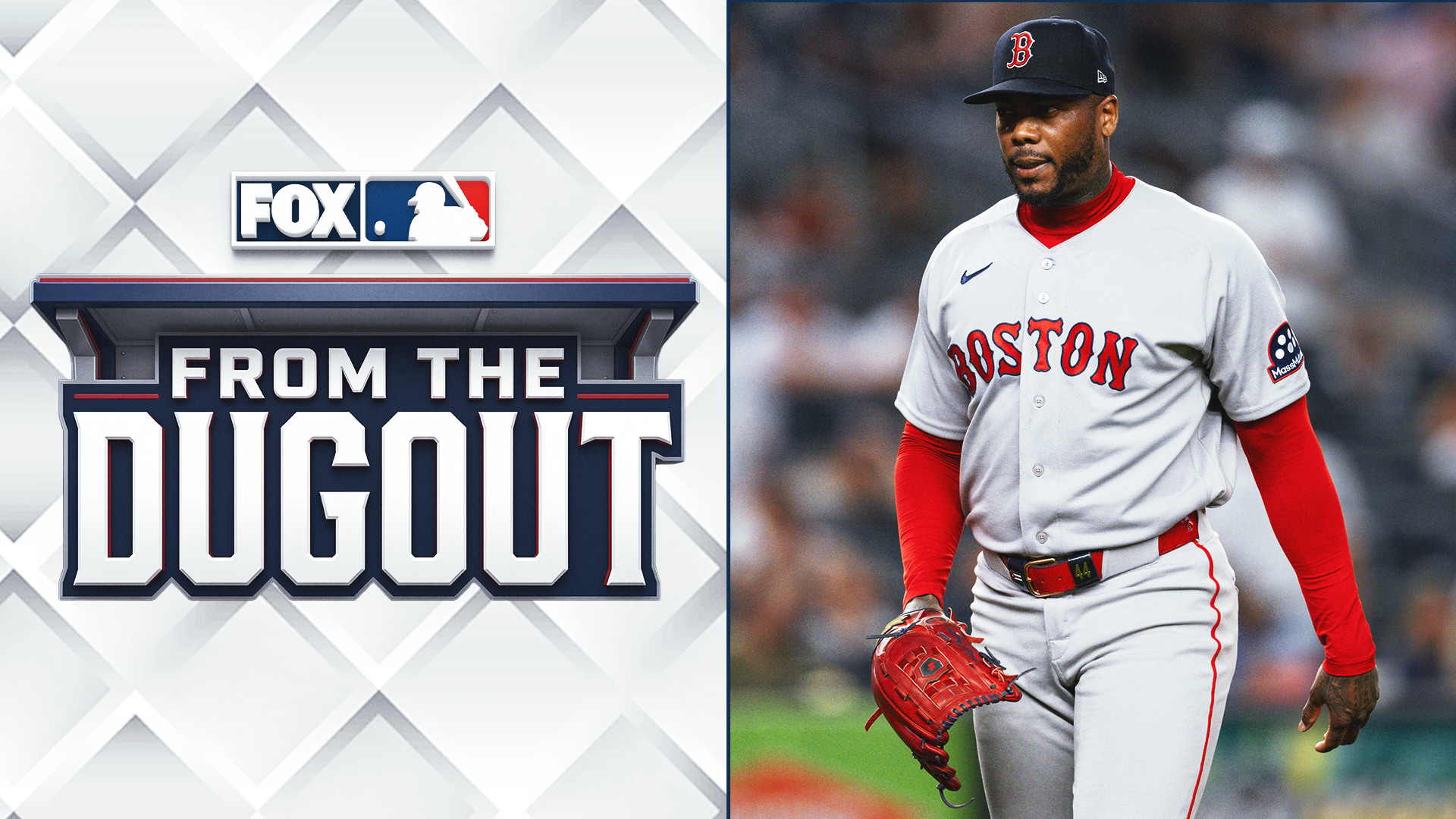
4 Takeaways From Team USA’s World Baseball Classic Win Over the Dominican Republic

LoanDepot Park (Miami) – The epic semifinal between the United States and the Dominican Republic was everything it was hyped up to be. Between both countries, including hitters and pitchers, there were 17 players who have already been All-Stars — the most All-Stars starting in a World Baseball Classic semifinal or final, surpassing the 11 who played in the 2017 WBC final between the USA and Puerto Rico. It was quite possibly the most talent on a baseball field in a single game with stakes, ever. Powered by powerful pitching, heads-up plays and excellent offensive timing, Team USA knocked off the Dominican Republic with a 2-1 win in the semifinals on Sunday night at loanDepot Park. The Dominican Republic, which featured its most dominant roster in the history of the WBC, suffered its first loss of the tournament as their “platano-powered” run came to an end. “The World Series I was in versus the crowd here and the one we had against Mexico, it’s bigger and better than the World Series,” Team USA captain Aaron Judge said. “The passion that these fans have, representing their country, representing their favorite players, there’s nothing like it. That’s what you dream about as a kid.” Here are my takeaways: 1. Don’t Run on Captain America This was, arguably, the play of the game. The Dominican Republic took a 1-0 lead over the USA in the second inning and they were threatening to pile on in the third, just like they had done all tournament. But their previous five games in the WBC, two of which included mercy-ruling the opponent, didn’t feature a Gold-Glove caliber, three-time MVP patrolling right field. With two outs in the third, the top of the Dominican Republic lineup was cooking after Fernando Tatis Jr. reached base on a fielder’s choice. The heavily-favored Dominican crowd urged the team to tack on some runs against Paul Skenes and the USA when Ketel Marte laced a single to right field. Tatis, who doesn’t have elite sprint speed but can be pesky on the basepaths, opted to test Aaron Judge’s arm in right field. As Tatis went from first to third, Judge fired a 95.7 mph laser to USA third baseman Gunnar Henderson, who tagged Tatis for the final out of the inning. Juan Soto, meanwhile, watched it all happen from the on-deck circle. As much as Tatis and the Dominican Republic found out the hard way not to run on Judge’s superhuman arm, it was also a silly decision to try and advance to third with his team’s best hitter due up. All the momentum they generated instantly vaporized on that play. The USA put up a pair of runs on solo shots from Roman Anthony and Henderson in the next inning, and the Dominican Republic never scored again. “It was beautiful,” said Pete Crow-Armstong, who watched Judge cut down Tatis from center field. “Very rare that somebody can throw a ball on a line that is a cuttable baseball. So the right throw to make, and still get it there with ease. The transfer to release is one of the cleanest things I’ve ever seen. “I think that that throw today definitely changed something. It made a shift somewhere, for sure.” 2. Home Run History: Dominican Republic Sets New Mark Junior Caminero put the Dominican Republic on the board and in the history books with his third home run of the tournament on Sunday. The 22-year-old’s solo shot off Skenes marked the Dominican Republic’s 15th home run of this year’s WBC, setting a new record for the most home runs by a single team in the tournament’s history. The previous record of 14 home runs was set by Mexico in the 2009 WBC, which was headlined by Adrian Gonzalez. Besides Caminero, five other Dominican Republic hitters had multiple home runs in this year’s tournament. Despite how stacked the lineup was, the country met its match against a dream team USA squad that flourished with their pitching on Sunday. Team D.R. manager Albert Pujols said afterward that it just wasn’t their time to win the Classic. He was proud of the way the team played together in the tournament, bringing an undefeated record into the semifinals. “Too bad we have to wait another three years,” Pujols said. 3. Sevy Holds It Down This was a memorable outing for Luis Severino, who had the odds stacked against him, but still gave the Dominican Republic all he had in the semifinal. Severino was amped up throughout his 68-pitch outing, throwing so hard that it seemed like he was willing to risk blowing his arm out later in the year for the Athletics. Severino threw six pitches that clocked in at 99 mph or more against the USA on Sunday. He had five such pitches in the entire 2025 season for the Athletics, when his four-seamer averaged 96.1 mph. His best moment of the game came in the third inning, when he delivered back-to-back strikeouts against Aaron Judge and Kyle Schwarber and stranded runners on second and third. “I came up in the minor leagues with Severino, so there were many outings I had in right field watching him throw 100 miles an hour past people,” Judge said. “He’s a big game pitcher who loves a big moment, loves a spotlight like that, and he showed out for them tonight. He had all his pitches working.” Going into Sunday, the Dominican Republic was being criticized for failing to line up one of their best pitchers, Sandy Alcantara or Cristopher Sanchez, to start the semifinal. USA, on the other hand, planned in advance for Skenes to take the hill on Sunday. Severino’s 4.54 ERA last season didn’t tell the whole story. He struggled at home in the Athletics’ hitter-friendly ballpark (6.01 ERA, 1.53 WHIP, 15 starts) and excelled on the road (3.02 ERA, 1.07 WHIP and 14 starts). On Sunday, Severino showed why he was once upon a time the Yankees’ No. 1 pitching prospect, and eventually a two-time All-Star. 4. Bednar Gets Away With It Again David Bednar just can’t help himself sometimes. The right-handed reliever came out of the bullpen to pitch the seventh inning of a tight, one-run game when he allowed a one-out double to his Yankees teammate, Austin Wells. Geraldo Perdomo followed with a single to center, moving Wells up to third, and then Perdomo promptly stole second base. Bednar didn’t even bother paying attention to him. He was locked in on the top of the Dominican Republic lineup, and he delivered some of the fiercest outs of the game. Tatis swung wildly at Bednar’s perfectly executed splitters in the dirt, striking out on four pitches for the second out of the frame. Rinse, wash, repeat. Ketel Marte, too, was fooled by Bednar’s nasty arsenal, this time flailing at his 78 mph curveball and whiffing for the final out of the seventh. Bednar is known to create chaos on the basepaths late in the game, in high-leverage moments. It’s just a part of his act, and Yankees fans will have to become familiar with that stress this season as he gets ready to take on full-time closing duties in the Bronx. 4 ½. What’s next for Team USA? Right-hander Nolan McLean will take the mound for USA in the championship game on Tuesday night in Miami. McLean will face the winner of Monday’s semifinal matchup between Italy and Venezuela. The Americans attempting to lock down their first WBC title since 2017.​Latest Sports News from FOX Sports
Categories
Sports Fox

NCAA Men’s Basketball Tournament Breakdown: Top Matchups, Upsets, Predictions

At last, the madness is upon us. Five long months of buildup to Selection Sunday came to an end with another glorious reveal of this year’s NCAA Men’s Basketball Tournament bracket. There are heavyweights at the top in 1-seeds Duke, Arizona, Michigan and Florida. There are newcomers like Queens and California Baptist. And there are more enticing storylines than fans can consume: from Miami (OH) in the First Four to potential No. 1 overall draft picks in BYU’s AJ Dybantsa and Kansas’ Darryn Peterson, from Nebraska seeking the first March Madness win in program history to the all-important health of Duke’s two injured starters. Without further ado, let’s break down the field: [MARCH MADNESS: NCAA Men’s Basketball Tournament Bracket] 1. Of the No. 1 seeds, which team has the clearest path to the Final Four? Arizona. Given the legitimate injury questions surrounding Duke, a string of sluggish performances from Michigan in the Big Ten Tournament and a blowout loss by Florida in the SEC Tournament, there’s no question that Arizona enters the Big Dance with the most encouraging trajectory of the top seeds. The Wildcats are one of only two teams to rank among the top five nationally in both offensive and defensive efficiency at this point, alongside Duke, and they’ve won nine consecutive games ahead of a first-round matchup with No. 16 LIU. A roster littered with future NBA Draft picks, including two likely lottery picks in shooting guard Brayden Burries and power forward Koa Peat, gives head coach Tommy Lloyd his best chance of advancing beyond the Sweet 16 since taking over at Arizona. The Wildcats’ potential path to the Final Four seems relatively friendly, too. Second-seeded Purdue only rose to the 2-line thanks to an upset over Michigan in the Big Ten title game, which means the Boilermakers’ overall profile is more in line with that of a 3-seed. Third-seeded Gonzaga, while talented, is not believed to be on the same level of classic Bulldogs teams under head coach Mark Few. Arkansas and Wisconsin, seeded fourth and fifth, respectively, also needed strong runs in their respective conference tournaments to land on those lines. The West feels like a region with a handful of overseeded teams trying to take down arguably the strongest 1-seed. It’s worth noting, though, that the Wildcats haven’t reached a Final Four since 2001 — and that will only increase the pressure with each passing game. 2. What is the most intriguing first-round matchup in this year’s tournament and why? No. 7 Saint Mary’s vs. No. 10 Texas A&M This is a fascinating stylistic matchup between two coaches and two programs on opposite ends of the spectrum. Saint Mary’s is led by ultra-respected head coach Randy Bennett, who is in his 25th season leading the Gaels. He’s made 11 NCAA Tournament appearances during that span as the primary rival to Gonzaga in the West Coast Conference, leaning heavily on international prospects to fill his roster. Coaches across the country marvel at the high-quality offense his teams run year in and year out. This particular group ranks among the top 15 nationally in 3-point percentage (38.6%), free-throw percentage (81.1%) and offensive rebound rate (37.4%) — all while operating at a deliberate pace that checks in at 297th in the country. Four of the Gaels’ five losses this year came against fellow NCAA Tournament teams. On the opposite side, Texas A&M head coach Bucky McMillan is a 42-year-old revolutionary in his first season with the Aggies. McMillan spent the previous five seasons at Samford, one of which included an NCAA Tournament appearance. His teams employ an up-tempo, aggressive style known as “Bucky Ball” that relies heavily on the full-court press and forcing turnovers. The Aggies rank 29th nationally in tempo, which sets the stage for a delightful contrast in approach between these two teams. 3. Who are three under-the-radar players everyone should know entering March Madness? Donovan Atwell, G, Texas Tech: A torn ACL suffered by Texas Tech power forward JT Toppin, who was averaging 21.8 points and 10.8 rebounds per game, meant the Red Raiders have needed more contributions from their role players in recent weeks. Atwell, a transfer from UNC Greensboro, will enter the NCAA Tournament ranked second nationally in made 3-pointers per game at 3.9, trailing only Jadin Booth (4.2) from Samford. He’s averaging 17.8 points per game since Toppin went down with the season-ending injury and has made at least five 3-pointers in four of his last six games. Ugonna Onyenso, C, Virginia: Onyenso was a highly coveted four-star prospect and the No. 36 overall player in the 2022 recruiting cycle when he signed with Kentucky out of high school. Two years with the Wildcats and one year with Kansas State have now led him to Virginia, where Onyenso enters March Madness ranked second nationally in blocked shots at 3 per game. Though his season-long statistical output isn’t necessarily eye-catching — he only averages 6.7 points and 5.0 rebounds per game — Onyenso was a force during Virginia’s run to the ACC Tournament title: eight points, six rebounds, eight blocks against NC State; 17 points, five rebounds, four blocks against Miami; six points, eight rebounds nine blocks against Duke. Rueben Chinyelu, C, Florida: One of the calling cards for Florida under head coach Todd Golden is a team-wide relentlessness on the offensive glass. The Gators ranked fifth nationally in offensive rebound percentage when they won the national title last season and will enter this year’s NCAA Tournament second in the country for that category, grabbing more than 43% of their own misses. Chinyelu, who averages 11.2 points and 11.5 rebounds per game, is the unquestioned leader of that charge. His mark of 4.1 offensive rebounds per game ranks sixth nationally and third among players from the power conferences. 4. What is the most likely first-round upset featuring a 12-seed or higher? No. 12 Akron vs. No. 5 Texas Tech Unfortunately for Texas Tech, the outlook for this season changed quite significantly when Toppin (21.8 points, 10.8 rebounds per game) suffered a torn ACL in mid-February, an injury that will sideline him for the remainder of the year. And while the Red Raiders enjoyed an encouraging response immediately after Toppin went down — winning three straight games over Kansas State, Cincinnati and Iowa State — the momentum soon fizzled. Head coach Grant McCasland and his team will enter March Madness having dropped three straight to TCU, BYU and Iowa State, which throttled the Red Raiders in the Big 12 Tournament last week. It’s unclear which version of Texas Tech might show up with the season officially on the line. So, why not Akron? The Zips boast one of the most explosive offenses in the country this season under head coach John Groce, who has now reached the NCAA Tournament in three consecutive years. Akron ranks seventh nationally in scoring at 88.6 points per game and has impressive underlying metrics to validate the top-end production: eighth nationally in effective field goal percentage (58.5%), 14th in 3-point field goal percentage (38.5%) and 12th in 2-point field goal percentage (59.1%). The Zips have seven players averaging at least 7.0 points per game this season, led by an excellent senior guard in Tavari Johnson (20.1 points, 5 assists per game). If Groce’s team gets hot from beyond the arc, then Texas Tech might be in trouble. 5. Who are your Final Four picks and who wins it all? Duke: If the Blue Devils could roll through the ACC Tournament without starting point guard Caleb Foster and starting center Patrick Ngongba II, both of whom missed the event due to injury, then there’s no reason to think they can’t navigate the East Region unscathed. That’s especially true if, or when, either player can return to the lineup for head coach Jon Scheyer. Duke has arguably the single-best player in the country in power forward Cameron Boozer (22.5 points, 10.2 rebounds per game) and a rotation that runs nine deep when everyone is available. The Blue Devils’ two defeats this season came by four combined points to Texas Tech and archrival North Carolina, with the Tar Heels winning on a buzzer beater. Houston: Even with four defeats over the final month of the season, Houston remains one of the most analytically sound teams in the field under head coach Kelvin Sampson. The Cougars enter the NCAA Tournament as one of only five programs ranked among the top 15 nationally in both offensive and defensive efficiency, placing them in an elite group that includes all four 1-seeds in this year’s field. The Cougars finally have a legitimate difference maker on the offensive end of the floor in freshman guard Kingston Flemings, a likely lottery pick. Flemings has a dozen 20-point games already this season. Arizona: Not only does Arizona have perhaps the easiest path to the Final Four of any 1-seed in this year’s field, but the Wildcats are also playing better basketball than pretty much anyone in the tournament. Head coach Tommy Lloyd assembled an exceptional roster that includes legitimate size at every position — Arizona’s smallest starter is 6-foot-3 point guard Jaden Bradley — and two bonafide difference makers off the bench in shooting guard Anthony Dell’Orso (10.1 points per game) and center Tobe Awaka (9.4 points, 9.5 rebounds per game). The only things holding Lloyd’s team back from being a prohibitive national championship front-runner are a starting lineup that includes two freshmen and a Final Four drought that spans more than two decades. Michigan: When the Wolverines traveled to Washington, D.C., for a rare, late-season non-conference matchup with Duke on Feb. 21, it felt like a showdown between the sport’s two best teams. To that point, Michigan had obliterated one opponent after another under the direction of head coach Dusty May, who launched his team to the top of the Big Ten pecking order in just his second year. And while there are a few cracks in the foundation for May and Co. to contend with in the coming weeks — the Wolverines were nearly beaten by Iowa, Ohio State and Wisconsin before falling to Purdue in the Big Ten title game — few rosters across the field will be able to handle Michigan’s unparalleled positional size. National champion: Duke​Latest Sports News from FOX Sports
Categories
Sports Fox

Venezuela vs. Italy World Baseball Classic: Starters, Lineups, How To Watch

Italy continues its unlikely run at the World Baseball Classic and will next take on Venezuela in Monday’s semifinal game. The Venezuelans are having their own storybook run after eliminating Shohei Ohtani and defending WBC champions Japan in the quarterfinals. Next up is a spot in the final. The game will be Monday, March 16 at 8 p.m. ET on FS1. How to Watch the 2026 World Baseball Classic FOX is your exclusive home to the WBC with games spread across the FOX family of networks. The Italy vs. Venezuela semifinal is on FS1 on Monday (8 p.m. ET). The Championship Game will be on FOX on Tuesday, March 17 (8 p.m. ET). All games will be available for streaming on the FOX Sports app and FOX One. Catch the action on the following streaming options: Italy Lineups, Pitchers Aaron Nola will start Monday night’s World Baseball Classic semifinal for Italy against Venezuela rather than Michael Lorenzen. Italy manager Francisco Cervelli said he made the decision Sunday but waited until Monday to make the announcement. “My reason was my gut,” he said. “Everyone is available, but I think Nola is the right person. That’s my opinion, and I’m taking responsibility for my decisions.” A 32-year-old right-hander, Nola got the win in the group stage finale against Mexico on March 11. He allowed four hits over five scoreless innings with five strikeouts and one walk, throwing 69 pitches. Italy has the second most home runs (12) at the tournament behind the Dominican Republic’s tournament record of 15 dingers. Leading the way is the heart and soul of this Italian squad, Vinnie Pasquatino. The Royals first baseman has three homers (all against Mexico in the pool play win). A trio of Italian players (Dominic Canzone, Andrew Fischer, and Dante Nori) have five RBI each. Nori leads the team with .438 batting average. Venezuela Lineups, Pitchers Keider Montero, a 25-year-old right-hander, pitched three scoreless innings of relief on Monday in a 4-0 first-round win over Nicaragua. He made his big league debut on May 29, 2024, and was 5-3 with a 4.37 ERA in 12 starts and eight relief appearances last year for Detroit during a season in which he was optioned to Triple-A Toledo six times. Monero was 4-4 with a 5.91 ERA in eight starts and two relief appearances for the Mud Hens. Luis Arráez has been a hitting machine for Venezuela. The Padres star has two home runs and nine RBI with a solid .368 batting average. Maikel Garcia and Ronald Acuña Jr. had homers in the win against Japan, as did Wilyer Abreu who hit the definitive three-run homer that sealed the win over Japan. WBC Schedule Semifinals Monday, March 16 Final Tuesday, March 17​Latest Sports News from FOX Sports
Categories
Sports Fox

Paul Skenes to A-Rod About Representing USA at WBC: ‘It’s A Different Level’

The last time that Team USA competed in the World Baseball Classic, Paul Skenes hadn’t even made his major league debut yet. In fact, it wasn’t until months later that the Pittsburgh Pirates would select him with the first overall pick in the 2023 MLB Draft. Now a two-time All-Star and the reigning National League Cy Young winner, Skenes is one of the most feared pitchers in all baseball and an integral starter for Team USA under Mark DeRosa — both opportunities he doesn’t take for granted. “The proudest I’ve ever been wearing a jersey is the USA jersey,” Skenes told World Series champion and MLB on FOX analyst Alex Rodriguez in an interview ahead of Team USA’s game vs. the Dominican Republic. “You’re playing for a whole lot more. It’s great to play for a city, great to play for Pittsburgh in the regular season, but playing for your country, it’s a different level.” Skenes made his first official appearance for Team USA against Mexico in pool play. He pitched four innings and posted seven strikeouts, which is the all-time record for most strikeouts by a Team USA pitcher at the World Baseball Classic. “I wasn’t sure what it would feel like coming in,” Skenes said of the World Baseball Classic. “I think it’s one of things where you just don’t know what it’s going to feel like. Now being in it and seeing the atmosphere and playing the games, it’s everything I could have imagined.” Skenes will take the mound for Team USA once again in Sunday’s semifinal against an undefeated Dominican Republic team headlined by MLB All-Stars Juan Soto, Vladimir Guerrero Jr., Manny Machado, and Fernando Tatis Jr. The stakes have never been higher for the 23-year-old ace, but he keeps a healthy perspective by reminding himself who he’s representing at the World Baseball Classic: “America,” Skenes said. “Our servicemen and women don’t have the luxury of losing, it’s not really an option for them,” Skenes added. “We’re not going to war, but is what we do in America: we fight and we win. That’s our responsibility.”​Latest Sports News from FOX Sports
Categories
Sports Fox

2026 NCAA Men’s Tournament: 5 Biggest March Madness Snubs

The men’s NCAA Tournament field was released on Selection Sunday, and the 68-team field is set. Some teams that expected to see their name selected by the committee were left out. Their spots were taken by bid-stealers such as VCU out of the Atlantic 10, and Akron out of the Mid-American conference, or fellow bubble teams with stronger resumes. Here were the five biggest snubs from the men’s NCAA Tournament. 1. Auburn Tigers Auburn men’s basketball was left out of the NCAA Tournament field on Sunday. The Tigers lost their chance at an automatic bid after losing to Tennessee in the quarterfinals of the SEC Tournament on Thursday. Because of that defeat, their fate was at the committee’s discretion, who opted to exclude Auburn from March Madness. The Tigers (17-16, 7-11 SEC) had an up-and-down season as they played one of the hardest schedules of any Division I program (third, per KenPom). While that might have provided challenges to prepare for postseason play, Auburn wasn’t able to earn enough victories to get there. Apart from the difficult slate, Auburn had an uphill battle from the beginning. Coming off a trip to the Final Four in 2025, the Tigers lost five starters. And just before the season, 11-year head coach Bruce Pearl turned the reigns over to his son, Steven. The Tigers peaked when they beat then-No. 4 Florida in Gainesville on January 24th. But losses in nine of their last 12 games ensured the Tigers would miss the NCAA Tournament for the first time in four years. [NCAA ODDS: Latest Men’s March Madness Odds, Favorites] 2. Indiana Hoosiers Indiana men’s basketball won’t be a part of the NCAA Tournament field after not hearing its name called by the selection committee on Sunday. The Hoosiers lost control of their postseason destiny after falling, 74-61, to Northwestern on Wednesday, a disastrous Quad 2 loss in their first game of the Big Ten Tournament. It’s been three years since Indiana has made the NCAA Tournament, as head coach Darian DeVries was unable to author a turnaround in his first year at the helm. DeVries came to Indiana after one season at West Virginia and six seasons at Drake, bringing his son Tucker DeVries and signing top transfers such as guards Lamar Wilkerson and Tayton Conerway. Indiana secured strong wins against NCAA Tournament teams such as in-state rival Purdue and at UCLA, but the Hoosiers’ loss to Northwestern was the final nail in the coffin. [MEN’S BRACKET: NCAA Tournament Bracket, Leaders & Stats] 3. Seton Hall Pirates Seton Hall men’s basketball missed out on the NCAA Tournament. The Pirates clawed for a spot over the last few weeks, challenging UConn in Storrs, Connecticut, and St. John’s in the semifinals of the Big East Tournament. Ultimately, the Pirates (21-12) didn’t do enough to earn a spot in the 68-team field. With the Big East having a down year, there weren’t as many opportunities to snag quality wins, and each loss was more detrimental. It’s now been two seasons since Seton Hall made March Madness. 4. San Diego State Aztecs Attempting to relive their glory days from 2023, the Aztecs came out short, ending up absent in the official bracket on Sunday. After losing four out of their last five games heading into the conference tournament, they needed to win the Mountain West Tournament to ensure an auto-bid to the Big Dance. Ultimately, Utah State came out on top, 73-62, stealing the championship game and the automatic bid. The team battled injuries to key depth players like junior forward Miles Heide and freshman guard Elzie Harrington late in the year. Making the tournament five consecutive years, this was their first bump in the road since 2019. 5. Oklahoma Sooners Despite a strong end-of-season push that saw the Sooners reach the SEC Tournament quarterfinals, they didn’t do enough to earn an at-large bid. It’s now the fourth time in five seasons under head coach Porter Moser that Oklahoma has missed the NCAA Tournament.​Latest Sports News from FOX Sports