Categories
Sports Fox

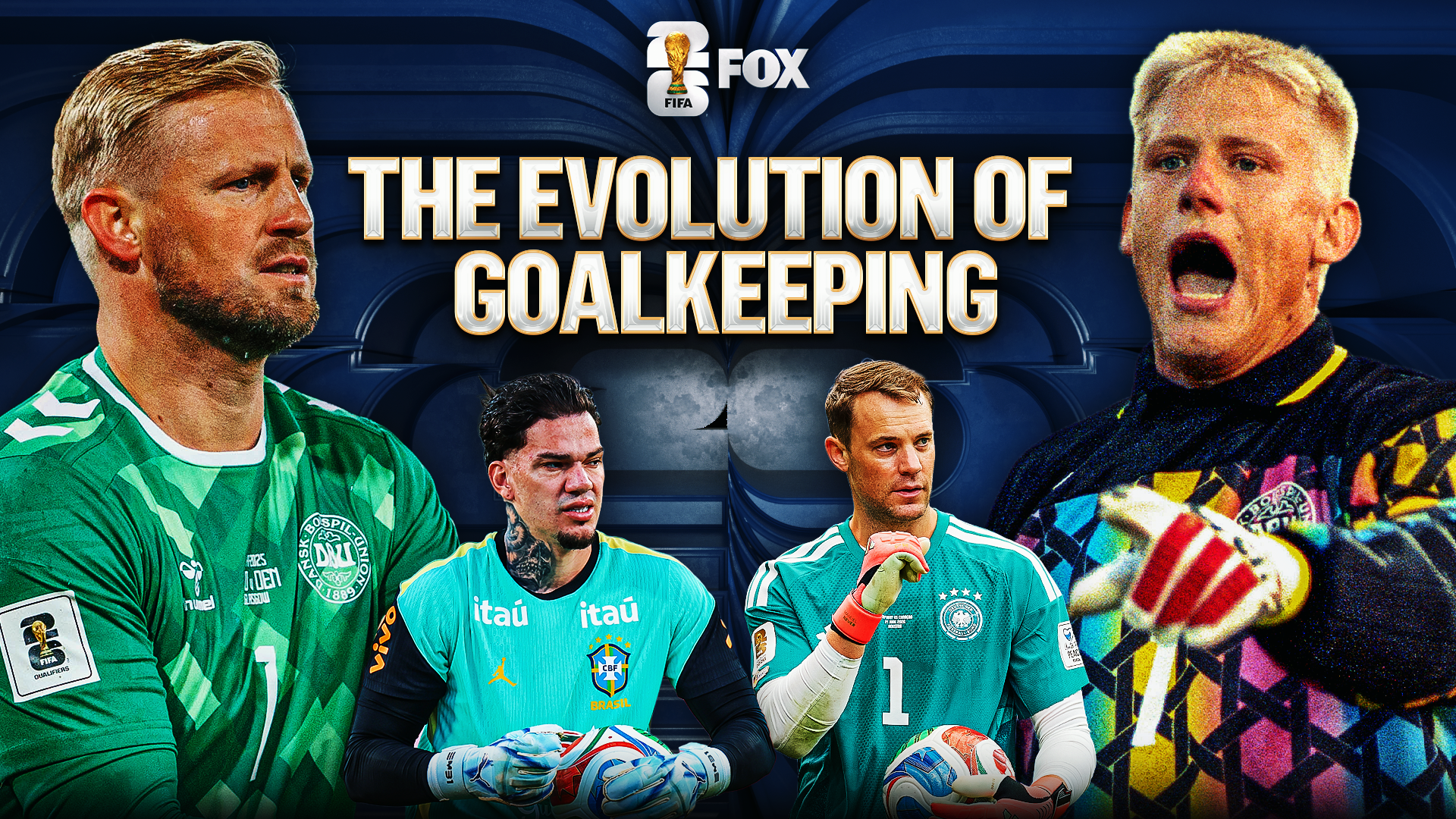
The Evolution Of Goalkeeping: Kasper & Peter Schmeichel Examine The Position

For Father’s Day, our resident goalkeeping father-son duo sat down to talk about the evolution of goalkeepers. Both Kasper and Peter Schmeichel won the Premier League, and they both represented Denmark as the starting goalkeeper at their World Cups. They have seen it all and have been two of the best goalkeepers in the world during their respective eras. Normally, they keep their keeper talk with each other to their native Danish, but we were lucky enough to get them to go long in English. During the 2026 World Cup, Peter, 62, and Kasper, 39, sat down and discussed many topics about their position on the pitch. Here is what stood out. This conversation has been condensed and edited for clarity. On The Evolution Of Gloves And Balls: Peter: Growing up as a goalkeeper, we didn’t have gloves, so gloves came into the game around the time I became a senior player — 18 years of age. I got my first pair of gloves when I was 18. I did use garden gloves in the winter because it was cold, but they didn’t do anything other than keep you relatively warm. That was a good thing because your catching technique was improved, and then, of course, gloves came in, and it was a little bit weird to begin with, and the quality of the gloves wasn’t great. You had to buy them yourself, relatively expensive, and then you know the foam started to wear off very, very quickly. You looked at this, you knew you couldn’t afford a new pair until six months later. So I opted a few times, even when I was a senior player, to play without gloves. With the catching and all that — your basic technique was a lot better, but I like to throw the ball. So throwing the ball without gloves made it more accurate, and I could throw it longer. And then, of course, gloves came into the game, and the evolution of that improved, and of course, by the time I started to become a professional player, you couldn’t play without [them]. Kasper: I would investigate exactly the altitude we were playing in. I’d see what type of pitch it was. I’d be going to the referees to make sure they watered the pitch. I’d be training with the ball for a long time beforehand. I’d make sure which gloves it was, because I took a pair of gloves out of the packet, and they were ready to go. I use the Vaseline trick. So for people that don’t know, most goalkeepers these days — they’ll have Vaseline on their gloves because Vaseline dries it out a little bit, but it gives incredible grip on certain balls. This ball, the World Cup ball, it works great when it’s wet. It works great when it’s dry. If you use a Premier League ball, it works great when it’s wet, not great when it’s dry. So, if you’re in a drier condition, you do one thing. If you’re in wet conditions, you do another thing. On Conditioning And Coaching Changes Over The Years: Kasper: When you were with the national teams, that was when you had three coaches, and I actually found that I didn’t enjoy the three. I enjoyed it when we had a big group of goalkeepers, because I felt I could learn from others. I’d always watch and see what I could learn, but I felt we could make things more realistic. I watched a lot of the stuff you did. It was very much repetition. You always talk to me about repetition, repetition, repetition, about catching. So, my pre-training work would be kicking the ball up against the wall, just catching, just practicing all the time so it became muscle memory. Now, goalkeeper coaching has changed a lot. You’ve watched me train, I’ve watched you train, and it’s slightly different. So, how was it different when you played? Peter: When I became a professional football player, we only had one coach. We didn’t have an assistant coach. It was one coach and no goalkeeping coach on full-time, but I had a guy that I saw twice a week. Now, this philosophy is that everything you do as a goalkeeper, training should be away from the team. The team should never see you do that. Taking part in everything that the outfield players are doing is important, because it is a team at the end of the day, and they need to trust you in every department of football. On Game-Changing Keepers Manuel Neuer And Ederson: Kasper: In my world, there are three people that change goalkeeping forever, you being the first. You brought in a certain style. The way you changed the game, it was the domination of the box, and it was the fast counterattacks. Then we had Manuel Neuer in 2014 with the sweeper keeper, and then we had Ederson playing with the feet. I’d be really interested to hear your thoughts about Neuer and Ederson. How do you see them? I have my view of them. What’s your view of those two and how they transformed goalkeeping? Peter: [The] first time I saw Neuer live, he played for Schalke against Manchester United, and he played a blinder. He made an incredible save right at the death of the game, which knocked Manchester United out that day. … I’m looking, and I think, ‘Whoa, this guy.’ For a couple of years, I tried to persuade [former Manchester United manager] Alex Ferguson to sign him, because I saw him, and I wanted somebody to continue what I did. I felt it was really important that we had somebody who could do the same things: control the box, get the team to play higher up the pitch, find those channels [going forward] when need be. And he had this young lad here, absolutely fantastic. Ederson is taking playing with your feet to the next level. I’ve never seen anything like that. On Their Approach To Penalty Shootouts: Kasper: For me, it was always about control. We actually used a mentalist, a guy that guesses things that you’re thinking, but they’re putting it in your head. So, we actually asked one of those to see what we can actually do to influence a taker, and it would be things like over emphasizing certain words. In a VAR situation when the referee is out checking, I had a chance to talk to the taker. I’d overemphasize words like over or right or left, or try to do different things that they kind of taught us to look for. Can I get some kind of influence? We had faced a penalty against Peru in the World Cup 2018. I kept overemphasizing the word over, “Don’t hit this over,” all these kinds of things, emphasizing the word over. Whether it made a difference, I don’t know. But by the way, yeah, the ball is still going. Peter: I ended up in quite a few penalty shootouts, and I always thought, “I have no control here,” so I needed to gain a little bit of control. All this play-acting and trying to get that was not for me. How do I get control? Well, the whistle blows after extra time. It’s gone. I know it’s a penalty shootout. I haven’t got a clue who the five will be. I don’t know whenever they step up, which foot they’re going to hit it with. I don’t know where they’re gonna hit it. I don’t know what height and then what pace. So, how do I get control in that situation? Well, I always make my mind up. “OK, I’m facing five penalties today. I’m going to go two to the left, one to the right, one to the left, and one to the right,” and I would stick by that. That’s my lottery. On Where The Goalkeeper Position Is Headed Next: Kasper: The times are changing all the time now. Football is going in trends. What does the next goalkeeper look like? For me, we’re now seeing players coming out of academies that are being released that aren’t maybe good enough to be outfield, and they’re looking at their physical profile and saying, “Can we transform them to be goalkeepers?” Because we’ve had the big, tall goalkeepers that were very dominant in the air. We went to some of the smaller ones, very good with their feet. Now, with the set pieces back again, we’re going to the slightly taller ones. So, I’m looking at it, thinking we’re going to see a mixture between a Neuer, [Real Madrid and Belgian keeper] Thibaut Courtois and an Ederson. We’re looking for 6-foot-4 guys, 6-foot-6 guys that can do that. Peter: I think the requirement of being able to control your box better is going to come back in. You always have to look at someone like Pep Guardiola, what he’s thinking. So, when he brought [Italian keeper] Gianluigi Donnarumma to Manchester City, it was because of Arsenal’s dominance on set pieces. So, he also brought Abdukodir Khusanov in, who’s a big tall guy. He started to play Nico O’Reilly, who’s even taller. He also had Rúben Dias, Erling Harland — big, tall players. When you contrast that to the team that he’d had at Barcelona, when nobody was more than 150, 175 centimeters, they were small guys, very quick on their feet. He’s thinking, “Well, now we have somebody thinking on set pieces, we can now take advantage and score goals. Well, I’m going to contract that. I’m going to put some big guys in there, so you don’t have a chance.” In that, you encourage your goalkeepers to actually come out and punch the ball or catch the ball. And I don’t think, at the moment, in the Premier League, there’s anyone better than Donnarumma. It doesn’t look like you know he’s got it under control, but trust me, he has. He gets out there for every ball, and he just punches it away, big, strong. … Now, when everyone [is] focusing so much on set pieces, I think it becomes more important that a goalkeeper can actually come out and punch the ball or catch it. And I think because of the other thing you said, are we going to see more long balls? I think we’re going to see a lot more direct play, as we’ve already seen in this World Cup, which I really, really do welcome.​Latest Sports News from FOX Sports

Categories
Sports Fox

4 Takeaways From Spain’s Bounce-Back Win vs. Saudi Arabia At The World Cup

Spain got its 2026 FIFA World Cup campaign back on track with an easy 4-0 win over Saudi Arabia on Sunday at Atlanta Stadium. Spain opened its tournament with a shock scoreless draw against Cape Verde that saw it enter the second match day with just one point. Now, Spain is in the driver’s seat in Group H with four points and four goals to its name. Here are four takeaways from the match: 1. Yamal Isn’t 100%. It Doesn’t Matter. Spain superstar Lamine Yamal got the start against Saudi Arabia on Sunday after coming on as a substitute in its opening match against Cape Verde. While it’s clear that the 18-year-old still has some rust to shake off after he missed the final weeks of the season with a torn left hamstring, he is such a difference-maker for Spain that, for now, it doesn’t matter. Yamal opened his World Cup account with a goal in his second-ever appearance at the tournament and his first-ever start. He is the eighth-youngest player to score at the World Cup, surpassing Lionel Messi with his 10th-minute goal. Yes, there were moments Yamal didn’t look like himself — three of his five shots on goal were off-target, and he only completed two of his six attempted crosses — but that’s expected to come with time. And if that time comes, Spain will be a tough team to beat. 2. Spain Is More Fun When Oyarzabal Shows Up Coming into the tournament, the No. 9 position was the biggest area of concern for Spain (as it has been since the days of David Villa and Fernando Torres), and Mikel Oyarzabal did nothing to dispel those concerns in Spain’s opening match, becoming the first player in recorded World Cup history to play the first 30 minutes of a match without touching the ball once. Maybe it was the strength of the opponent, but Oyarzabal looked like a completely different player — the one that Spain needs — against Saudi Arabia. He scored his first goal in the 21st minute after plucking the ball out of the air in a crowded area, and his second came just three minutes later on the opposite post, where he scored his first. Spain’s concerns up top are real, but Oyarzabal has proven he’s capable of being a source for goals under manager Luis de la Fuente. As long as he doesn’t lay another egg in this tournament, the surrounding noise should disappear in no time. 3. Rodri Is Back, But Is It For Good? Sunday was the first time that someone watching Spain would be able to tell that a recent Ballon d’Or winner was on its roster. Rodri was a maestro in the midfield against Saudi Arabia, completing 95% of his passes (113-of-119), including 100% of his long balls (6/6), and recovering the ball eight times. Rodri will see tougher opponents as the tournament goes on, with all due respect to Saudi Arabia, but if he can continue stacking these performances, building his confidence and improving his fitness, Spain can reach a level that not even the most optimistic of outlooks could have predicted. 4. Another Exit Looming For Saudi Arabia? Saudi Arabia’s 2022 World Cup was marked by an unbelievable upset win over Argentina, and its 2026 World Cup started with an impressive draw against Uruguay. But just like in 2022, one good showing might not be enough for Saudi Arabia. With its 4-0 loss to Spain, Saudi Arabia enters the final match day of the group stage with one point and an unfavorable goal differential. It’s capable of beating Cape Verde, but so was Spain in its opener. In other words, it’s time to dig deep.​Latest Sports News from FOX Sports
Categories
Sports Fox

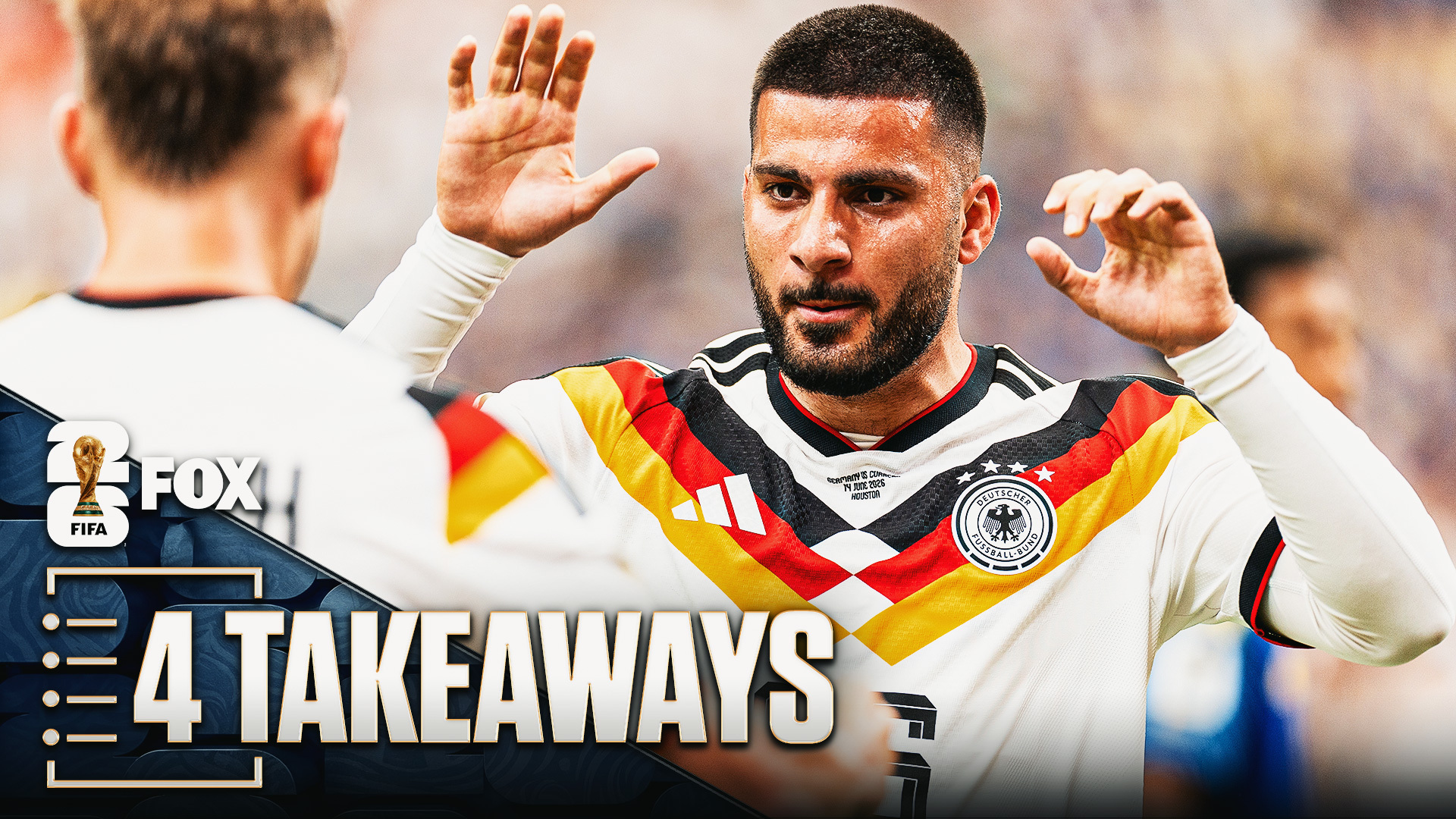
4 Takeaways From Germany’s Stoppage-Time Win Past Ivory Coast

Under a clear Toronto sky in perfect weather conditions, Germany persevered and scored a stoppage time winner, coming from behind to win 2-1 against the Ivory Coast and sealing its place in the Round of 32. The hero? Deniz Undav, as the substitute, made all the difference with a tremendous brace. The four-time World Cup champion and eight-time finalist had a very difficult afternoon against a steel-minded African side, who opened the scoring first thanks to Franck Kessié due to some magic from Yan Diomande. But thanks to a great brace by the substitute Deniz Undav, whose instincts proved to be extremely important, Die Mannschaft made it to the knockout stages for the first time since 2014 – the last time the team won it all. It must be noted that it also now won its 11th straight match in all competitions. Here are my takeaways: 1. Nagelsmann’s Substitutes Paid Off Germany coach Julian Nagelsmann, wearing an oversized black tee and looking like he had just came out of an underground art gallery in Williamsburg, made some key decisions in the second half that worked to perfection. Deniz Undav, who plays for Stuttgart, was the key as he replaced Jamal Musiala in the 60th minute and offered a more direct, poaching threat. His first goal came thanks to a cross from Nadiem Amiri’s cross, who also came in as a substitute. Against a strong defensive unit like the Ivory Coast, Nagelsmann knew that eventually, the depth of his squad would offer something different against the tired legs of their opponents, and he was right. 2. Flowers for Felix Nmecha Undav is having quite the tournament, with five goal contributions in less than an hour’s worth of World Cup action. But give some kudos to Borussia Dortmund man Felix Nmecha, who was the best player on the pitch today as he controlled the midfield like a young Michael Ballack. His ability to dribble through pressure and carry the ball is as impressive as his vision. It was his assist that fed Undav’s late winner. A fantastic evening from the 25-year-old star midfielder, who scored in the 7-1 drubbing of Curaçao last week. 3. Despite Loss, Ivory Coast’s Defense Is Strong Despite the loss, I was impressed with Emerse Faé’s tactics and how the Ivory Coast worked without the ball. Their four-man defensive line was in unison and made it hard for the Germans. If you didn’t know this already, this team’s metal-like defending is well known, as this national team qualified for the World Cup without losing a single match and conceded zero goals. It’s diappointing that it conceded the late goal, but there is still a lot more to come from Les Elephants as they still have a shot at second place. The team did get that tough win over Ecuador last week, so there is still all to play for. 4. Diomande Is The Real Deal It’s absolutely not surprising to me that the 19-year-old star – who plays his club football for RB Leipzig in the German Bundesliga – is such a wanted man by many clubs, with Liverpool reportedly leading the race. It’s also not shocking to hear that Leipzig is demanding more than €100 million for his transfer. Diomande is a bolt of lightning, and similar to former Anfield star Luis Díaz in the sense that his ability to penetrate forward is so unpredictable. So again, I can see why Andoni Iraola’s Liverpool wants him so badly. Against Germany, in the first half, he was so good that Nagelsmann had to move Kimmich to the left fullback role until the break in order to see what he had to do to figure him out. It was Diomande’s cross that eventually ended with Kessié for the opener. In the second half, there was less time for him to operate as he now had two players that closed in on him, but once Diallo was substituted, Diomande moved to the right and became more of a threat again. He was quieter, but there is no doubt this is a star in the making. 4 ½. What’s Next Germany will win the group with a point in the last match against Ecuador on Thursday. Ivory Coast’s next match will be massive as it takes on Curaçao with the hope of sealing a spot in the knockout stages.​Latest Sports News from FOX Sports
Categories
Sports Fox

Why USA May Switch Up The Starters In Next World Cup Match

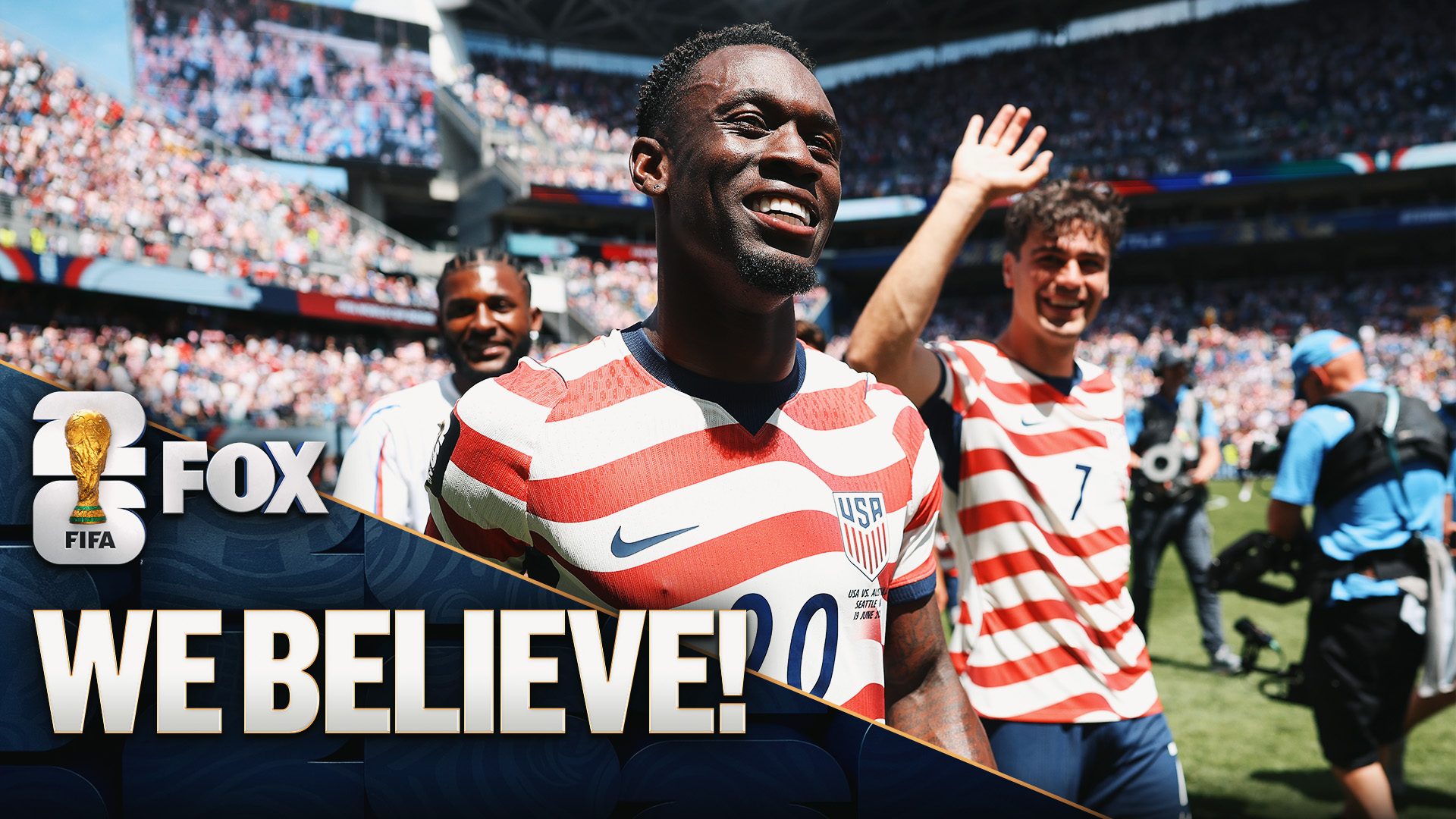
SEATTLE STADIUM — Tyler Adams didn’t hesitate. Standing in front of a gaggle of reporters in the bowels of this packed 69,000-seat arena that had just seen the U.S. men’s national team continue what is quickly becoming a glorious 2026 FIFA World Cup on home soil — the USA’s 2-0 victory over Australia on a perfectly sunny afternoon marked the first time the Americans have won two straight World Cup games since 1930 — Adams was asked if he’d like play in Thursday’s first round finale vs. Türkiye, at risk of being suspended for the first knockout game should he pick up another yellow card. “I want to play every game, so yeah,” he said. “I managed [to avoid another caution] today, so hopefully I could do it again.” There’s no chance that will happen now. Though beating the Socceroos guaranteed the Stars and Stripes a spot in the knockout stage with a game to spare, Adams couldn’t know at the time the outcome of Friday’s nightcap between the Turks and Paraguay. That match would decide how much the Americans’ next contest even mattered. As it turned out, Paraguay’s 1-0 win clinched Group D for the U.S. regardless of the outcome on Thursday. That means U.S. coach Mauricio Pochettino has the rare opportunity to rest his entire starting lineup before the round of 32 if he chooses. Had star attacker Christian Pulisic not been sidelined by a tight left calf in Seattle, Pochettino would’ve rolled out the exact same 11 players in the co-hosts’ first two games. This is the World Cup. Of course, the former Chelsea and Paris Saint-Germain manager wanted his best players on the field despite the possibility of injury, fatigue and yellow card accumulation. That last one could’ve been particularly vexing. Yellow cards are wiped after the Adams, striker Folarin Balogun, defender Chris Richards and fullback Antonee “Jedi” Robinson were all booked in the Americans’ first two outings. Getting a second group-stage yellow card on Thursday would see them suspended for the Americans’ first elimination match, on July 1 at San Francisco Bay Area Stadium. Accumulated yellow cards are wiped clean after the group stage and after the quarterfinals — but suspensions are not. Even if Pochettino doesn’t admit it when he meets the media on the eve of the next game, it’s now essentially 100 percent guaranteed that he won’t play Adams, Balogun, Richards or Jedi against Türkiye. He can’t. With yellows wiped clean at the conclusion of group play, it’s the only way to ensure that they’re all available for the knockout-round opener. Make no mistake: That game is now everything. Though the vibes in the team and the public right now are “over the roof,” to quote defender Alex Freeman, failing the first do-or-die test would immediately turn this World Cup into a disaster of epic proportions. Making sure that Pulisic can participate when it really counts must be a top priority. Same for Richards, who came into this tournament nursing an ankle injury. The big center back almost certainly wouldn’t have played even if he hadn’t seen yellow in Seattle. There’s also really no reason to use midfielder Weston McKennie, fullback Sergiño Dest, midfielder Malik Tillman or defender and 38-year-old captain Tim Ream in the next match. Keeping the starters as fresh as possible is paramount. So expect plenty of opportunities for others. Premier League starter Brenden Aaronson hasn’t logged a minute of this World Cup yet. Neither have fullback Max Arfsten, center back duo Mark McKenzie and Miles Robinson, midfielder Cristian Roldan, goalkeeper Matt Turner or winger Alex Zendejas. Most or even all of them should see some playing time on Thursday, either from the beginning or off the bench as substitutes. If Pochettino wants some continuity, maybe he sticks with goalkeeper Matt Freese rather than throw a bone to Turner, the USA’s No. 1 in 2022. Freese is still relatively green at the highest level, and he just posted the USA’s first clean sheet in 11 tries. Freeman, who scored the Americans’ second goal against the Aussies, is only 21, a physical freak, and seems to get better with each passing game. Surely he can go again if asked. It’s more difficult to make an argument for almost anyone else. In addition to giving the first string more time to recover, playing the understudies would boost morale — especially if they can beat an already eliminated opponent —inside a group that is already clearly flying high. After the U.S. routed two-time World Cup champion Uruguay last November with a lineup that included just three players (Dest, Freeman and Freese) who have started at this World Cup, Pochettino bristled at the notion that this team has “regulars” at all. Yet the fact remains that it’s almost impossible to dole out minutes to everyone at a World Cup, especially since FIFA increased roster sizes to 26 (from 23) four years ago. Pochettino has just been given that luxury. Expect him to take it against Türkiye.​Latest Sports News from FOX Sports
Categories
Sports Fox

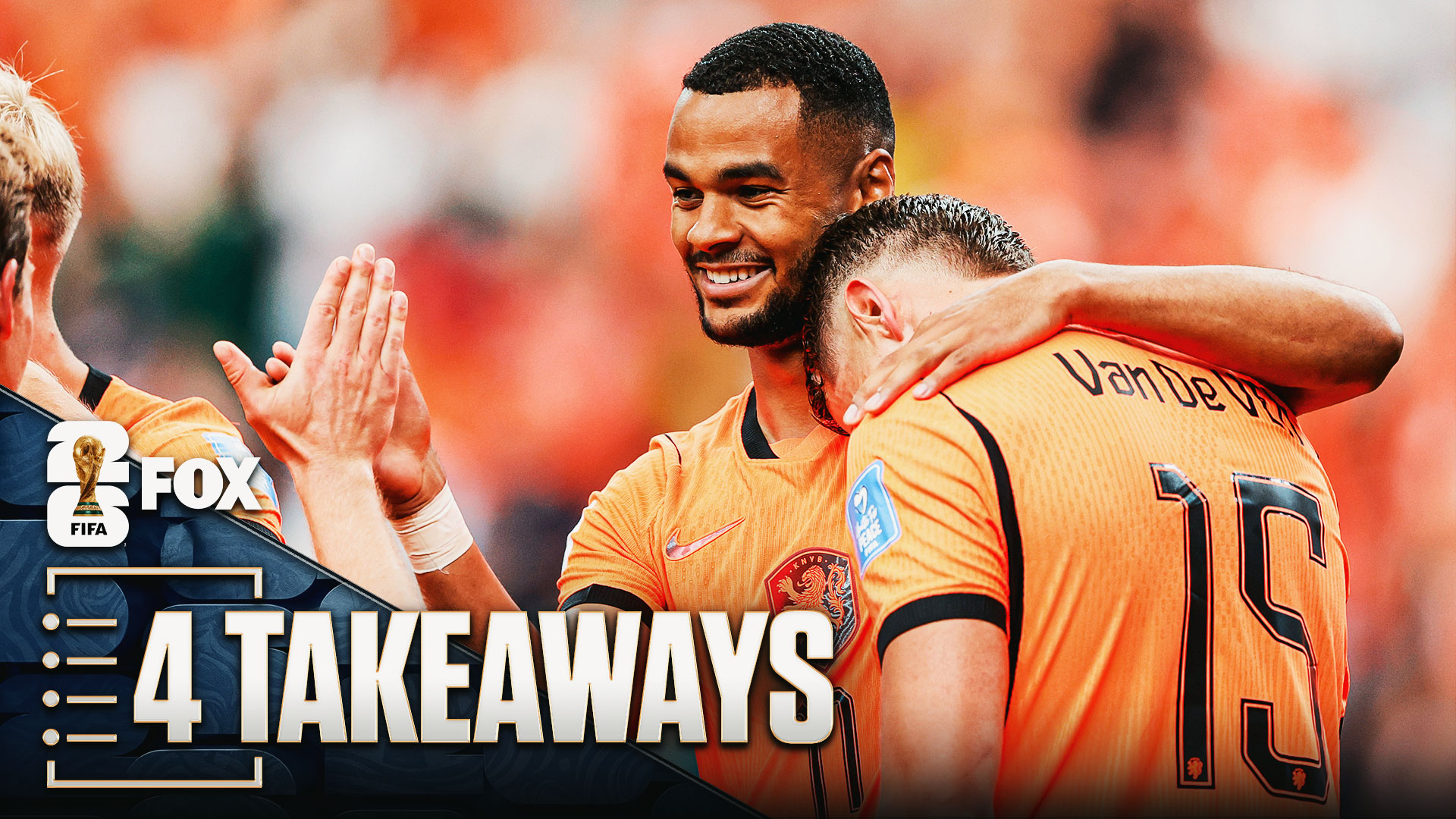
4 Takeaways From The Netherlands’ Dominant Win vs. Sweden At The World Cup

Total Football is here. The first World Cup match of a busy Saturday was a European clash between the Netherlands and Sweden, where the Oranje came out victorious with a commanding, overwhelming 5-1 victory at Houston stadium. The result takes them to the top of Group F, albeit temporarily until Japan faces Tunisia. Ronald Koeman’s side gave an almost-complete performance, winning with confidence and fluidity, and much like the glory days of Rinus Michels and Johan Cruyff’s Total Football, it was full of attacking vigor, tenacious play and lots of goals. When this team plays in such a manner, it really elevates its chances of doing something special at this World Cup. That’s not to say Sweden didn’t have its chances, as when the Netherlands lose the ball, they sometimes leave themselves vulnerable. But in the end, the Dutch side deserved its impressive win. Prior to the tournament, in several shows and interviews, I discussed the Netherlands and their legitimate shot of winning it all and, as far back as November, I placed them sixth in my top 10 power rankings for the tournament. Koeman’s great work with this team has been evident for a while now and without anyone realizing, this is a team that is slowly showing that maybe it can do something it has never done: win the World Cup. There’s still a long way to go, but today the Netherlands showed why they are the real deal. Here are my takeaways: 1. Netherlands Channels Total Football Back in the 1970s, the Total Football philosophy created an identity for the Netherlands that essentially became a gift to the world. The concept of fluid positioning, stretching the opponent by making the pitch as wide as possible, collective pressing as well as switching formations mid-game, was a revelation, which took the Dutch to the 1974 World Cup final, before eventually losing to West Germany. Koeman has stated that at this World Cup, the concept of “TF” is difficult because of weather conditions in different cities. But at this stadium in Houston, where it’s fully enclosed, and it has regulated air-conditioning, the freedom to enforce its identity was ever so present. There were so many great examples of players occupying diverse spaces and becoming so threatening when entering the box. Denzel Dumfries, for example, was everywhere on the right wing and even came more central as the Dutch attacked. It was his cross that became the assist for Cody Gakpo. The midfield of Frenkie de Jong and Ryan Gravenberch were also magnificent, pulling the strings and protecting the center of the pitch. The bench, too, is also full of a dynamic arsenal as Crysencio Summerville came in the second half and scored his second goal of the tournament. Throughout the match, the Netherlands constantly had 8 players inside the box, aiming to pressure Sweden and not allow them to leave its own half. Today in Houston, the Netherlands reminded us why they invented the most influential and attack-minded philosophy in the world …and why it might finally pay off for them. 2. Brobbey And Gakpo Were Brilliant One of the biggest question marks in modern times for the Netherlands — arguably the best team in international football that has never won the World Cup — is that despite the aesthetically pleasing football, it often struggles to find consistent quality upfront. Memphis Depay, the country’s top scorer, is now 32 and not the 90-minute threat he once was. But in Brian Brobbey, they might just have the answer. His physicality, ability to hold up play and be very direct when entering the box was so refreshing to see, as he reminds me so much of the old-school, classic No.9 that has only one thing on his mind: head towards goal and score. Very much like Gerd Müller or Hristo Stoichkov. Gakpo was also brilliant, causing absolute havoc on the left wing, where his timed runs, coupled with his finishing was another weapon where Sweden could find no answers. Both of them got braces. Both of them are key to the Netherlands’ success. 3. Premier League Fully Represented The quality and familiarity between both sides was always going to be there as there were a combined 11 Dutch and Swedish starters who also play in the Premier League, including the Swedish attacking duo of Arsenal’s Viktor Gyökeres and Liverpool’s Alexander Isak, who was up against his Reds teammate Virgil van Dijk, whilst the aforementioned Brobbey (Sunderland) went up against Aston Villa’s Victor Lindelof, the Sweden captain. Sweden, of course, managed by former Brighton, Chelsea and West Ham manager Graham Potter. On the bench, even more so as Newcastle United’s Anthony Elanga came in later in the match to score Sweden’s only goal of the day. The match, therefore, felt very much like a Premier League encounter, where both sides — notably the Netherlands — didn’t want to do anything else but go forward and take the front foot. But for today, it was Koeman’s side who completely earned the victory. 4. Hydration Break Continues To Be An Issue It was another match where the hydration break was met with boos, and if you’ve read my previous takeaways, you are more than aware that I am vehemently against these breaks because this sport is about rhythm and tempo and for that to happen, it requires 45 minutes of action. This is how we have always known it, and I hope that after this World Cup, we never see these “breaks” again. But I also wrote in a previous column that, for this summer, they are not going anywhere, so managers might as well make use of them by readjusting their strategy. In the first half, Potter did exactly that as Sweden came out of the first break and improved, taking more shots than the Netherlands before the break. In the second half, as Sweden caused a few more problems for the opponent thanks to Anthony Elanga, the break halted the team’s momentum and Koeman took advantage by changing a few things for the Netherlands. This sport, however, is about TWO HALVES. And fans have paid good money to see pause-free action. They have every right to boo and complain about this rule, which hopefully will never see the light of day ever again after this tournament. 4 ½. What’s next The Netherlands will face Tunisia on Thursday in Kansas City with the hope of sealing the group, whilst Sweden has a massive match against Japan at Dallas stadium in Arlington.​Latest Sports News from FOX Sports
Categories
Sports Fox

Fowl Play: Chris Richards’ Lucky Rubber Chicken Joins USA On World Cup Tour

SEATTLE STADIUM — Mexico and Scotland have their ducks, but the USA has its chicken, thanks to Chris Richards. Paxo, a rubber chicken, made an appearance at the World Cup on Friday in Seattle with Richards’ parents, Ken and Carrie. Paxo found his way to Richards after he picked the chicken up on the field after Crystal Palace won the UEFA Conference League last month in Leipzig, Germany. Richards told me after the USA’s 2-0 win over Australia on Friday that Paxo is now joining the World Cup ride. “I just kind of ran with it and had a few pictures with it in the Conference League trophy,” a laughing Richards said. “And so now it’s kind of making the U.S. tour as well, right?” This isn’t the first time an animal has emerged as an avian mascot for a team at the World Cup, although the other two birds were real. Mexico has embraced Merlin, while Scotland fans also adopted their own duck (named Dawn) while marching through Providence, Rhode Island. Has Richards’ USA teammates seen the chicken yet? When I asked defender Auston Trusty about it after one of the most famous wins in the American men’s team’s 113-year history, he looked perplexed, “A chicken?” he said. “That’s the first I’ve heard of it.” Richards laughed again when asked if he’d make an introduction at some point. “Not yet,” he said. “We’ll see.” Richards didn’t play in that UEFA Conference League final as he recovered from the ankle injury he suffered on May 17 in a Premier League game against Brentford. He missed Palace’s final game of the season against Arsenal, as well as the USA’s two World Cup tune-ups against Senegal and Germany before returning to the lineup in the tournament opener against Paraguay. “I was pretty devastated. I feared the worst,” Richards, who missed the 2022 World Cup due to injury, said when he arrived at the Stars and Stripes training base in Southern California a couple of weeks ago. Now it’s two wins in two World Cup games for Richards with Paxo stateside. Richards is also thriving on the field, leading a USA defense that snapped a streak of 10 straight games without a clean sheet with a shutout against the Socceroos. After making history by completing all 83 of his pass attempts against Paraguay, he went 91-of-95 against Australia. Richards has now completed 97.8% (175-of-179) of his passes at the World Cup. That’s the second-best accuracy for a player who has attempted at least 100 passes since 1966. The only player with a better percentage was Romania’s Gheorghe Popescu, who was 122-for-124 through two matches in 1994, according to OPTA. Richards and the rest of the USA defense will be especially thrilled to have finally gotten a clean sheet. “One clean sheet sounds great,” goalkeeper Matt Freese said. “Two, three, four clean sheets sounds a lot better.” Richards’ path to the World Cup is one that has taken him from his native Birmingham, Alabama, to mighty Bayern Munich and Crystal Palace. He was originally rejected by MLS club FC Dallas at the age of 16. He eventually made it to the FCD’s academy the following year. He was only there for one year, though, before joining Bayern and making his pro debut there. He made his maiden appearance for the USA in November 2020, and has earned 38 caps for the team since. Now he’s the undisputed anchor of USA’s back line, which is clearly at its best when he’s in the lineup. “He has a presence on the field,” USA teammate and fellow defender Mark McKenzie said, while veteran winger Tim Weah called Richards “one of the most important players on the team.”​Latest Sports News from FOX Sports

Categories
Sports Fox

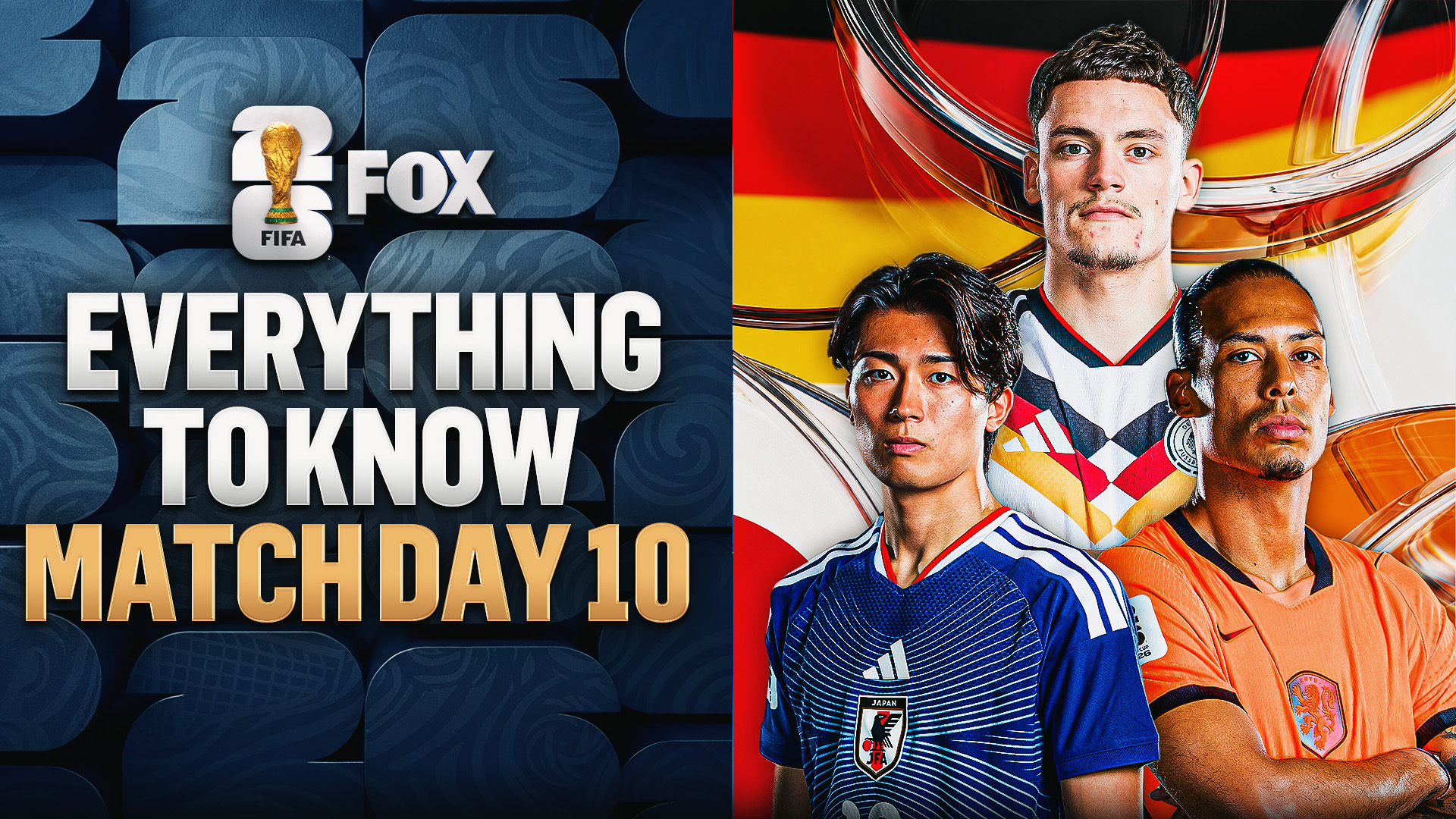
Germany, Netherlands, Japan Among Top World Cup Teams In Action On Match Day 10

The second round of the 2026 FIFA Men’s World Cup group stage games continues with a slate of intriguing matchups. In the opening game, the Netherlands will look for its first win of the World Cup when they take on a Sweden team that is surging under manager Graham Potter. The second game takes us to Toronto where Germany and Ivory Coast will each look for their second wins after strong openers. In the third game, Ecuador will take on tiny Curaçao in a game the South Americans need to win convincingly. Finally, Japan is fighting through new injuries but should still be the favorites over Tunisia, which is in disarray after firing its head coach after its opening round loss. When: Saturday, June 20, 1 p.m. ETWhere: HoustonTV: FOXStream: Watch three days free on FOX One In Group F, both the Netherlands and Sweden will be looking to take a step towards the knockout stages when they kick off Saturday’s action at Houston Stadium in Texas. Last year, Sweden struggled in World Cup qualifying, but the team has enjoyed a complete turnaround under manager Graham Potter. After making the playoffs via the Nations League, Potter’s team surged into the World Cup and then impressed with a 5-1 win over Tunisia in its opener. Potter’s approach has brought out the best in its top attackers. Viktor Gyokeres and Alexander Isak were in incredible form in the win over Tunisia as the Premier League duo ran at defenders and created a wave of chances. Brighton’s Yasin Ayari scored two goals and emerged as another point of attack. Sweden could be emerging as one of the surprising teams at this World Cup because the team’s complete turnaround in less than a year now has brought it to the point where it could make a run at this tournament. The Netherlands is always a difficult team to play in any major tournament. That is no exception at this World Cup, although the Dutch are surely disappointed in being held to a 2-2 draw with Japan after leading twice. But that is a running problem right with the Netherlands, who hasn’t kept a clean sheet in its last five matches. The biggest storyline in this game is Sweden’s elite Premier League attackers going against the Netherlands’ elite Premier League central defenders in Liverpool captain Virgil van Dijk and Jan Paul van Hecke, who completed a blockbuster transfer from Brighton & Hove Albion to Tottenham on Thursday for a fee of £52 million. The pressure is on the Netherlands to win this game and van Dijk and van Hecke will go a long way towards deciding that. The Liverpool forward was electric for Sweden in its opening 5-1 win over Tunisia. Isak scored a goal and added two assists as he routinely cut through Tunisia’s defense using his speed and skill. But going against the Dutch defense is the test of another level. If Isak can do that, Sweden might pull off a surprising result. He will know what he is up against as he will likely have several occasions when he has to go against his Liverpool teammate in Virgil van Dijk. When: Saturday, June 20, 4 p.m. ETWhere: TorontoTV: FOXStream: Watch three days free on FOX One In an enticing contest on Saturday, Germany and Ivory Coast meet up in Toronto after both teams won their respective openers.  The winner will gain full control of Group E heading into the group stage finale. Germany won its first game against Curaçao by a 7-1 margin to make it the widest margin of victory thus far in the tournament. A blowout win was expected but the highlight of the game came when Curaçao scored an equalizer in the 21st minute. The island nation was a sentimental favorite for many fans as it is the smallest country in area and population to ever play in the World Cup. As disappointed as Germany was to concede a goal, the 7-1 win was a deserved margin. After two shocking group stage exits at the 2018 and 2022 World Cups, Germany is looking to return to being an elite team at the tournament it has won four times. With the win over Curaçao, Germany passed Brazil to become the all-time top scorers in World Cup history, with 239 goals. This German team boasts a balanced attack with six different goalscorers in its win over Curaçao. The team’s unquestionable offensive leader is Kai Havertz, who is in great form with five goals and two assists in his last five games between Germany and his club, Arsenal. Ivory Coast turned in one of the most exciting wins so far at the World Cup when Amad Diallo scored in the 90th-minute to propel his team to a 1-0 victory over Ecuador in Philadelphia on Sunday. That was a significant accomplishment for the Ivory Coast, given that Ecuador conceded just five goals across 18 World Cup qualifiers to finish second in CONMEBOL’s single table format. But Ivory Coast is playing great soccer these days and just prior to the World Cup, Les Éléphants defeated Frances in Nantes 1-0 in a pre-tournament friendly. Ivory Coast has a lot of attacking options on top of Diallo. Nicolas Pepe is coming off a strong season for Villarreal, while Yan Diomande won the Bundesliga Rookie of the Year for his season with RB Leipzig. This week, the Ivory Coast had to deal with an off-field distraction when starting striker Elye Wahi was initially denied a visa to enter Canada due to being under investigation for alleged betting-related offenses. But he has reportedly received clearance to enter the country for the match. Wahi was reportedly arrested in France on this issue last month. Both teams will have a lot of motivation in this game as Germany looks to return to the World Cup knockouts while the Ivory Coast aims for a high-profile win that would show it is capable of making a deep run into July. Player to Watch Ivory Coast’s teenage winger is well known to German fans as he was one of the top young players in the Bundesliga this season with RB Leipzig. Known for his explosive speed, skillful dribbling, and his ability to finish with either foot, Diomande will be a handful for Germany to defend. He also brings with him a unique background that saw him move to Florida in the United States as a teenager. It was there he played for Yulee High School and joined the DIME academy, which is a private athletic training club in Daytona Beach. It is hard to believe that one of the game’s top teenagers was recently playing high school soccer. But now, he has a chance to go against one of the world’s most successful national teams. When: Saturday, June 20, 8 p.m. ETWhere: Kansas CityTV: FS1Stream: Watch three days free on FOX One As one of the best defensive teams in this tournament, Ecuador disappointed in its opening game when it hit the woodwork three times but could not score against the Ivory Coast. Then at the end, Ecuador conceded a goal in stoppage to suffer a 1-0 loss in a Philadelphia Stadium that was packed with Ecuadorian fans. In its second Group E game, Ecuador will be heavily favored against Curaçao on Saturday night at Kansas City Stadium. But a typical win will not just be enough, as the goal differential tiebreaker could decide where it finishes in the group or where it finishes in the ranking of third place teams. In this game, Ecuador will have to shift its priority from defense to offense. At age 36, Enner Valencia is Ecuador’s all-time leading scorer and remains the team’s top forward. Highly-rated teenage winger Kendry Páez is contracted to Chelsea but has gone on loans to Strasbourg and River Plate. He could find his way into the attack. Flamengo winger Gonzalo Plata is also expected to help Ecuador’s offense in this game. The smallest nation in area and population is simply happy to be at this tournament. Livano Comenencia’s goal against Germany, which briefly equalized the game, was one of the more heartwarming moments of the early part of this tournament. Player to Watch Enner Valencia: Ecuador’s all-time leading scorer is the player to watch in this game as the team needs to score early and often against Curaçao to secure three points and build up a positive goal differential. Valencia has earned 106 caps for Ecuador and his next goal will be his 50th international goal. That could very well come against Curaçao. When: Sunday, June 21, 12 a.m. ETWhere: MonterreyTV: FS1Stream: Watch three days free on FOX One One week into the tournament and Tunisia is a mess. After a strong World Cup qualifying campaign where it didn’t concede a single goal, Tunisia was routed by Sweden in its opener 5-1. The next day, Tunisia’s federation fired head coach Sabri Lamouchi and named Hervé Renard of France as his successor. Rennard must now lead Tunisia against a very good Japan team that drew the Netherlands 2-2 in its Group F opener. This game at Monterrey Stadium in Mexico will conclude Saturday’s action at the World Cup. Rennard has been known to pull off surprising success stories. He guided Zambia to the 2012 African Cup of Nations title. At the 2022 World Cup, he led Saudi Arabia to a shocking win over eventual champions Argentina. But now he must lead Tunisia against Japan on just five days of preparation. One of his decisions could be to adjust the goalkeeping position. Lamouchi made the stunning decision against Sweden to bench starting veteran Aymen Dahmen, who impressed at the 2022 World Cup in a 0-0 draw with Denmark, and replace him with the inexperienced Abdelmouhib Chamakh. Chamakh had a terrible game, and it seemed to destabilize the entire backline. But all eyes will be on Rennard because Tunisia is now both desperate and difficult to predict. Meanwhile, Japan fell behind twice to the Netherlands but found an equalizer each time in its 2-2 draw. It was a resilient performance for a Japanese team that fought hard for over 90 minutes with goals from Keito Nakamura, followed by a dramatic 88th minute header from Daichi Kamada following a corner. The big concern for Japan is the injury to Takefusa Kubo. The talented Real Sociedad midfielder is one of Japan’s most important players, but he was forced out of the game against the Netherlands in the 75th minute. Head coach Hajime Moriyasu will now have to make significant adjustments, which will likely mean moving fullback Ritsu Doan to the wing and then inserting Junya Ito into the lineup. Injuries have hit this Japanese team hard as Brighton’s Kaoru Mitoma and Liverpool’s Wataru Endo were ruled out shortly before the roster was named. Kubo would be another significant absence. Despite these absences, Japan should be considered the heavy favorite against Tunisia simply because of its stability. Player to Watch The left-sided attacker has had a lot of success for Japan with 11 goals from 26 caps dating back to his debut in 2023. Against the Netherlands, he scored his team’s first goal to even the game at 1-1. Japan is fighting through adversity due to injuries and the likely loss of Kubo will put a lot of responsibility on players such as Nakamura. But with Tunisia’s confidence shattered, he could have openings to do damage. Tunisia showed vulnerability against Sweden’s pacey players such as Alexander Isak. Nakamura might be able to find a similar level of success in this game.​Latest Sports News from FOX Sports

Categories
Sports Fox

4 Takeaways From Morocco’s Hard-Fought Win vs. Scotland And The Tartan Army

Morocco got the job done in Boston. Scotland’s Tartan Army won everything else. Morocco didn’t dazzle. It didn’t need to. In the teams’ second match of the 2026 World Cup on Friday, a 1-0 win over Scotland at Boston Stadium — settled inside 71 seconds and fiercely defended afterward — moved Mohamed Ouahbi’s side to the top of Group C. This left Scotland in third place with a match against Brazil up next on Wednesday. Here are my takeaways: 1. Morocco Suffered. Morocco Won. That’s The Point. This wasn’t the swaggering Morocco that bullied Brazil for 45 minutes last week. This was the other kind of good team — the kind that scores early, rides its luck and refuses to break. The Atlas Lions blitzed Scotland from the whistle, then spent the second half inviting pressure they had no need to invite. Yassine Bounou was barely worked, but the back line creaked, the lead never felt safe, and a sharper Scotland might have made Morocco pay. It didn’t. And that’s the point. One point ahead of Scotland, Morocco tops the group with the knockout stage math firmly in its own hands — all under a rookie coach at his first senior tournament. Ugly wins are still wins. The successful sides learn to love them. 2. Ismael Saibari Is The Breakout Of This World Cup Two games, two goals, two of the finest finishes of the tournament. Remember the name — though you’ve had 71 seconds to learn it. The PSV man opened against Brazil with a screamer. He topped it against Scotland: collecting Brahim Díaz’s pass, selling Angus Gunn a cross that never came, then ripping it into the top corner. Fastest goal of this World Cup. Fastest in Morocco’s World Cup history. He’s done it twice now, both teed up by Brahim Díaz — a partnership defenses haven’t started to solve. Biggest breakout of the tournament so far? You could definitely make the argument. Saibari is stringing the stunners together. He’s ruthless and always arrives half a second before the defender. Morocco is creating a new household name at this tournament. 3. Scotland Lost The Battle That Mattered Most: The Midfield Steve Clarke rolled the dice — Kieran Tierney, Nathan Patterson and Ryan Christie all put in, Che Adams left alone up top, Scott McTominay and Lewis Ferguson were tasked with holding the midfield — and watched that midfield cave anyway. That’s the story of the match. Morocco’s Neil El Aynaoui and Ayyoub Bouaddi were tough to beat in the center, Ounahi drifted into the gaps, and Scotland was outnumbered, out-passed and pinned back. The 71-second gut-punch didn’t help, but the deeper problem was the control they never had. They were braver after the break — and they’ll rue the moment that came with it. Scott McGinn tumbled under El Aynaoui’s challenge in the box. With the Tartan Army howling, the referee and VAR decided not to award a foul. A penalty there, and it’s a different night. Fine margins. Scotland ended up on the wrong side of all of them. The dream remains intact thanks to that narrow 1-0 win over Haiti, but the stiffest test now awaits in Miami against Brazil. 4. The Tartan Army Just Annexed Boston Scotland may have lost the match. Its supporters lost nothing. An estimated 40,000-plus people made the trip — kilts, bagpipes and vibes all cleared by FIFA — turning Boston into one long ceilidh. They drank the bars dry. They sang “Flower of Scotland” at Fenway. They rode the City Hall Plaza slide. One local, on Reddit, surrendered early: “I, for one, welcome our new kilted overlords.” The city surrendered officially, too. Boston and Glasgow announced a sister-city partnership, and the mayor thanked the Tartan Army by name. For 28 years, they waited to follow this team to a World Cup. Twenty-eight years — and they’ve treated every minute like a festival. The result in Foxborough stings. The trip won’t. Nobody does this quite like them. Their appearance alone has been one of the most feel-good takeaways from this tournament.​Latest Sports News from FOX Sports

Categories
Sports Fox

Every Stat That Will Make You Believe In The USA After Win vs. Australia

Zlatan Ibrahimović was ready to tell fans of the U.S. men’s national team that it was time to believe following its 4-1 win over Paraguay to open the 2026 FIFA World Cup. He’s doubling down on that stance following the USA’s 2-0 win over Australia on Friday. Following the USA’s second victory in Group D, Ibrahimović proclaimed that the Stars and Stripes can win the World Cup as they advanced to the round of 32. “They had a good performance today. [U.S. manager Mauricio] Pochettino did good putting two strikers [in the lineup],” Ibrahimović said. “If you didn’t believe before, I will repeat: Start believing. They have the country behind them, and when you have this support, it’s difficult to beat you. They just need to continue, bring confidence game to game.” Thierry Henry co-signed that sentiment, praising Pochettino’s approach. “Mauricio Pochettino said, ‘If you want to win the competition.’ Before, he would’ve said, ‘How far can we go?’ He said, ‘If you want to win the competition,'” Henry said, believing it shows a positive change of mindset. “Things have changed.” Pochettino’s tactics and confidence have helped the USA move just a point away from securing first place in Group D. If Paraguay wins or draws against Türkiye later on Friday, or if the USA wins or draws against Türkiye on Thursday, the USA will win the group. But are Ibrahimović and Henry correct in their assessments that the USA can make a deep run in the World Cup? Here are some stats to help make you believe. 2: The USA won two straight men’s World Cup matches for the second time and the first since its first two matches ever in the tournament in 1930. 2: This is also just the second time the U.S. has won two group stage matches in a single World Cup (1930). 2: The USA became the first team in World Cup history to benefit from an own goal in two consecutive matches. 2: This was the first time in the modern era (since 1990) that USA has benefited from an own goal in consecutive games (all competitions). There have also already been seven own goals scored at the 2026 World Cup; only the 2018 edition has seen more scored (12). 15: USA is the second World Cup host nation to score a goal in the opening 15 minutes of each of its first two matches of that year’s competition, joining France in 1938 (per OPTA). The own goal, which came off a cross from USA striker Florian Balogun, came in the 11th minute. 6: The six goals the USA has scored in this group stage are already tied for the most the team has scored in a group stage in a World Cup ever (six in 1930). 2: Friday was the first time the U.S. has led by multiple goals in consecutive World Cup matches since 1930 and just the fourth time ever. 7: USA improves to 7-0-0 (W-D-L) all-time when playing in Seattle Stadium. The USA is now 10-1-1 (W-D-L) at all venues in Seattle, with the only loss coming vs. USSR in a 1979 friendly in the Kingdome. If the USA wins Group D, it will play at Seattle Stadium if it advances to the round of 16. 11: One key to victory for the USA? Score first. The USA improved to 11-2-1 (W-D-L) all-time at the World Cup when scoring first, and 10-2-1 (W-D-L) all-time at the World Cup when leading at half. 3: USA improves to 2-1-1 (W-D-L) all-time at the World Cup against AFC opponents; USA improves to 3-1-1 (W-D-L) against Australia. 44: Star midfielder Christian Pulisic didn’t play in Friday’s win. The U.S. is now 44-16-15 (W-D-L) when he does not play and 45-16-26 (W-D-L) when he does play. 3: Alex Freeman scored his third career international goal and first at a World Cup. 16: U.S. men’s national team manager Mauricio Pochettino improves to 16-2-10 (W-D-L) since taking over in September 2024. 8: The USA’s last eight men’s World Cup goals (excluding own goals) have been scored by players younger than 25 years old, equaling the longest such streak in World Cup history (Poland, eight straight between 1938 and 1974) (per OPTA). 97.8: Chris Richards has completed 97.8% of his passes at the FIFA World Cup (175/179); that is the second-best accuracy by a player in their first two appearances on record since 1966 (min. 100 passes), behind Gheorghe Popescu in 1994 (122/124 – 98.4%, per OPTA). 18: Weston McKennie had the most chances created (three) and the most passes ending in the final third (18) against Australia.​Latest Sports News from FOX Sports

Categories
Sports Fox

USA Round Of 32 Opponent: Who Could USA Face At The 2026 FIFA World Cup?

The U.S. men’s national team is moving on to the knockout stage of the 2026 FIFA World Cup, but who will it face in the round of 32? Well, that’s far from certain following the USA’s 2-0 victory over Australia on Friday. Where the USA finishes in Group D will play a large role in determining who it’ll go up against in the first match of the knockout stage. If the USA wins Group D, it’ll face the third-place team from either Group B, E, F, I or J. If the USA finishes second in Group D, it’ll face the team that finishes in second place in Group G. Here’s more on each possible scenario for the Stars and Stripes after they clinched their spot in the knockout stage. If USA Wins Group D In the scenario that the USA secures first place in its group, it’ll play its round of 32 match on July 1 at San Francisco Bay Area Stadium. As of Friday, there are still 20 teams the USA could potentially face in this scenario. Here are those 20 teams: Here is the USA’s path to the final if it ends up winning Group D: If USA Finishes Second In Group D If the USA finishes second in Group D, it’ll take on the second-place finisher in Group G at Dallas Stadium on July 3. After one match, all four teams in Group G have one point. Belgium, Egypt, Iran and New Zealand would be the USA’s potential opponents in this scenario. Here is the USA’s path to the final if it finishes second in Group D:​Latest Sports News from FOX Sports