Categories
Sports Fox

After A Heartbreaking Defeat, What Comes Next For Messi And Argentina?

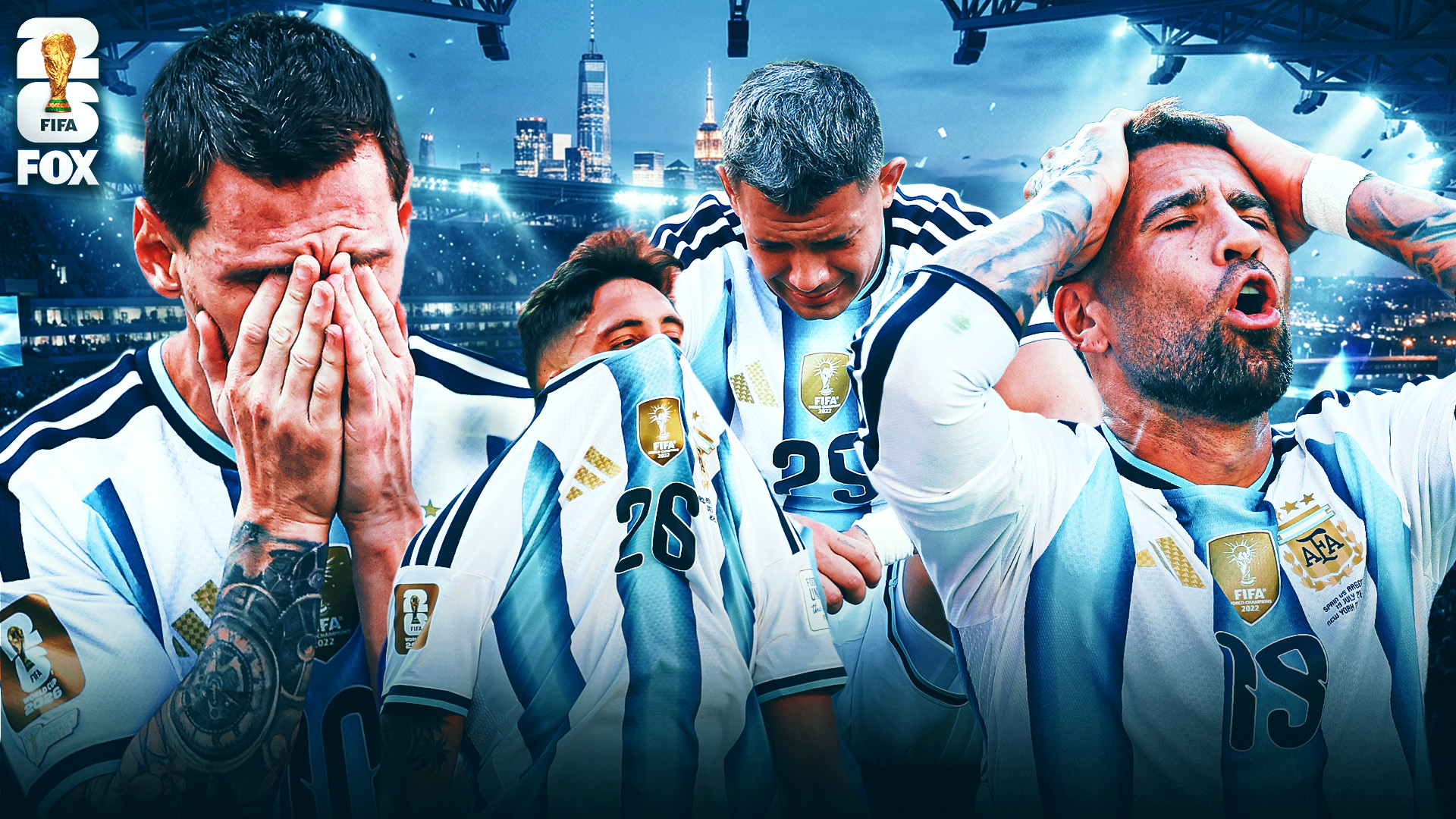
NEW YORK NEW JERSEY STADIUM – After what seemed like every player from Spain came over to shake his hand, Lionel Messi sat alone on the pitch. Argentina’s superstar took off his cleats and shinguards and plopped his legs out in front of him, leaning back on his arms. As FIFA volunteers assembled the stage for the trophy presentation, one of them waved in his direction. Messi looked past him, instead scanning the stands for his family. Spain had just defeated defending champion Argentina 1-0 to win its second-ever World Cup behind a goal from Ferran Torres in the second half of extra time. Messi and his La Albiceleste had arrived in pursuit of history, hoping to become the first nation since Pelé’s Brazil to successfully win a second consecutive World Cup title. No such luck. Argentina finished with zero shots on goal. Spain had 12 and one went in. “We’re sad,” Argentine manager Lionel Scaloni said in his press conference after the match. “We feel extremely grateful to all our fans, all those people who just needed that energy that we were lacking. We managed to go all the way to the end when the match was so open, and it just couldn’t be. In the end, they deserved the victory. That’s reality. We need to accept it. “But these are the moments to bounce back stronger. We need to reset and start again.” Argentina’s reign is officially over. It entered this summer on an unprecedented high as the two-time defending Copa América champion, having won the tournament in 2021 and 2024 with the 2022 World Cup sandwiched in between. It was also Argentina’s third World Cup final appearance in the last four editions. For Messi, there was an added layer of symbolism as he spent much of his life in Spain, where he became a global icon playing for Barcelona. So, will this be the last time the soccer world sees Messi on its biggest stage? Who knows. Regardless of what he decides, the 39-year-old defied age over the past 39 days. He opened the tournament with a hat trick in Argentina’s 3-0 victory over Algeria, scored a stunning equalizer in the round of 16 against Egypt and delivered two defense-splitting assists in the semifinal against England. He finished with eight goals and four assists, narrowly missing out on the Golden Boot after France’s Kylian Mbappé scored twice in Saturday’s third-place match to finish with 10. Sunday was different. With Spain controlling possession for long stretches, Argentina was chasing rather than dictating and Messi didn’t have opportunities to influence things the way he had throughout the tournament. An already exhausted La Albiceleste was forced to play with 10 men for more than 30 minutes after Enzo Fernández was shown a red card just before extra time. Goalkeeper Emiliano Martínez, the 2022 Golden Glove winner, had to make a World Cup final-record 11 saves with a broken finger just to keep La Roja at bay. “I do have to be thankful for this group because they were warriors and that is the truth,” Scaloni said. After the game, Scaloni was asked repeatedly about Messi’s future. “It’s crystal clear to me that he will play up until he decides not to,” said Scaloni, who had not yet spoken with Messi before addressing the media. “I hope everyone is proud of what he’s achieved because he’s the best football player ever to step foot on a pitch. I have no doubts about this. What he did this World Cup is incredible.” As the trophy presentation stage came together, Messi rose from the turf and led his teammates to the left side of the pitch where Spain’s players were celebrating. He didn’t appear to say a word. Instead, he stood quietly, taking it all in. His hands rested behind his back, the captain’s armband still wrapped tightly around his left biceps. Every so often, a photographer stepped in front of him, capturing another image that would soon be seen around the world. There was criticism, mostly throughout the knockout stage, that FIFA wanted Argentina to keep advancing. In reality, no matter what Egypt or England fans might say, Argentina was a resilient team. Time and again, they’d find themselves trailing only to respond with remarkable late comebacks. They embraced the suffering and the chaos and just knew they’d find a way to win. In the end, only Spain – the most complete squad in the entire 48-team field who only conceded one goal the entire tournament – could stop them. La Roja are now unbeaten in 38 consecutive matches. “It really hurt in our soul not being able to take the trophy with us,” Scaloni said. “But we feel so proud of having competed like this. We could have been in better shape towards the end. But still, even so, we were very close to competing and making it and we’re so proud of our players. And that’s all we can ask for is Argentina players to give it their all until the end and that’s what they did.” Scaloni, whose contract as manager expires in December, said he “cried my heart out in the locker room” and grew visibly emotional again toward the end of his press conference while talking about the success he’s experienced in this job, a post he’s held since 2018. “I never in my life would have thought, bear with me,” Scaloni said, pausing to compose himself. “I never could have imagined that we would be in this place. In order to continue, you need a great deal of things, especially resetting your mind, rebooting, creating a group like this again. “That is very difficult. It’s really painful.” Messi took a deep breath and guided his team through a tunnel of Spain players onto the presentation stage where FIFA president Gianni Infantino and President Donald Trump placed silver medals around their necks. Argentina then walked past the World Cup trophy that they hoisted four years ago, across the stage and over to the south end of the stadium where thousands of devoted supporters draped in blue and white were still chanting and singing. The video board zoomed in on Messi’s face, tears welled in his eyes. After a while, he led the team off the field and through the tunnel. Perhaps for the last time.​Latest Sports News from FOX Sports

Categories
Sports Fox

How Spain’s World Cup Title Channeled The ‘Power’ Of Its People

NEW YORK NEW JERSEY STADIUM — After Spain’s support staff had laid out the game plan, explained the tactics, told the players how they would best position themselves to make this Sunday one they’d never want to forget as opposed to one they’d never be able to, coach Luis de la Fuente addressed his team. “Gentlemen, we have an appointment with history,” the 65-year-old manager told his players before extra time began. “We want to be there first, and then in the extra time, I just said, ‘Look, we are doing a great job. The match is controlled, but this is a final, and we are up against Argentina. So, if we are not careful, we might concede a goal. And we kept our focus up until the last minute.’” As a result, Spain is the World Cup champion. For 120 minutes under the midday sun, La Roja were the better team. In some ways, they were the only team, holding Argentina — the 2022 winners — without an attempt at goal for all of regular time and extra time, and then scoring on their 20th shot, when Ferran Torres finally beat Albiceleste keeper Emiliano Martínez. Yet heading into the additional half-hour following a scoreless tie, and with the possibility of penalties looming, the game was still anyone’s to win. And the other side still had Lionel Messi, the architect of Argentina’s late two-goal comeback victory over England in last week’s semis. “The first idea was to keep Messi at bay, but also the other players,” de la Fuente said. “We wanted to keep them away from our goal.” Did they ever. But they still had to finish the job. They needed a hero to do it. On a team full of bigger names — teenage sensation Lamine Yamal, former Ballon d’Or winner Rodri — Torres stepped up and became immortal, joining 2010 icon Andrés Iniesta in Spanish lore as a World Cup-winning goalscorer. “I didn’t think too much,” Torres said afterward. “I saw the ball coming to me, and I shot it with the power of all the Spanish people.” “I’m so happy for him to have scored this goal,” de la Fuente added. “He will make it into history. He has already made history, and he deserves it.” The breakout game many suspected Yamal might have in this final never materialized. The Barcelona ace, who turned 19 during the tournament, had a quiet World Cup, though he came close to scoring on a late free kick on Sunday, only for Martínez to snare it. No matter. Yamal is still a world champion in his first appearance on soccer’s grandest stage. And while his efforts only resulted in one goal over La Roja’s eight games en route to glory, his contributions didn’t go unnoticed by his teammates. “I would like to express my sincere gratitude for his play,” the coach said of Yamal. “This [World Cup] will help him to mature and be even better in the future. He’s really sacrificed for the greater good, and this is very important in our sport.” So is winning — especially at this level. De la Fuente, who began his post-game press conference by thanking God for Spain’s triumph, never wavered from his belief that his players would come out on top. “Today, we were convinced that this was our final,” he said. “I think it was a very complete game. If it wasn’t for the keeper, maybe we would have had a larger margin, a larger win.” He’ll take it. All of Spain will. It’s just the second World Cup title for the country despite its dominance of Europe at club level, though La Roja has been doing lots of celebrating since de la Fuente took charge in 2022. They’ve now claimed three titles since then, winning the UEFA Nations League in 2023 and the European Championship two years ago. Now they’ve capped it with the biggest prize of all. “We’ve won everything, in all the categories, and we came to the conclusion [today],” de la Fuente said. “Once we finished the game, one of the players who’s been here the longest, said, ‘Coach, now what else is there to win?’”​Latest Sports News from FOX Sports

Categories
Sports Fox

A Sword Behind Every Pass: Spain’s Plan To Stifle Messi Came Down To Precision

NEW YORK NEW JERSEY STADIUM – In Sun Tzu’s The Art of War, one of the biggest takeaways is how success needs to be determined even before you enter battle. In war, the key assets of preparation will always outdo any reactionary tactics, because knowing the entire blueprint doesn’t just make you better prepared, it makes you omnipotent. To win is to also know about timing. To be perfectly engaged in knowing when – and how – to engage so when the actual battle comes, you have already designed your own outcome. Victory, therefore, is not about perfection, but perfect planning. And this is how I see Luis de La Fuente’s Spain side, a team so perfect in its planning that to defeat it – even with the greatest player on your side – is almost an impossible task. In essence, Spain already knows what you want to do before you even do it. And that’s what Sunday’s World Cup final and this entire tournament showed us with this magnificent team. A Spanish side that knows you better than you know yourself. It’s why La Roja came out victorious with a 1-0 result against Lionel Messi’s Argentina thanks to a 106th-minute winner from Barcelona’s Ferran Torres. Spain stifled any hopes for Argentina and its chances of a title defense and claiming its second World Cup trophy since 2010. Spain also broke a record for 38 matches without losing a game, surpassing Italy. It was also Spain’s seventh clean sheet of this World Cup, becoming the first men’s team in World Cup history to win while only conceding one goal. Sun Tzu also tells us about winning without the need for conflict. In Spain’s case, this is done by possession and recovery of. The victors had nearly 70% possession and 762 passes. Argentina didn’t break 400. It also failed to register a single shot on target. But the most impressive part of Spain’s game plan is that it suffocates you. It is the Darth Vader of football where you, the opponent, float in the air, lost and devoid of oxygen. Spain loses the ball and, like a piranha addicted to the scent of blood, rapidly swims to get it. It happened throughout the afternoon against Argentina. Lionel Scaloni didn’t have a solution and neither did his players as they continued to become more frustrated, hence Enzo Fernández’s red card and Leandro Paredes’s antics. And Messi? He was a mortal today. He barely mattered. And I want you to know this is a difficult thing for me to say – because I admire the man more than you’ll ever know. And to watch him weep at the end of the game, knowing this is his curtain call at the World Cup, pains me to my very core. But he had no chance today. Nobody on Argentina did. Spain is a monster. No, actually. I take it back. It is an android army, hidden inside a Picasso painting. Its spine is a wonderful dichotomy of youth and experience. From the magnificent Pau Cubarsí who, just like Lamine Yamal, is 19 years old, to the Golden Ball winner Rodri who simply rolled back the years in the tournament. The Manchester City midfielder, who won the Ballon d’Or in 2024, needed time to find his way after his ACL injury. And my goodness did he. Rodri didn’t score a goal at the World Cup, but that’s not what his game is about. He is the general who commands the midfield with grace, control and tenacity. He became the 11th man to win the World Cup, the Champions League and the aforementioned Ballon d’Or. I was at the final at New York New Jersey Stadium. I saw a very energetic Argentinian fanbase looking to do everything in its power to encourage its team to victory. But minute by minute, they realized what we were all seeing, which was a Spanish side which was breaking away their spirit. And what about de la Fuente? A man who loves quotes and historical references just as much as me. Let me tell you about him. This is a man who comes from Spain’s proud Basque Country, who fully believes in grassroots football and needs his teams to represent the people, the community, the culture of the nation. He won the U-19 and U-20 Euros before taking over the senior side and once he took the helm, he brought this philosophy with him. It is a full belief in youth culture too, as most of these players who have just won the World Cup have been with him from the very beginning. “I come from a grassroots background,” he once said before winning the Euros in 2024. “Our commitment, to the people we trust in the youth system, is not a pose, it is a conviction.” And you see it in this team, which is just a representation of Spanish football. Again, watching them play live is a joy to behold. It passes the ball with ultimate accuracy, but what makes it different from any other side — and I would say Pep Guardiola’s Barcelona or Vicente Del Bosque’s 2010 World Cup winning team — is that this side does it with that word again: conviction. There is a sword behind every pass. A will and an intent. Argentina, frustrated, angry and lost without an idea, could not handle it. Marc Cucurella, for example, was outstanding in this tournament, including Sunday. So was Pedro Porro. Yamal, who wasn’t even that strong today when comparing it to his own standards, was excellent off the ball. And this is Spain – an army of one who makes you look very weak and fully represents my final quote from Sun Tzu: “Opportunities multiply as they are seized.” That’s España. A team who loses an option and immediately creates another. And with a thousand cuts, it turns you into confetti, including the one and only Lionel Messi. There was never a better team than Spain at this World Cup. It wasn’t even close. But just like Picasso’s Guernica – it requires a closer, deeper sense of understanding to fully appreciate its complete grandeur.​Latest Sports News from FOX Sports

Categories
Sports Fox

Way-Too-Early Look At 30 Players We Want At The 2030 World Cup

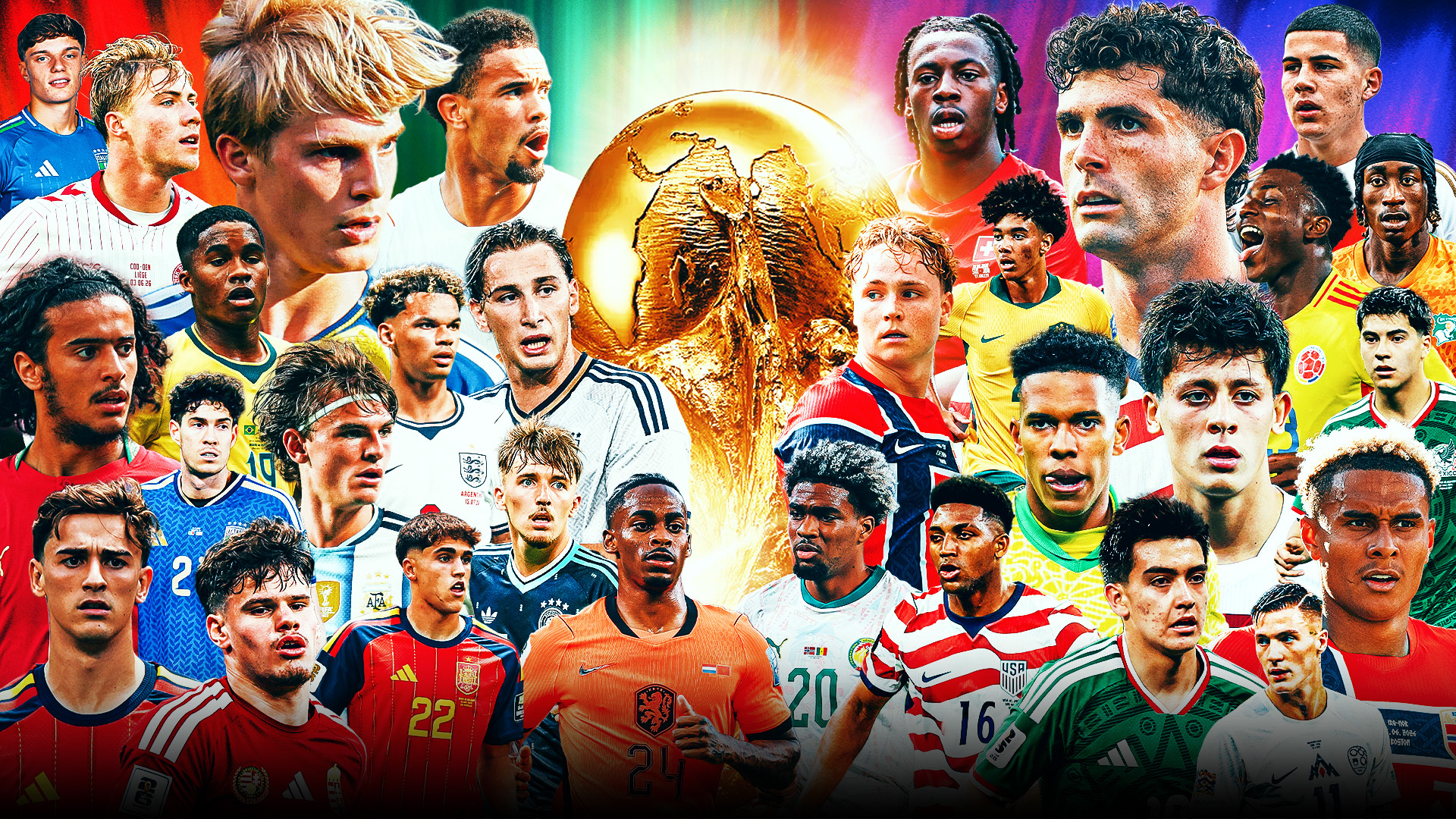
In four years, we’ll be celebrating another edition of the World Cup. We’ll be transfixed on a competition that will span six countries across three continents with possibly 64 teams taking part in sport’s greatest spectacle. More than likely, we’ll be seeing the likes of France’s Kylian Mbappé, England’s Jude Bellingham, Norway’s Erling Haaland, Spain’s Lamine Yamal and many other names who kept us enthralled this summer. We’ll likely not have Lionel Messi or Cristiano Ronaldo in the spotlight, but you can’t count anything out, especially when it comes to the GOAT conversation. It’s never too early to think about which players — whether they already feature in 2026 or are part of teams (e.g. Italy) that should make the cut — in four years’ time. In no particular order, let’s look at who we’ll be keeping tabs on in the run-up to the 2030 World Cup. Sciaretta: It was a World Cup to forget for Pulisic. In fact, 2026 has been brutal for the Hershey, Pennsylvania, native. But it is silly to think that Pulisic is going anywhere. He will be 31 at the next World Cup, and the U.S. team will be looking for the veteran leadership it lacked this time around. It would not be surprising at all if Pulisic turns it around in 2030, like Landon Donovan did in 2010 after a terrible 2006 tournament. Echegaray: It is extremely difficult to single out anyone from this Spanish side. From Lamine Yamal to Pedri, this is a force of nature and full of youthful dynamic talent. But let me focus on Gavi because, despite not being one of the more obvious names to point out from this tournament, I think he will continue to become one of Spain’s most important players. Spain, more than possession, is about recovery of possession, and Rodri is untouchable in this regard. But at 30 years old, there will be a need for a replacement. Gavi, who follows in the footsteps of his Spanish teammate, will grow into that. Bonetti: After winning the Scudetto with Inter Milan, he skied Italy’s first penalty in the playoff shootout against Bosnia and Herzegovina as Italy made it three World Cups without an appearance. He watched this summer from his couch, but by 2030, he’s the redemption story Italy builds around. Echegaray: O’Reilly was magnificent for the Three Lions at this World Cup before losing to Argentina. The fullback/midfielder is versatile, wise beyond his years and already playing at one of the biggest clubs on the planet. So when it comes to mentality and the ability to face any type of opponent? Been there, done that. The fact that he is only 21 is, honestly, too difficult to comprehend because he plays like a veteran at the international level. He will continue to improve and become one of the best players of his position in the world. Of that, I have no doubt. Sciaretta: The teenage Barcelona central defender has had a remarkable year, 31 starts for Barcelona en route to a La Liga title. Now, he’s part of Spain’s elite defense. What he’s doing at this level, at this age and at this position, is remarkable. In 2030, we could be talking about maybe the greatest defender in the game. Bonetti: A Champions League revelation for Real Madrid, who then sobbed through Türkiye’s three-game flameout this summer. Sixty-two shots, zero goals, one apology. José Mourinho’s return to Madrid and whoever is in charge of Türkiye at the 2030 World Cup owe him better. Echegaray: Summerville’s next move this summer will dictate the next few years of his immense potential as he was a key player for the Netherlands at this World Cup. By 2030, he will be in his prime and if the Dutch indeed can finally become a major contender for the tournament, Summerville should play a major role. It all depends on where he will go this summer as West Ham, now in the Championship, knows it has to sell its star. Sciaretta: One year ago, Freeman was only in his first season as a starter for Orlando City. Now, he’s in La Liga and the starter for the U.S. national team. The highly athletic defender has enjoyed a meteoric rise and should be part of the next generation of American players. Bonetti: He was benched for the loss to England in the quarterfinal, then nearly won it coming off of it. Aston Villa is circling at a £43 million move. Norway’s succession plan starts on his left wing. Echegaray: Mora was very impressive in Mexico’s inspiring campaign at the World Cup. At 17, it was incredibly fun to see the young man compete at the highest level and not only did he not look out of place, he showed glimpses of his raw abilities. A move to Europe is almost imperative, but it has to be the right club and the correct timing. One thing is for sure, his path and the chance of becoming a major star for El Tri in 2030 is a major possibility. Bonetti: The heir to Virgil Van Dijk’s throne at Anfield. It wasn’t the best of seasons as he tore his ACL 81 minutes into his Liverpool debut and missed everything, including Italy’s latest playoff funeral. A 6-foot-5 star in the making rebuilt in the gym. Sciaretta: Bouaddi has already shown a ton of class for an 18-year-old central midfielder. It is clear he is going to be sold by Lille for a lot of money sooner than later. Echegaray: The 20-year-old did not feature much during France’s campaign. But that particular cameo against Morocco was impressive, and I feel there’s so much more to come from the midfielder. Something also tells me that he won’t stay at Paris Saint-Germain much longer as he will need another club in order to find more playing time. By 2030, he could be ready just in time to become a major force for Les Bleus. Bonetti: Serie A’s most elegant left foot earned an hour against Jordan and looked like he belonged. Real Madrid holds the buyback. He inherits whatever Lionel Messi leaves behind. Sciaretta: Hungary’s exciting left back is fun to watch at Liverpool. He loves to get forward and plays with a lot of intensity. The question is whether Hungary can get to the World Cup. There is always plenty of room for upsets these days in an expanded World Cup. Echegaray: Mbaye is a tremendous talent but needs to leave Paris Saint-Germain in order to find a brighter role. Selfishly, I would adore him for Aston Villa as I feel Unai Emery could turn him into a superstar. But there are many clubs interested in his services, including Borussia Dortmund, which is reportedly inquiring about him for the upcoming season. For Senegal, it’s clear to see that he’s a special talent, as that wonderful stoppage-time goal against France showed, making him the youngest African male player to get on the scoresheet at the World Cup. Mbaye is a gem, and I can’t wait to see what happens next. Sciaretta: The 20-year-old central midfielder from Alaska did not play much this World Cup, but he is a big part of the Mexican team’s future. His transfer from Seattle to Atlético Madrid has gone smoothly, and he will continue to progress in Spain. Bonetti: Remember the name now. Bundesliga Rookie of the Season, man of the match in his World Cup debut at 19. Only Lamine Yamal outproduced him among Europe’s teenagers. Excellent one-on-one dribbler. Seems to be bound for Paris Saint-Germain, where he could really shine. Sciaretta: Italy’s failure to qualify for the last three World Cups is one of the most baffling stories in the history of the tournament. Even in the Azzurri’s last two appearances (2010 and 2014), the team was grouped. If Italy returns in 2030, all eyes will be on the team as it tries to revive one of the World Cup’s most historically important teams. Bastoni should be front and center of Italy’s efforts in the coming years as he is one of the best central defenders in the world. Bonetti: One heavy touch against Norway on the breakaway is the sad memory he leaves behind in his first World Cup of his career. Eight goals in half a season at Lyon says the talent’s real after a rocky start at Real Madrid. Age is on his side. José Mourinho decides what’s next for him at the Bernabeu. Echegaray: There is definite personal interest and hope from yours truly, but it doesn’t come without context. Pippo Chavez is a promising attacking midfielder, and at 18, the sky is the limit, especially under the guidance of Bayern Munich and playing in a great, nurturing league such as the Bundesliga. Born in Germany to a German mother and Peruvian father, Chavez switched allegiance to Peru back in 2023 and made his senior debut last October in a 2-1 loss against Chile. My hope here is that a.) Peru gets its act together and improves significantly in the next four years whilst b.) Chavez keeps evolving, thus helping La Blanquirroja finally reach a second World Cup in 48 years. Sciaretta: The Danish forward is coming off a great first season in Napoli with 12 goals in 33 Serie A games. He was at the club on loan from Manchester United, and to keep him, Napoli spent nearly $52 million. The 23-year-old forward from Copenhagen also has 13 goals in 35 caps for Denmark. With Højlund in his prime, Denmark should get back to the World Cup and potentially be very good. Echegaray: Karl was sadly another player who suffered an injury in the lead up to the World Cup, but he is an incredible talent who will surely be a very crucial factor towards helping Germany get over a disappointing run in the tournament. If Jürgen Klopp indeed becomes the next manager, I think the Bayern Munich left-footed forward could be a major force in the next few years. Bonetti: Another reason why the future is bright for Norway. He took Antonio Nusa’s starting spot, scored the opener against England, set up both of Erling Haaland’s goals against Brazil. Super-sub no more. A Premier League move feels like a formality. Echegaray: This is definitely a “watch this space” selection. I have high hopes for the Colombian striker, who ended as top goalscorer in last year’s U-20 World Cup as Colombia finished in third place. He recently joined Cruzeiro in Brazil, but I see him leaving next year for Europe. After that? Who knows, but as Colombia’s options upfront are only getting older, Villarreal could be the next man to lead the line. Sciaretta: The Manchester United striker took awhile to heat up for the Red Devils in his first season but was in solid form by the end. Prior to that, he was a star for RB Leipzig in Germany. Slovenia is a tough national team to figure out. It struggled in qualifying but was surprisingly good at Euro 2024. But with continued progress, Slovenia can qualify and Sesko can lead the way. If that happens, he’ll be a highly anticipated player in 2030. Echegaray: The 19-year-old sensation sadly missed this World Cup due to a torn hamstring back in April. But the winger will undoubtedly return, as Brazil once again aims to qualify for the 2030 edition and win the coveted trophy, which by then will be a 28-year drought. It will need more pizzazz and the rebirth of joga bonito. Estevao — who, back in September against Chile, became the youngest Brazilian to score for the national team since Pelé — can be the spark that’s sorely needed. Bonetti: Sweden’s playoff-crashing run ended with France’s 3-0 knockout hammer, but the 20-year-old midfielder belonged. Four more years of Premier League seasoning will make him Scandinavia’s metronome in 2030. Sciaretta: Harrington had a tough ending to his 2026 World Cup when he missed his penalty in Australia’s shootout loss to Egypt. But the 18-year-old central defender was impressive as the youngest starter ever for Australia at the World Cup. He looks mature beyond his years and has had a breakout season with the Colorado Rapids, which will likely sell him soon as interest in Harrington is very high.​Latest Sports News from FOX Sports
Categories
Sports Fox

Spain Is The Last World Cup Team That Knows Exactly Who It Is — And How To Win

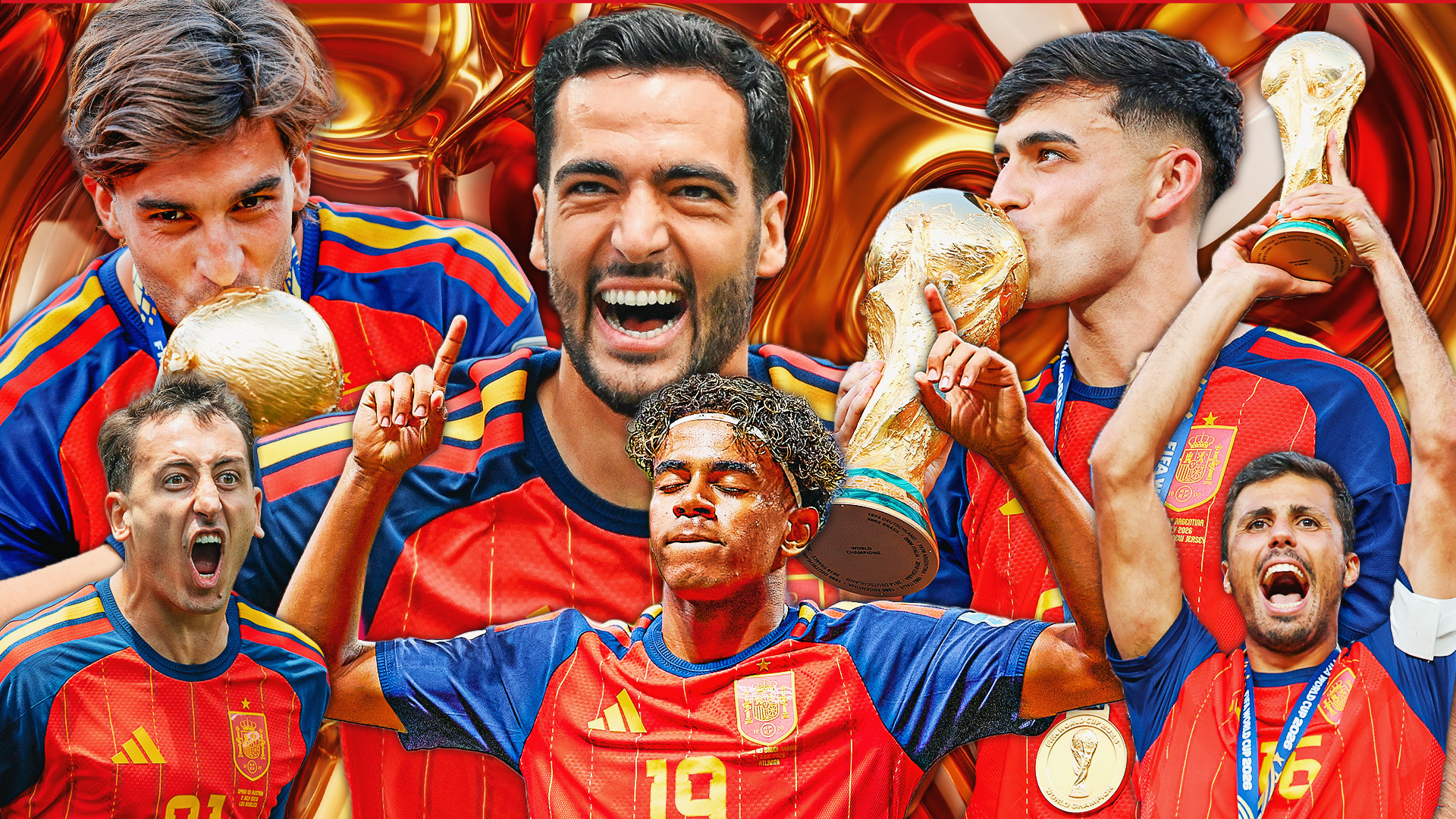
El Fútbol won on Sunday. Spain beat Argentina, 1-0, in New Jersey to win its second World Cup, and the scoreline is the least descriptive stat of the night. Try this one instead: the defending champions, with Lionel Messi on the field for 120 minutes, did not register a single shot on goal. Not one. Spain had 65 percent of the ball, took 20 shots, made Emiliano Martínez produce a World Cup final record 11 saves, and when Ferran Torres swept in Nico Williams’ header across the box in the 106th minute, it wasn’t a breakthrough. It was the inevitable finally coming to fruition. This was total domination disguised as a tight final if you only look at the score. Spain finished the tournament unbeaten, conceded one goal in eight matches and suffocated the best attacking players on earth — France, then Argentina — in consecutive games. La Roja pass you to death, sure. But they also press you into panic the instant they lose the ball, and they defend with an organization that borders on choreography. This is a complete team. And more importantly, it is a completely legible team. Which raises the question worth mulling over: why is Spain the one nation you can identify instantly by its playing style? Because we live in soccer’s most unified era. Globalization has sanded down national styles. Brazilian kids grow up in European academies. Every federation hires the same journeymen. Turn on a random international match, and you’ll see the same shape, the same buildup patterns, the same borrowed ideas. This summer, we saw Brazil playing Italian catenaccio, while Japan brought the beauty. Imagine predicting that decades ago. National identity in this sport is mostly a nostalgia act now. Except in Spain, where it’s a curriculum. Walk into almost any Spanish academy, and you’ll find 8-year-olds playing rondos before they’re old enough to spell “tactics.” The keep-away circles look like warm-up games. They’re actually the entire national philosophy in miniature: receive on the half-turn, know your next pass before the ball arrives, make the field a geometry problem the opponent can’t solve. Positional play isn’t taught in Spain as a system. It’s taught as a language, the way kids elsewhere learn multiplication tables. And the pressing is drilled just as young. The moment possession is lost, the nearest players swarm to win it back. The academy gospel says the ball is the whole point, and living without it is unacceptable. Then the federation does the part almost nobody else does. Every Spanish youth national team, from the U-15s up, plays the same way. Same principles, same patterns, same demands. By the time players reach the senior side, they’ve been rehearsing this exact play for a decade. Pau Cubarsí and Lamine Yamal didn’t need to learn Spain’s style at 17. They were raised inside it. The man lifting the trophy is the proof. Luis de la Fuente isn’t some outside hire with a vision. He spent years inside the federation coaching Spain’s U-19s and U-21s to European titles — coaching many of these exact players as teenagers. The pipeline didn’t just produce the squad. It produced the manager. That’s why the ghosts of 2008 to 2012 don’t haunt this team; they were simply the foundation. Xavi Hernández and Andrés Iniesta retired, but the idea never did. It just went back into the academies and waited for new bodies. Rodri conducts where Xavi conducted. Pedri, Dani Olmo and Fabián Ruiz are distinctly Spanish in the way they take care of the ball. The names change. The structure doesn’t. Every other football power should be taking notes, and most won’t, because this can’t be copied in a hiring cycle. It’s a 30-year commitment to teaching children your identity and then trusting it at every level. Spain made that commitment decades ago and never flinched, through golden runs – and early exits – alike. Sunday brought the reward for their consistency: a World Cup won by a national team that knows exactly who it is, in an era when almost nobody else does. La Roja play fútbol. Everyone else plays catch-up.​Latest Sports News from FOX Sports
Categories
Sports Fox

Spain vs. Argentina: The Best Facts From The 2026 World Cup Final

For the second time ever, Spain is the world champion. This time, it was in much more dominant fashion than back in 2010. Argentina was not much of a threat to score for most of the 120 minutes, with Spain in complete control. Ultimately, the game had it all, from a red card to a dramatic winner and then some. Here are the five best facts from the 2026 FIFA World Cup final. 1. Argentina Makes History With No Shots In Regular Time Of the 900 World Cup games since 1966, only three teams have attempted zero shots during regular time (90 minutes). Costa Rica did that in 1990 against Brazil and in 2022 against Spain. The third team: Argentina in the final on Sunday. This wasn’t just because Argentina finished the game with 10 men. Spain dominated proceedings from the get-go, remaining patient in attack throughout the game before finally breaking through on its 20th shot. Argentina’s first shot finally came in the 117th minute, when Messi got possession on the right wing and sent a laser right into the face of Spain midfielder Mikel Merino. 2. First World Cup Final Red Card Since 2010 Enzo Fernández was sent off for a second yellow card during the first half of stoppage time when he sent Spain defender Pau Cubarsí flying. Fernández is the first player to receive a red card in a World Cup final since Dutch defender Johnny Heitinga in 2010. That game, also against Spain, saw midfielder Nigel de Jong infamously cleat Spain midfielder Xabi Alonso in the chest without punishment. Overall, Fernández’s red card was the sixth ever in a World Cup final. 3. Argentina Goes To Extra Time Again This was the third time Argentina has gone to extra time at this World Cup. That’s the first time a team has gone to extra time three times in the same tournament. Impressively, Argentina has not faced a penalty shootout at this tournament. This was the 14th time in its World Cup history that Argentina has had a game go to extra time. Impressively, it advanced in 11 of the first 13 games. 4. Martínez Makes History In Argentine Goal It took a lot for Spain to finally beat Emiliano Martínez in the Argentina goal. Martínez made 11 saves against Spain, which is the most in a final on record (since at least 1966). He was seriously tested on a couple of occasions, including the last attempt of regular time, which saw Lamine Yamal put a free kick on target from about 20 yards away from goal in the middle of the field. Martínez was the hero in the 2022 final, which saw Argentina beat France in a penalty shootout. He has become a key figure for Argentina since becoming the starting goalkeeper in 2021. 5. Spain’s Well-Timed Goals In Extra Time Spain has played nine World Cup matches that have gone to extra time, but it has only scored two goals. Those two goals: Andrés Iniesta in the 2010 final and Torres on Sunday in the 2026 final. Torres also became the fifth substitute to score in a World Cup final. He’s the first to do so since Mario Götze for Germany in 2014, a goal that was also a winner in the second half of extra time.​Latest Sports News from FOX Sports
Categories
Sports Fox

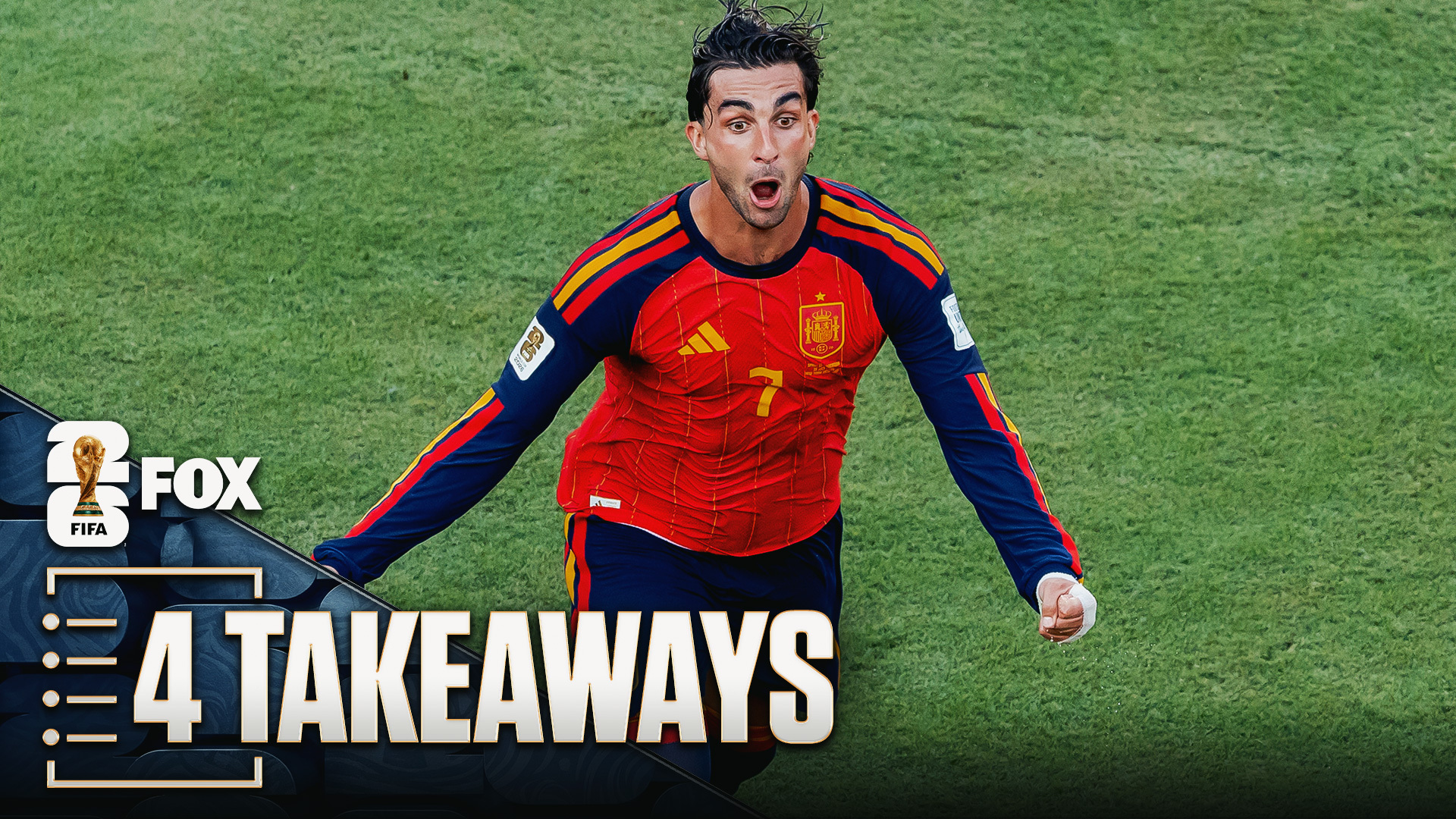
4 Takeaways After Spain Beats Argentina In Extra Time To Win 2026 FIFA World Cup

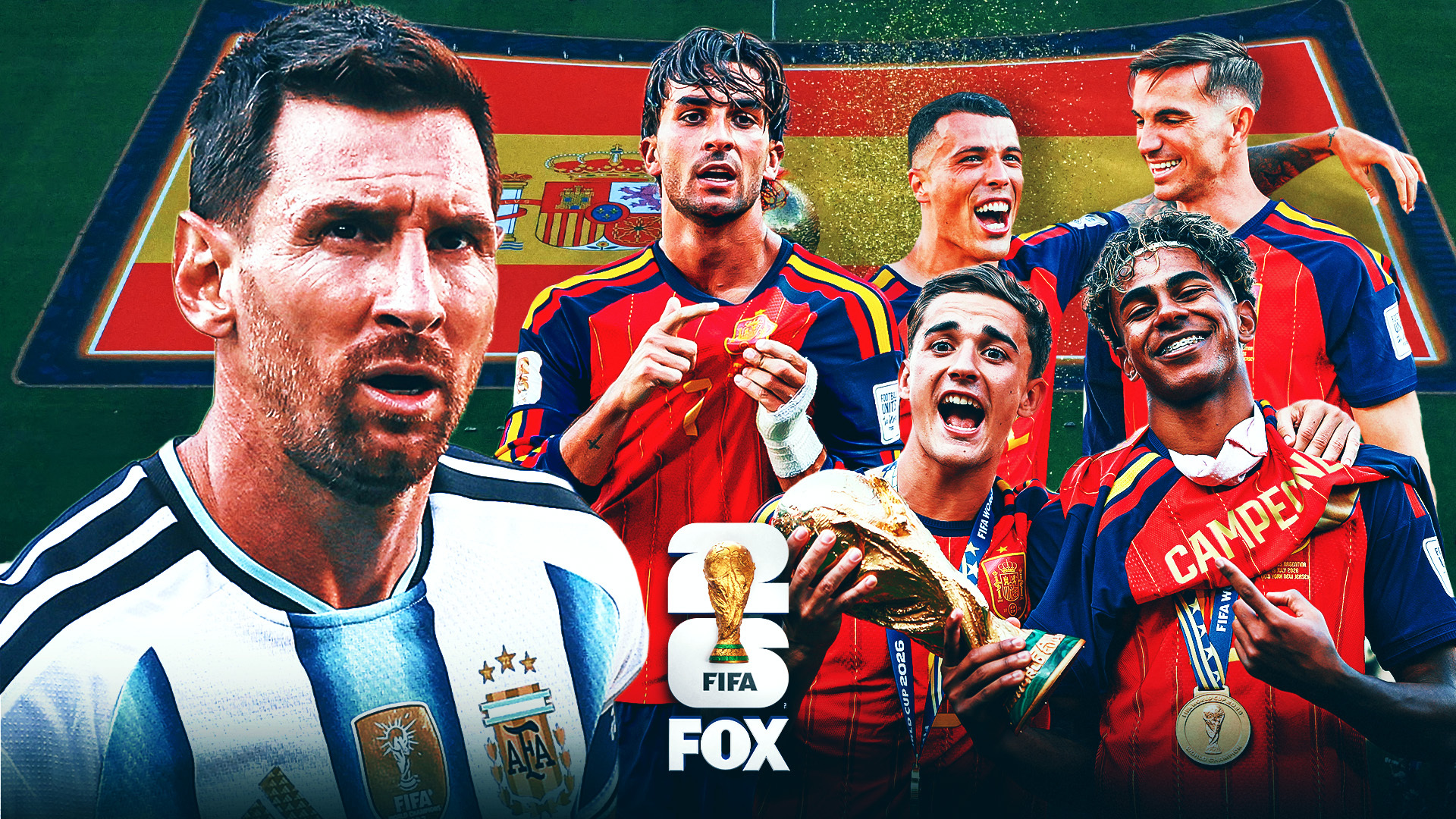
NEW YORK NEW JERSEY STADIUM — Spain stands alone on top of the world. La Roja won their second World Cup title on Sunday — Spain’s first since 2010 — by defeating Lionel Messi and 10-man Argentina on Ferran Torres’s goal in the second half of extra time following a scoreless first 90 minutes. Spain denied La Albiceleste’s bid to become the first country to repeat as World Cup champions since Pelé led Brazil to back-to-back titles in 1958 and 1962. Spain dominated the match from start to finish. It outshot the Argentines — who lost Enzo Fernández to a second yellow card before the additional 30 minutes began — by an astounding 20-0 and forced keeper Emiliano Martínez to make 11 saves, a new World Cup final record. Yet it took Torres’s goal in the 106th minute to defeat the defending champs — and probably end Messi’s career on the biggest stage in sports. Here are my takeaways from Sunday’s dramatic World Cup final: 1. Spain’s Triumph Richly Deserved As they did against England in last week’s semifinal win in Atlanta, Argentina’s fans badly outnumbered Spain’s among the 80,663 who attended Sunday’s finale. Most neutral supporters in attendance and watching across the globe probably wanted to see Messi win another World Cup, too, further cementing his legacy as the greatest soccer player of all time. Although they ended up disappointed, La Roja thoroughly deserved to win this World Cup. The pre-tournament favorites were never flashy over their five-plus week stay in North America. They didn’t have the panache of France, or the pure star power of other nations — even though they fielded teenage sensation Lamine Yamal. Spain was, nevertheless, the best team at this World Cup. It showed that by rendering France toothless and eliminating Les Bleus with relative ease to reach Sunday’s decider, where it also thoroughly outplayed Argentina. The score was close, but the stats weren’t; even before Fernández was sent off in stoppage time with a second yellow card, Yamal & Co. had controlled nearly two-thirds of the possession. 2. Lionel Messi’s Last World Cup Game? Almost certainly, yes. The GOAT turned 39 during the tournament. He’ll celebrate his 43rd birthday when Argentina, Morocco, Paraguay, Portugal, Spain and Uruguay co-host the centennial World Cup in 2030. (As things stand now, the South American nations will get just one match each.) Messi may be superhuman, but he’s human nonetheless. Surely he won’t still be scoring almost at will at the highest level four years from now. Right? Although if there’s anyone who can, why not him? Messi was at the height of his powers this summer, eclipsing the career-best seven goals he scored in leading his country to the 2022 title. He’d said he would retire after that World Cup, only to change his mind after Argentina prevailed. After coming so close to winning a second title, could he try to climb that mountain again? After all, Cristiano Ronaldo was 41 this summer and still scored three goals in Portugal’s five matches. And because Messi’s game doesn’t rely as much on physicality, he could surely stick around a little longer if he wants to. 3. La Roja’s Own Dynasty Is Just Beginning So much of the talk in the lead-up to Sunday’s grand finale a few miles west of New York City was the opportunity for Argentina to do something unprecedented by becoming the first national team ever to win four consecutive major titles, snapping a tie with the legendary Spanish side of the early 2010s. In ending that dream for the 2022 World Cup champs, this generation of Spanish players asserted themselves as worthy successors to both of those dynasties. Under coach Luis de la Fuente, Spain has won three trophies in the last three years; Sunday’s triumph capped the European Championship La Roja claimed in 2024 and the UEFA Nations League crown it claimed a year earlier. (They narrowly lost the Nations League final last summer, to Portugal.) With another Nations League to play for next year, Euro 2028 set for the following summer and a home World Cup two years after that, Spain — with the fifth-youngest roster among the 48 squads at this World Cup — will have a chance over the next few years to go down as the most decorated national team of them all. 4. What’s Next For Argentina? Messi isn’t the only regular who might not be back even for the 2028 Copa América, let alone the next World Cup. Coach Lionel Scaloni could leave; the architect of the most successful Argentina team ever is out of contract and hasn’t said whether he wants to return. Eight players besides Messi are also already 30 or older. With an average age of almost 29, they were one of the grayer teams in this World Cup. So even if Messi and Scaloni stay, change is coming for the runner-up. And if both Lionels leave? A whole new batch of fresh faces led by young holdovers like Valentín Barco and Nico Paz, both 21, and Giuliano Simeone, 23, will be asked to grab the baton from the vets. They’ll have an awful lot to live up to.​Latest Sports News from FOX Sports
Categories
Sports Fox

The 50 Best Moments Of The 2026 FIFA World Cup

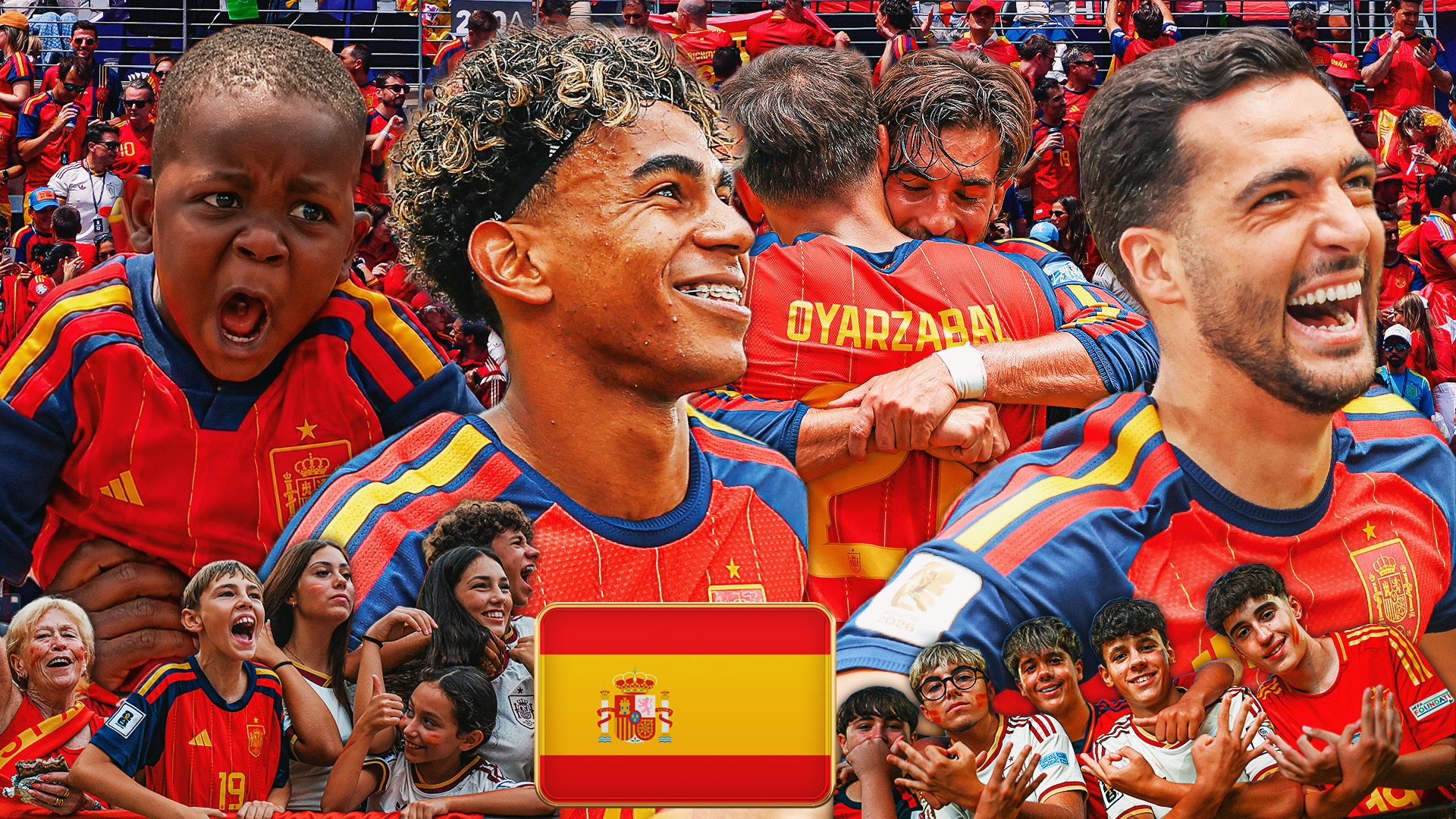
The best World Cup ever ended with a final to remember. For the second time ever, Spain is the world champion. The reigning European champions took down the reigning world champion, when Ferran Torres scored in the 106th minute of the final to beat Argentina. This tournament had it all — drama, late game-winners, golazos, legends and moments that we will never forget. Here are the 50 best moments from the biggest World Cup of all time. Mora entered the tournament as a bit of an unknown, despite his clear and evident talent. Mora only played 24 minutes between Mexico’s first two games but started the final three, delivering a breakout performance in El Tri’s win over Ecuador in the round of 32. The 17-year-old bossed the game in midfield and established himself as a force for the national team. The midfielder is currently at Tijuana in Liga MX, but he has been linked to some of Europe’s top clubs so far. There’s little doubt that Mora is going to be a key figure for El Tri for the foreseeable future. Colombia brought incredible energy — on and off the pitch — to the FIFA World Cup. On the field, Cucho Hernández’s late tenacity against Uzbekistan summed it all up. The forward, who came on as a substitute in the match, fought for the ball down the right wing and won the duel before whipping in a fantastic cross for Jaminton Campaz, who sealed the win with style. Raúl Jiménez has scored all over the world for Mexico, but the 35-year-old had never done it at a World Cup. In Mexico’s opening-match win over South Africa, he finally found the back of the net. In his fourth World Cup for El Tri, Jiménez got on the end of a cross from winger Roberto Alvarado and headed home the second goal of Mexico’s 2-0 win. His teammates knew what the goal meant to its talisman, whose celebrations were emotional in Mexico City. Erling Haaland captured attention during the 2026 World Cup by balancing his scoring output with an embrace of American culture. From leading the Viking row celebration with supporters to filming commercials with American celebrities, Haaland lived a summer he will never forget. The Norway striker delivered on the pitch, as well. His run ultimately ended against England, but Haaland is in his prime and showed that Norway will be a threat in major tournaments moving forward. Canada made its path to the knockout stage tougher by not winning its group, having lost to Switzerland in the final match of group play. That meant its round of 32 match against South Africa was played in Los Angeles instead of its home and native land. LAFC midfielder Stephen Eustáquio stepped up in stoppage time and delivered a great strike in the bottom corner from just outside the 18-yard box, giving the Canadians their first-ever knockout-stage win at the World Cup. DR Congo’s last World Cup appearance came in 1974, when it was known as Zaire. In that tournament, it did not score a goal. The African nation faced a daunting task in its first match at the 2026 tournament against Portugal, but it more than held its own. Striker Yoane Wissa delivered a memorable moment with a goal just before halftime to make the game 1-1 after Portugal opened the scoring in the first 10 minutes. DR Congo ultimately qualified for the knockout stage with a win over Uzbekistan in its final group match before bowing out against England in the round of 32. Cape Verde started its World Cup with a thrilling 0-0 draw against Spain that saw goalkeeper Vozinha become an international star. The African nation’s first goal didn’t come until its second game against Uruguay. Midfielder Kevin Pina got a free kick from 35 yards out and let loose. He beat goalkeeper Fernando Muslera and delivered the first of many memorable moments for Cape Verde. Hélio Varela ultimately scored an equalizer in the 61st minute to seal a 2-2 draw that helped Cape Verde qualify for the knockout stage. The stars shined during their first World Cup matches, with Kylian Mbappé, Erling Haaland, Harry Kane and Lionel Messi all scoring multiple goals to open the tournament. Meanwhile, Ronaldo was held scoreless against Cape Verde. He responded well, though, and scored twice against Uzbekistan. After the game, the 41-year-old global star told a TV camera, “I’m back,” to show he was looking to keep up with the game’s best attackers. Yamal had plenty of attention on him entering this tournament. He has established himself as a star at Barcelona and was the go-to guy for Spain when it won Euro 2024. Still, he hadn’t played on the biggest stage in the world: the World Cup. Against Saudi Arabia, at 18 years and 343 days old, Yamal became the youngest player from Spain to score in a World Cup, surpassing the previous record set by Gavi in 2022. He slid in at the back post and made history, scoring the first of three goals that La Roja netted in the first half against Saudi Arabia. Ecuador entered its final group-stage match against Germany with a clear goal. It needed to beat Germany to advance to the knockout stage. Nothing less would suffice. It’s a daunting task against a team that entered the tournament in the top 10 of the FIFA World Rankings. To make matters worse, Germany took the lead in the second minute. Nilson Angulo equalized in the ninth minute, though, before Gonzalo Plata scored the winner in the 77th minute. It was an incredible comeback that came at the best possible time for Ecuador. Senegal was in control of its matchup with Belgium in the round of 32. Ismaila Sarr scored in the 51st minute to make it 2-0, and the European side looked like it had no answers. Instead, Romelu Lukaku came on as a substitute and provided life with a goal in the 86th minute. Then, shockingly, midfielder Youri Tielemans rose highest and headed home the equalizer in the 89th. Later, in the fifth minute of stoppage time in extra time, Tielemans stepped up and buried a penalty for the winning goal. Haaland became as big a star off the field as he did on it. Haaland had a great time going around America, but he also had a memorable interaction with a young child mascot before Norway’s win over Brazil. The child did not see Haaland behind him, only for the striker to tap him on the shoulder to get his attention. That child loudly responded with, “HAALAND,” when he saw the superstar behind him. Cape Verde played two 0-0 draws in the group stage, but the games were anything but snoozers. The first was against Portugal before a 2-2 draw against Uruguay. Entering the final match against Saudi Arabia, Cape Verde couldn’t settle for another draw and feel confident about its chances of qualifying for the knockout stage. It did know that Uruguay needed a win and was facing Spain, which had to get all three points to win the group. Goalkeeper Vozinha delivered another strong performance and Spain got its win. That result put Cape Verde through to the knockout stage, which set off amazing celebrations after the draw over Saudi Arabia. We saw multiple thrilling penalty shootouts in the knockout stage of the World Cup. One of which saw Egypt advance to the round of 16 against Australia. Misses from Australia’s Harry Souttar and Lucas Herrington secured the victory for the Pharaohs, who continued a great World Cup for African teams, nine of which qualified for the round of 32. While Lamine Yamal made the headlines on the field during Spain’s run to the final, his 3-year-old brother became a star in his own right. Keyne Yamal became a popular figure on social media during Spain’s World Cup campaign with his great reactions in the stands and interactions with big brother’s teammates on the pitch. This was always going to be a massive World Cup for the U.S. national team, and that journey started in Los Angeles. The atmosphere was electric before the match, and it was enhanced by country music duo Dan and Shay’s national anthem. Thierry Henry, Zlatan and Alexi Lalas were emotional after the performance, with the entire stadium joining in. On the pitch, the Americans built on that momentum to beat Paraguay 4-1. It started a run that captivated the nation until the team’s loss to Belgium in the round of 16. Japan looked like it was going to give Brazil a big run for its money in the round of 32. The Japanese took the lead before Casemiro’s equalizer, but unfortunately for them, Brazil took control of the match as the second half progressed. Just as it looked like Japan was going to reach extra time, substitute Gabriel Martinelli picked up the ball in the box and delivered a fantastic far-post finish to beat Japan goalkeeper Zion Suzuki. It was an exciting 95th-minute winner that ended the tournament for Japan, which had been one of the most exciting teams to watch in the group stage. Japan’s exciting tournament started at Dallas Stadium against the Netherlands. The match was 0-0 at halftime before four second-half goals created a fantastic match that was one of the best of the group stage. The match ended with Japanese fans picking up trash around the stadium afterward, helped by FOX correspondent and Giants quarterback Jameis Winston. Many goalkeepers became stars during the tournament, and Curaçao’s Eloy Room had his moment during the group stage. Ecuador was a dark horse entering the World Cup, known for its impressive defense and physical style. Going forward, though, there were questions. Against Curaçao, the Ecuadorians created quality chances but couldn’t beat Room. His 15 saves tied a World Cup record for the most in a 90-minute match at the World Cup. Cometh the hour, cometh the man. That man in the knockout stages was Merino. The Arsenal midfielder is a bit of a do-it-all guy for Spain. In this tournament, he has been needed off the bench when a goal is required. First, he came on in the 85th minute against Portugal and scored six minutes later for a 1-0 win in the round of 16. Then, against Belgium in the quarterfinals, he came on in the 86th minute and scored in the 88th. Canada had its greatest World Cup victory after one of its worst moments. Midfielder Ismael Kone suffered a broken leg against Qatar that saw him carted off when Canada led 3-0 in the 56th minute. Qatar’s Assim Madibo was given a red card, putting that team down to 10 men. From there, Canada continued its impressive performance and scored three more times. The game finished at 6-0, with Canada whipping out tributes to the midfielder after its final goals. The scoreline was incredible, but the circumstances surrounding it weren’t ideal for the team. Haaland entered this tournament having scored in the biggest tournaments in club soccer. He had a reputation as one of the best players in the world. He had not played at a World Cup, though. Norway’s first game was against Iraq, and the Manchester City star scored twice. It was a classic Haaland performance, with the striker finding himself in the right place at the right time multiple times. It also teed off a tournament to remember for Haaland, who made himself an even bigger star than he already was. Mbappé entered the tournament with a spotlight on him. In his third World Cup, he had the chance to win it for the second time. After four goals and two assists in his three group-stage games, Mbappé netted twice against Sweden. The first goal was brilliant, as he sat Sweden striker Viktor Gyokeres down with a quick dribble before firing a laser into the far post. Michael Olise assisted the second goal, which made it 3-0 and sealed a convincing win for France. Norway vs. Ivory Coast was wild. First, Norway winger Antonio Nusa delivered a peach of a goal with a curling effort in the first half. Then, Ivorian winger Amad Diallo’s fantastic control and finish made it 1-1 in the second. The decisive moment came from Haaland. Midfielder Patrick Berg made a great run into the box and put the ball on a platter for the striker, whose final touch wasn’t hugely convincing but got the job done and put the ball in the back of the net. The best matchup of the round of 32 saw 2022 semifinalist Morocco face the Netherlands. The Dutch took a lead through Cody Gakpo in the second half and looked like they were going to get an impressive victory to advance. Then, Morocco shockingly equalized. Chemsdine Talbi delivered a wonderful cross from the left wing that met the head of center back Issa Diop. It was an amazing moment that led to a penalty shootout that saw the Dutch miss three of their five penalties. In each of their final group stage matches, Austria and Algeria knew one point would be enough for both to advance to the knockout rounds. A 0-0 draw would have sufficed. But neither side could help itself. Austria started the scoring in the 28th minute, but Algeria answered on the precipice of halftime. Then Marcel Sabitzer restored Austria’s lead in the 55th minute, and five minutes later Riyad Mahrez brought the match back level. Again, they could have stopped there, and held the ball for a 2-2 draw. And for 30 minutes, it seemed as if that would be the case. But, seemingly out of nowhere, in the third minute of injury time, Mahrez rushed forward and put Austria ahead, jeopardizing its place in the knockout round. Miraculously, Austria found another equalizer with Sasa Kalajdzic’s header in the sixth minute of injury time. What was expected to be a draw eventually found its way there, maybe in the most unorthodox way. The World Cup opening match was a coronation for Mexico. It featured an opening ceremony and raucous Mexico fans supporting their side. It didn’t take long for Mexico to reward them as Julian Quiñones pounced on a South Africa turnover and attempted a shot that nutmegged goalkeeper Ronwen Williams. Cristiano Ronaldo failed to score and lift Portugal over Spain as his World Cup story came to an end with a 1-0 defeat in the round of 16. But before he went out, Ronaldo scored his first-ever goal in a World Cup knockout round game — against Croatia in the round of 32. He left as Portugal’s all-time leading goalscorer. Jude Bellingham was the best player on the pitch in England’s 2-1 win over Norway to advance to the World Cup semifinal. Just ahead of halftime, he latched onto Morgan Rogers’ through ball and dribbled around a pair of Norway defenders to tie the score at one. Then in the second half, his hustle paid off as he followed a shot toward goal and pounced on the rebound to put England ahead for good. Not everyone would have gone for goal in this situation — dribbling outside the box in the World Cup quarterfinal tied at one in extra time. But Julián Alvarez had the confidence to attempt the shot, and the class to execute a curling banger. Alvarez’s goal broke the deadlock before Lautaro Martinez added an insurance goal that helped Argentina beat Switzerland 3-1 and advance to the semifinals. Two Real Madrid legends, two international legends — for their nations Portugal and Croatia — in Cristiano Ronaldo and Luka Modrić (teammates for six years) faced off in the round of 32. It produced one of the most exciting matches of the tournament. Ronaldo scored his first-ever World Cup knockout round goal, with a penalty that tied the match at one. Portugal grabbed the lead on Gonçalo Ramos’ header in the fourth minute of injury time. Then Croatia nearly answered. In the 12th minute of injury time, the ball took multiple deflections in the box before Joško Gvardiol tapped a rebound into the net. However, the goal was disallowed, as VAR ruled Igor Matovič touched and directed the ball onto Mario Pašalić in an offside position, before he took the shot that led to Gvardiol’s rebound. Portugal escaped and advanced to the round of 32, ending Modrić and Croatia’s run. Maybe the most exciting and controversial match of the 2026 World Cup came in the round of 16 clash between Argentina and Egypt. Egypt stunned everyone, jumping out to a 2-0 lead on Moustafa Ziko’s 67th minute goal. But Argentina is never out until the final whistle blows, and that proved true. Cristian Romero scored a header. Lionel Messi banged a shot off the crossbar and in. Then in the third minute of injury time, Enzo Fernández finished a counter-attack with a decisive header. The controversy came when Egypt’s original second goal was disallowed after VAR ruled there was a foul in the build. But when Fernández scored a goal after a build-up that seemingly included a foul on Egypt’s Mohamed Salah, nothing was done. Thus, Argentina advanced to the quarterfinals. Kylian Mbappé celebrated his first goal of the World Cup by mimicking playing a flute, a gesture stemming from a pre-tournament interview with “After Hours” host James Corden. After finding the back of the net, Mbappé ran to the corner flag and started playing an imaginary flute with his hands, which made the rounds on social media afterward. The United States opened its World Cup campaign with a bang, jumping out to a 3-0 lead at halftime against Paraguay. Folarin Balogun introduced himself to fans with a brace in the first 45 minutes. The U.S. went on to win 4-1, prompting legends Zlatan Ibrahimovic and Thierry Henry to tell fans, “start believing.” FOX Sports analyst Alexi Lalas praised the display, calling the first half the federation’s greatest half of group play in World Cup history. England earned bronze at the 2026 FIFA World Cup, but its journey was nearly ended in the round of 32. DR Congo took the lead in the seventh minute against England, and goalkeeper Lionel Mpasi seemed unbeatable. But striker Harry Kane wouldn’t be denied. In the matter of 11 minutes, he flipped the game, scoring in the 75th and 86th minute to save England and set up a match with Mexico in the round of 16. Malik Tillman delivered one of the goals of the tournament when he stepped up to a set piece from 20 yards out and knuckle-balled a shot over Bosnia and Herzegovina’s wall. The sublime free kick gave the U.S. a 2-0 lead in the 82nd minute, helping to lift it into the round of 16. Tillman was arguably the strongest player for the U.S. at the 2026 FIFA World Cup, scoring another free kick in the United States’ 4-1 loss to Belgium and holding down the midfield throughout the tournament. Paraguay completed one of the greatest upsets in World Cup history and became the lowest FIFA-ranked team to win a knockout round match at the 2026 World Cup, when it defeated Germany in penalty kicks. It’s an achievement alone to take down legendary goalkeeper Manuel Neuer in a penalty shootout, but to do it for a spot in the round of 16 is another level. José Canale scored the winning penalty kick for Paraguay. It had been almost 30 years since Scotland made its last appearance in a men’s FIFA World Cup. That means a whole generation of soccer fans, unaware of the lore behind the Tartan Army. But, boy, did that change. Despite their side going out in the group stage, Scotland’s supporters became a prominent storyline of the World Cup with their presence in the host cities. Tens of thousands of Scottish fans traveled to North America, bringing a nonstop party across the continent. In Norway’s 2-1 victory over Brazil in the round of 16, Haaland felt inevitable. He lurked around Brazil’s defenders, waiting for his moment to pounce. For 78 minutes, Brazil thought it had warded him off, but as the game progressed, so did Haaland’s class. He scored in the 79th minute to give Norway the lead. Then, in the 90th minute, Haaland unleashed a shot attempt from an angle and distance no other player would dare shoot from. It screamed along the ground, diagonally across the box and beat Brazil goalkeeper Allison to the far post. Haaland’s brace took Norway’s magical run into the quarterfinals. The Norwegian national team popularized a unique post-victory celebration during the World Cup, performing a synchronized rowing motion on the pitch after their wins. The celebration was mimicked by fans and other national teams, as Spanish fans performed the Viking row after beating France in the semifinal. Fans also brought the Viking row to New York City’s Times Square. It was most famously led by Erling Haaland and the Norweigan national team after the win against Brazil with Martin Odegard banging the drum. Mexico City became the center of celebrations as El Tri defeated Ecuador in the round of 32. Ecuador was supposed to boast a sturdy defense, but Mexico punctured it early, scoring in the 22nd and 31st minute. Then Mexico fell back on its home fans who roared throughout the second half, motivating the players to keep Ecuador away from goal. Mexico maximized its home-field advantage at the iconic Mexico City Stadium, winning both group stage matches played there before knocking out Ecuador, all while not conceding a goal up to that point. Lionel Messi became the all-time leading goalscorer in World Cup history, but he didn’t finish the tournament with that crown. Messi got up to 21 goals in his World Cup career, but the absolutely bananas third-place game saw Mbappé score twice to get to 22 career goals on the world’s biggest stage. He has scored all of those goals in just three tournaments. There’s no doubt Mbappé, who just turned 27, will build upon that record as long as he stays fit and in the France team. Cape Verde goalkeeper Vozinha went from unknown to a household name after keeping a clean sheet in a scoreless draw against Spain in the group stage. Following the match, Vozinha’s social media accounts experienced a massive increase in followers, transforming the veteran goalkeeper into the viral figure of the group stage. Over the course of the 2026 World Cup, he gained almost 30 million Instagram followers. Vozinha also appeared on “After Hours with James Corden” on June 30. As the full-time whistle blew at Seattle Stadium confirming that the U.S. had clinched a spot in the 2026 World Cup knockout rounds, John Denver’s “Take Me Home, Country Roads” sounded. Players and fans around the stadium joined in a serenade. The moment, unintentionally, turned the song into U.S. soccer’s theme song. So it was brought back for the United States’ win against Bosnia and Herzegovina in the round of 32. After winning the 2022 World Cup, many believed Lionel Messi was done with World Cup soccer. When he arrived at the 2026 World Cup after three seasons in the MLS, many thought he would be at a twilight stage of his career. That was quickly proven wrong. Messi dissected Algeria’s defense for goals in the 17th, 60th and 76th minutes. His looping long shot in the 60th minute remains one of the best goals of the tournament. England showed the world a different side of itself in its 3-2 win over Mexico. It went into Mexico City Stadium, playing in front of jeering fans, and jumped out to a 2-0 lead thanks to a brace from Jude Bellingham. But when adversity hit, and England went a man down, it didn’t fade. Forced to defend a one-goal lead with a one-man disadvantage for more than 20 minutes of regulation, England dropped back, created a wall and cleared cross after cross from Mexico. Afterward, FOX Sports’ Peter Crouch celebrated with Harry Kane on the pitch. It seemed like France was going to be unstoppable at the World Cup. Kylian Mbappé was scoring left and right, and the French attack was full of other superstars that made it seem like an unstoppable force. Then, that unstoppable force met an immovable object: Spain’s defense. Lamine Yamal was fouled for a penalty in the first half, which Mikel Oyarzabal scored, and then right back Pedro Porro stepped up for a shocking second goal that put Spain in control. La Roja rolled to the final whistle and a spot in the finals. Sidny Lopes Cabral seemed to be in an innocent position, dribbling the ball on the wing as Cape Verde didn’t have numbers on the attack. But he went for goal out of nowhere, curling a strike around Emiliano Martínez and finding the top corner. Lopes Cabral, seemingly astonished by his own abilities, ran around the pitch and into the stands to celebrate with Cape Verde’s fans. The goal, stunningly, brought Cape Verde and Argentina level in extra time. “Cape Verde. Thank you, on behalf of the world. You made us dream and watch your dreams lived out in real time. We’ll never forget you,” Fox Sports analyst Stu Holden said in a post-match tribute to the debutants. England was battle-tested entering its semifinal matchup against Argentina. The Three Lions got the opening goal and looked like they were ready to park the bus and defend. They hadn’t faced a force like Argentina, though. Argentina went to extra time to beat Cape Verde, had to overcome a two-goal deficit to beat Egypt, and then more extra time to beat Switzerland in the quarterfinals. Messi registered two assists in the 85th and 92nd minutes to knock out England in spectacular fashion. Atlanta Stadium couldn’t believe what it saw as Argentina sealed a spot in its second straight World Cup final. Spain dominated Argentina, but it took 106 minutes to score. It looked like Argentina goalkeeper Emiliano Martínez was not going to be beaten for most of the game. He had 11 saves, the most in a final on record (since 1966). Ultimately, two substitutes combined for Spain. Winger Nico Williams put a header right in the middle of the 18-yard box and striker Ferran Torres delivered an impressive finish for the winning goal. It took 117 minutes for Argentina to get its first shot of the game, and there were some tense moments late for La Roja. Ultimately, Spain finished the tournament having conceded just one goal en route to a second world championship.​Latest Sports News from FOX Sports
Categories
Sports Fox

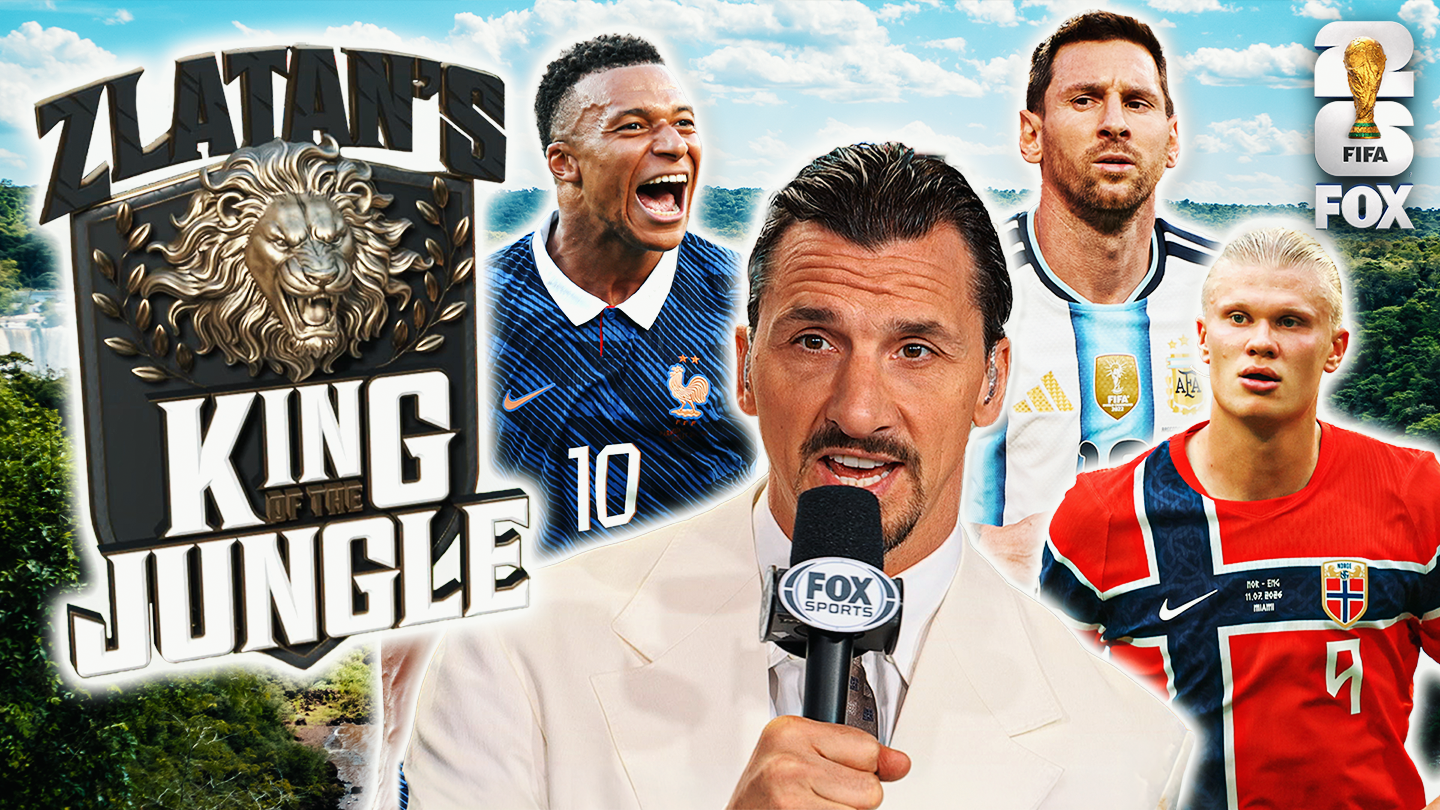
Zlatan Ibrahimović’s ‘King Of The Jungle’ Has A New No. 1 Ahead For World Cup Final

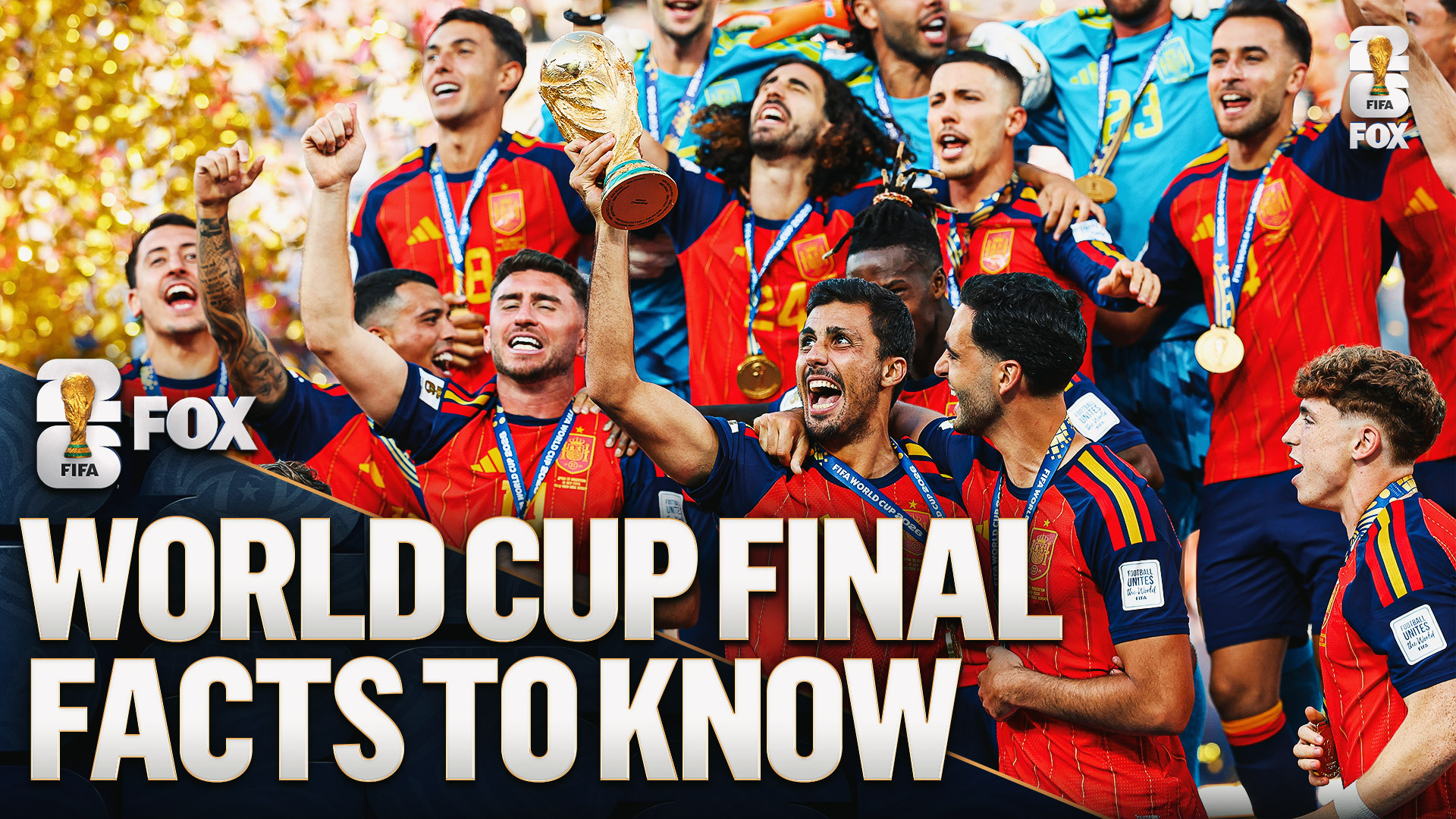
Well, it took 103 World Cup matches and many variations, but Zlatan Ibrahimović’s “King of the Jungle” power rankings has a new No. 1 ahead of Sunday’s Spain-Argentina World Cup final at New York New Jersey Stadium. As part of his segments as a FOX Sports analyst this tournament, Zlatan has periodically dropped his “King of the Jungle” rankings. But he, unsurprisingly, always had himself at No. 1. Why? “Being Zlatan is enough.” And he went beyond the pitch, evaluating himself as a broadcast analyst, joking at one point: It has been the best tournament so far. Imagine what the other journalists feel when they talk: I do a better job than them. … Lions don’t compare themselves to humans.” Ibrahimović has had a change of heart, though, before La Roja and La Albiceleste face off. So going into Sunday’s 2026 World Cup final, Zlatan shared his latest rankings. 2026 World Cup Stats: 5 goals, 1 assist 2026 World Cup Stats: 7 Goals 2026 World Cup Stats: 6 Goals, 1 Assist 2026 World Cup Stats: 1 Goal 2026 World Cup Stats: 6 Goals, 2 Assists 2026 World Cup Stats: 7 Assists 2026 World Cup Stats: 63 line-breaking passes in the final third, the most in a single edition since Xabi Alonso in 2010 (76). 2026 World Cup Stats: 7 Goals, 1 Assist 2026 World Cup Stats: 10 Goals, 4 Assists 2026 World Cup Stats: 8 Goals, 2 Assists​Latest Sports News from FOX Sports
Categories
Sports Fox

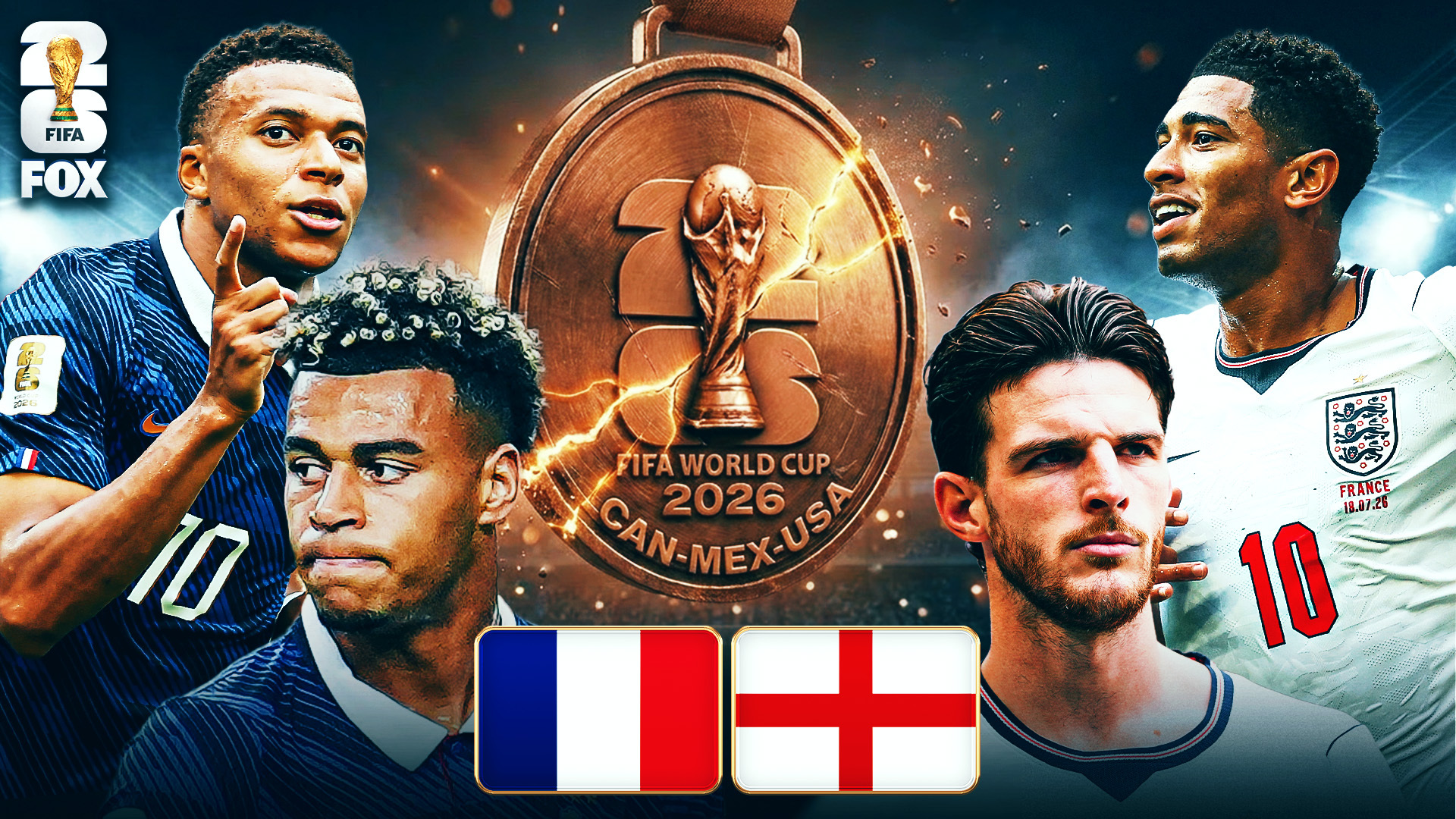
10-Goal World Cup Goodbye: What The Wildest Third-Place Game Ever Tells Us About 2028

This third-place game has a dirty little secret: it’s the most entertaining game, by far, in the entire World Cup. Nobody parks the bus. Nobody plays scared. Two exhausted, heartbroken teams show up, shrug and just play. Saturday in Miami gave us a spectacle for the ages. England beat France, 6-4, in a 10-goal circus that felt less like a bronze-medal match and more like a pickup run where both teams forgot defense was legal. And that’s precisely why it happened: With nothing real at stake, the handbrakes came off. Thomas Tuchel spent the week getting torched for retreating into a shell against Argentina, and then his liberated team scored six against France. Quite cruel for England fans. The talent was never the question. The fear was. The history came fast. Kylian Mbappé scored twice, giving him 10 for the tournament and 22 for his World Cup career, one more than Lionel Messi. For at least one day, Mbappé is the greatest goalscorer in the history of this competition, but Messi gets his chance Sunday in the final. Jude Bellingham’s goal was his seventh of the tournament, making him the first England player to score seven at a single World Cup, breaking the record of six that Gary Lineker set in 1986 and Harry Kane matched in 2018. And Bukayo Saka, benched for the semifinal, answered with a hat trick. The most polite revenge imaginable, which is very Saka. Now the interesting part: Where do these two go from here? Both teams leave North America upset about their semifinal results, but they also each possess a serious core of luxury talent for Euro 2028. Start with France, where the future is mouthwatering. Mbappé is 27, entering his true prime and has just spent a month reminding everyone that his ceiling is “best player alive.” Désiré Doué is one for the future, even though he found it hard to start among the generational talent around him. The attacking core is arguably the youngest elite group on the planet, and it’s about to be handed to Zinedine Zidane, who’s expected to replace Didier Deschamps after his 14-year era ended Saturday. Few managers walk into a dressing room possessing Zidane’s aura. Never noted for his complex tactical coaching style, he’s an excellent manager of world-class talent, as seen at Real Madrid. Conceding six to England is a rough farewell card for Deschamps, but the inheritance he leaves is otherworldly. If Zidane pairs that firepower with a defensive structure that matches — the thing Spain exposed and England shredded — France walks into Euro 2028 as the favorite. The man going forward is still Mbappé, and he might have three more World Cups in him. England’s blueprint is just as clear, and for once, genuinely hopeful. Whatever happens to Tuchel after the Argentina inquest, the next cycle builds itself around three names. Bellingham, 23, just broke a 40-year scoring record and is unmistakably The Man now — the torch didn’t pass from Kane so much as Bellingham took it mid-tournament. Declan Rice remains the midfield anchor every contender wishes it had. And Saka just reminded whoever coaches England next what benching him costs. Kane will be 34 by the Euros, likely easing into a supporting role. That’s not a rebuild; that’s a spine, entering its prime together, with the scars of another semifinal exit as motivation. And that is the real lesson of Saturday. England’s recurring disease has never been talent — it’s the courage to use it when everything’s on the line. A team that can score six on France exists inside this squad. It showed up one match too late. The next coach’s entire job is dragging that version out in a semifinal instead of a consolation game. But emerging from this chaotic consolation matchup, France likely gets Zidane, a young attack and the world’s new all-time World Cup scorer (for at least a day). England gets its best finish since 1966 and a core built to erase that stat entirely. See you both in two years. Sunday is time for the trophy. But don’t pretend you didn’t enjoy the circus as an appetizer.​Latest Sports News from FOX Sports