Categories
Sports Fox

Cristiano Ronaldo Wins First Major Trophy In 5 Years With Saudi Pro League Title

Cristiano Ronaldo’s brace in Al Nassr’s 4-1 victory over Damac on Thursday earned the Portuguese star his first Saudi Pro League title since making the move to the club in January 2023. Ronaldo has now won top-flight domestic league titles in four different countries across two continents: England, Spain, Italy and Saudi Arabia. The triumph marks the eighth league title of his legendary career. Al Nassr Hold Off Al Hilal In Title Race The title did not come easily for Al Nassr, as the race came down to the final day. Rivals Al Hilal finished just two points behind them in second place, but Al Nassr held on to secure their first league title since 2019. The club finished third last season and second the year before. Final-Day Drama Against Damac Al Nassr took the lead in the 34th minute through a Sadio Mané header from a João Félix corner. They doubled their advantage in the 52nd minute through a moment of quality from Kingsley Coman. Damac were handed a penalty in the 58th minute, and Morlaye Sylla converted from the spot to cut the deficit in half. Ronaldo restored Al Nassr’s two-goal lead just five minutes later with a brilliant free kick to make it 3-1. He then doubled his goal tally in the 81st minute, taking advantage of Damac’s failure to clear their lines before smashing the ball into the top corner to seal a 4-1 victory and the title for Al Nassr. World Cup Remains The Final Prize Ronaldo has won almost everything there is to win across multiple countries, but one trophy still continues to evade him: the World Cup. This summer, he will have another chance to chase that final piece of silverware with Portugal.​Latest Sports News from FOX Sports

Categories
Sports Fox

Crystal Palace Coach Says USA Defender Chris Richards Tears Ankle Ligaments

With just five days until the United States names its 2026 World Cup roster, the United States men’s national team has potentially dealt a massive blow. Star defender Chris Richards has suffered two torn ligaments in his ankle, Crystal Palace manager Oliver Glasner said in a press conference Thursday. Richards sustained the injury during Palace’s draw with Brentford on Sunday. The 26-year-old center back from Birmingham, Alabama, recently captained the U.S. in a friendly against Portugal under coach Mauricio Pochettino. While Glasner ruled Richards out for this weekend’s Premier League finale against Arsenal, the race is on for both club and country. Palace is desperately trying to get him fit for next Wednesday’s UEFA Conference League final against Rayo Vallecano in Leipzig, though Glasner rates his chances as a “50/50” coin flip. “He tore two ligaments in his ankle,” Glasner said. “He is in from sunrise until sunset having treatments… we will give our best and he will give his best—and then let’s see if we can get it done.” The timing could not be worse for the hosts. The Americans kick off their home World Cup campaign against Paraguay on June 12, preceded by crucial tune-ups against Senegal on May 31 and Germany on June 6. Missing Richards—who has 36 international appearances since his 2020 debut—would leave a massive void in Pochettino’s backline. 2026 FIFA World Cup: How To Watch The 2026 FIFA World Cup will run from June 11–July 19, 2026. Spread across three countries, the tournament will culminate with the final on July 19 at New York New Jersey Stadium in East Rutherford, New Jersey. All 104 tournament matches will air live across FOX (70) and FS1 (34) with every match streaming live and on-demand within both the FOX One and the FOX Sports app. A record 40 matches, more than one-third of the tournament, will air in prime time across FOX (21) and FS1 (19). The opening match on June 11 between Mexico and South Africa (3 p.m. ET) will stream for free on Tubi, as well as the USA’s opening match against Paraguay on June 12 (9 p.m. ET).​Latest Sports News from FOX Sports

Categories
Sports Fox

‘It Changed Everything’: Reliving The 1994 World Cup As Told By USA Legends

For me and many others, this particular World Cup completes a full circle. I was a literal child when the 1994 World Cup arrived on these shores. I fell in love with the event thanks in large part to a bunch of unknown American players with some epic hairdos and hideous faux-denim jerseys. Before we turn toward this year’s 48-team extravaganza, let’s hear from some of the men who represented the Stars and Stripes 32 years ago and from others who were impacted by that epic summer. Chapter 1: The Preparation With no domestic league and only a smattering of overseas players, the U.S. Soccer Federation turned the national team into a de facto club team, signing players to contracts and training full-time in Mission Viejo, California, in the years leading up to USA ’94. Cobi Jones | Midfielder/Forward: In 1994, hardly anyone was paying attention to soccer. Eric Wynalda | Forward: We were trying to prove to the American people that we didn’t suck. Mike Sorber | Midfielder: Nobody even knew who we were, what we were. Nobody knew anything. The media knew nothing about soccer. It was considered a foreign sport. Tab Ramos | Midfielder/Forward: There were people who had no idea the difference between soccer and lacrosse. So we were all used to selling the game. Tony Meola | Goalkeeper: The idea that U.S. Soccer had to put us together was crazy. But I realize how important it became, in the end, to build that group. There wasn’t a guy there that wasn’t ready to fight for the next guy. Hugo Pérez | Midfielder: This is a team that was basically together for three years. Ramos: Out of the 22 players on the final World Cup roster in ’94, something like 14 or 15 didn’t even have a club. The squad trained year-round under their new coach, Bora Milutinović. Under the well-traveled Serbian manager, the U.S. went from a defensive team that just tried to survive against top opponents to one that tried to go to-to-toe. Sorber: We needed an international coach. The American coaches only wanted guys who could run and were physical. But we always had that. We needed football IQ and brains. Bora wanted guys who were smart and could figure things out and make plays. Pérez: Bora, when he came in, on one of the first days said, “We’re gonna change the way we play football in this country.” He believed in keeping the ball, possession. And he picked the players to do it. Meola: No host nation had ever not made it to the second round. That was always something that we had in the back of our minds. I think every one of us said “it’s not going to be us.” Chapter 2: Ready For Showtime Few thought the U.S. would advance in the World Cup, especially in a group that included two stout European squads (Switzerland and Romania) and a tough Colombia squad. Wynalda: “You guys won’t get out of the group.” That was all we heard. Every sponsor was like, “don’t f*** this up.” It was bad. The pressure on us was immense. Pérez: Between ’91 and ’94, we played more than 80 games internationally, all over the world, against the best clubs and national teams. I think that was a key factor in our preparation. Because when we arrived at the World Cup, we knew we could play against anybody. Ramos: After all those results, we thought, “Hey, you know what? We’re going to force all these teams to play their best to beat us.” It wasn’t so much that we were great. But we knew we were good enough to really compete. Sorber: I remember specifically [English journalist] Paul Gardner at the draw. Paul says, “Do you think you can get out of the group?” I said, “Absolutely.” He was blown away. But I’d already played Colombia, Romania, Brazil. Were we better? No. But we were right there. Chapter 3: Against All Odds The U.S. opened against Switzerland on June 1994 at the Pontiac Silverdome, home of the NFL’s Detroit Lions. It was the first indoor match in World Cup history. After falling behind, Wynalda’s sensational free-kick goal salvaged a crucial point and a 1-1 draw. Wynalda: The night before the game, I took two free kicks in the Silverdome. If I don’t hit those, I don’t know the flight of the ball in that stadium. I realized I don’t have to hit it that hard. So I was standing over the ball, trying to control my emotions and all this adrenaline and just calmly hit the same way. And it actually went exactly where it was supposed to. Next up was a date with Colombia at the Rose Bowl. The U.S. won 2-1, in part due to an own goal scored by Colombian defender Andres Escobar. The U.S. captured the imagination of what had been a skeptical American public, though it was dampened by Escobar’s murder in Colombia days later. Alexi Lalas | Defender: There was this David-Goliath type of narrative that led up to that game. Pérez: Colombia was coming to the tournament, they hadn’t lost in three years. Everybody was saying that they were favorites to win the World Cup. Wynalda: When we beat Colombia — and I have to say, when Escobar got killed it was horrible, we’d exchanged jerseys a bunch of times, he was a friend — that’s when we won over the public. Sorber: The Colombia game changed everything. Lalas: That was certainly a defining type of moment, a touchstone. It was the first time America was proud relative to the game of soccer. That was something that America had never experienced before. Sorber: The next day, there’s twice as much media there. At least. Jones: We’re the USA, right? We like winners. Wynalda: The next game, against a really good Romanian team, was the first time I felt the belief from our supporters. It was the first time that they felt that they could back us. Chapter 4: The Dream Run Ends Losing 1-0 to Romania in the group finale meant that the U.S. had to face mighty Brazil in the round of 16 at Stanford Stadium on July 4. Milutinović elected to bench Wynalda and insert Perez in midfield in place of suspended captain John Harkes. The home side played the entire second half up a man but without Ramos, whose skull was fractured by the flagrant elbow that got Leonardo red-carded just before the break. But Brazil won on Bebeto’s 73rd minute goal, ending the Americans’ run. Pérez: Everybody thought that they were gonna destroy us, and it turned out to be the opposite. Wynalda: That was the worst day of my life. Pérez: At halftime we passed by the locker room, and I could hear guys complaining. They were nervous. They didn’t know why they were not beating us, so they had, they got battle, they were nervous. We had the momentum. Unfortunately, we couldn’t finish it off. Pérez: For me, it was the biggest game so far in the history of our country. …We were able to play them without any fear. I still think we could have won the game. Wynalda: I saw Bora in Miami a few years ago and said, “We could’ve beaten them if you would’ve f***ing put me on the field.” I had to get it off my chest. Chapter 5: Legends And Legacy Created The Americans had done their country proud — even if they didn’t immediately realize the impact the tournament had made not just on mainstream America, but on the country’s youth. Landon Donovan | Midfielder/Forward | USA ‘02, ’06, ’10: It’s crazy to say, but prior to 1994, I had no clue that anything like the World Cup existed.  I knew nothing about soccer. Maurice Edu | Midfielder | USA ’10: I can still see Bebeto scoring. I remember thinking, “Come on Tony, you can save that!” I was only eight, but I remember damn near everything. Eric scoring that free kick against Switzerland, the Colombia game and Earnie Stewart’s goal, and obviously the own goal and what happened after that, unfortunately. Seeing the guys after the Colombia game walking around the pitch with the flags draped around their shoulders? Those images, they live with you. Jones: Especially as I’ve gotten older, more people talk about the fact that they watched me during the 1994 World Cup, that I was an inspiration to them within the Black community and even beyond. Pérez: The importance of what football is right now in this country, a lot has to do with that team in ’94. Sorber: How good that team was doesn’t get discussed enough. Wynalda: The legacy of ’94 is that it was when people fell in love with the game, when they actually thought for the first time that we’re not going to stink at this. Lalas: I’m talking to you today because of the summer of ’94. Ramos: I can’t tell you the number of people who say 1994 was the first time I really got into soccer. Donovan: There’s no question the 1994 World Cup helped propel me to wanting to be a pro. Sorber: It doesn’t get discussed enough, how good that team was. Wynalda: I think we were proud that America was finally proud of us. That was not the case until the 1994 World Cup. Chapter 6: A Big Opportunity This summer, a new generation of U.S. players – led by star forward Christian Pulisic and dynamic midfielder Weston McKennie – get the rare chance of playing a World Cup on home soil. Will they capture fans’ hearts like their predecessors in 1994? Ramos: If we win the first game of the [2026] tournament against Paraguay, the whole country will be behind the team. It’s hard to understand for people that didn’t live the experience of 1994. Lalas: It’s going to be fun to see who emerges from this group, in terms of that attention that you know inevitably is going to come. Ramos: The current group is just so much better in every way. These are seasoned soccer players. A lot of them are going to their second World Cup. For them, it’s not about competing. … I was disappointed with Mauricio Pochettino when he said we competed really well against Belgium in March, because we’ve been doing that for 40 years already. We have good players. I don’t think we get excited about competing. We get excited about achieving the results we’re not supposed to. Meola: There’s somebody today that has no idea who Christian Pulisic or Weston McKennie are. And a month from now, they’re never going to forget them for the rest of their lives.​Latest Sports News from FOX Sports

Categories
Sports Fox

4 New Additions At The 2026 Wienie 500 — Including Commander In Beef Andy Richter

It’s back! The Wienie 500 is returning to Indianapolis Motor Speedway on Friday, May 22. The second annual race is spicing up the competition with fun new features, including its very own grand marshal. Here are four new additions to this year’s Wienie 500 race: 1. Andy Richter Named “Commander in Beef” You’ve heard of Commander in Chief but what about Commander in Beef? Writer, actor and comedian Andy Richter will take on this brand-new role in this year’s race. The Commander in Beef will serve as the event’s grand marshal, leaving Richter to lead all festivities like the pre-race activities and the Wiener Anthem. 2. Winner Takes Home First-Ever Borg-Wiener Trophy The Oscar Mayer brand has teamed up with BorgWarner to create a new award, the Borg-Wiener Trophy. Engineered to replicate the iconic Indy 500 award, BorgWarner’s CEO Joe Fadool will present it to the winning team in Wiener’s Circle on race day. 3. Coached By The Pros Oscar Mayer is adding some serious horsepower to the track. INDYCAR drivers like Nolan Siegel, Scott McLaughlin and Sting Ray Rob will coach the Hotdoggers, offering pro tips as teams compete for the Borg-Wiener Trophy. 4. A New Dog Hits The Track Earlier this year, Oscar Mayer handed the keys to fans with its first-ever “Pick Your Dog” bracket, letting America decide who would claim the coveted sixth spot after Sonoran Dog was removed from the competition because it just wasn’t cutting the mustard. The results are in. And Corn Dog will take the track for the first time, repping America’s Dog and competing among the five other regional dogs.​Latest Sports News from FOX Sports
Categories
Sports Fox

In His Words: Alex Palou Explains How He Won 2025 Indy 500

Indianapolis Motor Speedway (Speedway, Ind.) — Alex Palou has relished hearing “2025 Indianapolis 500 champion” all year. But how did he accomplish the career feat one year ago, winning the race from the sixth starting spot thanks to a pass on Marcus Ericsson on Lap 187 and holding on to the lead over the final 14 laps? He relived his 2025 victory with me last week, explaining what he was thinking not just during the 500, but also in the days and weeks leading up to the race. On his car in practice leading up to the race: ALEX PALOU: “I don’t think it was our best 500 car. In traffic, we were struggling a little bit. I know that heading into the race, we were confident, but not like, ‘Oh yeah, we have a car that can move really fast up front.’ So we struggled quite a lot in practice. Even in the race. I think there was cars like Josef [Newgarden] for example. You look back and he was just moving from last — he made it up to top-eight or top-six. We could not do that. I feel there’s been years in the past where we had that car, and we were able to do it. But last year, we struggled a little bit more.” On the specific troubles he faced during practice: “Just traffic runs. I remember a couple things that we really loved about the car that we’ve already tried this year, something that kind of allowed me to be more comfortable following cars, fourth, fifth in line.” On going by the seat of his pants vs. engineering: “We do a lot more than you think. Sometimes we just go back to basics. At the end of the day, places like this, at the speedway, it’s more like what my body feels than what the ideal scenario or what the ideal simulation says. The car is really good. But at the end of the day, if you don’t feel comfortable, you cannot extract 100 percent from the car. So that’s No. 1.” And then being fastest on the first day of qualifying: “Saturday felt really weird for us last year because suddenly we were P1, and we did not expect it at all, and it didn’t feel like we knew why it was so fast. So then we went into Sunday, and suddenly we lost our advantage a little bit. The conditions changed a lot. It was super windy, and it made it that our car suddenly wasn’t as fast, so we couldn’t be as fast with the car that we had. We still made it to Fast Six, but I think we qualified sixth. Obviously, if you’re P1 on Saturday, you expect more. But we didn’t feel, “Oh yeah, we got this.” It was more like, how are we so fast yesterday? And how are we going to be as fast on Sunday? “This place is like this sometimes, There might be you draw a number [in the qualifying order] that is perfect conditions, and you get a little bit of tailwind, more than everybody else, and you can suddenly carry two-tenths of a mile an hour more — and then suddenly it’s a big difference. You have to have fast car, don’t get me wrong. My car was super fast, otherwise you don’t get to the Fast Six. But I don’t think it was the best car. I’ve been on the pole here, and my car was like a complete rocket ship in any conditions. Last year, we needed the perfect amount of wind, perfect temperature to kind of be good.” Then on race day, it started to rain just before the start: “Yeah, I handled it OK — just because everybody was in the same situation. If I’m the only one sitting in the car strapped in 40 minutes or 30 minutes more than everybody else, I would handle it pretty bad. But as I saw that everybody was in the same situation, I was like, ‘Well, hopefully I do better than some other people.’ But I struggle a lot with having to pee. You hydrate yourself so much expecting to sweat right away, and then suddenly you’re there for 40 minutes, and the only thing you can think about is I need to pee and I need to be here for at least two and a half hours. But I did not pee [in my suit]. I did not.” On if he saw Scott McLaughlin crash on the pace laps: “I see the car crashed, but I don’t see what happened. Like, obviously, I just see a car that is in the grass, but I don’t know what happens.” Then there’s another crash on the opening lap: “Yes, at the beginning, you’re like, ‘What’s going on?’ But you just focus on your things. You know it’s a 500. You know that crazy stuff happens all the time, and you know that it’s going to be a long, long race. So you need to be patient.” When he knew he had a race-winning car: “I would say last stint, honestly. We were struggling a little bit at the start of the race and kind of made our way through. It’s not like we had to overtake a bunch of cars, but we were like, sixth, seventh, fifth, but we’re struggling to be there. It was not super easy for us, but we kind of made the car a little bit better. Some cars had a couple of issues like [Ryan] Hunter-Reay, and then we suddenly pitted for the last stint, and we’re a second behind … and Marcus Ericsson came out in front.” Going from struggles to the lead amid lapped traffic: “[We struggled with] just overall speed, just trying to be as fast as they were, and saving fuel as they were. You know you’re not going to find speed, but you just need to try and play your cards. I don’t think we had the fastest car, but we probably had the best car, being fourth, and that’s how we were able to overtake Marcus [Ericsson].” On what happened next: “You’re in the lead, and you are like, ‘OK, now it’s game on.’ It’s like let’s see if I can stay up front, because you don’t know if Marcus suddenly is going to react and he’s going to overtake you back, and then you’re just trying to be there, waiting and praying that there’s not going to be a yellow so you can still have the [lapped] traffic cars up front. Otherwise, I was not going to win that race.” On needing those lapped cars between him and the other cars on the lead lap: “Yeah. I say I was not going to win that race. Maybe I’m maybe wrong. It was going to be a lot tougher for me to win the race.” And then taking the white flag as the leader: “I’m thinking, ‘Yeah, just four more corners.’  But I’m not thinking that it’s done. He [Ericsson] actually got very close, I think, the lap before. And actually the last lap exiting of [Turn] 2. And it was not because I relaxed, it was just because he made a last try, and I was just already 100 percent but just struggling with overall grip. So I don’t remember exactly what I thought, but I remember I was not excited yet. I was like, ‘Man, please.’ I’ve been leading already two laps to go in this race with Helio [Castroneves], and then he overtakes you. And there’s a big difference between finishing first and second. So you don’t allow yourself to even think that you can win.” On his loud screams after the win: “I have no more voice already two minutes after I’m screaming. I know that I lost the voice already in the car. But I was so happy. I just could not wait to stop the car and celebrate with everybody. It’s super cool to celebrate alone. But the best thing is when you can celebrate with your people, with your team, with your family. And you can see on the screen that they are celebrating together, and you’re like, ‘Man, I want to be part of it.’ I’m just here alone in the car. Super cool, don’t get me wrong. But I just want to be with the crew guys.” Why he threw his gloves on the ground and ran to his crew after getting out of the car: “That is not what I had in mind. You have perfect ideas in your head whenever you go to bed of how would you celebrate if you win. But then the reality is that you cannot plan anything. You just go with it. But I was just so happy, and I just wanted to run to my mechanics that I just started throwing stuff.” On his dad being in that group: “He’s out there jumping as well. I just saw the group. I just saw the group of yellow shirts, people running towards me.”​Latest Sports News from FOX Sports
Categories
Sports Fox

2026 NFL Preview: The 10 New Coordinators Who Could Shape Upcoming Season

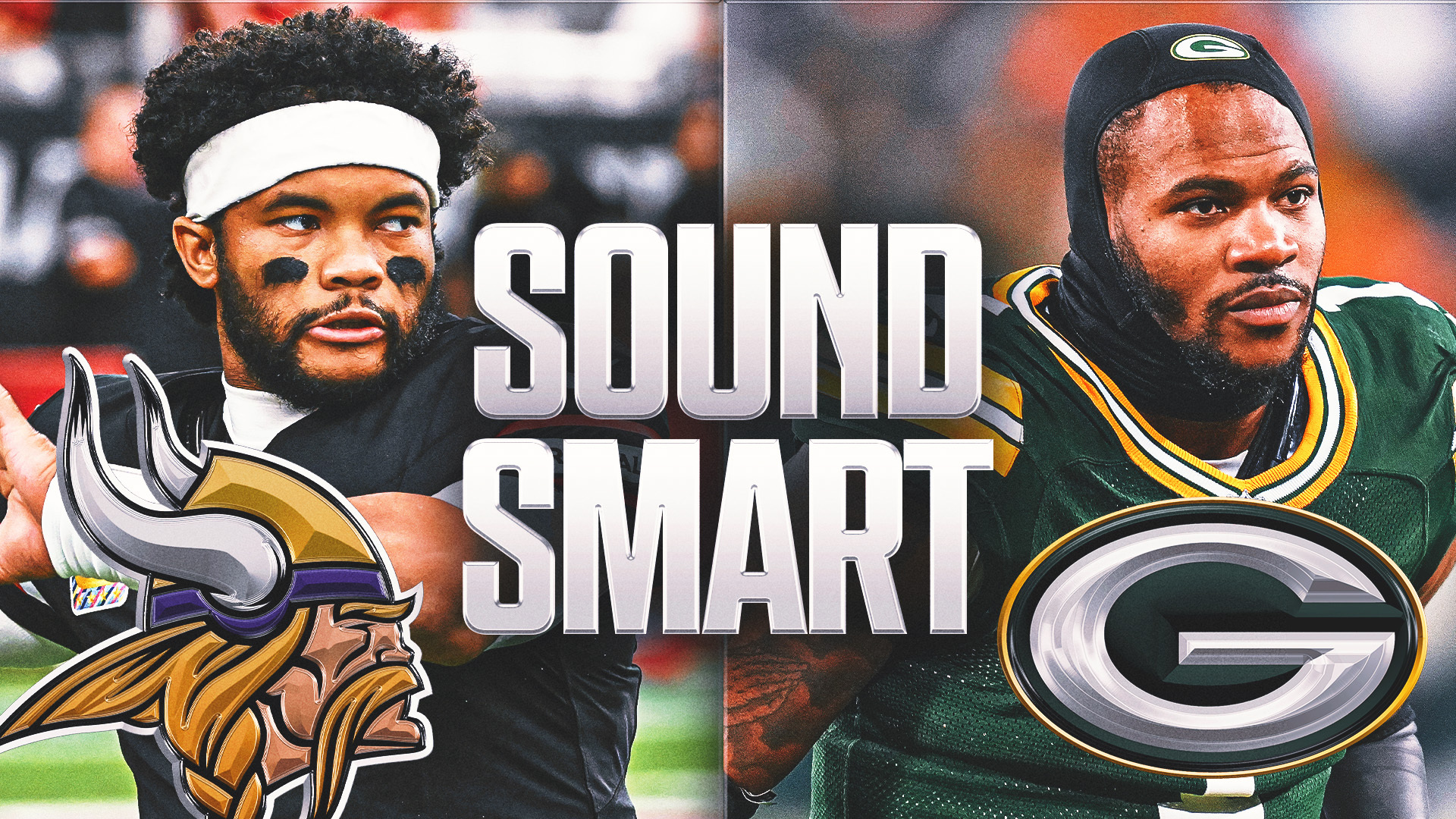
We’ve all gotten caught up in the moves made during free agency and the NFL Draft this offseason, but it’s so easy to forget that the biggest upheaval of the winter and spring was the massive change in the coaching ranks across the league. Ten teams got a new head coach this offseason, which marked the most head coaching hires in an offseason since 2022. But there were nearly four times as many offensive and defensive coordinator hires this offseason, too. A total of 36 coaches were hired for offensive or defensive coordinator roles, with a substantial 21 teams set to have a new offensive coordinator in 2026. As for the 15 new defensive coordinators hired, that number doesn’t include New England Patriots defensive coordinator Zak Kuhr, who has a new title this season but filled in running the Patriots’ defense for most of last season during Terrell Williams’ medical leave. The new coordinators run the gamut from recently fired head coaches to first-time playcallers. In trying to trim the list to the 10 most likely to impact the 2026 NFL season, we put a premium on coordinators on the opposite side of the head coach, though there are teams significant enough that we included coordinators who are essentially running someone else’s scheme. To appreciate the depth of this year’s new coordinators, we’ll offer five honorable-mention names that didn’t make the list but would in many seasons: Baltimore Ravens defensive coordinator Anthony Weaver, Philadelphia Eagles offensive coordinator Sean Mannion, Tennessee Titans offensive coordinator Brian Daboll, New York Giants offensive coordinator Matt Nagy and Kansas City Chiefs offensive coordinator Eric Bieniemy. Onto our 10 choices … The Buffalo Bills’ offense should be largely the same with Joe Brady elevated from coordinator to head coach after Sean McDermott’s firing. The task of improving the Bills’ defense falls to Jim Leonhard, 43, who returns to where he started his NFL career as a safety. They signed edge rusher Bradley Chubb in free agency and used six of their 10 draft picks on defense, including Clemson defensive tackle T.J. Sanders and Ohio State corner Davison Igbinosun in the second round. Buffalo only had defensive lineman Ed Oliver for three games in 2025, so his healthy return will help them against the run, where it ranked 28th last year. Leonhard had eight years of college experience, but this is only his third season as an NFL coach, so it’s a big leap for an important team as the Bills try to wrest the AFC East back from the Patriots. Declan Doyle is only 30, and was allowed to make a rare lateral move, going from offensive coordinator with the Chicago Bears (where he worked under offensive playcaller and head coach Ben Johnson) to now calling his own plays on Jesse Minter’s new Ravens staff. So Doyle is 10 months older than his new quarterback, Lamar Jackson, and the challenge is to help get Baltimore deeper in the playoffs, with only one conference championship appearance in Jackson’s time there. Can first-round guard Vega Ioane be a difference-maker? Can Derrick Henry stay healthy and ageless at 32? Baltimore set the bar high in moving on from a head coach and offensive coordinator who both immediately became head coaches for other teams, but success with the Ravens could make Doyle a coveted candidate to become a head coach in 2027. Chris O’Leary, 34, might be the coordinator fans know the least. If Minter is old enough to have coaching disciples, O’Leary would be one, playing for him at Indiana State and coaching under him at several stops. He was the Chargers’ safeties coach in 2024, went to Western Michigan to run their defense and now returns to take Minter’s place on Jim Harbaugh’s staff. Can they improve on ranking 29th in red-zone defense last year? Can first-round edge rusher Akheem Mesidor learn from Khalil Mack and upgrade the pass rush? In a division where all the other offenses should be improving, it’s a difficult task, helped by Los Angeles’ offense getting better at the same time. Sean Payton liked Davis Webb, 31, enough to fire offensive coordinator Joe Lombardi and elevate him after just three seasons as an NFL assistant. The Denver Broncos had six straight losing seasons before Payton took over in 2023, and his three-year arc has gone from 8 to 10 to 14 wins, losing to the Patriots in last year’s AFC title game. No quarterback threw more passes last year than Bo Nix, but only Cam Ward threw for fewer yards per attempt out of the league’s top 12 passers. Adding wide receiver Jaylen Waddle will help the offense, but this is a status-quo team that might be the least-tweaked roster of any 2025 playoff team, trusting that coaches can get more out of the same, at least in the postseason. The Dallas Cowboys’ defense was bad last year. They were the only team in the league to give up 30 points per game, while ranking 30th against the run and 32nd against the pass. Christian Parker, 34, was poached from the Philadelphia Eagles and has new talent to work with, as Dallas traded for edge rusher Rashan Gary and linebacker Dee Winters and signed safety Jalen Thompson. The rest of the NFC East has all new offensive coordinators, so if Dallas is to get back to being a playoff team, much of that is whether they can just get to an average defense amid improving offenses all over their divisional schedule. Jonathan Gannon, 43, struggled with the Arizona Cardinals, as his defense ranked 31st in scoring in 2023 and 29th last year, but he takes over a Green Bay Packers defense good enough to make Jeff Hafley the Miami Dolphins’ head coach. When does Micah Parsons get back healthy? Can Green Bay improve at forcing takeaways after getting just 14 last season, with only three teams forcing fewer? The Packers’ top draft pick was used to get Parsons and the first three they used went on defense, so there’s an awareness that the division had two top-10 offenses and the Minnesota Vikings’ offensive unit should be better. Nathan Scheelhaase, 35, was perhaps the biggest up-and-comer not hired in the last coaching cycle, landing a promotion to offensive coordinator when Mike LaFleur got the Arizona job. This is only his third year as an NFL assistant, and as high as the expectations are for the Rams, they have a limited window to win with Matthew Stafford, and they’re playing in a division that has arguably three of the league’s top eight teams. This season ends with a Super Bowl in Los Angeles, so the key for the Rams might be securing the division and home games to set up a postseason path that doesn’t go far from home. This is still Sean McVay’s offense, and they were the NFL’s No. 1 offense in points and total yards, but with no significant additions on that side of the ball, Scheelhaase’s challenge is keeping that unit as the league’s best. At 49, Raheem Morris is the old man on this list, back at coordinator after three losing seasons as the Atlanta Falcons head coach. He was the Rams’ defensive coordinator when they won the Super Bowl in 2021, and he’ll inherit a talented San Francisco 49ers defense that was limited by injuries last season. San Francisco’s only losses from November on last year were to the Rams and Seattle Seahawks, giving up 42 in a home loss to Los Angeles and 41 in a playoff loss to Seattle. Fred Warner is healthy, Dre Greenlaw is back and the front added Osa Odighizuwa, so getting back to a top-10 defense could be the difference between the top seed in the NFC and the fifth seed as a wild card. Brian Fleury, 47, had a longer path to coaching in the NFL, spending four years each at Sacred Heart and Towson before getting his first pro coaching job. He spent the last four years as the 49ers’ tight ends coach, but now he’s a first-time play-caller armed with one of the best offenses in the NFL. Can the run game stay solid with Kenneth Walker gone and first-rounder Jadarian Price stepping in? Can Sam Darnold continue to play at a Pro Bowl level when Seattle has a target on their backs every week as defending champs? This was an outside-the-box hire that’s crucial to the Seahawks’ hopes of getting back to another Super Bowl. Mike McDaniel, 43, went 35-33 in four years as the Dolphins’ head coach, and now his task is getting Justin Herbert to his first playoff win in his seventh NFL season. The Chargers were limited by losing both tackles last year, but with Joe Alt and Rashawn Slater healthy and a retooled interior line, this should be a much-improved offense, including second-year back Omarion Hampton. Can under-the-radar signings like Keaton Mitchell and David Njoku help the Chargers catch the Broncos and stay ahead of a bounce-back Chiefs team? McDaniel has speed and talent at his disposal and a chance to set himself up as a top candidate again in 2027. The Rams aren’t the only team with dreams of a home-field Super Bowl.​Latest Sports News from FOX Sports
Categories
Sports Fox

College Football Playoff Expansion: What You Need To Know About The 24-Team Model

All that matters is whether the SEC and Big Ten agree. Momentum around a potential 24-team College Football Playoff has accelerated in recent weeks, with the ACC, Big 12 and Notre Dame now joining the Big Ten in support of an expanded format. But during a recent episode of “The Joel Klatt Show,” FOX Sports lead college football analyst Joel Klatt explained why what feels inevitable to many around the sport may still be far from finalized. For all the public momentum behind expansion, Klatt explained that the future of the CFP still hinges on the two conferences with the most power — the SEC and Big Ten — and whether the former is beginning to soften its resistance to a larger field. Here’s everything to know about where the current 24-team CFP model sits: The ACC, Big 12, Notre Dame and the AFCA were all against a 24-team College Football Playoff. Then, over the last 10 days, everyone changed course except the SEC. Why? Klatt: First and foremost, it’s important to understand why the ACC and Big 12 opposed previous expansion models, particularly the one initially put forth by the Big Ten. Those formats relied heavily on automatic qualifying spots, in some cases granting four bids each to the SEC and Big Ten while offering fewer guaranteed spots to the ACC and Big 12. The ACC and Big 12 were never going to support a model that effectively asked them to acknowledge they were lesser conferences. Their objection was never really about expansion itself. It was about unequal access. What those conferences opposed was a system that locked in preferential treatment for the SEC and Big Ten through automatic qualifiers. So when the Big Ten came to the table with a new model — one that eliminated automatic bids in favor of a selection-based format featuring the 23 best teams and one Group of 6 representative — it immediately piqued the interest of the other conferences and was more in line with what they were looking for. Most fans are against College Football Playoff expansion. Why? Klatt: There is a real element of frustration amongst fans when it comes to this proposed 24-team model, and here are some of the main reasons why: The 12-team model absolutely worked, there’s no doubt about it. And while it might seem to some that the 24-team playoff seems inevitable at this point, that’s actually not the case because in reality, it doesn’t really matter what the Big 12, ACC or Notre Dame back. It only matters what the SEC and the Big Ten agree upon. Those two entities actually control the future of the CFP. The others gave them the right to have that power, and they will control this playoff remaining as it is or expanding to 14, 16 or 24. If the SEC and Big Ten had agreed on an automatic-qualifier expanded playoff, it would have happened by now, against the wishes of the other conferences. But they weren’t aligned, and they still aren’t aligned. So, because of that, we are sitting in a very similar spot as we were before where this is not inevitable. If the Big Ten and SEC do not agree on a model, which they don’t right now, then nothing is going to change. There is an argument being made that college football has the most important regular season in all of sports, and I don’t disagree with that. That sentiment is not wrong. We see this with the NCAA Basketball Tournament, which is now expanding beyond 70 teams, so what would stop college football from expanding beyond 24? If there’s more revenue at 24, isn’t there more revenue at 32? I get this argument, and I don’t think it’s wrong. I think the only answer to that is — format. A lot of the regular season and the importance of the regular season would be determined based on the format. How many byes are there? How many home games are there? If you can get a bye or a home game, you’re going to play hard. This one is highly debatable. As a former college football player, I will tell you first hand that college football players have a very limited window to go and play, in particular if they want to further their career after college football. So, those games matter. It’s not like the NFL where a guy has a long-term contract, and he’s resting for a couple of weeks, and he knows he’s gonna play for a few more years. College football is unique in its small window for the participants to go and compete. What impact have NIL and the transfer portal had on College Football Playoff expansion? Klatt: If it weren’t for NIL and freedom of movement, the 12-team model probably wouldn’t have been the success it is now. In the four-team era, we would have looked at a 12-team model and thought, “Who cares? The 13th-ranked team would never win a championship.” But with NIL, the transfer portal and the agency players now have to move around, roster parity has increased. Now, there are more than 12 teams capable of competing for and winning a national championship. What role do bowl games have in College Football Playoff expansion? Klatt: Bowls don’t mean anything anymore. It pains me to say that because I loved bowl season. Now, all the upper-to-middle class bowls in college football — it doesn’t matter. All these bowls that were fantastic — the Alamo, Gator and Citrus Bowl — all these bowls that could define a program as successful, that’s no longer available. The collapse of the bowl apparatus is real. Who is driving College Football Playoff expansion? Klatt: Coaches and athletic directors are driving this. The SEC and Big Ten are going to drive this. It’s not just Tony Petitti (Big Ten commissioner) and Greg Sankey (SEC commissioner). It’s the people who they work for. It’s the presidents of those institutions that are ultimately going to have the final say. Coaches and athletic directors are now trying to convince their presidents that they need this expansion because what they fear is that the middle class is going to stop investing. And once they stop investing, then we lose the parity in college football, which we all love. The coaches’ viewpoint is this: They want a wider definition of success, and with that comes a desire to shorten the season. They want conference championship games to go away, and that is a major piece of this conversation. In fact, that’s one of the primary reasons the proposed model expanded beyond 16 teams to 24. Why is a 24-team model being proposed, and not a 16-team model? Klatt: If you get rid of conference championship games — which you would have to do in order to finish the season around Jan. 1 — you then have to recoup the revenue those games generate. So in order to expand the playoff and eliminate conference championship games, you’d need to increase the value of the CFP. You can’t really do that with a 16-team model because it only adds a handful of games, and those games likely wouldn’t command enough value to offset the loss of the conference championship revenue. I don’t think the conferences are looking to break the bank with an expanded playoff. This isn’t about generating another billion dollars. They’re trying to recover the money they’d lose by eliminating conference championship games. I think a lot of these conference commissioners would sign off on a 24-team CFP even if they only broke even financially, because it would broaden the definition of success across the middle tier of their conferences. In their minds, that would create more meaningful regular-season games, particularly late in the year.​Latest Sports News from FOX Sports
Categories
Sports Fox

Joe Burrow Says Bengals Will Win Super Bowl In 2026: ‘Most Talented Roster We’ve Had’

The Cincinnati Bengals’ 2021 Super Bowl run was driven by a sudden, ahead-of-schedule surge that caught the league off guard. Seven years into the Joe Burrow era, the franchise has shifted away from that postseason magic and toward building a deeper, more complete roster. Well, that’s at least how the Bengals’ franchise quarterback feels. Burrow made a strong claim about the Bengals’ 2026 roster when he met with reporters at voluntary organized team activities (OTAs) on Wednesday. “This is the most talented roster we’ve had since I’ve been here,” Burrow said. “The front office has taken a lot of heat from the fans, the public, the media. We can put all of that behind us. They went and made it happen with free agency.” But that wasn’t the only bold proclamation Burrow made on Wednesday, either. “The No. 1 thing is you have to win,” Burrow said, as the Bengals are seeking to make the postseason for the first time since 2022. “We’re going to go win a lot of games this year and play great and win a Super Bowl.” The Bengals were pretty active at shoring up their defense this offseason, even if they lost star edge rusher Trey Hendrickson to the Baltimore Ravens, which Burrow said was “not surprising.” They signed Seattle Seahawks edge rusher Boye Mafe, Minnesota Vikings defensive lineman Jonathan Allen, and Kansas City Chiefs safety Bryan Cook. But Cincinnati’s biggest move of the offseason came via trade. The Bengals traded the 10th overall pick in the 2026 NFL Draft to the New York Giants in order to get three-time Pro Bowl defensive lineman Dexter Lawrence. “And then obviously, with Dexter [Lawrence], making a trade like that, that doesn’t happen a ton in the NFL,” Burrow said. “So it’s exciting to see.” Burrow’s comments came following some speculation earlier this offseason about his long-term future in Cincinnati. Some have wondered if Burrow’s long-term commitment would depend on whether the front office could find ways to upgrade its defense more effectively. While the offense has remained one of the league’s most dangerous units, the defense has struggled throughout much of Burrow’s prime. Over the last five seasons, Cincinnati has allowed 24.5 points and 380.8 yards per game. Despite that backdrop, Burrow said he remained largely removed from the team’s roster-building process this offseason. “I would say we had a lot of communication during free agency,” Burrow said. “We didn’t have our postseason meeting like we typically have. I would say if anything, I was less involved this year than in years past.” Even so, Burrow expressed clear approval of the direction the franchise has taken. “There’s no secret that the last several years didn’t go the way we wanted to, and there’s a lot of blame to go around for that, myself included,” Burrow said. “We’re in a great spot this year. We brought in great people and great players. You can feel the vibes of the locker room.” That renewed energy has carried into offseason workouts, where the Bengals have reportedly shown increased urgency on both sides of the ball. Burrow pointed to the blend of veteran leadership and younger players as a key factor in raising the standard across the roster. “The energy is elevated right now,” Burrow said. “We have some veteran guys that can come in and show the younger guys on defense what it takes, what it means to be great every day. That’s exciting to be a part of.” The Associated Press contributed to this report.​Latest Sports News from FOX Sports
Categories
Sports Fox

2026 NFL Schedule Release: The 5 Teams That Must Get Off To A Good Start

In a 17-game season, starting off slowly can be the difference between reaching the playoffs and making plans for vacations to warmer climates in January. Look no further than the Minnesota Vikings, who dealt with injuries to starting quarterback J.J. McCarthy early and started the year 4-8, but finished on a five-game winning streak and a half-game out of the postseason. The Vikings looked to rectify that issue this offseason by signing former No. 1 overall draft pick Kyler Murray to compete with McCarthy for the No. 1 quarterback job, providing a better opportunity to compete in the NFC North. A slow start could also cost head coaches and general managers their jobs. The Tennessee Titans needed just six games to determine that they saw enough of head coach Brian Callahan last season, while the New York Jets only needed five games to fire Robert Saleh during the 2024 season. So, now that we know what the schedule looks like for the 2026 NFL season, let’s take a look at five teams that need a fast start to the upcoming year. After winning four straight NFC South titles, the Tampa Bay Buccaneers and head coach Todd Bowles find themselves under pressure entering the 2026 season. The Bucs not only lost seven of their last eight games last season, missing the postseason and finishing with a losing record for the first time since 2019, but they’re also replacing a pair of foundational stalwarts. Wide receiver Mike Evans left the team to sign with the San Francisco 49ers, and linebacker Lavonte David announced his retirement. So, Bowles will now enter the season on the hot seat while also having to replace a pair of franchise icons. Bowles has a 35-33 record and has taken the team to the playoffs in three of his first four years of the helm. But can he prove that last season was a blip? Bowles is on the hot seat after last season’s poor finish and needs a strong start to avoid a potential midseason firing. That starts with better play from quarterback Baker Mayfield, who began 2025 strong but scuffled down the stretch, finishing with just one 300-yard passing performance in his last 12 games. Mayfield has some added motivation this season, entering a contract year. A Week 2 matchup with the Cleveland Browns could also spark some extra juice for Mayfield. The Bucs added reinforcements in the draft to a defense that finished No. 27 in pass defense last year, selecting polished Miami (Fla.) pass rusher Rueben Bain in the first round, along with linebacker Josiah Trotter, safety Keionte Scott and defensive tackle DeMonte Capehart. The 49ers somehow managed to deftly navigate a rash of injuries and reach the postseason in the toughest division in football, finishing third in the NFC West. But San Francisco head coach Kyle Shanahan will have a tough time playing catch-up this season, facing four playoff teams in the final seven games, along with Patrick Mahomes’ Kansas City Chiefs and the John Harbaugh-led New York Giants on the road in the backstretch of the season. That’s why it’s important for the 49ers to start the season strong. They will have some adjustments to make, with Raheem Morris taking over for the departed Robert Saleh as the team’s defensive coordinator. The 49ers added edge rusher Romello Height and interior pass rusher Gracen Holten in the draft to help improve one of the worst pass rushes in the league. San Francisco starts the year with a tough international contest in Australia against the Super Bowl favorites, the Los Angeles Rams, and will log a league-high 38,105 miles during the season. That includes another international contest against the Minnesota Vikings in Mexico City in Week 11. However, after the Rams, the 49ers have winnable games at home against the Miami Dolphins and Arizona Cardinals, so surviving that initial tough road game against Los Angeles and stacking some wins early will be important for Shanahan’s 49ers if they want to have a chance to push for the postseason late in the year. The second — and final — year of the Aaron Rodgers era is officially underway in Pittsburgh, with the Cal product agreeing to a one-year deal, reuniting with his old head coach, Mike McCarthy. Rodgers helped lead the Steelers to the postseason in 2025, which resulted in another early, opening-round exit for the Steel City. But how long will the Steelers stick with Rodgers if they get off to a slow start this season? Pittsburgh drafted Will Howard in the sixth round last year and Drew Allar in the third round this season as development prospects to groom behind the future Hall of Famer. Scouts I spoke with in the pre-draft process liked Allar’s upside, believing he has all the tools to develop into a starting NFL quarterback. If Rodgers struggles early, it increases the urge for McCarthy to hit the eject button on his 42-year-old quarterback and turn to the development of Allar or Howard, especially with the future Hall of Famer announcing that the 2026 season is it for him. Therefore, it will be important for Rodgers to get some wins early, much like Pittsburgh’s 5-3 start in 2025. And the schedule obliges, with only one game against a playoff team last season (New England Patriots) in Pittsburgh’s first eight contests. The Steelers also face the Cleveland Browns twice, and host the Atlanta Falcons, Cincinnati Bengals and Indianapolis Colts at home in the first five games. Speaking of the Colts, general manager Chris Ballard and head coach Shane Steichen are once again on the hot seat, missing the playoffs for a fifth season in a row after starting 8-2 in 2025. Indianapolis faltered after a rejuvenated Daniel Jones suffered a season-ending Achilles tendon tear in December, leaving the desperate Colts turning to 44-year-old Philip Rivers in an attempt to rescue the season late in the year. The return of Rivers was entertaining and gave Indianapolis at least a fighting chance to win at the end of the season. However, a healthy return for Jones is imperative to the success of the Colts in a make-or-break season for Ballard, who’s in the final year of his contract. It’s a daunting start for the Colts, who face four playoff teams in the first five games and an international game in Week 4 against the Washington Commanders in London. The expectation is that Jones will be ready for the start of training camp in August. Indianapolis re-signed receiver Alec Pierce and Jones to big money in the offseason, and both need to play to their potential — along with running back Jonathan Taylor — carrying the offense in a difficult first part of the schedule to start the year. New head coach Jesse Minter replaces John Harbaugh after the Ravens’ underwhelming performance last season resulted in Baltimore missing the playoffs for the first time since 2021. Under the defensive-minded Minter, expectations are high for the upcoming season. Minter is tasked with returning Baltimore’s defense to its tough and stingy ways. The signing of star edge rusher Trey Hendrickson away from the Cincinnati Bengals should help in that effort. The Ravens also added Missouri edge rusher Zion Young in the second round of the draft to help improve an underperforming pass rush. New offensive coordinator Declan Doyle will look to create an offense that gets the most out of Lamar Jackson, who played in only 13 games for the Ravens last year because of hamstring and back issues. A two-time MVP, Jackson’s now on his second head coach, his fourth offensive coordinator and is skipping organized team activities this offseason. With Harbaugh gone, the pressure is on Jackson to lead this franchise. One of the favorites to reach the Super Bowl this season, Baltimore starts with four of its first six games on the road, including a Week 3 international game in Brazil against the Dallas Cowboys. However, the Ravens do not play a team that made the playoffs last season until a Week 8 matchup with Josh Allen and the Buffalo Bills. So, the schedule maps out well for a strong start in Minter’s first season with the Ravens.​Latest Sports News from FOX Sports
Categories
Sports Fox

7 Things To Know About The Indy 500 Milk Tradition

For nearly three grueling hours, drivers competing in the Indianapolis 500 endure sitting in a tiny cockpit with temperatures climbing up to 140 degrees Fahrenheit. They’re racing at speeds topping 230 mph. Yet, when the checkered flag drops at “The Greatest Spectacle in Racing,” the winner doesn’t celebrate by spraying a baseline vintage of French champagne like a competitor might do in Formula 1. Instead, they climb out of their car, covered in sweat and grime and eagerly grab an ice-cold glass bottle of American dairy milk. It is arguably the most recognizable — and perhaps, most curious — tradition in motorsports. Learn more about how a simple post-race craving evolved into a decades-long tradition, backed by hundreds of local farmers and a lot of spilled dairy. 1. It Started By Accident With A Thirsty, Three-Time Champion The legendary tradition was sparked by driver Louis Meyer after his third Indy 500 win in 1936. Exhausted and thirsty after driving 500 miles, Meyer asked for a cold bottle of buttermilk — a refreshing drink his mother appreciated. A local dairy executive spotted a photo of Meyer chugging the beverage in the next day’s newspaper, recognized a golden marketing opportunity and vowed to make milk a permanent fixture. 2. World War II And “Water from Wilbur” Forces Temporary Hiatus While milk was handed out sporadically after Meyer’s 1936 victory, the tradition paused during World War II when the race was suspended. When racing resumed, then-Speedway president and three-time winner Wilbur Shaw opted to hand the victors a silver cup of cold water instead, a brief era known as “Water from Wilbur.” The dairy industry officially reclaimed its territory in 1956 — two years after Shaw’s passing — by offering a $400 cash bonus to the winner and $50 to their chief mechanic. 3. Almost 700 Local Dairy Farmers Make It Happen Every Year The milk handed to the winner isn’t just grabbed from a local grocery store shelf on race morning. It is provided by the American Dairy Association Indiana, an organization representing nearly 700 dairy farmers across the state. Every year, two designated Indiana dairy farmers are selected as the official Milk People. Their responsibilities include looking after the bottles and hand-delivering the ice-cold prize directly to the winning driver in Winner’s Circle. 4. Drivers Can Choose Whole, 2 Percent Or Skim. Whole Milk Is Dominating Since 2006, the American Dairy Association Indiana has conducted an official pre-race preference poll asking all 33 drivers to lock in their choice of whole, 2 percent or skim milk. Whole milk remains the overwhelmingly popular choice. And that’s not just for the taste. It’s because it looks much better and thicker in photos. In fact, current stars like Alex Palou are purists about it, with Palou once saying, “The Indy 500 is about traditions and I do not think you can go with half measures… Whole milk it is. If there were double whole milk, I would just get that.” 5. No, Buttermilk Is No Longer On The Menu Despite being the exact drink that Louis Meyer used to kickstart the whole phenomenon, buttermilk was taken off the official ballot in the mid-1990s. Modern buttermilk has evolved into a cultured baking ingredient rather than the sweet, rich byproduct of churned butter that Meyer drank. While a few nostalgic drivers might try to write it in on their ballots, officials won’t hand them a bottle of it today because it simply wouldn’t taste as good. 6. Winners Sip It, Pour It And Sometimes Even Dye It While the primary goal is to take a massive gulp for the cameras, modern winners love to pour the remainder of the glass bottle entirely over their heads. Some drivers get even more creative. In 2021, four-time winner Helio Castroneves secretly dumped a packet of strawberry powder into his bottle. Castroneves wanted pink milk to match his pink race car, creating one of the most colorful celebrations in the track’s history. 7. Even Non-Milk Drinkers Say It’s ‘The Best Drink Ever’ You might think chugging dairy after driving inside a cockpit for three hours doesn’t sound appealing, but drivers absolutely crave it. Even those who don’t usually drink milk admit the history behind the tradition makes it taste that much better. As defending Indy 500 champion Alex Palou put it after the 2025 race: “I’m not a huge whole milk guy, like, just plain milk. But it tastes amazing. I loved it. “It was super sweet. It just felt amazing. It was the best drink ever.”​Latest Sports News from FOX Sports