Categories
Sports Fox

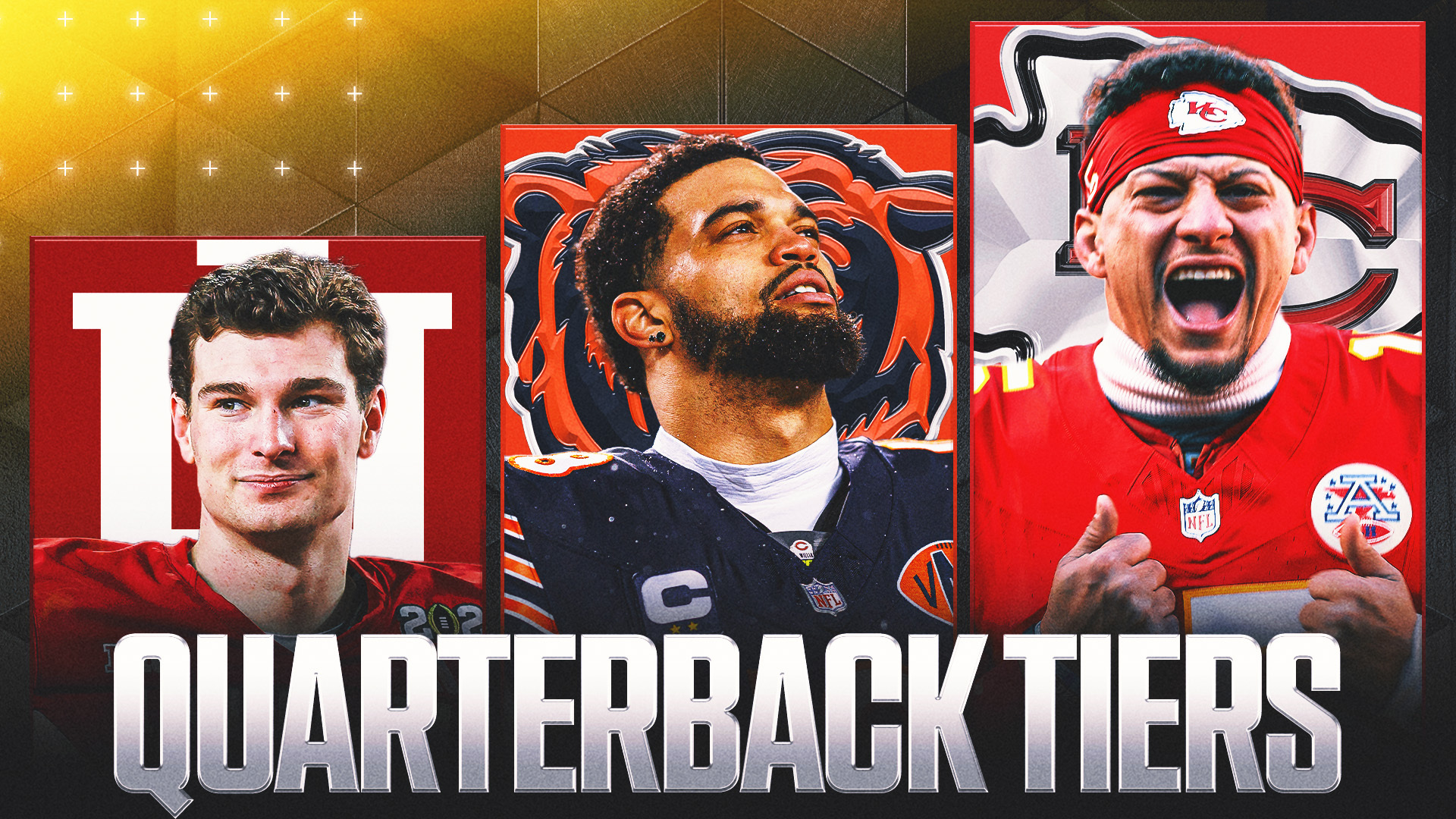
NFL QB Tiers: Ranking Each Team’s Current Starter By Trade Value

The beauty of the Matthew Stafford (and Jared Goff) trade was that it re-framed what we thought was possible in the NFL. Before that, it felt laughable to discuss a trade involving a QB of Stafford’s magnitude. But since Stafford, we’ve seen trades involving Deshaun Watson, Aaron Rodgers and Russell Wilson. Even last year’s Geno Smith trade to the Las Vegas Raiders came as a surprise. There’s a whole new dynamic around the NFL’s hot stove season. We can wonder: What if? So let’s do just that. Let’s imagine how each NFL team would respond if we approached them to trade for their starting QB. And it’s not just a fun exercise. It’s a way to measure a QB’s true value, assessing a combination of each QB’s talent, contract, age, accomplishments and style of play. Here is our trade value chart for every team’s starting QB. DAY 3 VALUE These teams have nothing of real value to trade at QB: T-31. Miami Dolphins: Tua Tagovailoa No one is calling for Tua and his $39 million base salary, which is why he’ll reportedly be released. T-31. New York Jets: Justin Fields No one would trade for Fields and his $20 million contract in 2026. 30. Pittsburgh Steelers: Will Howard Aaron Rodgers is a free agent, and the Steelers have been talking up how much they like Howard, which is great. But he was a sixth-rounder for a reason. He has no trade value after not playing as a rookie. 29. Cleveland Browns: Shedeur Sanders Given his contract value and notoriety, someone might offer a seventh-rounder for Shedeur. Why not? 28. Arizona Cardinals: Jacoby Brissett With Kyler Murray set to be released, Brissett is the Cardinals’ QB1 — for now. He showed he can operate an offense last year — and his contract would be team-friendly. Brissett may not have first-round value. But he’s also probably worth a fifth. 27. Minnesota Vikings: J.J. McCarthy If a guy goes in Round 1, it’s usually because he has fans around the league — not just in the spot where he landed. As bad as he’s been, maybe someone would throw the Vikings a sixth for McCarthy. 26. Atlanta Falcons: Michael Penix Penix’s status isn’t much different than McCarthy’s. At one point, many teams liked him. Does anyone still? 25. Indianapolis Colts: Daniel Jones Now that he’s set to make $37.5 million on the transition tag (while recovering from an Achilles tear and a broken leg), he’s probably worth a fourth, akin to Geno Smith netting a third last year. FIRST-ROUND VALUE If a team offered a mid-first-round pick … 24. New Orleans Saints: Tyler Shough Shough, the 40th overall pick in 2025, exceeded expectations. His throwing motion is as smooth as evaluators thought — and his talents translated as immediately as the Saints hoped. For a guy like Shough (whose upside might be limited), it’ll be about how quickly New Orleans can build a team around him. He didn’t show he was a world-beater, by any means. But given that he’s probably a better option than 2026 draft prospect Ty Simpson, the Saints would need a first-rounder in the top half of the first round. 23. Carolina Panthers: Bryce Young Young and the Panthers are approaching extension territory, so this year will make or break his relationship with Carolina. But for the time being, he’s a starting-caliber QB who is still ascending on a rookie deal — and he now has playoff experience. That’s all valuable. THE BLOCKBUSTER If a team put two first-round picks and change on the table, these QBs would be available. 22. Houston Texans: C.J. Stroud Quarterback performances really don’t get much worse than how Stroud played against the Patriots in the playoffs. But he has had his moments as the Texans’ face of the franchise — and those impressive moments extend beyond that fabled rookie season when Stroud looked like a future superstar. He’s entering a turbulent area in his development (only amplified by his impending contract extension) that will make or break him. There’s no saying what the future holds for Stroud’s career, but the Texans aren’t parting ways with him without major compensation. He’s young, and there’s just enough there. 21. New York Giants: Jaxson Dart It’s easy to imagine Joe Schoen still likes Dart after the efficient rookie year that the QB enjoyed — and without a supporting cast. Heck, it’s easy to imagine John Harbaugh was impressed, too. The uncertainty surrounding Dart was whether he could acclimate to a pro-style system after spending time in a wild-card system under Lane Kiffin at Ole Miss. There was no harder system to project into the pros than the Rebels, according to scouts last year. Well, Dart alleviated those doubts, exceeding expectations and playing well despite a shoddy supporting cast. By answering the pre-draft questions, he essentially doubled his value in just one year. The bigger question moving forward is how he’ll hold up physically. In his rookie season, Dart’s aggressive style of play — particularly as a runner — led to one concussion and five different concussion checks in the first 10 games (including preseason). You have to hope a secure, strong coach can reach Dart to take less contact. 20. Tampa Bay Buccaneers: Baker Mayfield It was a tough year for Mayfield, whose supporting cast has steadily declined since his league-wrecking year in 2024. His supporting cast might only get worse, given that Mike Evans is a free agent and Chris Godwin’s injuries seem to have taken a toll on his playmaking ability. But if plopped into another good situation, Mayfield could be that same system optimizer that he was for the Bucs. 19. Los Angeles Rams: Matthew Stafford Stafford once netted two first-rounders and Jared Goff. But that was when he was 33 years old and discontent in Detroit — and the team had almost no leverage. In this case, it’s the opposite, with the Rams wanting to win now with Stafford. They want a Super Bowl — not future compensation. Even at 38 years old, it would take more than what’s reasonable to pry the league’s reigning MVP away from Sean McVay. THE MEGA-BLOCKBLUSTER If a team put two first-round picks and two Day 2 picks on the table, these QBs would be available. 18. Detroit Lions: Jared Goff It’s a testament to Goff, now an established top-tier pocket passer, that he is currently worth two first-rounders when — previously — he was a piece of a greater package that included two first-rounders. He has proven himself as a guy who is going to make the most of your system. It’s just that you have to have a good system (and probably some good skill players, and definitely a good offensive line) to make the most of Goff. 17. Philadelphia Eagles: Jalen Hurts Tired: What if the Eagles traded A.J. Brown?! Wired: What if the Eagles traded Jalen Hurts!? I like Hurts. I think where he fails in the box score, he succeeds in the win column. And that’s a fairly controversial sentiment, given that pretty much everyone agrees that wins are not a QB stat. But in the case of Hurts, I think it really applies. When you watch closely, he has a major role in the Eagles getting the lead and holding onto it. He sacrifices production in order to get wins. And I’m not just making stuff up here — the results are there. He won a Super Bowl. He’s appeared in two. He’s at his best in a low-volume, high-efficiency passing attack. He’s very, very good when surrounded by a strong supporting cast. That’s why I could see a team coming after him on the trade market. And I could also see the Eagles parting ways with him for the right price. 16. Seattle Seahawks: Sam Darnold Speaking of system optimizers, Darnold was really good for Minnesota in 2024 and Seattle this past season — obviously playing a pivotal role during the latter’s playoff run, most notably outdueling Matthew Stafford in the NFC Championship Game. There were some low points in Darnold’s season, but that game ultimately rearranged what we thought we knew about him. A Super Bowl ring doesn’t hurt, either. Darnold is still getting better. And his contract is actually a reasonable deal, with the Seahawks taking on $37.9 million against the cap in 2026 (nearly identical to what the Colts are paying Jones). In the case of Darnold, the Seahawks want him. And so nobody is coming to offer what they’d want for him: two firsts and then some. 15. Las Vegas Raiders: (Presumptive 2026 No. 1 draft pick) Fernando Mendoza Mendoza might end up being the most polarizing first overall pick in recent memory. His pro comparisons are Matt Ryan and Jared Goff. Mendoza is smart and dedicated. He’s going to mature into exactly the kind of person and leader you want at the front of your franchise and offense. He has enough arm strength and athleticism. Just enough. He’s not the most enticing, high-upside prospect. But if the Jets were trying to move from No. 2 overall to the No. 1 spot — the difference in value would probably cost them the second overall pick and then two more first-rounders (as a part of a larger package). 14. Tennessee Titans: Cam Ward Ward demonstrated in his first year that he absolutely belongs in the NFL — and was deserving of the No. 1 overall pick. But now, the hard work really begins. He needs to shape his talents to fit into the structures of an NFL offense. He needs to cut out the bad decisions and stay disciplined. He needs to start winning football games. And he can’t do it all himself. It would help if the Titans invested in his supporting cast, too. Given everything that Ward put on film — with plenty of jaw-dropping throws — I think teams would be lining up to develop him. That’s why coach Robert Saleh raced to Tennessee for this job. It must have been about Ward, whose impressive play was reminiscent of Caleb Williams and Drake Maye from their rookie years. 13. Denver Broncos: Bo Nix The Broncos love Nix. And I suppose their struggles in the AFC Championship Game — even before the blizzard arrived — are a testament to Nix’s value and future. The thing that impressed me most about Nix in 2025 was his ability to execute a diverse set of game plans. The Broncos seemed to beat teams in different ways in different weeks. Nix’s flexibility made life easier for coach Sean Payton to flex his playbook on opponents. Nix will always have his detractors, in part because most people didn’t expect him to go where he went in the draft (12th overall). But he’s developing into a really competent passer. He’s both smarter and more athletic than people give him credit for. And he’s still on his rookie deal. THE GODFATHER OFFER If a team put at least three first-round picks on the table, this guy might be available. 12. Jacksonville Jaguars: Trevor Lawrence *Chris Collinsworth voice* Now here’s a guy I didn’t expect to place in this tier. Not if you asked me at this time last year. For years, Lawrence seemed to be going through a series of existential crises, failing each time to land on who he was — and who he should be — as a football player. It felt like he was defined by the missed throws, the turnovers and, yes, the drops. But I think coach Liam Coen has gotten Lawrence into a system and a series of routines to get the most out of this uniquely talented passer. I doubt he’ll ever enter the conversation as the best QB in the NFL, but he is one of the most talented QBs in the NFL. And Coen has finally harnessed that talent in ways we’ve not seen before. 11. San Francisco 49ers: Brock Purdy Because Mac Jones showed us what we’ve suspected all along — that Kyle Shanahan’s offense can make just about anyone look good — Purdy isn’t quite in the tier below. But make no mistake, he was tremendous in the second half of the season, both as a system operator and as a creative playmaker. His escapability and do-whatever-it-took mentality made him a threat in ways that we really hadn’t seen from him. He was throwing from unusual arm angles. He made big plays outside the pocket. Those surprise plays served as a reminder that Purdy is still developing, which is a big deal because he’s going to have to grow to keep the Niners in contention and justify his ballooning salary. 10. Washington Commanders: Jayden Daniels The injury situation is troubling. There’s no doubt about that. For all the hype about his rookie season, we’re starting to get flashes of Robert Griffin III and/or C.J. Stroud. And yet, his rookie film and his LSU production still make him one of the most compelling young QBs in the league. He might be frail in frame, but his pocket prowess and mobility are a rare combination. The Commanders — and likely several other teams — still see a guy who could be the next Lamar Jackson. 9. Dallas Cowboys: Dak Prescott Prescott is sort of Joe Burrow-lite. Prescott has all the same qualities as Burrow when it comes to pocket poise and mental acuity for the game. Prescott also has an impressive set of weapons (and, often, as unimpressive a defense) as Burrow. And it’s extremely likely that Prescott will continue to get better if he can stay healthy and plays into his late 30s. But there are complications. He is already 32, and he has never made it out of the divisional round of the playoffs. After 10 seasons in the league, you’d like to see Prescott win more playoff games — even giving him the handicap of the Cowboys craziness. He’s also the highest-paid QB in the NFL. 8. Chicago Bears: Caleb Williams There’s no doubt that he’s an absurd talent. There’s little doubt that he’s about to enjoy a meteoric rise. And it seems that Williams and Ben Johnson are both finding ways to compromise — and get the most out of each other. But for all his success this year, Williams only completed 58.1% of his passes in 2025. That’s the one metric that he will have to address to make himself untouchable at his time next year. Last year, he was probably the NFL’s most electric playmaker. But often, he doesn’t have to make life so difficult. 7. Los Angeles Chargers: Justin Herbert As bad as his numbers were, this was the year when Herbert proved he could handle just about any situation and play the position well. His offensive line was a disaster. His offensive scheme didn’t seem to be making the most of a deep group of pass-catchers. His running backs couldn’t find any room to run. By the end of the year, he had no support whatsoever. In 2025, the only good thing going for Herbert was that his defense did him the favor of helping him control the game — with mostly low-scoring affairs. In 2021, we saw Herbert shine, with impressive stats (5,014 passing yards, 38 passing touchdowns). It feels like we’re a long way away from the Chargers’ passing offense being that prolific again. But we also now know that he’s not the type of QB whose fundamentals fall apart in a terrible situation. He will be better next year. Without regression. He is almost as valuable as QBs get. UNTOUCHABLE These guys wouldn’t move. Barring the QB demanding a trade, the value is essentially beyond what teams can offer by NFL rules (which only allow teams to trade three first-round picks). 6. Green Bay Packers: Jordan Love Love was one of the most efficient passers last year, with some of the most electrifying throws in football. In terms of unbelievable and creative playmaking, Love did so many of the things that we often praise Mahomes for: improvisation, pinpoint accuracy, off-platform throwing, unique arm strength. Love’s wow-factor was legitimately a 10 of 10. But that’s not why I suddenly have a newfound affection for Love’s style of play. The biggest reason is his interception percentage, down to 1.4% in 2025 from 2.6% in 2024. That’s a massive difference for a QB who’s taking (and converting) as many risky plays as Love is. And Love is doing it without an elite receiver at his disposal. This dude is still underrated. 5. Baltimore Ravens: Lamar Jackson When you fire a coach like John Harbaugh — who immediately became the most sought-after candidate on the open market — you must be committed to your QB. Because Jackson wasn’t particularly good in 2025. It’s hard to know if he was dealing with acute issues — or whether he’s on the verge of a more significant decline. None of that matters. The Ravens are definitely all-in on him. And for good reason! He scored 45 touchdowns for Baltimore in 2024. When he’s healthy, he’s among the league’s most dangerous threats at the position. 4. New England Patriots: Drake Maye The playoff run was not his finest football. The Super Bowl might have actually been the worst he’d played since early in his rookie year. But his body of work — over the course of 2025 — elevated him into this tier. The Patriots wouldn’t trade their 23-year-old starter under almost any circumstances. They love him. He’s an ideal fit for the offense and the organization. It’s obviously dangerous to get overboard in praising a second-year QB, because look at what happened to Carson Wentz after his incredible second year. But for the time being, Maye demonstrated he has everything (and more) that a franchise needs to win a Super Bowl. They just need to figure out how to get him back there. 3. Cincinnati Bengals: Joe Burrow The thing about a QB like Burrow is that he should only get better with age. There’s a world where Burrow can continue to develop like Rodgers and Stafford have, increasing their understanding of the game to the point where it’s just about impossible to beat them mentally. Burrow will have more dependence upon his offensive line and his receivers than Patrick Mahomes, Josh Allen and Lamar Jackson. But we’ve also now seen pocket passers last into their 40s — and remain among the league’s best. The Bengals are holding Burrow back. But I see a world where he has 10 more years of dominant play. It’s hard to make that case for Allen or Jackson. 2. Buffalo Bills: Josh Allen It’s strange to think that he is getting more impressive — even as his statistics get worse and his playoff results stay roughly the same. The Bills have struggled to put together good teams in recent years. But Allen has found a way to keep his team in contention. That’s more than you could ask of a QB. And it’s why he’s a perennial MVP candidate. The only question regarding Allen, set to enter his age-30 season, is how long can he keep this up? Allen is a wild man as a runner and it’s electrifying. But just because he’s a big dude, it doesn’t mean those hits don’t add up. Cam Newton is the clearest example of that, with his athleticism and overall play steeply declining — seemingly because of how much contact he took. But that’s a worry for another time. For now, he’s playing QB at a higher level than anyone in the NFL, even… 1. Kansas City Chiefs: Patrick Mahomes After an unpredictable 2025 season for many of the best QBs in the NFL, it’s murky to try to make sense of who is the best right now. But there’s no doubt about who is the greatest QB of this generation. No amount of recency bias should stop every organization from picking Mahomes as the face of their franchise, if given all the options. He has a track record of overwhelming statistical success, which he seemed to willingly compromise to begin his track record of overwhelming Super Bowl success. The ACL injury is likely to make for a tough 2026 season. But assessing the broader view of his development, I trust that Mahomes is actually still ascending — and that he will hit another run of sustained dominance.​Latest Sports News from FOX Sports
Categories
Sports Fox

Bills Find Their Big-Name WR, Will Reportedly Trade for Bears Standout DJ Moore

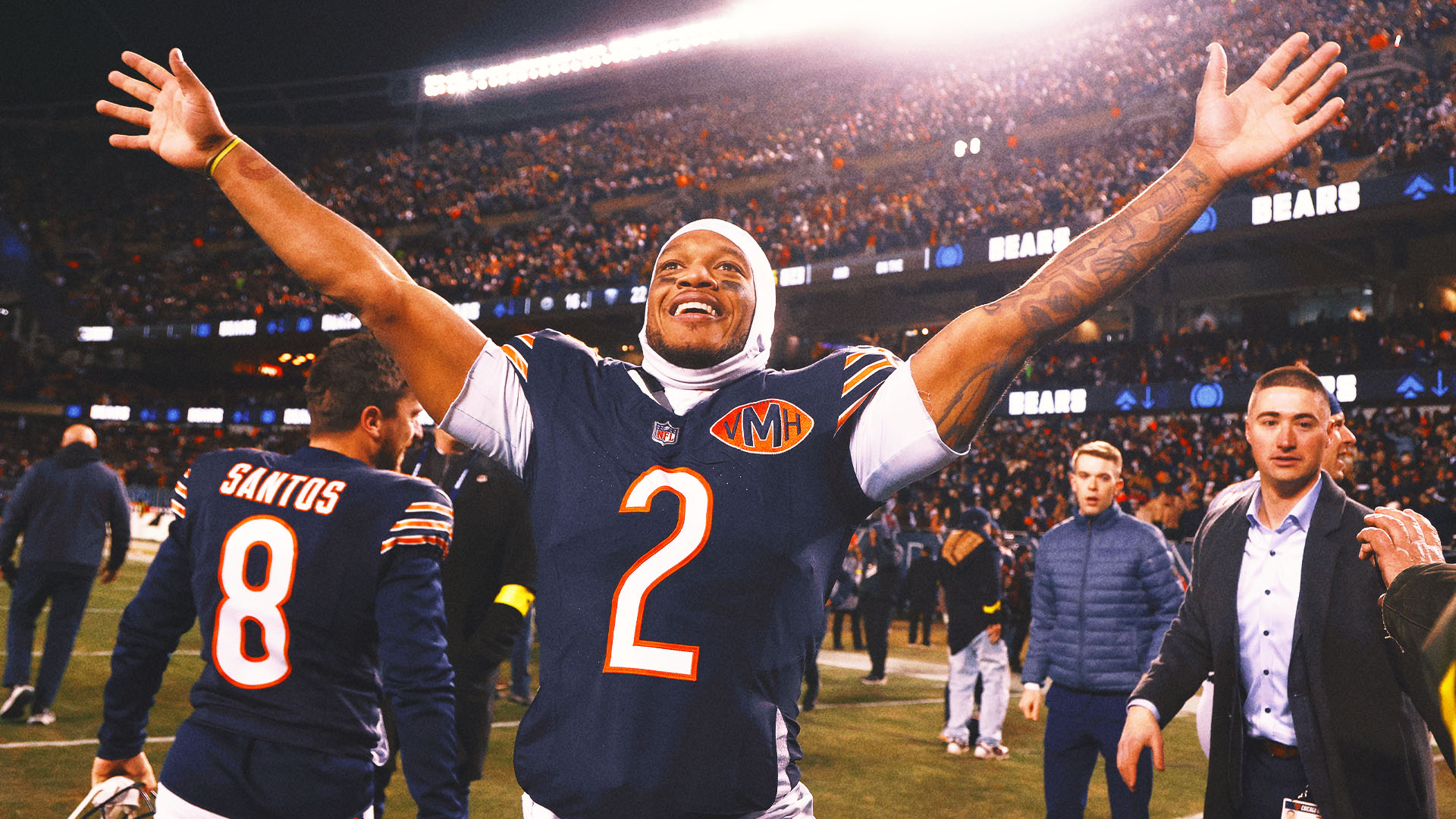
After multiple years of lackluster production at wide receiver, the Buffalo Bills have acquired a pass catcher that could help Josh Allen in a major way. The Bills will acquire wide receiver DJ Moore in a trade with the Chicago Bears, ESPN reported Thursday. Chicago will receive a second-round pick in the 2026 draft for Moore, according to NFL Media. The Bears will also reportedly give up a fifth-round pick in the 2026 draft. Moore, who’ll turn 29 in April, has consistently produced in his eight-year career, logging four seasons of at least 1,000 receiving yards. His 682 receiving yards this past season were actually a career low, but it was also likely the result of Bears head coach Ben Johnson’s run-heavy offense. Other playmakers also emerged for Chicago in the passing game last season, like rookie tight end Colston Loveland. As for Buffalo, it had been on the search for a wide receiver with high potential since it traded Stefon Diggs in the 2024 offseason. While Allen arguably played his best football over the last two seasons, he’s done so without much help in the passing game. Khalil Shakir has been the Bills’ leading receiver in each of the last two seasons, but he’s failed to reach the 900-yard mark in his career. Keon Coleman, whom the Bills took in the second round of the 2024 draft, has largely struggled in his career, logging just 960 receiving yards in 26 games. The trade allows Moore to reunite with new Bills head coach Joe Brady. Moore and Brady spent two seasons together with the Carolina Panthers, as the latter worked as their offensive coordinator in 2020 and 2021. Moore posted over 1,100 receiving yards in both years, recording 2,350 receiving yards and eight touchdowns in 32 games. Moore has 608 receptions for 8,213 yards and 41 touchdowns in eight NFL seasons since getting taken with the 24th pick in the 2018 draft. The deal can’t be made official until the new league year opens on March 11. The Associated Press contributed to this report.​Latest Sports News from FOX Sports
Categories
Sports Fox

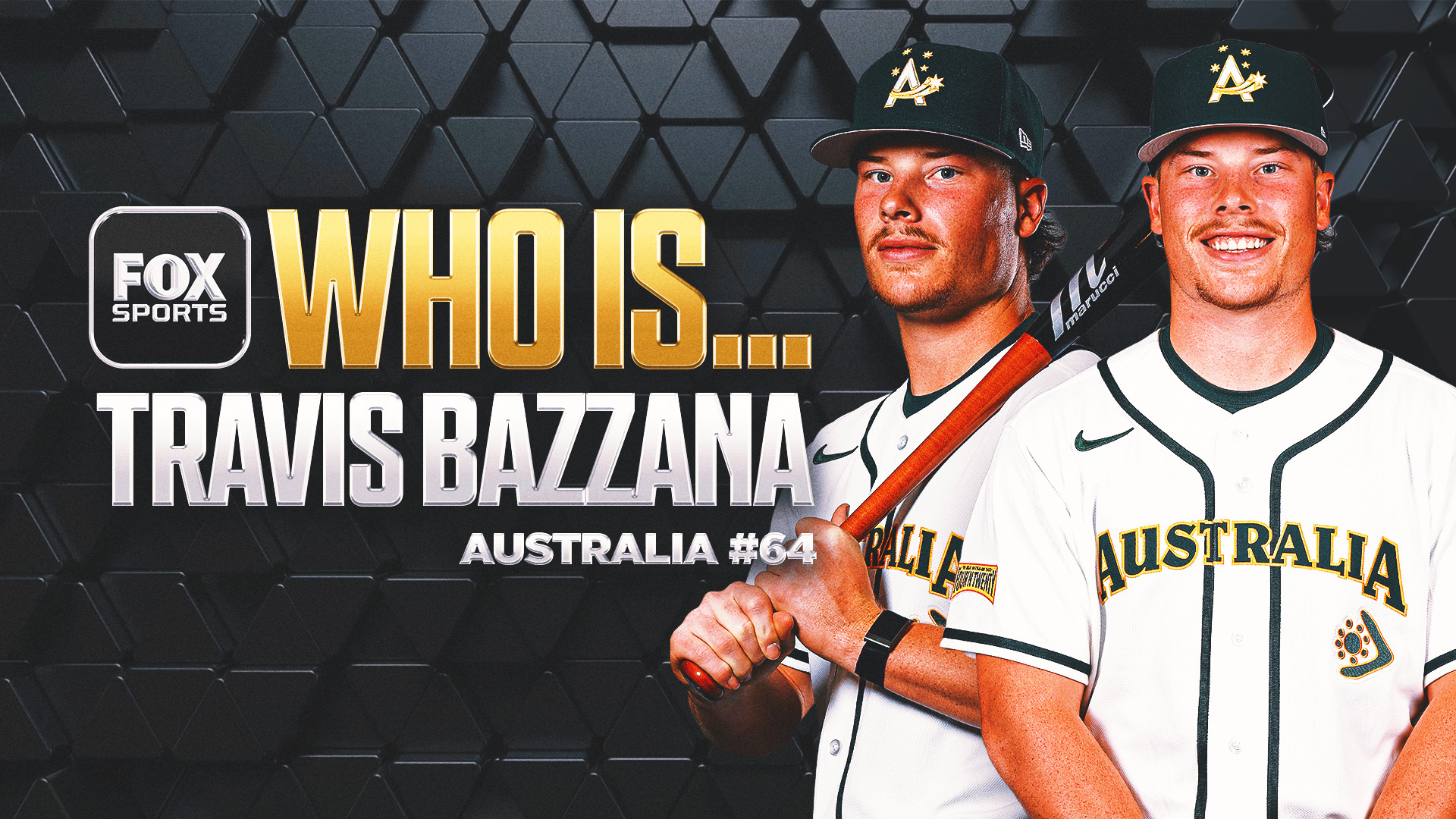
Who is Travis Bazzana? MLB Prospect And Australia Native Talks WBC (And Sushi)

Team Australia infielder Travis Bazzana has yet to make his Major League Baseball debut, but he has already made MLB history. Bazzana became the first Australian-born player to be drafted in the first round when the Cleveland Guardians made him the first overall pick in 2024. Two years later, the top prospect is knocking at MLB’s door. After finishing last year at Triple-A, where he had an .858 OPS in 26 games before his season was cut short by an oblique injury, Bazzana was a non-roster invite at big-league camp this spring. He’s far from a lock to make the Opening Day roster, but he’s on track to be patrolling second base in Cleveland at some point this year. Before that happens, though, Bazzana has another debut to make. He’ll lead his home country in the World Baseball Classic for the first time when the tournament kicks off with Australia facing Chinese Taipei at the Tokyo Dome. Two weeks before Bazzana left for Japan, I caught up with the 23-year-old infielder to talk about growing up playing baseball in the suburbs of Sydney, why and how he was drawn to the sport, the food he misses most from back home, the allure of representing Australia in the WBC, his 2026 goals and more. I know you played cricket and other more popular Australian sports growing up. What drew you to baseball? My dad played a lot of sports. He played rugby, cricket, baseball primarily, and he was solid at all three. I’m the youngest of three boys, and they were around the field, Dad was around the baseball club, and I just took a lot of attention to it. I would ask my parents to hit tee-ball. I would be the bat boy for my older brothers and run around the field. I loved every second of just being at the baseball field and watching and taking it all in. It never got pushed on me, neither my brothers, but it became my identity early on. As early as I can remember writing about what I wanted to do, it was like I wanted to be a baseball player, and everyone knew I played baseball. That was just like my thing. I played all the other sports, but baseball is what I took a passion to. If I had a chance to sit down with free time when I was little, I was watching MLB.com highlights. How hard was it to find people to play baseball with in Australia? There are lots of baseball clubs and lots of Little League systems and things in place for grassroots baseball in Australia that made playing consistently fairly easy, but in terms of finding friends that aren’t at the baseball club to play with, like I didn’t play any backyard baseball with friends growing up, really. Maybe when we had, like, my team meet up and do that. [TOP 10 WBC MOMENTS: What makes the all-time list?] But if I was with my school friends, it was rugby or cricket at the park on the weekend when we had free time. At school, recess or whatever, it was cricket, touch rugby, sometimes basketball, sometimes soccer, never baseball. At my high school, there were only a couple kids that played baseball and not at a high level, really. In terms of finding people to play with, it was like I would be going to the baseball field to do that. I wasn’t playing wiffle ball, I was playing backyard cricket. Can you describe growing up in Turramurra for those who aren’t familiar? It’s a very nice northern suburb of Sydney. Lots of good parks. Lots of good clubs for all kinds of sports. Good schools. It’s a great spot. Let’s just say the house prices in Turramurra are probably booming right now and have been. They’re insanely high, so it’s a good spot, and I was lucky to grow up there. But yeah, if you walked around Turramurra, you’d probably find some kids playing rugby and cricket. When did playing pro start to feel like a real possibility for you? I think when I was like 14 was when it really started to kick in that I was going to get a chance to pursue what I had always worked for. I was 14 when I was playing in the 15U national tournament in Australia, and I felt like I could hold my own with some of the older kids, and there was some pro scouting interest starting to arise. So that was when I was like, OK, I think I’ll be capable to at least take some kind of path toward pro baseball, whether that was go pro or go to college. I really started to kick in the planning for that. Is there a place or type of food you miss the most when you’re not home? One thing that’s really cool about Australia is we have really good sushi for not a premium. You can find great sushi spots all around where you get, like, really quality rolls for $3-5. So you have lunch, get three good sushi rolls for $12, and the quality’s great, and there’s no issues, and it’s consistent. Here, you go to a sushi place, and they charge you $18 for a roll, and you’re like, from my perspective, that’s like five times too much. It’s rice with a little bit of fish. The upcharge here is big. They make sushi the very boujee thing in America, and it doesn’t have to be. Considering this will be your first time competing for Australia at the WBC, how well do you know the other guys on the team? There are only a couple of guys on the roster that I grew up sort of playing with or against. The majority of those guys, it was sort of academies, Australian Academy or our state academies back home where maybe they’re a couple of years older than me, but all the best youth players would kind of get together. There are times when I was around some of them then. Most of the rest of the players were people I kind of watched on the men’s team in the last 10 years when I was coming up that I hadn’t spent much time around, maybe played a game or two against them in the Australian Baseball League when I was young before I went to college. I definitely knew who all of them were, and then I got to play with most of those guys last year in the Premier12 tournament. So I kind of know everyone on the team now, but from childhood it was mainly watching most of the guys. How much fun was it to watch Australia advance out of the first round for the first time in 2023? How quickly did you decide you wanted to participate in 2026? I was wishing I could have been on that team. I was in college watching, but I was in the middle of a season and hadn’t really earned that right yet, but they did an incredible job that year, and people stepped up in huge situations, and that whole roster really played their role and did a great job. It was something that was on my mind for a long time, and that kind of cemented, ‘This next tournament, I’m going to get the chance,’ and I let everyone know that was what I wanted to do, and now it’s almost here. I know you dealt with a couple of oblique injuries last year. When did you start to feel right again, and what’s your goal for 2026? The last oblique issue happened like the second to last week of the season in Columbus, so I went home right after the season and was doing rehab work but nothing very intense and a lot of just relaxing with family. Once I got back from Australia and I was finished traveling and was able to ramp back up, I would say I was feeling good. By Nov. 10, I was kind of clear of that, so obliques were clear by November, and I had a really strong build-up. Looking ahead, I’m just trying to make the most of camp. Obviously, the big leagues are on the horizon, but it’s just about performing and continuing to get better and showing the big-league staff what I can do. Once it’s there, just enjoy the game, play hard like I have, and everything should take care of itself. Can you see the opportunity ahead? Yeah, 100%. I’m in big-league camp and get to take reps with guys that have been there, done that, every day. I feel like it’s right around the corner. I’ve just got to do what I can, and if opportunity arises, just take it with both hands. Was it a hard choice to leave camp knowing how close you are to the big leagues? It’s something I thought about, but it was never going to shy me away from going and doing [the WBC]. At the end of the day, if I was going somewhere that was a cool event to not play baseball, it would make sense. But I’m going to play on one of the biggest stages in the world. In my opinion, it competes with playoff baseball in MLB. I think if I’m physically prepared, there’s almost not a better way to get good game reps in an important environment to prepare for a season. So there’s obviously a team aspect that I’ll be missing here for like 12 days, maybe 10 days, and hopefully more if we go to Miami. But at the end of the day, if I’m playing against some of the best players in the world, in front of 60,000 or 50,000 in the Tokyo Dome, whatever it is, I think it’s a positive no matter what. Hopefully, I can make the most of that and come back.​Latest Sports News from FOX Sports
Categories
Sports Fox

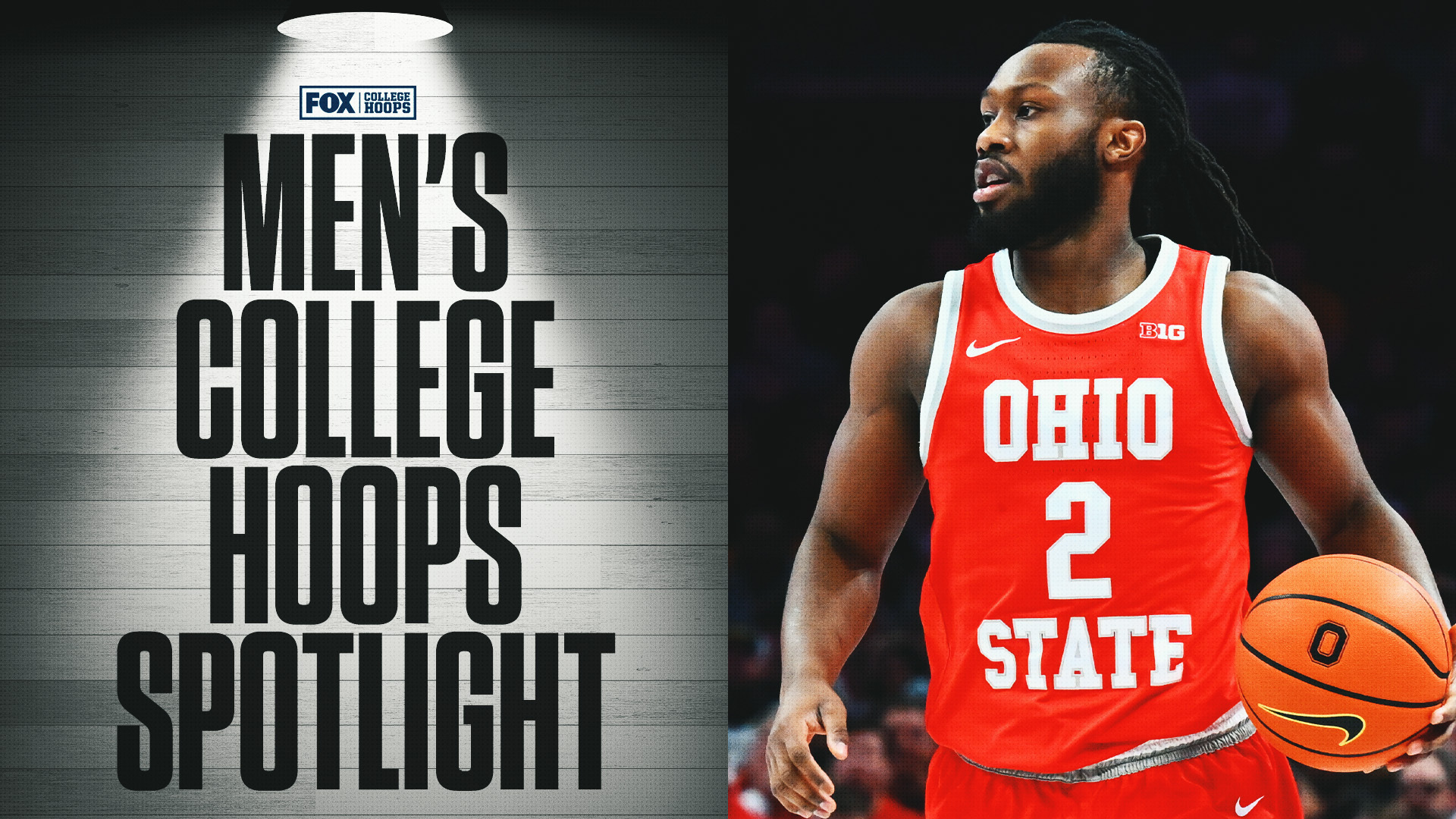
Men’s College Hoops Spotlight: Diving Deep into 10 NCAA Tournament Bubble Teams

As far as high-pressure moments go, Tuesday night was chock-full of them for March Madness hopefuls living life on the bubble. Three of those teams scored upsets over ranked opponents when UCLA toppled No. 9 Nebraska, TCU upended No. 10 Texas Tech and Georgia dispatched No. 16 Alabama. Several more from outside the power conferences improved their position as well, setting the stage for what should be an excellent final few days of the regular season. Though this year’s collection of bubble teams isn’t as strong as we’ve seen in the past, there’s no shortage of storylines among the schools still jockeying for position. Big brands like Ohio State, Indiana and Auburn are clawing for potential at-large bids. As are several traditional mid-major powers like New Mexico, VCU and San Diego State. So as the madness draws ever closer, here’s a breakdown of 10 teams hovering along the NCAA Tournament cut line with less than two weeks to Selection Sunday: 1. Ohio State Buckeyes Record: 18-11 overall, 10-8 Big Ten WAB Rank: No. 37 NET Rank: No. 34 Breakdown: 2-10 vs. Quad 1; 6-1 vs. Quad 2; 4-0 vs. Quad 3; 6-0 vs. Quad 4 Remaining schedule: at Penn State (March 4); vs. Indiana (March 7) Even though Ohio State hasn’t won consecutive games since defeating UCLA and Minnesota in mid-January, it quickly jumped to the right side of this year’s bubble by defeating then-No. 8 Purdue over the weekend. That victory gave the Buckeyes their second win over a ranked opponent after knocking off then-No. 24 Wisconsin on Feb. 17, assuring head coach Jake Diebler and his team of finishing no worse than .500 in Big Ten play. With only one defeat to teams ranked outside the top 54 in KenPom, the Buckeyes have done an excellent job avoiding bad losses while always showing up against overmatched conference opponents. Barring three straight defeats between now and Selection Sunday — two in the regular season and one in the Big Ten Tournament — it’s fair to say Ohio State should feel comfortable about its chances of earning an at-large bid. [MEN’S NCAA: Top 10, Bubble Team NET Rankings] 2. TCU Horned Frogs Record: 20-10 overall, 10-7 Big 12 WAB Rank: No. 42 NET Rank: No. 45 Breakdown: 4-6 vs. Quad 1; 5-2 vs. Quad 2; 3-1 vs. Quad 3; 7-1 vs. Quad 4 Remaining schedule: vs. Cincinnati (March 7) In some respects, the Horned Frogs have spent the season digging themselves out of a hole that originated during an opening-night defeat to New Orleans, a team that was ranked No. 297 in KenPom when that game was played back on Nov. 3. Though head coach Jamie Dixon and his team eventually reached 11-3 overall, they began conference play with an unsightly 1-4 start that kept them below .500 in the Big 12 until a three-game winning streak at the end of February. But Tuesday’s massive victory over No. 10 Texas Tech means the Horned Frogs will finish no worse than 10-8 in what is largely considered the toughest conference in the country. The result added another marquee victory alongside earlier wins over then-No. 10 Florida and then-No. 5 Iowa State that have aged extremely well. TCU has likely punched its ticket. [AP TOP 25: UNC Surges, Alabama Exits, Fairfield Enters] 3. Auburn Tigers Record: 16-14 overall, 7-10 SEC WAB Rank: No. 48 NET Rank: No. 38 Breakdown: 5-11 vs. Quad 1; 2-2 vs. Quad 2; 2-1 vs. Quad 3; 6-0 vs. Quad 4 Remaining schedule: at No. 16 Alabama (March 7) Unless something drastically changes via a lengthy SEC tournament run, the Tigers will almost certainly be among the most divisive, most scrutinized teams come Selection Sunday. Auburn began the season, its first under head coach Steven Pearl, ranked No. 20 in the AP Poll after reaching the Final Four last year. But things soon unraveled for a team with one of the best offenses in the country — the Tigers are still ranked No. 11 in KenPom for offensive efficiency — that is routinely let down by a defense checking in at No. 119 nationally. Still, noteworthy victories over then-No. 14 St. John’s, then-No. 15 Arkansas and then-No. 16 Florida have been enough to keep Auburn’s postseason hopes afloat despite sinking three games below .500 in conference play. A victory over No. 16 Alabama in the regular season finale on Saturday would make the Tigers’ case even more polarizing. 4. Seton Hall Pirates Record: 20-10 overall, 10-9 Big East WAB Rank: No. 55 NET Rank: No. 56 Breakdown: 2-4 vs. Quad 1; 5-4 vs. Quad 2; 6-2 vs. Quad 3; 6-0 vs. Quad 4 Remaining schedule: vs. No. 18 St. John’s (March 6) Had Seton Hall assembled this kind of résumé amid a more traditional season for the Big East — one that included more than three teams ranked among the top 50 in KenPom — the Pirates would be all but assured of an at-large berth. But this year’s Big East has fallen to fifth in net rating among the power conferences behind the SEC, Big 12, Big Ten and ACC, and that has lessened the impressiveness of what a near-.500 record in league play really means. Head coach Shaheen Holloway and his group secured a decent non-conference victory by knocking off NC State in late November, but that remains the Pirates’ only win over a team projected to make the NCAA Tournament from the power leagues. The regular season finale against St. John’s will give Seton Hall one more chance to add a high-profile ranked win before the conference tournament. 5. San Diego State Aztecs Record: 19-10 overall, 13-6 Mountain West WAB Rank: No. 52 NET Rank: No. 44 Breakdown: 2-5 vs. Quad 1; 5-3 vs. Quad 2; 5-1 vs. Quad 3; 6-0 vs. Quad 4 Remaining schedule: vs. UNLV (March 6) Three years removed from reaching the national championship game, San Diego State finds itself in the precarious position of potentially missing the NCAA Tournament for the first time since the 2018-19 campaign. An early season, double-overtime loss to Troy was compounded by lopsided nonconference defeats to then-No. 7 Michigan and then-No. 1 Arizona that suggested the Aztecs were significantly removed from the nation’s elite. And while they reeled off 12 victories in their first 14 games during Mountain West play to amass an 18-6 record, three conference losses across 11 days in late February dragged head coach Brian Dutcher and his team back toward the bubble. At this point, the biggest pluses on San Diego State’s résumé are victories over conference rivals and projected NCAA Tournament teams New Mexico and Utah State, both of which split their respective season series with the Aztecs. 6. Santa Clara Broncos Record: 24-7 overall, 15-3 WCC WAB Rank: No. 41 NET Rank: No. 41 Breakdown: 1-5 vs. Quad 1; 6-1 vs. Quad 2; 8-0 vs. Quad 3; 8-1 vs. Quad 4 Remaining schedule: Conference tournament Former NC State and Arizona State head coach Herb Sendek has brought Santa Clara within a whisker of its first NCAA Tournament appearance since 1996. Aside from a shocking defeat to Loyola Chicago on Dec. 20 — the Ramblers are now ranked No. 308 in KenPom — Sendek and his team have largely avoided bad losses. Their only other blemishes came against Saint Louis, New Mexico, Gonzaga (twice), Saint Mary’s and Arizona State, with all but the latter expected to make the NCAA Tournament. A respectable nonconference slate includes wins over power-conference foes Xavier and Minnesota, plus a double-digit victory against McNeese, a potential March Madness entrant for the third consecutive season. The Broncos likely need to win at least one game in their conference tournament to feel comfortable about earning an at-large bid from a league that typically only receives two spots, though there’s a path toward three berths for the WCC this season. 7. Cal Golden Bears Record: 20-9 overall, 8-8 ACC WAB Rank: No. 50 NET Rank: No. 63 Breakdown: 4-4 vs. Quad 1; 2-4 vs. Quad 2; 5-1 vs. Quad 3; 8-0 vs. Quad 4 Remaining schedule: at Georgia Tech (March 4); at Wake Forest (March 7) Under the direction of head coach Mark Madsen — who won two NBA championships as a reserve center with the Los Angeles Lakers — the Bears are eager to snap a decade-long NCAA Tournament drought. Now in his third season, Madsen has improved the program from 13 wins in 2023-24 to 14 wins in 2024-25 and now 20 victories so far this year. A sizzling 12-1 start gave way to some early stumbles in conference play, with the Bears dropping four of their first five ACC games. Since then, though, Madsen’s team has vaulted back into postseason contention by winning seven of its last 11 games, including noteworthy victories over likely NCAA Tournament teams North Carolina, Miami and SMU. An ugly loss to Pittsburgh last weekend erased some of the Bears’ positive momentum, but winnable games against Georgia Tech and Wake Forest to end the regular season should still give Cal a chance to solidify its case. 8. VCU Rams Record: 23-7 overall, 14-3 Atlantic 10 WAB Rank: No. 46 NET Rank: No. 47 Breakdown: 1-5 vs. Quad 1; 4-2 vs. Quad 2; 8-0 vs. Quad 3; 9-0 vs. Quad 4 Remaining schedule: at Dayton (March 6) After guiding Bryant to the NCAA Tournament last season, head coach Phil Martelli Jr. left the Bulldogs to take over at VCU, a strong mid-major program with 14 NCAA Tournament appearances already this century, including one Final Four trip in 2011. This year’s Rams had plenty of opportunities to show they are worthy of adding to that postseason pedigree in games against likely March Madness qualifiers Utah State, NC State, Vanderbilt, New Mexico and Saint Louis (twice) — but all of them ended in defeat. VCU’s most notable victory entering the A-10 Tournament is an impressive 18-point clobbering of Virginia Tech, which is squarely on the bubble itself at 19-11 overall and 8-9 in the ACC. Martelli’s group likely needs to win its final regular season contest and at least a game or two in the conference tournament to offset a relatively soft résumé that was inflated by subpar competition. 9. New Mexico Lobos Record: 22-7 overall, 13-5 Mountain West WAB Rank: No. 45 NET Rank: No. 42 Breakdown: 2-5 vs. Quad 1; 6-5 vs. Quad 2; 4-1 vs. Quad 3; 9-0 vs. Quad 4 Remaining schedule: vs. Colorado State (March 4); at Utah State (March 7) When head coach Richard Pitino left for Xavier after guiding New Mexico to consecutive NCAA Tournament appearances in the last two seasons, the Lobos responded with a shrewd hire of Eric Olen, who’d overseen the transition from Division II to Division I at UC San Diego and then led the Tritons to 30 victories and a March Madness bid last year. Now, Olen has New Mexico on the cusp of reaching the NCAA Tournament for a third consecutive season, something that only happened on two other occasions in program history (1995-99; 2011-14). The Lobos secured impressive nonconference wins over fellow bubble teams Santa Clara and VCU that could prove massively important come Selection Sunday. But they’re also entering Wednesday’s game against Colorado State sitting tied for second in the Mountain West standings, trailing Utah State and level with San Diego State. There’s still work to be done. 10. Indiana Hoosiers Record: 17-12 overall, 8-10 Big Ten WAB Rank: No. 51 NET Rank: No. 40 Breakdown: 2-11 vs. Quad 1; 2-1 vs. Quad 2; 6-0 vs. Quad 3; 7-0 vs. Quad 4 Remaining schedule: vs. Minnesota (March 4); at Ohio State (March 7) The fact that Indiana is still alive — somehow, someway, against all odds — demonstrates just how soft this year’s bubble really is, which should double as a warning for those in favor of NCAA Tournament expansion. Despite wins over then-No. 12 Purdue and UCLA in late January, the Hoosiers have endured two separate four-game losing streaks in Big Ten play and need to win both of their remaining games just to finish .500 in the conference. They did not beat a single non-conference foe currently ranked among the top 100 in KenPom, with blowouts of Marquette (No. 103) and Kansas State (No. 102) — two teams with just eight league wins combined — representing all that first-year head coach Darian DeVries can cling to in that portion of his résumé. Indiana will likely need to win two or three more games between now and Selection Sunday to have a realistic chance at making the field.​Latest Sports News from FOX Sports
Categories
Sports Fox

Maxx Crosby Trade Fits Include Bears & Cowboys; Raiders Need ‘a Full Rebuild’

No player fits the mystique of the Las Vegas Raiders better than edge rusher Maxx Crosby, who headlines the franchise’s pre-game introductions on game days and remains one of the most popular players among fans of the Silver and Black. Raiders general manager John Spytek understands that sentiment, saying at the NFL Scouting Combine that he expects Crosby to remain with the Raiders for the upcoming season. “Maxx is an elite player,” Spytek said. “I’ve been very upfront from the start when I got here that we’re in the business of having really good players on the team, and we need a lot more of them. And it’s hard to build a great team without elite players.” However, FOX Sports Insider Jay Glazer reported that Crosby wants out of Las Vegas. An NFL personnel executive I spoke to believes it’s a good time for the Raiders to trade Crosby as well. The executive told me he thinks it would take two first-round picks and a starting player to consummate a deal for Crosby, and that it was time for the talented edge rusher and the Raiders to part ways. “The organization needs a full rebuild,” the personnel executive told me. Crosby turns 29 years old in August and is signed through the 2029 season. The Raiders have the No. 1 overall pick in this year’s draft and are expected to take the team’s quarterback of the future in Fernando Mendoza. But as the Raiders potentially seek a trade package similar to the one the Dallas Cowboys received from the Green Bay Packers for Micah Parsons, one league source doesn’t love the idea of trading Crosby. But he had a few potential destinations in mind for the disgruntled star. “I could see the Rams, Bears and maybe the Bills or Ravens [as suitors for Crosby],” a league source told me. “Probably 60/40 they move him. But he could remain for sure. Trading excellent players is a risky business.” So, with that in mind, here are five teams that could make sense as destinations should the Raiders choose to move on from one of the best defensive players in the league in Crosby. 5. New England Patriots Runners-up in the Super Bowl, the Patriots could use more pass rush help to augment the dominant interior pressure provided by Milton Williams and Christian Barmore, and Crosby would be an ideal fit for the Patriots. And New England’s coaching staff knows Crosby, having played for offensive coordinator Josh McDaniels when he served as head coach of the Raiders. The Patriots can continue to take advantage of some wiggle room financially, with Drake Maye still being under his rookie contract. 4. San Francisco 49ers The 49ers totaled a league-low 20 sacks last year. The team’s top two pass rushers – Nick Bosa and rookie Mykel Williams – both finished the year on the injured reserve due to knee injuries that required season-ending surgery. The addition of Crosby would allow time for Bosa and Williams to fully recover from those injuries. New San Francisco defensive coordinator Raheem Morris has worked with talented pass rushers like Aaron Donald and Von Miller in the past. Morris could put Crosby in the best possible position for success in his versatile scheme. All-Pro linebacker Fred Warner is also expected to make a healthy return from a season-ending leg injury last season. The 49ers could use another game wrecker on defense to compete against the defending champion Seattle Seahawks in the NFC West. 3. Baltimore Ravens Nose tackle Travis Jones led the Ravens with only five sacks last season, so Baltimore needs pass-rush help along the perimeter of their defense. Jones was rewarded with a new deal this offseason. The Ravens played without their best player up front in 2025, with Nnamdi Madubuike missing the last 15 games because of a neck injury. His return to play is still uncertain. New head coach Jesse Minter is familiar with Crosby from his time serving as defensive coordinator for the Los Angeles Chargers and facing the Raiders twice a year. Baltimore wants to get back to playing dominant defense, and what better way to do that than adding one of the best pass rushers in the game? A top priority for the Ravens is re-signing franchise quarterback Lamar Jackson, but the audition of Crosby would help augment a defense led by defensive coordinator Anthony Weaver, who has returned to the organization. 2. Chicago Bears Crosby and Bears quarterback Caleb Williams are close, and Chicago could use another pass rusher for a team ready to chase a Super Bowl in the NFC North. The Raiders traded another game-changing edge rusher to Chicago eight years ago in Khalil Mack, so there’s some history between the two teams in executing blockbuster trades. Bears defensive coordinator Dennis Allen, a former head coach of the Raiders, would get the most out of Crosby’s unique skill set. And Crosby would be a great fit for the culture of the Bears, which has a rich history of talented defensive players like Mike Singletary, Brian Urlacher and Richard Dent. 1. Dallas Cowboys Owner Jerry Jones traded one of the top pass rushers in the league away to the Green Bay Packers last year after a contract impasse in Parsons. Here, Jones attempts to fix his underwhelming defense by adding one of the best pass rushers in the game in Crosby. With two first-round picks, the Cowboys have the draft capital to get something done. The Cowboys brought in new defensive coordinator Christian Parker to replace the fired Matt Ebeflus, who served as the defensive passing game coordinator under defensive guru Vic Fangio with the Philadelphia Eagles. Dallas has talented pieces already on the roster in Quinnen Williams, Dante Fowler Jr. and Kenny Clark. A Texas native, Crosby would be another transformational foundation piece to help jumpstart an underperforming defense from last season.​Latest Sports News from FOX Sports
Categories
Sports Fox

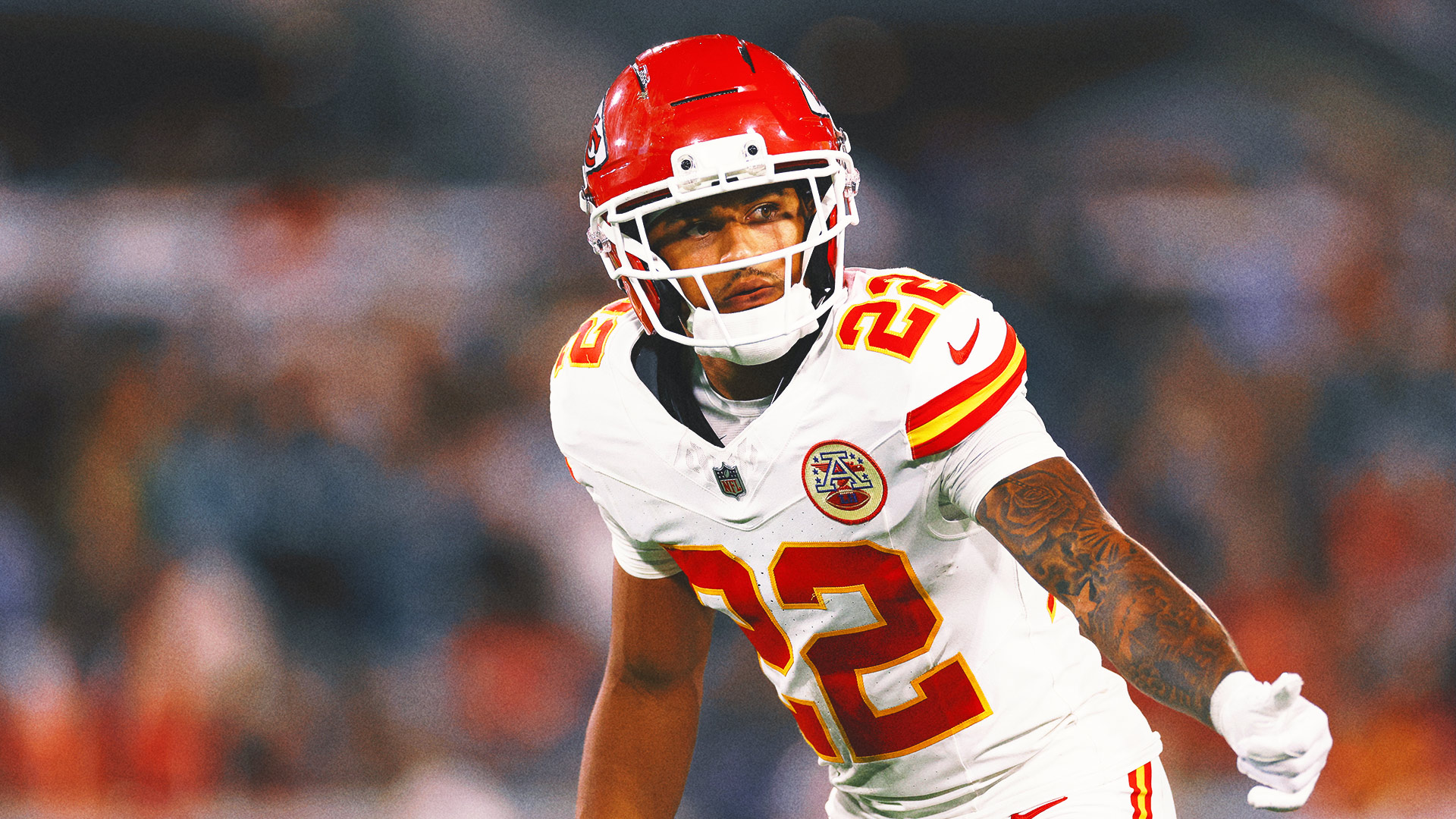
Trent McDuffie Trade Grades: F Them Picks 2.0? Rams Rightly Bring Back Mantra

In a conversation with reporters on Tuesday, Los Angeles Rams general manager Les Snead hinted at the possibility his franchise could make another big splash, exchanging premium picks for premium players. Well, Snead and the Rams went back into “F them picks” mode on Wednesday. They reportedly agreed to trade for Kansas City Chiefs All-Pro cornerback Trent McDuffie, giving up their first-round pick in the 2026 NFL Draft. They also gave up fifth and sixth-round selections in the upcoming draft to go along with a 2027 third-round pick. The move shows a sense of urgency from the Rams as they use a similar strategy to how they built their 2021 Super Bowl-winning team. With reigning MVP Matthew Stafford turning 38 years old in February and in the final year of his contract, Snead knows the Rams are smack dab in a Super Bowl window and need to make the most of that opportunity. Of course, the Rams have shown in years past a willingness to give up high draft picks for elite players in their prime. They traded multiple first-round picks for Stafford and cornerback Jalen Ramsey several years ago before making an in-season deal for pass rusher Von Miller that helped them win a Super Bowl five years ago at SoFi Stadium. And yes, next year’s Super Bowl will be played in L.A. at SoFi Stadium again. So, it’s no surprise that the Rams gave up their first-round pick this year in order to strengthen their roster for 2026. But this trade is a bit different than the other trades Los Angeles has made for elite players. Even after Wednesday’s reported trade, the Rams still have one selection in the first round of the 2026 NFL Draft. They hold the No. 13 pick, which they secured by trading back with the Atlanta Falcons last year. Los Angeles has only taken one player in the first round during head coach Sean McVay’s tenure, selecting edge rusher Jared Verse with the No. 19 overall selection in 2024. But the Rams could soon add another impact player in April’s draft, thanks to the trade they made with the Falcons last year. The Rams needed cornerback help now, though. Their secondary struggled to contain Seattle Seahawks quarterback Sam Darnold in the NFC Championship Game last season, letting him dice them up as the Rams lost, 31-27. The Rams also have four cornerbacks set to become free agents next week in Cobie Durant, Derion Kendrick, Ahkello Witherspoon and Roger McCreary. “We try to use them [draft picks] on a player that’s going to give us an edge and make an impact,” Snead said in a Zoom call when asked about the possibility of using draft picks in a trade for a player this week. “We like to call it an edge. What edge does that player give this version of the Rams?” With Stafford playing at a high level and a dominant, young defensive front led by Verse, Byron Young, Kobie Turner and Braden Fiske, Snead and McVay are taking another big swing for the fence to chase down the Super Bowl defending champion Seahawks. McDuffie is 25 years old and in the prime of his career. He’s from Southern California, so the trade gives him an opportunity to return home. And there’s familiarity on the roster, with Rams passing games coordinator/defensive backs coach Jimmy Lake having coached McDuffie in college as Washington’s head coach. McDuffie also offers versatility, with the ability to play slot defender and on the perimeter. McDuffie is entering the final year of his rookie deal, but is expected to sign a new contract with the Rams. “We want to bring on guys that we all have a lot of like and love for and there’s a vision for them,” said McVay when asked by reporters about his team’s philosophy for acquiring players with picks. “Most importantly, what’s the vision for these guys and how can we help them bring it to life and then how do they fit? The fit is so big. Do you fit culturally? … One of our advantages is that going into year 10 with Les [Snead], there’s continuity and there’s ability to reflect on nine other years of good examples and then not being afraid to learn from the ones that we would do differently.” While the trade immediately improves L.A.’s secondary, the cash-strapped Chiefs benefit from securing more draft capital, which should allow general manager Brett Veach and head coach Andy Reid to acquire a handful of young players to improve the team offensively once franchise quarterback Patrick Mahomes returns from his ACL tear. The Chiefs could use help at running back, receiver and along the offensive and defensive lines. Kansas City now has nine picks overall in this year’s draft, including five in the first 109 picks and the No. 9 overall pick. This also marks the second time in three seasons that the Chiefs have moved one of their top cornerbacks via trade. Two years ago, Kansas City traded L’Jarius Sneed to the Tennessee Titans, where he signed a four-year, $76.4 million extension. Sneed hasn’t lived up to that deal, though, missing 22 games in two seasons with Tennessee as Kansas City received a third-round pick for him. Still, the trade ultimately centers back to the Rams’ aggressive approach to building a Super Bowl roster as they seek to strike gold in 2026. And if it works, Snead can proclaim “F them picks,” again during a championship parade. Trade grades Trade grade for the Los Angeles Rams: A-Trade grade for the Kansas City Chiefs: B+​Latest Sports News from FOX Sports

Categories
Sports Fox

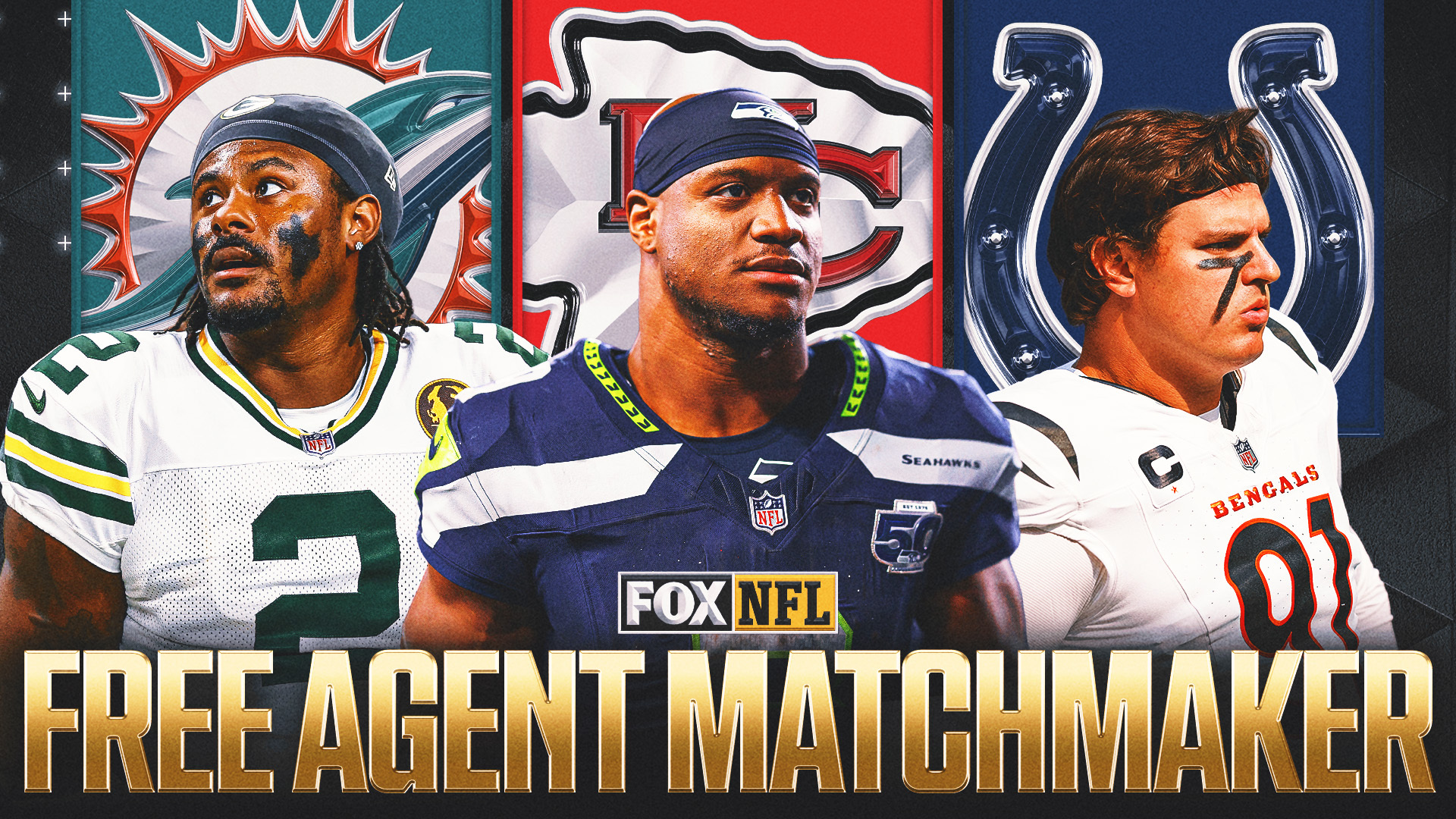
NFL Free Agent Matchmaker: Who Lands Kenneth Walker III, Kyler Murray, Aaron Rodgers?

The NFL’s legal tampering window begins on Monday, when pending free agents can begin negotiating contracts and reaching agreements with external teams ahead of the new league year. So, which top players and teams make sense as a pairing? Let’s match up 10 of this year’s marquee unrestricted free agents with logical homes, starting with a trio of quarterbacks and other key offensive players. QB Kyler Murray: Minnesota Vikings Arizona has already announced that it will release Murray, and Minnesota needs a QB upgrade from disappointing ex-first rounder J.J. McCarthy. The Vikings should be appealing to Murray (and other available quarterbacks) because of head coach Kevin O’Connell’s track record with QB revivals. O’Connell was the Rams’ offensive coordinator from 2020-21, which is when Murray made back-to-back Pro Bowls with the division-rival Cardinals. As a result, O’Connell should have a good idea of what the former No. 1 overall pick looked like at his peak. [RELATED: 3 Best Team Fits for QB Kyler Murray in NFL Free Agency] QB Aaron Rodgers: Pittsburgh Steelers If the 42-year-old Rodgers returns for a 22nd NFL season, it’s difficult to imagine it being anywhere else but Pittsburgh. Starting over again with a new franchise in what would likely be his final year doesn’t seem worth the squeeze. Mike Tomlin may not be with the Steelers anymore, but taking over is Mike McCarthy, who was Rodgers’ head coach in Green Bay for 13 years. [RELATED: 3 Best Team Fits for QB Aaron Rodgers in NFL Free Agency] QB Malik Willis: Miami Dolphins With just three starts over the past two years, there’s tremendous risk in giving Willis a big contract. But that risk is mitigated with the Dolphins, considering the presence of both coach Jeff Hafley and general manager Jon-Eric Sullivan, both of whom were in Green Bay with Willis last season. As the Packers’ defensive coordinator, Hafley went up against the former third-round pick the past two years in practice. [RELATED: 3 Best Team Fits for QB Malik Willis in NFL Free Agency] RB Kenneth Walker III: Kansas City Chiefs The Super LX MVP is the kind of dynamic weapon out of the backfield who would provide an instant boost to a Chiefs run game that ranked 25th last season. Kansas City’s leading rusher in 2025 was Kareem Hunt, who had just 611 rushing yards. Also, with Patrick Mahomes coming off a knee injury, his scrambling ability may be impacted. So the Chiefs need a dependable running back more than ever. WR Alec Pierce: Indianapolis Colts Pierce is intent on hitting free agency, but don’t be surprised to see him sign back with the Colts. The rising receiver built a strong rapport in 2025 with quarterback Daniel Jones, and Indianapolis’ brass has no margin for error this offseason following last season’s collapse. Paying up to retain Pierce shouldn’t be out of the question — even if it’s near $30 million per year. C Tyler Linderbaum: Tennessee Titans Linderbaum will command record-setting money as a center, and no team is better equipped to give it to him than the Titans, who have a league-high $93.8 million in cap space. Tennessee has a center need after releasing Lloyd Cushenberry last week, and it’s expected to pursue a high-quality veteran option to work with second-year quarterback Cam Ward. [RELATED: 2026 NFL Free Agency: Top 100 Players Available and Potential Fits] DE Trey Hendrickson: Indianapolis Colts Hendrickson was viewed as a potential Colts target last year amid his contract issues with the Bengals, and now Indianapolis has a chance to nab him as a free agent. Indy has a big need at edge rusher opposite Laiatu Latu, and Colts defensive coordinator Lou Anarrumo was Cincinnati’s DC from 2021-24, when Hendrickson had three seasons of 14-plus sacks. Signing the 31-year-old Hendrickson would be a risk — he played just seven games last season due to injuries, recording four sacks — but general manager Chris Ballard and coach Shane Steichen must be aggressive this offseason, as they’re firmly on the hot seat. LB Devin Lloyd: Tampa Bay Buccaneers Don’t be surprised to see the Jaguars make a push to re-sign Lloyd after his career season, but the Bucs make a lot of sense. Tampa must be thinking about its future at linebacker post-Lavonte David, who is 36 and entering unrestricted free agency. Deion Jones, a veteran backup, is also a pending free agent. The Bucs need more depth and playmaking at linebacker. Cue Lloyd, who had a career-high five interceptions — including a 99-yard pick-six off Patrick Mahomes — and seven pass breakups last season for the Jags. Signing with the Bucs would allow Lloyd to stay in Florida, which has no state income tax. For Lloyd, that would be great news for what’s expected to be a massive second contract. OLB Odafe Oweh: Carolina Panthers The Panthers generated an NFL-low 148 quarterback pressures last season, so Oweh would be a major boost in the pass-rushing department. The former first-round pick has registered at least 7.5 sacks in back-to-back seasons, and his 51 pressures in 2025 tied for 29th. Oweh’s presence would be a nice complement to defensive tackle Derrick Brown (5.0 sacks last season) and outside linebacker Nic Scourton (5.0), who flashed promise as a second-round rookie. OLB Jaelan Phillips: Philadelphia Eagles Phillips played the best ball of his career in 2023 under defensive coordinator Vic Fangio (6.5 sacks in eight games), so it’s difficult to imagine their reunion with the Eagles coming to an end after just eight games (nine including playoffs). Philly needs the pass rush help anyway. The Eagles tied for 10th in pressures and ranked 13th in pressure rate last season, but they didn’t have a player reach seven sacks.​Latest Sports News from FOX Sports

Categories
Sports Fox

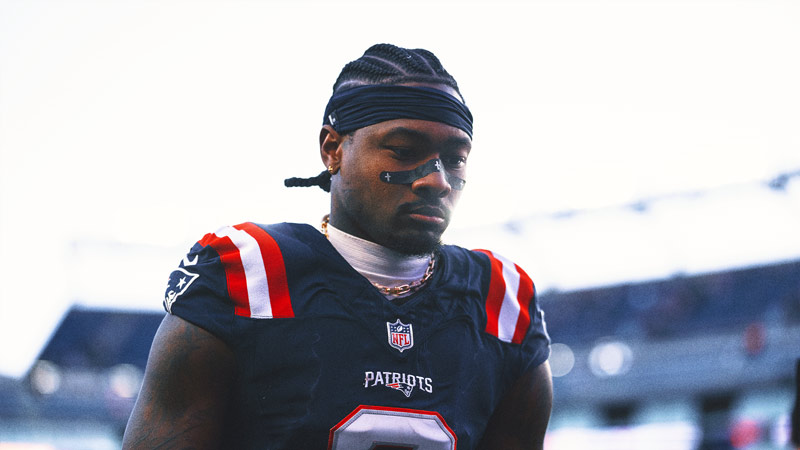
Patriots Set to Release WR Stefon Diggs Following Productive 2025 Season

Drake Maye and the New England Patriots will need to find a new top wide receiver for the 2026 season. Wide receiver Stefon Diggs has been informed by the team that he’ll be released after the start of the new league year on March 11, NFL Media reported Wednesday. Diggs later confirmed the news in a social media post. Diggs, 32, was set to receive a $6 million guaranteed roster bonus if he remained on the Patriots’ roster by March 13. New England will open up some cap space with the move, though. By releasing Diggs, the Patriots have created $16.8 million in cap space for the 2026 season, per Over The Cap. In his lone season in New England, Diggs was quite productive. He had a team-leading 85 receptions for 1,013 yards and four touchdowns. His productive campaign came a year after he suffered a season-ending ACL tear during his one season with the Houston Texans. While Diggs had a strong regular season, his play took a dip in the playoffs as the Patriots reached Super Bowl LX. He logged 14 receptions for just 110 yards and a touchdown in the Patriots’ four postseason games. Diggs also dealt with an off-field issue in his final months in New England. He was arrested in December and pleaded not guilty to felony strangulation or suffocation and misdemeanor assault and battery charges in February after he allegedly strangled his personal chef. All of that made Diggs a speculated cut candidate entering the offseason. He ranked sixth in our Greg Auman’s top 25 cut candidates story. Now, Diggs checks in at No. 26 in our top 100 free agents ranking. Diggs has been named a Pro Bowler four times in his career and has recorded at least 1,000 receiving yards in seven of the last eight seasons.​Latest Sports News from FOX Sports

Categories
Sports Fox

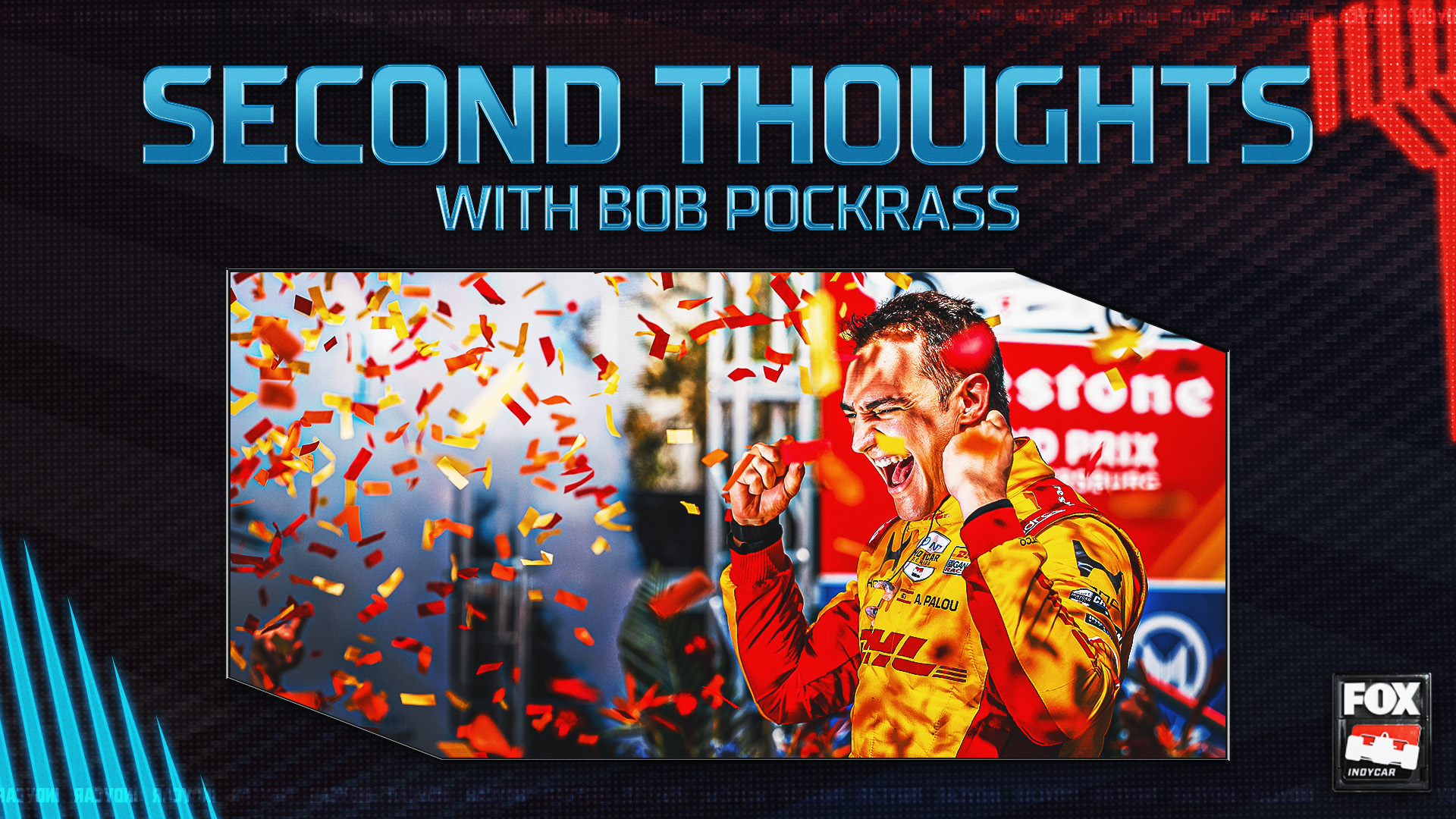
Second Thoughts: INDYCAR as Support Series Makes Sense for Phoenix

Pato O’Ward loves him some INDYCAR. So it is understandable that he’s slightly frustrated ahead of the INDYCAR-NASCAR Cup weekend at Phoenix. “I’m sick and tired of INDYCAR being, like, the support race,” O’Ward told me and other INDYCAR beat reporters during his media session last Friday morning in St. Petersburg. In the same conversation, O’Ward said, “It is a good thing” and “I’m neutral,” on the opinion of whether there should be more races with INDYCAR and NASCAR Cup racing on the same weekend at the same spot. “If they added more, great. If they don’t add more, great,” O’Ward said. “I don’t really care.” If there were more, that could be a problem. Having one celebration of the two biggest U.S.-based motorsports series seems like a good move. It makes it special. And to the point O’Ward is making, maybe it would be smart to take NASCAR to a traditional INDYCAR market and have it be the support series. But that’s looking down the road. When it comes to what makes this weekend cool, it makes sense to look back. The last attempt at a NASCAR-INDYCAR weekend (sorry, Doug Boles) wasn’t all that special. O’Ward’s personal experience is from the Brickyard weekend, where INDYCAR ran Saturday on the Indianapolis Motor Speedway road course, followed by Cup the next day. My guess is that adds to his frustration. There wasn’t a great buzz about the overlap that weekend. INDYCAR’s big race at Indy is the Indianapolis 500. And Cup cars on the IMS road course didn’t generate a whole lot of juice. This weekend will be different because both series have spent decades racing at Phoenix. INDYCAR has a long history at this track. This will be the 65th race on the 1-mile oval. It hasn’t raced at Phoenix since 2018, so the fans in that area are looking forward to another competition. Hopefully, this one will be better if the upper lane can get rubbered in (they will have a specific high-lane practice Friday). INDYCAR will run laps five or six seconds faster than the Cup cars, so those drivers will offer fans something totally different than what NASCAR drivers are bringing to the weekend. And Saturday at Phoenix is typically a day that draws a decent crowd, and the expectation is that there will be a good crowd for the INDYCAR and O’Reilly Series doubleheader that follows Cup qualifying. NASCAR and INDYCAR will put on different races beyond just the speeds. INDYCAR has a rule that drivers can’t go on the apron, so that isn’t an option (it would also be very dangerous). So the great thing about this weekend is that the two series will put on quite different shows. And while Cup has the more recent tradition and has been the focus of the Phoenix market, the crowds should have a good mix of INDYCAR and NASCAR fans. “Obviously, we’re catering to a very similar crowd,” O’Ward said. “Obviously, some NASCAR people don’t watch INDYCAR, vice versa. I would love to say that I watch all forms of motor sports, but I don’t. “I don’t really keep up with what’s going on with NASCAR…I can’t tell you last time I watched the NASCAR race that we raced with them. I usually just look at how the friends are doing and look at the results…I don’t really follow it, and it’s not because I don’t care about it or anything, but usually I’m doing other things and, or traveling or whatever.” The facts are that, except for the Indianapolis 500, more people watch Cup racing than INDYCAR racing. NASCAR rode the wave of high-contact, high speeds on more intermediate ovals and strong personalities in the 1990s and 2000s to become the dominant U.S.-based racing series. As the rise of the Brickyard 400 to huge crowds to spare crowds to now more modest crowds shows, there can be an ebb and flow to the popularity of the series. The INDYCAR industry should be fine with being the support series to a NASCAR weekend. The same would go for NASCAR if it ever raced on the same weekend as Formula 1. In that instance, Cup should be cool with being the support series there. The potential exposure is great. All series, successful and not-so-successful, should look to expand their fan bases. This is how expansion works. Maybe one day, INDYCAR could be the main show on a joint NASCAR-INDYCAR doubleheader at Phoenix. The best way to get there, for the time being, is to race on Saturdays during the NASCAR weekend.​Latest Sports News from FOX Sports

Categories
Sports Fox

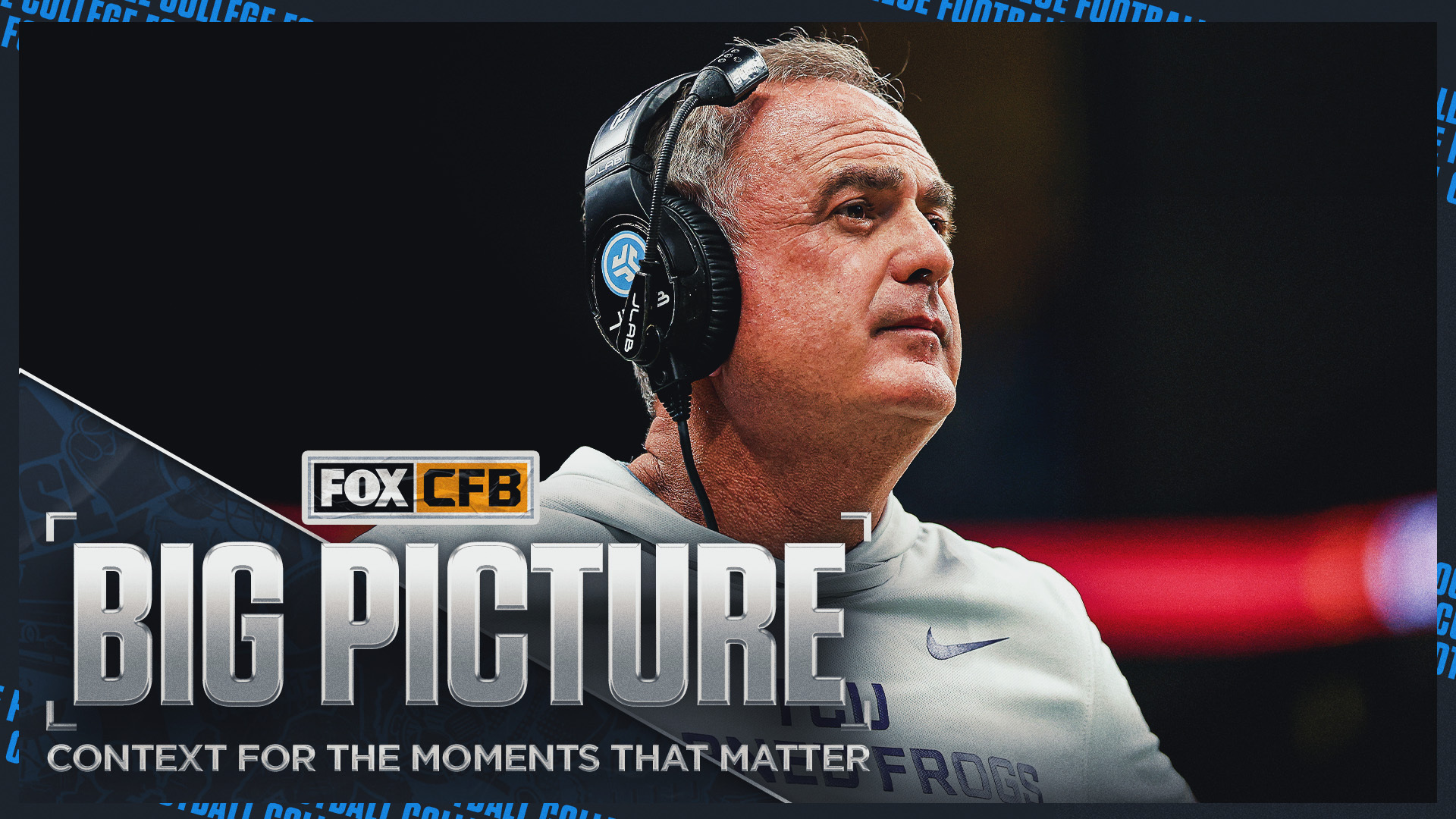
Big Picture: Sonny Dykes Endorses 24-Team FCS Model as CFP Expansion Debate Grows

Before I wrapped up a recent phone conversation with TCU head coach Sonny Dykes, we visited the one of many topics reshaping the sport: Which College Football Playoff format does he actually prefer? Twelve teams? Sixteen? The Big Ten’s floated 24-team model? What I got is one of the rarest commodities in sports journalism: a straight answer. “I like the FCS model,” Dykes told me, referring to the Football Championship Subdivision, the NCAA’s second tier of Division I football. “Why in the world are we having conference championship games if they tell us conference championship games don’t matter? Why in the world would we have a game in December that doesn’t matter?” No hedging. No coach-speak. Just a head coach publicly questioning the logic of the sport’s postseason structure. And it’s a structure that’s already gaining momentum. When Dykes led TCU to the national title game in the 2022 season, 131 teams competed at the FBS level. This fall, there will be 138. The number of teams playing FBS football keeps expanding — and so does the pressure to expand the College Football Playoff, again, barely a decade after its 2014 debut. The question is no longer whether the field will grow. It’s how big it will get, and who gets to decide? Neither the Big Ten nor the SEC — the two conferences with the most voting power to extend the field — is opposed to expansion. They just don’t agree on how many teams should be included or the formula for entry. And recent history shows why that disagreement matters. Three years ago, Dykes led TCU to the four-team CFP, despite a loss in the Big 12 championship game. A year later, Florida State went 13–0, won the ACC title and was, controversially, left out of the four-team field entirely. [LET’S DEBATE: What to Keep and Change in the CFP Format] By 2025, the disconnect had only widened: ACC champion Duke did not receive an invitation to the CFP, while Oklahoma, Texas A&M, Miami, Oregon and Ole Miss received invitations without even qualifying for their respective conference title games. If that’s going to be the case in the future — and as long as Notre Dame plays football as an independent — Dykes has a solution for what the next evolution of scheduling in the sport should be. “Let’s get rid of those [conference championship] games,” he told me. “Let’s start the season a week earlier. Let’s play straight through [without bye weeks], finish in the first week of January and be done.” And that is essentially how the FCS playoff model functions. And that advantage matters. Sixteen of the last 18 FCS national championship game participants advanced by playing at home through the semifinals. And over the past decade, the top-2 seeds have filled 16 of the 20 spots in the title game. “The FCS has proven for a long time that it has a very easy model, a very sustainable model,” Dykes said. “The fact that we can’t get the two conferences that are calling the shots to agree on it is just crazy.” To him, the logic is obvious. “Why in the world would we not adopt it?” Dykes questioned. “It’s worked for a long time, and it’s like these guys want to invent the wheel, and the wheel’s been spinning for 20 years.” In the current FBS playoff model, the programs most likely to secure the top-four seeds in the CFP are also likely to be the sport’s best-funded and deepest. For teams outside the Power 4, that makes playing for a national title — or even earning an invitation to the CFP — seem almost unrealistic. “The problem is, there are now 138 teams playing Division I football,” Dykes told me. “How many of those teams really have a chance to win it? Maybe 15? That’s less than 10 percent. I mean, that’s not good. That would be like only three teams in the NFL having a shot. That’s not good for college football. “So we either need to split it up and divide it amongst the teams that are really committed to playing at the highest level, or we need to figure out a way to make it more accessible to those other teams.” The teams Dykes worries about most are those playing Group of 6 football, programs recently elevated from the FCS to FBS or schools like the one he once coached at: Louisiana Tech. In 2012, he led the Bulldogs to a No. 19 ranking in the BCS poll.”We had a really good team, but we did not have a chance to win a national championship,” Dykes told me. “It’s hard for those teams that don’t have the financial commitment. It was hard then, and it’s even much harder now in the pay-for-play era that we have.” The price of playing big-time college football has never been higher, and yet we’ve never seen more schools try to use it as a vehicle to elevate their national visibility. [CFP: Joel Klatt’s CFP Model To Help End (Most) Debates] Will the CFP field extend to 24 teams in the near future? That’s hard to say. But with most network television contracts set to expire over the next decade and the CFP reaching the conclusion of its deal, leagues will realign again. New deals will be struck between leagues and TV rights holders. College football fans will inevitably look up one day and find that the sport has changed drastically once again. And if the most prominent stakeholders don’t act soon, will that drastic change be for the better of the sport? Dykes is aware of all of this. He simply hopes the leaders of the sport do something about it sooner rather than later, before he feels like he’s lost the game he’s dedicated his life to coaching. In the Big Picture, we contextualize key moves and moments so you can instantly understand why they matter.​Latest Sports News from FOX Sports