Categories
Sports Fox

World Baseball Classic On FOX Sports: Team USA Garners Big Viewership Numbers

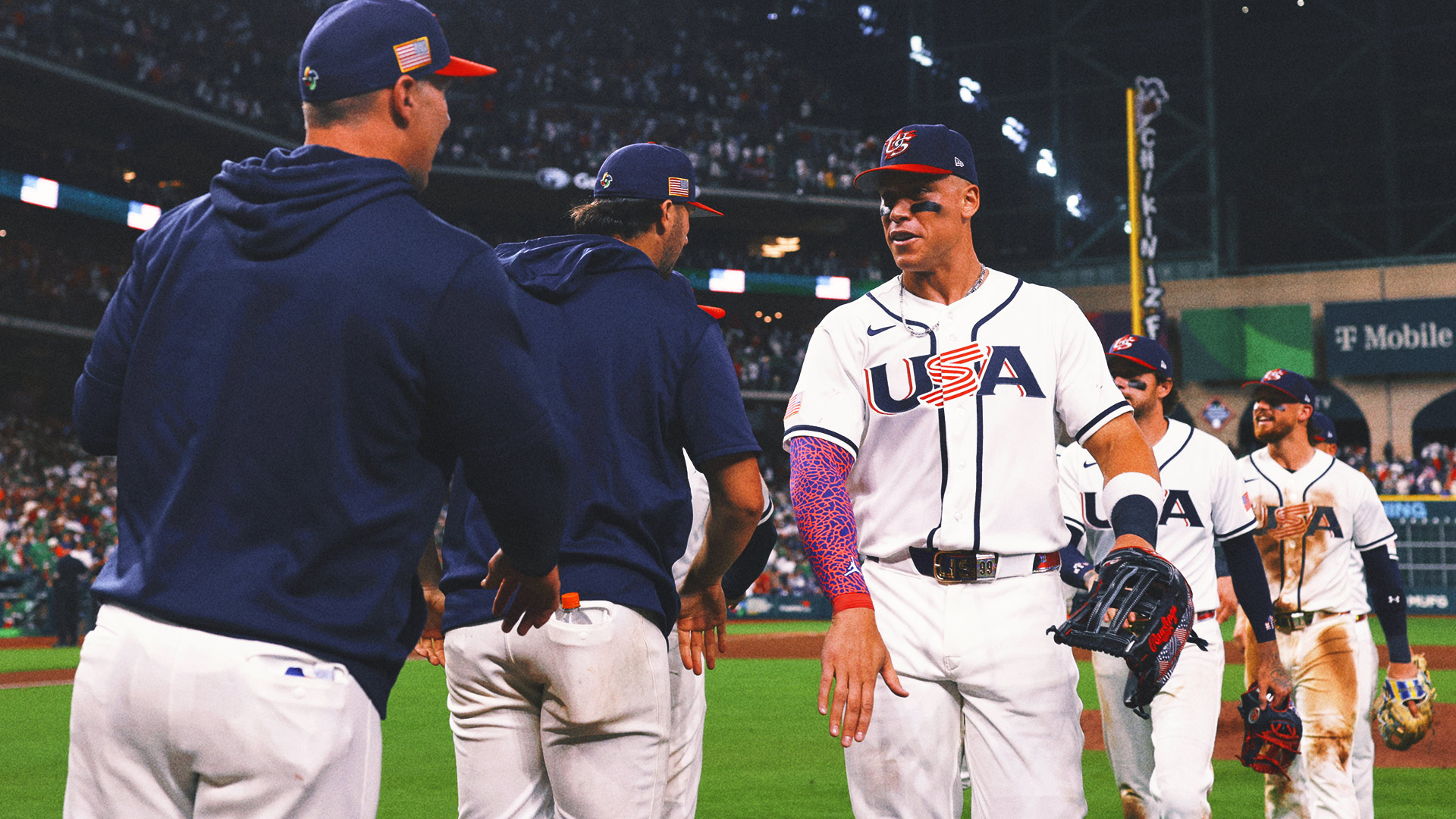
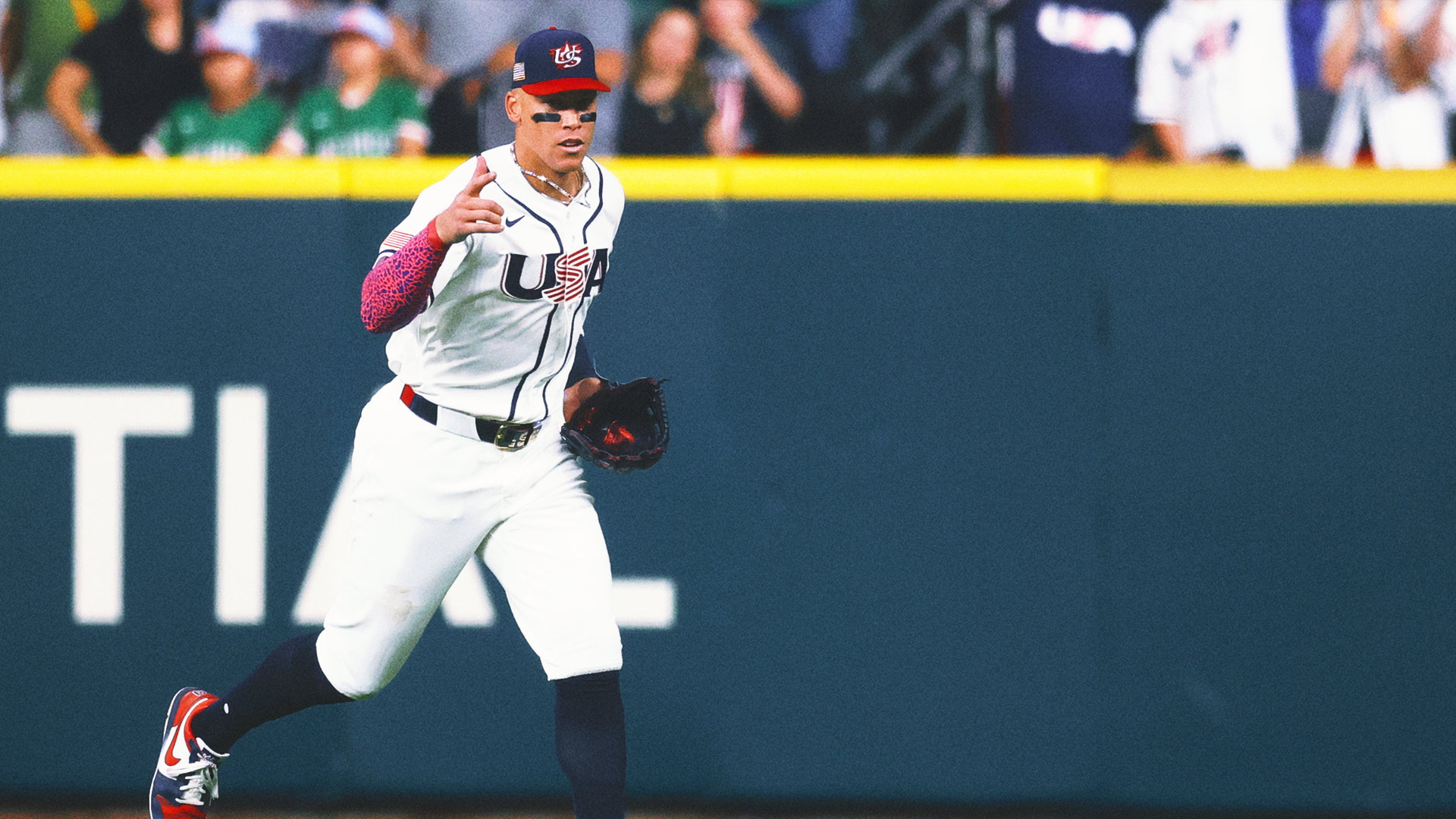
The USA is looking good so far at the World Baseball Classic. That’s attracting plenty of eyeballs. The first two games of the USA’s WBC campaign have garnered impressive viewership numbers, including 2.98 million for the 9-1 win over Great Britain on Saturday. That follows up the 2.64 million viewership figure for the USA’s 15-5 win over Brazil to open up Pool B play. The USA is undefeated through three games, having defeated Mexico in a 5-3 thriller on Monday. The USA wraps up pool stage play on Tuesday against Italy. The knockout round begins on Thursday. 2.98 Million Viewers: Great Britain at USA on FOX (Saturday, March 7) 2.64 Million Viewers: USA at Brazil on FOX (Friday, March 6) How to Watch the 2026 World Baseball Classic FOX will air two quarterfinals games and the World Baseball Classic Championship Game on Tuesday, March 17 from Miami’s loanDepot Park. The remaining matchups will air across FS1, FS2, the FOX Sports app, FOX One and Tubi. All 47 games will be available for streaming.​Latest Sports News from FOX Sports

Categories
Sports Fox

Men’s Player of the Year Ladder: Boozer Finishes No. 1 as Final Top 10 Takes Shape

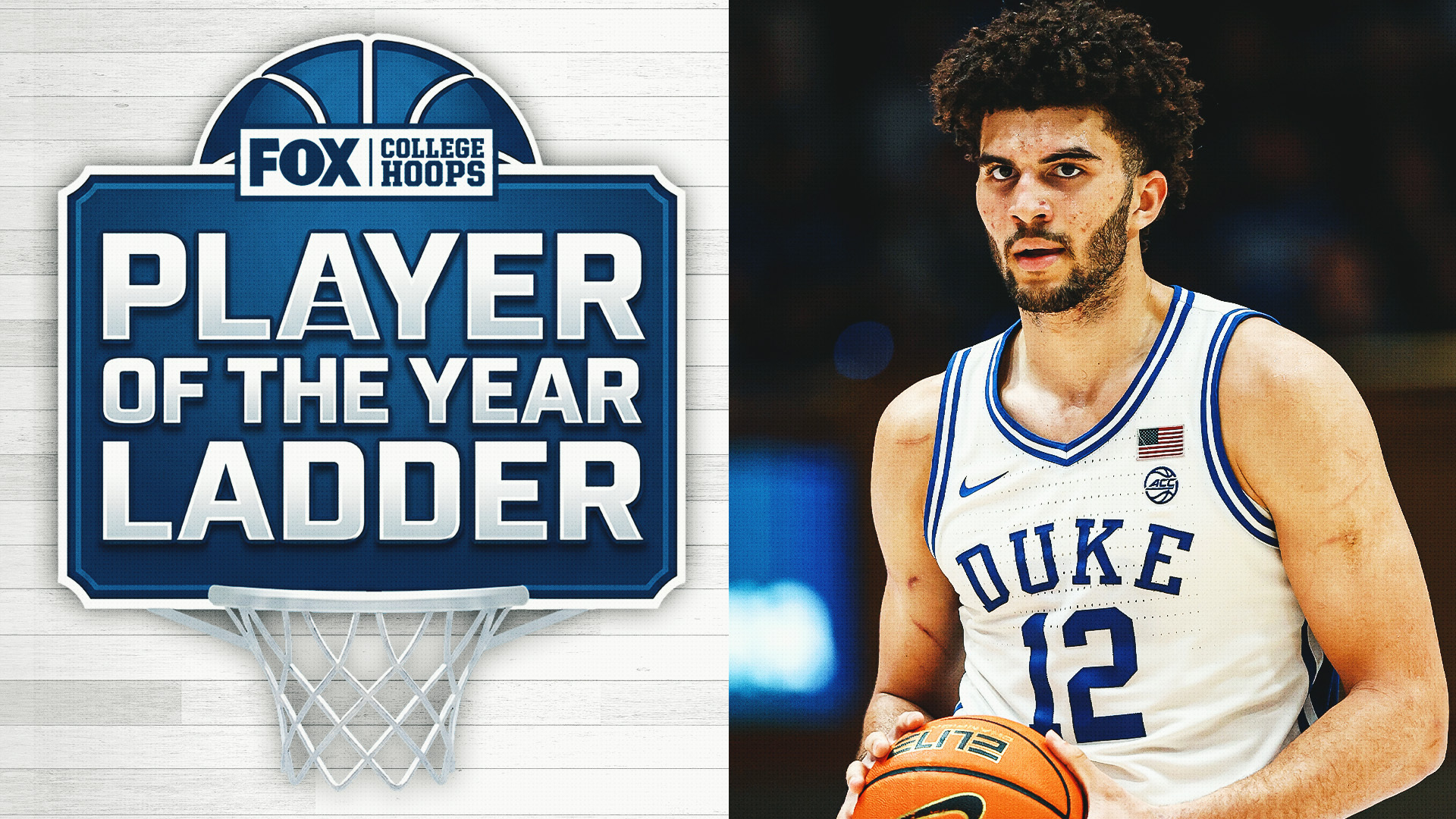
For my final men’s Player of the Year Ladder of the season, I decided to take a step back and look at the full picture, ranking the top 10 players based strictly on their overall body of work. Injuries forced me to remove both Texas Tech’s JT Toppin and North Carolina’s Caleb Wilson from recent lists, but their seasons were too strong to leave them off the final rankings. At the top, Duke freshman standout Cameron Boozer has separated himself from the pack and has run away with the Player of the Year award. The real intrigue, though, has been the battle behind him. The race for spots 2-10 has been competitive and fascinating all year. Basketball is a team game, and team success inevitably plays a role in evaluating players. Still, this list is about recognizing the individuals whose production and impact stood out above the rest. Honorable mention: Purdue guard Braden Smith, St. John’s forward Zuby Ejiofor, Vanderbilt guard Tyler Tanner, Kansas guard Darryn Peterson, Texas Tech guard Christian Anderson, Iowa guard Bennett Stirtz. 10. Caleb Wilson, North Carolina freshman forward Despite playing in just 24 games, Wilson makes my list because of how special he was this season, averaging 19.8 points and 9.4 rebounds for the Tar Heels. He was the hardest-playing player in the country, too. 9. Kingston Flemings, Houston freshman guard Houston returned veteran backcourt pieces in Emanuel Sharp and Milos Uzan, but it was Flemings who became the go-to guy in close games. The freshman standout led the Cougars in points, assists, and steals while also shooting 48% from the field. Houston has another shot at a Final Four and national title. Outside of head coach Kelvin Sampson, Flemings is the biggest reason why. 8. Keaton Wagler, Illinois freshman guard One of the biggest breakout performers in the country, Wagler arrived as a three-star freshman and quickly became Illinois’ best player. He averaged 17.9 points, 4.9 rebounds, and 4.3 assists for a roster loaded with talent, while also taking over primary ball-handling duties when Kylan Boswell was sidelined with injuries. 7. Joshua Jefferson, Iowa State senior forward Iowa State has quietly been one of the elite teams in the country this season, which suits senior forward Joshua Jefferson just fine. His averages of 16.6 points, 7.4 rebounds, and 5.0 assists are impressive, yet it still feels like most college basketball fans have no idea who he is. They will by late March. 6. Jeremy Fears Jr., Michigan State sophomore guard Fears led the nation in assists at 9.1 per game, but he also doubled his scoring average from a season ago to lead the Spartans in that department. There have been a few questionable moments in the second half of the season, but they don’t change how I view his overall body of work or the way he has carried Michigan State at times. 5. JT Toppin, Texas Tech junior forward Toppin had a spectacular season that was cut short by an ACL injury, but he earned a final spot on my list. His averages of 21.8 points, 10.8 rebounds, and 2.1 assists in the top conference in the sport were impressive. Texas Tech was one of the only teams this year to beat Duke and could have won a title if he were healthy. 4. Yaxel Lendeborg, Michigan senior forward Michigan is my favorite team to watch and Lendeborg is the main reason why. The senior forward’s versatility on both ends of the floor is his superpower. He averages 14.7 points, 7.2 rebounds, and 3.2 assists per game. 3. Darius Acuff Jr., Arkansas freshman guard Is Acuff the best freshman point guard John Calipari has ever coached? I’d say yes, as his freshman season is more dominant than Derrick Rose or John Wall. It’s pretty impressive company, but his averages of 22.2 points (on 49% shooting), 3.0 rebounds and 6.4 assists speak for themselves. The Razorbacks have been inconsistent as a group, but think about what they would be without Acuff. 2. AJ Dybantsa, BYU freshman forward Dybantsa came into the season with massive hype, and the young star delivered. BYU might have nose-dived in the final third of the season, but it wasn’t because of Dybantsa, who led the nation in scoring. With all due respect to Arizona’s Jaden Bradley, Dybantsa should have been named Big 12 Player of the Year after averaging 24.7 points, 6.7 rebounds, and 3.8 assists per game. 1. Cameron Boozer, Duke freshman forward Boozer had massive shoes to fill after Cooper Flagg’s Player of the Year season last year, yet he somehow delivered an even better statistical campaign. Averaging 22.7 points, 10.2 rebounds, and 4.1 assists, Boozer has been asked to carry more of the load than perhaps any star on a top-10 team. The question now: can he lead Duke all the way to a national title?​Latest Sports News from FOX Sports

Categories
Sports Fox

Fanatics Flag Football Classic: Which NFL Stars Will Play in Inagural Event?

We know that Tom Brady, Jalen Hurts, Joe Burrow and Jayden Daniels will serve as the quarterbacks for two of the teams in the Fanatics Flag Football Classic. Now, we know who they’ll be throwing to, and some of the defensive players they’ll go up against. Several NFL stars from the past and present have joined the pool of players who will play for either Founders FFC or Wildcats FFC in the inaugural Fanatics Flag Football Classic. Ashton Jeanty (Raiders) and Alvin Kamara (Saints) have been added to the pool at running back. At wide receiver and tight end, Davante Adams (Rams), DeVonta Smith (Eagles), Deebo Samuel, Stefon Diggs, DeAndre Hopkins and Kyle Juszczyk (49ers) have joined the mix. Defensively, stars like Derwin James Jr. (Chargers), Tyrann Mathieu, Von Miller and Jalen Ramsey have agreed to play in the Fanatics Flag Football Classic. Luke Kuechly, who’ll be inducted into the Pro Football Hall of Fame later in 2026, will also play in the event. A few entertainers will also play in the Fanatics Flag Football Classic. IShowSpeed was the latest entertainer to be added to the player pool for the event, it was announced on Tuesday. The newly announced players for the Fanatics Flag Football Classic join an already talented group that was previously announced. Rob Gronkowski, Saquon Barkley, Myles Garrett and Odell Beckham Jr. already agreed to participate in the Fanatics Flag Football Classic. Logan Paul and Terrence “Bud” Crawford were also previously announced participants for the event. Those players will be drafted by either Brady’s and Hurts’ Founders FFC or Burrow and Daniels’ Wildcats FFC on Wednesday, March 18, which is three days before the Fanatics Flag Football Classic. Those two teams, plus the United States’ men’s national flag football team, will compete in a round-robin tournament in the Fanatics Flag Football Classic. “Having Team USA as the third team in the Fanatics Flag Football Classic elevates the already world-class talent participating in this tournament,” Brady said in a statement. “I’m fired up to see how these teams stack up, and the fact that we’ll be playing in the same stadium that will host flag football during the Olympics will show the world a preview of what’s to come in 2028. But I’m not coming back to the football field to lose. That’s for damn sure.” The addition of the United States men’s national flag football team, which is the reigning IFAF Flag Football World Champion, to the Fanatics Flag Football Classic was announced on Monday, when it was shared that the event would now take place at BMO Stadium in Los Angeles. Here’s the full roster for the United States’ men’s national flag football team that will compete in the Fanatics Flag Football Classic. Several other notable names will participate in some capacity in the Fanatics Flag Football Classic. Broncos head coach Sean Payton will coach Founders FFC. 49ers head coach Kyle Shanahan will coach Wildcats FFC. New Titans head coach Robert Saleh will serve as a defensive specialist for both teams. Drew Brees and Larry Fitzgerald, who were both just voted for induction into the Pro Football Hall of Fame, will serve as commissioners for the event. Actor and comedian Kevin Hart will serve as the host of the event alongside actor and comedian Druski. As for the games themselves, the Fanatics Flag Football Classic will be played with the same rules as flag football will be played during the 2028 Summer Olympics. There’ll be two 15-minute halves with a running clock on a 50×25 yard field. Each team can only have five players on the field at a time. All three teams will participate in a round-robin tournament. After those three games are played, the top two teams will advance to the championship. The Fanatics Flag Football Classic will air live on FOX, FOX One and Tubi at 4 p.m. ET on March 21. The event will also be streamed internationally on the Fanatics YouTube channel.​Latest Sports News from FOX Sports

Categories
Sports Fox

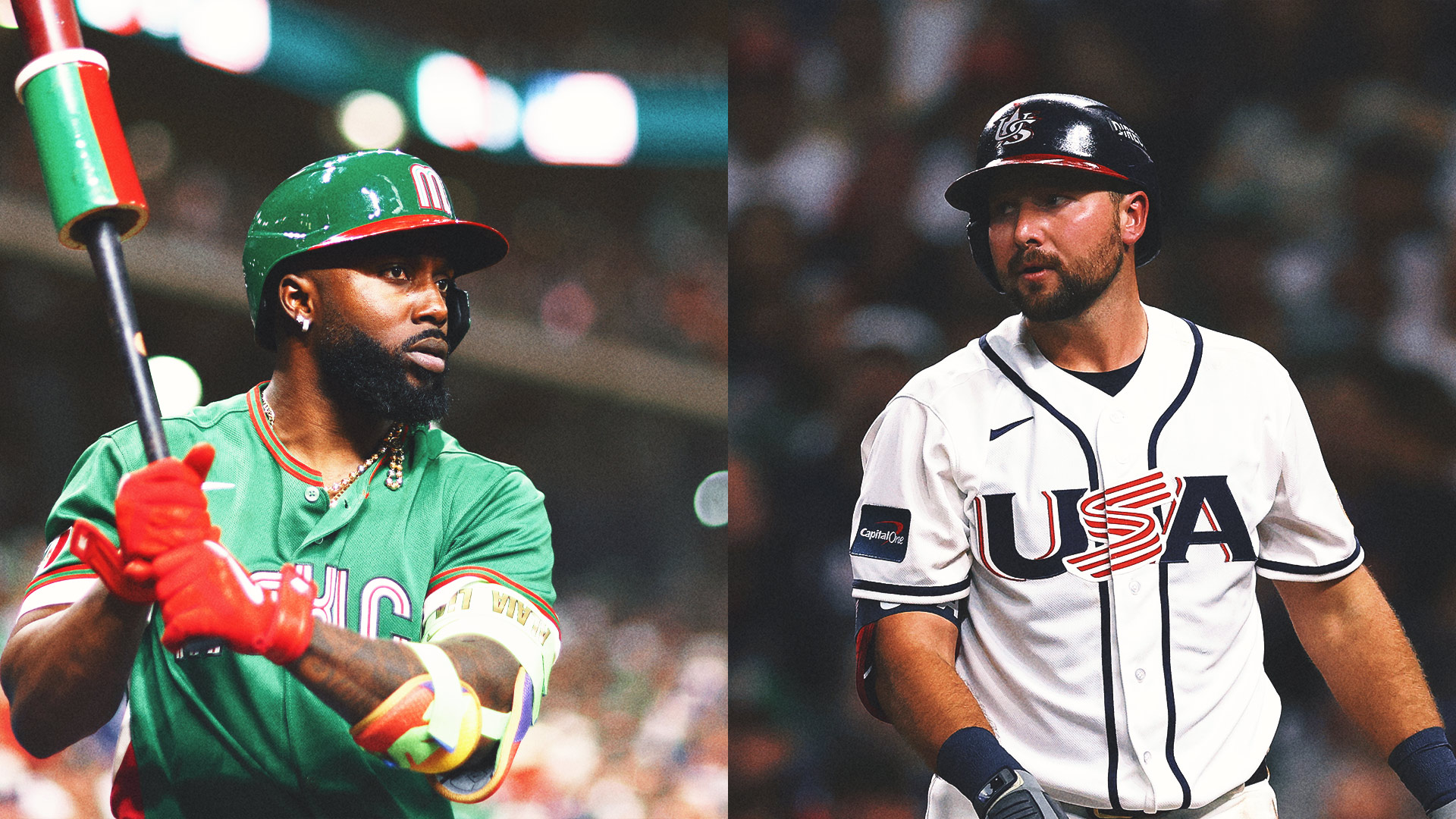
How Cal Raleigh Responded To Randy Arozarena After USA-Mexico WBC Game

Cal Raleigh insisted Tuesday he has no beef with Randy Arozarena even though his Seattle Mariners teammate lashed out with a vulgar rant after Raleigh left him hanging for a handshake at the World Baseball Classic. “I love Randy, I do,” Raleigh told reporters outside the USA’s dugout at Daikin Park, home of the Houston Astros. “I hate that this is a thing. There’s no beef. When we get back to Seattle, he’s my brother. We’re family. “I already reached out to him, so, you know, it’s just a competitive environment, and I know he would want the same for me when we’re on the team in playoff baseball.” The kerfuffle went viral when Arozarena, a two-time All-Star outfielder playing for Mexico, cursed out Raleigh to a reporter after the Team USA catcher did not accept a handshake before an at-bat in the United States’ 5-3 win. Speaking to Mexican journalist Luis Gilbert in Spanish, Arozarena said Raleigh “has to thank God that he has nice parents, well educated,” and said he recently hugged them during a friendly greeting at the team hotel. He then used profane Cuban and Mexican slang to insult Raleigh before pivoting to English and saying Raleigh could shove his “good to see you” in his rear. Arozarena was born in Cuba but defected to Mexico to pursue an MLB career. Arozarena had reached down to greet Raleigh in his catcher’s squat at home plate, and Raleigh declined to offer his hand back. Raleigh appeared to say something to Arozarena during the exchange at the plate that could have set off the Mexican star. Arozarena appeared to be visibly upset at Raleigh, though it wasn’t totally clear if he was just having fun at his teammates’ expense. The pair have been teammates since Arozarena was traded from Tampa Bay to Seattle during the 2024 season. Raleigh called Arozarena a baseball “brother” while explaining there was no tension between the teammates. “I just have a responsibility for my teammates here right now and my country, and emotions running high,” Raleigh added. “But like I said, I love Randy. He’s awesome. He’s been great for our team, and like I said, we talked, and this isn’t a big deal at all. “We’re good friends, and we’ll continue to be good friends, and I think we’re just enjoying competing against each other right now. That’s really all I have to say about it.” Mariners manager Dan Wilson told reporters he planned to speak to both of his players at Tuesday. “These guys are incredible athletes because of their competitiveness, and that’s where they’re at, and that’s why they’ve gotten to the level that they’ve gotten,” Wilson said. “But I also know that our team loves each other deeply. And that’s one of the key ingredients we have in that clubhouse, is how much they love each other, and so I don’t anticipate this being any bit of an issue.” Wilson doesn’t expect whatever happened between the two to linger into the regular season. The Mariners went 90-72 in 2025 and won the franchise’s first AL West title since 2001 in large part behind Raleigh, who became the seventh player in major league history to hit 60 homers in a season. “Competitiveness is competitiveness,” Wilson said. “It doesn’t matter. Sometimes, it’s a backyard game. Whatever. These guys are competitive. But like I said, I think the love that they have for each other will shine.” Aaron Judge hit a two-run homer and Roman Anthony added a three-run drive in a big third inning to lead the United States to the win. The U.S. improved to 3-0 and will meet Italy (2-0) on Tuesday night, seeking to secure a spot in the quarterfinals in Houston this weekend. Jarren Duran homered twice for Mexico (2-1), which will face Italy on Wednesday night in the last game of Group B play. “I hate that this is a thing. I really don’t think this is a big deal, a big story,” Raleigh said. “It shouldn’t be a thing. I love Randy. I have all the respect for him and Team Mexico.” The Associated Press contributed to this report.​Latest Sports News from FOX Sports
Categories
Sports Fox

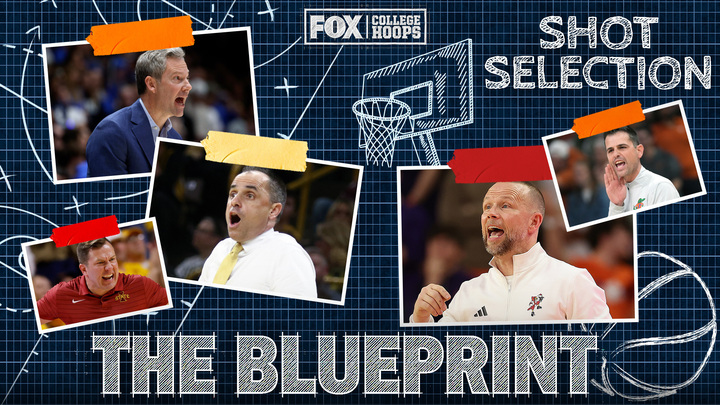
The Blueprint: Inside the Shot-Selection Revolution in Men’s College Basketball

Long before the season began, Illinois men’s basketball head coach Brad Underwood and his staff devised a training tool they believed would help optimize offensive efficiency. Each and every kind of shot a player might take was funneled into a grading system derived from easily understood imagery: a podium at the Olympics. Regardless of whether shots were made or missed, each attempt could then be deemed worthy of a gold, silver or bronze medal based on how closely it adhered to principles outlined by the coaches. For the rest of summer, Illinois players worked through pick-up games in which winners were decided by shot selection rather than a traditional score. “Who got the most gold-medal shots? Who got the most total medals?” Underwood explained to me last month. “There were negatives for mid-range jump shots, contested shots, et cetera. There was a lot of creativity that went into that. And then just over the course of time, players start to understand. “Early in the season, we made a lot of quick substitutions based on really poor shots. And we weren’t going to take those. We weren’t going to take the contested mid-range pull-up with 22 on the shot clock. Or we weren’t going to take a contested 3 with 16 or 18 on the shot clock. Those things have been emphasized literally since June.” Nine months later, Illinois’ offense is operating in rarified air. If the season ended today, the team’s current mark of 131.7 points per 100 possessions would be the highest ever recorded in 30 years of KenPom data. Underwood has drawn widespread praise from coaches around the country for an embrace of modern analytics that is manifesting through enviable floor spacing, mathematically sound shot selection and a roster bursting with seven players who have already made at least 27 3-pointers this season. Some of the statistics that Illinois’ approach best exemplifies are indicative of a larger philosophical shift in shot spectrum across the sport. That shift helps explain why nearly three times as many teams are averaging at least 120 points per 100 possessions during the 2025-26 campaign as in any season over the past 30 years. The Illini rank ninth nationally in 3-point field goal rate at 50.9%, a measurement reflecting the percentage of a team’s shots that originate beyond the arc. So far this season, 92 teams are attempting at least 44% of their field goals from 3-point territory. There were only 37 such teams five years ago, only 22 teams 10 years ago and only seven teams 15 years ago. “If you look at the best offensive teams in college basketball,” Houston head coach Kelvin Sampson told me last month, “Illinois is a good example. Illinois is a great offensive team [because] there’s nobody on the floor that can’t make a 3. That spacing that’s created from the 3-point shot also creates driving lanes. And then you’re driving to collapse the defense, and then you move [the ball] and you shoot a 3. That’s how the game has changed.” In Part 2 of our series, some of men’s college basketball’s keenest minds explain how the rapid evolution of shot selection translates to such an uptick in offensive efficiency: [THE BLUEPRINT: Offense-First Player Acquisition] *** *** *** Pat Kelsey, Louisville: We went to modern basketball analytics years ago, starting when I was at Winthrop. I met Nick Nurse, who is the head coach of the 76ers, who used to be with the Raptors, and before that was a successful G-League coach with the Houston Rockets organization that was one of the pioneers in modernizing basketball. They went to the extreme end of it with the James Harden era when it was just 3s and rim shots, and that’s it. He introduced me to that when I didn’t know anything about anything with modern basketball metrics. Jon Scheyer, Duke: It’s a math game, at the end of the day. Obviously, it’s something we take a lot of pride in ourselves, but shot selection has a lot to do with it. If you can get guys to buy into taking the right shots and fighting for the most efficient shots in basketball, it puts defenses in a tough position where you’re going to see more scoring because of the math. Underwood: When everybody started playing drop coverage [on defense], everybody started getting really good at mid-range pull-ups. Chris Paul built a career on that. That was the shot. Now we’ve kind of evolved even more with the five-out spacing and the game has not become as much [about] how high you jump and how fast you run as it has become, OK, let’s find as much space as we can on the floor and do it with positional size. Sampson: I did a seminar with the Spurs a few years ago, and as we were sitting there talking, I kept hearing [Gregg Popovich] say, “We have to make sure we’re chasing space.” So I stole that term from him. With our offense, any time you get the ball in the paint and you kick it, you can’t stay [in one place]. You’ve gotta go chase space to open it up for another drive and create help so now you can pass it. Ryan Odom, Virginia: The more access to models and really smart people getting involved in sports, you can utilize the numbers to help you and help individuals on your team improve their efficiency. A lot of it is based on what expected numbers would be. It’s to help the individual become the most efficient player they could be. But then also, most importantly, our team overall. And a lot of it is shot diet. What type of shots are you taking? Scheyer: We teach a class, basically, in the summer. A shot selection class. And there’s two parts to it. We show shot selection, and we quiz our guys and talk to them. I think it’s a misconception with a lot of young players where they think 3s are worth more and those are the best shots. When in reality, a dunk is the best shot you can get. And then obviously free throws, and you work your way out. We just want to give them a basic understanding of that. Then we try to just really reinforce every day in practice, so it’s very clear from the get-go the shots we’re fighting for. We talk about fighting for the rim and what that means and what that looks like. We talk about the 3s that we want to shoot, and we go through the numbers and explain it to our guys. Sean Miller, Texas: If you go in order, free throws by a great free-throw shooter, dunks at the rim … and then one-two step open 3s taken by the right shooter. Those are the three high-value shots. The more we can take of those, the better. And you try to teach our team and the individual player what that means. We also have one or two players on this year’s team that are really good in that area that we want to discourage shots from. And sometimes, when you have that player, you have to see that for what it is and allow him and make sure that everybody understands, for him, this is a better shot because of how efficient he is in that space. As a coach, you have to have that responsibility because you can’t put the square peg in a round hole. Todd Golden, Florida: When we got here three and a half, four years ago, we wanted to build a program that would be consistently good, hoping to have a high floor and also try to root out any unnecessary volatility in our results. We made a conscious effort to play bigger and play a two-big system where we’re constantly trying to get really good rim 2s and catch-and-shoot 3s. This year, we haven’t shot it great from the perimeter. So we’ve continued to find different ways to get those highly efficient 2-point field goal shots. Especially with this year’s team, I think the less 3s we take, the more consistent we’re going to be. I think other teams across the country are playing that way, like Arizona [and] Michigan are good examples of that, who have kind of traded out the 3-point volatility hoping to be more consistent with the higher floor. Odom: We’re searching for “our shots,” and there’s different parts of a possession. Early in the possession, in transition, is a great opportunity to get a clean look because the defense, a lot of times, isn’t set. Most coaches, those that play fast, are trying to do that [with] a willingness to shoot open 3s early in the clock. I think that the key is just the discernment that you have to teach your players. Which shots are the right shots for that particular individual and convincing them to stick with it and shoot those shots. And then, what’s the best shot for our team? It’s a constant exercise for us each day. We grade our guys. We call it the ‘Cav score.’ Everybody gets a Cav score after every practice. Matt Painter, Purdue: One of the things I always bang on in recruiting is, ‘Here’s how I see you as a player if you’re one of our top three scorers.’ And then they always follow that back with a question, ‘Well, how do you see me if I’m not one of your top three scorers?’ Well, you’re gonna have to blend in with those top three scorers. Ben McCollum, Iowa: I think shot selection for us is you want to get layups, you want to get the easiest shot in basketball. The best way to get layups is obviously to space the floor. The best way to space the floor is to shoot 3s. I think it works that way rather than shoot 3s to get layups, if that makes sense. Rather than working from the outside in, we work from the inside out. Teaching shot selection [is about] understanding natural points per possession. All kickout 3s aren’t the same. All contested versus uncontested 3s aren’t the same. All extra-pass 3s aren’t the same. [All] transition 3s [aren’t the same]. Everything is a little bit different based off how good a shooter that guy is, how heavy the contest is, time and score — meaning where are we at in the game — and then, obviously, who can make what shots. T.J. Otzelberger, Iowa State: I think more than anything, we talk about other teams, and we call a contested pull-up from mid-range a ‘surrender shot.’ We try to encourage as many surrender shots [from our opponents as possible]. Our guys yell ‘Surrender!’ in practice when somebody shoots one. I think they know to stay away from those. We talk about paint-touch 3s, and those are the ones that we want. Consistent feedback and communication is important. We want our guys to know what great shots are, so we’re going to continue to talk about it with them and continue to demand it from them. Sampson: Paint touches was not something that was talked about in the ‘80s or early ’90s. You just told your point guard to get to the basket. But the paint touch is what opens the game up. Everybody is trying to get in and then play inside out. Three yards and a cloud of dust was throwing the ball into the center and you lived off 2s. Now, the 2-point shot is only at the rim, and everything else is a 3. Miller: We’re playing teams in our league where you go, “Hey, they’re shooting 25 3s a game. That means that over 50% of their shots are 3s.” Next game, “Actually, 54% of their shots [are 3s].” You’re going through these stretches where, holy s—, I’ve never seen more 3s taken. McCollum: “We might turn down a contested layup for an elite kick-out 3. Or we might turn down a contested layup for an extra pass for an uncontested layup. So often, people just assume, “Since I’m near the rim and there’s not a ton of bodies around me, I deserve to shoot it.” And in reality, you really don’t. You have to make it. Because ultimately, the more missed 2s you have, the easier it is for runouts because those rebounds aren’t very long. And now [the opponent’s shooting] percentage goes up. When their percentage goes up, and they score on you more, you’re not going to play in transition, you’re going to play against more set defenses. And then your 2-point field goal percentage goes down because you’re out of rotation. It all kind of adds together. Kelsey: We’re always revisiting and presenting our shot spectrum to the guys. We just want to make sure that our volume is in line with what our philosophy is. And if we get out of line or out of whack, we’ll present that to the guys. … We’ve done stuff in practice where we place a higher point total [on certain quality shots]. Then, I don’t lose my mind if a guy with 16 seconds on the shot clock shoots a contested mid-range and it goes in. As they run by me, just under my breath, I just say, ‘that’s the lowest-percentage shot in the game,’ and move on. Underwood: The last two years — and especially this year — has been much, much, much more about shot selection than maybe some of my other teams. Come back on Wednesday for Part 3 in this series, which focuses on a shift in offensive rebounding philosophy that has wide-ranging implications for both shot selection and efficiency. In The Blueprint, our in-depth, long-form series takes you inside some of the most amazing stories in sports.​Latest Sports News from FOX Sports
Categories
Sports Fox

USA vs. Italy World Baseball Classic: Starters, Lineups, How To Watch

Can Team USA and its star-studded lineup and rotation win it all at the 2026 World Baseball Classic? Three games, three wins so far for the USA after beating Brazil, dominating Great Britain, and getting past Mexico. It continues with Tuesday’s Pool B finale against Italy at Daikin Park, home of MLB’s Houston Astros. The game will be Tuesday, March 10 at 9 p.m. ET on FOX. How to Watch the 2026 World Baseball Classic FOX is your exclusive home to the WBC with games spread across the FOX family of networks. FOX is set to air seven games, including three Pool B games featuring Team USA, two quarterfinals games and the World Baseball Classic Championship Game on Tuesday, March 17 from Miami’s loanDepot Park. The remaining matchups will air across FS1, FS2, the FOX Sports app, FOX One and Tubi. All 47 games will be available for streaming. Catch the action on the following streaming options: Team USA Starting Pitcher vs. Italy New York Mets right-hander Nolan McLean is officially scheduled to start Tuesday in the final pool-play game against Italy. Team USA Starting Lineup vs. Italy Team USA’s lineup has been announced for its game against Italy. Bobby Witt Jr. remains in the leadoff spot. Gunnar Henderson moves into the two-hole. Will Smith, Paul Goldschmidt, Ernie Clement and Pete Crow-Armstrong return to the starting lineup.​Latest Sports News from FOX Sports

Categories
Sports Fox

2026 World Baseball Classic Bracket, Schedule, Standings

One more day of World Baseball Classic group-stage action before we turn to the quarterfinals. Here’s how it’s shaping up. On Wednesday, Canada clinched Pool A with Puerto Rico finishing as runner-up.Japan won Pool C with Korea finishing as runner-up. The Dominican Republic and Venezuela have clinched the quarterfinal spots out of Pool D. Those teams play on Wednesday night with the loser of that game facing a matchup against Japan in the quarterfinals. In Pool B, it’s all up for grabs ahead of Italy vs. Mexico, with Team USA shockingly not in control of its destiny. Below are up-to-date pool standings and the remaining games in each pool. * indicates a team has advanced to the quarterfinals. All times below are in Eastern Time. Pool A Cuba 3, Panama 1Puerto Rico 5, Colombia 0Canada 8, Colombia 2Puerto Rico 4, Panama 3Cuba 7, Colombia 4Panama 4, Canada 3Colombia 4, Panama 3Puerto Rico 4, Cuba 1Canada 3, Puerto Rico 2Canada 7, Cuba 2 Pool B Mexico 8, Great Britain 2USA 15, Brazil 5Italy 8, Brazil 0USA 9, Great Britain 1Italy 7, Great Britain 4Mexico 16, Brazil 0Great Britain 8, Brazil 1USA 5, Mexico 3Italy 8, USA 6 [WBC Tiebreaker Rules: How Can Team USA Still Advance?] Pool C Australia 3, Chinese Taipei 0Korea 11, Czechia 4Australia 5, Czechia 1Japan 13, Chinese Taipei 0Chinese Taipei 14, Czechia 0Japan 8, Korea 7Chinese Taipei 5, Korea 4Japan 4, Australia 3Korea 7, Australia 2Japan 9, Czechia 0 Pool D Venezuela 6, Netherlands 2Dominican Republic 12, Nicaragua 3Netherlands 4, Nicaragua 3Venezuela 11, Israel 3Dominican Republic 12, Netherlands 1Israel 5, Nicaragua 0Dominican Republic 10, Israel 1Venezuela 4, Nicaragua 0Israel 6, Netherlands 2 Quarterfinals Semifinals Final​Latest Sports News from FOX Sports
Categories
Sports Fox

2026 NCAA Men’s Basketball Tournament Automatic Bids Tracker

Conference tournaments are underway, the first sign that March Madness has arrived! Each of men’s college basketball’s 31 conference tournament champions earns an automatic berth to the 2026 NCAA Tournament, while the other 37 spots are awarded to at-large participants by the tournament’s selection committee. Follow along to see which teams have locked up an auto-bid thus far, as of March 13: This story will be updated throughout the week. Check back for updates.​Latest Sports News from FOX Sports
Categories
Sports Fox

NFL Highest-Paid Wide Receivers: Alec Pierce Joins Top 10 With Huge Contract

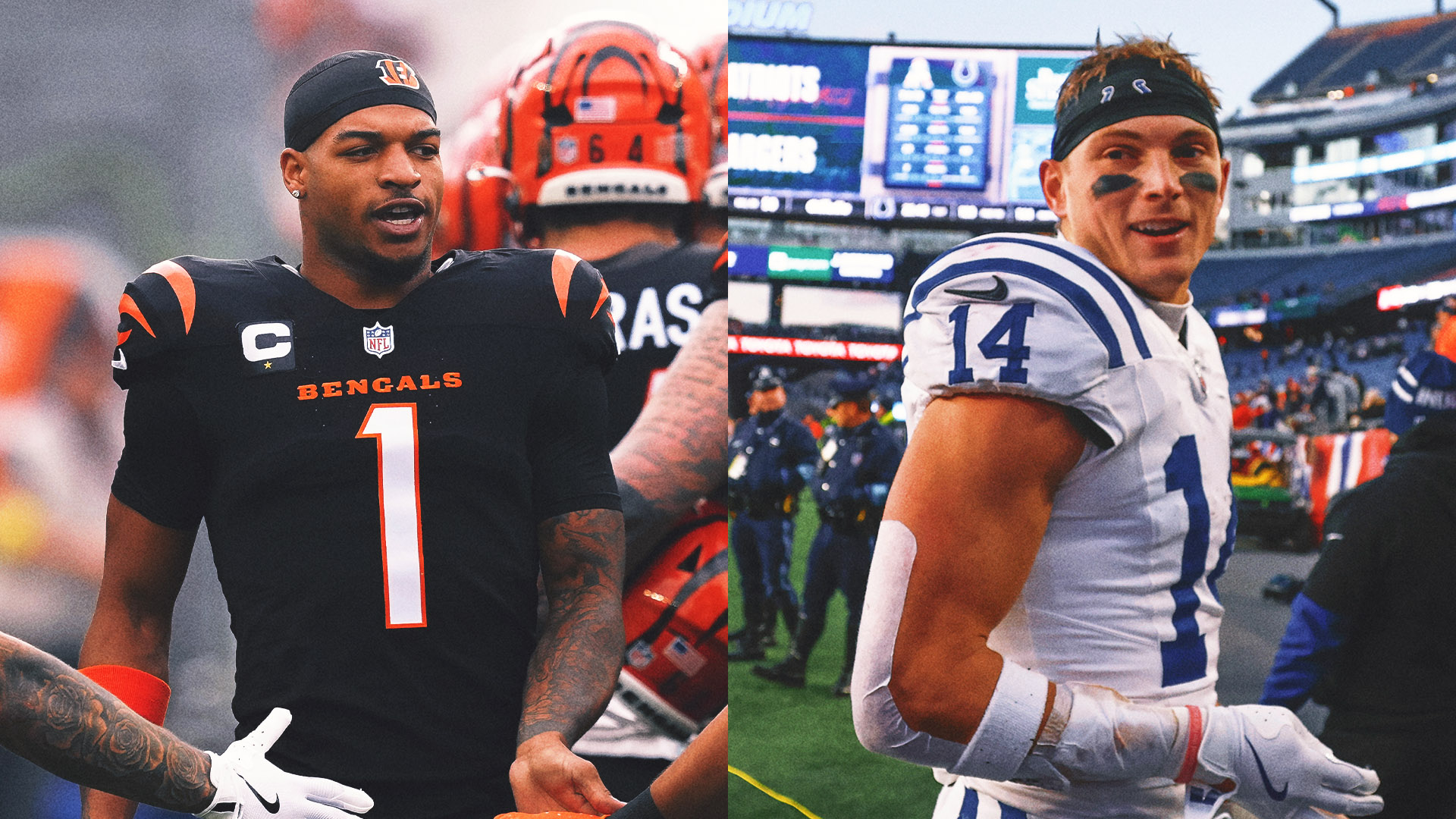
NFL free agency started in a big way on Monday, with the Colts re-signing wide receiver Alec Pierce just moments after noon ET. The deal sent shock waves through the league. Pierce had 47 catches for 1,003 yards last season for the Colts, both of which are career highs. That got him $116 million over four years, with a reported $60 million of that guaranteed. It’s essentially a two-year contract for the Colts, and if it goes well, Pierce will likely see the deal through all four years if the salary cap continues to increase. In recent years, an annual salary of $30 million became the barometer for the best receivers in the NFL. The elite players got even more, with Ja’Marr Chase getting more than $40 million annually from the Bengals last offseason. Pierce came up just shy of that, but his production pales in comparison to top receivers who now make less than him. For reference, Pierce is set to make more money than Tee Higgins, Jaylen Waddle, DeVonta Smith, Nico Collins and former teammate Michael Pittman Jr., who was traded to the Steelers on Monday. [2026 NFL Free Agency: The Top 100 Players Available and Potential Fits] Pittman being traded to Pittsburgh means Pierce’s role will likely increase in the Colts’ offense next season. Quarterback Daniel Jones was given the transition tag, while the star of the show will still be running back Jonathan Taylor. As of Monday, March 9, at 2:30 p.m. ET, here are the highest annual salaries among NFL wide receivers, including Pierce’s reported contract with the Colts (data courtesy of Over the Cap):​Latest Sports News from FOX Sports
Categories
Sports Fox

The Blueprint: How Offense-First Roster Construction Is Reshaping College Basketball

Roughly two-thirds of the way through the 2025-26 men’s college basketball season, a statistical oddity seemed to be emerging: Nearly 50 teams were averaging more than 120 points per 100 possessions — the standard metric used to derive offensive efficiency — as the calendar turned from January to February. Intuitively, the number seemed extraordinarily high — even for a year when there is so much elite-level talent across the sport that NBA commissioner Adam Silver announced the eventual enactment of anti-tanking rules to prevent teams from intentionally losing to improve their draft position. Sure enough, historical data confirmed my suspicion: Only 18 teams had completed the previous campaign with such staggeringly efficient offenses, and even that tally was some 33% higher than any other season in KenPom’s 30-year archive. The average number of teams to eclipse 120 points per possession during that sample size? A measly 4.6 per season, including nine years that featured three or fewer. To soar from that degree of sustained scarcity to more than four dozen such teams seemed like an incredible change in a relatively short period of time. And now, as most conference tournaments are set to begin this week, the number still sits at 48 teams. “That statistic is amazing,” Texas head coach Sean Miller told me last month. “I don’t know if people really understand what you’re saying there. … That’s way, way too much of a change in one season.” To understand the how and why behind this offensive explosion, I spoke to nearly a dozen head coaches whose offenses ranked among the top 25 nationally. Though their answers varied, a handful of common themes emerged that — when pieced together — began to pull back the curtain on what might be remembered as the greatest offensive season in college basketball history, at least statistically. Those coaches identified four distinct pillars that are doubling as potential explanations for this season’s renaissance: offensive-centric roster building, analytically driven shot selection, reimagined offensive rebounding principles and improved on-ball decision-making. To some degree, Houston head coach Kelvin Sampson told me, what we’re seeing right now is the maximization of a process that began during the 1988 Summer Olympics, which was the last time the United States built its basketball team entirely from collegiate players. Led by then-Georgetown head coach John Thompson, the Americans arrived in South Korea with the tournament’s most athletic roster. But despite that advantage, Team USA (bronze medal) played a drastically different style than countries like the Soviet Union (gold) and Yugoslavia (silver), which built their offenses around the premise of “penetrate to pass versus penetrate to score,” as Sampson described it. Superior ball movement sent the American defenders chasing from one side of the 3-point arc to the other until an open perimeter shot was taken. “That’s what got people thinking,” Sampson told me. “And then, in 1992, was the birth of the Dream Team. So we weren’t going to be embarrassed anymore because y’all had y’alls pros, we’re gonna start taking our pros. But in between there, there was a glimpse into the change that basketball was on the verge of making. Their spacing was different than ours, their skill sets were different than ours and I think we learned a lot from there.” Fast-forward a few decades and some of the resulting stylistic changes that gradually worked their way into college basketball are being kicked into overdrive thanks to a confluence of modern factors: From offensive-minded rule changes to the proliferation of analytics. From an influx of experienced European players who are capitalizing on relaxed eligibility rules to a wave of new coaches studying film in leagues beyond the U.S. From lucrative NIL payments that are funneling more talented players toward the sport than ever before to the last embers of COVID-year eligibility that have raised average player ages and maturity levels. All poured gasoline on an already changing flame. In Part 1 of this series, some of men’s college basketball’s keenest minds explain how the modern game is prompting them to reimagine how rosters are assembled. *** *** *** Jon Scheyer, Duke: What you’ve seen in college basketball this year [is] an incredible freshman class. You’ve seen 22-, 23-, 24-year-old pros. You’ve seen a lot more flexibility from a roster construction standpoint. I think coaches have gotten a lot smarter with roster construction. I think that’s something that’s really progressing. I think that allows, obviously, the better talent and the better fit in terms of roster. Matt Painter, Purdue: I don’t know how you quite quantify that, but I think [it’s] just better players. We have some older players, we have some international guys that are coming in their first years that aren’t 17-, 18-year-olds. They’re a little bit older, a little bit more experienced. And even the ones that are 17-, 18-, 19-years-old, their experiences leading up [to college basketball], of playing against older people, I think really help. T.J. Otzelberger, Iowa State: This is a very old year with the COVID-year still on our books for some. There’s an influx of European talent with skill — and specifically skilled bigs — more skill than we’ve seen. I think there’s a tremendous talent level among the freshmen — probably the best freshman group I’ve seen impacting winning. So I think the No. 1 thing I’d start with is the personnel piece. I think that’s a huge part. Scheyer: You have the ability to build around your best players in a different way. The pool is bigger. Instead of just being able to take high school players, you can take basically anybody in college, European, now the G-League potentially. It’s a hell of an opportunity as a coach. … You’re able to have the right fit and the more ready-made players right away. [NCAA: Final Regular-Season Men’s Top 25 Rankings] Sampson: The young coaches that are coming up in the game are more geared to offense. And they probably build their teams to that end of the court more so now than in the past. It starts with recruiting. [AJ] Dybantsa at BYU and how they built their team around him. [Darryn] Peterson at Kansas and how they built their team around him. [Christian] Anderson and [JT] Toppin at Texas Tech, how they built their team around their guys. Coaches think differently now than they did 30 years ago. It was like Big Ten football was three yards and a cloud of dust with a full backfield. Now, there is nobody in the backfield. It’s all empty. College basketball has kind of followed the same theory. The game is constantly evolving. The game is constantly changing. New coaches are coming in, bringing in new ideas. Grant McCasland, Texas Tech: I definitely, 100 percent, see the game from an offensive [point of view]. I recruit from an offensive standpoint and from a competitive standpoint. Because I do think that you can help people get better defensively. And I think if people love it, you can help them get better offensively, but not at the rate at which you can help someone [on defense]. I do think it’s hard to teach someone to be physical, and it’s hard to teach someone to really put their nose in the middle of it if it’s not their makeup. So it’s almost like skill and physicality is really the X-factor. Todd Golden, Florida: A big thing for us is trying to get guys that we think will be plus-[expected value] players on both sides of the ball. And with that being said, though, gun to head, we would probably err on the side of taking a pro-offensive player than a pro-defensive player. Otzelberger: Teams are seeing more and more correlation [to] whatever their identity is. Some teams are high-volume 3-point shooting teams, and that makes them efficient. Others, like us, put more emphasis on offensive rebounding, maybe, as a way to fill a margin. So I think because there’s more data, I think people are recruiting more [toward] a specific way of doing things or a system. You see the teams that are high-volume 3-point teams, and that’s their model, like a Texas Tech. And then you see teams like, maybe, the Floridas or the Michigan States or the UConns or us that try to put a premium on offensive rebounding and I think recruit to it, develop it, talk about it, coach it. I think there are more specific people who are analytically building their argument that way. Ben McCollum, Iowa: Teams are recruiting to it. I think they’re recruiting shooting, obviously, number one. I do think the transfer portal hurts defense, meaning, I think over time you kind of build some defensive grit, some defensive toughness, and you do that over years and years. Some teams just have plug-and-play guys or guys that come in for a very short amount of time, and there’s not a lot of defensive grit. There’s not a lot of toughness. They just kind of get by defensively. And so naturally, because of that, you’re going to score more, and your efficiency numbers are going to be a little bit better. Brad Underwood, Illinois: We’ve been very, very exact — or trying to be that anyway — in our recruiting. Positional size, very important. Shooting, very important. We look very, very hard at the character piece. We personality-test everybody. And then the other piece is processing and problem-solving. We dove heavy into that part of it in the evaluation process as well and using some other markers out there that we just tried to figure out how guys process and how guys think and basketball IQ tendencies. It’s really become very exact for us in the recruiting game. Pat Kelsey, Louisville: We really, really value skill and shooting. So that really matters. Those metrics that we know fit our offensive style are highlighted and coveted when we’re evaluating and recruiting prospects. Painter: We’ve always had good size. And now we have a great point guard. And I think that’s the recipe. If you’ve got really good big guys, and you’ve got a great point guard, and you’ve got a bunch of guys that can shoot, that balance offensively is the recipe that we look for. Sampson: When you put together your team, the first thing you’re looking at is do we have enough offense? Do we have enough shooting? Do we have someone that can create shots at the end of the shot clock? Can we space the floor and force teams to have to open up their defense to extend to our shooters? And then when the ball gets swung, can we attack the closeout [defender] and get into the paint, and then make the right decision? Miller: Sometimes, when you’re in sports, you look at [how] other industries evolve and adapt and change, but [then you think] what you do doesn’t change, you know what I mean? But I think as you grow in it, and you have more experience, you learn no, in the industry that you’re in, it evolves, grows and changes no different than all the other industries in the world. The last five years — maybe even the last three or four — there’s been so much change in the way the game is played, officiated. So when you look at building your roster, [it’s all about] skill level, versatility, interchangeable parts. Come back on Tuesday for Part 2 in this series, which focuses on the radical changes to offensive shot selection in adherence with modern analytics. In The Blueprint, our in-depth, long-form series takes you inside some of the most amazing stories in sports.​Latest Sports News from FOX Sports