Categories
Sports Fox

Men’s Player of the Year Ladder: Duke’s Cameron Boozer Leads Top 10

There has, perhaps, never been talent like this in a men’s college basketball season. In my 11 years covering the sport for FOX, the best men’s college basketball players have seldom disappointed, but this season’s top players are truly among the best of the best. And many are freshmen. Whether you value the Naismith Award or the Wooden Award more, I’m here to help you evaluate the top players in men’s college basketball with my Player of the Year Ladder. I’m excited to unveil the first edition of the PoY Ladder, which will feature a new update every week, leading into March Madness. This is going to be fun. The freshman class is possibly the greatest of all time, as half of this list consists of first-year players. The most interesting thing about this list for me: Arizona, the clear No. 1 team in the land, is not represented. The strength of the Wildcats is their balance, and it’s really hard to single any guy out. But I have my eyes on guards Jaden Bradley and Brayden Burries. Without further ado, my men’s Player of the Year Ladder so far. Honorable mention: Houston guard Kingston Flemings, Illinois guard Keaton Wagler, Gonzaga forward Graham Ike, Alabama guard Labaron Philon Jr. 10. Darryn Peterson, Kansas freshman guard He would be in the top three of this list if he played more (appeared in 11 of 21 games). But watching his first half against BYU (18 points in 17 minutes) was jaw-dropping, and I had to include him on this list… for now. 9. Yaxel Lendeborg, Michigan senior forward He hasn’t had an awesome offensive year (yet), but his all-around excellence earns this spot. He leads Michigan in scoring, rebounding and steals. 8. Jeremy Fears Jr., Michigan State sophomore guard Fears is a tremendous passer (second nationally in assists), but he’s starting to score lately. In his last two games, he’s scored 60 points combined. Impossible to imagine the Spartans winning without his leadership. 7. Darius Acuff Jr., Arkansas freshman guard The fourth freshman on my list, Acuff is averaging more than 20 points per game and six assists while shooting 49%. Arkansas is all over the map, but Darius is a true centerpiece. 6. Braden Smith, Purdue senior guard Purdue is struggling now, but it’s not because of Braden Smith. He’s leading the nation in assists while also shooting a career-best 49% from the field. [MEN’S NCAA RANKINGS: Florida, Illinois Climbing; Purdue Falls] 5. Caleb Wilson, North Carolina freshman forward Wilson plays with more aggression and enthusiasm than any player I’ve watched this season. He’s averaging 20 points and just shy of 10 rebounds per game. UNC wouldn’t be an NCAA tournament team without him. 4. AJ Dybantsa, BYU freshman forward Dybantsa is fourth in the nation in scoring at 23.3 points per game. He is a breathtaking talent but had a tough week, shooting 12-of-36 from the field in losses to Arizona and Kansas. However, that doesn’t affect how I view his brilliant season. 3. Joshua Jefferson, Iowa State senior forward His development and versatility is why I think this is Iowa State’s best team in the T. J. Otzelberger era. Jefferson is averaging more than 17 points a game, along with about eight boards and five assists, and he’s shooting a career-best 41% from 3 at the forward spot. [MEN’S NCAA: Kansas Looking Strong, Nebraska Drops in New Bracket] 2. JT Toppin, Texas Tech junior forward He’s better this season than he was last year as the Big 12 Player of the Year. Toppin is averaging 22.4 points and 10.9 rebounds, and he’s only had one bad game all season. 1. Cameron Boozer, Duke freshman forward Nobody is asked to do more for their team than Cameron Boozer, who leads Duke in every major category except for blocks.​Latest Sports News from FOX Sports

Categories
Sports Fox

The 10 Most Shocking Trades in Sports History, From A-Rod to Luka Doncic

These are the trades that shook the sports landscape. We went all the way back to the “Great Bambino” in our research to find the 10 most shocking trades ever made. Some of the best athletes ever made the list, including “The Great One,” five former MVPs and even a Super Bowl-winning head coach. Let’s start with the honorable mentions before getting the list going with “The Kid.” Honorable mentions 10. Ken Griffey Jr. to the Reds Rowan Kavner: In 1999, Griffey was coming off his 11th season in Seattle, his 10th straight All-Star season and his third straight season leading the American League in home runs. He was a baseball icon about to embark on his age-30 season, just two homers shy of 400 for his career, when he asked to be traded from the only team he had known. Specifically, he wanted to go to the Reds. Griffey grew up in Cincinnati, where his father played the first nine years of his career and served as bench coach, and he wanted to be closer to his home in Orlando. The Reds made it happen on Feb. 10, 2000, in exchange for Jake Meyer, Mike Cameron, Antonio Pérez and Brett Tomko. Griffey quickly signed a long-term extension with his new franchise, though it was not a decade of prosperity. Injuries limited his production, and the Reds never made the playoffs during his tenure. The Mariners, meanwhile, went to the American League Championship Series in each of their first two seasons following the trade before suffering a 20-year playoff drought. After nine years away, Griffey eventually returned to Seattle to finish his career. 9. Jon Gruden to the Buccaneers Greg Auman: Tampa Bay had been to the playoffs in four of its last five seasons under Tony Dungy but couldn’t get over the hump, so they made a significant move. Dungy was fired, and with hopes of sparking the offense to match an elite defense, Tampa Bay sent a king’s ransom to the Raiders – two first-round picks, two second-round picks and $8 million – for Gruden. As high as the cost was, it paid off immediately, as Gruden led the Bucs to their first-ever Super Bowl championship, beating those same Raiders in San Diego, in part because he still knew Oakland’s offense well enough to see plays coming. That defense – with Hall of Famers Derrick Brooks, Warren Sapp, Ronde Barber and John Lynch – was motivated by Gruden’s intensity, though they never found the same playoff success after that 2002 team, in part because of the draft haul they gave up to get him. As for Oakland, they haven’t won a playoff game since that season, making the postseason only twice in 23 years since losing to Gruden in the Super Bowl. 8. Randy Moss to the Patriots Auman: Unhappy after two underwhelming years with the Raiders, Moss wanted out, and in April 2007, the team relented, sending him to the Patriots for a fourth-round pick. What followed was arguably the best receiving season in NFL history – Tom Brady hooked up with Moss for 98 catches and 1,493 yards, with a league-record 23 touchdown receptions as New England was a perfect 16-0 in the regular season. Jerry Rice’s 22 touchdowns in 1987 are the only other season ever with more than 18 touchdown catches. They ended up losing in the Super Bowl to the Giants, and Moss had a quiet playoffs, totaling seven catches for 94 yards and one touchdown in three games. Moss only got one more playoff game with the Patriots. As for the Raiders, they used that fourth-round pick on corner John Bowie, who totaled two career tackles in five games for Oakland. 7. Alex Rodriguez to the Yankees Kavner: Just three years into a record 10-year, $252 million deal with Texas, A-Rod was sent to the Bronx. But it’s not just the trade to New York, where he had to move off shortstop, that was a stunner – it was also where he didn’t go. The Red Sox were coming off a devastating Game 7 defeat to the Yankees in the American League Championship Series when they had a deal in place with Texas to acquire Rodriguez, who was the reigning AL MVP. But that deal included a revised contract for Rodriguez and needed approval from the players’ union. It was rejected. The Yankees, who had Derek Jeter at shortstop and Game 7 hero Aaron Boone at third, did not seem like an obvious pivot. But after Boone suffered a knee injury, a door opened. The Yankees traded Alfonso Soriano and Joaquin Arias to the Rangers, who agreed to pay $67 million of the $179 million left on Rodriguez’s contract. The Red Sox quickly got their revenge, winning the 2004 World Series. Rodriguez, meanwhile, won two more MVP awards in 2005 and 2007 and a World Series championship with the Yankees in 2009. 6. Shaquille O’Neal to the Heat Kavner: In June 2004, O’Neal was in the NBA Finals seeking his fourth championship in eight seasons with the Lakers. But they lost to the Pistons, and a month later, the dynamic but tumultuous pairing of O’Neal and Kobe Bryant was dismantled. O’Neal was a three-time Finals MVP in L.A., but after years of feuding with Bryant and being unhappy with the direction of the franchise and the front office, he demanded a trade shortly after the 2004 Finals defeat. He went to a Heat team that had never even made an NBA Finals appearance before, in exchange for Caron Butler, Lamar Odom, Brian Grant and a first-round pick. O’Neal finished second in MVP voting in his first year in Miami while the Lakers went 34-48, missing the playoffs for the first time in 10 years. One year later, the Heat were NBA champions. The Lakers, meanwhile, struggled to find their footing until a fortuitous trade for Pau Gasol, who helped them win back-to-back titles in 2008-09 and 2009-10. 5. Herschel Walker to the Vikings Auman: The Cowboys went from 1-15 in 1989 to winning three Super Bowls between 1992 and 1995, and a central part of that turnaround under Jimmy Johnson and Jerry Jones was the Herschel Walker trade. Walker, a Heisman Trophy winner at Georgia and a star in the USFL, was still only 27 and had established himself as a top NFL back with Pro Bowl nods in 1987 and 1988. After drafting Troy Aikman in 1989, the Cowboys traded Walker to the Vikings in October for the mother of all hauls in return – three first-round picks, three second-round picks and an assortment of other picks and players. The 1990 first-rounder was running back Emmitt Smith, the NFL’s all-time leading rusher, and they added defensive tackle Russell Maryland and safety Darren Woodson – all three were key parts of three Super Bowl teams. Walker never made another Pro Bowl. The Vikings lost in the first round of the playoffs in 1989 and missed the playoffs entirely the next two years, with their next playoff win coming in 1997. 4. Micah Parsons to the Packers Auman: Elite pass rushers like Parsons never become available via trade, we’re always told, but Green Bay managed to convince the Cowboys to trade him just before the 2025 season. Parsons, 25, had made the Pro Bowl in each of his four seasons in Dallas, but the Cowboys were unable to lock him up with a long-term extension, so Green Bay swooped in, sending Dallas their first-round draft pick in 2026 and 2027, as well as defensive lineman Kenny Clark. Parsons signed a four-year, $188 million deal with the Packers and had 12.5 sacks, earning another Pro Bowl and All-Pro nod, but he sustained a season-ending knee injury, tearing his ACL in December. Green Bay finished 9-7-1 and, without him, lost in the wild-card round of the playoffs, while Dallas went 7-9-1 and their defense gave up the most points in the NFL. Dallas now has not only the No. 12 pick in April, their own, but the No. 20 pick from Green Bay, with a chance to rebuild their defense, sorely missing an elite pass rusher. 3. Wayne Gretzky to the Kings Kavner: On Aug. 9, 1988, the “Great One” donned a crown. Gretzky, the greatest hockey player ever, was traded to the Los Angeles Kings from the Edmonton Oilers, who were coming off back-to-back Stanley Cup championships (and four in five seasons). It was mind-blowing. It was flabbergasting. The astonishing move was approved by Oilers owner Peter Pocklington, much to the chagrin and disbelief of the entire country. The Canadian government nearly stepped in to try to veto the deal, but it went through. Gretzky went with Marty McSorely and Mike Krushelnyski to the Kings in exchange for Jimmy Carson, Martin Gelinas, three first-round picks and $15 million in cash. The Oilers still won another Stanley Cup Final two years later. The Kings wouldn’t win their first until decades later, but Gretzky helped get them to their first finals appearance in 1992-93 and popularized the sport in the United States. 2. Babe Ruth to the Yankees Kavner: When your decision sparks an 86-year curse, it probably wasn’t great. Primarily a standout pitcher early in his career, Ruth’s two-way talents reached new levels in 1918 when the Red Sox decided to capitalize more on his hitting prowess by also playing him in the outfield en route to winning the World Series for the fourth time in seven seasons. They did not win another for 86 years. In December 1919, Boston owner Harry Frazee, under financial pressure, made the catastrophic decision to sell Ruth — The Great Bambino, Sultan of Swat and one of the greatest players of all time — for $100,000 to a New York Yankees franchise that had never made the postseason. During Ruth’s extraordinary tenure in New York from 1920-34, the Yankees won four World Series titles as the Hall of Famer took off offensively, setting a home run record that would last until Hank Aaron’s 715th career blast in 1974. From the moment Ruth left Boston until 2003, the Yankees won 26 championships while the Red Sox won none. The “Curse of the Bambino” finally ended in 2004. 1. Luka Dončić to the Lakers Kavner: Look away, Mavs fans. One year later, it’s still too fresh. In the late hours of Feb. 1, 2025, Doncic, a 25-year-old superstar who had just led the Mavericks to the Finals, was inexplicably traded to the Lakers. It was such a perplexing, franchise-altering move that many at the time did not believe it was real. The package centered around Doncic for Anthony Davis, a 10-time All-Star who was about to turn 32. Doncic was coming off a third-place finish in MVP voting, but Mavericks general manager Nico Harrison had concerns about his conditioning, defense and the impending super-max contract he soon became eligible to receive. Just like that, the Lakers were gifted a new star to build around as the Mavs willingly shortened their competitive window. “Defense wins championships,” Harrison repeated, attempting to justify the unjustifiable. His plan backfired. Injuries limited Davis to just nine games after the trade, Kyrie Irving tore his ACL, and the Mavs missed the playoffs entirely. Nightly demands from a betrayed and irate fanbase to “fire Nico” were finally granted in November, nine months after the damage had been done, as more losses compiled. The Mavericks struck gold in landing first overall pick and rising star Cooper Flagg, who provides promise, but the effects of the unbelievable Doncic deal will be felt in Dallas for the foreseeable future.​Latest Sports News from FOX Sports

Categories
Sports Fox

Tom Brady: Will I Get Hall of Fame Snub Like Bill Belichick, Robert Kraft?

Tom Brady has zero doubt that New England Patriots owner Robert Kraft and his former head coach, Bill Belichick, will be inducted into the Pro Football Hall of Fame after getting snubbed this year. However, the seven-time Super Bowl winner wonders if he’ll suffer from the same fate and fail to make it into the Pro Football Hall of Fame on the first ballot. “To me, it’s not a matter of if they’re going to get in, it’s just a matter of when they’re going to get in,” Brady said Tuesday on FS1’s “The Herd.” “They’re tremendous at what they’ve done in the league. Maybe it’s not trending so well for ex-Patriots. Maybe I should be a little concerned here. I think, at some point, this thing is going to go in everyone’s direction the right way.” It was reported last week that Belichick, 73, wouldn’t make the Pro Football Hall of Fame in his first year on the ballot, with several people calling the decision the biggest Hall of Fame snub ever. Brady even expressed dismay in Belichick getting snubbed, saying, “If he’s not a first-ballot Hall of Famer, there’s really no coach that should ever be a first-ballot Hall of Famer.” Kraft, meanwhile, has been eligible for induction into the Pro Football Hall of Fame for over a decade, but this was the first year he made the final round of voting. The 84-year-old has owned the Patriots since 1994, overseeing the franchise’s sudden turnaround to become one of the NFL’s premier organizations. As the Patriots are set to play in their 11th Super Bowl in Kraft’s tenure as the team’s owner, Brady shared why he’s turned New England into a six-time Super Bowl champion. “It always starts at the top. The leadership, the figurehead of the organization for the Patriots, is RKK,” Brady said of Kraft. “Being there for 20 years with him and watching the nuances of that ownership role was something for me to learn a lot from. How he managed different personalities, how he could fill in the gaps when he saw them and where he saw them, he just did the most unbelievable job. Seeing it firsthand and being a part of it, recognizing the importance of that role in a football organization. “I believe the owners are the chief accountability officer. You hold everyone to a standard, and you expect everyone to live up to that. And believe me, when the owner is sitting up there in a team meeting room, the players are sitting up a lot straighter. The head coach’s message is directed a lot more intently. RKK, his office was at the stadium. He would sit in there in team meeting rooms. He would be there on the practice field. He would be there at every road game, shaking people’s hands as they walk off the field. There’s an importance in football and Patriots football that RKK doesn’t take lightly.” Brady also mentioned Kraft’s role as the chairman of the league’s media committee as another reason why the Patriots’ owner is worthy of induction into the Pro Football Hall of Fame. “Take a look at the contributions that he’s made to the league and the NFL in general to negotiate media rights deals,” Brady said. “This is the most popular sport in America. The thousands of hours he spent bringing this game to light for the fans, that doesn’t go unnoticed. Now that I’m in TV, I understand the amount of work that it takes for FOX to broadcast the game. The partnership that FOX and its partners have with the NFL is extremely important. That working relationship is so critical to this game being spread throughout our entire country and bringing a lot of joy to people’s lives.” In his role as the chairman of the league’s media committee, Kraft helped the NFL land $111 billion when the league agreed to its current broadcasting deals. Kraft has also been widely credited for helping end the NFL lockout in 2011. But that wasn’t enough for Kraft to earn his spot in the Hall of Fame this year. Now, there’s the possibility of Belichick and Kraft getting inducted alongside Brady in the coming years. Brady won’t be eligible for induction into the Pro Football Hall of Fame until 2028, while former Patriots star Rob Gronkowski is eligible for induction in 2027. But only five players from the Patriots’ dynasty era have made the Pro Football Hall of Fame, with three of them (Randy Moss, Darrelle Revis and Junior Seau) spending little time in New England. Ty Law and Richard Seymour are the only ex-Patriots from that era who spent the majority of their careers in New England to make the Hall of Fame, while former stars like Rodney Harrison, Adam Vinatieri and Vince Wilfork have had difficulty getting inducted. Still, the shock value of Belichick’s snub seemingly trumped them all. While Brady acknowledged that the news of Belichick not making the Hall of Fame might have hurt him last week, he also thinks it’ll make the moment that his former head coach gets his bust in Canton all the more sweeter. “In some ways, it rallied a lot of people who played for Bill and made sure they reached out to him to express how much they appreciated him, which I’m sure felt good for Bill,” Brady said. “We all want everything in our life to happen on our timeframe and schedule. We want everything to go when we want it to go. But the reality is, that’s not life. I actually think it’s going to work in his favor when he does get in, because there’s going to be a lot of people that realize the impact he made on their lives as a coach, as a player, and they’re going to be there to celebrate him. “This was another opportunity for everybody to reach out to him and tell him how much they appreciate him, even though he didn’t get exactly what he probably deserved here the first time around.”​Latest Sports News from FOX Sports

Categories
Sports Fox

2026 Men’s NCAA Tournament Projections: Kansas Looking Strong, Nebraska Drops

The Kansas Jayhawks are on a roll, and guard Darryn Peterson is leading the way, albeit a little banged up. The Jayhawks are on a six-game win streak after topping then-No. 13 BYU over the weekend and beating new No. 13 Texas Tech on Monday. And in FOX Sports bracket forecaster Mike DeCourcy’s latest men’s NCAA tournament bracket projection, Kansas is looking strong, moving up from a No. 4 seed to a No. 3 seed in the Midwest Region. But it’s still behind No. 1 seeds Duke, Michigan, Arizona and UConn. As the 2025-26 regular season quickly winds down leading into March, DeCourcy shares his latest NCAA Men’s Basketball Tournament projections. Here’s where his projected bracket stands through Feb. 3. EAST REGION SOUTH REGION MIDWEST REGION WEST REGION [MEN’S NCAA RANKINGS: Florida, Illinois Climbing; Purdue Falls] And it’s never too early to check in on the bubble. According to DeCourcy’s projections, Cal, UCLA, Miami (Fla.) and Santa Clara are the last four teams in the tournament, while Ohio State, Seton Hall, Virginia Tech, and San Diego State are the first four out. As for conference representation, the Big Ten is back on top with 10 teams, followed by the ACC and the SEC with nine teams, the Big 12 with seven teams and the Big East and the West Coast with three. The Atlantic 10 and Mountain West conferences also have two teams each. Selection Sunday is less than two months away, and these projections will inevitably evolve. But for now, DeCourcy’s latest bracket forecast offers a clear snapshot of who’s rising, who’s falling, and which programs are already building the résumés they’ll need when March arrives.​Latest Sports News from FOX Sports
Categories
Sports Fox

2026 NFL Mock Draft: Jets Reload with Defensive Star and QB of the Future

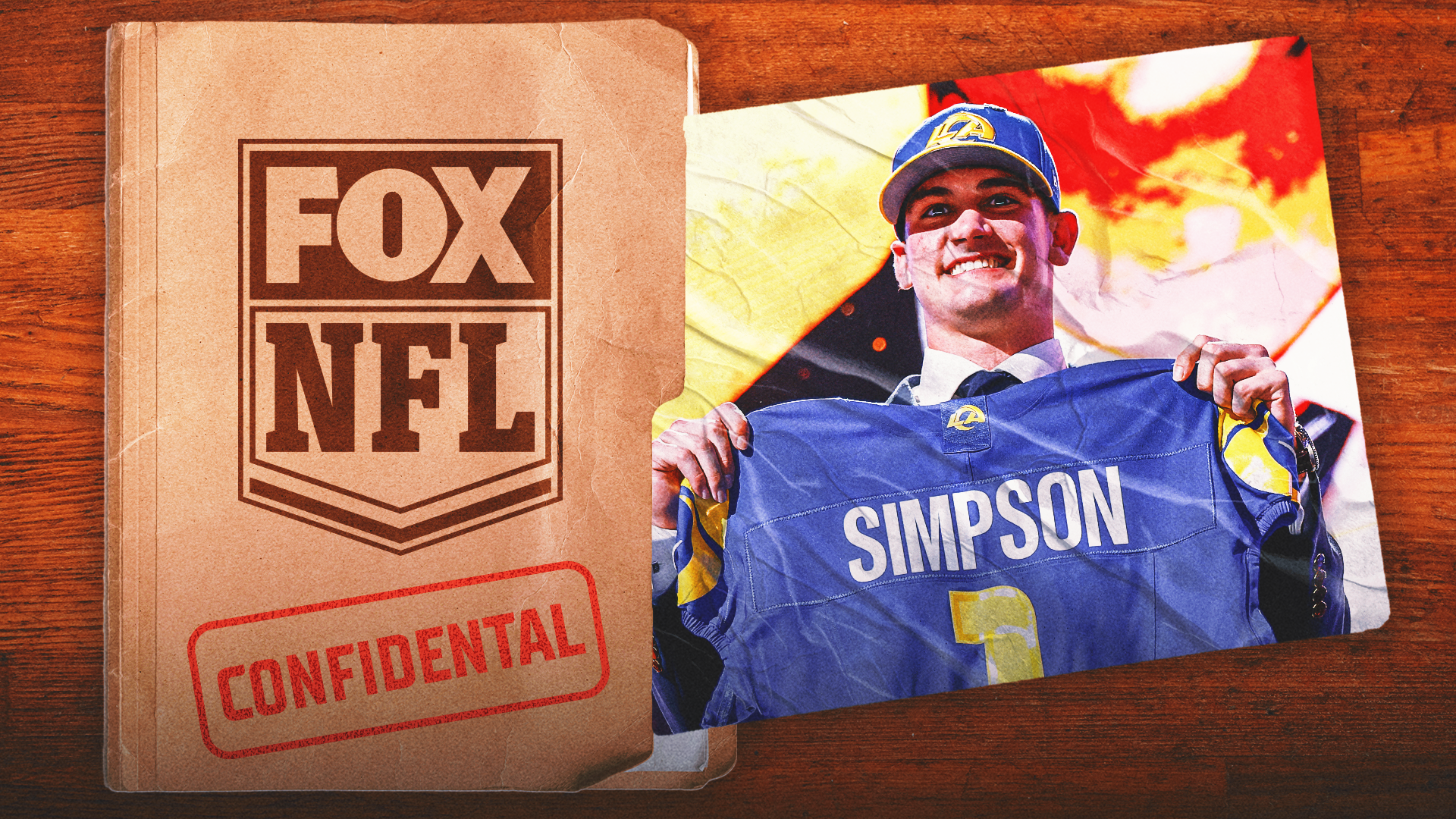
There doesn’t appear to be much drama with the first overall pick in the 2026 NFL Draft. But after that, all bets are off as teams look to add building blocks to their franchise. As we transition from the college all-star games to the upcoming offseason following this Sunday’s Super Bowl, here’s how I see things going in my latest mock draft. 1. Las Vegas Raiders: Fernando Mendoza, QB, Indiana: With Klint Kubiak close to joining the Silver and Black as the team’s new head coach, it is a no-brainer for general manager John Spytek to hand him a franchise quarterback to build the offense around. As a pinpoint passer with the athleticism and agility to work outside the pocket, the marriage between Mendoza and Kubiak could lead the Raiders out of the doldrums. 2. New York Jets: Arvell Reese, OLB, Ohio State: As head coach Aaron Glenn takes over defensive play-calling duties, he could tap into Reese’s versatility as an off-ball linebacker with explosive pass-rushing skills. Given the Jets’ defensive struggles in 2025, the team’s draft day plans should revolve around acquiring a collection of blue-chip playmakers. 3. Arizona Cardinals: Francis Mauigoa, OT, Miami: If new head coach Mike LaFleur is convinced he can fix quarterback Kyler Murray, the Cardinals could elect to fix their offensive line. Mauigoa is a super-sized road grader who excels at moving defenders off the ball in the running game. 4. Tennessee Titans: David Bailey, EDGE, Texas Tech: Fixing the Titans’ pass rush is a top priority for a defensive-minded head coach (Robert Saleh) who also serves as the defensive play caller. Bailey’s speed-rushing prowess off the edge perfectly complements Jeffery Simmons’ disruptive talents on the interior. 5. New York Giants: Spencer Fano, OT, Utah: The G-Men get back to their rugged ways under new head coach John Harbaugh. He starts the rebuilding project by adding a monstrous edge blocker to the lineup to ensure the Giants can control the line of scrimmage and impose their will with their ultra-physical approach. 6. Cleveland Browns: Jordyn Tyson, WR, Arizona State: If Shedeur Sanders remains QB1 under Todd Monken, the new head coach must surround him with better playmakers to help him thrive as a pocket passer. As a slick route runner with dynamic running skills, Tyson is a natural No. 1 receiver with the potential to anchor the Browns’ passing game. 7. Washington Commanders: Rueben Bain, EDGE, Miami: Head coach Dan Quinn’s success with similar power rushers (SEE: Dante Fowler) could lead the Commanders to take a chance on Bain despite his lack of ideal physical traits. The Miami standout’s energy and effort overwhelm opponents, unable to match his intensity between the lines. 8. New Orleans Saints: Jeremiyah Love, RB, Notre Dame: Despite the presence of Alvin Kamara, the Saints could utilize an explosive offensive weapon to alleviate some of the pressure on an inexperienced quarterback (Tyler Shough). As a dynamic runner with the potential to score from anywhere on the field, Love’s scintillating talent could make it hard for the Saints to bypass him despite more pressing team needs. 9. Kansas City Chiefs: Carnell Tate, WR, Ohio State: After watching the Chiefs’ passing game sputter without elite pass catchers on the perimeter, Andy Reid handpicks Tate to share WR1 duties with Xavier Worthy in a rebuilt passing game under new offensive coordinator Eric Bieniemy. 10. Cincinnati Bengals: Caleb Downs, S, Ohio State: The Bengals could opt for a pass rusher to replace Trey Hendrickson, but Downs is arguably the best defender in the draft, with a dynamic game that will lead to more splash plays from a struggling defense. 11. Miami Dolphins: Keldric Faulk, EDGE, Auburn: The Dolphins could transition to a traits-based evaluation model under new general manager Jon-Eric Sullivan that would make the Auburn standout an intriguing option at this pick. Despite his pedestrian sack numbers, Faulk’s length and destructive flashes as a run defender could captivate a defensive-minded head coach and front office looking for an impact player on the frontline. 12. Dallas Cowboys: Jermod McCoy, CB, Tennessee: After giving up 30-plus points per game in 2025, the Cowboys must address their lackluster secondary. McCoy is a high-end cover corner with the instincts and awareness to thrive as a CB1 on the island. 13. Los Angeles Rams: Mansoor Delane, CB, LSU: Sam Darnold’s thorough dismantling of the Rams’ secondary in the NFC Championship Game could prompt Les Snead and Sean McVay to use a top pick on a playmaking cover corner. Delane is a rangy ball hawk with the instincts, awareness and diagnostic skills to shine as a “see ball, get ball” defender in the Rams’ scheme. 14. Baltimore Ravens: Kenyon Sadiq, TE, Oregon: With Lamar Jackson likely signing a mega-extension in the offseason, the Ravens must find an explosive playmaker to work the middle of the field. Sadiq is a mismatch creator who would team with Mark Andrews, giving the Ravens the flexibility to use multiple tight end formations that helped the former MVP thrive as a passer in previous seasons. 15. Tampa Bay Buccaneers: Sonny Styles, LB, Ohio State: Given star linebacker Lavonte David’s impending free agency, the Buccaneers could target his replacement in Round 1. Styles’ speed, quickness and burst would make him an ideal fit as the “WILL” backer in Todd Bowles’ aggressive scheme. 16. New York Jets: Ty Simpson, QB, Alabama: If the Jets strike out in free agency, the Alabama standout could be the team’s next franchise quarterback prospect. Despite his inexperience, Simpson’s high IQ and polished passing skills would make him an ideal developmental prospect to build around. MORE DRAFT COVERAGE: Best QB Prospects After Fernando Mendoza 17. Detroit Lions: Caleb Lomu, Utah, OT: With Taylor Decker contemplating retirement, the Lions must find a successor on the blind side. Lomu is a natural left tackle with elite athleticism and movement skills. 18. Minnesota Vikings: Avieon Terrell, CB, Clemson: Brian Flores needs a collection of high-IQ cover corners to make his scheme work. Terrell’s experience and ball skills would make him a nice fit as a CB2 opposite Byron Murphy. 19. Carolina Panthers: Vega Ioane, G, Penn State: The ultra-talented interior blocker would help the Panthers mash opponents between the tackles. Ione’s strength, power and nastiness would help the Panthers develop the edginess needed to dominate the trenches against quality opponents. 20. Dallas Cowboys: Akheem Mesidor, EDGE, Miami: The loss of Micah Parsons will force the Cowboys to utilize multiple draft picks on edge rushers to upgrade a pass rush that missed the All-Pro’s impact production last season. Mesidor’s relentless energy and effort could help him emerge as a double-digit sack artist at the next level. 21. Pittsburgh Steelers: Makai Lemon, WR, USC: Mike McCarthy will make it a top priority to find a complement to DK Metcalf on the perimeter to balance out the Steelers’ passing game. Lemon’s sensational skills as a route runner and playmaker could ignite an aerial attack that sputtered for most of 2025. 22. Los Angeles Chargers: Peter Woods, DT, Clemson: Adding a disruptive defensive tackle will help the Chargers take advantage of more one-on-one opportunities along the frontline. Woods’ explosiveness and power could overwhelm interior blockers forced to deal with him at the point of attack. 23. Philadelphia Eagles: Kadyn Proctor, OT, Alabama: Lane Johnson’s injury struggles could force general manager Howie Roseman to address the offensive tackle position with a top pick. Proctor flashes franchise-caliber talent but could easily move inside until a position opens up on the exterior. 24. Cleveland Browns: Monroe Freeling, OT, Georgia: Upgrading the offensive line is critical for a Browns’ offense that could start a young quarterback with limited experience. Freeling’s athleticism and traits could make him the pick despite his unpolished game. 25. Chicago Bears: Kayden McDonald, DT, Ohio State: Dennis Allen will gladly take on another big body on the interior to fix a leaky run defense. McDonald’s disruptive presence as an extra-large defender will enable the Bears’ linebackers to run and chase unobstructed to the ball. 26. Buffalo Bills: Zachariah Branch, WR, Georgia: If the Bills are operating with a “Super Bowl or bust” mentality, the team must upgrade the offensive weapons on the perimeter. Branch’s playmaking skills as a “catch-and-run” specialist could enable Josh Allen to succeed with an efficient passing game built around shorter passes. 27. San Francisco 49ers: KC Concepcion, WR, Texas A&M: Upgrading the wide receiver corps is a must after Brandon Aiyuk went AWOL in the middle of the season. Concepcion is the passing catching threat head coach Kyle Shanahan needs to unlock the 49ers’ passing game. 28. Houston Texans: Caleb Banks, DT, Florida: The Texans could enhance a dominant frontline with a disruptive defensive tackle with superior size, strength, and explosiveness. The heavy-handed Banks could develop into a star playing alongside Will Anderson, Jr. and Danielle Hunter. 29. Los Angeles Rams: Chris Brazzell II, WR, Tennessee: With Davante Adams entering the twilight of his career, the Rams could invest in another young pass catcher to complement Puka Nacua on the perimeter. Brazzell’s speed and explosiveness could enable quarterback Matthew Stafford to torch opponents with more deep balls in 2026. 30. Denver Broncos: CJ Allen, LB, Georgia: Defensive coordinator Vance Joseph would love to add another playmaking linebacker to the defensive arsenal. Allen’s speed, instincts and awareness perfectly match the Broncos’ aggressive schemes. 31. New England Patriots: Cashius Howell, OLB, Texas A&M: With K’Lavon Chassion poised to hit the market as a free agent, the Patriots could opt for a pass-rushing specialist with the speed and quickness to disrupt the timing of the passing game. 32. Seattle Seahawks: T.J. Parker, EDGE, Clemson: Head coach Mike Macdonald could build a better bully by adding another pass-rushing specialist to the rotation. Parker is a talented sack artist with the speed and quickness to create chaos off the edge in the Seahawks’ aggressive scheme.​Latest Sports News from FOX Sports
Categories
Sports Fox

One Burning Question For All 30 MLB Teams Ahead Of Spring Training

Kyle Schwarber is staying in Philly. Bo Bichette is heading to Queens. And Kyle Tucker is joining the stacked Dodgers team looking for a three-peat. Some of baseball’s biggest offseason free agents have settled in, but there are ways for teams to upgrade before spring training begins. Starters Framber Valdez, Zac Gallen, Chris Bassitt, Lucas Giolito, Zack Littell and Max Scherzer remain unsigned. And there’s always the possibility of an intriguing trade, as the Mariners did by acquiring All-Star infielder Brendan Donovan, or the Rangers demonstrated by adding starting pitcher MacKenzie Gore. The 2026 season draws nearer, with pitchers and catchers reporting to spring training in less than two weeks. Here’s one question for every team before the start of camp: JUMP TO: AL East | AL Central | AL West | NL East | NL Central | NL West Baltimore Orioles: After a busy offseason of upgrades, are they still an ace short? President of baseball operations Mike Elias has made meaningful moves this offseason to upgrade the roster after finishing last in the AL East in 2025. They have their new slugger in Pete Alonso, their new closer in Ryan Helsley, a new corner outfielder in Taylor Ward and more rotation depth with the trade for Shane Baz and re-signing of Zach Eflin. This has the look of a team that could bounce back quickly and make noise in the AL East. But the Orioles also dealt away Grayson Rodriguez and are coming off a year in which their starters ranked 24th in ERA. Could there still be one more big move ahead to pair an ace with the new-look group? Boston Red Sox: Will they trade from their outfield surplus after whiffing on Alex Bregman? After the Red Sox traded away eight more years of Rafael Devers to make Bregman the answer at third base in 2025, it seemed like there was no way the Red Sox would let him slip away in free agency. But that’s what happened. They’re still a talented group capable of winning the always challenging AL East, but it’s shocking that they’re now entering the 2026 season with neither Devers nor Bregman at third base. Meanwhile, there’s an outfield logjam Roman Anthony’s not going anywhere, but they also have Jarren Duran, Ceddanne Rafaela and Wilyer Abreu. Could one of them be on the move to help acquire an infield bat? New York Yankees: Awaiting key returners, how does the pitching staff shape up? The Yankees’ biggest offseason task — bringing back Cody Bellinger — is finally complete. Otherwise, though, it’s been a quiet winter in the Bronx, especially in comparison to the rest of the AL East. The season may come down to how Gerrit Cole, Carlos Rodon and Clarke Schmidt look upon their return from injury — and how the young starters, including new addition Ryan Weathers, hold down the fort until that trio is back up and running. Four of the six relievers who threw the most innings for them last year (Devin Williams, Luke Weaver, Mark Leiter Jr., Ian Hamilton) are now in different uniforms, so a reliable rotation will be especially important. Tampa Bay Rays: Is 2026 a transition year? After five straight trips to the postseason, the Rays saw a 19-win reduction from 2023 (99 wins) to 2024 (80). Last year ended even worse — 77-85 — marking their lowest win total since the 2016 season. As is often the case in Tampa, this winter has been about thinking toward the future, and they’ve again replenished their typically formidable farm system. But there might be more pain before prosperity. It’s hard to imagine the additions of Gavin Lux, Cedric Mullins, Jacob Melton, Jake Fraley and Steven Matz will offset the losses of Brandon Lowe, Shane Baz, Josh Lowe, Pete Fairbanks, Mason Montgomery, Jake Mangum, Kameron Misner, Christopher Morel and Adrian Houser in the short term. Still, the Rays often find a way to be competitive, and a healthy Shane McClanahan could go a long way. Toronto Blue Jays: Can the offense make another World Series run without Bichette? The Blue Jays will be one of the winners of the offseason for the upgrades they made to the pitching staff, but missing out on Kyle Tucker and watching homegrown standout Bo Bichette depart for Queens still stings. Almost everything went right for Toronto last season, with a horde of contributors taking huge leaps forward and George Springer turning back the clock. Can they count on that happening again without Bichette in the lineup? A bounceback year from right fielder Anthony Santander would go a long way. Chicago White Sox: What exactly do they have in Japanese star Munetaka Murakami? The biggest surprise of the offseason might be the two-year, $34 million deal that Murakami signed with the White Sox. Entering his age-26 debut MLB season, after launching 246 home runs in eight NPB seasons, he was projected by many to get a nine-figure contract. Will Murakami’s prodigious power in Japan translate stateside? Or will his high strikeout rate be too problematic? Either way, it was a low-risk, high-reward decision for a White Sox squad that is starting to compile an interesting core in its rebuild, and he’ll be one of the most fascinating players to watch in 2026. Cleveland Guardians: Where does the offense come from? Jose Ramirez is now a Guardian for life, and that’s no small accomplishment, but this offseason has been far too quiet for an offense that needed upgrades. After a miraculous late-season charge, the Guardians won the division for the second straight year. But they did so with a lineup that ranked exactly 29th in batting average, on-base percentage and slugging percentage. Ramírez and Kyle Manzardo were the only players who hit above league average. There’s a lot riding on the development of a young lineup (and top prospects Chase DeLauter and Travis Bazzana) to try to help Cleveland take the next step. Detroit Tigers: What happens with Tarik Skubal? It’s the question that lingered all offseason, and it’s the question that’ll continue into 2026 if he doesn’t get dealt before the start of the year. With an arbitration hearing for the ages due up soon, we’re about to find out if he’ll make $19 million or $32 million this year. We’re about to see how much the process peeves him. It’s a tremendously wide chasm, and if it ends up being the former number, that could open the door for more teams to try to pursue him. Kansas City Royals: Can Lane Thomas, Isaac Collins and Kameron Misner help fix the longstanding outfield woes? Kansas City outfielders ranked dead last in wRC+ last year. It’s been an all-too-common theme. Their outfielders have ranked in the bottom five in OPS for three straight seasons. Rather than go all in on a more sure thing, the Royals shopped on the margins to try to upgrade the group. They traded for Collins, who at one point was in the Rookie of the Year mix as a 28-year-old last year, and Misner, who’s known more for his defense and speed than his bat. They signed Thomas, who was limited to 39 games last season and struggled mightily while on the field, hoping for a bounceback season on a one-year, $5.25 million deal. But to get where they want to go, they’ll need a big jump forward from 2024 first-round pick Jac Caglianone. Perhaps moving the walls in will help. Minnesota Twins: Who’s pitching in leverage after last winter’s bullpen exodus? While questions remain about the long-term future in Minnesota for starters Joe Ryan and Pablo Lopez, a lot of questions also loom once those pitchers leave the game. Relievers Jhoan Duran, Griffin Jax, Louis Varland, Brock Stewart, Danny Coulombe, Randy Dobnak were all dealt away at last year’s trade deadline, and that’s not even including Chris Paddack, who was only a starter for the Twins before serving in a dual role in Detroit in the second half. The only relief additions the Twins have made to backfill those losses this winter are Taylor Rogers and Eric Orze. Athletics: Is there enough pitching to become a playoff threat? Another year, same question. Last year, they were a popular pick as a surprise contender. The offense lived up to the billing. The lineup ranked eighth in OPS, and Nick Kurtz and Jacob Wilson became the ninth pair of teammates ever to finish in the top two in Rookie of the Year voting. But the pitching was a problem (27th in ERA, 25th in WHIP, 20th in strikeouts), and it’s hard to see that changing in a meaningful way after a quiet offseason. Houston Astros: How do they handle the infield logjam? Isaac Paredes was an All-Star last year in Houston, but a hamstring injury before the deadline prompted the Astros to reunite with Carlos Correa. Jeremy Pena is coming off an All-Star season last year at shortstop, so Correa can’t bump over there. Meanwhile, they have Jose Altuve at second and spent $60 million on first baseman Christian Walker last offseason. That means there’s five infielders for four spots, and it’s unlikely they’d like any of them taking regular DH at-bats as they try to keep Yordan Alvarez as healthy as possible. Will one of them get traded before Opening Day? Los Angeles Angels: How many of these reclamation projects actually pan out? The Angels have hardly spent this winter, but that doesn’t mean they’ve been inactive. They’ve utilized a shotgun approach, taking a bunch of fliers on once highly-regarded prospects who have yet to reach their potential (Grayson Rodriguez, Vaughn Grissom, Josh Lowe) and veterans trying to find their way again (Jordan Romano, Kirby Yates, Alek Manoah). The payroll is significantly down from last year — their largest free-agent purchase so far is Yates for $5 million — and it still feels like they could add to their rotation with one of the remaining players on the market (Zac Gallen? Chris Bassitt?) to add some semblance of stability. Seattle Mariners: How will the offense look without Eugenio Suarez and Jorge Polanco? After re-signing first baseman Josh Naylor in November and adding reliever Jose Ferrer and lefty masher Rob Refsnyder in December, it was quiet for months in Seattle. That was a bit surprising, especially considering the infield vacancies after losing Jorge Polanco to the Mets and Suárez to the Reds. Barring another move, it looked like they might be preparing for a youth movement with 25-year-old Ben Williamson at third base and 22-year-old Cole Young at second, at least until 20-year-old top prospect Colt Emerson was ready. But a trade for a versatile infielder always made sense, and they reportedly got it done this week with a deal in place for the Cardinals’ Brendan Donovan. He’ll offer a different look for Seattle. Donovan won’t replace the power of Suárez or Polanco, but he’s a consistently above-average hitter who rarely swings and misses. That should be helpful for a Mariners lineup that has ranked in the top three in strikeouts each of the last three years. Texas Rangers: Can the young players take the next step? Remember when the Rangers’ offense tore its way through October to win a championship back in 2023? Well, that was three years ago now, and the offensive production has taken a nosedive since. In fact, the Rangers have fielded one of the worst lineups in baseball over the last two years, a group that ranks 27th in OPS over that time.  The big move to acquire MacKenzie Gore could make this rotation one of the best in baseball if healthy (a big if), but the success of the season will still come down to how the lineup performs and how Wyatt Langford, Evan Carter, Josh Jung and Josh Smith continue to develop. Another leap forward for starters Jack Leiter and Kumar Rocker wouldn’t hurt, either. Atlanta Braves: Was last year’s struggle just a blip? It was just three seasons ago that the Braves’ offense was not just the best in baseball but historically good. Since then? Not so much. They ranked 12th in OPS in 2024 and 13th in 2025. Ozzie Albies has been a below league-average hitter for two straight years. Michael Harris II has trended the wrong direction offensively since winning Rookie of the Year honors in 2022. So has Austin Riley, though not as dramatically, and he has been limited by injury. That was the story for much of the roster in a lost 2025 season. It might just take a cleaner bill of health for the Braves to bounce back after missing the playoffs for the first time since 2017. New York Mets: How quickly will all the new pieces mesh? A good reminder not to judge an offseason in December, president of baseball operations David Stearns has spent the past few weeks cooking after disassembling the team’s longtime core. Gone are Pete Alonso, Brandon Nimmo, Edwin Diaz, Jeff McNeil and more. In are Bo Bichette, Freddy Peralta, Marcus Semien, Jorge Polanco, Luis Robert Jr., Devin Williams, Luke Weaver and more. Suddenly, a winter that looked like a disaster now has the Mets in position to bounce back in a major way. Will they go from missing the playoffs to winning the NL East? Miami Marlins: Who’s starting games in 2026? A 79-win season far outpaced expectations in the Marlins’ rebuild last year. Outfield breakouts from Kyle Stowers (.912 OPS) and Jakob Marsee (.841 OPS) in limited samples provided optimism for the future. That group added another intriguing young talent this winter in Owen Caissie from the Cubs, but that move required parting with starter Edward Cabrera after a year in which the Marlins rotation ranked 26th in ERA. Weeks later, the Marlins dealt further from their starting group when they sent Ryan Weathers to the Yankees for prospects. It’s possible the Marlins could still field a competitive rotation headlined by Sandy Alcantara and Eury Perez, but it’s also possible that Alcantara is the next veteran arm to go as Miami prioritizes adding more bats to the farm. If that happens, or if Max Meyer and Braxton Garrett aren’t healthy coming off season-ending surgeries, top pitching prospects Thomas White and Robby Snelling could enter the mix. Philadelphia Phillies: How much of an impact do Justin Crawford and Adolis Garcia make in the outfield? It’s a bit surprising the Phillies let Harrison Bader go to the Giants for two years and $20.5 million, considering what he meant to the team down the stretch last year (he hit .305 after getting traded from Minnesota to Philadelphia). Perhaps they misjudged his market, but they pounced early on García in the middle of December — giving him almost the same salary in 2026 as Bader eventually received — and clearly think highly of Crawford, their top outfield prospect who could be patrolling center field on Opening Day. How those decisions pan out will be crucial, considering the rest of the position player group from last year remains the same. Washington Nationals: What’s next in the development of 23-year-old All-Star James Wood? The moves made by new president of baseball operations Paul Toboni this winter suggest the team is thinking much further down the line than competing in 2026. After getting a bevy of prospects for MacKenzie Gore, it’s possible they could do the same for CJ Abrams if they get the right offer. One of the only sure things in Washington: Wood will be an integral part of the next phase of Nationals baseball. He can absolutely mash, as evidenced by his 31 home runs and elite quality of contact as a 22-year-old last year, and he also stole 15 bases last year. But he’s also prone to swing and miss at an alarming rate — he was two strikeouts away from tying an MLB record — and has work to do defensively in the outfield. If he can improve upon those areas, there’s MVP-level upside. Chicago Cubs: Is this the year they overtake the Brewers? The Brewers have won the NL Central three straight years and four of the last five years, but Chicago’s additions of Alex Bregman, Edward Cabrera and a slew of relievers have the Cubs in as good a position as they’ve been over the last five years to win their first division title since the shortened 2020 season. They’ve been busy this offseason, but another move could still be on the horizon following the Bregman deal with Nico Hoerner and Matt Shaw both capable of playing second base. Cincinnati Reds: Does Elly De La Cruz take the next step? The Reds, who finished 21st last season in home runs, whiffed on Kyle Schwarber. But they did sign slugger Eugenio Suarez (who hit 49 homers last season) to a one-year, $15 million deal. Nonetheless, the development of the multi-talented De La Cruz is more essential than ever. He was an All-Star last year, but the switch-hitter struggled from the right side of the plate and tailed off mightily after the break, ultimately hitting just 9% better than league average. We found out afterward that he was playing through a nagging quad strain down the stretch, which might explain the dip. There’s obviously a ton of untapped upside here, and the Reds will need him to find it if they want to make noise in 2026. Milwaukee Brewers: How do they fill out the rotation after trading Freddy Peralta? Sure, it’d be nice if they’d actually spend more money to build more of a threat in October, but we do this song and dance every year: The Brewers trade one of their soon-to-be-expensive big-league standouts, we question how they can possibly keep getting away with this, and then go and win the division with 90-plus victories. Doubt them at your own peril. This winter it was Peralta’s turn to find a new home. The Brewers still have plenty of internal options behind him, particularly after giving Brandon Woodruff the qualifying offer, though they may still want to add another veteran arm to the young group. Pittsburgh Pirates: Are the offensive upgrades enough to make a meaningful leap forward? Don’t get it twisted: The Pirates are still among the lower payroll clubs, but there is at least reason to be a bit more hopeful about their team’s chances in 2026 after general manager Ben Cherington operated in a way he hadn’t in recent winters to try to fix an abysmal offense. They added Brandon Lowe, Jake Mangum and Jhostynxon Garcia via trade and Ryan O’Hearn for two years and $29 million. That’s not going to make them an offensive force — they ranked in the bottom 10 in every slash-line category last year — but all the lineup has to do is be competent, given the strength of their pitching staff, to imagine better days ahead. St. Louis Cardinals: How quickly does top prospect JJ Wetherholt make his mark? The rebuild is in full effect under new president of baseball operations Chaim Bloom, who dealt away Nolan Arenado, Willson Contreras, Sonny Gray and Brendan Donovan this winter to acquire more pitching prospects. Last year was the second time in the last three seasons that their starters ranked in the bottom three in strikeouts, and it might get worse before it gets better after trading Gray. But Wetherholt could provide a reason to watch this year in St. Louis. The versatile infielder will be a non-roster invite at spring training and could have a chance to break camp with the big-league club after recording a .931 OPS between Double-A and Triple-A last year. Arizona Diamondbacks: How do they fix their bullpen? Remember when the Diamondbacks reached the 2023 World Series? That’s their only playoff appearance over the last eight seasons. The biggest problem during last year’s fourth-place finish was the pitching staff — and specifically a bullpen that ranked in the bottom five in MLB in ERA, WHIP, strikeouts, opponents’ average and blown saves. The D-backs have patched up the rotation by bringing back Merrill Kelly and signing Michael Soroka, but adding Taylor Clarke doesn’t seem like enough to fix the dreadful bullpen, especially with Justin Martinez and AJ Puk both likely to miss most of the upcoming season. Perhaps more is still ahead. Colorado Rockies: What changes under new leadership? OK, so the Rockies aren’t going to go from one of the worst seasons in modern baseball history to a contender anytime soon. But after cleaning house, it’ll be interesting to see how much improvement they make under new president of baseball operations Paul DePodesta and general manager Josh Byrnes. In the short-term, they’re hoping for bounceback seasons from free-agent additions Willi Castro, Jake McCarthy and Edouard Julien — who were all below replacement level players last year — and the addition of an experienced arm in Michael Lorenzen can help field a more competent product. When you win 43 games, there’s nowhere to look but up, right? …Right? Los Angeles Dodgers: Will the roster’s age get in the way of a three-peat? The Dodgers are, rightfully, the favorites to win it all again. The biggest obstacle to a three-peat, beyond the randomness of October, might be their age. Freddie Freeman will be 37 before the postseason starts. Max Muncy is 35. Mookie Betts and Teoscar Hernandez are both entering their age-33 seasons coming off down years offensively. Before the Kyle Tucker signing, Andy Pages was the only everyday player on the team still in his 20s. The roster’s loaded enough that it probably won’t matter, but the Tucker addition is an important one both in the present and as a bridge to their promising future. San Diego Padres: Do they take a big swing? After some major deadline moves, the Padres won 90 games and fell just three games short of the Dodgers in the NL West. Maybe they consider deadline acquisitions Mason Miller and Ramon Laureano additions for 2026, but it’s been a quiet winter. Having Miller makes the loss of closer Robert Suarez more manageable, but questions still loom in the infield and the rotation after losing Dylan Cease, Luis Arraez and Ryan O’Hearn. Perhaps president of baseball operations AJ Preller still has something else up his sleeve. San Francisco Giants: Does the Tony Vitello project work? There were a plethora of interesting manager hires this cycle but none more groundbreaking than the Giants’ move to hire Vitello away from the University of Tennessee. In an attempt to upgrade the roster this winter, the San Francisco front office provided Vitello with more rotation options (Tyler Mahle and Adrian Houser), better outfield defense (Harrison Bader) and, just weeks before players report to camp, the reigning NL hits leader (Luis Arraéz). Will that be enough to start Vitello on the right foot, or is a bigger swing still ahead for president of baseball operations Buster Posey?​Latest Sports News from FOX Sports
Categories
Sports Fox

The 10 NFL Coaches Who Fared Best — and Worst — at Replacing Legends

Few NFL coaches have ever stepped into a hornets’ nest as big as the one Jimmy Johnson hit in 1989 when he was hired to replace the legendary Tom Landry in Dallas. The circumstances around the firing and hiring made it worse, but Johnson knew taking over for a Hall of Famer would be a challenge regardless. “I don’t expect to replace someone like him,” he said back then. “But just let me do my thing and judge me by what happens later.” It was a quaint notion, but the reality was he was always going to be compared to his predecessor until he had similar extraordinary success of his own. It’s what Mike Macdonald surely felt in replacing Pete Carroll in Seattle. It’s what Mike Vrabel likely felt in Bill Belichick’s New England shadow too, even though another coach (Jerod Mayo) was a buffer in between. Macdonald and Vrabel are doing all right, but only a handful of coaches have had the kind of success Johnson had replacing one of the greatest coaches in NFL history. Here’s a look at the five coaches who had the most success in the shadow of a legend, and the five who were the biggest disasters. Five Most Successful TOM FLORES, OAKLAND/LOS ANGELES RAIDERS (1979-87) Replaced: John Madden, who had a 103-32-7 (.759) record over 10 seasons (1969-78). He went to the playoffs eight times, winning at least one postseason game seven times, and led the Raiders to the Super Bowl XI. He retired for health reasons after going 9-7 in 1978, having never suffered a losing season. Flores’ Record: 83-53 (.610), two Super Bowl championships After serving as Madden’s receivers coach, it took Flores just two years to get back to, and win, the Super Bowl (XV). Then he won another one, three years later (XVIII), after enduring the franchise’s move from Oakland to Los Angeles. He had just two losing seasons in his nine years with the Raiders, and was eventually inducted into the Pro Football Hall of Fame. GEORGE SEIFERT, SAN FRANCISCO 49ERS (1989-96) Replaced: Bill Walsh, “The Genius,” who turned the 49ers into a dynasty by winning three Super Bowls (XVI, XIX, XXIII) and posting a 92-59-1 record in his 10 years in San Francisco (92-59-1, .609). He had 10 wins seven times, including in his last six seasons. He resigned right after the 49ers won Super XXIII. Seifert’s Record: 98-30 (.766), two Super Bowl championships He was handed a Super Bowl-winning team after serving as Walsh’s defensive coordinator, and he just kept running with it. The 49ers went 14-2 in each of his first two seasons and won their second consecutive Super Bowl (XXIV) in his first year. They reached the NFC Championship Game five times in his first six seasons. And, after overseeing the messy QB switch from Joe Montana to Steve Young, he won a second Super Bowl in Year 6 (XXIX). He never won fewer than 10 games in a season. He was pushed out after a 12-4 season in 1996, after the 49ers lost in the divisional round. JIMMY JOHNSON, DALLAS COWBOYS (1989-93) Replaced: Tom Landry, the original Cowboys coach who oversaw their transformation from an expansion team to America’s Team. He spent a remarkable 29 years as the Cowboys’ coach, going 250-162-6 (.607), leading them to five Super Bowls and winning two (VI, XII). He had a stretch of 10 wins or more in 13 of 14 seasons (1968-81) and made the playoffs in 18 of 20 years from 1966-85. It all fell apart in his final three seasons, though, ending with a 3-13 year in 1988 that led to his ugly departure when Jerry Jones bought the franchise. Johnson’s Record: 44-36 (.550), two Super Bowl championships His record looks a lot better if you take out his 1-15 start in QB Troy Aikman’s rookie season. Thanks to the Herschel Walker trade and some shrewd drafting, he quickly built the Cowboys into a powerhouse. They were in the playoffs by Year 3 and won back-to-back Super Bowls in his final two seasons (XXVII, XXVIII). In fact, he went 36-12 (.750) in his final three seasons and 7-1 (.875) in the playoffs before his relationship with Jones went south. He was eventually inducted into the Hall of Fame, too. BILL COWHER, PITTSBURGH STEELERS (1992-2006) Replaced: Chuck Noll, who turned the Steelers and their Steel Curtain defense into the dominant team of the 1970s. He went 193-148-1 (.566) over 23 seasons, winning four Super Bowls along the way — two separate back-to-back championships (IX, X, and XIII, XIV). Noll had an eight-year run from 1972-79 that’s hard to match: Seven 10-win seasons, eight trips to the playoffs and those four championships. He faded at the end, failing to reach the playoffs in six of his last seven seasons, which led to his retirement. Cowher’s Record: 149-90-1 (.623), one Super Bowl championship He was a 34-year-old defensive coordinator in Kansas City when the Steelers hired him to replace a legend, and it didn’t take him long to restore their luster. The Steelers made the playoffs in each of his first six seasons and reached the Super Bowl in his fourth year. His quest for a championship took a while, though, as it came in his 14th season (Super Bowl XL). In all, he made the playoffs 10 times and went 12-9 (.571) in the postseason during his Hall of Fame career. He resigned after an 8-8 campaign in 2006. MIKE TOMLIN, PITTSBURGH STEELERS (2007-2025) Replaced: Bill Cowher (see above) Tomlin’s Record: 193-114-2 (.628), one Super Bowl championship He was only 34 and had spent just one year as the Vikings defensive coordinator when the Steelers hired him, but he still got off to a blistering start. He went 10-6 and made the playoffs in his first season and then won 12 games and went to two Super Bowls, winning one (XLIII) over the next three years. That started an impressive run of consistent success which featured 13 trips to the playoffs and not a single losing season in 19 years. He didn’t win a playoff game over his last nine seasons, though, which is part of what led him to step aside in January. Five Least Successful PHIL BENGTSON, GREEN BAY PACKERS (1968-70) Replaced: Vince Lombardi, the most iconic of NFL coaches, who helped the Packers dominate the 1960s and the early Super Bowl era. All he did in nine seasons in Green Bay was go 89-29-4 (.754), make the playoffs six times and win five NFL championships/Super Bowls. He didn’t suffer a single losing season yet resigned — and stepped in the GM role — after winning three straight championships, including Super Bowls I and II. Bengtson’s Record: 20-21-1 (.488) Never mind that the Packers’ core was beginning to age and that he had a legend looking over his shoulder from the front office. He had the ultimate, no-win situation, taking over a dynasty that had clearly run its course. Lombardi’s longtime defensive coordinator went 6-7-1 in his first season and only had one winning season in his three, finishing in third place in the Central division each time. He was fired after going 6-8 in 1970. His stint on Lombardi’s staff, though, earned him a spot in the Packers Hall of Fame in 1985. RAY HANDLEY, NEW YORK GIANTS (1991-92) Replaced: Bill Parcells, the coach who put the franchise back on the NFL map after they had missed the playoffs in 19 of 20 seasons from the late 1960s to the early 1980s. He was 77-49-1 (.610) in his eight years with the Giants, winning two Super Bowls (XXI, XXV) and making the playoffs five times. He retired (briefly) several months after the 1990 season and his second championship. Handley’s Record: 14-18 (.438) A trusted and brilliant “offensive backfield coach” under Parcells, he was GM George Young’s hand-picked successor over then-defensive coordinator Bill Belichick. But Parcells’ late retirement meant Handley didn’t get the job until May. He botched it from the start, too, beginning with his first big decision — opening up a training camp competition between two Super Bowl-winning QBs, Jeff Hostetler and Phil Simms. That quarterback mess haunted him for two years, as he lost the locker room. His rough relationship with the media didn’t help, and the fans turned on him quickly, too. He was fired after going 6-10 in Year 2. RICHIE PETITBON, WASHINGTON COMMANDERS (1993) Replaced: Joe Gibbs, who turned Washington into one of the NFL’s power teams of the 1980s. In 12 seasons (during his first of two runs as Washington’s head coach), Gibbs went 124-60 (.674), went to the playoffs eight times, reached four Super Bowls and won the championship three times (XVII, XXII, XXVI). He made the playoffs and won a postseason game in his final season (1992), but two months after it ended, he retired (briefly) for health reasons. Petitbon’s Record: 4-12 A four-time Pro Bowl safety and Gibbs’ longtime defensive coordinator, he built the defense that was the backbone of Washington’s three Super Bowl titles. But that defense collapsed when he took over as head coach, along with the rest of his aging team, which was hurt by injuries and some questionable free-agent and coaching staff decisions. Doomed by a 1-6 start, Washington was 2-9 by December. He was fired a few days after Washington’s worst season in 30 years. JOSH McDANIELS, DENVER BRONCOS (2009-10) Replaced: Mike Shanahan, who finally got the Broncos out of their Super Bowl-losing rut and helped QB John Elway to his two championships (XXXII, XXXIII). Shanahan spent 14 years in Denver (1995-2008) and went 138-86 (.616), making the playoffs seven times. His final three seasons were mediocre, though, and he was fired after the Broncos went 8-8 in 2008, missing the playoffs following an 8-5 start. McDaniels’ Record: 11-17 (.393) Hailed as one of the brains behind the offense that powered the Patriots dynasty, McDaniels was instead one of many Belichick proteges who couldn’t approach his boss’ success. His season-plus in Denver was filled with controversy, starting with a quick falling out with QB Jay Cutler, that led to him being traded. He later had a similar falling out with star WR Brandon Marshall, too. And he got caught in a mini-Spygate incident, taping a 49ers walkthrough practice (though the NFL determined his video director, Steve Scarnecchia, acted alone). McDaniels was fired 12 games into his second season, after going 3-9. JEROD MAYO, NEW ENGLAND PATRIOTS (2024) Replaced: Bill Belichick, arguably the greatest coach in NFL history. He took the Patriots to nine Super Bowl in his 24 seasons, winning an unprecedented six times. He also made 13 trips to the AFC Championship Game and missed the playoffs just three times in a 21-year stretch (2001-21). He went 266-121 (.687) and his 302 regular-season wins (including his time with Cleveland) rank second among coaches in NFL history, and his 333 total wins rank third all time. Mayo’s Record: 4-13 The former Patriots linebacker spent five years as Belichick’s inside linebackers coach, and early on he was identified by owner Robert Kraft as an eventual successor for his head coach. He was handed a rebuilding team that had just one winning campaign in the last four and went 4-13 in Belichick’s final season, but the 37-year-old Mayo somehow made it worse. He seemed unprepared. His team lacked discipline. And there were worries about how he was handling rookie quarterback Drake Maye. He was fired as soon as his first season ended.​Latest Sports News from FOX Sports
Categories
Sports Fox

Big Picture: GM John Schneider Shares How Seahawks Became a Super Bowl Contender Again

Big brother, little brother. When asked about the difference between winning a Super Bowl with the ageless Pete Carroll and reaching the precipice of accomplishing that same feat in two years with Mike Macdonald, Seattle Seahawks general manager John Schneider compared those relationships to something most folks understand — brotherly love. “It’s kind of like Pete was my older brother and he’s kind of my younger brother,” Schneider told me. “That’s what it feels like. That’s the best way I can describe it.” In a conversation with me, Schneider discussed roster building with the exacting Macdonald, the maturation of his star quarterback Sam Darnold and the difference between two dominant defenses for the Seahawks — the Legion of Boom and the Dark Side. Carroll, 74, was 20 years older than the 54-year-old Schneider when the two worked together for 14 seasons. While Macdonald, the third-youngest coach in the NFL at 38, is 15 years younger than the Seahawks’ general manager. Yes, the two have different personalities; the always-positive Carroll brings a larger-than-life persona to every room he enters, and Macdonald offers a no-nonsense, workmanlike approach. However, Schneider said both were similar in the way they attacked football. “It’s the same as when Pete and I walked in the door in 2010,” Schneider told me. “It’s a daily effort to improve football operations. How can we improve our football team every single day? He’s open-minded like Pete was. He knows what he wants, like Pete does. So, it’s not really different, to be honest. “He’s very open to making the toughest decisions and the tough discussions you have to make — decisions that you believe are going to affect the franchise in a positive manner. He doesn’t shy away from those.” In his 16th season with the Seahawks, Schneider now serves as general manager and president of football operations, picking up the new title after the franchise parted ways with Carroll in 2024. The Seahawks have posted a 147-96-1 mark during Schneider’s tenure, sixth-best in the NFL over that time. Seattle had 15 players earn first-team All-Pro honors in that span. Schneider has been particularly effective in building one of the youngest rosters in the league. Over the past four drafts, Schneider has drafted 20 starters or solid contributors currently on the team’s roster. Players like wide receiver Jaxon Smith-Njigba, cornerback Devon Witherspoon, running back Kenneth Walker III, defensive lineman Byron Murphy II, offensive tackle Charles Cross, offensive tackle Abe Lucas, safety Nick Emmanwori and guard Grey Zabel emerged as the franchise’s new core of players. For his effort in getting the Seahawks back to the Super Bowl for the third time during his tenure, Schneider earned the Pro Football Writers Association’s executive of the year for the first time in his pro career. “It’s the ultimate organizational award,” Schneider told me about the honor. “It’s a cool representation of people in the background that help us, like our video guys, strength and conditioning, the trainers, the PR people — everyone who affects our team on a daily basis who help support the players and the coaches.” Schneider has a good relationship with the man who leads the personnel department of the team that’ll try and take down his Seahawks in Super Bowl LX. Schneider worked with New England Patriots executive vice president of player personnel Eliot Wolf when the two were with the Green Bay Packers. Schneider’s mentor and the first person to offer him a job in the personnel business as an intern over 30 years ago in his hometown of Green Bay was Hall of Famer Ron Wolf, Eliot’s father. Schneider said the two remained close. “He was at the facility, so I kind of took him under my wing,” Schneider said about the younger Wolf. “I’d play basketball with him. I literally taught him how to get out on fastbreaks and dribbling drills, stuff like that. He was that young. And I was the youngest of the [personnel executive] group between Reggie McKenzie, Ted Thompson, John Dorsey, Alonzo Highsmith and myself. “We had a natural bond. And I like to think when he’s gone through some tough times, hopefully he feels like I’ve been there for him. We still talk a bunch.” One of the primary reasons for Seattle’s success this season has been the play of quarterback Sam Darnold. Schneider took a significant risk in trading a good performer in Geno Smith to the Las Vegas Raiders so the West Virginia product could reunite with Carroll. Seattle then signed the well-traveled Donald for less money, a three-year, $100.5 million deal in free agency. On his fifth NFL team, the USC product had a history of struggling in big moments. However, Darnold bought into Macdonald’s team-building philosophy and had one of his best games as a pro in the postseason, throwing for 346 yards and three touchdowns in leading Seattle over the Los Angeles Rams in the NFC title game. Darnold and Tom Brady are the only quarterbacks in NFL history to win 14 games in consecutive regular seasons. Darnold is the only signal caller to accomplish that with two different teams. “He’s continued to evolve as a leader, the way he interacts with his teammates,” Schneider told me about Darnold. “The way he carries himself as a pro. He’s really shown his resilience. He plays the game like a good corner would. He can make a mistake, and he doesn’t lose his mind. He can just turn the page and go on to the next one. “Somebody described it to me the other day like a really good 3-point shooter, and I agree.” Along with Darnold, Schneider made another impactful midseason trade in securing speedy receiver Rashid Shaheed. The Seahawks gave up fourth and fifth-round picks for the San Diego native, who has three returns for touchdowns since joining the team in November. Schneider said he’d been in conversation with the Saints for about three weeks before completing the trade and didn’t know what other teams were involved in the negotiations. “They did a really good job of not letting us know who we were competing with,” Schneider told me. “But it wasn’t like a big negotiation. It was basically, ‘It’s going to take this and this. If you want him, that’s what it’s going to take.’ At the end of the day, that’s what it was. “Tory Horton was still playing at the time. He got hurt right around that time. Otherwise, we would have had two guys who could really fly. We were looking for that in the draft. And Klint [Seahawks offensive coordinator Klint Kubiak] had coached Rashid in the past, so we knew what we were bringing in the locker room.” One of the attractions of hiring Macdonald for Schneider was his reputation as one of the top defensive innovators in the league, playing in the toughest division in the NFL in the NFC West and having to face Sean McVay and Kyle Shanahan twice a year. That vision has come to fruition with the development of one of the top defenses in the league in the Dark Side, which has grown to rival one of the best defenses in league history in Seattle’s Legion of Boom. So, which defense is better? Schneider wouldn’t bite. “It’s a different generation,” Schneider told me. “Those guys [Legion of Boom] were a little more edgy. They kind of demanded your attention. They were in your face. “Much like that group, these guys [The Darkside] are bonded. They’re connected and really playing together, with each other and for each other. I think that’s the easiest way to explain it, without getting into the details for every position group.” Schneider’s core philosophy hasn’t changed since he arrived in Seattle in 2010 — plan, communicate and work. It’s a simple strategy that bears fruit each season. “We have so many decisions to make on a daily basis, to try and figure out what the landscape is going to look like in the National Football League,” Schneider told me. “So, I try to keep it simple, stupid, so we’re not overthinking things — paralyzed through evaluation. “Let’s just keep it real.” A devout Catholic, Schneider also leans heavily on his faith. On game days, he can be seen handing out little Jesus statues to fans before the game. He has a statue of Jesus on his desk at Seahawks headquarters, given to him by his mother with a scripture from the Bible — Matthew 10:27. “My mom gave me this really cool little statue on my desk that says, ‘With God, anything is possible,’ Schneider told me. “It’s really important to me and I want to help. You have a platform where hopefully young adults and kids look at me and our like, ‘Wow, I can do that someday, with prayer and hard work.'” In the Big Picture, we contextualize key moves and moments so you can instantly understand why they matter.​Latest Sports News from FOX Sports
Categories
Sports Fox

Ranking the Patriots’ 12 Most Important Moves to Reach Super Bowl LX

No team in NFL history has qualified for the Super Bowl more often than the New England Patriots — Sunday’s tilt against the Seattle Seahawks will mark their 12th appearance in the big game. It’s only been seven years since New England last played in the Super Bowl, but the current roster doesn’t feature a single player from the 2018 team. Even executive vice president and de facto general manager Eliot Wolf, who joined the organization in 2020, is only in his second year in his current post. Teams aren’t supposed to be able to finish outside the playoffs three years in a row, launch a roster rebuild around a rookie quarterback, change coaches in consecutive seasons and then go 14-3 en route to the Super Bowl. But this is the Patriot Way. With that, we rank the 12 biggest acquisitions the Pats made to qualify for Super Bowl LX. RELATED: Ranking the Seahawks’ 12 Most Important Moves to Reach Super Bowl LX 12. Drafting left tackle Will Campbell No. 4 overall (April 2025) Though he has struggled a bit in the playoffs, Campbell (and fellow rookie Jared Wilson) have helped solidify a Patriots offensive line that, frankly, doesn’t get enough credit for New England being the only team in the NFL this season to finish among the league’s top five in both passing (31) and rushing (22) touchdowns. The 6-foot-6, 319-pound Campbell has enough quickness off the snap to force edge rushers wide, and he’s quite strong, showing the iron-grip and hand placement to control opponents when he’s able to latch on. Viewed by some as a better fit at guard in the NFL than the left tackle role he starred at for three years at LSU, Campbell’s quickness, power and timing on combo blocks have already made him a standout run blocker — a rarity for a rookie offensive tackle. 11. Signing right tackle Morgan Moses to a three-year $24M deal (March 2025) With all due respect to the aforementioned youth movement the Patriots have employed on the left side of their offensive line, Moses has been the club’s best blocker all season long, allowing a career-low two sacks in 20 combined regular and post-season starts. Moses isn’t the most aesthetically-pleasing blocker, but he’s absolutely massive at a listed 6-foot-6 and 320 pounds with 35 3/8-inch arms, forcing edge rushers to take a wide path to affect the quarterback and consistently generating movement in the running game. The soon-to-be-35-year-old Moses is one of the NFL’s true ironmen (and annually among the league’s most underrated blockers), starting a combined 175 games for four different teams (Commanders, Ravens, Jets) over his 12-year career. For a team that spent big dollars in free agency, Moses’ base salary this season of just $2.3 million was among its greatest bargains — though his cap hit notably jumps to $10.4 million next year. 10. Signing cornerback Carlton Davis III to a three-year $54M deal (March 2025) The club’s best positional group is its cornerbacks, thanks in part to Davis playing some of the best football of his career over the past few months. A quality starter since being drafted in the second round by the Buccaneers in 2018, Davis appeared in every regular-season game in 2025 for the first time in his career. He didn’t record an interception, but he had two of them (and nearly a third) in the Pats’ divisional-round victory over the Texans. The 6-foot-1, 206-pound Davis hasn’t allowed a touchdown reception since Week 10. The combination of Davis, Christian Gonzalez (more on him later) and nickel cornerback Marcus Jones is right there with the Seahawks’ Devon Witherspoon, Tariq Woolen and Josh Jobe as one of the elite secondary trios in the NFL. 9. Signing edge rusher K’Lavon Chaisson to a one-year, $3M deal (March 2025) Chaisson has proven to be quite the bargain as a pass rusher, delivering a career-high 18 quarterback hits, 10 tackles for loss, 7.5 sacks and two of the three forced fumbles of his six-year NFL career in 2025. Scouts were always enamored with Chaisson’s burst and bend off the edge, which is why the Jacksonville Jaguars invested the No. 20 overall pick on him in 2020. The Jaguars (and Raiders in 2024) tried to make Chaisson more of a well-rounded defender, but his superpower remains his ability to wreak havoc as a pass rusher — a specialty the Patriots have embraced. Whether lining up out of the two- or three-point stance, Chaisson greases the corner like Crisco, gliding past (or under) the reach of would-be blockers and quickly closing on quarterbacks. The 6-foot-3, 245-pound Chaisson can be pushed around in the running game, and he still misses more tackles than he should, but his ability to close out games as a designated pass-rusher made him a savvy addition to a defense often tasked with holding late leads. 8. Drafting running back TreVeyon Henderson 38th overall on (April 2025) Speaking of value, in a 2025 draft that saw two running backs get selected in the first round, the Patriots stole Henderson on Day 2 and celebrated as he led all rookie running backs with nine touchdowns scored in 2025. Veterans or rookies, no other running back in the NFL scored more on fewer attempts than Henderson’s 180, making him one the league’s most efficient and explosive backs. He has showed off his 4.43 speed throughout the season, his big-play ability serving as a perfect complement to the bigger, burlier Rhamondre Stevenson (seven rushing touchdowns) and Maye (five). Henderson had 50 more rushing attempts this year than Stevenson, keeping the 227-pound veteran fresh and motivated. The statistics back up this claim. Stevenson’s 4.6 yards per carry were his highest since 2022, and he scored a career-high nine total touchdowns. Perhaps best of all, his fumbles — a real problem last year — were cut more than half, dropping from a league-high seven (among running backs) to three in 2025. 7. Signing edge rusher Harold Landry III to a three-year, $43.5M deal (March 2025) With 50.5 sacks generated in six healthy seasons in Tennessee, no one knew better than Mike Vrabel what Landry would provide both on and off the field. It sounds cliché, but coaches love to bring in “glue guys” who can help establish a culture in their first year at the helm, and Landry has provided that leadership. The 6-foot-2, 252-pound Landry led the Patriots in QB hits (19) and sacks (8.5) and tied with Chaisson for a team-high 10 tackles for loss. A 4.64-second 40-yard dash time recorded prior to the 2018 draft has earned Landry a reputation as a speed rusher — and he is very effective off the edge. However, he also shows terrific vision, lateral agility and core strength, generating many of his sacks by countering back inside on stunts or essentially playing the role of a “spy” on opposing quarterbacks, showing a real knack for tracking them down in critical moments. 6. Signing wide receiver Stefon Diggs to a three-year, $69M deal (March 2025) Like the aforementioned Landry, Diggs has evolved over his NFL career, going from one of the NFL’s most feared deep threats to a reliable possession receiver who quietly ranks as one of the league’s best at winning contested passes. Fellow pass-catchers Hunter Henry (seven) and Kayshon Boutte (six) may have caught more touchdowns than Diggs (four) this season for the Patriots, but he’s led the team in every other significant receiving category — his 51 first-down receptions are 25 more than the next receiver. Quarterback Drake Maye and offensive coordinator Josh McDaniel (more on them later) do a terrific job of utilizing the 6-foot, 191-pound veteran’s savvy route-running and late adjustments to the ball. Aside from the 2016 season — Diggs’ second in the NFL — he aligned out of the slot more times this season than at any other point in his career. While he’s understandably lost some of his downfield speed, Diggs still has the suddenness to shake his own shadow, altering his gait to get defenders off balance, showing late hands, excellent body control and underrated toughness to become Maye’s most trusted target in just one year of playing together. 5. Signing defensive tackle Milton Williams to a 4-year, $104M deal (March 2025) From a statistical perspective, the 29 tackles, 8.0 for loss and 3.5 sacks Williams provided the Patriots this season might seem like he underperformed expectations, especially since he was given a Patriots-record $63 million guaranteed. While the price was undeniably high, the 6-foot-3, 290-pounder has played up and down the line of scrimmage and been wreaking havoc wherever he’s positioned. Williams has terrific initial quickness, often beating even the Patriots’ fellow edge rushers off the ball. This burst allows him to penetrate gaps and ruin plays before they even have a chance to begin. Better yet, he’s just as quick laterally as he his upfield, showing the agility and balance to string runs wide and surprise ballcarriers with his closing speed. New England boasts a formidable front with run-pluggers Corey Durden and Khyiris Tonga also key additions this offseason. But make no mistake, the difference-maker has been Williams. 4. Drafting cornerback Christian Gonzalez No. 17 overall (April 2023) As previously mentioned, the Patriots boast one of the elite cornerback rooms in the league — and Gonzalez is its unquestioned leader. At 6-foot-1, 205 pounds, Gonzalez offers a rare combination of size, speed and fluidity to blanket wideouts, surrendering just one touchdown all year long – and just three total in 34 career NFL starts. He didn’t always play up to his size at the collegiate level, perhaps contributing to his surprising slide to the Patriots at No. 17 overall in 2023. His physicality and reliability as an open-field tackler have improved since the jump to the NFL, however, and the two-time Pro Bowler now ranks among the best all-around cornerbacks in the NFL. Frankly, the only thing keeping Gonzalez from becoming one of the league’s elite defenders at any position is durability. He missed all but five games of his rookie season due to a dislocated right shoulder and torn labrum, and he’s missed starts each of the past two years due to hamstring strains and a concussion. 3. Re-hiring offensive coordinator Josh McDaniels (January 2025) With three Super Bowl wins with the Patriots as offensive coordinator and three more as their quarterbacks coach, McDaniels is the most successful assistant coach in NFL history — making him an obvious fit to return to Foxborough once Mike Vrabel was hired last winter. And don’t fall into the trap of thinking that all of McDaniels’ success came with Tom Brady taking the snaps. Mac Jones earned a Pro Bowl nod as a rookie with McDaniels calling the plays, while the massive improvement shown by Drake Maye in just his second NFL season is the latest evidence that McDaniels is one of the true offensive masterminds in the league. McDaniels hasn’t been able to parlay this brilliance into success as an NFL head coach — he’s compiled a 20-33 record over short stints with the Broncos and the Raiders — but at just 49-years old, he might just prove the third time is the charm if given another opportunity. Like Seattle’s Klint Kubiak, McDaniels was selected as one of five finalists for the NFL’s Assistant Coach of the Year for this season. 2. Drafting quarterback Drake Maye No. 3 overall (April 2024) Maye’s leap from quality starter as a rookie to MVP finalist in just his second year was one of the most exciting developments in the league. By now, many know Maye’s most obvious statistics. He more than doubled his touchdown tosses (31 from 15) while dropping his interceptions (8 from 10). I’m more impressed by the fact that he led the NFL in competition percentage (72%) and yards per attempt (8.9) at the same time. Simply put, Maye was more accurate on more difficult throws than any quarterback in the NFL, powering his league-best 113.5 passer rating. And while Maye’s proficiency as a passer is obviously most important, he’s a talented runner, something the Broncos found out all too well in the AFC Championship game. Maye, in fact, rushed for 38 first downs, tied (with Jaxson Dart) for second among quarterbacks behind Jalen Hurts and Trevor Lawrence’s 40 on the season. Best of all, the 6-foot-4, 230-pounder is just 23-years old with at least one more year before he’s extension-eligible, giving New England a nice window to supplement its roster elsewhere. 1. Hiring head coach Mike Vrabel (January 2025) In hindsight, this looks like something out of a Hollywood script. Though he was initially drafted by the Pittsburgh Steelers, few epitomized Patriot Way more than Vrabel, who played eight of his 14 NFL seasons for New England, lining up at both outside and inside linebacker and even catching touchdown passes in two of his three Super Bowl victories. Following a stellar playing career, Vrabel compiled a 54-45 overall record as the head coach in Tennessee, helping the Titans to three consecutive postseason berths from 2019 to 2021, including an AFC Championship Game appearance. But after the Titans sank to last place in the AFC South in 2023, Vrabel was fired and spent the 2024 campaign as a coaching and personnel consultant with the Cleveland Browns before Kraft wisely brought him back to Foxborough. The turnaround Vrabel has inspired — from 4-13 a year ago to 14-3 and AFC champions in just one season — is among the great coaching jobs I’ve seen in over a quarter-century of NFL analysis.​Latest Sports News from FOX Sports
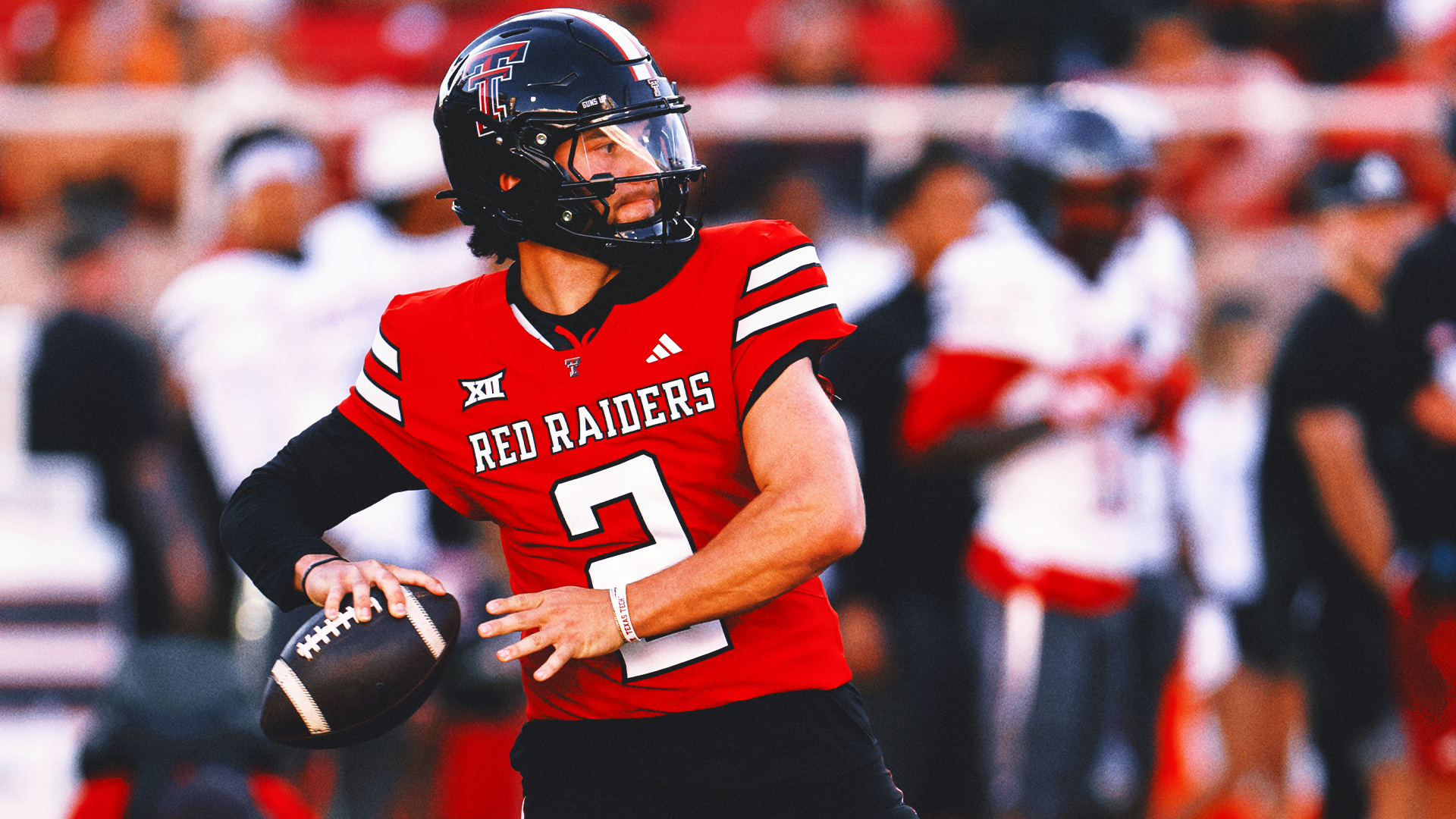
Categories
Sports Fox

Joel Klatt’s 3 Biggest Winners, Losers of Big Ten’s 2026 Schedule Draw

There are two days in the college football offseason that are more significant than any other day, according to FOX Sports lead college football analyst Joel Klatt: the day the transfer portal closes, and the day conference schedules for the upcoming season are set. “These two days directly impact what you’re going to see from a wins and losses perspective in the fall,” Klatt said on his podcast, “The Joel Klatt Show.” “There’s no greater influence than those two days — what does your roster look like and who are you playing?” Well, the Big Ten had its schedule release day for the 2026 season last week, with all 18 programs finding out which teams they’ll play in their conference schedule and when. In the era of super conferences, Klatt believes that schedule release days have become more vital, as teams in the Big Ten only play nine of the 17 other teams in their conference. Which Big Ten teams saw their outlook for the 2026 season improve following schedule release day? Which Big Ten teams had their 2026 outlook take a hit following schedule release day? Here are Klatt’s three biggest winners and losers from the Big Ten’s 2026 schedule release day. Winners 3. Iowa Iowa has a game at Michigan (Sept. 26) and hosts Ohio State (Oct. 3) in back-to-back weeks. However, Klatt thinks the Hawkeyes got off easy because those games take place earlier in the season, and their schedule following those matchups gives them a path to close the season strong. “In these super conferences, you’re never going to totally avoid tough matchups. But it matters where and when they occur. Then, in particular, what’s around it,” Klatt said. “You could look at that and be like, ‘Dang, they’ve got Ohio State and Michigan in back-to-back weeks.’ Which is true. By the way, they follow this up with a trip to Washington, which isn’t an easy place to play. You could stop there and say, ‘Iowa’s got a tough schedule.’ But there’s a bye, then they’re at Minnesota, home for Wisconsin, at Northwestern, home for Purdue, at Illinois and home for Nebraska. I don’t see another top-six team in the conference on that list. “To me, that’s a schedule lottery win for Iowa. If they can get through that slate of their first five, which includes Michigan and Ohio State, with maybe just two losses and they can win at Washington, you’re staring at a 10-win season because the rest of your schedule isn’t entirely unmanageable.” Iowa, who Klatt believes will be a top-25 team in the first preseason poll, also has a relatively easier non-conference schedule, with games at home against Northern Illinois, Iowa State and Northern Iowa before taking on Michigan. “Iowa got a pretty darn good schedule,” Klatt said. “Their big non-conference game is Iowa State, and Iowa State was decimated when they lost their coach, Matt Campbell. He goes to Penn State and the entire roster basically left. So, that’s their tough non-conference game. That game now doesn’t look so tough.” 2. Illinois Similar to Iowa, Illinois also has a pair of games against Big Ten title hopefuls. It travels to Ohio State (Sept. 26) and hosts Oregon (Oct. 24). But because those games take place a month apart and happen before November, Klatt likes the Fighting Illini’s schedule quite a bit. “Again, you look at this and think to yourself, ‘They’ve got to play Ohio State on the road and Oregon.’ Yup, they do. But it matters when they happen and it matters when it happens around them,” Klatt said. “Duke is on the non-conference schedule for Illinois, and they lost their quarterback. That’s a different team without their quarterback. They’ve got Purdue right after they go to Ohio State, that’s manageable. They’ve got Maryland after Oregon, traveling out to Maryland. That’s manageable. Then, the only other tough game you could say, ‘This is a top-seven or -eight team in the conference,’ is Iowa. So yeah, you have Ohio State and Oregon. But the only other tough, tough game is going to be Iowa. They’ve got that one at home.” While Illinois wasn’t ranked in FOX Sports college football analyst R.J. Young’s Way-Too-Early Top 25, the games against Ohio State and Oregon are its only two matchups against teams in that ranking. 1. Penn State Klatt believes that Penn State and first-year coach Matt Campbell hit the jackpot on the Big Ten schedule lottery. After facing three non-power conference schools in its non-conference slate (Marshall, Temple, Buffalo), Penn State opens up its Big Ten schedule with two games against teams that won a combined six conference games last season (Wisconsin, Northwestern). Penn State plays USC and Michigan after that, but Klatt thinks those games and the rest of the Nittany Lions’ conference schedule are pretty manageable. “This thing is not difficult. It just isn’t, at all,” Klatt said. “Remember, they brought in what, 20 Iowa State transfers? It might feel a lot like Iowa State, but I can say this about Matt Campbell and Iowa State: They were a good program. They have Rocco Becht at quarterback. He’s going to be the most experienced quarterback in college football with 39 starts. That matters in this day and age. “The teeth of their schedule is in October. They’re going to host USC. Now, USC hasn’t played well, particularly in the Big Ten and against quality opponents. You saw what happened last year at Notre Dame. … The very next week, they’ve got to go to Michigan. Those are the two toughest games they’ve got by a wide margin. Then, they’ve got a bye week before finishing the year with Purdue, at Washington, Minnesota, Rutgers and at Maryland. So, they only face two of what I would categorize as the top-six teams in the conference. It happens in October and one of them is at home. By the way, your lone really tough game on the road is at Michigan, and they’ve got a brand new coach. With Penn State having a relatively easier schedule, Klatt also wondered if its coaching would’ve gone differently had coaches known what its path to the CFP looked like ahead of time. “This is the absolute schedule lottery in the Big Ten,” Klatt said. “Penn State, I don’t know if their team is going to be a 10-win team. But their schedule is a 10-win schedule. That’s exactly how I would want it. If you would’ve known this schedule before the hiring process, guys would’ve clamored to take the Penn State job.” Losers 3. Northwestern Northwestern has three games against teams that made the College Football Playoff in 2025 — and they’re all on the road. The Wildcats have to make trips to Indiana, Oregon and Ohio State this season, and that comes after a relatively tougher non-conference slate. “Northwestern has an absolute bear of a schedule,” Klatt said of the Wildcats, who went 7-6 in 2025. “Their opener is not easy, South Dakota State. That’s a really good program. Then, they’ve got a bye week and Colorado comes to town. But they’ve got Indiana, they host Penn State, they’re at Oregon, Iowa at home, at Ohio State. Wow. That’s not easy at all. That’s five of the top seven or eight teams in the conference right there. Northwestern, that’s a very difficult schedule for them. “Northwestern lost the schedule lottery in a big way.” 2. Michigan Similar to Northwestern, Michigan also has games against the three CFP teams from the Big Ten last season on its 2025 slate. But it also has a non-conference game against Oklahoma, leading Klatt to say that Michigan’s schedule “is as difficult as any” if it plays those teams at full strength. “They play four, really five teams in my top-seven or eight in the Big Ten and Michigan has a monster non-conference schedule,” Klatt said. Hurting Michigan even further is that two of its marquee matchups take place in the final month of the regular season, in Klatt’s eyes. “I talked about when games happen, they’ve got to go to Oregon and Ohio State in November,” Klatt said. “That’s an incredibly difficult schedule. This is what happens. Not only is their conference slate tough, they’ve got to face Iowa, Penn State, Indiana, Oregon and Ohio State, but they’ve got Oklahoma as well… That’s what happened to Michigan right here. Even with a really good team, you have to say, ‘We better stay healthy in order to get to nine, maybe 10 wins.’ “I think Kyle Whittingham is a hell of a hire. I love what they did in building their roster. And I hate their schedule. There’s a few of these that you just can’t overcome.” 1. Ohio State While Klatt thinks Michigan might have a schedule that he said could be as tough as any, he thinks its top rival has the hardest schedule in the Big Ten this season. “Ohio State, by a wide margin, has what I would consider the toughest schedule in the Big Ten,” Klatt said. “This is what happens all before November: at Texas, at Iowa, at Indiana and at USC. Then, in November, they’ve got to face Oregon and Michigan. “That schedule is daunting. You’ve got Indiana and Oregon, those teams might start the year [ranked] No. 1 and No. 2, maybe No. 1 and No. 3 in the country. USC’s going to be knocking on the door in the top 10. Michigan was in my top 10. Texas was in my top 10. Iowa will certainly be a top-25 team.” Klatt also thinks that what happened with Ohio State in the transfer portal will only make its schedule tougher as 35 players left the program via the portal this offseason. “I’m concerned about depth for them,” Klatt said. “After the portal closed and the dust settled for Ohio State, I know they didn’t lose their key stars, but they lost a lot of depth pieces and guys that I would’ve looked at on the roster and been like, ‘Man, he’s going to be a key piece to that team.’ I know they brought a lot of guys in as well, and they really like what they brought in, but depth could be an issue. As we’ve seen in college football, if you can’t stay healthy, it’s too difficult right now.”​Latest Sports News from FOX Sports