Categories
Politics

Philly’s City Council turned down a new rental inspection program − studies show that might harm tenants’ health

Tenants who complain to landlords about housing conditions can risk eviction. Photo Jeff Fusco/The Conversation U.S., CC BY-NC-ND

As Philadelphia Mayor Cherelle Parker’s US$2 billion housing plan moves forward, heated debates continue about another set of municipal housing proposals that could transform Philadelphia tenants’ rights.

In June 2025, Philadelphia’s City Council considered three housing bills, collectively known as the Safe Healthy Homes Act. The package was introduced by Nicolas O’Rourke, an at-large council member who belongs to the Working Families Party.

One of the bills authorized the city to create a fund for tenants to relocate if their buildings are condemned by city inspectors. It was signed into law, though it remains unclear how the fund will be financed.

The other two bills stalled. One was an ordinance that would broadly strengthen tenants’ rights, and the other – known as the Right to Repairs – would shift how Philadelphia ensures housing is safe for tenants, empowering the city to proactively inspect rentals for housing code violations.

These bills deal with housing policy, but they’re also matters of public health.

I know this because I am a researcher in Philadelphia who studies how housing affects our health outcomes. And in particular, recent research by myself and others suggests the fate of the Rights to Repairs legislation could have major implications for Philadelphians’ well-being.

Housing protections today

To understand this new evidence, it’s important to first understand the system of housing regulations Philadelphia has now, in the absence of the proposed Right to Repairs legislation.

When a landlord rents an apartment, Pennsylvania law mandates that apartment must be habitable and free of hazards such as mold, cockroaches and dangerous dilapidation.

This legal principle is known as the “implied warranty of habitability.”

All 50 states except Arkansas have some kind of policy like this, though they vary in how much they hold landlords responsible for tenants’ safety.

Under Pennsylvania’s warranty and related municipal law, if conditions deteriorate in a rental property, Philadelphia tenants are first supposed to alert their landlord, who has 30 days to fix the given violation – such as rodents or lead exposure.

If landlords refuse, however, tenants are in a bind. They could file a complaint with the Department of Licenses and Inspections, which might come and issue a citation. Tenants could also file a lawsuit against their landlord, and they are entitled to withhold rent. But all of these options risk provoking your landlord – at potentially high cost.

Invoking your warranty rights as a tenant can therefore be tricky. You have to know your rights, document repair requests in writing, and be willing to take your landlord to task legally.

That’s challenging in a city like Philadelphia, where most renters – outside of a pilot program in some ZIP codes – aren’t guaranteed lawyers in housing court.

Indeed, nationally, 9 in 10 landlords have lawyers in housing cases, while 9 in 10 tenants do not.

The stakes are high for tenants. If they complain, they risk eviction – and that’s amid a shortage of affordable housing in Philadelphia and across the country.

In 2018 alone, according to a local news investigation, Philadelphia landlords filed over 2,000 eviction cases soon after tenants raised habitability issues, despite such retaliatory evictions being illegal. More up-to-date estimates are hard to come by, as these illegal evictions are not systematically tracked.

Tenants have little choice. Philadelphia does not require that an apartment pass an inspection before the city issues rental licenses or certificates of rental suitability. If housing violations arise, it’s on tenants to assert and defend their rights.

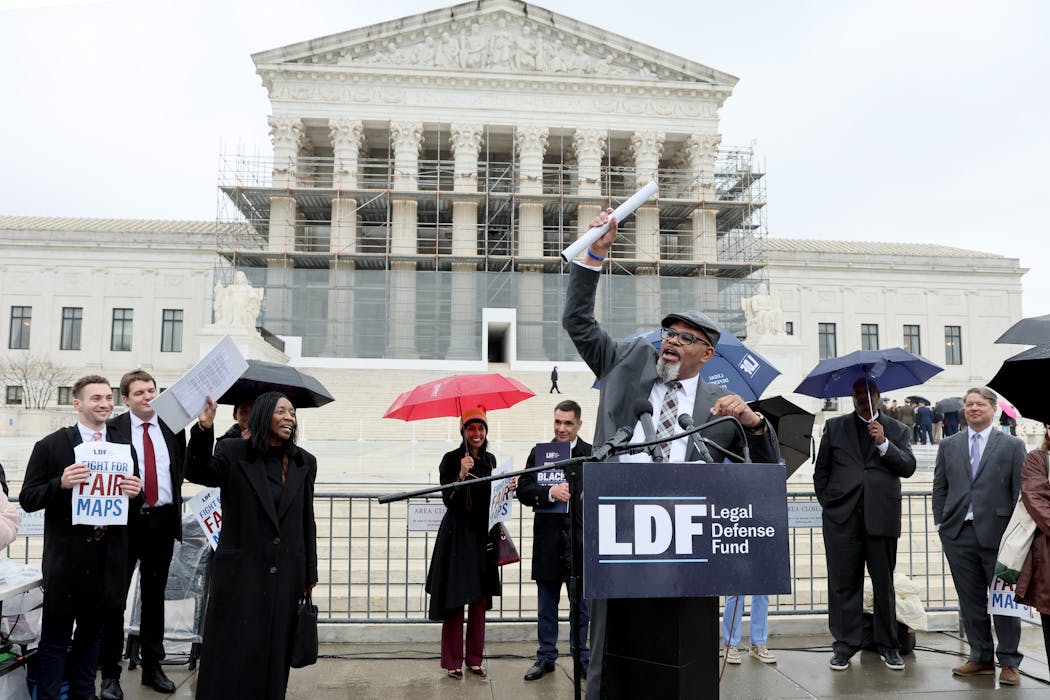
A man dressed in dark suit and light blue tie gestures while speaking outdoors at a podium
Philadelphia City Council member Nicolas O’Rourke introduced a housing legislation package guided by three rights – the right to safety, the right to repairs and the right to relocation. Only the right to relocation bill was passed.
Lisa Lake for MoveOn via Getty Images

Do habitability laws work?

Housing quality protections for tenants, in other words, largely boil down to implied warranties of habitability, plus associated fines the city can issue. But this works only if tenants are able to properly document violations, submit complaints and defend themselves from the blowback.

Despite warranties forming the backbone of Philadelphia’s housing quality governance system – and concerns that these laws saddle tenants with unreasonable enforcement responsibilities – little is known about whether warranties are even effective. Do they keep tenants from getting sick due to poor housing conditions?

To find out, fellow researchers and I examined what happened when nine states enacted implied warranty of habitability laws like the one in place in Pennsylvania today. We wanted to know whether renters’ health improved after warranty policies were enacted, compared with other states where such laws didn’t go into effect over the same period.

We also used homeowners as a control group, comparing whether renters’ health uniquely improved when these laws were enacted. Homeowners are useful here because we wouldn’t expect homeowners’ health to be affected by these laws.

Our findings were stark: We found no improvements for renters at all, across a slew of housing-related health outcomes, even 10 years after enactment.

There were no effects on renters’ asthma, respiratory allergies, bronchitis, mental health, hospitalizations, or even less clinical outcomes such as self-rated health.

To be clear, implied warranties of habitability are important laws and are surely helpful for individual tenants. Broadly speaking, however, our findings suggest that these policies simply don’t work.

That is likely especially true in Pennsylvania, a state whose implied warranty of habitability was given an F- by researchers who evaluated the comprehensiveness of states’ policies for protecting tenants’ well-being.

A 2014 study in neighboring New Jersey helps shed light on why these policies fall short.

Researchers there examined 40,000 eviction cases, looking for whether tenants successfully raised implied warranty of habitability violations as a defense. Given how often landlords retaliate after violation complaints are made, one might expect thousands of tenants party to these lawsuits to have invoked their warranty rights.

The result? Only 80 tenants did so – 80 out of 40,000.

In practice, then, existing data paints a bleak picture: The vast majority of tenants lack the financial resources, legal knowledge, alternative housing options or freedom from fear necessary to protect themselves from unsafe conditions at home.

Proactive rental inspections show more success

What policies might work instead? Cities such as Rochester, New York, may provide an answer.

In 2005, Rochester implemented a more proactive rental inspection program to combat their child lead-poisoning crisis – a problem Philadelphia shares.

This meant that Rochester’s municipal inspectors began proactively inspecting rental units on a regular basis and issuing fines for any violations they found. Tenants did not have to file a complaint and therefore weren’t forced into adversarial disputes with their landlords.

The results were dramatic. By 2012, childhood lead poisoning in Rochester had dropped by 85%. This decline was nearly 2.5 times faster than the rest of New York state.

Further, scientists found that units that were inspected every three years had one-third of the rate of housing code violations as units inspected every six years.

Whether the Right to Repair is good policy for Philadelphia is a question for city legislators. But research is increasingly clear: The city’s current housing policies do not protect tenants from unsafe housing, while proactive rental inspections show real promise for fighting persistent housing-related health problems.

Read more of our stories about Philadelphia.

The Conversation

Gabriel L. Schwartz’s research described in this article was funded through a pilot grant from the UCSF Benioff Homelessness and Housing Initiative. UCSF had no role in the design, completion, or reporting of that study. The views expressed in this article solely represent the scientific opinion of the author, and do not necessarily represent the opinion of either UCSF or his employer.

​Politics + Society – The Conversation

Categories
Politics

Supreme Court news coverage has talked a lot more about politics ever since the 2016 death of Scalia and GOP blocking of Obama’s proposed nominee

Reporters used to treat the Supreme Court as a nonpolitical institution, but not anymore. Tetra Images/Getty

The U.S. Supreme Court has always ruled on politically controversial issues. From elections to civil rights, from abortion to free speech, the justices frequently weigh in on the country’s most debated problems.

And because of the court’s influence over national policy, political parties and interest groups battle fiercely over who gets appointed to the high court.

The public typically finds out about the court – including its significant decisions and the politics surrounding appointments – from the news media. While elected officeholders and candidates make direct appeals to their voters, the justices and Supreme Court nominees are different – they largely rely on the news to disseminate information about the court, giving the public at least a cursory understanding.

Recently, something has changed in newspaper coverage of the Supreme Court. As scholars of judicial politics, political institutions and political behavior, we set out to understand precisely how media coverage of the court has changed over the past 40 years. Specifically, we analyzed the content of every article referencing the Supreme Court in five major newspapers from 1980 to 2023.

Of course, people get their news from a variety of sources, but we have no reason to believe the trends we uncovered in our research of traditional newspapers do not apply broadly. Research indicates that alternative media sources largely follow the lead of traditional beat reporters.

What we found: Politics has a much stronger presence in articles today than in years past, with a notable increase beginning in 2016.

When public goodwill prevailed

Not many cases have been more important in the past quarter-century or, from a partisan perspective, more contentious than Bush v. Gore – the December 2000 ruling that stopped a ballot recount, resulting in then-Texas Governor George W. Bush defeating Democratic candidate Al Gore and winning the presidential election.

Bush v. Gore is particularly interesting to us because nine unelected, life-tenured justices functionally decided an election.

A New York Times front page story from Dec. 13, 2000, with banner headline 'BUSH PREVAILS.'
The New York Times story about the Supreme Court’s decision in Bush v. Gore indicated the justices’ names and votes but neither the party of the president who appointed them nor their ideological leanings.
Screenshot, The New York Times

Surprisingly, the court’s public support didn’t suffer, ostensibly because the court had built up a sufficient store of public goodwill.

One reason public support remained steady following Bush v. Gore might be newspaper coverage. Although the court’s decision reflected the justices’ ideologies, with the more conservative members effectively voting to end the recount and its more liberal members voting in favor of the recount, newspapers largely ignored the role of politics in the decision.

For example, the New York Times case coverage indicated the justices’ names and their votes but mentioned neither the party of the president who appointed them nor their ideological leanings. The words “Democrat,” “Republican,” “liberal” and “conservative” – what we call political frames – do not appear in the Dec. 13, 2000, story about the decision.

This epitomizes court-related newspaper articles from the 1980s to the early 2000s, when reporters treated the court as a nonpolitical institution. According to our research, court-related news articles in The New York Times, The Washington Post, Chicago Tribune, Los Angeles Times and The Wall Street Journal hardly used political frames during that time.

Instead, newspapers perpetuated a dominant belief among the public that Supreme Court decisions were based almost completely on legal principles rather than political preferences. This belief, in turn, bolstered support for the court.

Recent newspaper coverage reveals a starkly different pattern.

A contemporary political court

It would be nearly impossible to read contemporary articles about the Supreme Court without getting the impression that it is just as political as Congress and the presidency.

Analyzing our data from 1980 to 2023, the average number of political frames per article tripled. To be sure, politics has always played a role in the court’s decisions. Now, newspapers are making that clear. The question is when this change occurred.

Across the five major newspapers, reporting about the court has gradually become more political over time. That isn’t surprising: America has been gradually polarizing since the 1980s as well, and the changes in news media coverage reflect that polarization.

Take February of 2016, when Justice Antonin Scalia unexpectedly died. Of course, justices have died while serving on the court before. But Scalia was a conservative icon, and his death could have swung the court to the center or the left.

How the politics of naming his successor played out after Scalia’s death was unprecedented.

President Barack Obama’s nomination effort to put Merrick Garland on the court were stonewalled. The Senate majority leader, Republican Mitch McConnell of Kentucky, said the Senate would not consider any nomination until after the presidential election, nine months from Scalia’s death.

Republican candidate Donald Trump, seeing an opening, promised to fill the vacancy with a conservative justice who would overturn Roe v. Wade. The court and the 2016 election became inseparable.

People bowing their heads next to a U.S. flag-covered casket.
President Barack Obama and first lady Michelle Obama pay respects to Justice Antonin Scalia, whose 2016 death brought lasting change in newspaper coverage of the court.
Tom Williams/CQ Roll Call via Getty Images

Scalia vacancy changed everything

February 2016 brought about an abrupt and lasting change in newspaper coverage. The day before Scalia’s death, a typical article referencing the court used 3.22 political frames.

The day after, 10.48.

We see an uptick in political frames if we consider annual changes as well. In 2015, newspapers averaged 3.50 political frames per article about the Supreme Court. Then, in 2016, 5.30.

Using a variety of statistical methods to identify enduring framing shifts, we consistently find February 2016 as the moment newspapers shifted to higher levels of political framing of the court. We find the number of political frames in newspapers remained elevated through 2023.

How stories frame something shapes how people think about it.

If an article frames a court decision as “originalist” – an analytical approach that says constitutional texts should be interpreted as they were understood at the time they became law – then readers might think of the court as legalistic.

But if the newspaper were to frame the decision as “conservative,” then readers might think of the court as ideological.

We found in our study that when people read an article about a court decision using political frames, court approval declines. That’s because most people desire a legal court rather than a political one. No wonder polls today find the court with precariously low public support.

We do not necessarily hold journalists responsible for the court’s dramatic decline in public support. The bigger issue may be the court rather than reporters. If the court acts politically, and the justices behave ideologically, then reporters are doing their job: writing accurate stories.

That poses yet another problem. Before Trump’s three court appointments, the bench was known for its relative balance. Sometimes decisions were liberal; other times, conservative.

In June 2013, the court provided protections to same-sex marriages. Two days earlier, the court struck down part of the Voting Rights Act. A liberal win, a conservative win – that’s what we might expect from a legal institution.

Today the court is different. For most salient issues, the court supports conservative policies.

Given, first, the media’s willingness to emphasize the court’s politics, and second, the justices’ ideologically consistent decisions across critical issues, it is unlikely that the news media retreats from political framing anytime soon.

If that’s the case, the court may need to adjust to its low public approval.

The Conversation

The authors do not work for, consult, own shares in or receive funding from any company or organization that would benefit from this article, and have disclosed no relevant affiliations beyond their academic appointment.

​Politics + Society – The Conversation

Categories
Politics

Clawback of $1.1B for PBS and NPR puts rural stations at risk – and threatens a vital source of journalism

Nathan Heffel and Grace Hood rehearse their Colorado Public Radio public affairs program in Centennial, Colo., in 2017. Andy Cross/The Denver Post via Getty Images

The U.S. Senate narrowly approved on July 16, 2025, a bill that would claw back federal funding for the Corporation for Public Broadcasting, which distributes money to NPR, PBS and their affiliate stations. The US$9 billion rescission package will withdraw $1.1 billion Congress had previously approved for the CPB to receive in the 2026 and 2027 fiscal years. In addition, it makes deep foreign aid cuts. All Democrats present voted against the measure, joined by two Republicans: Sens. Susan Collins of Maine and Lisa Murkowski of Alaska. As long as the House, which approved a previous version, votes in favor of the Senate’s version of the bill by midnight July 18, Trump will be able to meet a budgetary deadline by signing the measure into law in time for it to take effect.

What will happen to NPR, PBS and local stations?

NPR and PBS provide programming to local public television and radio stations across the country. The impact on them will be direct and indirect.

Both NPR and PBS receive money from the Corporation for Public Broadcasting, an independent nonprofit corporation Congress created in 1967 to receive and distribute federal money to public broadcasters. More than 70% of the money it distributes flows directly to local stations. Some stations get up to half of their budgets from the CPB.

But NPR and PBS get much of their funding from foundation grants, viewers’ and listeners’ donations, and corporate underwriting. And local public radio and TV stations also get support from an array of sources besides CPB.

“There’s nothing more American than PBS,” said the network’s CEO, Paula Kerger, at a congressional hearing on March 26, 2025.

Only about 1% of NPR funding, and 15% of PBS funding, comes directly from the government via the CPB. However, once local radio and television stations lose federal funding, they’ll be less able to pay NPR and PBS for the programs they produce.

The nearly 1,500 public media stations in the U.S. rely on a mix of NPR, PBS and third-party producer programming, such as American Public Media and PRX, for the programs they offer. Local stations also produce and air regional news and provide emergency broadcasts for the government.

In rural areas with few broadcast stations and spotty cellphone coverage, public broadcast stations are vital sources of information about important community news and updates during emergencies. Federal support is essential for the programming and day-to-day operations of many local stations and allows for the maintenance of equipment and personnel to operate these vital community resources.

We believe that stations in communities that most need them, especially in rural locations, would be hit especially hard because they rely heavily on CPB funding.

Why are Republicans taking this step?

Public broadcasting has long been a target of conservative Republicans. They say that with a highly diversified media landscape, the public no longer needs media that is subsidized by federal dollars. They also claim that public broadcasting has a liberal bias and taxpayers should not be required to fund media that slants to the left politically.

Why is public media necessary when there’s news on the internet?

As journalism revenue has plummeted, public broadcasting has remained a vital source for news in communities across the nation. This is especially true in rural communities, where economic and political pressures have threatened the survival of local journalism.

In addition, with much online news coverage placed behind paywalls, public radio and television plays an important role in making quality journalism available to the American public.

An online ad for a program, 'Water News,' on a public radio station.
Want crucial information about water systems in your drought-prone community? Public radio station KVMR in Nevada City, Calif., has a program for you.
KVMR screenshot

Why did Congress approve these funds 2 years ahead?

Public broadcasting has gotten roughly $550 million per year from the federal government in recent years. The CPB has always approved and designated those funds two years in advance, due to a provision in the Public Broadcasting Act of 1967, after Congress has voted to provide that money. The CPB then has distributed that funding primarily through grants to PBS and NPR affiliate stations to support their technical infrastructure, program development and audience research.

What are the consequences for Native communities?

Dozens of Native American stations are at risk of closing once the CPB is defunded. Native Public Media, a network of 57 radio stations and four TV stations, is a key source of news and information for tribal communities across the nation and relies on CPB support.

U.S. Sen. Mike Rounds, a South Dakota Republican, publicly stated that he secured an agreement with the White House to move $9.4 million in Interior Department funding to two dozen Native American stations. But there is no provision related to this promise within the legislation.

The Conversation

Allison Perlman is the co-chair of the Scholars Advisory Committee of the American Archive of Public Broadcasting.

Josh Shepperd and Allison Perlman are under contract to co-author an update of the history of public broadcasting for Current, public media’s trade journal, and the Corporation for Public Broadcasting. Josh and Allison are not paid employees or vendors of either institution.

​Politics + Society – The Conversation

Categories
Politics

Poll finds bipartisan agreement on a key issue: Regulating AI

Are concerns about AI a bridge across the polarization divide? ZargonDesign/iStock via Getty Images

In the run-up to the vote in the U.S. Senate on President Donald Trump’s spending and tax bill, Republicans scrambled to revise the bill to win support of wavering GOP senators. A provision included in the original bill was a 10-year moratorium on any state law that sought to regulate artificial intelligence. The provision denied access to US$500 million in federal funding for broadband internet and AI infrastructure projects for any state that passed any such law.

The inclusion of the AI regulation moratorium was widely viewed as a win for AI firms that had expressed fears that states passing regulations on AI would hamper the development of the technology. However, many federal and state officials from both parties, including state attorneys general, state legislators and 17 Republican governors, publicly opposed the measure.

In the last hours before the passage of the bill, the Senate struck down the provision by a resounding 99-1 vote. In an era defined by partisan divides on issues such as immigration, health care, social welfare, gender equality, race relations and gun control, why are so many Republican and Democratic political leaders on the same page on the issue of AI regulation?

Whatever motivated lawmakers to permit AI regulation, our recent poll shows that they are aligned with the majority of Americans who view AI with trepidation, skepticism and fear, and who want the emerging technology regulated.

Bipartisan sentiments

We are political scientists who use polls to study partisan polarization in the United States, as well as the areas of agreement that bridge the divide that has come to define U.S. politics. In April 2025, we fielded a nationally representative poll that sought to capture what Americans think about AI, including what they think AI will mean for the economy and society going forward.

The public is generally pessimistic. We found that 65% of Americans said they believe AI will increase the spread of false information. Fifty-six percent of Americans worry AI will threaten the future of humanity. Fewer than 3 in 10 Americans told us AI will make them more productive (29%), make people less lonely (21%) or improve the economy (22%).

While Americans tend to be deeply divided along partisan lines on most issues, the apprehension regarding AI’s impact on the future appears to be relatively consistent across Republicans and Democrats. For example, only 19% of Republicans and 22% of Democrats said they believe that artificial intelligence will make people less lonely. Respondents across the parties are in lockstep when it comes to their views on whether AI will make them personally more productive, with only 29% − both Republicans and Democrats − agreeing. And 60% of Democrats and 53% Republicans said they believe AI will threaten the future of humanity.

On the question of whether artificial intelligence should be strictly regulated by the government, we found that close to 6 in 10 Americans (58%) agree with this sentiment. Given the partisan differences in support for governmental regulation of business, we expected to find evidence of a partisan divide on this question. However, our data finds that Democrats and Republicans are of one mind on AI regulation, with majorities of both Democrats (66%) and Republicans (54%) supporting strict AI regulation.

When we take into account demographic and political characteristics such as race, educational attainment, gender identity, income, ideology and age, we again find that partisan identity has no significant impact on opinion regarding the regulation of AI.

State of anxiety

In the years ahead, the debate over AI and the government’s role in regulating it is likely to intensify, on both the state and federal levels. As each day seems to bring new advances in AI’s capability and reach, the future is shaping up to be one in which human beings coexist – and hopefully flourish – alongside AI. This new reality has made the American public, both Democrats and Republicans, justifiably nervous, and our polling captures this widespread trepidation.

Lawmakers and technology leaders alike could address this anxiety by better communicating the pitfalls and potential of AI, and take seriously the concerns of the public. After all, the public is not alone in its trepidation. Many experts in the field also have substantial worries about the future of AI.

One of the fundamental political questions moving forward, then, will be to what degree regulators put guardrails on this emerging and transformative technology in order to protect Americans from AI’s negative consequences.

The Conversation

The authors do not work for, consult, own shares in or receive funding from any company or organization that would benefit from this article, and have disclosed no relevant affiliations beyond their academic appointment.

​Politics + Society – The Conversation

Categories
Politics

Arizona Dems oust their party chair

Arizona Democrats voted late Wednesday to boot their embattled party chair, Robert E. Branscomb II, ending a brief tenure that was defined by infighting. Statewide officials had already redirected their campaign efforts through a county party amid the squabbling.

The party voted 476-56 after hours of delays, clearing the required two-thirds threshold by eight votes.

Branscomb defended himself until the very end, telling attendees on the call that the effort to remove him was “rooted in misrepresentation, divisive tactics and does not reflect our democratic values.”

The controversy surrounding Branscomb dates back to April, when he sent a letter to members of the state committee that attacked Sens. Mark Kelly and Ruben Gallego and aired private disagreements among them.

In response, all of the state’s top elected Democrats said in a letter that Branscomb “lost their trust.”

Gov. Katie Hobbs, Secretary of State Adrian Fontes and Attorney General Kris Mayes — who are all up for reelection in 2026 — went on to create a statewide coordinated campaign to circumvent the state party, a prospect POLITICO first reported in April.

​Politics

Categories
Politics

The nation’s cartoonists on the week in politics

Every week political cartoonists throughout the country and across the political spectrum apply their ink-stained skills to capture the foibles, memes, hypocrisies and other head-slapping events in the world of politics. The fruits of these labors are hundreds of cartoons that entertain and enrage readers of all political stripes. Here’s an offering of the best of this week’s crop, picked fresh off the Toonosphere. Edited by Matt Wuerker.

​Politics

Categories
Politics

A law from the era of Red Scares is supercharging Trump administration’s power over immigrants and noncitizens

The Trump administration detained former Columbia University student and pro-Palestinian protest leader Mahmoud Khalil, center, for more than two months and is seeking to revoke his lawful permanent resident status. Kena Betancur/AFP via Getty Images

Nativism, the idea that government must guard native-born Americans from various threats posed by immigrants, has a long history in the United States.

Today, the Trump administration is citing the Immigration and Nationality Act of 1952, a restrictive measure written by nativist members of Congress decades ago when fears of communism were rampant, to sharply restrict the rights of noncitizens.

Under this law, also known as the McCarran-Walter Act, federal agencies have arrested and detained noncitizens associated with pro-Palestinian protests, reintroduced immigrant registration requirements, and imposed a new travel ban that affects 19 nations.

Since the 1950s, Congress has removed some of this sprawling federal law’s most discriminatory features, such as racist national origins quotas. But other key provisions remain on the books. Now they are the primary legal basis for some of President Donald Trump’s most controversial immigration crackdowns.

Author and reporter Clay Risen discusses parallels between anticommunist fears in the 1950s and the Trump administration’s anti-immigrant policies.

Foreign policy trumps free speech

In March 2025, the White House invoked the McCarran-Walter Act to justify arresting and deporting Mahmoud Khalil, a legal permanent resident who had participated in pro-Palestinian protests at Columbia University. Officials pointed to Section 237(a)(4)(C) of the law, which states that any “alien whose presence or activities in the United States the Secretary of State has reasonable ground to believe would have potentially serious adverse foreign policy consequences for the United States is deportable.”

This has been tried only once before. In 1995, the Clinton administration unsuccessfully sought to use the provision to deport a former Mexican official, Mario Ruiz Massieu, to face charges in his homeland for extortion and obstructing a murder investigation. Ruiz Massieu was later indicted in the U.S. on money laundering charges and died by suicide shortly before his arraignment.

The Trump administration cited the same provision to justify detaining Tufts University doctoral student Rumeysa Ozturk in March. Ozturk came under government scrutiny because she co-authored an op-ed in the Tufts student newspaper criticizing the university’s position on the Israel-Gaza war.

Surveillance footage of a terrified Ozturk being arrested by masked Immigration Customs and Enforcement agents on a street in Somerville, Massachusetts, drew criticism from government officials and civil liberties advocates. In response, Secretary of State Marco Rubio alleged that Ozturk had harmed U.S. interests by supporting “movements that are involved in doing things like vandalizing universities, harassing students, taking over buildings, creating a ruckus.”

Khalil and Ozturk both were released after weeks in detention, pending final resolution of their cases. Their lawyers argue that their clients’ treatment violates free speech protections and that the defendants were punished for expressing their political beliefs.

Monitoring noncitizens

The McCarran-Walter Act also authorizes intrusive registration and tracking requirements for noncitizens who remain in the U.S. for 30 days or longer.

On Jan. 20, 2025, Trump issued an executive order directing the Department of Homeland Security to enforce an “alien registration requirement.” The agency issued a final rule in April requiring all noncitizens over the age of 14 to register and be fingerprinted. Parents or guardians must register noncitizen children under age 14. The rule also requires adult noncitizens to carry “evidence of registration” at all times.

Such policies aren’t new. Noncitizen registration was codified in the Alien Registration Act of 1940, on the eve of U.S. entry into World War II. The law was designed to regulate the foreign-born population and encourage eligible noncitizens to join the U.S. armed forces. Its requirements were written into the McCarran-Walter Act.

After the 9/11 terrorist attacks, the Bush administration created the National Security Entry-Exit Registration System, which targeted noncitizen males age 16 or older from 25 Muslim-majority countries. It required registrants to submit biometric information, check in regularly with immigration authorities and use specific ports of entry for travel.

The Obama administration suspended this system in 2011 and permanently dismantled it in 2016.

Today, Trump administration officials say they are simply enforcing long-standing legal authority. A federal judge agreed, ruling on April 10 that the Homeland Security Department could require noncitizens to register and carry documentation.

The Trump administration says it will strictly enforce a long-standing requirement for immigrants in the country more than 30 days to register with the federal government.

Travel bans redux

On June 2, Trump announced a new travel ban on foreign nationals from 12 countries, mostly in Africa and the Middle East. The ban draws its authority from the McCarran-Walter Act. Two days later, Trump claimed the same legal discretion to exclude Harvard University’s international students from the U.S.

During his first term, Trump invoked these sections of the law to justify a travel ban on seven predominantly Muslim countries. The U.S. Supreme Court ultimately upheld this action in 2018 by a 5-4 vote in Trump v. Hawaii. Writing for the majority, Chief Justice John Roberts stated that the travel ban was well within broad powers over immigration granted to the president under the McCarran-Walter Act. He added that the court had “no view on the soundness of the policy.”

Trump’s new ban is more carefully crafted than earlier versions and more likely to withstand legal challenges. But his efforts to use the McCarren-Walter Act to ban international students from attending Harvard University face stiff legal headwinds.

On May 22, Homeland Security Secretary Kristi Noem notified Harvard officials that the agency was revoking the school’s certification to participate in the Student and Exchange Visitor Program, which grants visas to international students to come to the U.S. In a June 4 proclamation, the White House claimed that foreign students at Harvard had behaved in ways that threatened U.S. national security.

A federal judge in Boston quickly blocked the revocation, holding that it violated core constitutional free speech rights. “The government’s misplaced efforts to control a reputable academic institution and squelch diverse viewpoints seemingly because they are, in some instances, opposed to this administration’s own views, threaten these rights,” wrote Judge Allison D. Burroughs.

The latest step came on July 9, when the Trump administration subpoenaed Harvard for information on its foreign students, including their disciplinary records and involvement in campus protests.

Broad power over noncitizens

Ironically, congressional sponsors of the McCarran-Walter Act were at odds with the White House when the law was enacted in 1952. They overrode a veto by President Harry S. Truman, who thought the law’s nativist ideas were unfitting for a nation of immigrants and global defender of democracy.

However, the expansive executive powers created by this law have endured largely unaltered over time, through waves of immigration reform.

Now they are a boon to the Trump administration’s ambitious immigration crackdown. It’s a telling reminder that repressive old laws can come back to life – even when they don’t reflect the current views of many Americans.

The Conversation

Daniel Tichenor does not work for, consult, own shares in or receive funding from any company or organization that would benefit from this article, and has disclosed no relevant affiliations beyond their academic appointment.

​Politics + Society – The Conversation

Categories
Politics

How universities can keep protests from turning violent: 3 lessons from the 2024 pro-Palestinian encampments

Pro-Palestinian supporters march outside Columbia University in September 2024. AP Photo/Yuki Iwamura

In spring 2024, pro-Palestinian student encampments that began at Columbia and Harvard spread to university campuses throughout the U.S. as Israel invaded Gaza in response to Hamas’ Oct. 7, 2023, surprise attack. At least 100 campuses had encampments for at least a few days during this period.

While some campuses erupted in violence, others remained peaceful and didn’t experience the open conflict that led to congressional hearings, university presidents losing their jobs and repercussions that are continuing to be felt today.

What made the difference?

In spring 2024, Ohio State University’s College Impact Laboratory, where we all work, surveyed universities to learn more about whether their campuses experienced protests, what happened and how they handled them. Part of our goal was to understand how spiritual leaders played a role, if any, in managing the protests. We’ve been analyzing the data ever since. The results from those who responded point to several lessons universities could learn from to avoid violence in future protests.

Campuses are a critical arena for activism

Campus protests have long been a defining feature of social and political change in the U.S. From the civil rights movements of the 1950s and 1960s to the student-led climate strikes of recent years, higher education institutions have served as a critical space for activism.

Often, these protests reflect broader societal tensions, and how universities respond has played a significant role in shaping their outcomes.

Historically, protests have been most likely to escalate when students feel unheard. In contrast, institutions that adopt proactive strategies, such as facilitating conversations or including students in decision-making, often experience better outcomes.

a student holds a green red and white flag on pavement in front of tents on a college campus
A George Washington University student carries a Palestinian flag at a student encampment protesting the Israel-Hamas war in May 2024.
AP Photo/Jose Luis Magana

Snapshot of the pro-Palestinian protests

As our survey data shows, the pro-Palestinian protests illustrate this dynamic.

To gather data, the College Impact Laboratory sent questionnaires to administrators at the 329 universities that participate in our Interfaith Spiritual, Religious and Secular Campus Climate Index, also known as the INSPIRES Index, as well as hundreds of colleges and universities in our recruitment database.

In all, 35 schools responded to our 23-question survey. Of those, we found that most protests were led by students, half lasted less than a week, and the vast majority were nonviolent. Fifteen did not have protests, while the rest did. While the number of institutions that participated in this survey is relatively small, it does give us key insights into what schools were thinking.

Half of the campuses with protests reported law enforcement involvement – either campus police or city officers – with 20% experiencing physical altercations between protesters and police. Other disruptive actions such as academic interruptions, vandalism, physical violence and doxxing were reported with varying frequencies.

Protests at campuses that participated in our survey peaked during April and May 2024, with 70% of them experiencing demonstrations in these months.

Here are three takeaways from the survey, suggesting steps universities can take before and during future protests to avoid escalation:

1. Involve students in guidelines for engagement – early

At every surveyed institution that reported protests, students were at the forefront of organizing and leading these efforts.

Yet, despite this clear student leadership, about one-third of institutions said they didn’t consult with students to establish guidelines for engagement. Those that did invited representatives from student organizations or student government officers into the policymaking process to determine what protocols would be followed to manage protests and keep them peaceful.

On campuses where administrators didn’t engage with student leaders, tensions tended to escalate, and protests disrupted the institutions for weeks, often after police were called in or curfews were imposed.

While many of the protests lasted only one to seven days, we found that institutions that opened lines of communication early between administration and student protest leaders were more likely to deescalate tensions quickly. In contrast, campuses where administrators did not engage early on saw protests lasting weeks or involving greater disruptions.

Also, institutions that engaged early with student leaders were less likely to face stronger demands, such as calls for administrators to be fired, divestment from Israeli companies or calls to defund the campus police.

Our survey results suggest it’s important for administrators to engage with students early to establish clear guidelines to make it less likely future protests spiral into violence.

2. Communicate openly, often and before protests

Discussion of difficult topics, such as the conflict between Israel and Palestinians, shouldn’t wait until protests break out to begin. We found that every school in our survey that proactively supported dialogue between Jews and Muslims – before the war broke out – didn’t see violence result from the protests.

Dialogue isn’t just a strategy for preventing protests from spiraling out of control; it is fundamental to intergroup learning in higher education. These events create safe spaces for students − whether Arab, Jewish, Palestinian or members of different ethnic or religious groups − to engage with classmates with different points of view.

But even once protests begin, dialogue can help. When institutions engaged in dialogue, during or as a result of a protest, the protests were less likely to involve violence. At half of the campuses that participated in our survey and experienced protests, protests were ended peacefully through dialogue.

Brown, for example, modeled the power of institutional listening in its response to its April 2024 encampment. Rather than escalating tensions, university leaders engaged directly with student activists, resulting in a peaceful resolution and a commitment to bring the students’ divestment proposal to a formal vote in October. It ultimately failed to pass the board of directors.

two people hold a sign saying we will be back on a mostly empty college lawn
Demonstrators unfurl a banner on a lawn after an encampment protesting the Israel-Hamas war was taken down at Brown University on April 30, 2024, in Providence, R.I.
AP Photo/David Goldman

3. Involve relevant groups in decision-making

Most administrators in our survey, as they considered how to engage with protesters, reached out to relevant student groups such as those that focus on Jewish and Muslim students to better understand their perspectives.

However, only 28% consulted a religious or spiritual life office staff member on campus.

Religious or spiritual life staff are present on both private and public campuses and may include university-employed multifaith chaplains, interfaith coordinators or directors of spiritual life. Unlike student-led religious groups, these professionals often serve as liaisons to the religious and nonreligious communities represented on campus.

The focus of such roles on serving students from all worldviews positions them as key resources for deescalation through community outreach, support and two-way communication. Additionally, these professionals have valuable expertise in religious pluralism and community relationships. This experience helps them to advise administrators on policy and potential courses of action in times of tension.

Consulting with university staff with a focus on religion or spiritual life makes particular sense given the nature of the protests and how religion is intertwined, but our data suggests they may be underutilized more broadly for their expertise in navigating tensions related to competing worldviews.

Proactive engagement with these leaders not only helps campuses navigate an immediate crisis but demonstrates a commitment to inclusivity and respect for different groups’ perspectives.

Leading by example

Put another way, our research suggests institutions can avoid the negative outcomes of protests by embodying the traits commonly associated with universities, such as showing mutual respect, fostering democratic debate and engaging in critical thinking even on divisive issues. Engaging from a mindset of goodwill with student leaders shows administrators value student voices and are willing to work collaboratively toward solutions.

But when campuses ignore peaceful protests or refuse to engage with student leaders, they risk turning manageable situations into prolonged crises.

At a time when divisions run deep, we believe campuses that lead by example by embracing dialogue and engaging student activists before, during and after protests take place are not only likely to see less violence, but are likely to help heal America’s great divides.

The Conversation

Matthew J. Mayhew receives grant funding for various research projects from the National Science Foundation, the ECMC Foundation, the Templeton Religion Trust, the Arthur Vining Davis Foundations, and Pew Charitable Trusts. Currently, Dr. Mayhew leads the College Impact Laboratory at The Ohio State University. He is the Principal Investigator for the INSPIRES Index project and is the current editor of the Digest of Recent Research.

Renee L. Bowling works for the College Impact Lab at The Ohio State University that produces the INSPIRES Index and serves as Chair of NASPA’s Spirituality and Religion in Higher Education Knowledge Community.

Anisha Gill-Morris and Hind Haddad do not work for, consult, own shares in or receive funding from any company or organization that would benefit from this article, and have disclosed no relevant affiliations beyond their academic appointment.

​Politics + Society – The Conversation

Categories
Politics

Florida is fronting the $450M cost of Alligator Alcatraz – a legal scholar explains what we still don’t know about the detainees

Florida Gov. Ron DeSantis leads a tour of the new Alligator Alcatraz immigration detention facility for President Donald Trump and U.S. Department of Homeland Security Secretary Kristi Noem. Andrew Cabellero-Reynolds/AFP via Getty Images

The state of Florida has opened a migrant detention center in the Everglades. Its official name is Alligator Alcatraz, a reference to the former maximum security federal penitentiary in San Francisco Bay.

While touring Alligator Alcatraz on July 1, 2025, President Donald Trump said, “This facility will house some of the menacing migrants, some of the most vicious people on the planet.” But new reporting from the Miami Herald/Tampa Bay Times reveals that of more than 700 detainees, only a third have criminal convictions.

To find out more about the state of Florida’s involvement in immigration enforcement and who can be detained at Alligator Alcatraz, The Conversation spoke with Mark Schlakman. Schlakman is a lawyer and senior program director for The Florida State University Center for the Advancement of Human Rights. He also served as special counsel to Florida Gov. Lawton Chiles, working as a liaison of sorts with the federal government during the mid-1990s when tens of thousands of Haitians and Cubans fled their island nations on makeshift boats, hoping to reach safe haven in Florida.

U.S. Department of Homeland Security Secretary Kristi Noem has characterized the migrants being detained in facilities like Alligator Alcatraz as “murderers and rapists and traffickers and drug dealers.” Do we know if the detainees at Alligator Alcatraz have been convicted of these sorts of crimes?

The Times/Herald published a list of 747 current detainees as of Sunday, July 13, 2025. Their reporters found that about a third of the detainees have criminal convictions, including attempted murder, illegal reentry to the U.S., which is a federal crime, and traffic violations. Apparently hundreds more have charges pending, though neither the federal nor state government have made public what those charges are.

There are also more than 250 detainees with no criminal history, just immigration violations.

Is it a crime for someone to be in the U.S. without legal status? In other words, is an immigration violation a crime?

No, not necessarily. It’s well established as a matter of law that physical presence in the U.S. without proper authorization is a civil violation, not a criminal offense.

However, if the federal government previously deported someone, they can be subject to federal criminal prosecution if they attempt to return without permission. That appears to be the case with some of the detainees at Alligator Alcatraz.

What usually happens if a noncitizen commits a crime in the U.S.?

Normally, if a foreign national is accused of committing a crime, they are prosecuted in a state court just like anyone else. If found guilty and sentenced to incarceration, they complete their sentence in a state prison. Once they’ve served their time, state officials can hand them over to U.S. Immigration and Customs Enforcement, or ICE. They are subject to deportation, but a federal immigration judge can hear any grounds for relief.

DHS has clarified that it “has not implemented, authorized, directed or funded” Alligator Alcatraz, but rather the state of Florida is providing startup funds and running this facility. What is Florida’s interest in this? Are these mostly migrants who have been scooped up by ICE in Florida?

It’s still unclear where most of these detainees were apprehended. But based on a list of six detainees released by Florida Attorney General James Uthmeier’s office, it is clear that at least some were apprehended outside of Florida, and others simply may have been transferred to Alligator Alcatraz from federal custody elsewhere.

This calls to mind the time in 2022 when Gov. Ron DeSantis flew approximately 50 migrants from Texas to Martha’s Vineyard in Massachusetts at Florida taxpayer expense. Those migrants also had no discernible presence in Florida.

To establish Alligator Alcatraz, DeSantis leveraged an immigration emergency declaration, which has been ongoing since Jan. 6, 2023. A state of emergency allows a governor to exercise extraordinary executive authority. This is how he avoided requirements such as environmental impact analysis in the Everglades and concerns expressed by tribal governance surrounding that area.

For now, the governor’s declaration remains unchallenged by the Florida Legislature. Environmental advocates have filed a lawsuit over Alligator Alcatraz, and the U.S. Supreme Court upheld a decision by a federal judge temporarily barring Florida from enforcing its new immigration laws, which DeSantis had championed. But no court has yet intervened to contest this prolonged state of emergency.

This presents a stark contrast to Gov. Lawton Chiles’ declaration of an immigration emergency during the mid-1990s. At that time, tens of thousands of Cubans and Haitians attempted to reach Florida shores in virtually anything that would float. Chiles’ actions as governor were informed by his experience as a U.S. senator during the Mariel boatlift in 1980, when 125,000 Cubans made landfall in Florida over the course of just six months.

Chiles sued the Clinton administration for failing to adequately enforce U.S. immigration law. But Chiles also entered into unprecedented agreements with the federal government, such as the 1996 Florida Immigration Initiative with U.S. Attorney General Janet Reno. His intent was to protect Florida taxpayers while enhancing federal enforcement capacity, without dehumanizing people fleeing desperate circumstances.

During my tenure on Chiles’ staff, the governor generally opposed state legislation involving immigration. In the U.S.’s federalist system of government, immigration falls under the purview of the federal government, not the states. Chiles’ primary concern was that Floridians wouldn’t be saddled with what ought to be federal costs and responsibilities.

Chiles was open to state and local officials supporting federal immigration enforcement. But he was mindful this required finesse to avoid undermining community policing, public health priorities and the economic health of key Florida businesses and industries. To this day, the International Association of Chiefs of Police’s position reflects Chiles’ concerns about such cooperation with the federal government.

Florida Gov. Ron DeSantis speaking into a microphone
Gov. Ron DeSantis outlines his plans for Alligator Alcatraz to the media on July 1, 2025.
Andrew Caballero-Reynolds/AFP via Getty Images

Now, in 2025, DeSantis has taken a decidedly different tack by using Florida taxpayer dollars to establish Alligator Alcatraz. The state of Florida has fronted the US$450 million to pay for this facility. DeSantis reportedly intends to seek reimbursement from FEMA’s Shelter and Services Program. Ultimately, congressional action may be necessary to obtain reimbursement. Florida is essentially lending the federal government half a billion dollars and providing other assistance to help support the Trump administration’s immigration enforcement agenda.

Florida is also establishing another migrant detention facility at Camp Blanding Joint Training Center near Jacksonville. A third apparently is being contemplated for the Panhandle.

ICE claims that the ultimate decision of whom to detain at these facilities belongs to the state of Florida, through the Florida Division of Emergency Management. Members of Congress who visited Alligator Alcatraz earlier this week have disputed ICE’s claim that Florida is in charge.

You advised Florida Division of Emergency Management leadership directly for several years during the administrations of Gov. Charlie Crist and Gov. Rick Scott. Does running a detention facility like Alligator Alcatraz fall within its typical mission?

The division is tasked with preparing for and responding to both natural and human-caused disasters. In Florida, that generally means hurricanes. While the division may engage to facilitate shelter, I don’t recall any policies or procedures contemplating anything even remotely similar to Alligator Alcatraz.

DeSantis could conceivably argue that this is consistent with a 287(g) agreement authorizing state and local support for federal immigration enforcement. But such agreements typically require federal supervision of state and local activities, not the other way around.

The Conversation

Mark Schlakman served as special counsel to Florida Gov. Lawton Chiles and as a consultant to Emilio Gonzalez at the U.S. Department of Homeland Security during his tenure as U.S. Citizenship and Immigration Services Director during the George W. Bush administration.

​Politics + Society – The Conversation

Categories
Politics

Sen. Eric Schmitt praises Pam Bondi, declines to opine on Epstein case | The Conversation

Sen. Eric Schmitt praises Pam Bondi, declines to opine on Epstein case | The Conversation

lead image

​Politics