This summer, however, he spent fighting for his life.
While disclosing his testicular cancer journey, Will Reeve shared footage from the hospital on ‘Good Morning America’ alongside his wife and colleagues. (Image Credit: ABC)
Will Reeve was diagnosed with testicular cancer
On Tuesday, September 29, Will Reeve disclosed his testicular cancer diagnosis on Good Morning America.
The 34-year-old was quick to reassure viewers “right off the top” that he’s okay now.
But it sounds like he spent the summer aggressively battling the disease to reach this point.
“The diagnosis was a shock and the treatments were a slog,” he acknowledged.
“Today, though, I am relieved to announce that we arrived at our destination and this cancer is in the rearview mirror,” Reeve affirmed. “But what a journey.”
Unfortunately, treatment had to be more aggressive than he’d hoped
In May, Will Reeve underwent an orchiectomy — the removal of the testicle in question.
What he believed to have been a “momentary frightening detour” turned out to be something bigger and scarier.
Reeve received a diagnosis of embryonal carcinoma, an aggressive form of testicular cancer that required further medical care.
His next surgery involved the removal of dozens of lymph nodes from his abdomen. Aggressive cancers can often spread using these ducts.
Reeve made the “necessary choice,” in his words, to undergo chemotherapy to further cut down his chances of cancer returning. He had numerous side-effects, but avoided losing his hair thanks to a cold-capping method.
Reeve underwent his surgeries as Memorial Sloan Kettering.
He was in the same building as his mother was when she died in 2006 after a battle with lung cancer. Dana Reeve was only 44 years old.
That was only two years after Christopher Reeve’s death at 52.
Reeve shared that he banked sperm prior to these treatments.
His hope is that he and his wife will always have the option to one day start a family via in vitro fertilization.
We are relieved to know that he is well. We hope that things stay that way.
Brittany Mahomes wears her heart on her sleeve—literally.
After teasing a tattoo honoring her and husband Patrick Mahomes’ kids Sterling, 5, Bronze, 3, and Golden, 20 months, in February, the… E! Online (US) – Top Stories
A slate of Democrats are running for Congress leaning on their Christian bona fides. Republicans are trying to portray them as wolves in sheep’s clothing.
In Texas, Republicans are running ads blasting seminarian James Talarico for saying he’s “a Christian who hates Christianity.” In Iowa, they are going after a pair of clergy in key House races as “PINOS” — “pastors in name only,” because they “don’t profess the true gospel of Jesus Christ.” In Kansas, Republicans pan megachurch pastor Adam Hamilton as “too woke and too weak.”
“His sermons are essentially a carbon copy of the Democrat National Committee platform,” said Brent Robertson, chief of staff to Hamilton’s opponent, Sen. Roger Marshall (R-Kan.), pointing to a past sermon in which Hamilton urged followers to reduce their carbon footprint.
The closing arguments on these Democrats — as evidenced by the most recent ads — shows a concerted effort to turn their preaching against them to paint them as fake, corrupt or even blasphemous.
In Texas, MAGA Inc. is on air painting Talarico as a “liberal weirdo,” clipping Talarico’s controversial statements, like “Jesus Christ Himself was a radical feminist” and “God is non-binary.”
The Trump-aligned No Going Back PAC is on air in Iowa’s 2nd District hitting Presbyterian minister and Democrat Lindsay James as inauthentic: “When the cameras are on, Lindsay James goes into a character, a caring pastor who says what you want to hear, but when there’s no spotlight, Lindsay James shows just how radical she can be.”
And in Kansas, GOP Sen. Roger Marshall’s campaign is on air slamming Hamilton as a “slimy,” “millionaire megachurch CEO,” saying he “used faith to fatten his wallet” and “asked churchgoers to pony up for God, then use church resources for his own campaign.”
“The swamp’s got enough money changers,” the ad says.
The attacks are coming precisely because these candidates have proven to be formidable candidates in purple to red areas, using their faith backgrounds to bolster themselves against GOP accusations that they’re out of their state’s mainstream. Talarico poses Democrats’ best chance to flip a Texas Senate seat in nearly four decades. Hamilton has turned deep-red Kansas into a battleground. And James and Sarah Trone Garriott, a Lutheran minister, are running tough in a pair of Iowa districts Trump won in 2024.
Voters “understand and appreciate authenticity, and they know that faith without works is dead,” said Chaz Molder, the Democratic nominee in Tennessee’s deep-red 2nd District who leads a Sunday School class with his wife. “And just posting scripture on Sunday morning to point out that they went to church is not enough.”
But with Democrats’ clerical credibility comes a practical challenge: years and years of on-camera sermons, a treasure trove for oppo researchers. It’s become a challenge in Hamilton’s race, where Vice President JD Vance joined the pile-on earlier this month: During a visit to Iowa, he took a shot at Hamilton as having “kind of a ‘gee whiz, I’m a nice pastor’ vibe,” but said he “tells his congregation not about the gospel of Jesus Christ, but that they need to repent for their white privilege while eating beef.”
Democrats have largely brushed off the attacks. Talarico has said he’s “missed the mark” on some of his “cringey” past comments but has doubled down on his sermonizing: “When I take on the politicians who are serving themselves and not the people, I’m doing it on biblical grounds,” he said in a sermon last weekend. A James spokesperson criticized Republicans for “desperately attacking Lindsay’s deeply held faith commitments. If it wasn’t so insulting to other Iowa Christians, it would be laughable.” Hamilton has seen clergy run to his side: 120 fellow Methodist ministers across Kansas wrote an open letter to Marshall telling him to stop attacking Hamilton’s pastoral ministry, saying the attacks “tear at the fabric that is the body of Christ.”
“We’re not the first Christians to be attacked for our faith, and we won’t let smears and lies from a couple of Washington politicians stop us from living out our values in the world,” Hamilton said in a video after Vance’s speech.
In many ways, this election marks something of a faith resurgence for the Democratic Party. While only half of Democrat- and Democrat-leaning U.S. adults identify as Christian (a 24-percentage-point decline since 2007), Democrats this cycle are running clergy, Sunday School teachers, chaplains and other devout Christians across the map.
“As a person of faith, I think that it’s time for the Democratic Party to reassert that Democrats are a big tent, and we have many elected officials from different faiths for whom faith is something very important to them,” said Ben McAdams, the Democratic nominee in Utah’s 1st District and a volunteer Sunday School teacher in his Latter-day Saint congregation in Salt Lake City. “The Republican Party of Donald Trump does not seem to be reflecting the Christian values that I grew up with.”
Doug Pagitt, executive director of progressive group Vote Common Good, counts nine clergy running for federal office this cycle as Democrats — something he hasn’t seen before.
“The idea that a faith leader, especially a white faith leader, would run as a Democrat and be forthright about it … it’s really unusual,” Pagitt said. “We’ve had candidates [in the past] whose moms were pastors, and they were nervous about mentioning that in the Democratic Party circles. But that seems to have shifted and changed.”
Dylan Sprouse is giving fans a suite update on his and wife Barbara Palvin’s daughter.
One day after the Suite Life of Zack & Cody alum and Victoria’s Secret model confirmed they had welcomed… E! Online (US) – Top Stories
The Donlin Gold mine camp is seen from the air, June 23, 2025. The site holds 40 million ounces of gold, according to Novagold Resources, the majority owner of Donlin Gold. If developed, the mine would excavate gold from an open pit extending more than 2 miles in length, with a waste held by a 471-foot-high dam. (Photo by Yereth Rosen/Alaska Beacon)
A major dam failure at the huge gold mine proposed for rural Western Alaska could unleash catastrophic flooding that would make one village uninhabitable, poison drinking water sources and cause lasting damage to fish habitat, according to a new analysis by federal regulators.
The supplemental EIS, released by the Corps last week, was mandated by a court order issued last year. That order followed a 2024 ruling by U.S. District Court Judge Sharon Gleason that found that the Corps’ previous study of Donlin environmental impacts improperly understated the risks of major break in the dam that Donlin proposes to build to hold its mining waste, known as tailings.
The Corps’ original environmental impact statement, completed in 2018, analyzed a potential release of up to 0.5% of the millions of tons of material held behind the planned 471-foot-high dam. Shortly after that study was released, the Corps and the U.S. Bureau of Land Management gave their approvals for mine construction.
Gleason’s ruling did not overturn the permits.
The new study, launched in January, evaluates potential results from dam breaches releasing 5.4%, 13.3% and 27% of the total tailings volume.
As hypothetical spill sizes increase, potential impacts become more severe, causing special risks to the village of Crooked Creek, about 10 miles from the mine, the draft said.
“Larger spills would generate much larger flood waves, inundate thousands of acres, flood portions of the Village of Crooked Creek, alter stream channels, and deposit large volumes of tailings throughout the drainage,” the document said.
At risk are the health and safety of people living nearby, the draft SEIS said.
“Risks include contaminant exposure, drinking-water concerns, psychosocial stress, displacement, and potential loss of life in heavily affected areas. The 27 percent scenario could render parts of the Village of Crooked Creek uninhabitable and create significant public-safety challenges,” the document said.
There are also risks to fish in the region: “Larger spills could cause population-level impacts lasting years to decades in Crooked Creek, with the 27 percent scenario potentially causing generational effects,” the draft said.
The maximum 27% spill scenario is based on a comprehensive 2022 study of dam failures at mines, the Corps said.
A model mounted on a wall of the Donlin Gold camp’s cafeteria, seen on June 23, 2025, shows how the mine would be developed, according to the most recent plan. (Photo by Yereth Rosen/Alaska Beacon)
Comments on the draft will be accepted until Oct. 23, the Corps said.
Mine opponents said the new analysis vindicates their arguments that the mine poses unacceptable dangers in a region in which communities are dependent on salmon and healthy fish habitat.
“The findings in this document are a validation of our deepest fears and a clear signal that this project is far too dangerous for western Alaska. While we implored the federal government to consider a total failure scenario, which they did not do, they are confirming that a dam failure of just 27% could kill people, poison our drinking water for decades, and wipe out salmon for generations. We cannot, and will not, trade the safety of our children and our rivers for a gold mine that will last only 27 years,” Ashlynn Simeon, deputy director of the Mother Kuskokwim Tribal Coalition, said in a statement.
The coalition was founded by Yup’ik tribal members in the region who oppose the mine.
One of the attorneys representing the tribal mine opponents said the Corps and BLM erred by using the 27% figure as the maximum release scenario.
“We disagree that pulling a figure based on an average from that dataset is the right way to go about this. We think it is important for the Corps and BLM to look at a full spill because a full spill is a foreseeable potential consequence of building this mine. Many tailings dams have failed across the world, and they have spilled up to 100% of their contents,” Hannah Payne Foster of Earthjustice, the environmental law firm representing the tribal plaintiffs, said by email.
While a spill of 27% of the dammed content would be “disastrous” for some communities, a larger spill would affect even more communities, she said. Without analysis of a bigger spill, residents of a wider area would lack some key information, such as the amount of time they would have to evacuate their villages. Additionally, she said, the mine tailings will pose threats long after mining ceases. They “do not go away when mining ends; they must be held in place in perpetuity.”
Donlin Gold said it will evaluate the draft environmental impact study and stay engaged in the public review process.
In a statement, Donlin Gold said it is committed to protective standards “well beyond the regulatory process.” That includes its design for the tailings storage facility is consistent with that approach, the company said.
“The facility will have multiple layers of protection and oversight from our own engineers designing and monitoring the facility, to independent engineering review, Alaska Native landowners, and the State of Alaska engineers and regulators,” Todd Dahlman, Donlin Gold’s general manager, said in the statement. “These layers provide multiple checks on the design, construction, and operation of the facility, as well as ongoing monitoring to help identify and address potential issues before they become a problem.”
Bev Hoffman of Bethel, a founder of the Mother Kuskokwim Tribal Coalition, participates in a rally on Oct. 19, 2023, against the Donlin Gold mine and other resource-extraction projects. The protest was held on the street outside Anchorage’s Dena’ina Civic and Convention Center, where the Alaska Federation of Natives annual convention was underway. Sentiment about Donlin is dividend among Alaska Natives. (Photo by Yereth Rosen/Alaska Beacon)
Calista Corporation, the regional Native corporation that owns the mineral rights that Donlin would develop and has partnered with the mining company, said it is also evaluating the supplemental impact statement and will submit comments.
The Donlin Gold project would commercialize gold deposits estimated at 40 million ounces, according to Donlin Gold’s major owner, Canada-based Novagold Resources. It is “one of the largest known development-stage gold deposits today,” the company’s website says.
The scale of the proposed mine is massive.
It would encompass an open pit more than 2 miles long, the tailings facility and its 471-foot-high dam, a natural gas pipeline running more than 300 miles from Cook Inlet, a natural gas-fired power plant, road and port facilities, and airstrip and related items, according to the Corps’ description.
Alaska Native sentiments about the mine are divided. Calista and the Kuskokwim Corp., the Native corporation that owns the surface where the project is located, are partners with Donlin Gold and have described the project as offering much-needed economic opportunity in the state’s poorest region. Donlin revenues would also be shared with Alaska’s other Native corporations, making the project of statewide economic interest.
But many Yup’ik residents in the region oppose the project because of the risks they see to salmon in the Kuskokwim River area and other natural resources that support traditional lifestyles. They argue that the risks outweigh the potential economic benefits.
Development of the Donlin mine has been considered for decades. The gold at the site was discovered in the 1980s.
Last year, the Trump administration selected the Donlin mine for inclusion in a program called FAST-41, in which permitting is streamlined and coordinated.
One of the key investors in the Donlin project is John Paulson, a billionaire hedge fund owner who is close to Trump.
Paulson last year bought 40% of Donlin Gold after Barrick Gold Corporation, an international mining giant, dropped out of the project. In July, Paulson struck an agreement with Novagold to consolidate their ownership. Under the agreement, Novagold will get Paulson’s shares in Donlin and Paulson will have a major ownership stake in the reformulated Novagold.










 Brittany Mahomes wears her heart on her sleeve—literally.


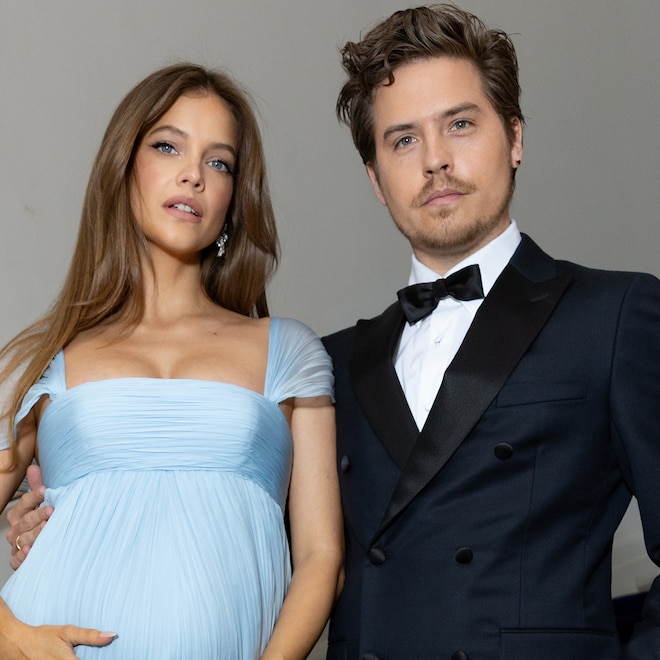 Dylan Sprouse is giving fans a suite update on his and wife Barbara Palvin’s daughter.