Categories
Politics

‘These guys are in a pickle’: Some Republicans spurn Trump on the campaign trail

Republicans know President Donald Trump’s unpopularity poses a big problem for them in November. They also recognize he may be their only option to avoid a wipeout.

Five weeks before Election Day, many Republicans are facing a damned-if-they-do, damned-if-they-don’t dilemma. Some candidates in close races are wary of alienating undecided voters by campaigning alongside Trump and the baggage that comes with him: high gas prices, voters’ persistent economic concerns and the prolonged war in Iran.

But keeping the president at arm’s length could make it harder to turn out the low-propensity base voters they need — voters that only Trump has been able to bring to the polls.

“These guys are in a pickle,” said one national GOP operative granted anonymity to speak candidly about the landscape, like others in this article. “They may not want Trump to come to the district, but there are still things that Trump can do to help.”

Asked what would happen if Trump campaigned in a battleground state where their candidates were running, another GOP operative working on midterm races said: “I suspect my candidates would come down with COVID.”

But the candidates may not have much of a choice. Trump is increasingly inserting himself into the election in the closing stretch, ramping up his campaign travel with a slate of stops scheduled in red states, repeatedly imploring voters to “pretend” he’s on the ballot and, most recently, appearing in taxpayer-funded campaign-style ads that the White House has claimed are public service announcements.

Some Republicans have encouraged Trump’s team not to send the president to a blue-leaning Omaha district and other key districts where his approval rating is underwater ahead of Election Day, according to two people with direct knowledge of the matter. Brinker Harding is running in the Omaha seat being vacated by retiring Rep. Don Bacon (R-Neb.); his campaign didn’t respond when asked if he’ll attend Trump’s upcoming rally in Grand Island, Nebraska, about a two-hour drive away.

Others have said similar things.

“They’ve called me four times now to see if we want him to come, and I’ve said no,” one senior Republican involved in a House GOP battleground race in a district Trump safely won in 2024 told POLITICO.

Another Republican operative familiar with Republican midterm strategy said the party views its role — and Trump’s — primarily as driving GOP turnout, while the work of persuading moderates, independents and other swing voters falls more heavily on individual candidates.

“Where the president is going is being decided very strategically, to areas where we are trying to boost turnout among Republican voters,” the operative said. “We’re not going to be sending him into areas where it would necessarily be hurtful to our candidates.”

Others in red states that are increasingly competitive acknowledge that if they want to rally the MAGA base to the degree necessary to hold onto key seats, no one can deliver like Trump.

“He’s a turnout machine for the Republican Party, the president is,” said Ohio GOP Chair Alex Triantafilou, who will welcome Trump to his state Saturday. “I certainly know what some of the national polling and some of the pundits have to say about this. But he is always welcome to Ohio because we know that he fires our people up.”

Not everyone thinks Trump is a net-positive even in places he comfortably won.

A national GOP operative, granted anonymity to speak candidly, said there are “no indications that there are enough turn out voters to overcome dropping some persuasion voters.”

Outgoing North Carolina Republican Sen. Thom Tillis said he doesn’t think it would be helpful for Trump to campaign in his state — which the president won in all three of his presidential runs, and where former RNC Chair Michael Whatley is struggling to tighten the race against former Gov. Roy Cooper (D).

“Not in my opinion — just if you take a look at the votes — you take a look at the independents. I don’t think he’s the one who’s going to get them out,” he told POLITICO.

“I think [Trump’s] job is to get the people out who traditionally vote for him and don’t show up in off-year elections,” he added. “Our job [as candidates] is to then … create some separation. It’s not like you’re breaking your loyalty to the president. … So there are states I think he should go to, there are states I don’t think he should go to.”

The Whatley campaign, however, feels differently. “Who drives R turnout right now in NC — Trump or Tillis? We would welcome Trump back to NC,” said Whatley’s senior adviser, Jonathan Felts. Both Trump and Vice President JD Vance have been to North Carolina to campaign with Whatley in recent weeks.

Trump’s upcoming stop in a red corner of Ohio outside Dayton is part of a broader campaign swing that reflects the political bind. Other stops scheduled include in deep-red states like Oklahoma and Alabama, as well as in red states with key Senate contests including Ohio, Nebraska and Alaska.

Ironically, the expanding battleground map could make Trump more useful to Republicans in some of the places they are most worried about. As the fight has spread into states and districts he won by double digits, simply turning out more of his base may be enough to make a difference.

The White House argued Trump is the “unequivocal leader, best messenger, and unmatched motivator for the Republican Party.”

“No one can dispute the fact that President Trump has created one of the most robust coalitions in political history with the MAGA movement, and the President understands how to communicate with them,” White House spokesperson Davis Ingle said.

The Republican National Committee and National Republican Congressional Committee also said Trump is still a valuable turnout tool, and their candidates are eager to have the president visit their districts and to appear with him on the campaign trail. The National Republican Senatorial Committee did not respond to a request for comment.

But some of the voters Republicans most need Trump to activate — especially blue-collar white voters in rural areas who came out to vote for him but often skip voting in the midterms — are themselves unhappy with his presidency.

Recent POLITICO polling found that even some of Trump’s strongest supporters — those who identify as MAGA — are souring on his handling of key issues. A POLITICO Poll in August found that a 44% plurality of MAGA Trump voters said the Iran war has made things more expensive for them, while 38% said the war has had no real impact on their costs.

“It’s really Trump’s voting base that’s feeling the pain of Trump the most,” said another Republican operative involved in several battleground races across the country, granted anonymity to speak candidly about the landscape.“They have to turn those people out. But those people are pissed at Trump, so it’s this weird dynamic of like: ‘Does he help? Does he hurt? Can he go and encourage the disenfranchised, the really pissed off Republican Trump voter?’” the operative said. “That’s really going to be what decides the outcome of this election.”

It’s noteworthy which GOP candidates are enthusiastically coming out to Trump’s rallies — and which are sitting out or staying mum on their plans.

A spokesperson confirmed that Sen. Jon Husted (R-Ohio), who is locked in a tough race in a state Trump won by double-digits, will attend Trump’s upcoming rally outside of Dayton; a spokesperson for Vivek Ramaswamy, the GOP gubernatorial candidate, did not respond to an inquiry about Ramaswamy’s attendance plans, nor did spokespeople for the trio of GOP House candidates running in Ohio’s competitive 1st, 7th and 9th districts.

Republican Rep. Ashley Hinson, the GOP Senate candidate in Iowa, recently said the Iran war needs to be “brought to a successful and immediate end,” in a rare public break with Trump. Hinson also did not attend a campaign rally Vance held in western Iowa in mid-September. She did, however, appear in the Oval Office behind Trump earlier this week when he announced a plan to build a $15 billion steel plant in Iowa.  

But with an ever-darkening environment, some Republicans see any efforts to reverse course as better than nothing.

“Everybody sees the polling,” said Daniel Garza, a Texas Republican strategist and president of the conservative LIBRE Initiative. “Is the polling accurate? I have no idea. All I know is that turnout is going to be key to this, and anything helps right now, at this point.”

Jordain Carney and Lisa Kashinsky contributed to this report.

​Politics

Categories
Politics

Democrats rethink their mail-voting strategy as voters grow wary

The Supreme Court blocked President Donald Trump’s effort to restrict mail voting. But for Democrats trying to turn out voters, the uncertainty seems harder to put to rest.

Fewer Democrats say they plan to vote by mail in November’s midterms than at the same point in 2024, according to a new NBC News poll, as a separate survey finds declining confidence that the Postal Service will deliver election mail on time. That represents an about-face for a party that has increasingly embraced mail voting since the 2020 pandemic election, forcing Democratic strategists to rethink how they get voters to the polls — and how to convince them their ballots will count.

Quentin James, founder and president of the Collective PAC, said his group is hearing concerns from Black voters about whether their mailed ballots will be secure and counted.

“I think there’s confusion,” James said. “We know that the president has spent six months talking about changing the rules regarding mail-in voting, and a lot of folks are concerned about their ballot being secure.”

That confusion comes as Democrats and voting groups weigh how to reassure voters after Trump’s latest effort to restrict mail voting. The president signed an executive order in March seeking to crack down on mail-in voting, citing unproven claims that the process is insecure and vulnerable to electoral fraud.

“The cheating on mail-in voting is legendary. It’s horrible what’s gone on,” Trump said during an Oval Office signing ceremony. “I think this will help a lot with elections.”

Still, the rules for mail ballots — at least nationally — will be effectively the same as 2024 after the Supreme Court rejected the Trump administration’s attempt to enforce the new mail-in ballot delivery regulations in a ruling earlier this month. The high court left in place a lower-court decision that blocked the U.S. Postal Service from implementing the new proposed requirements in the weeks before the midterm election.

Despite that, Democratic voters have signaled they are changing how they’ll vote.

In the NBC poll, 23% of registered Democrats said they plan to vote by mail, down from 34% in September 2024. Thirty-six percent said they plan to vote early in person, up from 30%, while another 36% expect to vote on Election Day.

A Marist poll found that 58% of registered voters were confident the Postal Service would deliver election-related mail to voters and election officials on time, down from 71% in October 2024. Marist also found that Democrats remain more likely than Republicans to plan to vote by mail or absentee ballot, 32% to 12%, respectively.

James said his organization has long encouraged early in-person voting through its Rides to Vote program, which provides transportation to voters without a vehicle. But despite the Supreme Court ruling, his organization is also encouraging people considering voting by mail to use a ride voucher to return their completed ballots directly to the required location.

“The bigger threat is confusion and fear,” he said. “That is the thing that a court case will not solve, and that’s what we’re really concerned about.”

In Maine, Secretary of State Shenna Bellows said municipal clerks have reported voters canceling absentee ballot requests, including requests to receive ballots automatically in future elections.

Bellows cautioned against a blanket message to vote in person. “We would discourage advocates from telling people not to vote by mail if, for those voters, that’s their only option,” said Bellows, a Democrat who ran this cycle for governor and in the rapid-fire Senate primary, pointing to older and disabled Mainers who rely on absentee voting.

Her office is instead urging voters to make a plan that works for them, return mailed ballots early and use Maine’s online absentee ballot tracking system to check whether a clerk has received and accepted them.

“Our public education efforts have been focused on encouraging voters to make a plan that’s right for them, and recognizing that they have the peace of mind of tracking their absentee ballot and the backup option of voting on Election Day if, for any reason, the ballot is delayed by the mail,” Bellows said.

Indivisible, one of the party’s largest grassroots groups, is mounting its own early-vote push and nudging people to cast their ballots early, regardless of how they vote. Co-founder Leah Greenberg said that the group is helping organize an Oct. 17 national day of action to encourage people to vote early under their states’ rules.

“So we were absolutely hearing concern,” Greenberg said. “But more importantly, what we’re hearing is people trying to figure out what they can do and how they can organize locally in order to protect elections.”

Greenberg said Indivisible is urging voters to get their ballots in early and emphasizing that a court rejected the administration’s attempt to restrict mail voting.

Still, the ruling hasn’t erased the uncertainty organizers say they are hearing from voters. Greenberg and James described a similar mix of relief and concern among voters.

“People are glad to hear it, but still wary,” Greenberg said.

Nevada Secretary of State Cisco Aguilar speaks before Gov. Joe Lombardo (R) signs an election worker protection bill into law at the old Assembly Chambers in Carson City, Nevada, on May 30, 2023.

Democrats, including state election officials who oversee the process, are also looking for ways to boost confidence in the mail system. Nevada Secretary of State Francisco Aguilar has asked his state’s congressional delegation to arrange election observers at postal facilities handling Nevada’s ballots.

In letters to the state’s congressional delegation, Aguilar identified sites in Las Vegas and Reno, as well as facilities in West Sacramento, California, and Salt Lake City, Utah.

Aguilar said nearly 670,000 Nevadans voted by mail in 2024 and argued that having observers present could strengthen confidence in ballot handling. In an interview, he said observers would also signal to postal workers that they have support in the process.

“By having observers there, it gives them the support to say: ‘Hey, we got your back,’” Aguilar said. “We also want to be helpful if there are any concerns — we want to make sure that leadership knows we are not going to stay quiet. We’re going to be proactive. We’re going to be engaged, and we’re going to hold them accountable when we need to hold them accountable.”

Aguilar said Rep. Susie Lee (D-Nev.) has requested observers following his letters. Lee’s office did not respond to a request for comment.

USPS said it had received correspondence regarding Aguilar’s request and was reviewing it. “The Postal Service has successfully delivered America’s election mail, and we are confident that we will do so again this year,” said Nikolaj Hagen, a Postal Service spokesperson.

Hagen pointed to USPS figures showing it delivered 233.3 million pieces of election mail through Aug. 28 in fiscal year 2026, with 97.94% arriving on time. In the 2022 election, USPS handled 105.4 million ballots and delivered 99.93% of those sent by voters to election officials within seven days. In 2024, it handled 222.39 million pieces of ballot mail, with 99.88% delivered to officials within seven days.

Meanwhile, Bellows said Maine is taking a different approach. Local USPS representatives have proposed weekly meetings with her election staff, she said, and her office has relationships with workers at the state’s two distribution centers.

But she noted congressional observers could be useful in larger states where those relationships are less established.

“Maine is a small enough place where, if there were a problem, we would probably know very quickly through union representatives or simply word of mouth,” Bellows said, noting that congressional observers at postal locations could be particularly useful in places “where those relationships may not be as strong or well established.”

​Politics

Categories
Alaska News

Sovereignty debate in Haines court, borough admin says no policy change forthcoming

A small-dollar collections suit has made a Lutak Road property one front in an unresolved, statewide conflict over land sovereignty. And despite losing the lawsuit — in which a tribal government defendant argued the borough’s tax policy ran afoul of federal law — the borough says its stance on the issue remains unchanged.

Last September, the Haines Borough filed suit against the Central Council of Tlingit & Haida Indian Tribes of Alaska seeking unpaid sales tax from a business owned by the tribe. 

The business in question was two short-term rental cabins known as the Gathering Place. A parcel overlooking Lutak Road, the Gathering Place property was originally granted by the federal government in 1981 as a Native allotment to Erma Lawrence, but had since changed hands twice, most recently purchased by the tribe in 2023.

It wasn’t the first time the issue had come up at that property. The tribe has for a number of years argued against the borough’s policy of collecting sales tax from the Gathering Place. The tribe first withheld sales tax collected at the business in 2023. Pointing to a borough exemption from sales tax for foreign, federal, state, and municipal governments, Tlingit & Haida president Chalyee Éesh Richard Peterson advocated that tribal governments be made exempt as well.

In a letter that year to then-Mayor Doug Olerud, Peterson said the tribe would pay the tax in a “good faith” effort to negotiate a more durable change to borough policy. Those changes, however, never came, and last year, borough officials said the tribe had once again collected tax at the business but had stopped remitting it to the borough. In September, after months of tax delinquency notices, the borough filed the small claims suit.

Filing suit was standard borough procedure, written into code, for collecting delinquent tax. The amount in question, $7,500, was relatively small — small enough to be heard in small claims court, the lowest level of the state’s court system. Even after meeting with leadership from the tribe, borough staff said they saw no reason why the tribe should be exempt from that process, or from paying sales tax.

“We are just asking them for delinquent sales tax that they owe to the borough,” borough sales tax administrator Jessie Badger said at the time. “We’re not taxing them, we’re taxing their patrons.”

According to those who have presided over it, Haines’ small claims court is a relatively informal setting, in which the local magistrate has the latitude to hash out disputes — often over issues like dog custody — bringing conflicting parties toward some kind of compromise. Generally, there aren’t lawyers involved or strict courtroom procedures to be followed. But when the tribe filed its response to the suit with Haines magistrate Paul Korchin, it came as a multi-page filing written by the tribe’s attorney, Agatha Erickson.

New legal arguments 

For months prior, the conversation had centered on a decision to be made by the borough: whether it should exempt the tribe from paying sales tax. Even after communications back and forth with Tlingit & Haida officials, Haines Borough officials had used policy toward nonprofits as a reference for whether the tribe would be exempt.

“There is really no reason Tlingit & Haida is not paying taxes on their vacation rental,” borough manager Alekka Fullerton said at the time. “It has nothing to do with their mission. On the other hand, if it was something that was directly related to their mission, maybe they wouldn’t have to pay sales tax.”

But the main argument in that filing was not about the 

borough’s decision to grant or deny an exemption. Instead, the tribe argued, the borough had no authority to collect tax in the first place. Because of the parcel’s status as a Native allotment, the tribe argued that it — and not the borough — held regulatory power over the land.

“It is well established under federal Indian law that, absent clear congressional authorization, a state or locality may not levy a tax directly on a Tribe or its citizens for activities that occur within Indian Country, including Alaska Native Allotments,” Erickson’s filing read. In a footnote, Erickson cited a 1995 Supreme Court case, Oklahoma Tax Commission v. Chickasaw Nation.

The filing also argued the borough was not permitted to sue Tlingit & Haida in the first place due to the tribe’s immunity from suit as a sovereign government, a status that can be waived only by Congress or the tribe itself.

Ultimately, neither of the tribe’s arguments was ever really tested in the local courthouse. About eight months ago, just after the new year, the case petered out to an anticlimactic end. The borough lost the case, but largely because staff forgot to file a response to the court.

The borough “did not intend to not respond,” borough manager Alekka Fullerton said last month.

Nevertheless, without any argument from the borough in the record, the tribe’s arguments were the only ones for the magistrate to consider. In the resulting one-sided proceeding, Korchin came down in favor of the tribe.

The issue has been quiet since, and the Gathering Place didn’t operate as a rental this summer. Even so, the issue of whose land it is to tax, regulate, and otherwise govern continues to loom.

Despite losing the case, the borough has not changed its policy regarding sales tax on allotment land, Fullerton said last month. If the Gathering Place resumes commercial operations in the future, the borough will attempt once more to collect sales tax.

That stance doesn’t have to do with land sovereignty, the borough argues.  

“I think it is really important to keep property tax versus sales tax straight,” Fullerton wrote in an email this summer. “The Gathering Place on Native allotment, we recognize this is a Native allotment, therefore there is no property tax.  The Native allotment status, however, does not mean commercial activity taking place on the land is exempt from sales tax since the users who pay the sales tax are not tax exempt.”

But the question remains of how the borough will, in the future, respond to arguments about broader regulatory jurisdiction over allotment land. 

That possible collision course is not unique to Haines, and neither is the tribe’s argument about jurisdiction over allotment land.

The Lawrence allotment, where the Gathering Place is located, is 160 acres of an estimated 3 to 5 million acres of land in Alaska granted to individuals under the Alaska Native Allotment Act of 1906. Even though a century has passed since such allotments were first granted, it remains an open question who exercises the right to regulate and govern them.

For instance, while Tlingit & Haida argued in the Haines case that it holds the power to tax allotment land, the State of Alaska and the Trump administration disagree.

Both hold that allotments like the Lawrence allotment on Lutak Road are firmly within the governing authority of state and municipal governments, citing a 1993 opinion from the federal Department of the Interior that was, for much of the last 30 years, the federal government’s position on allotment jurisdiction.

The opinion says that in federal Indian law, so-called “Indian Country” has generally been the jurisdictional boundary line, with tribes holding power within Indian Country and states holding power without. Federal statute specifically names allotments as one category of Indian Country.

But in the opinion, Interior solicitor Thomas Sansonetti argued Alaska was an exception: that Alaska Native allotments were created in a substantively different context from allotments in the continental United States, and thus did not confer to tribes the same sovereignty over allotment land.

“Particularly in the absence of a tribal territorial base (e.g. a reservation), there is little or no basis for an Alaska village claiming territorial jurisdiction over an Alaska Native allotment,” he wrote.

The Alaska Department of Law last year, in a press release, called federal government efforts to roll back that opinion “unlawful.” 

The release quoted then Attorney General and current gubernatorial candidate Treg Tayor as saying, “we are asking a court to reaffirm what it has already said—the State maintains primary jurisdiction over Alaska Native Allotments.” 

Uncertain lines of debate

The state and federal governments are currently aligned in their support of that 1993 opinion, but that hasn’t always been the case. The federal government’s position has been set by Department of the Interior administrative policy, not federal statute. As such, the federal government has alternately affirmed, contradicted, and reaffirmed the state’s position with successive presidential administrations.

“We struggle here in Alaska in that we have a lack of case law,” said University of Alaska Fairbanks tribal law expert Kevin Illingworth earlier this summer, explaining why so much of the allotment sovereignty debate is left to administrative policy. “What guidance we get from outside of the courts, either the Department of Law or the federal Attorney General’s office, has been completely partisan and easily predictable just based on who is pulling their strings.”

The borough’s involvement in the debate is just one in a number of cases litigating the issue, some nearby.

In 2021, Tlingit & Haida butted heads with the City and Borough of Juneau after the municipality tried to regulate the tribe’s fireworks sales at a Douglas Island allotment. In that instance, the tribe similarly asserted its regulatory authority over the allotment.

When a Juneau assembly member argued that there was no tribal land in Juneau, Peterson called it “about the most irresponsible and incorrect statement I’ve heard,” KTOO’s Jeremy Hsieh reported at the time. “It’s offensive. We’re selling fireworks on an Indian allotment. That is restricted land, that is Indian land.”

This year, at the same location, the tribe opened the Two Coppers Casino, which it says it has the right to operate due to the land’s status as an allotment, giving it sovereign jurisdiction. That position was backed by the National Indian Gaming Commission a year and a half ago, after the Biden administration reversed federal policy and supported tribal sovereignty over Alaska Native allotments.

In a letter delivering the gaming commission’s decision, associate commissioner Sharon Avery wrote that “tribes in Alaska are presumed to have jurisdiction over Native allotments, subject only to the two exceptions identified by the Department for off-reservation allotments: (1) when the Native Allotment is owned by a non-tribal member; or (2) when the Native Allotment is geographically removed from the tribal community.”

Avery’s argument was based on Biden-era federal allotment policy. Now that the Trump administration has reinstated the federal government’s previous position, the casino once again appears to challenge federal policy. While that Douglas Island casino is currently operating without any legal contest, the state is actively pursuing a similar case,  a casino on allotment land owned by the Native Village of Eklutna.

Other Tlingit & Haida efforts to exert sovereignty over tribal land have drawn legal challenges. In 2023, the State of Alaska sued the Biden administration over its decision to declare a Tlingit & Haida parcel in downtown Juneau as reservation land.

A history of litigation

Litigation, or the possibility of litigation, is often a “last resort” for Alaska tribal governments due to cost, Illingworth said. But Tlingit & Haida exists in a slightly different context from most tribes.

Unlike tribal governments like the Chilkoot Indian Association and Chilkat Indian Village, which were organized in the 1940s under the Indian Reorganization Act, Tlingit & Haida was formed specifically out of landmark litigation.

In 1935, the federal government passed a law allowing “Tlingit and Haida Indians,” as defined by the bill, to sue for compensation for land taken by the federal government. The law was in response to land claims officially initiated at a key Alaska Native Brotherhood convention in Haines.

The group filed suit in 1947 and, after nearly 20 years of litigation, won $7.5 million in compensation for land, including the Tongass National Forest and what was then Glacier Bay National Monument.

Following that ruling, the Central Council of Tlingit & Haida was given the authority to spend the money awarded. That has given the tribe “both money and a history of litigation,” Illingworth said — a contrast to elsewhere in the state, where funding streams have largely been directed toward Alaska Native corporations rather than tribal governments following the Alaska Native Claims Settlement Act, or ANCSA.

Tlingit & Haida President Chalyee Éesh Richard Peterson initially agreed to discuss the Haines Gathering Place lawsuit, but Peterson and spokespeople for the tribe did not respond to several weeks of requests for an interview and questions about the Haines case and allotment jurisdiction more broadly. The state’s Department of Law said it would not comment specifically on Haines’ small claims suit against the tribe.

For now, the Eklutna case continues to work its way through the courts, and Haines’ tax dispute remains dormant. Allotment policy also may hinge on an imminent new governor and new president in two years time; though now dropped out of the race, former gubernatorial front runner Tom Begich said in a July interview with the Chilkat Valley News that as governor, he had planned to call for a “near reversal” of the state’s current position on sovereignty over allotment lands. 

The post Sovereignty debate in Haines court, borough admin says no policy change forthcoming appeared first on Chilkat Valley News.

Categories
Music

Riley Green’s Secret Weapon on ‘The Voice’ Revealed

Cade Mower had four Coaches fighting for him after his Zach Bryan performance, but Riley Green had a very specific strategy to make his pitch stand out. Continue reading…​The Boot – Country Music News, Music Videos and Songs

Categories
Sports Fox

Bryce Bounces Back And 3 Teams Advance: 4 Takeaways From MLB Wild Card Action

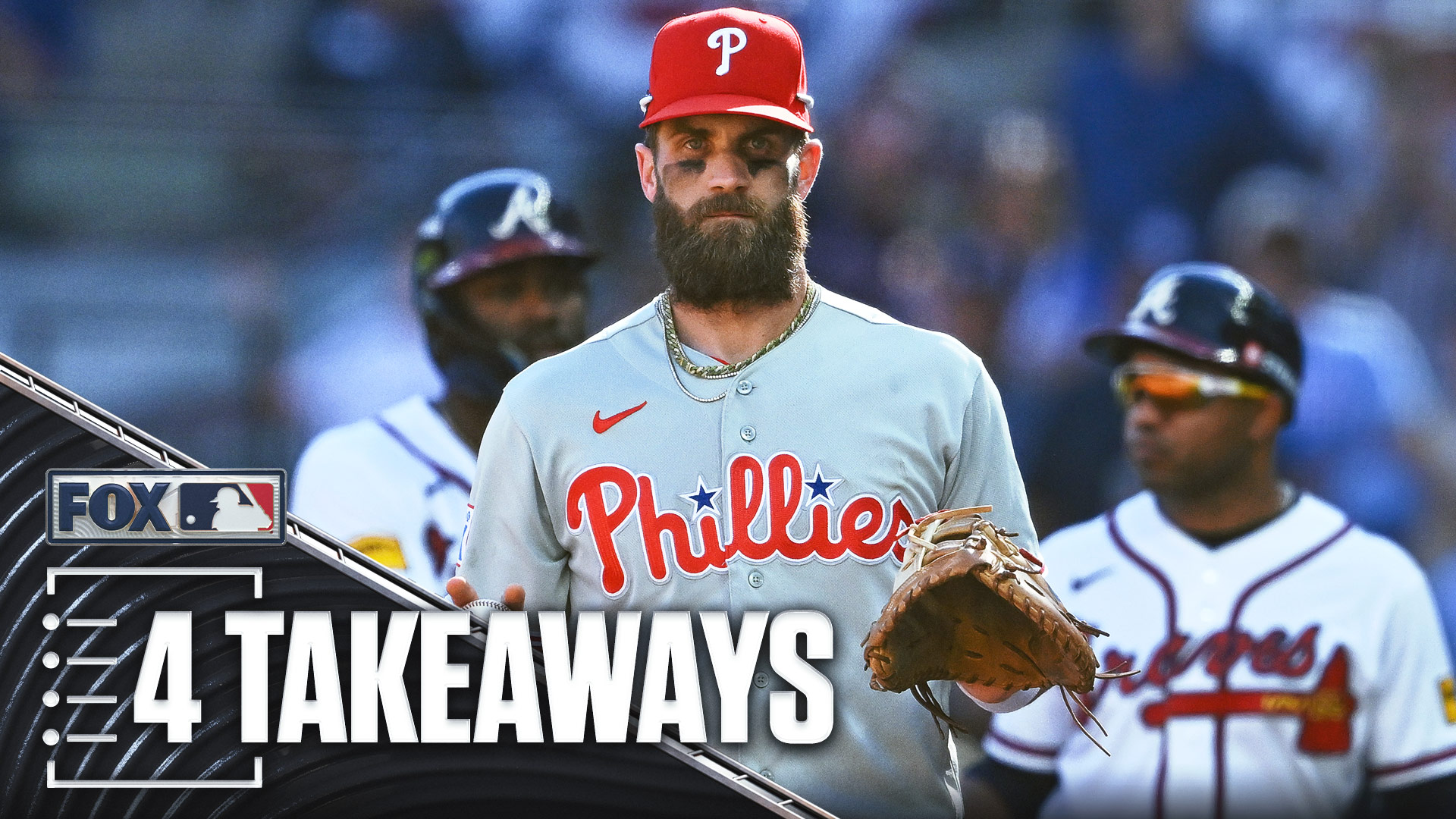
Eight teams entered the wild-card round on Tuesday. Three are already heading home Wednesday. That’s playoff baseball for you. The Red Sox, Astros and Cubs didn’t get to technically play October baseball. But the Yankees, White Sox and Padres made sure to keep their hopes of a deep run alive. That just leaves us one more wild-card matchup (Phillies vs. Braves) to settle. Here are our takeaways from Wednesday’s action: Rowan Kavner: The repercussions of two San Francisco Giants trades threatened to end the Phillies’ season Wednesday afternoon at Truist Park. ‘On Aug. 2, the Giants sent starter Tyler Mahle to Atlanta. The move garnered little attention at the time, but Mahle would become the most consequential player to switch teams at the deadline. On Aug. 3, the Giants traded Luis Arraez to the Phillies, who then reshuffled their defensive alignment to accommodate the infielder. One of those moves, shifting Bryce Harper from first base to right field, nearly had ruinous consequences in Game 2 of the wild-card series. Mahle delivered seven innings of one-run ball on Wednesday to put Atlanta in prime position to move on to the National League Division Series. Arraez, meanwhile, didn’t make the Phillies’ wild-card roster after spraining his ankle a week ago. Harper, however, remained in right field for the first two games of the playoffs. That decision backfired in the seventh inning Wednesday when Harper misplayed a fly ball from Drake Baldwin, allowing the go-ahead run to score. A sacrifice fly followed, adding an insurance run for the Braves, ending Cristopher Sánchez’s day and endangering the Phillies’ season. “It doesn’t matter what you did the at-bat before, the inning before,” Harper said. “It’s what you do in that moment.” An inning later, the moment found Harper again. And this time, he delivered in a 4-3 comeback win to keep the Phillies’ season alive. Braves reliever Dylan Lee hadn’t allowed a home run to a left-handed hitter all year before Kyle Schwarber and Harper started the eighth inning with back-to-back shots to tie the game, erasing Mahle’s superb work. Mahle, who stepped up with a 1.99 ERA over nine second-half starts to lessen the Braves’ rotation concerns, aced his first playoff test in Atlanta, outdueling a Cy Young contender in Sánchez before handing the ball to one of the best bullpens in baseball. But his gem was not rewarded. Lee blew the lead, Andrew Painter provided three vital innings of relief for Philadelphia to keep the game tied, and Alec Bohm delivered the deciding blow in the 10th inning with a solo shot off Didier Fuentes to keep the Phillies’ season going in a back-and-forth battle. An elimination Game 3 will take place Thursday in Atlanta. “I really, really don’t want this year to end,” Bohm said. Deesha Thosar: With one decisive swing, Chase Meidroth sucked all the air out of Houston. For Chicago, call it the franchise’s biggest hit of the past five years. The White Sox were hanging onto a miniscule one-run lead when Meidroth’s three-run home run off Astros reliever Bryan Abreu in the sixth inning broke the game open. As the South Siders charged ahead to a 7-3 lead that they would never relinquish, Meidroth and his flowing brown locks rounded the bases in unbridled joy. The 25-year-old second baseman joined the White Sox from Boston as part of the Garrett Crochet trade in 2024. It was, by far, the most memorable and clutch hit of Meidroth’s budding career. “There’s no better feeling than coming through for the guys,” he said. Moments before Meidroth’s deafening shot, none other than Astros homegrown legend Jose Altuve had the perfect opportunity to put his team in front. The Astros, trailing 4-3, had loaded the bases for Altuve, who had already hit a solo shot in the fourth inning. All he needed was a hit, something he had done 120 times in 107 playoff games for Houston. But Altuve flew out to right field, and with him, the Astros’ dreams of making something out of an otherwise disappointing season went down the drain. After all, the Astros were the team with the worst record (81-81) ever to win a division. Given how the year unfolded, it was always going to be a longshot for Houston to suddenly resemble a serious playoff team. One of their only hopes was slugger Yordan Alvarez, the AL MVP favorite after crushing 42 home runs in a full, healthy season for the Astros. But the White Sox pitching staff kept Alvarez in the ballpark throughout the series. He went 1-for-8 with his lone hit being a single in Tuesday’s 6-3 loss. “They made sure they came in with the objective of not letting Yordan beat them,” Astros manager Joe Espada said. “If I’m on the other side, I would have come in here with the same game plan, not letting Yordan beat you. But I thought they executed really well. We couldn’t get our bats going. We had some opportunities but just couldn’t get that big hit.” Preseason projection systems had this year’s White Sox team penciled in to lose close to 100 games. Instead, they went 84-78, and were this close to grabbing the division title from the Guardians. Chicago’s successful season was built from a band of misfits, including Savannah Banana to AL All-Star, Tristan Peters, and Nippon Professional Baseball slugger to 35-homer AL All-Star, Munetaka Murakami. They believed, since the club came together at spring training, that they had the right blend of players to prove the world wrong. The White Sox, after recording three consecutive 100-loss seasons from 2023-2025, now advance to the ALDS to face the Guardians. They will look for their first ALDS victory since 2021 and after that, they hope, their first trip back to the World Series since they won it all in 2005. Thosar: The Red Sox knew that facing the Yankees’ elite rotation was going to be the toughest uphill battle in a season full of them. What they didn’t expect, what they couldn’t have known, was how much of a force the Yankees offense would suddenly become while their best hitter sat on the bench trying to make his way back from injury. Aaron Judge, idling in the dugout wearing a sweatshirt with the hoodie pulled over his head, watched as the Yankees embarrassed the Red Sox for a second consecutive day, ending Boston’s season on a balmy night in the Bronx. There was action up and down New York’s lineup in its 9-2 series-clinching win on Wednesday — something the Bombers have struggled to consistently provide throughout most of the season without their key sluggers. Giancarlo Stanton, who hasn’t played since April 24, was actually activated and included on the Yankees’ wild-card series roster against the Red Sox, unlike Judge. But the Yankees never needed either of their big bats to dispose of their longtime division rivals and advance to the ALDS against the Rays. Throughout Game 2, the Yankees were in cruise control. Left-hander Max Fried kept Boston’s bats at bay with six innings of one-run ball, and New York provided plenty of run support with 14 hits, including at least one hit from each of its nine starters. “Being able to celebrate with your teammates after a playoff series win, it doesn’t get old,” Fried said. “This is what we start practicing in February for. This is where we want to be. So just about playing our game, having fun and hopefully we’ve got a couple more of these that we can do.” The Red Sox failed to generate enough offense to be a real threat to the Yankees at any point during the wild card series. They were without Roman Anthony for the majority of Game 1 and all of Game 2 after the outfielder went down with a hand injury. That left catcher Adley Rutschman and first baseman Willson Contreras as the only bats who could realistically do some damage. Contreras, at least, snapped Boston’s 26 ⅔ scoreless innings streak in the postseason with a solo shot in the sixth. But that was never going to be enough against a 93-win Yankees team that relied on its elite starting pitching staff to get it to this point. Plus, Chad Tracy’s moves backfired. The Red Sox manager deployed southpaw Garrett Crochet in the sixth inning — his first time pitching since April after being sidelined all season with a shoulder and lat injury — only for the Yankees to pulverize him. Crochet faced four batters and coughed up four runs while failing to record an out. He was booed off the mound by the Bronx faithful. In the same inning, Tracy and the Red Sox opted to intentionally walk the red-hot Ben Rice in favor of facing Cody Bellinger. It backfired. On the second pitch of the at-bat, Bellinger slugged a three-run home run to right field, increased New York’s lead to 8-1, and buried the Red Sox for good. “Regardless of all the special things that happened this summer, and there were quite a few, the goal is to win the World Series, and that ended for us tonight,” Tracy said. “So it’s frustrating. And there’s a lot of things you can say, but in the moment, right now, I think the guys only care that we lost. And it’s going to take some time to get over that.” Kavner: In Game 1, the Padres’ offensive stars dazzled. In Game 2, their bullpen arms dominated. And after two nights of quieting the highest-scoring lineup in the sport, stymying the National League MVP favorite, dissecting a depleted Cubs pitching staff, exploiting one of MLB’s most electrifying home-field advantages and dominating in every way imaginable, the Padres are moving on to the NLDS, where they’ll face the Brewers in a matchup of baseball’s two best teams since the All-Star break. “I can’t speak for anyone else,” Padres third baseman Manny Machado told me, “but playing here, tonight, these last two days, I’ve never felt anything like it. I never have.” The Padres demonstrated why they went 51-30 at home this year. A raucous crowd, featuring 47,000-plus screaming fans twirling yellow towels both nights, seemed to help smother a Cubs offense that led MLB this year in OPS and scoring. The Cubs got outscored 12-1 in the series, with standouts Pete Crow-Armstrong and Alex Bregman finishing a combined 0-for-15 with eight strikeouts. “Those were the two guys we marked as, ‘We don’t want those guys to beat us in this series,’” said Padres manager Craig Stammen. “We tried our best to set up our pitching to handle them.” In Game 1, it was starter Michael King who shut down the star duo. In Game 2, it was Nick Pivetta and a well-rested, fearsome bullpen. Bradgley Rodriguez, Jason Adam, Adrian Morejon and Mason Miller combined to allow just two hits over 5.2 scoreless innings to finish off the sweep. And after their offensive stars powered them forward at the plate in Game 1, with Machado, Fernando Tatis Jr. and Jackson Merrill combining for six hits, five RBI and five runs scored, it was the depth of the lineup that shined in Game 2. Ty France doubled and scored. Xander Bogaerts had two hits, including an RBI single off Kevin Gausman to start the scoring Wednesday night. And Gavin Sheets, behind a chorus of “Ho-ly Sheets” chants, came off the bench and parked a two-run homer to right field to break the game open. San Diego’s shutdown bullpen took it from there. A Nico Hoerner double was the only extra-base hit the Padres surrendered all series. And now, the hottest team in baseball will move on to face its best, the 103-win Brewers, in the NLDS. “We’re playing as a group, playing as a whole,” Machado told me. “Everyone’s pulling by the same rope. Wherever you have that going, it’s impressive to see. It’s impressive to be a part of. Never seen anything like it.”​Latest Sports News from FOX Sports

Categories
Music

Christa Pike Execution: Everything We Know

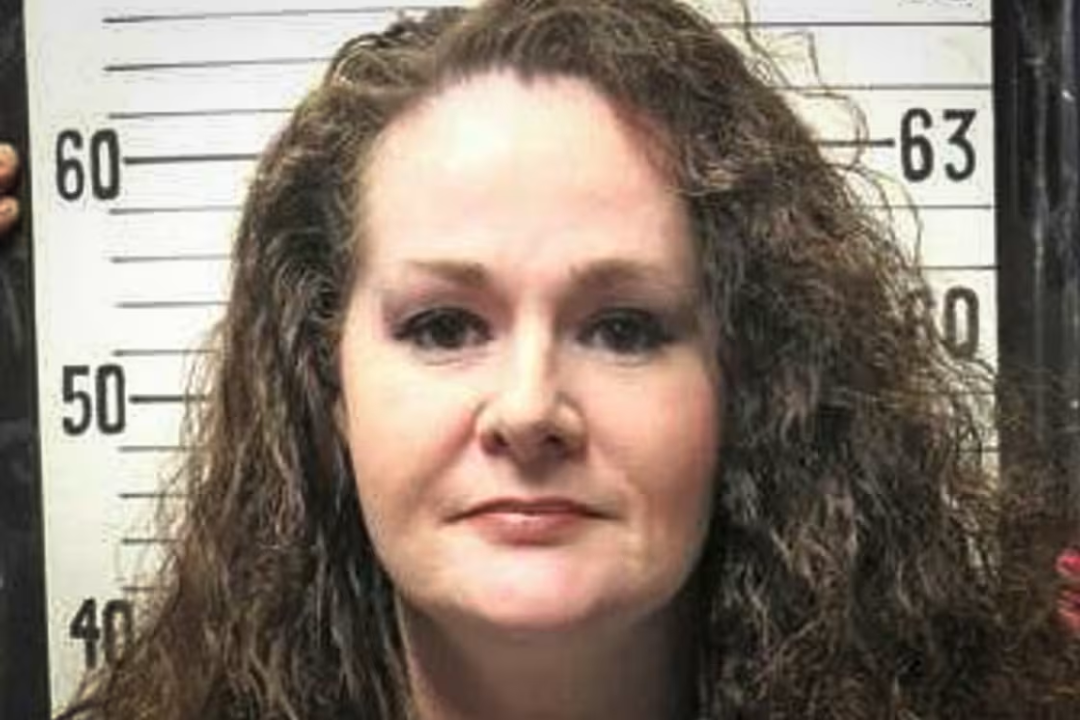
Christa Pike’s long-delayed execution has become a chaotic legal battle as Tennessee fought to carry out the sentence against the only woman on its death row. Continue reading…​The Boot – Country Music News, Music Videos and Songs

Categories
Music

The Best New Movies on Streaming This Weekend

Watch these new movies at home the weekend of October 2, 2026, for free or via VOD. Continue reading…​The Boot – Country Music News, Music Videos and Songs

Categories
Music

How a Reba McEntire Song Inspired Sugarland’s ‘Stay’

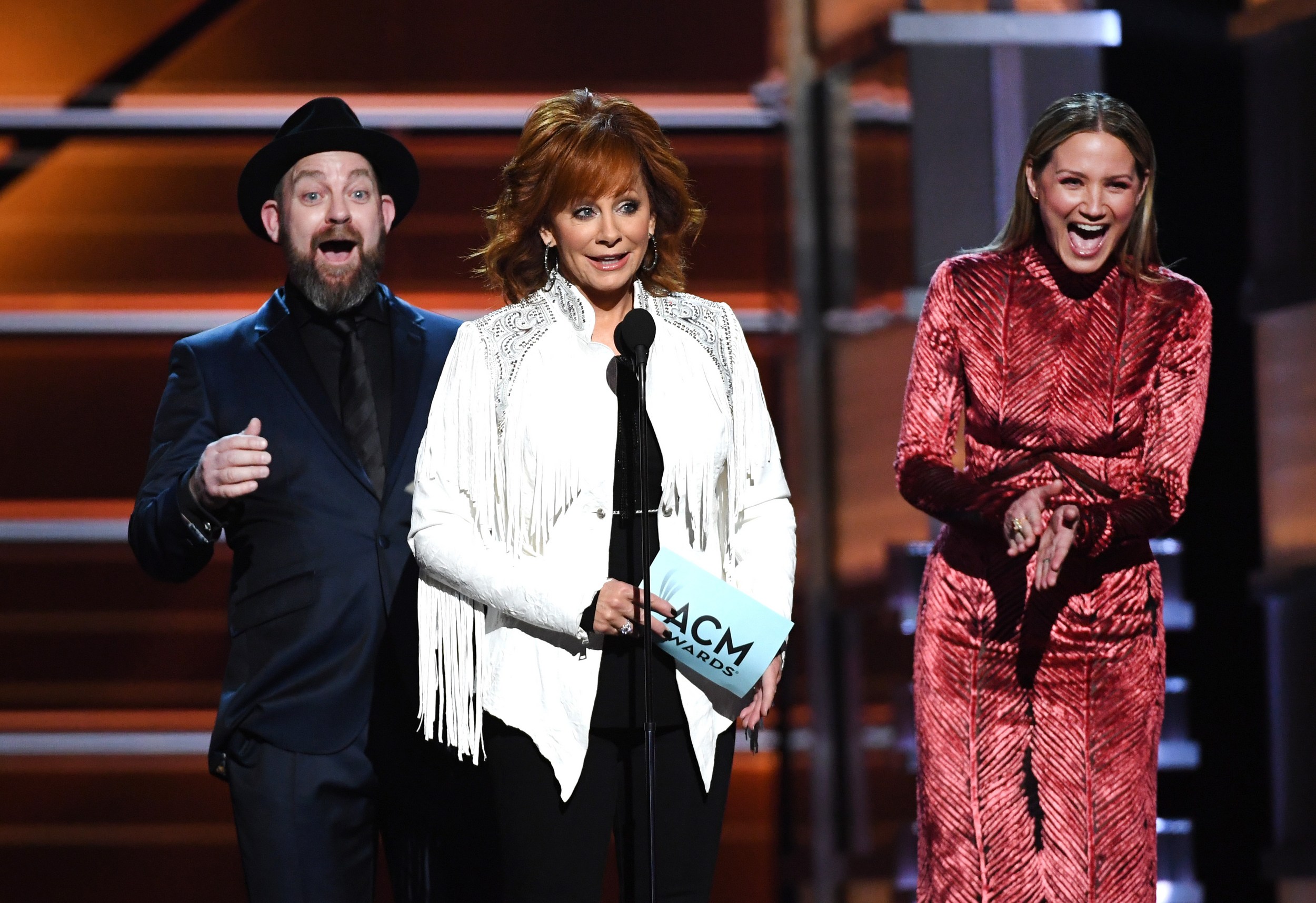
Jennifer Nettles heard Reba’s story of infidelity from the other side and started wondering what the third person in the relationship was feeling. Continue reading…​The Boot – Country Music News, Music Videos and Songs

Categories
Entertainment

Ashley Tisdale’s Husband Addresses “Toxic Mom Group” Drama

Christopher French, Ashley TisdaleChristopher French has been sticking to the status quo. 

The Annie Automatic musician shared that he and his wife Ashley Tisdale haven’t let the backlash over her essay about breaking up with her…
​E! Online (US) – Top Stories

Categories
Sports Fox

What October 2026 Will Reveal About MLB, The NFL And College Football

September tells you who’s good. October tells you who’s great. It’s the month when hot starts get tested, soft schedules run out and the sample size gets big enough to matter. Across FOX Sports’ biggest franchises, October is when the season stops being a preview and starts to count. In MLB, the postseason is underway, with the division series set to begin Saturday, October 3. Every pitch matters more now than any other point in the season, and the World Series will be decided before the month ends. In the NFL, October is a month of validation. September success can be misleading, but should a team be able to sustain it, a showdown can feel like a postseason preview. The month brings the first 49ers-Seahawks game and potential Super Bowl glimpses like Bills at Rams and Chiefs at Seahawks. In college football, October is when seasons can be made or ruined, and games include Ohio State-Indiana, Florida-Texas and Alabama-Tennessee. The College Football Playoff picture will begin to take shape in a real way, and the true Heisman Trophy frontrunners start to emerge. Here’s what our writers are watching, and what October will reveal. For six months, Major League Baseball has been building toward October.The standings are wiped clean. Cinderella stories are born. Evil empires are despised. Every pitch is consequential; there are no mulligans. This is when forgotten bench players have the chance to become postseason legends. Only the most ruthless will survive. The 12-team field is set, and the usual suspects are here. The Dodgers are back, looking to become the first team to three-peat since the 1998-2000 Yankees. Two-way icon Shohei Ohtani is once again carrying the weight of enormous expectations into the postseason. The Yankees are back, too, and they’re forced to begin the playoffs without their three-time MVP, Aaron Judge. His multiple injuries limited him to just 66 games this season. The Red Sox managed to turn their disastrous season around in late June and made a surprising push to qualify for a Wild Card Series matchup against their rival Yankees. The Padres, starring a lights-out weapon in elite closer Mason Miller, return for another October run. San Diego is still chasing its first World Series championship in franchise history. The Brewers enter as the National League’s top seed with plenty to prove, particularly if they’re actually capable of defeating the Dodgers this time. Meanwhile, the Phillies and Braves start October off with a win-or-go-home game 3, another dramatic episode of a division rivalry that has become an October staple. Then there are the teams trying to change their place in baseball history. The Guardians are back after another late-season push. The Cubs are hoping their success during the regular season, where Chicago had the highest scoring offense, will translate on the biggest stage. The Rays are all but unbeatable at home. The White Sox, who finished the 2024 season with 121 losses that broke the modern-day single-season record, are a team of misfits showing the world why they believe they can win it all just two years later. Across the bracket, every contender understands one thing. Whatever happened before the playoffs matters only as much as players allow it to. That’s the magic — and cruelty — of this month. A dominant regular season can disappear in as little as three games. A sputtering lineup can catch fire at exactly the right time. Rookies can become heroes. Superstars can spend an entire series searching for one big swing. A single pitch, a special moment, can change an entire franchise. The Wild Card Series starts the chaos before the calendar officially flips to October. Then comes the Division Series, the Championship Series and, finally, the Fall Classic. By the time October ends, baseball will have its answer. One team will have survived all of it. Everyone else will be left wondering what could have been. — Deesha Thosar What does October mean in the NFL? It’s a month of validation. September success can be fleeting, but sustain it into Halloween and it’s not a costume. It’s a month in the middle, not as oppressively hot as September 1 p.m. kickoffs in Florida, not as frigid as December in Buffalo or Green Bay. Baseball is ending, hockey and basketball are just beginning, but football finds itself in October. A huge game in September is a throwback to last year’s playoffs, but a showdown in October can feel like a postseason preview. October brings us the first 49ers-Seahawks game and potential Super Bowl glimpses, like Bills at Rams and Chiefs at Seahawks. A year ago, the Patriots and Broncos were ordinary 2-2 teams when October arrived, but were 6-2 contenders when it ended. Denver coach Sean Payton is an ordinary coach in September, with barely a winning record in his career, but in October, he’s 54-17, winning 76% of his games for the best mark in NFL history. October was Tom Brady’s best month — 28 more career touchdowns, 17 fewer interceptions than he would total in December, and yet his teams somehow had a better record in December. That might go back to frigid and handling cold from experience. What will we learn in October? How many undefeated teams will survive the month, and how many winless teams will still be that way? Which struggling teams, already written off, will get up off the mat? November opens with the Chargers at the Rams at the site of this year’s Super Bowl — a month ago, you could have seen that as a postseason preview, but that seems farfetched already. Will Bears-Seahawks on Monday, November 2, end up being the massive prime-time bout it looks to be right now? October will let us know. — Greg Auman For college football, October has become a tree-shaking month in a sport that counts going undefeated as a mere metric for consideration. With more than a third of the season gone and every single team worthy of inclusion in the College Football Playoff conversation beginning to play conference games — many against ranked opponents who have managed to remain undefeated or suffer just one loss. October 17 might be the most pivotal Saturday in the sport, with Associated Press poll-ranked No. 5 Ohio State and No. 6 Indiana playing to prove who the best team in the Big Ten is this season. In the SEC, No. 8 Florida takes on No. 1 Texas for a resurgence for the former and conference domination for the latter, and both No. 7 Alabama and No. 17 Tennessee face off for what could prove to be a CFP de facto elimination game. And to think of all of this comes before Ohio State travels to No. 18 USC and Florida plays No. 2 Georgia on October 31 for what will surely be games that influence not just the CFP but coaching legacies, notably Lincoln Riley’s. Yes, October is tree-shaking time in college football. Let’s see who drops off, and who stays put. As much as this month is important for establishing something like a decent pencil sketch for the 12-team CFP picture, it’s also the first month when Heisman Trophy frontrunners in September begin to fade, and late-breakers make a move to the front of the race. In the Big Ten, all eyes are on Ohio State wide receiver Jeremiah Smith — a sure top contender for the Biletnikoff Award, given to the nation’s top wide receiver, and a Heisman Trophy away from immortality in the sport. For two years, I’ve written and said Smith is the best player in the sport. With three of Ohio State’s four games in October coming against top-25 programs, he’ll once again have a chance to prove it. — RJ Young​Latest Sports News from FOX Sports