Categories
Politics

Support for Iran’s team – but not for regime

LOS ANGELES — The political tensions surrounding Iran’s national soccer team were on full display Sunday at SoFi Stadium, where Iranian American fans loudly booed during the playing of Iran’s national anthem before the team’s World Cup match against Belgium.

Among the crowd were several supporters displaying Iran’s pre-revolution Lion and Sun flag, a symbol associated with opposition to the current regime. FIFA prohibits the flag inside tournament venues, but some fans carried it anyway — and at least one supporter waved it during the anthem in an act of defiance.

Conversations with Iranian American fans at the stadium in Inglewood revealed a consistent message: Their protests were directed at Iran’s government, not at the players representing the country on the field. An Iranian American man from Seattle who gave his name as Majid said that he appreciated the opportunity to “confront the tyrannies that are happening.”

“Iran is hostage for the past 47 years or so to a regime that is promoting terrorism and chaos in the region,” he said. “For the team, we support them. But the anthem, the flag — we don’t support it.”

That distinction was evident throughout the match, which ended in a scoreless draw. While the anthem drew intense jeers, Iranian players received loud cheers on corner kicks and takeaways.

The game, held amid U.S.-Iran talks to end the monthslong war between the two countries, was the second of two matches Iran played in Los Angeles, home to the largest Iranian community outside of Iran. Both ended in draws.

​Politics

Categories
Entertainment

Kyle Busch’s Wife Shares Father’s Day Plans Before His Death

Kyle Busch, Samantha BuschSamantha Busch is honoring her late husband Kyle Busch.
One month after the NASCAR champion died at 41, the lifestyle blogger penned an emotional tribute on Father’s Day, reflecting on how she and…
​E! Online (US) – Top Stories

Categories
Politics

‘Don’t count on me to say bad words’

The French minister for sports, Marina Ferrari, was in New York City to support her national team, which will play its second match tomorrow against Iraq. On Monday, she dropped by the French consulate across from Central Park for an event organized by Business France to discuss the opportunities this year’s three-country World Cup represents for French and American companies.

Panelists included French Football Federation President Philippe Diallo, New York City Economic Development Corporation interim CEO Jeanny Pak and representatives from the NFL and the New Orleans Saints, which are playing the first ever professional (American) football game in France this fall at a stadium in the Paris suburbs.

In prepared remarks, Ferrari talked about Franco-American cooperation, not just for major sporting events, but also for America’s 250th anniversary.

“France will be, as it always has been, at your side,” she said.

In an interview afterwards, Ferrari answered questions in English about politically outspoken French footballers, Qatari influence in French sports and the beautiful game being divided into quarters by TV commercials during World Cup “hydration breaks.”

This interview has been edited for length and clarity.

What do you think of football becoming a four-quarter sport instead of a sport of halves? Are the Europeans concerned that this World Cup has made it into a four-quarter sport?

In France, we have been working with the broadcaster and they took the engagement not to put advertising during those pauses. For us, it’s important. When we organize in the future such a competition — with the weather and with the climate change — we will have to adapt the competition. So I understand clearly why those times now exist, but in France we take care about not pushing so much advertising during this time.

You talked about sports uniting. What do you think of Kylian Mbappé and others on the team taking stances against the far right?

I think a player is a citizen like anyone, so they can express their feelings, their political views, or their opinions. It is not forbidden — but, while playing, stop when you are wearing the shirt of France. But I think they are free to do that.

Paris 2024 was such a successful Olympics. What have you talked to Americans about to pull off a World Cup and an Olympics? And how are you meeting that same level for the Winter Olympics in 2030?

I think that we’ve got to think together about the future of these Olympic Games in winter, because you know, with the climate change, having snow in the future is more and more uncertain. So we’ve got to think, how do we produce snow in the future without taking water from the consumption of the citizens. So we have a lot to do on that, because in the future I think that only a few countries will be able to organize again [Winter] Olympics and Paralympics, so we’ve got really to create a new model, a sober model for the future and for the next generation.

Are you concerned about Qatari dominance of French domestic football, given the country’s sovereign wealth funds ownership of champion club Paris Saint-Germain?

We are proud of having Paris Saint Germain. I hear this bad buzz, blah blah blah, the investors, etc. I think we are lucky to have such a club, so don’t count on me to say bad words.

​Politics

Categories
Politics

Iran’s fans, pro and con

LOS ANGELES — Moments after Iran and Belgium battled to a scoreless draw at SoFi Stadium, the Belgian players beat a hasty retreat to the locker room.

Not the Iranian World Cup team.

The players on Team Melli lingered on the field, doing a slow lap to cheers from supporters who’d dominated the stands with chants of “Iran!” The Iranian players held their hands aloft and clapped for the spectators, some of whom waved Iran’s pre-revolution lion and sun flag, which is seen as a symbol of resistance against the Islamic Republic and is banned by FIFA.

One Iranian American fan, who gave his name as Majid, said he came from Seattle for the game. “The team, even though there is controversy … the team is here, they want to win … and we support them,” he said.

The scene made for a striking juxtaposition: Iranian players representing the Islamic Republic applauding a crowd in which some fans waved a flag symbolic of opposition to the very theocracy whose colors they wore.

Iran plays its final group stage match against Egypt in Seattle on June 26, during the city’s monthlong LGBTQ+ Pride celebration — a convergence that has drawn formal complaints from both Middle Eastern countries.

​Politics

Categories
Politics

How Vancouver learned to stop worrying and love mega-events

VANCOUVER — On the opening day of the 2010 Winter Olympics, protesters marched to BC Place, the culmination of a decade-long tug-of-war over whether Vancouver had room for a global sports mega-event. Activists first tried to block the Olympics from coming to town, then tried to use it to extract social commitments from organizers, and finally to shame anyone involved.

On Thursday, when Canada was preparing to play the most important match in the country’s soccer history, the streets around BC Place appeared to be free of protesters, filled only with gleeful fans swathed in patriotic red and the occasional dishdasha preferred by the Qatar Football Association’s traveling contingent.

“It’s kind of a nothing-burger,” observed Am Johal, who as the chair of the Impact on Communities Coalition had been a leader of the city’s anti-Olympics movement, hours before kickoff on the World Cup’s second match day.

Johal was walking through the Downtown Eastside, a scruffy neighborhood that had been the site of the greatest pre-Olympic friction, along the lines of conflict that define the modern North American city — between new transplants and existing residents, tourists and locals, police and civil-rights activists, global capital and local resistance.

Now, however, Johal was carrying a fiscal conservative’s laments rather than those of the community organizer. Canada’s governments were projected to spend over $1 billion to host World Cup matches in Vancouver and Toronto, with a roughly even split between funds coming from the federal budget as opposed to provincial and local ones. More than 70 percent of voters in both cities told pollster Angus Reid that it was not worth the public cost.

“I think if the government is looking to spend a billion of public funding related to economic and social benefit, it should really do a proper opportunity cost,” said Johal. “If there’s a massive public subsidy being done to groups that are unaccountable to the broader city — if these things are going to go ahead — why is public money going into them?”

Those were arguments Johal made when Vancouver voters were asked in November 2002 to weigh in on the merits of an Olympic bid. Almost two-thirds of those casting ballots in the municipal plebiscite voted to proceed. But over the course of the decade, as the games grew near, the coalition of skeptics appeared to grow. (The Vancouver Sun dismissed them as “whiners and grumble-bunnies.”)

There were anti-gentrification activists who feared that an Olympic Village and other new developments would price out renters and displace property owners. Anti-consumerist radicals, many with ties to the Vancouver-based magazine Adbusters, saw it as a corporate spectacle. Civil libertarians anticipated heavy-handed police measures to clear streets of the homeless and drug users. (Vancouver is home to North America’s first supervised injection facility.) Environmental activists and tribal groups, who hold disproportionate sway in British Columbia’s politics, sought to protect what they said was unceded aboriginal land.

As the anti-Olympic coalition grew, it split along the lines that often fracture protest moments. Johal’s community coalition sought to extract 37 specific policy commitments to ensure what one City Council resolution described as a “transparent, inclusive and socially sustainable” games.

The Anti-Poverty Committee took a more militant approach, threatening to “evict” members of the local Olympics organizing committee from their homes, attacking branches of games sponsor Royal Bank of Canada with rocks, and vandalizing the office of British Columbia Premier Gordon Campbell, a leading Olympic booster. The militants also took aim at those on their own side, even if more playfully: David Eby, who as executive director of the B.C. Civil Liberties Association had been the anti-Olympics’ movement most prominent spokesman, received a pie to the face after arguing for non-violence at a community meeting.

Despite the irreconcilable “diversity of tactics,” as activists politely described it, the rebellion attracted notice beyond Vancouver, inspiring a new era of local resistance to global mega-events. Veterans of the Vancouver campaign shared lessons with activists in Boston, who in 2015 forced then-Mayor Tom Menino to withdraw plans to bid for the 2024 Summer Games due to civic opposition. Two European cities, Hamburg and Budapest, subsequently killed their bids once voters expressed their disapproval in referenda. The NOlympics LA movement, currently attempting to rally political opposition to the 2028 Summer Games in Los Angeles, draws from the lessons of Vancouver.

Evidence of that legacy has been scarce on the streets of Vancouver this month, even after the city enacted “FIFA Bylaws” designed to give police specific tools to use against street vendors and buskers and remove advertising that interferes with the World Cup sponsorship deals. The Pivot Legal Society deployed crews of “legal observers” who chased law-enforcement officials through the Downtown Eastside, and activists shared Vancouver Police Department press releases boasting of new drone surveillance capacities.

“These are always moments where policing gets new tactics and technologies,” observed Johal, “and they oftentimes get deployed during mega events as a way of moving forward.”

But the Downtown Eastside did not feel like a neighborhood under siege, as it had in 2010. Even if it competes with the Olympics in cultural and geopolitical salience, the World Cup is a more logistically diffuse experience. Rather than being consolidated within a single metropolitan area for two jam-packed weeks, this year’s World Cup lasts for more than five weeks and is spread across 16 cities in three countries.

In 2022, the same year that Vancouver offered itself up to host World Cup matches, Eby becae British Columbia’s premier. Now instead of using his words to inspire the activists who massed outside BC Place, he was inside. Inside a luxury box, Eby greeted sports executives who lobbied him to make a new commitment to the Vancouver Whitecaps franchise that joined Major League Soccer the year after the Olympics. (Eby’s office did not make him available for an interview.)

“We’re so excited to be hosting,” Eby said in one social-media video. “And we’re so excited to have a win under our belts.”

​Politics

Categories
Entertainment

James Van Der Beek’s Wife Kimberly Shares Father’s Day Tribute

Kimberly Van Der BeekJames Van Der Beek’s family is feeling his love from afar.

Four months after the Dawson’s Creek alum died at 48, his wife Kimberly Van Der Beek shared a touching tribute to the late star on the…
​E! Online (US) – Top Stories

Categories
Sports Fox

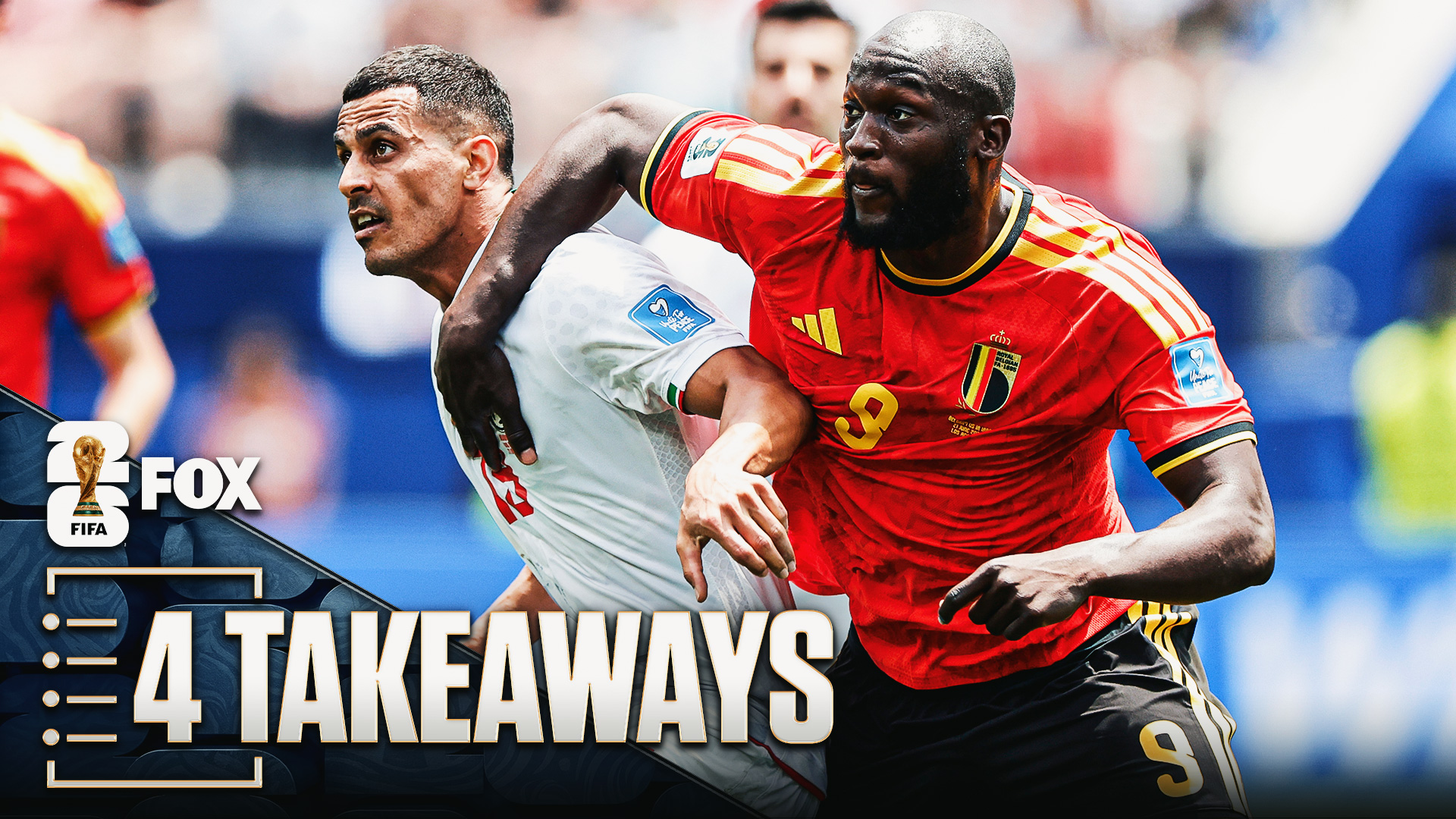
4 Takeaways From Belgium’s Scoreless Draw vs. Iran At The World Cup

On Sunday in Los Angeles, 10-man Belgium huffed and puffed and just about managed to escape with a 1-1 draw against a defiant Iran, as both of these teams met in their first encounter on the international stage. And once again, it was a goalkeeper who stole the headlines. But it’s not the one you think. The beginning of the match saw relentless pressure from the Red Devils, but Iran held on, and every so often it even created counter-attacking opportunities, especially from set pieces. In fact, it was only the offside call that took away a smart Iranian free kick after catching Belgium napping. The warning signs were definitely there for Rudy Garcia’s men, and it turned into desperation after Nathan Ngoy received a red card in the 65th minute after fouling Iran’s captain Mehdi Taremi. After that, a less-than-par performance turned into a calamitous one as the European side fought to salvage a draw. For Iran, it was a magnificent display of defensive will and resilience and, at time of writing, it is the west Asian side who leads Group G until at least later in the evening when New Zealand faces Egypt. For Belgium, its disappointing World Cup campaign continues. 1. Heroic Defense From Beiranvand And Iran Iran’s strategy was to form a low-block tactic, placing five men at the back. Aside from that, there was protection from its midfield, so at any Belgian opportunity in the final third that Belgium, Amir Ghalenoei’s team was there to shut it down. It also did a smart thing by only limiting Belgium to crossing from deep areas and by the time the ball reached Iran’s box, there was plenty of protection to clear it. It even had a fantastic chance in the 53rd minute after Alireza Jahanbakhsh launched a throw-in to captain Mehdi Taremi, who delivered a tremendous volley, forcing Thibaut Courtois to make a quintessential stop. Then, in the 58th minute, Alireza Beiranvand made a ridiculously impressive save of his own from close range to deny a close effort from Maxim De Cuyper. He did it again from the same player in the 85th minute. He was simply tremendous throughout the game. A brave, deserved point from Iran, which probably should have been three after Ngoy’s sending off. 2. Lukaku Can’t Lead This Line From The Start Romelu Lukaku, limited this past season with Napoli but returned to the national team’s starting XI after playing a pivotal factor in his team’s 1-1 draw against Egypt, was caught up in a controversial decision early on. The 33-year-old forward aggressively collided with Beiranvand after attempting to score inside the box. Lukaku missed and ended up hurting the keeper, but the argument here is that it was a 50-50 battle, and he had every right to go for the ball, despite hurting the stopper. As a result, he only received a yellow, but some thought that it should have been a sending off. Regardless, he stayed on and, quite honestly, he provided very little. You can just see that his lack of mobility hurt Belgium because it was easier to mark him or protect the goal. He had a great opportunity in the second half but was too slow to turn and finish. Belgium needs a mobile attacker. Someone who can create more problems for Iran—or any opponent. Lukaku, the legendary Belgian forward, sadly isn’t it right now. 3. Belgian Fans Should Be Worried Belgium once again produced a flat performance. In fact, it is probably one of the most uninspiring teams at this World Cup when you consider the players at Garcia’s disposal. It was hopeful rather than clinical. Nervous rather than willing. Part of it was also the strategy, where Kevin de Bruyne is asked to do so much, playing right behind the striker but with no cohesion. Youri Tielemans, who had a magnificent season with Aston Villa, was very quiet and the disconnected lines between midfield and attack were very evident. 4. Jeremy Doku’s Absence Was Obvious The Manchester City winger did not play due to illness (it was not because of the other talking point where he was unjustly criticized for aiming to leave camp in order to be present at the birth of his first child) and when he is not in the lineup, Belgium is extremely one dimensional. Doku is wonderful when going forward, causing headaches against his opposing defenders due to his direct runs and Belgium just don’t have enough of those weapons. When he doesn’t play, the drop in attacking quality is severely noticeable. 4 ½. What’s Next There is all to play for on the final match day of Group G as Belgium will head to Vancouver for a massive match against New Zealand on Friday night at 11 p.m. ET, whilst Iran faces Egypt at the same time.​Latest Sports News from FOX Sports

Categories
Politics

What Jordan’s ambassador wants you to think about while watching Messi

Jordan is among the teams making its first-ever appearance at a World Cup, and for the country’s ambassador to the United States it is a chance to introduce the world to a country often viewed through the lens of regional conflict and security challenges — and to showcase a different side of the Middle East.

“You see us through security, we see us through humans,” said Dina Kawar, who has represented the Hashemite Kingdom in Washington since 2016, an unusually long spell for a foreign diplomat there.

Her team plays its second match tomorrow, in northern California. Given Jordan’s defeat in its first match against Austria, and the fact that it will face Lionel Messi’s Argentina in its third, the team will almost certainly need a victory against Algeria tomorrow to have any chance of advancing to the next round

“All eyes are on the Jordanian team because we are new in this,” Kawar told POLITICO earlier this month. “Of course, Argentina is important for us. People know Argentina. People will be watching closely to see where we go.

A career diplomat who was educated in the United States, Kawar discussed what she wants World Cup watchers to learn about Jordan: the country’s growing investment in sports, including women’s soccer, and how Amman hopes to use the tournament to showcase Jordan as a destination for tourism and business.

Since this will be Jordan’s first appearance at a World Cup, what does this achievement mean for the country and for Jordanians around the world?

It’s a big deal. It’s a big deal for us on the national level. I think the whole country is going to stop during the game. It has ignited national pride.

For the Jordan Football Federation, they see it as an important step to improve the local sports infrastructure. We hope that it attracts commercial sponsorships and interest in the country in general.

For the federation, this is an occasion for the team to step into being a professional team. It means having more money, more sponsorships. The players can be in other teams and clubs. That’s very important.

How far do you expect them to go in the tournament?

Look, if you don’t dream big, nothing happens. Honestly, the most important thing is to have a good game. If they win, that’s fantastic. If they lose, at least it’s a decent game. For us, the most important thing is that the game is a good one. If you look at how they performed in the Asia and Arab Cups, they’ve done an amazing job. This team has a lot of potential, and when you have a team that has a lot of potential, it’s more exciting.

Jordan has thus far been more successful in women’s soccer than men’s. How did that happen? 

The team was established in 2005 by Prince Ali bin Hussein, and he’s been a big, big supporter of advancing women’s football.

Since then, we’ve won the West Asia Championship and the Arab Cup twice. I think our women’s team has been a leader in the Arab world.

Despite the challenges, there are always cultural taboos and social taboos. Female football was a little bit of an intrusion into the male-dominant world of football.

But look at the U.S. The [women’s] team has been amazing. Despite the cultural and social taboos, we’ve been breaking boundaries and championing this important game.

What aspects of Jordanian culture and society do you want the world to see during Jordan’s first World Cup appearance?

This is an important opportunity to showcase Jordan’s rich cultural heritage, its vibrant identity, and not only its passion for sports.

We want to show that Jordan is a beautiful destination.

We’re having fan zones in Dallas and Santa Clara with concerts, food trucks, activities for children, shops and markets. We want people to visit and see how beautiful Jordan is.

The tourism in Jordan is amazing. You have cultural tourism, the Dead Sea, religious tourism, some of the most beautiful mosaics, nature and hiking. Of course, Petra and Wadi Rum are beyond description.

Most Americans still see the region through its security challenges.

You know what, Sophia? You see us through security, we see us through humans. That’s one thing I would like to correct at the start.

Sports is becoming more important. There’s always been interest in soccer, but now there’s more awareness and more effort from governments to push their teams forward. As you go through that process, brilliant players get the attention of leagues and other clubs, and that’s how it goes. The ball starts rolling.

The fact that sports is becoming so important in the Arab world is because countries are investing in it and making a network. I think that’s a very, very good thing.

We’ve always had football in Jordan, but now it’s another level. It’s the beginning of a new phase.

​Politics

Categories
Food

Here’s The Average Lifespan Of Granite Countertops

Choosing the right countertop material isn’t just an aesthetic decision. A granite countertop can save you money on repairs and replacements down the road.

​Food Republic – Restaurants, Reviews, Recipes, Cooking Tips

Categories
Sports Fox

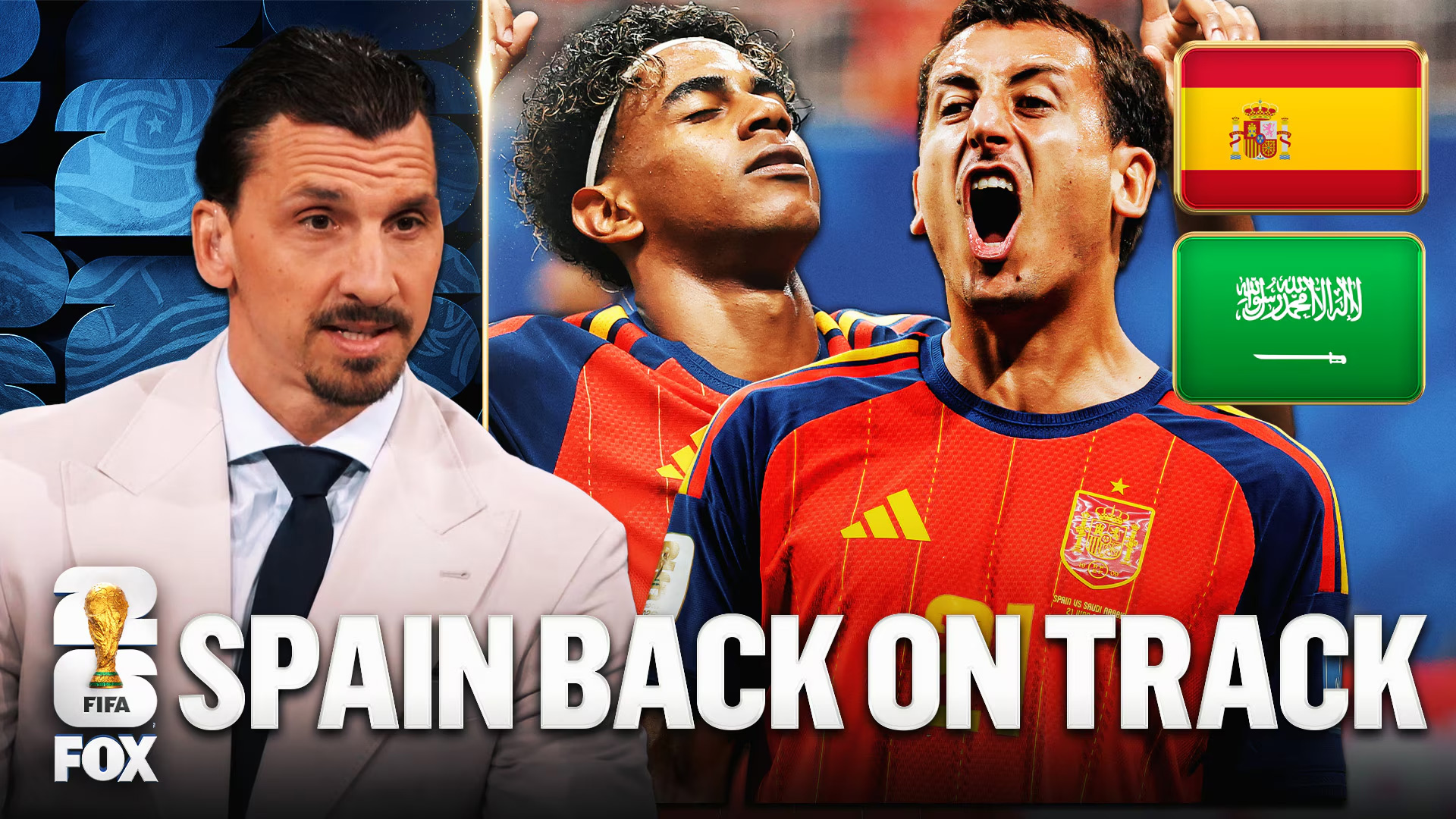
Zlatan: Lamine Yamal Has Something ‘Nobody Else Has’

Lamine Yamal has arrived on the FIFA World Cup stage. Spain’s superstar winger, who turns 19 next month, scored a goal in the 10th minute of his country’s 4-0 Group H victory over Saudi Arabia on Sunday. It was Yamal’s first career World Cup goal in what was also his first World Cup start and second appearance in the tournament altogether. Yamal came off the bench in Spain’s shock June 15 draw against Cape Verde, as he was dealing with a hamstring injury. While he only played one half against Saudi Arabia for the same reason, it was all that Spain needed from him. “The difference from the first game and today was, I would say, Yamal because he brings something that I think nobody else has, they creativity,” Zlatan Ibrahimović opined after Spain’s win. “He only played 45 minutes, but everybody knows that when you play against Spain, you have to watch out; they’re the European champions.” But what is it that makes Yamal special? “The creativity,” World Cup winner Thierry Henry said of Yamal, who plays at Barcelona just as Henry did. “He’s the sort of guy that thinks the game. He does things differently. He will attract different people, find different ways with his dribbling, passing and the aura that he has. He knows when to go and when not to go and stop the rhythm of the game sometimes, assisting goals.”To talk about him, we know we’re talking about Spain today, obviously, but also at Barcelona, when he doesn’t play, it’s on the same team. When you have Lamine Yamal on your team, anything can happen.” Yamal has spent the last four seasons playing for Barcelona in LaLiga, with whom he finished first in the league in three of those seasons (2022-23, 2024-25 and 2025-26). Last season (2025-26), Yamal totaled 16 goals, 11 assists and knocked through three penalty kicks, which were all career highs. Prior to becoming a fixture for Barcelona, Yamal was part of La Masia, Barcelona’s youth academy, since 2014; Yamal ultimately made his debut for the club in April 2023, when he was just 15. Next up for Yamal and Spain (1W-1D-0L) is a June 26 showdown against Uruguay (0W-1D-0L), which is both countries’ final match of the group stage.​Latest Sports News from FOX Sports