Your Blackston griddle might be great for flat-top cooking, but you might discover some common problems ranging from the propane tank connection to the weather.
Food Republic – Restaurants, Reviews, Recipes, Cooking Tips








Your Blackston griddle might be great for flat-top cooking, but you might discover some common problems ranging from the propane tank connection to the weather.
Food Republic – Restaurants, Reviews, Recipes, Cooking Tips
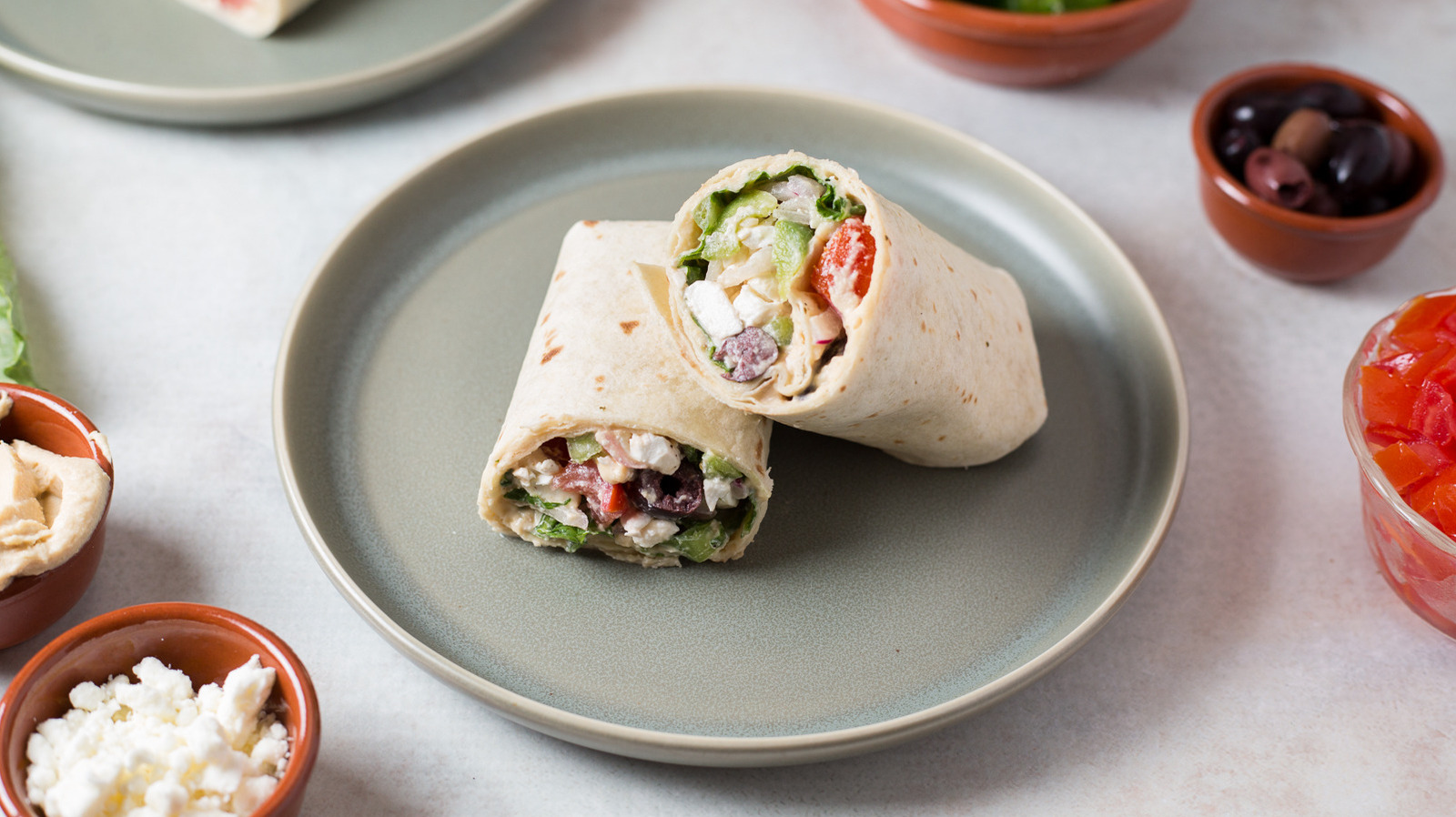
All the flavors of a classic Greek salad (think feta, crisp veggies, tangy dressing) come together in this no-cook portable meal that’s ready in 10 minutes.
Mashed – Fast Food, Celebrity Chefs, Grocery, Reviews
President Donald Trump is using a bit of his mostly untapped $400 million MAGA Inc. warchest to boost Sen. Darline Graham in South Carolina — the first significant expenditure his team has made this year for one of his chosen candidates, according to campaign finance reports.
The super PAC has funneled more than $827,000 on voter phone calls and text messages for Graham ahead of her tough GOP runoff battle with Rep. Ralph Norman on Tuesday, according to a Federal Election Commission report made public on Monday.
It’s yet another sign that Trump is focusing his efforts on propelling Graham — a political newcomer — to victory, after holding a rare in-person political rally with her on Friday. And it’s a notable spend given MAGA Inc.’s ongoing absence from other battleground races this cycle, even as Republicans have been pushing the president and his team to spend heavily this fall to help counter Democrats’ massive fundraising advantage.
As of last week, the super PAC had reported over $403 million in fundraising.
The money for Graham is just the second time MAGA Inc. has spent on a race this year. The group in March shelled out nearly $18,000 for now-Rep. Clay Fuller (R-Ga.), who was running in the special election to replace former Rep. Marjorie Taylor Greene.
And in late 2025, MAGA Inc. threw roughly $1.7 million into phone calls for Tennessee Republican Matt Van Epps, who won the special election to replace retired Rep. Mark Green (R-Tenn.).
Spokespeople for MAGA Inc. and the White House did immediately respond to requests for comment.
Should Graham become the Republican nominee in South Carolina on Tuesday, it will be in large part thanks to Trump, who expended serious political and financial capital to help her win. Her victory would also help reaffirm Trump’s influence in Republican primaries after a string of losses for his preferred candidates in states like Michigan, Minnesota, and Iowa.
Jessica Piper contributed to this report.
Politics
Reading Time: 2 minutes
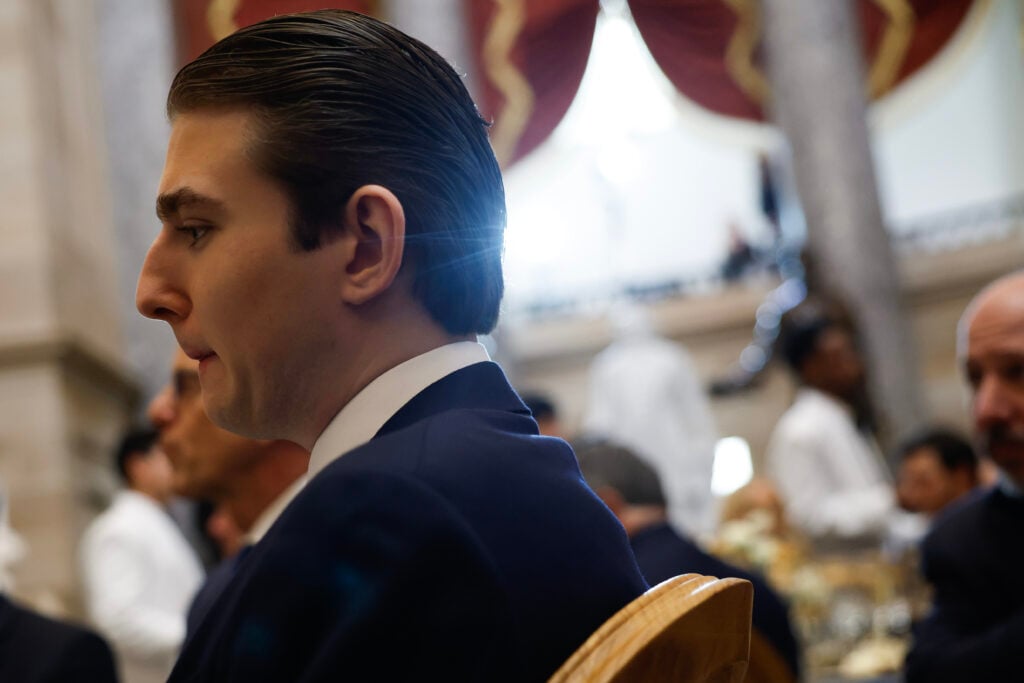
Iran’s Islamic Revolutionary Guard Corps allegedly aired footage titled “Where and how should we kill Barron Trump?” this week.
At one point in the three-minute clip, a narrator alleges that a $10 million bounty has been placed on Barron.
The footage also showed images of Barron’s Secret Service detail, along with a description of the location of NYU, where Barron attends college.
The bizarre and frightening broadcast also claimed that a young woman obtained information about Barron and conveyed it to the creators of the video.
It also made detailed claims about Barron’s private life, including that he uses his Xbox to communicate with friends and fans without being monitored by his family or the Secret Service.
“The Secret Service is aware of the video and investigates anything that can be perceived as a threat toward our protectees,” an agency spokesperson told Newsweek.
The news comes on the heels of reports that Donald Trump had to be smuggled off of Air Force One during a recent trip to Turkey due to threats from Iran.
The president’s decision to allow members of his staff to remain on the plane despite these threats remains controversial.
Some believe it is always the president’s duty to obey the Secret Service, while others feel that steps should have been taken to ensure the safety of everyone on board.
In any event, the public threat toward Barron marks a chilling turn of events in President Trump’s second term.
The US, of course, launched a war with Iran back in February.
As the conflict approaches the six-month mark, there is no end in sight, and Iranian public opinion toward the US is reportedly at an all-time low.
Regardless, threatening the children of a world leader is beyond the pale, even in wartime situations.
The president has yet to address the situation, but he’ll likely share his thoughts via social media in the very near future.
Barron typically keeps a lower profile than other members of the Trump family, but he has come under intense scrutiny this summer, largely due to his friendship with Andrew and Tristan Tate — influencers who were recently arrested for sex trafficking.
We will have further updates on this developing story as new information becomes available.
Video Titled ‘Where to Kill Barron Trump?’ Airs on Iranian TV; Group Alleges … was originally published on The Hollywood Gossip.
The Hollywood Gossip

If you haven’t had the pleasure of inheriting a cookbook from a Boomer in your life, you’re missing out because they have some absolute classics.

Food Republic – Restaurants, Reviews, Recipes, Cooking Tips

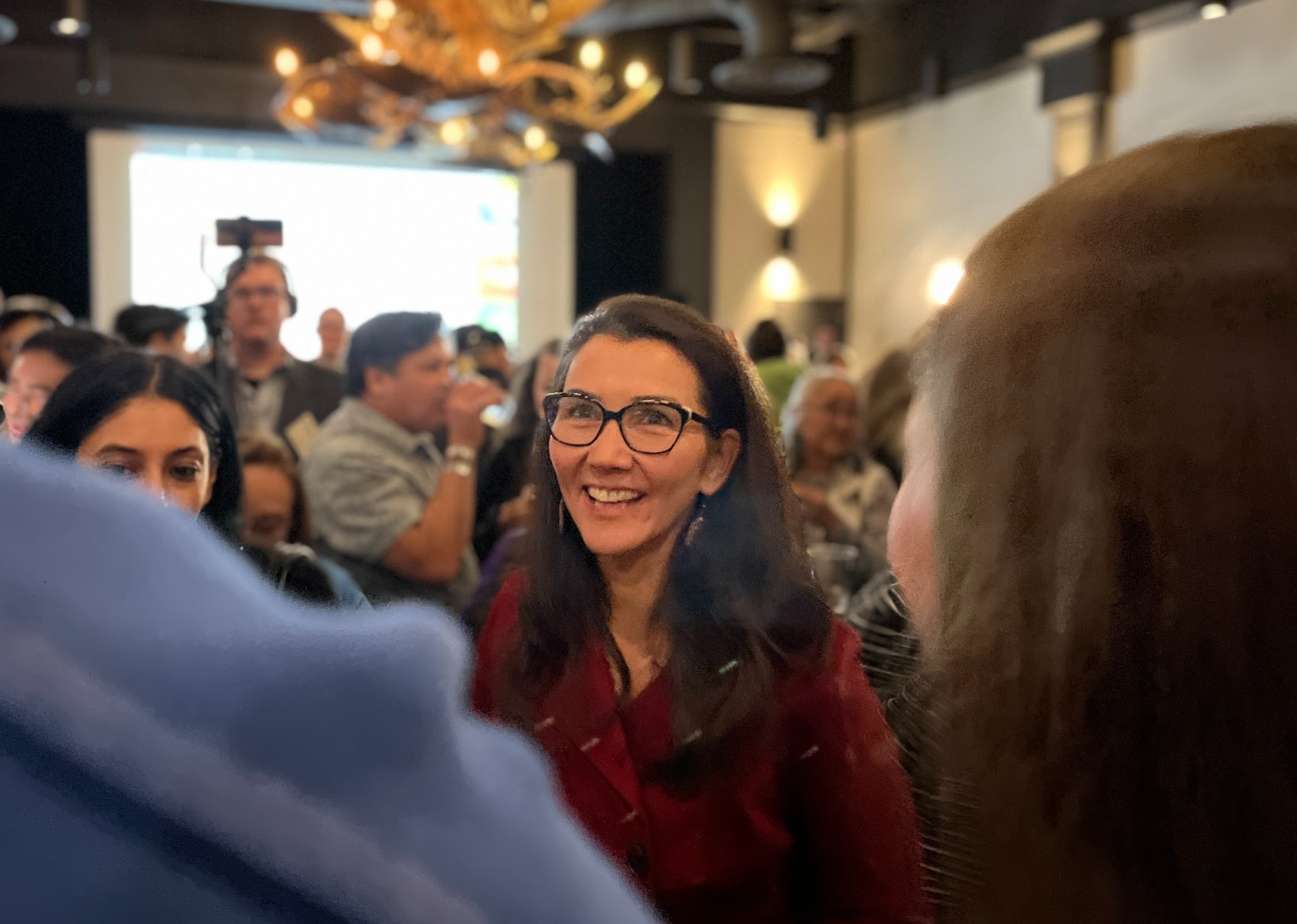
David Leslie, who’s currently sitting in fourth place in preliminary results in Alaska’s U.S. Senate race, says he’s not a “perennial candidate.” (Photo courtesy David Leslie)
This story was originally published in the Anchorage Press. Subscribe here.
Leading up to Alaska’s high-profile U.S. Senate primary, political groups spent millions of dollars to boost not only the leading Republicans and Democrats, but also fringe candidates who could tip the balance of a tight race in November.
Most of those efforts fell flat — namely, those that tried to boost spoiler candidates who don’t even live in Alaska, like Arizona resident and Green Party candidate Richard Grayson, who garnered just 343 votes in preliminary counts.
One novice candidate who did crack the top four, though, and is now poised to appear on the general election ballot is David Leslie — a Democrat, Democratic Socialist and Fairbanks resident who, unlike some of the other longshot candidates, has spent years in Alaska politics.
If preliminary results hold, Leslie’s presence on the general election ballot, as a Democratic candidate, could represent a win for conservatives who want to see as few Republicans as possible in the race, to avoid competition for votes for incumbent GOP U.S. Sen. Dan Sullivan.
But if Leslie were to drop out before an Aug. 31 withdrawal deadline, it could bump the fifth-placed finisher, Republican Gerald Heikes, onto the ballot — which some politically operatives say would boost the chances of Democratic challenger Mary Peltola.
We wanted to know what Leslie was thinking: why he’s in the race, and whether he might drop out. So, on Thursday, the Anchorage Press called him.
Below is a transcript of the interview, edited for clarity and length.
Nathaniel Herz: For people who don’t know David Leslie, who is he?
David Leslie: I am Iñupiaq. My mom was born in Kotzebue. She was sent to Nome for school when she was four or five, and she was raised in Fairbanks by my white adoptive grandparents, Chuck and Carol Leslie. Chuck was really high up in the plumber pipefitters union, Local 375. I grew up going to all of the union holiday parties. And I was born in Louisiana — my mom finished high school there. My mom was in a terrible car accident when she was pregnant with me — she survived, but that’s why, as soon as I could get on a plane when I was a few weeks old, we moved from Louisiana back to Fairbanks so my grandparents could raise me.
My biological grandfather was John Schaeffer, the first president and CEO of NANA.
Herz: What’s your history in politics?
Leslie: I first really got involved in activism when I was 16 years old, a junior in high school at Lathrop High School (in Fairbanks). I became the vice president of the Gay-Straight Alliance, especially because I was the only openly queer guy in my class. As an Iñupiaq person, raised by my white family, I’ve been on a journey of reconnecting and rediscovering my Iñupiaq family. I actually met a lot of my aunts and uncles through organizing around NANA’s ICE detention contracts, and that has been a silver lining — to realize that I’m not just against these contracts, but my family, who I’ve never met before, we all share these same values.
I was involved with Occupy Fairbanks when that went down in 2011, 2012. I was out there protesting for, like, six months at 50 below. I also was the union steward for the Fairbanks Pioneer Home, and for biographical purposes, I’m still on the board of the Northern Alaska Environmental Center.
If you follow politics, you know that I have been involved. I’m not this weird outsider person, a perennial candidate. I am someone who cares deeply about the community, and I’m deeply involved in many different facets of Alaska politics, and this is just the obvious next step.
Herz: How do your values differ from Mary Peltola’s, and why did you feel the need to run against her?
Leslie: There are three main issues why I decided to primary Mary Peltola. There also was ranked choice voting, which is an important part of why I made this decision. If we did not have ranked choice voting, I would not be running, because it is so important that we get Dan Sullivan and Republicans out of power.
But the biggest issue was the genocide in Palestine. Alaska Native people are still enduring a genocide here in Alaska. And if you can deny that blowing up children, blowing up grandparents, starving tens of thousands of people is a genocide — if you can deny that, you can deny the genocide of Alaska Native people happening in front of us here.
Herz: What do you mean by ongoing genocide of Native people?
Leslie: You talk to our elders, they remind us that this genocide never ended.
Our languages are still dying off, and the state and federal government are not ensuring that we don’t lose these languages. We have an epidemic of murdered and missing Indigenous women, two-spirit people, and just people in general. The cops still kill Alaska Native people at higher rates. And also we see our land being continually encroached upon by industry in ways that harm not only our people, but also make us less able to live off the land in our traditional ways — which is both harming us physically, but also harming us culturally. And we still have not seen a proper reckoning of the boarding school era, which didn’t end until the 1990s.
All of these things compound to show that there is still a genocide. There has not been reparations for boarding schools. There has not been a full-on attempt to stop the dying of our languages, and there has not been an investment in investigating all the murdered and missing Indigenous people in the state.
Herz: When it comes to Israel and Palestine, you’re critical of Mary Peltola’s position there?
Leslie: I really wanted to see Mary Peltola explain why she took AIPAC money, and then commit to not taking it, to saying that there are allegations of human rights abuses and crimes against humanity and genocide, and address that. But her Alaska-centric campaign is better fit for a gubernatorial candidate, and the fact that she has not answered these yet is such a huge issue.
Another issue I decided to primary her on is the environment. Her support for the Willow project, as climate change is destroying our actual villages. You know, Kotzebue, my people’s ancestral homeland, damn near eroded into the ocean from one of the typhoon remnants. We saw how those typhoons destroyed other villages. We cannot continue to ignore how the oil companies are causing climate change, which is destroying our homelands and making them unlivable.
And then, third, when the U.S. Customs and Border Protection agents, ICE, murdered Alex Pretti and Renée Good, we need someone who’s going to say, ‘These ICE agents are murdering people. They are tools of violence. They’re equivalent to brown shirts, and that their camps are concentration camps that are crimes against humanity and must be shut down.’
( Peltola’s campaign did not respond to a request for comment on Leslie’s statements.)
Herz: What’s your take on Peltola, generally?
Leslie: Mary Peltola is obviously better than Dan Sullivan in so many ways, but we can’t be running campaigns on not being as bad as the other person. We need someone with strong vision and a strong value that actually aligns with our Alaska Native values to be the leaders in our country. And running concentration camps, continuing this rhetoric that borders are not under control — which has led to the murder and rape of immigrants — is not our Alaskan Native values. Native people don’t know borders. The borders crossed us.
Herz: Obviously, there is a concern among liberals, progressives — I think even among some folks who are very closely aligned with you politically — that your presence in the race, assuming the results hold, risks making you a spoiler to Peltola. I’m wondering what your response is to that contention.
Leslie: I have met so many people who will not vote for Mary Peltola because of her stance on the genocide in Gaza.
By having someone who will take a strong stance on Palestine and Gaza, I am encouraging people to show up to the ballot who normally wouldn’t, and will rank her second. These people have strong moral convictions, which is good — but they need someone to get them to the polls in the first place. I am that candidate that will allow these people to vote their values, and then they will rank Mary Peltola second. If I was not in this race, they would not be there at all.
Herz: Do you encourage them to rank Mary second?
Leslie: I do. When I first announced my declaration of candidacy, I said, ‘I will ask people to rank Mary Peltola second, because Dan Sullivan and the Republicans are the party of white supremacy, Christian nationalism, and genocide on our own lands. We must remove them from office, no matter what.’ (A Sullivan spokesman, Nate Adams, said in a statement: “Alaskans can come to their own conclusions about David Leslie’s radically liberal worldview, but at least he has principles.”)
I am running so that more progressives, liberals, and Democrats show up — so they will at least rank me and Peltola, so we can get Dan Sullivan out of office.
Herz: There are clearly, though, some Republicans that see you and your presence on the general election ballot as advantageous to them. How confident are you that your participation won’t hurt Peltola?
Leslie: I have had people express concern that people will only vote for who they believe in the most, and ultimately end up submitting an exhausted ballot. I really, truly believe we are still fully understanding the importance of ranked choice voting, as we continue to relitigate it.
There is so much power in ranked choice voting. It has been so important for us to have that in Alaska. We are setting the path for so many other states to join us. We have to believe that ranked choice voting operates as it should.
There are some people who are only going to vote for one person, and that is their right. But we must exercise our rights and tools of democracy to make sure that we get the best candidates we can. And I believe ranked choice voting is that way, and again, I am only running because we have it. It is so important that we maintain it and we use it to its fullest extent.
Herz: What consideration will you give to dropping out before the Aug. 31 deadline, if you do end up being the fourth-placed candidate in the primary?
Leslie: The things that I am running on, the values I hold, are strong. I am not here to waver in my beliefs. I think it’s good that we have two progressives in the race. I believe that by dropping out, I would be platforming dangerous Republicans who are white supremacists and Christian nationalists, and we must not allow their rhetoric to take hold. That is also dangerous.
Herz: Have you heard from Peltola or the Alaska Democratic Party since Tuesday?
Leslie: I’ll be meeting with someone from the leadership of the Alaska Democrats later today.
Herz: Is there a world in which, if there was a commitment from Peltola or others on the issues that matter to you, you would entertain the idea of dropping out?
Leslie: A lot can happen between now and Aug. 31. I don’t want to take any options off the table. But at this point in time, there’s so many huge issues that are important, and these issues will determine whether or not tens of thousands of people will die.
Max Graham contributed reporting.
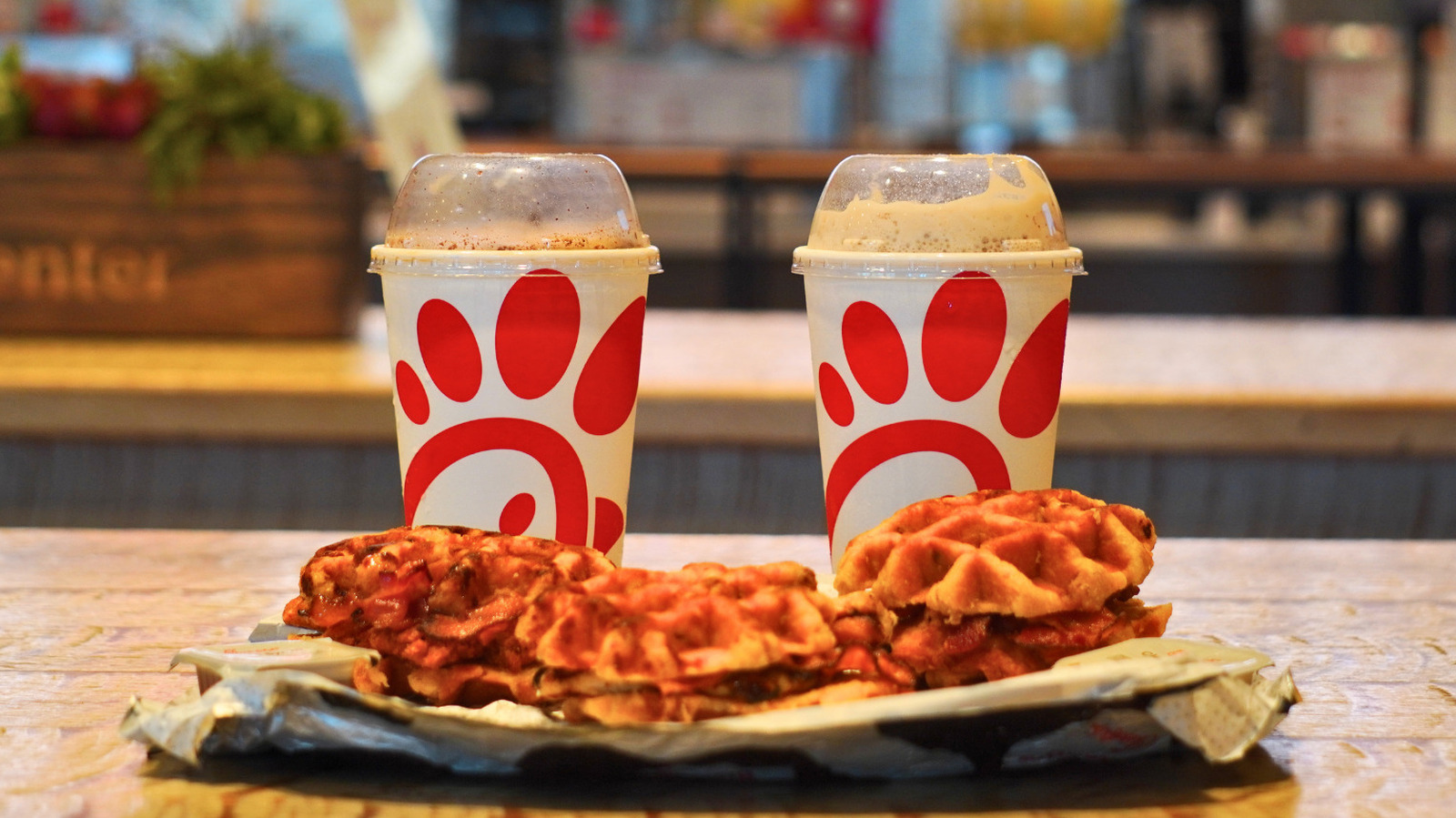
From waffles to s’mores, Chick-fil-A’s new fall menu launch is plenty sweet, but the best item is one that brings a little extra heat to the party.
Food Republic – Restaurants, Reviews, Recipes, Cooking Tips

As the world’s leading consumer of ice cream per person, this country boasts some unique traditions that actually go back more than 100 years.

Food Republic – Restaurants, Reviews, Recipes, Cooking Tips
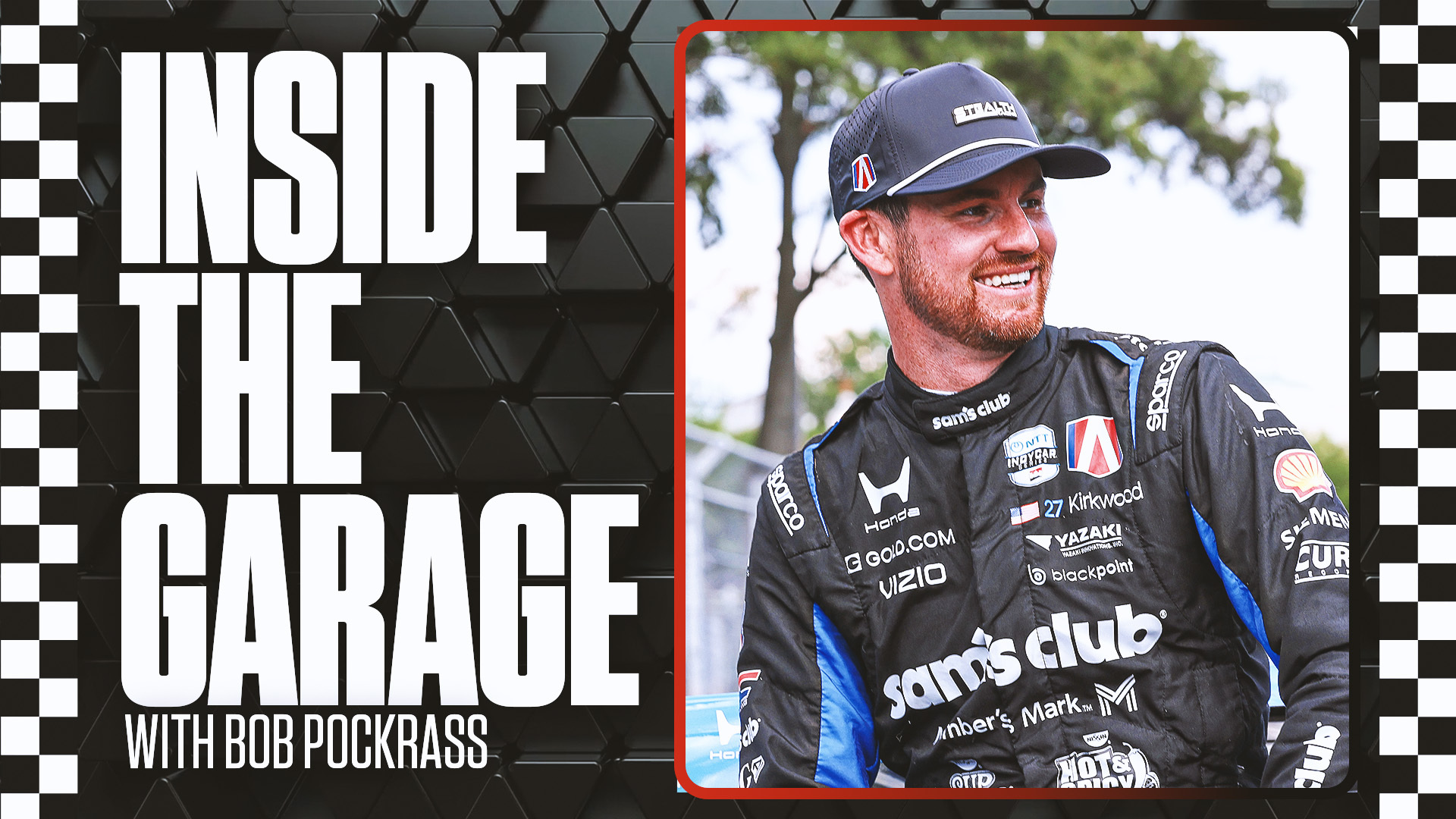
Kyle Kirkwood doesn’t need to look at the standings to know what he needs to do to challenge for the 2026 INDYCAR title. He cut 42 points off of Alex Palou’s lead, thanks to winning the Freedom 250 and Palou’s 20th-place finish. But he still left Washington a distant 91 points behind. Palou would need a total collapse over the final three races to not win his fifth title. There’s a doubleheader at Milwaukee this weekend and then the season finale the following week at Laguna Seca. “I’m just going to go out there and try and win every single race and see where it goes from there,” Kirkwood said in his post-race news conference. “It’s starting to pan out. “I can’t control what Palou does. Maybe, in very small circumstances, you can. In the sense of where he finished today or where he was going to finish today, there is no controlling that because you’re in the lead. We just had a very fortunate day in the points championship.” Eying his fourth consecutive title, Palou just needs to finish eighth in each of the final three races to win the title (and that would require Kirkwood to win each of the last three races plus the pole plus lead the most laps). He has three finishes of worse than eighth in the first 15 races this season. “Never super comfortable until it’s done, right?” Palou told me and another reporter after the race. “Obviously, today sucks more for this race than the championship. The good amount of points that we had [allowed] us to have days like today so we can focus on Milwaukee and try to win it.”Washington fit into the Kirkwood wheelhouse because it was a new street course. He also won the most recent new street race at Arlington. Palou’s day in Washington got off poorly from the start when the Chip Ganassi Racing driver lost the lead to Kirkwood at the start of the race. Then on his first pit stop, Palou accidentally hit the tire that was set out for a Mick Schumacher stop. He later tapped the wall, bending a toe link. The link eventually broke about 20 laps later and he hit the wall, needing repairs to finish the race. “When I smacked Mick’s tire, it obviously was not on purpose, and that put us on the back foot,” Palou said. At the beginning of the year, Kirkwood and Andretti Global were in transition with new leadership and with the addition of veteran driver Will Power. The impact of Power and new team principal Ron Ruzewski (one of the Penske executives released last year amid the qualifying attenuator controversy) is evident, as Andretti has looked like one of the stronger teams late in the season. “Ron, from every aspect, has helped this team,” Kirkwood told me after the race. “It’s proven. And quite honestly, he showed us it’s the little things that count. Whether it’s pit stops, it’s development, it’s us as drivers. … There is no big-ticket item. There never is. “And he’ll tell you that. It’s the little things that matter and that’s what we’ve been doing a lot better this season.” They most likely won’t catch Palou right now, but they can set the stage for championships in the future. “If we were sitting here 40 points out or something like that, it would be a different conversation,” Ruzewski said in the winner’s news conference. “It’s still 90 points out. I think to echo what Kyle said, we just have to go out there at this point and try to put numbers up on the board. “That being said, the best thing we can do is put all three of our cars in front of Palou. That’s really what we’re trying to do, is not just have Kyle win races but have Marcus [Ericsson] and Will on the podium or in front of Palou. That’s the only way we have a chance. If we can get all three on the podium every week, that’s what we’re going to try and do every week.” Moving Up Arguably one of the most impressive improvements on the INDYCAR side this year has been Kyffin Simpson, who finished 21st in the standings as a rookie in 2024 and then 17th last year. Despite a wreck in qualifying Saturday, he finished fifth at Washington and sits 13th in the standings, just one spot behind teammate Scott Dixon. “This track just kind of grew on me more and more,” Simpson told FOX Sports after the race. “I kept having more and more fun with it and had an exciting race.” The same could probably be said for his season. Zilisch’s Double Trouble? Rick Hendrick said “never say never,” but he has no plans to partner with an INDYCAR team for new hire (as of 2028) Connor Zilisch to compete in the Indianapolis 500. Hendrick had partnered with Arrow McLaren for Kyle Larson’s two attempts at the Indy-Charlotte double. “I’m done with that,” Hendrick said during a virtual news conference. “I’ve learned to never say never, but it would take a lot of convincing for me to do that again.” Zilisch has indicated his willingness to do it. There’s always the possibility Trackhouse could try to partner with someone next year, but Zilisch indicated he’s focused on Cup. “It’s something down the road that I’ve always dreamed of,” Zilisch said. “But at the end of the day, I need to focus on what I’m doing on Sundays here before I really focus on stepping outside my comfort zone.” In The News — NASCAR will not have an event on the streets of Chicago in 2027. After racing there from 2023-2025, NASCAR has not landed on the funding it wants for the event. It will race again at its Chicagoland Speedway in Joliet. —The NASCAR Craftsman Truck Series will have a points race at Bowman Gray Stadium next year, with the event slated for Aug. 20. The series also will make a return two weeks later to Canadian Tire Motorpsorts Park (Mosport).— Regan Smith will drive the Kaulig Racing No. 25 RAM truck at Bristol. He will also race it at Charlotte.— Shell will introduce an updated 100 percent renewable fuel mix for INDYCAR in 2027. It is a 70 percent reduction in greenhouse gas emissions compared to the renewable fuel standard average gasoline baseline. It will be sourced in Indiana and produced in Illinois. Clinched In the truck season finale and the Cup’s next-to-last regular-season race at New Hampshire, several drivers clinched spots in the Chase. Cup: Kyle Larson, Joey Logano, Chris Buescher, Carson Hocevar, William Byron and Daniel Suarez clinched to join Denny Hamlin, Ryan Blaney, Ty Gibbs, Tyler Reddick, Chase Briscoe, Christopher Bell and Chase Elliott. Truck: Grant Enfinger, Daniel Hemric, Ben Rhodes and Tyler Ankrum clinched spots in the Chase, joining the six who already had clinched. Those six are Layne Riggs, Kayden Honeycutt, Chandler Smith, Christian Eckes, Ty Majeski and Gio Ruggiero. Picture This Social Spotlight They Said It “Maybe it will get in the Toowoomba Chronicle. They might put it in, a picture of me shaking President Trump’s hand. It’s pretty crazy.”— Will PowerLatest Sports News from FOX Sports

Jamey Johnson says Toby Keith’s golf trash talk was so good it would mess with your head long after the round was over. Continue reading…The Boot – Country Music News, Music Videos and Songs