A gray whale carcass washed up on a beach north of Ocean Shores, Washington, It was one of the 187 gray whales that, as of late August, have been found dead this year along West Coast shorelines from Mexico to Alaska. Environmentalists are seeking a return of Endangered Species Act protections for the population, and they cited recent years’ die-offs as a major part of the justification. (Photo by Hal Bernton)
Amid a decade of die-offs and a sharp decline in the population of gray whales that swim along the Pacific coast of North America, three environmental groups are preparing to sue the Trump administration over its failure to bring back Endangered Species Act protections for the animals.
The Center for Biological Diversity, the International Marine Mammal Project and Oasis Earth on Tuesday submitted a notice of intent to sue the National Oceanic and Atmospheric Administration over gray whale protections.
Oasis Earth submitted a petition a year ago to NOAA Fisheries for a threatened or endangered listing to be granted to the Eastern North Pacific gray whale population. But the agency neither issued a 90-day finding on the petition’s validity nor a 12-month finding on the population’s status, as required under the law, the groups’ notice said.
With its population halved over the past decade, the gray whales’ situation is dire, the groups said. Lapses in Endangered Species Act action put the whales “at greater risk of extinction,” their notice said. “These delays contribute to the decline of the gray whale population.”
A notice of intent to sue, which is filed at least 90 days before a complaint is filed, is required under the Endangered Species Act.
A graph shows the changes over time in the Eastern North Pacific gray whale population. The whales were delisted from endangered species protections in 1994. The population rose to a peak abundance of about 27,000 whales around 2016. They have since declined. NOAA Fisheries declared an unusual mortality event in response to hundreds of strandings from 2018 to 2023. Estimated calf production has remained low since then, according to NOAA Fisheries. (Graph provided by the National Oceanic and Atmospheric Administration’s Fisheries service)
The Eastern North Pacific gray whale population was estimated at about 27,000 in the 2015-2016 period. Last year, the population fell to about 12,890, one of the lowest levels since counts began in the late 1960s, according to NOAA Fisheries. This year’s count indicated a bit of a rebound, with a median estimate of 17,750 animals, the agency said last month.
Despite that increase, Endangered Species Act protections are still needed, the environmental groups said.
“We’ve lost half of these Pacific gray whales in just a decade. It couldn’t be clearer that the population needs protections, but we’re just getting silence from the Trump administration as the crisis unfolds,” said Miyoko Sakashita, oceans director at the Center for Biological Diversity.
“Gray whales are washing up dead all along the West Coast, and if federal officials keep dragging their feet, it could be too late for the species,” she said. “These majestic whales are starving and they face other threats we need to fix to save these creatures from extinction.”
Agency spokesman Michael Milstein declined to comment Tuesday on the environmental groups’ notice. He cited NOAA’s policies on pending litigation.
The Eastern North Pacific gray whale population has been struck by die-offs for several years, with beached animals found from Mexico to Alaska. NOAA determined that deaths from 2018 to 2023, with 690 documented cases, constituted an “unusual mortality event,” a finding that justifies further research. After a brief lull, the gray whale die-offs picked up.
A gray whale is seen (Photo by Merrill Gosho/NOAA Fisheries)
There were 179 gray whales found dead last year along the Pacific coast, according to NOAA. This year’s toll has already exceeded that. As of Tuesday, 187 had been found dead this year, including 22 in Alaska, Milstein said.
The emaciated condition of the dead whales has supported scientists’ contention that the die-offs are tied to climate change. The whales spend summers feeding in Arctic and subarctic waters off Alaska, and long-term warming and changes in sea ice have affected supplies of the high-fat prey that gray whales need, scientists say.
Climate change and the resulting loss of suitable prey is the main threat facing the gray whales, the environmental groups said in their notice. But there are other threats, including ship strikes and entanglements in fishing gear and marine debris, the notice said.
A recent NOAA Fisheries report cites 31 documented cases of gray whale entanglements in fishing gear in Alaska from 1990 to 2024.
Eastern North Pacific gray whales were previously protected under the Endangered Species Act, but they were delisted in 1994 following a population increase that scientists attributed to the end of commercial whaling.
That delisting was premature, the environmental groups argue in their notice of intent to sue.
Correction: This story has been updated to clarify the groups are preparing to sue under the Endangered Species Act.
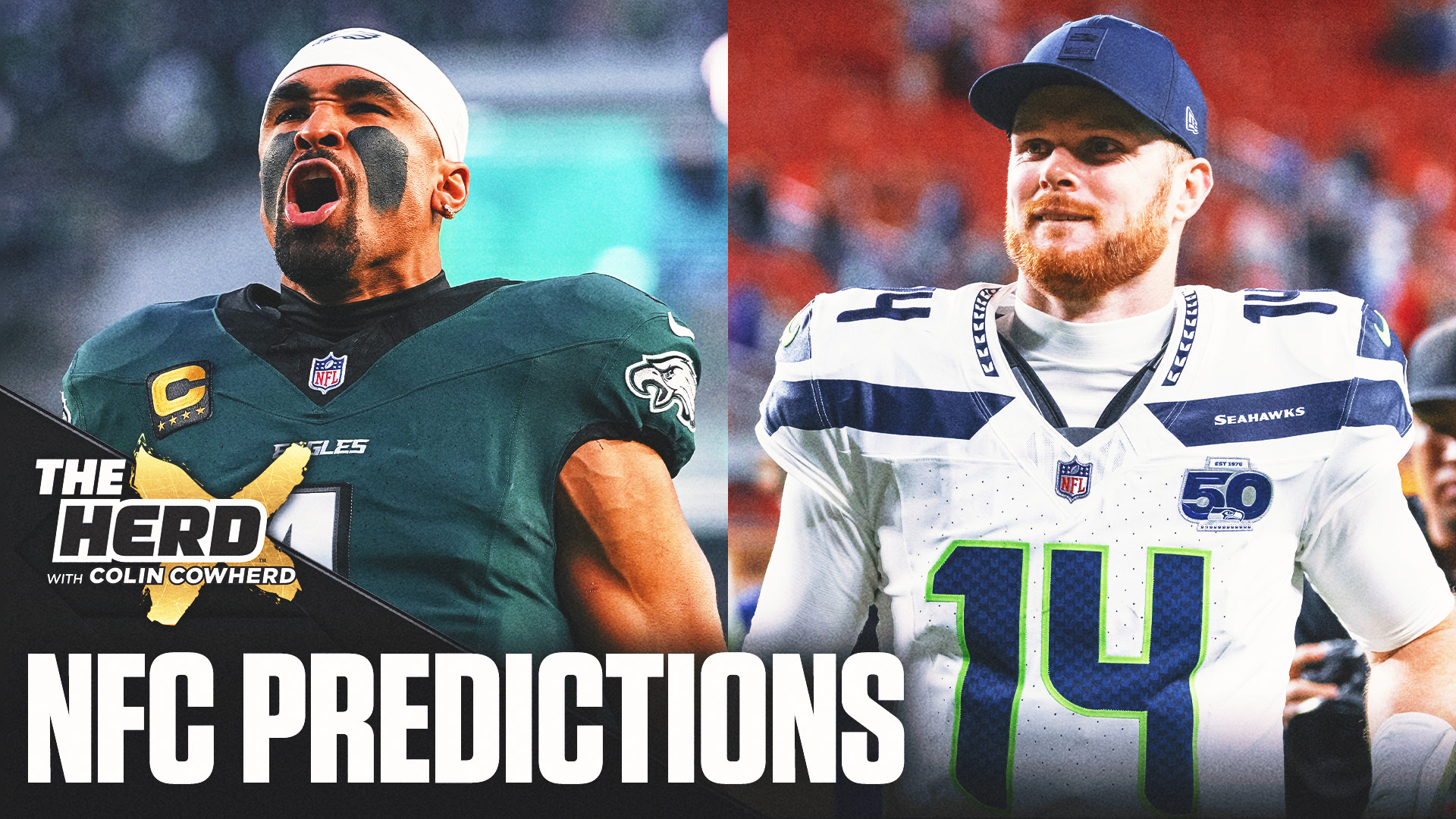
Will the Seattle Seahawks be able to fend off the Los Angeles Rams and win the NFC West again? Who will win the tight battle for the NFC North? With the regular season quickly approaching, Colin Cowherd provided his division predictions and projected playoff field for the NFC on Wednesday’s edition of The Herd. Highlighting a mix of returning contenders and rising rosters, Cowherd forecasted three new playoff teams across the conference while breaking down all four divisions. “I’ve got three new playoff teams in the NFC: the Lions, the Saints, and the Giants,” Cowherd said. Here’s how Cowherd predicts the placement of all four divisions in the NFC. Starting with the NFC East, Cowherd picked the Philadelphia Eagles to retain the division crown, pointing to roster continuity along the offensive line and past success under Jalen Hurts. “Jalen Hurts, since he became a full-time starter, has the winningest record in the NFL. I’m just going with this very, very well-run organization,” Cowherd said. Despite losing A.J. Brown, Philadelphia added Dontayvion Wicks and drafted USC receiver Makai Lemon, returning all five offensive line starters with the seventh-easiest schedule in the league. Behind Philadelphia, Cowherd projected the New York Giants to finish ahead of the Dallas Cowboys for second place, should Jaxson Dart stay healthy. “They were one and seven last year in those one-score games, worst in the league,” Cowherd said about the Giants. “And in fact, they blew five games in which they had a fourth-quarter lead. That is going to, even if it evens out, even if it doesn’t totally flip, it will even out. If Jackson Dart can stay out of the blue tent, I think it’s a playoff team.” Following a tough year in close games in 2025, Cowherd thinks the scales will balance out for the Giants in 2026. Cowherd pointed to a trend from last season as the reason why he thinks the Cowboys could hold themselves back. “Here’s the other thing, which has become a disturbing trend for the Cowboys. They were the most penalized team in the NFL last year. They did some big things well, like scoring. They did a lot of little things poorly. I have the Cowboys better, but not a playoff team.” Washington was placed fourth in the division, pointing to roster turnover at key positions like left tackle and overall roster age as major obstacles for their prospects. “Washington just doesn’t have enough talent. They lost Laremy Tunsil, their left tackle, who’s a beast. Second-oldest roster in the NFL. I just don’t like Washington right now going forward,” Cowherd said. Moving to the NFC North, Cowherd went with the Detroit Lions to win the division, citing offensive firepower and draft adjustments. “I think the Lions have a combination of the best roster in the division and the easiest schedule in the entire league this year,” Cowherd said. “I would argue quarterback, running back, tight end, wide receivers, they have the best group in the NFL.” Cowherd added last year was considered a down year for Detroit and the offense still wound up amongst the league’s best. “They were the only team to have a top-five scoring offense in the last four years. Even last year, when they struggled, it was top five.” Last year’s NFC North champions, the Chicago Bears, were picked to finish second in 2026 by Cowherd. “They were a great fourth quarter team last year. They probably can’t quite equal that magic, but when they won the turnover battle, and nobody talks about this one, Chicago, they were 10-1 when they won the turnover battle,” Cowherd said. Cowherd also pointed to Bears quarterback Caleb Williams, who does not have a history of turning the ball over. “Caleb Williams doesn’t turn the ball over. He didn’t in high school. He didn’t in college. Even in the Eberflus year, 20 touchdowns, six picks. He is not a turnover quarterback. I have them for second.” The Green Bay Packers were picked by Cowherd to finish third in the division, despite the number of key pieces they have slated to return, ahead of the Minnesota Vikings. “Not only do they get Michael Parsons back in October, but they also get Tucker Kraft back, who looks to be a star young tight end in the NFL for years to come. Christian Watson got hurt. Jaden Reed got hurt,” Cowherd said. Cowherd also suggested the Packers may have reached their ceiling. “They’ve not been a great September team, but they’ve been a wild card team in the last three seasons,” Cowherd said. Minnesota landed in fourth place in Cowherd’s prediction, but he said this shouldn’t discredit what the Vikings are capable of. “Minnesota is going to be the best fourth-place team in the NFL,” Cowherd said. “Christian Darrisaw is back at left tackle. I love the coach and the defensive coordinator. There’s not a lot here I don’t like, but Kyler Murray’s backup is either J.J. McCarthy or Carson Wentz. I don’t trust either.” Despite an established coaching staff and offensive line talent, backup quarterback depth creates vulnerability behind starter Kyler Murray. Cowherd also pointed out how prone to turnovers and the injury history of all three quarterbacks on the roster. The NFC South featured a surprise pick from Cowherd, with the New Orleans Saints taking first place behind quarterback Tyler Shough, thanks in part to a favorable schedule. “Second easiest schedule in football is the Saints,” Cowherd said. “I thought they played very well at the end of last year. Tyler Shough, nobody paid attention, but they won four of their last five games.” Cowherd added that the NFC South is usually unpredictable most seasons. “This is a division where you see teams go from last to first on a regular basis.” The Carolina Panthers were picked for second place, highlighting leadership under Dave Canales and general manager Dan Morgan alongside offensive line stability for Bryce Young. “I think Carolina has the coach and the general manager for the future. Dave Canales and Dan Morgan are excellent. I think they’ve given Bryce Young a lot to work with.” Cowherd also pointed out the inconsistencies on the offensive line last year. “They had 11 different starting O-line combinations last year, so it was a bit of a mess in front of Bryce Young. I think they’ll get that corrected,” Cowherd said. Tampa Bay was picked to finish third by Cowherd, who pointed to recent offensive slumps, defensive regressions, and coaching pressure following late-season struggles. “You got a coach on the hot seat. You got a new offensive coordinator, 20th-ranked defense last year. No Mike Evans. Lost seven of the nine games down the stretch,” Cowherd said. “So they were a bit of a mess offensively, and they weren’t great defensively.” Atlanta rounded out the division in fourth place, with Cowherd citing early road schedule challenges and unanswered questions at quarterback. “I like the coach, like the owner. I think the GM is pretty sharp. There’s a couple of players like Drake London, a Bijan Robinson I love, but who’s the quarterback? We don’t know,” Cowherd said. “Cross my fingers with Michael Penix, but they start with three of their first four games on the road.” In the NFC West, Cowherd selected the Seattle Seahawks to claim the division title over the Los Angeles Rams, praising Seattle’s performance in road games and young core talent. “Here’s what I love about Seattle: the last two years best road team in the league, and I mean a fantastic road team, 15 and two,” Cowherd said. “They’re returning all their best players. All of them are in their prime.” Cowherd went on to highlight the Seahawks’ ability to win away from home and performance against other playoff teams as key factors. Cowherd placed the Rams second as Super Bowl contenders, acknowledging both Seattle and Los Angeles rank among the top teams in the league. “They return all 11 offensive starters. There’s no reason to debate this. They could win the Super Bowl. I think these two teams, in my opinion, are the best two teams in the NFL: Seahawks, Rams, one and two in my book,” Cowherd said. However, the hype surrounding the Rams is not enough to convince Cowherd. “I’ll take Seattle to win over the Rams. Everybody in the world’s telling me the Rams are going to win the Super Bowl. The team is hearing that. You know what?” Cowherd said. “They’re going to be a really really good team and win 11 games. I think Seattle could win 12.” San Francisco was picked to finish third by Cowherd, pointing to an aging roster coming off major surgical recoveries and defensive pass rush struggles. “They were 20th ranked in defense. They struggled to get to the quarterback. They have the oldest roster,” Cowherd said. “They are highly reliant at left tackle, running back, edge rusher, linebacker on veteran players who are coming off injuries.” Arizona was projected to finish fourth in the division as the team undergoes a rebuild while playing in arguably the toughest division in football. “Arizona, bit of a mess. 0-6 against the division last year,” Cowherd said. “They’re playing like the Jets for next year’s draft. Arizona at fourth place.”Latest Sports News from FOX Sports
Shortly thereafter, Tiger checked into rehab with the goal of getting his life and career back on track.
But the golf legend’s latest appearance has some fans concerned about his health and well-being.
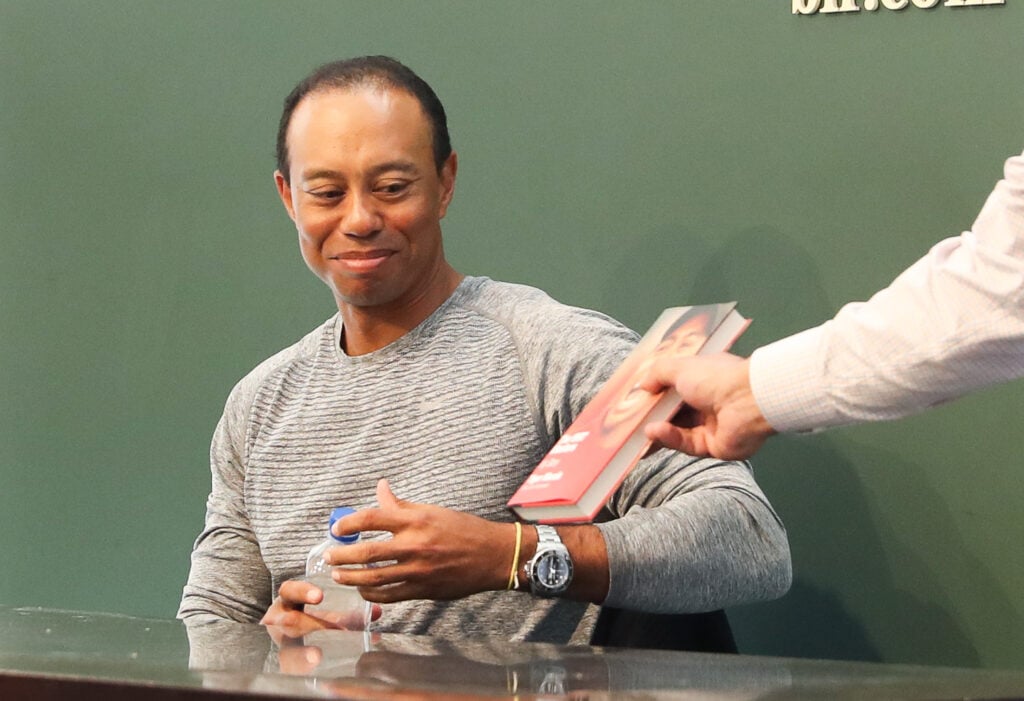
Tiger Woods signs copies of his new book, “The 1997 Masters: My Story” at Barnes & Noble Union Square on March 20, 2017 in New York City. (Photo by Rob Kim/Getty Images)
Yes, Tiger is back in the public eye.
The 50-year-old sports icon resurfaced Tuesday in a pre-recorded video message honoring longtime friend Notah Begay III, who received the Payne Stewart Award.
Woods appeared on the Golf Channel to celebrate Begay’s accomplishments both on and off the golf course.
He spoke warmly about their longtime friendship and praised Begay for his work supporting Native American communities and young people.
But while Woods’ message was meant to be a celebration of his friend, many viewers couldn’t help focusing on Woods himself.
Social media users immediately began commenting on the golfer’s noticeably different appearance.
“Tiger looks a shell of his former self, sadly,” one person wrote (via Page Six).
Another asked, “What’s going on with the Big Cat? Looks different for sure.”
A third fan was even more blunt, writing, “Geez, Tiger doesn’t look so good.”
Still, not everyone viewed Woods’ appearance negatively. Some fans said he appeared thinner, while others suggested that he looked sober and healthier following his time away from the spotlight.
The intense reaction comes after Woods has spent much of 2026 dealing with serious personal and legal issues.
In March, Woods was involved in a rollover crash in Florida that resulted in DUI-related charges.
Authorities subsequently found opioid pain medication in his possession. Woods has pleaded not guilty to charges including DUI with property damage and refusing to submit to a lawful test.
Woods later entered a rehabilitation facility in Switzerland and remained largely out of the public eye after returning to the United States.
His legal troubles have also complicated what had been another attempt at a comeback. Woods has endured numerous surgeries and significant physical problems throughout his career, including injuries stemming from his devastating 2021 car accident.
For now, his future on the golf course remains uncertain.
Woods’ next major public appearance could come in front of a judge. His first in-person court appearance in connection with the March crash is currently scheduled for September 8 in Florida.
Until then, Woods appears to be keeping his focus on his recovery — and on staying out of the spotlight as much as possible.
That may be easier said than done for one of the most famous athletes in the world.
Voters at Anchorage City Hall wait in line to cast their ballots on Nov. 4, 2024, the day before Election Day. City hall, in downtown Anchorage, was one of the designated early voting sites in the state’s largest city. (Photo by Yereth Rosen/Alaska Beacon)
The Alaska Supreme Court heard oral arguments on Tuesday on legal challenges brought by two groups on opposing sides of the state’s current ranked choice voting election system. The two groups of plaintiffs brought lawsuits against the Alaska Division of Elections challenging the language of a ballot measure, set to go before voters in November, abolishing the voting method along with other changes.
Ballot Measure 2, which will appear on the ballot as 24ESEG, would overhaul the state’s elections system via three major components: repeal ranked choice voting; rescind the nonpartisan, open primary system; and repeal campaign disclosure rules enacted by voters in 2020.
A Superior Court ruled in June that the state’s ballot summary was “true and impartial,” siding with the Alaska Division of Elections, overseen by Lt. Gov. Nancy Dahlstrom.
Plaintiffs have appealed that decision to the Alaska Supreme Court, which is expected to issue a fast-tracked ruling before a division deadline of Sept. 2 to print general election ballots.
The Alaska Supreme Court heard oral arguments in a case challenging the Alaska Division of Elections’ language of a ballot measure that would overhaul state elections on Aug. 25, 2026. (Screenshot of hearing via Gavel Alaska)
One group of plaintiffs are represented by attorney Scott Kendall, an author of the 2020 ballot measure implementing Alaska’s ranked choice voting and open primary system. They argued that the current ballot measure language is unclear, partisan and omits serious implications of the repeal effort.
The other group of plaintiffs, drafters of the measure, is called the “Repeal Now” campaign. The measure’s primary sponsors are Republican gubernatorial candidate Bernadette Wilson, along with former Anchorage library director Judy Eledge and former Alaska House Rep. Ken McCarty of Eagle River.
In court, attorneys representing Repeal Now argued against the lawsuits being combined and for a series of language changes, including changing of the term “repeal,” which they say is not easily understood by voters, and the term “true source” of campaign disclosures as “inflammatory partisan suasion.”
Under Alaska law, the division is required to prepare a ballot measure with a “true and impartial” summary of the proposed law. It must be “free from misleading tendency, whether the amplification, of omission, or of fallacy, and … must contain no partisan coloring.”
In the June ruling, a Superior Court judge found the division fulfilled its legal obligation and “if ballot summary language is true and impartial, the Court will not invalidate the language just because better language could be written.”
On Tuesday, the division, represented by attorney Laura Fox with the Alaska Department of Law, argued that the ballot language could be edited thousands of ways, but the division fulfilled its legal duty and prepared the ballot with a “true and impartial” summary and title.
“This case is not an editing exercise,” Fox argued. “We’re not assembled here as a big team of editors trying to polish a piece of writing by committee, as fun as that might be. Instead, the question here is just whether the summary clears the basic hurdle of being true and impartial. Because it does, the court should affirm.”
The Alaska Supreme Court justices will either uphold the lower court’s decision or order the division to revise the language. They’re expected to issue a ruling before Sept. 2 and then follow sometime later with an extended legal opinion.
Timeline of ballot measure and legal challenges
Alaska voters narrowly rejected a similar initiative to repeal ranked choice voting in 2024. Proponents quickly restarted the campaign in 2025, collecting more than 34,000 signatures to again place the question on the ballot in 2026. The division first published the ballot language last December.
A group of plaintiffs represented by Kendall filed a lawsuit challenging the ballot language in January. Plaintiffs include Anchorage Republican Sen. Cathy Giessel, AFL-CIO union president Joelle Hall, and former member of the Juneau Borough Assembly and vice president of Ocean Conservancy ‘Wáahlaal Gidaak Barbara Blake. They argued the ballot language was biased and inaccurate.
The division subsequently revised the ballot language in February with significant changes to the title and summary. The plaintiffs dropped the lawsuit without prejudice, according to court documents.
In mid-February, the Repeal Now group filed a lawsuit challenging the new language, arguing “opponents got their preferred language” adding the term “repeal” three times, and the summary was not “true and impartial.”
Giessel and fellow plaintiffs filed a new lawsuit, and the two suits were consolidated by the Superior Court judge in April.
Both groups of plaintiffs filed suggested ballot language with the court, and the state filed a motion defending their ballot language.
Court arguments
On Tuesday, Kendall argued before the Supreme Court that the ballot language should be a clear map for voters to understand what the measure does.
“But the state’s language here isn’t a map. It’s effectively an obstacle course where a voter can only understand Ballot Measure 2 by doing independent research outside the four corners of the ballot language. The state’s language is unclear, contains partisan suasion, and omits details that would give voters significant pause,” he said.
In particular, Kendall raised concerns the ballot measure does not clarify that if passed, nonpartisan or Independent voters would be excluded from voting in party primaries, unless registered with that party.
“It fails to make clear that Ballot Measure 2 specifically empowers political parties at the stroke of a pen to make it illegal for undeclared and nonpartisans to vote in the primary election,” he said. “I think voters need to be put on notice, especially the two-thirds of voters that don’t belong to either party, that you may not be able to vote in the primary election at all.”
Kendall also argued the language related to campaign finance disclosure rules was inadequate, and fails to give details of the implications.
If passed, the measure would repeal campaign disclosure rules and limits enacted by the ballot measure passed in 2020, including rules that individuals and entities who contribute more than $2,000 to candidates or campaigns must disclose the true source, as defined by law.
Attorney Julie Pack, representing the group of plaintiffs with the Repeal Now campaign and supporting the ballot measure, argued against the use of the term “repeal” because she said campaigners collecting signatures for the ballot measure found voters were not familiar with the term.
“Many people do not use that word on a daily basis. It’s not common parlance. It is for lawyers. It’s not for people who are not lawyers, and it’s not a term that is readily understood,” she said.
Justices pushed back, pointing out the term is in the name of their organization.
“My organization named itself before they canvassed, got all the signatures, talked to over 31,000 Alaskans, and understood that repeal is not a word that lots of people understand,” she replied. “So my client named itself before it learned that repeal is a term that’s mildly to moderately sophisticated.”
“There is no need to use words that are sophisticated,” she added. “When ‘redo,’ ‘remove,’ ‘undo,’ ‘get rid of’ are perfectly fine, and they would protect Alaskan voters’ right to know what they’re voting on.”
Pack also raised concerns with the term “true source” related to campaign finance disclosures, and argued the measure would maintain “open primaries.”
Arguing on behalf of the Division of Elections, Fox urged the justices to reject the plaintiffs arguments and affirm the lower court’s decision that the division met its legal obligations and should print the ballot measure as is.
As we previously reported, music icon and overall queen Dolly Parton passed away on Tuesday, August 25.
And that date is of great significance to one of the most important people in Dolly’s life.
Dolly was godmother to Miley Cyrus, and in interviews, Miley often noted that August 25 is always circled on her mental calendar.
Miley Cyrus speaks onstage during the Hollywood Walk of Fame Star ceremony honoring Miley Cyrus on May 22, 2026 in Hollywood, California. (Photo by Emma McIntyre/Getty Images)
“I decided to release ‘Used To Be Young’ on Aug. 25 because this particular date historically has been important to me personally and in my career,” she said in an interview while promoting the single.
And it’s true that that date had major importance to Miley, even before Dolly’s death.
August 25, 2010, Miley and Liam Hemsworth (whom she would later marry) broke up for the first time (per TMZ).
And on August 25, 2013, Miley kicked in the door of the next stage in her career when she stunned the crowd with a risque performance of “We Can’t Stop” at the Video Music Awards.
The 25th is also the birthday of her father, but considering Miley and Billy Ray aren’t exactly close these days, we suppose it makes sense that she decided not to mention that.
While many fans were stunned by the fact that Miley discussed the date of her godmother’s death just days before it happened (and some of them are reading way too much into the coincidence), it’s unlikely that the pop star had any inclination that Dolly would pass away that day.
Regardless, the already important date has now taken on sad new significance for Miley.
Shortly after news of Dolly’s death went public, Miley took to social media to pay tribute to her beloved godmother.
“The feeling of losing my Aunt Dolly is beyond what feels right to share. Our most sacred moments were private and they’ll stay there behind the stage, beneath the glamour & between our hearts,” Cyrus captioned a throwback photo of Parton, adding:
“What I KNOW is Dolly would want me to feel it, write a song about it, and then continue on and be strong.”
“I have an angel by my side. I always have. One of our last conversations was about music and metamorphosis. I will always love her and want to make her proud.”