Categories
Sports Fox

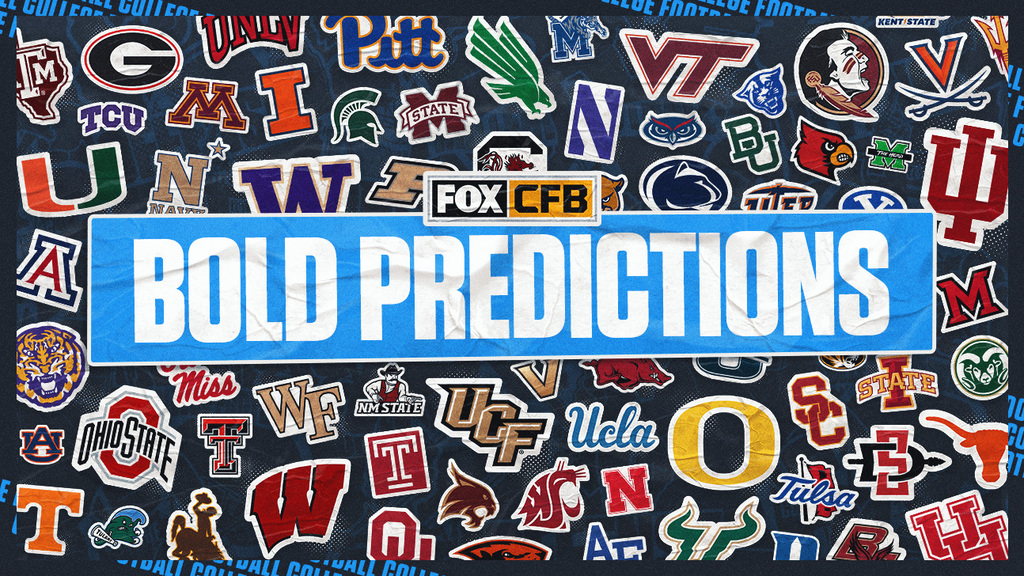
12 College Football Bold Predictions For 2026, From The CFP Field To Coaching Gigs

We can’t predict the future, neither can you, and in a sport like college football, chaos, upsets and endless debates are pretty much the only guarantees. But looking ahead to the 2026 college football season, we had to throw down some predictions. From the 12-team College Football Playoff field and the 2026 national champion to coaches’ projections with their new teams and Heisman Trophy finalists, we’re breaking down our bold predictions. Some may come to fruition, and some may not be quite right come January, but this is how we see the season unfolding. So as FOX Sports’ college football experts, here are our 12 bold predictions for the 2026 season. Perhaps my Bloomington roots are showing, but I’m shocked at how much it feels like the defending national champs aren’t being taken seriously to repeat as Big Ten champions. Quarterback is a real question, albeit Josh Hoover has all the experience you could want in someone taking over for a Heisman winner. The defense will be as good as any in the country again and if things click under center, I like the Hoosiers to push Ohio State and Oregon for the Big Ten title. One other note that hasn’t been discussed enough — Cignetti brings back nine of his 10 on-field assistants from last year’s squad. That’s not nothing. — Ben Portnoy In my Ultimate 138 CFB Rankings, I put North Dakota State just out of my initial top 25, and that piqued the interest of many. It might shock you that I believe the Bison will not only enter FBS and be immediately competitive but the best Group of Six team in the sport. In the eyes of the committee, that’s what they’ll have to achieve to make the College Football Playoff this season. As the rules state, only the highest-ranked Group of Six program will be rewarded with a spot in the CFP — regardless of whether that team won its conference title. After announcing their move to FBS earlier this year, I asked Bison coach Tim Polasek a pointed question. “Do you think your team is capable of competing for the College Football Playoff?” I asked. “I think I like our team,” Polasek told me. “We’re going to have some learning and growing to do about our opponents, but I really like our process, the year-round work that we do and how we practice. Those things position us to be very competitive in every game. And if you happen to knock them down one at a time, there’s no reason North Dakota State can’t be in the conversation for the College Football Playoff.” — RJ Young After getting off to a rough start in his first year as the Longhorns starting quarterback — who wouldn’t be impacted by all that national hype and expectations? — Arch Manning will look like the five-star talent everyone has been waiting for. He gave us a taste toward the end of last season, especially against Texas A&M and Michigan, but this season he’ll find that next level. Texas has one of the more challenging schedules in the country, but Manning’s leadership and growth will have the Longhorns poised for a national championship run. — Laken Litman When discussing his chances of winning the Heisman Trophy during an interview at Big Ten Media Days last month, Smith told reporters the only way for a player at his position to accomplish that feat is if the production mimics that of former Alabama wide receiver DeVonta Smith, who caught 117 passes for a staggering 1,856 yards and 23 touchdowns in 2020. There’s an opportunity for Smith to approach that kind of output in a receiving corps lacking proven targets behind him now that Carnell Tate is playing in the NFL. Only one receiver in college football history has eclipsed 2,000 yards in a season: Trevor Insley of Nevada in 1999. It’s time for Smith to push for that milestone. — Michael Cohen Despite all the hoopla surrounding Lane Kiffin — the latest being LSU recruiting tight end Dae’Quan Wright after he was waived by the Cleveland Browns — the Tigers will make the CFP for the first time since the 2019 season when they won the national championship. And in doing so, Kiffin will remind the college football world just how good of a coach he truly is. — Laken Litman Realize Miami, Notre Dame, Washington and TCU combine for three more national title game appearances since 2022 than the SEC. Realize the SEC champion hasn’t reached the national title game since 2022. Realize that Mario Cristobal is 5-1 against the SEC at Miami and won his last five in a row against the league where “it just means more.” Finally, realize the Big Ten has seen a member win the last three national titles and is poised to pull off a feat that only the SEC has in CFP era: feature two members from its own league in the national title game if the rankings hold true. From Ohio State to Oregon to Indiana, there’s every reason to believe the Big Ten can increase its streak to four. But how devastating will it be to fans of the SEC if it goes 0-for-4 in national title game appearances in the same timeframe? I’d like to find out. — RJ Young Lincoln Riley has signaled he believes this might be his best Trojans’ team. A large part of his confidence centers on alignment between himself, athletics director and president at USC. He learned the value of that alignment while at Oklahoma, and has developed it at USC. He also returns a starting quarterback, in Jayden Maiava, who can lead USC past good opponents, and a pair of running backs he believes can be as productive as Joe Mixon and Samaje Perine were on his Oklahoma teams. He brought in a College Football Hall of Fame coach as his defensive coordinator in Gary Patterson. All of this has turned me into a believer in the 2026 Trojans. — RJ Young I picked Miami quarterback Darian Mensah to take home the hardware, but the receiver class could steal the headlines in this year’s Heisman campaign. Cam Coleman is the type of freak athlete that could find his way into the mix if the Longhorns live up to their billing. Jeremiah Smith is, well, Jeremiah Smith, and I’d be shocked if he doesn’t lead the Buckeyes and the Big Ten in receiving this year. Malachi Toney, too, will likely get some consideration if Miami is as good as advertised. What about tailbacks Kewan Lacy (Ole Miss) or Jadan Baugh (Florida)? Or, let’s get weird and see Navy quarterback Braxton Woodson in the mix. Bring it on. — Ben Portnoy The James Franklin era begins at Virginia Tech. The Hokies went 3-9 last year, but Franklin has brought in a strong transfer class, which includes former Penn State quarterback Ethan Grunkemeyer, who earned valuable experience when he replaced an injured Drew Allar last season. The Hokies have road games at Clemson, SMU and Miami and will win at least one of those, while Franklin’s former employer, Penn State, will struggle in its three toughest games against USC, Michigan and Washington. — Laken Litman DeBoer was arguably the hottest name on the coaching carousel following two incredible seasons at Washington, which ended with a national championship game appearance in 2023. Since then, though, he’s lost four games in each of his first two years at Alabama — a far cry from the impossible standard set by predecessor Nick Saban — including four defeats to unranked opponents. That’s the same number of unranked losses that Saban suffered in 17 years with the Crimson Tide. And while DeBoer signed a new seven-year contract in April that will pay him an average of $12.5 million per season, his buyout of $10 million might be worth stomaching for wealthy Alabama fans if things go awry this fall. — Michael Cohen This isn’t the hottest take on the planet, but I have a really hard time seeing anyone from the ACC outside of Miami challenging for a College Football Playoff spot. Rhett Lashlee has done incredible work at SMU in a relatively short time, moving the Mustangs up from the American Conference to the Power Four, but I’m not sold quarterback Kevin Jennings is the guy to get the Ponies back into the CFP mix. Outside of SMU, who is challenging Miami this year? Louisville? Maybe. Cal? For reasons above, perhaps, but that’s asking a lot. — Ben Portnoy No Big Ten player will receive more scrutiny than Indiana quarterback Josh Hoover, a TCU transfer tasked with following in the footsteps of Heisman Trophy winner and No. 1 overall pick Fernando Mendoza. But head coach Curt Cignetti and his staff have proven they can identify quarterback talent as well as — or better — than seemingly everyone else, so casting doubts about Hoover seems rather foolish. If Hoover can perform anywhere near the level established by Mendoza and predecessor Kurtis Rourke, who also guided Indiana to the College Football Playoff, then this loaded Hoosiers’ roster can extend one of the sport’s best fairytales. — Michael Cohen​Latest Sports News from FOX Sports
Categories
Alaska News

How to Be a Moneymaxxer

On the heels of viral trends like looksmaxxing (maximizing one’s attractiveness) and healthmaxxing (optimizing physical and mental wellness), moneymaxxing describes the pursuit of better finances. But what does it mean, exactly? Well, it starts with a concept that’s been around…

Categories
Food

The 10 Best New Aldi Groceries You Can’t Miss In September 2026

One of the best parts of visiting Aldi is the new products that come out every month. Here are our favorite new items hitting shelves in September 2026.

​Food Republic – Restaurants, Reviews, Recipes, Cooking Tips

Categories
Alaska News

The teenage girls behind a $25 minimum wage fight in rural Alaska

Teens Kaya Kent and Sara James are among many youth in Nome, Alaska fighting for a $25 minimum wage. (EMILY SCHERER FOR THE 19TH)

Teens Kaya Kent and Sara James are among many youth in Nome, Alaska fighting for a $25 minimum wage. (EMILY SCHERER FOR THE 19TH)

This story was originally reported by Chabeli Carrazana of The 19th. Meet Chabeli and read more of their reporting on gender, politics and policy.

In one of the most remote towns in America, a group of teenagers is fighting to put an initiative on the November ballot that would raise the minimum wage for the largely Native population of Nome, Alaska.

The idea took hold earlier this year when the six young women were invited to a conference in California as part of a Native youth leadership group they’d joined at their high school. There, they listened to Saru Jayaraman, who heads a national effort to raise the minimum wage, speak about the work being done city by city to secure higher pay. They kept looking at each other as she spoke. We should do this in Nome, they thought.

“We were just talking amongst ourselves, and we were like, ‘There’s people in Alaska who work for their whole lives, and their minimum wage doesn’t change at all to support their children and their elders, and their whole family,’” said Alora Stasenko, one of the women leading the effort who graduated this spring. Another student leader, Renee Brown, was working part-time at the local preschool and saw how many of her coworkers lived out of renovated shipping containers and walked to work in harsh conditions. The low in Nome reached -26 degrees Fahrenheit last year.

“We decided that money was a problem, and that we wanted to help get, not just a few people, but everybody, what they need,” Stasenko said.

Nome, a town of about 3,700 on Alaska’s Seward Peninsula, just 150 miles off the coast of Russia, is perhaps best known for its history as a gold rush town and as the ending point of the Iditarod Sled Dog Race. The next nearest town is 70 miles away, and supplies need to be shipped or flown in. That makes living expensive. The minimum wage is $14 an hour, but the cost of living is about 69 percent higher than the national average. Gas often tops $6 a gallon. Milk is $10 a gallon. Grocery stores are rarely full and so expensive that many people hunt for their food.

“It takes a while to go out on boats or snow machines or trucks or four-wheelers, and you have to buy your ammo and your guns and all your equipment to go out. Everything gets expensive,” Stasenko said. “I grew up living a very subsistence lifestyle.”

In her freezer: caribou, fish and walrus that she helped hunt herself.

Stasenko and the other students were gripped by the idea that raising the minimum wage in Nome could help give people there a better quality of life. The Massachusetts Institute of Technology Living Wage Calculator sets the living wage there — how much one person working full-time needs to support themselves — at nearly $24 an hour. A family of four would need two working adults earning about $28 an hour each to stay afloat.

Jayaraman was impressed when the students followed up with her after the conference. It was the first time in her decades of activism that she had been approached by high schoolers to start a campaign.

With her guidance, the students formed the Nome Living Wage For All Alliance and convened a call with some of the town’s largest employers to discuss interest in a ballot initiative. They settled on a goal of raising the minimum wage to $25 an hour. They’re proposing a phase-in period, giving large corporations until 2029 to raise wages and small businesses until 2032. Already, the town’s top employer, Norton Sound Health Corporation, sets its minimum wage at $25 an hour, so raising the floor would only apply to about 15 percent of workers in the city.

They submitted a ballot petition to the city in May, which was approved, and now need to collect 108 signatures — representing a quarter of ballots cast in the 2025 local election — to get their proposal on the ballot in November. They have until the end of the month to collect enough signatures.

“They’ve initiated this conversation in Nome,” said Jayaraman, who added that the story of the group’s work has also inspired other organizers around the country. “Whether they make it on the ballot this November or not, they’ve already had such profound impact on the national movement, on young people all over the country, on workers in other states.”

Because Nome is also a larger regional hub, part of the hope is that improving wages there could also help raise them in neighboring towns where conditions are even harsher — where stores often lack meat or fresh produce and there is no running water.

Over the summer, Brown, one of the student organizers, spoke at a national mobilization event in Washington, D.C. about the hope she had that Nome’s movement “will not only improve the lives of our community members, but will inspire our fellow classmates and peers across Alaska to believe in the power of effort, advocacy and determination.”

“Our efforts will help Nome pioneer a new kind of American dream — one where dignity is the baseline and every resident can afford to stay on our golden beaches,” Brown said.

Most of the organizers spent much of the end of their senior year at Nome-Beltz Middle High School strategizing. Kaya Kent, another organizer, said she remembers talking excitedly about it with Stasenko during classes.

“I couldn’t stop thinking about it. I was checking my email constantly, and I was waking up thinking about the campaign,” Kent said.

A $500 million-plus project to turn Nome’s dock into the nation’s first deepwater Arctic port just kicked off, and though it will likely bring in money for all the businesses that traverse through there, the organizers want to make sure the people of Nome can benefit, too.

Even those already earning more than $25 an hour — like Kent’s mother, who works in an administrative position at the local hospital — are still struggling to live comfortably in Nome, Kent said.

“If it’s like that for my mom, who’s able to make $40 an hour, I can’t imagine what it’s like for the people that are making way, way less than that,” she said.

It’s an effort that is about fundamental survival, and it mirrors a lot of what’s driving Gen Z students to get engaged politically, Jayaraman said. Some tell her that they support raising the minimum wage because it’s fundamental to them being able to take on any other causes.

“They tell me, ‘This is the thing that’s giving me hope because I can’t envision a future unless I can have one job and earn enough to maybe one day have my own place, maybe think about having a family. I can’t imagine working on any of these other issues I care about, whether it’s climate or immigration or anything else, unless I can survive and my family can survive.’”

Still, getting a tight-knit town that has subsisted on its own to embrace a lofty idea made popular in cities like New York, Los Angeles and Chicago has not been easy. There’s concern over how businesses will be able to absorb the increased personnel costs. There’s dismissiveness because the effort is being led by young women — people say they’re just high schoolers who need to take an economics class, Kent said.

Plus, she added, “with a lot of Nome, change is scary for them.”

But the arguments against a minimum wage hike in Nome are similar to those heard across the country, Jayaraman said. Primarily, it’s the worry that it will lead to rising costs. Minimum wage increases have led to some modest employment loss and some added costs to businesses — but these are often offset by rising revenues. Extensive research that’s been done on minimum wage initiatives over the years has also found significant positive benefits for workers, and particularly low-wage ones.

“What the girls are saying is, ‘We need money to survive costs going up,’” Jayaraman said. For many people in America now, “that argument that it’s going to make costs go up and therefore we can’t do it, they’re like: ‘Costs have already gone up. What are you talking about? The only thing that hasn’t gone up is my paycheck.’”

Kent starts every conversation when she goes out to collect signatures with the same question: “How much money do you make?”

She and the other students are rushing to collect signatures before their deadline is up. Admittedly, it’s been tough to do with most of them out of town or preparing for college this summer. Stasenko already moved to Washington state to attend Shoreline Community College, where she’s studying accounting and playing college volleyball.

Kent will soon move to Colorado to attend Fort Lewis College. As she’s made her final push for signatures, she’s been thinking about how this effort might ensure that if she ever comes back home to make a life, she can.

Before all of this started, she and the other students had never done any activism like this. For Kent, taking it on has helped solidify what she wants to do with her life. When she gets to Colorado this fall, she’ll major in political science.

Categories
Alaska News

Regulatory process launched for 30 more years of trans-Alaska oil pipeline operations

A vehicle drives past the trans-Alaska pipeline near Galbraith Lake on the Dalton Highway, Alaska. Pump Station 4 is visible in the background. (Photo by Craig McCaa/U.S. Bureau of Land Management)

A vehicle drives past the trans-Alaska pipeline near Galbraith Lake on the Dalton Highway, Alaska. Pump Station 4 is visible in the background. Fedearl regulators are beginning the process of granting a renewed right-of-way agreement to allow 30 more years of operations. (Photo by Craig McCaa/U.S. Bureau of Land Management)

Forty-nine years after it began transporting crude oil from Prudhoe Bay, the Trans Alaska Pipeline System is due for a regulatory renewal that will allow it to keep operating on federal lands into future decades.

The U.S. Bureau of Land Management has kicked off the process to renew the right-of-way agreement for the pipeline.

About half of the territory that the 800-mile pipeline system crosses is federal land, so a federal authorization is required. The rest of the territory is state or Native-owned land; the state is also due to issue its own right-of-way renewal.

In a statement, Kevin Pendergast, the BLM’s Alaska state director, predicted a robust future for operations of the pipeline system. It will carry new oil from federal land units, including the Arctic National Wildlife Refuge, where the Trump administration has pushed for oil drilling, he said.

“Nearly 50 years after its construction, the Trans Alaska Pipeline is still an engineering marvel and only growing in its importance to Alaska’s economy and global energy markets,” Pendergast said in the statement. “We are acting now to secure the pipeline’s future as we work to unlock the energy resources of the National Petroleum Reserve in Alaska and the Coastal Plain of Arctic National Wildlife Refuge.”  

The Trans Alaska Pipeline System was first authorized in 1974. It was built over the following three years.

The prior federal renewal was made final in 2003 by the administration of President George W. Bush. It was completed just prior to the scheduled 2004 expiration of the original right-of-way agreement that allowed the system to be built and operated on federal lands.

The prior BLM approval process officially kicked off in November of 2000 and involved a full environmental impact statement that evaluated subjects like the impacts of aging on the structure, long-term changes to permafrost and oil spill risks.

This time, the Trump administration is planning a much shorter review. The BLM is preparing an environmental assessment, a less-comprehensive review than an environmental impact statement.

Brenda Younkin, the Department of the Interior’s deputy assistant secretary for land and mineral management, said this renewal process will take much less time. That is in keeping with Secretary Doug Burgum’s new rules for shorter and quicker environmental reviews, she said.

“We’re optimistic about being quick,” she said on Wednesday during a panel discussion at the Alaska Oil and Gas Association’s annual conference in Anchorage. “We better, or we’re going to be reporting to the secretary why not.”

The new rules include strict timelines and page limits for study documents, she said.

The public comment period for the scoping process – the initial step in which interested parties may raise issues they believe should be considered – is only 15 days. That public comment period started on Wednesday, and ends Sep. 10

The compressed time schedule drew criticism from one environmental group.

“The oil burned from Alaska’s pipeline has come with a huge cost to our state’s climate. It’s driving declines in salmon and caribou, and contributing to mega-storms that are making communities unlivable,” Cooper Freeman, Alaska director at the Center for Biological Diversity, said in a statement. 

“Alaska is facing massive climate disruption, but Trump wants to give the oil companies carte blanche to continue business as usual for the next three decades,” he said. “This process should be thorough and public, not rammed through at the behest of billionaire oil company owners.”

SUPPORT: YOU MAKE OUR WORK POSSIBLE

Categories
Entertainment

Kylie Jenner Pregnant? ‘I Don’t Feel The Need to Say Anything Ever’

Reading Time: 2 minutes

Is Kylie Jenner pregnant? This would mean Baby #3, presumably by Timmy this time.

The makeup mogul is responding to the latest rumor — but not jumping to confirm or deny anything.

Instead, Kylie’s reasoning that fans will figure it out eventually, one way or the other.

It’s true. Pregnancy or non-pregnancy becomes obvious over time, unless you hide for months. And hiding is its own answer.

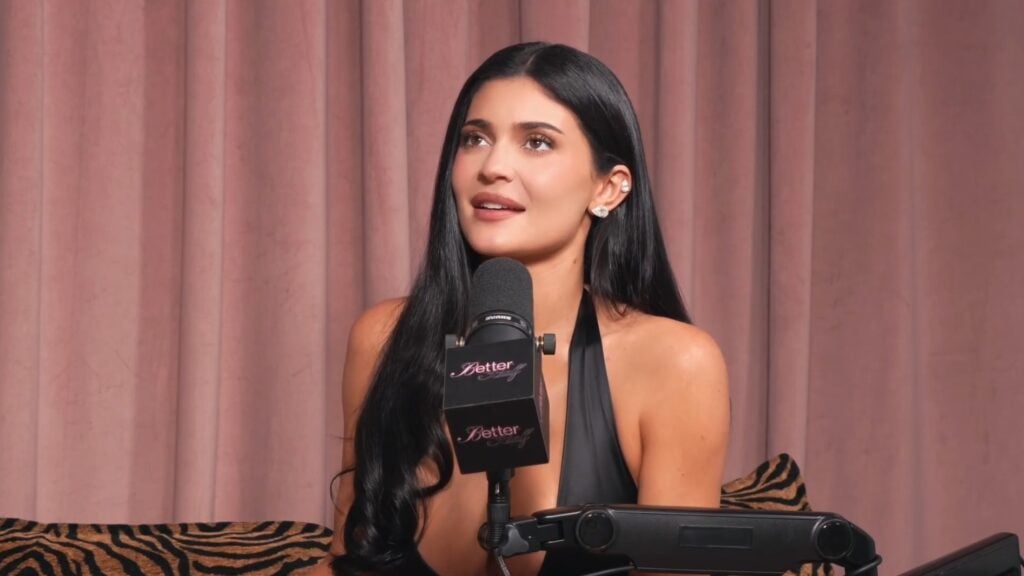
Kylie Jenner in August 2026.
Kylie Jenner appeared as a guest on the ‘Better Half’ podcast in August 2026. (Image Credit: YouTube)

Is Kylie Jenner pregnant?

On the Wednesday, August 26 episode of the Better Half with Stas & Vic podcast, Kylie caught up with old friends.

Speaking with longtime friend Stas Karanikolaou and former employee Vic Villarroel, she responded to the latest pregnancy rumor.

“I think that I’m so used to people creating their own narrative,” Kylie admitted, “that I actually have to just laugh about it.”

She added: “And I really don’t care.”

Kylie shared: “I just assume people will figure it out eventually, which is what they always do.”

“Like, people think I’m pregnant right now,” Kylie then acknowledged.

“At least,” she then added, “I saw some things.”

Just because she does not always respond to rumors and speculation does not mean that she does not necessarily see these comments, especially when her superfans are doing the posting.

Unlike her older sisters, Kylie has basically never known a time when she was not in the spotlight.

She has developed a somewhat pragmatic attitude towards dispelling rumors. Mostly, that means letting them dispel themselves.

‘The rumors will be squashed’

Kylie Jenner explained exactly why rumors about her, be they absurd or merely untrue, don’t keep her awake at night.

And, more to the point, why she doesn’t feel the need to confirm or deny things.

“I’m not going to address everything ‘cause it’s, like, I’m going to be in a bikini somewhere or I’m going to be out,” Kylie reasoned.

“And,” she predicted, “the rumors will be squashed.”

At the risk of sounding pedantic, quashed is when something is invalid. Squashed is when something is compressed or destroyed. We’d argue that, in this case, both meanings apply.

“I, kind of, just don’t feel the need to say anything ever,” Kylie characterized.

(Some of us are dedicated yappers, but it seems that she is not.)

“I can’t, like, talk [or] comment on everything,” she explained.

“So,” Kylie added, “I just laugh about it and join in on the party.”

That sounds like a healthy attitude. But it’s also not one that’s likely to dispel these rumors.

When you’ve kept pregnancies secret in the past, don’t be surprised when people are on the lookout for another.

Kylie Jenner Pregnant? ‘I Don’t Feel The Need to Say Anything Ever’ was originally published on The Hollywood Gossip.

​The Hollywood Gossip

Categories
Sports Fox

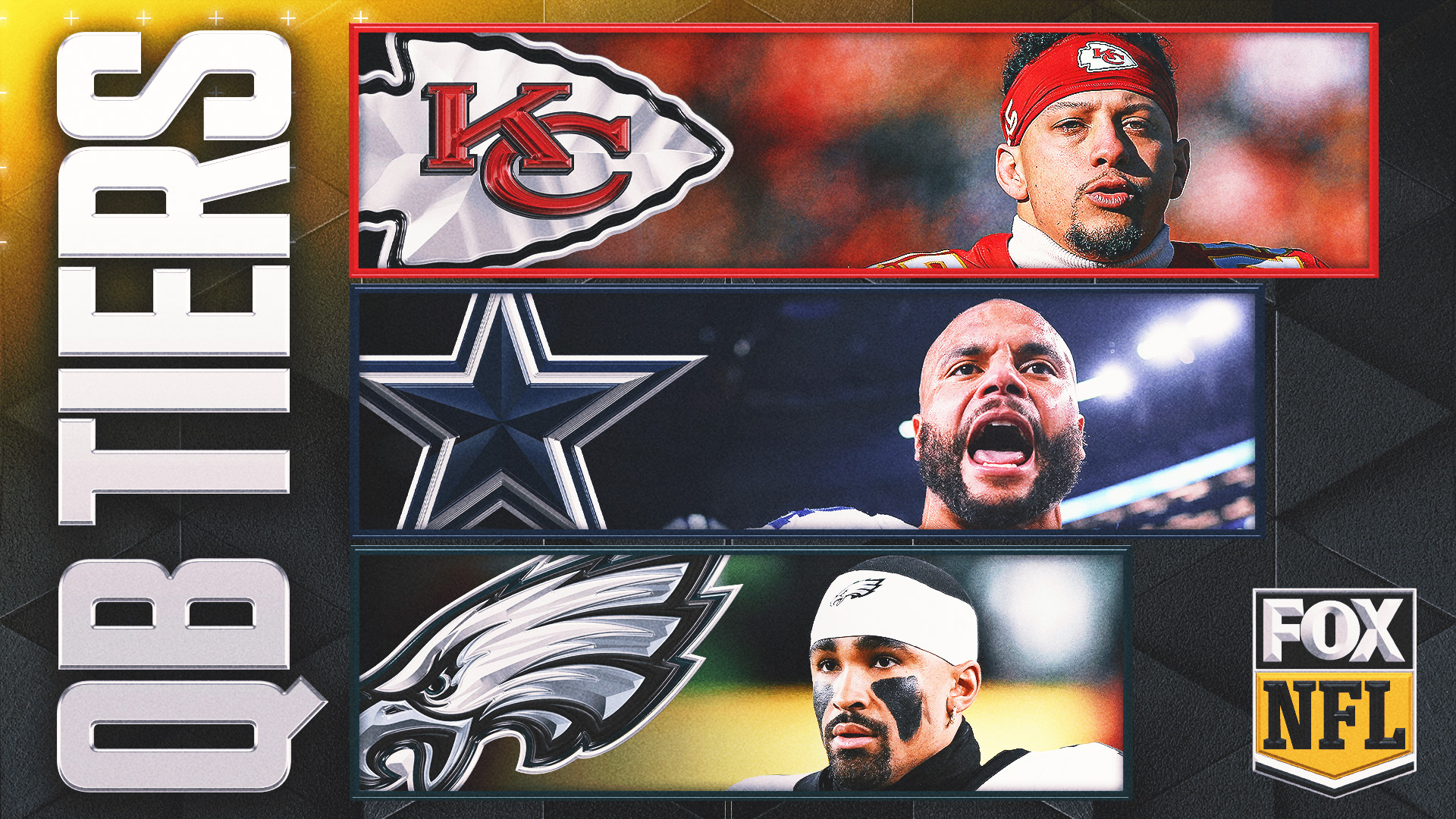
2026 NFL Quarterback Tiers: Which Starters Are Elite And Who Should Be A Backup?

A word of warning before you scroll down: You’re going to disagree with some of the opinions you’re about to read. I know I’ve never come across an NFL quarterback ranking I’ve agreed with 100%, and the same is almost certainly true for you, whether you lean heavily on analytics, film, or team results. We all have different ideas of what makes one quarterback better than another. How you stack them is determined by what you value most in a quarterback. I prefer to focus on a quarterback’s skill set and how it helps their team’s offense function. The quarterbacks who can do everything for their team go to the top of the list, and they’re closely followed by those who can still carry an offense despite one or two small weaknesses in their game. From there, you have your quarterbacks who can put up big numbers in the right environment and then those who are just trying to hang onto a starting job. And if your team’s quarterback doesn’t fall into one of those four categories, it’s time to start looking for a new one. For this exercise, I’ve placed all 32 of the league’s starting quarterbacks (plus the eventual loser of the uninspiring battle going on in Atlanta) into one of seven tiers, ranging from “Elite” to “A Backup on Any Other Team.” One last thing before we get started: These selections are based on what these quarterbacks have done in the past; they are not a projection of what’s to come in 2026. Click on a tier below to go directly to it. Elite | Franchise Carrier | On The Doorstep | Supporting-Cast Dependent | Good Enough To Start | Erratic But Talented Sophomores | Backups On Any Other Team Tier 1: Elite The best of the very best. These quarterbacks are one-man starter packs for a top-10 offense. They have no limitations on what they can do on the field. They can burn a defense with their arms, legs, or even their minds. No matter what’s going on around them, their teams will be in contention for a title—provided they’re healthy, of course. We can all agree Josh Allen belongs in this tier after putting up another MVP-caliber season in 2025, but Patrick Mahomes and Lamar Jackson are probably undervalued, with both missing the playoffs and posting pedestrian numbers by their lofty standards. Let’s start with Mahomes, who’s still the league’s best quarterback, no matter what the league standings or analytical charts from last year say. The Chiefs had no receivers who could separate from man coverage, and Mahomes’ only reliable pass catcher, Travis Kelce, was running like a beer league first baseman. The offensive line was full of holes, the running backs produced just two runs that went for more than 20 yards last season, and Andy Reid’s offense was about four years past its expiration date. Still, this was an above-average offense by any objective measure. Kansas City’s season from hell wasn’t proof that Mahomes has lost a step; it proved that a quarterback can only do so much to prop up a poorly built roster. It’s more difficult to make an argument in favor of Jackson’s 2025 campaign. The two-time MVP did not play well at times and contributed to some of the issues in Baltimore’s passing game by holding onto the ball for far too long and taking avoidable sacks. But I’m willing to give Jackson a one-year pass for two reasons: 1. He was banged up throughout the season, which explains his reluctance to scramble.2. That whole two-time MVP thing. Jackson’s track record of elevating mediocre supporting talent is long enough to warrant inclusion in this tier. If we get a repeat of last year in 2026, we can revisit this discussion. Tier 2: Franchise Carriers These quarterbacks are good enough to match the elite guys throw-for-throw, but there’s at least one weakness in their game that keeps them out of the top tier. While it’s not a guarantee that their teams will contend for a title, they will be in the playoff hunt as long as they’re on the field. There’s only one quarterback in this group without a playoff win in his résumé. That’s Justin Herbert, of course. Quarterbacks are ultimately judged by what they do in the postseason, but we’re talking about a sample size of three games here. Herbert has played 98 regular-season games and has been damn good in them. He also checks every box laid out in the description of this tier. Herbert just dragged a below-average receiving corps and a historically inept offensive line to an 11-win season. As long as Herbert is out there, the Chargers have a chance to win. It’s only a matter of time before that translates to postseason success. Dak Prescott is the other postseason faller in the group, but the perception that the Cowboys quarterback is bad in the playoffs largely stems from two bad games against superior 49ers teams. Fun fact: Prescott and noted playoff riser Jalen Hurts both average 0.07 expected points added per dropback in the postseason, but Prescott’s success rate is nearly 8 percentage points higher, per Next Gen Stats. He also clears Joe Burrow, another supposed postseason riser, in both stats. If we just focus on Prescott’s game, which is built on a mastery of the Cowboys offense and top-end timing, precision, and pocket presence – you know, all the hallmarks of great quarterbacking – his inclusion in this tier is a no-brainer. Tier 3: On The Doorstep These quarterbacks have a few more kinks they need to work out before they can make the leap into the tier above it. Give them a good support system, though, and they’ll perform like a tier-two quarterback. As you can probably surmise by now, I don’t put too much stock in small postseason sample sizes. That’s why C.J. Stroud (just barely) makes it into this tier. Stroud was downright awful in Houston’s playoff run last season, but that shouldn’t overshadow the good work he did in the regular season, with a receiving corps decimated by injuries, an offensive line short on talent, and a first-year play-caller who enters 2026 on the hot seat. Stroud’s season was also disrupted by a concussion that took him out for a month. Statistically speaking, Stroud was a top-10 quarterback after his return, and his tape was just as impressive as the numbers imply. He found more consistency with his accuracy, played more decisively, and showed more command of the offense before the snap. Houston’s offensive setup should improve in 2026, which should coincide with a bounce-back season for the 2023 Offensive Rookie of the Year. Out of the four passers in this group, Jordan Love is the closest to making the jump into the next tier. Look at his efficiency numbers, and you’d think he already belongs in that group, but I’d like to see Love maintain that efficiency in a pass-first offense. Given the state of the Packers defense heading into the season, he’ll get his chance to do it in 2026. And then there are the two generational prospects who haven’t quite lived up to the hype. Caleb Williams has had his elite moments, but unreliable downfield accuracy and some overly ambitious decision-making are holding him back from the top tiers. The same goes for Lawrence, who fixed some of his accuracy issues last season but is still good for one or two bozo moments per game. Still, when these two are at their best, there are only a handful of quarterbacks who can match them. Tier 4: Supporting-Cast Dependent This group can produce like top-10 quarterbacks provided the conditions around them are just right. Some in this group require pristine pass protection. Others need an innovative play-caller or a stacked receiving corps. But when those needs aren’t met, they play more like bottom-10 quarterbacks. This is the middle class of NFL passers. The fanbases for these quarterbacks are all thinking the same thing: Why is my guy lumped in with these scrubs? I’d guess that Lions fans are most offended, and they could make a decent argument that Jared Goff belongs in a higher tier based on production alone. Even last season, when Detroit missed the playoffs, Goff remained productive without Ben Johnson calling plays. That ignores the fact that Detroit’s offense was mostly powered by Jahmyr Gibbs’ explosive runs and a receiving corps that could turn a short pass into a monster gain. Goff’s inability to play under pressure is the main reason he’s stuck in this group. He was, once again, one of the worst quarterbacks in the league when pressured, and his lack of mobility, which won’t miraculously improve now that he’s in his 30s, is the root cause. Put Goff in, say, the Chiefs offense, and he’d crumble. If you need proof, just revisit his first season in Detroit when the Lions were still in rebuilding mode. Or just watch any game where he’s under siege. Kyler Murray and Jayden Daniels are the two quarterbacks who could make the jump into the next tier this season. Both will have to stay healthy – a tall order given their respective injury histories. Murray has higher upside in 2026, mostly because of a better supporting cast. He also has the stronger arm and has shown more as a pocket passer. Daniels has to regain his short-area accuracy to rediscover the form we saw in his rookie season. Given the state of Washington’s offensive line, even that may not be enough for Daniels to bounce back statistically. This tier also includes three quarterbacks who have played in a Super Bowl, and two of them have won it. Sam Darnold is the defending Super Bowl champ, and he’s coming off a clean postseason run, but he also led the NFL in turnovers last season. Jalen Hurts has led mediocre passing games in three consecutive seasons despite a wealth of surrounding talent. And Brock Purdy has battled injuries and inconsistency since breaking out in 2022 with a superstar supporting cast and Kyle Shanahan calling the plays. Tier 5: Good Enough To Start On their best day, these guys can trick their fan bases into thinking they have a franchise quarterback … but a sobering reminder that they don’t is always right around the corner. I want it on record that I believe Geno Smith and Tyler Shough could force their way into the tier above this one by the end of 2026. Smith was dealt an impossible hand in Las Vegas last season. His offensive coordinator was calling plays that weren’t in the game plan, the unqualified offensive line coach was way over his head, and wide receiver Tre Tucker led the team in targets. Even considering all that, Smith didn’t play well, but there are only a handful of quarterbacks who would have in that environment. I expect the veteran to bounce back behind a solid Jets offensive line and talented skill group. I was pleasantly surprised by Shough’s rookie season but still have plenty of concerns. Deep accuracy and a concerningly high pressure-to-sack ratio are at the top of that list. The second-year pro has the arm talent and mobility to improve in those areas, but he’s already entering his age-27 season, which gives him less room for improvement compared to the rest of his draft class. Despite the large gap in age and accolades, Bryce Young and Aaron Rodgers are largely the same players at this point in their respective careers. Neither is comfortable throwing to the middle of the field, which can hamstring their offenses, but both make up for it with impressive touch on vertical, perimeter throws. Both look physically overwhelmed at times. Tier 6: Erratic But Talented Sophomores Well, this one’s self-explanatory. I’m not ready to give up on either of these guys, but the holes in their games prevent me from fully buying in. If I had to choose one of these quarterbacks for the upcoming season, Jaxson Dart would be my pick. If I were picking for the next five years, I’d go with Cam Ward. Thanks to his scrambling and run-game contributions, Dart is the more useful player. But he’s seemingly incapable of playing in structure and consistently misses even the most basic reads. When reviewing the tape of his rookie season, I lost count of the times he’d be staring directly at an open receiver underneath and not throw the football. It was mildly infuriating, but Dart showed an uncanny ability to salvage those missed opportunities with his legs. On the flip side, his refusal to slide led to countless trips to the blue medical tent. He’s more comfortable in there than the pocket, it seems. Ward’s pocket presence also needs improvement, but he’s shown more as a processor early in his career. The 2025 first-overall pick has no problems reading a defense and making anticipatory throws, but getting the ball to his intended target has been an issue for him. If he doesn’t shore up his accuracy in 2026, the Titans could be back in the quarterback market next offseason. Tier 7: Backups On Any Other Team The teams these quarterbacks play for are already looking forward to their next quarterback. In one case, he’s already on the roster. Kirk Cousins is the inclusion here that might get some pushback, but just ask Falcons fans how excited they are by the prospect of Michael Penix Jr. starting in Week 1 and then remind yourself that Cousins couldn’t beat him out a year ago. While I’ve always liked Malik Willis’ upside, he doesn’t stand a chance in the Dolphins offense. Jacoby Brissett is a career backup, and the Browns naming Deshaun Watson their QB1 has the sport’s most loyal fanbase ready to revolt.​Latest Sports News from FOX Sports
Categories
Alaska News

The unspoken rules of BYOB are falling apart at American parties, gatherings and cookouts

BYOB has survived decades on a handshake agreement that worked only because everyone in the room was drinking the same thing. That concept is shrinking … Read moreThe post The unspoken rules of BYOB are falling apart at American parties,…

Categories
Alaska News

15 picnic recipes packed for the park before the weather turns

Pack the cooler before late-summer weather shifts. These 15 picnic recipes cover hearty sandwiches, chilled salads, handheld appetizers, wings, pasta salad, and sturdy desserts made for a day at the park.The post 15 picnic recipes packed for the park before…

Categories
Alaska News

Poll: Majority of voters concerned with rise of socialism, communism

(The Center Square) – A slew of candidates running as democratic socialists appears to be raising alarms with a majority of American voters, according to a new poll.