The chief executive of tech firm Astronomer has resigned after a video appearing to show two of its senior members of staff embracing at a Coldplay concert went viral.The Latest News from the UK and Around the World | Sky News
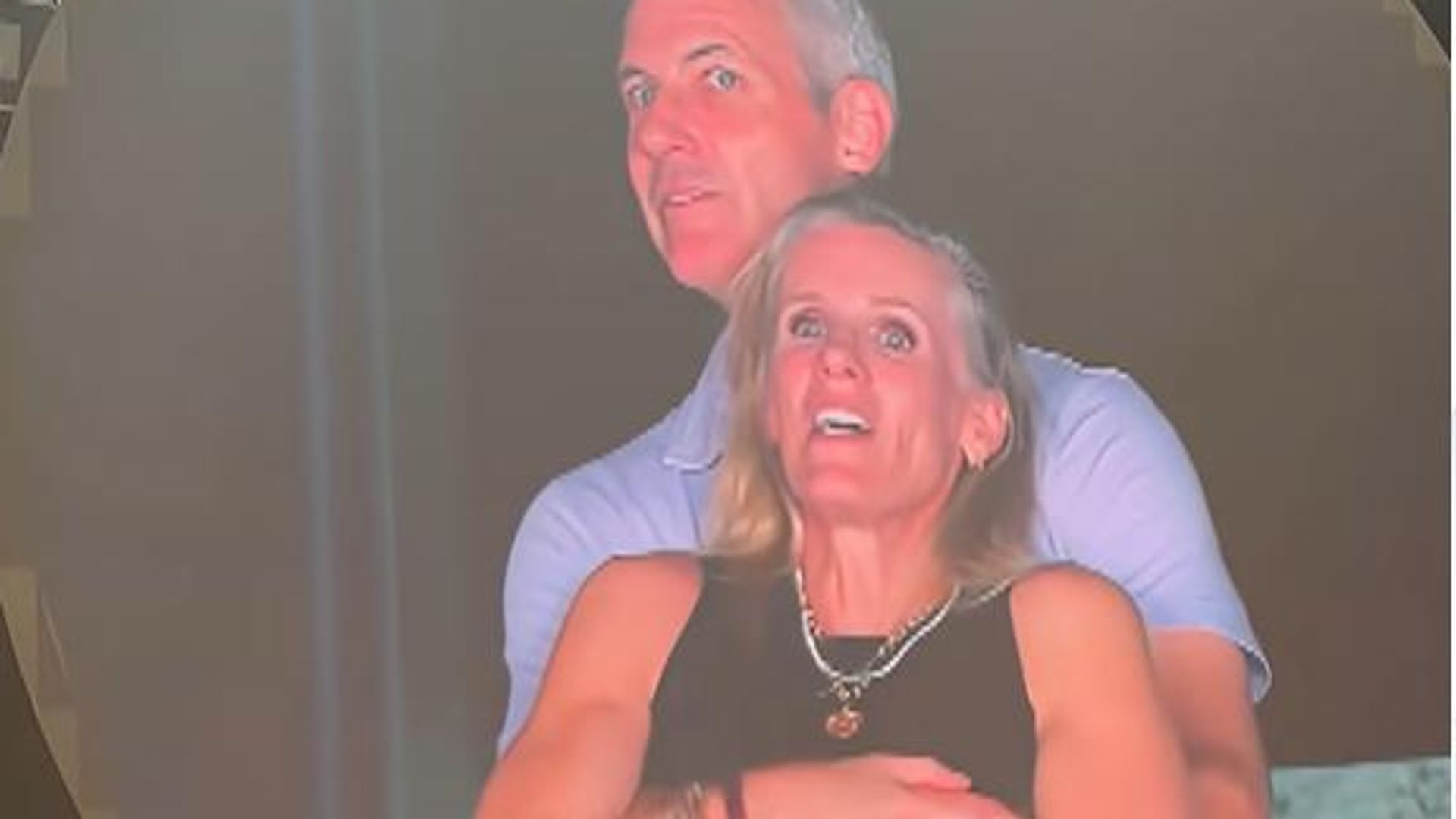








The chief executive of tech firm Astronomer has resigned after a video appearing to show two of its senior members of staff embracing at a Coldplay concert went viral.The Latest News from the UK and Around the World | Sky News
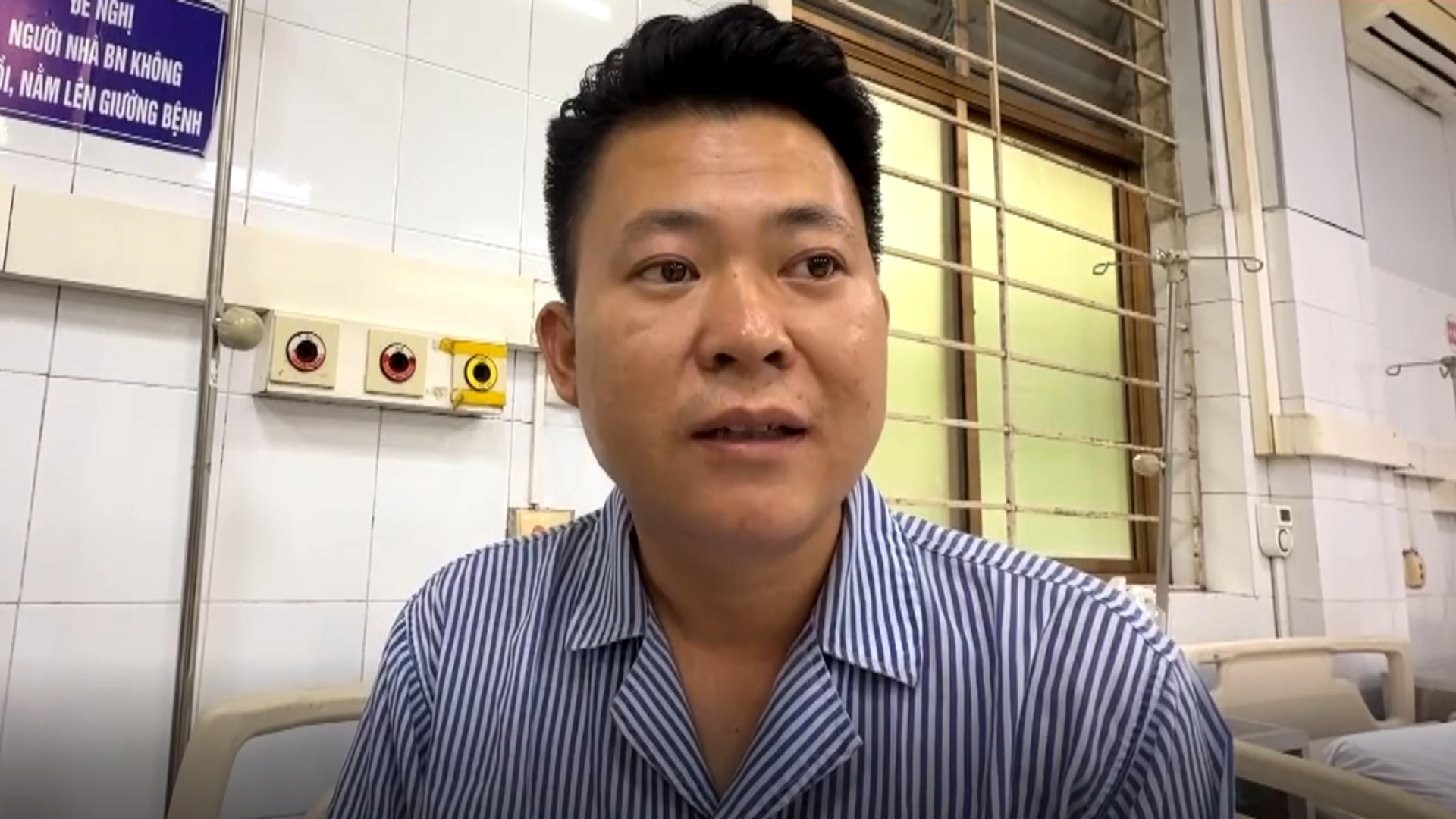
A man who survived the capsizing of a tour boat in Ha Long Bay has told how he escaped by swimming out through a window underwater.The Latest News from the UK and Around the World | Sky News
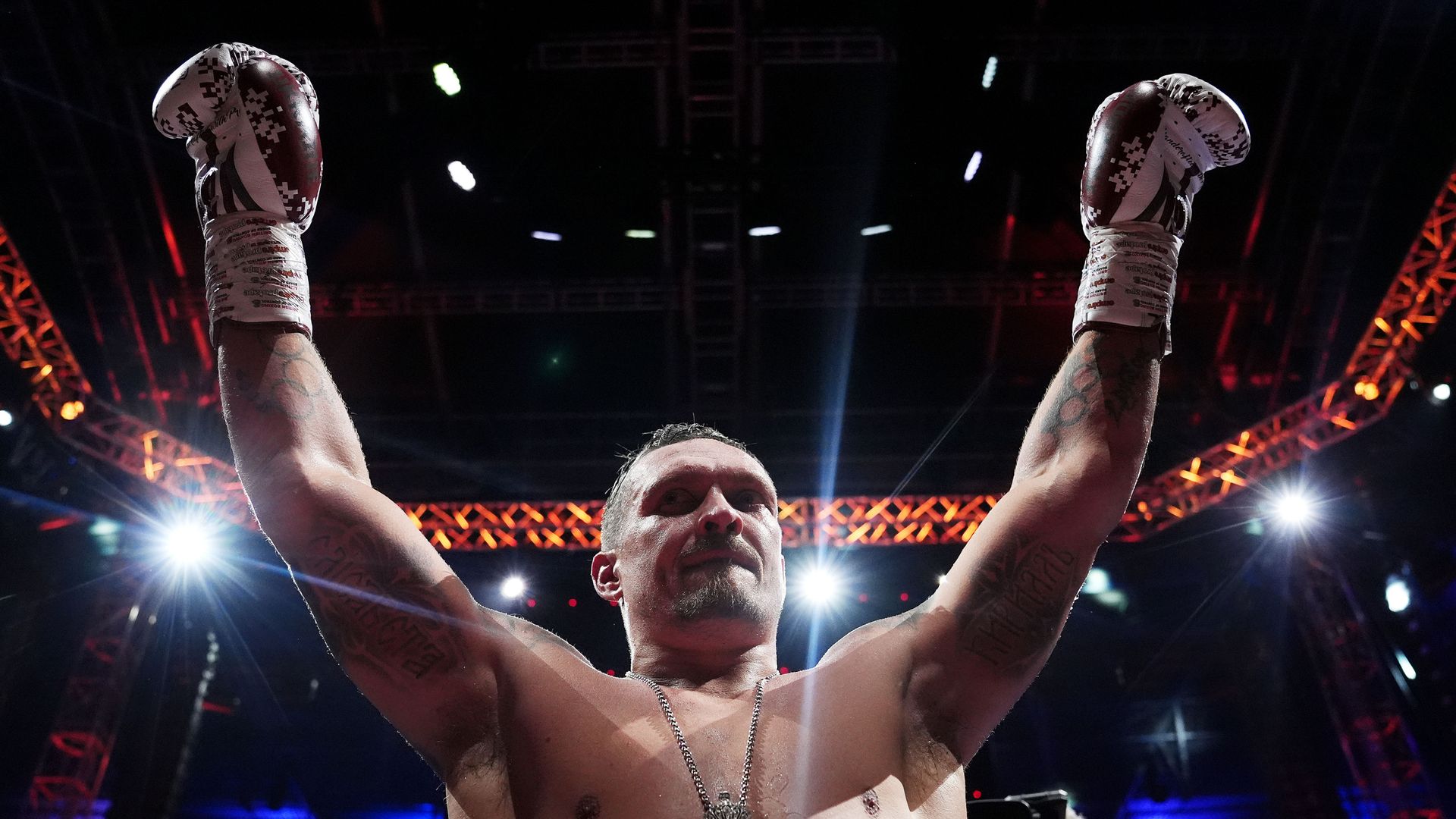
Oleksandr Usyk has become boxing’s undisputed heavyweight champion for a second time after beating Britain’s Daniel Dubois at a packed Wembley Stadium.The Latest News from the UK and Around the World | Sky News

It’s lunchtime on Birmingham’s New Street. The Latest News from the UK and Around the World | Sky News

The mother of baby boy, who had 22 medical appointments with nine different doctors before being diagnosed with a rare genetic condition, wants all newborns to be tested for it.The Latest News from the UK and Around the World | Sky News

Labour will eliminate unauthorised sewage spillages in 10 years, the environment secretary has told Sky News.The Latest News from the UK and Around the World | Sky News

Watching pictures of Prince Harry in Angola this week took me back to 2019, when we were there for his first visit following in Princess Diana’s footsteps.The Latest News from the UK and Around the World | Sky News

Warning: This article contains details that some people may find disturbing.The Latest News from the UK and Around the World | Sky News

Seeking to expand Florida’s role in federal immigration enforcement, Florida Gov. Ron DeSantis in May 2025 submitted the state’s Immigration Enforcement Operations Plan to the Trump administration.
The plan, endorsed by President Donald Trump, says all of Florida’s roughly 47,000 law enforcement officers have received, or soon will receive, training to act as immigration officers. It’s part of an effort to, as the plan notes, “maintain state-led border security operations in the absence of federal support.”
The DeSantis plan includes a proposal to deputize Florida’s nine National Guard Judge Advocate General’s Corps officers to serve as immigration judges. JAG officers are attorneys who serve as legal advisers, prosecutors, defense counsel and military judges in a wide range of matters specific to the armed forces. That includes courts-martial and civil matters involving the military.
DeSantis has said the move is necessary to create a fast-track deportation system at Florida’s new immigration detention facility in the Everglades, Alligator Alcatraz.
He has dismissed due process concerns – such as a lack of training and independence – from legal experts, pointing to the backlog in immigration courts. Immigration judges in Florida’s immigration courts have one of the largest backlogs in the country, with over half a million cases.
The Constitution grants Congress, not the president or state governments, the power to establish immigration laws.
Under the Immigration and Nationality Act of 1952, also known as the McCarran-Walter Act, Congress created a clear process for immigration removal cases.
In general, a U.S. noncitizen may face removal from the country based on violations to the immigration laws. Those range from unauthorized entry to committing or being convicted of certain crimes.
Congress designated the Executive Office for Immigration Review, an agency within the Department of Justice that houses the immigration courts and the Board of Immigration Appeals, as the body exclusively responsible for deciding immigration removal cases. The office also details the authority and standards for how immigration judges conduct deportation hearings.
Immigration judges undergo rigorous vetting and training. And their decisions are subject to appeal to the Board of Immigration Appeals, the administrative appellate body for decisions made by immigration judges.
The McCarran-Walter Act also contains several provisions that subject most immigration court decisions such as removal or asylum to judicial review in federal courts. That can happen on direct appeal or as part of habeas corpus petitions that challenge the legality of detention or removal.
The system is far from perfect. But Congress designed it to ensure legal expertise and due process guarantees.
As an immigration scholar, I believe that allowing Florida JAG officers to serve as immigration judges bypasses this framework that is set in law, and violates the constitutionally mandated separation of powers.
JAG officers, including those in Florida’s National Guard, are not governed by the McCarran-Walter Act. They are military lawyers in an entirely separate system, overseen by the Uniform Code of Military Justice, which defines the role of military judges. The code retains a unique military character that is substantially different from the judicial appellate system that governs immigration administrative rulings.
Simply put, neither Trump nor DeSantis can create an entirely new system of immigration judges outside of the one already established by Congress.
A current immigration provision, known as the 287(g) program, authorizes U.S. Immigration and Customs Enforcement to collaborate with local law enforcement to enforce federal immigration laws.
But this provision only authorizes deputizing local law enforcement to assist “in relation to the investigation, apprehension, or detention” of immigrants – not the arbitration of deportation cases.
In the nearly three decades since 287(g) was enacted, no state or local officials – let alone military officers – have been permitted to act as immigration judges.
DeSantis’ plan seeks to convert Florida’s JAG officers from state to federal officials to function as immigration judges. Trump’s approval of this plan would also exceed the scope of his statutory authority.
Federal statutes allow the president to federalize the National Guard in limited instances: during times of war or national emergency.
But neither DeSantis’ rhetoric nor Trump’s framing of undocumented immigration as an “invasion” meet these legal thresholds.

Even if Florida’s National Guard were federalized, JAG officers still could not legally serve as immigration judges.
The Posse Comitatus Act, enacted in 1878, restricts the use of federal military personal in civilian law enforcement. It reflects a longstanding American principle: The military should not police civilians.
Immigration enforcement – including deciding whether someone is deported – is fundamentally a civilian enforcement function.
The only narrow exceptions to the Posse Comitatus Act’s restrictions require a clear statutory basis, such as Trump invoking the Insurrection Act of 1807, a law that would allow the president to rely on the military for domestic enforcement to quell a rebellion or widespread violence.
The DeSantis plan also compromises constitutionally guaranteed rights to a fair process for immigrants facing removal.
Immigration law is notoriously complex. Even experienced immigration lawyers struggle to keep up with its constant changes.
JAG officers, trained primarily in military law, would face immense challenges interpreting and applying immigration statutes. That’s especially true with only weeks of preparation, as DeSantis proposes.
But due process isn’t only about knowledge of legal technicalities. The Fifth Amendment guarantees due process rights to all persons on U.S. soil, regardless of immigration status.
For decades, courts have interpreted these protections to include fair hearings before qualified immigration judges – and, in most instances, judicial review.
By circumventing established procedures, DeSantis’ plan risks creating a system where expedited deportations come at the expense of accuracy and constitutional rights.

Raquel Aldana does not work for, consult, own shares in or receive funding from any company or organization that would benefit from this article, and has disclosed no relevant affiliations beyond their academic appointment.
Politics + Society – The Conversation

Mike returned home to Philadelphia after a 15-year prison sentence and suffered an emotional breakdown.
“I just couldn’t stop crying … I don’t know. It was the anxiety. It was just a lot,” he said. “I was under a lot of pressure and it just came crashing down.”
Mike, who was in his late 40s when we spoke, told me about his childhood filled with abuse, his first arrest at age 14, and the over 20 years of his life that he spent behind bars.
As a registered nurse and nurse scientist who studies how incarceration affects mental health, I know Mike’s experience after release from prison is not uncommon. Studies show that Black men who have experienced incarceration have higher rates of PTSD, depression and psychological distress compared with Black men who have never been incarcerated.
Working in psychiatric hospitals in Philadelphia, I met many patients in crisis who had been incarcerated at some point in their lives. As a part of my doctoral research, funded by the National Institute of Nursing Research, I interviewed 29 formerly incarcerated Black men to understand how incarceration has affected their mental health.
My peer-reviewed findings were published in the journal Social Science & Medicine. All quotes shared here use pseudonyms to protect the men’s privacy.
Mass incarceration in the U.S. has serious health consequences for individuals, families and communities. In Philadelphia alone, over 20,000 people return home from incarceration each year.
While incarceration rates are declining in Philadelphia, the needs of those coming home remain significant.
Many formerly incarcerated men described experiencing or witnessing violence, including being beaten by correctional officers and witnessing close friends get assaulted or killed.
“You know you are not regular because you come from a traumatic situation, right?” said Thomas, 44, who spent 18 years incarcerated.
The participants expressed that racism was common, especially while incarcerated in facilities located in the rural central and northern regions of Pennsylvania.
“I ain’t gonna sugar coat it – Black people going up into them white people mountains, they call you [n-word] all day long and you basically there to accept it,” Antonio told me.
Incarceration was especially difficult for those who were held for months pretrial without ever being convicted and those incarcerated during COVID restrictions who spent more than 23 hours a day in their cells.
Participants described life on parole or probation, or in transitional housing, as another form of confinement.
Ken, 56, has been out of prison for over a decade but said, “I’m still locked up, even though I’m free, I ain’t free. You just get a whole new set of rules and regulations.”
Men described significant anxiety related to community supervision requirements, including difficulty sleeping the night before a probation appointment.
Participants also described distress caused by “no association” restrictions. These are common parole and probation requirements that prohibit people under supervision from interacting with others who have criminal records, are also under supervision or are currently incarcerated. Violating this requirement can lead to a technical violation and reincarceration.
While these requirements are meant to reduce the risk of reoffending, they often isolate people from supportive relationships and resources, including housing and employment.
“[There are] a lot of smart brothers in there. And it hurts my heart. And that’s where the depression coming in too,” said Reese, who spent six years incarcerated. “I can’t contact them in jail. … That’s just how it is in the system.”
Philadelphia has the highest rate of community supervision – including probation and parole – among the largest U.S. cities, according to a 2019 analysis by The Philadelphia Inquirer.
At that time, the Inquirer reports, 1 in 23 adults in Philadelphia were under community supervision – and 1 in 14 Black adults in Philadelphia.
The men I interviewed said they felt like parts of them never left jail or prison, while others felt that they brought prison or jail home with them.
Tyrese, 34, said he stays home as often as he can.
“I’ve been out of the joint for seven years now and feel like I’m still institutionalized, I guess,” he said. “I know people that don’t even come outside,” referring to other formerly incarcerated men.
Others had dreams that they were back in a cell, or at home still wearing jail clothing. Long after release, many described constant hypervigilance and anxiety.
“I can be walking to the bus station and there be people walking around me, I’m constantly watching them,” said Anthony, who was first incarcerated at age 18 and served 16 years. “I’m watching every movement they’re doing. That’s a habit I had from jail.”

People who have been incarcerated often struggle to find employment after release, as many employers are unwilling to hire a person with a criminal record.
This leaves about 35% of formerly incarcerated Black men unemployed.
At the time of our interview, Tay, 31, was working part-time in carpentry. “Because I had felonies on my record a lot of places won’t hire me,” he said. “And a couple of places that I was working with, they ended up firing me once they did the background check.”
These frustrations can easily spill over into family life.
Mark, 30, also works part-time and said he found himself frequently becoming agitated and snapping at his kids, other family members and his girlfriend. “I can’t get the job I want or the job that I need to do what I need to do for my family and I’ll be frustrated,” he shared.
Participants struggled with having to depend on others for basic needs upon release. Kenny, who is now self-employed as a caterer, recalled his experience a few years earlier. “I was crying. I was a grown man, almost 40 years old, and my mother had to buy me underwear, socks,” he said.
Despite their many hardships, some of the men spoke with joy about reconnecting with their children.
“I think the most positive thing that happened since I’ve been out of prison is I got custody of my sons,” said Ken, a father of two. “Them kids saved me.”
Like many of the other participants with children, however, he was frustrated about being unable to provide for them and worried about repeating harmful cycles.
“You want to do good, but it makes you think bad stuff when you don’t have the right resources,” he continued. “You don’t want [your kids] to do the same things you did.”
Others struggled to bond with their children after years of separation.
John, 29, explained, “The bonding is kind of awkward, because you wasn’t there, especially during the pandemic when there was no visits allowed.”
Most people released from incarceration return to neighborhoods with high rates of poverty, violence and other disadvantages.
Shawn, who lives in pubic housing, showed me abandoned buildings and boarded storefronts in his neighborhood and described how the environment made rebuilding his life harder.
For many participants, returning to divested communities brought stress. They experienced frequent exposure to substance use, violence and negative police encounters, and they had limited access to basic resources and job opportunities needed to support recovery and stability.
“This is my real life. It’s not fake. It’s not no, ‘Well, why did he go back and do this or that?’” he said. “I live in an underserved, impoverished, danger zone – period.”
The experiences these men shared with me demonstrate how traumatic incarceration is, even many years after release.
Supporting the mental health of formerly incarcerated Black men requires trauma-informed services, such as culturally responsive counseling, peer support and care that acknowledges the lasting effects of incarceration.
It also means helping them build or rebuild their financial resources, reconnect with their children and loved ones, and supporting the broader communities they return to through investment in housing, employment and accessible health and social services.

Helena Addison received funding from National Institute of Nursing Research of the National Institutes of Health under Award Number F31NR020434, the Substance Abuse and Mental Health Administration and American Nurses Association Minority Fellowship Program, the University of Pennsylvania’s Presidential PhD Fellowship, and Jonas Philanthropies to support this study and/or her PhD training. The content is solely the responsibility of the authors and does not necessarily represent the official views of the National Institutes of Health, or any other funding organizations or institutions. The views expressed in written training materials or publications and by speakers and moderators do not necessarily reflect the official policies of the Department and Human Services; nor does mention of trade names, commercial practices, or organizations imply endorsement by the U.S. Government.
Politics + Society – The Conversation