Rosanne Cash has postponed upcoming shows after an unexpected medical emergency, with doctors temporarily restricting her travel and performances. Continue reading…Country Music News – Taste of Country
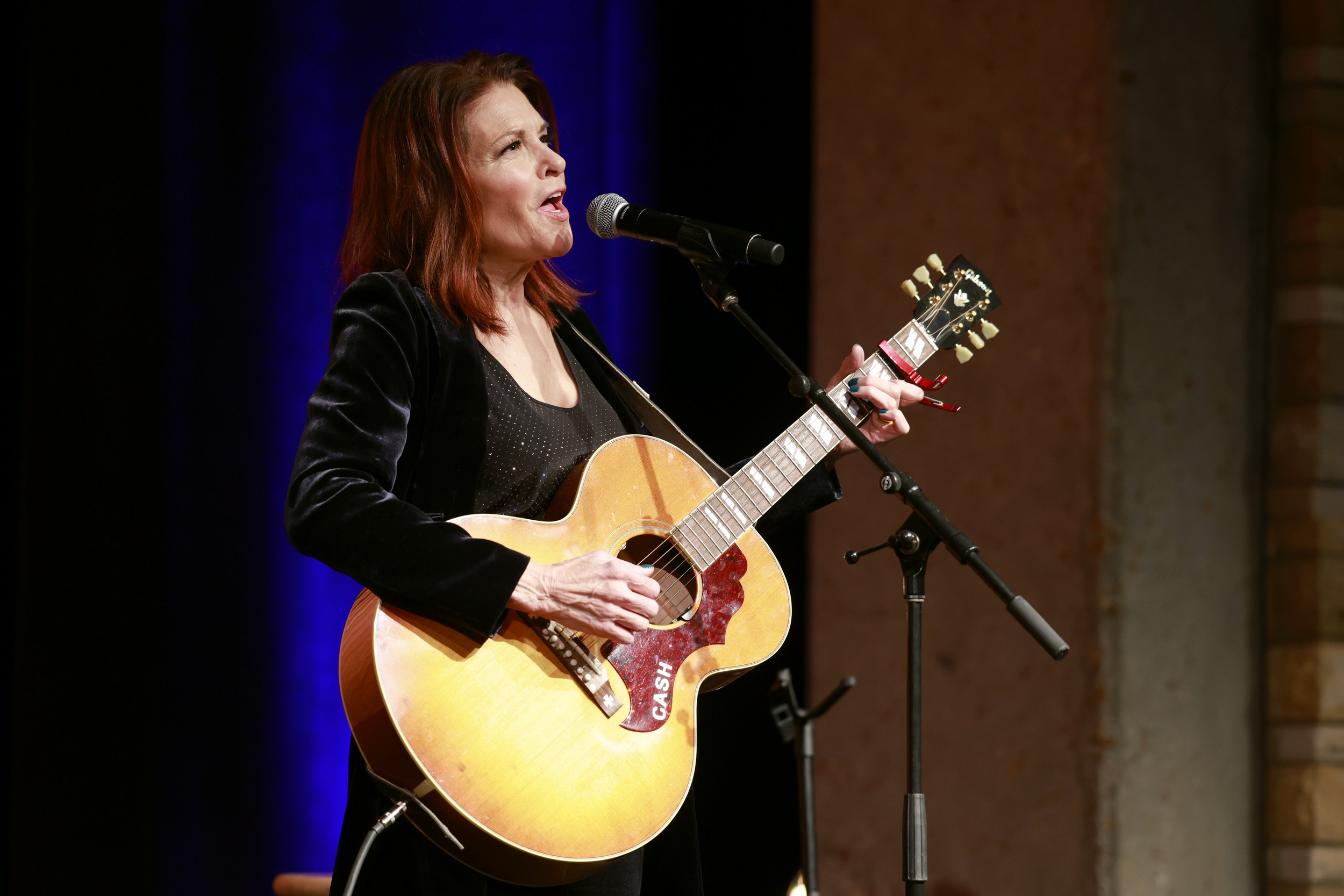








Rosanne Cash has postponed upcoming shows after an unexpected medical emergency, with doctors temporarily restricting her travel and performances. Continue reading…Country Music News – Taste of Country

The doors to the Office of the Governor are seen Monday, Aug. 1, 2022, on the third floor of the Alaska State Capitol in Juneau, Alaska. (Photo by James Brooks/Alaska Beacon)
On Monday, the Alaska Department of Law released a report that identified potential gaps in the Public Official Financial Disclosure documents filed by 91 different candidates for state office this year.
The gaps were uncovered by department staff who consulted business licensing databases, property records, and a large national database called TLOXP.
Among the 91 candidates flagged for possible omissions are all four finalists — one Democrat and three Republicans — in Alaska’s election to replace Gov. Mike Dunleavy.
Here’s what the report said about each governor and lieutenant governor candidate, in alphabetical order:
According to state corporate records, Republican Dave Bronson is the manager of Piper LLC, an entity owned entirely by the DWB Revocable Trust. That affiliation wasn’t listed on his POFD.
His POFD also doesn’t show him as being a director of an Arizona-registered corporation called Bible Archaeology Search and Exploration Foundation or as being director of the nonprofit Alaska Governor’s Prayer Breakfast.
Land records show him as having an interest in an Eagle River property that wasn’t listed on his POFD.
The POFD filed by Bronson’s lieutenant governor candidate, Josh Church of Fairbanks, didn’t list him as being director of the Amanita Heights Subdivision Homeowners Association Inc., a nonprofit, and it didn’t list him as having a financial interest in a Fairbanks property or in a North Carolina property sold last year.
The Department of Law flagged three Sitka-related business ties that went undisclosed by Democrat Jonathan Kreiss-Tomkins. These include his status as a “member” of Borealis LLC, a company at the same address as his self-named company, JKT LLC.
He also has an undisclosed property interest in Sitka and was listed as director and vice president of Outer Coast, a liberal arts undergraduate program he helped start. His POFD lists Outer Coast as a tenant but not a business interest.
According to the Department of Law, Zac Johnson, an independent and currently serving on the Anchorage Assembly, has previously undisclosed business interests in Indiana with Charity Horse Shows Inc. and Traders Point Hunt Club, two organizations with addresses that are the same as a previously disclosed separate business.
Republican Treg Taylor has been in a year-old dispute with the Alaska Public Offices Commission over whether or not he is legally required to disclose the full names of the tenants at properties he owns in Anchorage.
The largest of these properties is the rental and extended stay apartment complex, Inlet View Tower in Anchorage.
Taylor initially did not list any renters’ names, but after a deadline to disclose them, he amended his POFD with a partial list that includes either a first or last name and an initial.
The POFD filed by Candi English, Taylor’s lieutenant governor — and briefly, a governor candidate in her own right — is missing accurate information about six different properties, the Department of Law said. One is in Big Lake, another is in Anchorage, another is in Montgomery, Alabama; a fourth is in Seldovia, and a fifth is in Deschutes County, Oregon.
A sixth property is listed in her POFD with only an Alaska zip code, but the Department of Law couldn’t find any ownership records for it. Two other properties were listed under another Alaska zip code, but the Department could verify only one in land records.
The report for Republican Bernadette Wilson notes that she is president, director and shareholder of Denali Disposal, a garbage company, but her POFD lists her only as its salaried general manager.
The POFD for Shower, Wilson’s lieutenant governor candidate, had no known problems.

Gov. Mike Dunleavy, Lt. Gov. Nancy Dahlstrom and Stephen Cox, general counsel to Dunleavy, speak at a news conference on Sep. 7, 2026 defending the decision to re-certify Treg Taylor as a candidate for governor on the general election ballot, citing issues with multiple candidates’ financial disclosure reports and litigation risks if he were disqualified. (Photo by Wil Courtney)
A decision that reversed Alaska Republican governor candidate Treg Taylor’s disqualification was motivated in part by a review that found 91 possible disclosure problems among 121 state-office candidates, Lt. Gov. Nancy Dahlstrom said Monday.
“My decision, I believe, was necessary for the integrity and the orderly administration of the election, and I believe this decision serves the public,” she told reporters during a news conference in Anchorage.
“There’s going to be a lot of people that think there were nefarious things going on. We don’t think so,” said Gov. Mike Dunleavy.
It wasn’t immediately clear whether any of the disclosure problems put candidates at risk of violating state law or if the state would require candidates to fix those problems.
Dahlstrom disqualified Treg Taylor and an Anchorage state House candidate on Aug. 31, following the recommendations of the Alaska Public Offices Commission, which cited flaws in their Public Official Financial Disclosure forms.
APOC is a regulatory agency of the Alaska Department of Administration that oversees campaigns and public officials’ financial disclosures, as well as lobbying activities.
Elected officials, members of state boards and commissions, and the governor’s cabinet, are required to use the POFD to disclose all business dealings worth more than $1,000 in order to discourage corruption.
Taylor, Dunleavy’s former attorney general, and Republican state House candidate Jose Tagle failed to file complete forms within 30 days after they registered as candidates, causing APOC to recommend that they be disqualified from advancing past the August primary.
Dahlstrom followed that recommendation but then reversed herself four days later, restoring Taylor and Tagle to the ballot on Sept. 4.
Rachel Witty, the top civil attorney for the Alaska Department of Law, said during Monday’s news conference that the department had conducted a “limited and expedited” review of other candidates’ POFDs after Taylor’s disqualification in order to judge whether Dahlstrom’s action was legally defensible.
“This was done over the course of a day and a half. So I can’t emphasize enough that this is a preliminary review. We didn’t have time to contact candidates,” she said.
The resulting review found dozens of potential problems, including some with every other finalist candidate for governor — Democratic candidate Jonathan Kreiss-Tomkins, Republican Bernadette Wilson and Republican Dave Bronson.
Wilson and Kreiss-Tomkins’ lieutenant governor candidate, Zac Johnson, were the subject of APOC complaints on Friday about their disclosures, according to the Anchorage Daily News.
APOC had not published the complaints as of Monday evening.
Dahlstrom said she was not aware of those complaints before making the decision to restore Taylor’s candidacy.
Candidates appeared to be surprised by Monday’s disclosure. None of the four candidates for governor responded to questions on Monday afternoon and evening about the issues raised by the Department of Law.
“And just because there are potential discrepancies, that doesn’t mean that those candidates violated the law,” said Stephen Cox, attorney to Gov. Dunleavy.
Cox was appointed as attorney general following Taylor’s departure, but was rejected by the Alaska State Legislature in May.
Cox said he worked with Witty and the Department of Law on the review; the extent of his involvement wasn’t immediately clear.
The Department of Law’s investigation is unusual, if not unprecedented. APOC typically operates on a complaint-based system, with most actions taken when a member of the public alerts the commission to a potential problem.
The agency is chronically underfunded and understaffed. Ten years ago, it had 13 staff; today it has nine, and APOC has struggled at times to fill those positions.
Until last year, Taylor served as attorney general, head of the Department of Law. He’s now running as a Republican for governor, and the decision to both disqualify him and restore him came from a Republican elected official.
Witty said that “unequivocally,” the review “was completely an initiative of the Department of Law as we assess litigation risk.”
When asked whether candidates will be fined or required to correct the potential discrepancies before the general election, Witty said that’s within the jurisdiction of APOC to investigate.
“We don’t know what APOC is going to do,” she said. “If they find there’s reason to believe there is a violation, they can refer that to the APOC commission to take action on, and at that point, we’re talking about different fines and in the form of penalties.”
Moving forward, Dunleavy said, he intends to recommend that the next governor and next Legislature review APOC laws and regulations with a group of former elected officials.
“That’s something that I’ve been thinking about quite honestly for some time, and this just kind of hits home that it’s long overdue,” he said.

Brad Paisley and Dolly Parton’s “When I Get Where I’m Going” is a powerful reflection on Heaven, faith and the hope of seeing loved ones again. Continue reading…The Boot – Country Music News, Music Videos and Songs
Brad Paisley and Dolly Parton’s “When I Get Where I’m Going” is a powerful reflection on Heaven, faith and the hope of seeing loved ones again. Continue reading…Country Music News – Taste of Country

 Nothing says “fall fashion” to us quite like a sweater and skirt combo. Unlike a dress (which yes, can still be versatile), you can swap in sweaters and skirts with a myriad of different pieces in…
E! Online (US) – Top Stories

More than 600,000 Alaskans are scheduled to get $1,200 payments starting Oct. 1 through the Alaska Permanent Fund Division.
The payout includes a $1,000 PFD plus a $200 energy dividendapproved by the Alaska Legislature this spring. The PFD amount is the same as a year ago — which was the lowest adjusted for inflation since dividends have been issued in 1982 — with the extra $200 due to extra revenue the state got from…

Week 1 of the regular season is finally here and teams across the NFL are putting the final touches on their roster while others are dealing with last-minute injury news before the season kicks off Wednesday with the Super Bowl rematch between the Patriots and Seahawks. The Atlanta Falcons formally named Tua Tagovailoa as their Week 1 starting quarterback, while the Dallas Cowboys suffered a blow to their offensive line with All-Pro guard Tyler Smith set for thumb surgery. Down under, the Niners and Rams are preparing to play the first NFL game in Australia and one side is confirming the return of a pass rusher while the other is being more secretive about theirs. Here is the latest news from around the league on Monday. Los Angeles Rams defensive tackle Aaron Donald remained noncommittal Monday about whether he will travel, let alone suit up for the team’s Week 1 opener against the San Francisco 49ers in Melbourne, Australia. Speaking to reporters following practice, the recently unretired veteran offered vague answers when asked if he plans to make the trip and play on Thursday. “Feeling really good. Feeling great,” Donald said when asked about traveling to Australia. “Come up with a game plan and see what’s going on.” Donald, who ended his retirement Aug. 30 to rejoin the Rams, continues to work through a progressive conditioning ramp-up. While head coach Sean McVay previously indicated the entire roster is expected to make the flight, Donald’s actual game-day snap count and active availability remain a day-to-day evaluation as kickoff approaches. Meanwhile, Myles Garrett looked like he was trying to add more power to his tackles, so the Rams’ pass rush will still be plenty for opposing offenses to handle. San Francisco 49ers defensive coordinator Raheem Morris told reporters Monday that star defensive end Nick Bosa will play in Thursday’s season-opening matchup against the Los Angeles Rams in Melbourne, Australia. Bosa, who tore his right ACL in Week 3 of last season and dealt with knee tendinitis during training camp, returned to practice last week before making the flight with the team. “He’s going [to play]. We are not hiding that,” Morris told reporters. Bosa’s return provides a key boost to a San Francisco pass rush that finished last in the NFL in sacks last season. While the team may manage his snap volume as he continues building up his conditioning, his active status anchors the 49ers’ defense for the historic kickoff in Australia. Cleveland Browns head coach Todd Monken told reporters Monday that sixth-round rookie quarterback Taylen Green could be active for Week 1 against the Jacksonville Jaguars, potentially serving as the primary game-day option behind starter Deshaun Watson. When asked if Green could earn the gameday active spot over Shedeur Sanders to run specialized athletic packages, Monken left the door open. “Could be,” Monken said. “There could be a package where we have him.” Monken added that while activating three quarterbacks on game day remains possible. Green, a sixth-round pick in April’s draft, made the Browns’ 53-man roster as QB3 after Dillon Gabriel was placed on injured reserve due to a back injury. Monken named Watson the starting quarterback on Aug. 24 after a competition in training camp between him and Sanders. While the Dallas Cowboys’ offense has undergone constant turnover in recent seasons, guard Tyler Smith has remained a steady anchor. Now, the Cowboys must survive without him after head coach Brian Schottenheimer announced Monday that Smith will be sidelined. He is expected to miss 4-to-6 weeks after undergoing thumb surgery. The surgery will force Smith to miss at least the first four games of the regular season while opening up a spot on the 53-man active roster. “Tyler Smith is going to have surgery on his thumb tomorrow morning,” Schottenheimer said during his press conference. “It’s something that he’s just been dealing with.” With Smith sidelined, offensive lineman T.J. Bass is slated to take over as the starting left guard. Bass joined the organization as an undrafted free agent and has made 10 career starts, including five last year. The Cowboys retained Bass this offseason after placing a second-round restricted free agent tender on him. The Cowboys are set to open their season on Sunday night when they travel to New York to take on the Giants on Sunday Night Football. The New York Giants officially released veteran wide receiver Darius Slayton on Monday, ending his seven-year tenure with the organization. Selected in the fifth round of the 2019 NFL Draft, the 29-year-old was the longest-tenured player on New York’s roster before his release. Slayton had 296 catches for 4,435 receiving yards and 22 touchdowns in seven seasons in New York. The decision clears roster space as the Giants finalize a receiving corps led by Malik Nabers, Odell Beckham Jr., Darnell Mooney, and rookie Malachi Fields ahead of their Week 1 opener against the Dallas Cowboys. Slayton posted a farewell message on X Monday thanking the organization, officially becoming an unrestricted free agent. The Giants signed Slayton to a three-year, $36 million deal before last season. He was due $13 million this season. The move creates just over $3 million in cap space for this year. After a competitive quarterback battle, the Atlanta Falcons are naming Tua Tagovailoa as the starter for Sunday’s game against the Pittsburgh Steelers. Head coach Kevin Stefanski made the announcement official on Monday morning. Michael Penix Jr. is still recovering from season-ending knee surgery, though he is expected to return to the field later this year. Until he is fully cleared, Tagovailoa will take the reins as Atlanta’s starter. With Penix’s return still unknown, Stefanski is expected to rock with Cooper Rush as the backup to start the season. Tagovailoa is coming off an up-and-down final season in Miami. Over 14 starts with the Dolphins, he completed 67.7% of his passes for 2,660 yards, 20 touchdowns, and 15 interceptions, while adding 43 yards on the groundLatest Sports News from FOX Sports
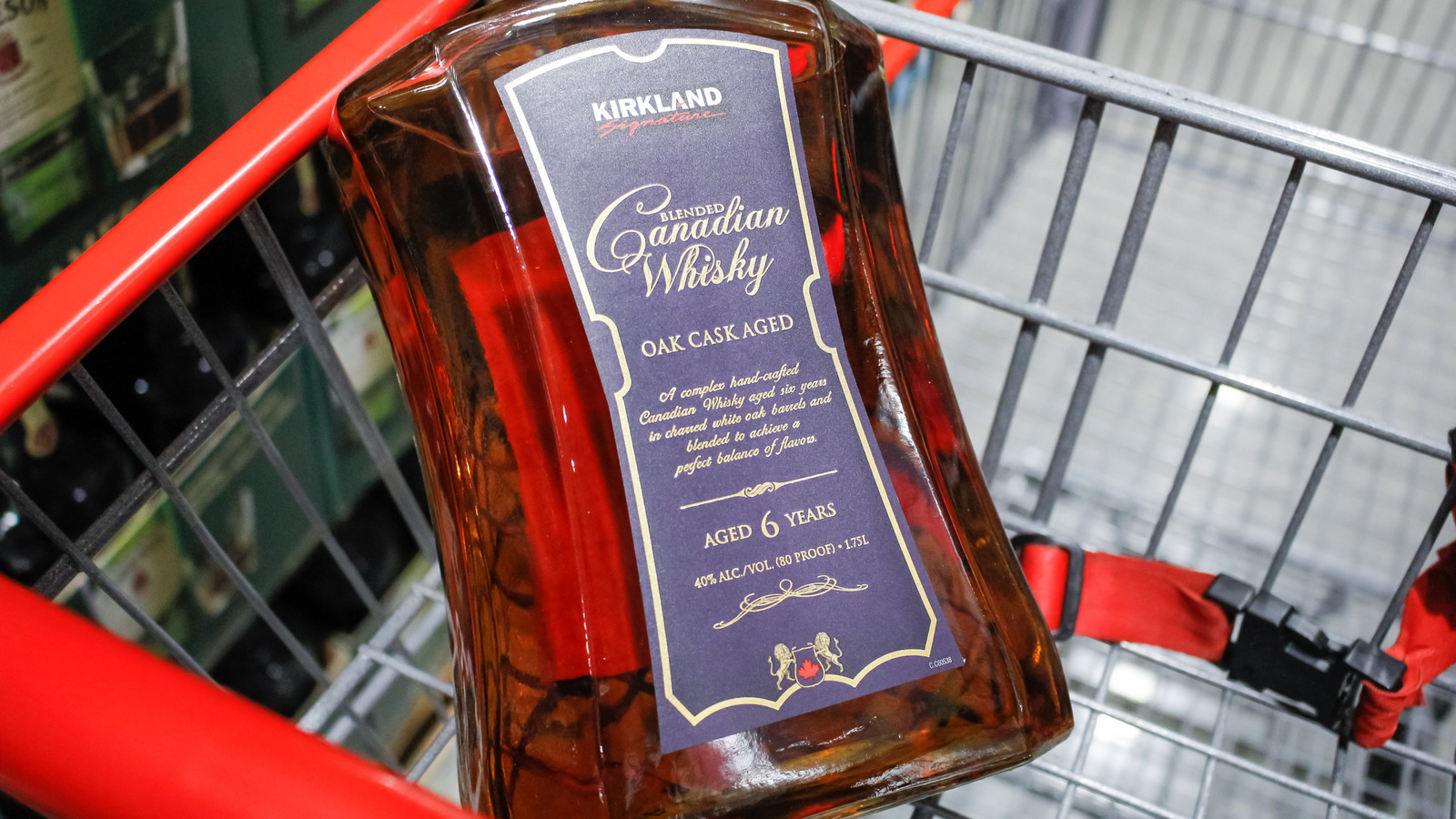
Kirkland Signature Canadian whisky is praised for its value and smooth taste. These timeless cocktails would be great pairings with the popular Costco spirit.
Mashed – Fast Food, Celebrity Chefs, Grocery, Reviews

 DSW’s Labor Day sale is still going on for just a bit longer, so you’ve still got time to get a head start on your fall shoe collection.
They’re currently offering BOGO 50% off qualifying shoes,…
E! Online (US) – Top Stories