 Brooks Nader was happy to keep it wet and wild this summer.
While the Sports Illustrated model made waves for going topless during her European vacation in Sardinia alongside sister Sarah Jane…
E! Online (US) – Top Stories









Brooks Nader was happy to keep it wet and wild this summer.
While the Sports Illustrated model made waves for going topless during her European vacation in Sardinia alongside sister Sarah Jane…
E! Online (US) – Top Stories

udience members are packed into the Gerald C. WIlson Auditorium at Kodiak High School on the evening of Sept. 9, 2026, to listen to the four remaining gubernatorial candidates discuss seafood-related issues. Every election year, the Kodiak Chamber of Commerce holds debates that are focused solely on fisheries. Kodiak is one of the nation’s main seafood portss, and fishing is a mainstay of its economy. (Photo by Brian Venua)
At a fisheries forum held Wednesday night in Kodiak, all four candidates remaining in Alaska’s gubernatorial race found plenty of common ground.
Former state Rep. Jonathan Kreiss-Tomkins, a Democrat, and the three Republicans, former Anchorage Mayor Dave Bronson, former state Attorney General Treg Taylor and business owner and talk-show host Bernadette Wilson, described the seafood industry as a pillar of the state’s economy and fish as part of the state’s identity.
All four gubernatorial candidates, who are set to face off in the general election in Alaska’s ranked-choice voting system, said they consider bycatch — the accidental interception of nontargeted species — to be an urgent problem for salmon runs.
All said they want to appoint a special adviser on fisheries, something that past governors have done but that current Gov. Mike Dunleavy has not.
All said they wanted to appoint members of the North Pacific Fishery Management Council, the panel that oversees practices in federal waters, and the Alaska Board of Fisheries, which has jurisdiction over state waters, who would represent state interests broadly, including non-commercial interests.
All vowed a commitment to science, support for the state agency that markets Alaska’s seafood and investment in the infrastructure in coastal communities.
But there were differences that emerged at the event, sponsored by the Kodiak Chamber of Commerce. Those started with the candidates’ personal connections to and knowledge of seafood issues.
Kreiss-Tomkins, who is from the coastal town of Sitka in Southeast Alaska, which he called “a community that was built by fisheries,” provided evidence of the closest connection to fishing and the seafood industry. He spent summers during his college years working as a fishing crew member, and he is the only one of the four candidates who has personal experience fishing commercially and participating in the seafood industry, the Kodiak event revealed.
Wilson said she was connected to the fishing industry through her family. Her grandmother was born in the Bristol Bay community of Naknek, and her father operates a business “that is responsible for hauling all of the fish out of Valdez.”
Republicans Treg Taylor and Dave Bronson, who live in Alaska’s largest city, indicated in a lightning round held near the start of the forum that they had personally engaged in both sport and subsistence fishing; Wilson indicated sport fishing experience but not subsistence experience.
Taylor, who spent part of the debate talking about non-fishery issues like crime, confessed to a certain lack of knowledge about the subject. “This is admittedly an area that I’m not an expert in,” he said. He learned a lot preparing for the Kodiak forum and even “learned a ton during this debate listening to the responses from the other candidates up here,” he said.
Much of the event focused on trawling, the practice of using large nets in the midwater zones or bottom-water zones to scoop up large amounts of pollock and other groundfish. The pollock harvesters in particular have been accused of damaging the state’s salmon runs through bycatch, the accidental harvesting at sea of fish that would be otherwise returning to in-state spawning areas.
Pollock, which is caught mostly in federal waters, is the top-volume seafood harvest in the nation and accounted in 2023 and 2024 for 60% of the Alaska commercial seafood harvest volume, according to the most recent industry report by the McKinley Research Group, a consulting company. But pollock is a low-priced fish species, and the state’s pollock harvest accounted for only 29% of the value of the state’s total commercial seafood harvest, according to the McKinley Research Group. In contrast, salmon, caught mostly in state waters, accounted for only 13% of the volume but 31% of the total value of Alaska’s commercial seafood harvest in those years, according to the McKinley Research Group.
In different ways, candidates at the Kodiak event discussed what they consider to be the threats to salmon from bycatch in the trawl fisheries that target pollock and other groundfish species.
It is a hotly debated issue because it pits different sectors of the fishing industry against each other, including in Kodiak, a community dependent on both trawl harvests and salmon harvests.
Bronson defended his broad anti-trawling stance, which he admitted might not be popular among some people in Kodiak, including some audience members at the forum, which was held in the Kodiak High School’s auditorium.
Drastic reductions in trawling are needed to protect faltering runs of salmon, such as Interior Alaska river king salmon runs that have collapsed, he said.
“We’ve been trying to fix this by pushing all these little buttons. We reduce limits on sport, on subsistence, and we’re doing all this, and it’s not working,” he said. “Where are the kings? Where are the king crab? They’re gone. It’s time to start pulling the big levers, the big ones, and it’s going to devastate some people.”
There are already established areas of federal waters where trawling is banned. None of the candidates named any specific federal areas where they believe new bans should be established.

There have been efforts to ban trawling in state waters, which are within three nautical miles of shore, including bills considered by the Legislature. Trawling is not a widely used harvest practice in state waters, though it occurs in some areas.
Wilson also criticized the trawling practice, but she said there has to be a distinction between the large-scale industrial operators and the “mom and pop” small-scale operators.
To address bycatch, she called for some new efforts to bring together different parties. She called for the establishment of a task force and a symposium to “get everybody to the table, all the different user groups, all in one spot.”
She also called for incentives to spur industry’s use of better technology and practices to mitigate bycatch. “We need to talk about the gear that’s being used. We need to talk about observers that are on boats. We need to talk about how we can bring AI into that conversation,” she said.
NOAA already has a program that funds the development of bycatch reduction technology, and it was not clear if Wilson was referencing that.
NOAA’s national Bycatch Reduction Engineering Program, which distributes grants annually to companies and agencies working on innovative technology, has been in existence for two decades. Technology developed includes trawl nets with features that allow accidentally caught salmon to escape; a 2024 scientific study identified ways to improve the design to protect more salmon.
Taylor used some strong language to describe bycatch, though he did not offer specific suggestions for action.
“We have to end practices that destroy our habitat, and we’ve got to get a handle on bycatch issues throughout the state,” he said.
Kreiss-Tomkins expressed skepticism about Wilson’s symposium and task-force suggestions.
“I’m not so bullish on task forces. I’m more bullish on action,” he said. He pointed to improvements that have already started to ease the bycatch problem. He cited, as an example, his advocacy more than a decade ago of stricter numerical limits for Chinook salmon bycatch in the Gulf of Alaska fisheries, which were approved by the North Pacific FIshery Management Council. He also cited his advocacy for stricter limits on halibut bycatch, which the council approved through an “abundance-based management” system that went into effect at the start of 2024.
Among the responses to a question about the state ferry system and investments in coastal infrastructure, Kreiss-Tomkins provided the most specifics.
Along with bolstering the troubled ferry system and using the Alaska Department of Transportation and Public Facilities’ Municipal Harbor Grants Program to support communities, he had other suggestions. The Alaska Industrial Development and Export Authority should prioritize investment in coastal communities and the seafood industry, something it is not currently doing, he said. Additionally, “general obligation bonds can help build out the waterfronts and harbor infrastructure in Alaska,” he said.
On environmental science, some differences emerged.
Kreiss-Tomkins said the state can respond to the challenge of climate change by investing in research, particularly at the University of Alaska Fairbanks. UAF’s College of Fisheries and Ocean Sciences “has incredible capacity and worldwide renown,” he said.
The Republican candidates demurred on the question of climate change.
Wilson and Bronson said changing conditions in the ocean are nothing new and that there is nothing the state can do about them.
Wilson referred to her Naknek-born grandmother, who advised that “the waters were constantly warming and cooling,” affecting fish runs that would change in size year to year. “It is an ongoing issue that we’ve been well aware of for decades,” she said.
Bronson made a similar comment. “Whether it’s North Pacific or North Atlantic or any other body, oceanic body of water. The temperature is always on cycles, and it’s always changing,” he said.
Taylor said it is important for the state to invest in scientific research to counter federal efforts to impose burdensome environmental regulation. He referenced his own legal fights as attorney general against the Biden administration, particularly concerning NOAA’s 2022 designation of nearly 160 million acres of marine territory as critical habitat for bearded and ringed seals. Both populations are protected with threatened listings under the Endangered Species Act.
Taylor claimed success in the fight. Those critical habitat designations “would have shut down mass portions of Northern and Western Alaska. We beat that with good sound data,” he said.
Taylor’s seal information is outdated. While U.S. District Court Judge Sharon Gleason ruled in 2024 in the state’s favor, finding that the designation was overly broad, the state ultimately lost in the case. The 9th circuit court of appeals in March ordered the reinstatement of the seal species’ designated critical habitats. The day before the Kodiak forum, the appeals court rejected a state petition to revisit the decision.
Outside of the judicial system, the Trump administration has been pushing to reduce the scope of Endangered Species Act protections in general. In July, the administration issued a rule limiting future critical habitat designations.
The Kodiak Chamber of Commerce is set to hold two more fisheries-focused candidate forums on Saturday, one for contenders in the U.S. Senate race and the other for the U.S. House contenders.


The U.S. Supreme Court on April 9, 2026. (Photo by Ashley Murray/States Newsroom
The Alaska Legislature will join Gov. Mike Dunleavy’s administration in seeking to defend the state’s anti-bootlegging punishments in front of the U.S. Supreme Court.
On Thursday, the joint House-Senate Legislative Council voted to hire an outside attorney to draft a friend-of-the-court letter — formally known as an amicus brief — in support of the state and against Ken Jouppi, a former Bush pilot whose plane was seized after a bootlegging conviction.
Jouppi has repeatedly challenged that seizure, saying it represents an illegal punishment because it is out of proportion to the crime he committed.
The Alaska Supreme Court upheld the seizure in 2025, but Jouppi appealed to the U.S. Supreme Court, which agreed earlier this year to hear the case. Oral arguments are expected in December.
The Legislative Council has frequently clashed with Dunleavy over the governor’s interpretations of state law and the Alaska Constitution and has funded multiple lawsuits against the governor, but on this case, the state’s executive and Legislature are aligned.
The state Department of Law, which is defending the state’s anti-bootlegging laws, requested in late August that legislators get involved with the issue.
“At its core,” wrote Senior Assistant Attorney General Kaci Schroeder in a memo to the Legislative Council, “the case implicates an important legislative judgment: how seriously Alaska may treat the illegal importation of alcohol into communities that have affirmatively chosen to prohibit it, and what sanctions the Legislature may impose to deter individuals from using aircraft to circumvent those local decisions.”
Schroeder wrote that Alaska’s penalties for bootlegging were the result of the Legislature “responding to the real-world consequences of local alcohol abuse.”
Having the Legislature provide its input could help the Supreme Court understand Alaska’s historic concerns over alcohol and the role that Bush planes have in serving rural Alaska.
The Legislature’s hired attorney is expected to send its letter to the Supreme Court by mid-October, said Rep. Sara Hannan, D-Juneau and chair of the Legislative Council.

Democratic U.S. House candidate Matt Schultz is seen in an undated photo published on his campaign website. (Screenshot)
Matt Schultz, the former Democratic candidate for Alaska’s lone U.S. House seat, is sending $200,000 in leftover campaign funds to the Alaska Democratic Party, the organization said Sept. 4.
About half of that figure will be distributed to state House and Senate candidates, and the other half will be kept for long-term projects, said party chair Eric Croft.
“This money was never meant to be the entire campaign for any legislative race, but rather as a powerful supplement to what the campaigns are already doing,” he said.
One hundred thousand dollars is a notable contribution to the normally quiet races for state Legislature.
While outside groups spend tens of millions of dollars on Alaska’s U.S. House and Senate races, Alaska Public Offices Commission records from the 2024 election show that competitive legislative races typically involve less than $200,000 per candidate.
Federal candidates typically distribute leftover campaign funds to charity or supporters after the general election; Schultz suspended his campaign ahead of the August primary in order to support independent candidate Bill Hill.
Despite the suspension, Schultz still finished third in the primary, behind Hill and the front-runner and incumbent, Republican Rep. Nick Begich III.
Schultz, a pastor, formally withdrew from the race on Aug. 31 and announced the redistribution of funds later in the week.
“I ran for office because of a moral calling to care for our neighbors, fight for working people, and build a future where every Alaskan has the opportunity to thrive,” he said in a prepared statement on Sept. 4. “I’m proud that investments in my campaign will continue advancing those values by helping elect leaders across Alaska ready to serve with integrity, compassion, and courage. Although my campaign may have ended, the work we started together carries on.”

Ohio State wide receiver Jeremiah Smith didn’t mince words when he spoke about true freshman running back Legend Bey. “Before Legend Bey leaves Ohio State, he will be a Heisman finalist, or he’ll end up winning it,'” Smith told reporters last month. “The things he’s been doing in practice have been pretty special.” That’s high praise coming from someone many believe to be the best player in the sport, regardless of position. And sure enough, last weekend, fans saw with their own eyes exactly why Smith gave that praise. Bey is one of a handful of young Buckeyes — and one Longhorn — I’m keeping my eye on this Saturday when No. 1 Ohio State plays No. 4 Texas. These players can not only climb the depth chart, but will be counted on as the wear and tear of the season inevitably piles up and the oft-used adage “next man up” becomes a reality. Sanchez might be the most talented player on the entire Ohio State defense, and with Matt Patricia calling the shots, that translates into a first-round NFL talent at corner for the Buckeyes. The 6-foot-2, 199-pound cornerback made just one start as a true freshman, but he played in 13 games last season. He really began to shine in the Buckeyes’ win over Illinois, totaling five tackles and deflecting a pass. Look for Sanchez on the field in third down situations against Texas. He’s likely going to be lined up against wide receivers Ryan Wingo or Cam Coleman, which is truly a best-on-best matchup. Boyd is perhaps the most underrated player on the Buckeyes’ offense. He left Southlake Carroll in Southlake, Texas, as the school’s all-time leading receiver. But he really emerged as a national prospect after lining up against 2027 No. 1 cornerback and Texas Longhorn John Meredith III as a sophomore and putting JM3 on a poster. Meredith has been looking forward to lining up against Boyd in college ever since. Meredith reclassified after the Texas University Interscholastic League declared him ineligible for his senior season, determining that he transferred high schools for athletic purposes. He joined the Longhorns late this summer and saw limited playing time against Texas State. He’s unlikely to have a major impact on Saturday’s game, but he’s worth watching if he checks in. Meredith is a consensus five-star with a gift for closing down wide receivers in coverage and using his 6-foot-2 frame to extend his coverage range. The son of late NFL wide receiver Chris Henry is the heir apparent to Ohio State’s No. 1 wide receiver position. That means he’s expected to be as productive and feared as former Ohio State receivers Jaxon Smith-Njigba, Marvin Harrison Jr. and Smith. At 6-foot-5, he has great speed, an uncanny ability to quickly unfold that frame against tight coverage and exceptional body control. Against Ball State last week, he dropped his first two targets. But his third target was a touchdown pass. He’s in good company. Smith dropped his first-ever target, too. Bey is the next box-office Buckeye. He showed us why when he took a 25-yard swing pass to the end zone in OSU’s Week 1 win. In the process, he juked four Ball State defenders with one move, cut back across the field and broke a tackle for his first touchdown. That’s the good — a player who believes he can go for six every time he touches the ball. The bad is the same — a player who believes he can go for six every time he touches the ball. He demonstrated that when he didn’t listen to the up man on a kick return, brought the ball out, was tackled and left the Buckeyes with horrible field position. In one game, he appears to be a feast-or-famine player. But I believe that’s just his immaturity on display. When he grows up and stops making mental mistakes, he has the ability to be the most exciting player in the Big Ten.Latest Sports News from FOX Sports

From true Scotch to Irish whiskey, there are numerous variations of the spirit. As a result, there’s a wide range of prices, depending on which type you get.

Mashed – Fast Food, Celebrity Chefs, Grocery, Reviews

The NFL is officially back, with the Seattle Seahawks taking down the New England Patriots on Wednesday night. However, that also means we’ve got injury news to deal with ahead of the rest of Week 1. Seahawks quarterback Sam Darnold and Patriots wide receiver A.J. Brown both received updates on the injuries that forced them to depart Wednesday’s game early on Thursday. Meanwhile, Atlanta Falcons quarterback Tua Tagovailoa was injured during drills ahead of the team’s practice, putting his status for the team’s Week 1 game against the Pittsburgh Steelers in doubt. Here’s what you should know about what happened around the league on Thursday. Atlanta Falcons quarterback Tua Tagovailoa was set to make his first start with the Atlanta Falcons on Sunday, but his availability for their matchup against the Pittsburgh Steelers is now in question. Tagovailoa suffered discomfort during individual throwing drills on Thursday and briefly went to the ground. While he dealt with a lower back injury early in training camp, this latest discomfort is tied to an oblique issue, NFL Network reported. Tagovailoa is reportedly day-to-day. If Tagovailoa is sidelined, Cooper Rush will be next in line to start Sunday’s game for the Falcons. He told reporters he took first-team reps on Thursday after Tagovailoa went down. Michael Penix Jr. still hasn’t been cleared to participate in full-contact drills. Rush has spent the majority of his career with the Dallas Cowboys and even started several games last season for the Baltimore Ravens. Across 42 career appearances, Rush has completed 61.1% of his passes for 3,766 yards, 20 touchdowns, and 14 interceptions. Seattle Seahawks quarterback Sam Darnold took an early sack against the New England Patriots and left the game with a hip injury, but he appears to have dodged a bullet. MRI results came back positive, ruling out any major structural damage, according to ESPN. However, his timetable is still to be determined, The Ringer reported. After Darnold went down, Drew Lock stepped in and rallied Seattle from a 10-point deficit to secure the win. If Darnold misses time, Lock will take the reins starting in Week 2, when the Seahawks head to Arizona to face the Cardinals. With the win over the Patriots behind them and the Cardinals up next, all attention now shifts to Darnold. While his exact recovery timeline remains unknown, the Seahawks must prepare to navigate the coming weeks with their starting quarterback’s status in question. After leaving early in the second half against the Seahawks, Patriots wide receiver A.J. Brown appears to have avoided a major injury. According to NFL Network, Brown suffered a high ankle sprain and avoided a fracture in his right ankle. Brown’s ankle was rolled up on when he ran a slant route in the third quarter of Wednesday’s game against the Seahawks, and he struggled to walk after the play. He left the game, did not return, and was later seen leaving the stadium in a walking boot on his right foot. The timeline for Brown’s return is unknown, as high ankle sprains can require a lengthy recovery. Signs point toward a multi-week absence, with typical recovery ranging from two to six weeks, and the Patriots are expected to take a cautious approach. Between being limited last night and leaving early with the injury, Brown put up a light stat line. He was targeted four times by quarterback Drake Maye, finishing with three receptions for 26 yards prior to his exit. After a training camp scare, Las Vegas Raiders running back Ashton Jeanty is officially cleared for Sunday’s season opener against the Miami Dolphins. Head coach Klint Kubiak told reporters that Jeanty is a full participant and ready to play. If Jeanty is ready to play, his first test will come against a revamped Dolphins defense led by new head coach Jeff Hafley. He ran for 975 yards on 3.7 yards as a rookie in 2025, scoring 10 total touchdowns. Fourth-round rookie Mike Washington is Jeanty’s backup if the second-year running back has any flare-ups.Latest Sports News from FOX Sports
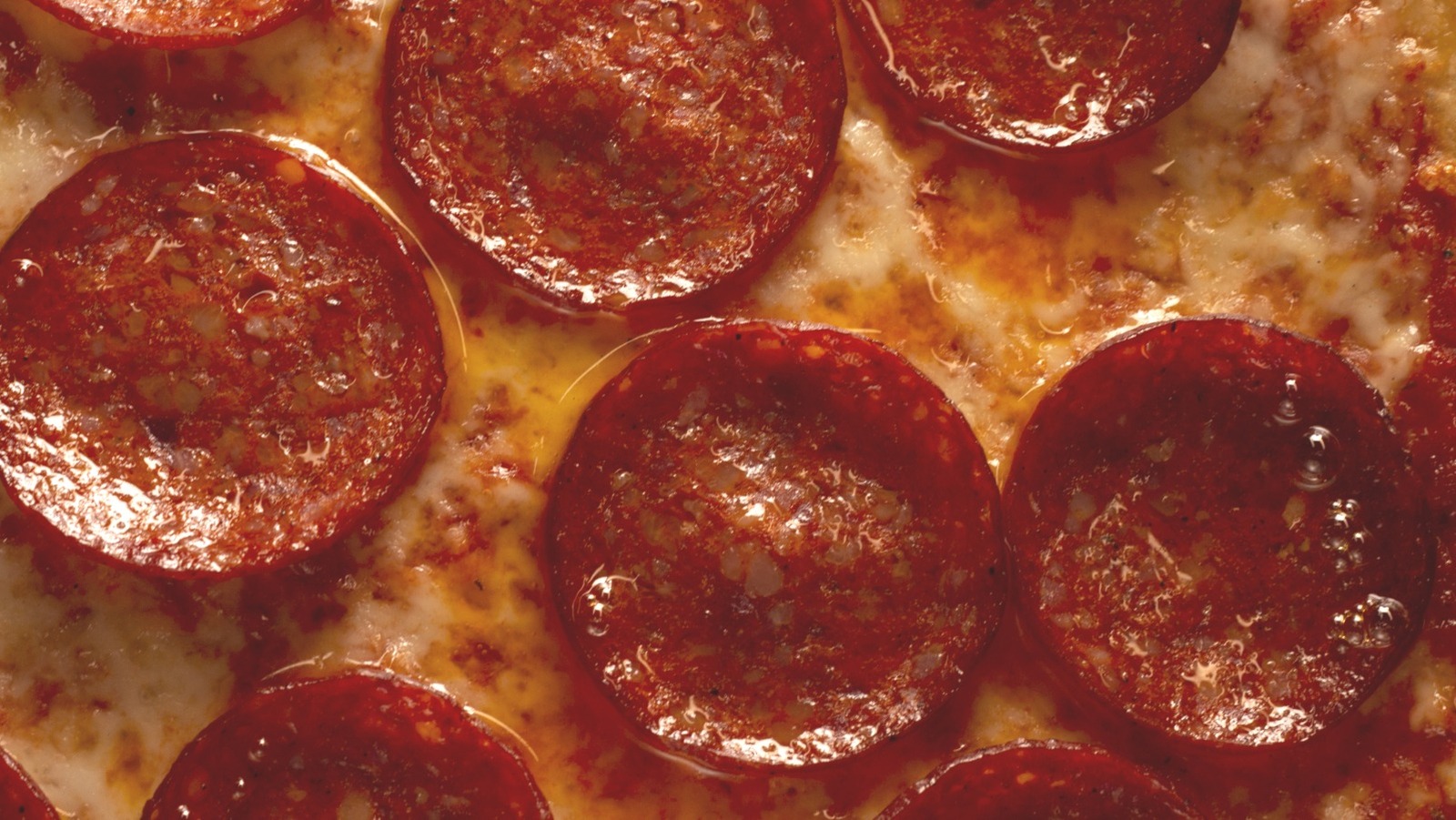
One of the best American pizza chains (the one we rated top at Food Republic) is known for its iconic pepperoni, which you can order in multiple ways.

Food Republic – Restaurants, Reviews, Recipes, Cooking Tips

From crunchy snacks to fruity beverages and pantry staples, Sam’s Club is cutting prices on some of its Member’s Mark food products in September 2026.

Mashed – Fast Food, Celebrity Chefs, Grocery, Reviews

DALLAS — Top Republican lawmakers had no idea President Donald Trump was going to promise $5,000 checks to every adult American so long as his party keeps control of Congress. Now, they’re grappling with how to handle the fallout.
GOP leaders have privately pushed back on similar Trump promises of giving money to Americans in the past year, according to four people granted anonymity to share details of closed-door meetings. Senior Republicans on Capitol Hill were blindsided by Trump’s Wednesday night announcement in Dallas, and are trying to manage lawmakers’ and voters’ expectations about a trillion-dollar-plus proposal they cannot deliver.
“The only thing that I knew of was that he has this concept of a dividend of all Americans being able to share in the success of America,” House Majority Whip Tom Emmer, who appeared supportive of the idea, said in an interview on the sidelines of the party’s midterm convention. “But last night, no, I was just like you and everybody else when I went, ‘Oh, that’s interesting. Okay.’”
NRCC Chair Richard Hudson added in an interview: “First, I’d heard of it, so I want to talk to him and get some details before I comment.” Hudson said the idea was “exciting,” but he didn’t indicate the House GOP campaign arm would start touting the idea in ads for battleground candidates.
As for the chances of the measure passing Congress, Hudson responded: “Not this Congress. Because Democrats in the Senate will never go through with it.”
Republican leaders, indeed, don’t have the votes to pass such an offer this year, with some in the party questioning the legality of Trump effectively declaring he would pay for votes. GOP fiscal hawks and others also quickly shot it down.
And some Republicans worry Trump’s last-ditch move steps on their carefully laid messaging about the economic benefits of their major tax cuts package — benefits which have largely been erased by the Iran war and tariffs, according to five senior Republicans, who were also granted anonymity to speak candidly.
“It seems incredibly desperate,” said one of the House Republicans.
“I see zero chance of this happening,” said another House Republican at the convention.
The scramble to figure out their position — and how serious Trump is — comes at a critical final stretch of the midterms and as many voters grow increasingly skeptical of the GOP’s record on the economy.
Democrats were quick to slam Trump’s announcement as a way to bribe Americans and distract from an unpopular trade agenda and war in the Middle East. And as Republicans gathered in Dallas for their splashy midterm convention, the emerging splits over the dividends were on full display.
GOP lawmakers have privately noted a clear divide in the messaging around Trump’s promise of $5,000 checks: The White House and Trump’s campaign social media accounts are wholeheartedly touting the idea. GOP House and Senate campaign arms, meanwhile, are not. The NRSC declined to comment on the proposal.
Vice President JD Vance defended Trump’s offer on Fox News shortly after the president announced it Wednesday night, saying it was intended to boost “the American middle class.” But Vance did not mention the Trump proposal during a closed-door breakfast with GOP lawmakers, state party officials and activists from key battleground states on Thursday morning, instead touting a string of GOP economic achievements like Trump’s executive action that aims to lower prescription drug costs and the GOP tax cuts package.

“I think we’re all looking forward to learning more,” said Rep. Bryan Steil (R-Wis.) as he left the closed-door breakfast with Vance.
Asked if he would support Trump’s proposal, Steil repeated, “I think we’re all looking forward to learning more.”
While Republicans scramble to figure out how to position themselves on the “dividend” pledge, Trump told CBS on Thursday he doesn’t think he needs Congress to approve his plan to send out payments.
Amy Natoce, a spokesperson for Ohio GOP Sen. Jon Husted, who faces a tough battle for reelection this fall, said his team “has reached out to the White House to learn more about the proposal and how it would work.” Natoce noted that “putting money directly back into the pockets of hardworking Ohioans is in line with Jon Husted’s priorities.”
Some Republicans were willing to more fully embrace the idea.
Texas Sen. Ted Cruz said Wednesday that it was “an incentive for work” — even though the money will go to all Americans regardless of employment status. Ohio Sen. Bernie Moreno pledged to draft up a bill on the checks “so that we can get the Trump Dividend passed immediately after the November 3rd election.” Kansas Sen. Roger Marshall, who’s facing a surprisingly competitive race, eagerly asked his social media followers to “comment how you will spend your $5,000 Trump Dividend when Republicans win in November.”

Fiscal hawks say they are eager for information. Rep. Glenn Grothman (R-Wis.), who serves on the House Budget Committee, declined to say whether he would support the president’s proposal which could cost more than $1 trillion.
“I would like to know how they would plan to pay for … back of envelope … well over $1 trillion,” Rep. Chip Roy (R-Texas) said in an interview Wednesday night shortly after Trump announced the proposal.
Trump has promised a litany of dividends and checks to Americans in recent years that have never materialized.
He raised the idea of direct checks to Americans in private meetings with GOP leaders before, often with money he says are from tariffs or the DOGE cuts. It’s an idea that Trump and some close White House advisers have discussed on and off for extended periods of time, particularly during his second term.
Each time, GOP leaders on Capitol Hill have argued that such an idea wouldn’t have the votes among Republicans given the price tag — and that it would likely require Congress to codify Trump’s controversial tariffs into law.
In December, Trump sent a $1,776 check to all members of the military, a move he referred back to while unveiling the dividend plan Wednesday. And he quickly followed up on Thursday with a separate offer to send money to Americans: $500 rebate checks to about 1 million Obamacare enrollees in 30 states.
Democrats immediately pounced on the latest proposal, including several candidates locked in competitive November races.
“Is this some kind of sick joke? Donald Trump’s policies are costing us more than [$5,000] — from his illegal war in Iran and his trade wars — and this dividend is nothing but a lie that wouldn’t even begin to make up for what he’s costing us,” Michigan Democratic Senate candidate Abdul El-Sayed said in a statement to POLITICO.
A spokesperson for El-Sayed’s opponent, Mike Rogers, did not respond to a request for comment on the proposal. He also declined questions from reporters at the Dallas convention Thursday.
So far Democratic leaders have been dismissive of the idea.
Senate Minority Leader Chuck Schumer called the dividends a “bribe” to Americans and said they demonstrate Trump’s weak political position.
“Trump just talks out of who knows what,” he told reporters Thursday in New York City.
The Democratic Congressional Campaign Committee and House Majority PAC did not indicate that they planned to include the dividends in messaging to voters.
Emmer dismissed the criticism that the checks were a bribe, saying Trump wanted Americans “to share in the success” of the country.
He acknowledged it’s unlikely the House takes up such a bill before the midterms, given there is no proposal drafted yet and only one week of session scheduled before November, but expressed confidence the GOP could deliver on Trump’s promise after the election.
“Let the policy guys draft it. Let them debate it. Let them move it through committee,” Emmer said. “You get it to the whip’s office. We’ll pass it.”
Politics
