The world’s youngest country is banking on its young people to propel its national identity beyond the spectre of war, through hope, perseverance and a love of basketball.The Latest News from the UK and Around the World | Sky News










The world’s youngest country is banking on its young people to propel its national identity beyond the spectre of war, through hope, perseverance and a love of basketball.The Latest News from the UK and Around the World | Sky News

After more than two decades at the very top of world cycling, Olympic gold medallist and Tour de France champion Geraint Thomas is saying goodbye to the sport he’s helped transform in Britain.The Latest News from the UK and Around the World | Sky News

A report into the deadly Lisbon Gloria funicular crash has said the cable linking the two carriages snapped.The Latest News from the UK and Around the World | Sky News
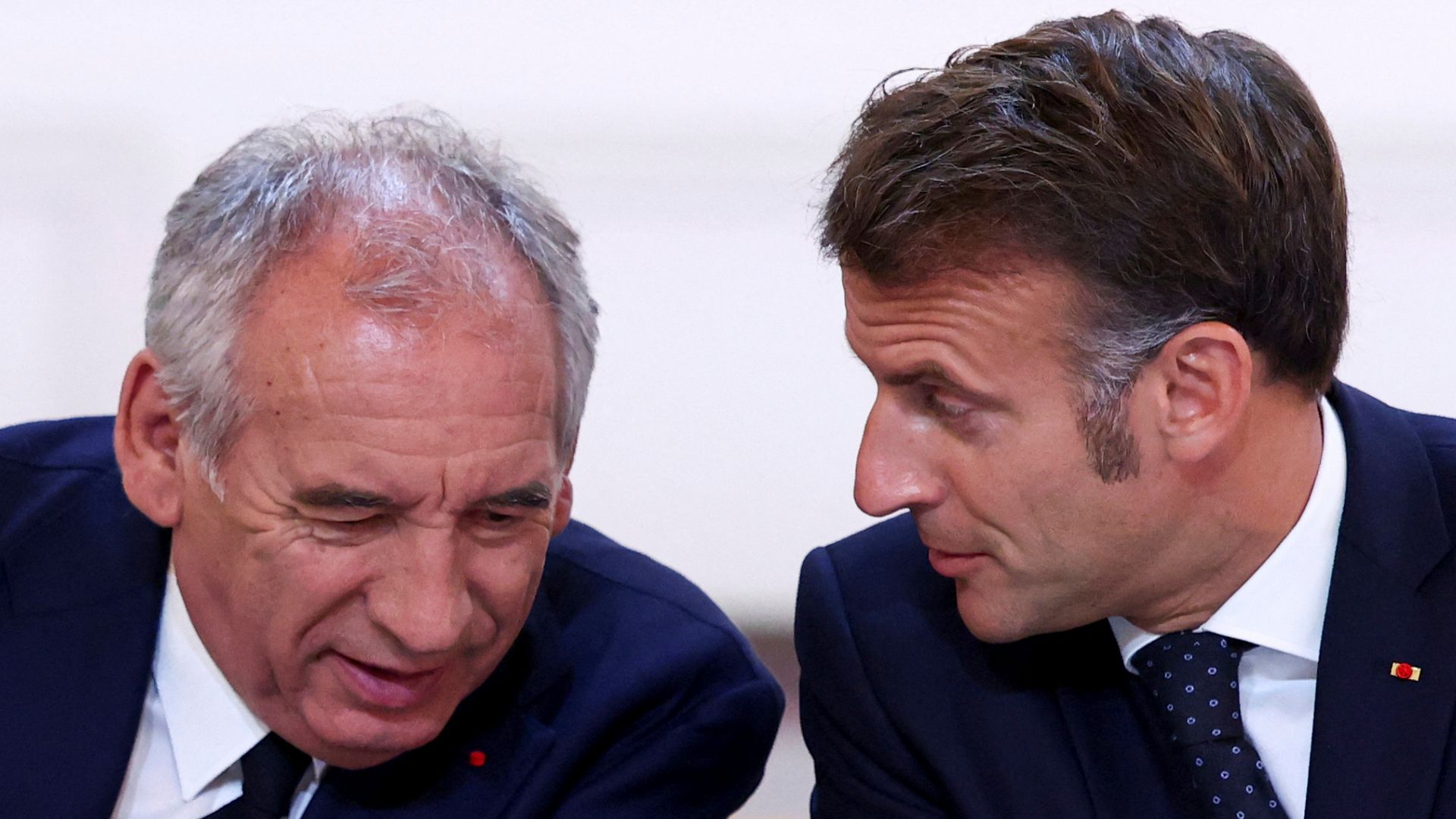
France is facing the possibility of having its fifth prime minister in less than two years, an economic crisis and the threat of further civil unrest if a parliamentary deadlock isn’t resolved in the coming days.The Latest News from the UK and Around the World | Sky News
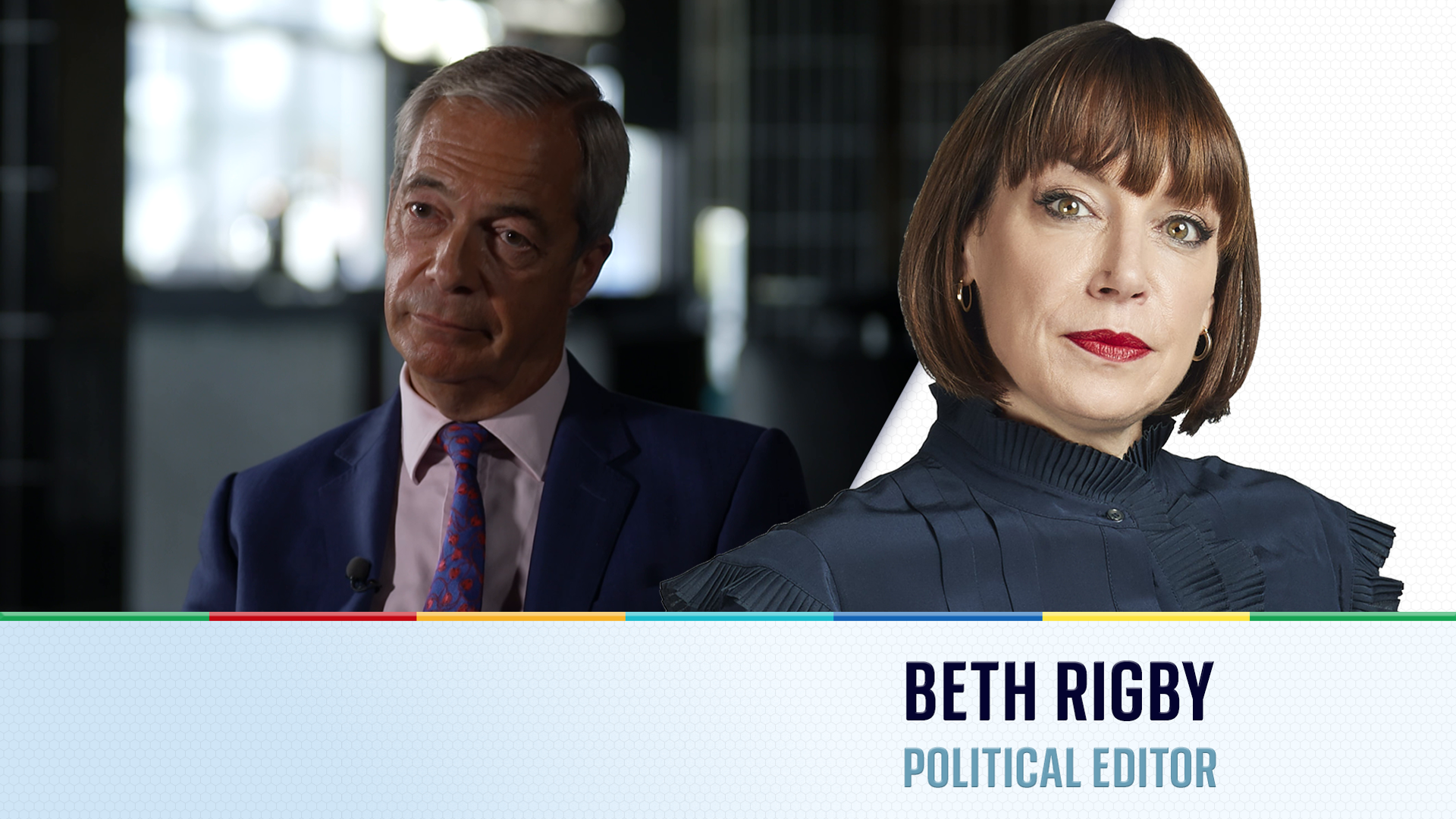
It’s normally Nigel Farage who seizes the megaphone, but his big Birmingham Reform UK party conference was metaphorically gatecrashed by Angela Rayner’s dramatic resignation, followed by Sir Keir Starmer’s shock reshuffle.The Latest News from the UK and Around the World | Sky News
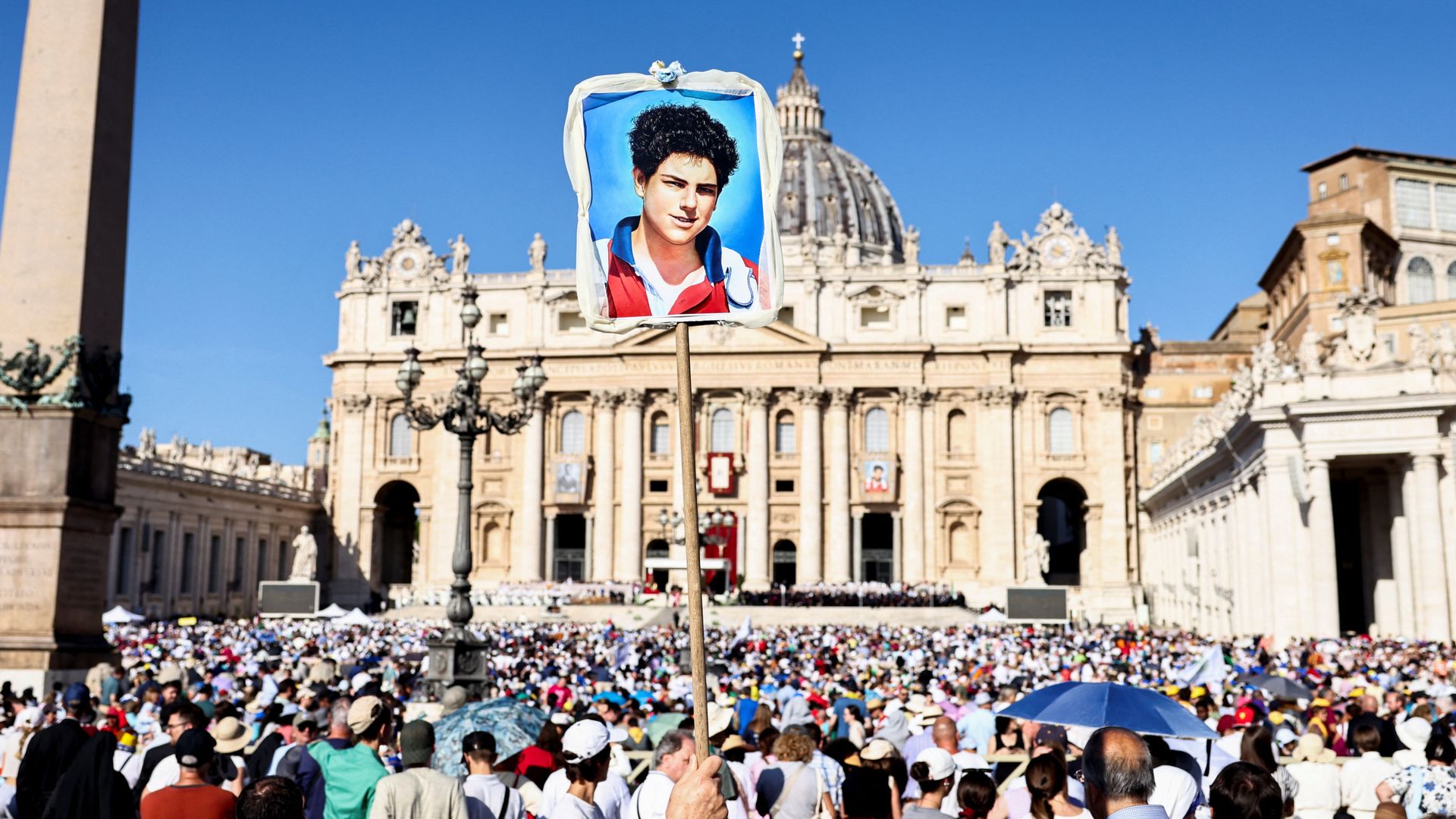
London-born teenager Carlo Acutis was canonised by Pope Leo on Sunday, making him the first ever millennial saint.The Latest News from the UK and Around the World | Sky News
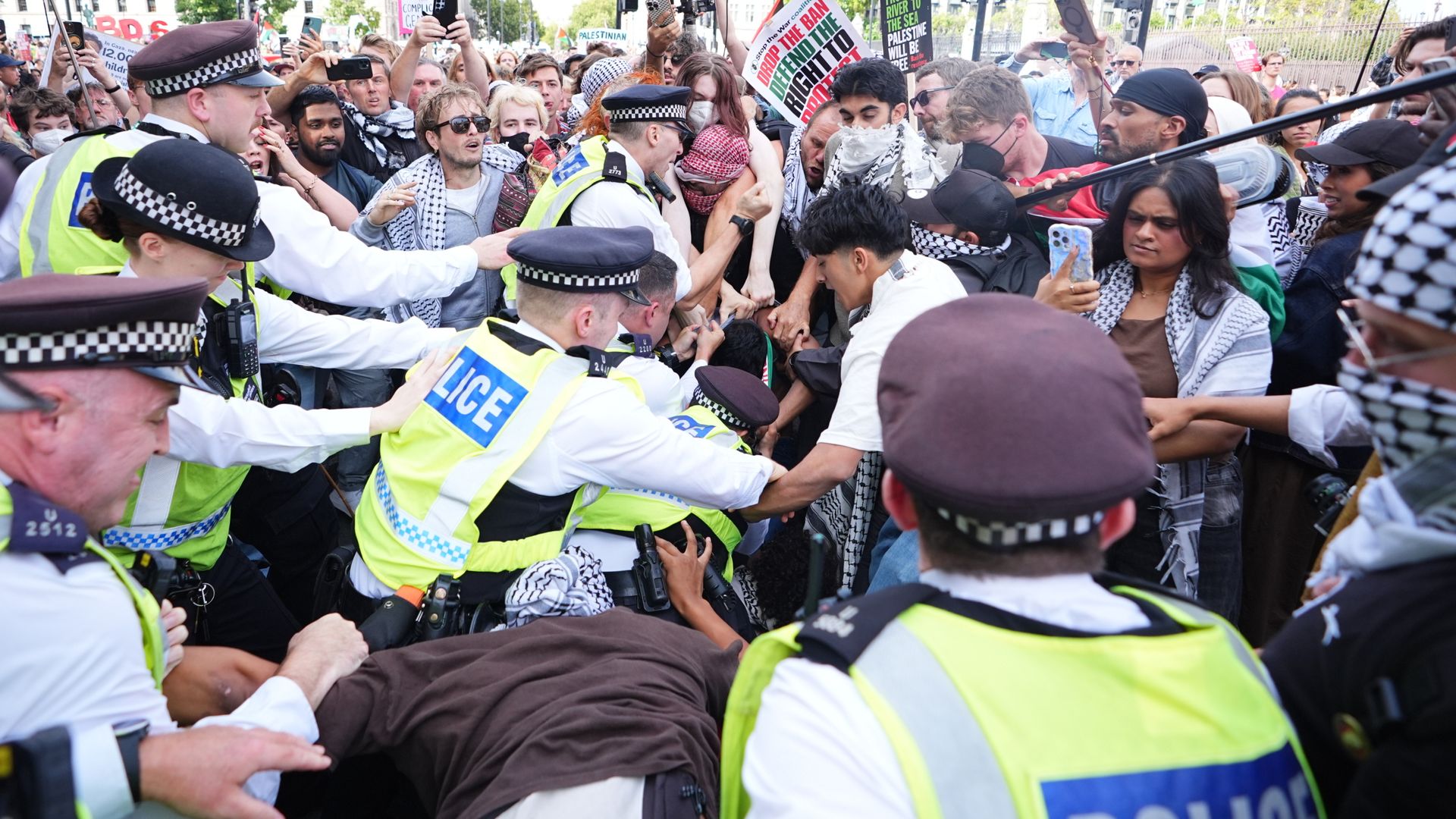
The Metropolitan Police has condemned the “intolerable” abuse allegedly suffered by officers who were “kicked and spat on” as they arrested more than 400 people at a protest against the banning of Palestine Action as a terror group.The Latest News from the UK and Around the World | Sky News

In October 2023, a group calling itself Return to the Land established its first “Whites only community” in the Ozark Mountains of Arkansas. They followed that with a second enclave nearby in 2025.
The group, which describes itself as a “private membership association” that helps groups form “European heritage communities,” plans to build four more sites, including another location in the Ozarks and two in Appalachia.
Return to the Land believes that by calling themselves a private membership association they can create a white ethnostate – a type of state in which residence is limited to white people – and legally exclude people based on race, religion and sexual orientation.
If you read the words of Eric Orwoll, the group’s co-founder, its mission is clear: “You want a white nation? Build a white town … it can be done. We’re doing it.”
As a scholar of right-wing extremism, I have examined several groups calling for a white homeland in America. The creation of a white ethnostate is often seen as an ultimate goal of such white nationalism, which argues that white people form part of a genetically and culturally superior race deserving of protection and preservation. While Return to the Land doesn’t identify as white nationalists, their statements often align with the ideology.
One of the best-known plans for a white ethnostate is the Northwest Imperative, popularized by white nationalists during the 1970s and ’80s. The plan involved certain citizens taking 10% of the United States – the states of Washington, Oregon, Idaho, Wyoming and Montana – and excluding all nonwhite people from living there.
Proponents of the plan argued that these states were already majority white and contained large tracts of undeveloped land, making the territory ideal for white-only settlement. High-profile extremists of the time such as Richard Butler, Robert Mathews and David Lane supported the plan.
Still today, groups such as the Northwest Front, a white nationalist group founded in 2009 and located in the Pacific Northwest, continue to promote variations of this idea.
While the Pacific Northwest has a long history with right-wing extremist organizing, the proponents of whites-only communities have also targeted areas of the Northeast as possible locations for a white ethnostate.
In 2018, for example, Tom Kawczynski, town manager of Jackman, Maine, was fired when his views came to light, including views that have been characterized as “pro-white.”

More recently, in 2023, the People’s Initiative of New England, a splinter group of the neo-Nazi organization National Socialist Club-131, introduced themselves on the online platform Substack. There, the group laid out its goal of establishing the six states of New England – Connecticut, Maine, Massachusetts, New Hampshire, Rhode Island and Vermont – as white-only.
The goal of gaining control of multiple states is unrealistic, of course, at least peacefully. Therefore, a popular alternative, along the lines of Return to the Land’s actions, is to establish smaller all-white communities.
In 2013, media outlets reported that neo-Nazi Craig Cobb was buying land in the small town of Leith, North Dakota, to build a white nationalist community. The town rallied to oppose this attempt.
Later that year, Cobb was charged with seven felonies related to confronting residents with a gun. He was sentenced to probation for four years and deeded the property back to the town in 2014.
And in 2021, leaked Telegram chats revealed that Christopher Pohlhaus, a former U.S. Marine and founder of the neo-Nazi group Blood Tribe, wanted to establish a whites-only community in Springfield, Maine. Pohlhaus was developing a military training facility as part of these efforts when media coverage led him to sell the property and move out of state.
These various attempts to develop a white ethnostate are not simply individual, isolated cases. They form part of a larger movement toward achieving white nationalism.
A major part of white nationalism today is focused on anti-immigrant hatred. That has spurred major acts of extreme violence such as the 2019 murders of 23 people in El Paso, Texas, the majority of whom were Hispanic.

The “great replacement theory,” a conspiracy theory popular among white nationalists, argues that various policies are leading to the destruction of the white race. This theory inspired the 2022 mass killing of 10 Black Americans in a supermarket in Buffalo, New York.
The shooter selected the supermarket because of its location in a predominantly Black neighborhood and left behind a white supremacy manifesto.
Communities across the U.S. have successfully resisted the establishment of white ethnostates.
The residents of Leith, North Dakota, did this by creating a website informing people about what was happening in their community. Public outcry also met Pohlhaus in Maine.
As for Return to the Land, Arkansas Attorney General Tim Griffin said in July 2025 that his office is reviewing the group’s actions and whether they violate the law.
“Racism has no place in a free society,” he said, “but from a legal perspective, we have not seen anything that would indicate any state or federal laws have been broken.”

Paul J. Becker does not work for, consult, own shares in or receive funding from any company or organization that would benefit from this article, and has disclosed no relevant affiliations beyond their academic appointment.
Politics + Society – The Conversation
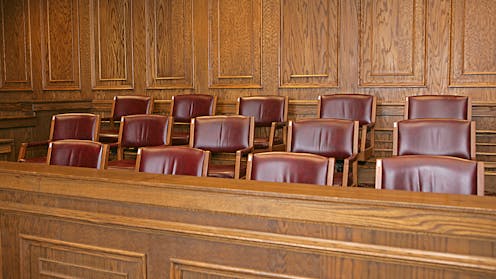
The right to trial by jury in criminal and civil cases is enshrined in the U.S. Constitution. It’s also a critically important way in which citizens can participate in democracy.
The French thinker Alexis de Tocqueville observed early American juries at work. He noted in “Democracy in America” in 1831 that trial by jury “places the real direction of society in the hands of the governed, or of a portion of the governed, instead of leaving it under the authority of the Government.”
Yet, in a change with profound implications, juries now decide only a tiny fraction of criminal and civil cases in the U.S. The decline over time has been dramatic, triggering warnings from scholars since at least the 1920s. In 1962, when federal judicial statistics became reliable enough to track the trend, juries decided about 6% of civil cases; today that share is less then 1%.
In a recent article we wrote with our colleague Robert Peck, we described how in the 1960s a federal judge would typically preside each year over 10 or more civil jury trials – legal disputes between private parties. In 2024, the average federal judge heard only one or two civil jury trials per year.
Criminal cases, in which a defendant is accused of a crime, show a similar pattern. The average federal judge presided over roughly two jury trials in 2024.
In state courts, jury trials have likewise declined over the past decade. In most states, juries now decide just 1% to 2% of criminal and civil cases that come before the courts.
We study how juries work in practice and the jury’s institutional role in the constitutional structure. Both of us have observed how legal and policy shifts in the United States have limited the role juries, and thus citizens, play as a vital democratic check on government power.
Trials make disputes public, and jury trials allow citizens to debate the issues and return verdicts that reflect their community. That visibility and participation make the legal system more accountable and legitimate.
The U.S. Founding Fathers’ long list of grievances against King George III in the Declaration of Independence included “depriving us in many cases, of the benefits of Trial by Jury.” In drafting the U.S. Constitution, they embedded juries throughout the new federal framework, for both civil and criminal cases. State constitutions likewise entrenched robust jury rights.
Early Americans thus saw jury service not merely as a procedural safeguard against overreaching government authority, but as a way to distribute the power granted by the Constitution, ensuring that ordinary citizens played an important role.

But over time, state and private actors have chipped away at that authority.
In criminal cases, the main mechanism that has diminished juries’ influence has been private bargains between prosecutors and defendants. Guilty pleas now resolve more than 90% of criminal cases nationwide, according to a 2023 American Bar Association report.
In “Punishment without Trial: Why Plea Bargaining is a Bad Deal,” legal scholar Carissa Byrne Hessick describes how defendants are pressured to plead guilty by the all-too-real threat of longer sentences if they exercise their right to a jury trial rather than accepting an offer from prosecutors. This so-called “trial penalty” has produced what some scholars refer to as an innocence problem, in which even factually innocent people rationally plead guilty.
Efficiency has a role in clearing crowded court dockets. But when almost all cases end in pleas, the legal system loses transparency and public checks on police and prosecutors’ work.
The same trend emerges in civil cases. Mandatory arbitration in consumer and employment contracts, along with legislatively imposed limits on the size of damage awards, have displaced jury determinations of liability and awards.
Procedural shifts since the 1980s also steer cases away from juries at the start. Federal and state rules of procedure are structured so that a civil jury trial is waived by default and must be affirmatively demanded.
The rise of what legal scholar Judith Resnik called “managerial judging,” where judges take a more activist role in supervising cases, channels cases toward private settlements where details are not divulged, even for those who prefer public resolution. Certain expanded pretrial procedures have also given judges the power to displace juries and terminate cases in light of their own “judicial experience and common sense,” as the U.S. Supreme Court put it in a 2008 opinion.
Although many of these changes were done in the name of efficiency, legal scholar Suja Thomas argues in her book “The Missing American Jury” that they also benefit political and economic elites by wresting away some of the power that formerly belonged to juries. The cumulative effect is fewer community judgments and more private, judicial and legislative control over outcomes.
In our view, restoring the jury to its original place within the constitutional structure would help revitalize the justice system’s democratic character.
As legal scholar Alexandra Lahav argues in her book “In Praise of Litigation,” trials make disputes public. Jurors hear evidence in open court, deliberate with other citizens about the issues and return verdicts that reflect community standards, in ways that backroom deals and private arbitration cannot.
Jury service also widens the circle of people invested in courts that work and that operate honestly. Although many people are initially dismayed when they are summoned to jury duty, most jurors become more favorable toward the courts once they serve.
These effects can reach beyond the courthouse. Some legal experts assert that restoring the jury could also spark broader democratic renewal at a time when civil society in the U.S. is under enormous strain.
This was evident in a set of studies by political scientist John Gastil and his colleagues that explored the connection between jury service and other forms of civic engagement. Examining jurors’ voting history before and after the period of jury service in seven states, they discovered that jury participation increased the likelihood of voting.
The presence of citizen participation in legal decision-making encourages civic engagement, fosters public trust and reanimates the participatory ideals on which the American republic was founded. John Adams put it well in 1774, when the British Parliament placed the judicial system of Massachusetts under royal control.
“Representative government and trial by jury are the heart and lungs of liberty,” Adams argued. “Without them we have no other fortification against being ridden like horses, fleeced like sheep, worked like cattle, and fed and clothed like swine and hounds.”

Valerie P. Hans is a member of the Board of Advisors of the Civil Justice Research Initiative. Her research on juries has been funded by the National Science Foundation, National Institute of Justice, State Justice Institute, and Cornell University.
Richard Lorren Jolly is a senior fellow with the Civil Justice Research Initiative.
Politics + Society – The Conversation
In an emergency hearing before Judge Sparkle Sooknanan on Aug. 31, 2025, lawyers for a group of unaccompanied migrant children from Guatemala asked her to stop the Trump administration’s deportation of hundreds of them back to Guatemala. Concerned that the Trump administration might not follow her order to stop, the judge emphatically repeated her order that temporarily barred the deportations. And then she said something unusual:
“I am trying to do the best I can to fulfill my obligation as an Article 3 judge …”
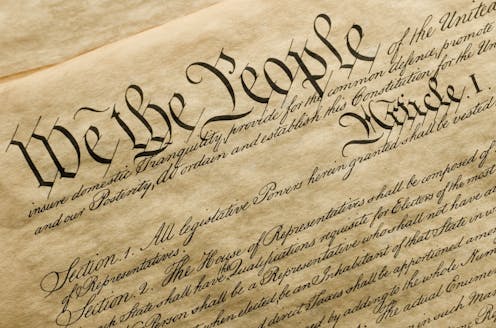
The Conversation’s senior politics editor, Naomi Schalit, talked with former federal judge John E. Jones III, now president of Dickinson College, about the meaning of the term “Article 3 judge,” why Sooknanan might have used it, and why recent discussions of politics and law in the news have included notably more references to “Article 1,” “Article 2” and “Article 3,” normally terms reserved for discussions of constitutional law.
What is the ‘Article 3’ that Judge Sooknanen referred to?
The meaning is not something that a lay person can necessarily intuit.
It’s quite clear that the course that the Trump administration has taken in the many lawsuits against its policies is to say, “We will obey the Supreme Court of the United States, but we’re going to pick and choose the lower court opinions that we deign to follow.” And of course, Judge Sooknanan’s comment invoking the phrase “Article 3” was meant to say that, the same as a Supreme Court justice, she is a fully vetted and confirmed jurist chosen by the president and confirmed by the Senate. That’s what’s known as an Article 3 judge, authorized under Article 3 of the Constitution.
So, inferentially, what she’s saying is, “I mean what I say, your administration can’t ignore it as you appear to have done with federal Judge James Boasberg, whose order you appear to have defied to return immigrants you deported. I’m going to do belt and suspenders and be very clear about this and not give you wiggle room because it is not an option for you to disobey the order of an Article 3 judge.”

OK, you’ve described Article 3. Tell us about articles 1 and 2.
Article 1 of the Constitution creates the United States Congress.
Article 2 creates the presidency and the executive branch. It’s somewhat light on details.
And Article 3, notably, creates the Supreme Court, but left it up to Congress to develop and create, as the article says, “such inferior courts.” I don’t love the word inferior; we tend to say “lower courts.”
Because of the caseload at the founding, the Supreme Court handled everything. The Supreme Court justices did what was called “riding the circuit.” They acted, in effect, as lower court federal judges, until business and commerce and the law burgeoned. Congress was then compelled to create district court judgeships and circuit court judgeships to relieve the Supreme Court of the burden of being everything to everybody in the federal courts.
That’s a helpful civics lesson.
I worked with Supreme Court Justice Sandra Day O’Connor, who had a real predilection for civics education. One of her comments always resonates for me, that civics is something that has to be learned and relearned because it’s not stamped on our DNA.
In a recent NBC story headlined ‘Some Republicans object to Trump’s move to cancel spending, warning of a shutdown,’ Sen. Kevin Cramer from North Dakota said he wants spending decided not by the president but by Congress in a bipartisan appropriations process. ‘I think that Congress has every right to defend its Article 1 role,’ he said.
Constitutionally and by custom, Congress has the power of the purse. The president can propose a budget, but it has to be passed by Congress. And it’s quite clear that, in this Trump administration, Congress is abdicating its Article 1 powers, being compliant and dormant in allowing the president to cancel otherwise-allocated funds repeatedly. If Congress would flex its muscles under Article 1, this wouldn’t be happening.
And back to Article 3 news: There’s been some charged back-and-forth between federal judges and two Supreme Court justices over criticism of lower court judges. And 10 federal judges criticized – anonymously – the Supreme Court’s handling of the Trump cases in the so-called ‘shadow docket’ because the rulings were so brief they couldn’t take direction from them. Is this all normal?
There’s rank frustration on the part of lower court judges. The Supreme Court is forcing lower court judges to decipher meaning from Supreme Court decisions as if they’re the Rosetta stone. They are so abbreviated and less than clear that it’s maddening. Having toiled in the lower courts, the worst situation you could have is a lack of guidance from higher courts, and then you have to guess. When you have to guess, you make mistakes, and that’s the frustration you see.
I think there is a duty on the U.S. Supreme Court to not rubber-stamp lower court judges, of course, but also to have some comity with lower court judges who are struggling through this plethora of cases that have arisen because of the Trump administration flooding the zone.
What does this conflict over courts and judges mean to the average person?
The integrity of our system of justice and the judicial system is based on the trust that people place in the jurists that populate that branch, the third branch of government. And as Alexander Hamilton said, the judiciary has neither the sword nor the purse, so it is the credibility of the judiciary that, at the end of the day, carries weight.
And when the president and highly ranked officials in his administration vilify lower court judges the way they have, and if the president says that he can pick and choose among lower court opinions, then I think you know, necessarily, his followers may think that they can do the same. That is not helpful to the rule of law and to our democracy. In fact, it tears at the fabric of our system.

John E. Jones III is affiliated with Keep Our Republic’s Article Three Coalition.
Politics + Society – The Conversation