A hard-to-fight dock fire Monday at the relatively new, $80 million cruise ship terminal in Whittier left major damage in its wake.
Officials with the Alaska State Fire Marshal’s Office on Wednesday described the damage to the dock as “a total loss,” said Austin McDaniel, a spokesman for the state Department of Public Safety, which includes the fire marshal’s office.
The fire was reported just before 11 a.m. Monday and wasn’t fully extinguished until around…
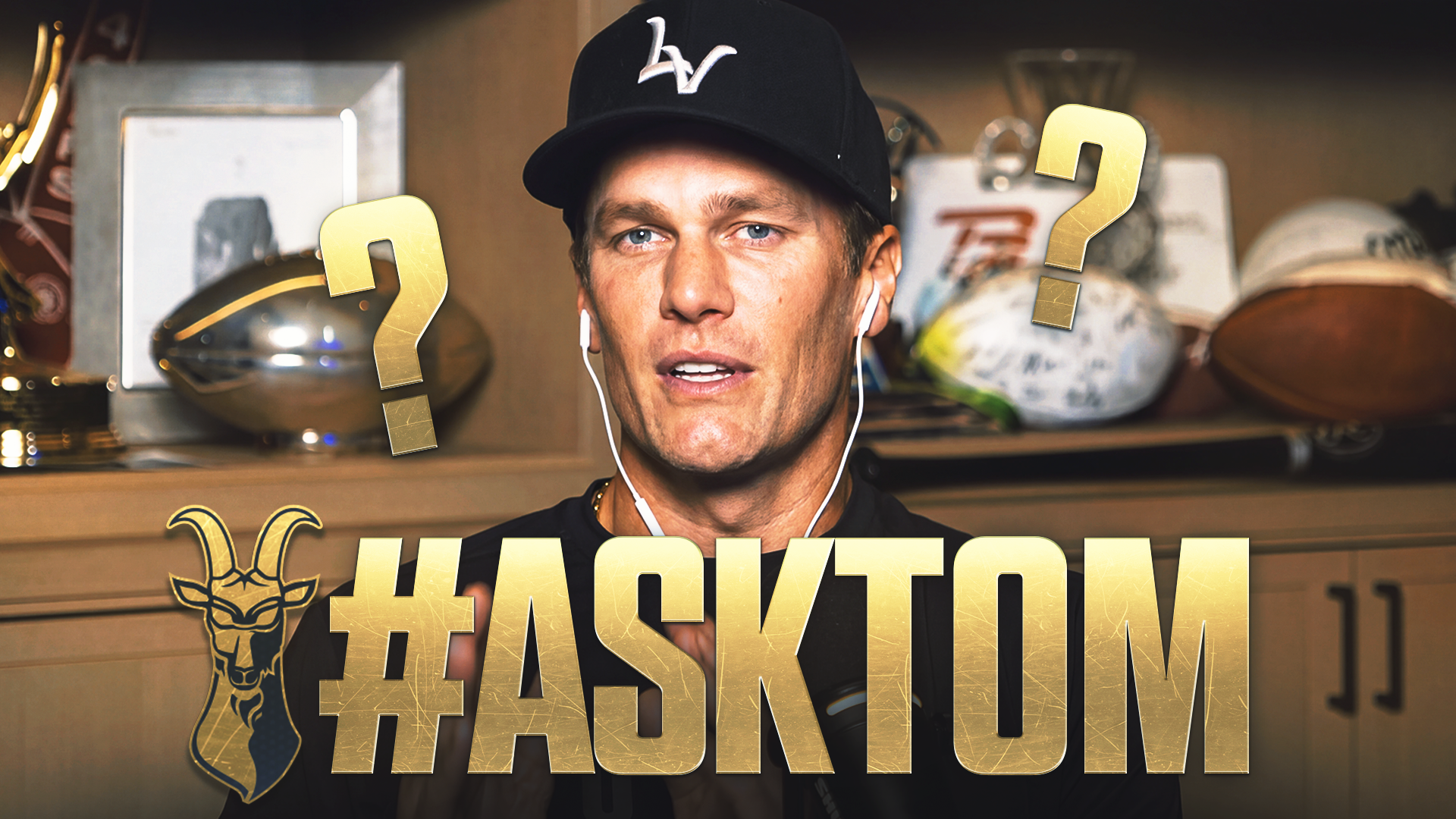
Tom Brady doesn’t want to hear the excuses for the Los Angeles Rams from their season-opening loss against the San Francisco 49ers in Melbourne, Australia. In the season-opening edition of #AskTom, Brady made it evident that he doesn’t care about the narrative that the Rams might have been jet-lagged from their last-minute flight to Australia before their 27-7 loss to the 49ers. “There was one thing I thought about during all that: How much garbage people were talking about the stupid travel,” Brady said. “You know what matters? Playing good football. I don’t give a s— if you show up five minutes before the game, an hour before the game, a week before the game — when you show up and you walk out on the field, complete the passes, make the blocks, make the tackles and play good football. There’s nothing more important than execution. “Yeah, all the things might set up better execution on game day — travel, food — but at the end of the day, go out there and play well. That’s how I settled the debate.” The Rams didn’t arrive in Melbourne until just over 24 hours before kickoff, a move that was widely questioned in the lead-up to the season-opening matchup. The 49ers, meanwhile, made their way Down Under over a week before the game, getting acclimated before their dominant win. That was just one of a few things that Brady hit on in his mailbag. He also fielded a question on the Super Bowl LI call sheet he showed during the Week 1 broadcast of the Washington Commanders-Philadelphia Eagles game before explaining certain routes and offensive concepts. Here’s the first full Ask Tom of the 2026 season. Q: Does terminology change from year-to-year, or do I have Josh McDaniels’ full playbook now? Brady: You might have some words in the playbook, but you never know what Josh is cooking up. That Super Bowl call sheet was all dependent on who we had on the team, what our strengths were, going against who Atlanta had as their defenders and what we thought their weaknesses were. I thought the most important thing I was showing during that game is we worked really hard for two weeks to get all those plays segmented in the right places and, ultimately, Josh had to call them at the right time. There’s still a lot of in-game adjustments happening, but I just wanted the viewer to know that the process for putting calls in the call sheet is an arduous process. It’s all about continuous conversations by everybody, working to get all the calls in the right box so that when that situation comes up, it’s really easy for Josh to find it, queue what he wants to call and then relay it to me as quickly as possible. It’s not just a random set of plays. It’s not a playbook; it’s a call sheet. In the playbook, there’s maybe 1,500, 2,000 different calls you can make. We boiled that down to 100, 120. Out of those, maybe 65, 70 actually got called and there’s always a little bit of adjustments throughout the game to make sure you’re giving yourself the best chance to win during that day, too. Q: Do you have to memorize the call sheet? If we wiped that, do you have to write that in yourself? Brady: No, it’s literally impossible. There’s no way that could happen. There’s just way too much vernacular, so to speak, on those call sheets; they’re very detailed. You have to know every motion — it could be a Zip, Zap, Zat, Whack, Hat, Home, Condo — I’m really not [making up words]. It just sounds like [I’m making up words]. It’s called football speak, and it’s a language in itself. Listen, I was really s—ty at Spanish, French and all of that. I wasn’t bad at football. I knew my football language. Q: On the “Gronk & Jules” show, they said that you would tell them to commit if you’re going to run the wrong route. How would you know when that’s going to happen? Brady: I think there were a couple of players — Jules and Gronk — who didn’t mind ad-libbing a little bit because, sometimes, let’s say you have an inside route called, but the defender jumps inside. I would never mind if, rather than pressing him inside, I would rather press him inside and work him a little bit to the outside to still find the open spot. There was no point in running to a covered area of the field. You don’t want to break into another guy’s zone, so to speak. What you really want to do is still find a soft spot, but that soft spot moves four or five yards in each direction. I think the one guy that I really look to in the NFL right now who has incredible feel, and has for a long time, is Travis Kelce. He and Patrick [Mahomes] have a great chemistry between the two of them. Travis is never going to run to a spot that’s covered. He’s always going to pull up a little bit short or run through that area to find the next open zone. That’s what great football players do. And that takes a lot of time to get to that place as well, between a quarterback and receiver. But when it works, it’s magic. Q: Jules and Gronk were some of the best at that, that you played with? Brady: They really were. I put Wes Welker in that mix. I put Mike Evans and Chris Godwin in that mix. I put James White in that mix. Kevin Faulk in that mix. They didn’t want to run into covered areas, and I don’t blame them, because if you’re running into covered areas, guess what I wasn’t doing? They were covered, I wasn’t throwing them the ball. Q: What’s your take on the 49ers-Rams travel debate? How did you handle long flights before games? Brady: That’s a great question. It’s really top of mind, too. There was one thing I thought about during all that: How much garbage people were talking about the stupid travel. You know what matters? Playing good football. I don’t give a shit if you show up five minutes before the game, an hour before the game, a week before the game — when you show up and you walk out on the field, complete the passes, make the blocks, make the tackles and play good football. There’s nothing more important than execution. Yeah, all the things might set up better execution on game day — travel, food — at the end of the day, go out there and play well. That’s how I settled the debate.” Q: You called one of Jalen Hurts’ completions in Week 1 a “Butterfly with sore legs.” You made my English teacher proud on Sunday. Can you tell us a little bit about your literary upbringing? Brady: I like to tip my cap to Mr. Ralph Stark, my sophomore English teacher at Junipero Serra High School. Thank you for all of the C-plus grades you gave me that helped me continue my athletic career. I wasn’t the best student; you know that. I was always pretty good on your quizzes. I had a lot of friends that helped me; they took the test in Period 2 when I had the test in Period 4 and they helped me with some of the answers. But I owe it to Mr. Stark and all my other English teachers that helped me through the Shakespearean period that I was really talented at as well.Latest Sports News from FOX Sports
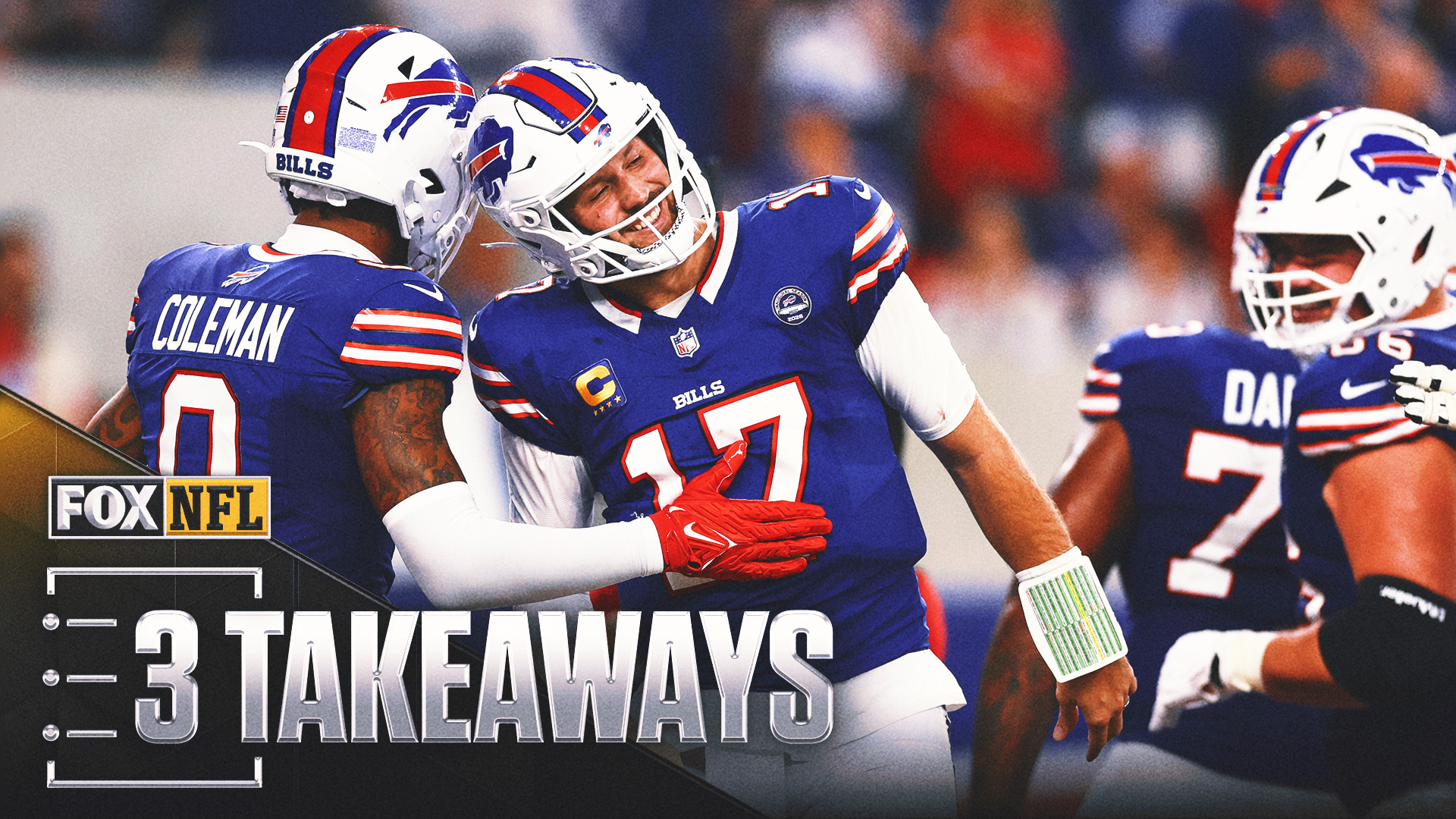
Josh Allen took over this game in the first quarter, and even with the Lions scoring a respectable amount of points, it was clear the Buffalo Bills QB would never let Detroit back in the game. If the Lions scored, Allen would respond with one of his own. Just for good measure. Just to show who was in control. I didn’t expect a blowout, with both these teams looking like playoff candidates — and perhaps division winners. But that’s what we got, with the Bills humbling the Lions, 41-31, on Thursday night. Here are my takeaways: We keep asking: Is it their year? There’s reason to believe, now more than ever. This could be their year to make a Super Bowl run. And it’s about what’s new. Josh Allen is the best player on the planet, but there were times when former Bills coach Sean McDermott seemed to be holding back the organization, whether it was with his conservative (and errant) game management or his sometimes unimaginative defense. So coach Joe Brady’s promotion (from offensive coordinator last year) seems to be marking a truly new era. His offense has been incredible, pulling off a great win in Houston last week and absolutely racking up huge numbers this week. But it wasn’t really the offense that was the big story this week. It was the defense, where coordinator Jim Leonhard has the unit humming — immediately. It’s hard sometimes for a defensive coordinator to come in and change a scheme on the players, who might’ve fit better in the previous scheme. That wasn’t the case here. The returners have been great. And the newcomers — edge Bradley Chubb, safety C.J. Gardner-Johnson and cornerback Dee Alford — have plugged holes from last year. This is a tough game to go around heaping praise on Detroit. The Lions just didn’t have it on this particular night. Maybe it’s because they’re still a young roster, ranking as the 11th-youngest in the NFL. Maybe it’s that the offensive line needs a little time to mesh after replacing two of their starters. Maybe it’s that the secondary needs to mesh after also replacing two of their starters. But most likely, it’s all of that. That’s a lot of work for coach Dan Campbell, offensive coordinator Drew Petzing and defensive coordinator Kelvin Sheppard. But I still like this core, with huge talents at premium positions: quarterback Jared Goff, receivers Amon-Ra St. Brown and Jameson Williams, tight end Sam LaPorta, left tackle Penei Sewell and edge Aidan Hutchinson. That’s an incredible amount of talent. It’s an issue that those guys didn’t show up in the ways they should have. But don’t count them out. They’ll fix this. (And maybe they’ll pick up the phone and give the Steelers a ring about cornerback Joey Porter Jr.) Josh Allen just scored five total touchdowns to add to the four total he scored last week. And if the season were to end at the end of this week, he’d almost definitely be the MVP. But we have plenty of football left to play. It’s going to get more interesting every week. In Week 1, Lamar Jackson had two total touchdowns, 324 passing yards and 40 rushing yards in the Baltimore Ravens’ blowout win over the Indianapolis Colts. And Caleb Williams looks dangerous — like a legitimate third contender. He scored four total touchdowns as part of the Bears’ 59 points scored last week in their victory over the Panthers. It’s hard to count out Matthew Stafford, even with a dud in Week 1. It’s hard to count out Joe Burrow, with a solid start — and a very favorable schedule. Heck, it’s foolish to completely discount Patrick Mahomes. This is going to be fun, folks. Buckle up. The Bills will host the Chargers in Week 3, and you have to think L.A. will be quaking heading into (new) Highmark Stadium. There’s nothing this offense can’t do, particularly after seeing Allen spreading the ball around to his deep crop of pass-catchers in Dalton Kincaid, Joshua Palmer, Keon Coleman, Khalil Shakir and basically whoever else steps on the field. It’s never a good thing to lose DJ Moore to an injury, but this performance has to make them feel like they’ll be just fine if he misses time. We certainly know James Cook will produce. The Chargers might feel better about themselves if they can pull off a win over the Raiders on Sunday. But all those good vibes are gonna get negative real fast after taking a look at this box score — let alone the film. The Lions host the Jets next week, and I’m not sure it’s as easy as beating up on Gang Green. I don’t want to pump them up too much for a win over the lowly Titans. But I’ll admit, quarterback Geno Smith looked poised last week. And yes, the Jets had weapons. They even looked like they had a half-decent offensive line. But the biggest issue is that Jets coach Aaron Glenn is a Lions defector. When a coordinator leaves for a coaching gig, he often causes problems in a matchup against his former team. So Glenn could give Campbell and Goff a real headache. I suspect the Lions will win. But not easily.Latest Sports News from FOX Sports
The NBA has lost a beloved alum.
Michael Sweetney—the Georgetown University student who went on to play four seasons in the NBA—has died at age 43, as first announced by his wife India Sweetney…. E! Online (US) – Top Stories
The holdout juror in Lindsay Clancy’s murder trial is sharing his perspective on the deliberations.
Michael P. Desronvil—who has identified himself as the one male juror on the case who held out… E! Online (US) – Top Stories
An Alaska Forest Practices Act compliant forest road is seen in what was previously an unroaded forest setting. (Photo courtesy of Keith Coulter)
While environmentalists oppose the Trump administration’s proposed rollback of the Roadless Rule, which would remove prohibitions on road construction and logging on nearly 59 million acres of national forest, I see this as an opportunity for professional foresters to manage federal land, reduce wildfire risk and boost the economy.
I’ve spent 30 years in the industrial logging sector of the Western U.S. in states such as Idaho, Washington, Oregon and Alaska. Environmental rhetoric is nothing new to those of us who have chosen to make working in western forests their career.
Recently, I read a commentary in the Alaska Beacon that argued for maintaining the Roadless Rule and I was not surprised to view the typical laundry list of doom from one side of the debate. Words like “threatened” and “imperiled” come up as authors weave their case for almost certain environmental ruin unless we curb industrial activities immediately for what can only be described as the “do-nothing alternative.”
As a professional forester with decades of boots-on-the-ground experience, a few obvious counterpoints come to mind. The rhetoric that forests are a stagnant sea of trees that do not grow or become more dense year after year is simply wrong. That’s a Forestry 101 issue. You’d think something this simplistic would be understood by the average environmentalist: forests do grow, year after year, becoming denser. In a warming climate with limited resources of water, nutrients, space, sunlight and dwindling snowpack, continued growth will inevitably lead to insect and disease issues, dying trees and catastrophic wildfire.
Look at the news. The wildfire epidemic appears to be growing year to year and lasting longer each year due to warmer winters and dwindling snowpack. Catastrophic wildfire events are real and increasingly common. People are dying. Whole communities are being lost.
Throughout my career I’ve watched the environmentalist movement become very successful. It has demonized building roads, tree cutting and forest management as a whole. Regions of the Western U.S. and Alaska that used to have large milling infrastructure are now idled and gone. There is no one left to do the work or send the logs to mills because they aren’t there. There are few ways to complete forest restoration work, because there are no longer markets for the material. Revenue from the logging industry that can support public schools is in decline. Had forest management activities been allowed to continue, forests could be managed and local economies supported in the effort.
One hundred years of fire suppression in the western forests means they are overstocked as the climate warms. From what you know about forests, even if it is just a little: what do you think is going to happen in those areas in the years to come?
I’m not sure what the environmentalists’ long-term goal is, other than “preserve the forests and the forests will take care of themselves.” The evidence does not support that message. Their messaging to “do nothing” seems reckless and misplaced.
The sediment contribution to nearby water bodies from a well- managed forest road is probably difficult to even measure when compared to the benefits of accessing areas that can be managed for forest health, wood products, jobs and long-term recreation, resulting in stronger regional economies. Now, let’s consider what the contribution to sediment loads in fish bearing creeks or watersheds that supply drinking water to scores of people are after a catastrophic wildfire burns through an area.
Keep in mind that forest operations in the Western U.S. and Alaska have strict forest practices rules and regulations. Timber harvesting is inspected by not only State agency forestry professionals but also Dept of Fish and Game and the Dept of Environmental Conservation representatives.
Western states have strict regulatory standards that the forest industry must adhere to while simultaneously creating fire resilient and healthy forest ecosystems. The forest products sector is largely our only hope for navigating our way out of the overstocked forest problem that blankets the Western U.S. There are thousands of professional foresters and land managers that have been trained by Society of American Foresters accredited universities working to improve forest health across the nation.
I disagree with environmental organizations that want to stop science-based management of forests in the name of preservation, regardless of the cost to local economies. Arguing for the preservation of the Roadless Rule puts mother nature in the driver’s seat — and few people will be able to tolerate how she’ll manage the forests if it happens through destructive wildfire events. We already know how to solve forest management issues: with roads and active forest management.
Julia Stiles is officially a Juilliard graduate—well, sort of.
After the Dancing With the Stars contestant called out the school’s statement that she never was a student there—despite playing one… E! Online (US) – Top Stories
Millie Bobby Brown’s new family photo is an Eleven out of 10.
The Stranger Things star announced the arrival of her second child—a baby boy—with husband Jake Bongiovi, sharing a picture of the… E! Online (US) – Top Stories
Whoopi Goldberg has a sister act-ing role in the works.
The View cohost announced alongside the show’s executive producer Brian Teta that she will be stepping away from the daytime broadcast so… E! Online (US) – Top Stories











 The NBA has lost a beloved alum.
 The holdout juror in Lindsay Clancy’s murder trial is sharing his perspective on the deliberations.

 Julia Stiles is officially a Juilliard graduate—well, sort of.
 Millie Bobby Brown’s new family photo is an Eleven out of 10.
 Whoopi Goldberg has a sister act-ing role in the works.