The exact cause of his death remains unknown, but multiple outlets have reported that Presley died of a suspected overdose.
And it sounds like it could have been easily prevented.
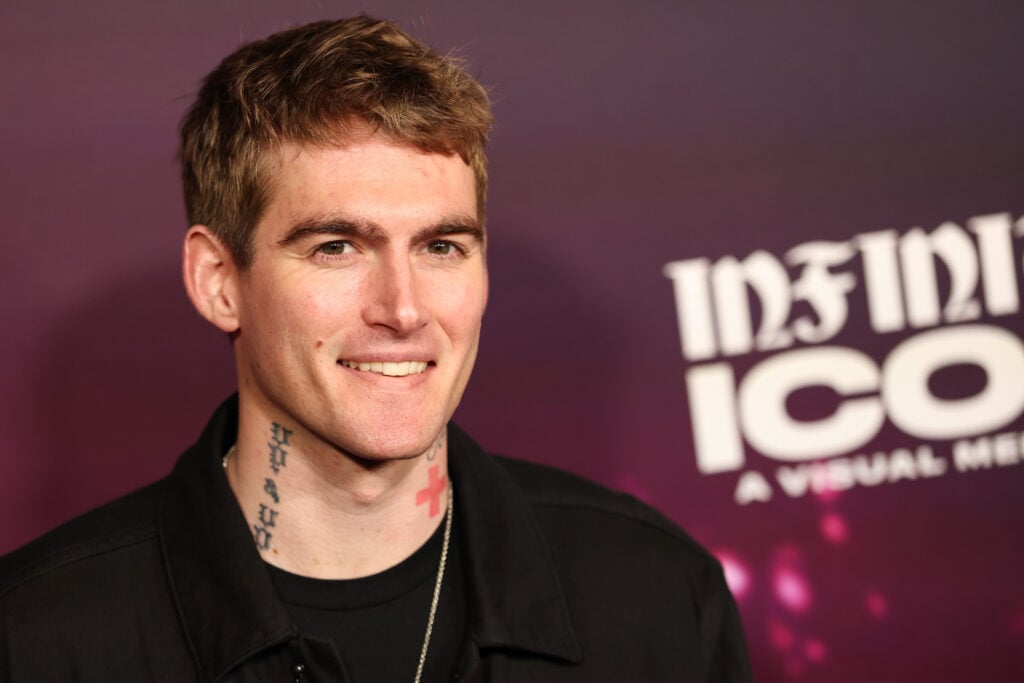
Presley Walker Gerber attends the world premiere of “Infinite Icon: A Visual Memoir” at AMC The Grove 14 on January 20, 2026 in Los Angeles, California. (Photo by Monica Schipper/WireImage)
According to TMZ, Presley was receiving ketamine from a doctor despite the physician being aware of his previous issues with the drug.
Ketamine can be used in certain addiction-treatment settings, although treating addiction is not its FDA-approved use.
Presley had reportedly struggled with ketamine abuse for some time, and his close friends are now questioning why he was prescribed the substance, given his history.
Some of those friends reportedly believe the doctor should face prosecution.
That is a serious allegation, however, and there is currently no indication that the doctor has been or will be charged with a crime.
It’s also important to note that authorities have not determined what substances, if any, were in Presley’s system when he died.
The Los Angeles County Medical Examiner has completed an autopsy, but Presley’s official cause and manner of death have been deferred pending additional testing.
Presley died September 20 at a rehabilitation facility in Santa Monica. Police are investigating his death as a suspected overdose, but authorities have said there is currently no indication of foul play.
The son of Cindy Crawford and Rande Gerber had been open about his struggles with addiction and mental health in recent years.
In December 2025, Presley discussed his complicated medication regimen on social media, which reportedly included ketamine along with several other medications. He also previously spoke publicly about his efforts to overcome addiction and improve his mental health.
The circumstances surrounding his final days are now the subject of an ongoing investigation.
And while the revelation about his alleged access to ketamine is likely to raise plenty of questions, there’s still a major piece of the puzzle missing — namely, what actually caused Presley’s death.
Until the medical examiner completes the additional testing, it would be premature to assume that ketamine played any role in the tragedy.
We will have further updates on this developing story as new information becomes available.
Bringing home a bundle of joy in America today unleashes a digital onslaught of advertisements pushing products, services and apps that target mothers most fiercely, with a clear promise: The gadget that will solve all your parenting puzzles is just a click away. (Tara Anand for the 19th)
The madness unfolded in a familiar pattern: Ellen FitzGerald would wake in the dead of night to nurse her baby for about a half hour, then hand him off to Dad to rock another half hour. Carefully, ever so gently, Dad would lay little Rowan back in his bassinet.
Instantly, Rowan’s body would stiffen, his mouth splitting open in a roar that restarted the rocking process. This would happen sometimes three, even four times a night until the FitzGeralds wanted to scream at each other, the heavens and anyone they knew who didn’t tell them what having a newborn would be like.
But there was no one there to hear them — except the algorithm.
As she scrolled to keep herself awake, FitzGerald’s phone responded with a stream of solutions. Teach your baby to sleep with this $179 course. Keep your baby asleep with this $1,995 smart baby bed. Track your baby’s breathing and chest movements while he sleeps with this $289.99 baby monitor.
A handful of times in the middle of the night, FitzGerald and her husband debated buying these purported miracle products in strained whispers. They purchased at least a dozen different types of swaddles in the hopes that Rowan — who like a baby Houdini would pop his arms out of every enclosure, waking himself and his parents — would finally rest in the bassinet instead of their arms.
FitzGerald felt like the algorithm knew she was struggling. It knew she was not as prepared for parenting as she thought.
“The algorithm completely clocks that,” she said.
Bringing home a bundle of joy in America today unleashes a digital onslaught of advertisements pushing products, services and apps that target mothers most fiercely, with a clear promise: The gadget that will solve all your parenting puzzles is just a click away.
That proposition is enticing for a generation that is raising kids unlike any other. Parents today lack community. They are less likely to be living near family who could help them through those early sleep-deprived months. They are having kids later in life and having fewer of them. And most American moms have just weeks with their infants before they’re back at work.
In these conditions, the $60 billion baby product market has found its stride. Parents are made to believe that if they have the right things — the things all their friends are buying or the ones that mom on Instagram suggested — their babies will sleep. They will eat. They will be safe.
And the parents, in turn, will have done it all right. They will be the perfect parents to the perfect baby.
Moms’ phones respond with a stream of solutions for their newborns: Teach your baby to sleep with a $179 course. Keep your baby asleep with a $1,995 smart baby bed. Track your baby’s breathing and chest movements while he sleeps with a $289.99 baby monitor. (Tara Anand for The 19th)
It’s a quest that can start to feel like a trap. FitzGerald spent much of Rowan’s first year tracking every wake up, every feed and every diaper change on an app, hoping the data would help her understand why her baby wouldn’t sleep. It felt like a digital timeline of her motherhood — all the gaps in his sleep examples of where she may have failed.
“I thought I could get an ‘A’ in parenting a newborn,” said FitzGerald, 38, a retired ballet dancer and “recovering perfectionist.”
Emily Oster, an economist and the author of several best-selling parenting books, said the pressure on moms to chase perfection — particularly in a society that is having fewer kids — is omnipresent. For moms who are having kids older, when their life or career may be more established, having a child may feel like another thing they’re being assessed on.
“Doing it ‘really good’ means doing all the best stuff. That makes you very susceptible to the marketing pitch of, ‘Thing X is the best,’” Oster said. “We sort of get into a situation where you kind of feel like you have to do these things because they’re the best, and if you don’t do them, then you have ruined your child forever.”
Moms know that the world stands ready to judge them for any minor misstep; that part isn’t new. The internet has just gotten smarter about capitalizing on those insecurities, making moms believe that they need to project good parenting through good purchases, even when they can’t afford it.
Nina Bandelj, author of “Overinvested: The Emotional Economy of Modern Parenting,” said that for mothers, every little buying decision can feel like a reflection of who they are as parents. “These moves and purchases are entangled in both: We do something for our children, but aren’t we also thinking, ‘What will make me a good parent? What should a good parent do? What will others say? What do others do?’” she said. “The industry is good at emphasizing and playing on all of those.”
And the marketing starts in the most fragile, tender period for a young family.
Many of the more than a dozen mothers The 19th spoke to described the newborn days as the most disorienting of their lives. They felt disconnected from the instincts they were told they should have. They were lost. They were exhausted. And these products and services promised to save them.
“What’s the replacement for real, actual support?” FitzGerald said. “It’s things. It’s products.”
Of course she hit “add to cart.”
At the Prego Expo in Orlando, Florida, this spring, a conference center ballroom was stuffed with strollers, pacifiers, baby bottles and a few items the attending parents had likely never considered: a silicone tether that keeps tiny utensils from tumbling to the floor, a “dad bag.”
Lines of expectant parents formed for anything free, the day’s soundtrack the rattle of a perpetually spinning raffle wheel.
The parents at Prego Expo were navigating a baby product market that only keeps growing, driven in part by shoppers seeking more premium products. But as big-box baby retailers have disappeared, so has the experience of pushing a stroller or buckling a car seat at a store. So some parents flock to events like the Prego Expo, which by the end of the year will have hit seven major cities, to answer a critical question: What do I actually need to have a baby?
But, much like online, the options at such expos are endless, expensive and, if you don’t pick the right one, it “makes you feel like you’re a bad mom,” said Rachel Riling, who visited the Orlando convention from Savannah, Georgia, a four-hour drive away.
We got here, to this mega-consumption, maximum-guilt stage of parenting because of big cultural shifts that changed the way Americans raise kids.
In the baby boom after World War II, new parents felt an enormous pressure to raise the generation that would marshal the country’s post-war prosperity. To get there, an idea in the scientific community began to go culturally mainstream: Beyond just caring for children, parents should shape them. Investing in them from the time they were infants could set them up for success later.
In 1946, pediatrician Dr. Benjamin Spock published “The Common Sense Book of Baby and Child Care,” the first guide that encouraged a style of parenting that centered children’s feelings rather than the more authoritarian approach that had long been the norm. (In 1929, the experts at the U.S. government’s Children’s Bureau offered this tip: A baby should learn that “habitual crying will only cause his parents to ignore him.”)
Spock’s advice — that children be hugged, told they’re special and loved, fed when they’re hungry and disciplined with words — was radical. His book went on to sell more than 50 million copies. Publishers dubbed it the “child-rearing Bible,” and it displaced other sources of advice — including the government — as the top authority on parenting.
And what did this new generation of doting, nurturing parents do? They spent money on their children.
“Out of the millions and millions of things available for adults, multiply that by five or six times and that’s what you’ve got available for your children,” one dad told The Los Angeles Times in 1987.
By that time, parents, both high- and low-income ones, were convinced that they could give their children the biggest head start possible by buying them the right things.
At the turn of this century, as the birth rate began its freefall, parents having fewer kids started to feel more anxiety about getting it exactly right each time. By then, the amount parents spent on their kids was rising, and everything lined up: The market responded by offering even more premium products, more solves, more options.
And the internet gave a platform to the people best positioned to shepherd advice-hungry mothers into the new parenting age. Enter the mommy bloggers.
Candor was the super power of the first wave of mommy bloggers in the early 2000s. They gave women permission to talk about the difficult, even ugly sides of parenting. They also gave them permission to rely on one another. “Admitting that this job isn’t always easy doesn’t make somebody a bad mother. At least, it shouldn’t. We’re all on this ride together,” wrote the late Jill Smokler, the founder of “Scary Mommy,” one of the most influential mommy blogs of the aughts.
Their relatability turned them into authorities on all things babies. In addition to offering tips on sleep training and feeding, they also became powerful product pushers. Eventually, mommy bloggers began to capitalize on the relationship they built with readers, monetizing their advice by working with brands to review products and share their favorites.
Instagram’s rollout in 2010 birthed the curated, edited reboot of mommy bloggers — momfluencers. They seemed to have it more together, more figured out. And they wanted to sell you their secret.
As the platform evolved, its algorithm only became better and better at ensuring these momfluencers got on your screen as soon as it detected you were pregnant. Maybe it was the pregnancy announcement photo you posted or the gender reveal video you lingered on for more than a few seconds; it’s enough to indicate to the algorithm that it should start pulling up more nursery videos, more momfluencers and more baby products.
This year, NielsenIQ and baby product brand Momcozy did a survey of 1,240 mothers and expectant first-time mothers in the United States. Fifty-eight percent said information overload was creating pressure when purchasing baby products. Moms’ top source for information on these products? Social media.
But we can’t just blame the internet. America created the conditions for this mass consumption — where moms stand bump to bump in stuffy conference centers comparing pacifier models — because of a policy decision.
When moms go back to work after parental leave, their babies are still waking multiple times a night. Moms are often still figuring out feeding, nap schedules, developmental milestones and just about everything else. To achieve a life that doesn’t feel like a 24-hour circus, working parents lean on solutions they can access from their phones. (Tara Anand for The 19th)
By the 2000s, nearly every industrialized nation had developed a paid leave policy that allowed parents to stay home for months — up to a year in some places — with their infants, giving them more room to adjust to parenting, learn their children’s needs and troubleshoot the tough stuff. The United States is the only outlier. To this day, it remains the only industrialized nation to offer no such policy.
That means most U.S. mothers return to work within two months of giving birth. That’s no time at all in baby world. Two-month-olds are still waking multiple times a night, their parents are still in the throes of sleep deprivation. Moms are often still figuring out feeding, nap schedules, developmental milestones and just about everything else.
To achieve a life that doesn’t feel like a 24-hour circus, working parents lean on solutions they can access from their phones. The United States accounts for roughly 10 percent of all global baby product revenue, though it’s home to just 4 percent of the world population. Only China draws in a larger share of the global revenue (14 percent), but with a population four times the size of the United States. By 2033, the U.S. market is expected to grow another 40 percent, and the fastest growth will be in one sector: online purchases.
Raena Boston, a mom of three who founded the Working Momtras, an online community for mothers, said the only time she didn’t experience postpartum depression was with her third child, the only one with whom she had six months of paid leave. “The bottom line is we do not have enough time with our infants, period,” she said.
“We wait longer, we have less children, everything feels compressed and like you have only one opportunity to get it right,” said Boston, 38. “There is a market for people to prey upon that, to seize upon those anxieties and fears of, ‘Here, just buy this thing. You just need this product, and you’re gonna have an optimal kid.’”
In the eyes of these moms, “good parents put their children first,” Bandelj wrote in her book. “And good parents show how much they love their children by how they spend, save, invest or borrow for them.”
Bandelj interviewed 120 parents for her book, and she heard over and over again from moms that “children are at the center of their universe,” she said.
None of these words came from dads.
Like many new parents, Rachel Martin took a class at her local hospital in St. Louis, Missouri, before the birth of her son. It touched on how to prepare for labor and feed the baby. But on sleep, she got only a warning: “It’s a war zone, good luck.”
A class couldn’t have adequately prepared her for the fear that seeps in for many parents once the sun begins to set, the baby edition of Russian roulette. Will your baby refuse to sleep, plunging you deeper into a state of insurmountable sleep deprivation — or, totally randomly, sleep for hours?
It’s here where the baby marketing industry swoops in most effectively. Parents told The 19th that sleep products felt the most predatory because so much of the marketing banked on people’s inexperience and exhaustion.
The products and courses are also some of the most expensive on the market. The Snoo, a robotic bassinet that can detect crying or fussing, soothing babies to sleep with automated rocking and white noise, costs $1,995. You can also rent it, starting at $159 a month. Influencer Cara Dumaplin’s Taking Cara Babies course, which promises to teach parents how to train their infants to sleep independently from as early as five months, costs $179. She has 2.8 million Instagram followers.
For some parents, these products and courses improved their postpartum lives.
But Martin felt like she was being bamboozled. So many of the Instagram posts she saw showed tips on each slide, but when she scrolled to the last one there was almost always an upsell: “But for my No. 1 tip, you gotta buy this.”
“They have the secrets and I need them — that’s what it felt like,” Martin said.
Three months into new parenthood, Martin was still getting only a couple of hours of sleep every night. She was willing to consider anything that would help her and her son sleep better.
Martin opted for a $57 course that promised to establish good sleep habits and gradually teach the baby — with minimal crying — to sleep independently. But shortly after she started watching the videos that came with it, she realized she wasn’t learning anything she didn’t already know. Bedtime routines, red night-lights that won’t overstimulate the baby — she knew this from other (free) parenting advice she read. “I was frustrated with myself,” said Martin, 34. “I was influenced to spend money on services to not have my baby cry.”
She unfollowed the creator, a mom and sleep consultant certified through the Institute of Pediatric Sleep and Parenting, an online accreditor that is not recognized by the U.S. Department of Education.
On Long Island, Sarah Moeller was influenced to buy many items when she had her first daughter, who is now 8. Maybe the most outlandish was a vibrating paddle that slipped under the mattress to lull her baby to sleep. But rather than a gentle rocking, it shook the crib so violently that it tapdanced across her laminate floor.
“Before having children, everybody thinks that they remember or that they know what it’s like to be tired,” said Moeller, 41. “We all think we know what it is to go without sleep for a little while, but I have not ever experienced something comparable.” The algorithm responded to that. In those first months with a newborn, Moeller said she “felt very wronged” by advertising and messages online.
“Sleep deprivation is a form of torture, and I think that really plays into our spending habits,” said Dr. Leah Rappaport, a Boston pediatrician who is also a content creator. Rappaport had her children while she and her husband were still in their medical residency, and she found herself buying every major sleep product out there: the Snoo, the Taking Cara Babies course, the swaddles. “I was a pediatrician, and I was absolutely floored by having a child,” said Rappaport, 41.
In those first unmooring months of life with their newborns, moms are sucked into the online world of algorithms not just because they’re desperate, but because they need community. (Tara Anand for The 19th)
In those first unmooring months, moms are sucked into the online world of algorithms not just because they’re desperate, but because they need community.
“You’re alone by yourself in the middle of the night with a baby, and there’s someone else who is experiencing that,” Rappaport said. “And I think that that’s where that power is for the product placement.”
To get these courses and products in front of expectant parents at just the right time — before their brand loyalties are cemented and when they’re more likely to buy impulsively — companies have mined customer data for years.
More than a decade ago, Target started identifying which shoppers may be pregnant by analyzing changes in their spending habits. Target learned that pregnant people were more likely to buy unscented lotions and vitamin supplements in the second trimester. Those insights allowed them to assign a pregnancy prediction score to customers. By 2012, that system was already so advanced that Target could predict a customer’s due date window and send coupons and ads to match their stage of pregnancy.
On other sites, any pregnancy data that moms share — like the date of their last period, often put into a due date calculator — can be sold to advertisers. Pregnancy sites like BabyCenter have turned this into something of a science. Moms come for the handy calculator, stay for the newsletter on developmental milestones and the forums, and get their data packaged for the website’s sponsors who can then use it to send personalized ads. One of the most popular options for advertisers: slapping ads for baby products onto articles listing baby name ideas, where moms spend more time perusing, historian Lara Freidenfelds found in her book “The Myth of the Perfect Pregnancy.”
“In featuring baby name articles so early, BabyCenter is trading on women’s excitement, encouraging them to be highly involved and emotionally attached to their pregnancies, and bringing them into contact with a panoply of advertisers at an early stage of pregnancy,” she wrote.
Christine Mattheis, the vice president of content and brand solutions at BabyCenter, said the site does collect information from users, including their due dates, “and uses it to deliver stage-tailored content and relevant advertising.”
“We disclose our practices transparently in onboarding and our privacy policy, and we provide tools for users to manage their advertising preferences,” she said.
However, several of the major baby websites, including BabyCenter, Babylist and TheBump, have been accused of allegedly sharing user data without consent. A lawsuit against Babylist filed last year claims the website allowed third parties including Meta and Google to access user data input during the sign-up process “to help Babylist assist its marketing, advertising, and data analytics efforts.” Attorneys are still investigating allegations against Babylist; affected parents who file a claim may be entitled to as much as $10,000.
On social media, creators have gotten more sophisticated about converting viewers to buyers through applications like Manychat. A creator may put something in the caption of a video like, “Comment sleep and I’ll send you my top sleep tips!” Manychat runs the back end, and when that comment comes in, the user immediately gets a link in their DMs with the tips, course or products being promoted. The company said it sends billions of these messages a year.
Those sometimes include what are known as “deep links” for, say, Amazon. Clicking those takes prospective buyers not just to the Amazon website but directly to the Amazon app where they’re already signed in, making the conversion to a purchase as simple as possible.
The DM links also give brands a channel to contact you — they can follow up with more messages and more items, said Paige Connell, a content creator who specializes in talking about the mental load of motherhood.
Connell said all of this targeted marketing is deeply gendered. Women control about 85 percent of household purchases and for decades have been the object of advertisers’ affections. They’ve been targeted through daytime TV ads, magazines and, now, social media, where content is fed on a continuous loop.
“The second I became pregnant, my Instagram feed became heavily about pregnancy and babies, and my husband’s remained about woodworking and golf,” Connell said.
No wonder Mom feels like she’s on a “perfect mom hamster wheel,” she said. “We are marketed to so heavily and then criticized for following through.”
In the quest for perfect parenting, it’s easy to find yourself drowning under a pile of Amazon boxes. But what we buy our kids actually matters very little.
In the United States, where babies have more access than those in other places to the really important stuff — enough to eat, a stable environment and someone who loves them — parents are already giving their kids just about everything they need to succeed. To give it a number, they’re about 95 percent of the way there, Oster said. So it actually doesn’t matter which toy subscription box you sign up for (or if you sign up for one at all).
“It’s such a funny conversation, because there is a set of people who are obsessively trying to optimize on the last 5 percent, or maybe 2 percent or 1 percent … when there is vast space for improving the lives of kids that has kind of nothing to do with the conversations that we’re having over here. That’s a real tension in this space. Most of the time, when people ask me, ‘How do I do blah optimally?’ the answer is, ‘It does not matter.’”
Bandelj, the sociologist, lands in a similar place. “This whole idea of, ‘We can do all of this for our kids, and then they will be perfect,’ that parents influence children the most — that’s a prevalent idea, but the research shows it’s not that much,” she said. We don’t have as much control as we think we do, “and it’s very hard to hear that.”
In the United States, where babies have more access than those in other places to the really important stuff — enough to eat, a stable environment and someone who loves them — parents are already giving their kids just about everything they need to succeed. (Tara Anand for The 19th)
It wasn’t until the newborn fog lifted that FitzGerald started to realize how predatory all the baby product marketing felt. By six months, Rowan was waking only once or twice a night. At 3, he sleeps soundly until the morning. FitzGerald doesn’t track sleep anymore with her second son, Ciaran, who is almost 1. She doesn’t obsessively scroll in the night. Most of the products Ciaran has are secondhand.
“I have so much grace for her,” FitzGerald said of the version of herself who tracked poops and naps in an app.
If she could go back, she would tell her past self that how Rowan slept had nothing to do with her value as a mom. And that she probably didn’t need so many swaddles.
“I think I just would tell her, ‘You don’t have to worry so much,’” she said. “‘If Rowan only napped in your arms today, it’s not going to ruin him for life. He’s a really smart, really thoughtful, really cool kid, and how he slept when he was eight weeks old had no impact to the cool kid he has become.’”
She would try to tell her something that would undo the guilt and shame she felt when her baby acted differently than the others. Something helpful, so that she wouldn’t place that blame on herself.
But, actually, thinking back on it now, would she even have believed herself if she’d heard it firsthand? When everything else around her told her she was failing if she didn’t buy all the things?
The truth, FitzGerald said with a chuckle, is “absolutely not.”
Portland tabletop gamers, unite! The City of Roses doesn’t take comfort in the conventional, which is why this local board game cafe is also a craft brewery.
Mashed – Fast Food, Celebrity Chefs, Grocery, Reviews
Gio Reyna has been in their shoes. Like his new USA teammates Cavan Sullivan and Neil Pierre, Reyna was once a blue-chip teenager participating in his first national team camp, as Albert and Mehmeti are ahead of four home exhibition games against Peru, Chile, Mexico and Canada — the Stars and Stripes’ first set of matches since the 2026 FIFA World Cup. Now the former prodigy is 23. He’s played for four clubs across Germany, England and France. He’s a two-time World Cup veteran with a wife and a baby on the way. “I’m still very young, still have a lot to prove to myself and to other people,” Reyna told reporters this week from U.S. Soccer’s sprawling training facility outside of Atlanta. Reyna is also a proven international player at this stage of his career, one who, along with the 12 other World Cup veterans on this unusually inexperienced 28-player roster, is suddenly responsible for helping guide the next generation of American stars. It’s a big change for many of the U.S. mainstays. Take Sebastian Berhalter, who played just seven times for his country this time last year and was still far from being a lock on coach Mauricio Pochettino’s 26-man World Cup squad. Berhalter went on to secure his spot, appearing in all five U.S. matches during the tournament and scoring in a 3-2 group stage loss to Türkiye. In a locker room where the current average age is under 23 — more than four years younger than the World Cup group — Berhalter, 25, is a grizzled pro. “I’ve only been part of the team for a year now, which is crazy, but it’s good,” Berhalter said of the elders’ newly expanded off-field role. “I think it’s something that we take in stride. For us, it’s about our individual performances and making sure we’re keeping the standard [high], and then also showing everyone around us what it takes” at soccer’s highest level. That process will continue until camp wraps up following the Canada match in St. Paul, Minnesota on Oct. 6. Pochettino has overseen just two training sessions so far and doesn’t even have his full contingent of invitees yet; experienced center backs Chris Richards and Auston Trusty played overseas on Sunday, for Crystal Palace and Celtic respectively, and won’t work out with their fellow Americans until Wednesday. Still, the newcomers have made a good first impression on the old guard. “When I look at all these young players, they’re very professional,” Miles Robinson told me Tuesday during a videoconference. “They’re very mature for being 16, 18, 20 years old. They have an understanding of the game, and I think they want to learn and get better and grow and develop. “That’s the mindset that you have to have as a young player,” added the 29-year-old Robinson, who featured in one World Cup game over the summer. “You want to be like one of those sponges that takes in everything, that recognizes there’s so much to learn and there’s so much to kind of grow within your own game and the game collectively as a team. So I think as long as they keep an open mind, we’ve got a bright future.” With longtime national team starters Christian Pulisic and Weston McKennie absent from this camp, the future is now. The 16-year-old Sullivan and 18-year-old Pierre, both of the Philadelphia Union in MLS, could log big minutes over the first two games. So could the six other teens called in, with the smart money on Pochettino going with his strongest lineups in the early October contests against Concacaf foes Canada and El Tri — teams he hasn’t beaten yet as the U.S. boss. “Obviously [I’m] a little nervous coming in here — these players I kind of watched growing up a little bit, and in the World Cup,” said Pierre, who credited his formative six-month loan to Danish club Lyngby earlier this year with helping him hit the ground running when he returned to the Union in July. “But at the end of the day, I think everyone’s here to compete. Off the field, the work of creating the togetherness that has been the hallmark of the best U.S. teams for generations is already underway. “Everyone’s kind of just like, Hey, welcome to the family,” Pierre said of the returnees, adding that they’ve already helped make him feel comfortable by imploring him not to worry about inevitably making mistakes. “My goal,” Pierre continued, “Is to continue to be with the men’s national team and do my best and put my best foot forward.”Latest Sports News from FOX Sports
The leanness that makes this steak cut economical is also what helps it shine in a Philly cheesesteak. It gives the sandwich a rich, beef-forward flavor.
Garth Brooks ended his latest multimedia partnership after just three years. What’s next? Continue reading…The Boot – Country Music News, Music Videos and Songs
There’s actually a perfectly good explanation for why Riley Green does not buy his own albums. Continue reading…The Boot – Country Music News, Music Videos and Songs