 There’s a new rockstar headed for the limelight.
During the finale of America’s Got Talent on Sept. 23, it was singer and guitarist Nene Royal whose heavy metal style ultimately won over the…
E! Online (US) – Top Stories









There’s a new rockstar headed for the limelight.
During the finale of America’s Got Talent on Sept. 23, it was singer and guitarist Nene Royal whose heavy metal style ultimately won over the…
E! Online (US) – Top Stories

During a visit to Royal Marsden Hospital, Kate Middleton spoke about the benefits of holistic treatments for cancer, providing us with hints at what helped her.

Health Digest – Health News, Wellness, Expert Insights

Reading Time: 3 minutes
Collin Gosselin doesn’t feel anxious about releasing his memoir.
Ahead of the premiere of Special Forces: World’s Toughest Test, he’s taking time to promote his book.
Someone should feel nervous, he says. It just isn’t him.
It’s not difficult to guess that he means his awful mother, Kate.
Collin Gosselin is one of the stars of Season 5 of Special Forces: World’s Toughest Test.
Yes, his infamous mother, Kate, previously appeared on the 2000s-cringe-vibes reality star mashup series in Season 1.
His memoir, In the Shadow of Eight: Surviving the Reality of My Childhood, releases mere weeks from now.
While promoting the Season 5 premiere, he was asked if he feels “nervous” for people to read it.
Collin replied: “I mean, I’m just going to say this: I’m not the one that should be nervous.”
From context of everything from his book to the sad story of his life, it is clear that Collin is referring to his mother.
Indeed, there are reports that Kate Gosselin has been “spiraling” upon hearing that her estranged son has a memoir coming out.
The psychology of bad parents is complex and varies from ideological villains to extreme mental illness to people who have simply chosen to be monsters.
The final group — often people who may earnestly believe that they or good or that they did their best (or who truly did their best, but it was not good enough) — sometimes react especially poorly to criticism.
There are certain types of bad parents whose abuse is largely prompted by an obsession with image, especially to the public. To such a person, a child coming out with a memoir must be their greatest fear made manifest.
To be clear, Collin Gosselin has spoken publicly about many topics, from growing up on reality TV to the aspects of his childhood that were never caught on camera.
(Long ago, a video surfaced of Kate hitting him, but his descriptions make it sound like this was only one small part of growing up.)
In 2024, Collin described Kate allegedly zip-tying his hands and feet together and locking him away in the basement.
(At the time at which he spoke up, Kate declined to comment on the allegations.)
Then, when he was 12, Kate locked Collin away — no “allegedly” required — in an institution. He says that it was to cover up her abuse. She claims that it was due to alleged behavioral issues.
After two years locked away, Jon was able to finally get custody of Hannah and Collin, rescuing him from the institution and taking him home.
(Many have observed that abuse and institutionalization might both encourage someone to seek out a structured environment such as the military, though Collin’s dream of joining the Marines fell through.)
For the record, Jon’s ex, Colleen, a woman with no real incentive to speak out at all, has repeatedly shown up for Collin, defended him publicly, and expressed how proud she is of him after he spent years living in her home.
Special Forces: World’s Toughest Test Season 5 premieres on Thursday, September 24. Disgraced former congressman George Santos is on this season. Truly, a 30 Rock joke of a show.
Meanwhile, In the Shadow of Eight: Surviving the Reality of My Childhood goes on sale on October 13.
It’s available for preorder. Society categorically failed to protect Collin when he was a child. It is our sincere hope that people will at least read his story.
Collin Gosselin Says Kate Should ‘Be Nervous’ About His Memoir was originally published on The Hollywood Gossip.
The Hollywood Gossip
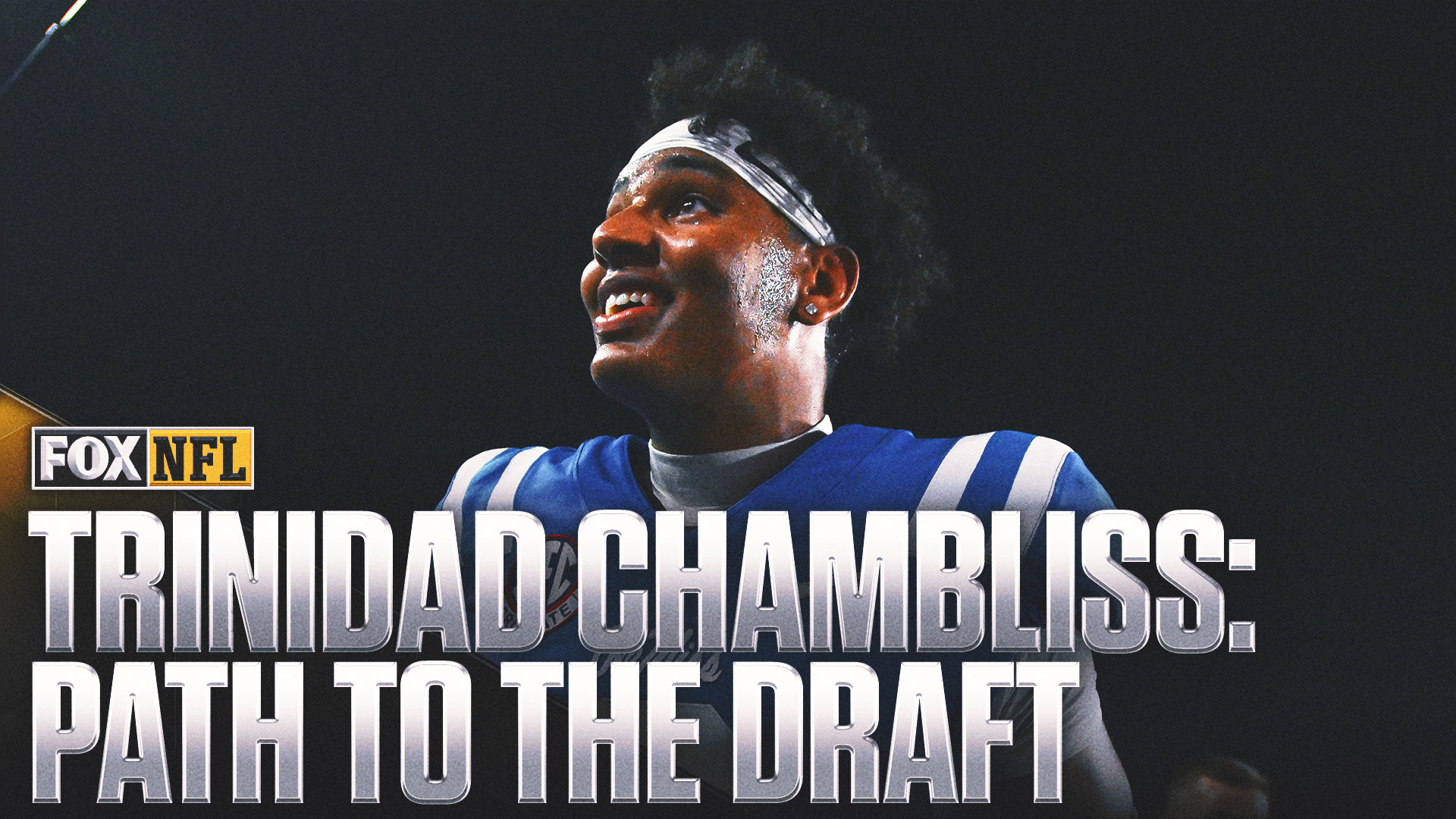
With all due respect to Arch Manning, Dante Moore and so many other celebrated quarterbacks throughout the college football landscape, the most impressive player at the position through the first month of the season has been Ole Miss’ Trinidad Chambliss. In guiding the Rebels to a 3-0 start while completing 70% of his passes for 924 yards and seven touchdowns (as well as rushing for 64 yards and two more scores), Chambliss has catapulted ahead of his peers to emerge as the current favorite to win the Heisman Trophy. While some of the other QBs of the 2027 class have fizzled under the brightest lights, Chambliss has consistently excelled, turning skeptics of his pro prospects into believers. But there are undoubtedly still doubters. And it boils down to two factors: His size (he’s listed at 6-foot-0) and his age (he recently turned 24). There are five categories I’ve long used to scout quarterbacks: accuracy, anticipation, arm talent, athleticism and attitude. I call them the five A’s of quarterback evaluation. After diving into the 2026 tape, I broke down and graded Chambliss in each category. Whether it be analysts, NFL scouts, coaches or fans, it never ceases to amaze me how often folks fall for a quarterback with brilliant athletic tools but subpar accuracy. Plain and simple, accuracy is the single most important element when evaluating a QB. The ball needs to hit receivers in stride to help them create after the catch. Spin rate, velocity and touch are also important, but not as critical as being able to thread the needle from various distances and trajectories. Fortunately for Chambliss, this is one of his many strengths. The super senior routinely fires lasers while flat-footed in the pocket. Even better, he might be even more accurate on the move, as this strike shows. This isn’t to suggest that Chambliss is automatic. During the early part of last season, his first at Ole Miss following four at Division II Ferris State, too many of his deep balls had a tendency to float. Chambliss is good but not great at layering passes between the second and third levels of the defense. Throwing the ball with enough loft to lift it over linebackers and drop it in front of the safeties is critical in today’s NFL, and it will be a departure from the relatively simple offense he’s running with the Rebels. Grade: B+ Pardon the cliché, but the game just seems to come so easily for Chambliss. He’s a natural with impressive instincts and poise and he can improvise. He has enough arm strength (more on this later) to zip the ball past defenders after his receivers have gained clearance, but he’s at his best when anticipating their breaks and starting his delivery before they’ve made their final cut to get open. I think this is clearest when Chambliss surveys the field from a clean pocket. He shows impressive field vision — especially for a shorter quarterback — efficiently working through his progressions and speeding up his release when needed. Again, there were some worrisome throws early in his time at Ole Miss in which he either stared down his primary read or failed to account for multiple defenders. And while he was not intercepted by Miami in the Fiesta Bowl last season, he got away with some questionable decisions. Grade: B+ There is no getting around it: At the highest level, quarterbacks sometimes just have to sling it past defenders. The openings can be so minuscule that big-time velocity is required. Chambliss has that type of arm strength. While the breakaway speed by his teammate, Deuce Alexander, is also worth noting on the play below, the throw is an absolute dart. Or this touchdown strike last weekend against LSU. As mentioned earlier, Chambliss put a little too much air under some of his previous deep balls at Ole Miss but this year he’s throwing the ball with greater touch and accuracy. This throw travels nearly 40 yards in the air and is perfectly placed where only his receiver can get it. Grade: A- This is a tricky category when evaluating quarterbacks because scouts are prioritizing pocket mobility, flexibility and the strength to fight through arm tackles rather than the pure explosive athleticism indicated in 40-yard dash times or vertical jumps. Chambliss has agility and creativity as a scrambler, but he’s not a dynamic runner warranting comparisons to Lamar Jackson or Kyler Murray. He’s posted impressive rushing totals in his 16 starts at Ole Miss, including 591 yards and 10 scores, but I don’t expect him to wow in pre-draft workouts and wouldn’t be surprised at all if he opts not to run prior to the draft. Given his statistics, I was actually a bit disappointed in Chambliss’ pure athleticism. He’s alert and will take yardage when given to him, but I was surprised by how many times he struggled to escape the pocket with backside pursuit often getting home. He’s more elusive than explosive. Granted, some of the best scrambling quarterbacks in the NFL aren’t necessarily elite athletes. No one would call Brock Purdy as athletic as Jackson, for example, but opponents rarely get a clean hit on him, and he’s run for 12 touchdowns over 51 NFL games. Over that same span, Jackson has 13 rushing touchdowns. While Chambliss isn’t the most explosive dual-threat quarterback of the 2027 draft, he’s very effective. Grade: B- Certain leadership qualities are expected at the quarterback position. Ideally, quarterbacks have the confident demeanor that can lift the spirits of teammates without becoming an egomaniac. As a former under-recruited prospect who began his college career as a backup at Ferris State, Chambliss should have perspective. Since that time, of course, Chambliss won a national championship at Ferris State before transferring to Mississippi, where he’s become a household name while winning 14 of his 16 starts and turning the Rebels into a top-10 program. For all of his impressive physical skills, what scouts appreciate most about Chambliss is the fact that the moment doesn’t ever seem too big for him. His championship pedigree and clutch play late in ball games have scouts excited about the impact that he might have on their own NFL teams. Grade: A Like with most young quarterbacks, Chambliss can improve his throwing mechanics and decision-making, but he obviously cannot do anything about his height or age. He is undeniably older than scouts would prefer, and his below-average height does show up on tape with Chambliss occasionally missing reads. While short, the 210-pound Chambliss has a muscular, compact frame and is similar in stature to former No. 1 overall pick Baker Mayfield and 10-time Pro Bowler Russell Wilson. Because of their size, some questioned if they would remain healthy in the NFL, despite proving durable at the high school and collegiate levels, as Chambliss has to this point. It’s perhaps worth noting that Mayfield and Wilson have combined to miss a grand total of five games to injury over their respective NFL careers — a span that includes 23 seasons and more than 300 contests. Unless medical testing at the Scouting Combine unearths some previously unknown issue with Chambliss, I see no reason why NFL teams should worry about his durability. And given how long quarterbacks are playing in today’s NFL, his age also shouldn’t be a huge concern. In fact, I think it should be viewed as a positive: He’ll enter the NFL with more perspective and maturity than most quarterbacks. Now, is Chambliss a surefire first-round selection? A lot can change between September and April. But if the NFL draft were today, he wouldn’t just be a first-round pick. Chambliss might be the first quarterback to come off the board.Latest Sports News from FOX Sports

Florida Georgia Line just reunited, and the songwriting machine is already spinning up behind the scenes. Continue reading…The Boot – Country Music News, Music Videos and Songs
Florida Georgia Line just reunited, and the songwriting machine is already spinning up behind the scenes. Continue reading…Country Music News – Taste of Country

 Amazon October Prime Day will be here before you know it, but there are already so many early deals worth shopping now before the event kicks off, including the best Birkenstock Boston clog…
E! Online (US) – Top Stories

If dessert isn’t on your mind when you drop into a fast food restaurant for some chicken, a pair of sweet treats from this chain might change that.

Mashed – Fast Food, Celebrity Chefs, Grocery, Reviews
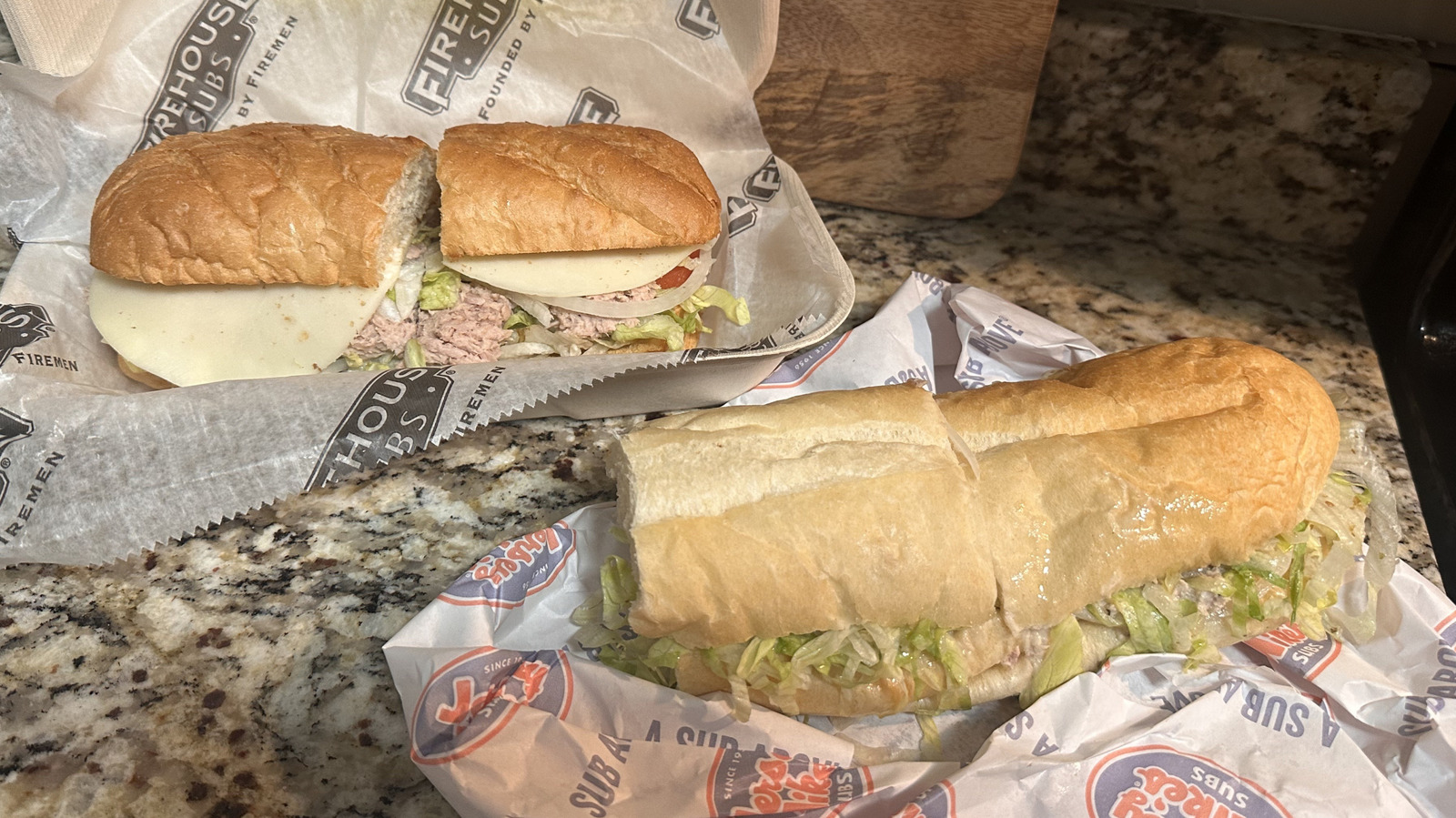
Tuna salad is one of those things you either love or hate. Here, we taste test to see who makes the better tuna salad sub – Jersey Mike’s or Firehouse?
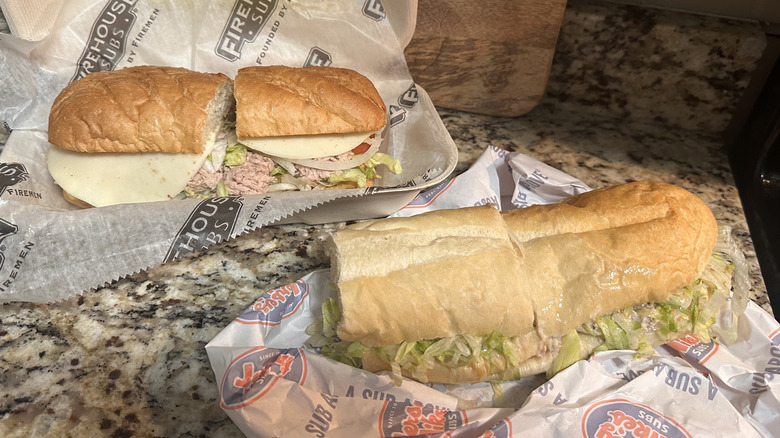
Mashed – Fast Food, Celebrity Chefs, Grocery, Reviews
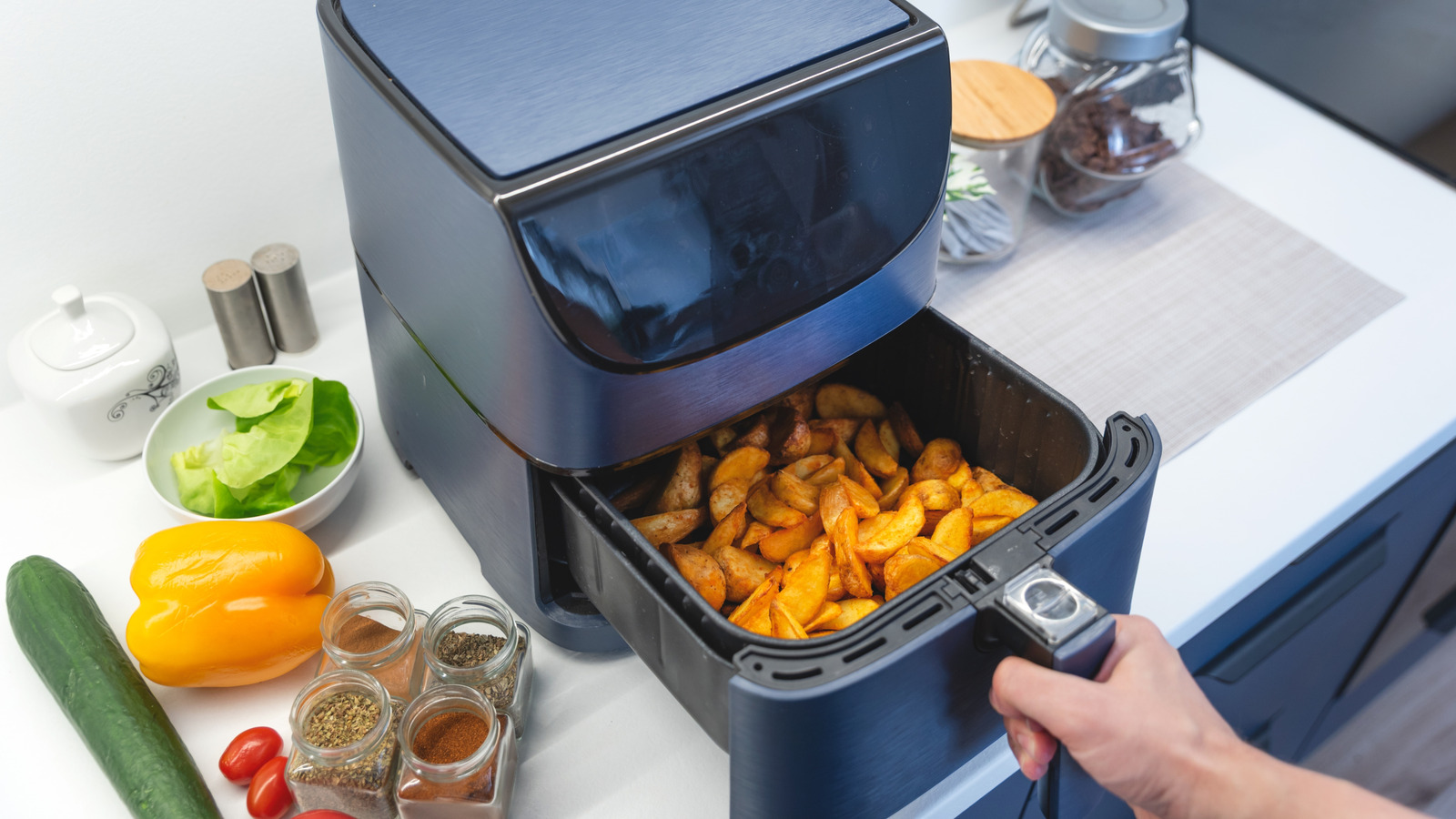
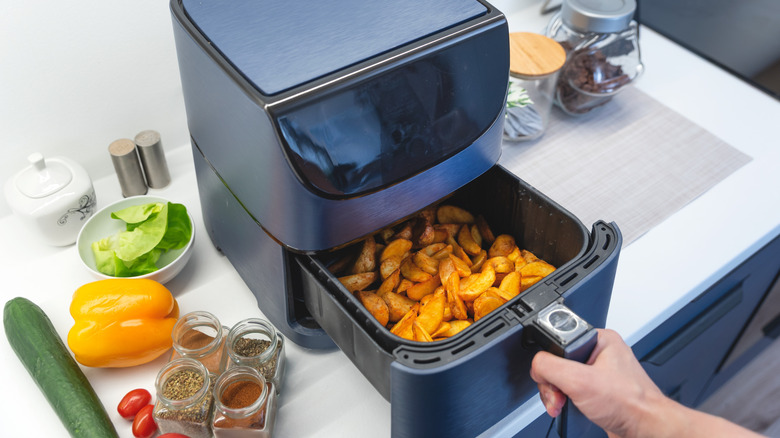
Even countertop appliances should be purchased thoughtfully, because no one enjoys buyer’s remorse. This is what reliable air fryers cost these days.
Mashed – Fast Food, Celebrity Chefs, Grocery, Reviews