Here’s everything we know about Season 4 of ‘Lioness,’ including when fans can expect it. Continue reading…The Boot – Country Music News, Music Videos and Songs
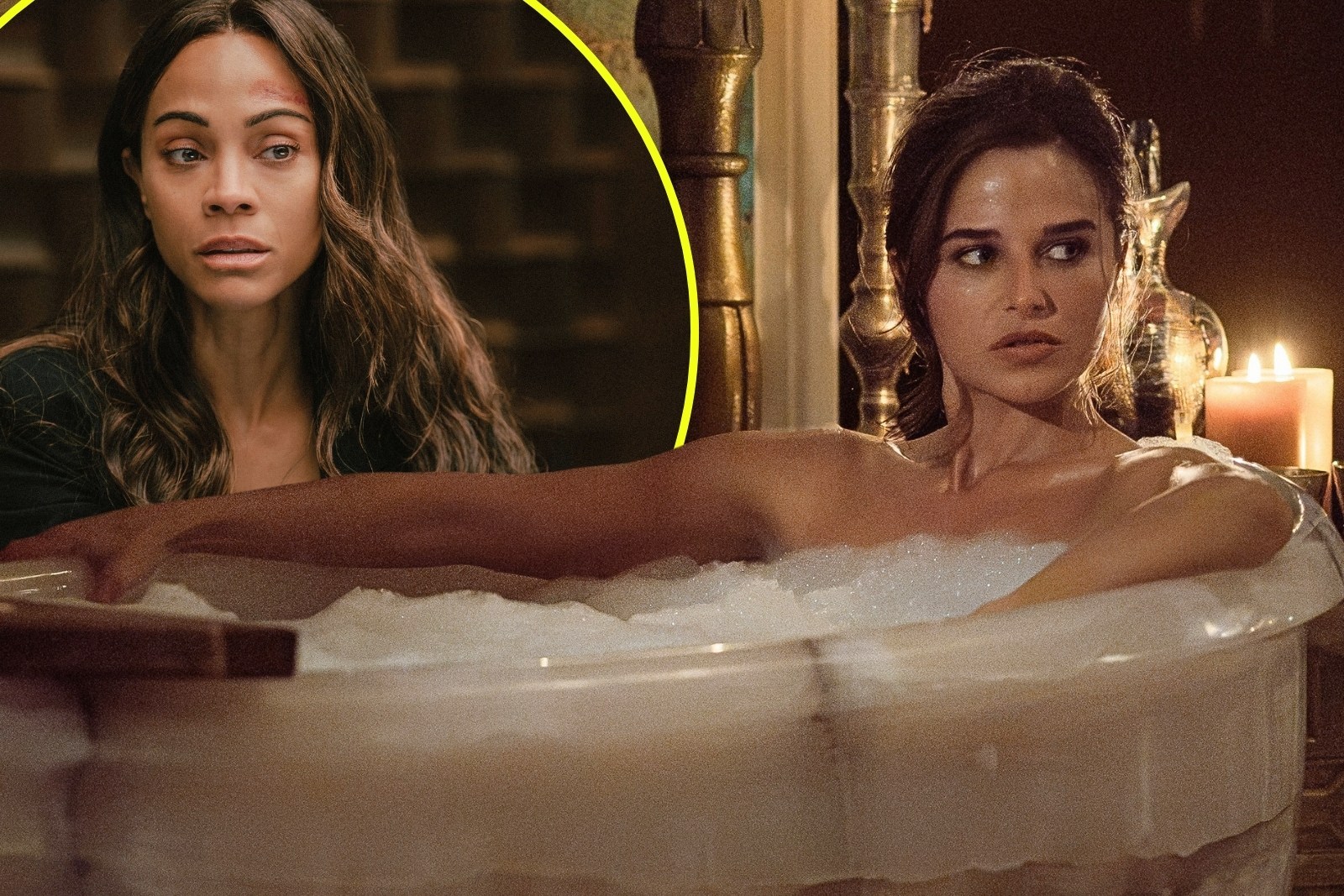








Here’s everything we know about Season 4 of ‘Lioness,’ including when fans can expect it. Continue reading…The Boot – Country Music News, Music Videos and Songs
Here’s everything we know about Season 4 of ‘Lioness,’ including when fans can expect it. Continue reading…Country Music News – Taste of Country
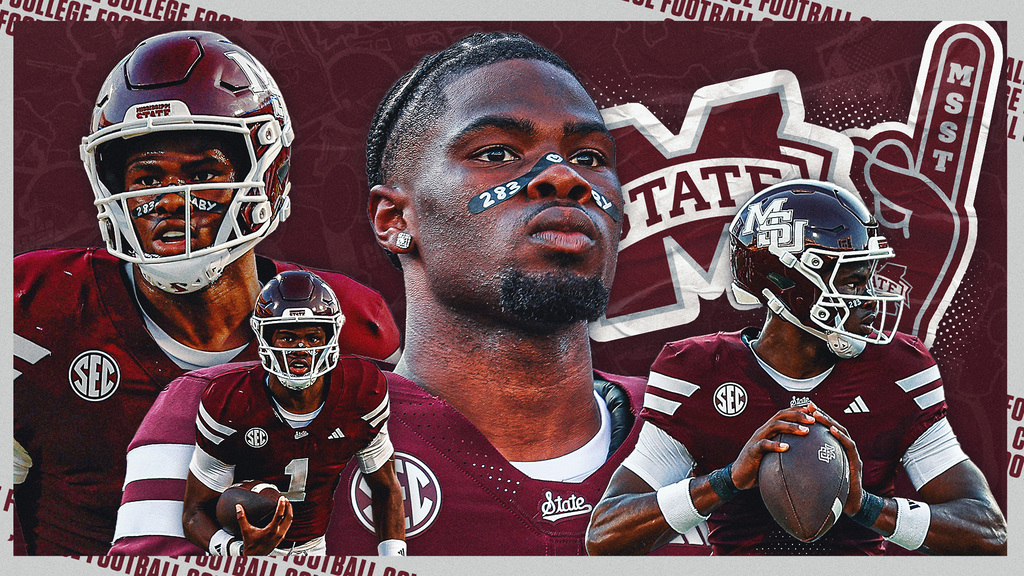
It took just a flick of the wrist to silence the sea of white towels gyrating throughout Williams-Brice Stadium. Ranging to his left, big-bodied Mississippi State signal-caller Kamario Taylor whipped his right arm back across his body, past an outstretched rusher’s hand and flung a dart toward the front left corner of the end zone. There, it was greeted by receiver Marquis Johnson, who tapped his toes for Taylor’s third of four passing touchdowns in the Bulldogs’ comeback victory over South Carolina last Saturday. “Holy s—!” exclaimed an excitable fan in the maroon and white-clad corner of the stands. “Never a doubt!” another shouted. But as Taylor’s prolific evening and his dismantling of Minnesota on the road the week before cascaded across the sport’s lexicon, the Mississippi-born quarterback became the center of a broader conversation percolating inside programs nationwide. College football is in a time of mass transition. Cash is flooding into the sport at an exorbitant rate. Capitol Hill is attempting to wrangle an ecosystem it feels has operated without hard and fast rules. Collective bargaining is on the tip of almost every administrator’s tongue. That cash flow, however, has pushed the sport into a new age, one where brand biases of the past are only as accurate as a program’s current checkbook. Ole Miss has suddenly become an SEC favorite. Indiana — yes, Indiana — is the defending national champion. But pre-NIL notions have conditioned the collective college football consciousness to disbelieve what their eyes might tell them. In a world where recruiting currency has shifted from locker room waterfalls to dollars, prognosticating the future plans of quarterbacks outside the traditional blue bloods has become popular fodder. The assumption, now more than ever, is that there are perpetual wandering eyes from those starring under-center. Taylor — a lifelong Mississippi State fan who attended games throughout the Bulldogs’ 2-10 campaign during his senior year of high school in nearby Macon, Miss. — has been no exception to that presumption. “Kamario Taylor is unreal,” ESPN personality Booger McFarland posted on X during the Bulldogs’ romp of Minnesota on Sept. 13. “Let’s hope that they can keep him at Mississippi [State].” That perception, however, hasn’t necessarily matched reality in Starkville. “In this era, people seemingly have offers every day,” Mississippi State athletics director Zac Selmon told me. “What I’ve been really pleased with, especially when you look at the sport of football, we’ve been able to retain all the players that we’ve wanted to retain through Coach [Jeff] Lebby.” Balancing The Present And Future The player acquisition market has grown exponentially since the advent of NIL in 2021, while the desire for talented passers has touched the highest ends of that nexus. Learfield, college sports’ leading multimedia rights provider, released its annual report in July that showed more than $300 million in sponsorship revenue was tied to deals that included NIL assets last year — a jump from over $140 million the year prior. The marketing firm Pivotal Sports and Entertainment, which counts around 75% of its business in the collegiate space, also shared internal research with me that determined seven of the ten most marketable players in college football this year are quarterbacks: 1) Trinidad Chambliss; 2) Arch Manning; 3) Mensah; 5) Moore, 7) Lincoln Keinholz; 9) Leavitt; and 10) Demond Williams Jr. That tracks. On3 reported in August that 14 different quarterbacks — names like Miami’s Darian Mensah, Indiana’s Josh Hoover, Oklahoma State’s Drew Mestemaker and Texas A&M’s Marcel Reed — were making in the neighborhood of $3 million or north of it. There are, however, tiers to this discussion. Nebraska’s Anthony Colandrea (UNLV), reportedly making around $2.5 million this year, was an obvious import option coming off a productive campaign in the Group of Five. Mestemaker (North Texas) and Auburn’s Byrum Brown (South Florida), meanwhile, followed their head coaches to bigger jobs. The question that has been thrust on Taylor and his camp in recent days is more on par with the moves of Sam Leavitt, Hoover and Mensah, and whether a move to another Power Four program is justified despite the Bulldogs’ obvious on-field momentum. That rub has created its own challenge for coaches balancing their needs under center. How do you focus on the season at hand, while knowing decisions need to be made now regarding next year’s roster? “You’re constantly thinking about roster management and how to best situate your team for the short-term and long-term,” said South Carolina head coach Shane Beamer, who retained quarterback LaNorris Sellers each of the last two offseasons. “… When you have great players that are great people, great teammates, and embody what we want, you want to do everything in your power to keep them around and get them coming back into your program.” “It’s a different challenge at Tulane than at Florida,” quipped Gators head coach Jon Sumrall, who signed Mensah out of high school. “Tulane, middle of the year, I knew, ‘Hey, probably going to lose Darian,’ because our best offer was going to be a small fraction of what other people’s best offers were going to be. Here at Florida, if you’ve got a returning starter that you feel good about, you should be able to keep them because we have enough resources to do so.” Where frustration belies college football fans — and those in Starkville, in particular, since the South Carolina win — is what the sport’s broader hivemind has forgotten: Some kids are, in fact, content where their feet are planted when the ties run deep. Noxubee County High School — where Taylor attended school — is exactly what you’d picture a small-town Mississippi high school to be. The 3A school tucked in the northeast corner of Mississippi blares smooth jazz from its in-house speakers before kickoff on fall Friday nights, while its bleachers, roughly 15 rows high on either sideline, are often packed to the brim. Its football tradition? That’s more significant. Ex-Bulldogs quarterback Omarr Conner — Taylor’s uncle — torched defenses here during his youth. As did All-Pro defensive tackle Jeffrey Simmons and a handful of other eventual NFL prospects throughout the years. Taylor was pegged as the next star to don the Tiger red and blue before trekking the 29 miles up U.S. 45 Alternate to Mississippi State for the next step in his career. As October neared November during Taylor’s senior season, he called his uncle and told him he was ready to commit to Mississippi State. He just needed a graphic made. Conner took on the task and passed the finished product along, assuming Taylor would hold off for a few days — or at least until after his game that week. He didn’t, delivering the news a few weeks before Halloween. “It’s just a testament to his hard work, a testament to Coach Lebby and a testament to the summer grind,” Conner told me of Taylor’s early success this fall. “… I always knew Kamario was going to have the season he’s having. I knew he was going to pop off.” ‘You Have Something To Sell’ The wounds were still fresh. Just days after Mississippi State was throttled at home by Toledo in 2024, a donor texted Selmon asking to meet at his office for a late-night, state of the program powwow. Selmon agreed to link up around 6 p.m., but not without a quick pit stop to pick up a bottle of Blanton’s, his soon-arriving guest’s bourbon of choice. Over a glass of Kentucky’s finest, one hour turned into three. By the time the pair exited the office, the donor — who wished to remain anonymous — pledged $8 million to help fix the football program. “I always joke with him about it,” Selmon told me. “But that really kind of jump-started it where other people started getting on board and saying, ‘Hey, instead of pointing to what a problem is, we know resources are a big issue, so let’s just let’s get on it.’” Mississippi State — like Indiana, or Ole Miss, or any number of programs that have punched above their weight in the NIL era — fights the stigma of the past and perceptions of lacking resources to compete in modern college football. While the Bulldogs program faced an on-field downturn following the sudden death of Mike Leach, it hasn’t been for lack of funding. The Athletic reported last week the school was spending in the neighborhood of $25-30 million on its football roster this year. Mississippi State has also seen a massive uptick in fundraising since Selmon took over in 2023. Just last year, it reported more than $59 million in direct donor contributions, per the Knight Newhouse College Athletics Database — good for seventh among public SEC schools and ahead of places like Georgia, Texas A&M, Ole Miss, Arkansas and South Carolina. Selmon and his staff have procured more seven-figure donations in the last two years than the previous 25 years combined. “Now that we’re better, people are assuming, ‘Well, they still don’t have any money. They’re just good because of this one kid (Taylor), and he’ll leave next year,’” longtime Mississippi radio host and prominent Bulldogs podcaster Brian Hadad told me. “People are pissed [about the Taylor discourse], because State fans are slowly coming around that State’s portal problems weren’t money related. “If somebody offers you $5 million and says they’re going to go 5-7 and somebody can offer you $5 million and say, ‘We’re going to go 9-3 or 10-2 and go to the Playoff,’ where are you going to go? That was State’s problem. Next year, [State] has money and you have something to sell.” That Taylor will stick with Mississippi State this offseason, of course, is no guarantee – though sources in and around Starkville are adamant he’s not going anywhere. Nor is it certain the Bulldogs will capitalize off their 3-0 start that has fans dreaming of 2014 — the year Dak Prescott’s squad earned the first No. 1 ranking of the College Football Playoff era. But as Taylor’s name gains increased acclaim, it’s worth remembering in college football’s new-look world, not every talented signal-caller is one hyped season away from a departure. “I think we’re going to be able to do just fine from a retention standpoint,” Lebby said on this week’s SEC teleconference. “Right now, man, it’s about winning on Saturday.”Latest Sports News from FOX Sports

When it comes to men, Ella Langley seems to have a type. Continue reading…The Boot – Country Music News, Music Videos and Songs
When it comes to men, Ella Langley seems to have a type. Continue reading…Country Music News – Taste of Country
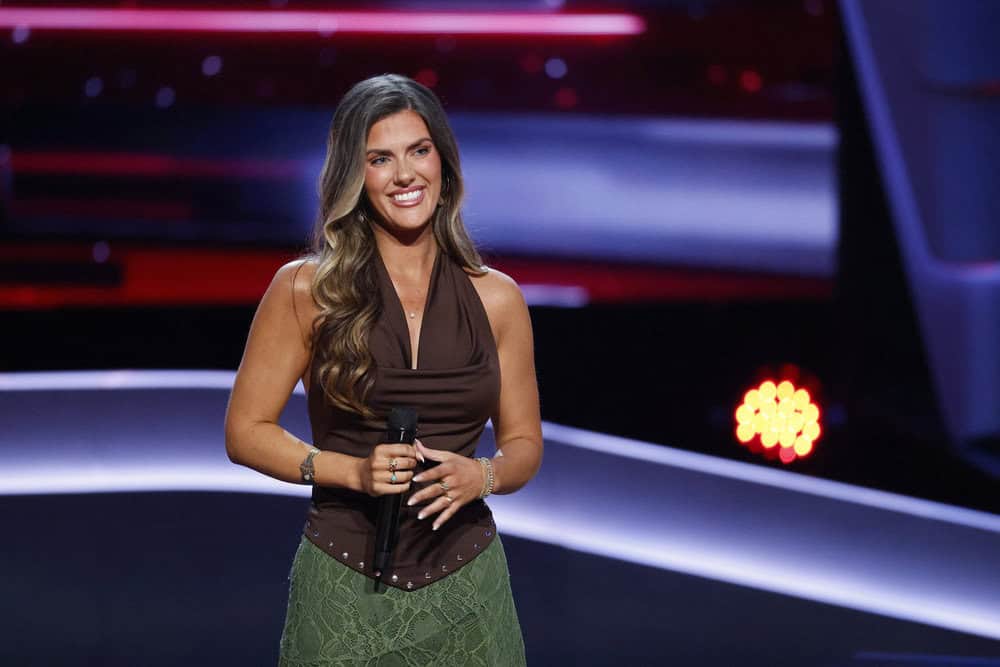
Caroline Alexis is one of the newest competitors on Season 30 of The Voice who earned the spot on the team of one of this year’s first-time coaches, Riley Green. With her powerful voice and a country superstar in her corner, the possibilities are endless as she continues her journey through the competition.
The 25-year-old hailing from Ozark, Alabama instantly made her name known when she stepped on stage during the blind auditions and delivered a stand-out performance of Rascal Flatts’ “Take Me There” as part of the three-night premiere event.
As she explained to the coaches, the emerging act does not do music full time, in fact she recently graduated law school and in between rehearsing for her audition has been studying for the Bar exam.
She instantly formed a bond with Green as he joked, “We’re a lot alike. I go to the bar in my downtime too.”
“I like that,” she responded with a laugh.
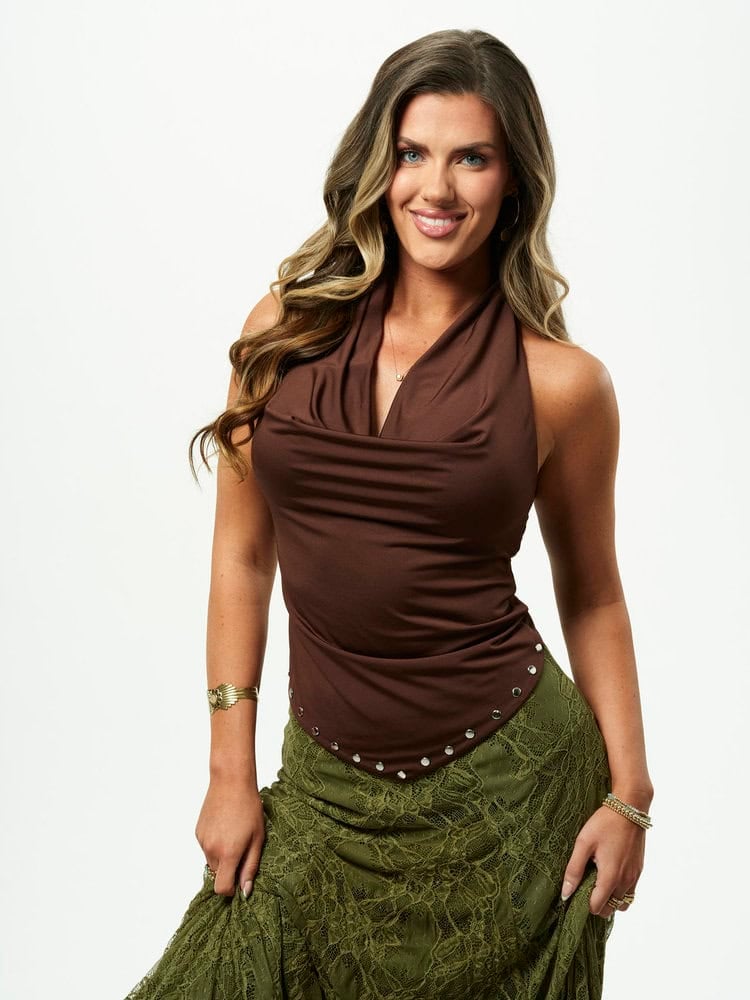
Beyond being a talented singer and soon-to-be lawyer, the contestant also has a history with competing in pageants. The Dale County Chronicle reports that she grew up in Ozark and graduated from G.W. Long High School, where her love for music and performing began. During her senior year, she earned the leading role of Donna in the Wish Upon a Star Performing Arts Company’s high school production of “Mamma Mia!,” which also marked her first time ever performing on stage.
From that moment on, Caroline continued to find ways to stay connected to performing while pursuing a career outside of music. Over the years, she competed in pageants, showed horses, performed at local events and even sang the national anthem at hockey games and rodeos. She also earned her Juris Doctor degree and launched her own pageant-coaching business.
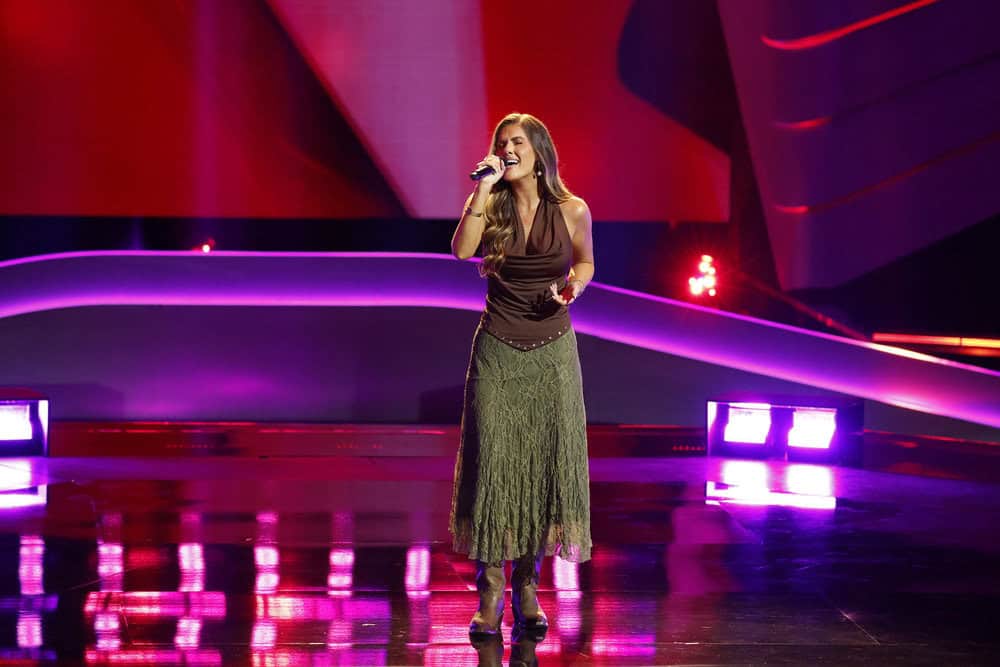
Law school may have become another important part of her life, but music never fully left the picture. Caroline explained to the outlet that a conversation with one of her law professors ultimately gave her the push to take a chance on her longtime passion and audition for The Voice.
On the day she graduated from law school, criminal law professor Melvin Otey reminded her that “the law will always be there” but an opportunity to audition for The Voice might not come around again.
She took that leap and stood before returning coaches Kelly Clarkson and Adam Levine as well as all-new coaches Queen Latifah and Riley Green. As soon as she began singing, the coaches showed a clear interest, with Levine even hovering his hand over his button before ultimately waiting to hear more.
Midway through the performance, Green finally pushed his button to turn his chair, sending Caroline’s parents into a celebration backstage alongside the show’s host, Carson Daly. She continued delivering a powerful performance, hitting each note with ease and pouring emotion into the song, leaving both the coaches and the live audience impressed by her talent.
Clarkson spoke up first, admitting she was “so close” to turning her chair, but realized she likely had no fighting chance once Riley Green took his shot.
“I was like I ain’t got a chance. And then you’re from Alabama. I’m so glad I saved myself from embarrassment. Congratulations you’re on The Voice,” the superstar told her.
Then it was the “Worst Way” singer’s turn to explain why he wanted Caroline on his team.
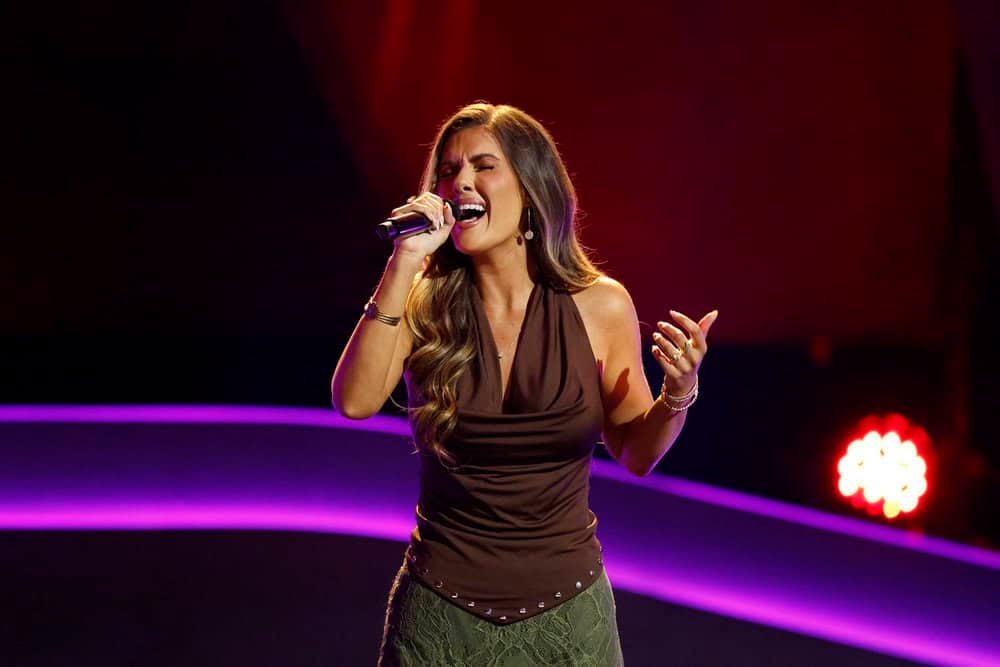
“Someone with an accent that I recognize from my home state of Alabama. I love your tone, I love your song choice, I love the way you performed it…I’m super excited to have you on The Voice and on my team.”
Later on, Green admitted he was happy that none of the other coaches turned their chair, meaning he didn’t have to fight anyone to secure Caroline Alexis for his team.
“It worked out great. She’s somebody that needed to be on my team,” he added. “I’m really excited to see what Caroline does.”
As a welcome gift for joining his team, Green handed Riley a pair of the bib overalls that each of his contestants has received this season, complete with “Team Riley” embroidered across the front.
Fans can watch Caroline Alexis’ journey on The Voice continue after the blind auditions come to an end Tuesday, October 6.
Even more contestants will take the stage next week as new episodes of The Voice air every Monday at 8 p.m. ET (7 p.m. CT) on NBC.
The post Who Is Caroline Alexis? Get To Know The Newest Member Of Team Riley Green On ‘The Voice’ appeared first on Country Now.
Country Now

Callahan Baker Stief was born at 8:48 a.m. on Wednesday, Sept. 2 in Everett, Washington to proud parents Riley Erekson Stief and Matt Stief. Callahan weighed 7.12 lbs and was 20.5 inches long.
Erekson Stief’s sister Keely Baumgartner and mother Judy Erekson attended the birth. Aunt Carlee Heinmiller and grandpa Lee Heinmiller anxiously awaited photos of his arrival.
Happy 58th birthday to David Routh. Routh celebrated on Friday with a mayonnaise cake, his favorite. For…
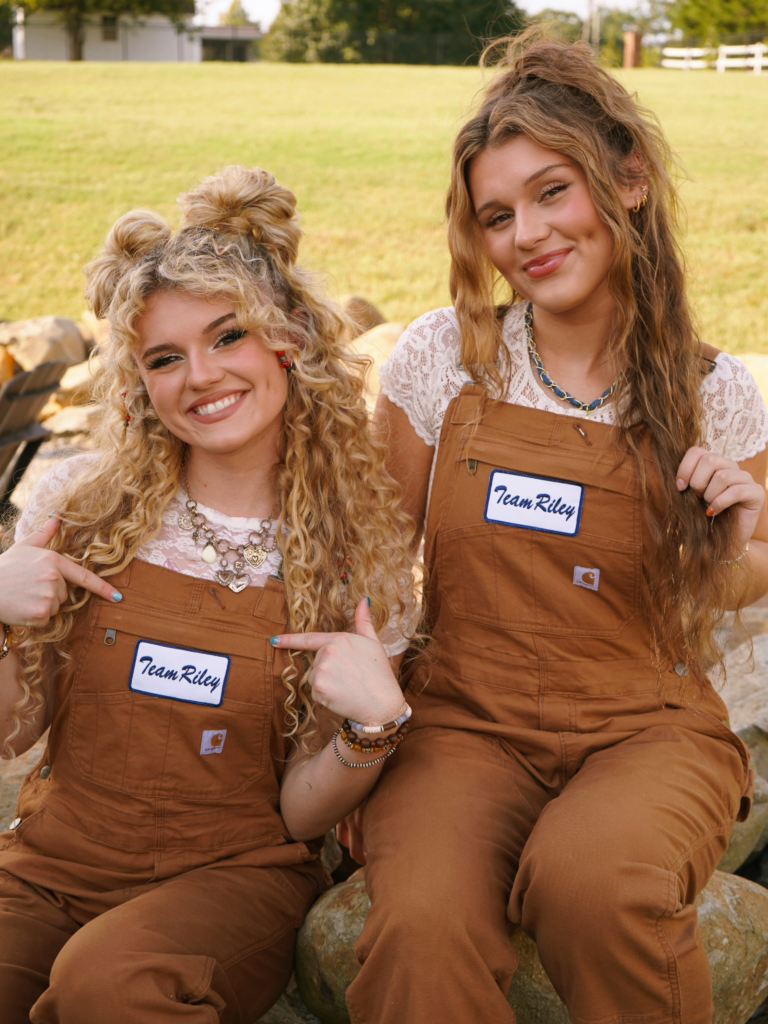
Sister duo Ferryn & Brinkley are quickly becoming fan favorites on Season 30 of The Voice. The sisters caught the attention of all four coaches with their performance of “When Will I Be Loved,” earning a rare four-chair turn. But there’s much more to their story than their time on The Voice stage.
Ferryn Wright and Brinkley Wright are sisters, not twins, from Sevierville, Tennessee. Ferryn is 20, while Brinkley is 18 (17 at the time of their audition). The sisters grew up performing together in East Tennessee and eventually became full-time performers at Dollywood.
Their hometown connection to Dolly Parton makes their story even more special. Both sisters have performed at Dollywood on several occasions and have had the opportunity to perform at her hotels.
Earlier this spring, the sisters were also selected to walk just ahead of the car carrying Dolly during a parade at Dollywood. They later shared their excitement on social media, describing it as “the opportunity of a lifetime” to get the chance to “walk alongside our dreamer in chief.”
Beyond their connection to Dollywood, Ferryn and Brinkley have built their musical identity around their incredible family harmonies. As sisters who have spent years performing together, their voices naturally blend in a way that is difficult to replicate.
The sisters are also singer-songwriters who recently released their debut single, “Wrong Girl.”
Their journey to The Voice wasn’t their first experience with a major singing competition.
Ferryn and Brinkley previously auditioned for Season 23 of American Idol in 2025, although they had to pursue the opportunity separately since the show does not accept duos. Both sisters earned Golden Tickets and advanced in the competition, but neither of their auditions aired.
At the time, they celebrated the achievement on social media, writing:
“Not one but TWO GOLDEN TICKETS?!? WE’RE GOING TO HOLLYWOOD!! Unfortunately, our audition won’t be aired, as there are over 180 others who deserve it over us. We are so incredibly honored that the judges Luke Bryan, Carrie Underwood and Lionel Richie thought we were good enough to give us a chance.”
Ferryn and Brinkley’s The Voice Blind Audition was a major breakthrough. The sisters performed “When Will I Be Loved,” showcasing their signature harmonies and earning chair turns from Kelly Clarkson, Queen Latifah, Adam Levine and Riley Green. They became the first four-chair turn of Season 30.
With all four coaches fighting for them, the sisters had plenty of options to consider.
Riley Green leaned into their country roots, telling the sisters that their performance reminded him of where he grew up and praising their “old school” country sound. He also compared them to his former tour mate and duet partner Ella Langley.
Clarkson also made her case, pointing to her experience coaching and winning The Voice with the sibling trio Girl Named Tom.
In the end, Ferryn and Brinkley chose Green, officially joining Team Riley.
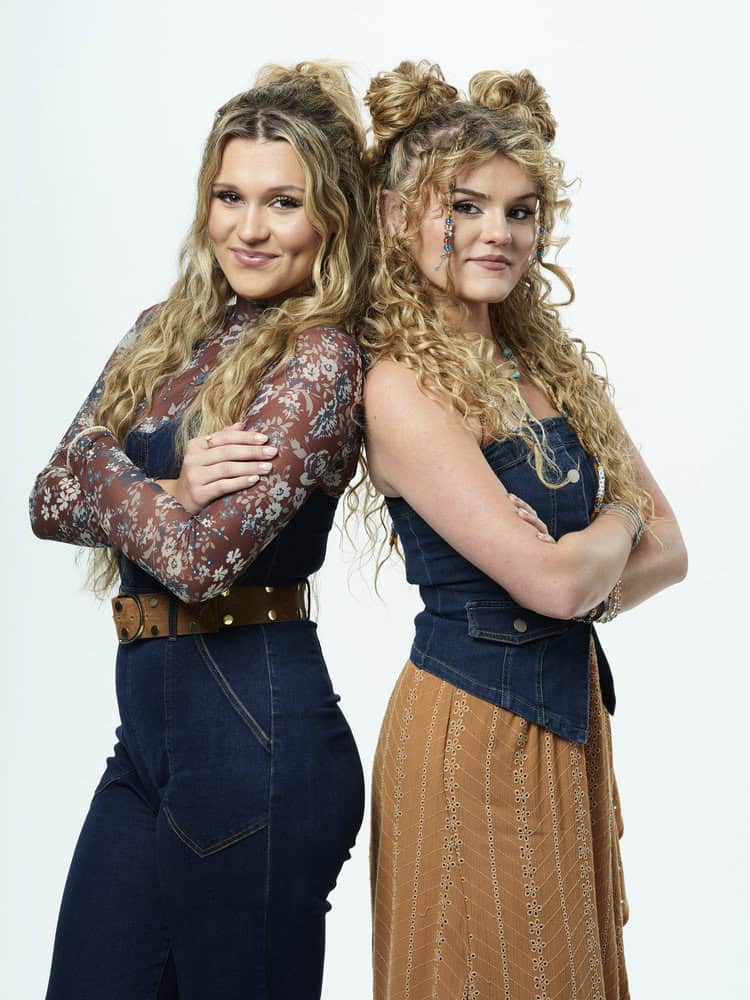
Now that they’re officially part of Team Riley Green, fans will have to keep watching Season 30 of The Voice to see how far the sisters can make it in the competition.
No matter how their journey unfolds, Ferryn and Brinkley have already introduced their unique sister harmonies to a whole new audience, while bringing a little piece of their East Tennessee and Dollywood roots to the The Voice stage.
The post Who Are Ferryn & Brinkley? Meet The Sister Duo Who Chose Team Riley Green On ‘The Voice’ appeared first on Country Now.
Country Now

10 Years Ago
Haines’ long-dormant Waterfront Aesthetics committee will take its first crack to brainstorm how the Haines Borough should upgrade the uplands portion of the Small Boat Harbor.
Whatever the aesthetics committee recommends will then go to the Haines planning commission – a body that has long felt it has been left out of harbor expansion design matters.
The aesthetics committee will hold a public workshop on uplands design issues at 6:30 p.m. Oct.…
Life on the trail was hard for a cowboy, and they certainly weren’t dining on expensive steak or chicken. Instead, they ate this traditional dinner.
Food Republic – Restaurants, Reviews, Recipes, Cooking Tips