 Selma Blair’s intentions? Having fun with her hair.
The Cruel Intentions alum stepped out with a noticeably shorter ‘do during Variety’s Power of Women event Sept. 23, with her hairstylist…
E! Online (US) – Top Stories









Selma Blair’s intentions? Having fun with her hair.
The Cruel Intentions alum stepped out with a noticeably shorter ‘do during Variety’s Power of Women event Sept. 23, with her hairstylist…
E! Online (US) – Top Stories

Mary Peltola listens to a question posed by moderator Michelle Egan at a candidate forum held by the Alaska Oii and Gas Association on Aug. 27, 2026. Next to Peltola is i Sen. Dan Sullivan. Peltola, a Democrat and former U.S. House member, is challenging Sullivan. (Photo by Yereth Rosen/Alaska Beacon)
Alaska observers say it is too early to say how reports of bad behavior by Democratic U.S. Senate candidate Mary Peltola might affect the state’s closely watched election, and some supporters suggested this week that she may be subject to a double standard because of her gender.
“While it’s surprising news, I think there’s a very hefty proportion of people who go, ‘It’s a hit job. It’s typical politics,’ and kind of brush it off,” said Ivan Moore of Alaska Survey Research, a political polling firm active in the race.
“It takes a lot to swing someone over from being a Peltola voter to all of a sudden going, ‘Oh, OK, I’ll vote for Sullivan.’ So we’ll see,” Moore said.
On Wednesday, the New York Times published an anonymously sourced article documenting abusive behavior by the former Alaska congresswoman, now a leading candidate for Senate. The article said she was hostile to her staff and used slurs and profanity to privately criticize others.
The article detailed accounts from former staff members who said she required aides to feed her family’s pet chameleon and said that in 2024, she wrote that she hoped a local Planned Parenthood board member would “die of a botched abortion.”
That comment came after the group was slow to endorse Peltola in that year’s election. This year, she does not appear on the group’s endorsement list.
“Planned Parenthood has been called worse and withstood more in its 100+ years; we’ll talk with her about what was reported when she’s Senator-elect,” said Morgan Lim, Alaska state director for Planned Parenthood Alliance Advocates. “Nothing has changed in the stakes of this race and we remain laser-focused on ousting Sullivan from the Senate — making sure Alaska voters know that Dan Sullivan is an anti-abortion, anti-LGBTQ fanatic who will continue to rubber stamp Trump’s judicial nominees.”
Peltola declined to talk to Alaska reporters on Wednesday evening after a meet-and-greet with union members in Anchorage.
Peltola was elected in 2022 to fill the remainder of Congressman Don Young’s term after his death that spring. She subsequently won the general election in November and served a two-year term of her own.
Her time in office coincided with a period of personal loss. Five months after she began her full term, her mother died. Three months after that, her husband died in a plane crash. She sued his employer a year and a half later, and a trial is set to begin in March.
Harry Child, a spokesman for Peltola’s campaign, said by text that the Times article is exaggerated.
“Like any person who has gone through multiple personal tragedies in the span of a few months, Mary sometimes struggled to deal with her grief. But she treats her staff with respect and care, and she maintains close positive relationships with her staff spanning her nearly 30 years in public service,” he said. “Exaggerating and outright lying about moments from the hardest period of her life, and falsely presenting them as a pattern of behavior, is wrong.”
Polling indicates Peltola, a Democrat, is in a close race against Republican incumbent Dan S. Sullivan for one of Alaska’s two U.S. Senate seats. The winner of that election may decide whether Democrats or Republicans hold a majority of the Senate.
Moore said he doesn’t know whether the Times article will affect the eventual result.
Readers of the Anchorage Press said they don’t think it will, with some labeling the Times article a “nothingburger.”
The Times found something similar in a followup article of its own. A spokesperson for the Alaska Democratic Party called the initial article “a hit piece.”
“Mary grew up working on a fishing boat and was made in the mold of great Alaskan leaders that came before her. She’s the only candidate in this race who will actually fight to lower costs and put Alaska first, and Alaskans will send her to the Senate this fall because she will deliver,” the spokesperson said.
Nate Adams, a spokesperson for the Sullivan campaign, said by email, “Nearly 30 people close to Mary Peltola were interviewed and more than 100 screenshots informed this reporting. What the Times printed is only a fraction of it, so imagine what was left out, and what else Mary Peltola is hiding from Alaskans.”
Jim Lottsfeldt, a veteran political campaigner who is working on pro-Peltola efforts this year, said he sees somewhat of a double standard in the way she’s being treated.
Her predecessor, Young, was notorious for profane, scurrilous and even violent behavior while in office, and former Sens. Ted Stevens and Frank Murkowski were known for their hot tempers.
“Stevens blew his stack, and we were all like, ‘That’s great, because he blew his stack for our benefit.’ And then you had Don Young saying the most outrageous things occasionally, but got like tons of things passed,” Lottsfeldt said. “So when all this stuff happens with the guys, nobody really clutches their pearls, and now we have little Mary Sunshine, Mary Peltola, who may have said the word f**k when she was mad, and now we’re acting like it’s a major political story, and I don’t think it is.”
After the Times published its initial article, the Beacon contacted more than a dozen former Peltola aides in an attempt to verify its contents. Some, speaking anonymously, said they could not confirm all the incidents described by the Times but said the article matched the tone and mood of their time in her Congressional office or with her campaign.
They asked to not be named in order to offer frank opinions and because their current jobs may require them to work with Peltola in the future.
But at least some defended their former boss.
Kate Consenstein worked for Peltola in the Alaska Legislature and now runs a communications firm in Anchorage. The Peltola campaign suggested her as someone whose experience doesn’t match the Times article.
“I wouldn’t want to engage in denying the veracity or the accuracy of those people’s accounts, especially because I don’t know who they are,” she said, “but I would just say the person that I worked for, and the person that I still know, is kind, generous, and not an abusive boss.”
Current U.S. Sen. Lisa Murkowski is a Republican who endorsed Peltola’s 2024 U.S. House run but is backing Sullivan this year. She told reporters in Washington, D.C. on Thursday, “I do acknowledge that while she was here in her first term, she was not only thrown into a very challenging situation immediately running for campaign, but then to lose her husband in that airplane crash and to deal with all of that. That’s pressure that is hard for anybody to bear.”
Sullivan, also interviewed by D.C. reporters on Thursday, said, “I think it’s very sad, very disturbing that so many Alaskans had to get put through that kind of severe abuse, which is very disturbing, but not surprising.”
Tyson Fick, a fisherman from Juneau who worked as a special assistant in Peltola’s congressional office, said there’s no doubt that Peltola would want a “mulligan” for some of the things she said, and he feels she was frequently second-guessed by East Coast staff.
“She never, I thought, was abusive, but also she often got some inadequate staff work,” he said.
“Having been around some operations where they were a little more, you know, systematic and organized, it was hard for me. I had to get out of there. I love Mary. I’ll be with Mary till I die, but I knew I couldn’t sign up for them again,” he said.
Fick and other Alaskans interviewed for this article were particularly critical of Anton McParland, a non-Alaskan who replaced Alex Ortiz as Peltola’s chief of staff. Ortiz, who declined to comment for this article, had previously worked for Young.
In addition to the personal losses that Peltola suffered, there was also a conflict between the people Peltola brought from Alaska and the people she hired from the East Coast.
Peltola and Fick are fishermen and accustomed to salty language, he said. Someone with a trust fund may not understand it, he said.
“Sometimes you say some salty stuff just for effect, and it doesn’t reflect a cultural bias … I get that words mean things, and words hurt, and people get their feelings hurt, and maybe it’s not right, but there’s also times when you’re under super stress, and you’re grieving, that stuff comes out like in inopportune moments, and it’s like, yeah, we could communicate better, we could do better, but also we could have — I could have done better for her,” Fick said.
President Donald Trump is hitting the campaign trail — and a series of his stops are in deep-red states he comfortably won in 2024.
Trump will campaign in Iowa, Florida, Texas and Alaska ahead of Election Day, according to two people with knowledge of the matter, who were granted anonymity to discuss not-yet-public plans. That’s on top of his scheduled stop in Oklahoma next week, as the RNC announced, and his visit to Alabama, which POLITICO first reported.
While the president has indicated a desire to stump for Ken Paxton in Texas and Dan Sullivan in Alaska, the addition of Iowa and Florida to his campaign schedule signals an expanded focus on red states as Republicans grow increasingly nervous heading into the final stretch of the midterms.
The president is also preparing to hold campaign rallies in more traditional battleground states starting Oct. 3, according to one of the people.
His travel schedule is a clear signal that the GOP is seeking to shore up their own territory — as rising voter anger over sky-high costs and mass deportations creates new openings for Democrats. The six confirmed states have highly watched Senate, House and gubernatorial contests this November, but they are also ones Trump won by double digits two years ago.
“While Democrats squabble over the last two cents their party has to spare, the president is barnstorming the country, energizing our base, and supercharging Republican candidates in key races and beyond,” said Natalie Baldassarre, an RNC spokesperson.
“We have the resources to spend, and Republicans are full steam ahead to protect and expand our majorities,” Baldassarre added.
The White House referred POLITICO to the RNC.
Vice President JD Vance will also ramp up his campaign travel ahead of Election Day. He and Trump are expected to make stops in Ohio to boost GOP Sen. Jon Husted, as POLITICO has reported. Husted is trailing former Democratic Sen. Sherrod Brown in internal GOP polling by top Senate Republicans, according to two other people with direct knowledge of the matter, granted anonymity to share private details.
Trump’s latest midterms travel swing will first start with Oklahoma and Alabama — two deep-red states where Democrats haven’t made the same inroads in statewide elections as they have in other traditionally conservative states like Texas, Alaska and Kansas.
But his Alabama event could help drive turnout and shore up support for GOP state Rep. Rhett Marques, who is in a competitive race with Democratic Rep. Shomari Figures in the state’s 2nd District, despite Republicans’ effort to redraw the seat in their favor.
Republicans in Iowa, Texas and Alaska are growing increasingly alarmed about how close their Senate races are amid fallout from the Iran war and other policy moves by Trump. Florida Republicans have become uneasy about their own firewall, with some polling showing statewide races inside the margin of error.
Rep. Ashley Hinson, the GOP Senate nominee in Iowa, recently publicly broke with Trump over the Iran war, as did several other Iowa House Republicans.
“The bigger question on everything continues to be, whatever you do, will there be enough time. I just don’t know,” said one person close to the White House. “We’re teetering on the edge of it doesn’t matter anymore.”
Alec Hernández contributed to this report.
Politics

Reading Time: 2 minutes
Taylor Swift has a new song, and Joe Jonas may want to check his phone.
As we previously reported, Taylor released four new songs this week.
And as usual, fans are obsessively dissecting the lyrics in search of clues about her personal life.
One new track, “Patient Zero,” has sent Swifties into full detective mode, with many convinced the song is about her famous ex-boyfriend and his ex-wife, Sophie Turner.
And considering Taylor’s history with Joe — plus the support she showed Sophie following her 2023 split from the Jonas Brothers singer — it’s not exactly a wild theory.
“Patient Zero” appears to be written from the perspective of a woman who has already survived a toxic relationship with a particular man and is now offering advice to another woman who has gone through the same experience.
The song references a man with a “devil on his shoulder under his halo” and describes someone realizing that the relationship has become toxic.
Taylor then offers the woman some very specific reassurance: She knows what it’s like because she was there first.
“I was patient zero,” she sings.
Naturally, Taylor’s fans immediately started wondering whether Joe was the man in question.
Taylor and Joe dated briefly in 2008, when they were teenagers. Their breakup became infamous after Taylor publicly revealed that Joe had ended the relationship over the phone.
Years later, Joe went on to marry Sophie, and that relationship eventually ended in 2023.
That’s where things get particularly interesting.
Following the breakup, Taylor and Sophie were spotted together repeatedly in New York City. Taylor also reportedly allowed Sophie and her children to stay in her New York City apartment while Sophie was dealing with her divorce and custody battle with Joe.
At the time, a source told Us Weekly that Taylor “instinctively wanted to reach out” to Sophie and was supporting her however she could.
So, yes, the timeline certainly gives fans plenty to work with.
Of course, Taylor hasn’t said that “Patient Zero” is about Joe and Sophie.
In fact, she recently explained that the song was inspired by a conversation among friends about one of them being contacted by an ex-boyfriend’s new girlfriend for advice.
Taylor said everyone in the group began sharing similar experiences, which gave her the idea to write the song from the perspective of someone who had “been through it before.”
That explanation doesn’t exactly confirm the Joe-and-Sophie theory.
But it also hasn’t stopped the internet from connecting approximately 47 dots.
For now, “Patient Zero” remains officially unexplained.
But unoffically, Taylor’s fans have already put Joe Jonas on trial, and the jury appears to be made up entirely of people with very good memories.
Is Taylor Swift’s ‘Patient Zero’ About Joe Jonas? Here’s What We … was originally published on The Hollywood Gossip.
The Hollywood Gossip

If you’re a Food Network fan, you probably know of Guy Fieri, and you may even know about his son Hunter, but what about Hunter’s wife, Tara Bernstein?

Mashed – Fast Food, Celebrity Chefs, Grocery, Reviews

Jolene is based on a real person, and she really did make a pass at Parton’s man. Continue reading…The Boot – Country Music News, Music Videos and Songs

Tummassak, at right, an Alaska Native student who died on April 8, 1900, while attending the Carlisle Indian Industrial School in Pennsylvania, is being repatriated to her homeland as part of the return of the remains of 12 students from Carlisle in 2026. She and six other youths boarded the USS Revenue Cutter Bear (in background) to make the two-month trip from Alaska. (Credit: Photo illustration by Charles Fox/Historical photos courtesy of the Presbyterian Historical Society)
This story was originally published by ICT.
WARNING: This story contains disturbing details about boarding schools. If you are feeling triggered, here is a resource list from the National Native American Boarding School Healing Coalition.
While everyone else in the household was asleep, Nyché Andrew worked late into the night at the computer.
An Indigenous research specialist with the Alaska Native Heritage Center, she’d been assigned the task of finding the origins and descendants of the Alaska Native students still buried at the former site of the Carlisle Indian Industrial School in Pennsylvania.
Historical archives and the Carlisle school records were often a labyrinth of frustrations, with numerous dead ends. Then she stumbled across a photo of one of the Alaska students, Tummassak, in the Sheldon Jackson Collection at the Presbyterian Historical Society.
“I stared in awe at her photograph because it instantly reminded me of the only photo of my great-great-grandmother, Mary Agugaq Avessuk,” Andrew, Skavaq Sivulliuqti (Yup’ik/Iñupiaq), originally from Anchorage but now living in New Jersey, told ICT.
What caught her attention was not simply the family resemblance or the way they both fixed their eyes away from the camera, but the tavluġun, a tattoo on her chin signifying a young woman’s transition into maturity. It was the same tavluġun she had seen in photos of her great-great-grandmother.
Then came the sudden realization that the young woman she’d been researching was actually a relative.
“Tummassak was a very special find,” she said. “As a researcher, I never anticipated finding my family members.”

The next morning, Andrew showed the photo to her mother, Jacqueline Agugaq Walluk.
“She softened at the sight of an Iñupiaq girl with a tattoo like Mary’s and remarked on how beautiful Tummassak was,” Andrew said. “We agreed that she looked incredibly similar to my sister, Farrell Agathluk Asiaq Stoudt.”
Tummassak is among more than 100 Native students still buried at the Carlisle cemetery, including 11 from Alaska, but she will soon be headed home.
Final Journey: Carlisle begins its ninth repatriation of students who never made it home
Family members and community leaders from Alaska are set to arrive in Carlisle on Thursday, Sept. 24, for the disinterment and later a ceremonial transfer of the remains of Tummassak and three other Alaska Native students whose remains will be repatriated this year – Mabel Booth, whose last name is listed as Stack or Stock in school records; Edward Angalook; and Lucy Spaulding.
The repatriations are among 12 this year from the Carlisle cemetery. The remains of three students from the Fort Peck Assiniboine and Sioux Tribes were returned home to Montana in early September, and the remains of another five students from five different tribes are set to be repatriated by mid-October.
Officials with the Office of Army Cemeteries, which oversees the Carlisle Barracks Post Cemetery where the children are buried, have not released details about which of the remaining five students have been repatriated so far.
Twenty-two graves in the cemetery remain marked, however, as “unknown” because the children’s remains cannot be identified, the result of a mix-up that likely occurred when the cemetery was moved in 1927.
Benjamin Jacuk, Dena’ina/Sugpiaq, the director of research at the Alaska Native Heritage Center, said the Office of Army Cemeteries reached out to the center in 2024 for help identifying family members of the children buried there.
“A lot of the times really the best places to look are more local,” Jacuk told ICT. “What research is, at the end of the day, is making sure that we’re uncovering every stone to figure out how to be able to bring our families back.”
Tummassak was 12 years old when she arrived at the Carlisle school on Nov. 14, 1897, and died of tuberculosis less than three years later on April 8, 1900. She is listed as Tomicock on her gravestone and as Tomiclock in Carlisle archives.
The school newspaper, The Indian Helper, recorded the details of Tummassak’s final moments in the April 13, 1900, issue.
“We are grieved to record the death of another of our Alaska pupils — Tomicock (Tummassak),” the article stated.
“She was patient, gentle and brave. She bore her illness in silence. Her smile was ready even when too weak to talk. She was conscious to the end,” the newspaper reported. “She asked Miss Barr to hold her and breathed her last while resting in those kindly arms, ever ready to help one in distress. Annebuck was her chosen friend and close companion, and the bereft child has the sympathy of all who knew the tender and sisterly feeling between the two.”

The Carlisle Indian Industrial School operated from 1879 to 1918. Established on a vacant military base, hundreds of miles from the influences and traditions of most tribes, it was the first federally funded, off-reservation Native American boarding school in the United States and served as a model for schools across the U.S. and Canada.
Almost 8,000 Native American and Alaska Native students attended the school, part of an oppressive government attempt at forcefully assimilating Native students into White civilization. Its aim was to change them forever by cutting links to their family, language and culture.
Records indicate that 232 students died while enrolled at the school, and many did not return home. Prior to 2017, when repatriations began at Carlisle, there were 186 students buried in the cemetery. Another 37 were returned to their homes for burial, nine died while on the school’s outing program and were buried near those locations, and three died while enroute home from the school, according to Jim Gerencser, associate dean for archives and special collections at Dickinson College and the Carlisle Indian School Digital Resource Center.
Of all the students who were shipped to Carlisle, none had to travel as long and as far to get there as the Alaska Native students.
The first two Alaska Native students were brought to Carlisle by Sheldon Jackson, who managed the western states and Alaska for the Presbyterian Board of Home Missions. He was also named the general agent of education for Alaska.
He took Fred Harris (Ko-woot-ke-ish) and Henry Phillips (Ka-ka-ish), to Carlisle in December 1887 to learn the trades of tin smithing and printing.
On Sept. 20, 1897, a group of six Iñupiat youths, including Tummassak, boarded the US Revenue Cutter Bear, an early version of an ice breaker, at the Teller Reindeer Station in Port Clarence for transport to Seattle in Puget Sound after a side trip to Siberia. Following a 2,700-mile, cross-country train ride, they arrived in Carlisle almost two months later on Nov. 14, 1897, where they were photographed in their parkas.
Though they escaped the “Great Deaths” in Alaska when flu and other illnesses wiped out entire villages, they were not as lucky in Carlisle. Laublock, or Lablok, the only male in the group, died on Sept. 15, 1899, and Tummassak died the following year. Student Cooki Glook, also known as Kokiglook or Cookiglook, died on Jan. 4, 1904. All died of tuberculosis, known as “consumption” at the time, though Cooki Glook also suffered from rheumatism of the heart, according to school records.
Laublock and Cooki Glook remain buried in the school cemetery and, according to Jacuk, are expected to be returned home in 2027.

Over the years, 127 Alaskan students attended the Carlisle school, and 14 died and were buried in the school cemetery, according to records.
Three Alaska Native students have been returned home during the Carlisle repatriation efforts prior to this year. And at least one student, Ephraim Alexander, Yup’ik, died from tuberculosis while spending his final days with Moravian missionaries in Lititz, Pennsylvania, where he remains buried in a Moravian cemetery, according to the research of Lucy Rath while at Franklin and Marshall College.
One of his best friends, Henry Rose, who was at Alexander’s bedside when he died, lies in an unknown grave in the school cemetery.
Jacuk said the Office of Army Cemeteries reached out for help identifying students because they felt they’d “exhausted the documentation in the primary source material that’s useful in trying to return home these children buried at Carlisle.”
The Office of Army Cemeteries had initially refused to repatriate children unless descendants could be found, rejecting requests from tribes that their members be released to them under the federal Native American Graves Protection and Repatriation Act, or NAGPRA.
The dispute prompted a federal lawsuit in 2024 from the Winnebago Tribe of Nebraska, asking the court to order the government to honor the tribe’s request to return two boys who died at the school more than 100 years ago. A judge ruled in favor of the government and dismissed the case, but an appellate court in May 2026 overturned the lower court’s decision and ruled that NAGPRA regulations would apply to the repatriation of children.The ruling allows the Winnebago lawsuit to proceed against the government.
The Office of Army Cemeteries has declined to comment on whether it is honoring tribal authority to obtain repatriation of their children while the case is reconsidered. But the need to find a specific family member for each child had created additional pressure on Andrew.
“A big part in doing this research is not just looking at the places that everyone else has looked at, it’s making sure that we are looking at the places that they might not think to look at,” Jacuk said. “And so, that’s when we really went to looking at things like baptismal records, finding names and correspondence.”
Jacuk stressed the importance of being connected to communities to weed through inaccuracies in the school records and cemetery gravestones.
“We’re here to represent all peoples of Alaska,” he said. “And so, as a result, it becomes really easy to find connections very quickly within our communities. Because if someone doesn’t know what family to talk to … they know someone who can do that for us very easily.”

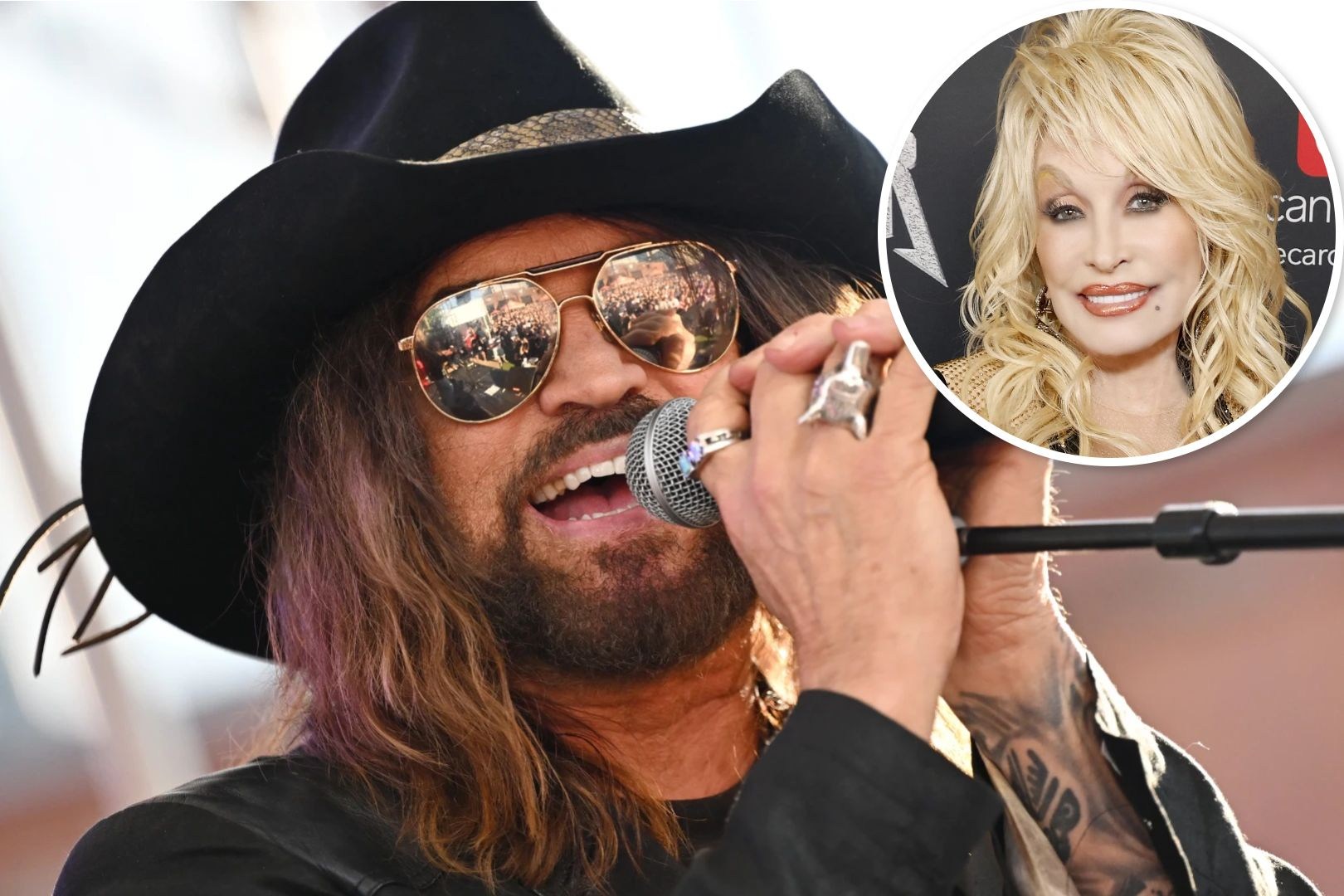
Billy Ray says this is one of his most prized possessions. Continue reading…The Boot – Country Music News, Music Videos and Songs
Billy Ray says this is one of his most prized possessions. Continue reading…Country Music News – Taste of Country

If you’re a fan of mulled wine, it’s time to tweak your standard recipe. Ditch the honey or sugar, and use this festive sweetener in it instead.

Food Republic – Restaurants, Reviews, Recipes, Cooking Tips