The Chilkat Challenge Triathlon Steering Committee wants to give a big shout-out and thank you to all of the local businesses and organizations that supported this year’s successful race. There are too many to list in one thank you letter! Here’s the first wave, stay tuned for the rest of the race supporters. Thank you to the Chilkat Valley Community Foundation, Sockeye Cycle, Viking Cove Guest Homes, Rainbow Glacier Adventures, Lutak Lumber, Alaska Seaplanes, and Bearstar Communications!
Abortion pills and drinking water are seen in an undated photo. Alaska’s constitutional privacy and equal protection guarantees give residents the right to get abortion medication prescriptions and related services through telehealth, argues a lawsuit filed Thrusday in state Superior Court. (Photo by Peter Dazeley/Getty Images)
Abortion-rights advocates filed a lawsuit in Alaska Superior Court on Thursday to overturn a state ban on telehealth for abortion services.
The lawsuit was filed in Anchorage by Planned Parenthood Great Northwest, Hawaiʻi, Alaska, Indiana and Kentucky.
It targets an element of state law that requires patients receiving abortion services to be treated on-site in hospitals or other facilities approved by the Alaska Department of Health or in federal government hospitals.
That requirement bars the use of telehealth for the prescription of abortion-inducing medicine, which advocates say is a breach of the Alaska constitution’s guarantees of privacy and equal protection.
Alaskans are allowed to use telehealth for numerous other medical services, so the ban on its use for abortion services violates patients’ rights to equal protection, the lawsuit argues.
Past court rulings have confirmed that Alaskans have the right to abortion under the state constitution’s privacy provisions, but the telehealth ban compromises privacy rights by taking away the option for medical abortions at home, which many patients prefer, the lawsuit also argues.
In Alaska, where a significant percentage of the residents live off any connected road system, the telehealth ban is particularly onerous, the lawsuit says.
“Planned Parenthood’s patients often must travel significant distances to have an abortion in Anchorage or Fairbanks, sometimes at great expense and difficulty, including due to weather conditions,” the lawsuit says.
Filed with the lawsuit was a motion for an injunction barring enforcement of the telehealth ban while the case is pending.
“The restriction creates unnecessary barriers that fall hardest on people in rural and remote communities, survivors of violence, and those already facing economic hardship — sometimes barring patients from care entirely. Simply put, this telehealth ban is yet another unnecessary barrier to abortion access, and Alaskans deserve better,” Rebecca Gibron, president of Planned Parenthood Great Northwest, Hawaiʻi, Alaska, Indiana and Kentucky, said in a statement.
The Alaska Department of Law was not prepared to comment Thursday on the new Planned Parenthood arguments, said Acting Attorney General Cori Mills.
“We will have to review the complaint and have no comment on the specific allegations. As a general matter, the department will defend the law, which carries a presumption of constitutionality and represents state policy validly enacted by the legislature and the governor,” she said by email.
The lawsuit comes at a time when a legal battle is being waged nationally over access to mifepristone, a medicine commonly used to induce abortions. Some states are seeking to outlaw use of mifepristone, though Alaska is not among them.
Planned Parenthood has already won a related case at the Superior Court level with the same arguments about the state constitution’s privacy and equal protection guarantees.
In that case, Superior Court Judge Josie Garton in 2024 struck down a portion of state law that allowed only licensed physicians to perform abortions. The ruling broadened the availability of abortion services, allowing advanced practice clinicians – such as nurse practitioners, physician assistants and certified nurse midwives – to provide the services. Garton had issued an injunction in 2021 that allowed advanced practice clinicians to perform abortions, temporarily blocking enforcement of the physician-only rule while the case played out.
The state appealed Garton’s ruling, and the Alaska Supreme Court heard oral arguments in the case in October.
Town Square Park in downtown Anchorage has closed as fencing goes up and construction begins on a redevelopment project including lighting, access, and design upgrades.
The Arctic National WIldlife Refuge coastal plain at the outflow of the Hulahula River, is seen on July 8, 2019. (Photo by Danielle Brigida/U.S. Fish and Wildlife Service)
Despite the Trump administration’s relentless effort to remove the American public from our right and duty to protect our public lands, the nation continues to speak out against the unspoiled Arctic National Wildlife Refuge being carved up and auctioned off for oil and gas lease sales — the latest of which happened on June 5.
Though you may not realize it, you’re closer than you think to the Arctic National Wildlife Refuge. Throughout the state, our backyards are part of a vast network of migratory flyways and habitats that all begin with summers in the Arctic.
The Arctic National Wildlife Refuge — the true diamond of American-owned public lands — annually hosts 200 bird species from the piping plovers that scuttle across Florida beaches to the green-winged teal that soar about Nevada. Spanning more than 19 million acres between the Beaufort Sea to the eastern Canadian border, the Arctic National Wildlife Refuge welcomes birds from around the world with plentiful food and a quiet place to nest. The 24-hour daylight of summertime fuels a booming insect and plant supply, aiding birds as they raise their young and prepare for thousand-mile migrations to our backyards and around the world.
This breadth of impact and importance of this region makes one ask: How will the sanctity of the Arctic Refuge be impacted by Earth-shattering quakes of seismic exploration and subsequent beating, drumming and thumping of oil rigs?
Like clockwork, white fronted geese, Tundra swans, black-bellied and piping plovers, sand hill cranes and Wilson’s warblers make extraordinary migrations between wintering grounds and Arctic breeding habitats: an essential place that keeps our ecosystems in balance. In every state, birds are both key predators and prey; they pollinate plants, disperse seeds, manage pests and cycle nutrients.
Brant are a key stimulator to healthy eelgrass growth and nutrients that bolster coastal environments, and that couldn’t happen without summers in Alaska. While the survival of Pacific black brant relies on food accessible in the Izembek Lagoon, it is in the Arctic National Wildlife Refuge and areas of the Arctic coastal plain that this goose begins its impressive journey south.
Protecting the Arctic Refuge means protecting a vital link in a migratory network that stretches across North America and around the world. Inviting development into a national wildlife refuge already goes against the purpose of the National Refuge System — against the protections that millions of Americans have time and again voiced support for — and will have resounding impacts that will surely leave wildlife in a precarious state of uncertainty.
Whether it is a snow goose in California, a semipalmated sandpiper in New York or a tundra swan in the Midwest, Americans are connected to the Arctic through the wildlife they encounter every day.
The Arctic National Wildlife Refuge may seem distant, but we are closer to it than we think. Its birds connect our coasts, our communities and our backyards through one of the most remarkable migrations on the planet.
As the nation considers the future of this extraordinary landscape, we should recognize that protecting the Arctic Refuge is not simply an Alaska issue. It is an American responsibility. The wildlife that depend on the Refuge belong to all of us, and so does the obligation to ensure that future generations inherit a world where these migrations continue to inspire wonder, connect ecosystems and remind us that we are part of something larger than ourselves.
A Wainwright man was sentenced to more than 16 years in federal prison after pleading guilty to child exploitation charges involving multiple minor victims.
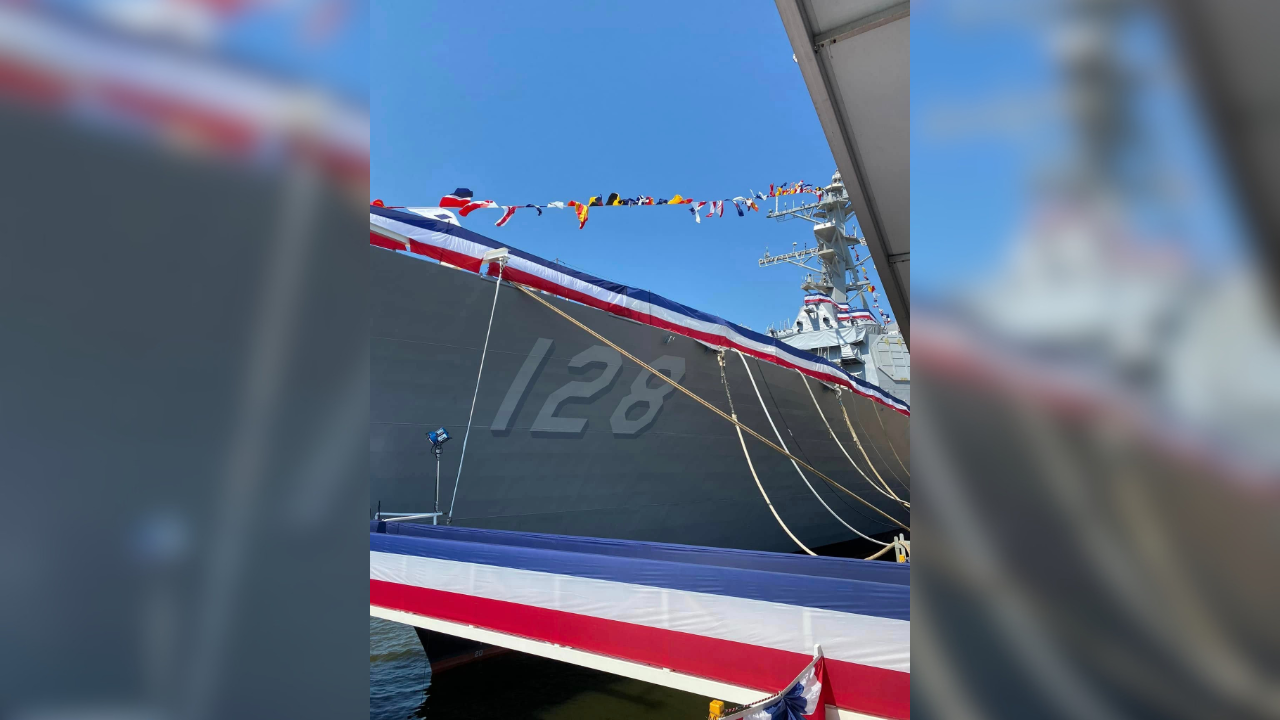
The U.S. Navy is preparing to commission the USS Ted Stevens in Whittier, with officials citing the port’s deep-water access and Alaska’s military ties.