(The Center Square) – Florida restaurants must begin disclosing mandatory operations charges to customers starting Wednesday.









(The Center Square) – Florida restaurants must begin disclosing mandatory operations charges to customers starting Wednesday.
(Photo by Sunguk Kim via Unsplash)

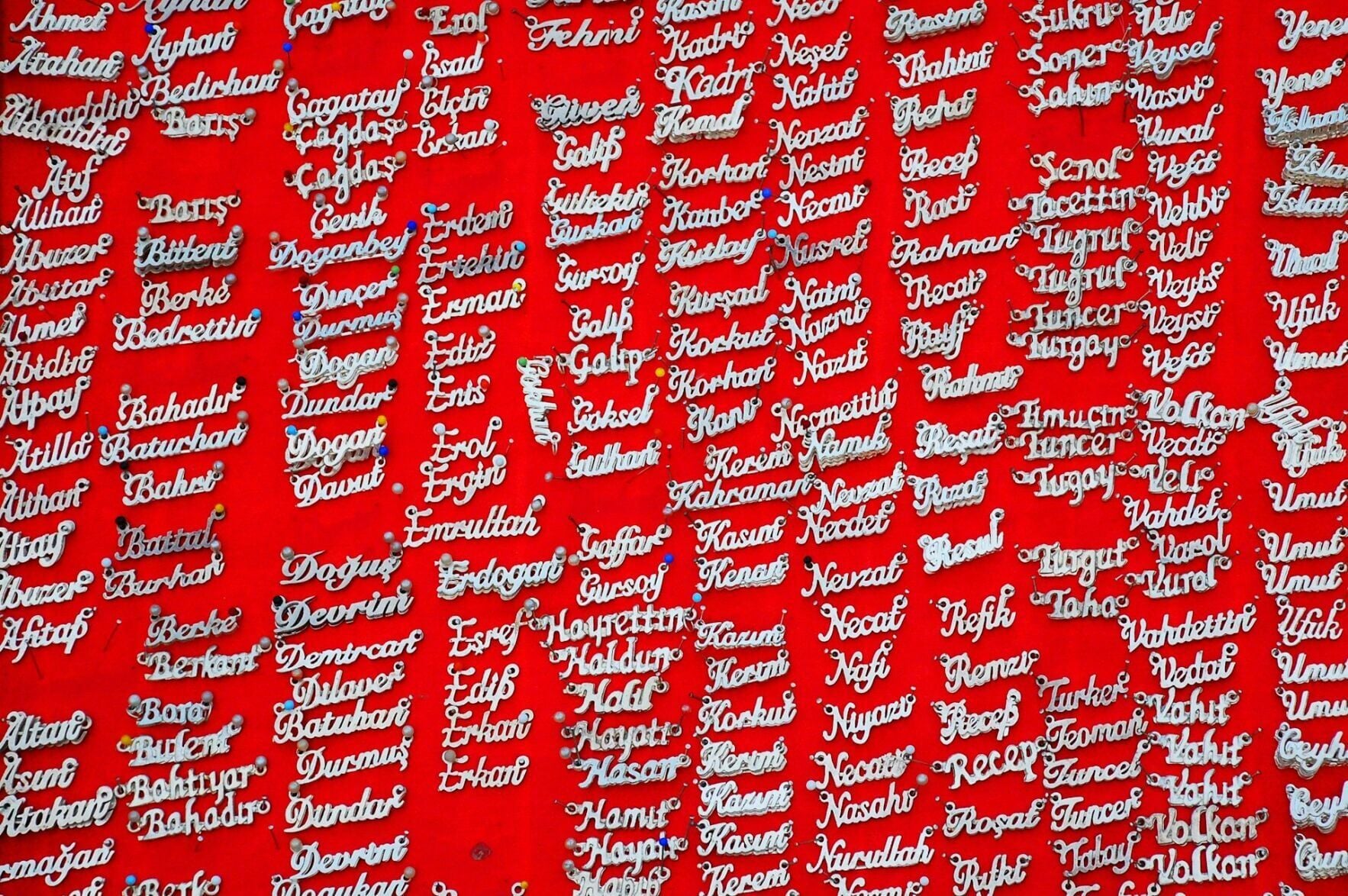
First impressions may start long before a handshake — One in five Americans say they judge others by their first name alone, according to new research. The survey of 2,000 Americans found that 18% of those polled said they’ll make…

Almost 200 years after the bald eagle was chosen as the emblem of the United States in 1782, the species was threatened with extinction due to DDT poisoning. The nation’s symbol owes its survival to a translocation program that captured young bald eagles in Southeast Alaska and flew them to New York and other Lower 48 states to initiate a repopulation program.
Biologist Rachel Carson’s 1962 book “Silent Spring” brought attention to the devastating impacts of DDT, sprayed widely in areas of the Lower 48 states during the 1950s and 1960s. The insecticide application resulted in mass die-offs of birds and other animals. Birds’ eggshells were too soft to nurture the chicks within. Bald eagles suffered overwhelming population losses of primarily nestling birds. Eggs were not hatching.
The book’s title “Silent Spring” refers to the sudden quiet caused by the deaths of birds whose songs normally filled the air with sound after winter. The dramatic losses of birds observed in backyards and farmlands prompted Carson to delve into the poisons used to eradicate insects. In a chapter titled “And No Birds Sing,” she reports on bald eagles, noting that nest failure trends in New Jersey and Pennsylvania “…may well make it necessary for us to find a new national emblem.”
Hope was on the horizon. DDT was banned in 1972. Within four years, officials in the State of New York believed the habitat could once again support a population of bald eagles. The birds live only in North America.

Fifty years ago New York initiated a repopulation program with funding from the 1973 Endangered Species Act that provided money for similar state programs. It started out of desperation to save the last nesting bald eagle pair in the state. Peter Nye, a retired New York Department of Environmental Conservation wildlife biologist, told the Juneau Independent in a telephone interview on June 17 how the initiative got started.
“The program was based on a successful restoration project for peregrine falcons,” Nye said. He and his colleagues practiced on the sole nesting eagle pair remaining in New York. They climbed up the nest tree — no small feat — and replaced a thin-shelled egg with a fake egg for the parents to incubate. After the appropriate 34 days, the biologists returned to the nest and substituted tiny live eaglets in place of the placebo eggs. The parents raised the chicks to fledging. The experiment worked well with bald eagles. It was the beginning of the restoration of the birds in the eastern U.S.
“At the time, Massachusetts, Pennsylvania had no nesting eagles, neither did Vermont or New Hampshire,” Nye said. Those states began talking with him about replicating his program.
The project coincided with the country’s Bicentennial in 1976, thus receiving attention for saving the national symbol. The initial New York project was extremely labor-intensive due to the 24-hour care the very young birds required. To sustain the program, however, an abundant supply of nestling eagles was needed. The birds needed to be old enough to endure capture and transportation.
They turned to Alaska where eagles were thriving, unlike the Lower 48 states where eagles were threatened or endangered. The wildlife biologists determined the ideal age was about seven weeks old, in July. At that age the young eagles could survive without parental attention during the usual intensive chick-rearing process. Older nestlings were capable of tearing apart food to eat and regulating their body temperature. But they could not yet fly so they were easier to handle.

After considerable planning with Alaskan officials, New York state in 1981 was granted permission to take 20 single nestling eagles from nests in Southeast Alaska.
Peter Nye flew to Juneau and teamed up with local wildlife biologist Jack Hodges, the bald eagle specialist in Alaska for the U.S. Fish and Wildlife Service (USFWS). Both men were young and early in their careers. Hodges knew where nests were located. He had been identifying bald eagle nests for habitat protection as clearcut logging operations in Southeast Alaska kicked into high gear.
The first year of the program, Nye, Hodges and the translocation team worked rapidly aboard the USFWS’s vessel M/V Surfbird. Within five days, they had collected 17 young birds from different nests, fed and cared for the eaglets (the biologists used rod and reel to catch fish), placed them in special individual crates and flown them to New York on a chartered plane. There, the birds were placed in “hacking towers” (artificial nests) where there was minimal human contact to prevent imprinting on people. The eaglets were fed and tended before releasing when the nestlings were old enough to fly. There was concern about how the young birds would survive without normal parental guidance which is a three-month-long process in the nest and more time once the young have flown. Parents teach their nestlings how to fish and catch food.

From 1981 to 1993, Nye, Hodges and others collected nestling eagles for translocation. Nearly 400 of Alaska’s young eagles repopulated New York, Missouri, Indiana, North Carolina and Tennessee.
Speaking of the once-barren states he helped rejuvenate with similar programs, Nye said, “They all started releasing eagles and that’s how the whole northeast population got rebuilt.” New York now has 450 breeding pairs and Pennsylvania has more than 400 pairs.
Today, webcams provide live video of eagles’ nests in many U.S. locations. Observers can watch mated pairs refurbish their nests, incubate eggs and raise chicks through explore.org, a site known for its live-streaming web camera videos featuring Alaska’s popular salmon-fishing brown bears of Katmai National Park.
Both Nye and Hodges are retired now. They have had time to reflect on their roles in restoring the birds.
Nye remarked about the joy he felt early in the project when a pair of Alaska-born New York eagles successfully nested on their own and raised a family. Two of the first released birds were found 84 miles from their hacking site, showing they could repopulate new areas over long distances.
“It’s been a very, very exciting and rewarding project to have been involved with,” Nye said. New York is celebrating the 50th anniversary this year since the state translocation program began.

Hodges spoke of similar emotions. “I really felt that what I was doing was important,” he said in an interview on June 11, “because wherever we found an eagle nest we were able to protect habitat from being clearcut logged or otherwise developed because it was against the law.” He was pleased, he added, “when I able to put a sign on a tree on Forest Service land and know that I was protecting an average of 5.5 acres of eagle habitat on the shoreline. The biggest thing that made me feel good was the ability to protect more habitat.”
Hodges has written about his work in a 2017 memoir titled “Above and Beyond, Life of An Alaskan Aviator and Voyager.” In it, Hodges says,
“Alaska’s bald eagles were called upon to help rescue, in a sense, our national bird in the continental United States. One hundred years ago the state of New York had an estimated 70 pairs of bald eagles. By 1975, only one pair remained,” Hodges wrote.
Steve Lewis, USFWS wildlife biologist with the Migratory Bird Program in Juneau, told the Juneau Independent on June 23, that locally “the eagle population is strong.”

Ironically, at one time there was a bounty in Alaska on eagles due to the unfounded concern by fishermen the birds were responsible for the decline in salmon. From 1917 until 1953, a bounty was paid of 50 cents per pair of eagle feet. During that period more than 120,000 eagles were killed, according to the Alaska Department of Fish and Game website. Bald eagles were threatened or endangered in the Lower 48 states during the time of the restoration program. They were removed from the threatened and endangered species list in 2007, but remain protected under other laws.
New York’s Peter Nye summed up the eagle restoration program well.
“It’s also super good that our 50th anniversary of returning the national symbol to New York, which also influenced a greater amount of area in the northeastern United States, falls on the 250th anniversary of our country,” Nye said.
• Contact Laurie Craig at lauriec@juneauindependent.com.

This story was originally published by the Juneau Independent.
The post America’s bald eagles thrive due to Southeast Alaska’s translocation program appeared first on Chilkat Valley News.
Officials from Hecla Greens Creek Mining Co. and the U.S. Army Corps of Engineers are scheduled to meet Monday for a tour of the mine on Admiralty Island. The meeting comes after years of a community push for an expedited long-term solution to glacial lake outburst floods — a plea that has gained momentum in the last two weeks.
Brian Erickson, vice president of operations at Greens Creek, said the plan is to demonstrate the methodology the mine uses every day to tunnel — and how those with local mining expertise could apply it to Bullard Mountain.
“This stuff is not magic, it’s happening every day in the borough,” he told about 150 attendees of a meeting hosted by Juneau Flood Solution Advocates on Thursday at Chapel by the Lake. “There’s two mines operating and doing exactly what’s necessary to solve this.”
Suicide Basin is expected to release again in early August, according to Jason Amundson, a geophysics professor at the University of Alaska Southeast. The Mendenhall River has crested at record levels over the last three years.
Last year, the Mendenhall River crested at 16.65 feet on Aug. 13. On Thursday, Amundson said the basin’s capacity is similar to last year’s. Based on current data, he said the volume is correlated with crest height and severity, so this summer’s flood will likely be comparable to 2025.
A “lake tap” would bore a gravity drainage tunnel through Bullard Mountain so the basin’s water drains continuously into Mendenhall Lake. Currently, the Corps is proposing using a tunnel boring machine, with an estimated timeline of six to 10 years. Erickson said a conventional drill-and-blast used at local mines could get the job done faster.
“We have the technical skills, we get it, you know, we’re doing it in difficult ground,” Erickson said. “If we started that tunnel today, I think at the advanced rates we see in the mine, it’s probably two and a half years from start to finish.”
Part of that relies on his hopes for emergency expediting some of the permitting. Erickson said that bureaucratic delays put the whole project in jeopardy.
“It gives you latitude to do things faster,” he said in an interview after his presentation. “And you’re starting five or six years in advance to try to get all the engineering and design and stuff done, to try to slow that first feedback process. These permitting processes are long and burdensome.”
In December, the City and Borough of Juneau, the U.S. Forest Service and the Central Council of the Tlingit and Haida Indian Tribes of Alaska aligned on the lake tap for a long-term solution. In March, the Corps reaffirmed its assessment of the lake tap as the most viable option, but noted four alternatives are not being excluded from further consideration.

The city, Tlingit and Haida, Forest Service and the Corps have said the lake tap appears to be the most cost-effective and safest option presented, with early estimates ranging from $613 million to $1 billion.
Erickson called that too high.
He said he reviewed a December 2025 three-day charrette summary report the Corps commissioned AECOM to complete. In his personal cost estimation report, he claims a drill-and-blast method would cost half of what the Corps has proposed for a concrete tunnel through Bullard Mountain using a specialized tunnel-boring machine (TBM).
“TBM procurement involves a custom machine, factory acceptance testing, months-long lead time, and specialized transportation to a remote barge-access-only site,” Erickson’s report notes. “Drill and blast mobilization is dramatically simpler and faster, drawing on equipment and expertise that is commonly used in Juneau today with parts vendors and expertise in the community.”
His revised estimate reduced the cost to $220-323 million, which Erickson describes as a high-level estimate put together with numbers from the USACE charette report with the aid of an AI chatbot.
“The estimate included in the attached report are very high level and needs significant refinement and study to better estimate project costs, and of course, we won’t know the true project costs until the project is complete,” Erickson told the Independent.
The report also recommends skipping concrete-lining the tunnel. In his presentation at Chapel by the Lake, Erickson said he wasn’t sure that addition is necessary.
“If it produces sediment from some kind of erosion, the glacier is producing way more sediment than that already,” he said.
Erickson said “sticker shock” threatens to kill the project.
He said Monday’s meeting aims to develop a relationship with USACE and demonstrate the safety and responsibility Hecla uses in daily operations.
“I can tell you that there’s no bad guys,” he said. “Everyone is working earnestly on a solution. The challenge we have is everyone is working independently on their own solutions, and we’re not all together getting on the same page.”
He said since AECOM and the Corps do not have the same experience as the mining community, drill-and-blast tunneling would not have been considered as a primary option.
“Neither the USACE or AECOM are necessarily wrong in their assessment, there are simply other ways of accomplishing this task which is what I was trying to convey in the attached report,” he wrote in an email Friday.

Erickson has 30 years of experience in the production and maintenance of operating mines and as a geologist in the mining industry. He also lives in the Mendenhall Valley and said his home would be affected by a 21-foot crest.
He said he was presenting at both Juneau Flood Solution Advocate meetings — one on June 11 and one on Thursday — as a representative of his personal views and not on behalf of Hecla. His cost report also does not reflect the views of Hecla or Kensington.
However, he said the mining industry is supportive of the project and his involvement, as evident in company views submitted in a March 20 letter to Alaska’s congressional delegation by the Alaska Miners Association, Greens Creek and Kensington Mine Coeur Alaska Inc.
Company leaders of Kensington and Greens Creek also shared their support for a tunnel at a Greater Juneau Chamber of Commerce luncheon on May 28.
“I live right on the river,” said Steve Ball, the general manager of Kensington. “I’ve watched this over the years, I’ve watched the changes, I’ve watched the HESCO barriers go up, and I’ve watched community members and neighbors be affected by these floods. We have an opportunity in the mining industry to be a resource to lend our knowledge to the community and the local government, but also state government and federal government on what we feel could be done to protect the community.”
He said his biggest fear is “if nothing’s done and there was a catastrophic event that wiped out or forced people to leave the Valley, that would most likely spell the end of Juneau.”
Ball said avoidance of that worst-case scenario is why Kensington joined the letter in support of the lake tap.
“I want everybody to be aware that a lake tap is not a small cost, but in terms of the different options that are out there for long-term mitigation of this risk, we feel that that’s a cost that is warranted,” he told Chamber attendees. “How that gets paid, that’s not in our wheelhouse. How it gets built — again — that’s not in our wheelhouse. We’re running a business at Kensington, but we’re more than happy to provide a resource to be able to share our knowledge and understanding of the local geology.”
Ball said the rock units mined at Kensington are no different from those 45 miles south at Bullard Mountain.
William Kloth, general manager of Greens Creek, said the company was happy to partner with Kensington and the Alaska Miners Association. He said Hecla has employees living in the flood zone, but outbursts are a community problem.
“We want to offer what we can to be part of solutions, and that’s really what drives the desire to offer what the two mines know of tunneling,” Kloth said.
City Manager Katie Koester expressed interest in the mining companies’ involvement at a Chamber luncheon earlier this month, pledging to bring the topic to Washington, D.C. Two city engineers are expected to attend Monday’s mine tour, according to Denise Koch, director of Engineering and Public Works.
At the community meeting Thursday, Erickson and other residents living in the Mendenhall Valley expressed frustration at federal bureaucracy and the Corps’ cost estimation.
“It’s our business. This solution is not really complicated,” Erickson said. “Quite frankly, for me, it’s been really frustrating just watching the process.”

As of Friday, the grassroots group Juneau Flood Solution Advocates has gathered more than 300 signatures as part of its campaign to ‘‘Release the Miners.” The group plans to present the signed banner to Alaska’s congressional delegation.
Supporters are asking USACE and the delegation to pursue the lake tap as an enduring solution for annual glacial lake outburst floods impacting the Mendenhall Valley — with the mining industry’s help.
“There’s just a deafening cry starting up that we don’t want to spend any more, no more wasting money,” said Debbie Penrose-Fischer, the leader of the neighborhood group. “Let’s fund a solution, not the symptom, not the Band-Aid.”
She said her concerns were intensified after a Committee of the Whole meeting on May 4, where officials from the Army Corps presented to the Juneau Assembly. The possibility of mid-term solutions, such as sheet piling, was shared for the first time. The “medium-term” solutions, along with short and long-term mitigation measures, are expected to be reviewed by USACE headquarters this August.
Since the Army Corps has not been authorized to enter a feasibility study, there is not a public process for the August executive summary, according to John Rajek, the chief of the geotechnical and engineering services branch of USACE Alaska District.
“We have a condition that’s moving faster than our feasibility studies can respond to, but it would happen sometime after the report is submitted in August,” he told the Independent at the May meeting. He added he didn’t know how long a headquarters review of the August report would take.
Penrose-Fischer said this information made her afraid the HESCO barriers, meant to be semi-permanent, and other mid-term solutions may stop the Corps from investing in a long-term solution.
“The sentiment this year is different. People have flood fatigue, but they’re also really tired of feeling like we’re not moving forward,” she said. “I can’t tell you how many people have said to me, ‘I don’t want these HESCOs in my yard forever.’ These are supposed to be temporary. Where’s the long-term solution?”
She said it was time for group members to start using their voices and speak up.
The Juneau Flood Solutions Advocates group started collecting signatures last weekend at Juneau Gold Rush Days after Erickson’s presentation at its Mendenhall Valley Public Library meeting on June 11.
“This is legitimately an emergency situation, and so the quicker the solution the less likely that there’s more damage and more loss,” said David Brown, a resident of Long Run Drive. He said his household is still recovering from damage sustained in the 2024 flood that crested at 15.99 feet.
Brown said part of his support for the expedited lake tap solution is fear that the HESCO barriers could be overwhelmed by future flooding.
“I don’t want that to come true, so that’s why I’m in favor,” he said.
At Thursday’s meeting, Ann Wilkinson Lind, who lives on the banks of the Mendenhall River, said the news of Monday’s meeting gave her hope. Her crawlspace flooded last year due to a failed drain pipe installed underneath a HESCO levee, and neighbors helped pump the water.
“Before tonight’s meeting, I was really frustrated about the momentum, because there was no momentum, because the Corps wasn’t interested in talking to the mine,” she said. “It’s a learning experience for the Corps — a teaching experience for the mine — to show them what’s been happening around here for years and years and years. I’m pretty excited about it now.”
Wilkinson Lind said she is nervous about this year’s expected flood because of how the barriers were compromised last year. Although they were reinforced and raised, she said she has her doubts.
Erickson and members of Juneau Flood Solution Advocates encourage “cutting through the red tape” and putting the pressure on Alaska’s congressional delegation to expedite the lake tap.
“Government is absolutely also not built for this kind of work, right? This is really, again, unique. It’s not built to move quickly on complicated problems,” Erickson said.

Sen. Lisa Murkowski, R-Alaska, asked about a possible public-private partnership between the Corps and local miners at a U.S. Senate subcommittee appropriations hearing in May.
“If local miners in the area can demonstrate to you that they’re able to help with a long-term solution in a way that saves time and money, is the Corps willing to look into working with them in pursuing some kind of a public-private partnership?” Murkowski said, holding Erickson’s report.
Adam Telle, assistant secretary of the Army’s Civil Works program, responded with “absolutely.” He added the Corps was reviewing Erickson’s technical paper. It wasn’t until this week the mines were contacted by the Corps, according to Erickson.
“I think the situation in Juneau is unlike any we face within our portfolio,” Telle said. “It’s an uncommon problem that requires an uncommon solution.”
Murkowski visited homes along the Mendenhall River during a trip to Juneau earlier this month. She observed the raising of HESCO barriers from last year, and chatted with residents who said their lives were disrupted by construction and the loss of a river view.
“I do worry that the solution that the residents are seeing right now, which is these HESCO barriers in front of them, is going to be viewed by some as, ‘Well, we spent the money to help them get this temporary solution,’ and then that temporary solution becomes longer term,” she said in an interview on June 7.
The HESCO barriers were estimated to protect 90% of the homes in the flood zone last year, and in roughly several decades, the Mendenhall Glacier will recede enough for the outbursts to stop being a problem. The glacier currently acts as a natural ice dam.
“Maybe this August comes and goes, and we don’t have a flood event, and so then does that take the momentum out of the project? I hope not, because one of the things that we have learned is that Suicide Basin — that’s still back there,” Murkowski said. “It is still filling to levels that we have seen that are unprecedented. We’re still seeing that glacier receding, that is allowing that basin to get bigger and bigger, and thus puts more pressure. So it is something that needs to be resolved. It is not a quick solution or an inexpensive solution, but it’s one that we have to keep pressing on.”
She acknowledged the apprehension Juneau residents are feeling about Congress approving funding for a long-term solution.
“That’s legit, but the Corps has dedicated a pretty significant team, and they have elevated this Juneau flood project to a level that has gotten my attention,” she said. “I appreciate it, because believe me — myself, Senator Sullivan, and Representative Begich have been pushing the Corps, pushing the Corps, pushing the Corps on this. But they have been very, very much engaged, and again to a level that is — I don’t want to say it’s surprising — but they have treated it as the emergent emergency that it is.”
This story was originally published by the Juneau Independent.
The post ‘Release the Miners’: Juneau pushes for local mining industry involvement to expedite enduring solution for glacial lake outburst floods appeared first on Chilkat Valley News.
A board member with the state-owned Alaska Gasline Development Corporation, which is a part owner of the proposed AKLNG gas line project and pushing for lawmakers to provide a multibillion dollar tax break, likened state legislators to mosquitoes — “irritating, relentless, and somehow always present” — at a board meeting on Thursday.
The “tongue-in-cheek” comparison came from Fairbanks-based secretary and treasurer of the board Dennis Michel as the corporation grapples with lawmaker scrutiny after the leak of a confidential document revealing potential state financial liability in the project.
Some legislators found the comparison to be demeaning as they continue to debate the specifics of a state tax break for the project that is estimated by the developer to cost up to $55 billion, which would include a 807-mile gas line and gas treatment facilities. The comment and some lawmakers’ reaction highlights the tension in the working relationship between the groups.
Lawmakers are now in a second special session called by Gov. Mike Dunleavy. A conference committee of six legislators are negotiating a compromise bill from competing House and Senate proposals.
Lawmakers have been largely supportive of the AKLNG project that would deliver natural gas from the North Slope. But Senate lawmakers and Dunleavy have split on details of the plan. Lawmakers are weighing provisions to provide increased protections for Alaskan gas consumers, a community impact fund, labor-related provisions, disclosure agreements for foreign investors and provisions to protect the state if the project fails to move forward, among others.
The state-owned Alaska Gasline Development Corporation is a 25% owner of the project, while Glenfarne, a private developer, is a 75% owner, after AGDC handed over ownership last year.
The AGDC board includes seven members, including five members appointed by Dunleavy and two commissioners with the Alaska Department of Transportation and Public Facilities and the Alaska Department of Commerce, Community, and Economic Development.
The mosquito-themed remarks came one day after the Alaska Beacon reported on a confidential draft analysis of an agreement between AGDC and Glenfarne that shows if the project failed to move forward under some conditions, the state could be required to pay in order to take back the project.
The document was shared with some lawmakers, but not others or the public, and it informed some Senators in questions to the developer and their push for further protections on the proposed tax break proposal.
At Thursday’s virtual board meeting, officials with AGDC said they had launched an internal investigation into how the confidential document was shared. AGDC President Frank Richards called the disclosure “bad for AGDC” and its relationship with private investors.
On Thursday, AGDC board members expressed strong support for a state approved multibillion dollar tax break to benefit the project, and heard a detailed update on the current negotiations and proposed provisions being debated in the Legislature.
At the end of the nearly two-hour meeting, Michel, the Fairbanks-based board member, made the comments in what seemed like prepared remarks. He prefaced the remarks as “tongue in cheek” before he likened lawmakers to mosquitoes seen in the Interior.
“A mosquito can turn a peaceful evening into a defensive operation. A Legislature can turn a straightforward issue into a long campaign of hearings, amendments, delays and procedural buzzing,” Michel said. “Both are persistent, too. A mosquito can keep circling until it finds bare skin. Lawmakers circle around taxes, amendments, compromises until it finally lands, or at least until someone, everyone in the room, has been bitten by the process.”
Michel said he hoped the legislative conference committee would “stop hovering” and agree to a workable tax cut for the developers.
“So, yes, mosquitoes in the Legislature are both part of life in Alaska, irritating, relentless, and somehow always present just when people are trying to get something done,” he said.
“But even mosquitoes can be a sign of something good ahead,” he added. “More mosquitoes often mean more blueberries here in the Interior. And in the same spirit, I hope that the legislators and their sessions produce more than welts and frustrations, but ultimately deliver something of value to the citizens of Alaska.”
No other board members responded to the comments, and the meeting ended shortly after.
Several lawmakers were on the call, including Sen. Cathy Giessel, R-Anchorage, who chairs the Senate Resources Committee. She has been highly involved in drafting legislation around the AKLNG project and serves as a non-voting senate representative to the board.
She called the comments “outrageously demeaning.”

“He is an unelected person who has been appointed as a political favor to a board with no oversight by any elected individuals in the Legislature, and he was demeaning representatives of the people who have been elected,” Giessel said in an interview on Friday.
“(The comments) demonstrate to me the cavalier attitude that this board has toward the governing body of the Legislature, the one of the branches of government, and that concerns me a great deal,” she said. “This is a generational change project and we need to be working together.”
Rep. Donna Mears, D-Anchorage, who serves on the House Resources Committee also attended the hearing. She said the comments were “not acceptable.”
“The Legislature has got a duty that is larger than the AGDC board. We have a responsibility to our communities, we have a responsibility to rate payers. Yes, this project can bring a lot of benefit to the state, but we also have to make sure that we’re not running over our communities and our ratepayers in the process,” she said in an interview Friday.
During a break in the conference committee hearing, AGDC president Richards said in an interview he did not want to speak for Michel. “He was trying to identify that as tongue in cheek,” Richards said. “And really I think maybe expressing some frustration about the lengthy process, and about what’s been happening, the back and forth.”

“There’s this, sounds like tension, you know, that in the arena of the legislature that we want to be able to get through and achieve an economic project,” he added. “And that’s really the goal of what we’re going to do with the property tax, alternative volumetric tax provisions.”
When asked about lawmakers’ reaction, Richards said he did not have a comment, but added: “I certainly can see the perspective of hearing the words that were said and their personal reaction.”
Both Giessel and Mears noted ongoing concerns about a lack of transparency from AGDC and Glenfarne on the proposed gas line project, amplified by the reporting on the confidential draft agreement this week.
Lawmakers have been asking Glenfarne and AGDC for more detailed financial information for months. Glenfarne released an updated estimate for the project’s cost earlier this month at up to $55 billion, but state lawmakers say they still don’t have all the financial information they’ve been seeking, including estimates about the project’s profitability.
Giessel said she’s particularly concerned about confidential agreements with foreign investors. She authored provisions approved by the Senate to provide more state oversight of foreign entities and cost overruns.
“I think there’s been such distrust sown in this project that I don’t see how we can proceed forward at this point,” Giessel said. “It almost feels like there needs to be a restart where everybody comes to the table and stops hiding the ball, stops hiding the information, and the disrespect and demeaning language stops, and we start over with mutual respect and mutual collaboration.”
Mears said the legislators with the conference committee currently working on a final bill have an “enormous burden” to hammer out a compromise. She said if lawmakers still need more information, they should get more time to do their work.
“I think the information coming out this week is exactly why rushing a process is unacceptable,” she said, referring to the information in the confidential draft analysis.
“Maybe the thought that the Legislature is annoying is true,” Mears said. “Because the truth sure seems to be inconvenient. We would have a much better process starting from what we know now, and those of us that have been asking for more information for months are not wrong.”
Members of the conference committee are scheduled to meet publicly on Friday and Saturday. The Legislature is scheduled to reconvene on Wednesday July 1, but it’s uncertain whether a compromise bill will be finalized by then.
The post Alaska gasline corp. board member calls lawmakers ‘mosquitoes’ in AKLNG tax cut talks appeared first on Chilkat Valley News.

The latest news and information from your Alaska news station.

The latest news and information from your Alaska news station.
The U.S. Supreme Court ruled Monday that states can count mail-in ballots that arrive after Election Day, a blow to the Trump administration and some Republican states that had urged the justices to require all ballots to arrive by the close of polls.
In a 5-4 decision, the court found that federal law does not prevent states from accepting late-arriving ballots. The ruling is a victory for Democrats and voting rights advocates, who had said setting a hard, Election Day deadline for ballot arrival would risk disenfranchising voters amid fears of deteriorating mail service.
The case, RNC vs. Watson, centered on whether federal law overrides a Mississippi law that requires mail-in ballots postmarked on or before Election Day to be counted as long as they arrive within five business days of the election. Thirteen states have similar laws, which extend a “grace period” to ballots that arrive through the mail after polls close.
Justice Amy Coney Barrett, writing for the majority, said that federal law didn’t preempt the state law because elections represent when voters make a decision, which must be done on or before Election Day. Voters who cast their ballot by mail have made a decision by Election Day, Barrett reasoned.
“The electorate’s choice is made when voting is complete, not when ballots are received,” Barrett wrote.
Barrett cautioned that the decision rested on the interpretation of federal law, not the U.S. Constitution. She noted that the court was not considering the scope of Congress’ authority to regulate federal elections — suggesting that if Congress passes a nationwide ballot arrival deadline that the justices might uphold such a law.
Barrett was joined by Chief Justice John Roberts and Justices Sonia Sotomayor, Elena Kagan and Ketanji Brown Jackson.
Justice Samuel Alito dissented, joined by Justices Clarence Thomas and Neil Gorsuch. Justice Brett Kavanaugh joined part of the dissent.
“If ballots received after election day are added to the set of ballots that dictate the election’s outcome, the electorate’s choice does not occur on election day, and the federal election-day statutes are violated,” Alito wrote.
In addition to Mississippi, other states with some form of grace period include Alaska, California, Illinois, Maryland, Massachusetts, Nevada, New Jersey, New York, Oregon, Texas, Virginia, Washington and West Virginia.
David Becker, executive director of the nonpartisan Center for Election Innovation & Research, called the Supreme Court decision a win for these states, as well as 30 states that accept military and overseas ballots delivered after Election Day.
“This is a victory for all the states and for all those who respect the will of the Founders, who ensured the security of our elections by giving the power to run those elections to the states — not to one person sitting in Washington, DC,” Becker said in a statement.
Some local election officials had warned that requiring all ballots to be received by the close of polls would burden their offices as they try to quickly warn voters about the change just months before the midterms. More ballot drop boxes that let voters keep their ballots out of the mail could help, they say, but also cost money.
“Ultimately, the voters may be harmed as well,” election officials in California, Massachusetts, Oregon and Washington wrote in a court brief, warning that some ballots may not be received in time, “despite best efforts by careful and proactive administrators and local governments.”
But some Republican secretaries of state had urged the justices to strike down “grace period” laws. Louisiana Secretary of State Nancy Landry and Wyoming Secretary of State Chuck Gray wrote in a court brief that an Election Day deadline “provides the bright-line rule that effective election administration demands.”
At least 725,000 ballots were postmarked by Election Day 2024 and arrived within a legally accepted post-election window, The New York Times has reported, citing election officials in 14 of 22 states and territories where late-arriving ballots were accepted that year.
Overall, about 30% of voters cast a mail ballot in 2024, according to data gathered by the U.S. Election Assistance Commission.
The Republican National Committee challenged the Mississippi law, which was defended by Mississippi Republican Secretary of State Michael Watson. The RNC argued a longstanding federal law that sets the Tuesday after the first Monday in November as Election Day for federal offices preempted state laws that allow ballots cast by Election Day, but received later, to count.
The 5th U.S. Circuit Court of Appeals ruled in October 2024 that federal law requires ballots to be received by Election Day. President Donald Trump last year also unilaterally attempted to require mail ballots to be received by the end of Election Day in a sweeping executive order on elections. Much of that order was blocked in federal court.
The Supreme Court “rejected the RNC’s radical attempt to rewrite election laws in a way that would have resulted in the rejection of hundreds of thousands of ballots and the disenfranchisement of voters nationwide through no fault of their own,” Elisabeth Frost, litigation chair at Elias Law Group, said in a statement.
Elias Law Group represented two nonprofit voting rights groups, Vet Voice Foundation and the Mississippi Alliance for Retired Americans, that had intervened as defendants in the case.
The Supreme Court issued Monday’s decision against a backdrop of uncertainty surrounding mail ballots. Trump signed an executive order in March that would restrict voting by mail by requiring states to provide lists of possible mail ballot voters to the U.S. Postal Service in advance. A federal judge recently blocked major portions of the order, triggering a near-certain appeal.
Republican National Committee chairman Joe Gruters accused Democrats of inviting chaos by allowing elections to “drag on” for days and weeks after ballots are cast. He said Republicans wouldn’t be deterred by the decision.
“If we want fair and secure elections, Election Day should mean exactly what it says, which is why this decision makes it even more imperative that Congress pass the SAVE America Act,” Gruters said in a statement, referring to restrictive voter legislation pushed by Trump that lacks the votes to pass the U.S. Senate.
Trump said the decision was a “tremendous loss” in a social media post and again urged passage of the SAVE America Act.
Paul Clement, an attorney for the Republican National Committee, said during oral arguments at the Supreme Court in March the prospect that the outcome of an election could change because of ballots arriving after Election Day would be unacceptable to losing candidates. After the 2020 election, President Donald Trump demanded election officials not count ballots that came in after Election Day, but states kept counting ballots.
“If you have an election and the election is going to turn on late-arriving ballots in a way that means what everybody kind of thought was the result on Election Day ends up being the opposite a week later, 21 days later, the losers are not going to accept that result. Full stop,” Clement told the justices.
Attorneys for Watson argued that both legal and historical precedent supported his position. States may decide that voters have made their final choices when ballots are submitted to state officials rather than when they’re received, according to Watson.
Watson didn’t immediately respond to a request for comment.
The post US Supreme Court deals blow to Trump, ruling states can accept ballots after Election Day appeared first on Chilkat Valley News.

The Alaska Supreme Court on Monday ordered the Alaska Division of Elections to include Dan J. Sullivan of Petersburg on the primary ballot as a candidate for U.S. Senate.
The ruling upholding a lower court’s decision came just hours after oral arguments in a fast-tracked case ahead of the division’s deadline to certify and print primary election ballots at noon on Tuesday.
A full opinion on the case will be issued at a later date, the court said.
The decision ends a weekslong saga between the state and the challenger with the same name Republican incumbent Sen. Dan Sullivan. The two Sullivans are among 16 primary candidates for the seat, including former Democratic U.S House Rep. Mary Peltola.
The primary election is Aug. 18. The general election in November determines who will hold the seat for a six-year term.
On Friday, an Anchorage Superior Court ruled that the division’s decision to strike Sullivan from the ballot was unlawful. The judge determined that the division did not have the authority to add additional requirements for candidates beyond what is outlined in the U.S. Constitution. He ruled Sullivan, a retired teacher from Petersburg, is eligible to run for U.S. Senate.
The state appealed that ruling, and the case went before the Alaska Supreme Court on Monday.
Reached by phone Monday afternoon, Sullivan of Petersburg expressed relief. “I’m glad it’s over. It was pretty stressful. I’ve got to admit that,” he said.

On the criticisms and questions about his campaign, Sullivan said they were “challenging” to hear.
“It’s all because of my name, and you know, there’s nothing I can do about my name,” he said. “I was frustrated, I felt it’s time for a change, and so I wanted to jump into the race and make my feelings and my thoughts known. So there’s not a whole lot more to it than that. They tried to make it more than that, and you know, that’s their prerogative.”
Sullivan said he would agree to be listed as “Dan J. Sullivan” on the ballot. He said he now plans to regroup and make plans to visit Alaskan communities, hear from voters, and continue the campaign for Senate.
Nate Adams, a spokesperson for Sen. Sullivan, said they were disappointed in the court ruling but encouraged by the fact that the division director can “use her expertise” to distinguish the candidates on the ballot in an emailed statement on Monday.
In the decision, the justices wrote the division will determine how the candidates will appear on the ballot.
“This matter is remanded for the Division of Elections to determine, in the first instance, how appellee Sullivan shall be listed as a candidate within the confines of existing Alaska ballot design law,” they wrote.
An official with the Alaska Department of Law on behalf of the division did not immediately respond to a question about how the two candidates would appear on the ballot.
“The State appreciates the court’s quick ruling and will work to implement the order,” said Sam Curtis with the Department of Law.
Sullivan from Petersburg appealed the division’s unprecedented June 15 decision to disqualify him from the U.S. Senate ballot. The Alaska Division of Elections cited complaints filed by the incumbent and Republican groups that his similar name, Republican party affiliation and campaign materials were evidence he was running in “bad faith” and mimicking the Republican incumbent, U.S. Sen. Dan S. Sullivan.
Challenger Dan. J. Sullivan has defended his campaign as authentic and genuine. In court, his attorney argued that he met all the constitutional requirements for candidacy, and the division had unlawfully added a subjective criteria.
In oral arguments before the Alaska Supreme Court on Monday, attorney Chris Murray argued on behalf of the division and its appeal of the lower court’s decision. He argued that the authority to administer the manner of elections includes disqualifying the challenger, as they deemed his intention in filing was to “frustrate the purpose” of the election and confuse voters.
Justices questioned that authority cited by the state. “A lot of the times people run for office for different reasons, to highlight an issue, to see what the process is like, and maybe start garnering support over time,” said Justice Aimee Oravec. “These are not necessarily candidates that are seeking office so much as attention for other reasons that are not necessarily bad faith, and there’s no limiting principle.”
“It seems amorphous, frankly,” said Justice Jennifer Henderson. “A broad, amorphous concept of what a candidate’s intent needs to be. So it seems like it’s very appropriate for us to worry about what is encompassed by that.”
Murray argued that the division has the authority, under current state regulations, and a duty to protect voters from confusion. “Because again, what’s the division trying to do? Protect the right to vote,” he said. “The division’s job is to make sure that people who want to vote for one candidate actually get to vote for that candidate, and their intent is reflected on the ballot.”
Justice Oravec questioned that position when the division has the authority to administer and design the ballot in a way that reduces confusion.
“You control the ballot,” she said. “So I think you’re conflating the potential for confusion when you have the authority to mitigate the confusion.”
State statute already prescribes how candidates with identical names should appear on the ballot. Candidate’s middle initials would be included — in this case “Dan J. Sullivan” for the candidate from Petersburg, and “Dan S. Sullivan” for the incumbent senator.
But in the state’s appeal filed over the weekend, Alaska Acting Attorney General Cori Mills requested that if the court upholds the ruling restoring the Petersburg Sullivan to the ballot, then the division could list him as “nonpartisan” instead of Republican like the incumbent senator.
Justices questioned whether that affiliation would be within the division’s authority. Jeffrey Robinson, arguing on behalf of Sullivan on Monday, objected to that listing. “There’s no authority for the proposition that in order to avoid confusion the director can change the party affiliation,” he said.
Robinson argued that the division adding unwritten, subjective criteria for candidates is unlawful. He again cited the case where the Alaska Democratic Party sought to remove Eric Hafner, a U.S. House candidate imprisoned out of state, and the division did not investigate his motives but found he met the qualifications to run for office.
“When would there be a better time to question the motives of someone’s intent to run for office than a convicted felon living out of state who has no potential to come back, or virtually no potential to come back and serve?” Robinson said.
The division has argued that there was no complaint filed against Hafner’s candidacy, and so no reason to investigate him.
Justice Oravec asked Robinson whether Sullivan and his legal team also dispute the division’s findings in their decision to disqualify him from the ballot. Robinson said the division’s points were “unconstitutional and frivolous” and they did not have the authority to make those findings.
In an unusual move, 14 Republican controlled states filed an amicus brief, or “friends of the court” brief, with the state Supreme Court expressing support for the division and its authority to remove Sullivan from the ballot.
The post Alaska Supreme Court rules Dan J. Sullivan eligible to run for US Senate appeared first on Chilkat Valley News.