 Jenna Dewan doesn’t need the judges to tell her to step up.
After Dewan and her partner Val Chmerkovskiy scored a 21 out of 30 in the latest episode of Dancing With the Stars Sept. 29, she…
E! Online (US) – Top Stories









Jenna Dewan doesn’t need the judges to tell her to step up.
After Dewan and her partner Val Chmerkovskiy scored a 21 out of 30 in the latest episode of Dancing With the Stars Sept. 29, she…
E! Online (US) – Top Stories
Reading Time: 2 minutes
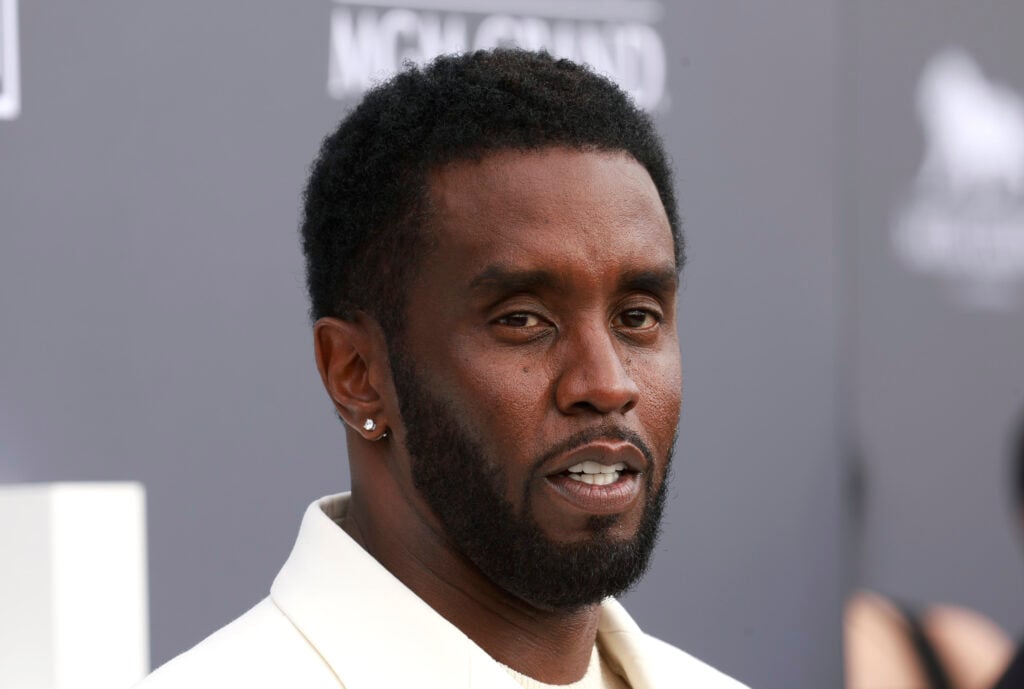
It seems that once a month or so, we receive another report that Sean “Diddy” Combs’ prison release date has been moved up.
At this point, the disgraced rapper and music mogul will be a free man on January 21, 2028.
That’s about a year and a half away — but in the meantime, it sounds like Diddy is making the best of a bad situation.
According to one new report, Diddt is living a surprisingly cushy existence at FCI Fort Dix in New Jersey, where four former inmates claim he has been paying fellow prisoners to cook, clean, do his laundry, and even give him massages.
NBC News spoke with the former inmates and reviewed photos and videos from inside the federal prison, reporting that Combs has allegedly spent thousands of dollars a month maintaining his unusual setup.
“This is not some normal s— you see in jail. This is some rich s—,” one former inmate said, adding, “It looks crazy, but again, it’s Diddy.”
Among the alleged perks are specially prepared meals, including curry chicken, pizza, and empanadas. One inmate claimed he eventually got tired of cooking for Combs, who then began relying on other prisoners to prepare his food.
Another alleged privilege is a bit harder to explain away as simple prison hospitality.
Sources told NBC News that Combs has had access to contraband cellphones, which he allegedly uses to scroll Instagram and view sexually explicit photos sent by a former girlfriend. He also reportedly has access to a tablet that allows him to watch movies and documentaries.
And then there’s the booze.
Several former inmates claimed Combs has access to a stash of premium liquor that is allegedly smuggled into the facility by guards. One man even recalled drinking Hennessy with the rapper.
“Hell yeah, I drank with him,” the inmate said.
Combs has also allegedly obtained Remeron, an antidepressant medication that is prescribed to some inmates but is reportedly traded on the prison’s black market.
The claims paint a very different picture of prison life than most people would expect — though Combs’ representatives strongly dispute the characterization.
“The continued scrutiny of every mundane detail of Sean Combs’s life in prison has reached the point where the media characterizes ordinary prison life as news,” said one spokesperson.
“The only real news is that Sean continues to serve his sentence within the rules and he patiently awaits the court’s decision on his appeal,” the representative added.
The Bureau of Prisons declined to comment specifically on Combs, citing privacy, safety, and security concerns. However, the agency acknowledged that contraband, including cellphones and drugs, remains an ongoing problem inside correctional facilities.
Combs, 56, is currently serving a 50-month sentence after being convicted in July 2025 on two counts of transportation to engage in prostitution. He was acquitted of the more serious sex trafficking and racketeering charges.
Diddy Drinks Hennessy, Lives Pampered Life In Prison: Report was originally published on The Hollywood Gossip.
The Hollywood Gossip
(The Center Square) – After 12 years, the U.S. marks the end of Operation Inherent Resolve in Iraq with the withdrawal of American forces from Erbil Air Base.

A young woman at home reviewing information online and using a pen and notebook.
LifeStance Health reports that online ADHD tests can quickly identify symptoms but aren’t reliable for diagnosis due to high false-positive rates.

A stretch of grass in Verulamium Park gives little indication that one of Roman Britain’s largest cities once stood beneath it. Hold up a phone, … Read moreThe post A 20-minute train ride from London leads to Roman ruins, royal…
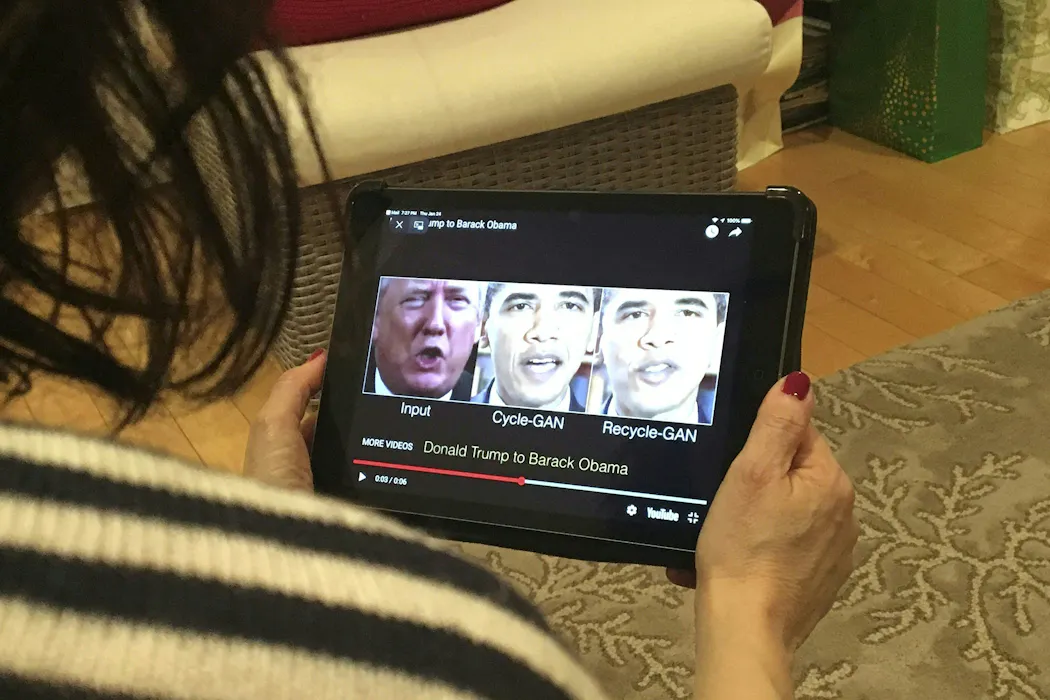
Imagine watching a political campaign video in which a candidate admits to taking a bribe. You recognize the face and voice. But the confession is entirely fabricated, thanks to artificial intelligence.
Now imagine that your state has passed a law against these AI-generated election deepfakes. Would that mean the video has to be removed from the airwaves?
In its June 2026 report, the National Conference of State Legislatures counted 31 states with election deepfake laws. California and Texas enacted their first election-deepfake laws in 2019, but most states adopted theirs in 2024 or later. Among the 31 states, 28 required disclosures. The other three – Maryland, Minnesota and Texas – prohibited certain election deepfakes, even if the content carried an AI warning.
In many states, a warning telling viewers the content was generated or manipulated using AI can satisfy a government’s disclosure requirement. The fabricated ad can remain in circulation with that warning.
Louisiana, for example, requires AI warnings on certain campaign ads that falsely depict candidates and campaign calls that use artificial versions of public figures’ voices. Maryland, meanwhile, prohibits certain deceptive election deepfakes even when they carry a warning.
I am an AI policy scholar at the University of Denver, where we use an AI policy tracker to monitor bills and laws across the U.S. With 2026 midterm elections approaching, the important question for voters is what protection a deepfake law actually provides, and I examine two state laws – in Louisiana and Maryland – to illustrate the limits of what can be done.
Consider a political campaign ad that uses AI to put a candidate’s face onto someone else’s body, making it look as though the candidate said or did something that never happened.
A June 2026 Louisiana law requires a clear warning about AI use in ads that meet these conditions. The rule applies to certain messages urging people to vote for or against a candidate, including printed materials, online advertisements and broadcasts.
As for videos, adding the required warning can satisfy the disclosure requirement in the Louisiana law. The warning tells voters how the content was made, not whether its accusations are true. It also does not excuse violations of other laws.
A 2023 Republican National Committee ad attacking former President Joe Biden illustrates this distinction. It depicted an imagined future after Biden’s reelection, with a warning: “Built entirely with AI imagery.” Although it predates Louisiana’s law, it shows how a disclosure can accompany an ad without stopping its circulation.
But this protection does not cover every candidate on the ballot. The Louisiana law excludes candidates for federal office. A fabricated video about a congressional candidate, therefore, does not need an AI warning.
For ads involving state and local candidates, leaving out a required warning can have serious consequences. Violators who are found to damage a candidate’s reputation or deceive voters can face a fine of up to US$2,000, up to two years in prison or both. Local district attorneys generally decide whether to prosecute, subject to the state attorney general’s supervision.
Louisiana also requires AI disclosures in certain campaign calls, including robocalls. Under a May 2026 law, calls that use AI to reproduce a public figure’s voice must disclose that use at the beginning of the call. The state’s board of ethics enforces the requirement. Violators can face civil fines of up to $2,500 for a first violation and $5,000 for subsequent violations.
Maryland takes a different approach to deceptive election content, prohibiting certain deepfakes even when they carry an AI warning.
Maryland’s May 2026 law covers images, audio and video created or altered with AI or other digital tools to falsely depict a person in a way that looks or sounds genuine. Adding a label to that fabricated confession would not, by itself, make it lawful.
Whether someone violates the law also depends on their actions and purpose. They must knowingly or recklessly create, use or spread a deepfake to produce materially false information, with an intent such as influencing a voting decision.
The law separately requires actual or intended harm to a voter, potential voter or ballot petition, but does not define that harm. Misleading voters about a candidate alone does not automatically establish a violation. A conviction can bring a fine of up to $5,000, up to five years in prison or both.
Maryland also gives election officials ways to respond when false voting information is spread.
The state’s top election administrator must publicly correct credible reports of misinformation about voting procedures, results or rights. For example, Maryland’s State Board of Elections has a rumor control page to monitor disinformation. The administrator can seek court-ordered removal of misinformation, though not against online services hosting others’ posts.
These powers do not let election officials remove every false claim about a candidate. The public can report election misinformation, and officials can pass those reports to the state attorney general.
Maryland’s reporting system dates to a 2024 law, but its deepfake prohibition and new removal authority took effect June 1, 2026. Neither guarantees that a correction will reach voters before they cast their ballots.
By early September 2026, the Wesleyan Media Project had identified at least 164 political ads nationwide created or enhanced with AI during the 2026 election cycle, accounting for nearly $80 million in ad spending. About 7 in 10 ads carried no AI disclosure, although the count includes uses beyond deceptive impersonations and does not establish how many ads violated a law or misled voters.

Warnings can make people more skeptical of misleading content. However, whether that affects what they share or how they vote is a separate question.
A 2025 study tested warning labels on misleading AI-generated images in two experiments involving 7,579 Americans. People who saw the labels were less likely to believe the posts’ claims. However, warnings that simply identified content as AI-generated did little to change how willing people said they were to engage with it, including sharing it.
Warning labels can also raise doubts about accurate information. Another recent study found that people rated headlines as less accurate when they were labeled as AI-generated, regardless of whether the headlines were true or false. Knowing that AI helped produce something does not tell a reader whether its claims are correct.
Neither study tested whether a state’s disclosure law changes how people vote. The studies also cannot tell us whether the threat of punishment under Maryland’s law discourages people from creating or spreading deepfakes.
Passing a law also does not settle whether officials can enforce it.
In September 2026, a federal judge temporarily barred Montana from enforcing its deepfake law, finding that it likely posed a threat to a conservative PAC’s free speech rights under the First Amendment.
For voters, gaps in what disclosure laws cover mean that a video without an AI warning has not necessarily passed an authenticity test. The disclosure rule might not cover it, as with congressional candidates under Louisiana’s provision.
Moreover, someone may have ignored the law. A warning’s absence cannot tell viewers of the AI content which explanation applies.
So, back to that video of a candidate apparently admitting to taking a bribe.
It could still reach voters under both Louisiana’s and Maryland’s laws. In Louisiana, a video covered by the disclosure rule can circulate with the required warning. In Maryland, creating or spreading it could lead to punishment if the law’s conditions are not met. Neither approach guarantees that voters will avoid seeing the fabricated confession before casting their ballots.
These laws give states ways to respond to deception, but their passage alone cannot guarantee voters that what they are watching is real.

Stefani Langehennig receives funding from the American Political Science Association’s (APSA) Centennial Center Research Center.
Politics + Society – The Conversation
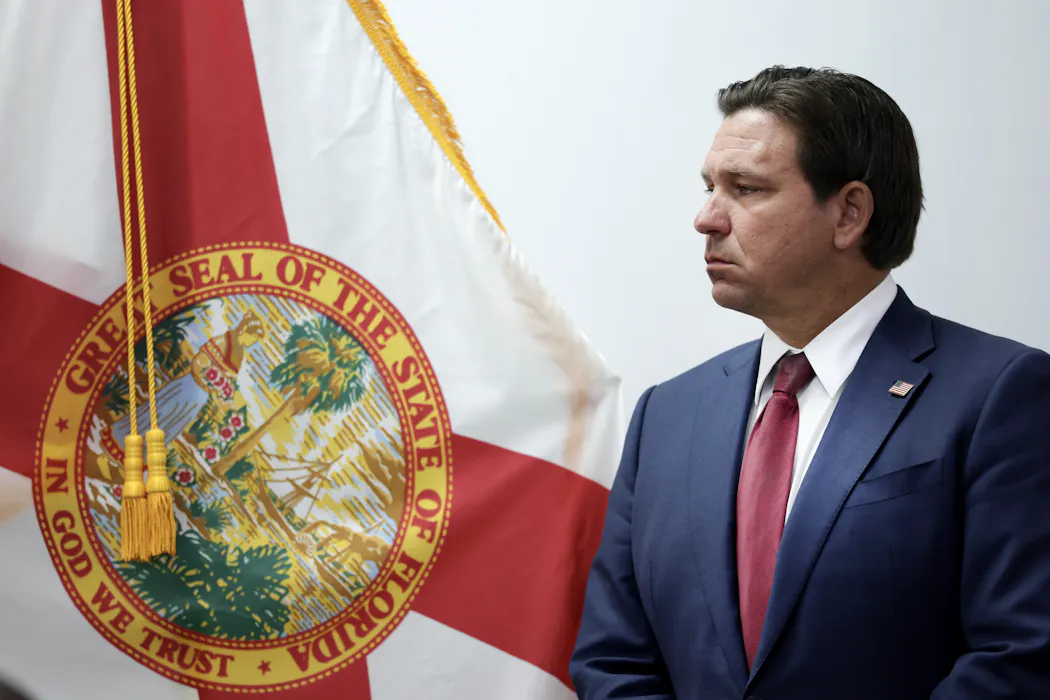
When Ron DeSantis was first elected governor of Florida in November 2018, he won with a margin of just over 30,000 votes – less than four-tenths of 1% of all the votes cast in the election.
At that time, Florida was the biggest swing state in presidential politics, and DeSantis had hitched his wagon to Donald Trump, a president who had only narrowly won the state two years earlier.
Immediately after the election, DeSantis requested that his staff assemble a binder of information about the powers afforded him as governor.
I’m a political scientist with firsthand experience in state political campaigns. My research with colleagues on Florida elections will be published in a forthcoming book in January 2027.
Over the past eight years, I have observed how DeSantis has mastered the powers of his office. While the governor leaves behind countless new conservative policies, perhaps his most lasting legacy is how he wielded and expanded those powers.
Throughout his time in office, DeSantis benefited from a Republican majority in the Legislature, which became a supermajority at the start of his second term in 2022.
But he didn’t rely on partisanship alone to ensure his legislative agenda would pass. He held lawmakers in check by wielding line-item veto power over their pet projects. This allowed him to control the legislative agenda with little pushback for most of his tenure.
One illustration of this is what happened in Republican stronghold Manatee County in 2025: The county faced DeSantis’ wrath after local officials criticized his pro-development legislation and voters rejected his handpicked candidates at the ballot box in November 2024. Months later, DeSantis vetoed all US$4 million in budget requests by county lawmakers and placed the county under a state DOGE audit.
No issue has defined DeSantis’ image and political legacy more than Florida’s response to COVID-19. The governor used the pandemic to enhance his authority with emergency powers, an expanded budget with personal control over federal funds and, later, a popular reversal of pandemic restrictions on public life.
Initially, DeSantis followed the lead of the Trump administration’s public health authorities and ordered emergency lockdowns in March 2020. But by August of that year, Florida had mostly reopened. DeSantis recounted in his memoir how he concluded that reopening was safer than commonly assumed, based on his own reading of public health research.
Ultimately, Florida’s public health record during COVID was mixed. The state initially ranked 26th in COVID-related deaths per capita during the first wave, due to vaccine promotion and protective public health measures for older adults. But after the delta and omicron waves of the virus in the summer and fall of 2021, the state climbed to eighth in deaths per capita.
By 2025, Florida had recorded over 100,000 COVID-related deaths.
Many newcomers moved to Florida during the pandemic, with some seeking the state’s less restrictive COVID-19 policies and many registering as Republicans.

Partly in response to COVID-19, in 2022, the state Legislature created a special $500 million emergency fund that the governor could access in response to a declared emergency without needing to wait for legislative approval.
On Jan. 6, 2023, DeSantis declared a state of immigration emergency over an influx of migrants to the Florida coast. For the past three years, he has renewed this emergency declaration every 60 days.
During that time, DeSantis has used his emergency powers to spend more than $1 billion on federal immigrant detention centers. This includes Alligator Alcatraz, a detention center built on protected land in the Everglades, where detainees were kept in conditions that U.S. Rep. Debbie Wasserman Schulz, D-Fla., described as “cruel and unnecessary” after her visit to the site.
The emergency declaration allowed DeSantis to use no-bid contracts and funds that the federal government has yet to reimburse to construct the facility.
The declaration of emergency has also allowed the governor to deploy the Florida National Guard to work with federal authorities to stop immigrants from landing on Florida shores. During the second Trump administration, DeSantis has required state and local law enforcement authorities to cooperate with federal immigration enforcement officers.
Immigration-related arrests have quietly surged in Florida since Trump took office in January 2025.
While speaking to conservative audiences nationwide, DeSantis has called on his audience to put on the “full armor of God.” This quote from the book of Ephesians invokes themes of Christian nationalism.
He has delivered on those priorities by enacting the enshrinement of parental rights in education, universal vouchers for private schools, a six-week abortion ban and a series of bills targeting the LGBTQ community.
He even took on the Walt Disney Co.’s private fiefdom in Florida, dissolving their special district after they opposed him on policy and creating one of his own in its place.
DeSantis, who attended Ivy League universities, also used the powers of his office to remake the Florida state university system through appointments to the Board of Governors and boards of university trustees.
In January 2023, DeSantis announced that he was appointing six new trustees to the board of New College of Florida in Sarasota. Several had ties to conservative think tanks. DeSantis’ commissioner of education announced his hope that they would remake the college into the “Hillsdale of the South,” referencing the conservative Christian college in Michigan.
Many of the initiatives begun at New College have become a model for the entire state university system. DeSantis has called for a less “ideological” university system, which, in practice, has meant closing diversity offices, censoring sociology courses, post-tenure reviews for professors and more administrative oversight over faculty hiring.
He has also begun the process of creating a new system of higher education accreditation for Florida and like-minded states.
After two terms as governor, DeSantis leaves Florida much more conservative than he found it. The once-purple state is now much redder, with Republican voter registrations outnumbering Democratic ones by 1.5 million voters statewide.
And the governor has taken measures to ensure that the trend will continue.
In 2022, DeSantis created an Office of Election Crimes and Security to investigate allegations of voter fraud, though there was no evidence of widespread voter fraud in the state. Voting rights groups view the office’s enforcement actions as a form of voter intimidation, raising doubt in the minds of eligible voters as to whether they can vote.
DeSantis signed legislation that tightened restrictions on voting by mail, a method that has become especially popular with Democrats since the pandemic.
DeSantis made it harder for groups to register new voters and easier to purge voters from the rolls if they do not vote regularly. In addition, he has made it more difficult for citizens to amend the state constitution by ballot initiative.
He also delivered on Trump’s demands for unprecedented mid-decade congressional redistricting. He pushed partisan gerrymandered maps through the Florida Legislature that were allowed by a Florida Supreme Court stacked with judges he had appointed. The new maps were drawn in hopes of winning Republicans as many as four new congressional seats.

But while DeSantis’ conservative policies cement a legacy that will be difficult to overturn, the political fate of Florida remains less fixed.
DeSantis has officially endorsed U.S. Rep. Byron Donalds, R-Fla., in the 2026 gubernatorial race against Democratic candidate David Jolly, a former congressman. The rising number of independent voters, in particular, could make the election competitive. And it’s hard to predict how Republicans’ current unpopularity on the national stage will affect state and local races.
So it’s an open question as to whether Florida will remain the red “Free State of Florida,” where law and order come first and, as DeSantis put it, “where woke goes to die.”

Liv Coleman is affiliated with the Manatee County Democratic Party.
Politics + Society – The Conversation
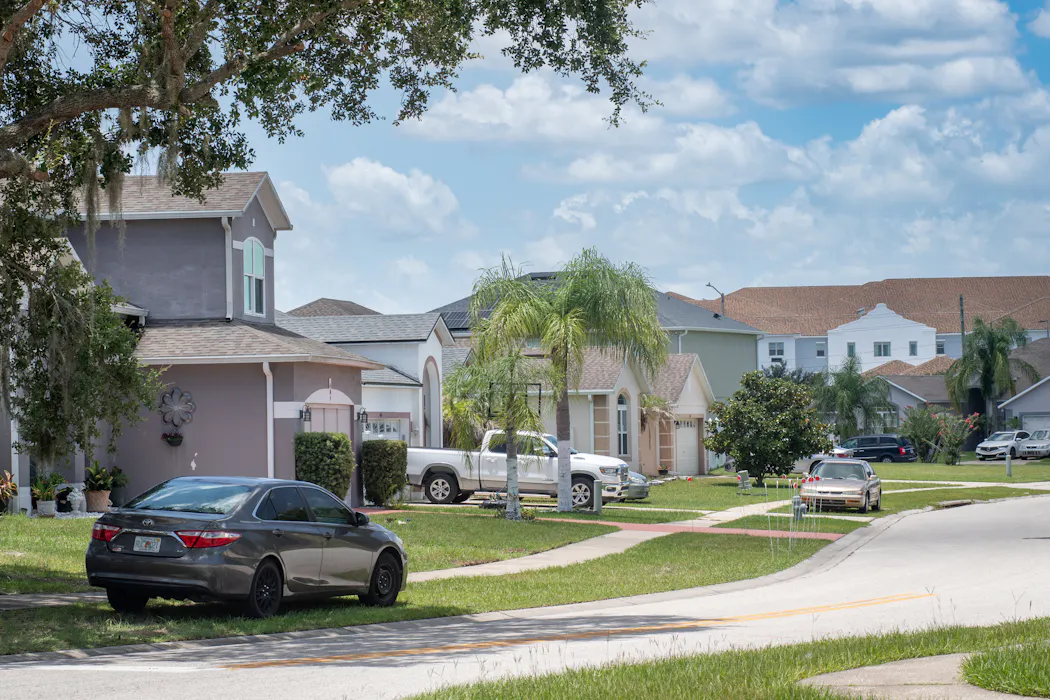
As she sat across from me drinking tea, Coretta – a pseudonym to protect her identity – shared her dismay about living in a central Florida community due to the control of her homeowners association, or HOA.
A Black mother of three with a background in real estate, Coretta has lived in her mostly Hispanic community for over 20 years. She told me that apathy had long replaced her anger.
“I don’t think [the community developers] intended for it to be a heavily Hispanic population. … They were expecting a certain economic class to come here. I think they were trying to push out the ones that they felt didn’t belong. I think they’re doing that and have done that.”
I’m a sociologist, and Coretta was one of 47 residents of this community that I interviewed between 2017 and 2020 as part of a survey to understand the experiences of people of color living in an HOA. All of the people I interviewed identified as Latino, Caribbean or Black.
Over and over, residents shared with me the same story: We are being given the clear message by the HOA governing officials that we do not belong here, but we cannot afford to leave due to rising housing prices.
The people I spoke to worried that even if they did move, that wouldn’t solve the problem. Nearly half of Florida residents live in communities overseen by HOAs, the largest share of any state.
And it’s not just a Florida phenomenon. Across the U.S., 80% of new single-family homes in subdivisions, and 60% of new single-family homes overall, are governed by HOAs. Even if they moved, families like Coretta’s would likely end up in another HOA.
Based on my research, stories like Coretta’s are an example of how homeowners associations act as what sociologists call racialized organizations. Racialized organizations, while appearing or even intending to be neutral, can create and maintain inequality. They can diminish the agency of racialized groups – that is, groups that are perceived as different from the white racial majority – and legitimize the unequal distribution of resources. Within organizations, being seen as white often provides advantages and power. What they formally state as rules and what they do can be very different, and is often shaped by race.
Based on my research, I believe that HOAs meet all of these criteria in the way they are structured.
HOAs are a form of private government, led by an elected board of volunteer directors. They often oversee residents’ aesthetic choices in order to maintain a consistent appearance in the neighborhood, but they have the power to do much more than regulate paint color and fencing placement.
HOA boards act as policymakers to pass and enforce community restrictions, fines and sanctions.
In some cases, HOAs even have the legal authority to foreclose on homes if a homeowner fails to pay HOA fees or assessments.
The policies that HOAs create and choose to enforce are sometimes controversial. For instance, in 2019, one Florida HOA made headlines when it told a veteran to remove her Puerto Rican flag.
And an HOA’s purview often extends beyond rules about flags or decorations on personal property to include things like sponsoring events and activities relating to cultural celebrations and community services. This means that many times, HOAs have a measure of control over home decor and public gatherings of residents, such as parades, festivals and holiday parties – including which holidays are celebrated at all.
There are about 373,000 HOAs in the U.S., affecting the housing of more than 78 million Americans. Yet there are no consistent laws from state to state as to how board members are elected and whether they must reside within the HOA. And even in some states where there are laws, the the regulation guidelines often vary across associations.
While federal laws limit the absolute power of HOAs, these organizations typically act as private government entities with substantial control. Research has shown they also act as spaces of exclusion, maintaining residential segregation and favoring those of higher socioeconomic status.
One survey from 2024 found that fewer than half of Americans living under an HOA believe their neighborhood is better off with an HOA, and 1 in 10 had considered selling their home for HOA-related reasons.
HOAs charge dues – a median of $230 monthly in Florida, with some homeowners paying over $500 monthly – typically tied to extra amenities. For this reason, they can be exclusionary by nature. The extra income required to keep up with HOA dues can act as a barrier to entry for many potential homebuyers. This exclusion often falls along racial lines and becomes a way of maintaining racial segregation. In practice, this segregation is seen as a way to maintain property values.
On the other end of this are families who are pushed to the side. In my research, I continuously heard about the lack of agency residents felt. No one I interviewed currently attended HOA meetings. Residents who previously attended had long since stopped because they felt it made no difference.
Many residents told me they were frustrated by what they saw as voter suppression in their HOA. HOAs set the rules for how and when homeowners can vote for board representatives. In this Florida community, the HOA had decided not to allow voting by proxy, which would allow you to designate a neighbor to cast a vote on your behalf. This meant each homeowner must vote in person on the day and time set by the HOA board. Voting felt inaccessible to residents I spoke with, as it always took place in person on a Tuesday.
The HOA also allowed only the listed homeowner to cast a vote, which meant that other household members and renters could not vote. In fact, according to their HOA bylaws, renters were not permitted even to attend meetings, as this was a “privilege” afforded to homeowners.
These bylaws also excluded residents who lived in multigenerational family homes, like one woman I spoke to whom I will call Elena. Such arrangements are more common among Latino families like Elena’s. Though Elena paid the mortgage on the home, she was still barred from voting for an HOA representative.
Exasperated, she told me: “I’m not allowed to vote. You’re not allowed to vote with a proxy. My son, [who is listed as the homeowner], works crazy hours. He gets up at 3 in the morning to work, he comes home, has dinner and goes straight to bed … he never makes it. They should have that on the weekends.”
Even how the day and time of votes was communicated to residents was controlled by the HOA. According to bylaws, the HOA did not have to make this information available beyond its physical office, located at one end of the community.
This story goes beyond paint colors and fences. Historical discriminatory practices like redlining have inhibited homeownership for Black and Latino families across the nation dating back to the 1930s. Today, rates of homeownership are rising for all groups, but they are rising unequally. The Black homeownership rate, at 45%, is still lower than all other racial groups, according to census data. With the non-Hispanic white homeownership rate at 73%, the gap between the two is persistent.
As the racial wealth gap also continues to increase, Black and Latino residents are still more likely to rent than own their homes. At the same time, the number of HOAs in the United States continues to rise year after year. What will the future of housing look like?
Racialized minorities will increasingly reside within HOAs as homeowners and renters. Homeownership has long been a marker of the American Dream, but this dream presumes autonomy, voice and equitable treatment. When HOAs fence out the participation and culture of minority residents, they limit the value of homeownership for those residents.

I am a former resident of the community.
Politics + Society – The Conversation

Pennsylvania lawmakers returned to Harrisburg on Sept. 28, 2026, after a 10-week recess with little time to determine the future of the state’s skill games. On June 15, the Pennsylvania Supreme Court ruled that the devices are slot machines governed by the state’s gambling and criminal laws. The court stayed its order for 120 days to give affected businesses time to adjust and lawmakers an opportunity to act.
That safe harbor period expires Oct. 13. Beginning the next day, Pennsylvania State Police say unlicensed machines outside casinos and qualifying truck stops may be seized, and the businesses operating them could face prosecution. The state Senate has only six scheduled session days before the deadline.
Bipartisan proposals in the Pennsylvania House and Senate would preserve the industry by licensing the machines and charging operators fees while limiting most establishments to five machines. Another bill would extend the safe harbor for six months. But as legislators focus on jobs, business revenue and taxes, they risk overlooking more consequential question about whether gambling machines should remain widely available in the gas stations, bars and social clubs that Pennsylvanians encounter in everyday life.
In this discussion, taxation and revenue are often at the forefront of everyone’s minds. However, from my perspective as a scholar who studies the legal and illegal markets that spring from prohibitions and legalizations, focusing on tax revenues misses the bigger picture. The fundamental question raised by skill games is this: When should society limit everyone’s freedom to buy something to protect the minority who would be harmed by their own choices?

Democratic governments don’t typically stand between citizens and their impulses to buy things. If someone wants to drop $80 on a stuffed animal, that’s their business. Yet police arrest people for selling $80 worth of methamphetamine. The government prohibits meth sales because society does not trust everyone to make good choices about such powerful, addictive drugs.
That’s not to say the line is absolute. For example, raw milk is restricted due to food poisoning risks, despite being nonaddictive. Nicotine, while addictive, is legal – though heavily regulated – and the legal status of cannabis is evolving.
Still, the general pattern in the U.S. is that nonaddictive consumer goods are generally permitted, albeit with regulation, while addictive substances face closer scrutiny.

By contrast with physical products, policymakers now tend to duck difficult conversations about what to do with addictive services or experiences like gambling and video games. It has long been recognized that just as taking cocaine can trigger a dopamine rush, so too can video games and gambling.
The American Psychiatric Association’s official manual recognizes gambling disorder in its chapter on substance-related and addictive disorders.

That raises the difficult question of how society might consider restricting the availability of certain forms of gambling. Presumably, most people who use skill games have fun and are not harmed, but skill games may appeal particularly to vulnerable groups, including young people and people with gambling problems.
A Penn State study found that, relative to other gamblers, those who play skill games spend more time and money gambling, and 1 in 4 could be classified as “at-risk” or “problem gamblers.” Furthermore, that at-risk or problem group probably accounts for much more than 25% of dollars and hours spent on skill games.
With addictive products, a small group of heavy users often accounts for most of the consumption.
Focusing on tax rates or revenues overlooks the bigger picture. A gas station has good reason to offer skill games – they draw customers who might otherwise buy gas from a competitor.

But that’s an argument about which stores capture sales, not about total economic activity. The state’s decision to regulate skill games like slot machines will likely have little effect on how much gasoline gets purchased overall.
The real question is whether Pennsylvania and cities like Pittsburgh and Philadelphia want skill games and other gambling opportunities to be widespread and unavoidable for people who struggle with compulsions to gamble. The alternative is asking the majority to accept the inconvenience of having gambling cordoned off from daily life in order to avoid putting a stumbling block in front of their neighbors.
Not so long ago, gambling was mostly restricted to a handful of places, notably Las Vegas; Atlantic City, New Jersey; and horse tracks. Ubiquitous availability of gambling may be a convenience for the majority, paid for dearly by the minority for whom constant access challenges their self-control.
This is an updated version of an article originally published on July 17, 2026.

Jonathan Caulkins receives funding from The National Science Foundation Grant D-ISN: Improving our Understanding of Illegal Opioid Supply Networks (2146230) and is an adjunct researcher with the RAND Corporation. The opinions expressed here are those of Caulkins alone, and do not reflect the views of either Carnegie Mellon University or RAND.
Politics + Society – The Conversation