Categories
Uncategorized

For Black women in abusive relationships, gun-control loopholes can engender deadly disparities

Femicide claims more than 1,800 lives in the United States every year. SimpleImages/Getty Images

In April 2026, Dr. Cerina Wanzer Fairfax was shot and killed by her husband while their divorce was pending.

She had done what she was supposed to do. She had initiated the legal process to leave Justin Fairfax, the former lieutenant governor of Virginia. It didn’t save her.

What happened to Wanzer Fairfax has a name: femicide.

Femicide is the intentional killing of women on the basis of gender. Women are most often killed by their partner, former partners or another person who believes they have a claim on their life. It happens in living rooms and driveways and parking lots. It happens during marriage, divorces, separations and in the weeks after a woman finally walks out the door.

As a scholar focused on the intersection of firearm violence and intimate partner homicide, I examine the policy and structural conditions that determine who is at risk and where prevention efforts are falling short.

Intimate partner homicide doesn’t affect all women equally. Black women have the nation’s highest rates of homicide by an intimate partner, according to data from the Centers for Disease Control and Prevention.

Intimate partner violence by the numbers

A 2024 study in The Lancet tracking homicide deaths from 1999 to 2020 found that Black women ages 25 to 44 are killed at nearly four times the rate of their white peers.

Spring 2026 saw three such cases make national headlines.

Just prior to Wanzer Fairfax’s death, Vice Mayor Nancy Metayer Bowen of Coral Springs, Florida, was shot to death – allegedy by her husband. Also in April, in Louisiana, Shaneiqua Pugh was shot by her husband, as was Christina Snow, the mother of three of the killer’s children. Pugh and Snow are both expected to survive. Eight children, however, were killed.

Three cases. Three states. One month. All, sadly, preventable.

Intimate partner homicide claims more than 1,800 lives in the United States every year. Nearly half of victims are killed by a current or former intimate male partner – not a stranger. These aren’t random acts of violence.

Separation is one of the most dangerous times in an abusive relationship. This is why we cannot see the death of Wanzer Fairfax and others like hers as one-off tragedies. They represent a decades-long pattern of intimate partner femicide in Black relationships – a pattern driven by firearm access coupled with inadequate policy enforcement.

Guns are what make intimate partner violence so deadly. About half of the roughly 1,800 annual intimate-partner femicide cases involved a gun. And in every region of the country, firearm homicide disproportionately kills Black women.

‘The partner loophole’

If the gun is what escalates the risk, it is also where policy has its best chance to intervene.

State law can explicitly restrict perpetrators of domestic violence from purchasing or possessing firearms through two types of civil protection orders: final domestic violence restraining orders and temporary restraining orders. Research demonstrates that states with strong gun restrictions along these lines have meaningfully lower rates of intimate partner homicide.

Generally speaking, though, these laws are not working as designed.

In most states, for example, only certain kinds of relationships qualify for protective orders to be issued against an abusive partner. The most common qualifying relationship is romantic partner or former partner. This characterization poses a problem called “the partner loophole.”

Federal gun-possession restrictions had a similar limitation for decades. If the relationship was a dating partnership, the prohibition against abusive partners obtaining a firearm did not apply. This came to be known as the “boyfriend loophole.”

In 2022, the bipartisan Safer Communities Act extended the gun prohibition to abusive dating partners. While the law now covers more kinds of relationships, it does not yet offer equal protection to Black women in those kinds of relationships.

Research using the National Violent Death Reporting System found that state-level enforcement of the policy was associated with reductions in intimate partner homicide among unmarried white victims, but not among victims of color.

Firearm-relinquishment laws are another weak spot I’ve identified in protecting Black women from intimate partner violence.

When a court issues a domestic violence protective order, federal law prohibits the restrained person from possessing a gun. But this prohibition does not automatically remove guns already in the person’s possession: A gun-relinquishment law must be invoked to compel them to surrender their weapons.

Some states, including California and Washington, have strong relinquishment provisions. They require judges to mandate surrender, set compliance deadlines and authorize law enforcement to recover unrelinquished weapons. These laws are associated with reductions in intimate partner homicide.

But other states give judges discretion. A 2025 review of civil protection order cases in South Carolina found that courts issued a firearm-protection order in only 32% of eligible cases in 2019. In North Carolina, a 2024 study examining state enforcement laws found that despite 93% of cases meeting the conditions for gun relinquishment, the policy was enforced in only 37% of cases.

As a result, researchers have found, firearms are discussed in fewer than 1 in 4 protective-order hearings nationwide, and courts order abusers to surrender their guns in 66% of applicable cases.

The result of unequal state policy enforcement is a prohibition that exists on paper and a gun that stays in the home.

The racial equity gap

The evidence is clear: When gun prohibition and relinquishment laws are fully enforced in abusive relationships, they can save lives.

Yet most states have gaps that limit how effective these policies are in practice. And that failure falls hardest on Black women.

Research shows that state firearm restriction laws with relinquishment provisions were associated with a 16% reduction in firearm intimate partner homicide for white victims. For Black victims, the reduction was not statistically significant.

This is especially concerning given that Black women experience the highest incidence of injury and death from intimate partner violence in the country.

The problem isn’t the laws themselves. It’s that the mechanisms of the law depend on a delivery system – courts, law enforcement, protective orders – that doesn’t work well for Black women.

After reporting domestic abuse, Black women are more likely to be incarcerated for defending themselves against their abuser, and they lose custody of their children more often once CPS becomes involved. A study examining preferences of intimate-partner violence survivors found that Black women report fear and distrust of police as a barrier to engaging with the legal system.

Because of these experiences, Black women understandably engage the criminal justice system less frequently. And laws protect only the people who can use them.

The media usually get Black femicide wrong

Another problem surrounding intimate partner homicide inflicts its harms after death.

When a woman is killed by her partner, media coverage often follows a familiar script: a name, a location, a grieving community. What it almost never includes is the word that I believe most accurately describes what happened: femicide.

Feminists in many countries, particularly in Latin America, have fought to enact femicide laws in response to pervasive violence against women. But the U.S. has no such laws and lags behind here.

Research has documented consistently that news coverage of intimate partner homicide depicts it as episodic rather than systemic, treating each killing as an isolated event rather than part of a preventable pattern.

When the victim is a Black woman, the issues compound.

Coverage of Black women’s deaths is less frequent, less sustained and less likely to generate the kind of public outrage that drives policy change. The focus in these stories, when they do run, tends to fall on the relationship or the victim’s personal history rather than on the systems that failed her.

This matters because media framing helps to determine what the public believes is fixable.

When journalists cover intimate partner homicide as a private tragedy, it becomes politically inert. When they contextualize it as the result of an unenforced gun law or a legal loophole, it becomes a policy failure – and policy failures have a policy remedy.

I believe the U.S. needs comprehensive standards for firearm restrictions in domestic violence cases, more robust enforcement and targeted efforts ensuring these protections reach all communities equitably.

For Black women, delay or failure may be the difference between life and death.

This story was produced in collaboration with Rewire News Group, an independent, nonprofit newsroom dedicated to covering reproductive health.

The Conversation

Sativa Banks does not work for, consult, own shares in or receive funding from any company or organization that would benefit from this article, and has disclosed no relevant affiliations beyond their academic appointment.

​Politics + Society – The Conversation
Categories
Health

Before And After Photos Of Mindy Kaling’s Mission To Lose Weight For Her Kids

Mindy Kaling has said that her motivation for losing weight was her kids. These before-and-after photos show just how well her efforts are going.

​Health Digest – Health News, Wellness, Expert Insights

Categories
Uncategorized

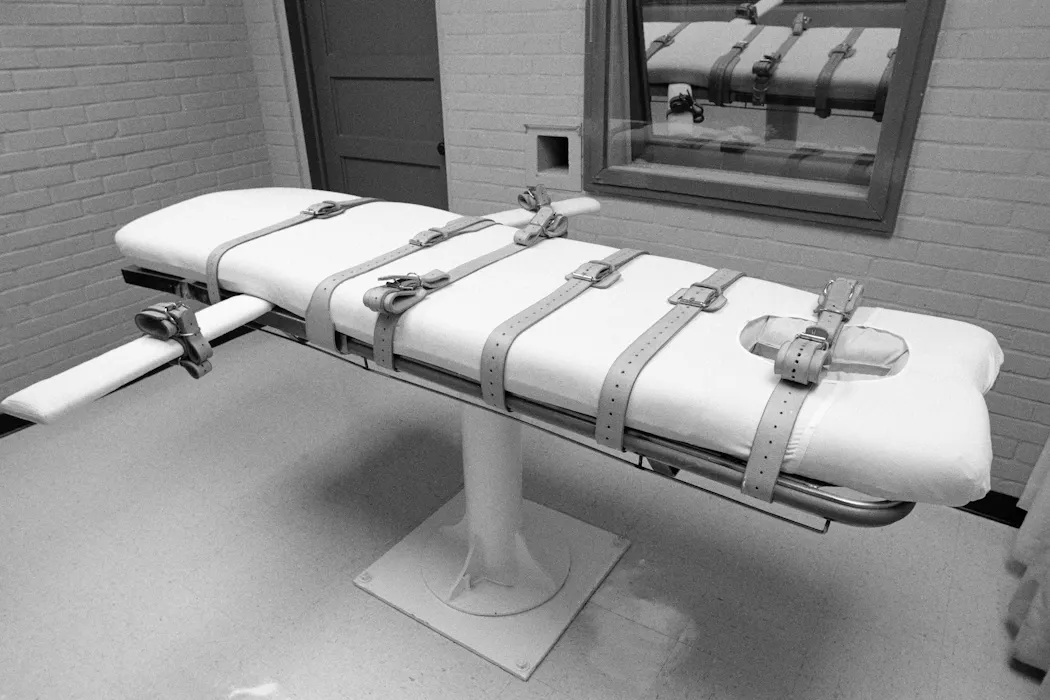
Tony Carruthers recently survived a lethal injection attempt – the latest man to endure a failed execution

In the past 80 years, at least nine men have survived execution attempts. Bernd Obermann/Getty Images

Tennessee set out to execute Tony Carruthers on May 21, 2026, but he lived to tell about it.

Carruthers, who was sentenced to death for a 1994 triple murder, survived his date with death when the execution team members could find only one suitable vein in which to secure an IV, but not, as USA Today reports, the “backup line, which is required under the state’s lethal injection protocol.”

After the failed attempt, Tennessee Gov. Bill Lee gave Carruthers a one-year reprieve, a decision the governor did not explain.

What happened to Carruthers is a reminder that things frequently go wrong in executions, even if in almost all cases the problem is resolved and the execution is completed.

Indeed, in the past 80 years, only eight other men have had experiences like Carruthers’ and survived execution attempts.

Four of those execution “survivors” were killed by a second execution attempt, while others escaped that fate. Three others died on death row; one of them after the state agreed not to try to execute him a second time, and one of them is still alive and awaiting his fate.

Having studied capital punishment for decades, I know the Eighth Amendment’s prohibition of “cruel and unusual punishment” has shaped constitutional discussions around failed executions. But so far, courts have not stood in the way when state governments have wanted to try to execute the same man again.

Not just a lethal injection problem

Carruthers survived a lethal injection attempt, but execution failures have not been confined to that method. A look at the history of hanging reveals several instances in which it failed.

In 1833, for example, a hanging in Pennsylvania failed to kill Charles Getter, who had been sentenced to death for murdering his wife.

“The rope was placed around Getter’s neck. The hangman drew it up fast,” true crime author Amanda Howard notes. “Getter struggled and kicked, choking, before the rope broke, throwing him to the ground.” However, Getter did not die.

The executioner sent someone to look for a stronger rope. This time, the rope did not break and Getter met “the fate of a murderer.”

In 1894, Will Purvis’ hanging also failed when the noose loosened. Instead of dying from a broken neck, Purvis survived, suffering only rope burns on his neck.

Unlike Getter, Purvis returned to prison contending that he was innocent. His lawyers unsuccessfully tried to get the courts to prevent a second execution attempt. Purvis remained behind bars until 1898, when Mississippi’s governor pardoned him. Purvis is the only execution survivor ever to receive such grace.

In the late 19th century, the electric chair replaced hanging as the country’s primary execution method, but it did not prevent failed executions. At least once in the 20th century, the electric chair also failed to kill.

In the spring of 1946, the state of Louisiana tried to use it in the execution of Willie Francis, a 16-year-old Black youth who had been convicted of murdering a local sheriff. At the time, the electric chair was said to be the most humane execution method.

But what Francis experienced hardly seemed humane. When the electric current reached him, “He started going into convulsions.” The executioner “flipped the switch again,” but Francis was not killed.

Later, like Purvis, Francis turned to the courts to try to stave off another execution attempt. The decision in his case would set the precedent for how judges would deal with other execution survivors.

A young Black man sits in a prison cell and smiles.
Willie Francis, 17, who was convicted of murdering a sheriff, sits in a prison cell in May 1946.
AP Photo/Bill Allen

An accident?

In January 1947, months after Francis survived the electrocution, the U.S. Supreme Court gave Louisiana permission to try again. The justices split, with five giving Louisiana the green light and four dissenting.

Justice Stanley Reed’s majority opinion emphasized that what had happened to Francis was accidental and that, without malicious intent, there was no violation of the Eighth Amendment. As he put it, “The fact that an unforeseeable accident prevented the prompt consummation of the sentence cannot, it seems to us, add an element of cruelty to its subsequent execution.”

In his view, “The cruelty against which the constitution protects a convicted man is cruelty ‘inherent’ in the method of punishment, not the ‘necessary suffering’ involved in any method employed to extinguish life humanely.”

Justice Harold Burton spoke for the dissenting judges. As he put it: “The intent of the executioner cannot lessen the torture or excuse the result.” A second execution would offend the “fundamental instincts of civilized man.”

Francis was put to death almost a year to the day after his first execution failed.

It would be several decades until another person survived an execution. But the pace of failed executions has only picked up since the start of the 21st century.

21st century execution survivors

From 2009 until May 2026, six people survived failed lethal injection attempts. Romell Broom became the first 21st-century execution survivor when in 2009 the state of Ohio gave up after trying for two hours to find a usable vein in which to secure an IV line.

In his case, the Ohio Supreme Court, relying on the Francis precedent, decided that “The insertion of IV lines is merely a preparatory step to the execution.” In its view, Broom’s punishment had not really begun. Therefore, a second execution would not violate the prohibition on double jeopardy or on the imposition of cruel punishment.

Mugshot of a white man.
The state of Alabama executed Kenneth Smith in 2024 after he survived a previous lethal injection attempt.
Alabama Department of Corrections via AP

But before Ohio could again attempt to execute Broom, he died on death row in December 2020 after contracting COVID-19. Another 21st-century execution survivor, Alva Campbell, also died on death row.

In 2018, Doyle Hamm reached an agreement with the state of Alabama stating that he would not be subject to a second execution after executioners couldn’t access a vein during an attempted lethal injection. Hamm died from cancer in 2021.

However, Alabama succeeded in executing two other execution survivors, Alan Miller and Kenneth Smith, both in 2024. In both cases, they had survived failed lethal injections.

And Thomas Creech is, like Carruthers, still alive after lethal injection failure, this time in Idaho. It’s not clear if and when Idaho will try again to put him to death. If it does, the state will use the firing squad, which will become its primary execution method on July 1, 2026.

Carruthers’ fate

As Carruthers awaits his fate in Tennessee, defense lawyers in the state have asked Gov. Lee to halt all executions pending a thorough review of its protocol.

A mug shot of a Black man.
This undated photo released by the Tennessee Department of Correction shows Tony Carruthers.
Tennessee Department of Correction via AP

And as the Death Penalty Information Center reports, “attorneys from the Federal Public Defender’s Office filed a new federal lawsuit … to prevent Tennessee from attempting to execute Mr. Carruthers a second time.”

That suit builds on litigation filed in March 2025 alleging that the administration of lethal injection in Tennessee inflicts cruel and unusual punishment.

Only time will tell if the judges who hear those cases will be persuaded by what Justice Burton wrote in the Francis case: “Although the failure of the first attempt, in the present case was unintended, the reapplication of the electric current will be intentional … The present case demonstrates that, today, two separate applications are sufficiently ‘cruel and unusual’ to be prohibited.”

When the state, Burton explained, seeks to execute someone, it has a duty “to make sure that there (is) no failure.”

The Conversation

Austin Sarat does not work for, consult, own shares in or receive funding from any company or organization that would benefit from this article, and has disclosed no relevant affiliations beyond their academic appointment.

​Politics + Society – The Conversation

Categories
Uncategorized

From oversight to coercion: How authoritarian governments are twisting AI safety to get tech companies to fall in line

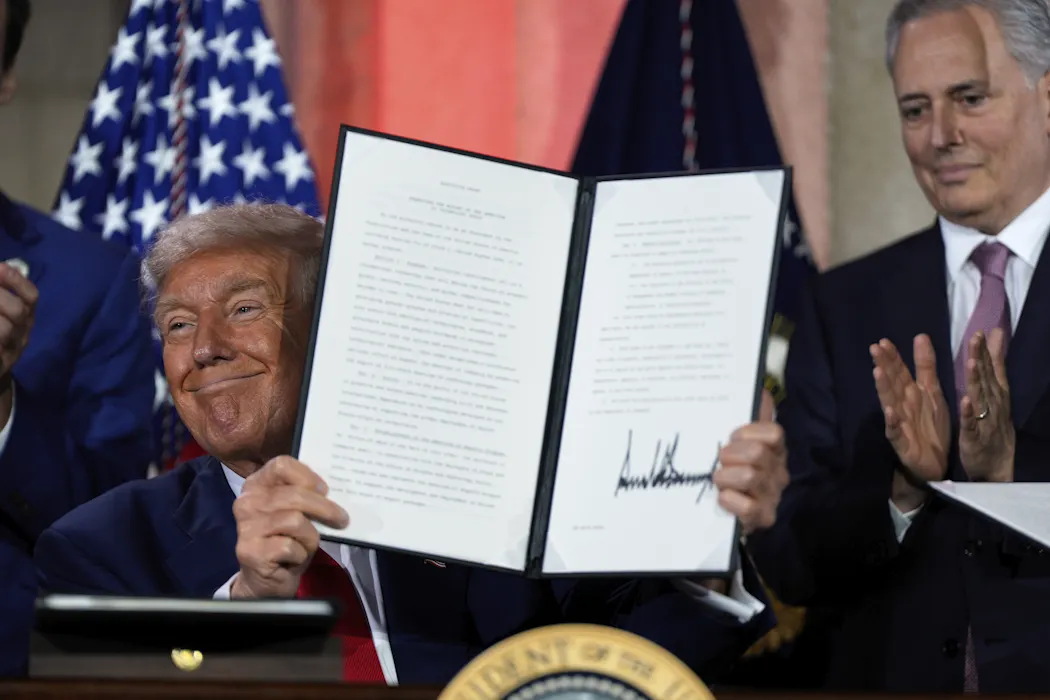
President Trump’s 2025 executive order about ‘woke AI’ put the tech industry on notice about aligning with the administration’s views. AP Photo/Julia Demaree Nikhinson

When researchers founded Anthropic in 2021, they said the race to build powerful AI was moving too recklessly. They inserted detailed safety measures into their products and marketed their commitment to safety as the corporate quality that distinguished them from competitors – notably OpenAI, the rival company they had left. In March 2026 that reputation was tested when the Trump administration declared that Anthropic was a supply chain risk.

The company had refused to remove built-in safeguards that prohibited domestic surveillance and autonomous weapons from products it had supplied to the Pentagon. President Donald Trump ordered the federal government to stop using Anthropic and its large language model, Claude, labeling the company a national security risk. Within hours, OpenAI made a deal to be the Pentagon’s supplier instead.

Despite Anthropic’s apparent stand, during its clash with Trump the company quietly scrapped the binding principles in its main safety policy. Several weeks earlier, Anthropic’s head of safeguards research had resigned, warning that “the world is in peril.” And a week after the Pentagon officially banned Claude, the U.S. military was still using the technology to select and target sites to bomb in Iran.

As a philosopher studying the rule of law and democracy, I’ve found that authoritarian governance of technology often does not involve direct censorship. Instead it delegitimizes the intended protections, poisoning any external regulation and even voluntary self-regulation that deviates from the regime’s goals or values.

The Trump administration, which follows the authoritarian playbook, has argued that AI safety standards and user restrictions are ideological impositions rather than sound engineering decisions. The “Preventing Woke AI” executive order of July 23, 2025, didn’t change what companies are allowed to do with their products. By by attaching the “woke” label to basic ethics protections, the administration made those protections politically costly to maintain.

The Brennan Center, a legal policy and advocacy organization, has documented how AI ethics is being redefined through contract negotiations. In these cases, the government weaponizes terms such as “biased” to disqualify companies that maintain civil rights protections from competing for federal contracts.

The prisoner’s dilemma

A single U.S. Defense Department AI contract can be worth billions of dollars. It can also provide access to data no private company could otherwise have and unlock further government work. Companies that maintain the ethics guardrails risk ceding ground to competitors that don’t.

When OpenAI moved in to take the Pentagon work, CEO Sam Altman told his board of directors the move looked “opportunistic and sloppy.” But he said the company took it anyway, because admitting that an action looks bad is different from being willing to fall behind.

Donald Trump talking to AI leaders at the White House.
President Donald Trump and OpenAI CEO Sam Altman speak during a Jan. 21, 2025, news conference during which Trump announced an investment in AI infrastructure.
Andrew Harnik/Getty Images

This situation reflects the classic prisoner’s dilemma. If Anthropic maintains safety provisions and OpenAI strips them away, OpenAI gets the contracts and the future advantage. If both companies maintain the provisions, digital protections might survive. But because neither company can be certain the other will hold the line – and because being left behind is not a good option – the rational choice is to discard safety measures.

These circumstances differ from a standard market race to the bottom in one key respect: The trap of having to strip away guardrails isn’t an accident of competition; it’s being maintained by the government through incentives.

Palantir didn’t wait to be caught in this trap. The data analytics company was founded by Peter Thiel and run by Alex Karp, who spent years denouncing “woke” Silicon Valley. Palantir built its business model around government surveillance and military data infrastructure. While Palantir has said it is committed to privacy and civil liberties, critics contend that the company is dismantling those protections. The company’s stock has surged under the Trump administration, its contracts have expanded, and it now has a front-row seat where AI policy is being written. Palantir solved the prisoner’s dilemma by defecting first.

It’s important to note that the dissolution of safety teams across the industry, such as OpenAI’s Superalignment team and Microsoft’s ethics unit, isn’t the result of anyone deciding to abandon safety. What I see in analyzing the different companies’ actions is a pattern: an accumulation of collective, incremental compromises that quietly reorient the definition of safety away from the public and toward the state. The resulting harm and risks fall on everyone whose lives are shaped by AI systems.

Redefining safety to serve the government

Across government contracts and policy documents, I have also observed that the original definition of AI-related safety has shifted from protecting the public toward making systems controllable for the state. The “anti-woke” framing accelerates this shift: Once ethics requirements are characterized as ideological rather than technical, removing them can be framed not as a safety reduction but as a correction.

This shift does not require bad faith from the companies. Safety teams are still doing rigorous work. The companies are not lying when they describe their safety commitments. Those commitments are now simply oriented toward the government rather than the public.

The case for stronger AI regulation assumes that a government constrains commercial entities on behalf of the public. But blacklisting a company for maintaining civil rights protections, and then banning the military deployment of its AI hours later, shows that the federal government in this instance enables the harm that regulation is meant to prevent.

Expanding regulatory authority over AI companies does not necessarily protect citizens. Safety regulations – intended to constrain corporate power – in authoritarian regimes become tools to coerce compliance.

The Conversation

Michael Gregory does not work for, consult, own shares in or receive funding from any company or organization that would benefit from this article, and has disclosed no relevant affiliations beyond their academic appointment.

​Politics + Society – The Conversation
Categories
Music

The Mystery Behind the ‘I Hate George Strait’ Website Explained

This is country music blasphemy…or is it? Continue reading…​Country Music News – Taste of Country

Categories
Entertainment

We Tried 12 Ways To Cook Burgers. Here’s How They Ranked

I tested 12 different burger cooking techniques ranging from the classic BBQ to a viral-worthy cooking hack. Here’s how each method ranked from worst to best.

​Mashed – Fast Food, Celebrity Chefs, Grocery, Reviews

Categories
Food

5 Dishes That Simply Taste Better In The Midwest

The Midwest may not be the culinary capital of the United States (that’s probaby NYC or New Orleans), but it has some dishes that just taste best here.

​Food Republic – Restaurants, Reviews, Recipes, Cooking Tips

Categories
Entertainment

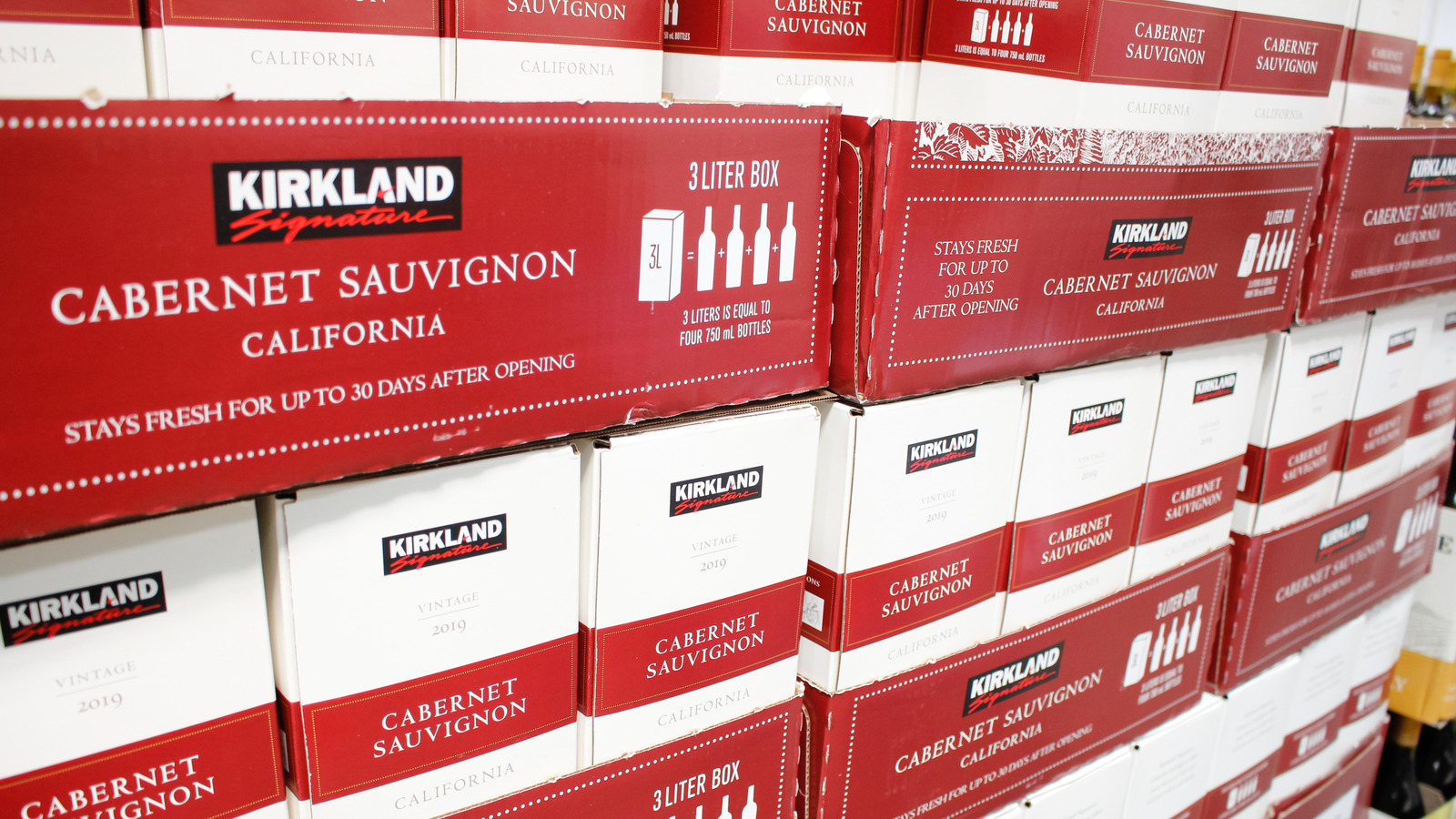
Who Makes Costco’s Kirkland Signature Boxed Wine?

Plenty of Costco shoppers would gladly raise a glass in honor of Kirkland Signature boxed wine. They might be even more excited to know the alleged producer.

​Mashed – Fast Food, Celebrity Chefs, Grocery, Reviews

Categories
Alaska News

Tlingit and Haida opens Two Coppers Casino after years-long effort, but its legal status isn’t a sure bet

Herman Davis of Sitka, left, and Deborah Picken of Hoonah try the gaming machines at the Two Coppers Casino on Wednesday, June 3, 2026. (Mark Sabbatini / Juneau Independent)

A tribal casino near Eaglecrest Ski Area that’s been discussed for many years is open, but its operator is taking something of a gamble by hoping it can prevail if the state challenges the legality of the establishment.

A “soft opening” of the Two Coppers Casino began this week, with the facility featuring 100 slot-style electronic machines (one of which wasn’t functioning), said Chalyee Éesh Richard Peterson, president of the Central Council of the Tlingit and Haida Indian Tribes of Alaska, in an interview shortly after the casino opened at 2 p.m. Wednesday. Construction is still ongoing and some amenities such as running water are lacking, so the target official grand opening date is July 1.

“We’re really excited about this,” he said. “It’s an opportunity, an expression of our sovereignty, but also I think it’s a great economic opportunity for not only the tribe, but for people who want to work here.”

The casino is scheduled to be open until 9 p.m. Wednesday and at times to be determined in the coming days leading up to the official opening, with the regular operating hours still being determined, Peterson said. A shuttle to the casino that circulates via downtown, since cruise passengers are envisioned as a major portion of the customers, is set to begin operating this week.

The entrance to the Two Coppers Casino on Wednesday, June 3, 2026. (Mark Sabbatini / Juneau Independent)

Peterson also acknowledged concerns (and stigmas) some people have raised about casinos, and noted that for now alcohol isn’t being served and “we’re going to have some really strict guidelines that if we see people that are probably spending too much time here, they’re going to be asked not to.”

A more existential issue is the casino’s legal status, which was put into doubt last September. The Trump administration reversed a Biden-era ruling by the U.S. Department of the Interior cited by the National Indian Gaming Commission (NIGC) when it authorized an amended gaming ordinance adopted by the tribe in October of 2024.

Peterson said even without that ruling it appears a previously approved ordinance for the casino appears to be legally valid. However, the Trump administration’s reversal was prompted by a similar gaming facility the Native Village of Eklutna opened in January of 2025, with the state of Alaska filing a lawsuit in February of that year to shut down the casino. But that facility continues to operate and Peterson said he believes his tribe will prevail if a similar challenge is filed against Two Coppers Casino.

“I feel fairly secure,” he said. “If they challenge it that’s their choice. That doesn’t mean I agree that they have a legal ground to stand on and that they’ll win.”

Chalyee Éesh Richard Peterson, president of the Central Council of the Tlingit and Haida Indian Tribes of Alaska, discusses the Two Coppers Casino on Wednesday, June 3, 2026. (Mark Sabbatini / Juneau Independent)

Sam Curtis, a spokesperson for the Alaska Department of Law, stated in an email Wednesday afternoon “the State of Alaska is aware of the Two Coopers Casino opening and is closely monitoring the situation.”

“The U.S. Department of Interior has recently reversed a legal opinion issued by the Biden Administration that had been used to authorize tribal gaming in Alaska, directing all relevant federal agencies to follow a legal opinion that had been (in) place since 1993 and to revisit any gaming-related decisions made under that Biden-era opinion,” he wrote. “The State is deferring to the federal government as that review process plays out.”

Two Coppers Casino is a Class II gaming establishment, which can offer slot-like machines where payouts come from a pool of competing players (much like bingo), non-house-banked card games, bingo and pull-tabs. Games like poker, blackjack and traditional slot machines are not allowed.

The machines were somewhat unfamiliar to a handful of initial gamblers who visited the casino when it opened Wednesday afternoon.

“Just put money in and watch it spin,” said Deborah Picken, a Hoonah resident sitting next to her uncle, Herman Davis, a Sitka resident, at one row of machines. She said the visit to the casino was sparked by family members taking Davis to Las Vegas last year because that was one of the items on his bucket list.

“He ended up winning $800 by the time we left Las Vegas,” she said. “When he heard about this from my daughter last night he got excited and said ‘I want to check it out,’ so here we are.”

Annette Ulmer, a Juneau resident who said she has gambled in numerous tribal casinos elsewhere, said the new establishment compares favorably to those.

“I love it. I think it’s something that’s been needed for a while,” she said.

The exterior of the Two Coppers Casino, which is still under construction, on Wednesday, June 3, 2026. (Mark Sabbatini / Juneau Independent)

The casino is on a 220-acre site about a mile from Eaglecrest that is owned by the heirs of an Angoon man who obtained it in a land swap with the U.S. Forest Service in 2002. Tlingit and Haida has been leasing 20 of those acres since 2015.

Speculation has existed for many years about the site on Fish Creek Road about four miles from the Glacier Highway turnoff to Eaglecrest. A 2016 blog post by journalist Craig Medred headlined “Alaska’s first Indian gambling casino appears to be in the works” stated Tlingit and Haida had adopted a federal gaming ordinance, but denied “it has any plan to build a casino in Juneau at this time.”

But Tlingit and Haida began clearing trees from the land in 2018 for purposes tribal officials did not elaborate on publicly. Fireworks sales leading up to the Fourth of July occurred on the property during some subsequent years, with gaming establishment plans confirmed when construction began at the site last summer.

This story was originally published by the Juneau Independent.

The post Tlingit and Haida opens Two Coppers Casino after years-long effort, but its legal status isn’t a sure bet appeared first on Chilkat Valley News.

Categories
Alaska News

History in the making: Eldred Rock Lighthouse grand opening passengers from the Chilkat Valley

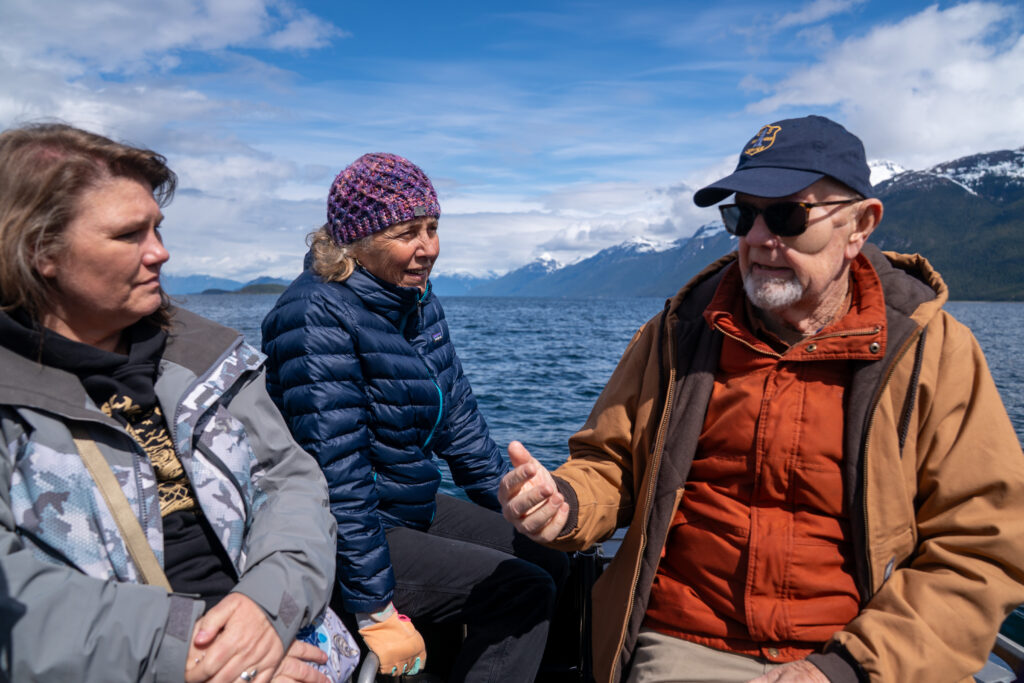
After six years of restoration, the Eldred Rock Lighthouse opened to the public. A group of 16 passengers departed Haines early Saturday morning for the grand opening and ribbon-cutting ceremony at the lighthouse 17 miles south of town. One of the passengers aboard was Ralph Crane, who was stationed at the lighthouse from May 1969 to May 1970. Crane and his daughter drove from Homer to witness the grand opening.

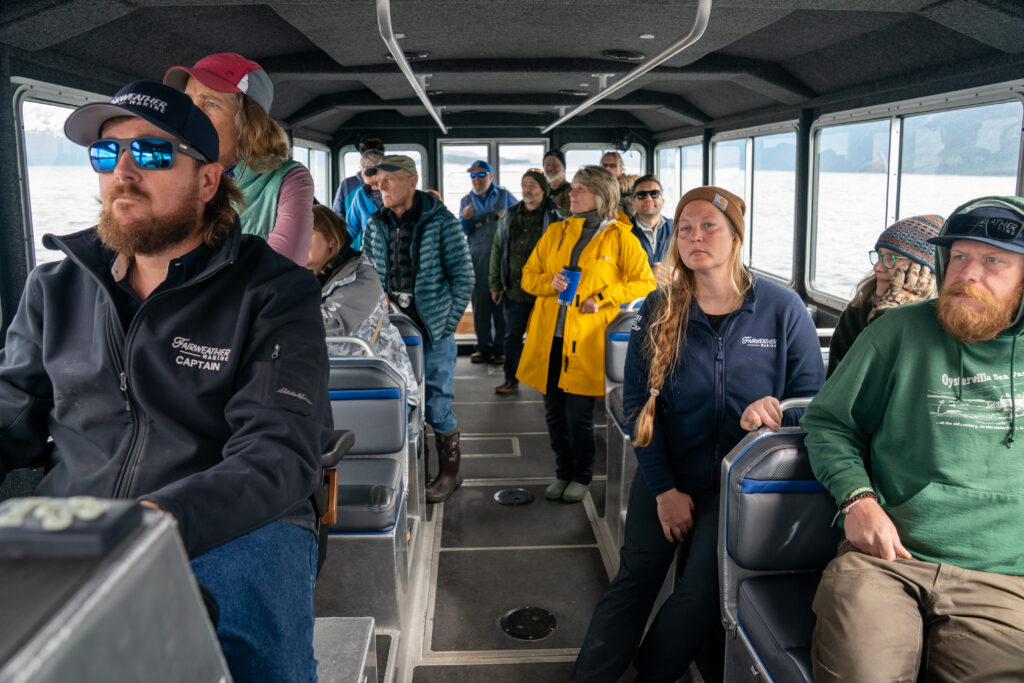
Passengers and crew of the M/V Northwest Adventurer await arriving at the Eldred Rock Lighthouse for it’s grand opening on May 30, 2026, 17 miles south of Haines, Alaska. (Lizzy Hahn/ Chilkat Valley News)

“It was my best and worst year of my life, ever,” Crane said. “It was a rude awakening to remoteness, but we had so much fun out there.” Crane and three others from the U.S. Coast Guard worked at the lighthouse, along with two dogs. Crane was fresh out of bootcamp when he selected Eldred Rock as his next post. Coming back to the lighthouse 56 years later, Crane said he noticed small changes like not seeing the foghorn stand anymore, but overall said it still looks the same on the outside. The U.S. Coast Guard unmanned the lighthouse in 1973 and then “just essentially abandoned it,” according to Crane. He said that his time out on the island helped prepare him for his career as a firefighter “where you’re 90% bored and 10% sheer terror.”

Ralph Crane, right, tells passengers tales of his time working out on the Eldred Rock Lighthouse in 1969, as they approch the lighthouse on May 30, 2026. Crane worked out on the lighthouse, located 17 miels south of Haines, Alaska, for a year in 1969. (Lizzy Hahn/Chilkat Valley News)

Some of Crane’s tasks on the lighthouse included chipping ice off the windows at the top of the tower during storms. Reflecting on the storms, Crane said the Chinook winds would build up so much momentum that the ocean spray would hit the top of the light tower.

“Our job was to make sure that the navigation stayed available for navigators,” Crane said. “It got pretty severe out there at times.”

At one point, Crane said he woke up and heard loud puffing coming from the ocean. One of the two dogs living on the island, Kenmore, had gone out into the ocean and was chasing a pod of orcas headed for Haines. The lighthouse members hopped on a boat and pulled Kenmore from the water.

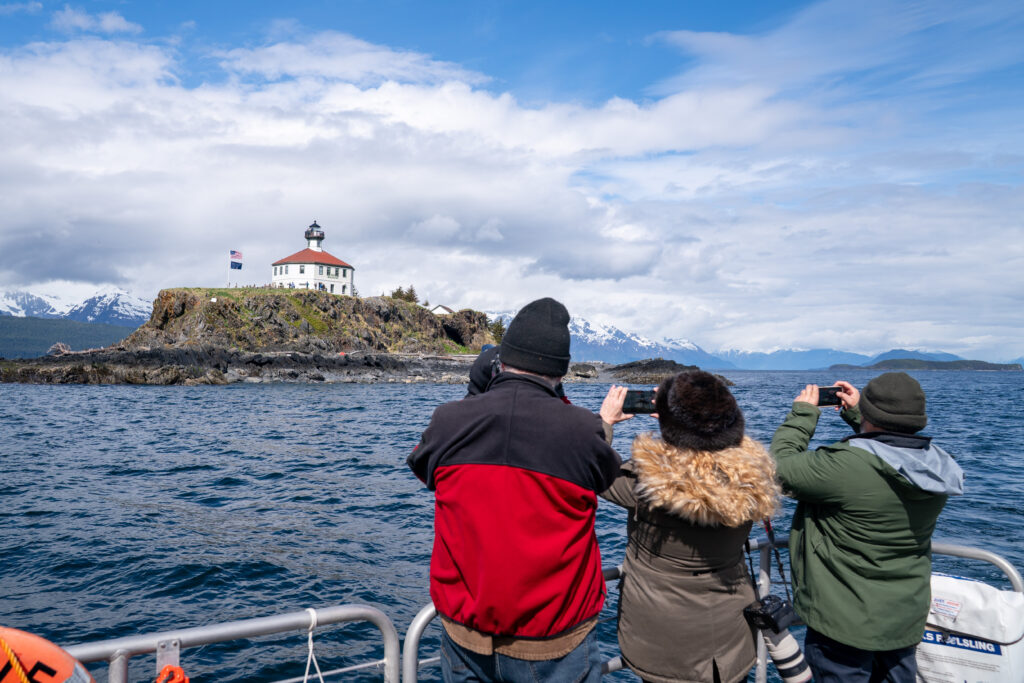
Finished in 1906, the lighthouse is Alaska’s oldest original. Located 55 miles north of Juneau and 17 miles south of Haines, the red-and-white lighthouse is now open for tours and guests to stay the night.

Tom Ganner, Kathy and Tim Benner take photos of the flag raising during the Eldred Rock Lighthouse grand opening on May 30, 2026, 17 miles south of Haines, Alaska. (Lizzy Hahn/ Chilkat Valley News)

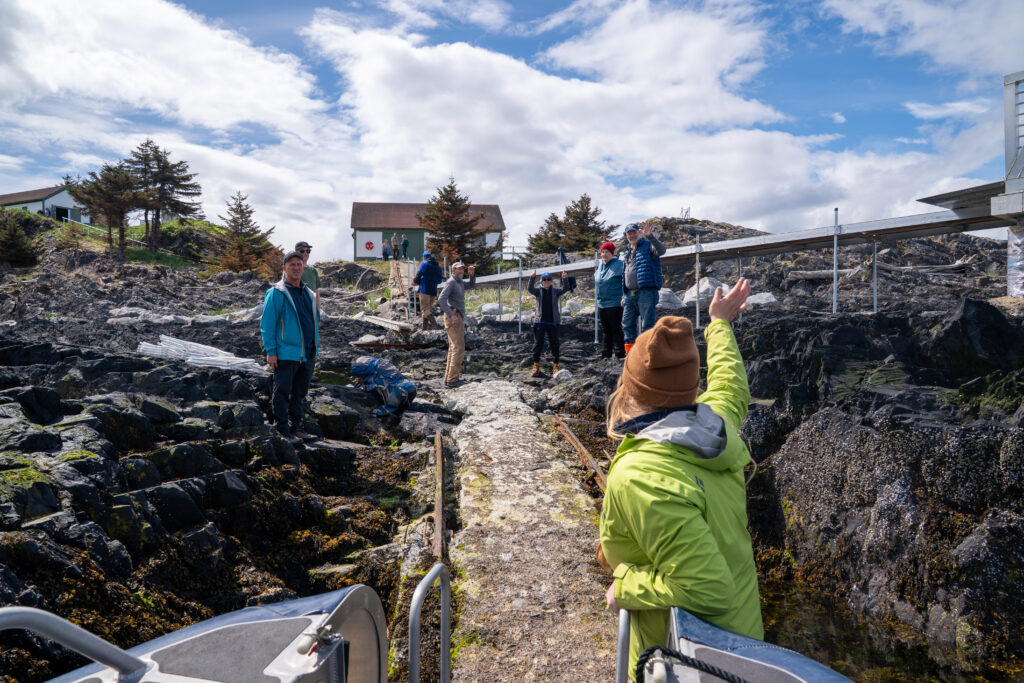
Some passengers from the Juneau boat “Goldbelt Seawolf” boarded a landing craft, which took them to the island. A floating dock has not been installed, so Haines passengers were not able to disembark. 

Stephanie Hawney, co-owner of the Skagway company Fairweather Marine Services, said that “it was seemingly an impossible task with three weeks of consistent 20 knot winds.” Only one of the four anchors was able to be placed for the floating dock and gangway. The Northwest Adventurer will be the main vessel transporting groups of 26 to the lighthouse. Fairweather Marine Services has partnered with the Eldred Rock Lighthouse Preservation Association, or ERLPA, to run tours to the island.

Stephanie Hawney, right, waves to volunteers on Eldred Rock who are working on fixing up the lighthouse after the Grand Opening on May 30, 2026 outside of Haines, Alaska. (Lizzy Hahn/ Chilkat Valley News)

After viewing the grand opening from the ocean, the Haines boat circled the island and landed, picking up a volunteer and co-owner of Fairweather Marine Services, Rob Caldwell, who had been working on installing the floating dock.

Michael Marks, secretary of the ERLPA, said that because of these tours, the U.S. Coast Guard is preparing to clean up contaminated debris and dirt and remove it from the island.

“They wouldn’t even consider removing that debris until there was actually public going on a regular basis,” Marks said Saturday. Marks first saw the lighthouse in 2002 while he and his wife, Lorrie Dudzik, were on the ferry up from Bellingham. Although the restoration has mainly occurred within the last six years, Marks said that it took 20 years of talks with the U.S. Coast Guard to get to this point.

About 15 years ago, before there was the Eldred Rock Lighthouse Preservation Association, the Sheldon Museum’s Eldred Rock Lighthouse Committee worked on how to restore the lighthouse. Then Haines Borough manager David Sosa told the committee to separate from the museum because the Haines Borough could not “accept the liability of what you guys intend to do at the lighthouse,” according to Marks. After that, the non-profit preservation association was founded. Their first income 15 years ago came from T-shirt sales with a logo designed by Laura Rogers.

Michael Marks, right, gives Evren Baskaya, left, an Eldred Rock Lighthouse carpenter pencil during the lighthouse’s grand opening on May 30, 2026, 17 miles south of Haines, Alaska. (Lizzy Hahn/ Chilkat Valley News)

Then began what Sue Waterhouse and Marks called the “stealth era.” The U.S. Coast Guard owns the lighthouse and did not want members from the ERLPA to go to it. However, volunteers still kept coming out to the lighthouse for five years during the “stealth era.” The ERLPA leased the lighthouse from the U.S. Coast Guard and began making improvements. Marks said every improvement had to be approved by the U.S. Coast Guard and the state historical society. Volunteers like Waterhouse were trained and became hazardous materials abatement specialists. Crews performed lead and asbestos containment and removal.

The ERLPA has leased the lighthouse for the past six years. Their contract with the U.S. Coast Guard allows for four five-year terms, with two terms remaining after 2030. The association hopes to buy the lighthouse from the U.S. Coast Guard after the leases are up.

Marks called Saturday’s grand opening “history in the making.” He said that the association set the date for the grand opening three years ago. “We all knew it was never going to happen, but it happened.”

The post History in the making: Eldred Rock Lighthouse grand opening passengers from the Chilkat Valley appeared first on Chilkat Valley News.