Categories
Alaska News

Ketchikan cutters sail for Mexico border

Two of three Ketchikan-based U.S. Coast Guard fast response cutters were recently deployed to the U.S./Mexico border, a USCG official stated in an email on Thursday.

The Coast Guard cutters John McCormick and Bailey Barco “are currently completing short-duration deployments to the United States’ southern border,” Travis Magee, a spokesperson for the U.S.Coast Guard Arctic District, said Thursday in an email to the Ketchikan Daily News.  

“These operations are part of the Coast Guard’s commitment to secure the U.S. maritime border and its approaches,” Magee said.

Vessel tracking data, which is available to the public at marinetraffic.com, shows that the Bailey Barco on May 30 began traveling from Ketchikan to waters off southern California. The John McCormick on May 30 began sailing north from the port of San Diego; it returned to Ketchikan on Sunday evening.

The voyage by sea between the ports of Ketchikan and San Diego is 1,575 nautical miles in each direction, National Oceanic and Atmospheric Administration data shows.

Meanwhile, the Douglas Denman – the third fast response cutter homeported in Ketchikan – has remained in Southeast Alaska this month.

Both the John McCormick and Bailey Barco usually remain in coastal Alaska waters, to complete patrols with duties including search and rescue and fisheries law enforcement.

The two ships are being deployed to the U.S./Mexico border at a time when military agencies across the country are focusing assets on assisting with federal immigration law enforcement and drug interdiction efforts.

The Coast Guard is the only military branch housed within the U.S. Department of Homeland Security. USCG responsibilities include at-sea enforcement of U.S. immigration laws and policies, and detecting and interdicting contraband and illegal drug traffic.

In the three months after President Trump began his second term in office on January, 20, 2025, the USCG Pacific Area tripled its forces operating on the southern border, according to a March 2025 press release from USCG.

As the John McCormick and Bailey Barco each traveled between Ketchikan and the U.S./Mexico border last week, Southeast Alaska fishermen were participating in commercial and recreational fisheries, cruise ships were transporting visitors by the thousands, and recreational boating was ramping up.

Magee stated by email last week that while the John McCormick and Bailey Barco were “temporarily supporting critical national security missions down south, we want to assure the community that these deployments do not affect our search and rescue readiness back home.”

The Daily News reached out to several marine safety professionals in Southeast Alaska with inquiries regarding the importance of the Ketchikan-based cutters, and potential safety implications associated with their deployments to the U.S./Mexico border.

Alaska Marine Safety Education Association director Leann Cyr stated in an email to the Daily News on Friday that AMSEA leaders “do not know whether this deployment will affect search and rescue operations in Southeast Alaska.”

“Regardless, AMSEA encourages mariners to be prepared to operate safely and independently,” Cyr wrote.

“Coast Guard search and rescue services are an important part of Alaska’s maritime safety system, but safe operation begins with vessel operators through proper maintenance, attention to weather, and safety equipment and training,” Cyr said.

Marine tracking data

Maritime tracking system data, which is publicly available via marinetraffic.com, shows that the Bailey Barco traveled from Ketchikan to southern California last week, while the John McCormick returned from southern California to Ketchikan.

The Bailey Barco departed Ketchikan at about 10 a.m. May 30, according to marinetraffic.com. Early on Monday, the Bailey Barco was offshore of western Washington.

By Thursday morning, the Bailey Barco had reached a harbor in the San Pedro neighborhood of Los Angeles; on Sunday morning the ship was approaching waters off San Diego, the most recent data from marinetraffic.com shows.

Meanwhile, on the morning of May 30, the John McCormick departed San Diego and began sailing north along the west coast of California.

As of Tuesday morning, the John McCormick was offshore of Salinas, California.

On Wednesday morning, the John McCormick was offshore of Eureka, California.

On Thursday morning, the John McCormick was offshore of Aberdeen, Washington.

As of 10 a.m. Friday, the John McCormick was moored at the Port Angeles, Washington harbor. By Sunday evening the ship had returned to Ketchikan, marinetraffic.com data shows. 

The 154-foot John McCormick was commissioned in Ketchikan in April of 2017, and the 154-foot Bailey Barco was commissioned in Juneau in June of 2017. The 154-foot Douglas Denman was commissioned in Ketchikan in 2022.

All three of the Sentinel-class cutters are now homeported in Ketchikan, although USCG has plans to relocate the Douglas Denman to Sitka within the next few years.

Each of the Sentinel-class cutters operates with a standard complement of 24 crew members, according to USCG information.

The post Ketchikan cutters sail for Mexico border appeared first on Chilkat Valley News.

Categories
Entertainment

Customer Reviews Have Crowned This Brewery Near Regions Field One Of Alabama’s Best

Brewery culture is a somewhat new phenomenon in Alabama, but this brewery operating near a beloved ballpark has hit a homerun with beer drinkers in the state.

​Mashed – Fast Food, Celebrity Chefs, Grocery, Reviews

Categories
Sports Fox

How The Smallest World Cup Nation Recruited Its Team

Growing up in the Netherlands, Jurgen Locadia envisioned himself wearing those iconically vibrant orange jerseys at a World Cup. He played for the country’s youth national squads, was selected for the senior team a few times and started his professional career with Dutch clubs. So when peers tried to enlist him to play for Curaçao, a tiny island nation off the coast of Venezuela, he initially brushed them off. “I always had the hope to play for the Dutch squad,” Locadia, a forward for USL Championship side Miami FC, told me recently. But his friend and current Miami FC teammate, Eloy Room — who was also from the Netherlands and had already joined the Curaçao national team — was persistent. He was trying to help build something in Curaçao. Locadia remembers having conversations with Room four years ago while he was still attached to the Oranje. Room was trying to sell Locadia on the idea of qualifying for the 2026 World Cup. “I was like, ‘C’mon man, it’s not realistic,’” Locadia said he told Room. “But he was convinced. And that energy rubs off when you believe in something. And he believed in it. I was skeptical, but looking back, it’s ironic how life works out.” Call it the college transfer portal meets the World Cup. Countries use recruiting-style pitches on dual-national players to bolster their chances of qualifying for the world’s biggest tournament. The strategy worked for Curaçao, which will make its World Cup debut this summer as the smallest nation ever to qualify. The approach has also helped propel more established countries, such as Morocco, which reached the semifinals of the 2022 World Cup in Qatar and became the first African nation to do so. Other countries, including Senegal, Ivory Coast and Egypt, have followed similar paths by recruiting players who previously represented other nations at youth levels. Cape Verde, also making its inaugural World Cup appearance this summer, initially wooed Irish-born defender Roberto “Pico” Lopes via a LinkedIn message. But Curaçao’s interpersonal approach towards its program-building has also now paid dividends. “I don’t think we realize the impact right now,” said Locadia, who ultimately committed to the Blue Wave in 2023. “Personally, I still can’t comprehend that we qualified. I think once we’re all together at our [base camp in Boca Raton, Florida], then the World Cup really starts, but for now, it’s still hard to understand that we accomplished such a big thing.” ‘More Players Kept Coming’ The Caribbean island of Curaçao was formerly a regional hub of the Dutch Atlantic slave trade, and many Curaçaoans grew up in or at some point moved to the Netherlands due to colonial and political ties. In 2010, Curaçao became an autonomous country within the Kingdom of the Netherlands following the dissolution of the Netherlands Antilles. The population of Curaçao is around 158,000 and has a total land mass of 171 square miles — that’s seven times smaller than Rhode Island. Soccer and baseball are among the nation’s most popular sports, though locals have cheered for Brazil or Argentina during past World Cups since their country had never qualified. That was, however, until last November when Curaçao shocked the world, securing a berth to the 2026 tournament after a 0-0 draw against Jamaica in Kingston. The previous record for the smallest World Cup country was Iceland, which had a population of 350,000 when it reached the 2018 tournament in Russia. So, how did this unlikely contender reach soccer’s biggest stage? “It was my project,” former Curaçao national team manager Remko Bicentini told me. Bicentini coached the Netherlands Antilles from 2009-10 after serving as an assistant in 2008, then worked as Curaçao’s assistant from 2011-16 before being named head coach from 2016-20 and again from 2022-23. He was one of the early architects who developed a plan to attract professional players with Curaçaoan roots to represent their homeland. He gave most of the players on Curaçao’s 2026 World Cup roster their first international appearance. Bicentini — whose father, Moises, was among the earliest Curaçaoans to play professional soccer in the Netherlands in the late 1950s — used several methods to identify players for the national team. He said he communicated with coaches around the world from 2015-23 and contacted various consulates, which helped him locate players with Curaçaoan heritage. “I looked all over the world for players who can play for Curaçao, if they have a parent or grandparent who was born in Curaçao,” Bicentini told me. “I looked for many, many, many years, and I found a lot of players.” The first major commitment was Room, who was playing for Dutch club Vitesse Arnhem in 2015 before later joining PSV Eindhoven. Born to a Curaçaoan father and Dutch mother, Room was part of the Netherlands U-20 squad but wasn’t earning regular first team call-ups. Patrick Kluivert, the legendary Ajax and Dutch national team striker, was the head coach of Curaçao at that time and called Room personally to invite him to join the program. Like Locadia, Room always wanted to play for the Netherlands, but knew he could also play for Curaçao. In those days, however, Curaçao wasn’t competing at a high level, and there wasn’t much of a foundation or structure in place. Switching national teams wasn’t in his plans. “Kluivert called and said, ‘Listen, I want you as my goalkeeper. You’re my No. 1,’” Room recalls. “He also told me we have potential to go to the World Cup in the future if you help recruit players and players like me choose to play for Curaçao.” Room needed time to think. Maybe, he told himself, there was another way to get to the World Cup, and he could help pave the way for posterity. Plus, he said it was “pretty cool” to hear from a legend like Kluivert. Room ultimately took the leap, and the 37-year-old has been Curaçao’s starting goalkeeper ever since. He’s made 72 appearances, recently breaking a tie with midfielder Leandro Bacuna for most caps in national team history. But it took a real grassroots effort to scout other players. Room reached out to guys he knew growing up in the Netherlands, and some called him asking what it was like to play for Curaçao. Room told them about his experience and every camp, new players arrived on the island. Within a few years, the Blue Wave had a full squad made of professional players. “I was basically the first player who switched nationalities back then,” Room said. “And after that, more players kept coming.” Results followed. In 2017, Curaçao won its first-ever Caribbean Cup, defeating Jamaica 2-1 in the final. The victory secured a place in the following month’s Concacaf Gold Cup, though Curaçao did not advance out of the group stage. The team later qualified for the 2019 Gold Cup and reached the quarterfinals, where it lost, 1-0, to the United States. “It was important for players to see that success,” Bicentini said. “It helped recruit new players.” A ‘Nostalgic’ Feeling Tahith Chong’s first World Cup memory was watching the 2006 final between France and Italy at his parents’ home in Willemstad. He remembers Zidane’s headbutt, cheering for France and crying when Les Bleus lost. He started playing soccer after that. Now a midfielder at English club Sheffield United, Chong’s family moved to the Netherlands when he was eight years old. He came through the Manchester United academy team while playing for Dutch youth squads and kept a watchful eye on what was going on back home in Curaçao. He felt in the early days that the program was too disorganized and unstable. He saw managers and federation presidents come and go, and travel from Europe at the time wasn’t easy for him. “But once they got it sorted, I was on board because I’m from there, I was born there, my family is there. That’s where I call home,” said Chong, who is the only player on the 26-man squad born on the island. Over time, players, staff and fans alike started to believe. Bicentini created a “family atmosphere” by inviting many of the players back to each camp so they could develop camaraderie and chemistry. He stuck with consistent tactics and defined a system, so everyone was aligned. He called in so many guys who grew up playing together in the Netherlands, providing an added sense of familiarity. Together the group set goals, like going to the Gold Cup, and initially didn’t even talk about the World Cup. “Absolutely not,” Bicentini said. “But I believed that we could do that with each other. In 2016, the goal was to go to the [2017] Gold Cup, and that’s what I talked to the players about and we qualified. Then after the first Gold Cup, my goal was the 2019 Gold Cup, and we did that.” Only after that did they start envisioning something more ambitious: qualifying for the 2026 World Cup. With fellow Concacaf members the United States, Canada and Mexico already assured spots as co-hosts and the tournament expanding to 48 teams, the opportunity felt more attainable. Under the guidance of veteran Dutch manager Dick Advocaat — who has coached numerous teams in the Netherlands and abroad — Curaçao went unbeaten in its 10-match World Cup qualifying campaign. It culminated in a draw against Jamaica on Nov. 18. 2025. “It means everything,” Room said of clinching a spot in the World Cup. “This was the main reason I started to play for Curaçao because we had that dream. Back then, we were told, ‘It’s going to be a long road. It’s going to be a bumpy road.’ But I really believed we could reach the World Cup. I don’t know what it was, but I had this feeling inside of me that we can make it with Curaçao. “It’s an unbelievable feeling that you started something 10 years ago, and at the end you make it, you know? A lot of people said, ‘Nah, you’re never going to make it. It’s too difficult.’ We proved we can, so that makes it extra special.” The vibes on the team that night in Jamaica started as a party in the locker room with guys dancing, screaming and playing music. Then, when they got back to the hotel, it was more relaxed and chill. “We were soaking it all in,” Locadia said. “We accomplished something amazing.” For Chong, qualification was emotional. His grandmother, who lived her whole life on the island, had watched him play live for the first time last September. When the team drew Jamaica to punch its World Cup ticket, it was on her 97th birthday. He also thought of his father, who had played amateur soccer in Curaçao and never believed he would witness his country qualify for the world’s biggest tournament. “For me, it’s nostalgic,” said Chong. “It’s been a long process for everyone. It’s not like we showed up to the qualifiers and got lucky. It’s been a progression over the years. Progressing slowly but surely.” ‘We’re Part Of History’ There’s a lot of excitement on the island, and players can feel it whenever they return for training. The moment the team qualified, fans started looking at flights and tickets. Room said he heard people were selling their stuff to afford the trip. The Blue Wave opens Group E competition against Germany in Houston on June 14 before playing Ecuador in Kansas City on June 20 and the Ivory Coast in Philadelphia on June 25. The team is especially amped for that first game against the Germans, given the players were all raised as neighbors and rivals in the Netherlands. “Growing up in Holland, you want to win against Germany,” Room said, smiling. “So maybe that gives us an extra spark.” Beating four-time World Cup winner Germany would be the upset of the tournament, no doubt. Regardless of the result of that match or any other, arriving on the World Cup stage is a huge triumph. And, as Locadia explained, “This is a stepping stone.” In February, Curaçao expanded its scope when it welcomed a Dutch Football Federation delegation to the island. During the trip, the two federations signed an agreement aimed at strengthening football development within the Kingdom of the Netherlands. The partnership will formally provide resources for Curaçao to continue growing the game by collaborating with the Netherlands in areas like training referees and coaches, football infrastructure, operating and developing youth and women’s teams and more. “We just feel like we’re part of history right now,” Chong said. “We have an obligation to represent Curaçao in a way that inspires the next generation that maybe in 15 or 20 years when Curaçao qualifies for another World Cup, kids come in and say, ‘I started playing because of the 2026 World Cup. The team that went to that World Cup inspired me to play.’ “We’re hoping this isn’t the only time we qualify. We want to do it again in four years, eight years, 12 years. You want to continue the progress.”​Latest Sports News from FOX Sports

Categories
Hip Hop

Watch Tierra Whack’s New ‘WAX PAPER’ Video

Tierra Whack Whack's Museum

Tierra Whack has announced a new mixtape, WHACK’S MUSEUM, due June 19 via Interscope Records. The project follows the release of her new single “WAX PAPER,” which also arrives with an official music video shot in Whack’s native Philadelphia.

The new track is the first offering from WHACK’S MUSEUM. Ahead of the mixtape, Whack used social media to address doubters and invite them to text her with an apology, writing, “I never stopped believing in myself when you stopped believing in me.” The single centers on Whack’s sharp delivery and wordplay as she addresses critics while moving into the next phase of her catalog.

YouTube Video
Click to load video

The “WAX PAPER” video was directed by Child and frames Philadelphia in black and white. Child said the team looked to older hip-hop videos while shaping the clip’s visual approach. “Philadelphia isn’t polished,” Child said. “It’s a living museum held together by grit, community, and memory.” The director added that every frame was meant to reflect “the soul of the culture there.”

Whack’s new mixtape follows her 2024 debut album, WORLD WIDE WHACK. In May 2026, she appeared at Amazon’s Upfront series and discussed Twitch’s social reach during a presentation that also included Oprah Winfrey. In 2024, she made her voice-acting debut in the Invincible VS fighting game, connected to the Amazon Prime Video series Invincible. She also appeared as Adrienne in the Marlon Wayans-led film HIM.

Listen to “WAX PAPER” here.

​Discover more about the world’s greatest R&B artists | uDiscover Music

Categories
Music

Brad Paisley Urges Fans to Help Stop New Data Center in Nashville

‘It would be an enormous monstrosity, an absolute eyesore and detract in every way from not only the zoo but that area,’ Brad Paisley said. Continue reading…​Country Music News – Taste of Country

Categories
Music

Brad Paisley Urges Fans to Help Stop New Data Center in Nashville

‘It would be an enormous monstrosity, an absolute eyesore and detract in every way from not only the zoo but that area,’ Brad Paisley said. Continue reading…​The Boot – Country Music News, Music Videos and Songs

Categories
Sports Fox

Ronaldo Or Messi? Mbappé Picks Who’ll Score More World Cup Goals This Summer

Real Madrid’s star Kylian Mbappé has set the stage for a thrilling 2026 World Cup by making a series of bold predictions regarding the tournament’s top marksmen. The France captain, who is looking to banish the memories of a painful final defeat in Qatar, has weighed in on the eternal debate between Cristiano Ronaldo and Lionel Messi while asserting his own dominance. Mbappé tips Ronaldo to edge out Messi before backing himself In a series of rapid-fire choices during a football challenge with content creator Finn Agostinelli and Sorare, the 27-year-old superstar was tasked with predicting the most prolific scorers for the upcoming tournament in North America. When the ultimate question arrived — choosing between the two greatest players of the modern era — Mbappe opted for his idol Ronaldo to outshine Messi in front of goal. While Messi has been the more influential figure on the world stage recently, leading Argentina to glory in 2022, Mbappé believes the Al-Nassr frontman will have the more clinical touch in 2026. However, when the final comparison pitted the Portuguese icon against the Frenchman himself, Mbappé did not hesitate to back his own ability to finish as the tournament’s top scorer. Picking the next generation of stars Before reaching the final showdown, Mbappé was asked to filter through the current crop of elite European and South American talent. He showed great faith in Spanish teenage sensation and his Barcelona rival Lamine Yamal, picking him over the likes of Florian Wirtz, Memphis Depay, and even the prolific Erling Haaland. Mbappé also showed loyalty to his Real Madrid colors, backing his clubmate Vinícius Jr to outscore Yamal and England’s captain Harry Kane. Eventually, the Frenchman leaned toward the pedigree of the veteran legends, placing Messi ahead of the Brazilian winger before finally crowning Ronaldo as the biggest threat among his peers — second only to himself. Defiant stance against ‘demons’ of the past The 2026 World Cup carries significant emotional weight for Mbappé, who suffered the ultimate heartbreak in Lusail despite scoring a hat-trick in the 2022 final. In a candid admission, the Real Madrid forward revealed that revisiting the match scenario might “awaken some demons”, leading him to avoid rewatching the showpiece entirely. Historical records at stake in North America The stakes for the 2026 edition are unprecedented, as both Ronaldo and Messi are expected to feature in a record-breaking sixth World Cup. Ronaldo heads into the tournament with eight career World Cup goals but faces the lingering statistic of never having scored in a knockout round match. In contrast, Messi boasts 13 goals and eight assists in the competition’s history. France will begin their campaign in Group I against Senegal, Iraq, and Norway, starting at the MetLife Stadium on June 16. For Mbappe, the tournament represents a chance to add to his staggering tally of 12 goals in just two tournaments, as he chases the all-time record of 16 held by Miroslav Klose and aims to fulfill his own prediction of outperforming the legends of the game.​Latest Sports News from FOX Sports

Categories
Uncategorized

Why the director of national intelligence needs more than political loyalty to do the job

President Donald Trump’s choice for acting director of national intelligence, Bill Pulte, has proved controversial. Pulte’s lack of background in national security matters has sparked resistance from Democrats on Capitol Hill, which is not surprising. But some Republicans, too, have expressed dismay at the president’s choice, a Trump loyalist who currently runs the Federal Housing Finance Agency.

I see no evidence of any qualifications for that job,” said U.S. Sen. John Cornyn, a Republican from Texas.

The current director of national intelligence, Tulsi Gabbard, is leaving the job at the end of June 2026.

Here’s why it matters who holds the job of director of national intelligence.

Principal national security adviser

To speak of telling truth to power seems terribly old-fashioned these days, but as a veteran of White House intelligence operations, I know that is the essence of the job.

The director of national intelligence is the president’s principal adviser on intelligence, though the CIA director has remained somewhat co-equal in that role. In past administrations, the director of national intelligence has been responsible for both the President’s Daily Brief, where the most crucial and sophisticated intelligence is presented, and for the work of the National Intelligence Council.

Most of the President’s Daily Brief items are still done by the CIA, but the director of national intelligence or a deputy briefed the president, daily in most administrations but one or two times a week in the first Trump administration. Now, it is not clear the briefings take place.

The issues in those briefings lean toward the immediate and tactical: What is the situation on the ground in the wars in Iran and Ukraine? If the United States does X, how will the Iranian regime or Russian President Vladimir Putin respond?

But intelligence strives to push presidents and their colleagues to think more strategically: What are the implications of hypersonic missiles? What is the trajectory of the relationship between Russia and China? What are China’s geostrategic objectives, and what is the role of the Belt and Road Initiative in that vision? What if, far from toppling it, U.S. and Israeli attacks push the Iranian regime to become more hard line, or even produce some “rally ’round the flag” effect among previous opponents of the regime.

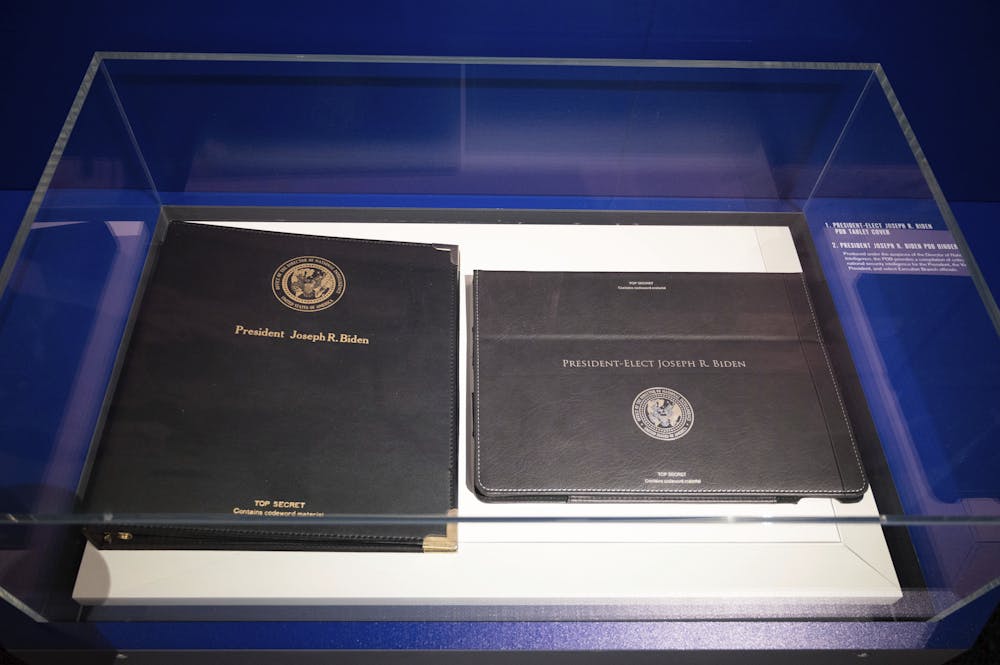
Two brown notebook covers that have 'President Joseph R. Biden' and 'TOP SECRET' printed on the front.
A display showing the covers of the President’s Daily Brief at the Central Intelligence Agency’s museum in the headquarters building in Langley, Va., on Sept. 24, 2022.
AP Photo/Kevin Wolf

9/11 led to intelligence changes

I was chair of the National Intelligence Council from 2014 to 2017, providing day-to-day intelligence support to the National Security Council and its committees, as well as trying to find time to do more strategic intelligence, looking at trends and connections across issues, producing what are called National Intelligence Estimates.

The director of national intelligence, known as the DNI, sits atop the 17 agencies that make up what is called the U.S. intelligence community. The director neither runs those agencies nor has full control of their budgets.

Rather, the director of national intelligence coordinates them, which sometimes seems like the proverbial herding of cats. They assemble a combined budget for intelligence, but many of the big agencies, such as the National Security Agency, which makes and breaks codes and intercepts signals of interest, belong to the Pentagon.

The creation of the director of national intelligence position was a direct result of the 9/11 terrorist attacks.

The report of the 9/11 Commission was vividly damning about the failures of communication between agencies in the run-up to 9/11. In meetings in New York that summer, CIA and FBI officers were literally unsure what they could tell each other: The former wondered whether the FBI people were really cleared to hear this, while the latter feared that talking might blow a case they were working on. That lack of coordination played a role in letting the plotters slip through intelligence, often in plain sight.

The result of the commission’s work was the Intelligence Reform and Terrorism Prevention Act of 2004, which created the director of national intelligence position.

Before that, the director of central intelligence wore two hats, as the director of the Central Intelligence Agency and loose coordinator of the broader intelligence community. Hardly surprisingly, directors of central intelligence spent most of their time running the CIA, for that was the source of their troops – and their troubles when they arose.

A score of blue-ribbon panels over 50 years had recommended breaking the director of central intelligence’s conflict of interest – coordinating agencies and their budgets while running one of them – and creating a director of national intelligence position.

James Clapper, the director of national intelligence for whom I worked as chair of the National Intelligence Council, constantly emphasized “integration.” Across agencies, integration mostly means talking to each other and sharing information. This works against the natural tendency to scoop your colleagues.

Across disciplines, integration means better aligning what information intelligence agencies collect with what analysts need.

How integration works

If presidents want to know what the CIA thinks about a particular issue, they can simply ask. Usually, though, the question is what does the intelligence community think, and then the question goes to the National Intelligence Council, the director of national intelligence’s interagency group for intelligence analysis.

The National Intelligence Council is organized like the State Department, with officers for regions and functions. Once a question has been presented, the relevant national intelligence officer will convene his or her colleagues from the other agencies. They will argue about the answer to the question, a process sweetly called “coordination,” then agree on the answer. If need be, the process can be done in a few hours.

Major strategic analyses – national intelligence estimates – like one done in 2022 on the implications of the COVID-19 pandemic out to 2026, may take months. In all cases, though, the analysis carefully records where there are differences of view in the intelligence community.

In my last year chairing the National Intelligence Council, of the 700 or so analyses we did, about 400 were responses to questions – called “taskings” in governmentese – from the national security adviser or one of the deputies.

National intelligence officers are national experts from inside or outside federal government, and their deputies – the heart and soul of the NIC – are all assigned from intelligence agencies. The largest number come from the CIA, but I worked with a cyber analyst from the Secret Service and a wonderful analyst from the New York Police Department.

A bald man with a goatee talks into a microphone and gestures with his hands.
James Clapper, nominated by President Barack Obama for director of national intelligence, testifies at his Senate Select Intelligence Commitee confirmation hearing on July 20, 2010.
Melina Mara/The Washington Post via Getty Images

Resolutely nonpolitical stance

What was striking then and has struck me both times I’ve had the privilege of running a U.S. intelligence agency is the dedication of the officers.

They work for the nation, not for a political party or ideology. As chair of the NIC, I had no idea of the politics of my people, save for the several closest to me. For them, telling truth to power is not a slogan. It is what they do. They are always worried about “politicizing” – producing an assessment to suit a policymaker’s preference or, worse, being pressured to do so.

The president’s daily briefers, for instance, give up a year of their lives to come to work at 4 a.m., learn their briefs and then fan out across Washington to brief senior officials. They like being “on the team” of the person they brief, but they become uncomfortable if the conversation turns political.

The director of national intelligence sets the tone for that resolutely nonpolitical stance and polices it through principles articulated in the agency’s analytic integrity and standards. As chair of the NIC, for instance, I’d receive regular assessments of both the quality of our analyses and whether we risked becoming “politicized.”

For their part, do politicians and agency leaders like it when their pet projects are assessed by intelligence as unwise or infeasible? Of course not. I’ve been on that side of the intelligence-policy divide as well. But the United States is much the better for it.

This story, originally published on Dec. 4, 2024, has been updated to reflect that Bill Pulte has been chosen by President Trump to be the acting director of national intelligence.

The Conversation

Gregory F. Treverton does not work for, consult, own shares in or receive funding from any company or organization that would benefit from this article, and has disclosed no relevant affiliations beyond their academic appointment.

​Politics + Society – The Conversation

Categories
Entertainment

The Mexican-Inspired Burger Topping To Try For Maximum Flavor

Elevate your next hamburger using this Mexican-inspired topping for added richness, depth, and creaminess. Not only is it tasty, but it’s also nutritious.

​Mashed – Fast Food, Celebrity Chefs, Grocery, Reviews

Categories
Food

Should You Buy A Refrigerator From Costco? The Pros And Cons Explained

If you’ve ever considered buying a refrigerator from Costco, we looked into the pros and cons for you so you can make the best informed decision for you.

​Food Republic – Restaurants, Reviews, Recipes, Cooking Tips