 We don’t know about you, but we’re feeling our tennis obsession come back in full force. The U.S. Open is inspiring us to pick up that racket again and go to our nearest tennis court. We’re not…
E! Online (US) – Top Stories









We don’t know about you, but we’re feeling our tennis obsession come back in full force. The U.S. Open is inspiring us to pick up that racket again and go to our nearest tennis court. We’re not…
E! Online (US) – Top Stories

While Kane Brown continues to recover from a golf ball injury that left him with 23 stitches and a “slight concussion” a few weeks ago, the country star has been keeping his attention on what’s next.
Brown recently opened up to Bobby Bones about the direction of his upcoming album, admitting that he went through a period where he “wasn’t really feeling the music,” which led him to push back the release date from this fall to the spring of 2027.
“I really want to focus on this album and just kind of…I’ve been all over the place with it, wanting to write songs or stories. Wanting it to sound old school, not just country, but different sounds, like 50s type music. And then I was been talking to people and they’re like, ‘Bro, your album doesn’t have to sound cohesive. You haven’t had one album sound cohesive. Why do it now?’ And I was like, ‘You’re right,” he recalled.
After spending some time figuring out what he wanted the project to sound like, the hitmaker said he’s now feeling much more excited about the direction his music is headed in. Brown also revealed that his next project will feature several outside songs that he believes have the potential to become hits.
“I’m in love with it now and we got a lot of outside songs. I don’t have a lot of outside songs. I think we got three or four now that are actually smashes. One of them is the one that I put up the other day. Yeah, I’m really excited…I know I say this a lot, but this one is my favorites.”
He then clarified that the album won’t necessarily be one of his most personal projects, but it will be a collection of songs that he genuinely loves and believes his fans will connect with just as much.
“I’m only going for hits,” he joked.
There will be at least one track, which he has previously teased, that takes a more personal approach as it was inspired by a song he grew up listening to, Shania Twain’s 1995 release, “Whose Bed Have Your Boots Been Under?”
Next month, fans will be able to get their hands on his version of the track titled, “Whose Bed My Boots Have Been Under,” which serves as a response to the original story and even includes Twain on background vocals.
“It’s the guy’s version. The only thing personal with that with me is just I grew up to that song. I think Shania’s doing some backup vocals and all that,” he explained. “It’s not a copy at all, but there’s parts of the melodies in the song.”
Kane Brown currently has three remaining U.S. shows on the books for the year before taking a few months off and preparing to head down under for stops across Austrlia and Brisbane in January of 2027.
The post Kane Brown Delays Upcoming Album Release, Explains Why Fans Will Have to Wait appeared first on Country Now.
Country Now

 Kylie Jenner is keeping her title of “Youngest Self-Made Billionaire.”
Seven years after Forbes sparked controversy for dubbing her as such due to the success of Kylie Cosmetics, the Kardashians…
E! Online (US) – Top Stories

Reading Time: 2 minutes
It’s been three days since Dolly Parton passed away, and her loved ones have now gathered to say goodbye to the country music legend.
Friends and family began arriving at Woodlawn Memorial Park and Mausoleum in Nashville today, where the beloved singer will be laid to rest beside her late husband, Carl Dean.
And while Dolly was famous for putting on a spectacular show, her family appears to be keeping her final farewell considerably more low-key.
According to Page Six, approximately a dozen of Parton’s closest relatives arrived at the cemetery, many carrying flowers and looking understandably somber.
Among those present was Parton’s nephew and longtime head of security, Bryan Seaver, who announced her death earlier this week on behalf of the family.
Seaver reportedly appeared to be running the show at the cemetery, coordinating with police and security personnel and greeting those who arrived.
There was apparently no shortage of security on hand, either.
An insider told Page Six that the gravesite was “crawling with cops” shortly before the family arrived, with one officer reportedly confirming that “the family is en route.”
It remains unclear whether Friday’s gathering was Parton’s actual funeral or simply a private family visit.
Her representative previously confirmed that Parton wanted a “small and private service” limited to immediate family members.
That request certainly seems fitting for a woman whose personal life remained considerably more private than her larger-than-life public persona.
Parton will be buried beside Dean, her husband of 58 years, who died in March at the age of 82. The couple’s names are already displayed together on the bronze frontispiece of their mausoleum, which features a picturesque Tennessee mountain scene.
Because, of course, even Dolly Parton’s final resting place was going to have a little Tennessee flair.
Parton reportedly planned to be buried wearing a cotton dress and her signature stilettos. She previously revealed that she wanted the country-gospel song “If We Never Meet Again” played at her funeral.
The song was particularly meaningful to her because it was her father’s favorite and was performed at his funeral.
Parton died Tuesday following a brief battle with cancer. Her death came after she had reportedly been hospitalized with kidney and autoimmune issues.
Her passing has prompted an outpouring of grief from fans, friends, and fellow celebrities, but her family has asked mourners to honor her legacy by donating to her Imagination Library rather than sending flowers.
And as Dolly’s loved ones prepare to lay her to rest, it seems the final chapter of her remarkable life will be exactly what she wanted: private, peaceful, and surrounded by family.
Dolly Parton’s Shared Tombstone With Late Husband Revealed as Loved Ones Gather at … was originally published on The Hollywood Gossip.
The Hollywood Gossip
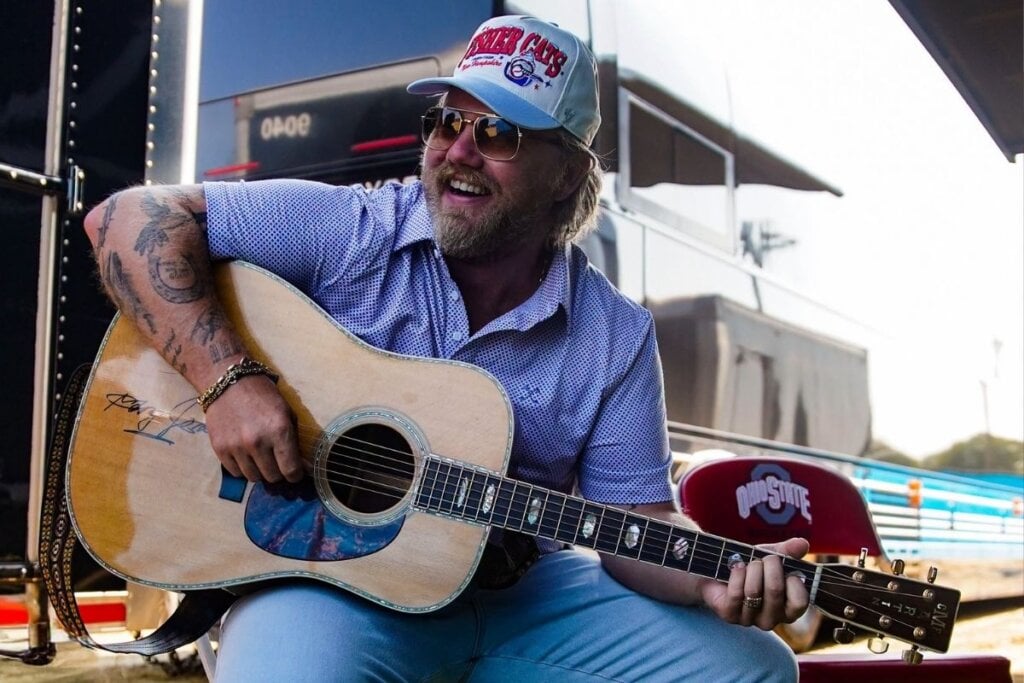
ERNEST has announced that he will be stepping away from the road for the next couple of weeks as he takes time to focus on his mental and physical health. The country singer shared the news with fans via his Instagram story on Friday, August 28, revealing that the demands of life on the road have started to take a toll on him.
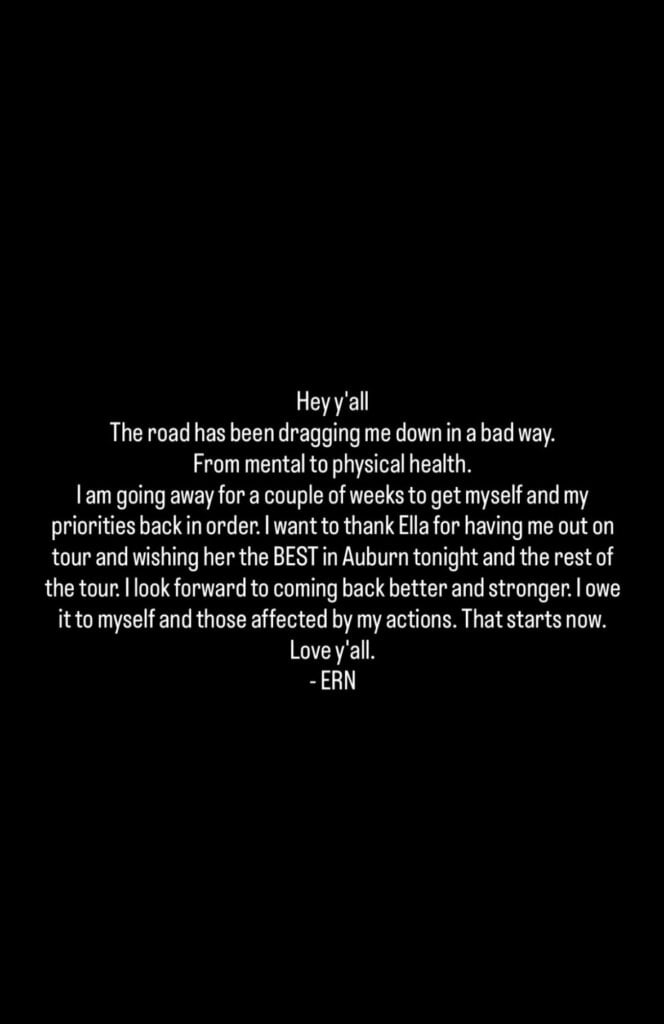
He wrote, “Heyy’all. The road has been dragging me down in a bad way. From mental to physical health. I am going away for a couple of weeks to get myself and my priorities back in order.”
ERNEST is currently out serving as a supporting act for Ella Langley’s The Dandelion Tour, and had been scheduled to perform alongside her through September 12. He took a moment to share his gratitude towards the “Choosin’ Texas” singer for having him out on tour and wished her the best as she continues her trek, which includes a stop in Auburn, Alabama, tonight (Aug. 28).
“I want to thank Ella for having me out on tour and wishing her the BEST in Auburn tonight and the rest of the tour.”
He acknowledged that taking this time for himself is something he feels he needs to do, both for his own well-being and for those around him. Per his statement, he is looking forward to returning to the road feeling “better and stronger.”
“I look forward to coming back better and stronger I owe it to myself and those affected by my actions. That starts now. Love y’all,” he wrote in conclusion.
In addition to having dates scheduled with Langley, ERNEST was set to play a few fairs and festivals before joining Thomas Rhett’s The Soundtrack To Life Tour for select dates beginning October 1 and running through October 17.
The news arrives just a few days after ERNEST performed at the legendary Red Rocks as an opening act for Ian Munisck’s headline show. Hours before he took the stage, it was announced that Dolly Parton tragically passed away. The “Lorelei” singer took to social media to express his sadness over the loss and to reflect on all those who still came out to the show later that night.
“We lost the QUEEN yesterday and I believe it took a bit out of all of us, all over the world. Dolly Parton, the songwriter, artist, woman, philanthropist and the ICON. She lived a life that brought joy to many thru not only songs but laughter and a warm, giving heart…. She will be greatly missed…Thank you @ianmunsick for having us… And thank you to all who made it out to the show,” he wrote.
It’s unclear when ERNEST will return to the road or who will be replacing him on the remainder of Ella Langley’s upcoming shows.
The post ERNEST Pauses Touring to Prioritize His Mental and Physical Health appeared first on Country Now.
Country Now

A voter joins a line of voters waiting to cast their ballots on Aug. 15, 2022, at the state Division of Elections office in Anchorage. (Photo by Yereth Rosen/Alaska Beacon)
The Alaska Supreme Court issued a fast-tracked ruling on Thursday, affirming a lower court’s decision that the Alaska Division of Elections’ language for an elections overhaul ballot measure is “true and impartial,” but ordered the division to make one additional change.
The Court issued the ruling days after hearing oral arguments from two groups of plaintiffs on opposing sides of the current ranked-choice voting system. The groups appealed a lower court’s ruling issued in June, challenging the language of Ballot Measure 2 as unclear, politically partisan and containing omissions they sought to change.
Ballot Measure 2, which will appear on the ballot as 24ESEG, would repeal the state’s current ranked choice voting and open primary systems, as well as repeal campaign disclosure rules enacted by voters in 2020.
The Supreme Court ruling Thursday affirmed a Superior Court’s finding that the Alaska Division of Elections’ fulfilled its legal duty in preparing the ballot measure title and summary in a “true and impartial” manner.
But the justices identified one omission: the division must add language that explains if the measure is approved, and nonpartisan, open primaries are eliminated, candidates for Governor and Lieutenant Governor would run for election separately.
Currently, candidates for Governor and Lieutenant Governor run together on a combined ticket in the primary election. The top-four vote getters in the open primary advance to the ranked choice general election.
A spokesperson for the Alaska Department of Law, which defended the division and its ballot measure language in court, said by email Friday they welcomed the ruling and would make the change.
“We are pleased that the Alaska Supreme Court rejected nearly all the challenges to the lieutenant governor’s true and impartial ballot summary,” said Sam Curtis, an information officer. He called the court’s directive a small change.
“The State had considered this a minor detail that did not need to be in a ballot summary, but the Court disagreed,” he said. “The Office of the Lieutenant Governor will issue a revised summary soon.”
The revised language is expected to be published by the division before a ballot printing deadline of Sep. 2.
Both groups of plaintiffs that filed appeals in court expressed mixed reactions, saying they were “disappointed” but “appreciated” the court’s decision.
One group of plaintiffs that also sponsored the ballot measure, called the “Repeal Now” campaign, filed a lawsuit challenging the language in court. Among a series of language changes requested, they had argued for language to explain the governor and lieutenant governor would run separately. Their attorney Julie Pack said by email Thursday they maintained concerns.
“We’re disappointed that the summary will continue to incorrectly state that open primaries would end with Ballot Measure 2,” Pack wrote. “Primaries would remain defaulted at open following Ballot Measure 2’s passage, just like they previously were.”
The group argued, in part, that if approved Alaskans would still vote in “open primaries.”
But the ballot measure language states “the act would get rid of open party primaries.” That’s because if voters approve the measure, the elections system would revert to a partisan primary system in which political parties establish rules governing which candidates may appear on their ballot and which voters may participate.
Voters in the primary would no longer be able to vote for candidates of any party running for statewide and federal offices, as they currently do.
The issue is of particular concern to another group of plaintiffs that filed suit in court, represented by attorney Scott Kendall, who was one of the primary sponsors of the 2020 ballot implementing the current ranked-choice voting system.
He argued the current language on the ballot measure related to how the primaries would change is incomplete.
“Our specific request was that it be made more clear that each political party will have the power to not only close their primaries, but to close them and make it unlawful for undeclareds and nonpartisans to vote,” Kendall said in an interview Friday. “There’s some language in the ballot measure that gestures at that, but I don’t think it really makes it clear.”
Overall Kendall said the group is grateful to the court and division for rejecting language proposed by Repeal Now he called “radical changes.”
“We’re very, very grateful that the court correctly rejected those baseless edits,” he said.
Kendall said the Supreme Court’s added change is “a good one.”
“It wasn’t so much about what’s good policy, bad policy. It was when a voter steps into the booth and picks up the pen, are they equipped with full knowledge of what their yes or no vote means?”
Correction: This story has been updated to clarify that if approved, the ballot measure would enact a partisan primary system where political parties establish rules governing which candidates may appear on their ballot and which voters may participate.
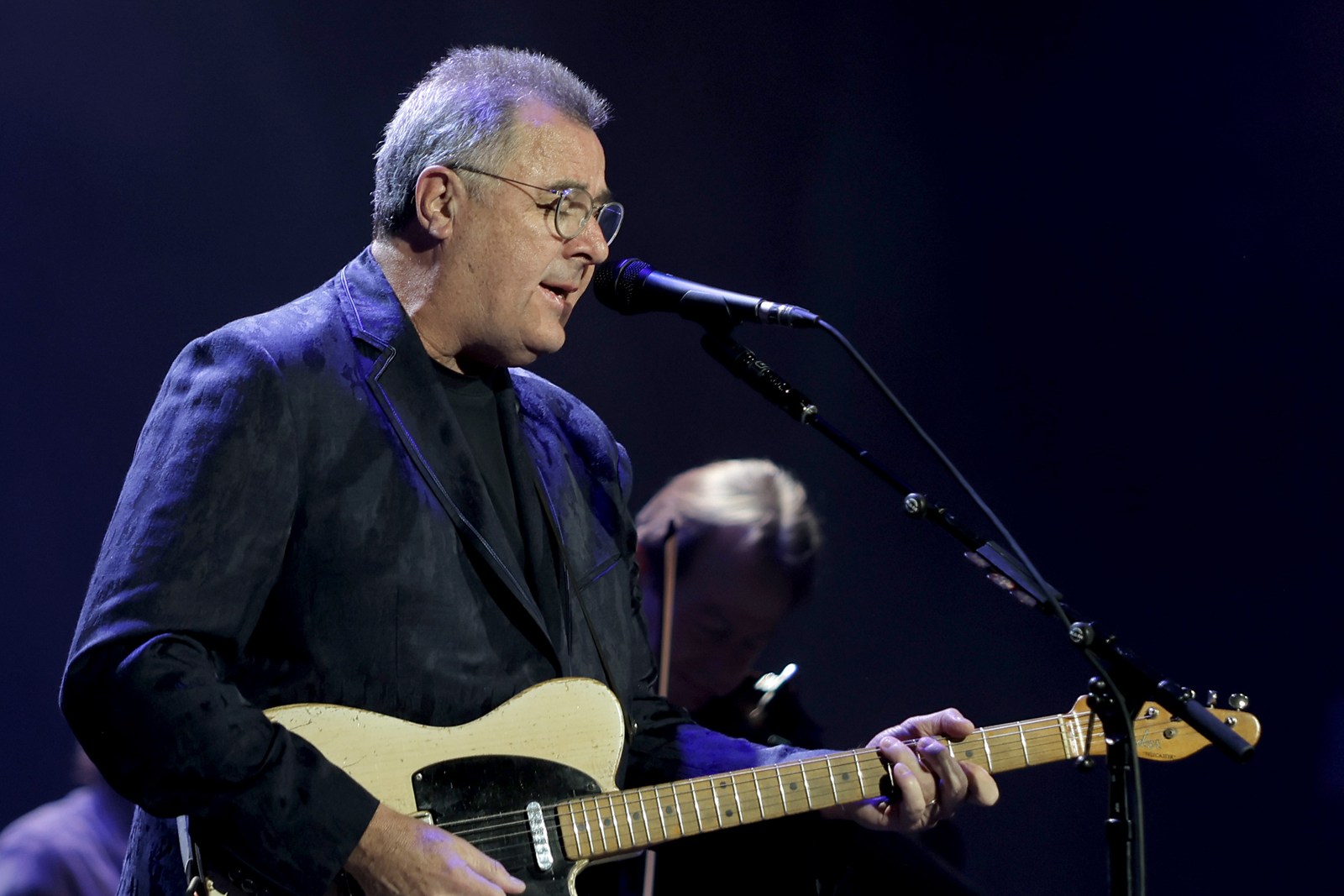
Vince Gill began his tribute and then … well, you can probably guess what happened. Continue reading…Country Music News – Taste of Country
Vince Gill began his tribute and then … well, you can probably guess what happened. Continue reading…The Boot – Country Music News, Music Videos and Songs
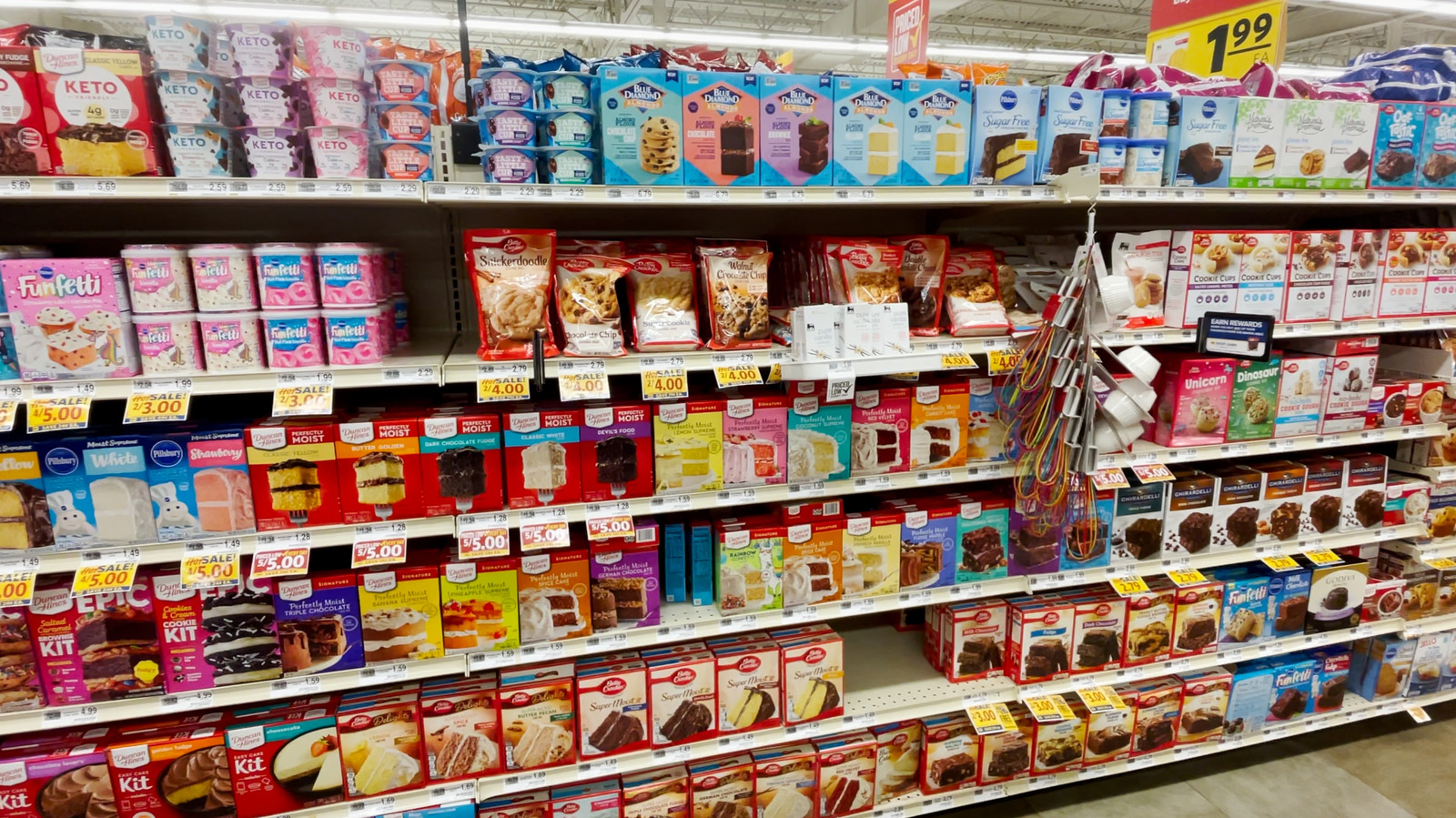
Sometimes packaged foods miss the mark and fall short on flavor, but when it comes to boxed cake mix, one beloved brand truly takes the, well, cake.

Food Republic – Restaurants, Reviews, Recipes, Cooking Tips
Reading Time: 2 minutes
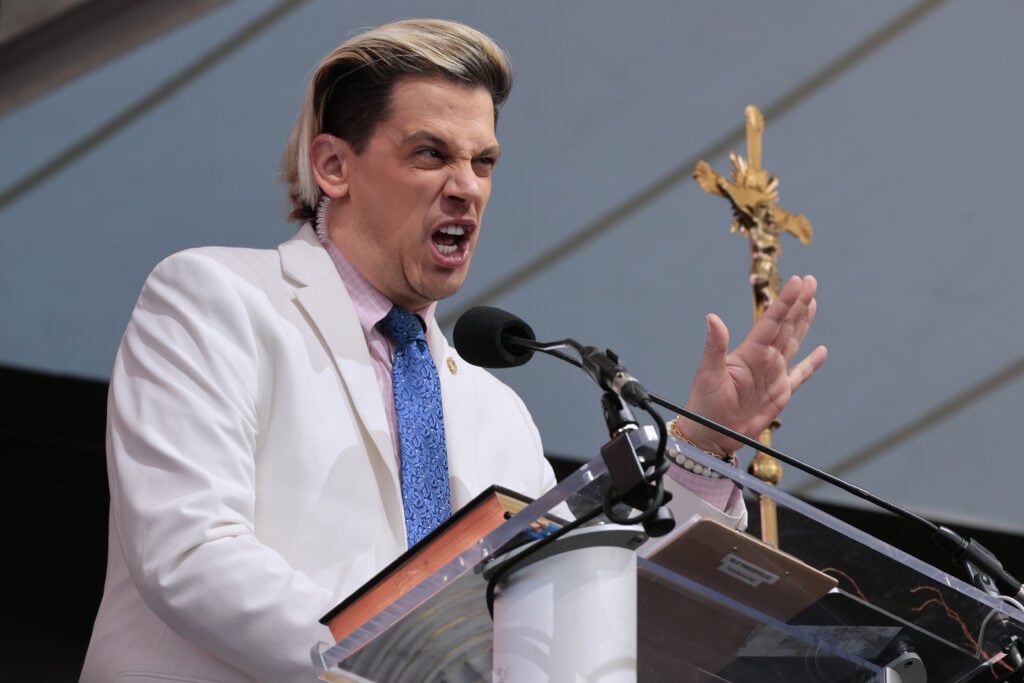
We have a surprising update about the firebrand pundit and former Kanye West employee Milo Yiannopoulos.
Milo has apparently discovered that being one of the loudest voices demanding that other people leave the country doesn’t necessarily come with a lifetime VIP pass to stay in America.
The controversial British political provocateur has been detained by U.S. Immigration and Customs Enforcement in Louisiana, according to a report from TMZ.
Yiannopoulos was reportedly taken into custody at a Louisiana airport and is currently being held at an ICE detention center. The exact circumstances surrounding his detention remain unclear, and authorities have not publicly provided additional details about why he was apprehended.
So, naturally, the internet has already begun appreciating the irony.
Yiannopoulos, 41, is a British citizen who became a prominent figure in the so-called alt-right movement through his provocative political commentary and frequent attempts to generate controversy.
He previously worked as an editor at Breitbart News before leaving the publication following controversy surrounding comments he made about sexual relationships involving minors.
But Milo has never exactly been someone who believes in fading quietly into the background.
Over the years, he has remained involved in conservative and far-right political circles, including a stint as an unpaid intern for Rep. Marjorie Taylor Greene in 2022.
He later became closely associated with Kanye West, serving as the rapper’s director of political operations during West’s 2024 presidential campaign. Yiannopoulos also served as an adviser and was involved in West’s political orbit for a period of time.
The pair eventually parted ways in 2024.
Yiannopoulos has also found himself at the center of several other controversies, including his involvement in arranging a dinner involving West, former President Donald Trump and white nationalist Nick Fuentes.
Now, however, his political provocateur era has collided rather dramatically with the immigration system.
The reported detention comes amid an aggressive immigration-enforcement push by the Trump administration, making the situation particularly notable given Yiannopoulos’ history of advocating for tougher immigration policies.
ICE has not publicly explained the circumstances surrounding his detention, and representatives for Yiannopoulos have not provided an immediate comment.
For now, Milo remains in custody in Louisiana as questions swirl about what happens next.
And while he’s spent years making a career out of provoking everyone from political opponents to celebrities, this particular controversy is one he may not be able to simply troll his way out of.
Because apparently even the professional provocateur occasionally discovers that actions have consequences.
Milo Yiannopoulos Detained By ICE In Louisiana was originally published on The Hollywood Gossip.
The Hollywood Gossip