Categories
Entertainment

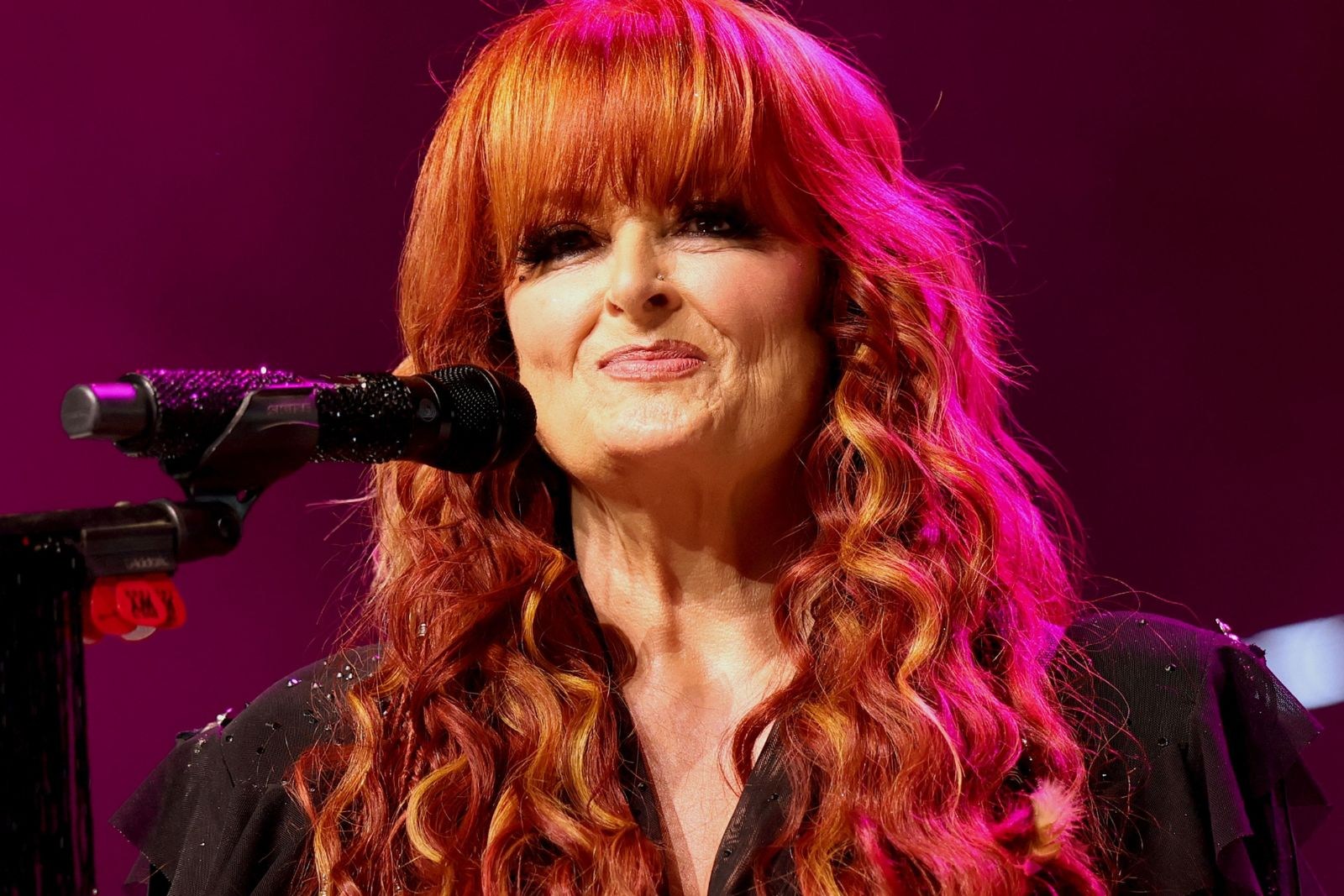
Nicole Kidman Details How Tom Cruise Marriage Affected Her Career

Tom Cruise, Nicole KidmanNicole Kidman was far and away from a career mindset when it came to falling in love with Tom Cruise. 
Almost exactly 25 years after the former couple divorced, the Moulin Rouge! actress admitted…
​E! Online (US) – Top Stories

Categories
Uncategorized

The false and the furious: We aren’t just bothered by different beliefs – we’re bothered when we think others are wrong

When people use facts to defend their preferences, tastes or values, they may turn a disagreement over priorities into a dispute over who is right and who is wrong, turning up the emotional heat. Yutthana Gaetgeaw/iStock via Getty Images Plus

Why do disagreements about vaccines, climate change or elections often feel so personal? Our research suggests it is not simply because other people have different beliefs. It is because we think those beliefs are mistaken.

We are behavioral scientists who study the role of beliefs in politics and everyday life. Our new research finds that people are more disturbed by others’ beliefs when they feel those beliefs are not merely different from their own but are based on incorrect information.

For example, two people may disagree about the ideal level of immigration, but if one believes immigrants commit more crime than U.S.-born residents and the other is convinced the statistics show otherwise, their disagreement becomes a conflict over reality and truth.

That distinction matters because public debate over polarization often starts with a simple idea: People prefer others who think like them – “birds of a feather flock together,” as the saying goes. Social scientists call this belief homophily, and many researchers have studied how these shared beliefs shape friendships, neighborhoods, media habits and political life.

The idea has strong intuitive appeal: People often live near others who share their politics. People also tend to consume news and social media that fit their existing views, a pattern linked to echo chambers and political polarization.

Our research, based on four studies with more than 2,000 U.S. adults, suggests that the story that we and others have formulated is incomplete. People do not react the same way to all disagreements: They are especially bothered when they are convinced that someone is wrong.

Wrong beliefs fuel avoidance

In one study, we asked participants to recall a situation in which another person believed one thing and they believed something else. Some participants described a situation involving different beliefs, while others recalled one with incorrect beliefs. For example, one participant recalled a disagreement about whether couples should live together before marriage, viewing it as a difference in priorities rather than a dispute over reality. By contrast, another participant recalled disagreeing with a friend who believed drinking soda and eating fast food was harmless, a belief the participant considered factually wrong.

Their emotional reactions were dramatically different: Participants who saw the other person’s belief as incorrect reported having felt more disturbed, frustrated and upset than participants who saw the belief as simply different.

In another study, participants first reported their views on divisive topics, such as climate change, capital punishment and policing. Then they saw a hypothetical social media post that opposed their view. The more confident participants were that the author’s belief was incorrect, the more disturbed they felt. They also said they would be more likely to avoid, distrust or block that person. By contrast, being confident that the other person’s belief was simply different – not wrong – did not predict avoidance.

A hypothetical tweet, which says, 'there is no convincing evidence that human activity contributes to global climate change'
Participants in the study were shown a hypothetical social media post to test how they react to opposing views on climate change.
Andras Molnar and George Loewenstein, CC BY-NC-ND

Finally, we gave participants short fictional stories – for example, about a neighbor who believed that a politician was corrupt. All participants read the same basic facts. The only change was how we framed the other person’s beliefs.

We told participants that their fictional neighbor had either different beliefs or incorrect beliefs about the politician’s alleged corruption. Though they were given the same information, people were substantially more disturbed when the other person’s belief was framed as incorrect.

Why false beliefs make people frustrated

Our studies point to several possible reasons for why false beliefs feel so upsetting. One is consequences.

False beliefs can often lead to bad decisions. For example, someone’s incorrect beliefs about vaccines or climate change can affect not only us, personally, but also other people we care about, including, in some cases, the person holding the seemingly false belief.

A second possibility is that false beliefs threaten people’s sense of shared reality. People rely on others to make sense of the world. When someone appears to deny what feels obvious or true, the conflict can feel more disturbing than merely having different perspectives.

A third possibility is that people treat false beliefs as signals about the person holding them. When we are convinced that someone is wrong, we may conclude that they are biased or irrational. Psychologists have described this as a sign of naive realism, the belief that we see the world objectively, while those who disagree with us are distorted by bias or self-interest. That kind of judgment can make a false belief feel socially threatening.

Graphic on a red background of a silhouetted businessman standing on a white ledge, looking across a gap at another businessman standing upside-down on an opposing ledge
When people are convinced someone is wrong, they often decide the other person is the one distorted by bias or self-interest.
Boris Zhitkov/Moment via Getty

Difference may still matter for close relationships

Our findings do not mean that people are indifferent to differences.

In our social media study, participants were less able to imagine having close relationships, such as family or romantic relationships, with someone whose beliefs differed from theirs, even if they did not consider those beliefs to be false. Shared beliefs and values may matter more when people think about spouses, relatives or close friends than when they think about neighbors, colleagues or strangers online.

But for less intimate relationships, the perception of wrongness was the key predictor of negative feelings and avoidance. People did not want to avoid those who disagreed with them; they wanted to avoid those they believed were mistaken.

This helps explain why some debates become so emotionally intense, especially online. A disagreement about taste or sports may stay harmless, but a disagreement about vaccines, climate change or election integrity can feel different because people often see one side as factually wrong and potentially harmful.

The paradox of fact-based debate

Public discussions often call for more fact-based debate, but we believe such a drive for hard truths may be counterproductive. Facts matter, and empirical evidence should guide debates, but our findings suggest a paradox: When people use facts to defend their preferences, tastes or values, they may turn a disagreement over priorities into a dispute over who is right and who is wrong, potentially turning up the emotional heat.

That shift can make disagreement harder to tolerate. A person can “agree to disagree” about which school policy reflects the right priorities or which candidate best represents their values. It is much harder to agree to disagree when facts are at issue. The nastiness of intellectual disputes, therefore, depends in part on how people frame their positions. Even if the contents of the disagreement are the same, it is very different to say “we disagree” than to say that “you are wrong.”

The Conversation

The authors do not work for, consult, own shares in or receive funding from any company or organization that would benefit from this article, and have disclosed no relevant affiliations beyond their academic appointment.

​Politics + Society – The Conversation

Categories
Uncategorized

How American society shields perpetrators of child sexual abuse

Several pictures provided by the Department of Justice on Jan. 30, 2026, as part of the Jeffrey Epstein files. Martin Bureau/AFP via Getty Images

Widespread denial accompanied the public exposure of Jeffrey Epstein’s decades-long sexual abuse and trafficking of girls and women.

After the U.S. Justice Department released millions of case documents on Epstein in January 2026, billionaires, politicians, heads of state and academics proclaimed their ignorance of Epstein’s global network of sexual exploitation.

Why would so many intelligent and powerful people repeatedly trumpet their lack of awareness, especially after Epstein’s 2008 plea agreement to underage prostitution charges?

And what about all of Epstein’s staffers and business associates who kept quiet about the suspicious behavior they observed?

As a human rights researcher who has conducted genocide research on four continents, I think denials of human rights atrocities can help people understand the denial of crimes like child sexual abuse and trafficking.

Avoiding accountability for atrocities requires two types of denial: by the perpetrator and by the community. It’s easy to understand why mass murderers and child rapists deny their horrific actions. More perplexing is why bystanders, law enforcement, colleagues, family and institutions claim ignorance.

Society understands that staying quiet after witnessing impermissible crimes is a form of complicity. Bystanders are likely to deny an atrocity when acknowledging it requires action, both morally and legally.

As sociologist Eviatar Zerubavel has noted: “Like silence, denial involves active avoidance. Rather than simply failing to notice something, it entails a deliberate effort to refrain from noticing it.”

US and international law

A network of international and domestic laws considers certain crimes so horrific that there are no extenuating circumstances for committing them. Other laws stipulate that everyday observers of certain crimes have a legal responsibility to report them and to protect victims if possible.

The 1987 United Nations convention against torture emphasizes: “No exceptional circumstances whatsoever, whether a state of war or a threat of war … may be invoked as a justification of torture.” And the 1948 U.N. genocide convention holds all signatory nations responsible for their inaction against genocide.

In the United States, the 1974 Federal Child Abuse Prevention and Treatment Act mandates that states have provisions requiring certain people – doctors, teachers, clergy and law enforcement – to report known or suspected cases of child abuse.

A billboard in a city center shows several photographs of police files.
A billboard in Times Square in New York on July 23, 2025, calls for the release of the Epstein files, the government documents and investigative reports detailing the late financier’s criminal sex-trafficking network.
Adam Gray/Getty Images

About a quarter of states go further and stipulate that “all persons who have cause to suspect that any juvenile is abused, neglected, or dependent or has died as the result of maltreatment shall report” to the authorities.

Perpetrator denial

In the context of government human rights abuses, sociologist Stanley Cohen in 2001 classified denial into three strategies: literal, interpretive and implicatory.

With literal denial, Cohen wrote, the perpetrator simply claims the event never happened. If successful, this form of denial makes the problem disappear.

During the U.S. war on terror after the 9/11 terrorist attacks, human rights groups accused the George W. Bush government of torturing detainees in Iraq and Guantanamo Bay.

Applying Cohen’s typology illuminates how the Bush administration cycled through strategies of denial, beginning with literal denial. Responding to evidence of U.S. torture of detainees in Iraq in 2006, Bush denied the accusations: “This country doesn’t torture; we’re not going to torture.”

After the failure of literal denial, the Justice Department employed interpretive denial, which admits to something having taken place, just not something that rises to the level of a crime. The DOJ redefined torture and referred to acts such as waterboarding – legally classified as torture – as “enhanced interrogation methods.”

Following his guilty plea to soliciting prostitution from a 14-year-old, Epstein used interpretive denial by comparing the severity of his crime to shoplifting: “I’m not a sexual predator,” he said. “I’m an ‘offender.’ It’s the difference between a murderer and a person who steals a bagel.”

When interpretive denial fails, perpetrators turn to what Cohen calls implicatory denial. It accepts the facts – torture of detainees, forced expulsions, mass killings – but denies the psychological or moral ramifications that follow.

In his memoirs, Bush did not deny the use of torture; he denied the immorality of the torture. “The choice between security and values was real,” he wrote.

A man speaks to a large crowd outside a federal building.
Attorney Bradley Edwards speaks at a news conference at the U.S. Capitol with alleged victims of sex trafficker Jeffrey Epstein on Sept. 3, 2025, in Washington.
Andrew Harnik/Getty Images

Community denial

Research that I’m currently conducting revises Cohen’s typology to understand why bystanders to crimes like Epstein’s don a veil of ignorance.

Denial of child sexual abuse occurs within a community – a citizenry, a family, a congregation. The community establishes the parameters of morality, the relative power of each member, and which actions constitute crimes.

In cases where accepting the truth has a high communal cost – a reordering of the power structure, more egalitarian institutions, eradication of prejudice or social disgrace – many people calculate that the cost of justice is not worth reordering the structure of privilege from which they benefit.

In the case of institutional abuse, powerful groups, such as the Catholic Church, prioritized the reputation of the institution over the victims.

Much like perpetrators, a community adheres to its preferred version of reality by denying abuse at the literal, interpretive and implicatory levels.

With literal denial, bystanders negate the experience of one particular child. This is so prevalent among mothers of incest victims that the legal community is exploring criminally charging the mothers who fail to protect their children.

Community interpretive denial tells the victim they did not experience what they thought they experienced. This occurred repeatedly for many victims of Larry Nassar, a former physician who sexually assaulted hundreds of gymnasts in the guise of medical treatment.

Gymnast Larissa Boyce described what happened when the then-16-year-old reported Nassar’s abuse to her coach. “She just couldn’t believe that was happening. She said I must be misunderstanding what was going on.”

Community implicatory denial negates the moral implications of the atrocity by blaming the victim for the perpetrator’s actions.

During the Catholic Church sexual abuse scandal that erupted in the late 1980s, Milwaukee Archbishop Rembert Weakland admitted that sexual activity had taken place between some of his priests and their young parishioners, but he dismissed the notion that the priests were entirely to blame.

“Sometimes not all adolescent victims are so ‘innocent,’” he told The Catholic Herald in 1988. “Some can be sexually very active and aggressive and often quite streetwise.”

Communities blinded by the perpetrator’s stethoscope, billion dollars, clerical collar or Ivy League degree often refuse to acknowledge the stereotypes that protect privileged predators.

And that willful ignorance of child sexual abuse equals complicity. Through denial, members thus absolve themselves for inaction in the face of atrocity.

The Conversation

Sarah K Lischer does not work for, consult, own shares in or receive funding from any company or organization that would benefit from this article, and has disclosed no relevant affiliations beyond their academic appointment.

​Politics + Society – The Conversation

Categories
Health

The ’80s Grapefruit Diet Was A Boomer Fad But Younger Generations Know Better

The grapefruit diet was hailed as an easy, cost-effective diet solution by baby boomers, but today, research shows that it wasn’t all it cracked up to be.

​Health Digest – Health News, Wellness, Expert Insights

Categories
Entertainment

Clavicular Wants to Date, ‘Fix,’ Marry Rep. Alexandria Ocasio-Cortez

Reading Time: 3 minutes

Clavicular is threatening to try to date Representative Alexandria Ocasio-Cortez.

AOC and her fiance Riley Roberts recently split as hopes ramp up that she will launch a 2028 Presidential campaign.

As what could only be a joke, the behaviorally troubled “looksmaxxer” suggested that he could “fix” one of America’s most prominent politicians.

He even went so far as to say that he would marry her.

Alexandria Ocasio-Cortez in July 2026.
Rep. Alexandria Ocasio-Cortez (D-NY) speaks to reporters on the House steps on July 22, 2026. (Photo Credit: Anna Moneymaker/Getty Images)

We live in a very absurd timeline

This week, after TMZ reported on AOC’s breakup, the influencer — whose real name is Braden Eric Peters — quote-tweeted the news with a simple comment.

“I could fix her,” Peters wrote.

If you are unfamiliar, lines like “I could fix him” (or her, or them, as the case may be) are something of a meme on social media.

Often, it is a reference to a troubled fictional character. Other times, it may be at an attractive mugshot. The joke is not always made in good taste.

Regardless, the implication is that one could “fix” a person by dating them. This is, infamously, a fool’s errand.

When a figure with an arrest record and list of controversies as long as Peters possesses says it, it’s a little more twisted.

(At his best, Peters referred to JD Vance as “subhuman.” But he is also being sued by his ex-girlfriend for sexual abuse and battery.)

In addition to the issues with basically everything about Peters and how he rose to fame, AOC doesn’t need fixing?

Sure, no politician is going to get 100% agreement from anyone. (AOC’s recent commentary on “Woke 1” vs “Woke 2” was a mistake, for example, turning a once-funny social media joke about ramping up social justice work into a tone-deaf talking point.)

On his livestream, Peters went on to suggest that he would even marry Ocasio-Cortez. He also insulted her ex. That last bit seems a little harsh, given that the guy just fumbled AOC. He’s probably suffering enough.

We’re in no danger of Clavicular dating AOC

What is important to remember about Clavicular is that he is not good or redeemable — but that he is also a symptom of a lot of external wrongs in the world.

(He is also the child of two bodybuilders, which could definitely help explain his unhinged fixation upon controlling his looks to a self-destructive degree.)

Peters talks about looking good and making money so that one can date a supermodel. That is shallow and nihilistic.

But it is also, you know, born of the harsh realities of our ruined world. The just get a job and you’ll make enough to live narrative of past decades, of past generations, has been killed — primarily by the fallout of the Reagan era.

Peters is only 20. He was a preschooler for the 2008 financial crisis. Unlike Millennials (he is Gen Z), he does not even have childhood memories of what it was like to live in a land of opportunity. The economy right now is all scams.

AOC herself expressed concerns about him earlier this year, noting that she didn’t want to dogpile him but worrying about his impressionable audience.

Women have been holding themselves to impossible beauty standards and harming themselves to meet them for generations. Looksmaxxing is just what if the same thing happened to men.

We don’t think that AOC is in any danger of dating him. Therefore, we also don’t think that we’re in any danger of having Clavicular as our country’s First Gentleman.

Peters turns 21 later this year. He’ll probably live to see that. But between seven years of injecting testosterone and getting weird about peptides and his ever-growing rap sheet, it seems that he’s on a downward spiral that could cost him his life if he isn’t careful.

Meanwhile, many are hopeful that Ocasio-Cortez will run and win in 2028. The Biden administration showed us that “return to political norms” doesn’t work in a country infested with Trumpism. It’s time for something better.

Clavicular Wants to Date, ‘Fix,’ Marry Rep. Alexandria Ocasio-Cortez was originally published on The Hollywood Gossip.

​The Hollywood Gossip

Categories
Entertainment

Who Supplies McDonald’s With Its Signature English Muffins?

A McDonald’s egg McMuffin is nothing without its signature bread, but how do the Golden Arches source this staple? The answer isn’t one supplier, but many.

​Mashed – Fast Food, Celebrity Chefs, Grocery, Reviews

Categories
Sports Fox

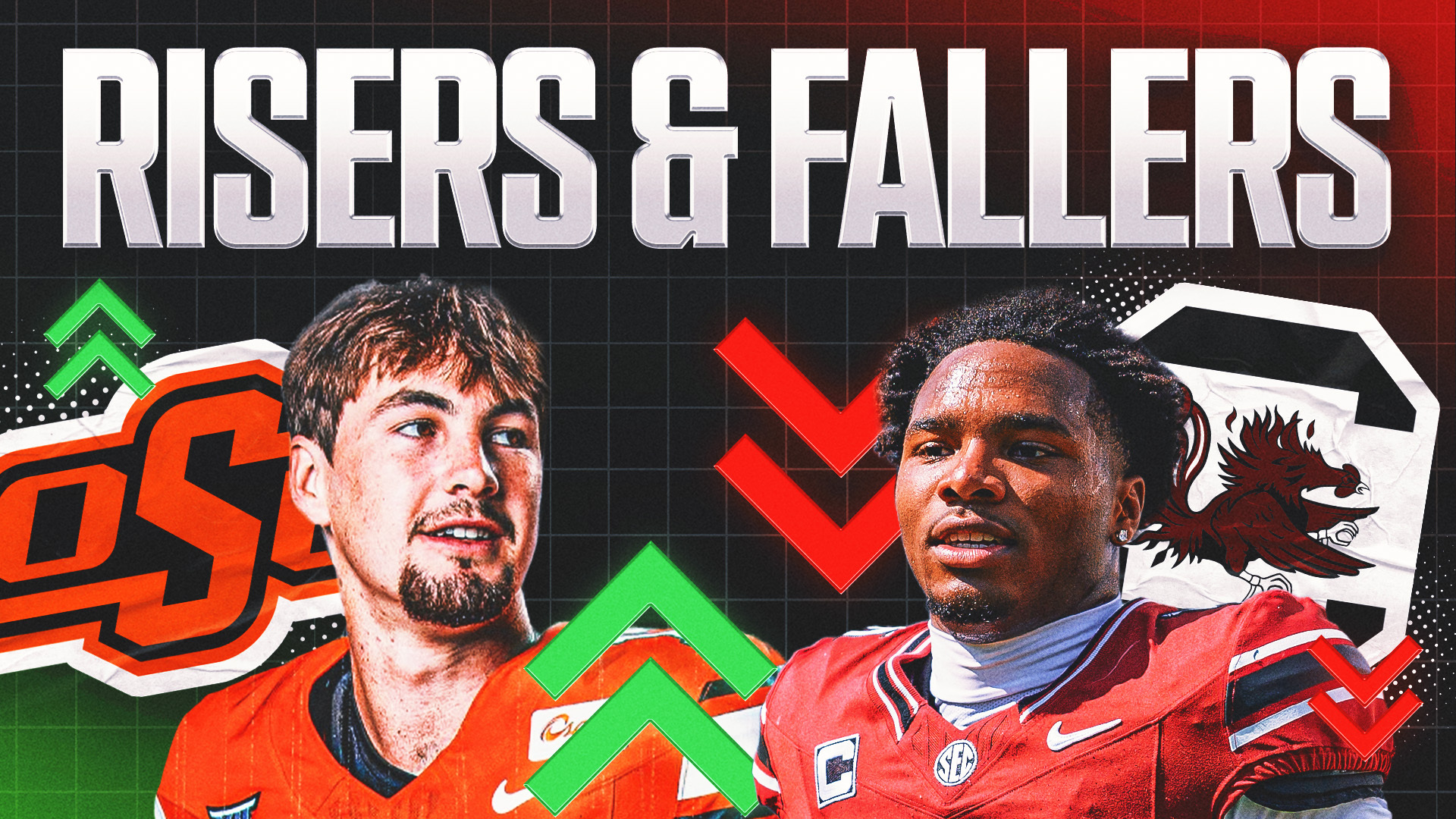
Year 2 Breakout Candidates: One Player From Each NFC Team Primed To Take A Leap

One need only be reminded of the fact that quarterback Sam Darnold just won the Super Bowl to understand that when it comes to the NFL, patience truly can be a virtue. Darnold was in his eighth NFL season and the Seattle Seahawks are the fifth team of his professional career, but the point is the same with second-year breakout candidates. It is so easy to get caught up in the excitement of the latest draft class and overlook other young players set to pop. With that, here are my picks for which 2025 draft picks I believe will take the biggest leaps in their sophomore season. NFC EAST Coming off a torn ACL, Revel didn’t see the field until Week 11 of his rookie season. Now that he’s fully healthy, I’m expecting big things from the long-armed 6-foot-2 corner. Revel is big, physical and aggressive. With he and 2026 rookie Caleb Downs leading the way, I believe the Cowboys will show massive improvement in their secondary this season, positioning the team for a postseason run. Given the downhill running game John Harbaugh prioritized in Baltimore, there probably wasn’t a player on the Giants’ roster more excited about the arrival of the longtime Ravens head coach. Skattebo flashed last year prior to sustaining a horrific lower leg injury that abruptly ended his rookie campaign after just eight games. He scored seven times, showing not only bruising running ability but also soft hands out of the backfield. He’ll be Harbaugh’s bell cow with a chance to at least double his production in 2026 — if he can stay healthy. Admittedly, listing Campbell here is pretty low-hanging fruit. He’s a former first-round pick who started 10 games as a rookie and is slated to play even more in Year 2 with his primary competition of a year ago — Nakobe Dean — now on the Raiders. But I don’t think Campbell is just going to start — I think he’s going to star. He is a remarkable athlete at 6-foot-3, 240 pounds, offering Vic Fangio all sorts of flexibility with how to use him. He has the size and burst to excel as a pass-rusher with the speed to chase down backs in the running game. His pass coverage was outstanding at Alabama and even better in his rookie season, when he ranked eighth among all NFL linebackers (with at least 200 snaps) in completion percentage allowed, per Pro Football Reference. Campbell is a blue-chip chess piece that has the talent to become one of the faces of a fierce Eagles defense. Scoring eight touchdowns and being named the NFL’s Rookie of the Week four times last season suggests that Croskey-Merritt has already arrived. His role should expand this year, however, with his vision and burst a nice fit for the wide zone concepts new offensive coordinator David Blough is implementing. I’m expecting a committee approach at running back, similar to what Blough used in Detroit. But I see Croskey-Merritt as the front-runner to lead the position. He runs with deceptive speed and power and is not afraid of traffic. NFC NORTH I believe last year’s production (47 catches for 652 yards and two touchdowns) is only the tip of the iceberg for Burden. He caught at least three passes in each of the Bears’ final 10 games (regular season and playoffs) after snaring that many in just two of his first seven games. With veteran D.J. Moore now playing in Buffalo and Rome Odunze fighting through recurring foot pain, Burden is a good bet to become Caleb Williams’ most trusted wideout in 2026. One could argue that after hauling in six touchdown receptions as a rookie, TeSlaa already enjoyed his breakout campaign. With four of those scores coming in the final six games of the season, however, TeSlaa may only be warming up. He’ll need to score a lot more of them before opponents will start shifting their coverages toward him rather than Detroit’s more established playmakers Amon-Ra St. Brown and Jameson Williams. Fantasy football enthusiasts should prepare for some possible TD regression, as few receivers were more efficient in the red zone than TeSlaa, who scored six times despite catching just 16 total passes. Golden is the third receiver from the NFC Central listed as a breakout candidate, and because he’s the fastest (and was the first of the trio selected in the NFL Draft), he will likely enter his second NFL season with the most hype. His talent and anticipated workload warrant it. Golden’s opportunities will jump with Romeo Doubs now playing in New England, and he boasts the run-after-catch ability and breakaway speed to quickly become Jordan Love’s favorite big-play target. Along with first-round guard Donovan Jackson, Price was one of the few impactful rookies for the Vikings in 2025 — which speaks to why the team hired a new general manager (Nolan Teasley) during the offseason. The former undrafted free agent from Texas Tech generated a whopping 1,777 all-purpose yards as the Vikings’ starting punt and kickoff returner, finishing third among all NFL players. Minnesota has several quality candidates pushing Price for the returner job — including 2025 third-round wideout Tai Felton and 2026 sixth-round running back Demond Claiborne. But the vision, elusiveness and burst Price demonstrated as a returner could also make him a dangerous target out of the slot, though he’d need to take real strides in this area after seeing just a few snaps at receiver as a rookie. NFC SOUTH It’s worth noting the Falcons had only a five-man draft class in 2025, and four of those players — edge rusher Jalon Walker (ACL), edge rusher James Pearce Jr. (legal), defensive back Billy Bowman (Achilles) and offensive tackle Jack Nelson (waived) — are tracking to miss extended time this season. The lone exception is Xavier Watts, who led all NFL rookies with five interceptions last season, finishing fourth in Defensive Rookie of the Year voting. So while he may, in fact, continue playing a starring role in 2026, his breakout was last year. Conversely, as an undrafted free agent who spent half of last season on Atlanta’s practice squad, Bryant isn’t a lock to even make its roster. But the trash-talking 6-foot-1, 185-pounder punches above his weight class as a tackler, offers legitimate man-to-man cover skills and is a cerebral special teams performer, giving him a solid chance to build upon last year’s production (10 combined tackles, one pass breakup, one TD allowed) in seven games. The NFL is the ultimate copycat league, so I expect we’ll see many teams utilize the three safety look that the Seahawks used so successfully in last year’s Super Bowl run. Ransom, the 122nd overall pick in 2025, moonlighted in this role as a rookie behind veterans Nick Scott and Trevon Moehrig. With Scott now 31 and never a consistent turnover producer, don’t be surprised if Ransom forces his way onto the field sooner rather than later. After recording 10 pass breakups over just five starts as a rookie, Riley appears ready to step into the huge vacuum left behind by departed standout Alontae Taylor. Riley is a quality athlete, but his instincts are what stood out most between his rookie season and six seasons in college. This experience has taught Riley above-average route anticipation and poise when the ball is in the air. He led all cornerbacks from the 2025 class with 15 career interceptions and I think he might top the Saints in this category this season. I am as excited as anyone about Rueben Bain Jr., but my enthusiasm for the Bucs’ building off of last year’s 37-sack performance doesn’t end with the club’s first-round pick in 2026. Walker missed all of his rookie season after suffering a torn ACL during training camp. He’s back healthy, and all reports suggest that his trademark twitch remains. Playing at a stumpy 6-foot-1, 263 pounds, he’ll be a bit of a pass-rush specialist this season, but I think he’ll prove to be an effective one with at least a handful of sacks. NFC WEST Little went right for the Cardinals in 2025 and that included their prized first-round pick — Nolen — suffering through an injury-plagued rookie campaign that limited him to just six games. The burst and agility that warranted the No. 16 overall pick, however, was obvious. Now that he’s healthy following surgery to repair a torn meniscus, I expect Nolen to emerge as one of the NFC’s better young pass rushing defensive tackles. Given that the Rams pulled off the biggest trade of the offseason by prying Myles Garrett away from Cleveland, suggesting another pass-rusher is about to break out for them should terrify opponents. Garrett’s mere presence will command extra attention, opening opportunities for his teammates. Stewart doesn’t need much assistance. His combination of quickness and compact strength make him a tough block. The former third-rounder likely won’t start this year, but I think Stewart will prove a quality sub option who might just double last year’s production (22 tackles, three sacks). The 49ers were as snakebitten by injuries as any team in the NFL last year, with Martin (as well as first-round pick Mykel Williams) among the many to miss significant time. Martin was placed on injured reserve midseason following a concussion, finishing with just 11 tackles after being selected No. 75 overall. The tape suggests he’ll be a future standout. Martin is an agile and highly aggressive downhill defender with plus closing speed and power. The 49ers brought back Dre Greenlaw, but only on a one-year deal. Don’t be surprised if Martin is starting (and starring) by December. A remarkable rookie class led by first-round left guard Grey Zabel and Defensive Rookie of the Year finalist Nick Emmanwori played a huge role in Seattle winning the Super Bowl. Mills recorded a sack in the title game but otherwise recorded just three other tackles on the season after missing most of his rookie campaign to rehab a torn ACL suffered in college. While playing time will be a challenge given Seattle’s talent up front, coach Mike Macdonald constantly rotates his defensive linemen. A healthy Mills would’ve been drafted a couple of rounds earlier than where Seattle stole him — in the fifth, at No. 142 overall. He should prove as much this year, with 30 tackles and five sacks being realistic goals.​Latest Sports News from FOX Sports

Categories
Alaska News

How has social media transformed cooking?

One in five Americans would sooner take cooking advice from a “food-fluencer” than from their own mom (18%), according to new research. A survey of 2,000 adults found that for many, social media is overtaking traditional ways of learning to…

Categories
Alaska News

microsoft-edge-4QAbnbkB2Mk-unsplash

(Photo by Microsoft Edge via Unsplash)

Categories
Entertainment

Nicole Kidman Reveals How Keith Urban, Tom Cruise Divorces Compare

Nicole Kidman at the 2026 premiere of "Scarpetta"Nicole Kidman’s eyes are wide open.
Indeed, the Practical Magic actress—who finalized her divorce from Keith Urban earlier this year—recently reflected on her split from the “Somebody Like You”…
​E! Online (US) – Top Stories