 Gypsy Rose Blanchard’s ex-husband is speaking out after the death of Ken Urker.
After the Life After Lockup star’s former fiancé was found dead from a suspected overdose on his 34th birthday Oct….
E! Online (US) – Top Stories









Gypsy Rose Blanchard’s ex-husband is speaking out after the death of Ken Urker.
After the Life After Lockup star’s former fiancé was found dead from a suspected overdose on his 34th birthday Oct….
E! Online (US) – Top Stories

TEMPE, Arizona — For any international soccer squad (or really a team in any sport at all), hitting the road for games in inhospitable environments is a fact of life. Home-field advantage is real. The flip side of that fact is that it also holds true for opponents. Being the away team is almost always harder. It sure has been for the U.S. men’s national team against Mexico, its fiercest rival. While the USA has gotten the better of El Tri more often than not over the last quarter-century — including a 2-0 win that sent the Americans to the quarterfinals of the 2002 FIFA World Cup, it still has never won a competitive match south of the border since the neighbors first met in one there almost 80 years ago. Saturday’s exhibition between the U.S. and Mexico just outside of Phoenix is technically a home game for the Stars and Stripes. As a practical matter, it isn’t. The overwhelming majority of the 60,000-plus fans expected at State Farm Stadium in nearby Glendale are sure to be rooting for the visiting team. “It’s going to be an adverse crowd, tough conditions to play in,” veteran American defender Antonee Robinson said on Thursday. “But that’s something we embrace.” They should. It’s been almost two years since Mauricio Pochettino’s side last played outside the United States. Because the USA qualified automatically as co-hosts of the 2026 World Cup, it didn’t have to earn its way there by collecting points in hostile regional outposts such as Port-of-Spain or San Pedro Sula or Mexico City. That won’t be the case ahead of the 2030 World Cup. Concacaf’s marathon two-year-long qualifying tournament begins late next year. Saturday’s contest will help prepare the U.S. for what’s coming. “It’s a good opportunity for us to live that experience, of course,” Pochettino said during his pre-game press conference, adding that if the composition of the crowd resembles the 2025 Gold Cup final that the U.S. narrowly lost to Mexico in front of an ocean of green jerseys in Houston, it will be like starting the game “down 1-nil.” “To play in a difficult atmosphere, I think that for sure is going to help for the future.” The U.S. kicked off this new World Cup cycle with impressive multi-goal wins over South American foes Peru and Chile. Pochettino started a number of young players against both. The initial feeling was that he’d opt for more experienced lineups for the final two tests of this extended four-match window. But the youngsters did well enough — the Americans got goals from teenagers Mathis Albert and Justin Ellis and two from Julian Hall — to suggest that they won’t be at all overawed if they’re called on against Mexico and/or Canada. After facing El Tri, the U.S. will wrap things up in St. Paul, Minnesota, with another rivalry game against their neighbors in the north. “Tomorrow is going to be similar to Peru or Chile,” Pochettino said Friday. “We are going to always try to find a good balance, a mix between experienced players and non-experienced players at the international level.” Still, the intensity of the game against El Tri figures to be unlike anything any of the newcomers have seen before. “Dislike, hate. I mean, it’s a rivalry,” said Tyler Adams, who Pochettino announced will inherit the captain’s armband from the now-retired Tim Ream. “Whenever we play Mexico — whether it’s a qualifier, a friendly, Gold Cup, Nations League — it’s always seen as a must-win game,” Robinson said. “It feels like a cup final, and we get a lot of boys who’ve never experienced that at this level who’ll get to see it for the first time.” Given what we’ve seen from the new generation so far, they’ll likley be up for the challenge. “There’s a lot of games where we’ve played and it’s been mostly Mexico fans. Some teams could fold under that pressure,” Robibnsion continued. “But I think we like the kind of adversity that comes with that. We love when we score and we’re getting beers thrown at us and things like that. “It’s a great feeling.”Latest Sports News from FOX Sports

 Taylor Swift is officially in her lob era.
Two months after chopping off her long blonde hair, the “Opalite” singer debuted a new hairdo, showing off her short shoulder-length curls—or as she…
E! Online (US) – Top Stories

 Anne Hathaway has been on quite the odyssey.
After starring in five movies released this year, the Oscar winner fulfilled her promise of vanishing from the spotlight in the most hilarious…
E! Online (US) – Top Stories

Aldi’s bakery section is starting to fill with fall-tastic flavors like apple and pumpkin. These fall pastries are the ones customers are going back for.

Mashed – Fast Food, Celebrity Chefs, Grocery, Reviews

Visitors on the deck of the USS Ted Stevens brave blustery weather in Whittier to learn about the new Navy warship’s features during a media tour on Thursday. The ship is named for the late U.S. senator, who was decorated World War II aviator before he came to Alaska. The USS Ted Stevens is set to be commissioned in Whittier on Saturday. (Photo by Yereth Rosen/Alaska Beacon)

Before he was known to Alaskans as “Uncle Ted,” Ted Stevens was a decorated war hero, making dangerous missions behind enemy lines as part of the Flying Tigers, a group of American pilots who fought the Japanese in the China-Burma-India theater of World War II.
Stevens represented Alaska as one of the longest-serving U.S. senators in history, and is now being honored by the U.S. Navy with a namesake warship.
The USS Ted Stevens is a brand-new, state-of-the-art guided-missile destroyer, a missile-equipped ship that can conduct warfare at levels ranging from the air to the depths of the sea.
The ship is set to be commissioned in Whittier on Saturday, an event that is expected to draw 3,000 people to the tiny and quirky Prince William Sound town that is home to about 250 people.

The event is filled to capacity, according to the host committee. Those with tickets will travel by train or bus; regular traffic in the single-lane tunnel that connects Whittier to the road system will be halted for the duration of the ceremony. Those without tickets can watch events on a livestream link.
Even though modern Whittier is a military legacy, established to support the World War II effort and defense of Alaska, the USS Ted Stevens is the first Navy warship to visit the town in 80 years, according to military officials.
But it is an appropriate spot for Saturday’s ceremony, said Captain Mary Katey Hays, the ship’s commanding officer.
Doing the commissioning in Alaska was considered a must, Hayes said at a media briefing on Thursday. And Whittier, a deepwater port and transportation hub, was chosen for its proximity to Anchorage and its abundant support facilities, she said.

Before the ship arrived in Whittier on Sept. 27, she and the other senior officials had to prepare the Norfolk, Virginia-based crew of 380 for Alaska conditions, which on Thursday featured a blustery rain-snow mix.
“We had a lot of talks with the crew about bringing all of their gloves, their hats, their winter clothing,” she said.
Despite the weather, the reception in Whittier has been warm, Hayes said.
“Everyone’s so friendly, everyone’s so kind and welcoming, the community has been wonderful,” she said.
During the tour, officers proudly described the attributes of the ship, which measures over 500 feet in length. Those attributes include its 100,000-horsepower engine system, its efficient equipment for hooking up to shoreside electrical power, its accommodations for air crews, its systems for receiving supplies and fuel at sea and its battery gun that can fire off 20 rounds in a minute.

There was plenty of evidence of the ship’s Alaska connection on board.
Alaska flags were draped or displayed at strategic spots. The two small shipboard boats on the USS Ted Stevens are named Denali and Kodiak.
And, most prominently, Stevens’ widow Catherine and two daughters, Susan Stevens Covich and Lily Stevens Becker, are “sponsors” of the ship. That means “they’re kind of like the godmothers of the ship,” Hayes said. “They help bring the ship to life.”
Commander Stephen Roman, the ship’s executive officer, lauded the Steven women’s work.

“The Stevens family has been just phenomenal sponsors,” Roman said. “I couldn’t have asked for a better set of sponsors for the ship. The love and care they’ve shown the crew has been amazing.”
The younger daughter, Lily Stevens Becker, who leads a foundation named after her father, came aboard the ship when it was stopping in San Diego on the way to Alaska, he said.
Stevens, who died in a 2010 plane crash, left a big legacy in Alaska.
He played key roles in the statehood battle, approval of the Trans Alaska Pipeline System, passage of the Alaska Native Claims Settlement Act and other milestones. He was known for securing federal funds for important infrastructure projects and programs, such as the University of Alaska’s Geophysical Institute, the Denali Commission and transportation facilities throughout the state — a record that earned him the affectionate “Uncle Ted” nickname. The main federal law governing fisheries, the Magnuson-Stevens Fishery Conservation and Management Act, bears his name, as does the international airport in Anchorage.

He was also instrumental in major legislation with significance beyond Alaska, such as the Title IX antidiscrimination law, the Ted Stevens Olympic and Amateur Sports Act and the Americans With Disabilities Act.
Roman, as he concluded the tour, admitted that he did not know much about Stevens before being assigned to the ship. Now he is reading about and hearing about the legacy, he said.
“It has been an absolute pleasure and honor to learn more about the man and the things that he did,” said Roman, who grew up in Colorado and found Alaska to be a bit “like home for me.”

Following the Whittier ceremony, the USS Ted Stevens will sail to Juneau for a stop in the capital city, then return through the Panama Canal to its homeport of Norfolk.
The journey after that is yet to be determined.
“We’re just like every other ship in the Navy. We’re able to be deployed globally,” Hayes told reporters. And that will depend on world events, she said.
“Wherever the mission takes us, we’ll be there. Whether it’s here in the snowy part of Alaska or way down south. We can go anywhere and get the job done,” she said.


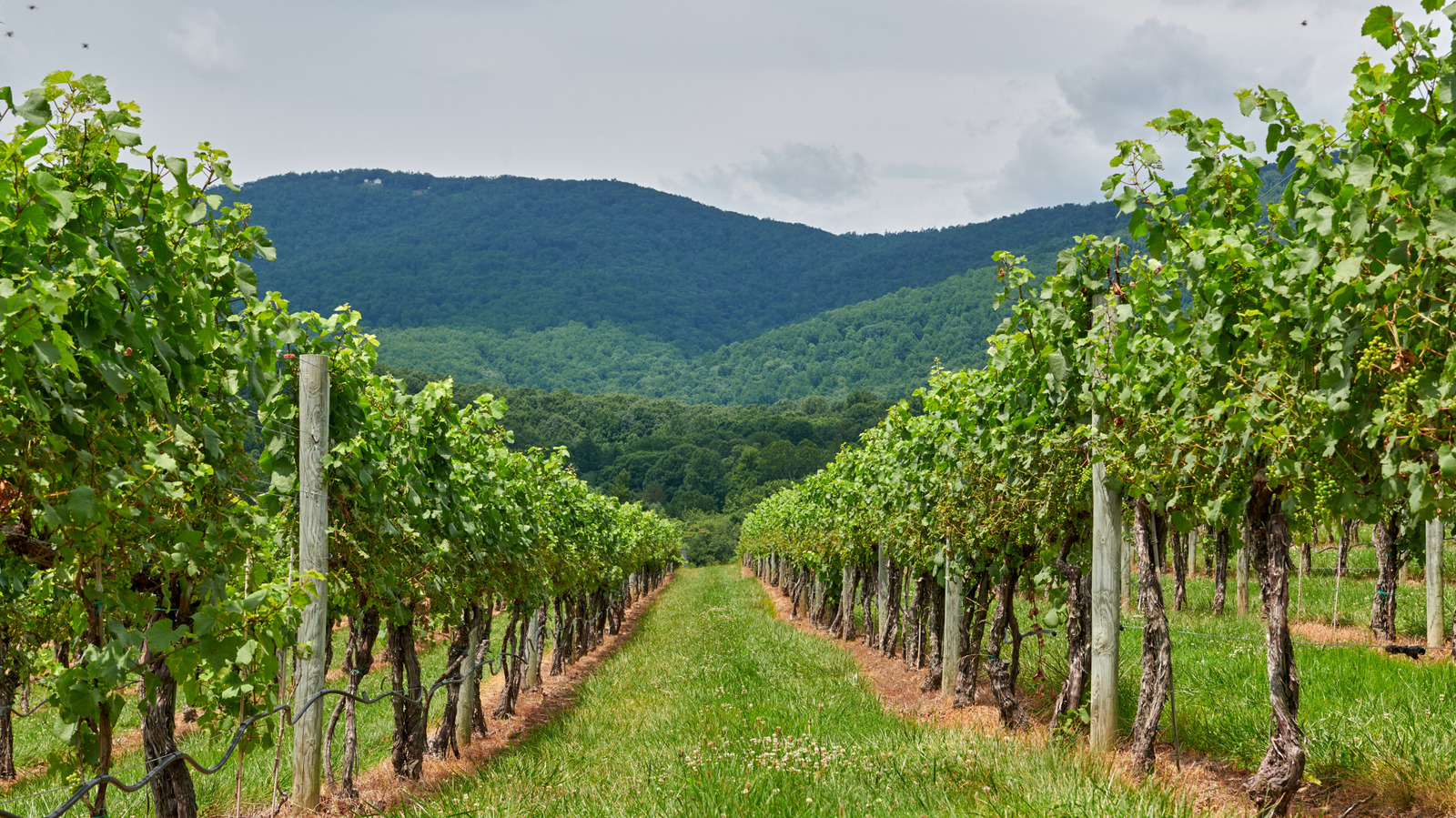
A handful of U.S. states are known for their wine regions, but some of the best blends come from the underdogs. That’s certainly the case with this red!
Mashed – Fast Food, Celebrity Chefs, Grocery, Reviews

Cars travel at midday on 7th Avenue in downtown Anchorage on June 17, 2026. (Photo by Yereth Rosen/Alaska Beacon)
Alaska has roughly the population it had in 2013. What little growth the state has seen in the past three years came from residents over 65, while the working-age population shrank. A state that is not growing should not have a housing shortage.
It has one anyway.
Rental vacancy in March was 4.9% in Anchorage, 3.5% in Mat-Su and 4.1% in Juneau, according to the Department of Labor’s spring survey. Affordable housing from the Alaska Housing Finance Corporation had a statewide median rent that reached $1,450 a month, up about 30% over the past 7 years, and a two-bedroom in Anchorage, utilities included, now runs $1,720. It took 1.37 average Alaska wage earners to afford a median-value home last year, close to the record high. If population is not driving the squeeze, something else is, and at a Commonwealth North forum on August 27, six practitioners spent an afternoon exploring the causes.
Four explanations came through clearly.
The first is interest rates. Anyone who bought or refinanced in 2020 or 2021 locked in a mortgage near 3%. Moving today means trading that for 6.25%, last year’s median, or closer to 6.7%, where national rates stood in July. So the retiree who might downsize and the family that might trade up stay put. The house exists. It just never comes to market. The state’s figures show the freeze: a typical new mortgage payment in Alaska is $2,044 a month, 84% higher than in 2019, and new mortgages have fallen 21% statewide and 25% in Anchorage. Daniel Delfino, Director of Planning and Program Development at the Alaska Housing Finance Corporation, called it an open question whether the thin inventory is a real estate problem or a rate-lock problem.

The second is what it costs to build. Utility economist Mark Foster put construction at roughly $300 to $450 per square foot in urban Alaska and as high as $2,500 in rural multi-unit projects. A 2×4 costs about $13 by the time it reaches a village. The ground itself charges a premium: Anchorage water lines sit ten feet down to stay below frost, which means digging twelve.
The third is how we live. Thirty-nine percent of Alaska renters now live alone, up from about 34% in the 2010s. The same number of people needs more doors. Nobody at the forum raised this one. The Department of Labor did, in its September report.
The fourth is newer, and Delfino was careful to present it as arithmetic rather than accusation. Short-term rentals in the surveyed markets swing from about 1,500 occupied units in slow months to more than 5,000 at peak tourism, earning anywhere from $1,200 to $5,100 a month. Against a $1,450 long-term rent, a unit can earn three times as much housing a tourist in July as it earns housing a neighbor all year. The revenue is volatile and dips below a lease in winter. But for some owners the spreadsheet decides, and thousands of units now sit on that fence. “The numbers are pointing them in certain directions,” Delfino observed.

Add the costs no one in Alaska sets. Congress has not reauthorized the federal law governing tribal housing since 2008, and the Indian Housing Block Grant has lost more than 30% of its purchasing power since 2000. Rate-regulated utilities cannot bank reserves to extend water and sewer, and Alaska never inherited the infrastructure older states got for free. Heating oil costs more than 30% more than it did a year ago, and Tyler Robinson of Cook Inlet Housing Authority, which sponsored the forum and also sat on the panel, told the room he is not sure his affordable portfolio can absorb the natural gas prices ahead: “I don’t know that we’re going to be in this business.”
That is the inherited column. It is long. What follows is more encouraging than most Alaskans probably expect.
There are things outside our control, but in Anchorage we’ve seen how municipal code and utility tariffs can spur an increase to housing. Bob Doehl, who runs Anchorage’s Office of Community and Economic Development, brought a ledger. Anchorage’s land use, development and zoning laws, known collectively as Title 21, are shrinking for the first time. A multifamily tax incentive, expanded in 2025 to run longer and reach more of the city, lets projects pencil out that otherwise would not. A design mandate that applied to apartments but not hotels is paused, with a possible return in 2028. Builder Shaun Debenham of Debenham LLC estimates it added about 15% to construction cost. A rebuilt Title 23 allows single-stair buildings up to six stories.
The list runs past city hall. Enstar now credits new customers half the cost of a typical service line, and the Interior Gas Utility credits 90%. Rural housing authorities went after logistics instead: a 2024 military training airlift moved 39 tons of building material to the North Slope and saved roughly a million dollars.
Permitted dwellings in Anchorage grew 33% from 2024 to 2025, and 2026 passed last year’s total by August. The state’s count agrees. Anchorage permitted 234 multifamily units last year, the most in eight years, and Alaska as a whole recorded 2,261 new homes, the most since 2016. Doehl credits the multifamily incentive with 386 units in two years. Robinson said two Cook Inlet Housing Association developments are underway a year early because of the design-mandate pause. Block 96 became the first market-rate apartment building downtown in more than 15 years.
One detail worth pausing on. A city official, a nonprofit and a private builder each independently named tax abatement as the tool that made their projects feasible. Abatement was the one response all three said is working.
Two caveats. Mat-Su built 949 homes last year to Anchorage’s 404, and it is Mat-Su and the Kenai Peninsula, the two boroughs still gaining people, where rents jumped 13% and 11% this spring while Anchorage rose 2%. Statewide the picture is flat. The pressure is moving to wherever Alaskans are moving. And inventory has not caught up anywhere. Spokane, a regional hub Anchorage used to outpace in listings, now has 1,375 more homes on the market than we do. The pipeline improved. The shortage has not yet.
Debenham asked for a setback analysis of Title 21 and a fire code review benchmarked against cities that do not require 38- and 44-foot fire lanes. On his 58-unit South Anchorage project, the fire lane alone consumed 7,520 square feet of asphalt. By his count, that is 15 homes.
Foster proposed extending a pricing rule Alaska already allows for industrial customers to houses: credit a new home, up front, for the fixed costs it will pay the utility over its first seven years. His preliminary math puts the combined water, sewer, electric and gas credit near $13,800 per home, roughly the effect of cutting a mortgage rate by three points. None of it needs the Legislature. Enstar did it with a tariff filing to the Regulatory Commission of Alaska in 2025; water, sewer and electric could follow the same route.
Debenham, whose last permit took nine months, wants the review outsourced to local professionals. Doehl’s answer is a new municipal permit system arriving in the first quarter of next year, plus a proposal to let the planning director resolve trivial variances without a hearing.
Each carries a tradeoff. Narrower fire lanes are a fire safety question. Hookup credits shift initial costs to existing ratepayers or the utility. The forum resolved none of them, and Commonwealth North does not endorse a specific policy.
What it established is a map. Rates, freight, frost and Congress will stay where they are. Local code and utility tariffs are ours, and the last two years show that rewriting them produces buildings.
Debenham, who has built in Anchorage for twenty years, told the room what changed for him. For most of that time, when a project hit a wall at the municipality, there was no one to call. Now there is. He called it revolutionary, which is a big word for a returned phone call, and a fair measure of where the bar had been.
SUBSCRIBE: GET THE MORNING HEADLINES DELIVERED TO YOUR INBOX.

Former President Donald Trump prepares to speak in front of a crowd at the Alaska Airlines Center in Anchorage on Saturday, July 9, 2022. (Photo by James Brooks/Alaska Beacon)
Vice President J.D. Vance will hold a campaign event on Monday in Fairbanks to boost Republican candidates in this year’s general election, and President Donald Trump is expected to visit Alaska later this month on a similar mission.
The vice-president’s visit was officially announced Friday by the Trump 47 Committee, an operation of the Republican National Committee and Trump’s Save America PAC.
The President’s visit has not yet been formally announced, but an official with Republican governor candidate Dave Bronson’s campaign said on Friday that they expect Trump to visit Alaska on Oct. 16 at a to-be-announced location and have been filling out paperwork before Bronson meets Trump in person.
Members of other campaigns either declined to confirm that date or said they believed a visit could happen on another date.
Trump and Vance have each been making campaign stops across the country in an attempt to boost Republican candidates ahead of the November election.
Vance visited Florida this week and was in Kansas last month on campaign stops. Trump was in Alabama on Friday and plans to be in Nebraska at the same time Vance is in Fairbanks. He’s also visited Texas and Oklahoma to boost Republican candidates there.
According to a preliminary schedule provided by the Trump 47 Committee, Vance is expected to land Monday afternoon at Fairbanks International Airport, where the rally will take place.
Doors open at 3 p.m., the event begins at 5 p.m. and Vance is expected to begin speaking at 6:20 p.m.
The Fairbanks weather forecast for Monday calls for a 20% chance of snow before 10 a.m., with a high of 43 degrees, dropping to 28 at night.
Trump has repeatedly said he intends to visit Alaska, particularly to help the campaign of incumbent Republican U.S. Sen. Dan Sullivan, who is in a close race against Democratic challenger Mary Peltola.
The Beacon has asked Sullivan’s campaign whether he will attend the Vance and Trump events but has not yet received a response.
U.S. Rep. Nick Begich III said by text message that he will be in Fairbanks on Monday for the Vance event.
Begich’s lead challenger is independent candidate Bill Hill, a former schools superintendent from Bristol Bay.
The governor’s race includes Democratic candidate Jonathan Kreiss-Tomkins and three Republicans — Bernadette Wilson, Bronson and Treg Taylor. Kreiss-Tomkins is currently favored in statewide polling.
Wilson said by text message that she will be in Fairbanks for the Vance event; she did not say whether she would attend the Trump event. Bronson’s campaign confirmed attendance at both.
Taylor’s campaign has not yet responded to questions about his attendance.
Sullivan, Begich and incumbent Gov. Mike Dunleavy all appeared alongside the President in Washington, D.C. this week at an event about the proposed trans-Alaska natural gas pipeline.
Trump and administration officials said at the event that the nation of Korea was investing in the project, but that was a lie — Korea has only committed to reviews that could lead to an investment of some kind. Korean officials have since protested the administration’s statements at the event.
SUBSCRIBE: GET THE MORNING HEADLINES DELIVERED TO YOUR INBOX.

It’s not hard to understand why facing Jacob Misiorowski is often a fruitless endeavor. Prior to this year, Jordan Hicks was the only starting pitcher in the pitch-tracking era (since 2008) to eclipse the 103-mph mark on a fastball. He did it twice in 2022. Misiorowski did it 143 times this year alone. Cardinals catcher Pedro Pagés saw Misiorowski’s stifling speed up close on May 25, when he was one of just two players in the lineup to record a hit off the Brewers ace, who struck out 12 batters in seven innings of work. Pagés’ advice? “Swing and pray,” he told me. “You’ve got to stay short and try to be early. That fastball’s different. That fastball’s definitely different. He throws it hard, he’s huge, and he lets it go right on you because of his extension.” Misiorowski, the likely National League Cy Young Award winner who will start Game 1 of the National League Division Series against the Padres on Saturday night (FS1, 8:30 p.m. ET), led MLB in ERA (1.80), strikeouts (252), strikeout rate (37.9%) and WHIP (0.80), among many categories. He held opponents to a .157 batting average, the lowest mark ever for a qualified starter. With the hardest fastball on average of any MLB starting pitcher, it’s no wonder why stepping into the box against Misiorowski is typically a frustrating and futile effort. Of the 369 occasions this season that a starting pitcher reached 102 mph with their fastball, 365 belonged to Misiorowski. “He has the best fastball in baseball,” Mets infielder Bo Bichette said when asked about facing ‘The Miz.’ “And on top of that, he throws strikes. When you have great stuff and you throw strikes, it’s tough for hitters to get comfortable.” But it’s not just the velocity and strike-throwing that cause problems, as Pages pointed out — it’s also the place at which Misiorowski unleashes that heat. The 6-foot-7-inch right-hander has the farthest extension of any starter in MLB, allowing him to cut down the distance significantly from the 60 feet, 6 inches between the mound and home plate. For context, Misiorowski’s average of 7.6 feet of extension this season is more than a foot farther than Dylan Cease, who had the second-highest strikeout rate among MLB starters. Ask those who have faced Misiorowski, and that’s often what sticks with them. His four-seamer, which reached as high as 105.5 mph this year, feels a few ticks faster when you add on the extension. “Guys don’t get down the rubbers as far as he does, which is why I think his fastball plays way higher than what it was,” Angels infielder Zach Neto, who struck out twice in three at-bats against Misiorowski this year, told me. “It was a tough, very tough [at-bat], and I think it’s the reason why he has the success he has.” On Aug. 9, on the first of his three strikeouts against Twins infielder Royce Lewis, Misiorowski threw three straight fastballs over 103 mph. It’s not the velocity itself, Lewis agreed, that makes Misiorowski — a pitcher he described as “one of a kind” and “a unicorn” — stand out from the pack. Lewis, after all, has faced 17 different pitchers in his career who have thrown a pitch at least 100 mph against him. “The biggest difference is his extension toward the plate,” Lewis told me. “He’s cutting that distance, so that 103 really looks like 112. Your decision-making is sped up.” The Rockies concur. They faced Misiorowski twice this year, losing both matchups. The first time, Misiorowski struck out eight batters and allowed one unearned run in seven innings. Some of the best at-bats belonged to Kyle Karros, who lined out sharply in his first plate appearance, doubled in the Rockies’ lone run in his second and walked in his third. On the double, Karros swung through a slider then watched a 101.7 mph four-seamer go by to fall down 0-2. Then he battled, laying off two four-seamers just outside the zone before going the other way on a slider on the outer half. Like most others, Karros was thinking heater the whole time. Unlike most others, he was able to adjust. “I think the biggest thing for him is you can’t try to do too much,” Karros told me. “You can’t try to match power with power. All my hits were middle or opposite field, just letting him supply the power, because it is like a fastball you’ve never seen before.” The second time Misiorowski faced the Rockies a month later, he struck out 12 over five innings of one-run ball. He didn’t mess around with his secondaries that time, throwing 80% four-seam fastballs. He did not throw a single slider. In the first at-bat of the game, he threw Rockies outfielder Jake McCarthy six four-seamers over 103 mph. “A lot of people see the velo, and that’s what gets the attention,” McCarthy told me. “And, obviously, 103 is 103. … But, sort of the angle of his pitches, there’s a lot of different elements that go into it rather than just, ‘Here’s 104, try to hit it.'” Angels outfielder Wade Meckler only hit three home runs this year, but one of those three was among the 14 homers surrendered by Misiorowski in 2026. Meckler, a left-handed hitter, did not have to see a four-seamer in the at-bat. “As every hitter will tell you, they’re only on the fastball against him, because you have to be,” Meckler told me. “But he threw me that first-pitch cutter, and it’s a different look.” Meckler watched that cutter go by at 95.5 mph for a strike on the inner corner of the plate. So, Misiorowski tried the same pitch in the same spot again. Despite thinking about the four-seamer, Meckler was able to adjust to the cutter — “my brain had now, I guess, seen what that pitch looked like,” he explained — pulling a 388-foot home run to right-center. While Meckler said he would prefer to look at his season as a full body of work as opposed to his success in one at-bat, that was, clearly, among the highlights of his season. “I mean, it’s cool to say you took him deep, obviously,” Meckler said. “I’m going to be telling people that I took him deep.” It’s not the extension itself, in Meckler’s mind, that stuck out most from facing Misiorowski that day. Rather, it’s the fact that, along with his extension, Misiorowski’s velocity and low release comes a deceptive horizontal break toward his arm side. His 11.2 inches of arm-side run on his four-seamer ranked 18th among right-handers who threw at least 500 fastballs this year. That is part of the reason, Meckler believes, why Misiorowski had reverse splits this year. (Lefties had a .378 OPS against Misiorowski this year, while righties had a .582 OPS.) “For whatever reason, it creates this optical illusion for a left-handed hitter,” Meckler said. “It creates this rising effect.” The second time Misiorowski faced Meckler that day, he fired three straight four-seamers for a strikeout. “It’s the best fastball I’ve ever seen, personally,” Meckler continued. “If it was 92 mph instead of 103 mph, it’d be a lot easier. But the fact that it’s 103 mph with arm-side run, that’s, I think, what sets him apart from other guys that throw hard from that low slot.” The Angels handed Misiorowski one of his five losses on the season that day, despite the Brewers star striking out 10 and allowing just two runs over seven innings. “If I had to face him again, I’d try to be ready for a fastball and just hope I get it,” Neto said. “It’s one of those things, you don’t really have time to think about what’s coming or kind of try to see what’s coming. Because it’s 104 coming at you.” Misiorowski and three relievers — the Angels’ Ben Joyce, the Dodgers’ Edgardo Henriquez and the Padres’ Mason Miller — are the only pitchers who have eclipsed 104 mph this year. Joyce did it four times, Henriquez twice, Miller once. Miz did it 22 times, often saving it for the fiercest competition, including twice apiece to Shohei Ohtani, Pete Crow-Armstrong, Bryce Harper and Kyle Schwarber. Harper took Misiorowski deep last year, but he went 0-for-3 against the Brewers flamethrower this year. “All I can do is try to be on time,” Harper said about facing Misiorowski. “I had success my first time against him, but the next three at-bats weren’t the greatest. He’s got incredible stuff.” In his lone appearance against the Phillies this year, Misiorowski fired a 15-strikeout, complete-game shutout on just 95 pitches. The Braves beat the Phillies in the wild-card round, though, so Harper won’t get another crack at Misiorowski this season. “I haven’t faced a lot of guys like that in my career,” Harper said. “He’s got one of the best heaters out there and it plays. It plays in this league, and I don’t see it going anywhere.” FOX Sports MLB writer Deesha Thosar contributed to this story.Latest Sports News from FOX Sports