 The cast of Crew Girl was not doggy paddling through their rowing training.
As stars Miku Martineau, Sam Braun and Kyle Clark revealed, preparing to portray rowers on the Netflix series was quite…
E! Online (US) – Top Stories









The cast of Crew Girl was not doggy paddling through their rowing training.
As stars Miku Martineau, Sam Braun and Kyle Clark revealed, preparing to portray rowers on the Netflix series was quite…
E! Online (US) – Top Stories

It’s OK to put Treg Taylor back in the governor’s race despite a finding he violated state campaign law because the vast majority of candidates in all Alaska races this year also have questionable filings.
That response was offered by Lt. Gov. Nancy Dahlstrom during a press conference Monday focusing on her controversial decision to restore Taylor and a state legislative candidate to the ballot on Friday, reversing her disqualification of them four days earlier.
Dahlstrom and Gov. Mike Dunleavy sought to redefine the issue by declaring as suspect the information provided by 91 of 121 statewide candidates to the Alaska Public Offices Commission, citing a Department of Law review conducted during the past week. The list includes all four candidates for governor, and most of the candidates in state House and Senate races.
The review was “limited and expeditied,” and it’s not yet known if any of the questioned filings are valid or a violation of Alaska’s campaign disclosure laws, said Rachel Witty, the Department of Law’s top civil attorney, during the press conference.
“This was done over the course of a day and a half,” she said. “So I can’t emphasize enough that this is a preliminary review. We didn’t have time to contact candidates.”
The department’s investigation was characterized by the Alaska Beacon as “unusual, if not unprecedented,” since the agency “typically operates on a complaint-based system, with most actions taken when a member of the public alerts the commission to a potential problem.”
Dahlstrom said many of the challenged filings may not be deliberate acts.
“It could have been a comma left out, or a number turned around, or something more,” she said.
APOC recommended Taylor, a former state attorney general, not be certified as a candidate because he reported more than $1 million in rental income, but did not disclose the full names of his tenants as required by Alaska’s campaign laws. Dahlstrom said Aug. 31 she would follow that recommendation, then reversed herself in an annoucement late Friday night.
In that announcement she also reversed her disqualification of Jose Anthony Tagle, a Republican seeking the Anchorage state House seat held by Democratic incumbent Ted Eischeid. APOC recommended Tagle not be certified after he filed a blank Public Officer Disclosure Form.
When asked if a missing comma or clerical oversight should be given the same characterization as deliberately omitting a significant amount of required information, Dahlstrom said the comma reference “was a poor example on my part.” She said more typical examples would be “if someone forgot their address, or if somebody forgot something that they owned, or a place that they lived, or something like that.”
Dave Bronson, a Republican candidate for governor and former Anchorage mayor, questioned the nature of the Dunleavy administration’s findings in a statement Monday night.
“There is an important difference between ‘substantial non-compliance’ under AS 39.50 that was the basis for Lt. Governor Dahlstrom’s original non-certification of 2 candidates, and a technical disclosure question, accidental omission, or information put out by Department of Law that is factually incorrect,” Bronson wrote in a post on his campaign’s Facebook page.
Both candidates in Juneau’s only competitive legislative race for the House District 3 seat — incumbent Democrat Andi Story and Republican challenger Annette Kreitzer — are flagged in the Department of Law’s review. The entry for Story states “Possible business affiliation with Juneau School District,” while the one for Kreitzer states she “appears to have a current interest in a property located at Lot 2, Block 5, Young Subdivision, Plat 74-3, which is not dosclosed[sic] on her POFD.”
Kreitzer, in an interview Tuesday, said the flagged property is her primary residence, the address of which does not have to be disclosed under the state’s campaign disclosure laws. She said she did disclose she owns the property and its ZIP code to establish it’s located in her hometown of Haines.
“I felt that I had complied with what APOC required,” she said.
Story, on Tuesday, said she has no known business ties with the Juneau School District.
“To me this just seems like it’s distracting everyone from the main issue, and that’s the (election) division’s decision to not enforce what seems to be purposeful violations of campaign disclosure laws from some of the main candidates,” she said.
Unopposed House District 4 candidate Sara Hannan, D-Juneau, is not flagged in the report.
Because the administration’s press conference was held on the Labor Day holiday, APOC officials could not be reached at work for comment.
The agency has long been underfunded and short-staffed, with nine currently funded positions compared to 14 in 2014. Dunleavy said during the press conference a group of former election officials should be formed to investigate “all the laws, the regulations, the processes, the practices, the remediation, the whole list of everything involved in APOC.”
“There’s, I think, a strong overdue review of not just APOC — I don’t want to leave people with the impression that APOC is ‘the problem,’” he said. “It’s just updating everything from resources to laws to regulations to practices and so forth, so that going forward we make things better.”
The Dunleavy administration has taken a number of controversial election-related actions over the past several months, including providing confidential voter data to the Trump administration, removing more than 3,000 people from voter rolls and asking them to verify their citizenship, and using unprecedented ballot tactics to distinguish U.S. Sen. Dan Sullivan from Petersburg challenger Dan J. Sullivan after an attempt to disqualify the latter was rejected by the Alaska Supreme Court.
President Donald Trump, in the meantime, is seeking to restrict mail-in voting and other election-related measures to counter his frequent and unsubstantiated accusations of widespread fraud.
Dunleavy on Monday said he wants to shift the current focus to the upcoming election that will choose his replacement since he cannot run this year after serving two consecutive terms.
“We think people need to get on with campaigning,” he said. “The people of Alaska need to get on with understanding what the candidates want, what they intend to do while they’re office so they can vote for them, and we just have to be able to navigate through our election system here in November.”
Kreitzer, when asked about the decision to put Taylor back on the ballot, said the situation exists because of the state’s open primary that puts up to four candidates in each race to compete in a ranked choice general election.
“I think that ranked choice voting has encouraged all of this,” she said.
The Anchorage Daily News, in an editorial published Saturday, criticized a candidate certification process that “can be reopened and settled behind closed doors on a Friday night, on the say-so of (Dahlstrom) alone.”
“Three wrongs don’t make a right. Treg Taylor should follow the law. Dahlstrom should release the Department of Law’s review in full,” notes the editorial, which was published before the review was released Monday. “APOC — not a lieutenant governor acting alone — should immediately notify the public that it is conducting an emergency review of all candidates’ filings, and that it will give each candidate five days to correct any deficiencies. After that it will recommend removal of any candidate that doesn’t follow the law. Only then can the public trust that the game is being played fairly.”
This story was originally published by the Juneau Independent.
The post Story and Kreitzer flagged in Department of Law’s review of campaign filings appeared first on Chilkat Valley News.

lead image
Politics

See how a WordPress site stack, precompressed WebP files, and Optimole compare for payload, visual quality, delivery speed, and maintenance.
The post Image CDN vs Local Compression vs Server-Side Optimization: A Controlled WordPress Test appeared first on Themeisle Blog.
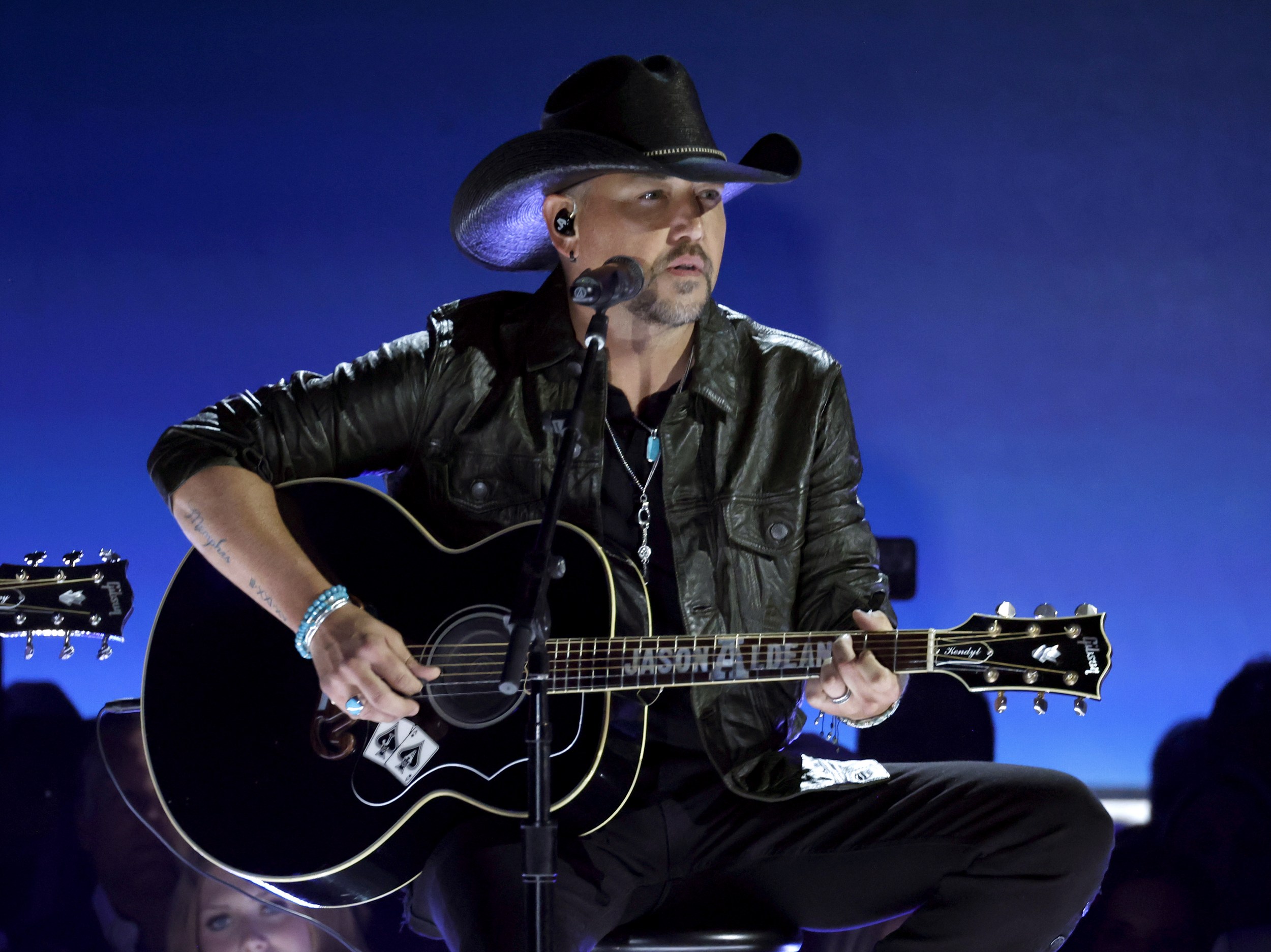
The “Try That in a Small Town” singer has no interest in the traditional encore routine. He’d rather play everything he’s got and end the show without the fake goodbye. Continue reading…The Boot – Country Music News, Music Videos and Songs

Gavin Adcock wasn’t looking for a friendship or collaboration when he called out Zach Bryan. But now, a song between the two isn’t completely off the table. Continue reading…Country Music News – Taste of Country
Gavin Adcock wasn’t looking for a friendship or collaboration when he called out Zach Bryan. But now, a song between the two isn’t completely off the table. Continue reading…The Boot – Country Music News, Music Videos and Songs

The Shaheen political dynasty lives on in New Hampshire.
Stefany Shaheen, the eldest daughter of Sen. Jeanne Shaheen (D-N.H.), won Tuesday’s hotly contested Democratic primary for the state’s 1st District, defeating Maura Sullivan and a host of other rivals despite facing attacks that she was leaning on her well-known surname.
The seat, left open by Democratic Rep. Chris Pappas when he opted to run for Senate, is considered to be fairly competitive for the general election — former Vice President Kamala Harris won it by just two points in 2024.
Shaheen attempted to create distance from her mother throughout her campaign, rebuking the deal the senator helped broker to end last fall’s government shutdown and leaning into her public service in Portsmouth and medical-research advocacy on the trail.
Still, her family name helped her build an early polling lead and bank financial support.
Nearly $740,000 raised by Shaheen’s campaign came from donors who had previously given to her mother — 39 percent of total itemized campaign dollars, according to a POLITICO analysis. One of those donors told POLITICO the senator reached out last fall seeking their support for her daughter.
Sullivan, Shaheen’s main rival, attempted to weaponize the scion’s family ties in a year where the Democratic base has repeatedly spurned candidates with a perceived connection to the establishment.
The primary grew acrimonious in its closing weeks as Shaheen and Sullivan tangled over campaign donations and aired attack ads as polls showed a tightening race. The contest also underwent a rapid winnowing toward the end as two candidates dropped out; one, progressive Christian Urrutia, endorsed Shaheen.
Politics

Finally, seven months after Super Bowl LX ended, the NFL has returned. But who will be hoisting the Lombardi Trophy at SoFi Stadium this upcoming Valentine’s Day? As the 2026 NFL regular season kicks off with a rematch of Super Bowl LX on Wednesday, we made our predictions for who will play in and win Super Bowl LXI. The Seattle Seahawks are the reigning Super Bowl champs, but we aren’t too bullish on their chances of repeating. And we don’t think the New England Patriots will return to the Super Bowl this year, either. So, which two teams will go head-to-head in Los Angeles in February? There was only one team that was picked to win the Super Bowl twice among the seven of us, while one of us also predicted that the Dallas Cowboys will return to glory this season. Here are our full Super Bowl picks ahead of the start of the 2026 NFL season. Henry McKenna: Looking at the rosters as they are now, it’s impossible to convince me that the Rams aren’t the most logical and simple selection. There is no team that’s more complete. There is no team that has a better and more proven head coach. Their quarterback, Matthew Stafford, is top three. Their WR1, Puka Nacua, is top three. Their defensive line is No. 1. Their top pass rusher, Myles Garrett, is No. 1. And even looking past their superstars, there really isn’t a weakness on their depth chart. So while I love a few teams to surprise, including the Bengals (simply by getting to the Super Bowl), I can’t convince myself that there is any team more likely to win the Super Bowl than the Rams. They are the runaway favorites, more than any year I can remember since 2007; it’s not even close. Score prediction: Rams 26, Bengals 20 Ralph Vacchiano: Ralph Vacchiano: Sean Payton is on a mission to put right what once went wrong, and it’s probably not best to stand in his way. He had the best team in the AFC last season and home-field advantage in the AFC Championship Game, and if he hadn’t lost quarterback Bo Nix to a broken ankle one week earlier, he almost certainly would’ve been coaching in his second Super Bowl. This year he has an even better team. If he can just have a little better luck and health, no one in the AFC will beat them. As for the Bears, their road will be loaded because they have to survive a bruising division and find a way past the loaded Rams and defending champion Seahawks. But the Seahawks aren’t what they used to be and the Rams have age and extensive travel issues to overcome. The Bears are a young up-and-comer in the NFC. Their team, and quarterback Caleb Williams in particular, also made a remarkable turnaround in Year 1 of the Ben Johnson Era. Now that they understand what he’s doing, Year 2 could be off the charts. Score prediction: Broncos 31, Bears 24 Ben Arthur: With all due respect to the Seahawks, who allowed the fewest points in the NFL last season, the Texans have the best defense in the league. They’re the most feared, at least, with All-Pro and Pro Bowl talent on every level. It was a unit so good that it could’ve dragged Houston to the Super Bowl last year in spite of offensive inconsistencies, but C.J. Stroud’s disastrous, four-interception performance in the divisional round to the eventual AFC champion Patriots was too much to overcome. Stroud may never reach his rookie year heights again, but he should be at least an average starter this season (what he was for most of 2025, by the way) — with a stronger run game and plenty of motivation from his uncertain, long-term future. A Texans team that stays on schedule offensively and maintains its dominance defensively can win the AFC and even take down the mighty Rams, who are as hyped as any team we’ve seen in NFL history. Score prediction: Texans 24, Rams 21 Steven Ruiz: If you’re picking against the Rams, you’re betting on them not being at full strength by the time the playoffs roll around. Given the age or usage of some of their key players, it isn’t a bad bet. But on paper, Los Angeles has the league’s best roster, perhaps its best coach and the reigning MVP at quarterback. The Seahawks have enough to push the Rams even if they’re healthy — which is why I’m predicting another matchup between these teams in the NFC title game — but I can’t say the same for any other team in the league. The AFC is more difficult to predict. I’ll take the Bills, who have everything they need on offense and should improve defensively with new coordinator Jim Leonhard. They’ll beat Baltimore in a surprisingly low-scoring game to make their first Super Bowl in three decades, only to get blown out by the Rams two weeks later. Score prediction: Rams 38, Bills 17 Greg Auman: The battle of Los Angeles! Both L.A. teams competing for a ring in their home stadium is maximum Los Angeles. The Rams have already won a championship there, but the Chargers have a chance to be the story of 2026, with offensive coordinator Mike McDaniel getting Justin Herbert to places he’s never been before. The Rams will be the team to beat all season, so it won’t be easy to beat Matthew Stafford, Myles Garrett and Aaron Donald, but that’s what we’re calling. The Chargers will need to stay healthy in a way they couldn’t last year, but watch out for running back Omarion Hampton emerging behind a dominant offensive line. Score prediction: Chargers 24, Rams 21 Eric D. Williams: The talk nationally all offseason has been about the super team the Rams have built this year. And the Seahawks use that disrespect as motivation to repeat as champions for the first time since the Chiefs accomplished that feat in 2023. Speaking of the Chiefs, Patrick Mahomes and Andy Reid rebound from a disappointing season last year to reach the Super Bowl together for the sixth time, but they come up short against Mike Macdonald’s aggressive defense. Score prediction: Seahawks 28, Chiefs 24 Bucky Brooks: The Cowboys finally end their Super Bowl drought behind a dynamic offense and opportunistic defense. Dak Prescott caps off his MVP regular season with a spectacular performance that helps America’s Team secure the world title. Score prediction: Cowboys 31, Texans 24Latest Sports News from FOX Sports
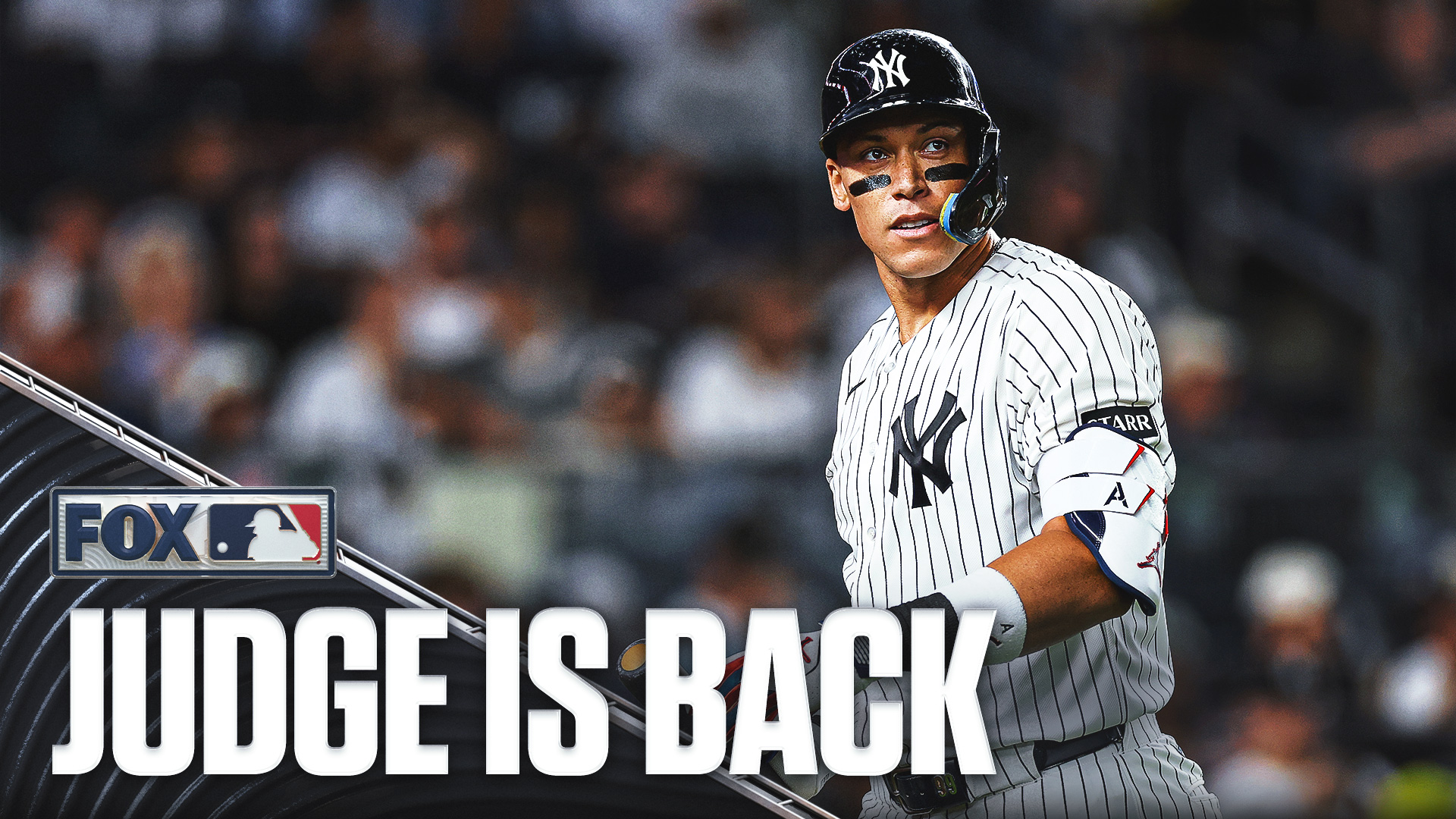
NEW YORK — A few days ago, an imposing 6-foot-7 outfielder appeared at the door to Aaron Boone’s office in the visitor’s clubhouse at Petco Park. Aaron Judge showed up, unannounced, and told the Yankees skipper that he was ready to go. Yankees outfielder Trent Grisham had just been placed on the injured list with a hamstring strain. The club needed help on the field. Judge had been nursing a fractured right rib since the end of May, but he was toward the end of his ramp-up and recovery timeline. Judge believed he was ready to play. Boone said no. There were still a few more boxes the Yankees captain needed to check before being cleared to return, and Boone was not going to risk rushing Judge back because of another player injury. There were people to call, and processes that had to be cleared that had nothing to do with how badly Judge wanted to be back in the lineup, and everything to do with the Yankees making sure he wouldn’t re-injure himself or aggravate the fracture. No amount of hope or anticipation or roster needs would change the plan. So Judge spent the team’s off-day on Monday at Yankee Stadium checking all those remaining boxes. He faced live pitching. He replicated going out to right field and playing defense for a few innings. He ran the bases. Judge came away from it all with no issues. The Yankees were pleased with what they saw. Finally, they gave Judge the answer that he was expecting to receive months ago. On Tuesday at Yankee Stadium, Judge was back after being sidelined for over three months. But he was on a leash, and that bothered him. Judge played six innings and went 0-for-3 before Boone pulled him from the Yankees’ 5-3 win in the series opener against the Rockies. His timing was clearly off as he flew out to center and struck out twice. He expected it, to some extent. These at-bats are equivalent to his spring training build up. And even though Boone warned him before Tuesday’s game that he would be pulled early, Judge was still miffed when it actually happened. Judge and Boone had a long chat on the dugout steps after the sixth inning about it. The eight-time All-Star made it his case to stay in the game. “We got Cam [Schlittler] on the mound, so I’m probably not going to get a lot of action anyway,” Judge said, reiterating his conversation with Boone. “What’s the difference between me standing out there for nine innings or standing out there for six?” His request was denied. Hours later, Judge was clearly still stewing over the manager’s decision. “I feel good. I played half a game. So I’m not too sure what to say about that,” said Judge, who was uncharacteristically peeved and not even trying to hide it. “Obviously, whatever [Boone] says, I’m going to do. But I’m not happy about it.” That was the tradeoff. Judge advocated for skipping a minor-league rehab assignment that would be considered standard for a player who hasn’t seen live pitching since May 31. The Yankees obliged. Better to have Judge’s bat in their lineup than be wasted in minor-league games. In lieu of Judge spending a week wearing a Scranton RailRiders uniform, the Yankees will treat his initial return to the major-league lineup like a rehab assignment. He won’t play full games at the outset. He won’t start every game in their series against Colorado. Every inning he takes right field will be measured against an internal plan built by the team, not by how Judge feels. That plan exists because how he feels has never been the problem. If it was up to Judge, he would’ve continued to play through his injury and avoided missing any time at all. “He’s been champing at the bit,” Boone said, and it wasn’t a compliment. It was a small reveal of how difficult it has been for Boone and the Yankees to keep Judge sidelined despite his readiness and impatience to play. Even now, with Judge single-handedly bringing the electricity back to the Bronx, the return everyone wanted comes with more restriction than freedom. Even Hal Steinbrenner, the Yankees owner, wanted to be in the loop before Judge was cleared to go. Unlike his dad, George, Steinbrenner is not known to meddle in baseball operations. He typically stays out of day-to-day decisions, preferring to leave that up to Boone and longtime Yankees general manager Brian Cashman. But, on Monday, after Judge took live at-bats, played the field, ran the bases, and was cleared to return by the team strength and conditioning coach, Brett McCabe, and the rest of the training staff, Boone called Cashman and Steinbrenner and asked them to weigh in on the decision. Boone said Steinbrenner wanted to be in the loop, which underscores how much the Yankees have riding on Judge. He is essential to their goal of going all the way, and he knows it. Of course, the back-to-back reigning American League MVP’s instinct was to go out there and play. The team needed him, he felt he was ready. What’s the problem? But the Yankees are walking a delicate tightrope, even if they won’t admit it. Judge has been “asymptomatic” for several weeks now, according to Boone. In other words, he doesn’t feel any pain or restriction when he’s going through baseball activities. And yet, the Yankees would still prefer Judge to be careful in right field, particularly on diving catches, since that’s how he fractured his rib in the first place. “I’d like him to be cautious with that stuff, and he will,” Boone said. “And the one thing, even though he probably got hurt doing something like that, if you really watch over the last several years, he’s done a good job of learning how to reign it in and not do things in certain situations. So he is aware of those things, probably even more hyper-aware of them now, obviously. The one thing is, watching him move out there, he’s moving really well, albeit avoiding certain things.” Is it realistic to expect Judge, who has built his reputation on giving maximum effort, to actually change that wiring? Can he really dial it back? “I hope I’m playing every day,” Judge said. “But I’m not the manager. So you have to talk to him. Hopefully I can play more than six innings.” The reality is, the Yankees need a still-easing-in Judge to be the three-time MVP Judge to catch Tampa Bay in the division race. The Rays (86-58) lead the AL East by four games, with New York (82-62) right behind them, trying to avoid another wild-card series against the Red Sox and earn a bye week before the ALDS instead. The stakes are already high, and they’ll only get higher in October. So, on a nightly basis, Boone will be fighting against the urge to keep Judge in the lineup for just one more at-bat, weighing whether one more swing will be the one that wins them the game, or potentially re-injures him. Boone said the Yankees are going to be smart about how they handle that balance, but it’s not like talking to Judge about their processes will be helpful. It’s hard to imagine Judge will say anything except he’s feeling good enough to go out there and play. Even back in May, when Judge knew something was wrong, he played through the injury because of how many other players were sidelined at the time. Now, at least, the Yankees have the luxury of a full-ish roster on the position-player side. Besides Grisham (hamstring strain) and Giancarlo Stanton (calf strain), who could both potentially come back at some point this year, the Yankees lineup is set for the postseason. Judge’s presence in that lineup is a requirement for the Yankees to go back to the Fall Classic, and even though Judge alone is not going to carry the offense, he certainly has a ripple effect. While he was out, the Yankees offense struggled mightily to generate runs. Since June 2, which is the date Judge officially went on the IL, New York has ranked 26th in the majors in runs scored (341) and slugging percentage (.385), and 29th in batting average (.227) and batting average with runners in scoring position (.216). From Opening Day to May 31, the Yankees ranked fourth in the majors in runs scored (305), second in slugging (.436), 13th in batting average (.243) and seventh in batting average with runners in scoring position (.270). When Judge is in the lineup, he makes everyone around him better. He offers protection, forcing opposing pitchers to attack the zone against hitters like Ben Rice and Cody Bellinger who typically precede Judge in the order. And even now, while Judge’s timing is off, the best plan of attack for opposing pitching staffs might be to walk him and take their chances against the batter after him. Which is why, more than anything, the Yankees just need Judge to play it safe. Just like a few days ago in San Diego, when Judge told Boone he was ready to give the team his all, Boone and the Yankees have to continue to hold firm. Right now and in the weeks ahead, Judge needs to be managed as much for his instincts as for his health. Hence, the leash. “He was not real pleased with me taking him out,” Boone said. “The ultimate competitor in him wants to be out there because he’s done a lot of work to prepare, to be ready to play. And I know in his mind he feels he is very much ready to play and go the distance. But, it’s my job to be smart here. Especially these first several games.”Latest Sports News from FOX Sports