Categories
Uncategorized

Americans agree their democracy is in crisis – yet the solution is as simple as it is elusive

A majority of Americans say the country has turned away from its founding ideals, and more than a third believe violence may be necessary to get the nation back on track. Mint Images/Mint Images RF via Getty Images

Despite being divided on most issues, an overwhelming majority of Americans agree that their democracy is in a state of crisis or facing serious challenges.

A few of the symptoms of the problem: Close allies see the U.S. as a threat to peace. Immigration raids by poorly trained federal agents have terrorized cities. President Donald Trump claims that only his own sense of morality limits his power. The Trump administration has politicized the Justice Department, and many of Trump’s political nominees refuse to acknowledge that Joe Biden won the 2020 presidential election.

Plato warned that an unhealthy democracy can easily fall prey to a tyrant. As a scholar of American government, I see dishonest leaders, an environment of declining trust and a cultural penchant for violence as symptoms of Plato’s scenario.

The courts, which research suggests are ineffective at instituting significant political change, cannot adequately counter today’s democratic crisis. So what can?

One thing I’ve learned over two decades is that when it comes to the fundamentals of democracy, political science is not rocket science. A healthy democracy requires educated citizens, including a free press and an engaged public.

A decline in reason

American government is supposed to be run by the people with what Founding Father James Madison called their “cool and deliberate” sense in charge. This ideal vision of democracy requires that citizens consider various sides of an argument before coming to a decision.

But the modern era is one of misinformation and so-called alternative facts. Only 1 in 5 Americans think Republicans and Democrats can agree on basic facts.

The American experiment tested whether a government could be founded on reason. But that requires a common understanding of an objective reality.

A decline in trust

Trust in government has fallen. Only 17% of Americans now trust Washington to do what is right most of the time, among the lowest readings since polling began in 1958, when 73% said they did.

That matters because, according to the Pew Research Center, “trust is associated with better-functioning democratic institutions” – and it’s not just trust in the government that’s declining.

Americans’ trust in the media to report “fully, accurately and fairly” is at an all-time low, with only 28% expressing a great deal or fair amount of trust in newspapers, television and radio. In fact, adults under 30 years old now trust social media as much as they trust national news organizations.

Americans have not only lost trust in fundamental institutions of democracy but also each other: Only 34% of adults believe “most people can be trusted,” according to the Pew Research Center.

Meanwhile, 83% of Americans say the country has turned away from its founding ideals, and 37% believe violence may be necessary “to get the nation back on track,” according to a recent NPR/PBS News/Marist poll.

In times of turmoil, it is tempting to seek change in what Abraham Lincoln called the “mobocratic spirit,” through which mobs would “throw printing presses into rivers, shoot editors, and hang and burn obnoxious persons at pleasure.” His remedy, however – as someone who had received minimal formal schooling – was a better educated citizenry that followed facts and reason instead of their base passions.

A more informed voter

Thomas Jefferson founded the University of Virginia in part because he believed only educated citizens could make self-government succeed.

Political behavior scholarship typically measures education by a person’s level of formal schooling. By that measure, education is the most consistent predictor of political knowledge, and people with more of it are more likely to vote. In 2024, turnout for those with an undergraduate degree was 77%, compared with 53% for high school graduates.

Conversely, lower education levels are linked to belief in conspiracy theories and less esteem for journalists.
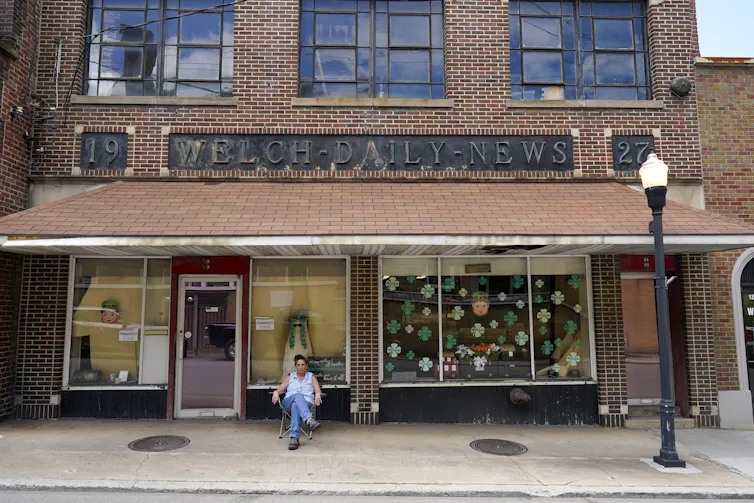
A woman sits outside a brick building with a sign reading 'Welch Daily News' across the top.
Missy Nester’s newspaper in Welch, W.Va., The Welch News, closed in 2023.
AP Photo/Chris Carlson

The media under threat

The media is itself a source of education. Journalists report on governmental affairs and act as watchdogs, exposing abuse and corruption.

Today, though, the press is under siege.

Trump has called the press an enemy of the people. Since 2017, there have been more than 1,400 incidents of physical violence against journalists, most of them committed by law enforcement. The Justice Department has subpoenaed journalists and pushed them to testify about their newsgathering, a move First Amendment advocates say chills reporting.

Americans trust local news outlets more than national organizations, but local newspapers are dying at alarming rates.

As more people get their news from social media instead of professional reporters, and as local news outlets close or consolidate with larger organizations, I believe political polarization will increase.

The true corrective

Ultimately, Americans get the government they deserve, as politicians tend to represent what voters want.

The 47th speaker of the House, Tip O’Neill, once said, “All politics is local,” by which he meant things get done wherever the people are. That too is where I believe the corrective starts: a voter informed enough to think critically and to argue with opponents on the merits of public policy rather than attack them.

In 1820, replying to an argument that courts were the ultimate check on abuses of constitutional power, Jefferson wrote there is “no safe depository of the ultimate powers of the society but the people themselves.” Education, he explained, is the “true corrective.”

What’s next?

To be sure, if education is the solution, then a conversation about what it means to be educated has to come first – and that is not a simple problem to solve.

Whether – and where – someone went to college has become a partisan marker. There is currently a diploma divide in the U.S.: White voters without a college degree mostly support Republicans, while those with one mostly support Democrats. Over the past 50 years, the percentage of Republican representatives and senators who attended elite institutions fell from 40% to 15%, and from 55% to 35%, respectively.

But facts are the same at an Ivy League school, a public university or the local pub. Whatever being educated means – and it does not necessarily mean simply going to college – it must include the ability to distinguish between one’s personal ideological passions and objective facts.

“Passion has helped us; but can do so no more,” Lincoln warned before the Civil War. “It will in future be our enemy.”

The Conversation

Kenneth Michael White does not work for, consult, own shares in or receive funding from any company or organization that would benefit from this article, and has disclosed no relevant affiliations beyond their academic appointment.

​Politics + Society – The Conversation

Categories
Uncategorized

What we remember when we remember 9/11

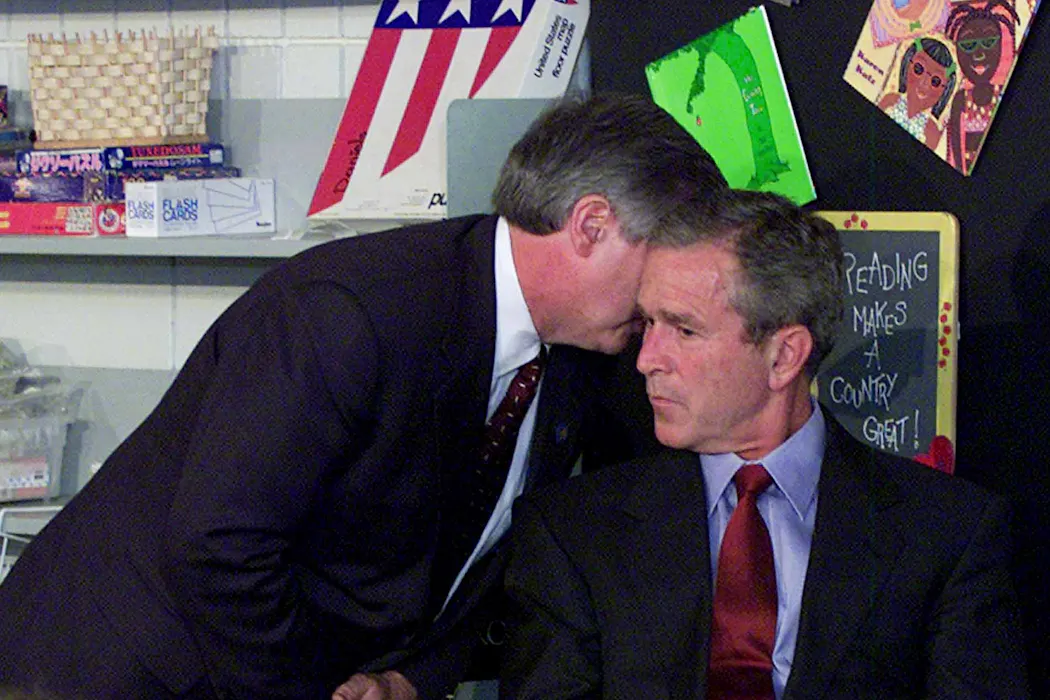
President George W. Bush reacts in a Sarasota, Fla., classroom after being told of the terrorist attacks in New York and Washington on Sept. 11, 2001. AP Photo/Doug Mills

Do you remember where you were and what you were doing when you learned of the September 11 terrorist attacks that occurred 25 years ago?

Do you remember what you saw on television or how you felt? Is your memory highly detailed, and are you confident that what you are remembering is an accurate recollection of those details?

For most people who lived through the event, their answers to those questions will be a resounding “yes!” As a memory researcher, I know long-lasting and vivid “flashbulb memories” typically are for mundane events like driving to work or cooking dinner. These memories are made remarkable only due to their association with learning about remote and exceptional public events.

Learning about a remarkable event

Flashbulb memories are not memories of direct involvement in a newsworthy event. Instead, they are recollections of the exact moment and surrounding context of when someone learned of the event.

If you, for example, lived through an earthquake, your memory is likely to include traumatic and vivid details of what you were doing when the earthquake struck. You would have memories of where you were, who you were with, and your thoughts and feelings at the time.

However, the phenomenon of someone having a similarly strong memory when they’ve merely learned about an earthquake that occurred many miles away is what makes the flashbulb memory phenomenon significant.

When comparing flashbulb memories with ordinary memories of everyday experiences, my colleague and I found that in both types of memories, people tended to forget details they originally included in the written descriptions of their memories. Both groups also introduced details that contradicted information presented initially at similar rates.

However, even if flashbulb memories are not quite as accurate as we believe them to be, the exceptional qualities they exhibit do seem to differentiate them from ordinary memories.

Connection with other Americans

When a surprising and consequential public event like 9/11 occurs, it captures attention due to its novelty and disruption of ordinary life. The event is also likely to evoke a strong emotional response.

Newsworthy events occur every day, however, and only some of those events lead to flashbulb memories.

Research suggests that events must be important within a person’s social group, or relevant to their identity, to become a flashbulb memory. Talking about and thinking about the event within your community reinforces the idea that the public event was important. For instance, when grandparents share their flashbulb memories with younger generations, it helps communicate which historical events are important and what lessons can be drawn from those experiences.

Several people in a hall look up as they watch television.
Students at the Brigham Young University business school watch television reports of the terrorist attacks in New York and Washington on Sept. 11, 2001.
George Frey/AFP via Getty Images

Having a vivid, detailed memory of the event serves to reinforce a person’s connection to the group. In the context of the 9/11 attacks, sharing one’s flashbulb memory of that day can seem like a demonstration of patriotism and connection with other Americans.

Recounting where you were and what you were doing that day connects your personal history to a broader history. It can be a means of bearing witness. For example, Pennsylvania state legislators recently discussed their recollections of the day – where they were, what they were doing when the first plane struck the north tower of the World Trade Center – and its personal and political consequences.

Initially, people who actually experienced the event themselves tend to share their stories with each other. But as time passes, listeners hear those stories as a way of learning about past events that they did not themselves live through.

For these people, remembering 9/11 is about connecting the public and the personal to comprehend not just what occurred, but what it meant. With each anniversary, the group of people with a personal connection diminishes until the event simply becomes a part of the historical past

What does it mean to ‘never forget’?

A common entreaty after tragedies is to “remember” or to “never forget” such historic events.

“Remember the Alamo” or “Remember Pearl Harbor” are examples, as well as the common refrain to “never forget” the Holocaust. Similarly, “never forget” became a solemn slogan to remember 9/11 immediately after the attacks.

These types of refrains are often calls to honor those who were directly affected. In the case of 9/11, it’s a call to reflect on the lives lost and the loved ones left behind.

For some people, this is a deeply personal act of mourning. For others, remembrance is a way of demonstrating respect and reverence for people they did not know but wish to commemorate.

As the event and its participants recede into the past, appeals to memory are often more abstract. They are calls to draw lessons and to shape future actions. Public memorials like the 9/11 Memorial and Museum are often constructed to encourage these abstract types of remembering.

Remembering the event

To remember an event like 9/11 can also mean the simple recalling of factual details. The United States suffered a terrorist attack on the World Trade Center in New York and the Pentagon. The passengers of United Airlines Flight 93 forced a crash in rural Pennsylvania, thwarting another intended attack on Washington.

Those are key components of what it means to know what happened. But in many ways, those are the least important elements to commit to memory because the information is so readily available from other sources.

On the other hand, flashbulb memories of how an individual person heard about 9/11 are unique.

What it means to remember 9/11 will depend on who is doing the remembering and what they are being asked to recall. The traumatic memories of people who directly experienced the events in New York, Virginia and in Shanksville, Pa. are different from the flashbulb memories of people who learned about the events on that day from afar.

And these flashbulb memories differ from the factual memories that all Americans share about what transpired on that day, even if we were not alive when it occurred.

Each way of remembering 9/11 is important.

The Conversation

Jennifer Talarico does not work for, consult, own shares in or receive funding from any company or organization that would benefit from this article, and has disclosed no relevant affiliations beyond their academic appointment.

​Politics + Society – The Conversation

Categories
Music

The Hilarious Prank Happening Backstage on Vince Gill’s Tour

Vince Gill may be one of the most revered artists in country music, but silly pranks are still happening backstage at his shows. Continue reading…​The Boot – Country Music News, Music Videos and Songs

Categories
Music

The Hilarious Prank Happening Backstage on Vince Gill’s Tour

Vince Gill may be one of the most revered artists in country music, but silly pranks are still happening backstage at his shows. Continue reading…​Country Music News – Taste of Country

Categories
Entertainment

Catelynn Lowell Attacked For New Job: ‘We Don’t Want Her In Our Schools’

Reading Time: 3 minutes

On top of Teen Mom fame and becoming an anti-adoption podcaster, Catelynn Lowell has a new job.

(This one is a “real” job, one that she teased back in the spring.)

Some parents in the district (and, let’s be real, some folks who just don’t like Catelynn) are objecting.

Tyler’s stepping in, reminding everyone of why his wife is more than qualified for this gig.

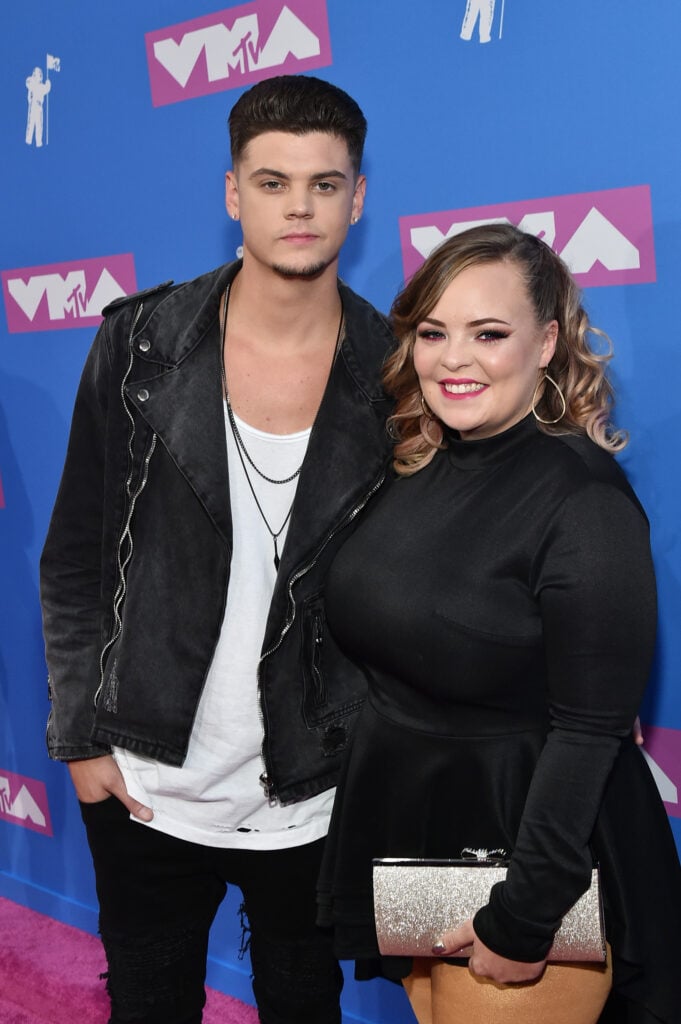
Tyler Baltierra and Catelynn Lowell in 2018.
Tyler Baltierra and Catelynn Lowell attend the 2018 MTV Video Music Awards on August 20, 2018. (Photo Credit: Mike Coppola/Getty Images for MTV)

Why are some people mad about Catelynn Lowell getting a normal job?

On Wednesday, September 9, a Michigan school district announced that they’ve hired Catelynn Lowell.

She is working as an instructional aid for two of the district’s schools.

The district shared a photo of Catelynn alongside a brief bio.

The “Staff Spotlight” post did not delve into her time on Teen Mom.

“This year, she’s looking forward to growing within our school community and helping students reach their full potential,” the post gushed, describing her as a “birth mom and mother to three girls.”

The thing about posting a photo of a reality star who has been on television since 2009 is that someone is going to recognize them.

Sure, most people have not seen even a single episode of the Teen Mom franchise.

But if dozens, hundreds, or thousands of people see your post, someone’s going to recognize the name, the face, or both.

Sure enough, a bunch of people recognized Catelynn’s name and photo on the post.

And some of those were parents who have children in that school district. As you might have guessed, some raised objections to her employment.

‘I’m a normal person’

Taking to the comments, Catelynn Lowell did her best to reassure anyone with concerns.

“If you truly knew me I have never once went around flashing the ‘TV card’ ever,” she commented, per The Ashley.

“I’m a normal person, a mom to three kids in the district,” Catelynn added. “A woman who loves kids and wants to see them all succeed and try their best.”

She continued: “So if that brings ‘heat on my back’ so be it. I know who I am as a person, my heart, my work ethic, and my love for our community.”

Additionally, Catelynn clarified that she had no role in the district singling her out among other new hires for this announcement. (Presumably, other new hires will receive similar posts.)

Catelynn’s husband, who has been her partner since they were both children, rushed to his wife’s defense.

“I’m sorry to hear that other parents have nothing nice to say about us, but I also understand that not everyone is going to like everyone else either (even ppl who aren’t on TV),” Tyler Baltierra reasoned.

“It’s just disheartening that she can’t do what she loves & help her community without being attacked,” he added.

Tyler also noted: “We both graduated from an alternative high school for struggling youth, so we KNOW how important it is for these kids to have adults who, not only truly care for them, but also can relate to their struggles on a personal level.”

It’s very possible that some adults will be super weird about Catelynn working at their kids’ school. But she has a right to work without harassment. Catelynn and Tyler are two of the better parents from Teen Mom, and it sounds like those kids will be lucky to have her.

Catelynn Lowell Attacked For New Job: ‘We Don’t Want Her In Our Schools’ was originally published on The Hollywood Gossip.

​The Hollywood Gossip

Categories
Music

The Jon Pardi Song His Wife Can’t Stand — and the Reason Why

Jon Pardi says there’s one song Summer has never loved — and it all comes down to a single lyric that didn’t sit right with her. Continue reading…​The Boot – Country Music News, Music Videos and Songs

Categories
Health

Celebs Who Have Been Open About Their Experience With Parkinson’s Disease

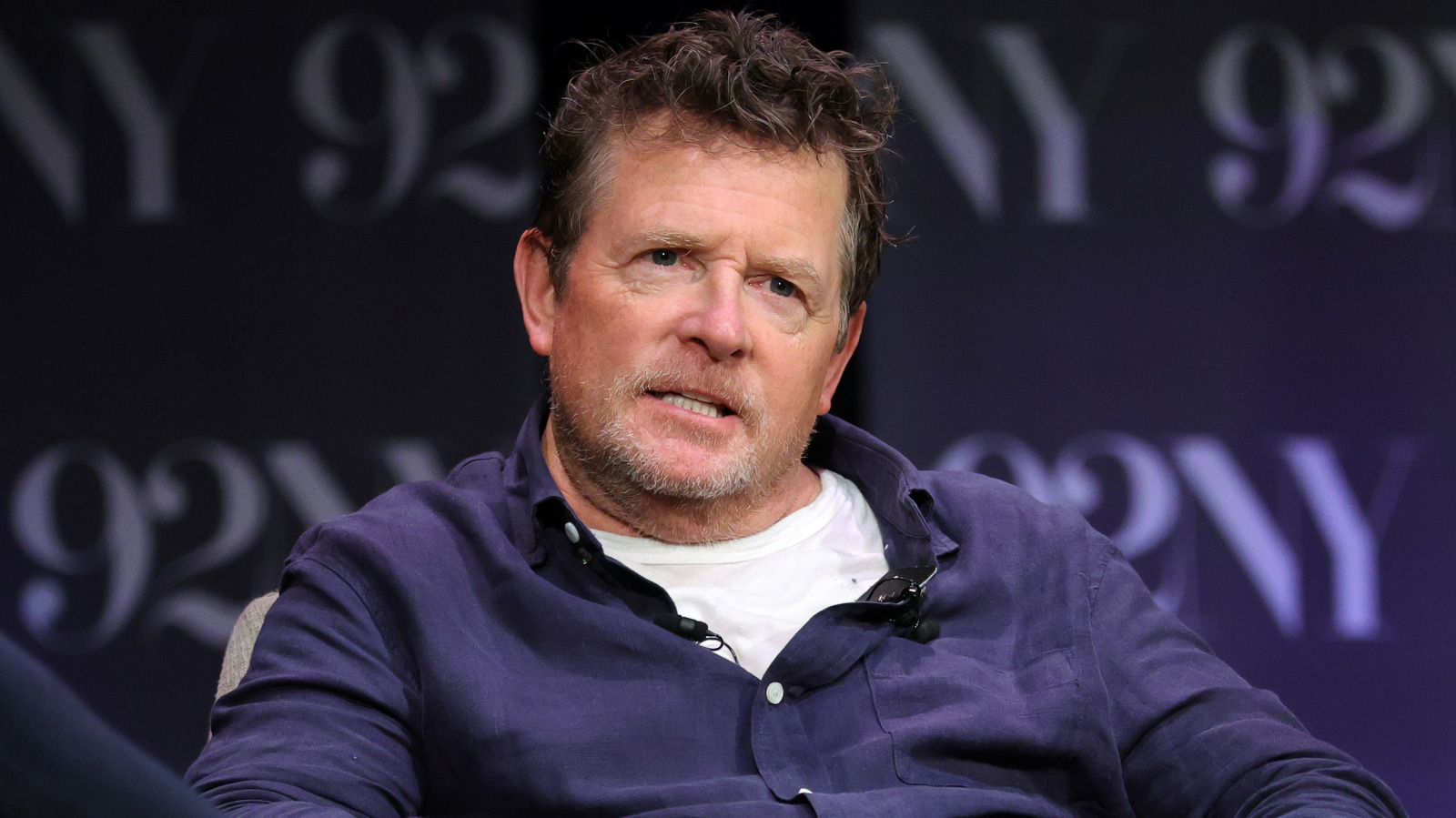
Parkinson’s disease affects more than 1 million Americans, and celebrities from Michael J. Fox to Billy Connolly have raised awareness for it in big ways.

​Health Digest – Health News, Wellness, Expert Insights

Categories
Sports Fox

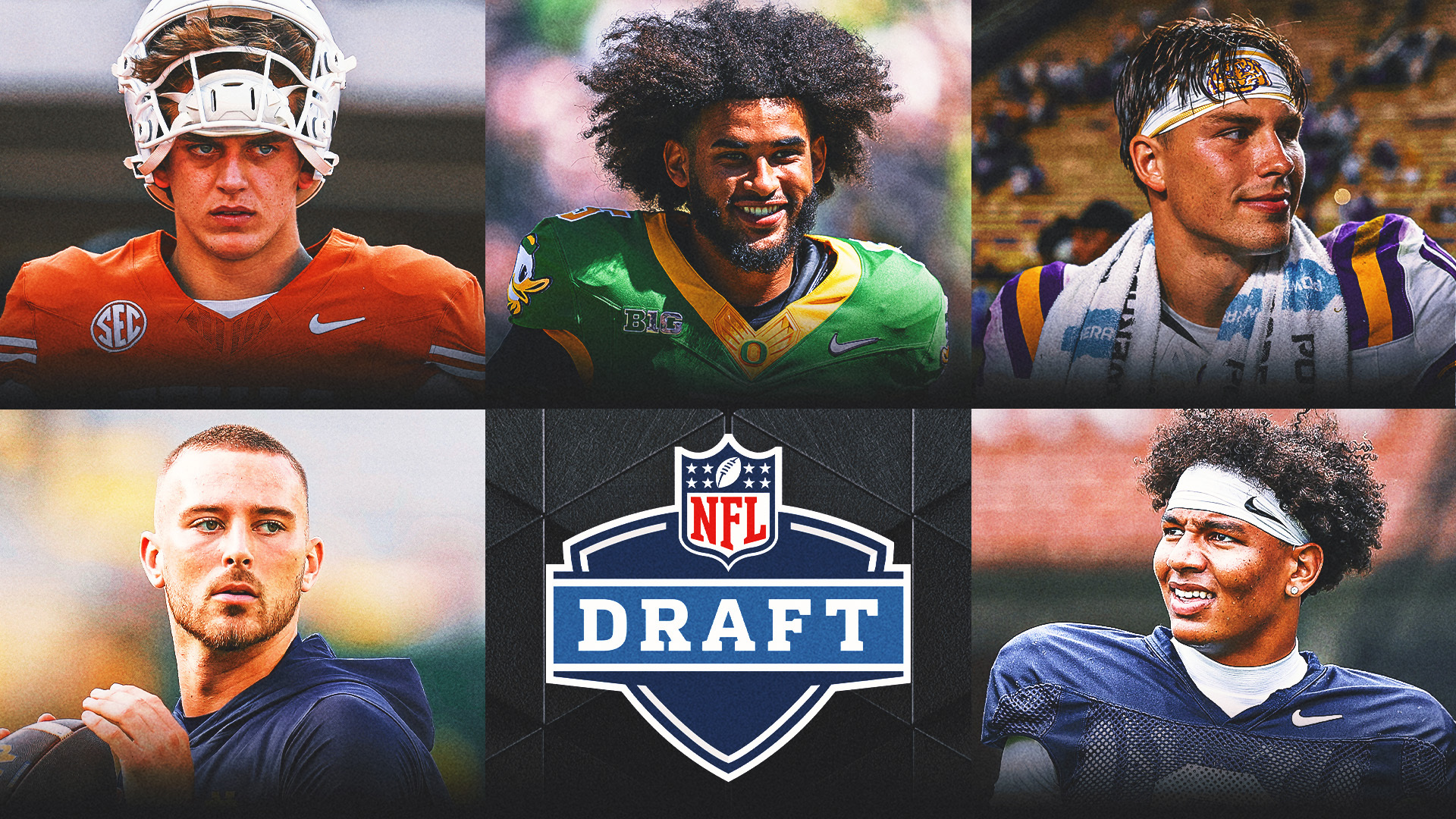
2027 NFL Draft QB Power Rankings: Why Dante Moore Is Ahead Of Arch Manning — For Now

With millions to be made via NIL and an open transfer policy, projecting who will enter the NFL draft in a given year is more complicated than ever. This is especially true at quarterback. With that said, it is impossible for scouts not to fantasize about the talent potentially available in the 2027 NFL Draft — a class that could include a handful of franchise-altering QBs (and several stars elsewhere). Everyone knows about Arch Manning and Dante Moore, but this class will offer a lot more than just those two superstar passers. That’s why I’ve tiered my 16 favorite draft-eligible quarterbacks below and will be updating this list all season long. DAY 3 PROSPECTS There are a handful of quarterbacks across the country firmly on scouts’ radars who have not yet shown the consistency to project as future NFL starters. UCLA’s Nico Iamaleava (6-foot-5, 215 pounds) and Oklahoma’s John Mateer (6-1, 224) are already well known by a lot of college football fans and play for prominent programs that will help them generate plenty of buzz, should they play well this season. Both are gifted athletes with strong arms and NFL-caliber size, but questions linger about their accuracy and decision-making on and off the field. A pair of current Day 3 prospects have already squared off in a Week 0 ACC showdown. North Carolina State’s CJ Bailey (6-6, 218), a true junior with a whip of an arm, struggled in a 31-8 loss to Virginia. Beau Pribula (6-2, 209), meanwhile, led the Cavs with 110 rushing yards and completed nine of 11 passes, including two long touchdowns off of play-action. He is a fifth-year senior who began his college career at Penn State. His 11 touchdown passes (against nine interceptions) for Missouri last season were a career high. The 2026 season opener was just the 11th start of his college career. DAY 2 PROSPECTS In this era of eye-popping statistics, LaNorris Sellers (6-3, 238) and his 60.8% completion rate with 13 touchdowns against eight interceptions last year hardly look like the stuff of an early-round draft pick. But the South Carolina star is among the biggest of this year’s quarterback prospects and has the strongest arm. And Sellers’ best traits may be his intangibles. He was voted a team captain as a redshirt freshman. No freshman at South Carolina had ever earned that distinction before. Like Manning, Sellers needs to do a better job in the quick game. His accuracy is actually worse on short throws. Improving in this area could vault him into the first-round conversation. But if he doesn’t make gains in this area — in his third season as a starter — Sellers could drop into the Day 3 “project” zone. And that brings us to Brendan Sorsby (6-3, 235), who, of course, is an unprecedented case. He has the physical talent to warrant first-round consideration, but he’ll enter the draft following a one-year layoff after being ruled ineligible for sports betting. The NFL’s opinion of his off-field decision-making was made obvious when the league opted not to hold a supplemental draft this summer after Sorsby had declared for it. A QB-starved league actually shut the door in the face of a first-round-caliber quarterback. Folks, the NFL just doesn’t do that. In a piece full of juicy quotes from anonymous NFL scouts and executives, FOXSports.com’s Ralph Vacchiano and Eric Williams did a fine job of breaking down the unique talent and concerns with Sorsby. The 2027 NFL Draft is still seven-plus months away. With that amount of time to repair his image, I think Sorsby’s talent wins out and — pardon the pun — a team “gambles” on him on Day 2. Jayden Maiava (6-4, 230) is a redshirt senior with excellent size and a very strong arm. A year ago, Maiava showed a tendency to spray the ball when his feet weren’t settled, and he struggled to loft the ball between defenders. Few are better at developing quarterbacks than Lincoln Riley, and Maiava has the traits worth investing in. But he’ll have to prove himself this season without the luxury of throwing to Makai Lemon and J’Kobi Lane. Maiava, Sorsby and Sellers are all relative wild cards. Teams prioritizing consistency over traits might like Mississippi’s Trinidad Chambliss (6-0, 210) and Ohio State’s Julian Sayin (6-1, 214) more. As the only national champion of the bunch, Chambliss demands a close look despite the fact that he’s shorter and older (25) and was the backup to begin three of his four collegiate seasons. He led Ferris State to the DII crown in 2024 and then transferred to Ole Miss, where he began last season as the backup to Austin Simmons. However, when Simmons injured his foot in Week 2, Chambliss seized his opportunity, emerging as SEC’s Newcomer of the Year by completing 66.1% of his passes for 22 touchdowns against just three interceptions. Chambliss is also a legitimate scrambling threat, showing impressive vision, elusiveness and acceleration to scoot for eight touchdowns on the ground. The season prior at Ferris State, he ran for 25 scores. Chambliss may be short, but he’s got a compact, well-developed frame similar to Baker Mayfield and Russell Wilson. Like them, Chambliss is a gifted passer who throws with better vision and arm strength than one might expect given his height. The biggest question shouldn’t be about his size but how well he can acclimate to a pro-style offense. I hope he attends one of the prominent All-Star games to ease that transition. The biggest question with Sayin might be how much scouts are willing to overlook the fact that his receiving corps at Ohio State will likely be better than the ones he inherits in the NFL. With all due respect to Fernando Mendoza, Sayin was the most accurate passer in the Big Ten last year, completing a staggering 77% of his throws for 32 touchdowns and only eight interceptions. Critics will point out that it’s considerably easier to produce when one is throwing to the likes of Jeremiah Smith and Carnell Tate, perhaps masking an average arm. I disagree. National championships are the expectation at Ohio State, and Sayin showed impressive poise in his first year as a starter. While he lacks elite size and isn’t the scrambling threat of many others on this list, he sees the field well and rarely puts the ball in harm’s way, showing impressive diagnostic skills for a player beginning his true junior season. He demonstrated as much all the way back in the 2025 season opener, against Texas in what was Sayin’s first career start. Finally, let’s acknowledge two very young quarterbacks more likely to be in play in the 2028 or 2029 NFL drafts but have already shown enough to excite scouts. After all, it has become almost an annual tradition of at least one breakout quarterback ascending from “sleeper” to one of the most exciting prospects of the draft. The most compelling breakout superstar this year might be Oklahoma State’s Drew Mestemaker (6-3, 215), a strong-armed gunslinger who transferred to Stillwater earlier this year to continue playing under head coach Eric Morris. Last season at North Texas, Mestemaker led the country with 4,379 passing yards. It’s worth noting he was a late-blooming prep who didn’t start in high school and walked on at North Texas. He’s just a redshirt sophomore but is already creating buzz in the scouting community. Another redshirt sophomore, Minnesota’s Drake Lindsey (6-5, 230), is another QB to watch. He completed 63.2% of his passes with 18 touchdowns against six interceptions while leading Minnesota to eight wins last season. Lindsey is one of the few quarterbacks in this article with experience playing under center, and he throws deep balls with excellent trajectory. DAY 1 PROSPECTS The next three quarterbacks on my board lack elite physical traits, but they are accurate and instinctive passers whose games translate easily to the NFL. The flashes for each are bright. But they need to prove that previous breakout campaigns were not a fluke. I’m eager to see how CJ Carr (6-2, 215) progresses in his junior year, with Notre Dame’s offense no longer being funneled through first-round running backs Jeremiyah Love and Jadarian Price. Their presence undeniably made things easier on Carr, but he showed a savvy and poise last year that was uncommon for a first-year starting quarterback. Despite being smaller than many of his peers at the position, many of his best throws were downfield strikes to beat blitzes, showing the combination of pre-snap recognition, courage and accuracy that have scouts excited about where his game is headed. The 2027 NFL Draft will mark 20 years since Brady Quinn was the last Fighting Irish QB to be drafted in the first round. Carr could end that streak. Similar to baseball players working their way to the majors through various levels of A-ball, Darian Mensah (6-3, 205) has spent the past two seasons starring at Tulane (2024) and Duke (2025) and now will be throwing fastballs at the University of Miami. Despite a relatively weak supporting cast, Mensah guided the Blue Devils to an ACC title — its first since 1962 — and could have a bigger title in mind given the current talent at The U. In both size and style, Mensah reminds me a bit of Jayden Daniels. He has a slight build and needs to play with greater game-to-game consistency, but he’s elusive and accurate in the pocket and on the move. After leaving Arizona State for LSU, Sam Leavitt (6-2, 216) is also playing with an entirely new supporting cast. I think that could be a good thing for his development as a passer. Prior to suffering a season-ending Lisfranc injury in his right foot last year, Leavitt often relied too heavily on star wideout Jordyn Tyson. Leavitt needs to prove his health first, of course, but also showcase better field vision and ball distribution. It’s why I’m excited about his pairing with Lane Kiffin and all the talent at LSU. Love him or hate him, Kiffin is one of the sharpest minds in football. I think coupling the exciting backyard element of Leavitt’s game with Kiffin’s clever play design is going to light up SEC defenses this year and spark a steady rise up the draft boards. TOP-5 TALENTS The unquestioned top two quarterback prospects to open this season are Arch Manning (6-4, 222) and Dante Moore (6-3, 220), both of whom would have been top-five picks this past spring had they declared. It might surprise some to learn that I’m actually higher on Moore — if the draft were held today. The tape shows that the Oregon quarterback is the more accurate of the two, with Moore especially better than Manning in the quick game — an increasingly important skill in today’s high-tempo NFL. Moore has already earned kudos this summer from scouts who have traveled through Eugene and seen how he’s bulked up from a year ago. That’s significant, as a relatively slight frame was one of the real concerns scouts had last year about him, along with his relative inexperience. He entered this season with 20 career starts, including five at UCLA as a true freshman back in 2023. Last year was his first as a full-season starter, and he starred immediately, completing 71.8% of his throws for 30 touchdown passes with 10 interceptions. Projecting him to the NFL is relatively easy given his arm talent: He’s not only accurate but possesses a snappy release and consistently throws receivers open with both velocity and touch. But, as with a lot of young quarterbacks, Moore’s decision-making and accuracy have waned in the face of pressure. Now bigger, stronger and more seasoned, I think he’s going to demonstrate improvement in these areas and contend for the national championship, Heisman Trophy and No. 1 overall draft pick all in the coming year. With Manning, it is important to recognize his growth amid impossible expectations when trying to project what he can become. No player in college football is under a more intense microscope. Given the attention Manning has drawn over his three-plus years at Texas, it is easy to forget that he has started just 15 games at the college level. Last year, he completed 61.4% of his passes for 26 touchdowns and seven interceptions. By any standard other than being a Manning, this production — again, his first as a starter — would be considered a stellar achievement, especially when you factor in that he ran for another 10 scores. And that’s the point. Manning is already very good. And it is so easy to think this is just the beginning. He blends prototypical size with a rocket arm and excellent mobility. He checks every box and I think he’s going to shatter last year’s numbers and team with Auburn transfer Cam Coleman to rival Ohio State’s Julian Sayin and Jeremiah Smith as the most dynamic QB-WR combo in college football. (Manning, of course, had a rough go last year at Ohio State, but this Saturday in Austin should be an epic clash.) If Manning corrects a few flaws in particular over the next few months, he’ll likely be the favorite to go first overall in the 2027 NFL Draft — if he turns pro.​Latest Sports News from FOX Sports

Categories
Entertainment

Your Prayers for a Secret Lives of Mormon Wives Catch-Up Are Answered

The Secret Lives of Mormon Wives season 5 key art on HuluCome ye saints and come ye sinners because The Secret Lives of Mormon Wives is back.
Season five premieres on Hulu Sept. 10, and a lot has gone down with MomTok since season four started unfolding…
​E! Online (US) – Top Stories

Categories
Uncategorized

Introducing WPVibe Fleet Management: Manage Multiple WordPress Sites With AI

Ever wished you could update every WordPress site you manage without logging into each one? When you manage multiple WordPress sites, even a simple update becomes a repetitive task. You have to log into each site, check which plugins and themes need updating, run the… Read More »

The post Introducing WPVibe Fleet Management: Manage Multiple WordPress Sites With AI first appeared on WPBeginner.