Oasis are set to kick off their reunion tour in Cardiff this weekend, with thousands expected to descend on the Welsh capital.The Latest News from the UK and Around the World | Sky News











Oasis are set to kick off their reunion tour in Cardiff this weekend, with thousands expected to descend on the Welsh capital.The Latest News from the UK and Around the World | Sky News
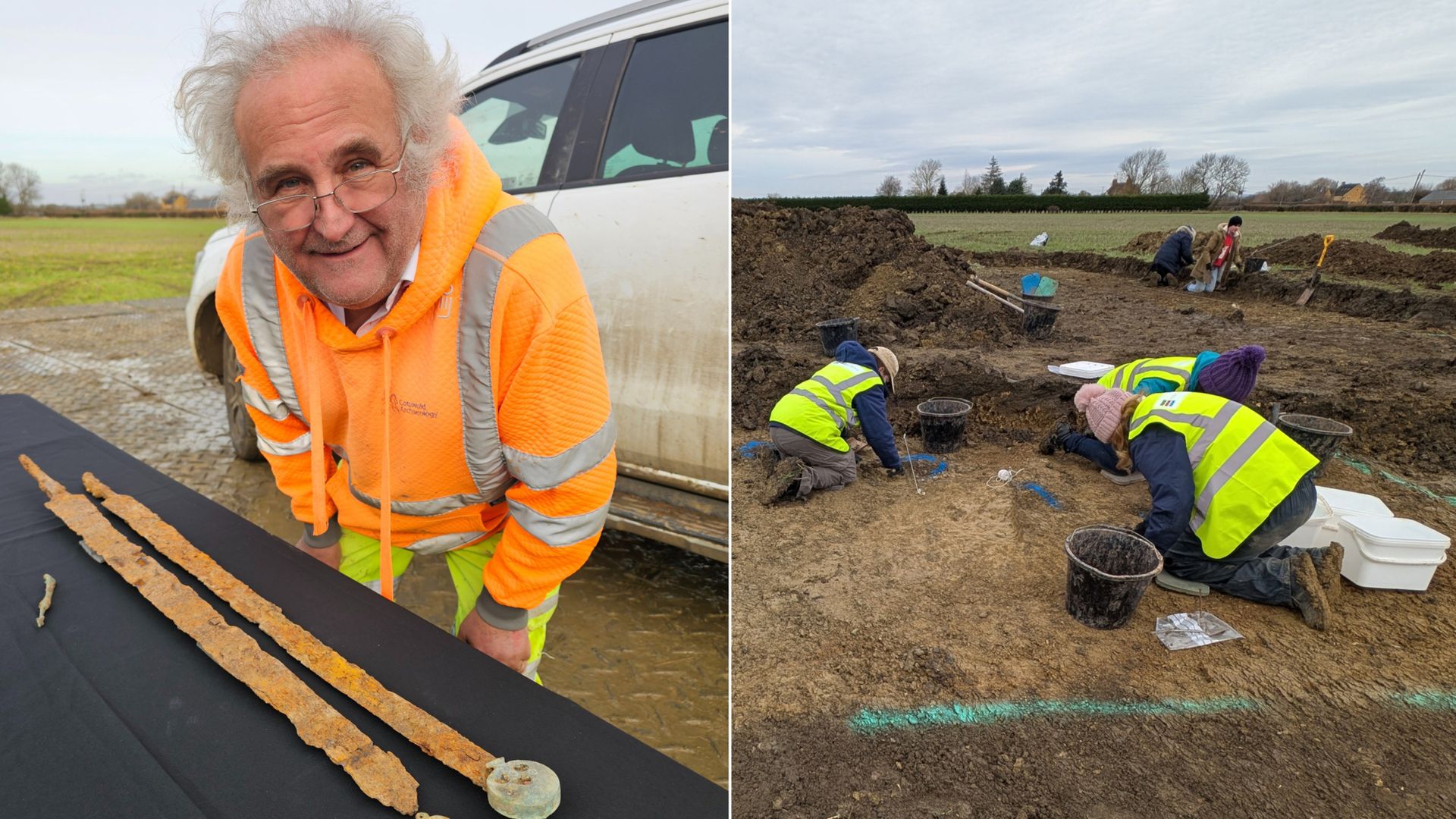
An Iron Age Roman settlement has been discovered after a metal detectorist found two rare swords near a Cotswolds village.The Latest News from the UK and Around the World | Sky News
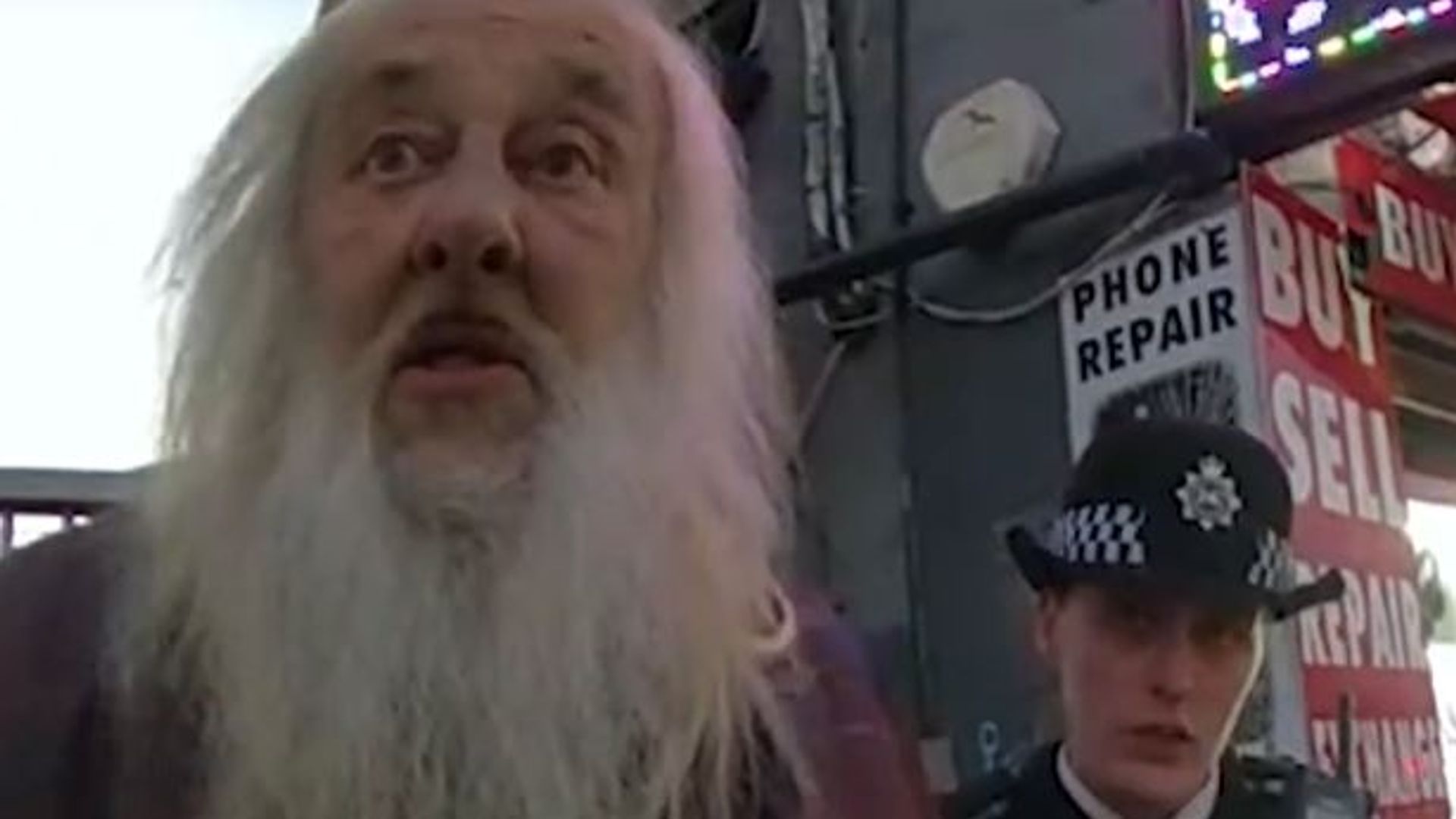
More than 1,000 criminals, including a paedophile found with a six-year-old girl, have been arrested by the Metropolitan Police using live facial recognition (LFR) cameras.The Latest News from the UK and Around the World | Sky News

At least 20 people have been injured after multiple explosions at a petrol station in Rome.The Latest News from the UK and Around the World | Sky News

On a quiet side street by Capela da Ressurreicao, on the outskirts of Porto, the crowd had been building through the night.The Latest News from the UK and Around the World | Sky News
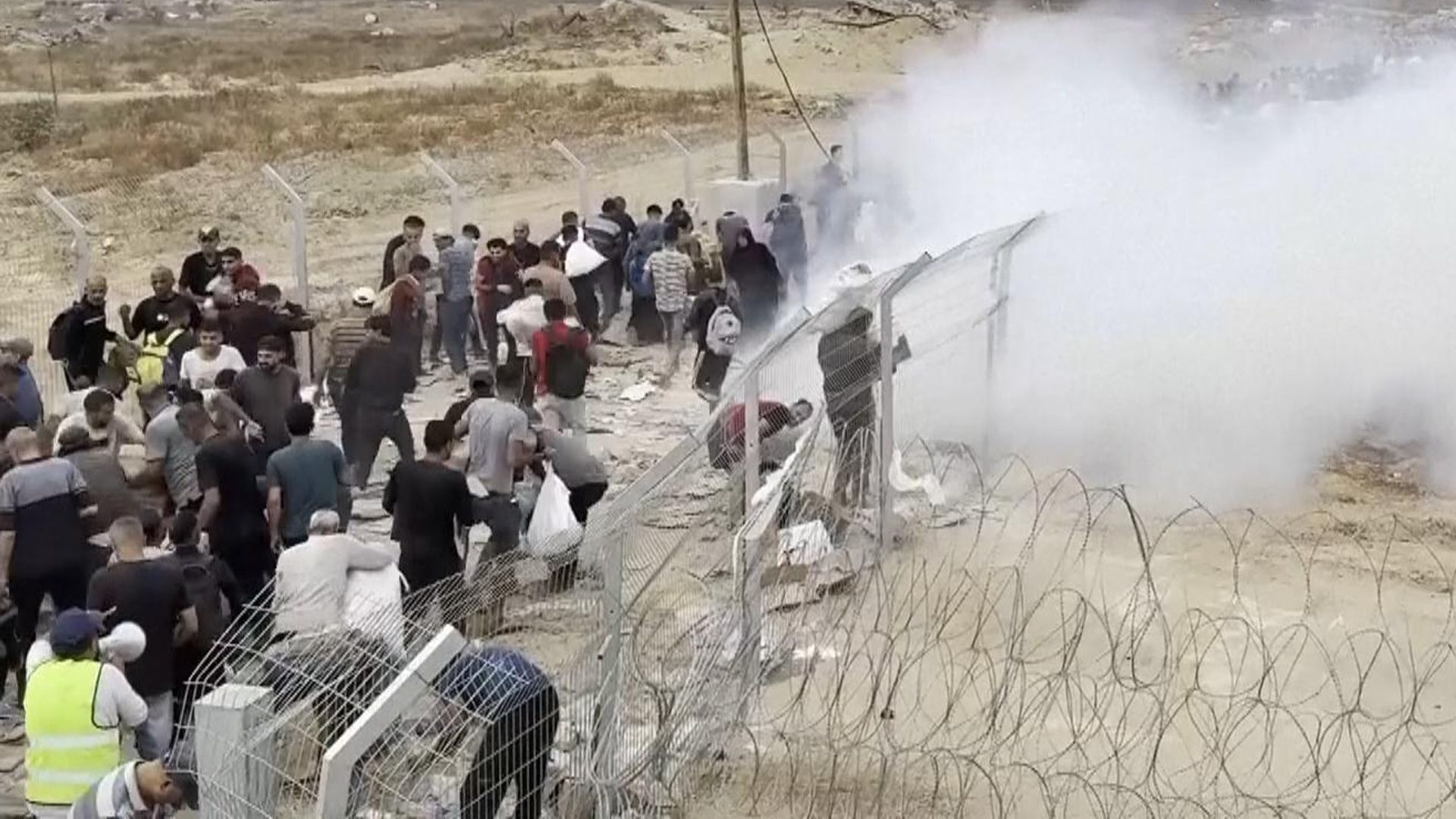
Israeli-backed American contractors guarding aid centres in Gaza are using live ammunition and stun grenades as starving Palestinians scramble for food, an investigation has claimed.The Latest News from the UK and Around the World | Sky News
July 5 2024, 1pm: I remember the moment so clearly.The Latest News from the UK and Around the World | Sky News

Based on pronouncements in 2024, you might think now is the time to see U.S. citizens streaming out of the country. Months before the 2024 presidential election, Americans were saying they would leave should candidate Donald Trump win the election. Gallup polling in 2024 found that 21% of Americans wanted to leave the United States permanently, more than double the 10% who had said so in 2011.
And indeed in June 2025, a Vermont legislator announced that she was resigning her seat and moving to Canada because of political concerns and economic opportunities. To be sure, people are moving. Even so, as a scholar of American migration overseas, my research finds that the vast majority of Americans are not about to depart for greener shores.
In October 2024, I surveyed 68 Americans in western Massachusetts, an area with a slight Democratic majority, asking if they wanted to leave the United States for a lengthy period of time, but not necessarily permanently. Over 90% said no, noting that there were factors limiting their mobility, such as financial obligations or having a partner who would not move, and that there were reasons that made them want to stay, such as owning property and having friends nearby.
Just three respondents indicated they were making plans to move, while an additional 11 said they wanted to move “someday.”
After the November 2024 election, I interviewed seven of those respondents, two of whom had said prior to the election that they might leave the United States. After the election, they all said they planned to stay.
One who had said she wanted to leave acknowledged her reversal, saying: “I may have flippantly said, ‘Oh, if (Trump) gets voted in … I would leave,’ but I can’t see leaving. Part of it is because of my daughter,” who had recently become a mother. She continued, “It’s never crossed my mind seriously enough to even research it.”
Another told me, “I’m not going to let somebody push me out of what I consider my country and my home because he’s a jerk.”
Others spoke of needing to work several more years in order to receive a pension, or having family responsibilities keeping them in the country. None supported the current administration.
In two nationally representative surveys, my colleague Helen B. Marrow, a sociologist of immigration, and I found no significant increase in migration aspiration between 2014 and 2019. We also found that respondents mentioned exploration and adventure much more often than political or economic reasons for wanting to move abroad.
Even though the U.S. passport grants visa-free visitor access to more than 180 countries, U.S. citizens still need residence and work visas. At home, they, like others, have family commitments and financial constraints, or may just not want to leave home. More than 95% of the world’s population do not move abroad – and U.S. citizens are no different.
In addition to my academic research on overseas Americans, I am also an international relocation coach. I help Americans considering a move abroad navigate the emotional, practical and professional complexities of relocation, whether they’re just starting to explore the idea or actively planning their next steps.
Many of my clients do not want to live in a United States that no longer aligns with their values, while others are concerned about their safety, particularly, but not only, due to racism or homophobia. They are finding jobs overseas, retiring abroad or acquiring a European citizenship through a parent or grandparent. Most recently, American academics seeking to leave are being courted by European universities.
In February 2025, a national poll found that 4% of Americans said they were “definitely planning to move” to another country.
That same month, I followed up with my seven interviewees from western Massachusetts, including one trans man. They all reiterated their choice to remain in the United States. One person, who might move abroad at some point, told me she hadn’t changed her mind about leaving soon: “Leaving doesn’t necessarily mean anything will be better for me, even if it was a financial possibility.”
Two people said that recent political developments actually meant that they were more committed to remaining in the United States. One told me, “Now, more than ever, individuals need to figure out what small actions can be taken to help our fellow Americans get through this dark period.”
But even those “definitely planning on moving” can have other factors intervene. Two clients of mine who were making serious plans had to stop when family members’ health situations changed for the worse.
So how many people are actually leaving? It is clear that a growing number of Americans are considering a move abroad. But far fewer are conducting serious research, seeking professional consultation or actually moving. Drawing on available data, my own academic research and my coaching experience, my educated estimate is that no more than 1% to 2% of U.S. citizens are actively making viable plans to leave the country. Nor are all of those leaving out of protest; many are still motivated by exploration, adventure, employment or to be with a partner.
Even so, that figure is roughly 3 million to 6 million people – which would be a significant increase over the estimated 5.5 million Americans currently living abroad. As with many migration flows, even the movement of a small percentage of a population can still have the potential to reshape both the United States and its overseas population.

Amanda Klekowski von Koppenfels does not work for, consult, own shares in or receive funding from any company or organization that would benefit from this article, and has disclosed no relevant affiliations beyond their academic appointment.
Politics + Society – The Conversation

The U.S. Air Force dropped a dozen ground-penetrating bombs, each weighing 30,000 pounds (13,607 kilograms), in a raid on Iran’s nuclear site at Fordo on June 21, 2025. The attack was an attempt to reach the uranium enrichment facility buried deep inside a mountain. The target, President Donald Trump declared, was “completely and totally obliterated.”
Others were less sure. On June 24, the administration canceled a classified intelligence briefing to members of Congress, leading to frustration among those with questions about White House claims. While Defense Intelligence Agency analysts apparently agree that the strikes did real damage, they dispute the idea that the attack permanently destroyed Iran’s enrichment capability. Reports emerged that their initial analysis found that the strikes had only set Iran back a few months.
Such disagreements are unsurprising. Battle damage assessment – originally called bomb damage assessment – is notoriously difficult, and past wars have featured intense controversies among military and intelligence professionals. In World War II, poor weather and the limits of available technology conspired against accuracy.
Battle damage assessment remained a thorny problem decades later, even after radical improvements in surveillance technology. In the first Gulf War in 1990, for example, military leaders argued with CIA officials over the effects of airstrikes against Iraq’s armored forces.
I am a scholar of international relations who studies intelligence and strategy in international conflicts, and the author of “Fixing the Facts: National Security and the Politics of Intelligence.” I know from history that overcoming the challenges of battle damage assessment is especially hard when the target is a facility hidden under hundreds of feet of earth and rock, as is the case at Fordo.
The intelligence community has a number of tools and techniques that can help with challenges like assessing the damage at Fordo. Imagery intelligence such as satellite photography is the obvious starting point. Before-and-after comparisons might reveal collapsed tunnels or topographical changes, suggesting unseen subterranean damage.
More exotic data collection techniques may be able to help infer the underground effects based on particle and electromagnetic emissions from the site. These platforms provide what is called measurement and signatures intelligence. Specialized sensors can measure nuclear radiation, seismographic information and other potentially revealing information from camouflaged facilities. When combined with traditional imagery, measurement and signatures intelligence can provide a more detailed model of the likely effects of the bombing.
Other sources may prove useful as well. Reporting from human intelligence assets – spies or unwitting informers with firsthand or secondhand knowledge – may provide information on internal Iranian assessments. These may be particularly valuable because Iranian officials presumably know how much equipment was removed in advance, as well as the location of previously enriched uranium.
The same is true for signals intelligence, which intercepts and interprets communications. Ideally, battle damage assessment will become more comprehensive and accurate as these sources of intelligence are integrated into a single assessment.
But even in that case, it will still be difficult to estimate the broader effects on Iran’s nuclear program. Measuring the immediate physical effects on Fordo and other nuclear sites is a kind of puzzle, or a problem that can be solved with sufficient evidence. Estimating the long-term effects on Iranian policy is a mystery, or a problem that cannot be solved even with abundant information on hand. It’s impossible to know how Iran’s leaders will adapt over time to their changing circumstances. They themselves cannot know either; perceptions of the future are inherently uncertain.
Regarding the puzzle over Fordo, Trump seems to believe that the sheer volume of explosives dropped on the site must have done the job. As White House Press Secretary Karoline Leavitt put it: “Everyone knows what happens when you drop 14 30,000-pound bombs perfectly on their targets: total obliteration.”
But the fact that Fordo is buried in the side of a mountain is a reason to doubt this commonsense conclusion. In addition, Iran may have moved enriched uranium and specialized equipment from the site in advance, limiting the effects on its nuclear program.
Trump’s instincts might be right. Or the skeptics might be right. Both make plausible claims. Analysts will need more intelligence from more sources to make a confident judgment about the effects on Fordo and on Iran’s broader nuclear efforts. Even then, it is likely that they will disagree on the effects, because this requires making predictions.
In a perfect world, policymakers and intelligence officials would wrestle with dueling assessments in good faith. Such a process would take place outside the political fray, giving both sides the opportunity to offer criticism without being accused of political mischief. In this idealized scenario, policymakers could use reasonable intelligence conclusions to inform their decision-making process. After all, there are a lot of decisions about Middle Eastern security left to be made.
But we are not in a perfect world, and hopes for a good faith debate seem hopelessly naïve. Already the battle lines are being drawn. Congressional Democrats are suspicious that the administration is being disingenuous about Iran. The White House, for its part, is going on the offensive. “The leaking of this alleged assessment is a clear attempt to demean President Trump,” Leavitt declared in a written statement, “and discredit the brave fighter pilots who conducted a perfectly executed mission.”
Relations between policymakers and their intelligence advisers are often contentious, and U.S. presidents have a long history of clashing with spy chiefs. But intelligence-policy relations today are in a particularly dismal state. Trump bears the most responsibility, given his repeated disparagement of intelligence officials. For example, he dismissed the congressional testimony on Iran from Director of National Intelligence Tulsi Gabbard: “I don’t care what she said.”
The problem goes deeper than the president, however. Intelligence-policy relations in a democracy are difficult because of the persuasive power of secret information. Policymakers fear that intelligence officials who control secrets might use them to undermine the policymakers’ plans. Intelligence officials worry that the policymakers will bully them into giving politically convenient answers. Such fears led to intelligence-policy breakdowns over estimates of enemy strength in the Vietnam War and estimates of Soviet missile capabilities in the early years of detente.
This mutual suspicion has become progressively worse since the end of the Cold War, as secret intelligence has become increasingly public. Intelligence leaders have become recognizable public figures, and intelligence judgments on current issues are often quickly declassified. The public now expects to have access to intelligence findings, and this has helped turn intelligence into a political football.
What does all this mean for intelligence on Iran? Trump might ignore assessments he dislikes, given his history with intelligence. But the acrimonious public dispute over the Fordo strike may lead the White House to pressure intelligence leaders to toe the line, especially if critics demand a public accounting of secret intelligence.
Such an outcome would benefit nobody. The public would not have a better sense of the questions surrounding Iran’s nuclear effort, the intelligence community would suffer a serious blow to its reputation, and the administration’s efforts to use intelligence in public might backfire, as was the case for the George W. Bush administration after the war in Iraq.
As with military campaigns, episodes of politicizing intelligence have lasting and sometimes unforeseen consequences.

Joshua Rovner is associate professor of international relations at American University, and nonresident senior fellow at the Brookings Institution.
Politics + Society – The Conversation

Reading Time: 3 minutes
As you very likely know by now, Kate Middleton is in remission.
The Princess of Wales revealed this bombshell to the public in January, approximately a year after she started treatment for some kind of cancer.
On Wednesday, however, the 43-year old made a rare statement in regard to this ongoing journey… and how she still isn’t feeling like her old self these days.
“You put on a sort of brave face, stoicism through treatment. Treatment’s done, then it’s like, ‘I can crack on, get back to normal,’ but actually, the phase afterwards is really, really difficult,” Middleton told reporters outside of Colchester Hospital in Essex.
She was on hand at the facility to spend time in a specially designed well-being garden that offers a restorative space for patients, NHS staff and visitors.
“You’re not necessarily under the clinical team any longer, but you’re not able to function normally at home as you perhaps once used to,” the Princess.
“And actually, someone to help talk you through that, show you and guide you through that sort of phase that comes after treatment, I think is really valuable.”

Middleton issued this message about two weeks after concerns grew over the star’s well-being.
In mid-June, Middleton suddenly canceled a planned appearance at the second day of the Royal Ascot thoroughbred races.
At the time, Kensington Palace did NOT give a reason behind this cancellation.
“One minute she was going, and the next she wasn’t. This is one of the biggest days of the year in the royal calendar; you don’t just miss Ascot on a whim, so there was a real sense of panic,” said an anonymous former courtier who retains good links with serving staff to The Daily Beast.
“The chaotic nature of the announcement was eerily reminiscent of the dark days of last year. People were bewildered and worried.”

Over the past year and a half, Middleton has not spoken out very much — not on her diagnosis, not on her treatment and rarely on how she’s feeling afterward.
“You have to find your new normal and that takes time…and it’s a roller coaster, it’s not smooth, like you expect it to be,” she said on July 2. “But the reality is you go through hard times.”
The Princess of Wales announced her cancer diagnosis and chemotherapy treatment in March 2024, pretty much vanishing from the spotlight for the rest of that calendar year.
Kate announced in September 2024 that she had completed chemotherapy, adding a few months later in January that she was in remission.

It’s been a bit sporadic, but Middleton has returned to many of her Royal Duties in 2025.
“She’s being sensible, listening to what her body is telling her and easing back into public life,” Queen Elizabeth’s former spokeswoman Ailsa Anderson told People Magazine for a recent cover story.
In September, Middleton reassured the public as follows:
“As the summer comes to an end, I cannot tell you what a relief it is to have finally completed my chemotherapy treatment. The last nine months have been incredibly tough for us as a family. Life as you know it can change in an instant and we have had to find a way to navigate the stormy waters and road unknown.”
To this day, we still don’t know the type of cancer that afflicted the Princess.
But we just heard it was quite serious and that Middleton is fortunate to be alive.
Kate Middleton Admits Cancer Recovery is “Really, Really Difficult” was originally published on The Hollywood Gossip.
The Hollywood Gossip