 Tatyana Ali always knew these questions pushed Jan Ravnik’s buttons.
The Dancing With the Stars season 35 contestant shared she was able to get off on the right foot with her pro, and Taylor…
E! Online (US) – Top Stories









Tatyana Ali always knew these questions pushed Jan Ravnik’s buttons.
The Dancing With the Stars season 35 contestant shared she was able to get off on the right foot with her pro, and Taylor…
E! Online (US) – Top Stories

While fast food isn’t exactly known for being particularly nutrient-dense, here’s how you can make your Culver’s burger order more nutritious.

Food Republic – Restaurants, Reviews, Recipes, Cooking Tips

She was one of country music’s shrewdest business minds. Continue reading…The Boot – Country Music News, Music Videos and Songs
She was one of country music’s shrewdest business minds. Continue reading…Country Music News – Taste of Country

 Even as a teen, Patrick Mahomes was making game-winning plays.
Years before the Kansas City Chiefs quarterback—who led his team to a win Sept. 14 in his first game back after tearing the ACL and…
E! Online (US) – Top Stories

Former state Rep. Jonathan Kreiss-Tomkins, third from left, speaks at a gubernatorial candidate forum on Wednesday, while former Attorney General Treg Taylor, Anchorage business owner and talk-show host Bernadette Wilson and former Anchorage Mayor Dave Bronson listen. The forum was held by the Alaska Hospital and Healthcare Association and the organization’s annual conference in Girdwood. Taylor, Wilson and Bronson are Republicans. Kreiss-Tomkins is a Democrat. (Photo by Yereth Rosen/Alaska Beacon)
The three Republicans and one Democrat seeking to become Alaska’s next governor pitched their visions for state healthcare policy on Wednesday to an audience of experts: members of the Alaska Hospital and Healthcare Association.
The organization capped its two-day annual conference in Girdwood with a forum among the gubernatorial candidates who are running under Alaska’s ranked-choice voting system.
Along with addressing healthcare issues, all four candidates repeated talking points they have used at past events.
Former State Rep. Jonathan Kreiss-Thomkins, the only Democrat on the general election ballot, spoke about consensus-building across party lines, and he criticized outgoing Republican Gov. Mike Dunleavy for failing to do so.
Kreiss-Tomkins recounted his experience in a bipartisan coalition focusing on problems rather than party. “That’s a real North Star for me,” he said. “That philosophy of government, that principle has been painfully absent in the governor’s office for the last eight years, and it has really distressed me to see the direction Alaska is going as a consequence of that leadership in our governor’s office the last eight years. And I’m running to change that.”
Former Attorney General Treg Taylor spoke about his desire to cut bureaucratic red tape, including his experience with a real estate license that took a year and a half to transfer, an account he has described at numerous other gubernatorial events.
“We need to have government run at the speed of business,” he said, repeating a slogan he has used elsewhere.
Talk show host and business owner Bernadette Wilson, who has never held public office, pitched herself as an outsider and “the only one up on this stage that has never taken a check from government.” She said she breaks with past practices, including bipartisanship, that she said do not work. The current debates are about many of the same issues that faced gubernatorial candidates in past years, she said.
“And the question that each of us will have to answer is, ‘What are we going to do differently this time?’” she said.
In contrast, former Anchorage Mayor Dave Bronson touted the experience he gained in his three years as chief executive of the state’s largest municipal government.

“I ask you to just look at the resumes. I’ve already held the closest job in this state to the governor’s job. I governed 40% of the population of the state as the mayor,” he said. He “paid in blood” for the hard lessons that he learned, he said, experience that will serve him well as governor, a job for which “there’s no time for on-the-job training.”
On specific health topics, the candidates had many areas of agreement, but the discussion also revealed some key differences.
One divide emerged during a discussion about the loss of Medicaid coverage over the past two years for low-income Alaskans. At least a quarter of those being dropped from enrollment are not losing coverage because of lack of eligibility, Alaska Hospital and Healthcare Association President Jared Kosin said as he posed the question. Rather, they are being dropped because of long wait times and the bureaucratic hurdles they face in getting their applications considered.
Kreiss-Tomkins, who said he is proud of his record as a lawmaker working with the administration of Gov. Bill Walker to expand Medicaid coverage, said staff shortages are causing some of the problems. And he said some are caused by new rules imposed by the Trump administration, such as the work requirement that was embedded in the sweeping budget bill called the “One Big Beautiful Bill Act,”, have exacerbated problems for qualified Medicaid recipients, who are among society’s most vulnerable members.
And he made a veiled jab at U.S. Sen. Dan Sullivan and U.S. Rep. Nick Begich, both Alaska Republicans who voted for the bill and are running for reelection.
It is important to be “very clear about who voted for that legislation that is about to make it harder for Alaskans to get the care they need,” he said. “We need to be very clear-eyed about that.”
Taylor, in contrast, said he supports the bill’s requirement that Medicaid recipients work at least 80 hours a month, either at a paid job or in volunteer service or training.
“It is not unreasonable for an able-bodied adult, without dependents,” he said. Medicaid funds are not infinite,” so stewardship is needed to make sure they are spent properly, he said. Additionally, he said, fewer people on Medicaid could be a good sign. He said unemployment rates in Alaska have dropped.
“So that’s good. That’s the program working,” he said.
Alaska’s unemployment rate, though following a volatile pattern, has been on a long-term decline, according to the Federal Reserve Bank of St. Louis. In recent years, the rate bottomed out at 3.9% in August of 2022, rose to 4.8% in December 2025 and then declined again, falling to 4.3% as of July, according to the Federal Reserve bank’s statistics. Alaska’s rates have been above the national rate for most of the years in the past decade, according to the U.S. Bureau of Labor Statistics.

Wilson said a business-like approach is needed to fix the Medicaid problems.
“We need to treat Medicaid like a business that is failing Alaskans,” she said. “We need to come in and we need to look at how can we hire people from the private sector that know processes and can hold these processes to a more accountable timeline.”
Bronson said Kosin’s statistics show that a large percentage of qualified Alaskans are being dropped from services.
“We are failing at a state level, especially in the Department of Health,” he said. Upon taking office as governor, “I would direct the Department of Health to conduct a review of all operations, and that includes the processing of paperwork for Medicaid,” he said.
Bronson also said that the One Big Beautiful Bill Act is causing extra problems for Alaska, and that he would seek an extension of the national Jan. 1 deadline for states to comply with all of its provisions.
On the subject of rual health care in general and, more specifically, what to do with “rural health transformation” funds granted from the federal government to the state, two of the candidates referred to their own family experiences.
Kreiss-Tomkins, who is from Sitka, spoke about his mother, an Indian Health Service doctor who spent her entire career at the Southeast Alaska Regional Health Consortium. He said he got his own health care from that tribal organization.
Wilson, noting that her grandmother was born in the Bristol Bay community of Naknek and that she is of part Aleut ancestry, said she has experience as a patient at the Alaska Native Medical Center.
As for the $272 million in rural health transformation funds that the state got from the federal government and that the Department is disbursing in a series of grants, the candidates offered a variety of suggestions.
Wilson said the state should invest in technology, especially technological advances that might help rural Alaskans avoid the need to travel to Anchorage or elsewhere for care.

She sees the travel-related challenges when she is at the Alaska Native Medical Center, she said. “You have people who are pulled out of their community, pulled out of their village, they’re coming into Anchorage. Sometimes it’s for an unknown length of time,” she said. The state needs to try to find ways to ensure that rural patients can be treated at home, she said.
Bronson made similar observations about the need to minimize travel for rural patients, citing “robust telehealth” as one tool.
Kreiss-Tomkins said the state should be seeking to make the rural transformation grants “leverage structural and systems change that will have lasting and enduring benefit to the system” rather than use them for construction or for one-time projects. The state should not count on getting similar money in the future, he said.
Taylor called the funding a “gift” that he hopes will be used “to help reinvent healthcare in Alaska.”
There was a split among the candidates over mandatory staffing ratios for nurses, as proposed in a bill that emerged late in this year’s session, Senate Bill 283. The Alaska Hospital and Healthcare Association opposed the bill, which did not advance out of the Senate Labor Committee.
Three of the gubernatorial candidates said they also opposed the idea of codifying such ratios into law, but Taylor spoke out in support. He cited a 2016 study in Australia that found that for each patient taken off a a nurse’s workload, there was a 7% drop in the likelihood of death and a 3% shorter hospital stay.
However, establishing firm ratio requirements would also necessitate related action to ensure sufficient numbers of nurses in the state, he said.
“You cannot mandate nurses into existence,” he said.
The other three candidates said mandatory staffing ratios would not be workable in Alaska’s diverse healthcare settings.
However, Kreiss-Tomkins said, the idea behind the proposal is laudable. “I appreciate where the impulse comes from,” he said. “I mean, everybody wants safe standards of care for patients, and you don’t want nurses or other practitioners spread thin.”
Concerning mental and behavioral health, Bronson repeatedly defended his controversial attempt as Anchorage’s mayor to build a huge shelter and “navigation center” in the city’s university-medical district to serve the unhoused.

“That facility, I think, was the right answer to dealing with a lot of the healthcare issues we face in the city of Anchorage and across the state because we’re kind of the homeless center for the state,” he said. “We almost had it done. We actually started pouring concrete.”
Bronson’s plan was for a tented facility to house and serve hundreds of people at a site across the street from the Alaska Native Tribal Health Consortium campus. The Anchorage Assembly rejected the plan after it was revealed that the Bronson administration awarded a contract and started construction illegally. The plan had drawn backlash from residents in the area, which currently is the site of ballfields and recreational trails.
Taylor said Alaska’s mental health challenges are daunting, with suicide and alcohol death rates that are twice the national average.
But there has also been positive movement under the Dunleavy administration, he said. He cited a bill that the governor signed in 2022, House Bill 172, that supports the use of crisis centers and teams to treat patients in emergencies.
There are now mobile crisis centers in four communities, Taylor said. “The added effect of that is keeping people out of your emergency rooms,” he said. “Youth suicides are down sharply now.”
It was unclear whether Taylor was referring only to the communities where the mobile crisis teams are operating or to the state as a whole.
Statewide, the rate of youth suicide fatalities reached a 10-year high in 2025, according to the Department of Health’s epidemiology section.
Other subjects discussed at the forum included the rising cost of health insurance in Alaska and qualities that the candidates are seeking in officials they would hire to manage healthcare services.
At the event’s conclusion, Kosin thanked the candidates for delving into healthcare topics that are complex.
“This is not always the most comfortable environment, and you guys were here. And that says a lot about your character,” Kosin said to the candidates.

Munich opens its 191st Oktoberfest on Saturday, but Cincinnati will already have been partying for two days, and Denver and a Georgia mountain town have … Read moreThe post Oktoberfest lasts 16 days in Munich and somehow 8 weeks in…

 Dancing With the Stars is not about the destination, but the journey.
And while both new pros Hailey Bills and Adele Zaikman—partnered with Sarah Jane Nader and Conner Leavitt, respectively—were…
E! Online (US) – Top Stories
Reading Time: 2 minutes
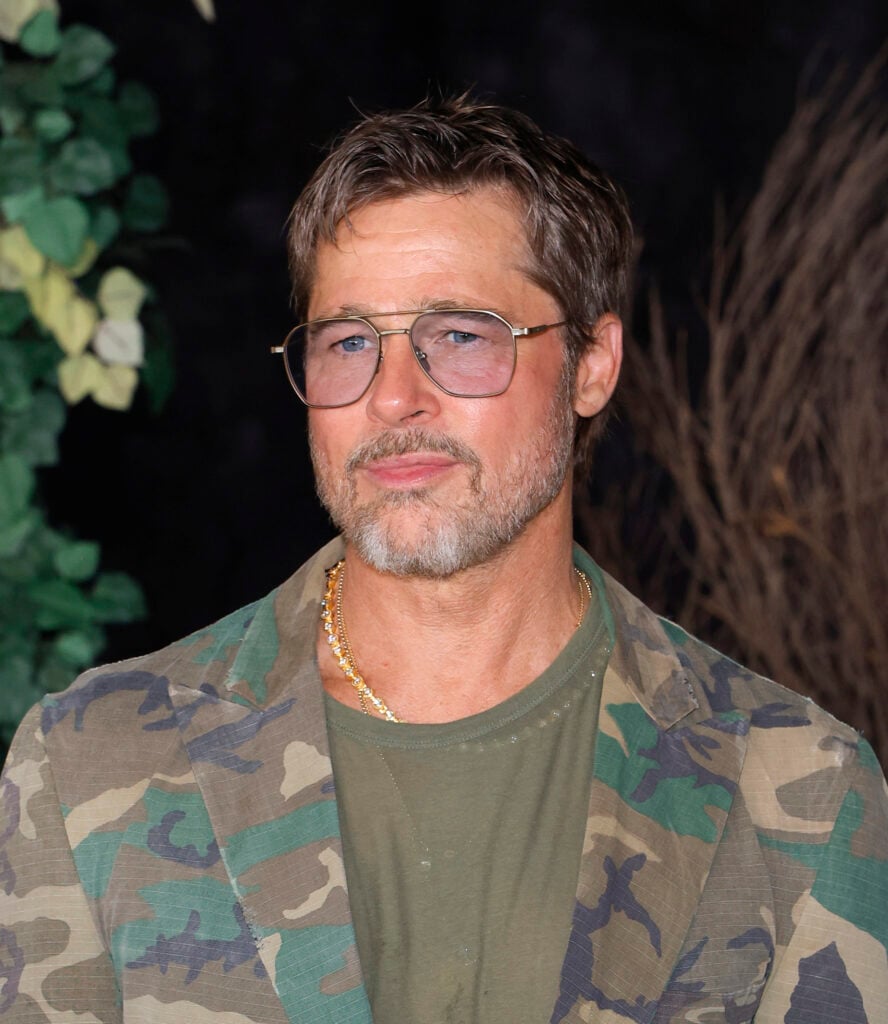
More than two months later, Brad Pitt is dishing on Taylor Swift and Travis Kelce’s wedding.
Remember, the once-beloved actor was spotted drinking at the wedding before he confessed to no longer being sober.
It turns out that he has a story to tell about losing his girlfriend in the throng.
He also dubbed the nuptials “the wedding of the century.”
Brad Pitt opened up about Taylor Swift and Travis Kelce’s famous nuptials this week.
On Wednesday, September 16, he and girlfriend Ines de Ramon were at the Heart Of The Beast premiere in Franklin Tennessee.
(Yes, after everything that the world has learned about Pitt in the past 10 years, he’s still churning out films to launder his reputation. So much for “cancel culture” when it comes to powerful men, it seems.)
When Entertainment Tonight spoke to Pitt about it, he referred to the nuptials on superlative terms.
“You mean the wedding of the century?” Pitt quipped.
“Let me tell you, that was such an amazing night,” Pitt gushed about the July 3 wedding.
“I think we were there 10 hours, maybe 12,” he estimated.
Weddings have a tendency to seem to last either much more or less time than they actually take up. Sometimes, both.
“It was such — it was so thoughtful and well planned,” Pitt praised.
“And,” he added, he found the whole affair “really moving and great fun.”
Brad Pitt did admit that the massive size of Taylor Swift’s wedding did have one downside, especially with the strict no-phone policy.
“But it was big,” he said of the event.
“And at one point, I lost [de Ramon] in the melee … on the dance floor,” Pitt described.
(A grand melee was a medieval custom in which there was mock combat during a tournament. Today, the reference survives to refer to a busy, crowded, or chaotic environment, such as a busy store on Black Friday.)
Pitt was sure to clarify that it did not take “long” to locate de Ramon, as there was “always someone” who could point him to where he needed to go.
Even before the wedding, many condemned Travis Kelce for inviting Pitt onto his podcast for an interview.
It makes sense that people are being similarly critical of Swift for allowing Pitt at her wedding.
That criticism is reasonable.
Sure, 30 years ago, Pitt was one of the most handsome and beloved men in the entertainment industry. That’s not really an excuse for ignoring the harrowing allegations against him.
Swifties have spent recent years reconciling with the fact that, though Swift is very charitable, she does not always make choices reflecting moral clarity. That’s a tough pill to swallow about anyone.
Brad Pitt Gushes, Shares Details About Taylor Swift’s ‘Wedding of the … was originally published on The Hollywood Gossip.
The Hollywood Gossip

Wine country in September is a different place than the one most visitors book for summer, and this year it arrived earlier. California’s 2026 wine-grape … Read moreThe post The best time to visit wine country is happening right now,…