A police officer who lost his wife and two children in a house fire on Boxing Day has paid tribute to his family as “three of the greatest humans to ever grace our presence”.The Latest News from the UK and Around the World | Sky News










A police officer who lost his wife and two children in a house fire on Boxing Day has paid tribute to his family as “three of the greatest humans to ever grace our presence”.The Latest News from the UK and Around the World | Sky News

Michael Gove has expressed regret about his decision to blow up Boris Johnson’s leadership bid after the Brexit referendum, which saw him accused of “backstabbing”.The Latest News from the UK and Around the World | Sky News

From a make-or-break year for Sir Keir Starmer, to the war in Ukraine and the surging influence of China, 2026 is shaping up to be just as newsworthy as 2025.The Latest News from the UK and Around the World | Sky News

Anthony Joshua has been discharged from hospital days after a car crash in Nigeria that killed two of his close friends.The Latest News from the UK and Around the World | Sky News
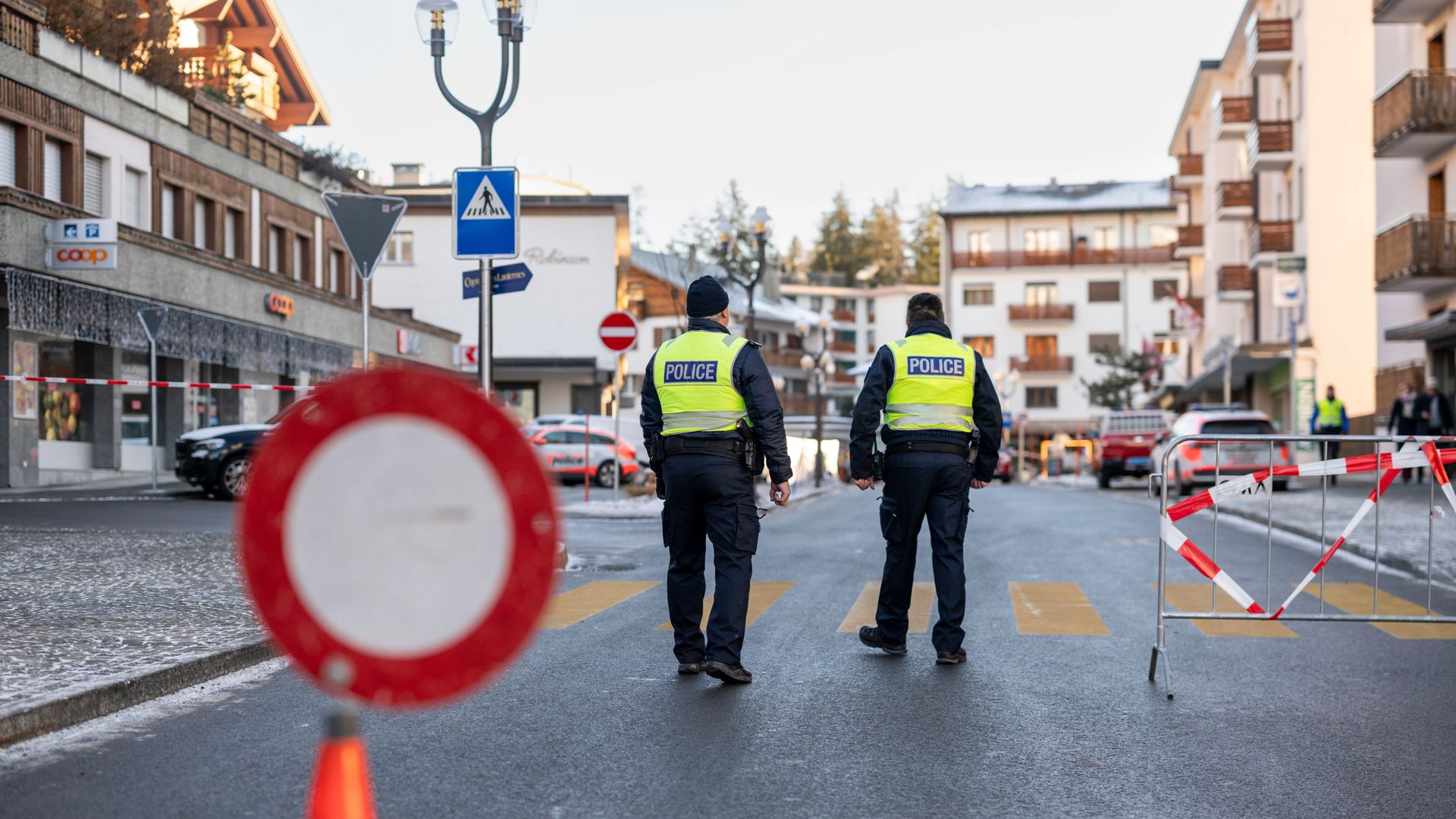
Dozens of people are presumed dead and around 100 others have been injured after a fire during New Year’s Eve celebrations at a bar in the Swiss Alps.The Latest News from the UK and Around the World | Sky News

NOTN- Prolonged heavy snowfall and extreme winter conditions have sunk at least eight vessels in Juneau’s harbors, and have required urgent response from Docks and Harbors crews who say they are rapidly running out of resources as the storm continues.
City officials said three additional large vessels sank overnight, bringing the total number of boats lost during the storm to eight. Docks and Harbors officials said Dozens of other vessels have been saved through round-the-clock efforts by Docks and Harbors staff, and by quick action from fellow harbor users and boat owners.
Crews have been working nearly nonstop, deploying every available dewatering pump as heavy snow accumulation overwhelms vessels and dock infrastructure.
Despite those efforts, officials warned that conditions remain severe and that limited equipment and personnel are straining the response.
Juneau Docks and Harbors urged the public to report any vessel at risk of sinking. Harbor staff can be reached at 907-586-5255, and after hours, residents are asked to call the Juneau Police Department’s non-emergency line at 907-586-0600.
In response to the scale of the storm, Docks and Harbors is bringing back seasonal summer staff and has created short-term emergency employment positions to assist with snow removal.
“This is truly an all-hands-on-deck event,” officials said in a Facebook post, thanking harbor users and the Juneau community for their support.
By: Corinne Smith, Alaska Beacon

It was a difficult and consequential year for Alaska schools, educators and students.
While Alaska lawmakers passed the first significant education funding increase since 2011, the state rode a federal funding rollercoaster as funds were frozen, released, disputed and appealed.
Western Alaska students and families also endured the devastating storm disaster of Typhoon Halong. Hundreds of students, as well as teachers, were displaced from their homes and forced to move and adapt to new schools across the state.
Here are some of the top stories of the year:
Education was the top priority of the Legislature and Gov. Dunleavy this year, and an embattled topic throughout the legislative session, with an ongoing dispute around funding for schools and education policy changes sought by the governor to address lagging school performance and test scores.
Gov. Dunleavy vetoed two education funding bills during the session, citing a lack of policy changes he favored to boost homeschool and charter school options, and address test scores. In April, he vetoed a bill increasing the BSA by $1,000, calling it a “joke” and insisting that policy changes be included. Legislators introduced and passed another bill increasing funding by $700 per student in late April. In an effort to compromise, they included many of the governor’s priority items, including charter school changes, incentives for reading programs, and establishing an education task force to recommend further education policy changes.

Dunleavy vetoed the education funding increase out of the final budget in June. The legislature came back in August to override the veto. It was the first time since 1987 that Alaska lawmakers have overridden an appropriations veto by a sitting governor.
School officials said the additional $50.3 million in per student funding, known as the base student allocation, is essential to help maintain class sizes, hire and retain teachers, and create stability for students.
“We’re extremely excited. A lot of our administrators were texting and very excited about getting it overturned today, so that made Valdez very happy,” said that city’s school superintendent, Jason Weber, in August after the veto override vote.
Over the summer, as school districts grappled with uncertainty around a state funding increase, the Trump administration announced a freeze of over $46 million in funds for Alaska schools, including for instruction and migrant education programs, which support students who miss class due to seasonal work like fishing. The Anchorage, Fairbanks North Star Borough, and the Kuspuk school districts joined a nationwide lawsuit challenging the withholding of congressionally approved funds as unlawful.
“These are not extras. These are the programs that give our students a chance,” said Kuspuk School Superintendent Madeline Aguillard. “When the federal government walks away from its obligation, it is not a delay. It is denial. Denial of access. Denial of progress. Denial of the futures our students have a right to pursue.”

In late July, the federal government released $5 billion of the $6.8 billion in K-12 funding.
The state is involved in an ongoing dispute with the U.S. Department of Education, which claims the state has failed a disparity test – allowing no more than a 25% gap between the highest and lowest funded schools. The state has appealed the finding, with over $80 million in federal impact aid at stake. A decision is expected in 2026.
The Trump administration also froze more than $6 billion in congressionally-approved funding for adult education and workforce development funding in July. In Alaska, it prompted immediate cuts to programs and staff layoffs. The state had been awarded over $1.1 million in grants last year, and the frozen funds in July were a shock to programs and students that included GED classes, literacy and civic education, English language classes and workforce development.
The devastation of Typhoon Halong forced an estimated 2,000 residents to evacuate Western Alaska communities in the largest mass evacuation in state history, and education officials across districts worked quickly to re-enroll students and provide support services at schools across the state.
More than one hundred students relocated to Bethel, remaining in the regional hub of Western Alaska and the Lower Kuskokwim School District. An estimated 140 students enrolled in the Anchorage School District, which worked to keep storm displaced students together, including enrolling a number of students at the Yup’ik immersion program at College Gate Elementary School. ASD also provided transportation from emergency shelters, health services, meals and translation services for Yup’ik speaking families.
“They’re going through trauma and it’s going to take a lot of work. But we’re going to put that in, because these kids are worth it,” said Anchorage Superintendent Jharrett Bryantt at an Oct. 21 school board meeting. “And they deserve a wonderful education that we want to offer them, in ASD, for as long as they’d like to be here.”
Other students re-enrolled in schools where they relocated across the state, including in Nenana and Fairbanks areas, the Kenai Peninsula, Matanuska-Susitna Valley Borough, as well as boarding schools like Mt Edgecumbe High School. Teachers and staff displaced by the storm also were re-assigned, with the majority staying in the Lower Kuskokwim School District, according to the superintendent.
Many of the district’s 22 village schools also served emergency shelter to residents as Typhoon Halong hit, and as relief centers in the days and weeks after the storm as the recovery effort got underway.


AP-Flu is rising rapidly across the U.S., driven by a new variant of the virus — and cases are expected to keep growing with holiday travel.
That variant, known as “subclade K,” led to early outbreaks in the United Kingdom, Japan and Canada. In the U.S., flu typically begins its winter march in December. On Tuesday, the Centers for Disease Control and Prevention reported high or very high levels of illness in more than half the states.
The CDC estimated there have been at least 7.5 million illnesses, 81,000 hospitalizations and 3,100 deaths from flu so far this season. That includes at least eight child deaths — and is based on data as of Dec. 20, before major holiday gatherings.
Some states are particularly hard-hit. New York’s health department said the week ending Dec. 20 marked the most flu cases the state had recorded in a single week since 2004: 71,000.
It’s far too soon to know if this flu season will be as severe as last winter’s.
But it’s not too late to get a flu shot, which health experts say can still prevent severe illness even if someone gets infected. While this year’s vaccine isn’t a perfect match to the subclade K strain, a preliminary analysis from the U.K. found it offered at least partial protection, lowering people’s risk of hospitalization.
According to the CDC, only about 42% of adults and children have gotten a flu vaccination so far this year.
The flu virus is a shape-shifter, constantly mutating, and it comes in multiple forms. There are two subtypes of Type A flu, and subclade K is a mutated version of one of them, named H3N2. That H3N2 strain is always harsh, especially for older adults.
Subclade K’s mutations aren’t enough of a change to be considered an entirely new kind of flu.
But they’re different enough to evade some of the protection from this year’s vaccine, said Andrew Pekosz, a virus expert at Johns Hopkins Bloomberg School of Public Health.
The CDC said it’s too soon to know how severe this season will be.
Flu seasons dominated by any version of H3N2 tend to be bad, with more infections overall and more people becoming seriously ill. But Hopkins’ Pekosz cautioned it will take time to tease apart whether this subclade K version simply spreads more easily or also is more dangerous.
That question aside, the CDC notes there are some prescription medicines to treat flu — usually recommended for people at high risk of complications. But they generally need to be started a day or two after symptoms begin.
The CDC and major medical societies all recommend a flu vaccine for just about everyone age 6 months and older. Despite lots of recent misinformation and confusion about vaccines, the flu recommendations haven’t changed.
Flu is particularly dangerous for people 65 and older, pregnant women, young children and people of any age who have chronic health problems, including asthma, diabetes, heart disease and weak immune systems.
The vaccines are brewed to protect against three influenza strains. Despite concern over that new H3N2 variant, they appear to be a good match against H1N1 and Type B flu that may also circulate this year, Pekosz said.
There are shots for all ages, as well as the nasal spray FluMist for ages 2 to 49. For the first time this year, some people may be eligible to vaccinate themselves with FluMist at home.

NOTN- City and Borough of Juneau facilities are closed today as hazardous road conditions followed a record-breaking overnight snowfall.
According to the National Weather Service in Juneau, 16.4 inches of snow fell Tuesday at Juneau International Airport, pushing the city’s December total to 79.8 inches.
The all-time record for snowfall in a single month in Juneau remains 86.3 inches, recorded in February 1965.
The heavy snowfall has prompted CBJ officials to close most city facilities and offices for the day, citing unsafe travel conditions.
There was even an avalanche advisory for Thane road on Tuesday afternoon, the road will remain closed until noon today when Alaska Department of Transportation will provide an updated status.
Juneau is set to experience more winter weather today with an extended winter storm advisory also until noon, before precipitation will become appreciably lighter through the latter half of the week, according to the National Weather Service.
City staff will continue providing services remotely where possible.
Facilities closed today include all Juneau Public Libraries, the Juneau-Douglas City Museum and all Juneau Parks and Recreation facilities, including the Dimond Park Field House, Dimond Park Aquatic Center, Augustus G. Brown Pool, Treadwell Arena and the Zach Gordon Youth Center.
City Hall, the CBJ Permit Center and all other CBJ offices are closed to the public but remain accessible by phone or email. The Juneau Recycling Center is also closed.
Capital Transit continues to operate on winter routes.
In a statement, City Manager Katie Koester thanked residents for limiting travel and allowing plow crews time to clear roads.
“This winter storm has been relentless, but Juneau always pulls together when confronted with adversity,” Koester said. “We ask, once again, that everyone limit driving today where possible for your safety and the safety of others.”
Residents are urged to continue monitoring conditions and exercise caution as cleanup efforts continue across the city.

Reading Time: 3 minutes
Tatiana Schlossberg — the middle child of Caroline Kennedy and Edwin Schlossberg and the granddaughter of former President John F. Kenney — died on Tuesday, December 30.
She was 35 years old.
The tragic news came just after a month since Schlossberg told the world she had been diagnosed with cancer.
The passing was shared by the social media accounts for the JFK Library Foundation… on behalf of Tatiana’s extended family.
“Our beautiful Tatiana passed away this morning. She will always be in our hearts,” read the post, which was signed by George, Edwin and Josephine Moran, Ed, Caroline, Jack, Rose and Rory.
In November, Schlossberg announced that she had been diagnosed with acute myeloid leukemia via an essay published by The New Yorker.
“My first thought was that my kids, whose faces live permanently on the inside of my eyelids, wouldn’t remember me,” she wrote at the time.
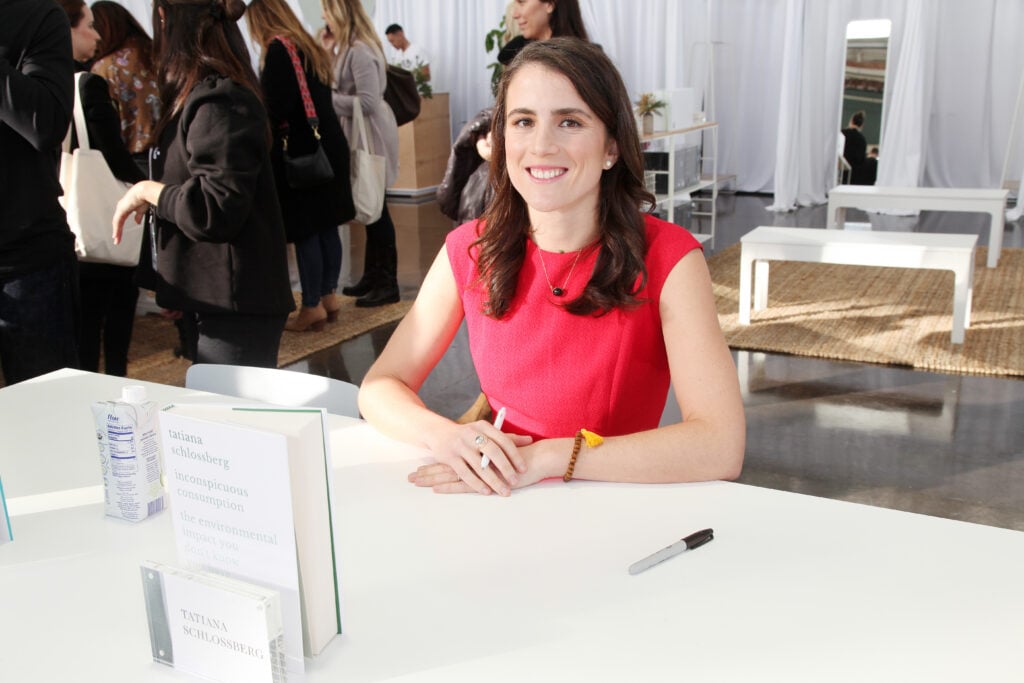
Schlossberg explained in this piece that doctors found the disease while she was in the hospital after giving birth to her second baby, a daughter. She and husband George Moran, who got married in 2017, also share a son.
I did not — could not — believe that they were talking about me,” Schlossberg wrote of her diagnosis, which would require chemotherapy and a bone-marrow transplant.
“I had swum a mile in the pool the day before, nine months pregnant. I wasn’t sick. I didn’t feel sick. I was actually one of the healthiest people I knew.”
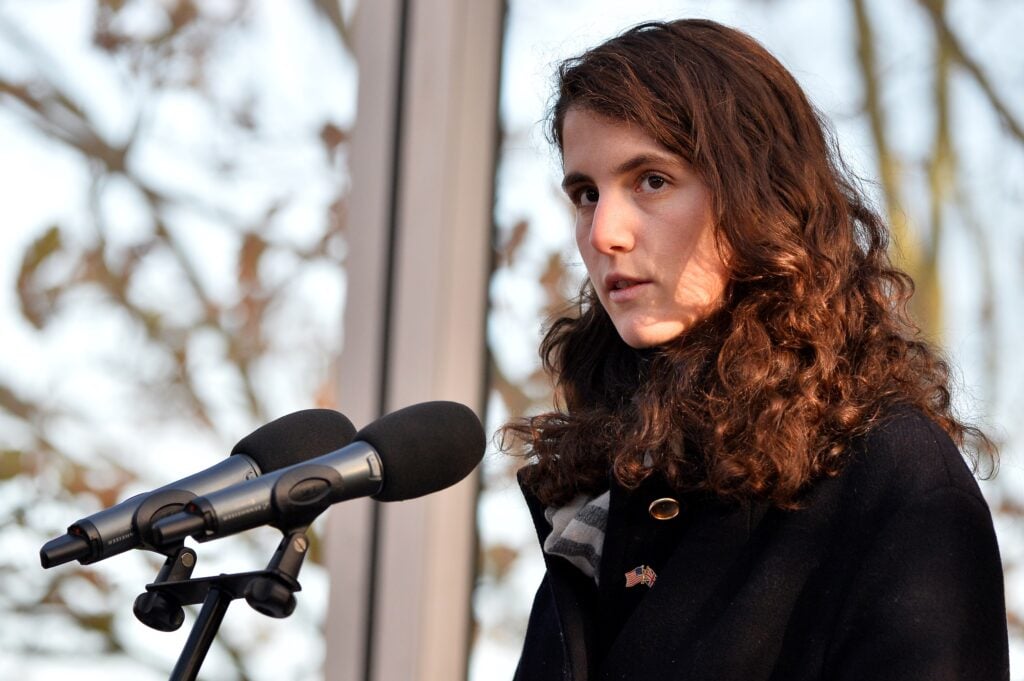
Schlossberg’s well-known family has endured numerous personal tragedies.
Her grandfather, President Kennedy, was assassinated in 1963; and her uncle, John F Kennedy Jr, died in a plane crash in 1999.
“For my whole life, I have tried to be good, to be a good student and a good sister and a good daughter, and to protect my mother and never make her upset or angry,” Tatiana wrote last month.
“Now I have added a new tragedy to her life, to our family’s life, and there’s nothing I can do to stop it.”
Schlossberg also didn’t shy from addressing the man who she deemed an “embarrassment” to the Kennedy family: her mother’s cousin, Robert F. Kennedy Jr., who was chosen to serve as President Donald Trump’s health and human services secretary while she was fighting for her life during multiple treatments, transfusions and hospital stays.
“I try to live and be with them now,” Schlossberg wrote of her children a few weeks ago. “But being in the present is harder than it sounds, so I let the memories come and go. So many of them are from my childhood that I feel as if I’m watching myself and my kids grow up at the same time.
“Sometimes I trick myself into thinking I’ll remember this forever, I’ll remember this when I’m dead. Obviously, I won’t.
“But since I don’t know what death is like and there’s no one to tell me what comes after it, I’ll keep pretending. I will keep trying to remember.”
Tatiana Schlossberg, Granddaughter of JFK, Dead at 35 was originally published on The Hollywood Gossip.
The Hollywood Gossip