 A Winnie the Pooh journal and the promise of a trip to Disney World—those are the almost two-decade-old memories that stand out in Camila Cabello’s mind when she thinks about her and mom Sinuhe…
E! Online (US) – Top Stories









A Winnie the Pooh journal and the promise of a trip to Disney World—those are the almost two-decade-old memories that stand out in Camila Cabello’s mind when she thinks about her and mom Sinuhe…
E! Online (US) – Top Stories
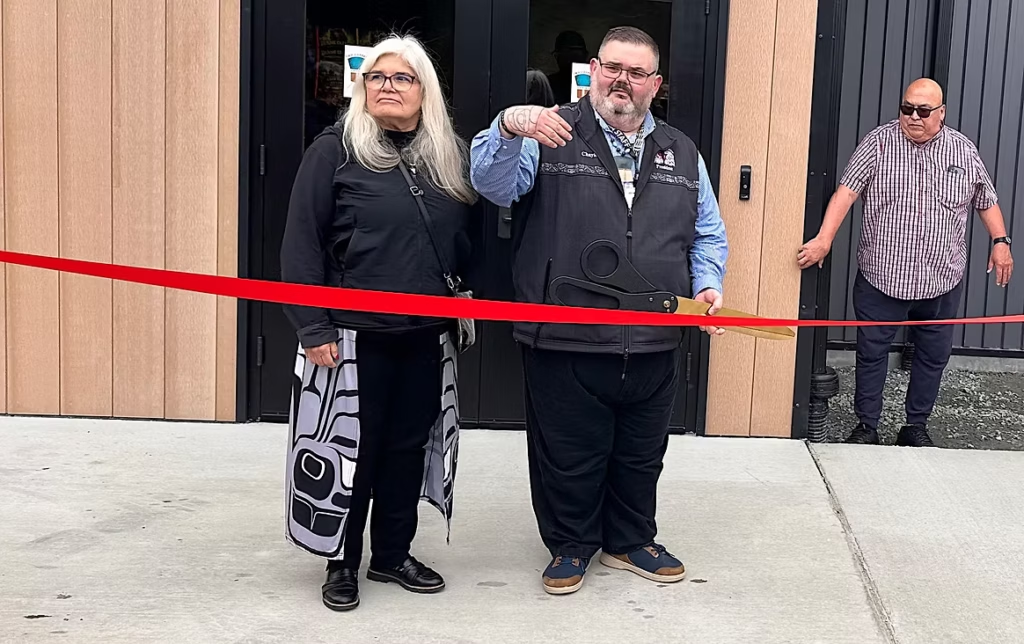
The top vice president is seeking to replace the longtime president of the Central Council of the Tlingit and Haida Indian Tribes of Alaska during its tribal assembly next week, following both significant achievements and controversies involving tribal leadership since the last election two years ago.
First Vice President Ku.seen Jacqueline Pata, who’s held that office since 2021, is seeking to replace Chalyee Éesh Richard Peterson, the tribe’s president since 2014. Three other presidential candidates — Alicia “Lisa” Gassman, Tasha Hotch and Melissa M. Kookesh — are also listed on the ballot.
Peterson was unopposed in the 2024 election.
Pata, in an interview Friday, said comments she’s heard from tribal citizens and the number of candidates running for president are indicative of “wanting to have some voice in the direction of their government.”
“I’m concerned about long-term sustainability,” she said. “I want to be able to make sure that we have financial accountability, we’re transparent and accountable to our tribal citizens, but also accountable within the tribal council and that we’re true to our values,” she said.
Attempts to reach Peterson on Friday afternoon were unsuccessful. In a social media post on Friday, he said the tribe is facing challenges because “we are living through unprecedented political times.”
“Federal administrative swings continue to challenge Tribal sovereignty and funding across Indian Country,” he wrote. “Through these shifts, my focus has been keeping Tlingit & Haida steady, protected, and moving forward.”
During the past two years the tribe has launched an education campus project, debuted a long-planned tribal casino, been prominently involved in glacial flood protection efforts and made other advances. But questions have been raised about some tribal business and leadership actions, such as a contract providing support services in Guantánamo Bay where the Trump administration has detained migrants.
Last summer tribal officials investigated abuse accusations by a former romantic partner against Peterson, with Pata announcing at a tribal council meeting a few weeks later the review had concluded with no finding of whether the accusations have merit.
Pata said she expects those accusations and other difficulties the tribe has faced to be part of the election debate when the three-day tribal assembly convenes Wednesday at Elizabeth Peratrovich Hall.
“I think all of those things create challenges, but they’re realistic, it happens,” she said. “We have challenges and we have to overcome. I think when you have those challenges, and you recognize where you need to strengthen your accountability, your responsibilities, it’s a good time to evaluate those and to think about what we need to do to put better checks and balances in place, and that’s definitely part of my campaign.”
Peterson, in his message Friday, wrote, “I will always put our people first, regardless of the role. Right now, I believe my experience, relationships, and energy are best used serving as your President to protect what we’ve built and complete the work ahead.”
A profile of Peterson at Tlingit and Haida’s website states he is Tlingit from the Kaagwaantaan (Eagle/Wolf) clan and a lifelong resident of Southeast Alaska. Before becoming the tribe’s president, he served as CEO of the Prince of Wales Tribal Enterprise Consortium, president of the Organized Village of Kasaan, mayor and a city council member for the City of Kasaan, and member of the Southeast Island School District Board of Education.
“Together we have launched major projects that reach far beyond what we initially imagined from expanding behavioral health care and broadband infrastructure to growing our economic sovereignty and laying the groundwork for Tribal Education Campuses,” he wrote in his post Friday. “I feel a deep responsibility and duty to our Tribal citizens to ensure these initiatives are fully realized and successful.”
Pata is a member of the Lukaax̱.ádi clan (Raven/Sockeye) in Haines. She has been the president and CEO of the Tlingit Haida Regional Housing Authority since 2019. Prior to that she was the executive director of the National Congress of American Indians (NCAI), and deputy assistant secretary for Native American Programs for the U.S. Department of Housing and Urban Development. She also currently chairs the tribal assembly’s Governmental Affairs (State and Federal) Committee.
“I spent 20 years in Washington, D.C., and working with Congress and various presidents, and all the tribal governments in the country on issues like housing and economic development, education, healthcare — the list goes on,” she said. “I sat at the UN negotiating for Indigenous rights and the right for the indigenous voice at UN forums, and I made a choice to come home because I wanted to make a difference for my own people, and that’s really why I’m running.”
Among the other three candidates, Gassman served in top leadership positions for the Sheet’ká Ḵwáan Sitka Tribe of Alaska before stepping down as its CEO last December.
Kookesh is the permit facilitator for the Alaska Broadband Office, where she also served as tribal liaison for three years, and has worked as a legislative staff member as well as nearly a decade working in Tlingit and Haida’s office of the president. Hotch, a longtime tribal health official, was the lone opponent against Peterson in the 2022 tribal assembly election.
All of the candidates except Peterson are also listed as vice presidential candidates on the ballot so, for instance, Pata could be elected to continue serving as first vice president if her presidential effort is unsuccessful.
Peterson is scheduled to give the annual State of the Tribe address at 11 a.m. Wednesday, with the declaration of nominees for council leadership positions and candidate speeches scheduled to start at 3 p.m. The elections are scheduled to begin at 1:05 p.m. Thursday, with winners taking their oaths of office at 4:30 p.m.
This story was originally published by the Juneau Independent.
The post Tlingit and Haida’s top VP challenging longtime president in next week’s tribal election appeared first on Chilkat Valley News.
Lizzy Hahn: Erika Merklin thank you so much for joining me in the KHNS studio today. Should we just jump right in?
Erika Merklin: Absolutely.
So my first question is: the Planning Commission has been an elected body for a few cycles now. How do you think that this has impacted land use regulation in the borough during that time, if at all?
Generally speaking, I’m not sure that it has changed much, other than it’s allowed for the opportunity for two upper valley residents to be serving on the Planning Commission. Both myself and Derek [Poinsette] were elected in that first-cycle three years ago, so I think that’s enabled us to bring more perspective to the townsite for borough-wide planning. But ultimately, we’re making decisions that are based on code.
What do you think the importance is for having people from the upper valley also on this board, and not just people from the townsite.
Well, I think it gives a perspective for the townsite of residents that are living within the borough, which is we have a very large borough, and a lot of people in the town site might not really understand the needs that we face in the upper valley. I think that really allows for us to share that insight, number one, and to bring forth ideas around, how do I say, like moving forward… we need more housing and there’s more there’s been more residential neighborhoods that have come up in the last say, you know, 10 to 20 years and I know that there’s been a lot of land that’s just recently been sold in the upper valley and so I think it’s really important to be able to have representation as that’s being developed, and two, the comprehensive plan has made recommendations about revisiting the general use rezone. So I think it’s really important to have people that actually reside in this area to be able to bring back what neighbors are saying, and also to be able to organize meetings so people can actually be present. A lot of times, people that are living outside the town zone aren’t willing to drive in in the evenings, and that makes sense, for meetings. And so, to be able to expand meetings to the upper valley has been really wonderful.
Have you had some planning commission meetings up in the upper valley?
We actually did have one that was a joint planning commission meeting with the assembly, and that was actually really successful and really well attended. And we’ve had some meetings with the Department of Natural Resources, some visiting scientists in the upper valley, so it’s really been great to get community input, even informally when it’s not even specific to borough government meetings.
There have been tensions between the Planning Commission and the Borough Assembly for the last few years, when the Assembly disagrees with a Planning Commission recommendation or chooses to go in a completely different direction. If elected, what would you like to do to deepen the collaboration or communication between these two bodies?
Yeah, that’s a great question. I know that when I first was elected to the planning commission three years ago, we didn’t have a lands planner, and we were also working with an interim borough manager. So I feel that we really got off on a footing where there wasn’t a lot of communication with staff, and again with the borough assembly, and I would really like to see that happen more. I think that that’s something that can be ultimately tasked with the staff to find ways that there can be maybe a biannual meeting or some way to actually be collaborative between the two bodies. Personally, I do attend the Haines Borough Assembly meetings, biweekly each Tuesday. So I’m staying informed that way. But as far as the two bodies working together to collectively problem solve, I think having the support of staff is ultimately really what we would need.
And then, what role do you think that the planning commission plays in helping the borough grow?
Well, I think ultimately what we need to do is utilize the comprehensive plan, which we spent a lot of time working towards completing. There’s a lot of really great information in there, and as far as growing the Haines Borough, that can mean a lot of different things. But ultimately, as far as identifying key priorities that residents want and moving those forward, I see the planning commission and commissioners each having the opportunity to find specific areas that they’re particularly either interested in or adept at pursuing to be able to bring forth new projects. Some of those that have come out from the past commissioners that I think are really fabulous is one that we’re currently working on, which is the new development being proposed off of Small Tracts Road. That’s been many, many years in the making.
I do know that it’s coming before the assembly again, the Third and Main property, and what to and how to incorporate that into our community versus selling it to a private entity. Another one is landslides planning, and so I know that both Derek [Poinsette] and Patty [Brown] have been very involved in that, so I think that it’s really a matter of, like, what each commissioner is willing to to put to bring forward and which projects they’re really interested in pursuing, You know ultimately we’re showing up at each meeting and making decisions, but it’s the work that happens outside of that that really brings projects to fruition.
What are some of the projects that you yourself are most interested in?
As a planning commissioner, one of the projects I’m focused on peripherally … would be really the Third and Main [parcel]. I know that that keeps coming back for discussion, and then sort of gets shelved, and then after a certain time frame, it gets brought back up.
But I do think that that’s a really important piece of property for our community, and I think that there have been some great proposals for that. And if we could get some conversation around what that could be for our community, I would love to have those discussions. Some other issues, I think, are around the cruise ship dock, and that’s proving to be controversial. I think, yeah, that’s going to be a really important one. More to come on that.
Yeah, and then what does responsible development look like for you?
For me, responsible development will be development that is something that’s been thought through in the comprehensive plan and something that the residents can get behind. I think also responsible development for the Haines Borough will ensure that the taxpayers aren’t responsible for cleanup, and that either the borough residents or the state isn’t responsible for that. And I know that that has been an issue in the past with private landowners, unfortunately, not cleaning up properties or and then leaving that for the taxpayers to do. I think that another really important thing is to be thinking about land use conflicts and making sure that we aren’t finding ourselves in lawsuits, which we currently are in now around land use. So anything that we can do to be efficient and effective with the money that we’re collecting from residents, I think is really important.
The planning commission members are often told to follow code, which still requires a fair amount of interpretation. How would you approach your decision making when reading a section of code that can be interpreted in multiple ways?
Well, yeah, that’s a tough situation, and in those cases, I think it’s really important to listen to the residents that are coming before – if anybody does have public comments – or also the comments from other planning commissioners, and to really lean into the lands planner for insights into whether there’s precedent that has already been set. Then really to go back to, again, really trying to utilize the comprehensive plan for our ultimate strategy … that’s been laid out. And so, how to be able to employ that strategy in the tactics of making those decisions. So, … really kind of leaning into also our lawyer because we’re we we really do need to have that expertise as we’re all volunteers. So even though many of us are very prepared, there’s really a lot to know, and there’s a lot of nuance within this. So I really go back to leaning into experts and paid staff.
Yeah, you mentioned that it’s kind of a complicated situation to figure it all out now that you have served on the planning commission for one term. Do you feel like if you were elected, you now have some steady footing to jump into some of the issues that you mentioned, or is there still a lot of learning with each topic that gets brought up?
I do feel like I have gained a lot of experience these last three years, especially with the hiring of the lands planner. I feel that that’s a lot of support that we never had in the beginning, and really were kind of left on our own to figure things out. And now I realize that we really have more support than initially I thought, so that’s been great as far as learning. I’m always learning, like planned-use development. I didn’t know what that was until just this last year, really, in delving into that with all of our discussions, and so I’m always learning, and that’s one thing that I really like about being on the planning commission is that it’s an opportunity for me to get to to learn more about our local government and our local residents, and how to actually make things happen.
Yeah, and then do you support the development and expansion of the local 5G cellular network?
Well, that’s a controversial question, but ultimately, I would have to say I don’t. And, that is because I’m really hearing a lot of pushback from the residents, and so on a personal level, I really want to be able to listen to them and make decisions based on that. Having said that, that is a situation that is unfortunately beyond the scope of something that I’m able to implement.
Yeah.. So the planning commission puts forward recommendations to the borough, and then is it ultimately up to the borough to decide things like this with the 5G cellular network, or what? What are some of the decisions that the planning commission makes that kind of end at the planning commission level?
Yeah. Well, ultimately we make recommendations, and then the assembly can either accept or veto those recommendations, or add their own caveats to them. My understanding with 5G is that it’s even beyond the borough, and that it’s the federal regulations, and so that’s my understanding of this situation, is that it’s not really a borough level decision to be made.
If elected for another few years, what would a successful term look like for you? Are there any other topics that you would hope to address within the next year, two years, or three years?
I think the biggest thing that I would like to address is to continue the discussion of the general use zone, to see if there are neighborhoods that are interested in rezoning. Because I do feel that once annexation had taken place, that really wasn’t a support that the borough had given to the upper valley residents, and I think that topic’s been neglected. And so I would really like to hear what people have to say about that. And I think that that is an opportunity [that could] happen over the winter. I know we had tried to have a discussion, and everybody’s really busy over the summer. And now it’s moose hunting season. So that’s really important to me.
The other thing too, I had mentioned, is the cruise ship dock, and what do we want our community to feel like? What do we want our community to be like, and who do we want to make those decisions? And I think that’s really important for us to be thinking about that. And if we’re going to give over that decision making to another entity, I think it would be really important to have a lot of community discussion around that, and then I think to just how do we want to grow our community? Are we focused on having a retirement community? Do we want young families to live and grow here? And what type of infrastructure do we want to really be focused on bringing to our community?
And you know, when we talk about community centers in town, I know that was a hot topic years ago about the Third and Main property. And you know, obviously, you know that requires funding, and so the initial knee jerk reaction is like, where are we going to get the money? But we are, as a borough, constantly grant-writing and trying to get funding for lots of things. You know, namely docks, but I do think that there’s an opportunity for expansion and for really focusing on what type of infrastructure we need to support people to live here and and and an infrastructure that’s really focused on residents and not necessarily just seasonal visitors.
What does some of that infrastructure look like? Would that be like apartments and more like single family homes, or how do you envision retaining year long residents?
Well, I think some of the infrastructure could be more third spaces. I’m a real proponent for community centers in having access to places where you don’t have to have money to to enter, and as far as some of the infrastructure needed to keep to keep and or build for year-round families, some of that would be potentially more housing, and some of the ways of doing that exist. I know in Sitka, for example, they have a land trust that’s working on small tiny homes for local residents. Sitka’s a little bit more advanced than we are, and has more money and funding to be able to push those projects forward. I don’t know that that’s something that our community would necessarily put forward.
I do think Dusty Trails is a wonderful asset to our community. I don’t know that we could necessarily get that type of funding in our current climate, but something like that would be really great to have an opportunity to have more housing, Haines Assisted Living has been really great too. So those kinds of things that have happened over the last few years really have made a huge difference. And so I would like to see more of that happen.
Is there anything else that you want to mention, or a topic that you want to bring up that I didn’t touch upon?
I don’t think so. I mean, yeah, those were great questions. I just thank you for having me here.
The post Watch: An interview with Erika Merklin, candidate for Planning Commission appeared first on Chilkat Valley News.

Editor’s note: This year the Chilkat Valley News partnered with KHNS on its election coverage in addition to hosting two candidate forums. A playlist of these profiles, as they are posted, can be found here.
We hosted a forum with planning commission candidates in Mosquito Lake, which can be found here. And, we’re hosting a forum for assembly candidates on Friday, Sept. 25 at 6:30 p.m. in the Chilkat Center. It will also air live on KHNS, 102.3 locally.
Rashah McChesney: Okay, Nate Reams, thanks for joining me. I really appreciate it, especially on a Bluebird Saturday like we’re having today. Tell me, why did you decide to run for Planning Commission again?
Nathanael Reams: Thanks. I’m glad I made it. I decided to run for Planning Commission because I actually had some positive feedback, and I was inspired by the people I’ve gotten to work with so far, and I genuinely have a passion to want to help this community in the small way that I’m able.
Yeah. So you just came off of a year long term, right? You’re running for a three year seat now.
Yes, ma’am.
And last year, I remember when we spoke, you felt like your background in federal regulatory permitting and sort of keeping projects on track was going to help you serve on the planning commission because you were kind of new to the idea of the planning commission. What did you learn in the last year?
I definitely learned that you know my ambition to remain objective is still possible in that realm, but there are definitely areas, specifically when they bump up against you know lacks of definition within code, that objectivity becomes rather difficult. And so, having to work with the team and appreciate the work that the team does outside of the planning commission, the staff itself there at the borough, making our job a lot easier, and then making it so that way we’re able to remain objective and remove any sort of apparent favoritism from the system.
I’m glad that you brought that up because that was actually one of the biggest questions that I had for you. I remember last year when we talked to you and said, “I’m going to stick with the code. This is what I’m going to do. And I think sometimes that’s not as straightforward as you think it is, because there are sections that require interpretation. Sometimes there are sections missing, or as we learned this year, sometimes permits don’t quite fit, or projects don’t quite fit in the permits that we have available. How did you approach? Was that a challenge that you faced? And if so, how did you approach, you know, decision making when the code wasn’t as explicit as you were hoping it would be.
Yeah, that was when we really leaned heavily on the staff’s experience specifically with code in the past, and it was, or at least that’s how I felt. And it was very helpful to have the staff there to quarry in those meetings, and if we needed to postpone something, be able to. I think the only point of frustration through the season, if I can’t talk about the points of frustration, absolutely, was running into situations where we’re having to. We have a public comment period, and some of it seems more focused on what the public is saying versus what the applicant is saying, and especially when that you know we’re running into rights of personal property, that becomes a very challenging and frustrating scenario where we’re having to navigate both the public interest and then also the rights of the person, right? And I think that’s where objectivity was really kind of fractured, because you know, per code, we really need to focus on the person’s individual rights to their personal property. But yeah, I think maybe people just need to be a little bit more chill, especially when they recognize that hey, like you know that’s not my property. Also,
So do you mean people were concerned about the impact of something like say putting a 5G tower on a private parcel in a neighborhood or something and the rights of the person to accept that on their property, but how it could impact their neighbors, or are you talking about some other broad?
Maybe something a little more innocuous was more frustrating. Like that, I understand people have opinions about certain information that’s out there and concerns for their own personal health. Right. I’m not saying that that’s not an issue, but for people to start, like for instance, if somebody wants to build something on their property, not have somebody pay them to build a tower, but they want to build something personal to their own property, and then to have the neighbors without good reason or good compromise have an issue with those individuals making those structures can be kind of frustrating because you know it’s it’s their property, it’s their right. They’re willing to work with you. Let them work with you. You know, let them be neighborly. Please be neighborly in return. I think that was the hardest thing for me was kind of almost a disenchantment, right? Because I really love Haines, and I really like the people in Haines. And most of the time, people turn up, you know, to help out at any point ever. But then when they get into, you know, a political forum, all of a sudden it’s, you know, all all combat. And sometimes pretty aggressive, so that was a little disappointing and disenchanting. But for the most part, it was cool to experience a lot of what we talked about in the interview last time, where we ran into those lacks of definition and the inability to remain objective, even though you you know you really want to believe that it’s possible with such a rigorous document, but
Objectivity to reach for objectivity is a whole practice. Yeah, no, did you ever arrive there?
I’m here to try.
I do remember the last time we spoke about this, I came in really excited to talk about what an elected planning commission could mean for Haines because we’re the only one in Southeast, and I think we might be one of the only ones in the state. I’m not positive about that, but I think you had also been a recent transplant to Haines, and so you were not real sure, you know, what impact that would have. Since you’ve spent a year on the planning commission, have you come across any sense of how it’s changed decision making wise for commissioners like you that were elected versus those that were appointed in the past?
I don’t think I’m experienced enough to comment on that, right? So I could see it having an impact on people’s decision making, right? Like from being an appointed individual, you’re kind of like, you know, you have the mechanisms that, or you don’t have the mechanisms that are forcing you to make publicly popular decisions, right? But if you’re an elected body, I could see some external pressure, right, having that negative impact on the planning commission’s ability to make decisions in an objective fashion and around code specifically.
You know, it sounded a little bit like you were saying that there were some surprises for you in your first year of being on the planning commission. I wonder if you could tell me a little bit more about what things surprised you and what things were, you know, just not things that you had planned for.
Yeah, there was. We already kind of talked about some negative surprises, right? A little bit of disenchantment, but there were a lot of really pleasant things, right? There were really cool times where you got to see a positive passion, like for instance, the sledding hill, the amount of people that really loved the community in such a way that they were like really wanting this to be a part of it, and then took people to, you know, communicate and show up, and really express the way that the community felt as a whole. It was really cool to see people come together in that fashion. It’d be cool to see people come together in that fashion in a more collaborative manner. The planning commission is made up of a bunch of different people with incredibly different views. They’re all separate human beings, and to watch all of them work together so succinctly, right, and be so deliberate in backing up one another to make sure that you know we’re fulfilling our duty in such a way that not only supports the town and supports the process, but also keeps each other, you know, in a safe sense and able to do their job without being without there being any kind of question about their the validity of their decision, so it was really cool to watch both the senior and newer members of the planning commission work together in such a fashion, regardless of their political standing and personal backgrounds. It was a very supportive environment in the planning commission itself, and then also I was really struck by the staff’s efforts and personal talent in the fields that they work in.
Yeah, I’m curious. Some things that have come up in the last year have been situations where the planning commission has maybe maybe made a recommendation or has done something with a permit that once it’s gotten up to the assembly level, the assembly has gone in another direction. And I’m curious how you think about the decision making that the planning commission does in relation to the assembly, and if you’ve. About how you might communicate with individual assembly members differently, or how is that relationship working, and how would you like to see it work?
I really appreciated when we had the liaison coming in more frequently. I know that recently some things have come up, so we haven’t been able to have that. But it definitely makes it feel like there’s a lot more communication coming across between the assembly and the planning commission. I’m personally grateful that there’s that extra step between the recommendation that the planning commission makes and then the assembly going and coming to their decision. Specifically because like I’ll give an example when we were talking and it’s kind of a buzzword topic, so forgive me for bringing it up. But the Lutak dock, right? That it’s a very confrontational subject or contentious subject and…
I think you could say confrontational.
… it was it was difficult to come to a well-informed recommendation, and if I’m honest, when I left that planning commission meeting, I felt very unsettled about the recommendation or my personal steps that I had taken to influence the recommendation that had come about, and it wasn’t until I was going back and listening to things and mulling over the options that I had a you know a sense of calmness about the assembly’s ability to call on the professionals that we have. Right, so we missed out on a grand opportunity. I think I should have noticed that there were people there in the front row that were from our ports and harbors, and directly asked them instead of talking to our contractor. But that just totally went past me, and I think that’s one of the reasons I was so unsettled by it was I had felt like I had made an uninformed decision while I had, you know, the people who would be using it right there, and so I was, I took some confidence in that. Once that went to the assembly, the assembly would have those same people, those same professionals, those same users in the room, and they would be able to not make that same mistake. You know, give them that opportunity to talk about the needs that they have, and then also you know the minimum viable viable product from their perspective, regardless of what the recommendations of the contractor are.
If I remember correctly you’re working in sort of like project management. You’re an engineer, right? Yes, ma’am.
And I wonder if when your decision making, especially at the planning commission level, it kind of requires you to become a mini expert on a lot of things that I imagine are a little bit out of your wheelhouse. How have you approached becoming informed enough to make decisions that you feel good about at night? And are there any that you would do differently now that you’re looking at it in hindsight. You just described one.
Yeah, I think that’s the foremost one. I feel pretty good about the decision that I made, the decisions I’ve made or been part of making with the planning commission there. Other than that one, usually when the packet comes out. I enjoyed reading it multiple times and going through it, which are usually quite exhaustive. And after the first few, I became much more comfortable with the format, specifically with the memos from the staff. And then from there, it’s usually looking at technical documentation from other areas in the state that have done something similar. So, like Chen [Wu] does it really well, where he just calls somebody in the staff. But Chen takes a lot of influence, even though he’s not from Alaska originally, he’s very good at reaching out to local communities and seeing how they did it, how they did it poorly, or how they did it successfully, and so I’ve kind of taken a little bit on that path, where looking around our local community, and then also looking at global technical documentation for things that might be a little more of a concerning topics that people have strong opinions on.
Now that you’ve been doing it for a year, I remembered very specifically when I was thinking about this interview the last time that we talked about what the planning commission does and what role it plays. You were kind of like, I did some reading, but I really got to figure it out. You know, it seemed like you were saying that you were particularly interested in playing a role in shaping the community and helping the community because you live here now and you want to keep your family here and that felt important. But I’m curious now what your sense of what’s the role that the planning commission is playing in moving Haines forward and what would you like to see it do if you’re elected again?
I really like the way it is now, honestly, and that maybe that’s not a popular opinion, but I really do appreciate the process. I think the tools that they have available to them could use a lot of refinement, specifically the lack of definition. It allows the staff, which is in my opinion our greatest tool there, the collective intelligence and efforts of the staff, but outside of that, I don’t really see a need to improve there. I think I still see it as a way to positively influence your community. It adds a sense of legitimacy to the decisions that people are making, and gives them some kind of tool, specifically with their personal property, to be able to say no. You know, this was approved for me. So I did really, I personally really appreciated when it was just, you know, somebody wanting to build a deck or somebody wanting to build a shed or make adjustments to their property lines, like that felt a little more small town homey, and I really liked those exchanges a lot. I liked working with the recycling center and stuff like that. It’s when it’s bigger things that it feels a little more in the realm of what the assembly should handle, especially since we’re only providing a recommendation to begin with. And the reason that I feel that way is because we don’t really have a control over you know things like budget and costs, even in the most recent conversation about the Lutak dock, none of that data was given to us. It was a subjective, you know, chronograph of you know red, green, blue, or orange, you know, and that doesn’t tell you anything about numbers. It’s just so that it’s very clear to me that there’s been a dividing line between things that cost money and things that don’t really cost money, and that is what I feel the divide is between decisions the planning commission makes and decisions the assembly makes.
Yeah, I think I think what I’m trying to sort of get at is I I’d heard from other planning commission members like some of the initial slate of candidates who ran for planning commission when it became elected that and and I think I’ve heard them express publicly that you you you end up kind of getting maybe not bogged down, but there’s a lot of small decisions like outhouses, sheds, permits, property lines, and there’s not as much time to step back and think about land use planning as a whole in the borough, and I think what I’m hearing you say is that you sort of like those small projects that can be resolved property to property. But I’m curious how you think about what role the planning commission can play in shaping the future of the borough in either development or not areas of development, or I know I heard individual planning commission members talk about, you know, lighting regulations. So it could be darker here. Like, projects that maybe are not things that an individual property owner is surfacing to you as something that needs to be done, but rather your vision for you know future land use in the borough is that something you’ve spent some time with, or are interested in doing?
Yeah, I am interested in it because, like I said, I am very passionate about our community, and I you know feel very strongly about this place and the small town community. But that has really only come up with these larger projects, right? So, like issues of viewshed with the tower, or issues of lighting that came up with the question of the hospital, right? But the hospital is not necessarily the only one that would influence lighting. It was just the nucleus of the conversation. So, I think they’re valuable conversations, and I do think that they’re conversations that the planning commission should be a part of, so having enough time to have those conversations in those planning commission meetings definitely feels impossible. Because it’s very business, very quick. If it’s a good meeting, it’ll go you know bing bang boom, but you’re still done at 10 or 11 o’clock, you know. So that’s where a lot of it ends up going into like committees, and those are not as approachable since they’re usually It’s difficult to get them to start or go
So I’m really excited about the effort that Patty [Brown] has put forward specifically about things like landslides, right, and making sure our community is safe, both the elderly community specific. In response to, you know, landslide risks and hazards, and then also making sure that, you know, what happened in the past doesn’t happen again, right? Making sure that we actually have the systems in place to minimize any kind of or mitigate any hazard that might occur here in town, get ahead of the game, so to speak.
Do you feel like the planning commission has done some work in that direction in the last year, or made significant progress there?
Certainly, Patty put forward a landslide hazard. I believe it was a landslide hazard plan or pamphlet that she proposed we accept, and we did vote on it, and I think it’s still in the process of being worked through by the staff. They’d have to correct me. I’ve been gone for a little bit.
And one more question on that. There was some recent, I would say, contentious discussion about the possibility of rezoning parts of the Upper Valley, or having the conversation about rezoning parts of the Upper Chilkat Valley could look like. Where are you guys on that, and where do you sort of fall on figuring out that issue?
So it’s very complex, right? Because the state essentially made it so general use had to disappear at some point. So we’re working to be compliant with the state itself, and that’s going to take a significant amount of effort. And it’s one of those things since it was such an open book, right? This big blank slate that was called general use. A lot of individual opinions and individual property purchases occurred, and so then being able to essentially make rules that accept what’s there already, and then also keep the feeling of what those local communities want in mind is going to be a complex thing, especially when you don’t have internet out at Mosquito Lake. I tried to hop on that general use conversation, man, and that that internet was rough. Like I couldn’t even hear anything.
Well, I was wondering if you found it difficult to balance your work life, which often involves you going out into remote villages and working on projects, and the workload that comes with the planning commission because I remember we talked about that being something you had some anxiety about.
Yeah, it is difficult, and it didn’t get any easier for sure. I’m grateful that the staff and the planning commission have been understanding in the few meetings that I’ve been unable to get to. Right, it’s hard to you know spend 20 plus hours loading a barge and then go to a you know 11 meeting that goes until 11 o’clock. So I’ve been really appreciative of their patience there. But as far as the workload itself, yeah, it’s that some of those packets are huge, and reading through and making sure that you understand all of them is quite a chore, right? And I have complete faith that the members of the planning commission go through the same thing and are just as deliberate and particular with reading through everything in each one of those packets. So it’s dry, but you’re chugging through it, man. Like if you’ve read any kind of plans or specs, it’s the same dry stuff. But at least this one has pictures usually. Yeah.
I think one thing that we haven’t talked about is what kind of feedback you’ve gotten from community members while you’ve been on the planning commission and how you’re incorporating that feedback into your decision making,
Yeah I would love to have more feedback, and it was actually the feedback that I got over the last Dalton City Limits, I think they’re called right music down at the fairgrounds.
Oh, you went down there to get feedback on your job?
Nah, that stuff kind of comes out of the woodwork whenever I guess. So, like, I’d welcome more critical feedback. It would help me out as far as like, you know, obviously I don’t want “Hey, you suck. Do this differently.” I want like you know specifics, but I wasn’t super keen on the idea of running again until I went to that, and then I had quite a few people come up to me, and were really encouraging, and had a lot of very specific positive feedback on what I did in that one year, and so that made the decision very difficult for me. And I had it was probably about three days where I was agonizing afterwards because the time period to apply for the to run was running up, and yeah, I guess it was because of those positive feedbacks that I decided like, all right, so I must be you know not just sitting there taking up a chair. I must be. Doing something that people appreciate, so I’ll give it another go, and hopefully it goes well.
Why were you gonna? Why were you thinking you would choose not to run again?
You know it’s like I said, it’s very disenchanting, and that wasn’t super pleasant. I like to help, and I understand that sometimes you know providing a community that has various, you know, widely varying opinions, is going to come with a lot of critical and intense feelings, but it’s a little hard to come into a town that you view as, you know, very helpful and very kind and well-meaning in a beautiful place, and then to experience such vehement negativity, specifically directed at the planning commission itself, who are just people who, you know, they don’t work here. You know, they’re doing this out of wanting to help the community or the passion of the thing that they chose they want to help and secure, so that was a little disenchanting. Thankfully, it was never focused on me. I feel it directly, but it was hard for me to watch my fellow planning commission members be the recipient of such vitriol.
Yeah, how are you gonna if you’re elected again? How are you gonna approach three more years of that, and what do you want to get?
What I want to get done is just really be there to help the community, right? If you know, not everybody is willing to sit there and read through the bland, boring stuff, and make sure that they have as best of an informed decision ready to go as they can, and I’m happy to be that person. If the community feels that somebody else would better fit that role, you know, cool. I appreciate that decision. But if I’m there, I would really love the opportunity to work with the planning commission members that are there as well as work with the staff again. There, it’s been very pleasant. It’s a very supported environment from them, and they really do try their hardest to provide the planning commission with the tools that they need, and then the planning commission really does work through that stuff with a very serious mind, and with the community’s best interest at heart. And you know, sometimes we go into those things with, or at least speaking for myself, going to those meetings with, you know, a decision in mind, and then once the public comment comes, that can go by the wayside. So we’re definitely there to hear what the community wants and what the public comment has to say. But mostly, I would just ask people, you know, going forward, recognize these are you know they’re people just like you are. They don’t get paid to be here as you know in any significant capacity, they’ve got jobs just like you do. They’ve got family just like you do, and you know they’re just trying to help. So do your best to be kind, respectful, and honorable towards them as they’re showing you the same you know respect, kindness, and honor in return.
Great, Nate. Thanks so much for taking the time. I really appreciate it.
Always a pleasure, Rashah.
The post Watch: An interview with Nathanael Reams, candidate for Planning Commission appeared first on Chilkat Valley News.

The post Listen: Candidates for Planning Commission at a forum in Mosquito Lake appeared first on Chilkat Valley News.
Editor’s note: This year the Chilkat Valley News partnered with KHNS on its election coverage in addition to hosting two candidate forums. A playlist of these profiles, as they are posted, can be found here.
You can find KHNS’ coverage, including audio-only excerpts of these conversations here.
We’re hosting a forum for assembly candidates on Friday, Sept. 25 at 6:30 p.m. in the Chilkat Center. It will also air live on KHNS, 102.3 locally.
Will Steinfeld: Anne Marie Palmieri, thanks so much for joining me. You’re running for assembly this year. Introduce yourself as much as you want, and then tell me why you’re running for office.
Anne Marie Palmieri: Thanks for having me, and I appreciate you taking the time today to talk about why I’m interested in running. I am a 30-year resident of Haines. I’m a wife and a mom and a grandmother. I grew up on the East Coast and moved here. My then boyfriend, now husband, got a job in Haines, and we moved in 1995. And really, I have grown up in my adult life here in Haines, raising a family, and I’ve been a public servant working for DEC for over 30 years for the state of Alaska, and that’s pretty much who I am. I’m a moderately successful gardener. I think we would starve slowly if we had to subsist on that. I love to subsistence fish and can food that Greg and the boys would bring home hunting
I’m curious why now for assembly because you, correct me if I’m wrong, you served on the school board. I’m sure you have a pretty involved, busy job in state government. What what is it about right now that’s made you feel like you want to get involved at the assembly level?
I’ve been involved in a number of different organizations in Haines just over time. From the school board, I was involved there for about 14 years when my kids were in the school. I was on the library board just for my love of reading and support of literacy through the library and those programs, and I really feel called, compelled to run for assembly this year because I feel like there are a lot of issues. Big issues are coming up for Haines, and I feel like I could help with making the assembly more functional, just through experience in different organizations, some of my skills with strategic planning, and discernment.
I consider myself pretty moderate, and kind of a bridge builder, and just focusing on conversations and building those relationships within the team on the assembly. How can we be more functional on the assembly and make decisions that really are the best for Haines.
When you talk about the types of questions the assembly is considering right now, to me it feels like there are some really weighty turning points that are coming up, but I’ve also only been here for a year and a half. I’m curious if, in your 30 years or so, if you’ve seen the type of questions the assembly is considering change over time.
I think some of the questions that we’re dealing with now, we’ve been dealing with for quite a while.
What are some of those questions?
Lutak Dock is one. You know, I think we’ve been talking about that for quite a while, maybe 10 years, something like that. I know that there was a report back in the early 2000s that said the Lutak Dock was ending its useful life. Then we were like, ah, what are we going to do? But now we have the money, right? And now we have a deadline. So, you know, getting to a decision in order to not lose that money is important. And what is the information that we need to know in order to make a decision?
Something I’ve heard from a couple of candidates and a couple of public officials I’ve talked to in the past few months is that when they went into office, they felt like one of their goals was to point the borough towards more of a long-term strategic planning focus to be able to deal with things before they become crises.
And then what I’ve heard from some of those same people is, once you get into office or start doing the job, it’s really hard because you’re just so overloaded with work and issues that it can be hard to carve out time or find a way to do that long term planning. Do you feel like there’s some kind of answer to that that can reorient the assembly in a way that’s practical?
Yeah, I think that balance is important. You have a fire, and you’re trying to put that out at the same time that you’re trying to plan. But if you don’t, if you don’t take the time to do that strategic planning, and have those conversations, it makes more fires, right? So there is a balance there. I mean, you can’t anticipate every question, but, I think there’s a situation that I’ve been thinking about with tourism and the the cruise ship dock and Global Port Holdings.
So you can do it several different ways, and I’m not being critical of the way that the assembly chose to move this forward. I’m just saying there are different ways, right? And one way is that you can put out an RFP that says to Global Port Holdings or anyone else, tell us what is your idea for what this would look like in Haines. Another way to do it would be to have a conversation with the community and say, we are looking for an RFP that addresses these 10 things, right? You can either have your framework, or you can get a whole bunch of ideas from the beginning. It’s just different ways of doing it.
Something that feels unresolved to me is I’ve heard all along with global ports, we need to figure out what the community wants as its target number of passengers.
Whether or not that’s the right question to ask, it’s the question that a lot of people have been asking, and I don’t feel like I’ve personally heard an answer or seen a process for finding that answer. I think it’s challenging — I think the practical nature of answering that question is really hard.
I don’t know if I think that’s the question. For me, and I’m still trying to figure out what all my questions are. But one of the questions is how do we as a community retain control over what happens, and I think just in talking to people about about this, what I’ve heard is that people say, “Well, we don’t want it to be like this, or we don’t want it to be like this,” which helps you understand what you do want. But I don’t think we’re at the point where we can say, well, we want tourism to look a certain way. We only know what we don’t want, right? And that’s easier. That’s easier to figure out.
But just knowing what we want, I don’t think it’s a number. I think the community could look a lot of different ways, with the same number. So I don’t think we can fixate and say, “Oh, you know, the number is 100,000,” and I just threw that out, just to pick a number, because I don’t think it’s just picking the number. I think it’s kind of retaining that small town feel of Haines, kind of what makes us special. The fact that most of the people who own the stores here in Haines, they live here. They’re invested, and that’s important to us, right? That we’re all kind of pulling together.
Do you have an idea of how we get to that positive vision of what we want it to look like?
I can see that you sort of have an idea or or sort of idea about what it could look like. But I’m wondering, it seems challenging to find the right mix of regulations or ordinances or whatever it is to be able to actually guide it in that direction. Do you think either you have ideas about how to do that or ways to find the expertise to know how to do that.
I mean, I have some ideas, but I also think I’m only one person, and I think there are a lot of other people who have a lot more experience and expertise in something like tourism than I do. And so I think just as we listen to each other and learn from each other, and kind of come together in a relationship and mutual positive regard, let’s just have a conversation about it, and without judgment.
Are there specific things that you’ve seen from the assembly in the past three years or six years, however long, that you would like to change to have the dialogue be more productive?
Well, one thing that I’ve been thinking about with the assembly, and really, I mean, it’s with any elected body. It was like this on the school board, that it changes every year. So there are new people and there’s a new dynamic. The assembly of six years ago is not the assembly of today.
The assembly that takes that takes over at the end of October or beginning of November, is going to be different. There’ll be a new mayor, and that person will be responsible for kind of directing and charting a path.
One of the things that helped us on the on the school board was to have frequent planning sessions and workshops places where we could all sit down together talk about issues talk talk things through, answer questions directly, without without having to worry about Robert’s rules of order, and just having that that informal conversation.
At DEC I work on a group where we write regulations and guidance, and a lot of times when you’re writing regulations, you sit down and you say, okay, the current regulation says this. We’re going to change it a little bit, and then with a group of several people, three, four people, you know, you look at the wording and you say, well, what does this mean to you, and how can it be interpreted, and to have that time to really just kind of delve into it, I think is important, and I think I think we’re stronger with a diversity of opinion, I think that’s I think that’s vital because everybody brings something different and everybody’s valued, and those and those questions are valued.
I’m interested in you saying that you spend time working on writing regulations at DEC, because one challenge I’ve heard the assembly talking about this year is figuring out how to write environmental guidelines of various sorts for heavy industry. There’s always discussion, especially at the planning commission, but at the assembly too, of land use regulations just being sort of mangled because they’re really hard to write, and there are parts that are missing and parts that got repealed. People talk about rewriting Title 18 all the time. Do you think there are lessons from your professional life that you want to take to the assembly? Are there things about writing these kinds of regulations that people who don’t do it all the time you feel like might not realize?
I think every regulation is different. And so I think on the assembly side, I think a lot of it’s reviewing regulations as opposed to writing, which, I mean, writing code would be, on the staff. So, it’s different. On the assembly, it’s kind of the broader view than actually doing it.
Before we get too far, I should ask you about budgets, and I think it’s kind of related to state government because I would guess you spend some time each year waiting for the state budget to come in and see how much you have to work with in your program. The borough spent a pretty good amount from savings last year and a smaller amount this year. Do you feel like the borough’s revenue mix right now and spending mix is something sustainable going forward?
I haven’t been involved in the borough budget, so I think that is something that I think, until you go through that process, I think it’s somewhat hard to understand all the nitty gritty from the outside. So I’m looking forward to learning more about that.
But my opinion is that we need to spend only what we have. The borough doesn’t have much discretionary money, so just in looking at the way they, you know, the revenue that they have, and the money that they do spend, we’ve got salaries. We’ve got employees to pay. We’ve got infrastructure to maintain. All of these things. So if you look at the discretionary part of that, it’s a very small piece. So it’s a challenge.
Where do you think we go if federal money and state money keeps dropping? What can we do since margins are already so tight?
Well, you can either raise more revenue or you can cut your spending. Those are tough conversations to have. I think that raising taxes is hard, and I think that before taxes are raised, I think it really has to be justified as to why those are being raised.
How do you think you justify that? Is it a matter of feeling like you’ve cut everything that there is to be cut? How does that work?
I think people want to know that you’re spending their money wisely. I think they have to trust that.
I was talking with someone in town who owns a small business, and they were telling me how much they are taxed. They say, how much is my service worth, they pay taxes on that. They pay the property tax where they have their building. They pay property tax on their home. They pay all the sales tax on things that they buy, and so all these things really just compound. So if we think about the different taxes that people pay, I think it’s a lot.
What does it mean to show people that you’re spending their money wisely? How do you go about doing that?
Yes, that’s a tough one. That’s a tough one. I think there’s a conversation. One of the things that I saw when I’ve attended borough budget meetings is that I haven’t really understood how the assembly makes decisions about the money. There’s a presentation, and then kind of at the last meeting, on that last COW, someone will make a motion.
I feel like I’ve jumped around and kind of had you touch on a lot of different topics, and I feel like I haven’t asked what I think is the most important question, which is what do you feel like your highest priorities are? If you’re on the assembly come November, what’s the issue that you’re going to get to work on first?
I think the highest priority right now for the borough is the Lutak Dock.
Why is that? What about it makes it the highest priority?
Well, I think that it is critical infrastructure. If the dock fails, then it’ll be really devastating for our community. Maybe not devastating. Maybe just challenging. Let’s just say challenging. Because that’s how we get our fuel. That’s how we get our groceries. And so, I think that there’s certain deadlines that need to be met. So let’s just say that the dock is structurally fine and we have that time to replace it, which would be great. We have to get the grant done by the end of September of 2027. So we just have to get all of our ducks in a row, and it’s a process to get to that point, and just making sure that we are making this forward progress, and we’re making the decisions in the time that we need to make them, and we’re hitting all those milestones.
Is there anything the assembly or the admin, or the community even, could have been doing differently in the last year or two years to avoid where we’re at right now?
You know, I think people are making the best decisions that they can with the information that they have at the time. I don’t want to go back and point fingers. I do think people are just trying to do the right thing. I mean, that’s what I hear when I talk to people.
It’s how much they love Haines, and they want Haines to be a great place to live. So okay, let’s chart a path. Thinking about what I would like to do if I’m on the assembly: last year the the assembly had a planning committee planning meeting, and one of the things that they voted for as a high priority was housing, and I think that’s important too. Childcare is also important. I mean, these are some critical issues. That they’re big, they’re weighty. So, how do we move those forward? What are the little things? How can we break it down? How can we come up with a path to get to this goal where we want to be?
I have one question about the doc, but I think it applies to those other issues. Last assembly meeting, one assembly member was kind of saying, we pay Moffatt and Nichol to be experts. So when they give us advice, we should accept it. And then there was kind of another group group of thought, another assembly member saying, our job as assembly members is to ask questions and provide oversight. Where do you stand on the assembly’s relationship to hired expertise?
I’m going to say it’s a balance, right? It’s not one or the other. I think it’s a balance. I think that you do hire experts for that. I mean, I’m not an engineer, and I don’t know about building a dock, but I’m hoping that the experts we hire can explain it to us in a way that answers our questions and provides us the information that we need. I know that there’s been a lot of concern about the cost, and it seems to me that that’s the big issue right now. How much does it cost? We need to know how much it costs, but we also need to know, we don’t have enough money, and how are we going to get that money?
And I think that’s a great question that one assembly member raised. Which is, what are our options for for getting this extra money, because we’re not going to know the true cost until a proposal comes in, so we can we can try to kind of narrow down the cost now with an estimate, but until the the proposals come in from the RFP in this in the spring, that’s when we’ll know the cost.
Things change. So, there’s a war going on. Steel prices go up. We just ordered some deck furniture this summer and saw on our bill from AML, a 14% fuel surcharge. Things are just getting more expensive.
I have one last question for you before we run out of time. Do you feel like there are people, types of voices, that are underrepresented on the assembly? Are there people that you’re excited to get on the assembly to represent?
Speaker 3 33:43
Well, you know, I’m hoping that I can represent all of the Hanes community. I appreciate the fact that all of our seats are at large seats, and I hope that everyone in the community would know that they can call me, they can email me, and let’s have a cup of tea. Let’s go for a walk, or meet somewhere, or just talk on the phone. Just have that conversation. Tell me what you think, and, like I said, I think we’re stronger with our diversity and with all the different voices.
Anne Marie Palmieri, thank you for joining us.
The post Watch: An interview with Anne Marie Palmieri, candidate for Assembly appeared first on Chilkat Valley News.
Editor’s note: This year the Chilkat Valley News partnered with KHNS on its election coverage in addition to hosting two candidate forums. A playlist of these profiles, as they are posted, can be found here.
You can find KHNS’ coverage, including audio-only excerpts of these conversations here.
We’re hosting a forum for assembly candidates on Friday, Sept. 25 at 6:30 p.m. in the Chilkat Center. It will also air live on KHNS, 102.3 locally.
Will Steinfeld: All right, Diana Lapham, thanks for joining me in the KHNS studio. You first ran for office, tell me if I’m wrong, around a decade ago?
Diana Lapham: Yeah, pretty much. It was 2013. I ran as a write-in, and I won. I was so afraid. I was so scared of the job. But Stephanie Scott was the mayor, and she was an excellent mentor. She helped me out in a lot of rough patches, and the thing that hit me the worst was I have to vote in front of these people, but you kind of get over that. It was an interesting run. I learned a lot. I ran again in 2016. I lost, and when I did lose, I then turned around, and I started putting in for committees. And slowly but surely, I wound up sitting on every committee, including the planning and zoning, all at the same time. And there was nothing in code that prevented me from doing that. And on some of these committees, it was that they needed somebody to make a quorum in order to do business, and I thought, I’ve got the time, I can do it, and it was really interesting how they all, at some point, interwork with each other. It was amazing. I’d sit in some meetings, tourism advisory board and public safety, and then all of a sudden these two are meshing together. It gave me a wonderful overview of the borough, how the borough works, how these committees work, what the public is saying, because as you well know, the public can come to these committee meetings, and they are not as rigid with rules as the assembly meeting or the planning meeting, and they can talk freely. You know, we can have a nice conversation. So, yeah, it was an excellent learning experience.
You’ve clearly put in your time. Tell me why this year you’ve decided you want to run for assembly.
Well, that’s a really good question, and I’ve thought of that, and it hasn’t been that I’ve gotten tons of people asking me, “Oh, are you going to run? Are you going to run?” Actually, it was, I’m ready. It was just one of those, lightning bolt moments that said, “I’m ready, and my philosophy on this is: if I win, fantastic, I’ll give it 110%. If I lose, I still win because I’ll still keep my Ports and Harbors Committee, which I’m on, and I might get on a couple more committees. So I’m not closing the door down, but I would like to bring my perspective back to the assembly, and because I’ve got all this institutional knowledge now, I believe I can do a good job.
Yeah, that was one of the things I was curious about because I do think we have a mix of newer and older candidates, people with less experience and more experience. Do you feel like the town and the borough have changed in significant ways since you first started serving in public office?
I don’t want this to sound negative because new ideas are good, but when you take on a new idea, and let me use the planning commission as a for instance, you know, I had one year left on the planning commission, and then it went to an elected board, and by doing that, you took off all your institutional knowledge off the planning commission. So these people that are coming on, yes, they’re new and they’ve got great ideas, but you still have to go by code. You know there are rules and regulations that you have to go by, and things that are set up within the borough itself, the policies you have to abide by, and that was kind of lost. And I believe if there had been a few people, a couple, say like, half the board, three people left on there, they could have been a good mentoring relationship going on with the new people that came on. And a lot of times, when new people are put in a position like that, that’s an empowered board, and that means they can make decisions. Sometimes it doesn’t necessarily have to go before the assembly, and there’s a lot of frustration, a lot of angst, and, in my opinion, a mentor can help guide you through that and give you the different perspectives. I will. I am not hard line left, hard line right. I am neither one of those. I am right down the middle, and I see advantages to both sides. I just, I think where I can shine is being able to bring both sides in the middle and make a good decision.
To me it sounds like you’re kind of talking about some ways the government can function process-wise, beyond just the votes, the yes or no. I’m wondering if there’s anything you’ve seen from this current assembly in the past year, past two years, where you think you could have fit in there, been the puzzle piece they needed to do something differently.
You know, anybody can be an armchair quarterback. But when you’re sitting in those seats, it is difficult. It’s intimidating. Let me just give you an example. There were times that I would do my research. I would come in having an idea of kind of how I was going to vote. Somebody in the audience will stand up, and they’ll speak to it, and their perspective absolutely threw me over. And it’s hearing that one perspective, like I never even thought of that, to have someone be open-minded enough to to acknowledge that, and then to change their mind and vote differently, is what I think we need to search for.
I’ve seen it maybe once, or two times recently. Not often. You know, we’ve had some. There are some contentious issues out there, and nobody likes to be wrong. And it’s sad because the only people that are going to suffer for this are the residents. You know, the people that sit on the dais are never held financially accountable or responsible for their decisions. They’re protected, but I have to be able to sleep at night, and so when I do my researching, I talk to a lot of people, a lot of different people, and just get a good baseline. I’ll leave it at that. A good baseline, because when you do come in and you sit down, and again you listen to the public comment or the hearing, people speaking to the ordinance, there can always be that one time and that one person that comes in and absolutely blows you out of the water because you never thought of that.
Can you think of a specific issue, either when you were sitting on a board or just in the audience, where you felt like you heard new information and it changed your view?
No, I can’t, because when you’re up on the dais, you’re focused so heavily on what it is you’re doing, what is on the agenda. You’re focused on the people that are speaking. You’re focused on the information. You’re listening. You’re listening to your contemporaries debate, debate the topic, and you throw your debate in the mix. And if somebody were to ask me, “Do you really agree with what you just said,” right after I walked out, it’s like, “I don’t know, what did I say?”
It isn’t until maybe the next day where when you go home, you don’t just turn it off. I mean, you’re having it go around and around and around in your head, and God, could I have done better? Could I’ve said something? You always want to be the one that has the statement that just stops everybody dead in their tracks and makes them go, oh my God, she’s right. You know, that doesn’t happen very rarely, but as far as I know, what I’ve voted on, do I have some regrets on my votes? Yeah, oh yeah I do. And the only excuse I have is I think I got caught up in the discussion. It was the inexperience of it all, and now with the experience behind me, I don’t get caught up so easily anymore.
I’m very interested in hearing more about your experience and some of this stuff. So I want to circle back on it, but I wanted to, before we get too far, I wanted to kind of zoom out and talk economy a little bit. I want to start as broad as possible before we jump in; Do you feel like you have some kind of vision, say, 20 years from now, you can snap your fingers and turn Haines’ economy, whatever that means to you, into whatever you’d like. Do you have a vision for what you’d like that to be, and do you think that’s important for assembly members to have?
Yes, I do. Incredibly important. I mean, we spend the dollars to make a new comprehensive plan, and that’s our guide until 2035, and the assembly had better have that long range thinking as well. My vision for Haines, and and I’ve always thought this Haines could be the poster child for an economy in Alaska. We’re small enough. We have resources. We have the people. We have the entertainment part. We have the blue collar part. It’s all here.
These people want to work, but they need a year round industry. We. My vision is a diverse economy, not to have all the eggs into the tourism basket. I grew up in Sitka. That was my job throughout high school. I worked for tours. I worked for Alaska Airlines for many years. So I’ve always been tourism related based, but to have a diverse economy where you still have something going on in the fall, in the winter, in the spring, is so very important.
I just heard this the other day: we only have seven kindergartners. Our preschool is shutting down. That’s horrible. I mean that is, it’s unconscionable. We should not let this be happening. We should be working hard to help these people, help these young families to stay here by giving them a year-round economy.
Do you think that’s something the assembly has the power to do? How active of a role do you think the assembly plays in getting to that point?
The assembly has a very powerful role in it, even with the things that come through the planning commission, as far as new development, new lands, are we going to put lands up for sale? The final yea or nay is from the assembly. So by opening up these things — you know, I can remember years ago, Will, people saying we need to say Haines is open for business, but nobody would say it by their actions. It was always making it as incredibly difficult as possible for people to even build a house. And we’ve got to court and bring these people on board. Haines may not have the best reputation in all of Alaska, but we’ve got to come full circle.
Who do you think, if you’re on the assembly, you would go and try and court? And what does it mean to go and court someone?
I would like to hear more about (Global Ports Holding), as far as taking over the (Port Chilkoot) dock. I would like to read the RFQP. From the onset, it appears to be very well written. The PC dock is an enterprise fund under the borough, and to have someone with the potential of taking that over and running it, and then still having the borough have a yea or a nay on it, I think is very critical. The people are still tied to it. They still, you know, they can guide more or less. It relieves funds for the borough to go to do something else. You know, put those funds somewhere else.
Which funds? The ones that would go towards dock maintenance, or what kinds of funds?
This is just talking off the top of my head — I could see the PC enterprise fund going more into the harbor, more into Lutak. The PC Enterprise Fund itself, I don’t know what the rules and regulations are on it, but it would seem it doesn’t make quite enough sense to go and turn it into paving a road, right? You know, I think because so many funds are earmarked specifically for specific jobs, something like that, you know. And we have another dock coming up, Lutak Dock, that is going to take more funding.
Do you think there are other opportunities like Global Ports in other industries to get to that year-round economy? Do you think Global Ports is the way to get to a year-round economy?
You know, I don’t know. I don’t know without looking at the specifics. I wish I had that crystal ball. I really do. But I I think it bears trying it out because we don’t know what we don’t know.
And if I can just throw this in, my late husband was a (Alaska Department of Transportation) foreman, and the state wanted to pave Mud Bay Road. The pushback, oh my God, don’t pave the road! It was horrible to drive out there, just horrible. And the state, in their infinite wisdom, chip coated it anyway. In a year’s time, there was a little wear on the side of the road. Again, Pete got inundated with phone calls: “Oh, Pete, the road is falling apart. You got to get out here and fix it.”
The point of that is, they were so dead set against it, afraid of it, did not want it, but after they had it, they realized, “oh my God, this is so nice driving on. It’s saving our cars. I don’t have nearly the flat tires that I had. It’s easy to maintain in the winter time.” And then, “oh my gosh, it’s starting to wear now. We got to stay on top of it and keep it in good shape.” That’s what I mean by that crystal ball attitude. Without us trying it, we’re never going to know.
And from what I have understood, you know the contract can be two, three years, one year. I don’t know, but you know, let’s give it a try and see if it works. The retail businesses I have heard, they would love to have a ship in here every day. That doesn’t mean 6000 (passengers), one at the dock and two out in the water, but, you know, there can be some control on that. But for them and by doing that, that brings the domino effect of another business in.
We used to have pack horses do trips, tours around town. The pack horses were in my front yard, basically in the field in front of my house. It was wonderful, you know, having that here, and of course, after 2000, everything went away. But it’s the domino effect of having the reliability, having the integrity to say, this is what we have, and yes, we’re not going to be changing it midstream. We’re going to go ahead with these rules and regulations that we have. If you have something that might be a little bit better, we’ll look at it and maybe incorporate it a year down the road.
Yeah, I mean, I think it’s interesting to hear you talk about that because I do think that it seems likely a new assembly will have to vote on this proposal pretty soon after they’re seated, unless it comes before that. So I think it’s timely.
I wanted to ask about sectors of the economy outside of tourism. Kind of what I was hearing from you before was a feeling that in the past there have been times where people with their actions didn’t show that they were “open for business.” What does it look like for you as an assembly member to be “open for business?” Is there a list of things you’d like to change in code? Is there a list of things you’d like to explore to be open for business?
Not yet. I would very much like to get the seat, then to go in there with a preconceived idea of, “I’m going to change this and this and this and this.” It does not work, and I’ve had that happen.
We’ve had that happen, like with the AlCan race, it went over to new organizers, and they changed everything, and it was a total, complete fiasco. So no, I know I only have three years, but I’d like to get in, get my feet on the ground, get the information that the assembly gets that the general public does not necessarily get, and just take it one bite at a time.
Yeah, I definitely hear you on the idea that you don’t want to, you know, have these preconceived notions of what the right thing to do is. I’m wondering if solutions aside, if you have an idea of what you think are the biggest problems the assembly is trying to solve right now. What you think is most important. Because I do feel like those issues will roll over to the new assembly, and I’m wondering what you see as your priorities there.
Very true. Priority is going to be Lutak Dock. It was in 2013 when Mr. Sosa, our then-manager, brought it to our attention that that dock is falling apart. Prior to that, again, I go back to my late husband, who took me out there and showed me two cells that had imploded. I mean, that’s a definite priority, and I feel that the dock is in qualified hands right now. I know there’s a special meeting on Tuesday because they can’t build it for the money we have, and I am hoping and I am praying hard that the assembly will just reduce the footprint of sorts, and this is my statement because I don’t know what that meeting is going to entail. I don’t know what kind of information they’re going to get, but I am hoping that the assembly will be amenable to saying, okay, we can reduce it a little bit. Because I think it is a little bit bigger than what they had originally thought.
And then you know, anyway, to work with Moffatt & Nichol, not to throw up roadblocks and say, no, we can’t do this. We can do anything we want. We need to get that dock repaired because, like it or not, if it is not repaired and that thing falls in the water, then you’ve got an environmental catastrophe. So you’ve got to pick your poison here.
One thing I heard from the Moffatt & Nichol engineers last week was, as they’ve tried to right size it and get the price of the design down, they’d gotten to a point where, they they seemed to say, we can’t shrink it any further and see cost savings. We’ve shrunk it as far as it can go. So, I could be wrong on that, but if that turns out to be the case, do you think that the borough should bond for this? What do you see the avenues being for a dock that really is just over budget and can’t be made cheaper?
That’s interesting, because I did not realize that, and bad on me if that was out in the public.
But I mean, you know, it sounds reasonable that they have gotten to a point where they just can’t make it any less expensive. I would want to know first if they have any ideas. They’re the experts, you know. What kind of ideas do you have? What can we do? We need a barge landing and we need a fuel landing. What do we do?
That seems to be kind of a sad situation because it doesn’t take anything away from the assembly to ask that kind of a question, but to go in there and think you have all the answers is what puts people off. And so far, all of the answers have put me off.
Working with Moffatt & Nichol, I think there’s a lack of trust. I see that a lot. Actually, I saw that on the prior assembly, and I see it a little bit on this assembly. To to get to an end product, you’ve got to have trust in your, your qualified people, your experts. Am I going to argue a point with them? No, I’m going to trust them that they’ve got our best interest at heart, and that trust is lacking here.
I wanted to make sure we cover budgets before we go. I’ll give a little bit of background for people watching: the borough last year spent somewhat significantly from savings in their annual budget. There were a bunch of cutbacks in state and federal funding. This year, we’re spending much less from savings, but still drawing a little from the borough’s savings account to pay for the stuff that the government is paying for. Do you think that spending needs to go down, or do you think it’s okay where it’s at right now?
I think definitely spending needs to go down. There needs to be — and again — it’s easy to be an armchair quarterback on that, but to track how money is spent in the budget is a fascinating thing. Now they’ve gotten cliff notes in the budget, and those were actually put in in 2013 at that assembly’s request, because we didn’t know — it would show up over here, but we didn’t know that it came from over there. So anyway, I think to really know the budget is to get a real good grip, a real good handle on this community. There are going to be certain things that just will not be funded. That can’t be funded.
Do you have ideas about where we might cut?
Well, again, the low hanging fruit has always been the nonprofits, and I’m going to put that out there. It’s not saying that I would cut the nonprofits because there are many good nonprofits. They’re all good in this community, but we can’t afford them. You know, we have to prioritize what we’re going to fund, what we aren’t going to fund.
It’s like on taking over the lot at Third and Main, I was so confused, because we’ve got this lot that if put on the payroll or the tax roll could be bringing in a significant amount of funds into the borough. To take it off the tax roll forever and make it a park? You’re losing that. Plus, if you want to put infrastructure on it, the borough then is liable for that infrastructure to take care of it. It’s a quandary, and yes, it all looks nice and it would make people happy, but really, do we really need that?
Yeah, when you mention nonprofits, I think that’s a hot topic. This assembly has made pretty significant cuts to nonprofits. That was one of the first things to go from their budget. If that stays the same, do you think there’s anywhere else you see that could be cut from the budget?
I don’t know, you know, because then I would be looking at that budget. I look at certain things in the budget pretty closely, but I would be looking at that budget as a whole and tracking where X goes to Z, you know, how this all lays out, but I don’t know.
This has been great, and I’m glad that there are more forums to come and more opportunities for people to talk with you and hear your perspective. I wanted to throw one last question at you: the explanation for it is, sometimes I hear people up on the dais at assembly meetings say, “my constituents,” or “the people I talk to,” and I’m wondering if, if you’re elected, who in your head are your constituents? Who are you representing, and do you think there are people that are underrepresented currently?
Yes, I do, and I’m representing everyone, even the people that didn’t vote for me, whether they like it or not, because the decisions I make will affect every resident in this community, whether it’s in the town side of the highway, Mud Bay, Lutak, you know, we are a community, and that’s how people have to look at this. We are a community, and there are going to be decisions that are made that I may not be happy with, but sometimes you have to be the bad guy, and it’s not that we’re deliberately targeting anyone. It’s just, it could be that there’s something better coming down the road, that we have to lay in place, and that’s the information that doesn’t necessarily get out to the general public, and until it’s time, you know, this is my community, and I am proud to represent everyone here. And I have had people, I have had Lutak, Townsite, Mud Bay, highway people at my house having tea and and discussing things, and it’s been wonderful because the one basic thing is there are times where we can agree to disagree, and walk away, still acknowledging to each other that we may not be bosom buddies, but we can talk, and that is so critical. It’s not easy. Nobody has that one-two punch up there, so yeah, I represent everybody.
Well, thank you, Diana, for coming in here, and thank you for putting in the time to run for office.
The post Watch: An interview with Diana Lapham, candidate for Assembly appeared first on Chilkat Valley News.
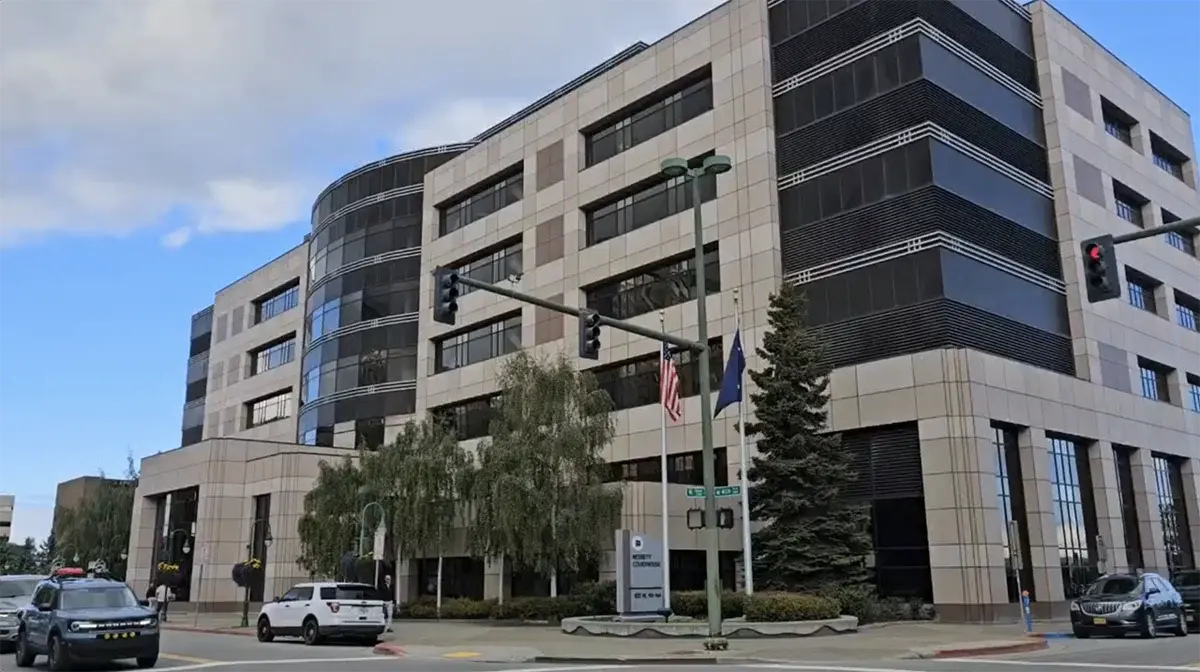
Post Content
Editor’s note: This year the Chilkat Valley News partnered with KHNS on its election coverage in addition to hosting two candidate forums. A playlist of these profiles, as they are posted, can be found here.
You can find KHNS’ coverage, including audio-only excerpts of these conversations here.
We’re hosting a forum for assembly candidates on Friday, Sept. 25 at 6:30 p.m. in the Chilkat Center. It will also air live on KHNS, 102.3 locally.
Will Steinfeld: Lee Robinson, thanks for joining me. We’re in the KHNS studio. You’re running for assembly this year. Tell me a little bit about yourself and tell me why you decided to run.
Lee Robinson: You bet. I’m from Colorado. My wife and I moved here about 10 years ago, and we made that move so that we could be in a small community with our family. We wanted to raise our family here near where other extended family was living. So it was a great opportunity. We felt to just engage in a small community and be with that extended family. I’ve got two sister in laws that also moved up here, so our kids got to grow up around in total, like, 17 or 18 cousins.
We came from a small community, and so we kind of all came up here at the same time, and so it’s been special. We have no regrets. We weren’t really running away from anything in Colorado. In fact, we left a lot. We left great friends. We left some family. I left a career back there teaching.
Prior to moving here, I was a teacher for 12 years in Colorado. I was a photojournalist. I’ve been a mountain guide, a river guide. I have been a realtor and been a wedding photographer, a right of way agent. So I’ve got a long list of careers under my belt and professional endeavors. I think all of those will give me perspective and will give me perspective on anything I do, but particularly in running for office here.
We moved up here and we had never done food service before. We bought the building anyway from the folks that were selling it in 2017, and in May of that year, we opened the Rusty Compass. It had been a coffee shop before, but we kind of expanded its operation quite a bit over a couple of years. We remodeled the place, tried to make it bigger. Now we could use even a bigger place, but that’s not going to happen — at least not in the foreseeable future. We love what we do. We love community, and I think that’s what’s always been my driving passion.
I guess the thing that energizes me is is being part of the community and making relationships with people in the community, and that was true of my teaching career: just coming alongside young people and helping them to realize their dreams, their goals, their vision for what life could be, and and really just come alongside. I oftentimes remarked, you know, just if you look at my past with with all the careers I had, with young people these days, just like any time in history, it’s like, well, I don’t know what I want to do when I grow up. Trust me, neither do I, and if I can do it, then you can too. You can make it. Trust me, you’ll be fine.
What were you teaching?
I taught history, government and geography. So a lot of the social studies. My first teaching gig was for middle school, and then I took a few years off and then went back to teaching and these were in small rural Colorado towns and I went back to teaching as a high school history teacher and geography teacher and then when I left Colorado and came here I didn’t think I was going to teach again but when the COVID hit and they shut down all the restaurants and a lot of businesses, et cetera, I had to pivot and do something. An opportunity opened up at the school when Mrs. Boron went to be a principal, and so it was a great opportunity to jump back into my role as a teacher, and it was great. It was just fun to be back in the classroom, even though I didn’t think I was gonna be back in the classroom. So it lasted three years, probably two years too long, just because of how busy we ended up being at the shop. But again, it’s I think it’s part of what drives me is just to be around people and to be an encourager.
Tell me, with all that history, why now for running for assembly?
It’s been a position that I’ve considered for the last couple of election cycles. I’ve always enjoyed politics. I’ve always enjoyed policy making, and I see the need for government, and I see the need for, you know, contributing as a citizen of our town or of our country. I appreciate those who have served, and the many people who’ve gone, you know, before me. So, I’ve always liked the idea of it. I’ve never necessarily thought that I was cut out for it, but you know, I think that I have the skills, I think I have the patience and and hopefully the common sense and the wisdom to do it.
So why now? I think we need people that can step up and provide some leadership, provide some insight, and you know, this is an interesting town politically. We all know, and the mantra is that we’re a divided town, and I’d say that is true in some ways, but in a lot of ways we are not.
In a lot of ways, we have a lot of things that unite us, and we have a lot of commonalities. We tend to focus on those divisions, and they’re important things that separate us, no doubt. But what I do think is true is that we all generally want good things for our community. We want policies that will benefit everybody. So we just differ maybe in how we are going to get, you know, certain things done, how we’re going to get it across the finish line, whatever that is. But I think we all definitely are starting from at least a desire to do good.
So hopefully, I’ll be able to bring some of that leadership, some of that creativity, and I have a lot to learn too. I definitely don’t come into this thinking I’m gonna change the world. I’m going to come into this eyes wide open and asking lots of questions and doing my research as I go and hopefully, you know, do things and work with others to get things done in a good way.
Yeah, those assembly meetings would get long if we’re changing the world. A lot of two day meetings.
Yeah, I was gonna say as far as that goes, I mean, assembly meetings can get, you know, people get emotionally invested, they get personally invested in these things, and so there’s definitely, I think, room for that. But I think we got to remember, at the end of the day, we do need to be cordial, professional, and respectful of each other and of each other’s ideas. I think it’s important to champion what you think is right and to push certain ideas forward, but know that there are differing and opposing viewpoints.
So there, on some level, there may need to be compromises, and there may need to be – maybe there’s a new way to see something or a new perspective on something that none of us have considered, and we need to we need to flush those out if we can.
Other candidates have talked a lot about the Lutak dock. Some have talked about the Port Chilkoot dock and cruise ship traffic. Do you have a sense of what you think are the most pressing decisions that the Assembly is considering right now?
Well, we all know that the Lutak dock is first and foremost. Hopefully by the election we will have that thing underway, and we can get that thing across the finish line. At least it seems like we’re steps closer to that. So I think there are good questions that need to be answered, and I think there are important factors to consider still, especially with funding. And so, yes, that is a major thing. Man, though, we’ve been working on this for several years, and hopefully now we have a vision set well enough that we can see this thing through.
This dock is not getting any better as we wait. So I definitely am a proponent for staying the course and seeing the current version as accepted back in April to get completed. Yes, we do have some due diligence to do, and we do need to answer some important questions about funding. But I think those can be resolved in satisfactory ways.
I feel like with any of these issues, Lutak dock included, the individual votes come and go. The thing I’m always curious about is the process of how the assembly does the fact finding and deliberation. When you watch the current assembly or you watch the assembly from the past few years, is there anything, let’s say on the Lutak dock specifically, that you would have changed about the process of how they’ve attacked this problem?
It’s a difficult question to answer because I haven’t seen all of the behind-the-scenes fact-finding. Over the last few years, I’m only getting highlights, I guess, if you will. Certainly, it has appeared that there are different factions of people, different stakeholders that want different outcomes, and you know, I can only speculate why different factions want, say, to get a smaller design or to get a smaller footprint.
I don’t want to put words in anybody’s mouth. But I think what’s important is that we all agree that we need one, and that we all need to just move forward. So I want to see what we can do moving forward, and really just empower the different decision makers and the different stakeholders to get that done and that, of course, starts with I think the assembly. But we need to put the right people in place and give them the right tools and then follow the direction of those who are professionals at this, who have built docks, the engineers and the architects and all of that.
I think we need, definitely once we have a plan in place, we need to follow their lead within the boundaries that we have. With budget and those considerations. So again, there’s lots to be uncovered as we move forward. But I do not want to jeopardize the funding that is available from the federal level, and we just need to be very careful and not not see that disappear. Or we’re going to be left footing the bill ourselves, and nobody wants that. I mean we just can’t afford that.
For the last two election cycles that I’ve covered, Lutak Dock has been front of mind for pretty much everyone. It seems like there’s a chance that it will be more of a resolved issue come next year, at least come the year after that. So I’m wondering, besides the short-term Lutak Dock stuff, do you have a long-term vision? That when you go to the assembly, you’re thinking in 20 years, I want Haines to look more like this, and here’s how I’m going to get there?
I do think you know the economy is an important factor, and I know it’s one that’s been raised several times. I think one of the issues is we need a sustained revitalization effort for downtown and for Haines in general. Diversity in our economy is, I think, key. I don’t know necessarily what that looks like, but I think I’d like to see what we can do to create that diversity and to keep people interested in Haines. And I don’t mean just like tourists and potential cruise ship tourists and passengers. I think that’s already established, right? We’ve got a pretty good base in summer tourism, so I would like to continue to capitalize on other ways that we can create a diverse economy.
So I’m open to different ideas of what that might look like, but I think we need to kind of focus on revitalizing Haines. I know that we aren’t the same place that we were 30, 40, years ago, but I think there’s so much potential in what this community has to offer. There’s so much potential in where we live, and we have a lot of potential in the people that live here. If you look at our education. Our school system serves the people who live here. And right now we have about 260, 270, I think, students enrolled. And maybe that’s changed this year, but over the last couple of years, we’re close to that. I think back 30, 40, years ago, we had as many as 450 to 500, so we’re at almost half of our enrollment, and that tells us that young families are moving out of here.
They are desperate for good jobs or jobs that they think can sustain their family, and I see that, and I think if we’re going to have any kind of a turnaround whatsoever, we need to focus on what can keep young families here. There can be a number of things, but you know, a five month or six month tourism season, I don’t think is enough. It’s wonderful, and it is good. It’s one of the many great things about our place now, but I want to hear from those around me. I want to continue to hear what people have in mind.
There are some, you know, obvious discussions over some economic development proposals, but I want to explore any and all. So I think if we can just diversify our economy and get players to come in and invest in this community… I think another thing we can do to help people invest in our community, invest in infrastructure, or invest in revitalization is either expand or look at what we can do for business owners or landowners, property owners who want to improve their commercial property. I know there’s code already in place that helps delay the onset of assessed values or taxation for increased values, but I want to see maybe if there’s some place we can expand that or to help again encourage business owners or property owners to improve the buildings.
The Rusty Compass is kind of bustling whenever I walk past, but on either side, or in Fort Seward, there are a lot of vacancies. Do you have a sense for what the difference is between where you’re at and why the rest of downtown isn’t full?
I mean, it does take investment. It does take a concerted effort to make something work. I think what we’ve done with the Rusty Compass, it goes back to my desire to do something for the community and not only that, but to be there year round, I think is important.
I think to be a place for all community, and just to be consistent, I guess the Rusty Compass has been successful a lot because of our great employees there, and our setting, but we’ve been very consistent. I think we need opportunities in Haines for businesses to branch out and to feel like when they come here that they see a road or see a pathway to being successful. And right now, I think there’s a lot of people who feel like they’re taking a huge risk. How can we help it not feel so heavy? Not feel like such a big risk in coming to Hanes? People need to see the potential that’s in Hanes, so we can attract more creative people, more creative business people, and entrepreneurs. I think that’s what we need.
What kind of risk do you think people feel? What do they worry is going to go wrong?
They’re afraid it’s not going to work. They’re seeing, like, why would I want to come to a community where people are leaving, where it feels like people are leaving, and so I think if they can see some kind of a consistency with with the economy, if they can see some kind of consistency with people moving here, then I think that takes some of that fear away. So again, there’s a lot of potential, but I think there’s a lot of burden that comes with potential. So we need to help newcomers feel welcome, and we need to, I think, find ways, or even people that live here help them feel like they are empowered to generate, you know, do something with business and do something with the economy.
You’re talking specifically about various kinds of property tax breaks, that’s something I’ve heard people from all different viewpoints talk about. I’m wondering if you have any other things in mind, levers that the assembly can pull, to try and reduce that kind of risk, or go out and court other kinds of businesses that will bring in jobs.
That’s a good question. I think that getting us on the map and just getting us noticed. I guess there’s a lot of research and a lot of investigation that can still yet be done to help reveal some of these things.
Like I said, I don’t have all the answers to that, but I think that if we don’t want to look like a ghost town that you see in other communities that have gone by the wayside, you know, I’m thinking like in — I’ve driven through towns in Kansas and Nebraska where you just you blink and there’s vacant storefronts everywhere. If we don’t want to become that, if we don’t want to become a community that is just full of vacancies and people leaving, we need to really just highlight, to find ways to be creative. I guess I don’t necessarily have the answer to that, other than to say, we need to be open to a lot of different ideas and diverse economy. We need to continue to rely on our tourism. I think that’s great. I think people love it when they come here. I do often hear people say we don’t want to become another Skagway, or you know, a place where we have five or six cruise ships a day, but I do hear a lot that there’s room for improvement there, and so we can use that as a stepping stone to help boost our economy.
If we could maybe double the number of passengers that we have coming through our cruise ship port, that would be great. There’s other industry and there’s other things that we can look at, too, that I think would help a lot of small business opportunities too. There’s a new economy. There are people who work from Home, there’s a lot of disagreement on how good that is necessarily, but there are a different there is a different economy out there that didn’t exist 15 years ago, and we have to be mindful of that and and be open to having new people, new new new forms of business in town, but we should develop multiple pathways to a strong economy. Otherwise people are just going to continue to leave.
One of the conversations I hear in the assembly is about how the assembly should regulate these industries — what kinds of guardrails. If you’re sitting on the assembly and a major industry comes in or a new company wants to come to town and do business, what parts of Haines, as it is right now, do you want to protect with your regulatory ability? What parts of the town do you want to hold on to?
That’s a good question. I’m gonna get out of the way. My philosophy is, I think that we shouldn’t regulate our community to death in a sense. But that said, I think it would be important to see what code we already have in place and use that as our guidance and use that as our guardrails for new — I mean, I guess global port holdings is an interesting concept and an interesting idea, and I think that is a conversation worth exploring and worth continuing. We’re very early in that discussion, and I think that’s a good opportunity to have some guardrails.
I don’t think we should have just unfettered growth, but I don’t know that we’re in danger of unfettered growth. Like, we’re in danger of no growth. We’re in danger of actually having negative growth. So I think that what we want to do, if you know, if something like that were to progress, we need to tread carefully, and we need to be thoughtful, and seek consensus on what we can do to strengthen our position in the cruise ship industry, but not necessarily give it all away. So I am definitely on board, you know, with that idea and with that notion.
Your coffee shop is not a chain or anything. Does it worry you at all that people in a couple years could be buying coffee from a Starbucks or something like that?
Not no, it doesn’t worry me at all. I just think that, like, as a business owner, we provide a service and we do it in our own special way. And I think that if we continue to do what we do best, it’ll be fine. I don’t think we need to throw up roadblocks for other businesses that are similar, just so we can hold on to what we have. Like there should be room for all of us, right?
And our community is a great example of that already. With coffee shops, we have more than two or three already. There’s definitely enough room for all of us and for all of us to be successful. So I think we need that kind of mentality with other with other businesses. I think we can have more than one of a thing, and so we just we just need to continue to pursue, I guess, you know, ways to find and to attract new new businesses and new industry.
I wonder if part of the concern is maybe less with coffee shops, maybe more something like tour operators, whatever it is, that cruise ship companies or whatever larger corporations are out there can put money into businesses in town that can provide a service at a lower cost to tourists than someone who lives in town and has to pay for housing in town, pay all these other costs. Does that feel real to you at all?
I think that local operators are savvy enough and wise enough to pivot, and maybe they need to partner with other investors to help expand what they do and do well, they’re already doing what they do very well. So let’s just trust them to pivot the way they need to pivot and to make the best decision for their own business. So I think that you know I don’t want to take anything away from local operators, but I think I would only see opportunity for local operators to expand and do more and to do better.
Do you think there’s anything that isn’t on people’s radar right now? Any issues or solutions that you have in your head that you want to bring to the assembly?
I mean, I think we have enough to tackle right now. There’s nothing… I don’t have an agenda, right? I don’t have anything that I want to bring and be a champion of necessarily. I do want to keep my ear to the ground and hear what people have to say and what people want. You know what’s on their minds, and so from that end, that’s what I want to do.
I want to be a listener, and I want to seek wise counsel and and seek consensus as much as consensus can be found on the topics and the issues that are currently out there. I’m not here to drive an agenda. I’m not here to drive, you know, my favorite thing.
If I had a favorite thing, it’s definitely the economy. I want to see more families moving into town rather than families leaving town. I want to see what we can do to make this a desirable place for young families. If I’m not mistaken, I think we are the oldest community in Alaska as far as our median age. I think it’s the oldest median age in Alaska right now, and I think that’s great, and I’m glad that there are retirees who want to call this place home. Why wouldn’t you want to call this place home in retirement? And this place is great, but we want to make sure we want somebody to live here and retire here. I want to see family move here and build a life here and retire here. That’s what we want, and so let’s get out of the way. I don’t want to stop, you know, a business or an endeavor from happening if it can attract and bring in young people. I don’t want to get rid of anybody. I just want to bring in more people.
Do you feel like borough government has in recent years been standing in the way at all? Like, is it as simple as if we get out of the way, people will come?
Well, like I said, I’ve lived here almost 10 years, and I think when I first got here, somebody said I had to be here 30 years to be considered a local. So I’m still working on that. I don’t know that necessarily. You know, our government — listen, we’ve got a people who are on the assembly and who are in government that are a reflection of the community that we live in, and we have differing views on how we’re going to get across the finish line or how we’re going to grow, let’s say, our economy. There’s no doubt we all want the best, or for what we consider to be the best for our community.
And so, I don’t know. I don’t know necessarily. I could probably fish out a few things that government has done to either encourage or to discourage growth. I do know that moving forward, I just want to encourage it. I want to encourage growth. You know, know we’ve seen the economy change over the years. We’ve seen certain industries leave, I guess that is what it is now. But I want to see what we can do to encourage new growth and new entrepreneurs to come to town.
Is there a most effective or impactful thing you’ve seen the assembly do to encourage growth?
No, I mean, getting out of the way is the most impactful thing. I think removing obstacles to business. I can’t point to any single thing, but I think that, I think, yeah. I do think a large part of our government is to provide, you know, safety and paved roads and good utilities and all of that.
I think a lot of that is some of the necessary functions of government, and I want to see that continue. I do not want to see regulations and things that might you know become a stumbling block for people who want to come in — I guess one of the things that’s been hashed over is like the heli skiing thing. I get the different concerns that are there, but my personal feel on that is I think the two aren’t mutually exclusive. In other words, the protection of the environment or or the protection of the enjoyment of the environment of some people against the enjoyment of the wilderness by the heli skiers. I think both can live together, and I think both should be able to live together, and they’re not mutually exclusive of one another. I think we just need to find ways to let both happen, and one shouldn’t, you know, one is not to the exclusion of the other.
I have one last question for you. I’ve been asking everyone this: Are there types of voices or types of people that you think are being underrepresented on the assembly that you’re excited to go up there and bring into the room.
I honestly think that our working population is perhaps underrepresented. I think they feel burdened by how much they have to work and hold down extra jobs. And I think there’s just a working population out there that maybe sometimes they just don’t vote because they either don’t know who to vote for or what issue to vote on, or maybe they do know and they just don’t feel like it matters.
So I think that our working population and our working folks need to be heard more, and I think we need to give them, I don’t know, just continue to bend an ear towards them.
I think that the people who are doing the daily grind here and working day in and day out, or they’re fishing or they’re teachers, they’re employees for stores and restaurants. I think all of those people need to be heard, and I think in some ways we should elevate them and to really say, hey, you know, they’re the backbone of why we even have a community that still exists, and we want to continue to encourage other people to move here and to live here, but let’s really listen to and hear out what our working working population has to say.
Thank you, Lee. Thanks for coming in.
The post Watch: An interview with Lee Robinson, candidate for Assembly appeared first on Chilkat Valley News.

Editor’s note: This year the Chilkat Valley News partnered with KHNS on its election coverage in addition to hosting two candidate forums. A playlist of these profiles, as they are posted, can be found here.
You can find KHNS’ coverage, including audio-only excerpts of these conversations here.
We’re hosting a forum for assembly candidates on Friday, Sept. 25 at 6:30 p.m. in the Chilkat Center. It will also air live on KHNS, 102.3 locally.
Beau Bradley, thank you for joining me. Tell me a little bit about who you are and why you’re running for assembly this year.
Yeah, thank you for having me. My name is Beau Bradley, and I am one of the co-owners of the Bookstore here in Haines on Main Street. I’m an emergency management professional with years of experience in public service and public safety. I’m also someone who is a huge supporter of nonprofits and have been involved in volunteering in the nonprofit space for a long time, including 10 years of board-level experience with different community-based nonprofits. So community is something that really means a lot to me.
Yeah, is there anything specific about this time in your life, or this time in what you’re seeing in town, that’s made you want to get involved in this way?
I think part of it is I have the capacity in my day-to-day schedule, and the other part of it is that I think we need more representation for younger people and young families and small business owners, and I think that the assembly as a whole should represent a broader section of the community.
Do you think there are obstacles that prevent young people or small business owners from getting involved?
Definitely. I think time is a big part of it. Like I know moving forward, if I am elected onto the assembly, the summers are going to be a little challenging. I’m going to have to lean on Zane, my partner and co-owner of the bookstore, and our employees and other folks a lot more for bookstore things. But I think that the barriers that people face here to housing and employment and childcare and all of that that faces young people can inhibit their ability to have that time to volunteer, attend extra meetings, or sit around and spend hours doing research on different topics that are coming up, yeah.
I want to get into all the assembly stuff. But first I’m curious about how you balance — are you currently working in emergency management?
No, I stepped away from that soon after taking over the bookstore, just because I was ready for a change in my career and wanted to step out of that and do something more local. The first year or so that I lived here, I was doing that and working remotely from home, and I didn’t get to interact with people the way that I do now, and I didn’t get to participate in the day-to-day. So it was just kind of lonely to be at home on my computer all the time.
How is Haines compared to what you were expecting when you moved here?
You know it’s all over the place, It’s like it’s better than I expected. It’s different than I expected. I have two aunts that live here, and so my first exposure to Haines was coming to visit them. And then my last job in emergency management was with FEMA, I worked on the wildfire side, so not directly with Haines for anything, but I had seen kind of stuff from the 2020 landslides, and taking a course about that and the impacts of emergency management needs on rural communities and rural first responders. And so, I kind of had this very emergency-focused and then family-focused view of here. But there’s just something about the nature and the community, and just in my visits, the way that people would come up and interact with you, and remember who you were, and ask you questions about, not just what you do for work, but kind of what you like to do and what you care about, and community here seems deeper, and so that’s something that really drew us into moving up here.
I feel like in my also-brief time living in Haines, a lot of people that have been involved in borough government and on the assembly and whatnot, a lot of them have been longtime residents. They’ll say they’ll be sitting up there and saying, you know, I was here 40 years ago, and this is something we did. What do you think it is about having representation from young people or from small business owners that you think the assembly is currently missing out on?
Yeah, I think it’s just a different perspective. I think a lot of times we have to kind of talk to the people that are impacted by the issues that we’re facing to be able to understand what hurdles they’re facing and what needs to be overcome. And so I think having access to the voices of younger people, or for me in particular, I work right on Main Street, and so people come in from all parts of the community when they’re going grocery shopping or when they have other tasks in town, and so I just kind of get to have more candid conversations with people about their day-to-day and what struggles they’re dealing with, and so I think having the opportunity to bring those voices directly to the assembly is something that there could be more of.
What do you think are the big issues that are on the assembly’s plate these days?
Yeah, I mean, besides the importance of critical infrastructure and ensuring that we have infrastructure that is not only affordable for us to build, but maintain and service to make it have longevity. But I think that’s one everyone is really focused on and aware of.
I think some of the the social issues that impact young families, like lack of access to childcare and early childhood education, especially losing Chilkat Valley Preschool recently, is a huge concern, and in addition to that, the lack of affordable housing and the impacts that that has on how many jobs people have to work, or the seasonality of people’s employment, and and trying to fit everything they need to do into 24 hours in a day, and take care of their kids, and take care of their home and property and pets and everything else.
Yeah, I think with the possible solutions for those issues like childcare, or I kind of figure you’re talking about the (Lutak Dock) when you talk about critical infrastructure, I think there are a lot of people with ideas about what can be done, but I think another question is how to actually get those ideas done given the constraints of the assembly. I’m wondering how much you’ve been watching how the assembly has been going about its business and what you’ve been seeing on that front.
The meetings I haven’t been able to attend so far, I’ve been watching retroactively online, and so it’s been interesting to be able to go through that way and be able to stop and kind of pause and look up things in the interim. And I know that that’s not a luxury that one would have sitting on the assembly, but it’s fascinating to me — I’m thinking of how to word this…
I wonder how many people watch recorded assembly meetings for pleasure.
Probably the same amount that read borough code for fun, which I do too. I think it ties into kind of like my last job. That was a big part of it, was interpreting public policy and recreating public policy and and making needs of the community and of public entities fit within the constraints of that, and so I think that’s a something that is really interesting and intriguing to me, and something I hope to be able to translate into borough assembly work.
Do you think there’s anything specific about how the assembly’s been deliberating or writing policy that you’d hope to change?
I’m interested in having conversations with the current assembly members on how they’re targeting kind of the the impacts of their policies and how their ordinances and how they’re looking at all of the possible impacts of of the decisions they’re making when it comes to taxes or policies or bonds or spending money or going into debt. I’m curious how that process works, and I don’t want to pretend to know how they’re all working on that now, but it’s definitely something that I’d like to chat about and figure out a way to move forward.
Are there other ways you’d want to assess the impacts of policies?
Yeah, I think it’s important we continue to open conversation more so than just a few minutes in assembly meetings. I think we should host more public forums and more opportunities for the community to truly share what they think. Because, like specifically for childcare and early childhood education, no one knows more what those struggles and hurdles are than the educators and the teachers and the families themselves that are dealing with it. So I think giving them the opportunity to speak up about what they’re going through and what they’d like to see happen would be a great way for us to kind of crowdsource or group think some potential solutions.
I feel like what I’ve been hearing from (childcare providers) is just that the economics of providing that service are really difficult right now for whatever reason or for a number of reasons. And what I heard Chilkat Valley Preschool saying at the assembly in the past year is, “we just need some kind of monetary support from the borough.” Do you think there’s some other, more deft policy solution, or is it just a matter of finding the money?
Well, part of it, we did just get the million-dollar federal grant for early childhood education, and I think part of it is finding the most responsible and fruitful way to use that and put that to work for the families here in the Chilkat Valley.
But I think that we also have to look into creative solutions like maybe space sharing or donated space. I know that the economics of running this and having staff that’s educated in the right part of childcare, whether it’s like early preschool education or early-ed in general, and so I think finding ways to either recruit that talent, finding ways to support the people that we have getting that credentialing or getting that certification, and finding ways to minimize some of those other costs … I just think it’s a multifaceted issue where we’re not going to be able to solve it with one lump sum because the issue is still going to persist past that funding, and it is an issue across the whole U.S. It’s not just an Alaska or Haines issue.
If grants don’t keep materializing, is there a sustainable way to fit that into the budget? The borough has spent from savings the past two years, last year much more significantly than this year. But it seems like the consensus is money is pretty tight in the budget. Is there a way to fit childcare in there?
That’s a great question. Not being on the assembly currently and not having the super intricacies of how they have and why they’ve budgeted certain things the way they are, I think that’s something that I definitely want to kind of learn more about before I speak on it. … I know there’s a meeting coming up about the borough’s permanent fund, and I’m curious to learn more about that and kind of the different financing and revenue options that we do currently have because I have some familiarity with it, but there’s a lot I still have to learn.
One thing I’m curious about is, you talked a little bit about getting more younger voices on the assembly, and childcare I think is an issue that I guess most directly affects young families. Do you feel like there are trade-offs that have to be made between the borough putting its resources towards serving the younger half of the population versus the older half? One thing I think of here is we have the senior property tax exemption on the ballot this fall, and when I talk to experts, they say that’s exactly what it is: It’s a trade-off between how much you’re taxing elders and how much you’re taxing young people.
I think it’s hard to answer that directly, young versus old. I think important things to note on this are that we have the highest mean age of any population of any borough in Alaska. Yeah, and so the majority of our residents are older, and so it’s hard for me to find sustainability in giving a blanket tax break to the largest sector of our population. I think that any breaks or anything we’re doing to help should be needs-based and through an application versus just kind of across the board. But I do, I do think there needs to be more balance there, for sure.
When you say needs-based, would that be in terms of income?
Yeah, income, or I guess, I’m not sure exactly what every factor going into that should be, but I definitely think that if there are people that can’t afford to stay here, this tax break would help them stay and be able to be an active part of the community. That’s more important than us losing all of our children and the ability to have school and education here.
Something I hear people talk about with young families is it seems like one school of thought is, it’s a lack of year round jobs that prevents young families from staying. Do you think there’s some kind of mix that you like? If you have a 20-year plan for Haines, where you want the economic mix of year on jobs to be, do you have that kind of vision in your head?
I don’t know if this directly answers your question, but I think that we need to continue to build a diverse base as far as the sectors of our economy here, and I think that talking about tourism and childcare and all of these things are very, very important. But we need to also look at the longevity of that and the jobs that are made from that, and what is year-round employment. Like, we have a lot of different opportunities, I think, to create either trades, apprenticeships or opportunities for people to learn from the craftsmen or the people that we have. We have a need for a lot of trade work here, and I think there’s a lot of opportunities for us to kind of expand how we’re training or teaching or what the opportunities are for people growing up here to stay here and be a part of the community.
I think for example, one of the things that specifically I thought about, and this is when we’re talking about the state forest and forest management and and timber sales, and I think that we have such great local assets in logging and milling and timber harvesting, and I think that using those to create either finished projects like firewood or construction materials helps to keep that money and that intention in the borough, and I think it also helps to create local year-round jobs, and not just jobs in the labor, but also in management, in administration. And I think looking into all these different sectors, as to how we can create more jobs, is a big part of it. And I think tied into that is the borough support of nonprofits, because our nonprofits are the source of a lot of our essential services around here, and also create year-round jobs and opportunities across sectors.
I was curious when you were talking about local timber. Where do you think the assembly can exercise power to influence that? It seems like one answer is nonprofits. Is there anything else?
I think that’s a good question. And the way you worded [it], I don’t know that I have a direct answer. But I think the assembly has the ability to create policy and create opportunity for how we want to move forward, and maybe not put that into operations because that’s much more, like, the other part of the government under the manager and borough employees. But having the ability to create where our funding goes and how we can use that to invest back into ourselves and into the future of the town, I think is a huge part of that,
I think a lot of the stuff we’ve been talking about[is] kind of hot topics that have been in the conversation. Do you think there’s anything that isn’t being talked about right now that should be?
Let’s see. Not specifically. I think there’s a lot of issues that we’ve scratched the surface on or started talking about that are a part of the comprehensive plan, and I think we need to continue to use that as a guiding document and see where we can go with the input we’ve already gotten from the community and continue to solicit that input, but I think just aligning where we’re moving with that and focusing on that is a huge part of us moving forward as a collective whole versus as one issue or one person.
Are there any issues where you have something you’re most excited to bring forward as a solution? Something that you just think is a really good idea that people haven’t proposed yet?
You know, I don’t know if there’s anything I have that I think that no one’s proposed yet. I think more so than just generating new ideas, I think one of my strengths is in active listening and hearing what people have to say, and trying to use that to creatively problem solve. And I think there are definitely ideas that I have, but I’d rather not speak on them until I fully research the impacts of what I’m saying. But I really pride myself in hearing all sides of an issue and finding a way to have those different sides communicate to work and move forward. And I think that’s something that I could also bring to the assembly is more of that intermediary versus us versus them or you versus me, that a lot of local governments tend to fall into.
Have you seen that with other local governments?
I, yeah, yes. I think that there’s definitely that level in other local governments. I’ve worked in county-level government in a couple other places I’ve lived, and there are which – I guess county is the borough equivalent, so similar level – and it is not as an assembly, as more of an emergency management or public safety role. But you see the insights, and you see the meetings and conversations, and I think it’s really easy, especially on the hot topics, to kind of get blinders from what you think should happen. And I think I can have all of the ideas and all of the like potential answers in the world that I think I have, but what I want isn’t as important as what the community wants as a whole and the direction the community wants to go in. And so I think that is the important part of what to focus on there.
Yeah, what does that look like in practice? Like when you’re sitting up on the dais and it’s some issue where people … have really contrasting interests or opinions. What do you actually do and say to try and bring people together?
I think part of that is being proactive, and since you get the information of what is coming out ahead of time, going and talking to community members and kind of soliciting feedback before the meeting and trying to understand and research all of those sides, and then in the meeting itself, being able to to point kind of back to this like statistic or factual survey or comment from someone in the community, and being able to use that as kind of a redirection versus just hypotheticals could be a way to do that.
Interesting. I kind of want to take that and apply it to two big issues — cruise ship stuff, Global Ports, and Lutak dock as well. It seems like there are going to be really big decisions to be made, like right when the new assembly is seated.
I’m wondering if on either of those two issues, you’ve seen things in recent months that you would have approached differently, or I guess your approach for if you have to deal with that right after you’re seated.
I don’t know if I have a direct answer for that. I think, I mean, there are definitely things that are going to need to be addressed and discussed. And I think that we should ensure that we have the access to Lutak Dock, for example, to ensure we have access to our food, to our goods and products that come through there, including our fuel.
We need to make sure that it’s safe and functional. And I think focusing on what we need instead of the hypotheticals of what we could have, and going back to earlier in our conversation, focusing on what we can afford and what we can afford to maintain are really important, so that we don’t wind up in this position again and again and again.
I think that understanding where funding is coming from, understanding how the bonds or debts that we might be discussing going into to work on these projects. I think the whole picture has to be addressed and looked at instead of jumping into options just because they could close this chapter and move forward.
Are you thinking specifically about the design selection from April?
I guess I was more directly talking about the topic that was recently brought up concerning revenue bonds and using that as a way to potentially fund (the dock project). And I think we need to be sure if that’s something that we’re thinking about, that we’re looking at how we’re going to pay back what we need to make to do that a year, and whether or not that’s feasible. And that’s just one example. I’m not necessarily opposed to it or for it. I just, I think we need to consider all the implications of it before we agree to move forward.
What do you think could go wrong if the borough bonds for this?
My fear is that we’ll bond for it in a way that we won’t have the revenue to make up what we have to every year, and so it’s just going to continue. We’ll default on it, or we’re going to continue to have to move backwards, or what have you, because we’ll owe more money … It’s the longevity and sustainability of how we’ll pay for that is my biggest concern.
One thing I was hearing from people is there is a difference of opinion on how large or expensive of a dock the borough should go for. But it seems like with new information from the contractors, that even the cheapest options they’re proposing are over budget.
Do you think there’s a way to not bond for this?
You know, I don’t know what the solution is. I don’t know enough about the different bonds to know what the right answer is, but it’s something that I want to continue to look into and have conversations about. And even the special assembly meeting on the dock, what Jila brought forward and her insight on the different accounts and savings and what we have, I think, is really important, and so I want to kind of continue to understand that.
One thing that I was interested in from that meeting was one assembly member seemed to be saying, with respect to the borough’s engineers, we’ve hired them because they’re experts, and we’re not experts — they are. We’ve hired them for this purpose. We should trust what they have to say and trust their expertise.
And then another assembly member was saying, our job is to listen to the expertise and then provide oversight and ask questions. Where do you stand on experts? How do you manage that relationship?
I think it’s definitely important to get the information from the experts, but I also think it’s important to ask questions because there can always be a disconnect between what they’re saying and what we’re understanding they’re saying, especially when it comes to lingo or specific, like the experts have more technical expertise in these realms than we do, and so I just think it’s really important to understand where they’re coming from and what they’re saying instead of just saying yes and agreeing to everything.
There was one question at the assembly meeting where someone asked something about cost estimating, and then the engineer said, “I really can’t explain it to you. It’s really technical. You just have to trust us.” How do you approach that kind of situation?
That’s a great question. I think that there’s definitely, again, that leniency of, this is an expert who understands what they’re talking about, but I still think there’s due diligence, especially when it comes to us being sure we can pay what we’re agreeing to pay.
So I think I see where they’re coming from, and I also recognize what (Paul Wallis) was saying about that they can give an estimate, but what the actual contractors and equipment and materials come up to is going to be different because it’s going to be after this permitting process, et cetera, time and money and inflation and all of that. But I think we still have to ask the questions to understand what we’re getting ourselves into.
The post Watch: An interview with Beau Bradley, candidate for Assembly appeared first on Chilkat Valley News.