School officials said he crossed a line by praying with students on the sidelines. Continue reading…
The Boot – Country Music News, Music Videos and Songs











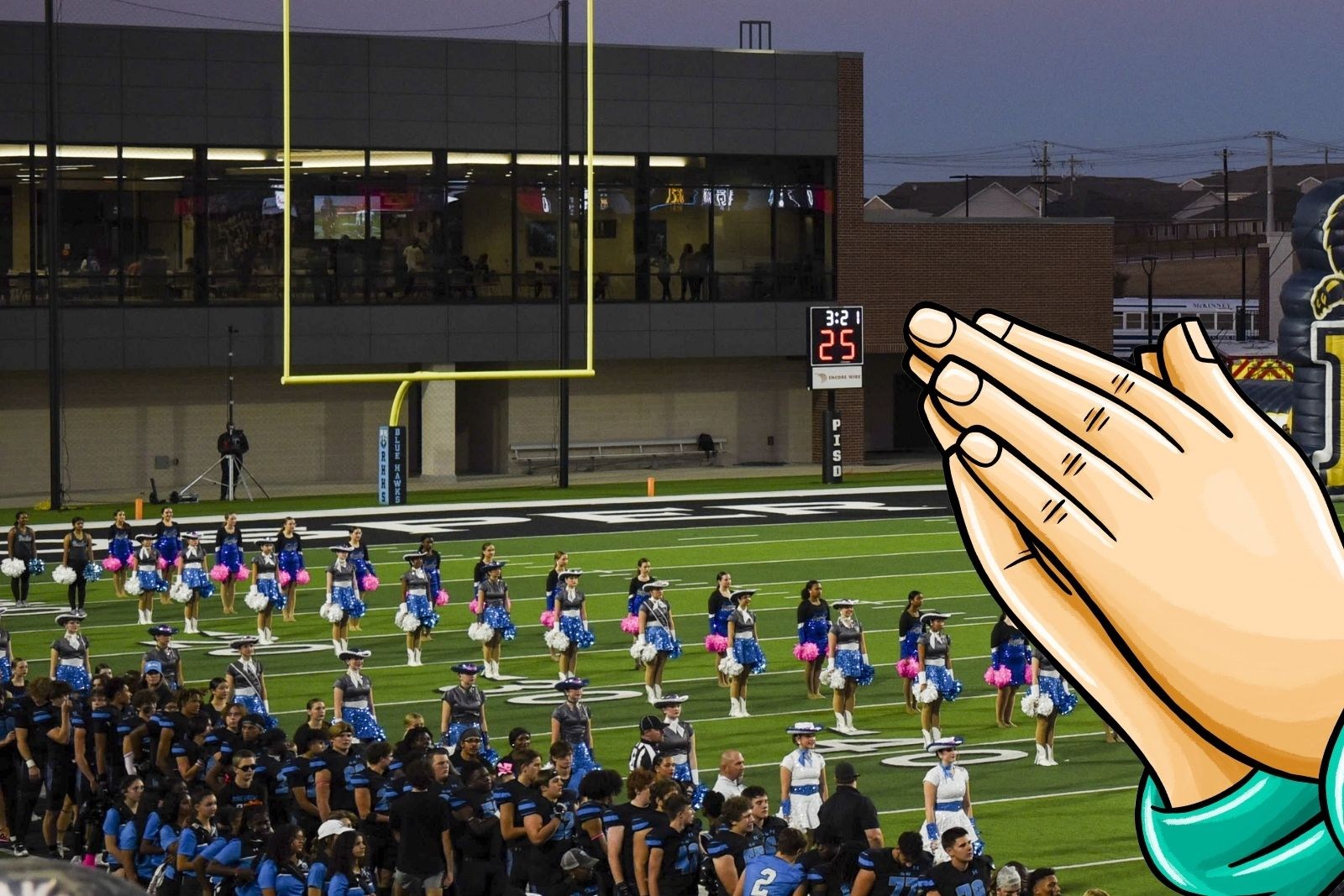
School officials said he crossed a line by praying with students on the sidelines. Continue reading…
The Boot – Country Music News, Music Videos and Songs

After signing with RECORDS/Sony Music Nashville, Emily Ann Roberts is set to release her brand-new EP, Memory Lane, on October 3.
The seven-track collection features her latest single, “Jack & Jill Daniel’s,” a clever twist on the classic nursery rhyme. In the song, Roberts and her co-writers reimagine Jack and Jill’s tale as the fictional backstory behind Jack Daniel’s whiskey, blending heartbreak and wit into a uniquely crafted country story.
“As far back as I can remember I have loved hearing a good story. And while honesty is the best policy, some of the best stories stretch the truth a little bit,” shared Roberts about the song. “I was at a retreat writing with Ryan Beaver, Jeremy Spillman, and Trent Willman in January when this song was born. Ryan and Jeremy had the idea that maybe Jack Daniels was created to help him move on from Jill, and the rest is history.”
Roberts also brought the song to life in a brand-new visualizer, where the East Tennessee native delivers the track aboard an old-school train, a fitting nod to the lyrics.
The Memory Lane EP also features previous releases ““Easy Does it,” “The Fence,” and “Scratching Out A Living,” which debuted earlier this year.
When announcing the EP, Roberts shared, “Country music is at its best when it’s telling stories. I’m so excited to get to share more stories with you with my new EP Memory Lane. It’s all yours October 3rd.”
1. Memory Lane
2. Jack & Jill Daniel’s
3. Easy Does It
4. Pretty In Pink
5. Scratching Out A Living
6. The Fence
7. Bus to Augusta

Roberts first caught the spotlight on The Voice Season 9, finishing as the runner-up. Since then, she’s remained true to her country and bluegrass roots, steadily building a devoted online following and earning nearly 75 million global streams as an independent artist.
She’s gone on to share the stage with country greats like Blake Shelton, Clint Black, and Jamey Johnson, and this fall she’ll join Cody Johnson and Megan Moroney on tour. Recent milestones include being named to the CMT Next Women of Country Class of 2024 and lending her vocals to Walt Disney World’s Country Bear Musical Jamboree, where she performs Zootopia’s “Try Everything” as Trixie St. Claire.
The post Emily Ann Roberts Announces New EP, Featuring Clever New Track, ‘Jack & Jill Daniel’s’ appeared first on Country Now.
Country Now

Rising country star Carter Faith has landed her first-ever movie role in the Netflix film, Heartland.
According to Deadline, Faith has been cast in the mystery thriller alongside Jessica Chastain (The Help, Zero Dark Thirty) and John Hawkes (The Sessions, Winter’s Bone). Shana Feste wrote the script and will direct.
Peter Chernin and Jenno Topping are on board as producers for Chernin Entertainment, alongside Jason Owen for Sandbox Studios. Randall Poster will also serve as a producer.
The story follows Misty Jones (played by Chastain), a once-prominent country singer who leaves her quiet life out of the spotlight after her niece, (played by Faith), an up-and-coming country performer, vanishes. Misty’s search pulls her back into the Nashville scene she walked away from years earlier, exposing the city’s darker side and forcing her to reckon with pieces of her past.
Carter Faith announced the exciting news on Instagram, posting a photo of herself hugging the script. In the caption, she wrote, “they’re gonna put me in the moviessssss💫craziest thing ever to say that i’m gonna be in a movie???? HEARTLAND coming soon to Netflix.”
Supportive comments from fellow artists and collaborators, including Carly Pearce, Ashley Cook, Emily Ann Roberts, and more filled the comments section.
It’s a big year for Faith, who is gearing up to release her debut album, Cherry Valley, on October 3.
“Cherry Valley means everything to me,” Carter shared. “Every time I have slipped into a dark place (which I have a propensity for), this album has brought me out of it. I know that I wrote the songs but they still carry reminders for me every day when I relisten. Some of the songs have even transformed for me and mean something different now. The world of Cherry Valley has been a safe and freeing place for me and everyone who has worked so hard on this record. I have truly created this album with my best friends, which feels surreal. It feels like it belongs to all of us, because it does.”

She’s been giving fans previews of the project, releasing several songs over the course of the past few weeks, including “If I Had Never Lost My Mind…,” “Grudge,” “Sex, Drugs and Country Music,” and most recently, “Arrows (Die For That Man).” She also recently released the song “Bar Star” and its accompanying music video starring Billy Bob Thornton.
Of the latest track, Faith shares, “I wrote ‘Arrows’ after meeting a man for five minutes and developing an unhealthy and delusional crush on him. As the song goes, I truly felt like I would die for that man. I’ve said before that I’m a girl who’d die for love but would never let it kill me. That’s what this song is about.”
Carter Faith has spent the majority of this year on the road with Little Big Town, Carly Pearce, and Ella Langley. This winter, she will open for the likes of Marcus King and Kelsea Ballerini.
The post Carter Faith Lands First Movie Role in Netflix Thriller ‘Heartland’ appeared first on Country Now.
Country Now
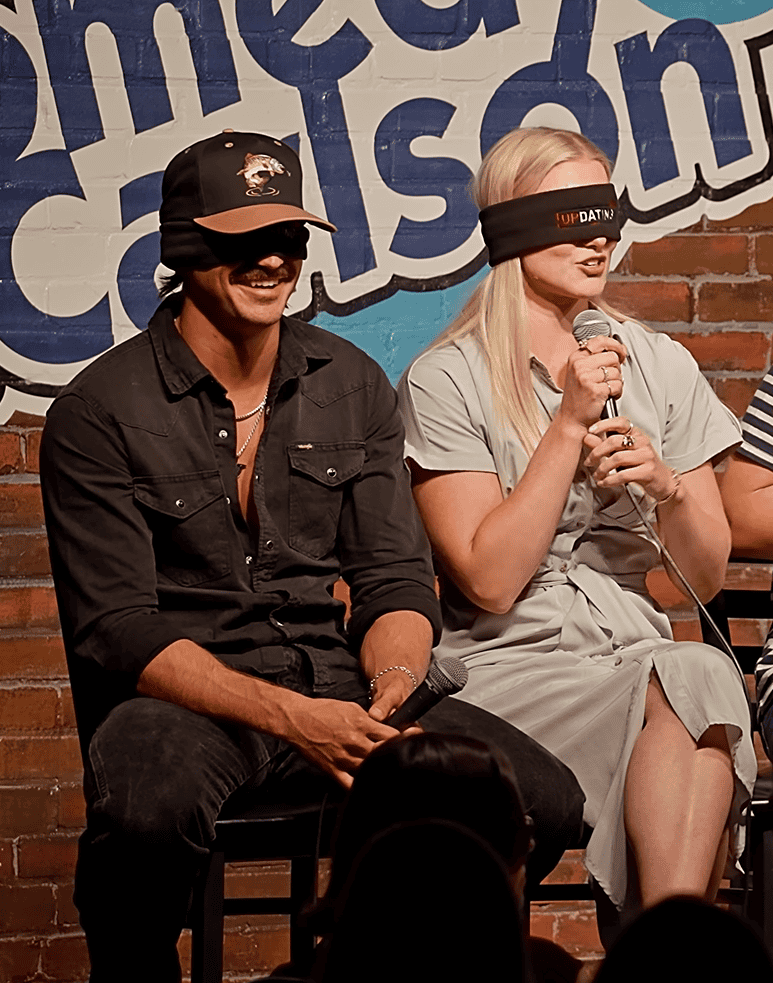
Tucker Wetmore went on a blind date in the latest episode of the viral reality show UpDating, revealing what he’s looking for in a woman before meeting Melinda, a confident blonde New Yorker, on stage in front of a live audience.
A “nervous” Wetmore first took the stage, explaining that he’s looking for a lady his mom will approve of.
“I don’t really need much. [I’m] looking for a nice woman that my mom won’t send home when I take her home,” he shared, noting that he’s previously brought home “mean girls” who were “too demanding.” Unsurprisingly, these ladies did not earn his mom’s stamp of approval.
After Melinda answered some questions, hosts Brandon Berman and Harrison Forman seated them together. Both Tucker and Melinda were blindfolded and opened up about past relationships and what they hope to find, with some of the conversation venturing into NSFW territory.
As the conversation continued, they were asked if they were interested in each other, and both gave a thumbs-up. After removing their blindfolds, they shared smiles and later confirmed they were still interested in one another.
Moments later, an audience member attempted to win Tucker over while Melinda watched, and the hosts playfully pressured him to take his shirt off. After some hesitation and blushing, Tucker caved, earning loud cheers from the crowd. Despite a few awkward moments during the NSFW discussions, he came across as a genuine and sweet guy.
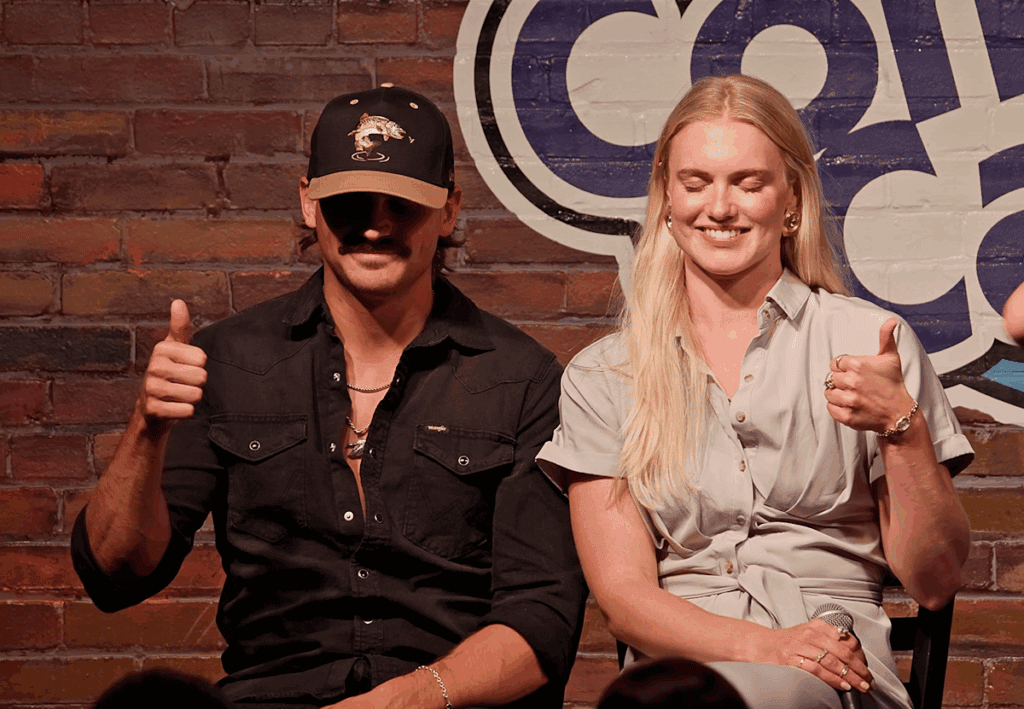
When asked to choose between Melinda and the other contestant, Tucker reaffirmed his interest in Melinda, sweetly placing his arm around her. At the request of an audience member, the pair shared their worst qualities: Tucker admitted, “I work too hard,” while Melinda revealed, “My life is all over the place” due to frequent traveling, a reality Tucker knows all too well.
The duo then revealed their professions: Tucker is, of course, a country singer, while Melinda is a model and owns a dance studio. The audience got involved once more when someone invited Tucker to sing, leading to a duet with Melinda of his chart-topping hit, “Wind Up Missin’ You,” to enthusiastic applause.
Viewers didn’t get much of an update on the couple after filming, as the host only revealed that they were “still talking” but he did admit he believed they were a good match.
The post Tucker Wetmore Flashes Abs and Gets Flustered on Blind Date in Viral Show ‘UpDating’ appeared first on Country Now.
Country Now
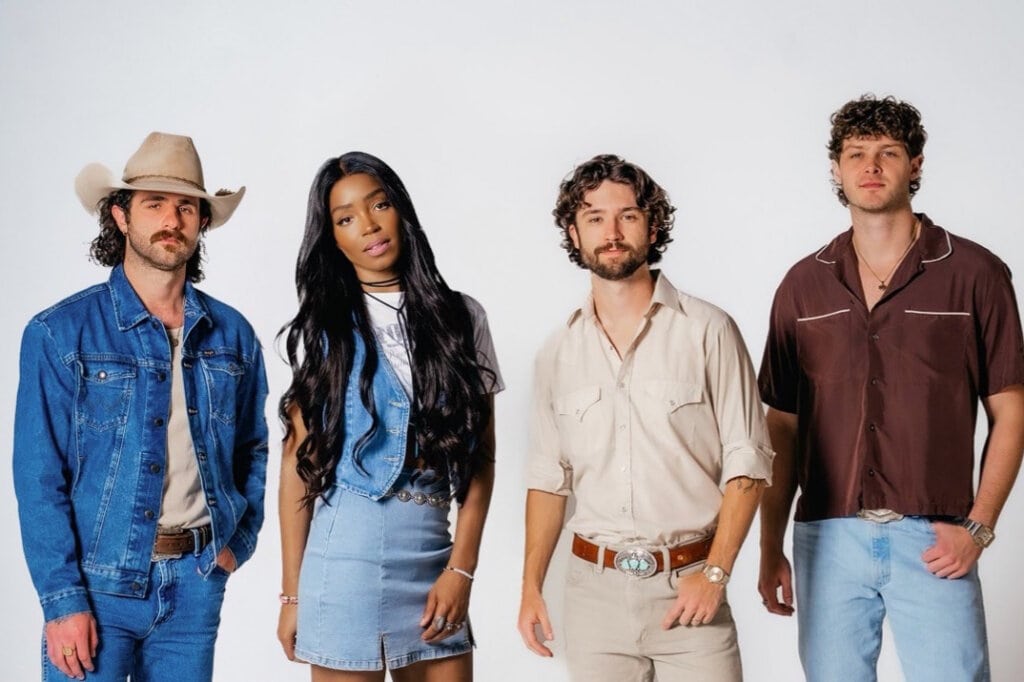
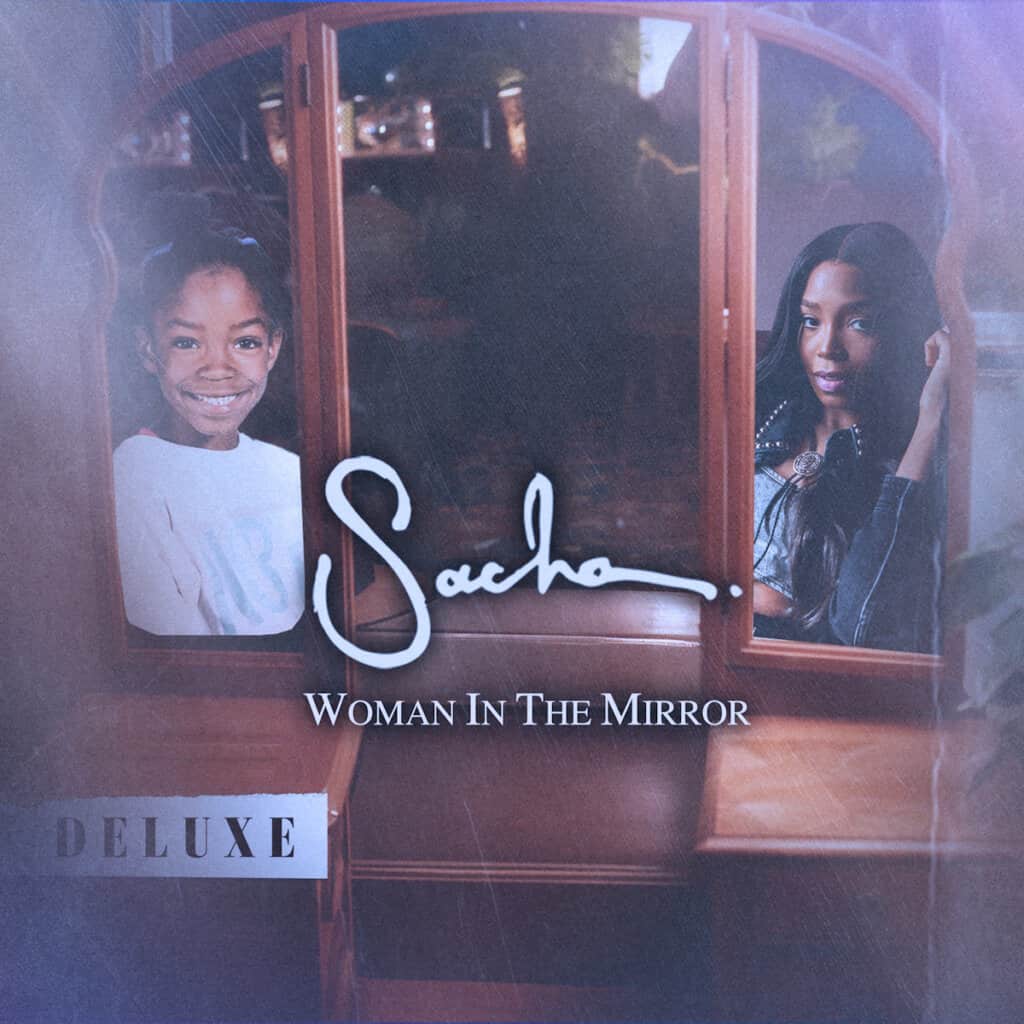
Rising country star Sacha has been making waves in the industry with her heartfelt storytelling, infectious energy, and a series of career milestones that signal she’s just getting started. From her breakthrough viral hit “What the Truck” with The Reklaws, which became the fastest Canadian country song to achieve PLATINUM status in the streaming era, to her debut full-length album Woman In The Mirror, Sacha has quickly established herself as a dynamic and relatable voice in country music.
She has shared the stage with acts like Maddie & Tae, Tenille Townes, and The Reklaws, while performing at major festivals across North America, including CMA Fest, Boots & Hearts, and LASSO.
Most recently, Sacha teamed up with Restless Road for the new single “Shooting Star,” a story of fleeting love captured in a playful, behind-the-scenes music video that highlights the chemistry between the rising stars in the studio. With the deluxe edition of Woman In The Mirror now out and the debut live performance of “Shooting Star” set for the 2025 Canadian Country Music Awards, Sacha is stepping confidently into the next chapter of her career.
In this Q&A, Sacha opens up about her journey, from growing up in Canada surrounded by music, to her evolution as a songwriter and performer, and the inspiration behind her most recent releases, giving fans an intimate look at the artist behind the hits.
Can you take us back to the moment you first fell in love with music? Was there a specific artist, performance, or memory that sparked it all?
Music has always been ever present in my world since childhood. My parents were in a band which opened me up to a world of all kinds of music and artists across all genres on a very regular basis where I could draw inspiration from. My mom played a lot of oldies, one being Patsy Cline, whose voice and soul immediately had an impression on me.
Looking back on your early releases, how do you think you’ve evolved as both a songwriter and a performer?
Often times, photos will circulate as “on this day” memories on my social media where I was playing down at the open mics or early day festivals and performances and I don’t even look the same. The growth and evolution has permeated all aspects inwardly and outwardly, audibly and visually from my songwriting, vocal growth, articulation, and confidence during live performances. All which came with a lot of time and hard work on this path and life experiences through the years that have shaped what I have to share and what I am now prepared to share in my songs. The landscape keeps expanding on a sonic level and the teams I have creating with me have also contributed to achieving the continual growth and expansion of the many facets of “Sacha.”
How has growing up in Canada influenced your sound and perspective as a country artist?
Canada’s landscape is extremely vast – especially when it comes its agricultural landscape. I grew up in a small town in Ontario with a strong agricultural heritage. The town also had an annual rodeo that was a highlight event. I had friends who were farmers’ kids, which lead to lots of fun sleepovers on the farms and turning barns into playhouses. I lived a life full of all the things you hear in most Country songs, which makes Country music and living a very relevant and natural place for me to draw from in my own music.
You’ve opened for Maddie & Tae, Tenille Townes, and more—what’s been the most valuable thing you’ve learned from being on the road with them?
Having the opportunity to open for acts that I have been such a fan of has truly been a dream come true. It’s always amazing to see how much their songs resonate with their fans which is always a key takeaway because their songs come from their raw and authentic experiences. People come to their shows not only because they are just simply awesome and incredibly talented, but also because they have the ability to connect on somewhat of a “bestie” level where it’s like you’re singing these songs with someone who’s done life with you based on how much each song sounds like your own story.
“Shooting Star” is such an emotional track. What inspired the story behind the song?
“Shooting Star” is meant to come across as an anthemic and energetic telling of the feeling of love that came and left as fast as a shooting star. How could something that felt so good be over as fast as a blink of an eye? One minute we were lighting up the sky like a shooting star and now we’re just looking up at the sky hoping to catch a glimpse of a shooting star to wish back the days gone past.
How did the collaboration with Restless Road come about? Was it something you had been manifesting, or did it happen more organically?
I had the opportunity to collab with Restless Road through an introduction from my team for a writing session. I hadn’t known them prior, and it can be intimidating meeting people for the first time – especially because there are three of them, along with the two others we wrote the song with, Cole Miracle and Sam Martinez. So quite a few people you’re meeting for the first time with some pressure to make sure this one hits. I’m glad to say we all hit it off like a house on fire, and our personalities went together very well making it a fun writing session. The cool part is we came out of it with a song that everyone including our teams loved and is now at radio!
Speaking of collaborations, what is a dream collab you haven’t done yet, but would love to?
I feel like there are too many artists that I admire to boil it all down to one. If I had to list a few I’d say Lainey Wilson, Stephen Wilson Jr., Kane Brown, Jelly Roll, and Taylor Swift are at the top of the list at the moment. Ask me next year and it could change! 🙂
You’re nominated for three CCMAs this year, including Female Artist of the Year. How did it feel to get that surprise nomination on air?
I definitely got emotional when I found out I was nominated for three CCMA’s this year. The Female of the Year nomination is what really got me. I still can’t believe it. I remember the years of being a spectator, a ticket holder way up in the way back seats (bleachers) and dreaming of the day to go from the seat I was sitting in to the stage, let alone a nominee! I am blown away by this full circle moment and will use it as a reminder that anything is possible.
Being named iHeartRadio’s Future Star and a CMT Next Woman of Country—what do those kinds of recognitions mean to you personally and professionally?
It’s a huge honor to have the recognition of both having worked so long and hard and independently at the time. There’s nothing like having more people in your corner who believe in you enough to see your potential is going to take you places. The kind of yesses have given me a chance. And that’s all I ask for.
If fans only take one thing away from your music, what do you hope it is?
I hope that fans take away HOPE from my music and my story.
What can fans expect to see from you in the future?
Working on whatever version of Sacha comes after 2.0. I don’t know if it’s called 3.0 haha! Looking forward to more collabs, tours, and new and unique music.
Fans can keep up with Sacha on Instagram.
The post Sacha Talks Career, Inspiration, & ‘Shooting Star’ with Restless Road appeared first on Country Now.
Country Now
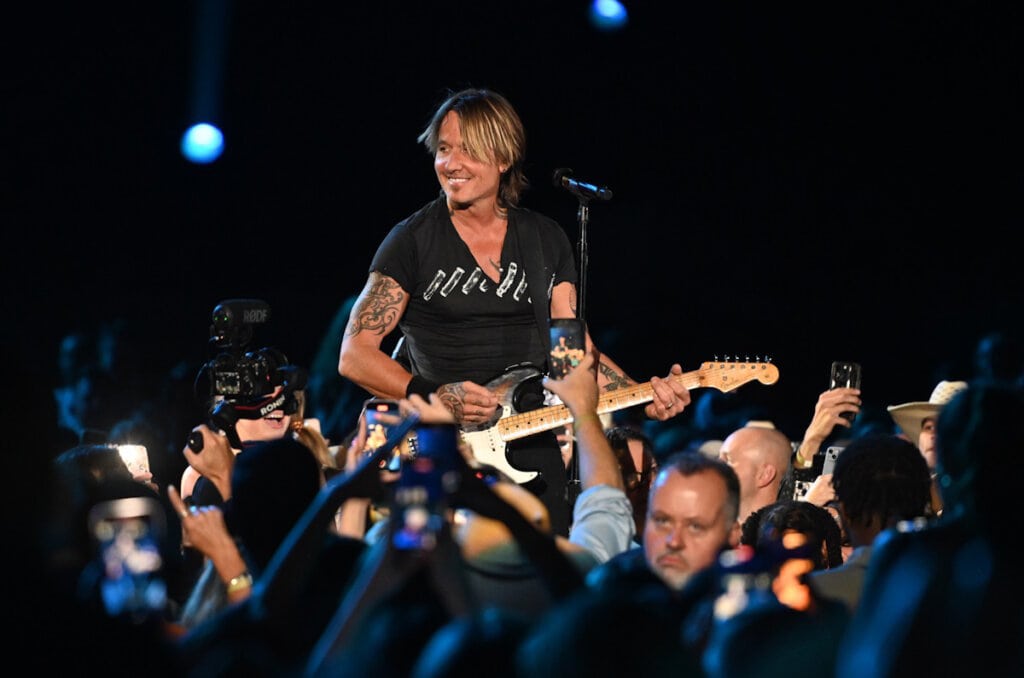
Keith Urban wasn’t always the confident, stage-commanding superstar fans see today. In fact, he describes himself as a “very shy” kid. But that all changed when he got his hands on the guitar and received a valuable piece of advice from a fellow performer.
“It was like a little shield, like Linus with his security blanket, so it was quite comforting to have a guitar,” he explained of his guitar.
He admitted he was not “a performer-performer” as a young boy, that is until he was playing in a band in Australia. He wasn’t the lead singer, an American frontman from Florida held that role, and Keith was learning the ropes on guitar and keyboards. One night, that frontman offered a simple piece of advice that would transform Urban’s approach to performing.
“He was a great entertainer. He was excellent, and I learned so much from him and I was playing guitar and a bit of keyboards in this band and trying to learn a lot from him as a frontman,” Urban recalled. “And one night he said to me, he goes, ‘Hey, when you play a solo, why don’t you go to the front of the stage, you know, and just play like that and lean into the audience and really play?’ And i’m like, ‘Oh my gosh, I couldn’t do that.’ He goes, ‘Why not?’ I go, ‘Because they’ll think I’m like stuck up, like I’m hot, like I’m full of myself.’ He goes, ‘Well, are you?’ I said, ‘No.’ He goes, ‘Then they won’t.’”
That was the epiphany Urban had been waiting for.
“And it was just like BOOM, this whole lightbulb went off. It sounds so obvious, but it was literally like if you are generally a down-to-earth, grounded, good, tongue-in-cheek type person, you can do anything and the audience will love it ‘cause they know you’re not an arrogant, cocky person at all.,” he explained. “You’re just putting on a show. But to his point, if you do think that you’re pretty hot, it won’t work. They’ll know you’re just a complete egomaniac and it won’t work, and you’ll strut and cop a pose and do all this stuff and they won’t like it. But if you’re tongue-in-cheek, if you’re down-to-earth and grounded, it’ll work.

The next night, Keith took the advice, and it changed everything. He stepped to the front of the stage during a solo and found the audience instantly responding. It was a turning point that helped shape him into the performer he is today.
Fans can witness Keith Urban’s incredible live show on his HIGH AND ALIVE WORLD TOUR. CLICK HERE to see if the trek is coming to a city near you.
The post Keith Urban Opens Up About Overcoming Shyness and Finding His Stage Confidence appeared first on Country Now.
Country Now
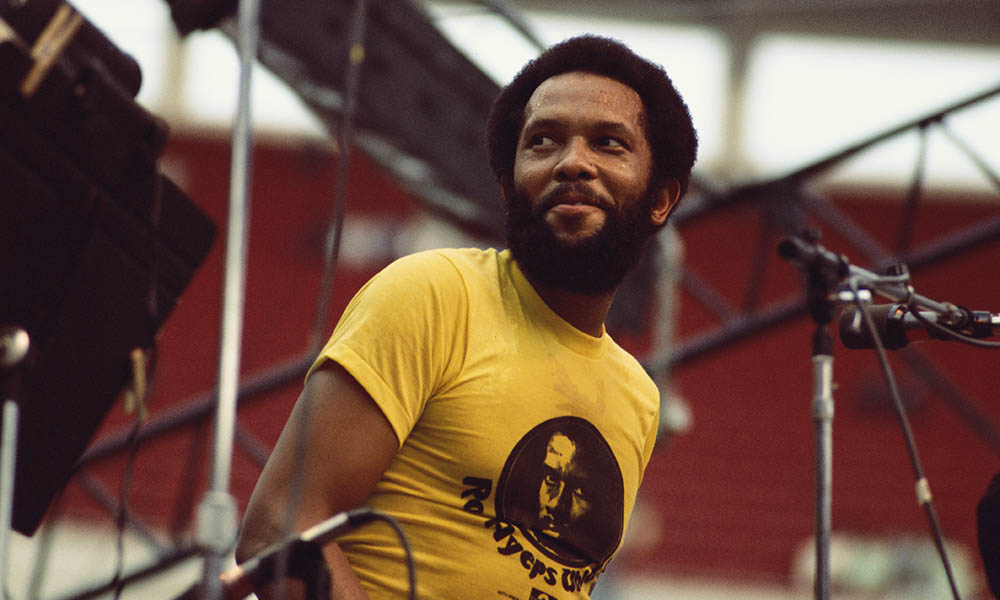
Roy Ayers was a hugely influential musical pioneer who changed people’s perceptions of the vibraphone. First commercially produced in 1924, the vibraphone is an electric-powered tuned percussion instrument played with mallets whose sound is glassy and tinkling. It was almost exclusively associated with the world of straight-ahead jazz until the 1970s when Ayers placed the vibraphone at the center of a new musical universe, one that blended jazz with funk, soul, disco, and pop but also included elements drawn from Latin and African music as well as rock. Though initially influenced by jazz vibraphone pioneers like Lionel Hampton, Milt Jackson, and Cal Tjader, Ayers arrived at a unique style that was fresh and progressive but also commercially successful, exposing the vibraphone to a much broader audience.
Ayers started his career in the 1960s playing straight-ahead instrumental jazz but radically changed his musical approach in 1970 after forming the band Ubiquity, where he sang in addition to playing the vibes and dramatically upped his music’s funk quotient. His musical transformation attracted the interest of Polydor Records, who signed him and helped transform Ayers into a hit-making star; between 1970 and 1979, he was prolific in the recording studio, releasing 17 albums. He also became a regular visitor to the US singles and albums charts, putting nine albums on the Billboard 200 between 1976 and 1979.
By the 1990s, Ayers had slowed down, producing fewer albums, but by then, his seminal 70s recordings fascinated a new and younger generation of listeners and music-makers. Not only were his old Polydor albums heavily sampled by hip-hop artists like A Tribe Called Quest and The Pharcyde, but they also helped ignite the UK’s nascent acid jazz scene in the mid-90s, inspiring the world-renowned group Jamiroquai, who often performed Ayers’ tunes in their live shows.
Performing on rapper Guru’s Jazzmatazz project in 1993 also played a crucial role in expanding Ayers’ audience. Later in that decade, his distinctive musical vocabulary also played a vital role in shaping the jazz-tinted sound of the American neo-soul scene, directly influencing D’Angelo (who covered Ayers’ “Everybody Loves The Sunshine”) and Erykah Badu, who later featured him on her 2000 album Mama’s Gun and then returned the favor by guesting on the vibraphonist’s 2004 LP, Mahogany Vibe.
With Roy Ayers boasting a back catalog that includes over 400 original compositions spread across 30 studio albums, picking a selection of his best songs that will satisfy all his fans is virtually impossible. In light of that, the following songs, mostly plucked from his fertile spell at Polydor, should be regarded as a helpful guide rather than a definitive introduction to the man some call the “Godfather of Neo Soul.”
Roy Ayers’ story begins in Los Angeles, where he was born in 1940. Though drawn to music as a youngster, Ayers didn’t play the vibraphone until he was seventeen. But, as he revealed to Blues & Soul magazine in 2007, his association with the instrument began many years earlier. “My mother and father always used to take me to see Lionel Hampton when he came to Los Angeles,” he revealed. “One time, he came down the aisle and gave me a set of vibraphone mallets. I was five years old at the time.” Ayers treasured those mallets. And, encouraged by his mother, who told him “that one day she was going to see [his] name in lights,” he felt he had made a date with destiny.
Ayers played the piano first and then during his late teens sang with The Poets, a local doo-wop vocal group who released a one-off single, “Vowels Of Love.” Soon afterward, thanks to his mother, Ayers got a vibraphone. Remarkably, six years later in 1963, he was a rising star of the L.A. jazz scene having released his debut album, West Coast Vibes.
After working as a sideman with flutist Herbie Mann in the mid-60s, a liaison which led him to record three albums for Atlantic Records, in 1970, Ayers signed with Polydor, the rising German label that had famously signed the “Godfather of Soul,” James Brown. It was a watershed moment. Ayers put together a new band, which he dubbed Ubiquity on his manager’s advice, as he recalled in 2007: “She said, ‘Ubiquity means a state of being everywhere at the same time.’ I said, ‘You know that’s fate because if everyone has one of my albums, I will be everywhere.’ I thought it was great, so I started using that name.”
Leading Ubiquity, Ayers abruptly changed musical direction, dropping the bebop-influenced straight-ahead jazz of his early years for a colorful fusion style that would distinguish him from other vibraphonists. He blended jazz with electric funk, soul, and a smorgasbord of other musical flavors but arguably his most critical innovation was moving away from instrumental music. “I realized that when you have voices, the people relate better to your music,” he told Blues & Soul. “It got me international recognition.”
With his vibraphone-led jazz-funk sound, Roy Ayers was an unlikely pop star. But such was the vibrancy and accessibility of his music that he racked up fifteen hit singles in the US R&B charts, four of which made the Top 40. His biggest US smash was “Running Away,” a persistent dance groove distinguished by an infectious chorus sung by female background vocalists. Taken from the vibraphonist’s biggest-selling album, 1977’s Lifeline – which made No. 72 in the Billboard 200 – “Running Away” spent seventeen weeks in the US R&B singles chart, peaking at No. 19.
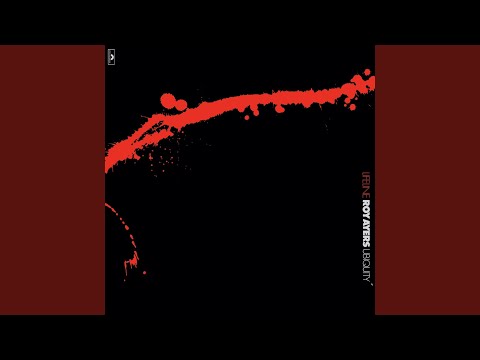
A year later, Ayers was in the US R&B singles chart again, rising to the No. 29 spot with the wild dance track “Freaky Deaky,” driven by Kenny Turman’s percussive slapped bass and injected with a sense of cosmic weirdness by Philip Woo’s spacey synth squiggles. Gospel-reared singers Merry Clayton (who famously sang on the Rolling Stones’ “Gimme Shelter” hit) and Sylvia Cox shared lead vocals with Ayers on a track that seemed avant-garde compared with other dance numbers from the same era.
1979’s anthemic “Love Will Bring Us Back Together” is another essential Ayers track. An addictive funky groove driven by intertwined clavinet and guitar, the song reached No. 41 in the US R&B chart in the summer of 1979. On this compulsively danceable cut, plucked from the album Fever, Ayers jettisoned his vibes to spotlight his idiosyncratic vocal style, a key element in his music’s appeal.
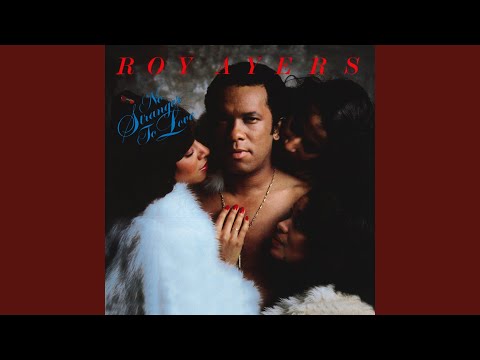
At the end of 1979, Ayers was in the charts again with “Don’t Stop The Feeling,” taken from his No Stranger To Love LP. It exuded a similar toe-tapping, club-style vibe to the earlier “Love Will Bring Us Back Together” but sold more copies, rising to No. 32. It’s a number whose blend of a simple, irresistible hook line allied to a sophisticated musical backdrop crystallizes the unique musical essence of Roy Ayers.
Although he was a frequent visitor to the US charts in the 1970s, Ayers didn’t put a second single into the R&B Top 20 again until 1986’s “Hot,” taken from the album, You Might Be Surprised. Co-written and produced by James Mtume (of Mtume and “Juicy Fruit” fame), the track, with its minimalist synth-funk style, marked a new musical direction for Ayers. It made No. 12 on the US Dance chart and could be heard playing in the background in Michael Jackson’s video for his 1987 single “The Way You Make Me Feel.”
According to the website Who Sampled, Roy Ayers’ music has been sampled over 800 times. Ayers was always happy to be sampled, not just because of the royalties it generated for him but also because his music sparked other musicians’ creativity.
One of Ayers’ most-sampled tracks is the anthemic “Everybody Loves The Sunshine,” which has racked up over 100 million streams on Spotify. Among artists who have used portions of it are 2Pac, Dr. Dre, Mos Def, and hip-hop soul queen Mary J. Blige. Describing how the song came about, in 2007 Ayers revealed: “I was in a studio and reflecting on my childhood. Up until I was about 14 years old, the sun rays in Los Angeles were really bright, but in 1954, the sun started to vanish and this smog started to conceal its brightness. The sun was beautiful that day so I thought about this line ‘Everybody loves the sunshine,’ and then came up with ‘My life, my life, my life in the sunshine.’”
Other notable Ayers tunes that have been gobbled up by an Akai S1000 sampler and reconfigured into brand new hip-hop grooves include the mysterious and haunting “We Live In Brooklyn, Baby” (sampled by Kendrick Lamar on “Good Kid”) and the cosmic slow jam “Searching,” which was used as the foundation of Pete Rock & C. L. Smooth’s same-named 1994 track. Another dreamy, astral-themed slower number, “The Third Eye,” was repurposed on the Fly As Pie remix of The Pharcyde’s “Passin’ Me By.”
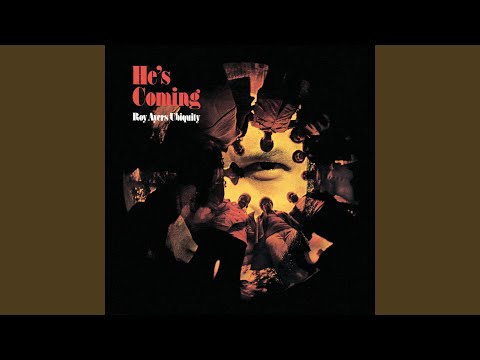
A mandatory inclusion in any Roy Ayers best of is the propulsive and super-funky “He’s A Superstar,” an uplifting message song purportedly inspired by Andrew Lloyd Webber and Tim Rice’s 1971 hit musical Jesus Christ Superstar. The song appeared on the Roy Ayers Ubiquity album He’s Coming from 1972. It was sampled in 1993 by DJ Shadow & The Groove Robbers (on “Hindsight”) and in 2010, Ghostface Killah borrowed the chorus and synth licks to make “Superstar,” on which fellow rapper Busta Rhymes featured.
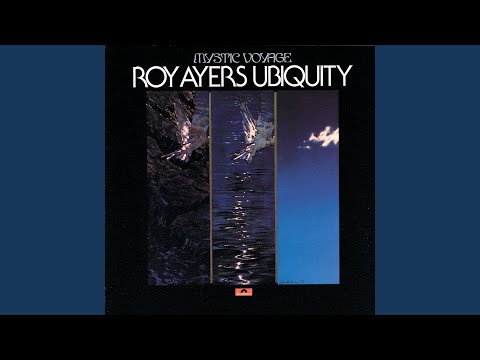
Nobody serves up a lush, laidback, jazzy soundscape better than Roy Ayers. Although his uptempo dance tracks cavorted up the charts and garnered more public attention, his back catalog includes many slower gems. The instrumental “Mystic Voyage,” the title track of a Roy Ayers Ubiquity album from 1975, is one of his most memorable, juxtaposing cool vibes melodies with a funkafied backdrop augmented by orchestral strings.
Another chilled instrumental, “Lifeline,” from the same-titled 1977 LP, features Ayers playing a long snaking vibraphone solo while highlighting the growing importance of synthesizers in Ayers’ musical universe.
Even slower, the gently glistening “Vibrations” (the title tune from a 1976 Roy Ayers Ubiquity album) allows Ayers’ band to stretch out; it also features the plaintive vocals of Chicas, a singer whose super-soulful tones featured on three of the mallet maestro’s LPs.
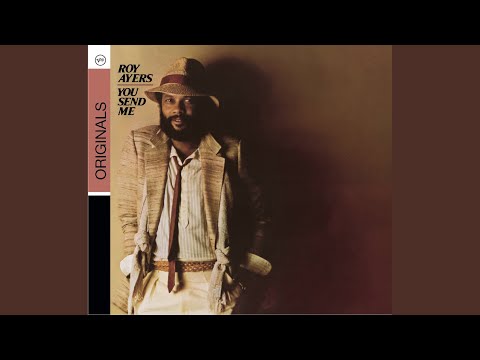
Sam Cooke’s vintage 1957 pop hit “You Send Me” was remodeled by Ayers into an eight-minute, string-draped epic that became the title track of the second of two Polydor LPs he released in 1978. His loose, leisurely interpretation, which is reconfigured as a duet with the expressive singer Carla Vaughan, makes the song almost unrecognizable from Cooke’s original. It showed the vibraphonist’s skill in assimilating old music and making something refreshingly new.
In 1985 on his You Might Be Surprised album Ayers served up one of his most unusual ballads, the tongue-in-cheek “Programmed For Love.” Produced by James Mtume, the track is a machine-tooled soundscape that bizarrely describes Ayers’ love affair with a computer, which is characterized by a vocoder-treated female voice.
Roy Ayers’ penchant for funky uptempo tracks meant that he was no stranger to getting down on the dancefloor. At the height of the platform-soled disco inferno, the vibraphonist embraced the zeitgeist and immersed himself in mirrorball music. Arguably his most overt salute to the disco era was “Fever” (taken from his same-titled 1979 LP), where he gave a four-on-the-floor symphonic soul makeover to the Little Willie John tune that jazz siren Peggy Lee had made famous in 1958.
Other Ayers’ tunes guaranteed to get the crowd dancing at a discotheque were the breezy “Get On Up, Get On Down” and “Heat Of The Beat,” both Top 50 UK chart entries. On the latter, a dance floor number defined by slurping hi-hat patterns, swooping string lines, and party-on vocal chants, Ayers joined forces with the Crusaders’ trombonist Wayne Henderson.
Ayers showed a harder funk edge on an earlier dancefloor cut, “Brother Green (The Disco King),” taken from the 1975 Ubiquity album Mystic Voyage while with “The Golden Rod” (a minor 1976 US hit, pulled from the iconic Everybody Loves The Sunshine album), Ayers proved that even his vibraphone-driven instrumental tracks could keep clubgoers’ feet moving.
Thanks to the endeavors and innovations of Roy Ayers, not since the halcyon days of the mallet king Lionel Hampton had the vibraphone had such a prominent place in mainstream music. As well as enjoying a highly successful solo career, Ayers was an in-demand collaborator, his vibraphone’s crystalline melodies gracing recordings by artists that ranged from rap star Coolio to soul diva Whitney Houston and Afrobeat king Fela Kuti.
But it was as a solo artist and leading Ubiquity that the “Godfather of Neo Soul” truly made his mark. As the best Roy Ayers tracks reveal, the vibraphonist was a multi-faceted artist who was both supremely versatile and creatively courageous but who never lost sight of his role as an entertainer. His music could be politically charged and spiritually inclined, but also offered uplifting moments of humor, playfulness, and a liberating sense of fun. You will find all these qualities in the tracks highlighted here, which capture the mercurial Roy Ayers at his magical, incomparable best.
Shop for Roy Ayers’s music on vinyl or CD now.
Discover more about the world’s greatest R&B artists | uDiscover Music
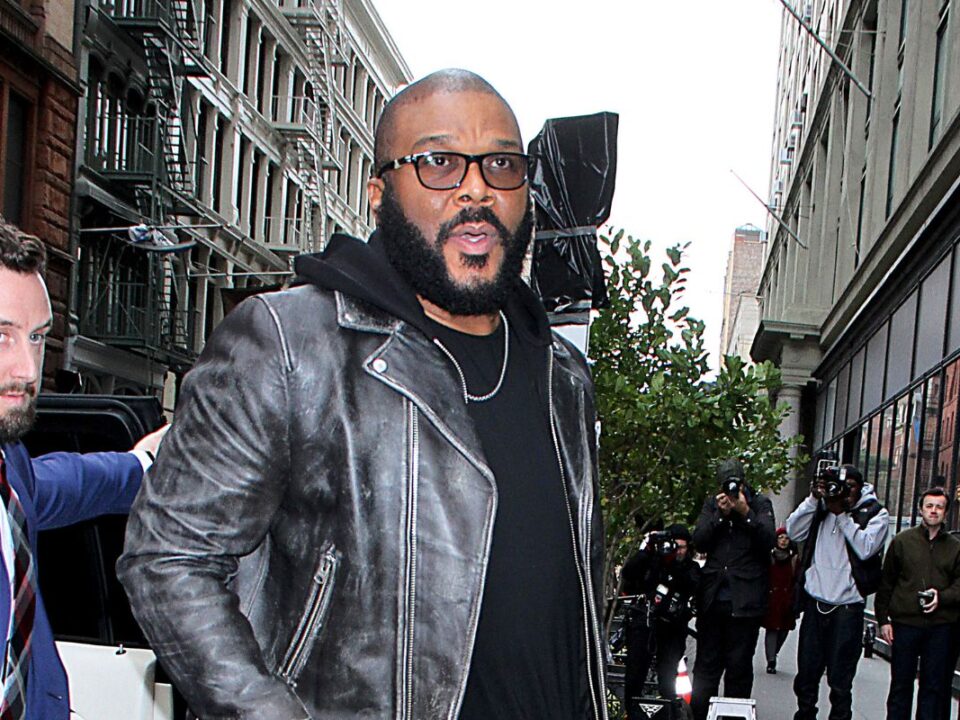
Derek Dixon accused Tyler Perry of sexual assault and described the moment he “jumped out of bed” in an upcoming interview.
AllHipHop

Doja Cat stunned the VMAs crowd by pretending to eat a lipstick that turned out to be a caramel-filled chocolate crafted by pastry artist Amaury Guichon.
AllHipHop

Ksoo is seeking a new trial, claiming prosecutors committed errors happened during his trial for killing another rapper.
AllHipHop