The country power couple will celebrate their 30th wedding anniversary next month. Continue reading…Country Music News – Taste of Country
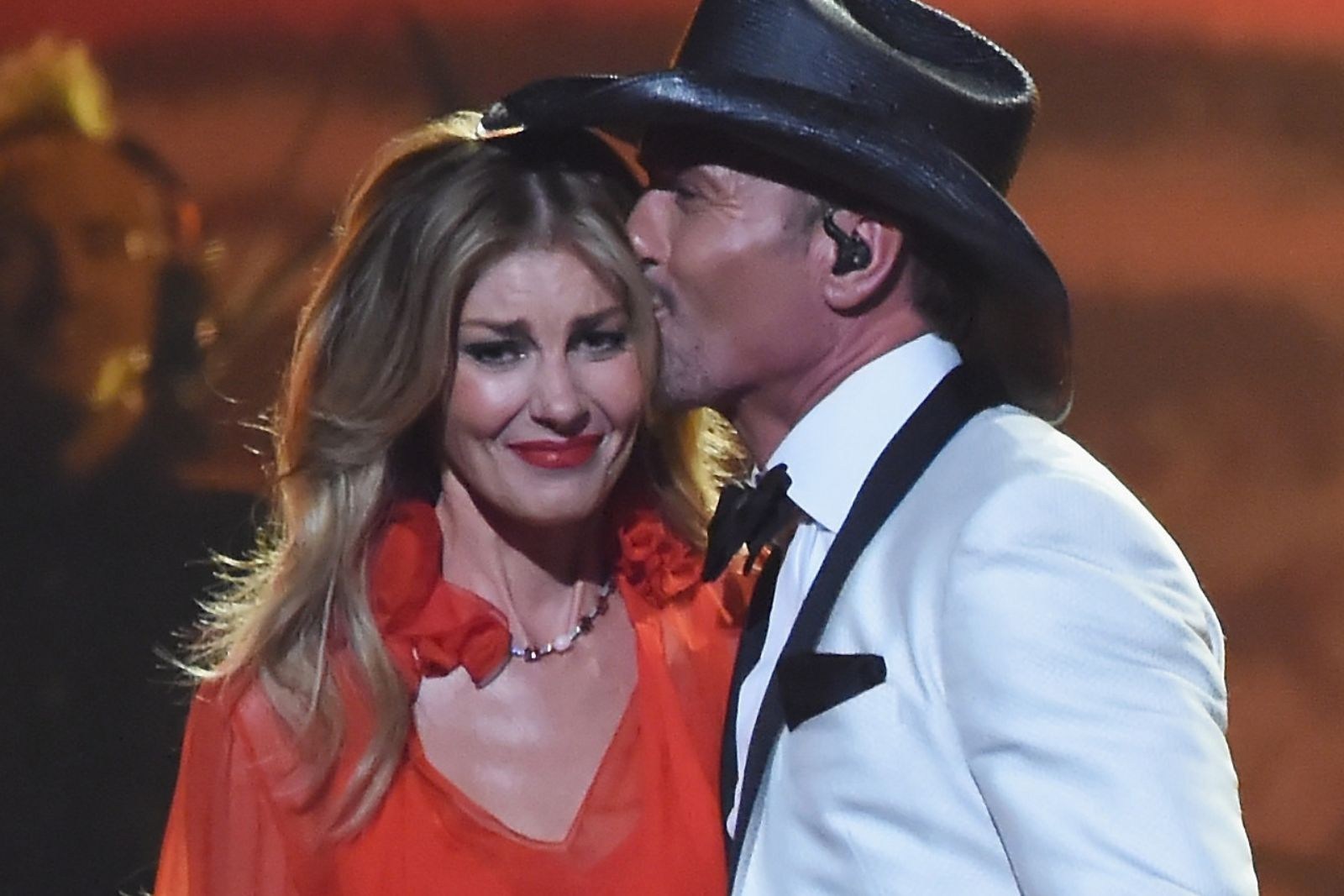








The country power couple will celebrate their 30th wedding anniversary next month. Continue reading…Country Music News – Taste of Country
The country power couple will celebrate their 30th wedding anniversary next month. Continue reading…The Boot – Country Music News, Music Videos and Songs
Reading Time: 2 minutes
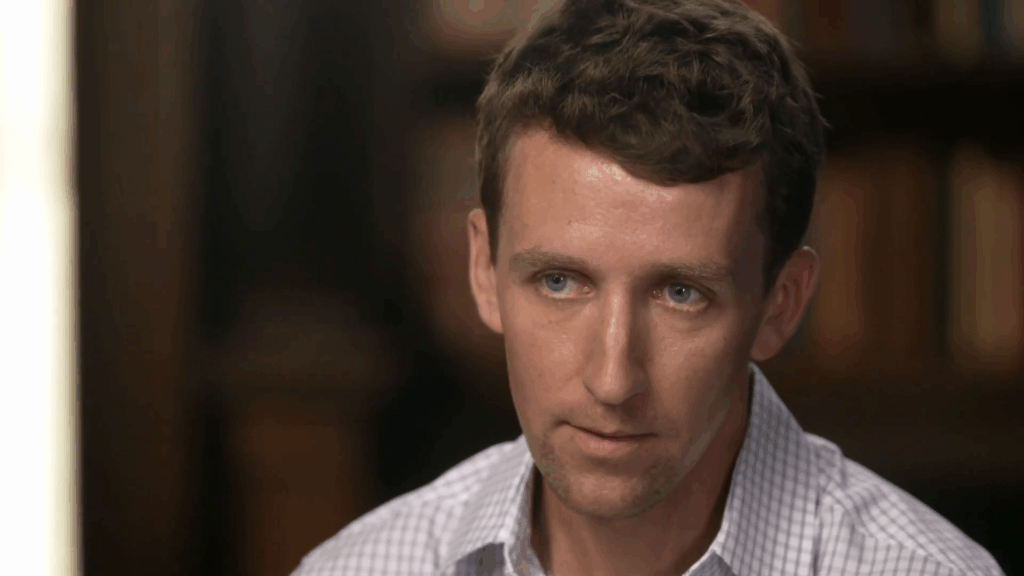
Patrick Clancy is preparing to become a father again.
Patrick and his wife, Dr. Rachel Danis, are expecting their first child together, marking a major new chapter for the couple after the devastating loss of Patrick’s three children with his former wife, Lindsay Clancy.
The news comes just one day after Patrick and Rachel opened up about their lives during an emotional 60 Minutes interview.
During the interview, CBS correspondent Ross Douthat appeared to hint that the couple was planning to start a family. On Monday, he clarified the remark during an appearance on CBS Mornings.
“They are having a child,” Douthat confirmed during an interview with Nate Burleson.
Patrick has previously spoken about wanting to preserve the memory of his late children — Cora, Dawson, and Callan — as he moves forward with his life.
During the 60 Minutes interview, Patrick discussed the possibility of someday telling his future children about their older siblings.
“I can’t wait to tell them about their brothers and sister,” he said.
It’s a particularly emotional sentiment given everything Patrick has endured since January 2023, when his three young children died at the family’s Massachusetts home.
Lindsay was subsequently charged in connection with the deaths. Her murder trial ended in a mistrial earlier this month after jurors were unable to reach a unanimous verdict.
Patrick has continued to speak publicly about his children and the impact their deaths have had on his life. He also testified during Lindsay’s trial, where he recalled the devastating aftermath of the tragedy.
Now, Patrick is beginning another chapter with Rachel.
The couple married earlier this year after meeting in New York. Rachel, a physician specializing in reproductive medicine, has also publicly defended Patrick amid the intense scrutiny surrounding his relationship with Lindsay and the events leading up to the trial.
During the interview, Rachel pushed back against conspiracy theories surrounding Patrick and their relationship.
“I don’t understand how the story has been so twisted,” she said.
Rachel added that Patrick is “the most selfless father and supportive partner.”
With a baby now on the way, Patrick and Rachel appear to be moving forward while keeping Cora, Dawson, and Callan firmly part of their family story.
And Patrick has already made clear that he intends for his future child — and any children who follow — to know all about the siblings they never got the chance to meet.
Patrick Clancy Expecting Child With New Wife Rachel Danis was originally published on The Hollywood Gossip.
The Hollywood Gossip
Invisible characters challenge spam filters, CrowdSec deals with a code leak, and AI is shifting what matters in software development.WordPress Planet
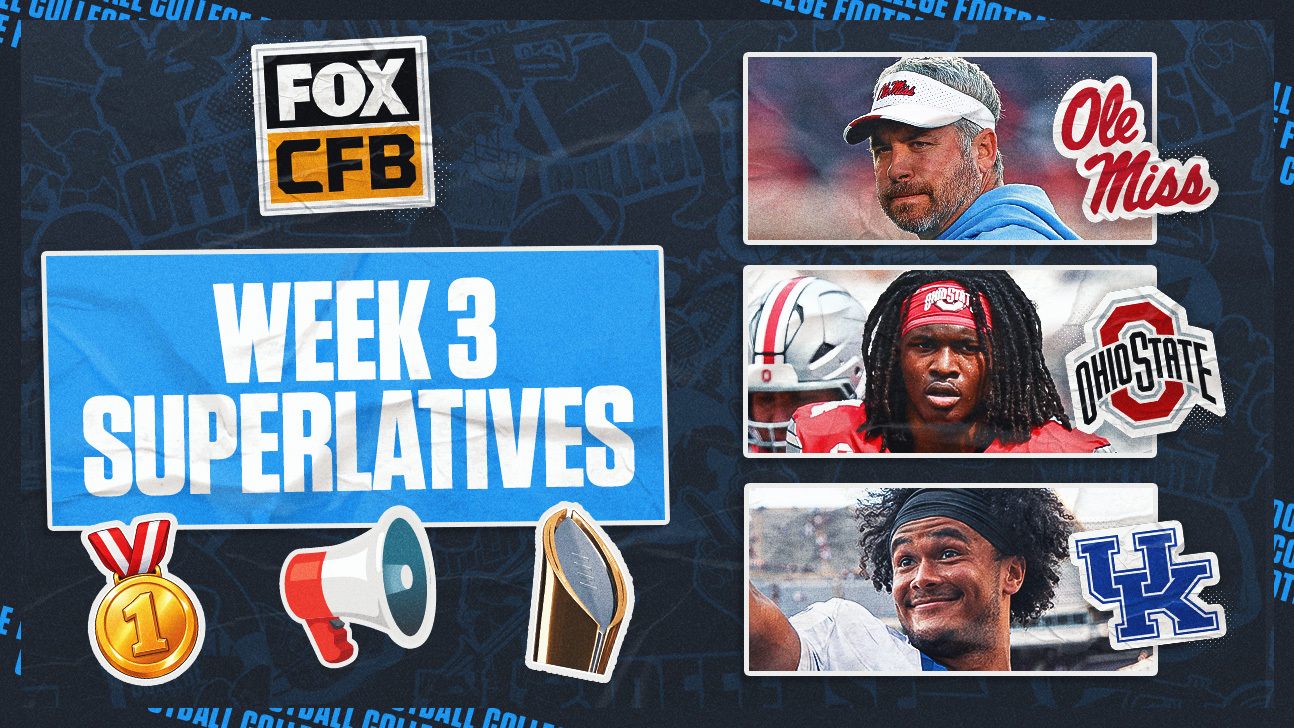
The lead up to Week 3 was all about Lane Kiffin’s return to Oxford after leaving Ole Miss for LSU before the College Football Playoff last season. And then, the Rebels outlasted the Tigers in an emotional 32-24 win that was essentially a massive sigh of relief for the state of Mississippi. Kiffin said after the game that he was grateful for his time coaching Ole Miss because his feelings for the place were not just about football. Now that this SEC game — one of the most highly and hotly anticipated matchups of this regular season — is over, we can maybe all move on from the dramatic Kiffin headlines. We’ll see. There was more than just LSU and Ole Miss in Week 3, though we still have more to discuss. With that, here are our superlatives from another fun weekend of college football: Before we move on, we have to briefly talk about the game of the week, which obviously was Kiffin’s Ole Miss homecoming. The Rebels jumped out to a 24-7 lead at halftime behind quarterback Trinidad Chambliss’ sharpness and accuracy. His counterpart, LSU quarterback Sam Leavitt, took awhile to settle in. Things got spicy in the third quarter when the Tigers put together two touchdown drives and tied things up 24-24 early in the fourth. Chambliss then proceeded to lead his offense on a 13-play drive that he finished with a 14-yard touchdown run and a two-point conversion to pull ahead. The Ole Miss defense then shut things down with a goal line stand, which ended in Jaylon Braxton intercepting Leavitt on the Tigers’ final play of the game to clinch the 32-24 victory. “Hotty f****** Toddy!” Chambliss said on the broadcast after the game. It has to be Vanderbilt’s fumble recovery in the end zone to pull off a shocking 35-31 win over NC State. The Wolfpack faced fourth down on its own five-yard line while leading, 31-28, with six seconds left. Quarterback CJ Bailey tried to run out the clock and take a safety, but he fumbled, and the Commodores recovered to win the game. Vandy fans didn’t rush the field in excitement, but they would have had a good reason to do so. The broadcast put up a wild statistic after the game, which was that teams who had the ball and the lead in the final 10 seconds of a game were 1,046-1 over the last 20 seasons before Vandy’s stunner. It must feel good to be Pete Golding right now. All the chatter leading into the Ole Miss-LSU game was about Kiffin’s return, how Leavitt was “doubtful” according to LSU’s mid-week injury report, and that the Tigers’ defense was dominant. Golding may have benefited most from Kiffin’s departure last year, as he was ultimately named the successor. Golding took the Rebels to the CFP, winning the first round and a quarterfinal game vs. Georgia before losing to Miami in the semifinal. Those results gave the program a confidence boost entering this season, where they are currently sitting with a 3-0 record. Getting past the Tigers was important for team confidence, but Golding didn’t overhype the game with his players and reminded them afterward that they have more work to do. “Is it sweet? Absolutely,” Golding told reporters. “But we’ve got to come back to work. It wasn’t our Super Bowl, and we didn’t make it out to be our Super Bowl.” Jeremiah Smith made history Saturday in Ohio State’s 59-3 win over Kent State, becoming the program’s all-time leader in career receiving yards. After catching five passes for 85 yards, the star wide receiver now has 2,959 career receiving yards, surpassing Michael Jenkins’ previous record of 2,898. Smith, a junior, is a Heisman Trophy candidate and widely projected to be a top-5 pick in the 2027 NFL Draft. He had 1,315 receiving yards as a true freshman and then 1,234 as a sophomore last season. Through three games this year, he has 312 yards and three touchdowns while averaging 157.5 yards per game. The Buckeyes are 2-1 with Big Ten play beginning next week vs. Illinois. Kentucky shocked then-No. 9 Texas A&M, 31-21, in College Station. It was a massive win for first-year Wildcats coach Will Stein in his first-ever SEC road game. A week ago, the Wildcats were embarrassed in a 45-17 loss to Alabama. They led the Crimson Tide 17-13 at halftime before being outscored 32-0 in the second half. This week, Kentucky’s defense – led by former Texas A&M defensive coordinator Jay Bateman – was especially lethal, limiting Aggies quarterback Marcel Reed to 26-of-49 passing for 236 yards with a touchdown and two interceptions. “Hats off to Kentucky, they came in here and beat our ass,” Aggies head coach Mike Elko said after the game. “No good enough from us on any level — coaching, playing, performing, physicality, anything. On me, I own it. It’s my program, I’m in charge of it. We have to get it fixed. “… There’s no positives. Not an ounce of a positive anywhere.” In this new era of a nine-game SEC schedule, no team has an easy path to the CFP. And things get tougher for Texas A&M, who has to travel to No. 10 LSU next week. There are a lot of intriguing matchups coming in Week 4. No. 1 Texas travels to No. 15 Tennessee, while No. 24 Oklahoma goes to No. 2 Georgia. It’s important for both the Longhorns and Sooners to get those road wins with the Red River Shootout looming in two weeks (both teams have a bye the week before their annual rivalry showdown). But perhaps the biggest storyline entering next week is a Big Ten meeting between No. 12 USC and No. 21 Oregon. The Ducks have been confusing to start the season. They were a popular pick to win the national championship with quarterback Dante Moore a frontrunner to win the Heisman Trophy. Then they nearly lost their season opener to Boise State and were stunningly upset by Oklahoma State in Stillwater in Week 2. This past week, they tried to make some sort of statement by trouncing Portland State, 84-0. The Trojans, meanwhile, are 4-0, but raised questions in their 42-35 win over Rutgers on Saturday. USC was a three-touchdown favorite, and although Lincoln Riley’s team never trailed, it let the Scarlet Knights hang around. There is no telling what will happen when the Trojans host the Ducks in Week 4.Latest Sports News from FOX Sports

While drive-thrus are common these days, they were once a groundbreaking innovation. To celebrate, this fast food chain created National Drive-Thru Day.

Food Republic – Restaurants, Reviews, Recipes, Cooking Tips

CHICAGO — Illinois Gov. JB Pritzker revealed Monday that he was diagnosed with Type 2 diabetes two years ago and began taking a GLP-1 medication, resulting in an 80-pound weight loss that he says has transformed his health and daily life.
The disclosure marks the first time the Democrat has publicly disclosed that he has diabetes, as well as officially acknowledging that he is on GLP-1 medication, which is prescribed both for diabetes treatment and weight loss. The governor told CBS News he started taking the medication after doctors warned that he would likely need insulin for the rest of his life.
Pritzker is viewed as a likely 2028 presidential candidate and has spent two years batting away questions about his visibly slimmer appearance, though he did hint at his weight loss during the Gridiron Club and Foundation’s annual white-tie dinner in Washington, D.C., earlier this year.
“I’m JB Pritzker, governor of the great state of Illinois, and if you’re seeing me in person for the very first time, yes, I’m the guy who put ‘gov’ in ‘Wegovy,’” he told the high-profile crowd.
The 61-year-old governor said he has struggled with his weight since childhood, dating back to when he was a 7-year-old. That’s about the time his father, Donald Pritzker, suffered a fatal heart attack at age 39 while playing tennis.
President Donald Trump has made Pritzker’s weight an issue, often commenting about it in personal attacks. Asked about his weight loss during an interview with POLITICO in the spring of 2025, Pritzker said, “How about, just for health.”
In Monday’s CBS interview, the governor said he closely monitored his cholesterol, triglycerides and other health markers for years because of his family history. But after becoming governor, he acknowledged the stress of leading the nation’s sixth-largest state contributed to additional weight gain.
Two years ago, that concern became more urgent when doctors diagnosed him with Type 2 diabetes, he told CBS. “My doctor said, ‘Oh no, you’ll never come off of it. You’re going to have to do this the rest of your life, and I recommend that you take a GLP-1,’” Pritzker recalled about being told he’d have to take insulin.
His wife, MK Pritzker, encouraged her husband to proceed on GLP-1. “I want him to be around for a really long time,” she told CBS.
The governor’s office confirmed that as a result of the GLP-1, plus improved diet and exercise, Pritzker “is no longer on insulin and down to levels that indicate no diabetes/prediabetic levels.”
Pritzker said the effects were almost immediate. Within days, he said, he didn’t feel the appetite urges. “It was the strangest feeling.”
The governor also has gained local attention for taking walks along the Lake Michigan walking path in Chicago. Along with adopting the healthy habit, it’s allowed him to talk regularly to constituents.
During Monday’s interview, Pritzker side-stepped questions about whether he was running for president. “I honestly am focused on what’s best for the people of Illinois,” he said.
The governor also talked about being proud of Illinois’ decision to cover GLP-1 medications for people with diabetes, becoming emotional describing a woman who approached him and told him access to the medication had saved her life.
The announcement about his weight comes as Pritzker is taking a more prominent role in the 2026 midterms, chairing a political action committee focused on investing at least $20 million in Democratic House races. The move has added to speculation about a potential presidential bid, where the demands of a national campaign would put his health and stamina in sharper focus.
Politics

Reading Time: 3 minutes
It’s probably safe to say that Ed Sheeran is having a rough September.
There are people who have it worse. Particularly in Gaza, which is sort of the whole point of the controversy.
Sheeran is condemning and calling out the atrocities against the Palestinian people, all while having seemingly shorn himself in shame.
In his on-stage statement, Sheeran broke down in apparent tears and shared that the backlash had him afraid for his life.
On Saturday, September 19, Ed Sheeran performed at Lincoln Financial Field in Philadelphia.
He performed solo, after all of his supporting acts quit the show after Macklemore was iced out of the tour.
Before he got to singing (not even his backing band remained with him), he addressed the crowd.
“In these situations you really find out who your friends are. It’s been a weird week,” Sheeran acknowledged.
“It happened very quickly,” he admitted. “At the same time, I had so many people telling me to cancel this tour and so many people I’ve known for years and years and years they’re kind of backing away.”
When it came to continuing his tour, Sheeran said, it came down to the numbers.
“In the back of my mind, I saw the ticket sales for this gig and I didn’t see cancellations, I saw people buying tickets for this gig,” he claimed.
“Everyone’s telling me to cancel,” Sheeran shared, “and I’m feeling all of my friends and family and people I know abandon me.”
His cousin, Jethro Sheeran, publicly blasted him as a bad person on Thursday, September 17.
“I look at the end of the week and I see 50,000 people who haven’t abandoned me,” Sheeran announced with clear gratitude.
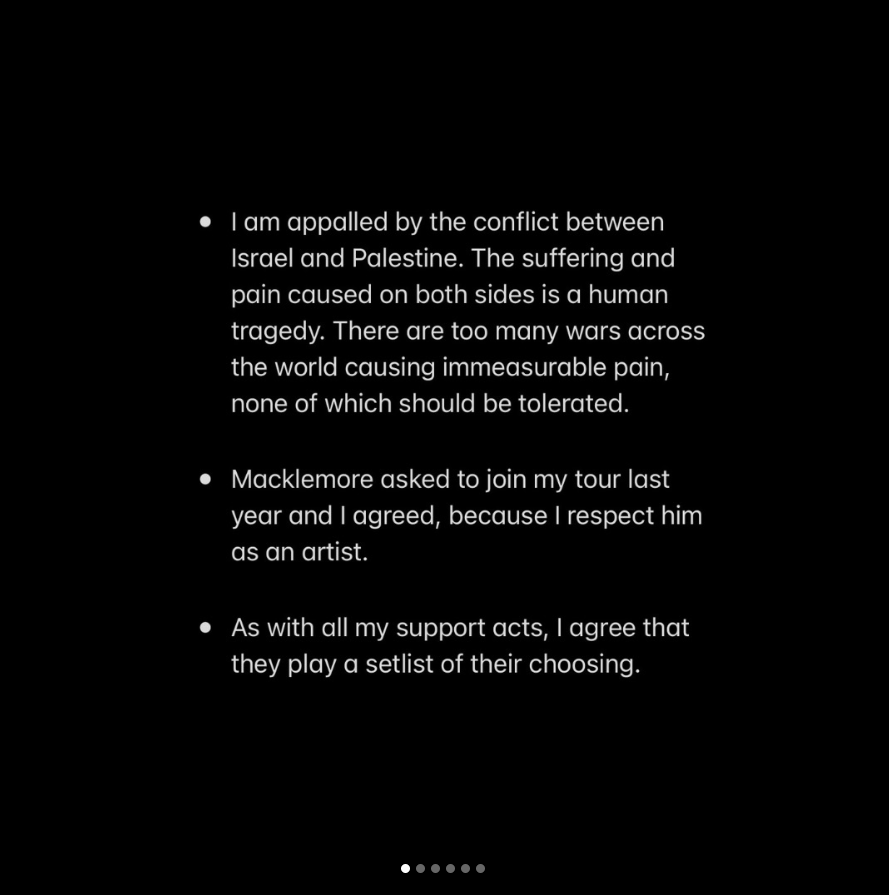
Though Ed Sheeran gave his fans a tribute, he also admitted to taking new security measures — including not stepping onto the B Stage in light of the controversy.
(Any controversy can be the excuse that someone with violent impulses uses to lash out, but realistically, anyone still attending his concerts at this point is presumably either a diehard fan or someone who got free tickets through work or someone who’d already bought tickets and just decided to go.)
He did speak about more important things, including that no one — including stadium owners — should get to preapprove the content of shows that play in their arenas.
(As we have previously noted, there may be First Amendment issues with the venues that involve governments in ownership and operation; when it comes to the privately owned arenas, including on owned by Robert Kraft, the actions are morally repugnant but likely legal.)
More importantly, Sheeran did condemn the ongoing slaughter of Palestinians, including children, in Gaza. That’s progress, up to a point. It didn’t feel like his focus, however.
Unfortunately, as Matt Bernstein points out in the video above, Sheeran calling the ongoing wholesale slaughter, maiming, kidnapping, and torture of Palestinians “complex” sort of betrays how little progress he’s made.
“If you don’t name a perpetrator, Israel, and a cause, Zionism, then no one gets held accountable and nothing changes,” Bernstein accurately pointed out.
Sheeran reading his statement off of a teleprompter is not necessarily a bad thing. Many people do not feel comfortable speaking on important topics without organizing their thoughts.
However, in the context of Sheeran’s caution, it feels like he made this statement while walking on eggshells — even though, as someone with an estimated net worth well into the 9 figures, it is difficult to imagine what he felt that he had to lose.
Perhaps the most troubling element of Sheeran’s statement is that, even after a couple of weeks of controversy, so much of what he said seemed to be aiming for sympathy — his security fears, his reassurance about his fans, his friends and family pulling away from him. Kind of like how Pink crashed out about her fear.
Macklemore was quick to emphasize that none of this is about him. Perhaps Sheeran should ditch the PR consultants and just learn about the plight of the Palestinian people.
Ed Sheeran Says Family & Friends Abandoning Him, Breaks Down in Tears on Stage After … was originally published on The Hollywood Gossip.
The Hollywood Gossip
bbPress 2.6.18 is a maintenance release focused on forum imports and first-login password upgrades.
Imported users can now upgrade their passwords on first login for more legacy forum formats, including cases where the original forum database is no longer available. This release also corrects PHPWind topic statuses, reply counts, and forum dates during import, and restores Super Moderator edit links on front-end bbPress user screens.
bbPress 2.6.18 requires PHP 7.2 or newer and WordPress 6.0 or newer. Sites running an older PHP version should update PHP before upgrading bbPress. Read the 2.6.18 upgrade notes for importer compatibility details.
These changes are also in the 2.7 development branch. The Plugin Directory’s development trunk remains at 2.7.0-alpha-3.
Download bbPress 2.6.18 from WordPress.org, or update from your WordPress dashboard.
WordPress Planet

A chance encounter between Diamond Rio’s drummer and Dolly Parton turned into an unforgettable ten minutes of live music while waiting for camera equipment to cooperate. Continue reading…Country Music News – Taste of Country