Two survivors of a US airstrike, targeting what Donald Trump has described as a “drug-carrying submarine” in the Caribbean, have been repatriated to their home countries.The Latest News from the UK and Around the World | Sky News











Two survivors of a US airstrike, targeting what Donald Trump has described as a “drug-carrying submarine” in the Caribbean, have been repatriated to their home countries.The Latest News from the UK and Around the World | Sky News

Two British women have become the first female crew to row non-stop and unaided across the Pacific.The Latest News from the UK and Around the World | Sky News

Sam Rivers, the bassist with US nu-metal group Limp Bizkit, has died aged 48, his bandmates have said.The Latest News from the UK and Around the World | Sky News

Thousands of so-called “No Kings” rallies are being held across the US to protest at what organisers are calling Donald Trump’s “crackdowns on First Amendment rights”.The Latest News from the UK and Around the World | Sky News

Exiled Russian oligarch Mikhail Khodorkovsky has claimed that Vladimir Putin is signalling that he is prepared to strike a deal on Ukraine with Donald Trump.The Latest News from the UK and Around the World | Sky News

“Priceless” jewellery has been stolen from the Louvre museum in Paris – as authorities revealed details of the daring raid that has forced the closure of the world famous landmark.The Latest News from the UK and Around the World | Sky News

Pete Aitken says his daughter Hannah would still be alive if she hadn’t been sent to a series of “failing” mental health hospitals, which made her increasingly unwell.The Latest News from the UK and Around the World | Sky News
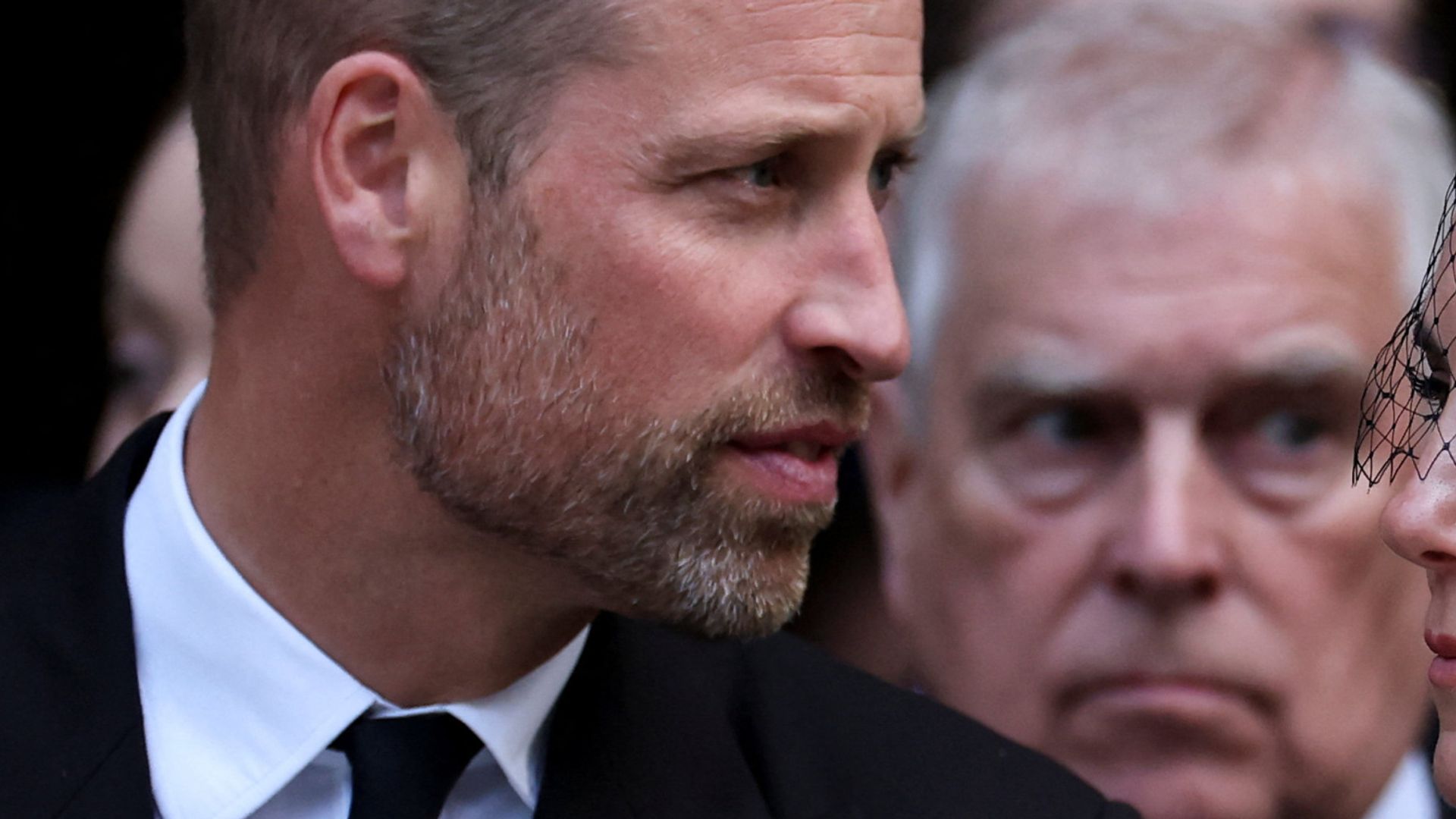
The Metropolitan Police is looking into reports that Prince Andrew asked an officer to help with an attempted smear campaigner against the woman who accused him of sexual assault.The Latest News from the UK and Around the World | Sky News

Reading Time: 5 minutes
Kevin Federline is making more and bolder claims about Britney Spears.
This time, he has moved on from what Spears called “white lies” and moved on to something much more serious.
Federline is claiming that Spears mistreated their sons.
He starts with claims about favoritism, but goes from there to various allegations — including a claim that she once punched their 20-year-old son and that she wished that both sons were dead.
Content warning: Kevin Federline and his new book are leveling claims of emotional, verbal, and one instance of physical abuse against Britney Spears.
Whether you believe these allegations or not, they are a disturbing read.
So, in You Thought You Knew, his new memoir, Page Six reports that Federline is alleging that Spears had Sean Preston bathing with her sometimes until he was around 10 years old.
(Is that too old? Yes. Is that unheard of? No. Just a few years ago, Tori Spelling had a similar bathtime scandal. And Chrissy Teigen had an adjacent bit of bath backlash)
“It was clear he was uncomfortable, to put it mildly, and I had to step in and make it stop,” Federline claims in his book.

Federline goes on to claim that Spears fed their sons shellfish despite their shellfish allergy.
Jayden James has serious allergies, which he claims that Spears generally ignored.
One time, Jayden was allegedly hospitalized in Louisiana when he was a child.
Ironically, he was allegedly told that it was for allergies, but Federline claims that he had accidentally swallowed pills of some kind.
“Whether they were Britney’s or someone else’s, I’ll never know,” Federline wrote in his memoir.

Kevin Federline also accused Britney Spears of having babied Jayden James.
This included both putting him in diapers after he had been potty trained and waking him up at night to keep her company, he claimed.
“This had gone on his whole life at that point, just one more thing that required my intervention to stop,” Federline wrote.
“It was a pattern: she’d pull him into her room at all hours, leaving Preston alone,” he claimed.
Federline added: “The imbalance in her attention towards them was beyond frustrating — it was harmful.”

One anecdote that Federline saw to fit to describe in his book involves Spears showing up at his home when he was not there. His wife, Victoria Prince, was there. So were the kids and their nanny.
In addition to complaining about how Spears was allegedly dressed at the time, he said that she put Jayden in a diaper even though he had been potty-trained at the time.
Federline also complained that the boys had once come home with their hair bleached, seemingly inexpertly.
“Not just streaked or lightly done,” he claimed. “It was bleached down to their scalps.”
Federline alleged: “Their skin was burned. I had to shave their heads, and their scalps looked like leopard print from their chemical burns.”

According to Kevin Federline, Sean Preston and Jayden James told him in their teens that they no longer wanted to visit Britney Spears.
There had been one alleged incident of Spears “screaming” at Preston for not wearing a specific shirt, he claimed.
He alleged that things grew worse after he and the boys moved to Hawaii. At this point, both sons were adults.
Federline claims that, during an argument over the phone, Spears told Preston that she wished that he, Jayden, and their dad were all dead.
“How could a mother say that to her son?” Federline asked in his memoir after making the allegation.

“Preston, having dealt with her vitriol for years, took it better than I did,” Federline claimed. “He understood her anger and instability, but it didn’t make it any less painful.”
He added: “Trauma like that left scars, ones I fear they’ll carry for the rest of their lives.”
To be clear, Preston and Jayden have both spoken in the past about perceived favoritism. They were, for a time in their late teens, estranged from Spears because of it. Over the past year, things have gotten better.
Obviously, Spears’ rep and the singer herself have both clapped back at Federline’s claims. But some — like these — are much more serious than others.
Both Jayden James and Sean Preston are adult young men who can speak for themselves if they wish. They have not chosen to level these allegations — except of course for the favoritism.
Only time will tell whether this book ends up launching a libel trial. Everyone knows why Federline wrote a memoir, but unless these allegations are all true, Spears may have to take him to court.
Kevin Federline Accuses Britney Spears of Mistreating Sons was originally published on The Hollywood Gossip.
The Hollywood Gossip
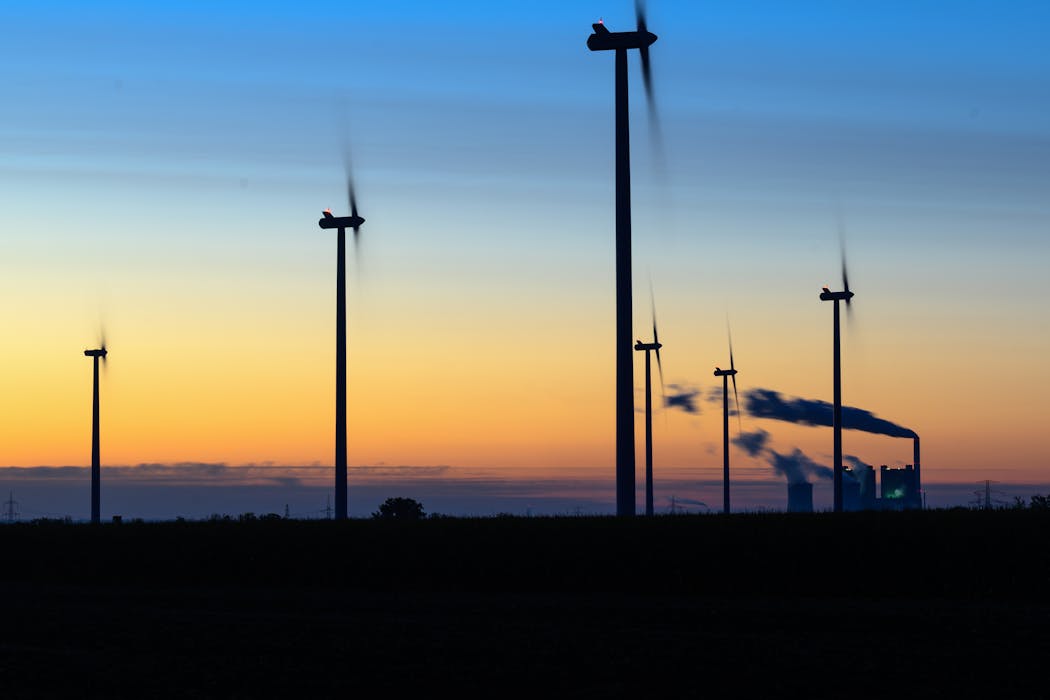
Fossil fuels still power much of the world, even though renewable energy has become cheaper in most places and avoids both pollution and the climate damage caused by burning coal, oil and natural gas.
To understand this paradox, it helps to look at how countries – particularly major greenhouse gas emitters, including the U.S., China and European nations – are balancing the pressures of rising electricity demand with the global need to reduce greenhouse gas emissions that are warming the planet.
The United States makes no secret of its fossil fuel ambitions. It has a wealth of fossil fuel reserves and a politically powerful oil and gas industry.
Since President Donald Trump took office in January 2025, his administration has been promoting oil and gas drilling and coal production, pointing to rising electricity demand to justify its moves, particularly to power artificial intelligence data centers.
Reviving the “drill, baby, drill” mantra, the Trump administration has now embraced a “mine, baby, mine” agenda to try to revive U.S. coal production, which fell dramatically over the past two decades as cheaper natural gas and renewable energy rose.

The Department of Interior on Sept. 29 rolled out a plan to “unleash American coal power” by opening 13 million acres of federal land to mining. The Department of Energy also pledged US$625 million to try to make coal competitive. It includes lowering the royalty rates mining companies pay and extending the operating lifespans of coal-fired power plants.
However, these initiatives further lock communities with coal plants into a carbon-intensive fossil fuel. Coal’s resurgence would also have public health costs. Its pollution is linked to respiratory illness, heart disease and thousands of premature deaths each year from 1999 to 2020 in the United States.
The Trump administration is also ceding the clean energy technology race to China. The administration is ending many renewable energy tax credits and pulling federal support for energy research projects.
I work in the Climate Policy Lab at The Fletcher School of Tufts University, where we maintain a suite of databases for analyzing countries’ energy research budgets. The Trump administration’s 2026 U.S. budget request would slash funding for energy research, development and demonstration to $2.9 billion — just over half the budget allocated in 2025. These energy research investments would fall to levels not seen since the mid-1980s or early 2000s, even when accounting for inflation.
While the United States is cutting renewable energy funding, China is doubling down on clean energy technologies. Its large government subsidies and manufacturing capacity have helped China dominate global solar panel production and supply chains for wind turbines, batteries and electric vehicles.
Cheaper Chinese-manufactured clean energy technologies have enabled many emerging economies, such as Brazil and South Africa, to reduce fossil fuel use in their power grids. Brazil surged into the global top five for solar generation in 2024, producing 75 terawatt-hours (TWh) of electricity and surpassing Germany’s 71 TWh.
The International Energy Agency now expects global renewable energy capacity to double by 2030, even with a sharp drop expected in U.S. renewable energy growth.
However, while China expands clean energy access around the world, its production and emissions from coal continue to rise: In the first half of 2025, China commissioned 21 gigawatts (GW) of new coal power plants, with projections of over 80 GW for the full year. This would be the largest surge in new coal power capacity in a decade for China. Although China pledged to phase down its coal use between 2026 to 2030, rising energy demand may make the plan difficult to realize.
China’s paradox — leading in clean energy innovations while expanding coal — reflects the tension between ensuring energy security and reducing emissions and climate impact.
The European Union is pursuing strategies to reduce its reliance on fossil fuels amid the ongoing geopolitical tensions with Russia.
Russia’s invasion of Ukraine exposed many countries to supply disruptions and geopolitical turmoil, and it triggered a global energy crisis as countries once reliant on Russian oil and gas scrambled to find alternatives.
In June 2025, the European Commission proposed a regulation to phase out Russian fossil fuel imports by the end of 2027, aiming to enhance energy security and stabilize prices. This initiative is part of the broader REPowerEU plan. The plan focuses on increasing clean energy production, improving energy efficiency and diversifying oil and gas supplies away from Russia.
Renewables are now the leading source of electric power in the EU, though natural gas and oil still account for more than half of Europe’s total energy supply.
The EU’s fossil energy phaseout plan also faces challenges. Slovakia and Hungary have expressed resistance to the proposed phaseout, citing concerns over energy affordability and the need for alternative supply sources. Hungarian Prime Minister Victor Orbán said Hungary would continue importing Russian oil and gas. Cutting off these supplies, he asserted, would be an economic “disaster” and immediately reduce Hungary’s economic output by 4%.
The path to reducing Europe’s dependence on fossil fuels thus involves navigating internal disagreements and incentivizing long-run sustainable development. Europe does appear to be gaining in one way from the U.S. pullback from clean energy. Global investment in renewable energy, which hit a record high in the first half of 2025, increased in the EU as it fell in the U.S., according to BloombergNEF’s analysis.
In November 2025, representatives from countries around the world will gather in Brazil for the annual United Nations climate conference, COP30. The meeting marks three decades of international climate negotiations and a decade since nations signed the Paris Agreement to limit global temperature rise.
The conference’s setting in Belém, a city in the Amazon rainforest, reflects both the stakes and contradictions of climate commitments: a vital ecosystem at risk of collapse as the planet warms, in a nation that pledges climate leadership while expanding oil and gas production and exploring for oil in the Foz do Amazonas region, the mouth of the Amazon River.
Thirty years into global climate talks, the disconnect between promises and practices has never been so clear. The world is not on track to meet the Paris temperature goals, and the persistence of fossil fuels is a major reason why.
Negotiators are expected to debate measures to curb methane emissions and support the transition from fossil fuels. But whether the discussions can eventually translate into a concrete global phaseout plan remains to be seen. Without credible plans to actually reduce fossil fuel dependence, the annual climate talks risk becoming another point of geopolitical tension.

Kate Hua-Ke Chi does not work for, consult, own shares in or receive funding from any company or organization that would benefit from this article, and has disclosed no relevant affiliations beyond their academic appointment.
Politics + Society – The Conversation